Most terraces fail at the floor. The furniture gets the budget, the plants get the attention, and the ground under it all gets whatever grey slab the builder left behind — and then everyone wonders why the terrace never feels finished.
Terrace flooring ideas are not the finishing touch. Outdoors, the floor is the room itself — the biggest surface you own, the one every chair sits on and every bare foot touches. Get it right and the whole terrace comes alive. These 15 ideas cover every material worth standing on, from warm wood to patterned tile, and how to choose between them.
Wood Decking That Warms a Whole Terrace
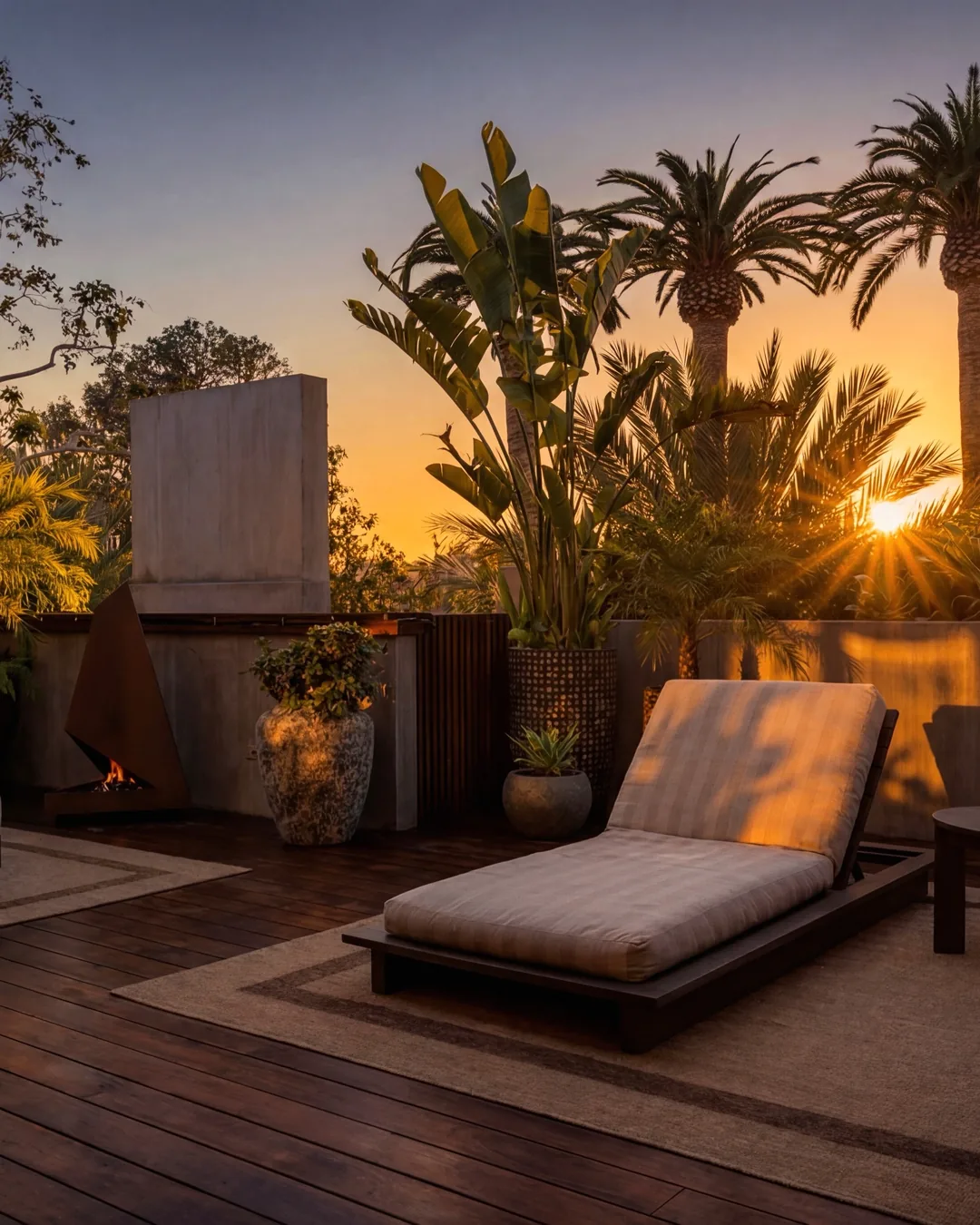
Wood is the warmest thing you can put underfoot outdoors, and it shows most at the end of the day. Stone stays cool and formal; wood takes the sunset and gives it back.
This rooftop deck at golden hour proves the point — dark wood decking, two modern lounge chairs on rugs, a contemporary armchair, a geometric metal fire pit with a small flame, banana-leaf plants and tall palms catching the last light. The warmth is literal: sunset glow, fire, and dark wood all at once. A terrace like this does not need much furniture, because the floor is already doing the work.
The practical point: choose a warm-toned wood and oil it rather than varnishing it. Oil lets the grain show and the deck age gracefully; varnish peels and has to be stripped.
Why Stone Slabs Suit a Terrace Best
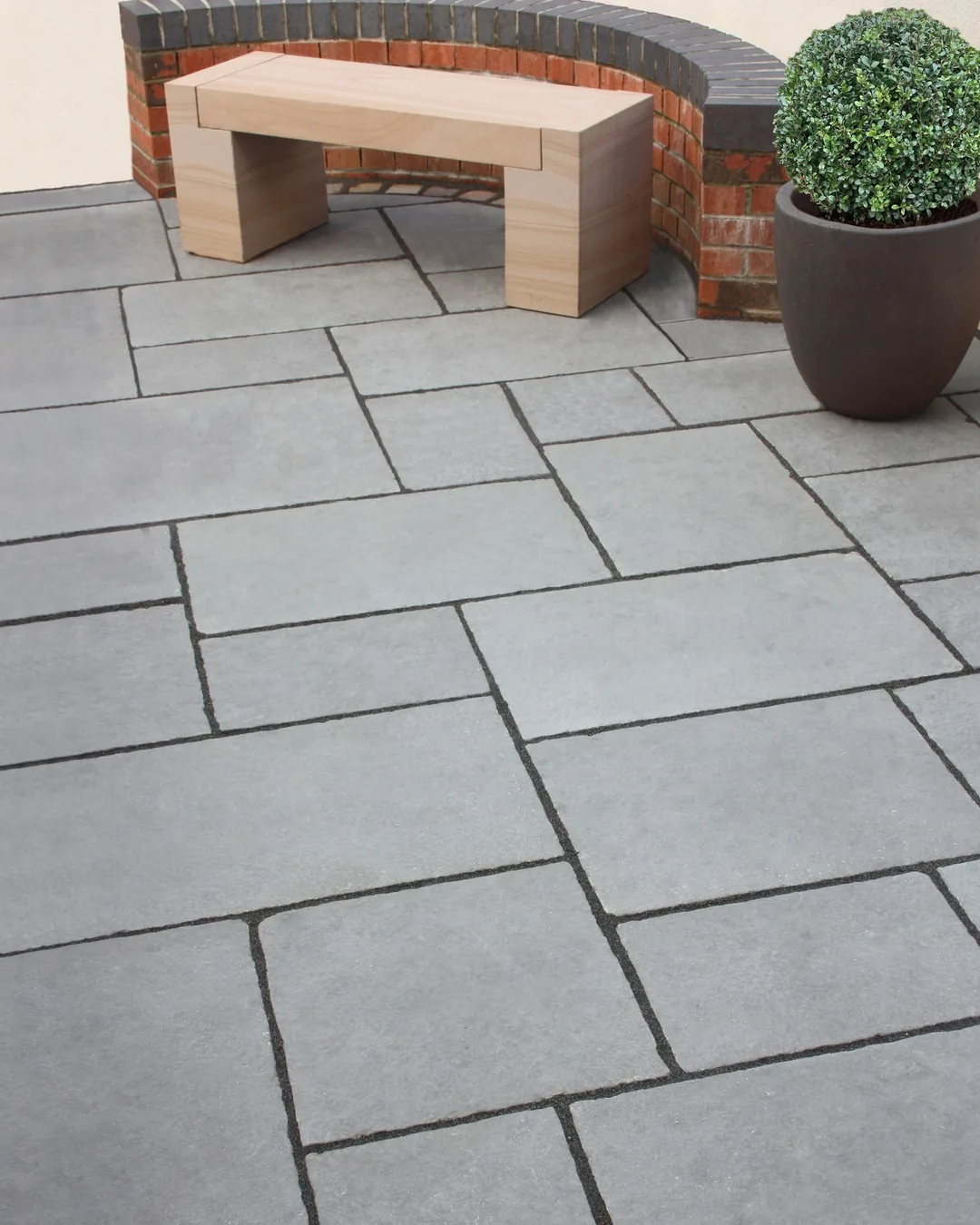
Stone slabs are the most honest terrace floor there is. They do not pretend to be anything else, they do not need much looking after, and they look better every year they are outside.
Large rectangular gray stone slabs with dark grout lines pave this patio — a simple bench of light wood and stone in front of a low curved brick retaining wall, a large dark planter with a neatly trimmed spherical topiary to the right. Nothing fussy, nothing fragile. The slabs fill the frame and the terrace feels permanent, like it has always been there and always will be.
The practical point: pick large slabs over small pavers when the terrace is big. Fewer joints mean fewer weeds, less cleaning, and a calmer look underfoot.
Tiles with a Pattern Underfoot
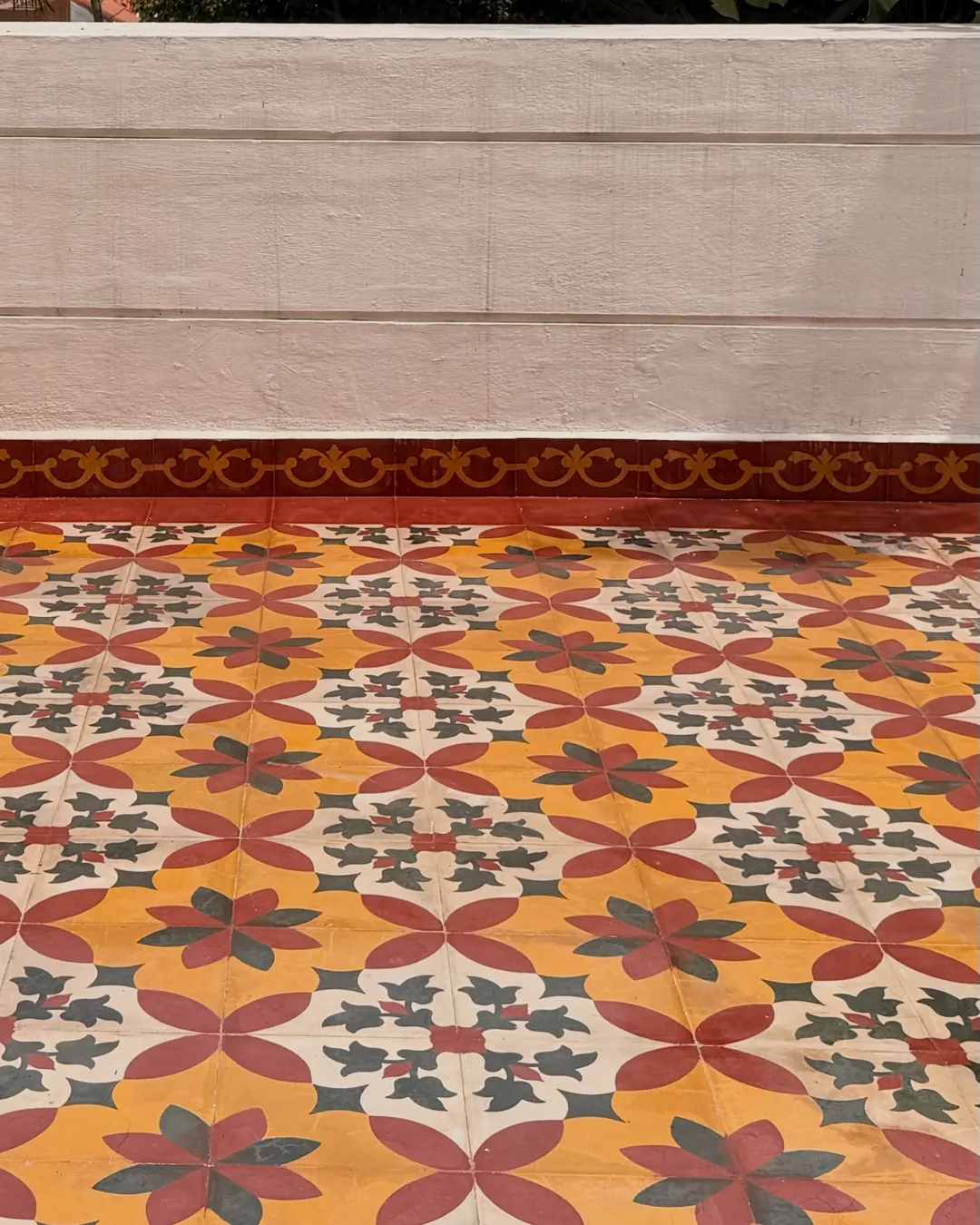
Patterned tiles are the loudest choice on this list, and the most rewarding. A plain terrace floor disappears; a patterned one becomes the reason people photograph the terrace.
Vibrant cement tiles in yellow, red, green and white, floral and geometric at once, bordered by solid red tiles — the pattern fills the whole frame. It is the kind of floor that makes the furniture almost unnecessary: a couple of chairs, a table, and the ground is the decoration. Patterned tile is also the most forgiving floor outdoors, because a busy pattern hides the dirt that a plain floor shows.
The practical point: keep the pattern to the floor and let everything else stay plain. Patterned tiles plus patterned cushions plus patterned pots is a fight nobody wins.
How Do You Choose Flooring for a Sunny Terrace?
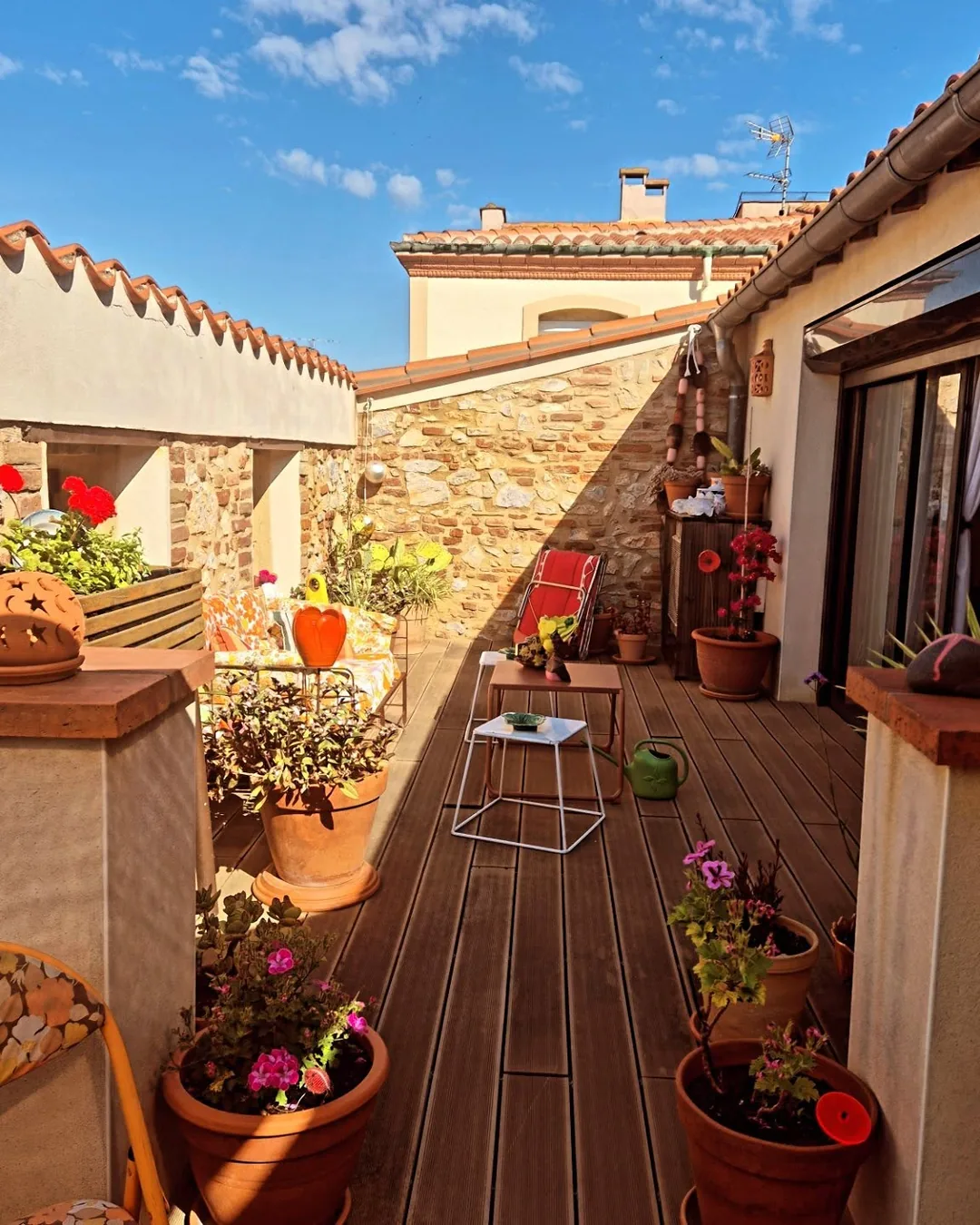
Sun changes the question. A floor that looks perfect in the shade can be blinding in full sun, and a dark floor that looks smart in a showroom can burn bare feet by noon.
This rooftop terrace gets it right: dark wooden decking, light stucco and exposed stone walls, terracotta pots holding flowering plants in red, pink and purple, a red deck chair and a small white table, all under a bright blue sky. The dark deck absorbs the light instead of throwing it back, the pots break up the surface, and the whole terrace feels made for the sun rather than fighting it.
The practical point: on a sunny terrace, test your shortlist in full sun before you commit. Pale stone glares, dark wood absorbs heat — and the right answer depends on which side of that trade-off your feet prefer.
Gravel and Stepping Stones for a Garden Feel
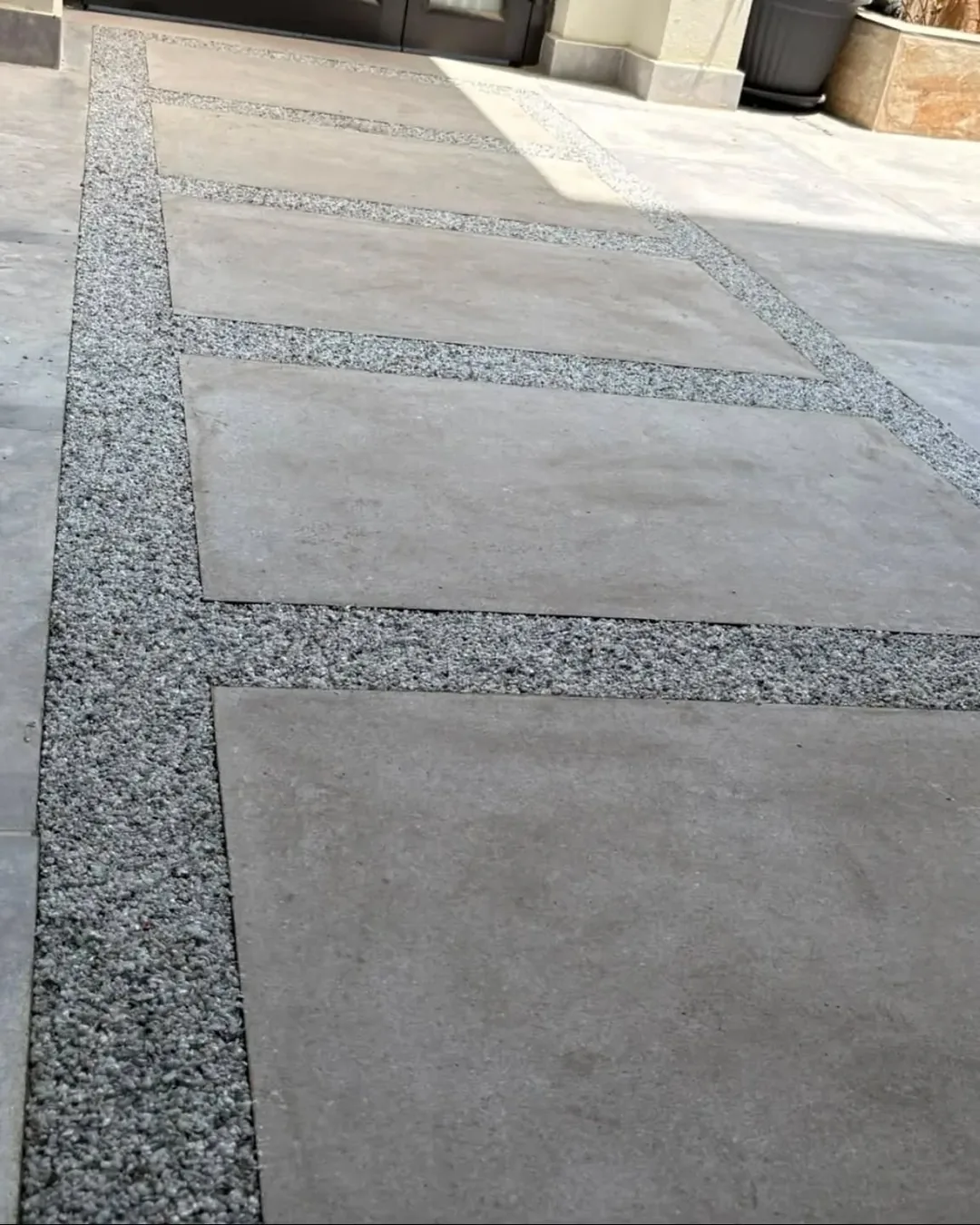
Gravel is the cheapest terrace floor and the most honest one. It drains, it costs almost nothing, and it sounds wonderful underfoot. The trick is giving it structure, or it just looks unfinished.
Here, large rectangular gray stone slabs are arranged as stepping stones, separated by strips of light-coloured gravel, with a continuous stone tile surface to the left and dark double doors at the top of the frame. The slabs give you somewhere solid to walk; the gravel gives you the garden feel and the drainage. Together they look deliberate, not like a budget compromise.
The practical point: contain gravel with edging, or it migrates everywhere. A stone border or a metal strip keeps it where you put it.
Concrete, Polished and Softened
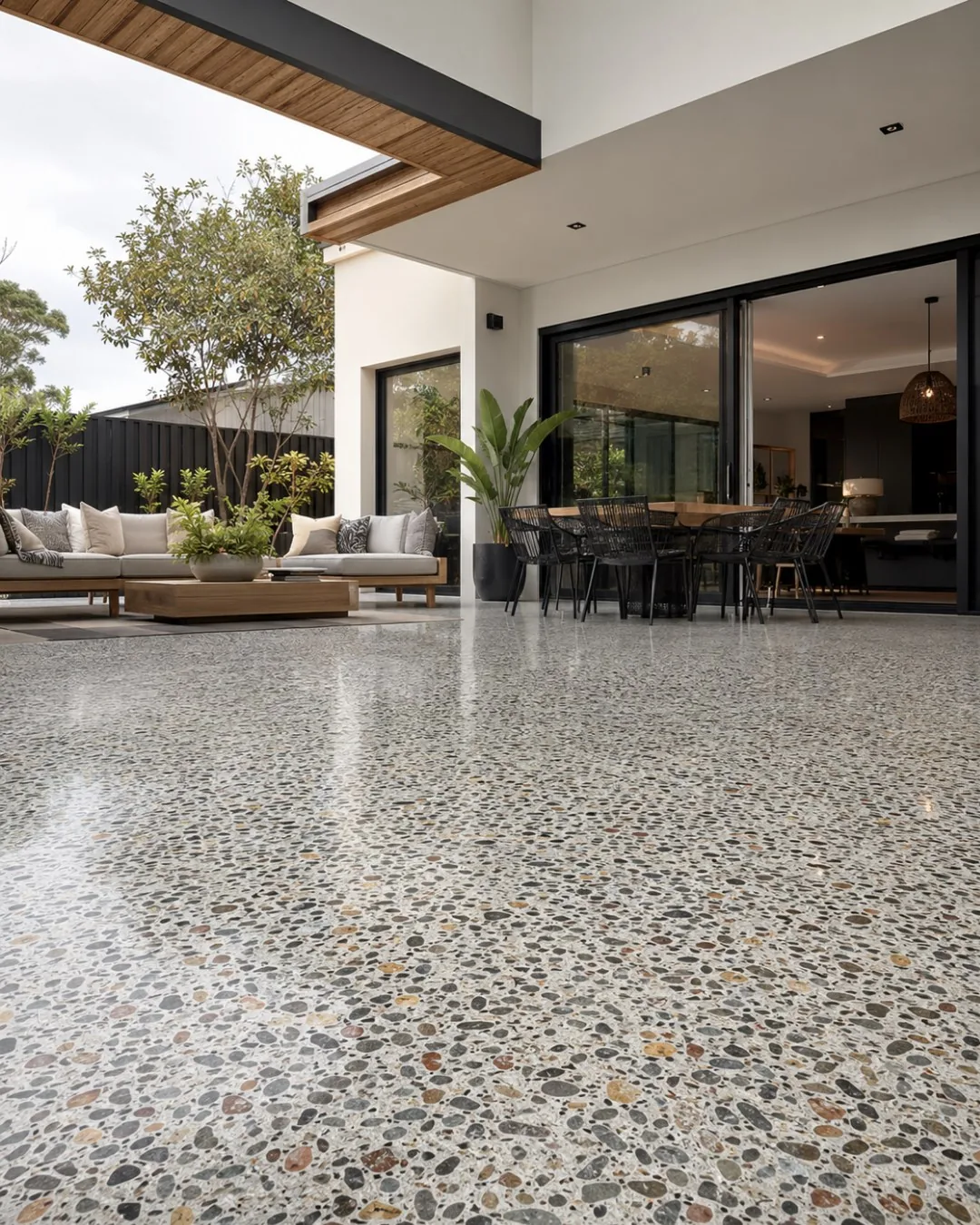
Polished concrete has a reputation for being cold and industrial, and it deserves better. Done well, it is the smoothest, easiest floor a terrace can have — and the furniture does the softening, not the floor.
In this photo, a large expanse of polished exposed-aggregate concrete dominates the foreground — speckled, mirror-smooth, reflecting the house — softened by an outdoor lounge set and a dining set behind it, with a modern house and floor-to-ceiling glass beyond. The floor is the subject and the furniture is the softening, exactly as it should be. Nothing else outdoors is this easy to sweep.
The practical point: ask for a non-slip finish on polished concrete outdoors. Mirror-smooth looks beautiful and turns into a skating rink in the rain.
Outdoor Rugs That Define the Seating Area
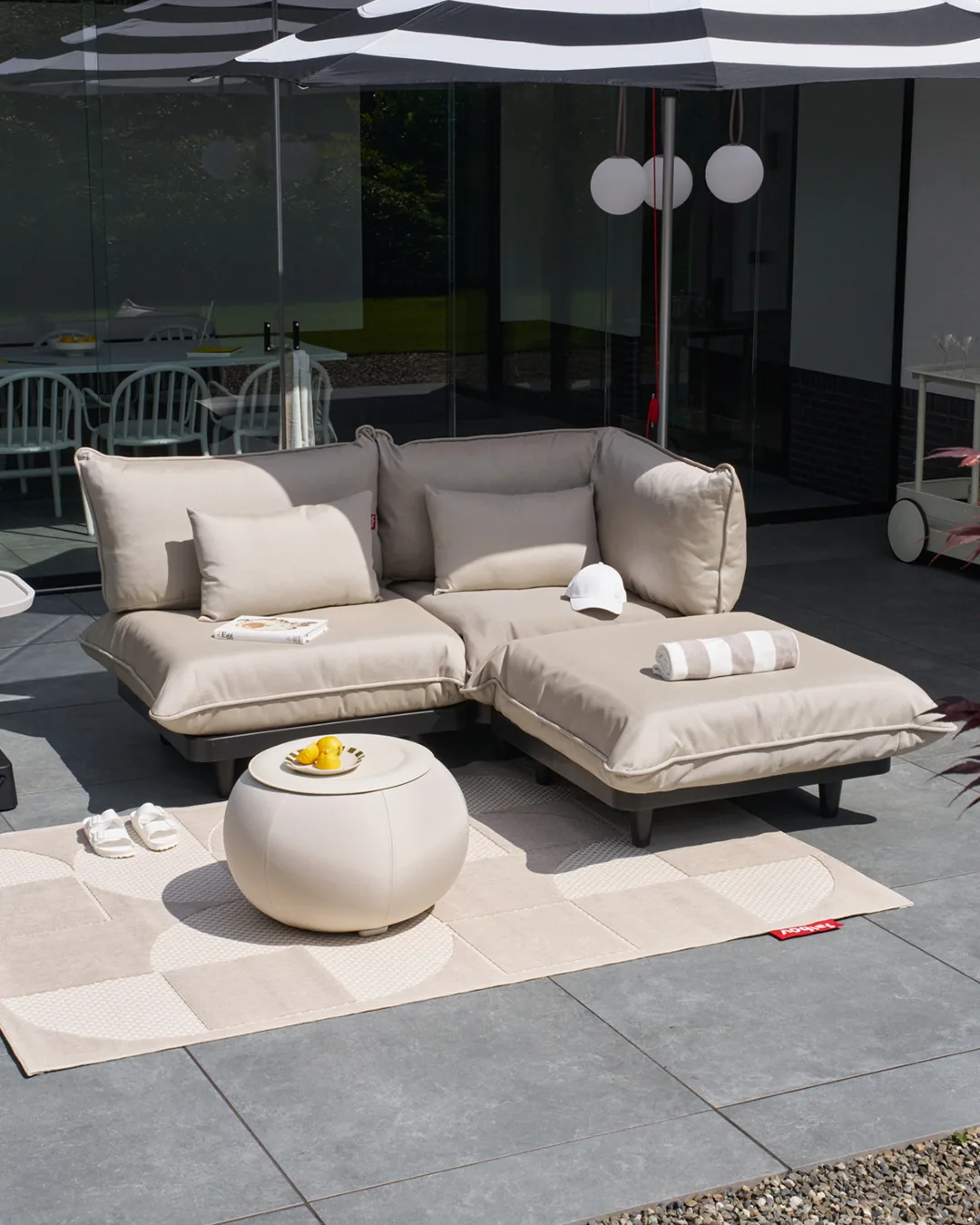
Without a rug, a terrace is one big empty floor. A rug is what turns a corner of it into a room — the seating area, the place where people actually sit.
Here, a beige modular sectional and chaise sit on a large patterned cream outdoor rug, which sits on gray stone pavers — the rug clearly defines the seating area, and the stone floor is visible all around it. A round coffee table, a striped towel, slippers kicked off on the rug. Without the rug, this is just furniture on a patio. With it, it is a living room that happens to be outside.
For a smaller outdoor space that needs the same treatment, see Modern Bohemian Balcony Decor with a More Collected, Less Cluttered Look.
The practical point: size the rug so the front legs of every seat sit on it. A rug that is too small makes the seating area look like it floated in by accident.
What Works Under a Dining Table Outdoors?
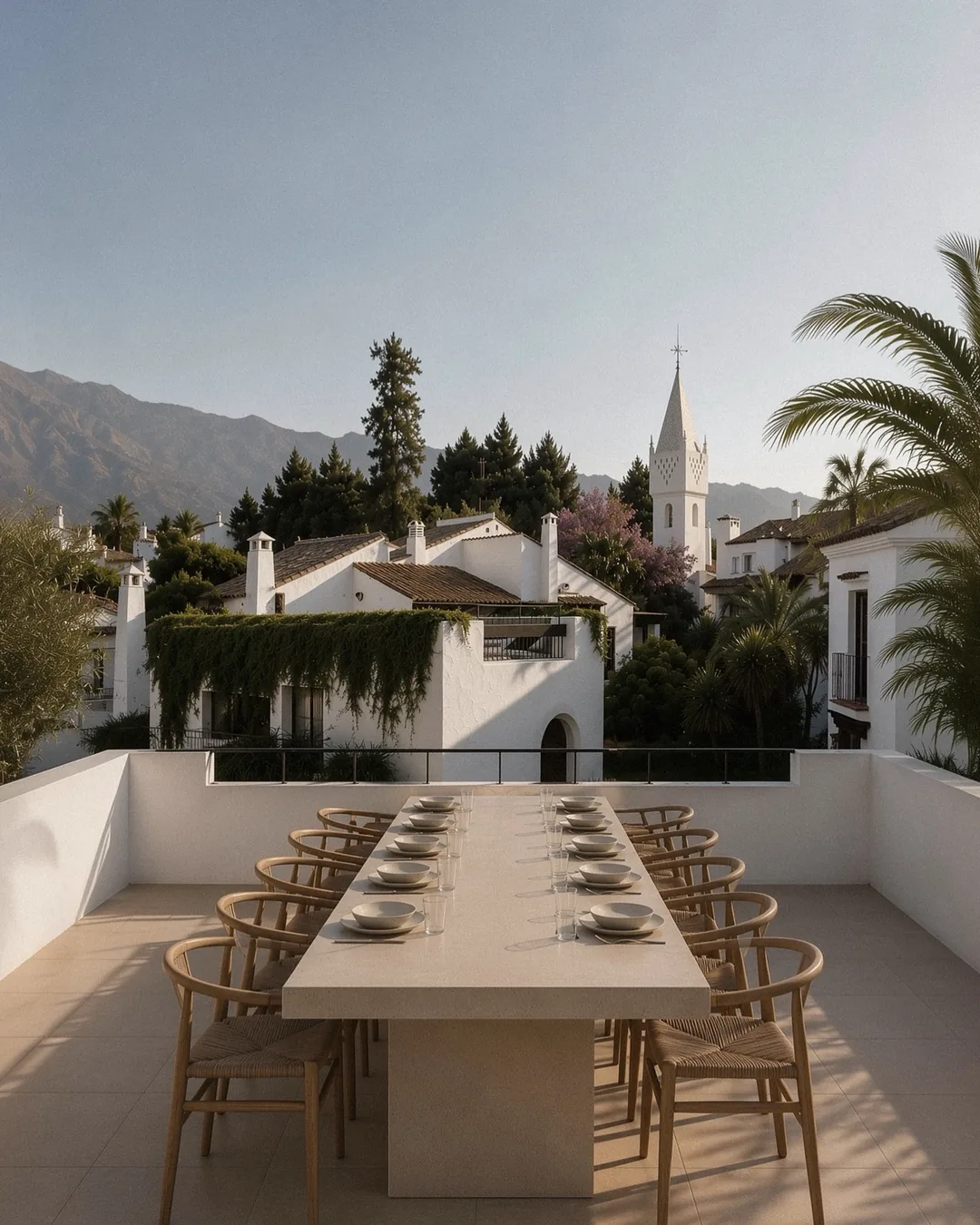
Dining tables are where terrace floors earn their keep. Chairs get dragged, food gets dropped, drinks get spilled — and the floor underneath has to take all of it without complaining.
A long rectangular dining table set for about ten people stands on a light stone-tiled terrace, with a white village and a church tower in the background. The tile floor is clearly visible beneath and around the table, and that is the point: stone tile under a dining table wipes clean, does not stain, and does not mind a chair being dragged across it twice a day. Wood looks warmer under a table, but tile works harder.
The practical point: under a dining table, choose a floor you can hose down. Anything that needs gentle cleaning will be ruined by the first dinner party.
Terracotta for a Mediterranean Mood
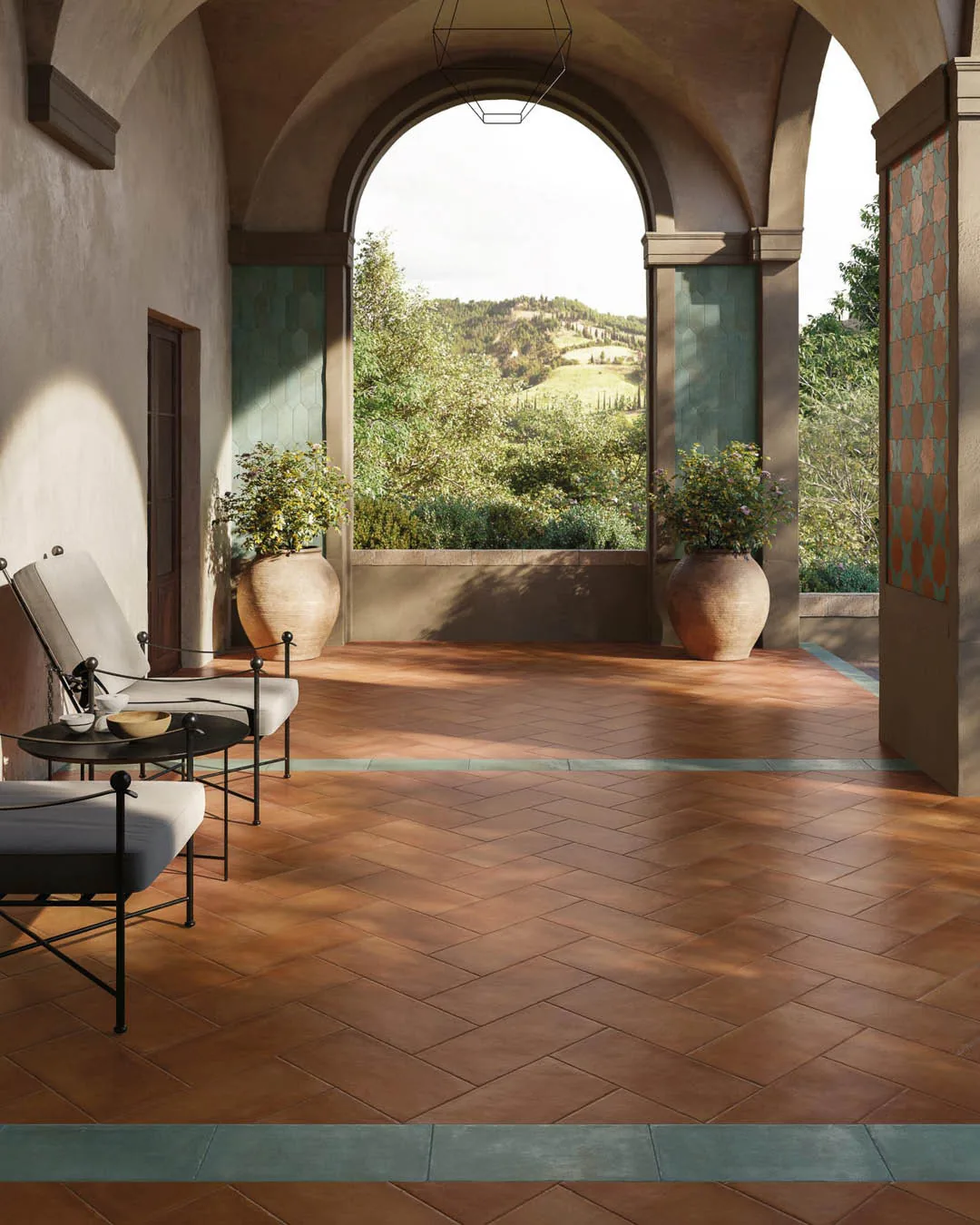
Terracotta is a mood before it is a material. The colour alone — that warm, sun-baked orange — makes a terrace feel Mediterranean, even if the terrace is nowhere near the Mediterranean.
A sun-drenched loggia with a herringbone-patterned terracotta tile floor as the subject — arched openings, two lounge chairs, large terracotta pots, green hills beyond. The floor fills the frame and sets the whole mood. Terracotta ages beautifully outdoors, darkening slightly and gaining character, and it never looks cold, even on a grey day.
The practical point: seal terracotta tiles outdoors. Unsealed terracotta drinks up rain and stains, and sealing is a one-afternoon job that lasts years.
Composite Decking for Low Maintenance
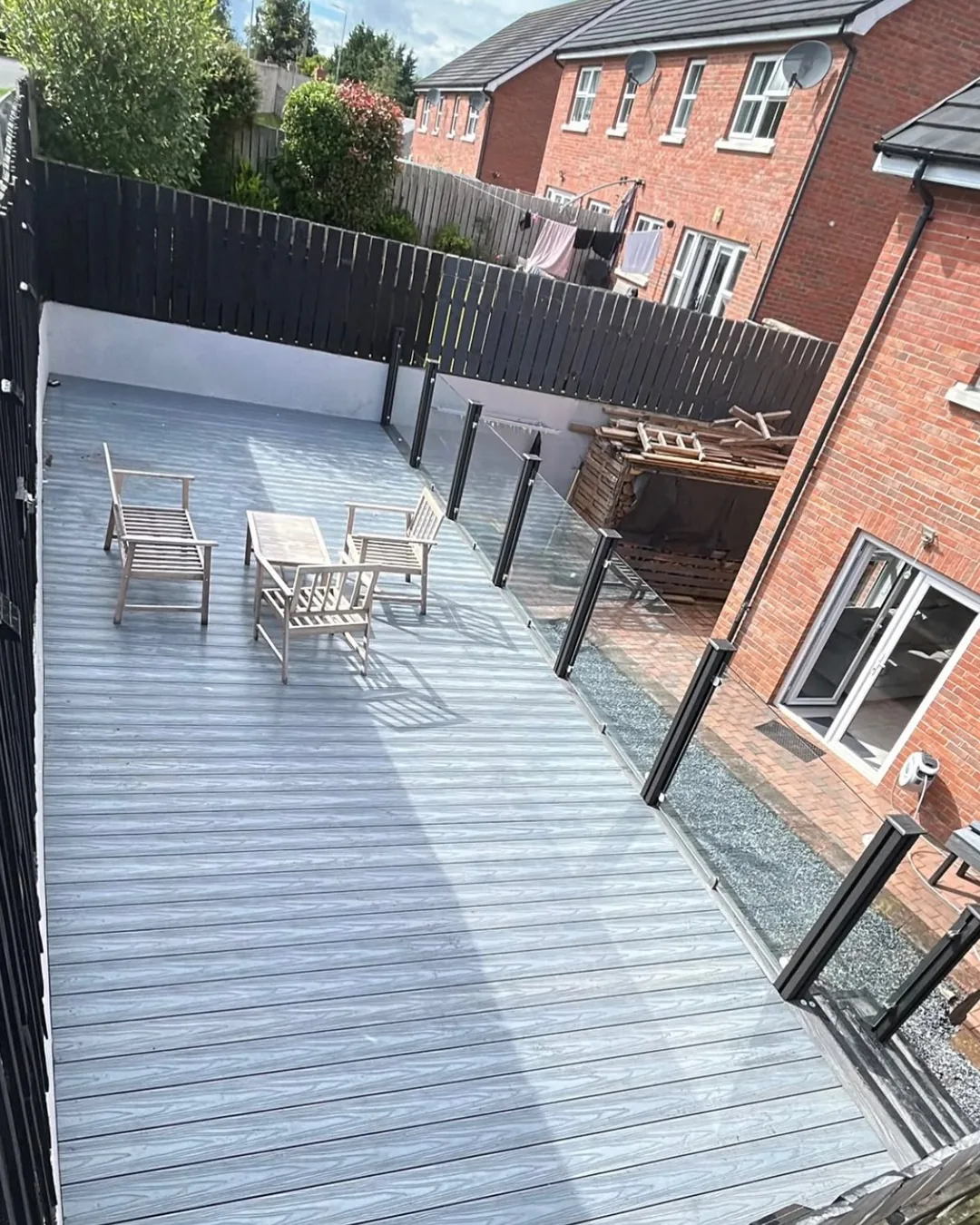
Composite decking is the floor for people who love a deck and hate maintaining one. No oiling, no sanding, no splinters — just a sweep and it looks new.
A large gray composite deck dominates this backyard — three light wooden chairs and a small table arranged on it, a black fence and a red-brick house behind. Clean modern boards, no gaps full of leaves, no faded patches. It will not silver like real wood, and it will not rot like real wood either. That is the trade, and for most people it is a good one.
The practical point: buy the best composite you can afford, not the cheapest. Cheap boards fade and warp; good ones hold their colour and stay flat for a decade.
Mix Two Materials and Let Them Meet Cleanly
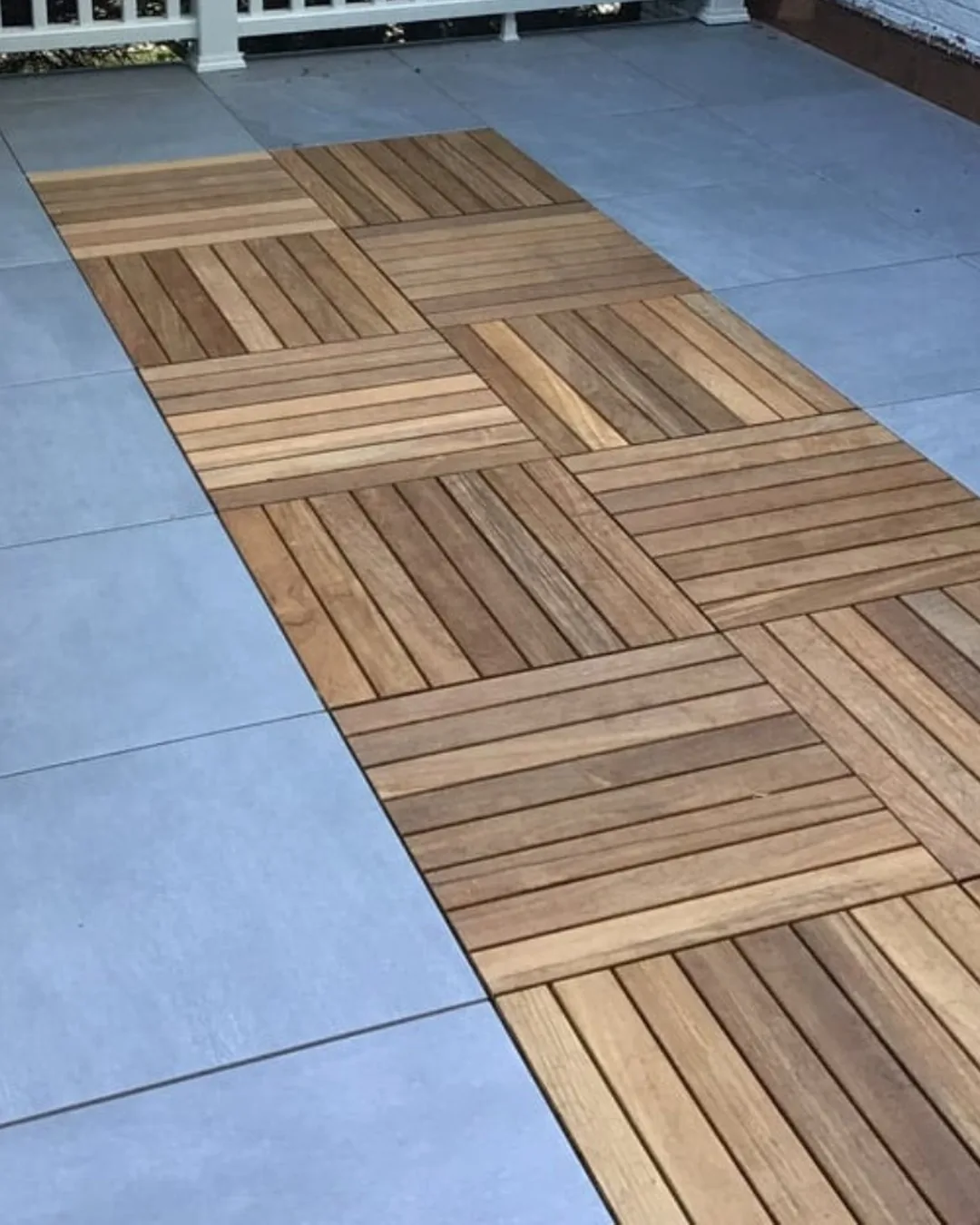
One material for a whole terrace is safe. Two materials, meeting cleanly, is where a terrace starts to look designed. The joint is everything — a wobbly transition ruins both materials, a straight one makes them both look better.
Here, large light-gray porcelain pavers surround a central rectangular section of interlocking wood deck tiles in a basketweave pattern, with a white railing at the back. The joint between pavers and wood is straight and exact. That straight line is the whole idea: two materials, one clean meeting, and the terrace reads as planned rather than patched together.
For a festive take on a small outdoor floor, see Cozy Apartment Balcony Christmas Ideas for Cold Winter Evenings.
The practical point: use a metal or stone transition strip where two materials meet. A straight strip hides any small unevenness and makes the joint look intentional.
Why Drainage Decides Your Flooring Choice
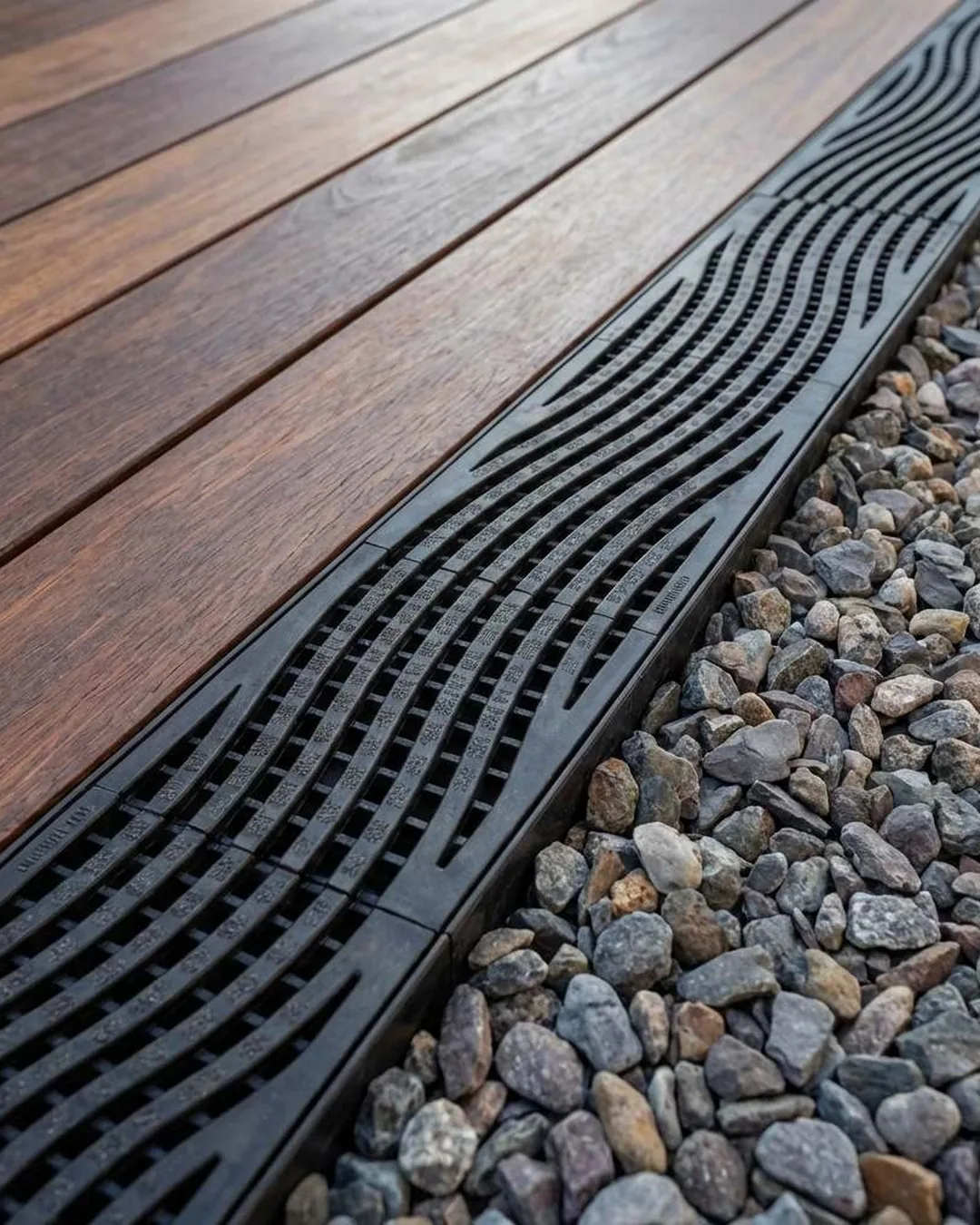
Every terrace floor fails the same way: water has nowhere to go. Puddles, stains, moss, boards that rot from underneath — all of it is a drainage problem wearing a flooring costume.
Brown wooden deck boards meet a long black linear drain grate with a wavy slot pattern, with gravel alongside — deck, drain and permeable gravel all in one frame. The drainage element is the subject, not an afterthought, and that is the right way round. A floor with a drain lasts twice as long as a floor without one, because the water leaves instead of sitting.
The practical point: plan the drain before you choose the floor. A linear drain at the low edge is the cheapest insurance a terrace can have.
Can Dark Flooring Work on a Small Terrace?
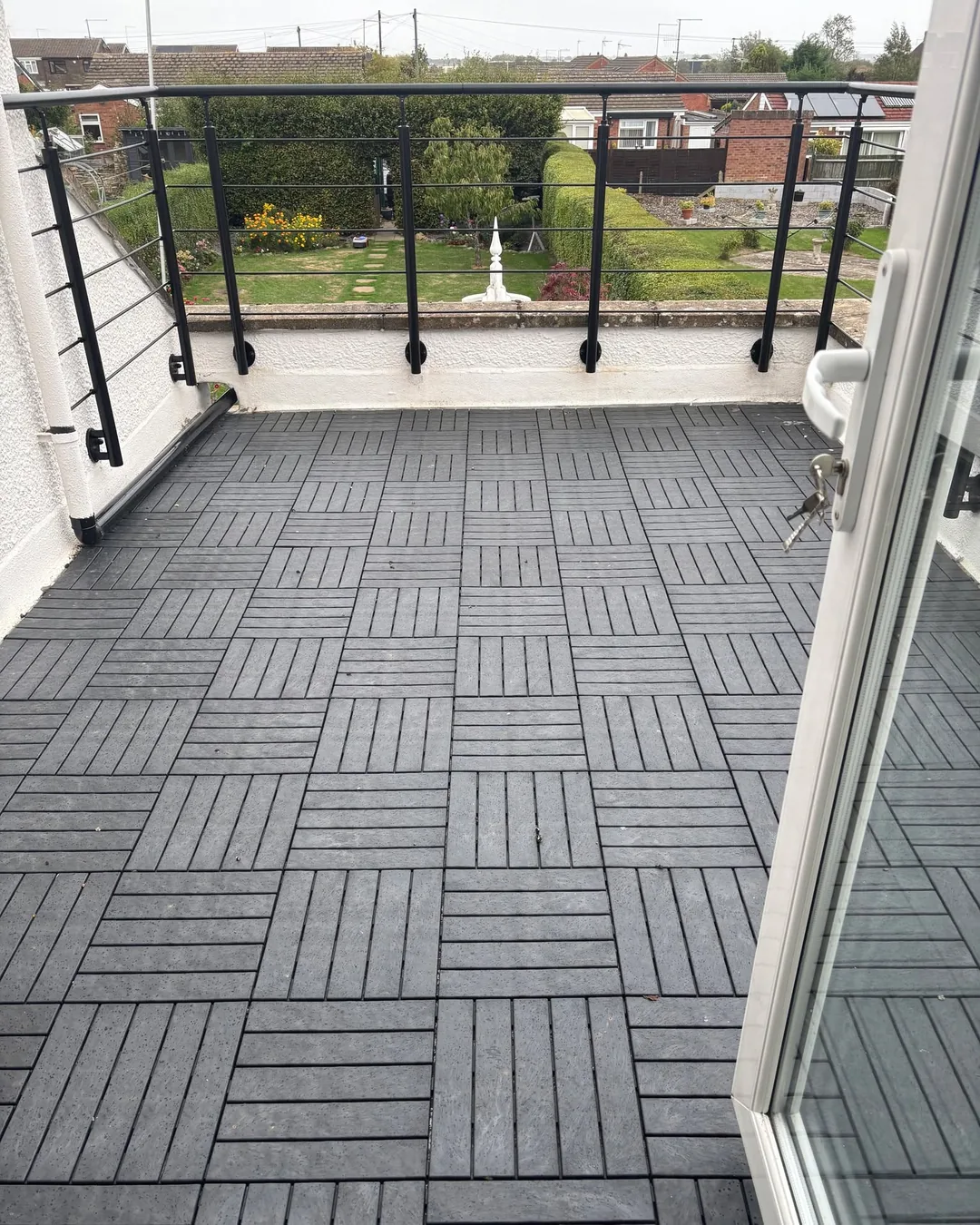
Dark floors on small terraces scare people, and the fear is understandable — dark colours shrink a room. Outdoors, though, the rules change: the sky is the ceiling, and a dark floor grounds the space instead of closing it in.
A small balcony seen from the glass door — dark gray interlocking deck tiles in a basketweave pattern covering the whole floor, black metal railing, houses and greenery beyond. The small scale is evident from the door frame and the railing, and the dark floor works: it makes the balcony feel like a room, and the view beyond it feels brighter by contrast.
The practical point: on a small terrace, pair a dark floor with light walls and furniture. The contrast keeps the space open while the floor gives it weight.
A Border That Frames the Whole Floor
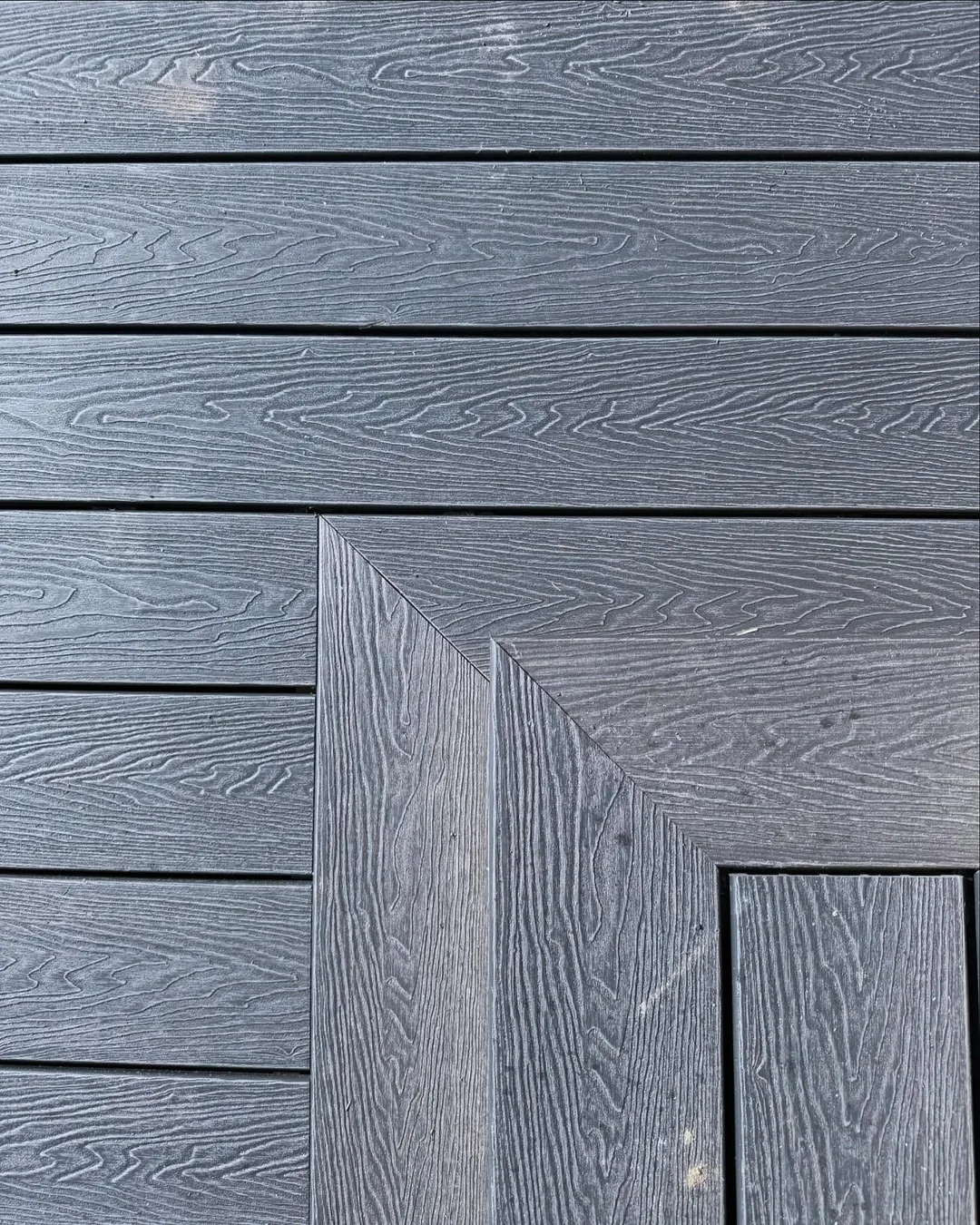
Few upgrades cost as little as a border and change a terrace floor as much. It costs almost nothing — a few extra boards, a row of contrasting tiles — and it makes the whole floor look finished, like a picture in a frame.
An overhead view of a deck in dark gray wood-grain planks, centred on the corner where mitred picture-frame border boards meet — the border itself is the subject, running cleanly around the field boards. Without the border, this is just a deck. With it, the deck looks built rather than laid, and the eye reads the whole terrace as one composed surface.
The practical point: run the border in a contrasting tone to the field, even slightly. A border that matches the field exactly disappears, and the whole point is that it is seen.
Flooring That Looks Better with Age
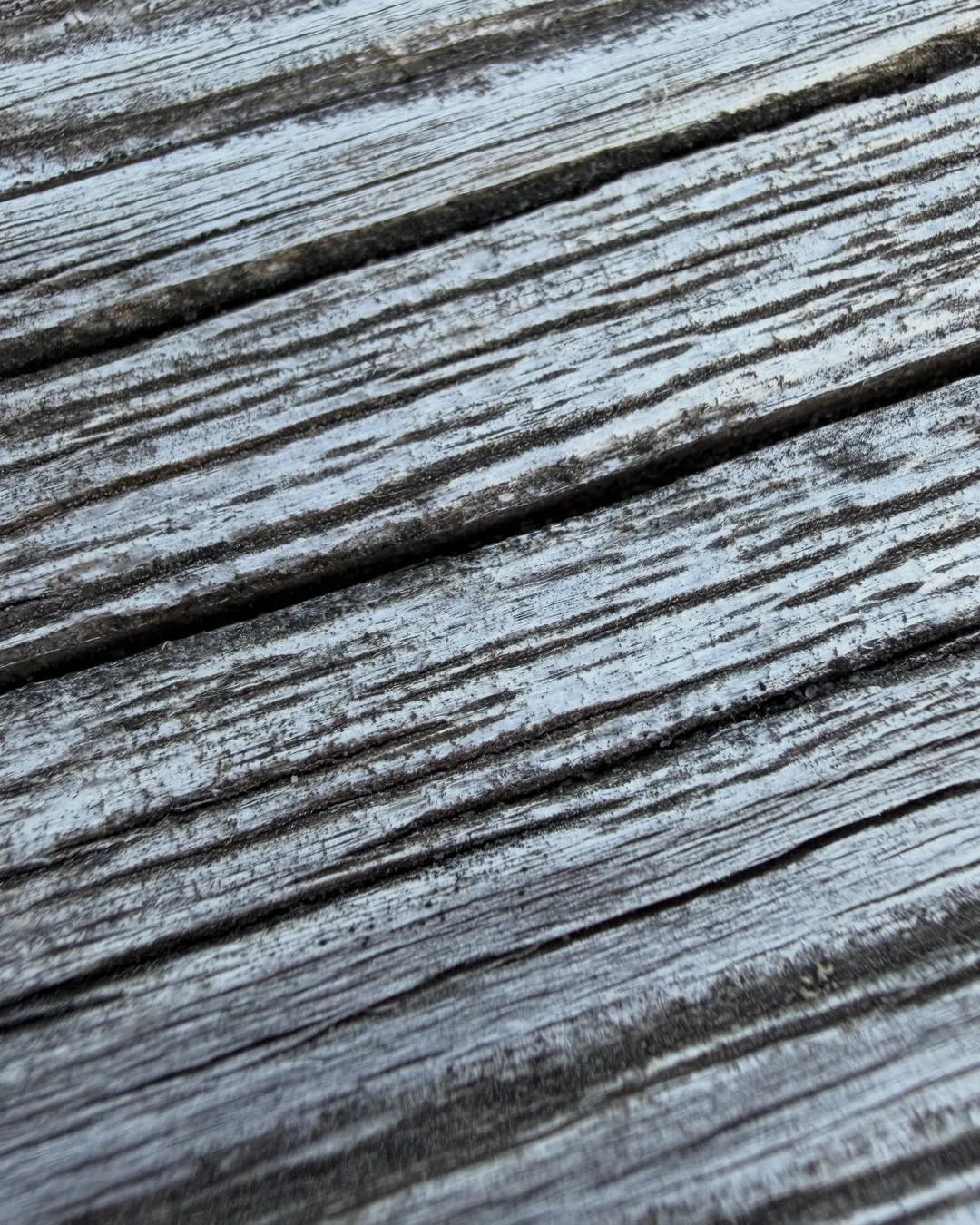
Most floors get worse with age. A few get better, and those are the ones worth choosing for a terrace, where the weather does the ageing whether you like it or not.
A close-up of aged, weathered wooden decking — planks running diagonally across the frame with a silvered gray-white patina, darkened grain lines and cracks. The weathering is the beauty, not damage: the wood looks better silvered than new. Stone, terracotta and untreated wood all do this; plastic and paint do not. Choose a floor that the weather improves, and you will never have to fight it.
The practical point: if you want the silvered look, leave the wood untreated and let it weather. If you oil it, you are choosing the warm colour over the patina — decide which one you actually want.
Style Starts Underfoot
Think of it this way: a terrace is a floor with furniture on it, not furniture with a floor under it. Choose the floor first — the material, the colour, the way it handles sun and rain — and everything else you put on the terrace will sit better on it.
Wood for warmth, stone for permanence, pattern for personality, concrete for ease. Fifteen ideas, one rule: the floor is the room.