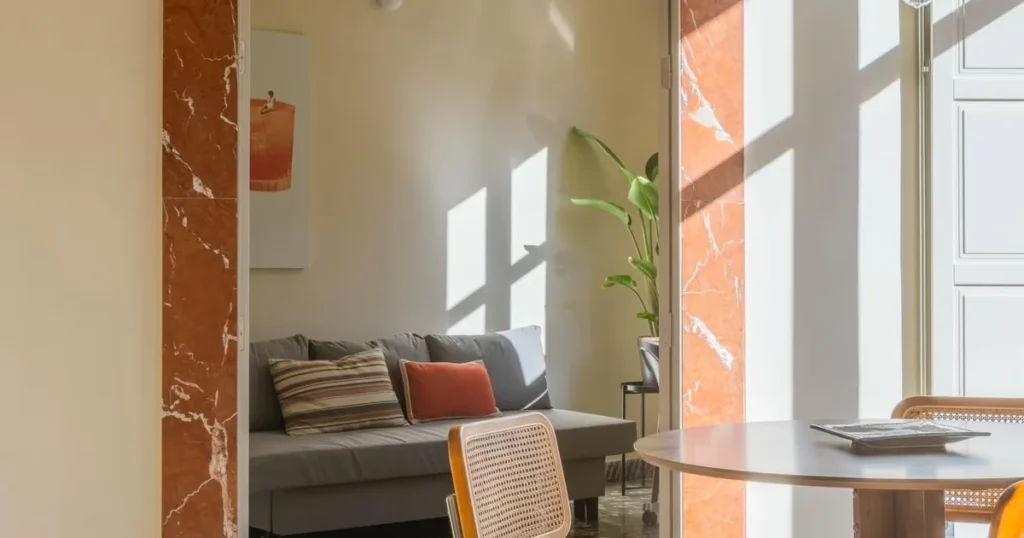
You can smell an old apartment before you really see it — wood polish on floorboards that have been walked for a century, plaster dust in a sunbeam, the faint ghost of a hundred dinners cooked in a kitchen that has never been new. Then your eyes adjust, and there it is: tall windows, a fireplace nobody uses, mouldings nobody makes anymore, and a ceiling high enough to make you stand up straighter.
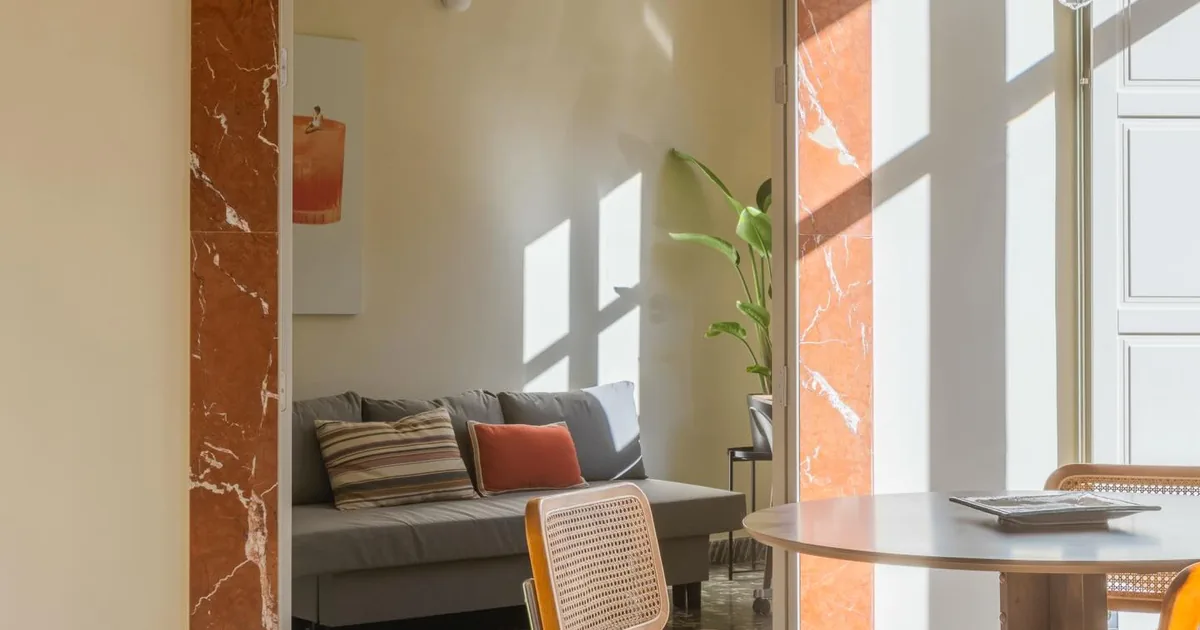
How to modernize an old apartment is really a question about respect. Change the things that make daily life harder, keep the things that make the place irreplaceable, and know the difference before you pick up a paintbrush. These 15 ideas do exactly that — practical updates first, character always.
Start with What Is Worth Keeping
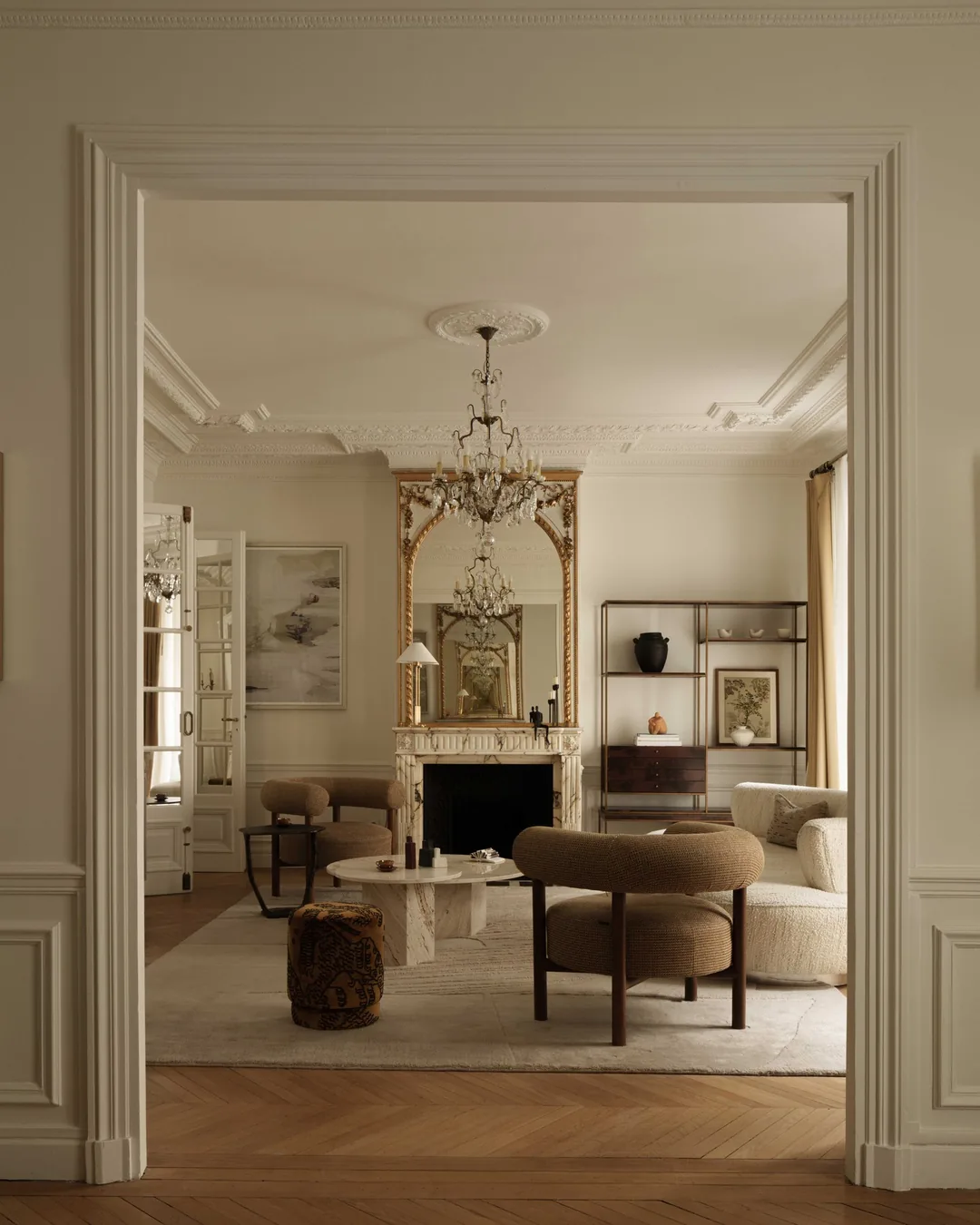
Before you change anything, stand in the doorway and look. Really look. Old apartments announce their best features in the first ten seconds, and most of them are the things a new build can never buy back.
Through this doorway: ornate ceiling mouldings, a crystal chandelier, a gilded mirror over a white marble fireplace, two rounded brown armchairs, a light bouclé sofa, herringbone wood floor. Every one of those features is a hundred years old and every one of them is still doing its job. The room does not need more character — it needs someone to notice the character it already has.
The practical point: make a list of what stays before you make a list of what changes. Anything original — mouldings, fireplaces, floors, windows — starts on the “stays” list until it proves it cannot.
Why Paint Is the Cheapest Modernizer
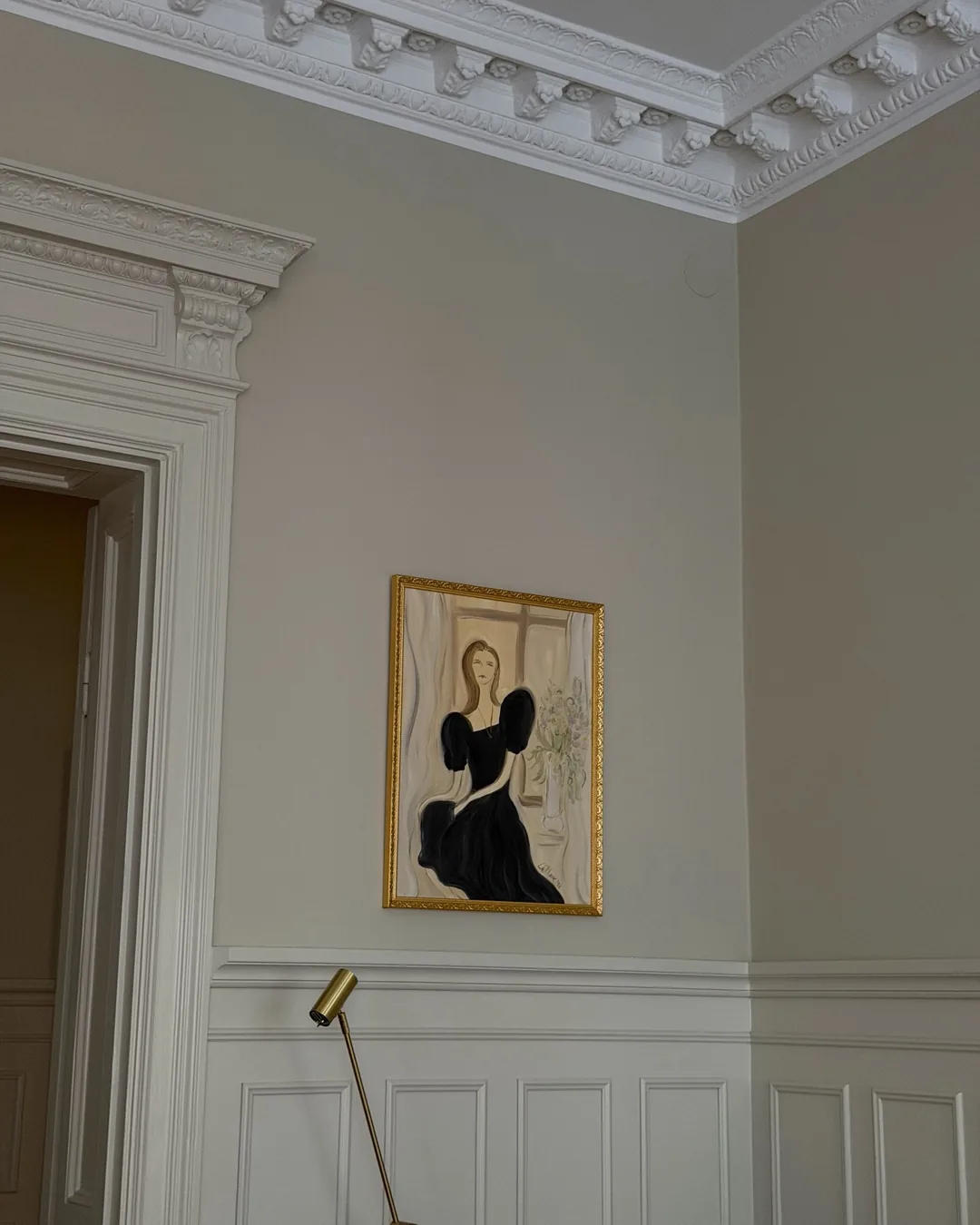
New kitchens cost thousands. New floors cost thousands. Paint costs a weekend and a few tins, and on old walls it does more work than either of them. Old plaster takes paint beautifully, and fresh colour makes every original detail sharper.
Light grey walls, white crown molding at the ceiling, white wainscoting below, an ornate white door frame leading to another space, a gold-framed painting on the wall, a vase of flowers near the window. Nothing structural changed here. The paint simply cleaned up the room and let the mouldings do the talking — the way they were designed to, a century ago.
The practical point: one colour for the walls, one for the trim, and let the trim be the brighter of the two. Old rooms look best when the architecture reads clearly.
Swap the Fixtures Before You Touch the Walls
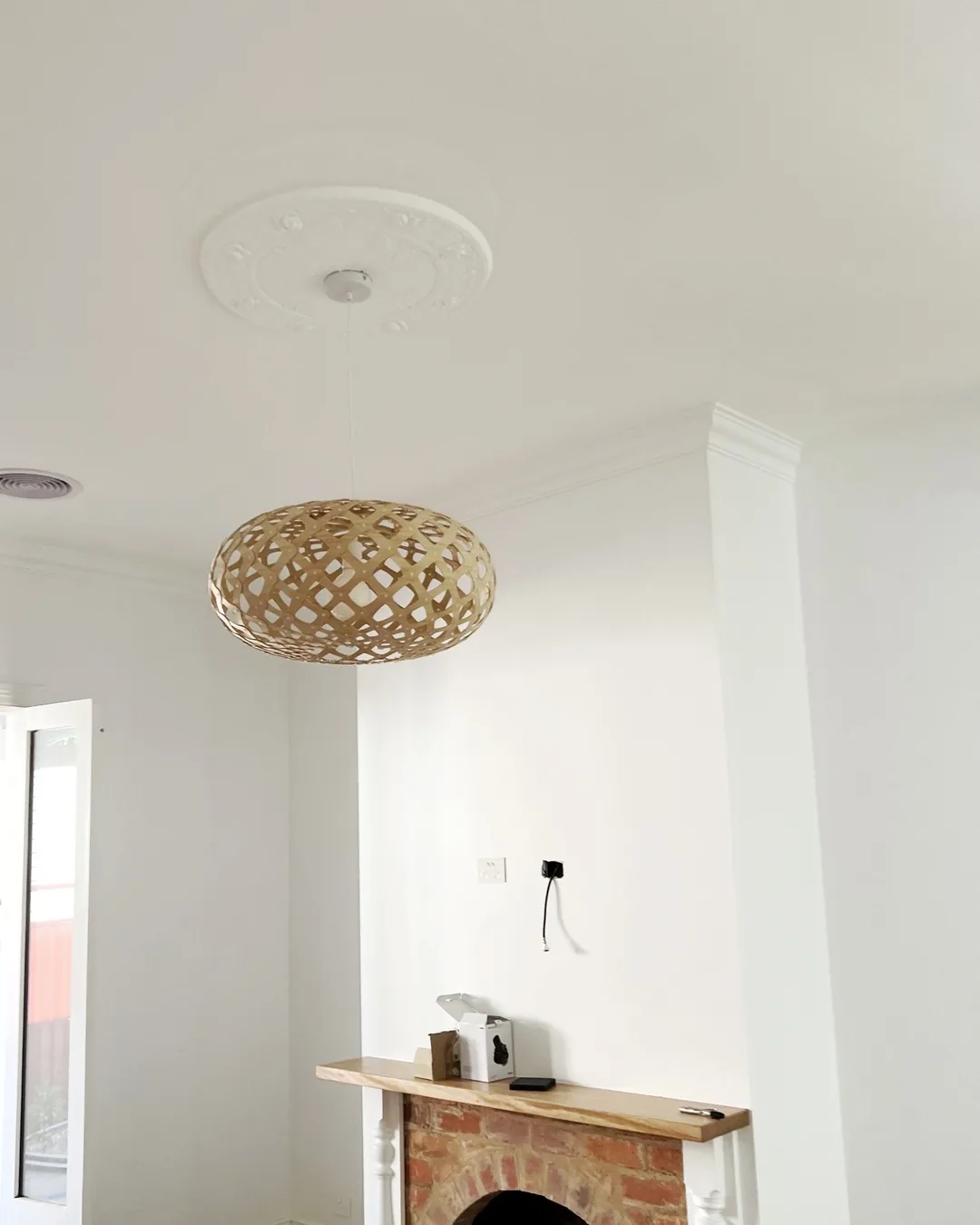
Walls are expensive to move and slow to change. Fixtures are the opposite — an afternoon, a screwdriver, and the room feels a decade newer. Old apartments reward this approach because the bones are already good; only the jewellery is dated.
One large woven pendant now hangs from an ornate plaster medallion, above a traditional brick fireplace with an arched opening and a thick natural wood mantel. The medallion is original, the fireplace is original, the light is new — and the combination is better than any of the three alone. A fixture is the smallest change with the biggest visual return in an old room.
The practical point: change every visible fixture in one pass — lights, taps, handles, switches. Mixing one new fixture with five old ones just makes the old ones look older.
How Do You Modernize a Kitchen Without Gutting It?
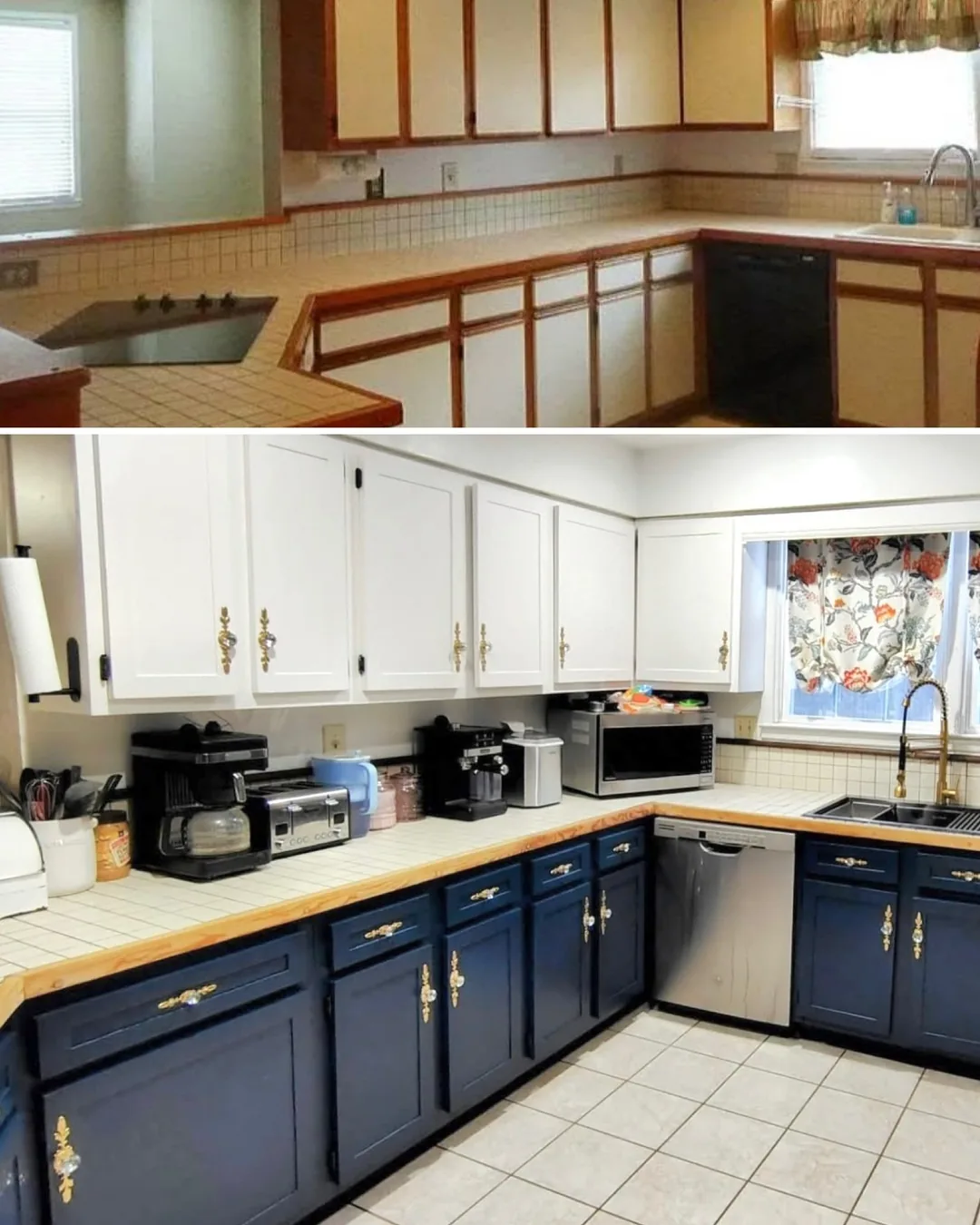
Gutting a kitchen is the most expensive sentence in renovation. It is also, most of the time, unnecessary. Old kitchens usually have good bones — solid cabinets, a sensible layout, a window over the sink — and what dates them is the finish, not the structure.
Look at this pair of photographs of the same kitchen. Up top: dated cream cabinets with wood trim, beige tiled countertops and backsplash, a built-in cooktop, a double sink under the window. Below: the same layout, transformed — upper cabinets painted white, lower cabinets painted dark navy blue, new brass hardware, same footprint. No walls moved, no plumbing moved, no gutting. Paint and hardware did the whole job.
For more on making a small space feel bigger, see Ways to Make a Small Bedroom Look Bigger Than Its Square Footage.
The practical point: if the cabinet boxes are solid, keep them and change only the doors’ finish and the hardware. You keep the layout that already works and skip the demolition bill.
Floors: Refinish Before You Replace
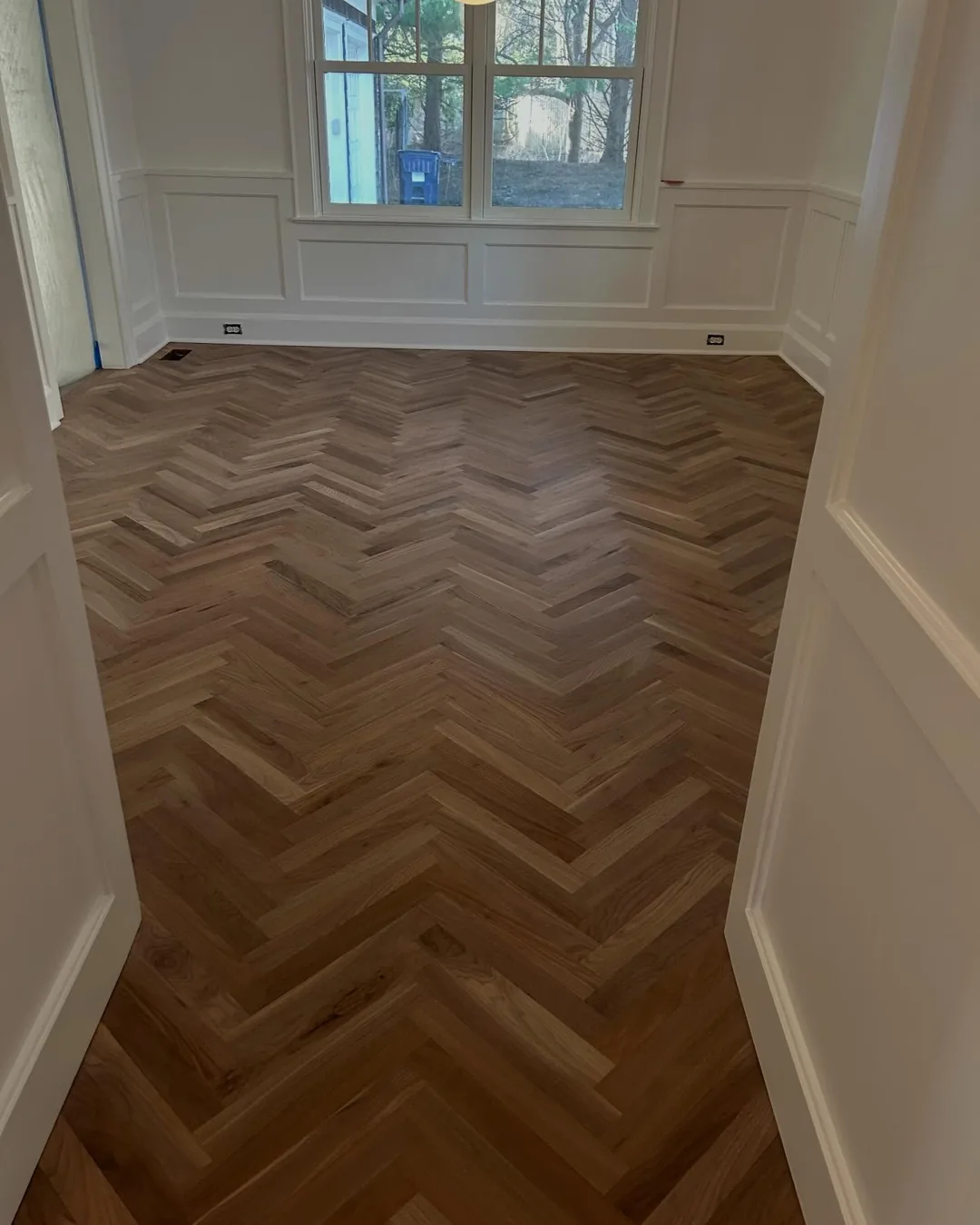
Old wood floors are the single most valuable thing in an old apartment, and the first thing people rip out. That is almost always a mistake. A floor that has survived eighty years of footsteps is better wood than anything you can buy today.
This herringbone floor was refinished, not replaced — the varying brown tones, the tight pattern, the way it catches light from a large double-hung window at the far wall. White wainscoting and a modern spherical ceiling light finish the room, but the floor is the subject. Refinishing costs a fraction of replacing, and you keep a floor with a history instead of a floor with a showroom shine.
The practical point: sand and refinish before you price a replacement. If the boards are solid underfoot, they are worth saving — and a matte or satin finish hides future wear far better than gloss.
Let the Old Windows Stay — Just Dress Them Better
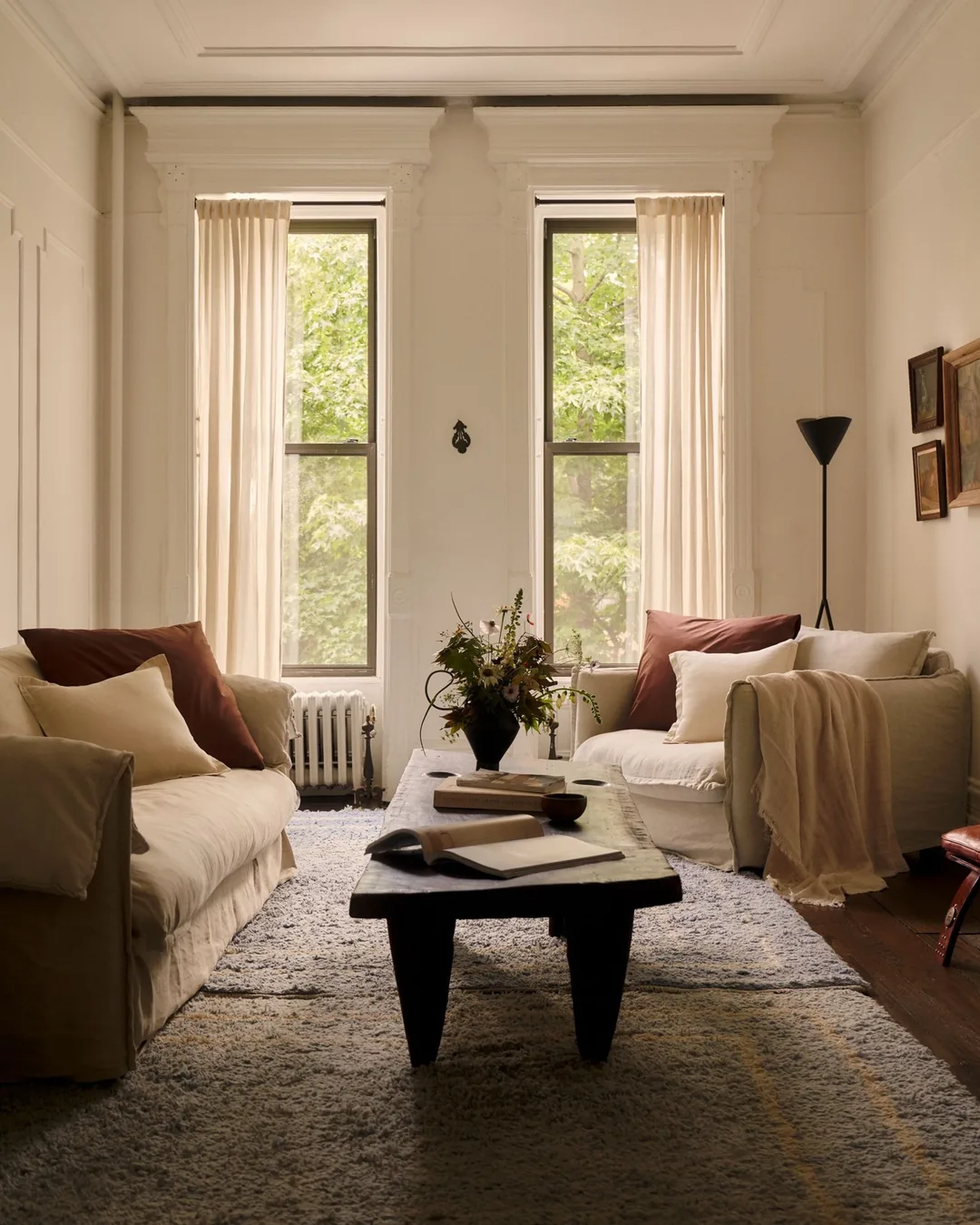
Old windows are drafty, rattly, and irreplaceable. The tall multi-pane proportions, the way they divide a wall into light and shadow, the view they frame — no new window looks like that. Replacing them is the fastest way to make an old apartment look like any other apartment.
Dress them instead. Two tall multi-pane windows in a classic Brooklyn living room wear cream linen curtains that soften the light without blocking it. Crown molding and wainscoting frame the walls, a radiator sits below the left window, dark hardwood floors ground the room, and modern beige sofas face a dark coffee table. The windows stayed, the room modernized around them, and the light is the best thing in it.
The practical point: hang curtains high and wide — a few centimetres above the frame and past the edges — so the windows read taller and the light stays generous.
Open Up One Wall, Not Every Wall
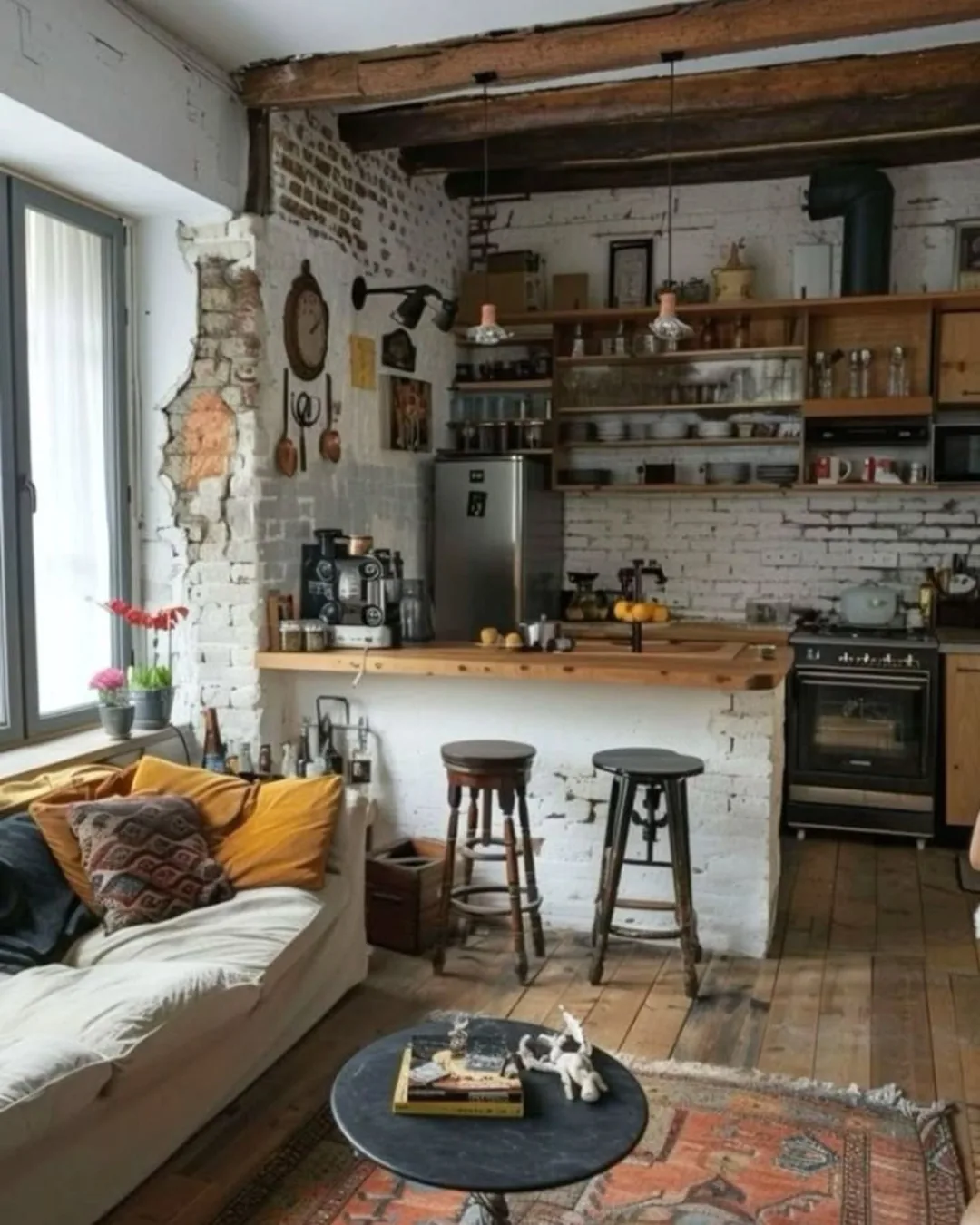
Open-plan living is wonderful, and it is also the trend that has destroyed more old apartments than any other. Knock out every wall and you lose the rooms, the doorways, the sense of moving through a home that has a history. One opening is usually enough.
Here, the kitchen flows into the living area with no wall between them — exposed white-painted brick, dark wooden ceiling beams, wide-plank floors, open shelves, a stove, an island with two stools on one side and a sofa, a patterned rug and a round coffee table on the other. The opening connects the two spaces without erasing either. You can cook and talk, and the apartment still has rooms.
The practical point: open the wall between the kitchen and the living room only. Keep the bedroom doors, keep the hallway, keep the rooms that make an old apartment feel like a home.
What Belongs in Storage During a Modernization?
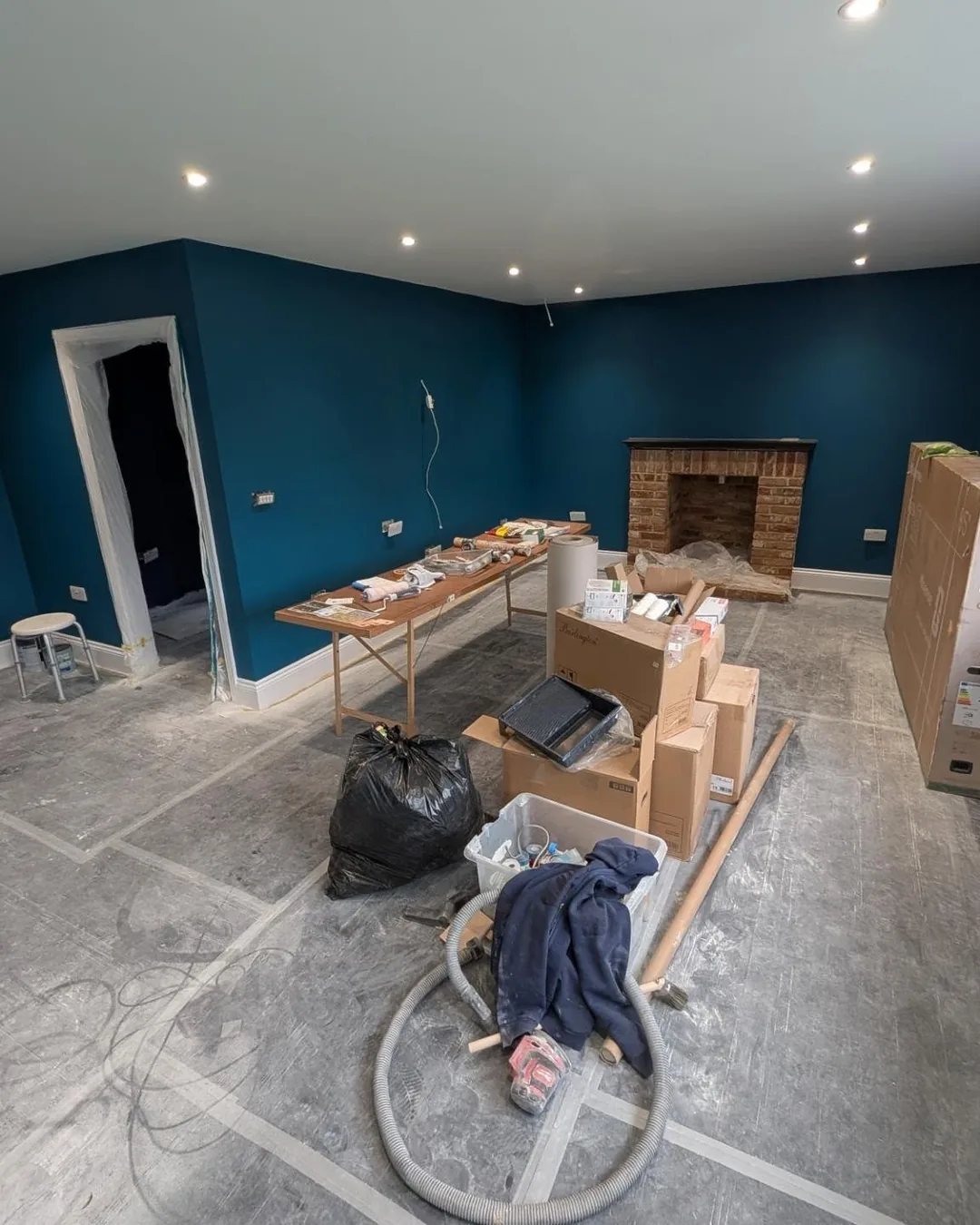
Renovation is messy, and the mess is what damages the things you meant to keep. Furniture gets scratched, rugs get painted, books get dusty. The answer is not to work around your belongings — it is to move them out of the way before the work starts.
This living room shows the right state: deep teal walls, the floor covered with protective sheeting and tape, stacked cardboard boxes, a work table with tools and materials, a brick fireplace waiting at the back. Everything valuable is boxed or covered, and the room is ready to be worked on instead of worked around. Storage is not a delay in the project — it is the part that protects the project.
The practical point: box and store everything you love before the first trade arrives. If it cannot be boxed, cover it with sheeting and tape the edges down.
Modern Lighting in Old Ceilings
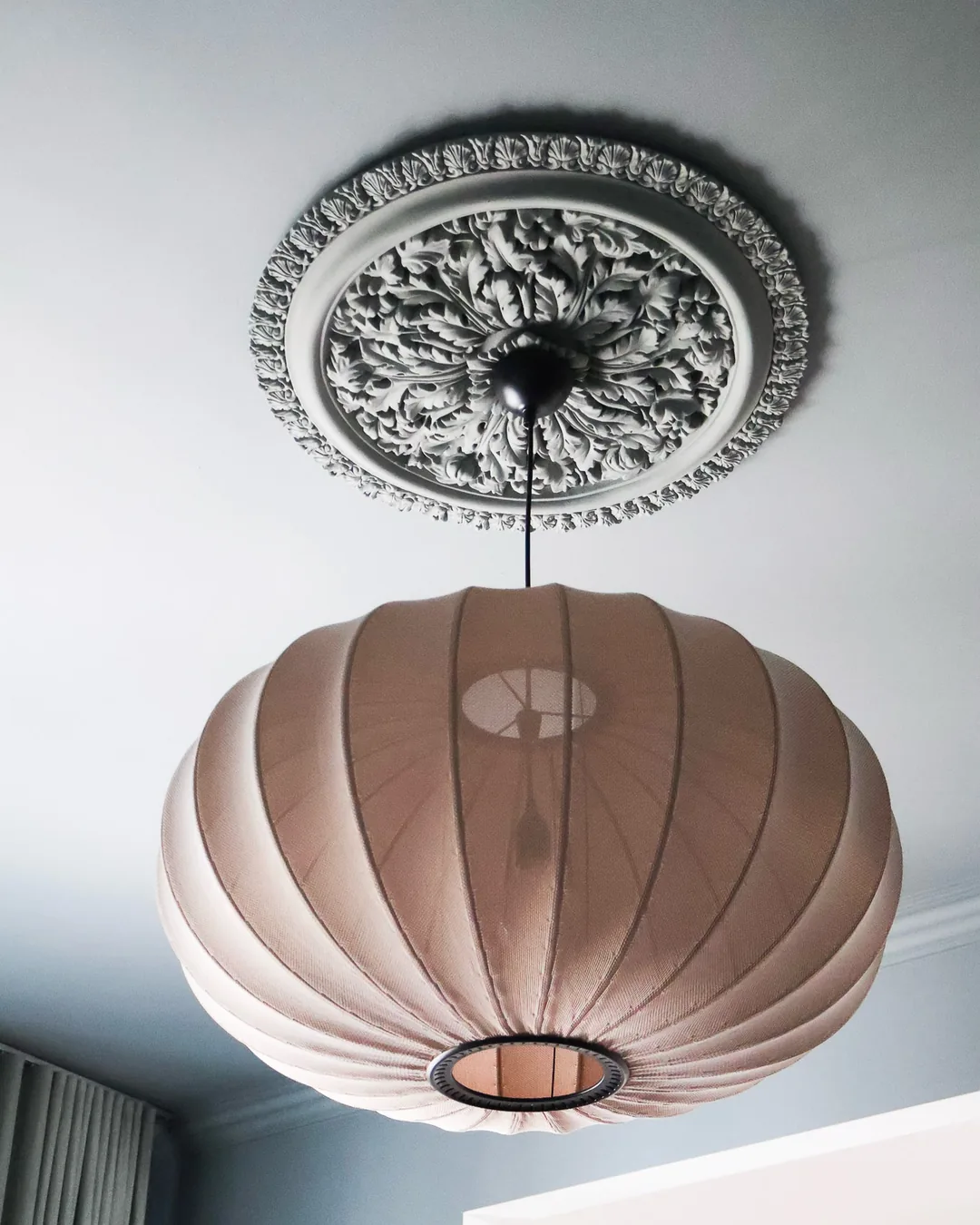
Old ceilings are the hardest-working feature in an old apartment — medallions, roses, cornices, heights that new builds never attempt. The mistake is hanging a period fixture to match them, which turns the room into a museum. Modern lighting against old plaster is the contrast that makes both look better.
One ornate grey plaster medallion, carved with floral relief, carries a single modern pendant — ribbed pink fabric, sculptural, unmistakably new. Nothing else competes in the frame. The ceiling stays historic, the light stays current, and the two together make the room feel designed rather than preserved.
The practical point: let the modern fixture be the only new thing in the ceiling’s line of sight. One contrast reads as a choice; two read as a clash.
Keep the Character Details Visible
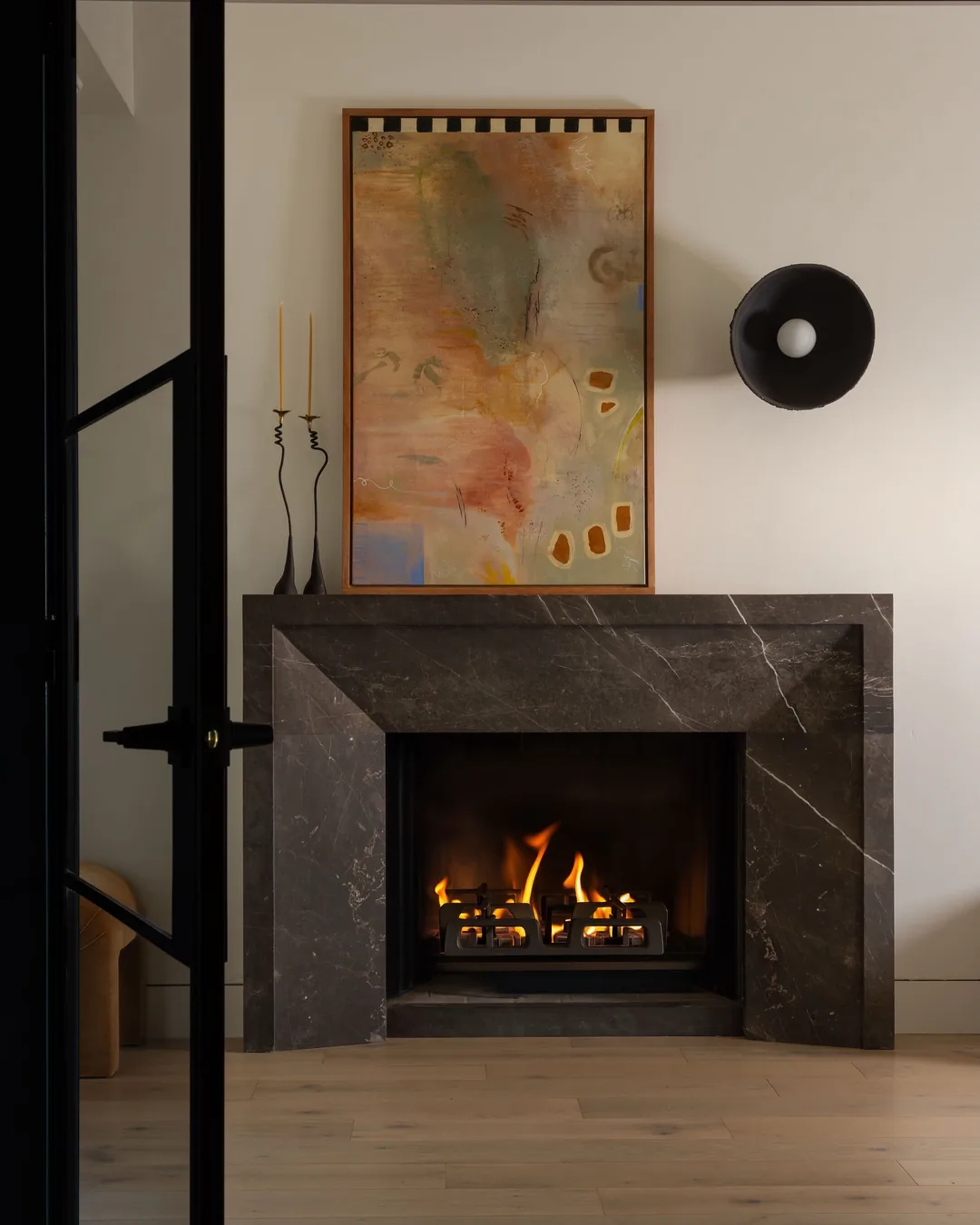
During a renovation, the easiest thing to do with an old fireplace is cover it. Drywall over it, paint it the wall colour, pretend it is not there. It is also the fastest way to erase the room’s best feature.
Here the fireplace stayed the centrepiece. Dark marble, a fire lit, a large abstract painting above the mantel, tall candlesticks, a modern black-framed glass door at the left edge, light wood floor underfoot. The room was reimagined around it, not in spite of it — and the fireplace is what you remember when you leave.
An entry that works as hard as the rooms behind it helps too — see Functional Drop Zone Ideas for the Things That Never Make It Past the Door.
The practical point: never hide an original fireplace, arch or cornice behind new work. If a feature is in the way, redesign around it — the feature is usually right.
A Bathroom Refresh That Respects the Era
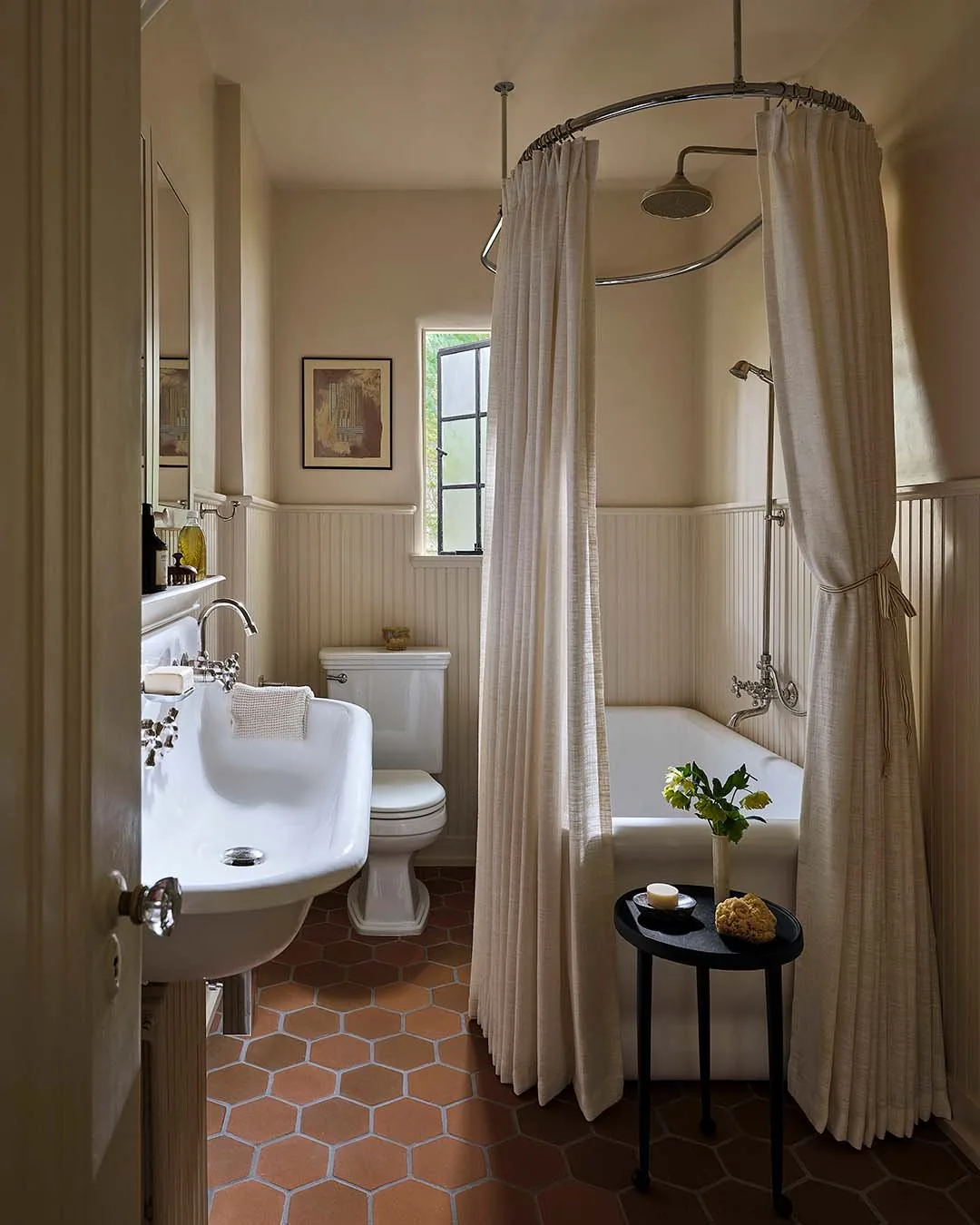
Old bathrooms are small, and small is what makes people gut them. But a 1927 bathroom has something a new one cannot buy: proportions, materials and details from an era when bathrooms were built to last.
Terracotta hexagonal floor tiles, cream walls with beadboard wainscoting, classic white fixtures — a wall-mounted sink, a toilet, a tub with a shower curtain on a circular rail — and a small black side table with a vase of yellow flowers. Nothing was gutted. The era character is intact, the styling is modern, and the room feels like it belongs to the house instead of fighting it.
The practical point: keep the original tile and fixtures when they work. Change the styling — paint, mirror, lighting, accessories — and the bathroom updates without losing its era.
Why the Hallway Deserves a Budget Too
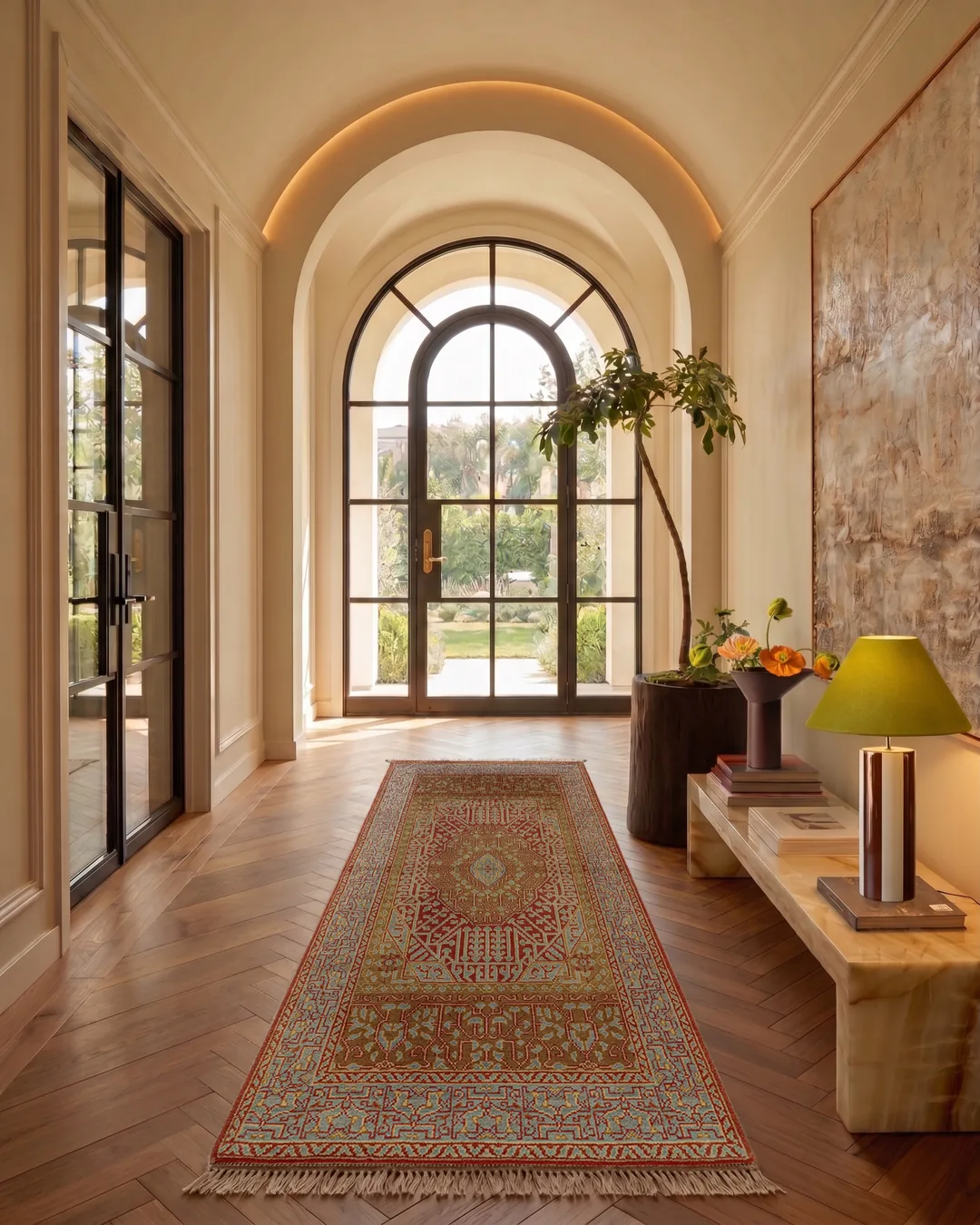
Hallways get whatever is left over, which is usually nothing. That is backwards, because the hallway is the first room anyone sees and the room you walk through a dozen times a day. In an old apartment it is also where the best architecture lives — arches, herringbone, mouldings — waiting for someone to spend a little money on it.
This hallway got the budget it deserved. Herringbone wood flooring, a long ornate runner rug in red, blue and beige down the centre, a large arched glass door at the far end, a marble console table with a green-shaded lamp, books and flowers, a large textured artwork on the wall. Old character and real spending, in the room everyone ignores.
The practical point: give the hallway a runner, a light and one piece of art. Three things, and the most walked-through room in the apartment stops feeling like a corridor.
Can New Furniture Sit Comfortably in an Old Room?
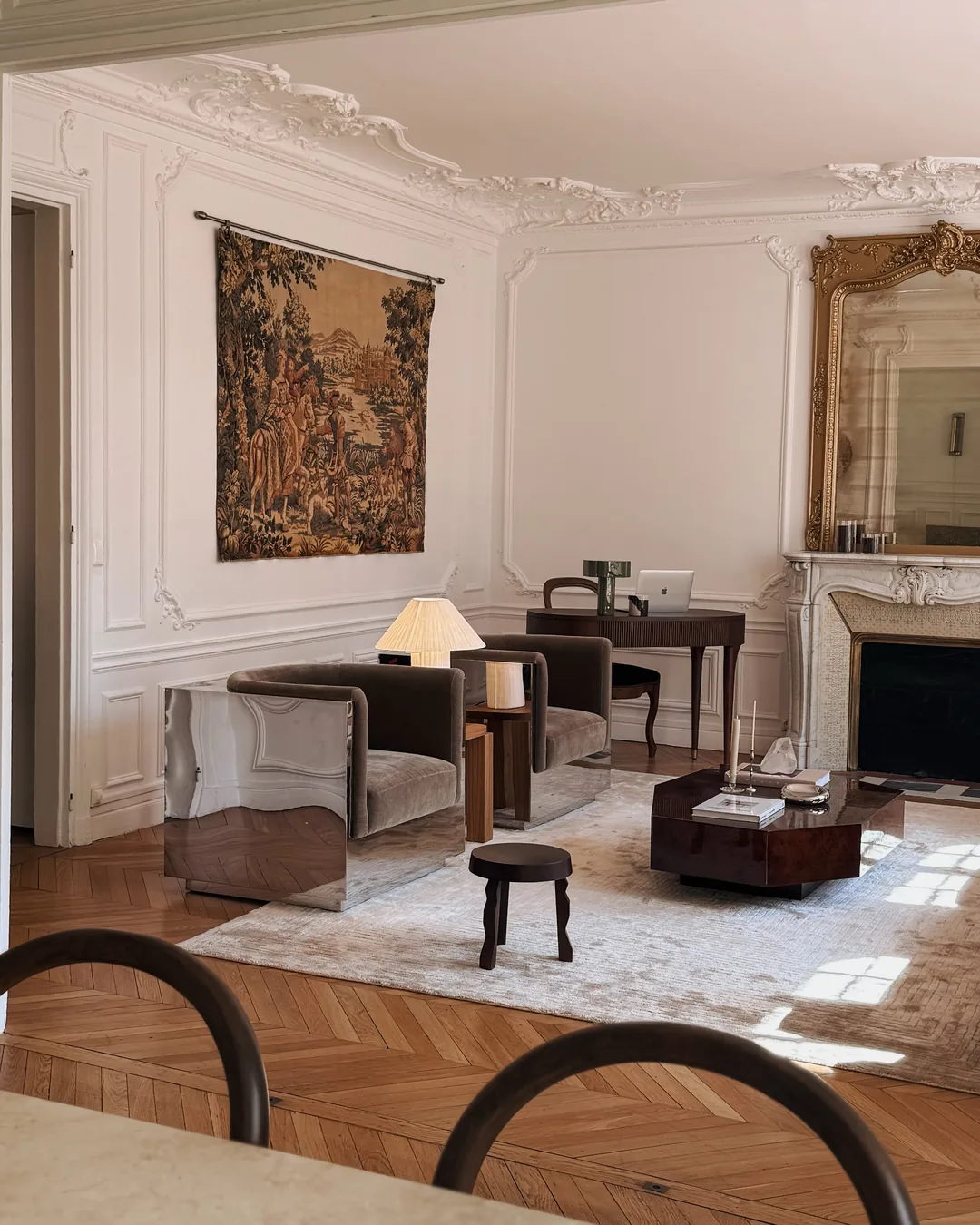
People worry that modern furniture will look wrong against old architecture, so they buy reproduction antiques and end up with a room that feels like a film set. The truth is the opposite: new furniture is what proves the old room still works.
In this Parisian room, ornate white plaster moldings and paneling, a large classical tapestry and a gilt mirror above a marble fireplace share the space with clearly contemporary pieces — two dark grey modern armchairs, a low dark-wood coffee table, a small stool. Herringbone floors tie it together. Old details, new forms, and the contrast is the whole point. The room does not pretend to be from one era, and that honesty is what makes it comfortable.
The practical point: buy the furniture you actually like, in a modern shape, and let the old room be the backdrop. One era per room is a museum rule, not a living rule.
The Small Fixes That Date a Room Most
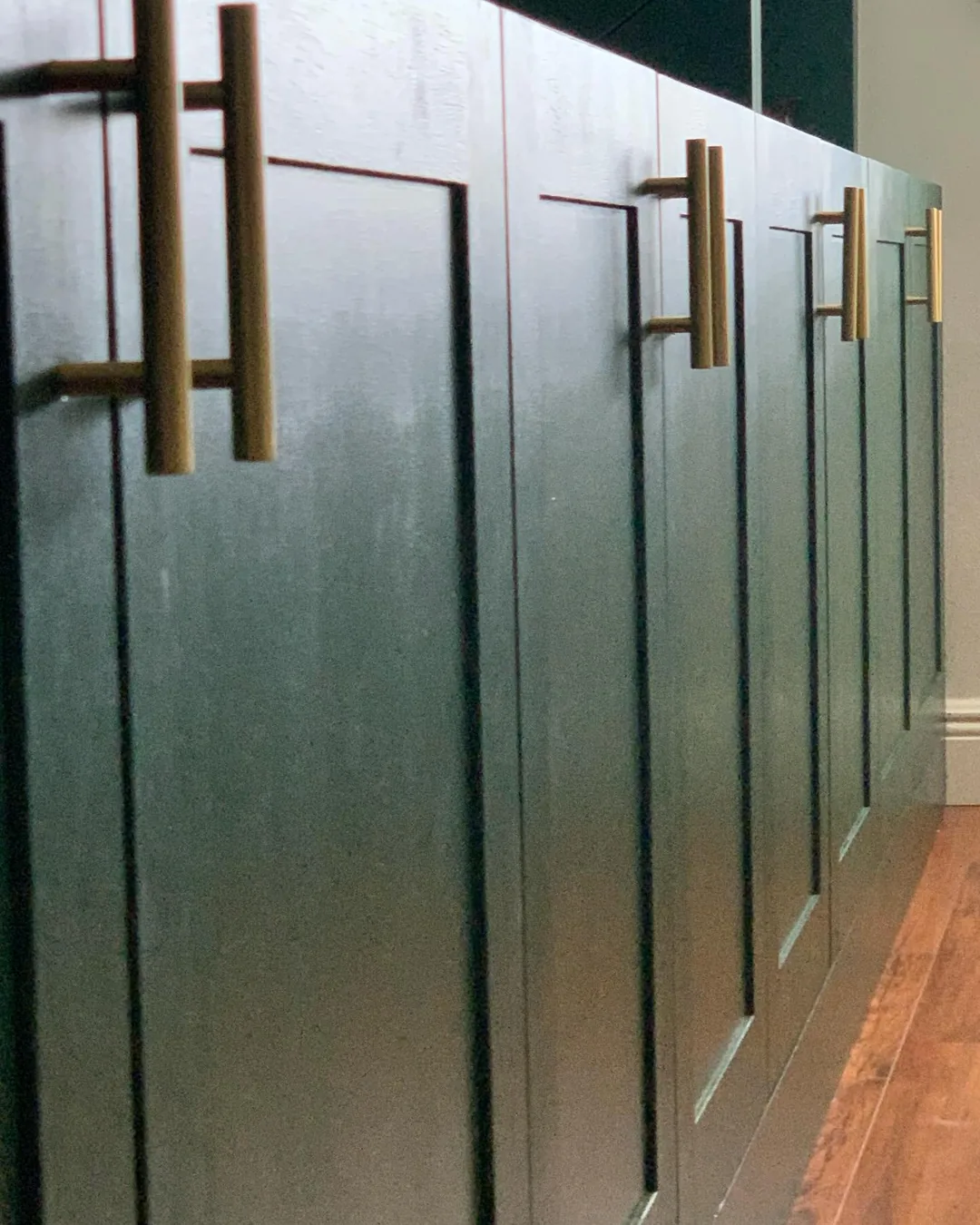
Nobody walks into a room and thinks about cabinet handles. That is exactly why handles date a room — they are the detail you touch every day and never notice until they change. Small fixes are the cheapest modernization there is, because they are the details your hands already know.
Dark green paneled cabinets, fitted with modern brass bar handles — the fix itself is the whole photograph. Recessed-panel doors, medium-toned hardwood floor, soft natural light. Nothing else changed, and the cabinets went from tired to current. A handle is a small thing, but it is a small thing you use fifty times a day.
The practical point: replace every handle, knob and pull in the apartment in one go. Matching hardware across rooms makes the whole place feel updated, even when nothing else changed.
Modernize in Layers, Not All at Once
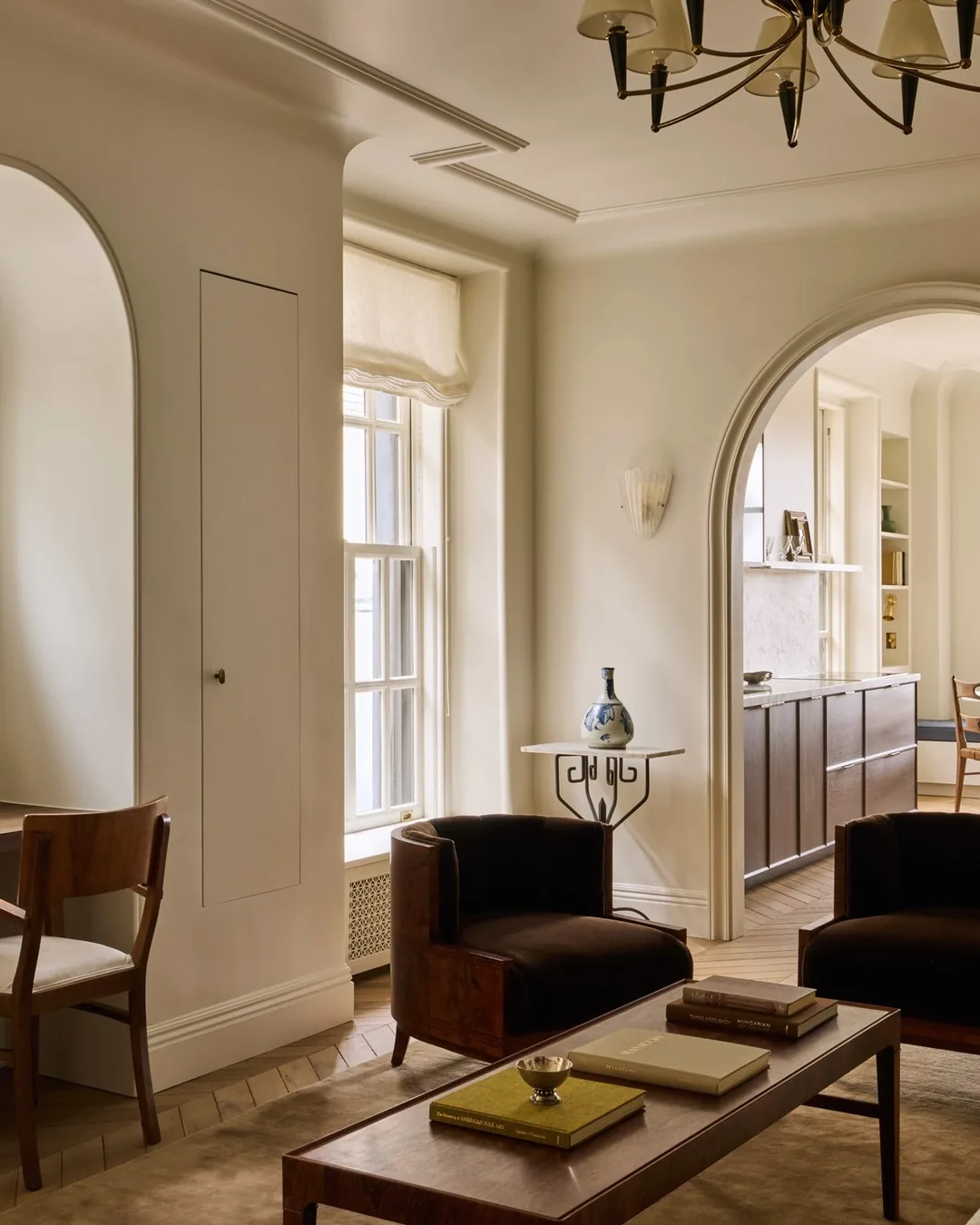
The biggest mistake in modernizing an old apartment is trying to do it all at once. One big renovation, one big bill, one big disruption — and a result that feels like a hotel instead of a home. Old apartments modernize best in layers, one decision at a time, lived in between.
Layered over time, this classic apartment shows how it works. Cream walls, arched doorways, herringbone wood flooring, a modern chandelier, two dark upholstered armchairs facing a wooden coffee table with books, a desk and chair at the left, a kitchenette visible through the far arch. Original architecture and modern pieces, added over time, nothing gutted. Each layer had time to settle before the next one arrived, and the room feels collected rather than installed.
The practical point: do one layer, live with it for a month, then do the next. The pauses are where the good decisions happen.
Old Bones, New Life
An old apartment does not need to become a new apartment. It needs paint where the paint is tired, fixtures where the fixtures are dated, floors refinished instead of replaced, and its best features left exactly where they have always been. Modernize the things that make daily life harder, and keep everything that makes the place irreplaceable.
Start with what is worth keeping. The rest will follow, one layer at a time.