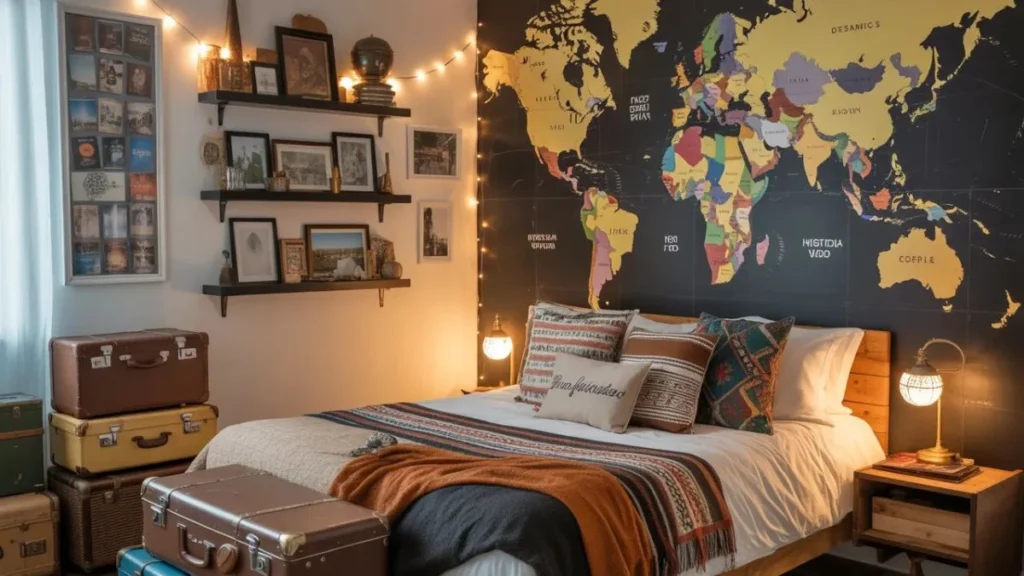
Most people return from travel with a suitcase full of memories and nowhere to put them. Seasoned world travellers do something different — they bring those memories home and let them reshape the rooms they sleep in. A globe-trotter bedroom is not about matching sets or colour-coded shelves. It is a living archive of everywhere you have been, every culture that moved you, and every moment worth keeping close.
What sets a true globe-trotter bedroom apart from a generic travel-themed room is intention. Every object has a story. Every textile was chosen somewhere far from home. Every colour was pulled from a landscape, a market, or a sunset. This guide goes behind the door of those well-travelled spaces to reveal exactly how it is done.
Start With a Layered Textile Foundation
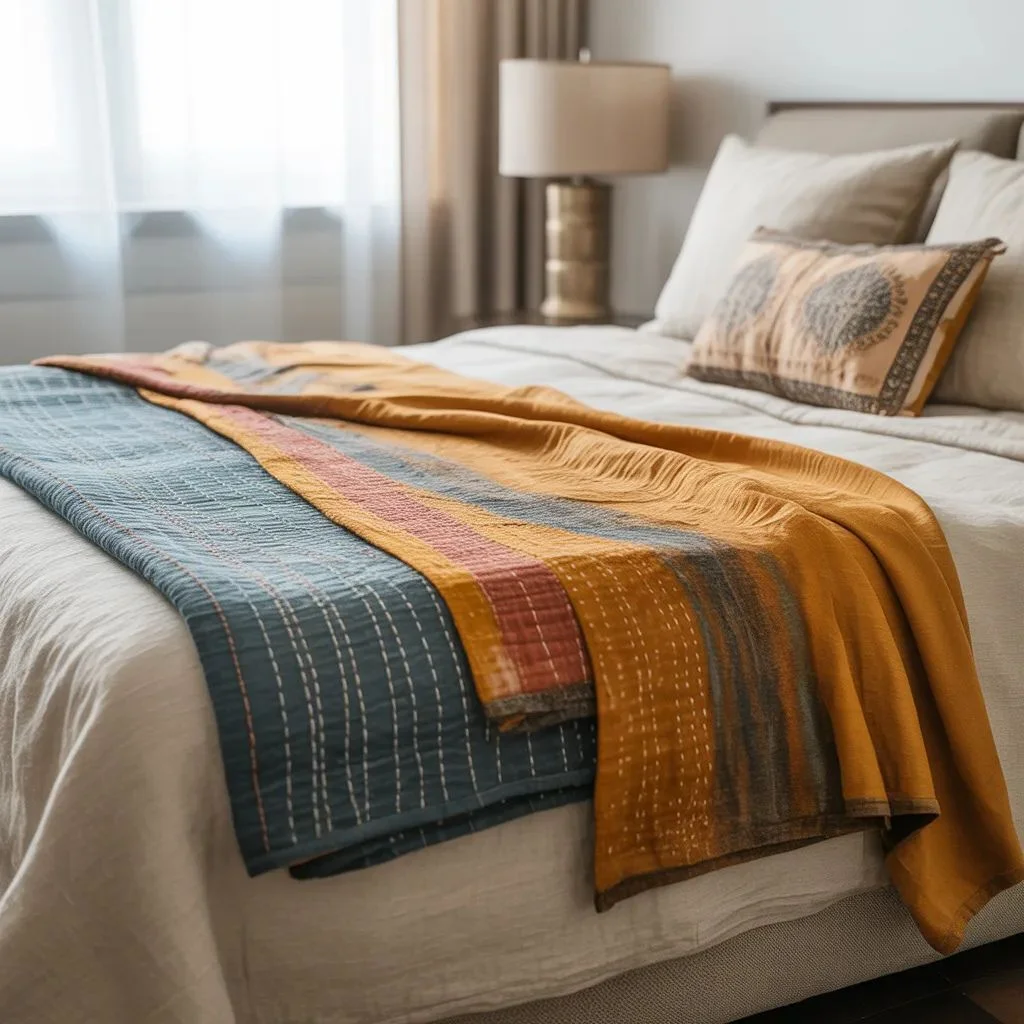
Every well-travelled bedroom starts with fabric. Textiles from different parts of the world carry distinct weaves, dyes, and patterns that no single country can replicate alone. A globe-trotter bedroom uses this to its advantage.
Think a kantha quilt from India folded at the foot of the bed. A mud-cloth throw from Mali draped across a chair. Embroidered cushions from Morocco stacked against European linen pillow cases. None of it matches perfectly, and that is precisely the point.
How to Layer Without Chaos
The secret is to anchor with neutrals. Keep the base bedding — duvet or fitted sheet — in a natural tone like ivory, taupe, or warm white. From there, you can layer almost any pattern or colour without the room feeling cluttered.
Key textures to mix: woven cotton, embroidered linen, hand-blocked print, ikat, and raw silk. Limit bold patterns to two or three items per layer so each piece has space to breathe.
Build a Souvenir Wall That Actually Works
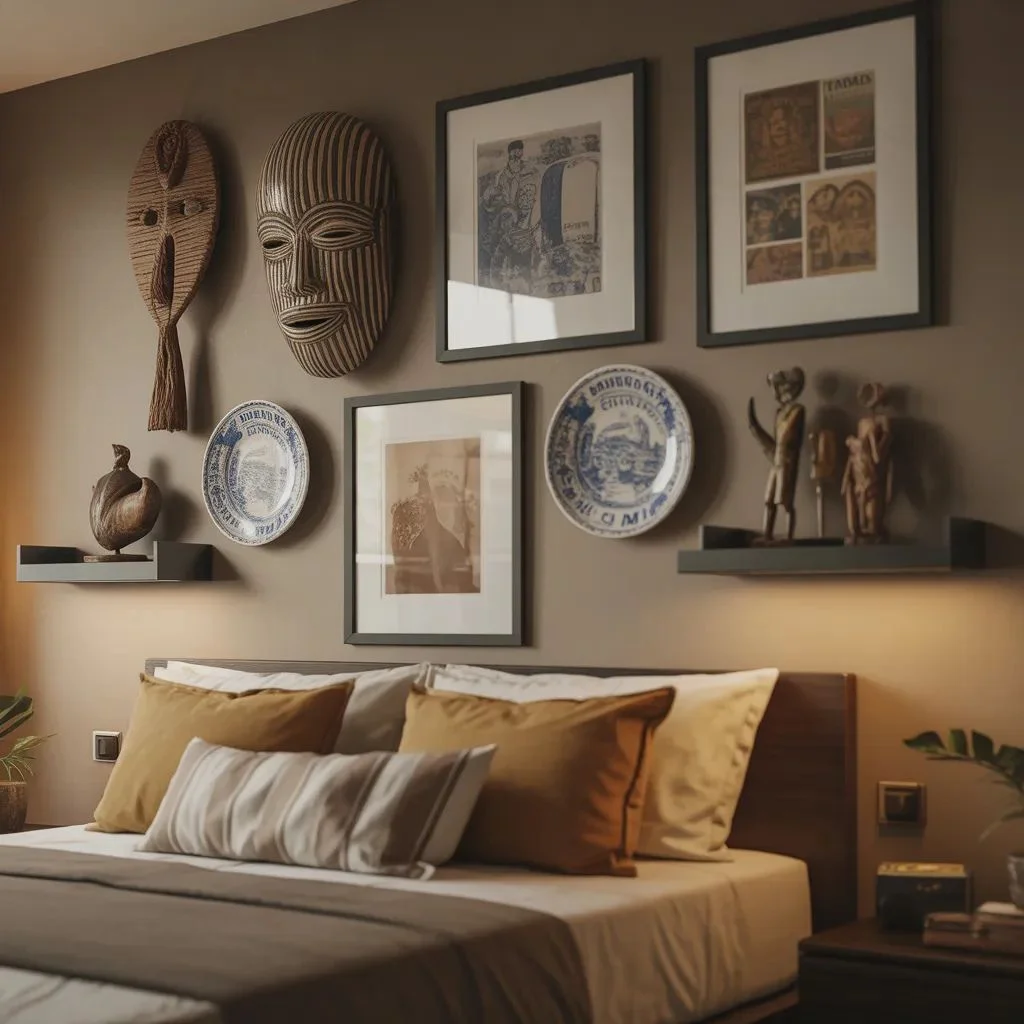
Souvenirs have a reputation for ending up in boxes. In a true globe-trotter bedroom, they become the focal point of the entire space. A souvenir wall done well tells a story at a glance — but it takes some structure to avoid looking like a cluttered jumble.
Start by grouping pieces thematically or geographically rather than randomly. A cluster of handwoven masks from West Africa. A row of ceramic plates from Portugal. Framed vintage postage stamps from South America. Groupings create visual coherence even when the pieces themselves are wildly varied.
Hanging Tips From Frequent Flyers
- Use black or brass frames to unify mismatched paper pieces
- Mount three-dimensional objects like carved bowls or textiles on thin floating shelves
- Leave deliberate gaps for future additions — the wall should keep growing
- Mix sizes intentionally: one large anchor piece surrounded by smaller items creates hierarchy
Use Colour Like a World Map
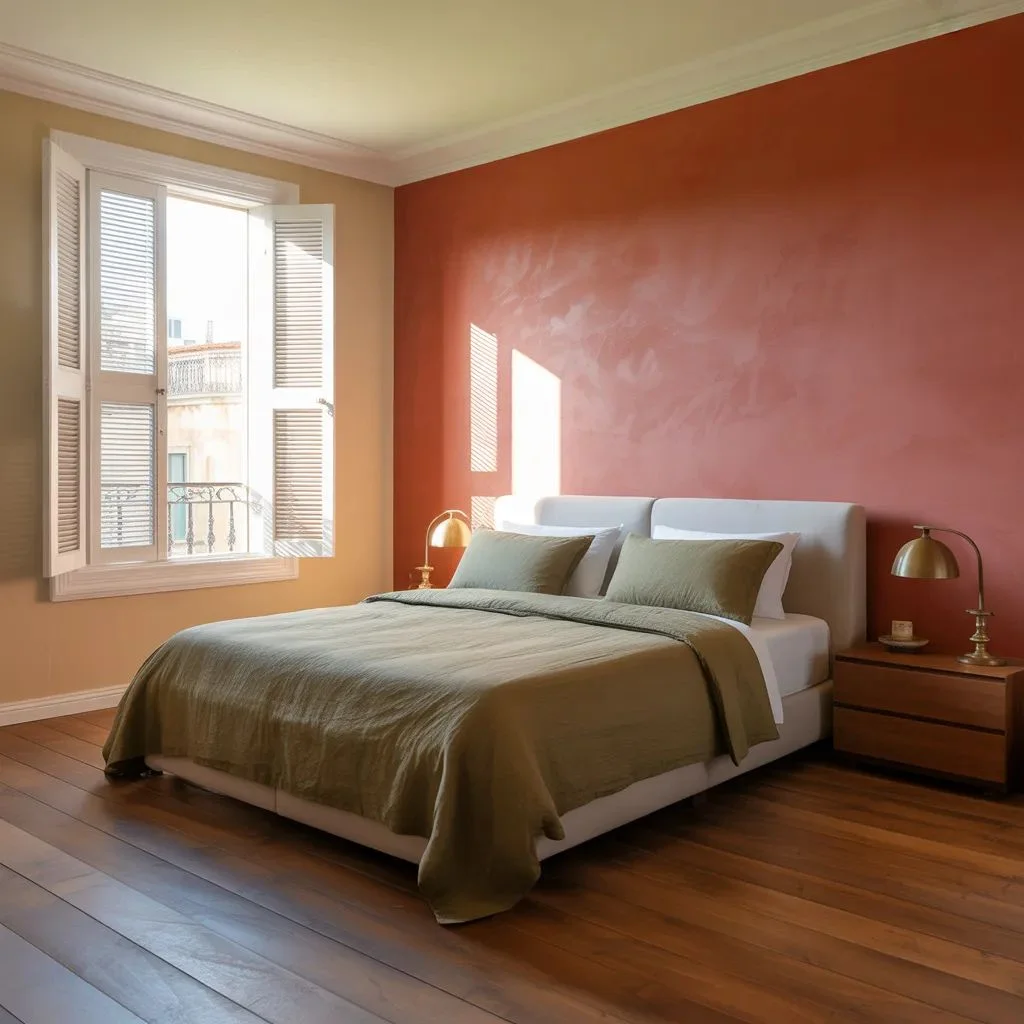
World travellers absorb colour differently. They have seen the terracotta rooftops of Tuscany, the vivid blues of Chefchaouen, the earthy reds of Rajasthan, and the green-grey mist of Kyoto. A globe-trotter bedroom uses colour as a reference to those places rather than to current interior trends.
This does not mean every wall needs to be painted. In fact, most well-travelled bedrooms keep walls neutral and let objects, textiles, and art carry the colour story. One accent wall in deep teal — reminiscent of Moroccan tiles — can anchor an entire room without overwhelming it.
Colour Combinations That Work
- Saffron + indigo + raw linen (South Asia-inspired)
- Terracotta + olive + warm white (Mediterranean)
- Deep teal + brass + ivory (North African)
- Forest green + rattan + sand (Southeast Asian)
- Navy + red + worn wood (Nautical European)
Pick one world region as your dominant palette and let other destinations appear as accents. This keeps the room cohesive without restricting its personality.
Bring in Cultural Furniture Pieces
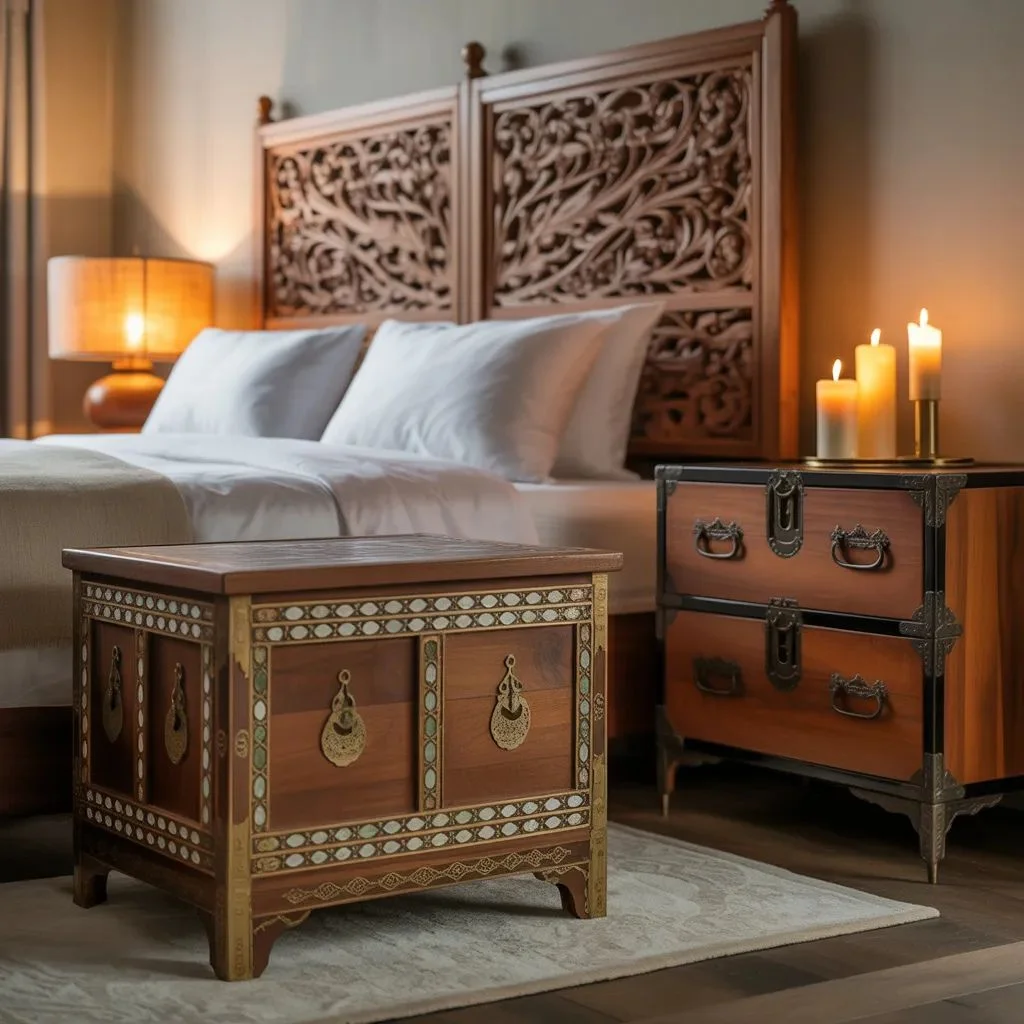
Furniture is where a globe-trotter bedroom either elevates itself or falls flat. Generic flat-pack furniture has no place here. What world travellers seek out are pieces with provenance — objects made using traditional craft techniques that you simply cannot find in a chain store.
A Moroccan cedar chest at the foot of the bed doubles as storage and conversation starter. A Japanese tansu cabinet replaces a standard bedside table. A hand-carved Indian jharokha window frame repurposed as a headboard becomes the entire personality of a room.
Sourcing Cultural Furniture Responsibly
Authenticity matters. Seek out fair trade artisan markets, heritage craft sellers, and ethical import businesses rather than mass-produced imitations. The difference is not just ethical — authentic pieces have a quality, warmth, and uniqueness that reproductions cannot replicate.
Charity shops, antique fairs, and estate sales in port cities are also reliable sources for genuinely travelled pieces at accessible prices.
Curate Lighting With a Global Eye
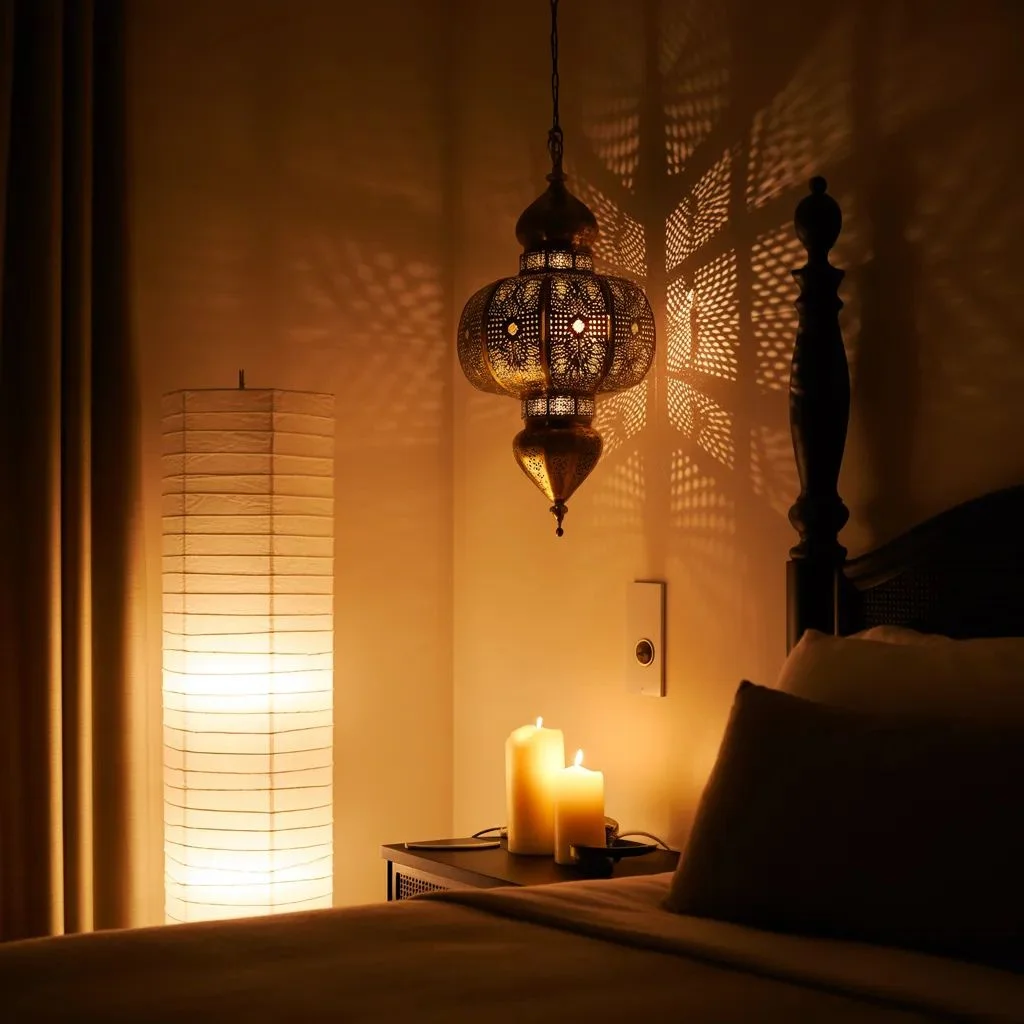
Lighting in a globe-trotter bedroom is never an afterthought. It is one of the most powerful ways to evoke the feeling of being somewhere else entirely. The right lamp does not just illuminate — it transforms the atmosphere of a room the moment it switches on.
Moroccan brass lanterns cast extraordinary dappled shadows. Indian jali pendant lights create geometric patterns across the ceiling. Washi paper lamps from Japan diffuse light into a warm, even glow that nothing synthetic can match. Indonesian bamboo shades filter light in a way that immediately feels tropical.
Layering Light Sources
World travellers tend to avoid overhead lighting as the sole source. Instead, they layer: a statement pendant for atmosphere, bedside lamps for reading, and candles or salt lamps for mood. This approach mirrors how light actually works in the cultures they admire — warm, intimate, and deliberate.
Layer Rugs the Traveller Way
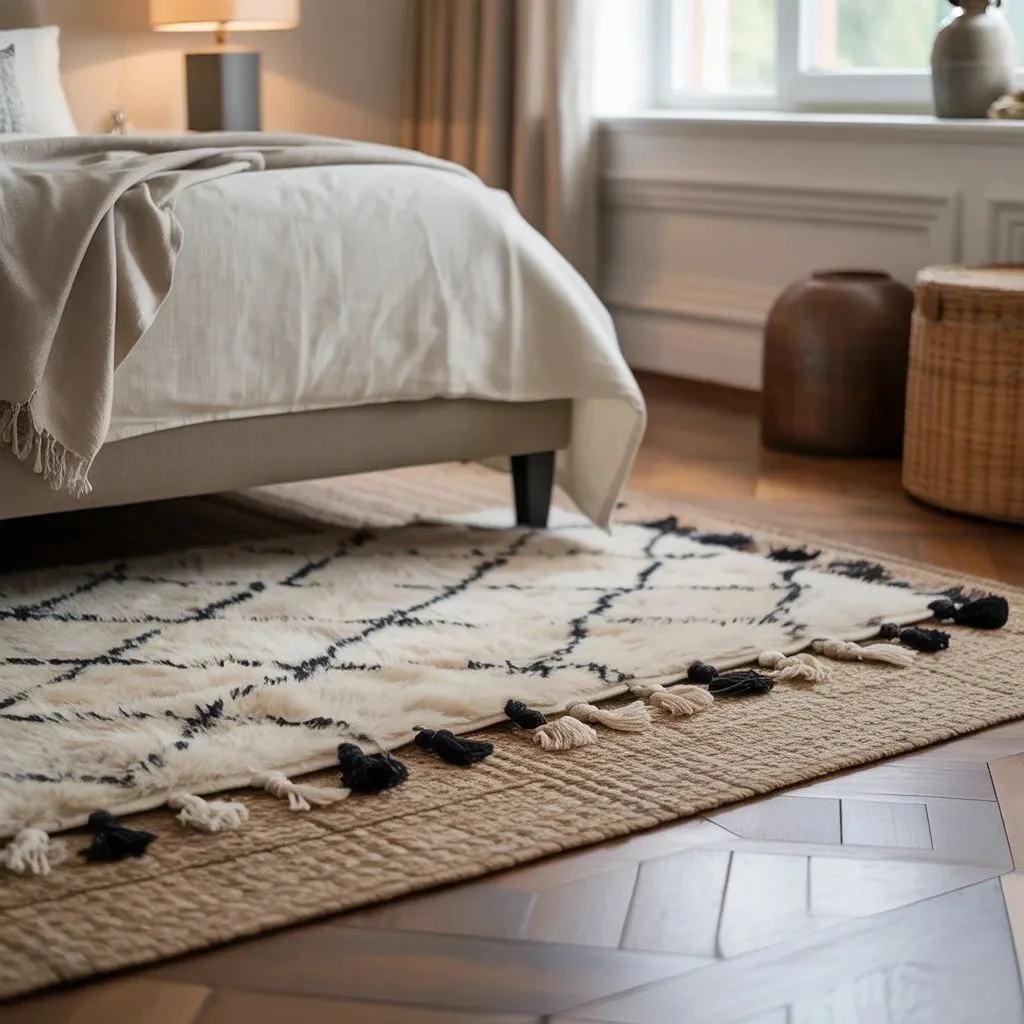
In a globe-trotter bedroom, the floor is not wasted space. Rugs from different traditions — kilim, dhurrie, Berber, Persian, or hand-tufted wool — are layered to create a sense of warmth and depth that a single fitted carpet never achieves.
The traveller approach is to start with a large, low-pattern base rug — jute, sisal, or a flatweave — and layer a smaller, more ornate piece on top. A vintage Moroccan Beni Ourain on top of a jute runner. A Turkish kilim anchoring the bed area over neutral coir. This builds visual richness without spending on a single expensive piece.
Rules for Rug Layering
- The base rug should be larger than the top layer by at least 30–40 cm on all sides
- Mix textures: pair high-pile with flatweave for contrast
- Align the top rug with the bed or a key piece of furniture for structure
- Worn or vintage rugs often layer better than new — imperfection adds character
Create a Destination-Inspired Reading Corner
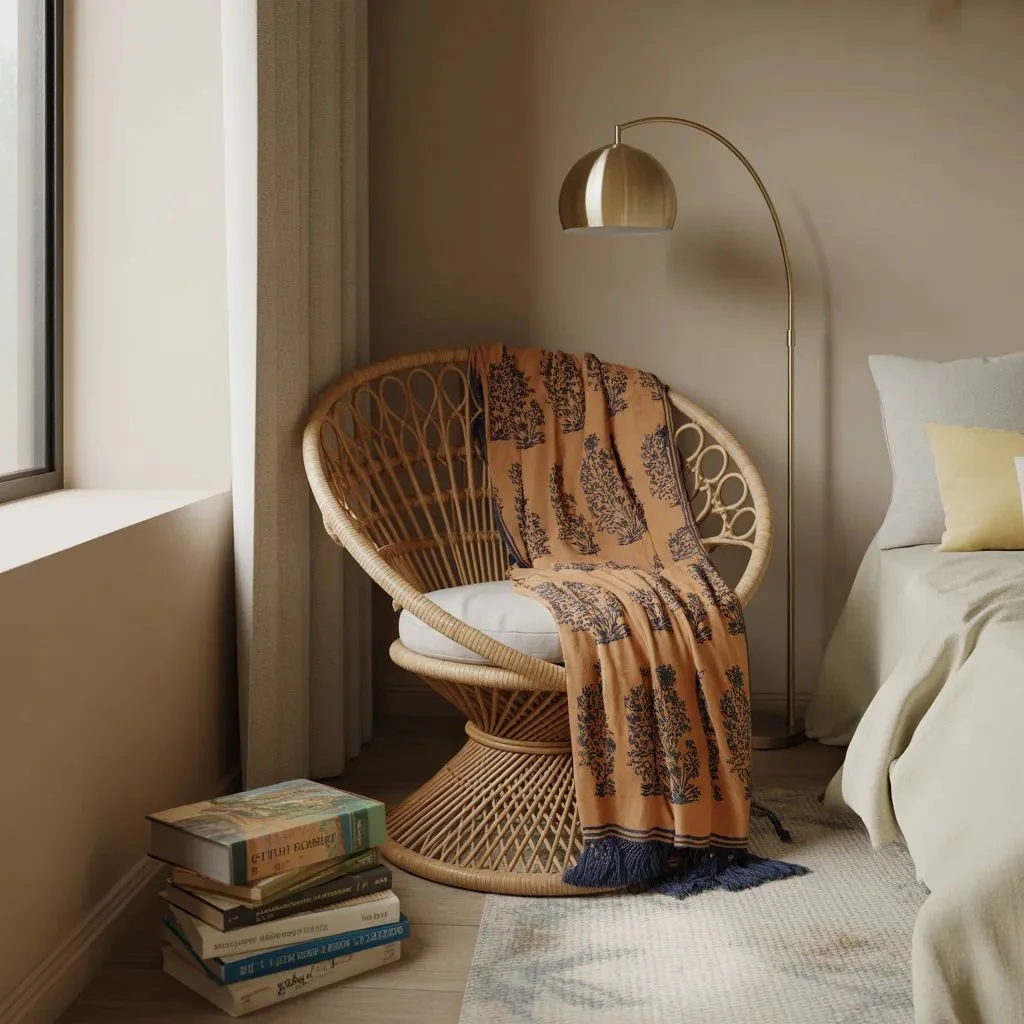
Every world traveller reads. And in a globe-trotter bedroom, the reading corner is often the most personal space of all — a little world within a world, styled around a favourite destination or a shelf of books that span continents.
A rattan peacock chair with an Indian block-print throw. A low Japanese floor cushion beside a lacquered side table. A Moroccan pouf tucked under a brass reading lamp. The formula is simple: choose one cultural starting point for the seat, one for the textile, and one for the light. Three origins, one cohesive corner.
What to Include
- A stack of destination-specific books or atlases — displayed spine-out for colour
- One sculptural object from a specific journey placed at eye level
- A small plant — trailing pothos, a succulent, or bamboo — for life and softness
- A woven or ceramic mug and small tray for evening drinks
Display Maps and Travel Ephemera Thoughtfully
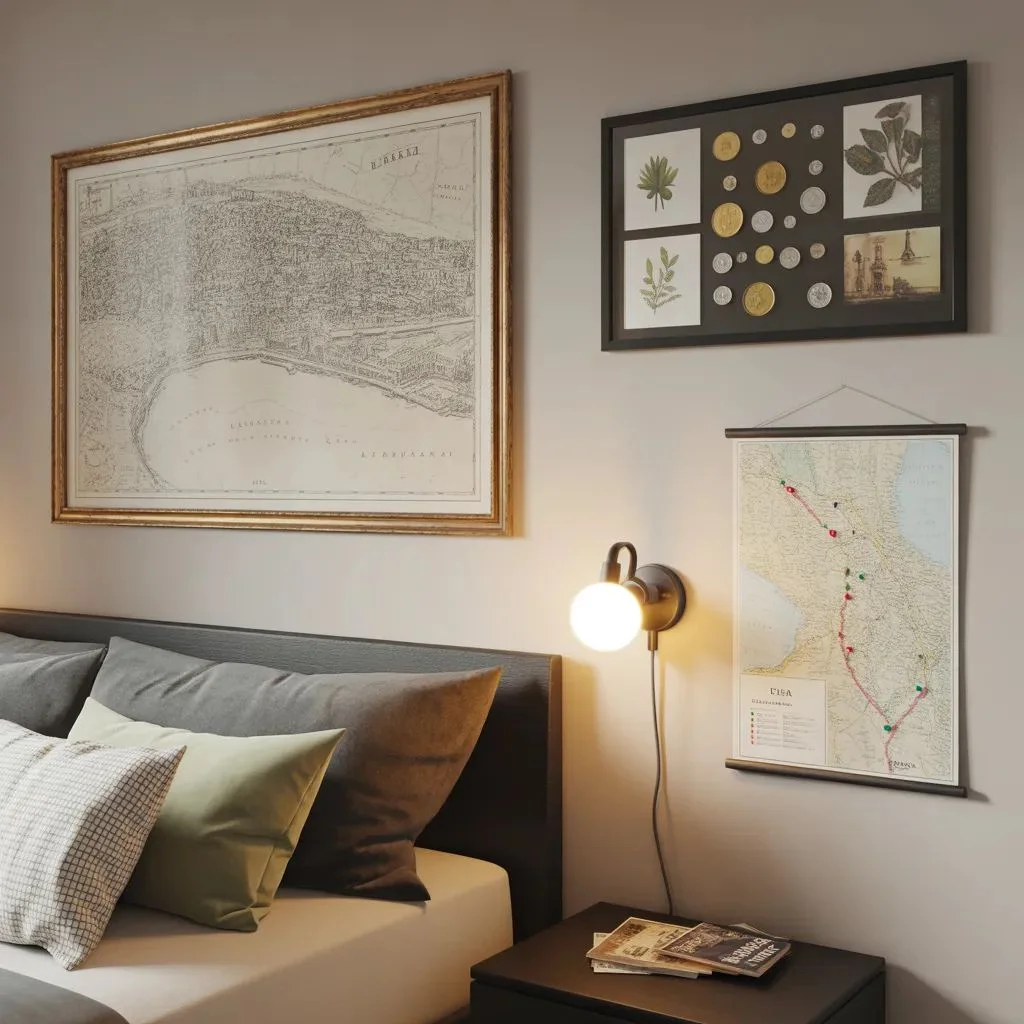
Maps are one of the most powerful visual elements in a globe-trotter bedroom, but they are frequently overdone. A generic world map printed on canvas from a discount shop does nothing. What works is specificity — a hand-drawn city map from a local artist in Lisbon, a vintage navigation chart from a market in London, or a topographical map of a mountain you once climbed.
Travel ephemera — old boarding passes, pressed flowers from a foreign hillside, foreign coins, ticket stubs — deserves the same treatment. Framed individually in small frames or collected into a single shadow box, these objects become deeply personal art. They mean nothing to a stranger and everything to you, which is exactly the right level of intimacy for a bedroom.
Quick Display Ideas
- Pin routes you have taken on a cork-backed world map
- Frame foreign currency notes in a grid of identical thin frames
- Shadow box a single meaningful collection from one specific trip
- Lean a large vintage map against the wall rather than hanging it — easier to swap
Keep It Personal, Not Pinterest-Perfect
The most common mistake people make when designing a globe-trotter bedroom is trying to make it look curated for an audience rather than lived in by a person. World travellers do not decorate for approval. They decorate for memory.
That means the slightly worn kilim stays. The chipped ceramic pot from a Greek market stay. The imperfect framing of a photograph taken at 6am in Vietnam stays. Imperfection is not a flaw in a globe-trotter bedroom — it is evidence of a life fully lived.
Let the room grow over time. Resist the urge to fill every surface on day one. Leave space for the piece you have not found yet — the one waiting on a shelf in a city you have not visited. That ongoing incompleteness is what gives the room its energy.
Where Every Mile Finds a Home
A globe-trotter bedroom is the most personal room you will ever design, because no one else can replicate it. It is built from places you have been, objects you have genuinely carried home, and colours you have seen with your own eyes. That is something no interior designer can manufacture and no trend can replace.
Start with one piece that truly means something. Let the room grow from there. The world is full of beautiful things waiting to find a wall, a shelf, or a corner in the room you sleep in every night.
Highly Recommended: A Checkered Tile Patio Turned My Boring Backyard Into a Showstopper.