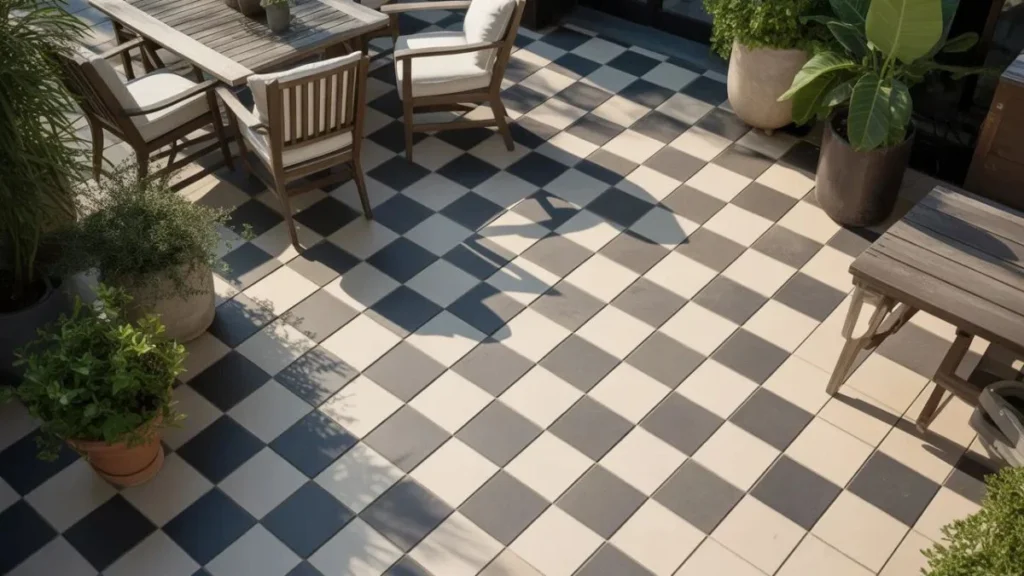
My backyard used to be the one outdoor space I avoided. Cracked concrete, zero personality, and nothing that made me want to linger. One checkered tile patio later? I genuinely can’t stay inside.
If you’ve been staring at a dull, lifeless patio and wondering how to fix it without a full-scale renovation, this is your answer. A checkered tile patio brings instant visual drama, a timeless pattern that never dates, and a surprisingly accessible weekend-level upgrade. Here’s exactly what changed in my backyard — and what you need to know to pull it off in yours.
Why a Checkered Tile Patio Hits Differently Than Other Flooring Options
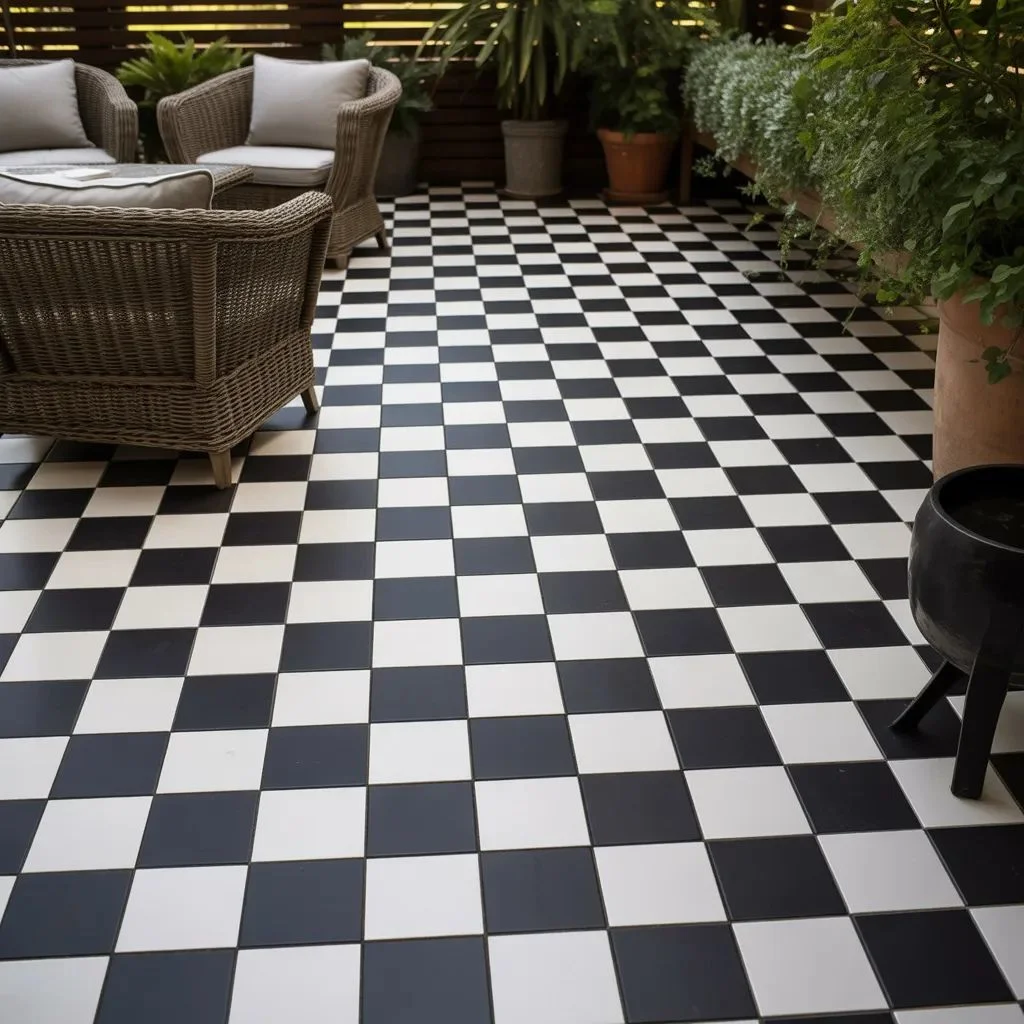
There’s a reason the checkerboard pattern keeps showing up — from vintage diners to high-end terraces. Checkered tile patios work because they’re bold without being trendy. They carry the kind of classic authority that makes a space feel intentional rather than accidental.
Most outdoor flooring options make a quiet statement. Plain concrete says ‘functional.’ Pavers say ‘standard.’ But a checkered tile patio says something completely different — it says this space was designed, not just installed.
That contrast, whether you go classic black and white or something unexpected like terracotta and cream, creates optical interest that makes even a small patio look considered and complete.
How Choosing the Right Tile Colour Changed Everything
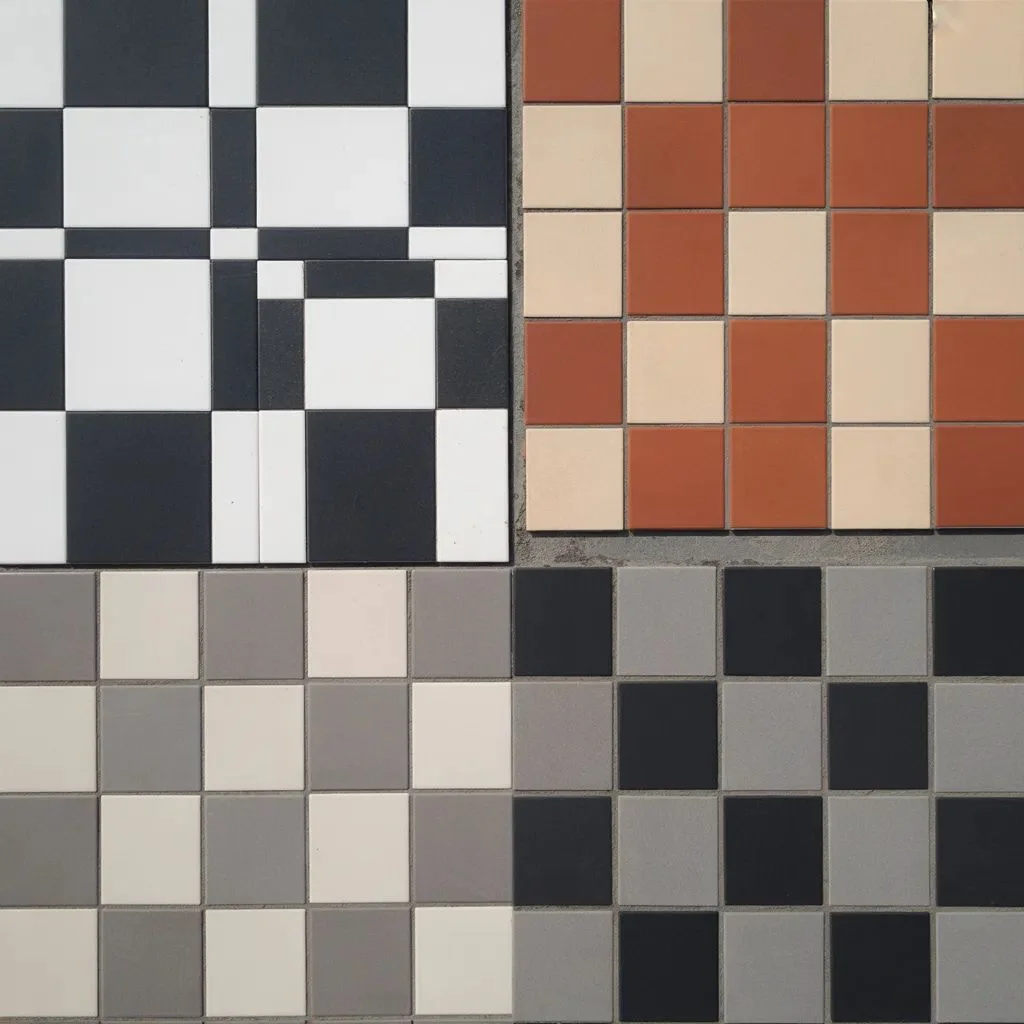
When I first started planning my checkered tile patio, I assumed black and white was the only real option. It’s not — and exploring colour was what made the project feel truly mine.
Colour combinations that work beautifully outdoors include:
- Classic black and white: Timeless, high-contrast, pairs with almost any furniture style
- Navy blue and crisp white: Hamptons-inspired and sophisticated, ideal for coastal or modern homes
- Terracotta and cream: Warm, earthy, and perfect for Mediterranean or boho-leaning spaces
- Charcoal and light grey: Sleek and contemporary without the hard contrast of black
- Sage green and off-white: Fresh and garden-forward, gorgeous surrounded by planters
I went with charcoal and pale stone — soft enough to feel relaxed, graphic enough to still stop people in their tracks. The checkered tile patio color you choose sets the entire mood of your outdoor space, so don’t rush this step.
Porcelain vs Ceramic: What Material Actually Works Outdoors
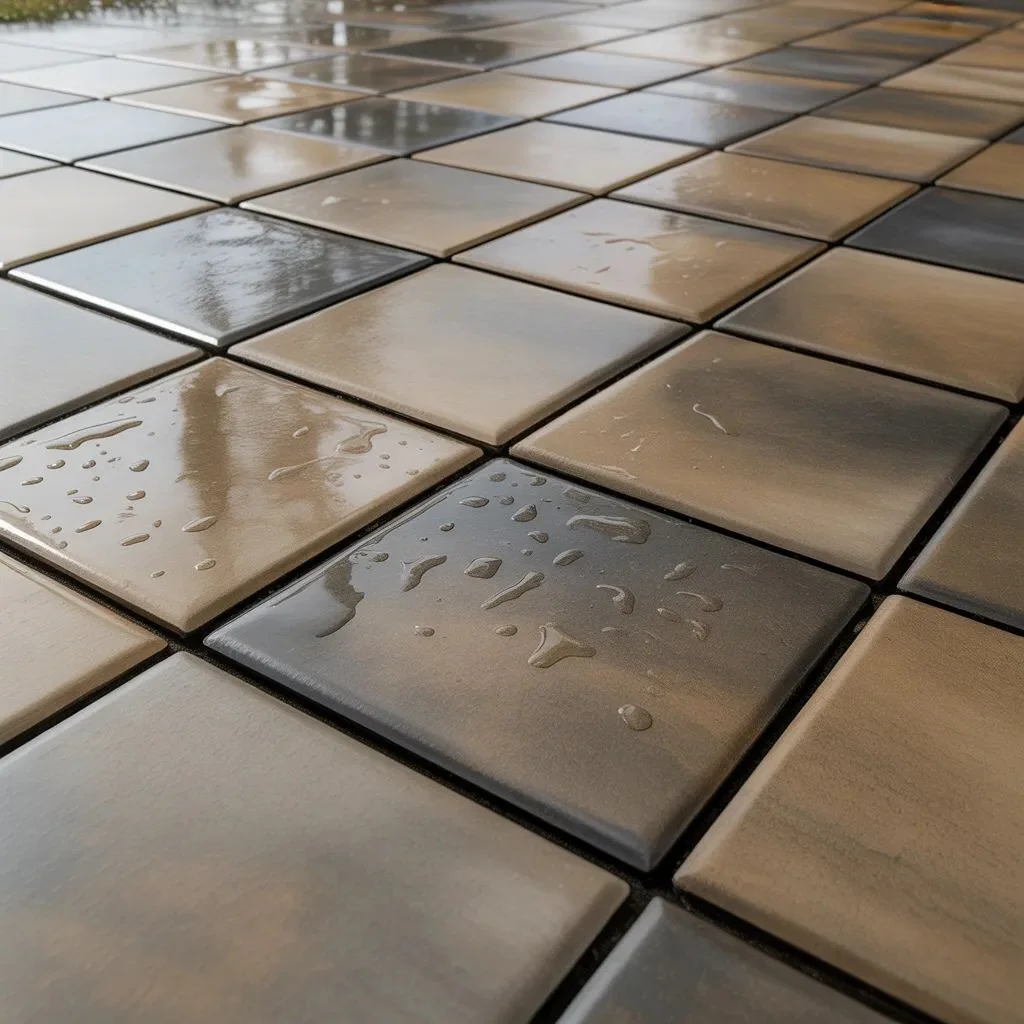
Not all tiles are built for outdoor life. Before you fall in love with a specific look, you need to understand what survives rain, frost, heat, and foot traffic. For a checkered tile patio, porcelain is almost always the right call.
Porcelain tile is denser, less porous, and more resistant to moisture than standard ceramic. It handles freeze-thaw cycles without cracking, resists fading in direct sun, and stays cleaner with less maintenance. For outdoor use, look for tiles rated with a PEI (Porcelain Enamel Institute) rating of 4 or 5, which indicates heavy-duty durability.
If you’re working in a covered patio or a mild climate, ceramic can work — but for most open-air installations, porcelain is worth the small extra investment. My checkered tile patio used matte-finish porcelain in 12×12 tiles, and two years on, it still looks exactly as it did on day one.
Layout and Tile Size: Getting the Pattern Right for Your Space
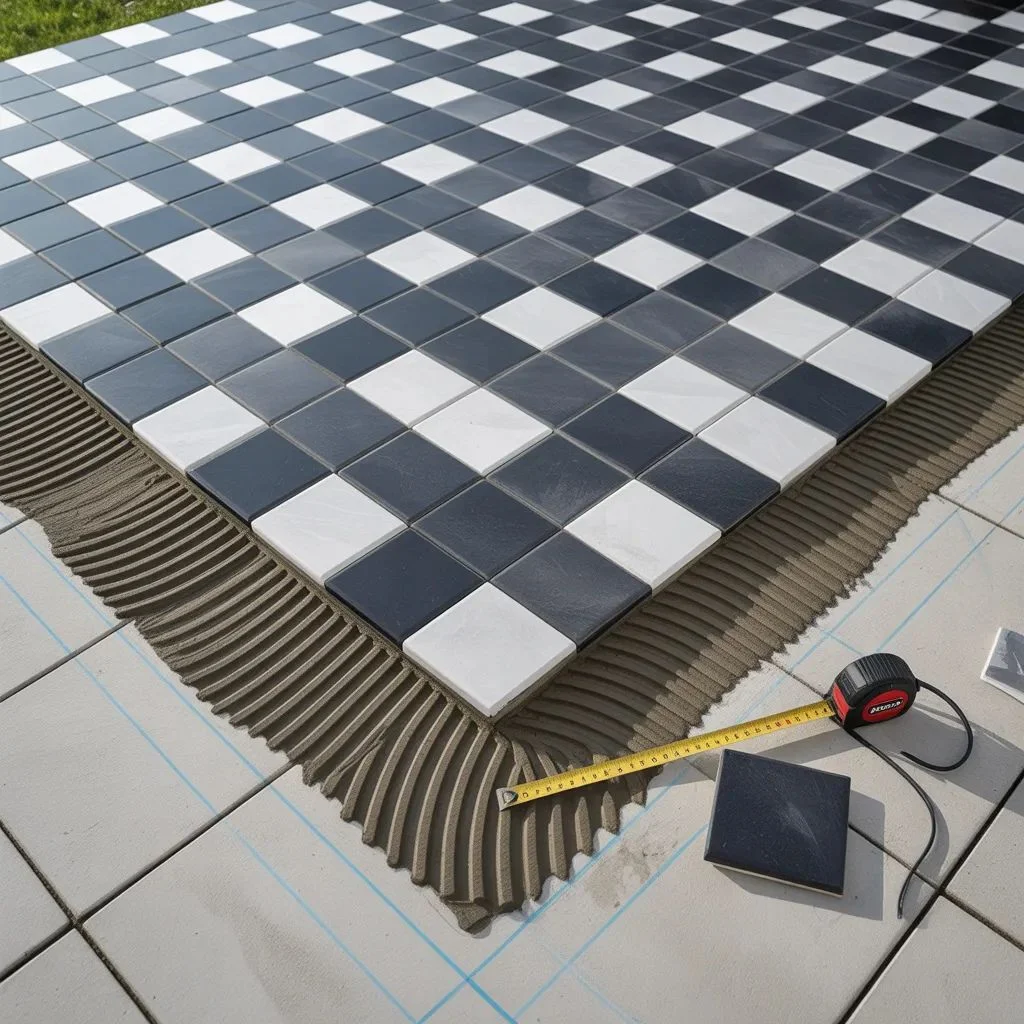
A checkered tile patio lives or dies by its layout. Get the proportions wrong and the pattern looks off. Get it right and the whole patio feels cohesive and grounded.
A few things to consider before you start:
- Tile size relative to space: 12×12 inch tiles work in most standard patios. Go up to 18×18 or even 24×24 for a large open space — smaller tiles on a big patio can look busy and cramped
- Diagonal vs straight set: Laying tiles on a 45-degree diagonal adds movement and elegance. A straight set feels more structured and modern — both are beautiful, just different moods
- Centering the pattern: Always start from the center of the patio and work outward. Starting at the edge leads to awkward cut tiles at the focal point
- Grout colour: A matching or slightly lighter grout makes tiles blend softly. A dark or contrasting grout sharpens the graphic effect — great for high-contrast color combos
The layout planning stage took me longer than the actual install. But it’s what made my checkered tile patio look like it was professionally designed, not DIY’d on a Sunday afternoon.
Styling Around a Checkered Tile Patio to Make It Look Intentional
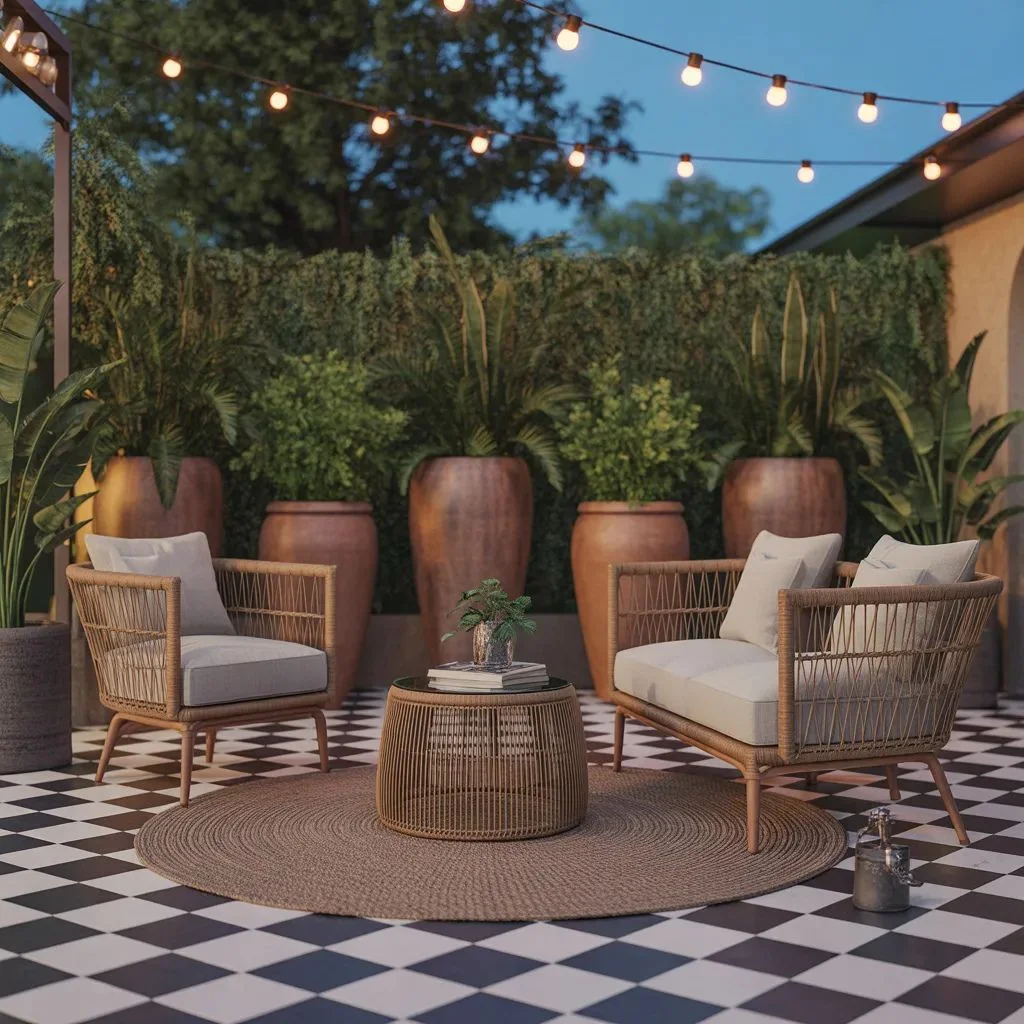
Once your checkered tile patio is down, the real magic happens in how you style around it. A strong floor pattern is an anchor — everything else should respond to it, not compete with it.
What works best:
- Keep furniture simple: Rattan, linen, natural wood — clean lines that let the tile be the statement. Busy furniture patterns fight the floor
- Go big with plants: Oversized potted olive trees, trailing ferns, or sculptural succulents add organic softness against the geometric hardness of the tile
- Use solid-colour textiles: Outdoor cushions, rugs, and throws in one or two solid tones pull the palette together without adding visual noise
- Add ambient lighting: String lights or lanterns at night make a checkered tile patio look genuinely editorial — that pattern picks up light beautifully
- Choose a focal point: A bistro table, a fire pit, or even a sculptural planter placed at the visual center of the pattern grounds the whole space
My patio now has two rattan chairs, a side table, and about six oversized planters. Simple, but against that checkered tile patio, it looks like something out of a magazine.
Maintenance Tips That Keep a Checkered Tile Patio Looking Sharp
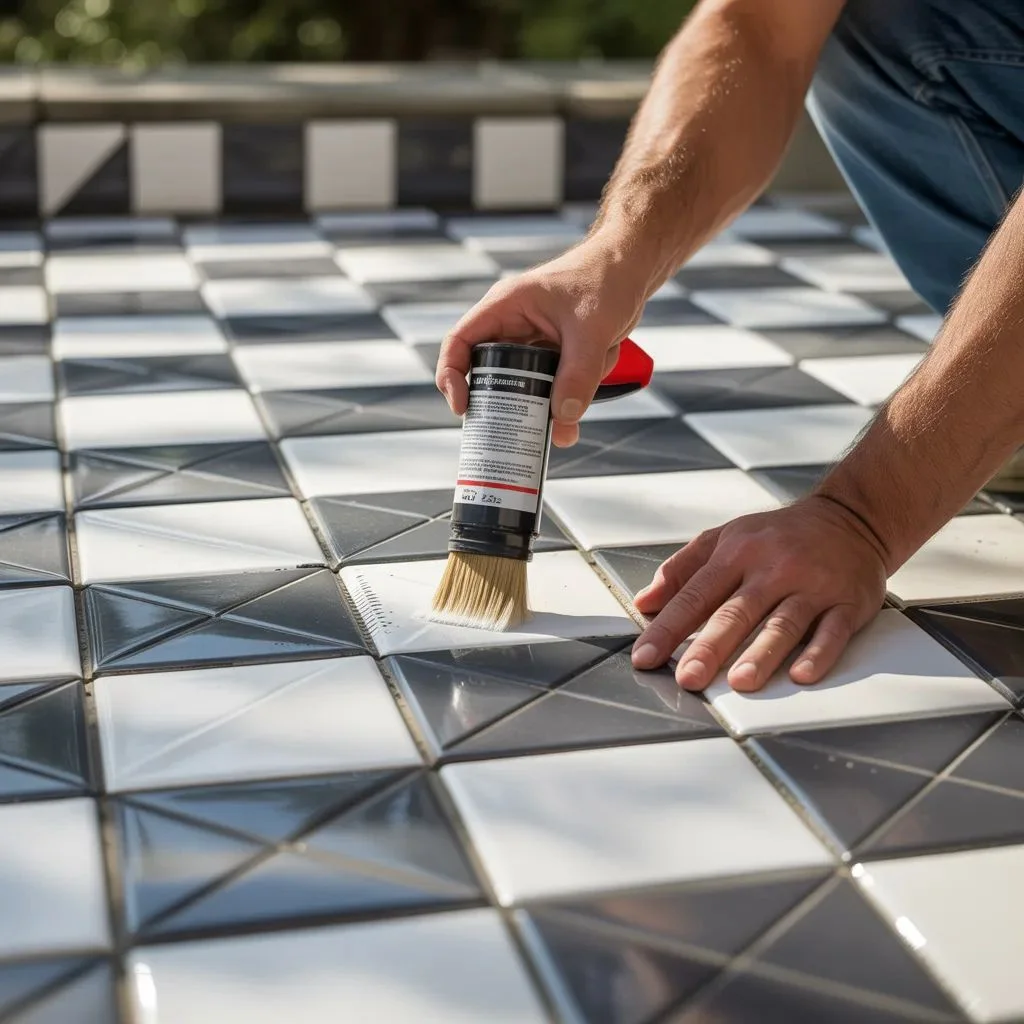
One of the biggest reasons to choose a checkered tile patio over other outdoor flooring is how little effort it takes to maintain. But there are a few habits that keep it looking pristine year-round.
- Seal the grout annually: Outdoor grout is vulnerable to staining and cracking. A penetrating grout sealer takes 30 minutes once a year and makes a huge difference
- Sweep regularly: Dirt and debris settle into the pattern gaps. A quick weekly sweep is all it needs
- Spot clean spills fast: Porcelain doesn’t stain easily but grout can absorb liquids if they sit. Rinse spills quickly with clean water
- Pressure wash seasonally: Once or twice a year, a light pressure wash brings the whole surface back to looking brand new
- Check for chips after winter: Even frost-resistant tile can develop minor edge chips in harsh climates. Catching and addressing these early prevents larger damage
In practice, my checkered tile patio requires less upkeep than the plain concrete it replaced. It just looks significantly better doing it.
From Concrete Slab to Outdoor Sanctuary
A checkered tile patio isn’t just a flooring upgrade. It’s a mindset shift about what your outdoor space can be. It took my backyard from a place I walked through to a place I live in — morning coffee, evening wine, and every slow weekend afternoon in between.
The pattern is timeless enough to outlast any trend cycle. The material is tough enough to handle whatever the seasons throw at it. And the visual impact is immediate — the kind of change that makes people stop and ask what you did.
If your patio has been letting you down, start here. Pick your colour combination, choose porcelain, plan your layout from center outward, and let the tile do the heavy lifting. Your backyard showstopper is closer than you think.
Recommended: Bold Western Ranch Living Room Looks Rooted in Authentic Cowboy Tradition.