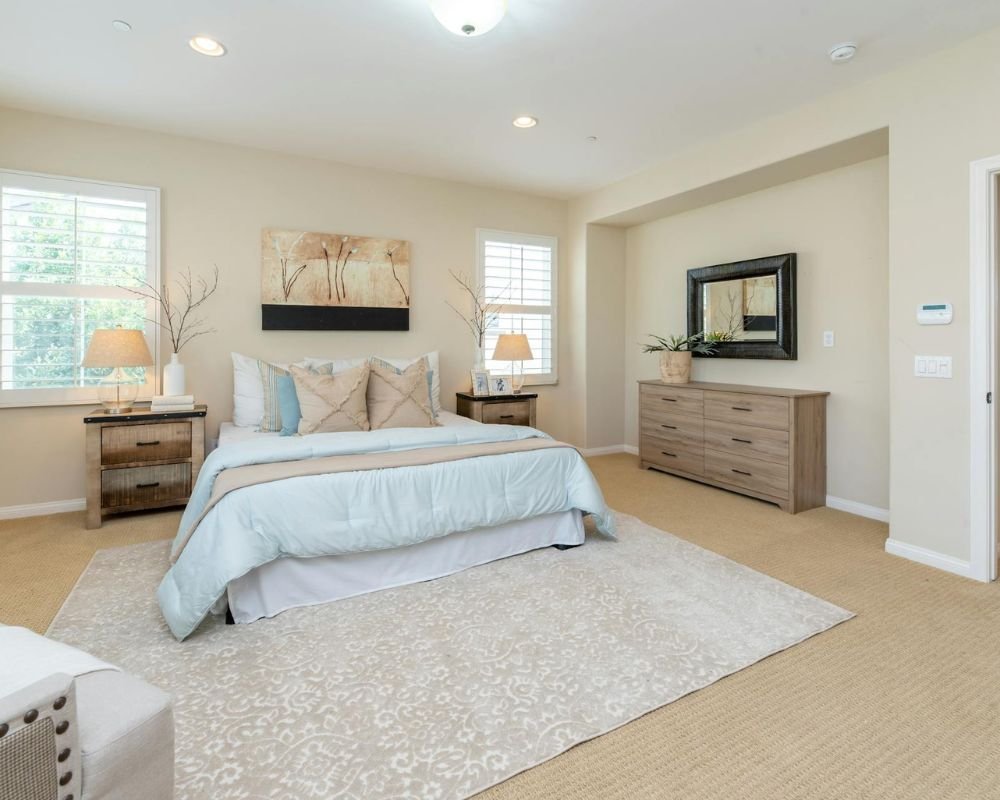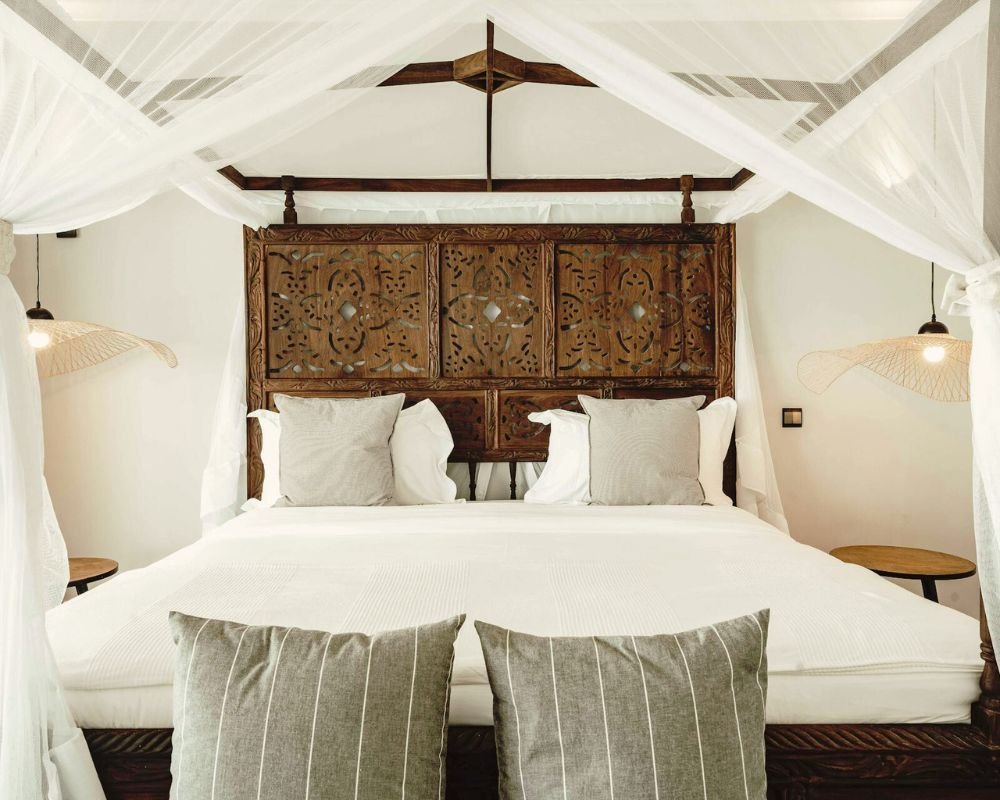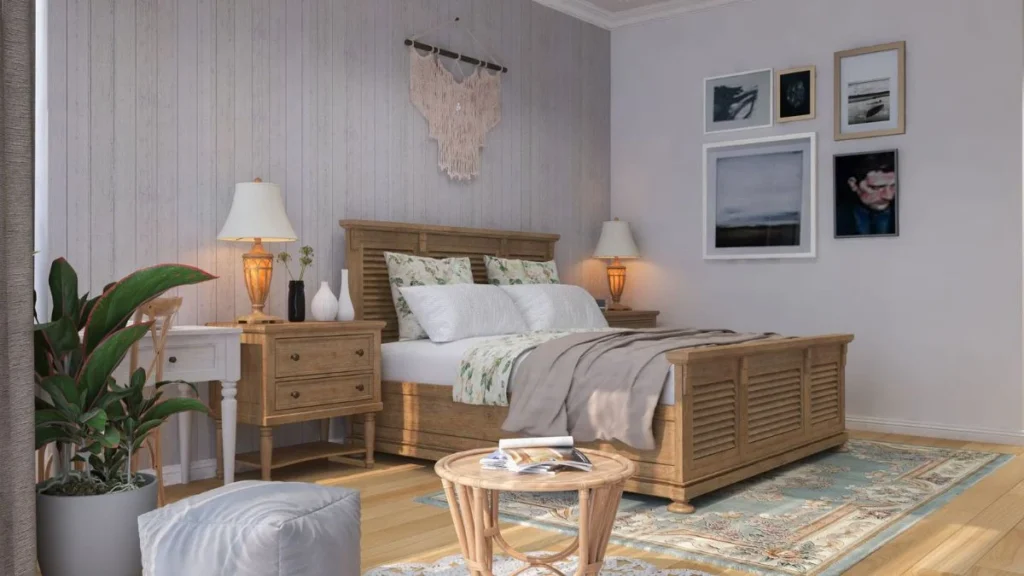
Lavender bedroom ideas have quietly taken over mood boards this year, and the appeal makes sense. The shade sits between blue’s calm and pink’s warmth, so a room feels soothing without turning cold or sterile.
This guide walks through ten dreamy lavender bedroom ideas, each built around a different pairing of texture, metal finish, or neutral tone. Pick one direction or blend a few, and the result should feel considered rather than like a single trend applied all at once.
Quick Lilac Lowdown
- Soft lilac walls paired with warm wood tones keep a lavender bedroom feeling grounded rather than saccharine.
- Deep lavender works as a feature wall or a full room wash, depending on how bold you want to go.
- Metal accents such as brass, brushed nickel, or blackened iron change the entire mood of a lavender palette.
- Layering matters more than colour alone; texture is what makes a lavender bedroom look finished.
Soft Lilac Walls with Warm Oak Furniture
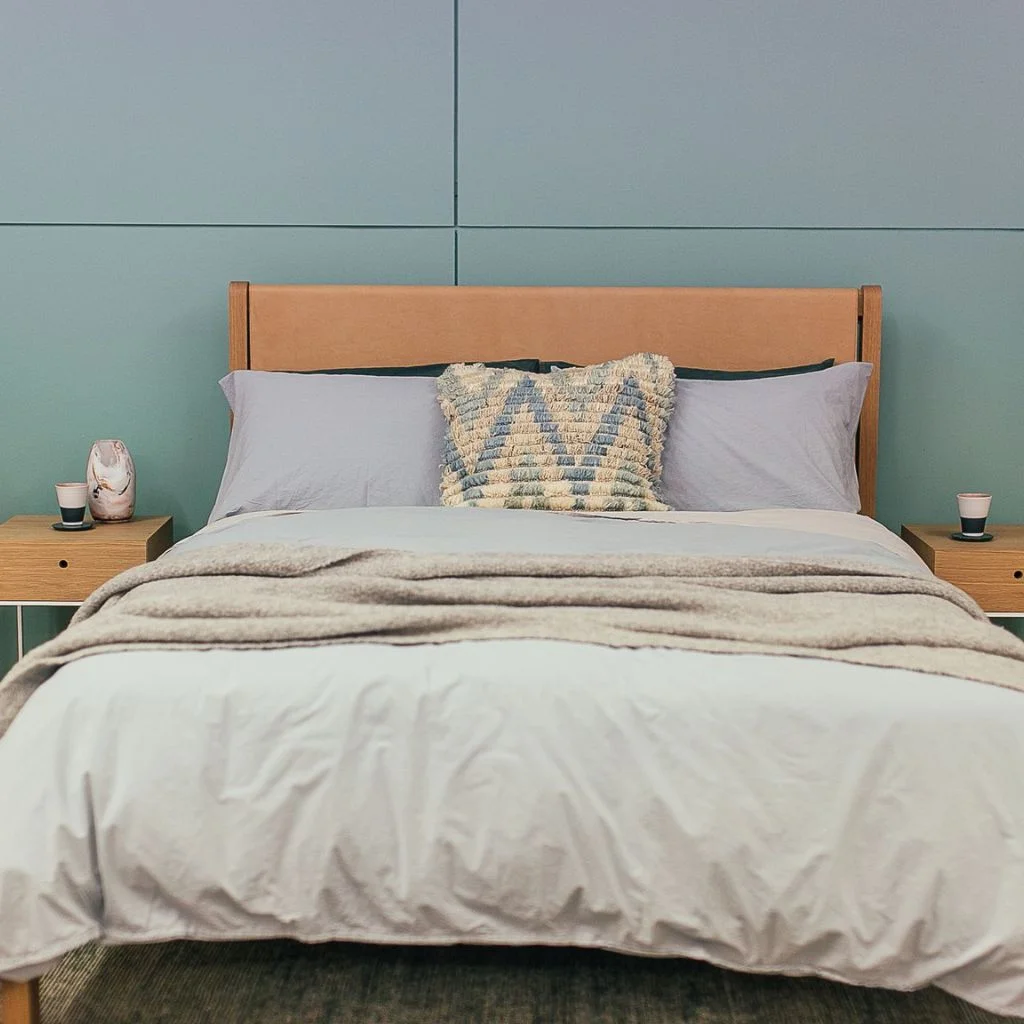
Pale lilac walls are the easiest entry point into lavender bedroom ideas because they read as neutral from a distance. Up close, the wall carries just enough colour to feel intentional.
Pair the walls with warm oak furniture — a bed frame, bedside tables, or a chest of drawers — so the room doesn’t tip into pastel territory. Oak’s honey tones balance lilac’s coolness and keep the space feeling lived-in rather than staged.
Add linen bedding in oatmeal or soft white to let the wall colour do the talking. This combination suits bedrooms with plenty of natural light, since lilac can read slightly grey in dim corners.
A Bold Deep Purple Feature Wall
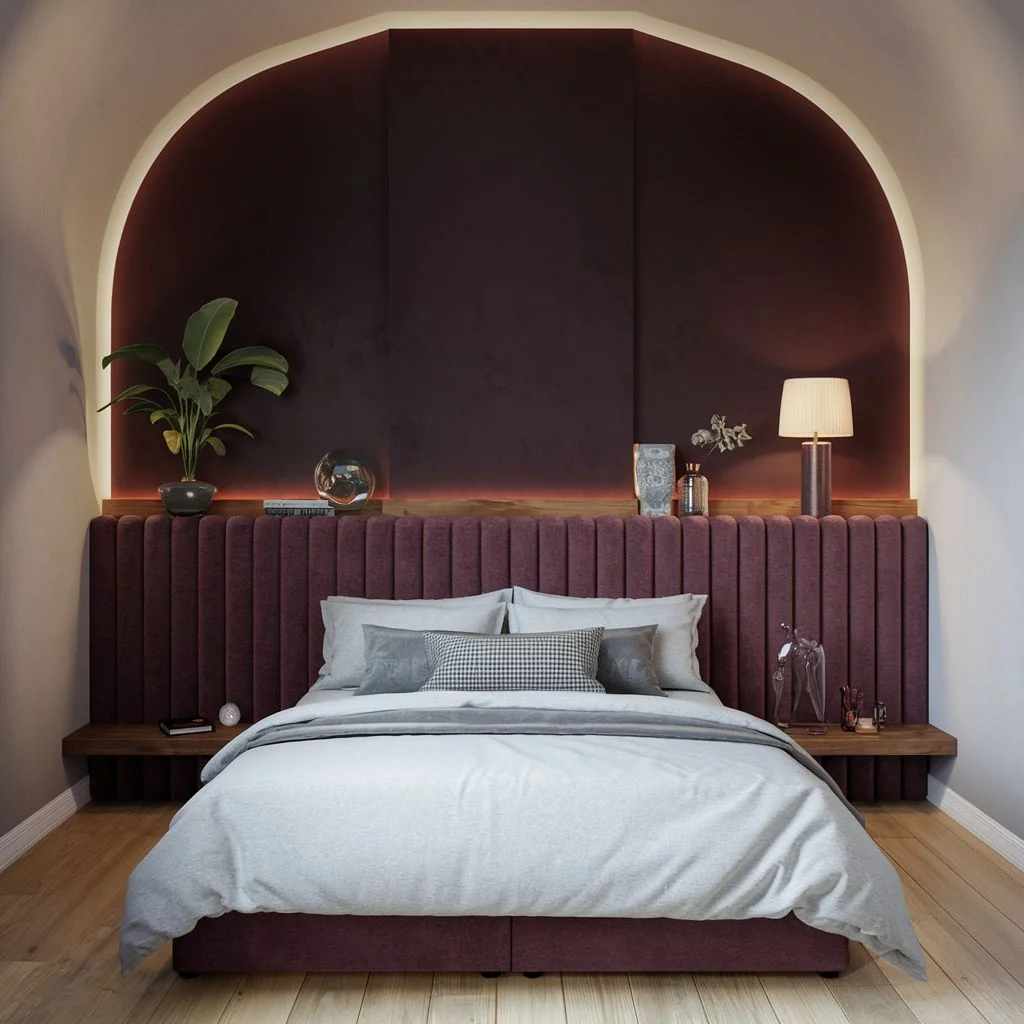
For those who want a lavender bedroom with more drama, a single feature wall in deep aubergine or plum works better than covering all four walls. It gives the colour room to breathe.
Choose the wall behind the headboard so the deep purple tone frames the bed rather than overwhelming the whole room. Keep the remaining walls in warm white or soft grey.
This approach suits smaller bedrooms particularly well, since a single dark wall adds depth without shrinking the space the way an all-over dark colour can.
Layered Bedding for a Boutique Hotel Feel
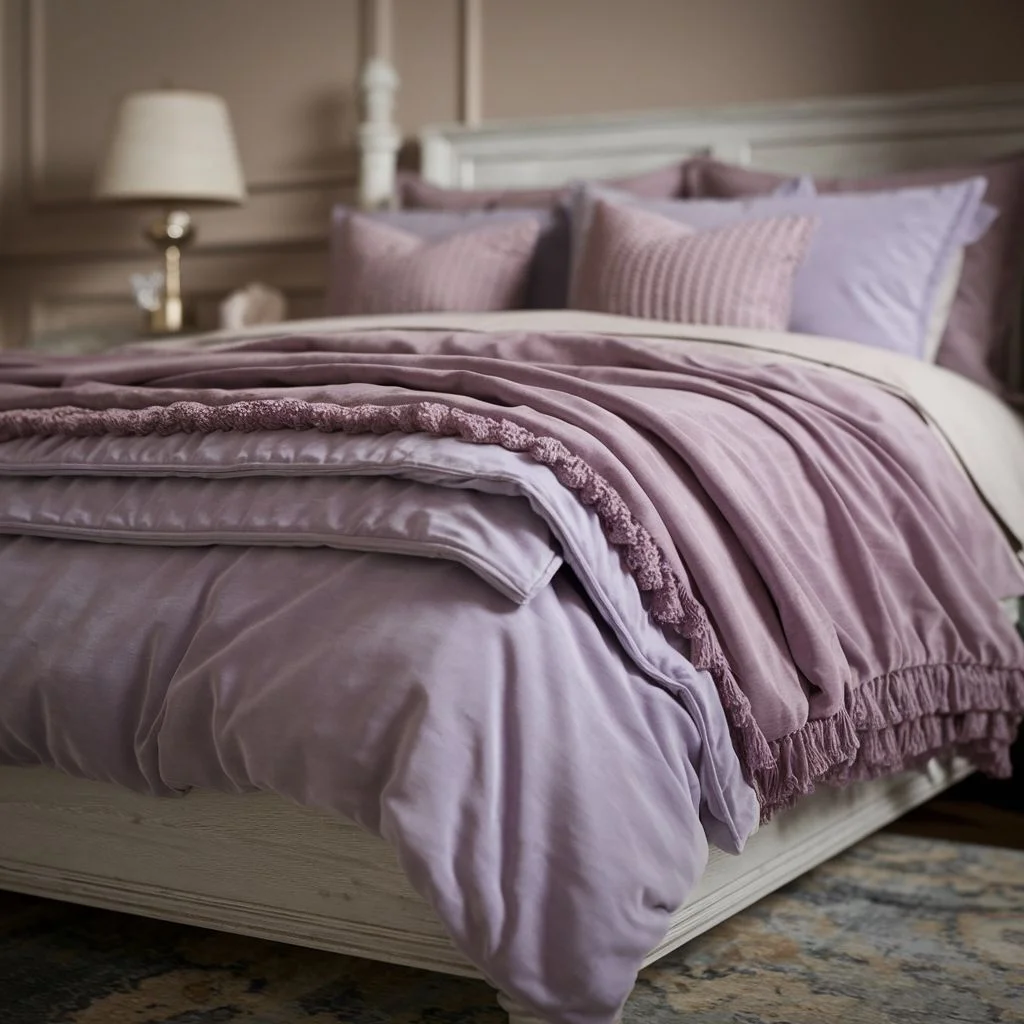
Colour aside, layering is what makes lavender bedroom ideas look finished rather than half done. Start with a base sheet in white or pale grey, then add a lavender or mauve quilt.
Finish with textured cushions in velvet, boucle, or linen, mixing two or three shades of purple with one neutral. A chunky knit throw folded at the foot of the bed adds warmth without adding more colour.
This layered approach works whether your walls are lavender or completely neutral, making it one of the simplest ways to bring the palette in without repainting.
Lavender Paired with Sage Green
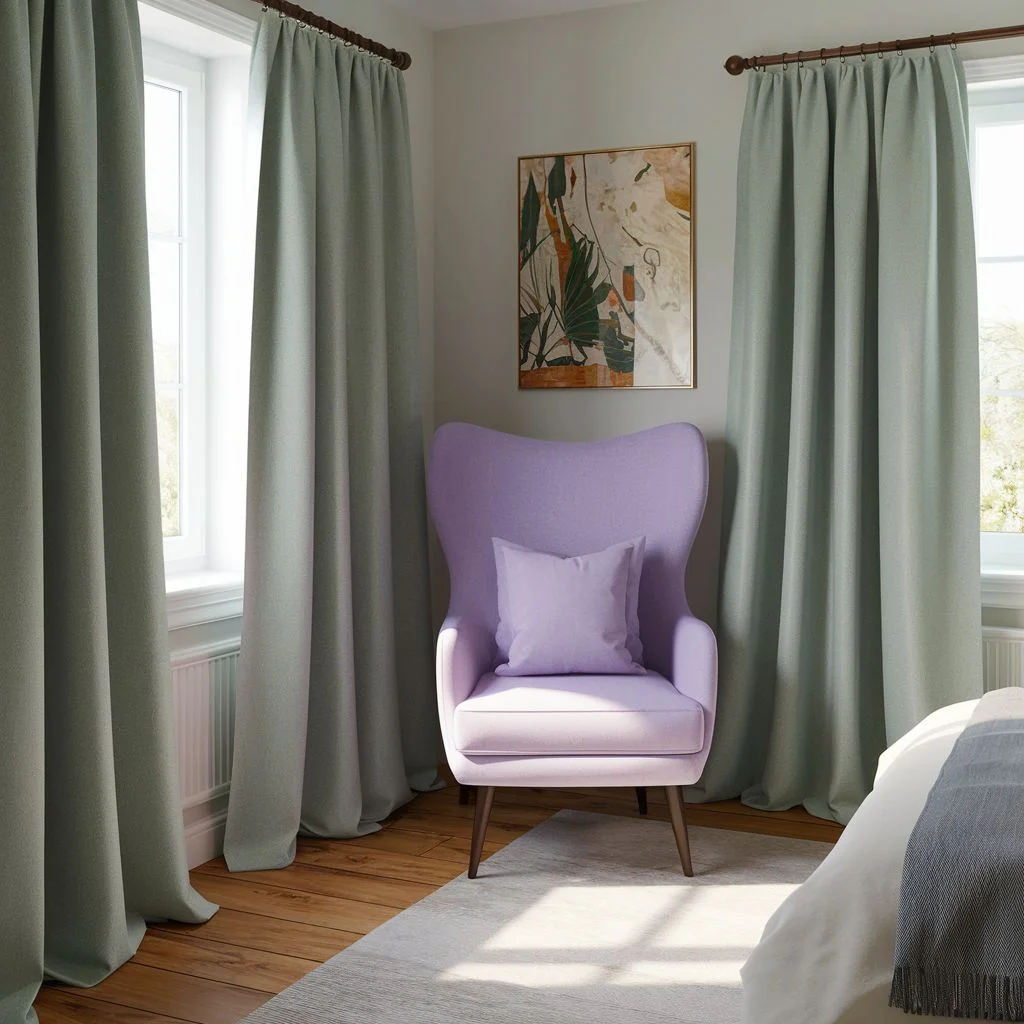
Lavender and sage green sit close together on the colour wheel, which is why the combination feels calm rather than clashing. Both are muted, slightly greyed down tones.
Use sage on larger surfaces like curtains or an accent chair, and let lavender show up in cushions, a throw, or a piece of artwork. This keeps the palette balanced rather than competing for attention.
Botanical prints or a leafy houseplant tie the two colours together naturally, making this one of the more versatile lavender bedroom ideas for plant lovers.
Dusty Lavender with Brushed Brass Details
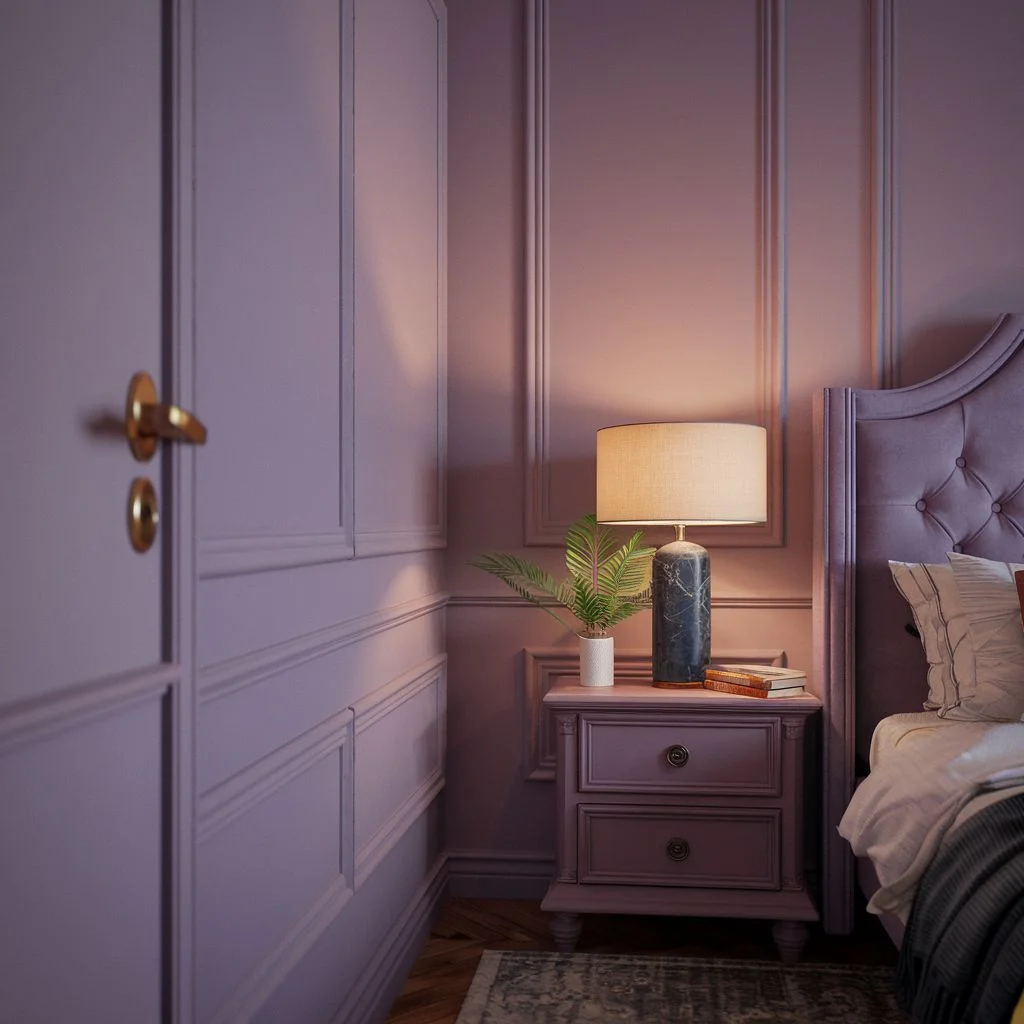
Matte, dusty lavender walls paired with brushed brass hardware give a lavender bedroom a slightly warmer, more grown-up feel than brighter lilac shades.
Swap outdoor handles, curtain rails, and lamp bases for brass finishes rather than chrome or nickel, which can feel colder against a purple backdrop. Even small brass details, like drawer pulls, shift the whole mood.
This pairing suits bedrooms aiming for a quiet luxury look rather than something overtly pastel or youthful.
A Velvet Headboard as the Centrepiece
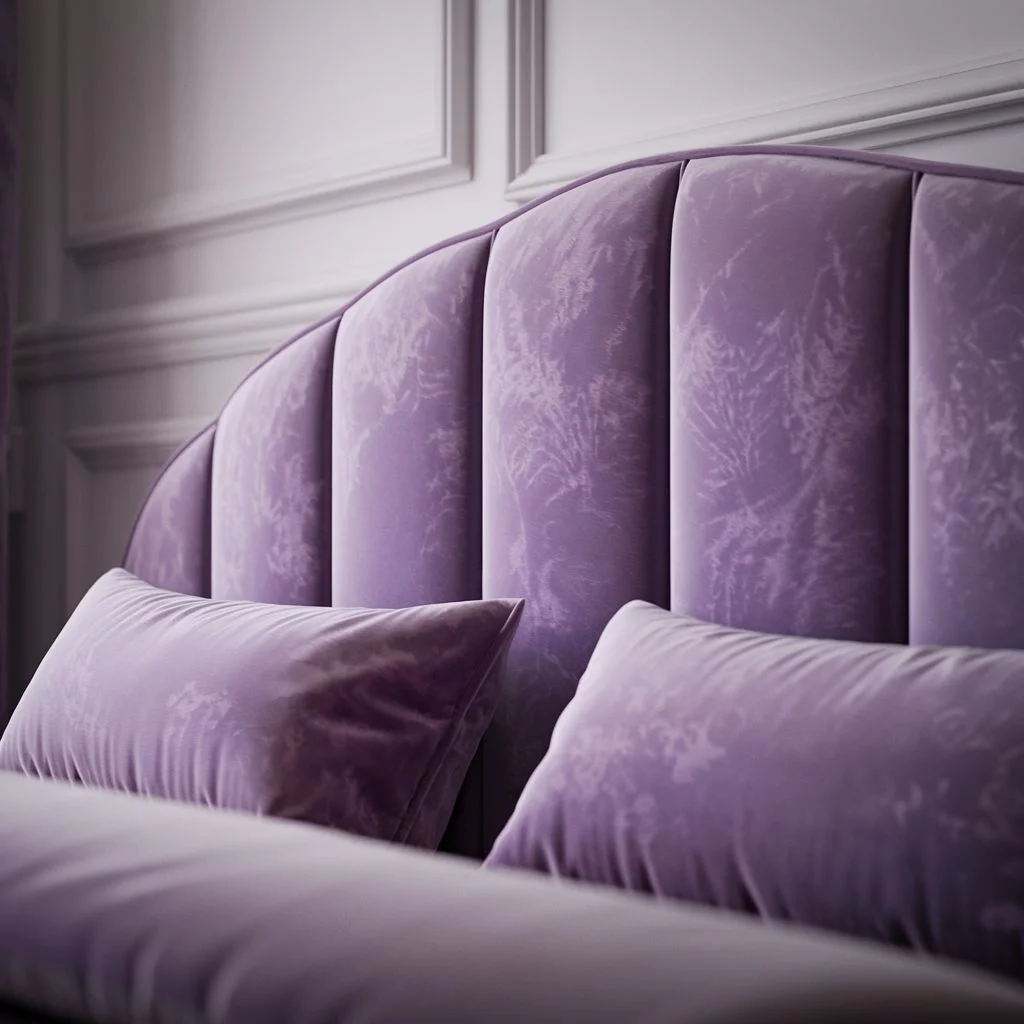
A velvet headboard in deep lavender or plum instantly becomes the focal point of the room, which means the rest of the palette can stay simple.
Keep walls in white, soft grey, or pale oatmeal so the velvet texture and colour take centre stage. Add one or two cushions in a matching or slightly darker shade to tie it together.
Velvet also adds a tactile layer that flat paint alone can’t offer, which is part of why this remains one of the more popular lavender bedroom ideas for renters who can’t repaint.
Sheer Curtains for Soft Filtered Light
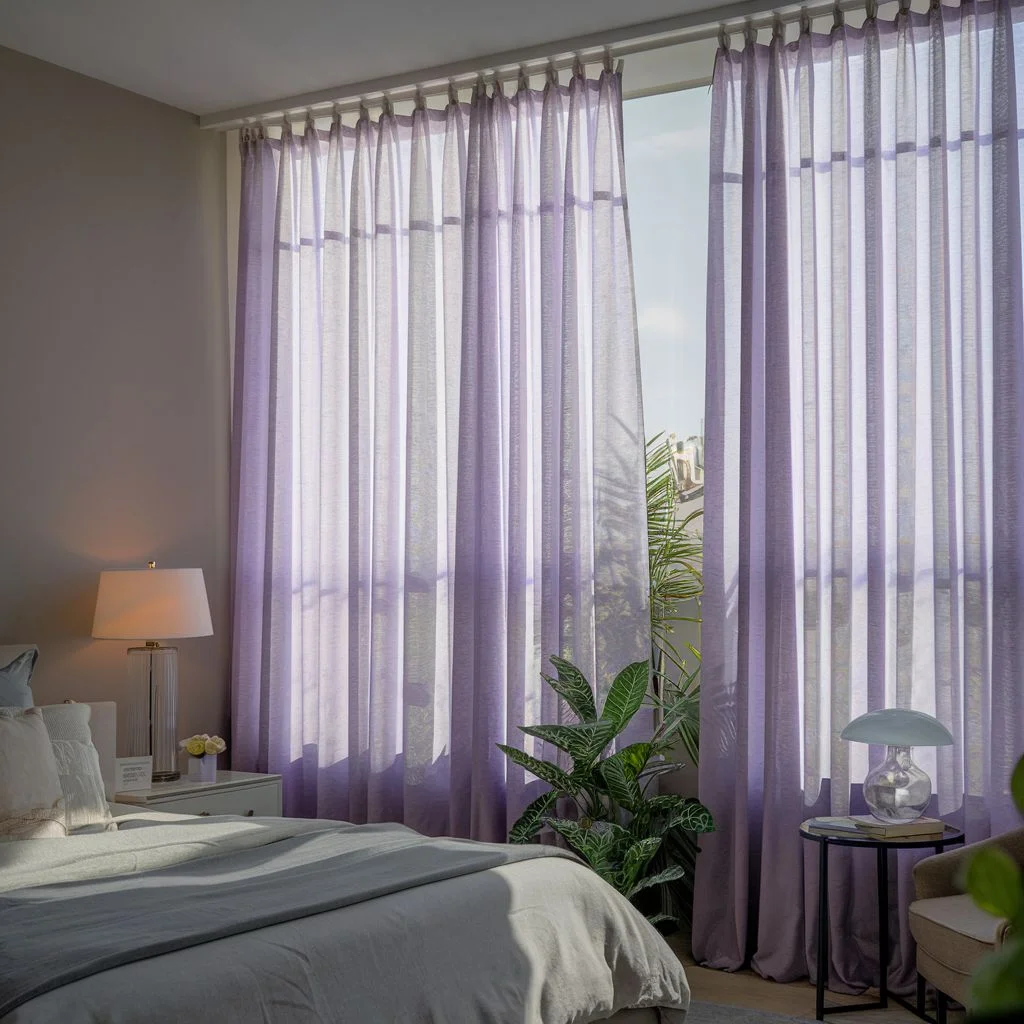
Sheer lavender or lilac curtains soften daylight as it enters the room, casting a gentle, slightly tinted glow rather than harsh direct sun.
Hang them floor to ceiling rather than stopping at the windowsill, since taller curtains make the whole room feel more spacious. Pair with a simple blackout layer behind them for night-time use.
This idea works well in bedrooms that already have neutral walls, since the curtains bring in colour without any painting required.
Warm Ambient Lighting in Lilac Tones
Overhead lighting can make cool colours like lavender feel flat, so warm ambient lighting matters more here than in a neutral room.
Choose bulbs around 2700K rather than daylight toned ones, and layer table lamps and wall sconces rather than relying on a single ceiling fixture. Warm light brings out lilac’s pink undertones rather than its blue ones.
Candles or a simple LED strip behind the headboard add a final soft layer, particularly useful in the evening when the room is used for winding down.
Dried Botanicals and Lavender Stems
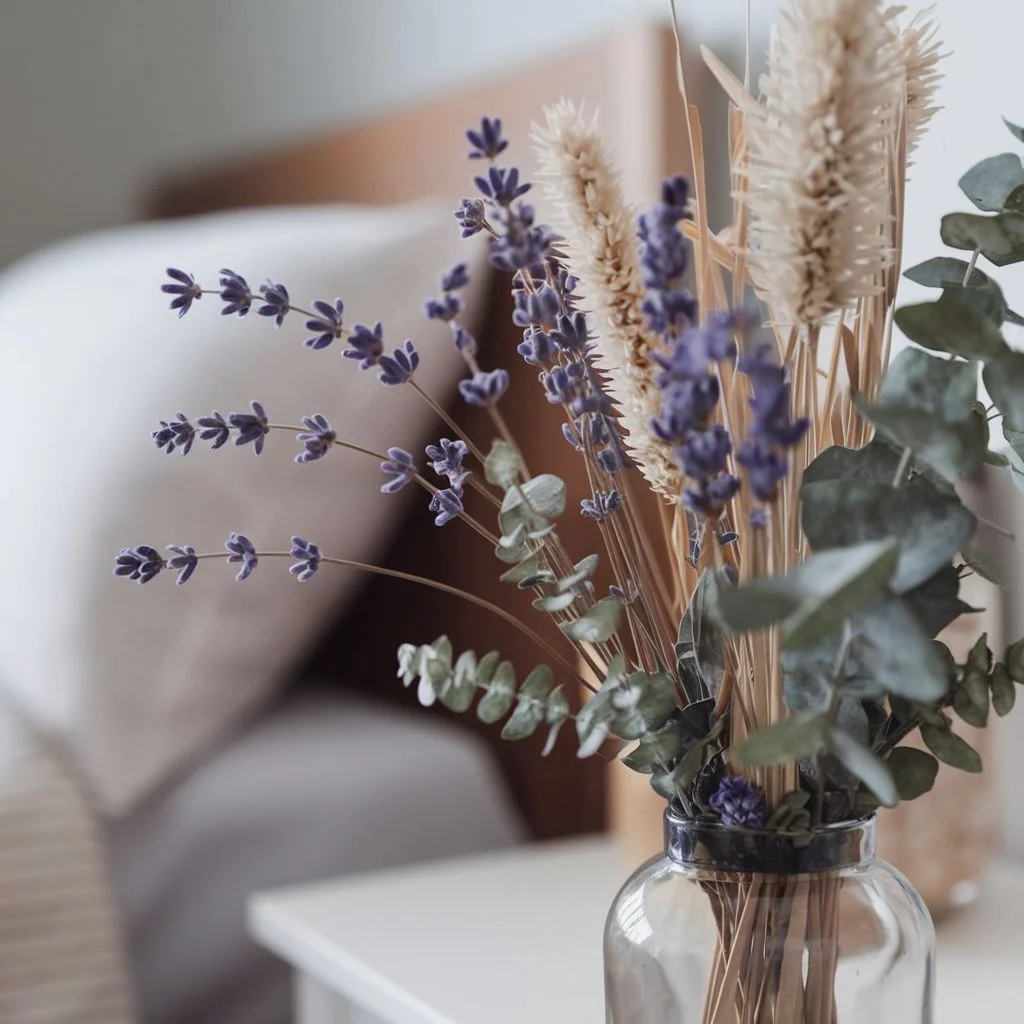
Actual dried lavender stems in a simple vase are a small, low-cost way to bring the theme in literally rather than just through paint or fabric.
Group them with pampas grass or eucalyptus for a fuller, more textured arrangement rather than a single thin bunch. Dried stems also last for months without any upkeep.
This works particularly well on a bedside table or windowsill, and is one of the easiest lavender bedroom ideas to try without any commitment.
Lavender and Charcoal Grey for Contrast
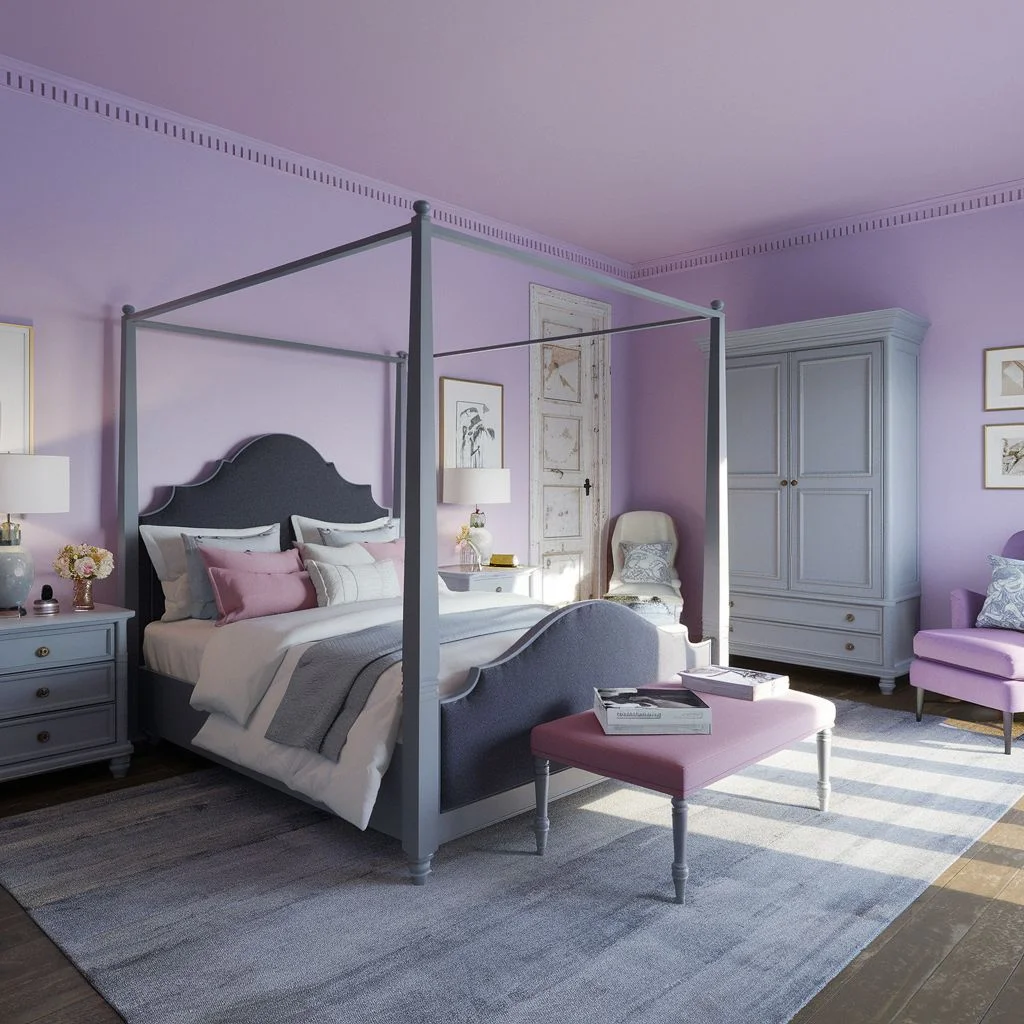
Charcoal grey grounds lavender in a way that pale neutrals sometimes can’t, giving the room more contrast and a slightly moodier finish.
Use charcoal on larger furniture pieces, like a bed frame or wardrobe, and keep lavender to walls, bedding, or soft furnishings. This split keeps the darker tone from feeling heavy.
This pairing suits bedrooms with good natural light, since charcoal can read as flat or dull in rooms that stay dim through the day.
Common Mistake to Avoid
The most common misstep with lavender bedroom ideas is choosing a shade that’s too saturated for the room’s actual light levels. A colour that looks soft in a paint swatch can read almost neon under strong sunlight, or muddy and grey in a north facing room.
My own experience testing shades for this kind of makeover is that painting a sample patch on more than one wall, and checking it morning and evening, catches this problem before a full repaint does. Undertone shifts more than people expect across a single day.
If in doubt, go one or two shades paler than the swatch that first catches your eye, since paint nearly always reads darker once it covers a full wall.
Making the Shade Feel Like Home
None of these lavender bedroom ideas need to be followed exactly as shown. The strongest results usually come from picking one wall treatment, one metal finish, and one textile layer, then building outward slowly.
Start small if you’re unsure — a cushion, a throw, or a single dried arrangement — before committing to a full repaint. Lavender is forgiving enough to grow with a room over time, rather than demanding everything change at once.
Recommended: Bedroom Butterfly Wall Decor Setups That Feel Whimsical Not Childish.