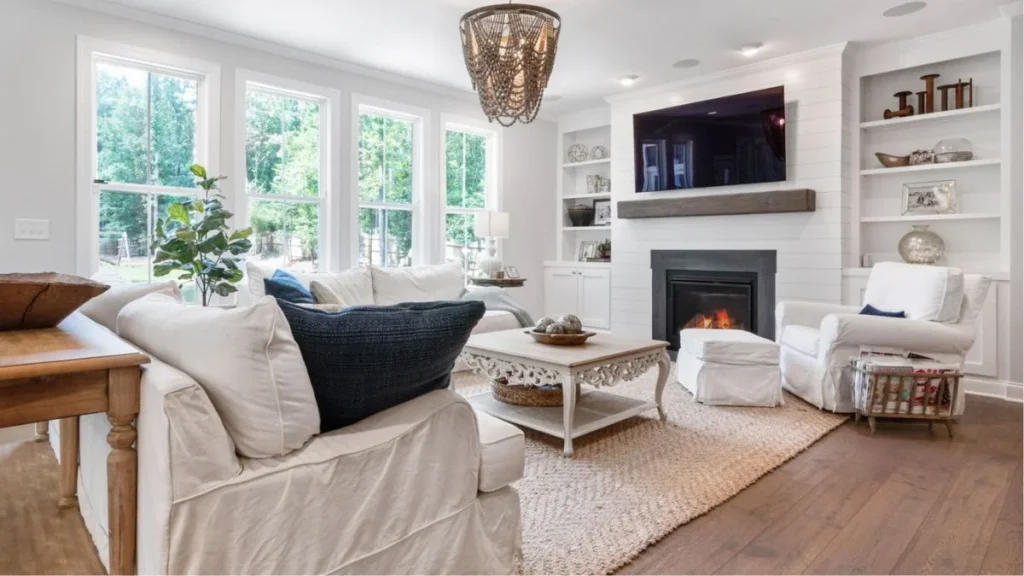
Few finishes soften a room as effectively as whitewash wood walls stripped of their usual heavy tone. This treatment has become something of a signature for farmhouse interiors, turning rough or aged timber into a bright, breathable backdrop full of character.
Whether you’re working with reclaimed barn boards or fresh shiplap panels, whitewashing remains one of the easiest ways to add warmth without hiding the wood’s natural grain. This guide walks through where the finish works best around the home, how to pair it with farmhouse styling, and the one mistake that trips up most first-time DIYers.
Before You Pick Up A Brush
- Whitewash wood walls lighten a space while keeping the timber grain visible, unlike a solid coat of paint.
- The finish suits living rooms, bedrooms, kitchens and bathrooms, provided the right sealant goes on in damp areas.
- A diluted paint-to-water ratio, usually around 1:1, is what separates a chalky farmhouse finish from a flat white wall.
- Pairing whitewashed panelling with natural textures such as linen, rattan and stoneware pulls the whole look together.
Whitewash Wood Walls For A Bright Farmhouse Living Room
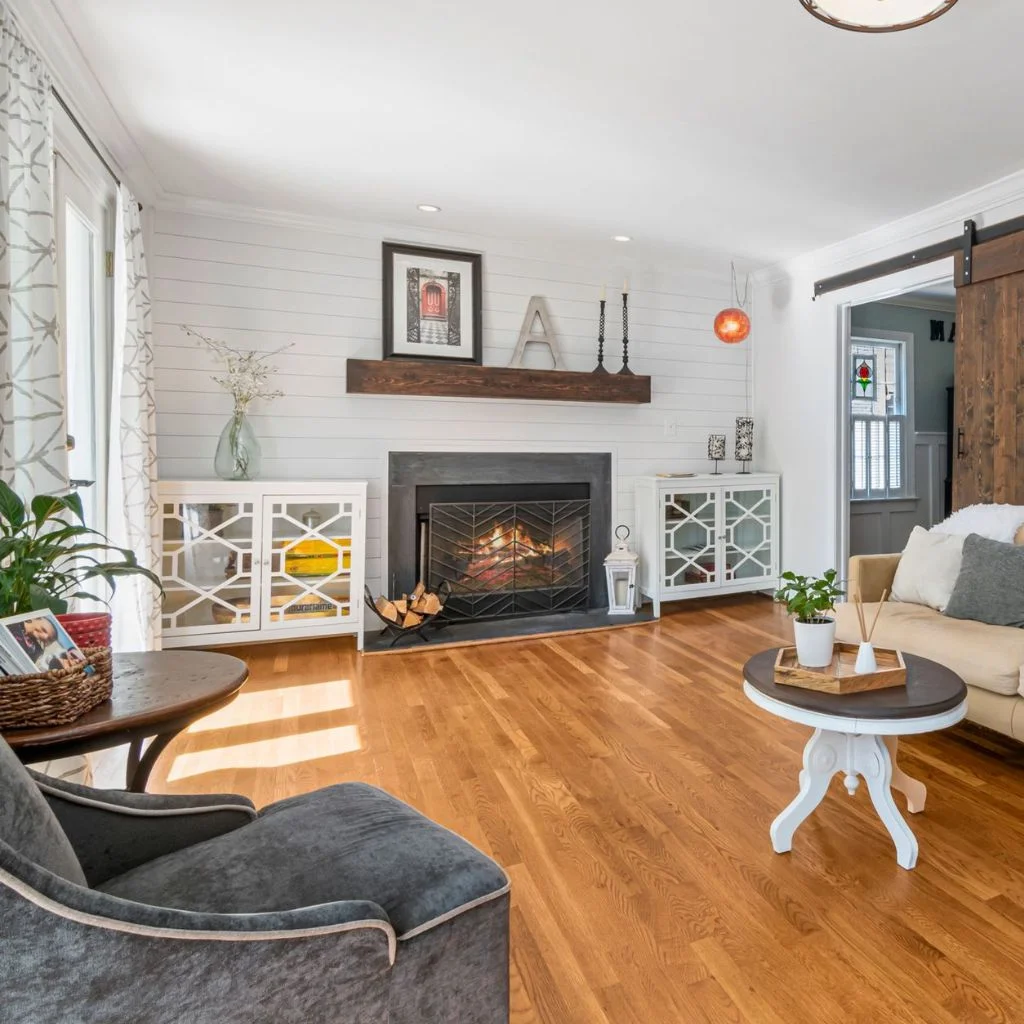
In an open-plan living room, whitewash wood walls behind a stone or brick fireplace create a soft, weathered backdrop that never competes with the room’s focal point.
The pale finish reflects available light, which matters most in rooms that face north or sit under a covered porch. Rather than fighting the shade, the panelling works with it.
Pair the treatment with a slouchy linen sofa, a jute rug and a handful of dried pampas grass for a look that feels lived-in rather than staged. Shiplap boards with a slight gap between planks whitewash particularly well, since the shadow lines stay visible even under a thinned coat.
Whitewash Wood Walls For A Cosy Farmhouse Bedroom
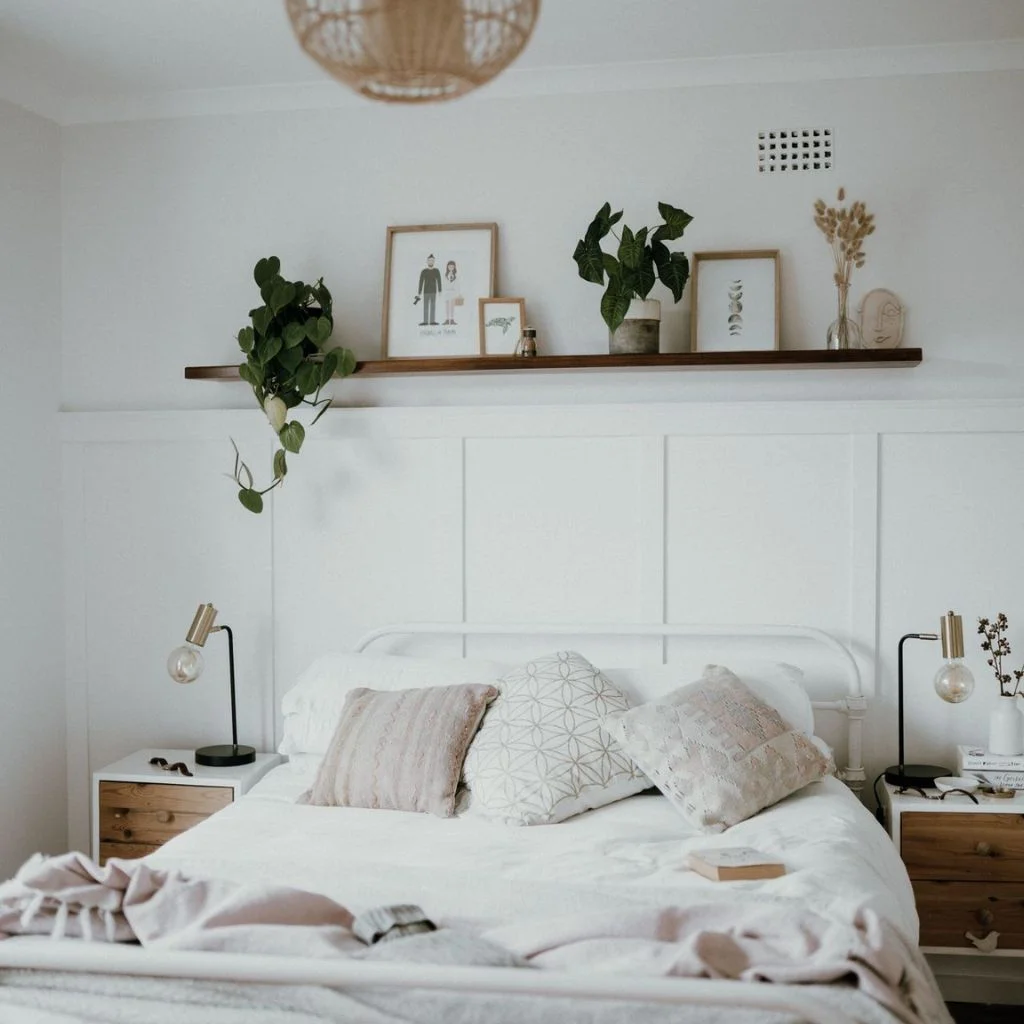
Behind a bed frame, whitewash wood walls act as an oversized headboard without the bulk of upholstered furniture.
The muted white softens overhead lighting, which makes the room feel restful rather than clinical, and it plays nicely with both warm and cool bedding tones.
Layer in linen bedding, a woven pendant light and a scattering of brass candle holders. Vertical tongue-and-groove boards tend to suit bedrooms best, since the upward lines make low ceilings feel taller.
Whitewash Wood Walls For A Country Kitchen
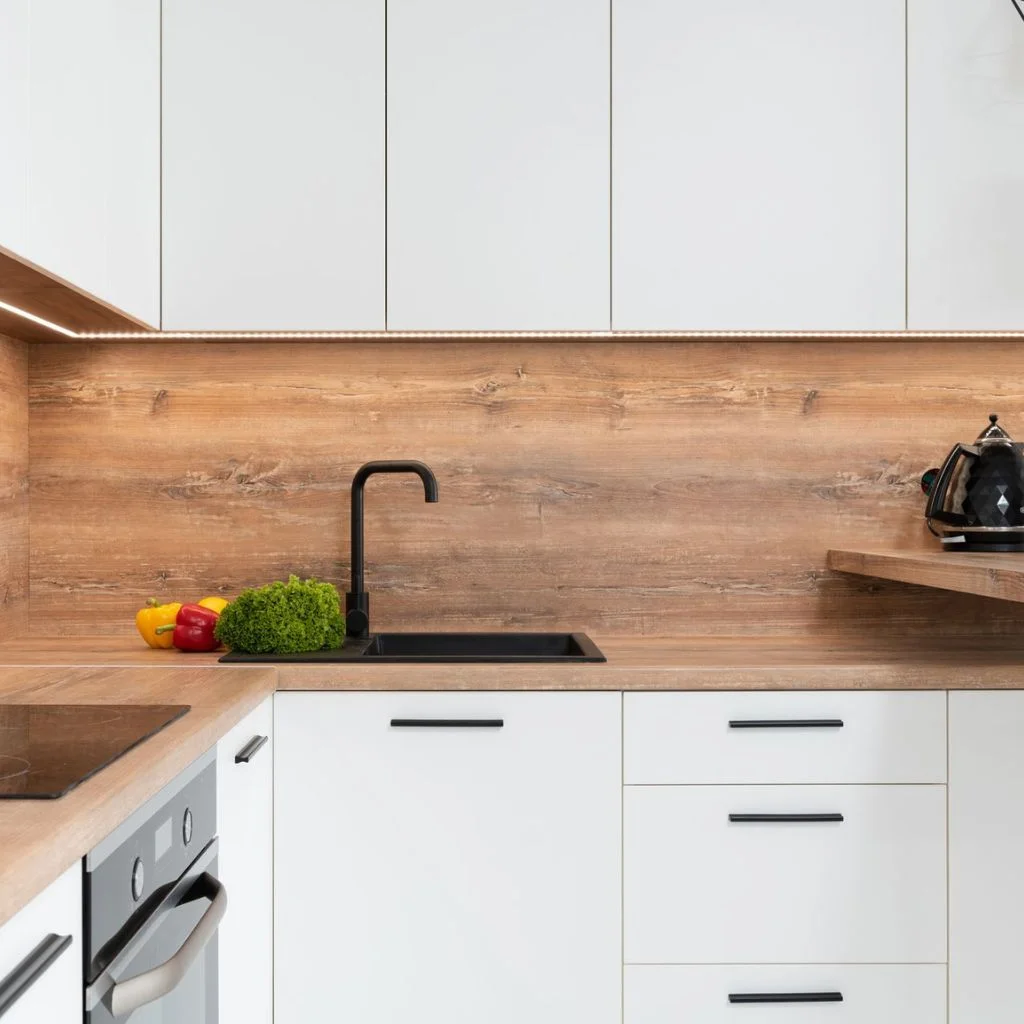
Kitchens with limited natural light benefit enormously from whitewash wood walls positioned behind open shelving or a run of shaker cabinets.
The finish bounces light back into the room and keeps busy shelving from feeling cluttered, which matters in a space that’s used and viewed constantly.
A butcher’s block countertop, black cabinet pulls and a woven bread basket all sit comfortably against the pale grain. Because kitchens see grease and steam, a matte sealant is worth applying once the whitewash has fully dried.
Whitewash Wood Walls For A Rustic Bathroom
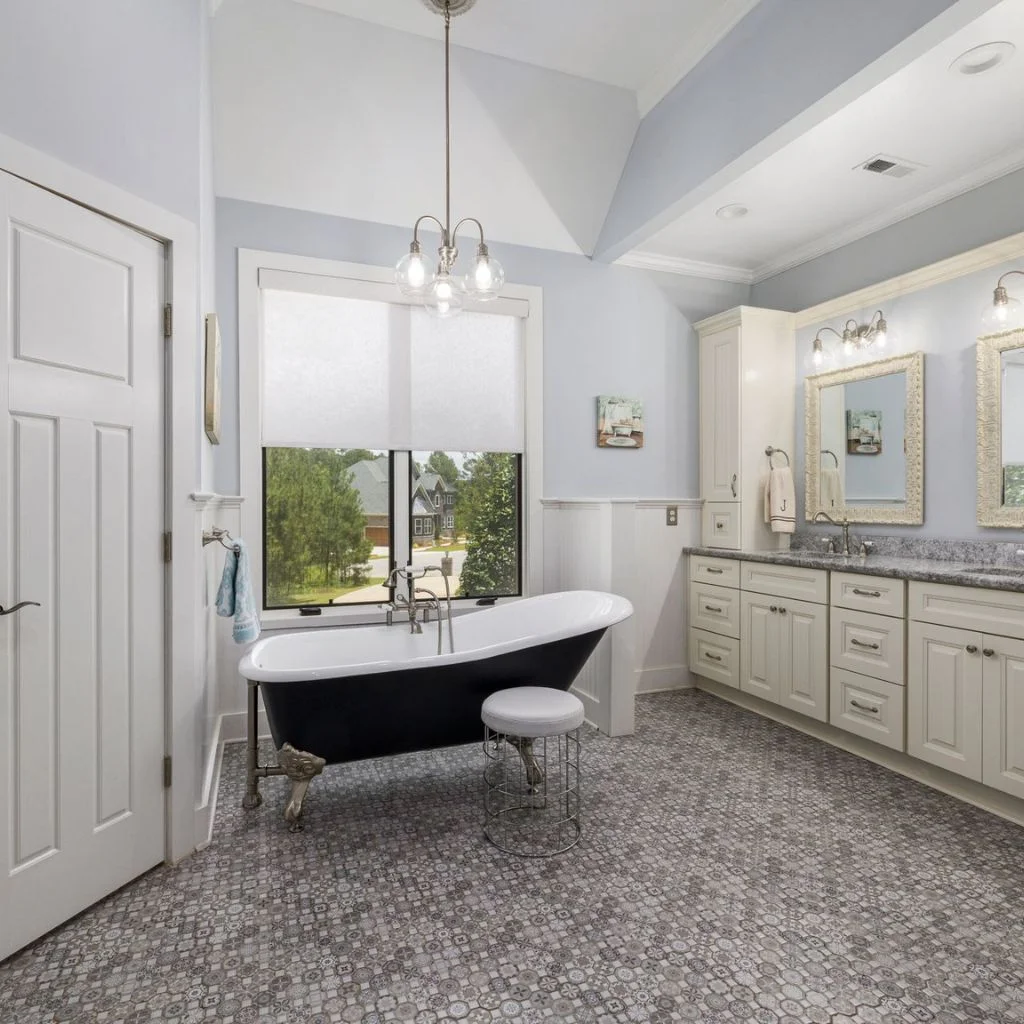
Tongue-and-groove panelling finished with a whitewash treatment turns a plain bathroom into something closer to a coastal cottage. The pale wood pairs naturally with a freestanding tub, black tapware and a woven bath mat.
Moisture makes bathrooms the trickiest room for this finish, so a water-resistant primer and a marine-grade topcoat are non-negotiable. Skipping that step is the fastest way to see the panelling warp or mark within a season.
Whitewash Wood Walls For A Sunroom Or Reading Nook
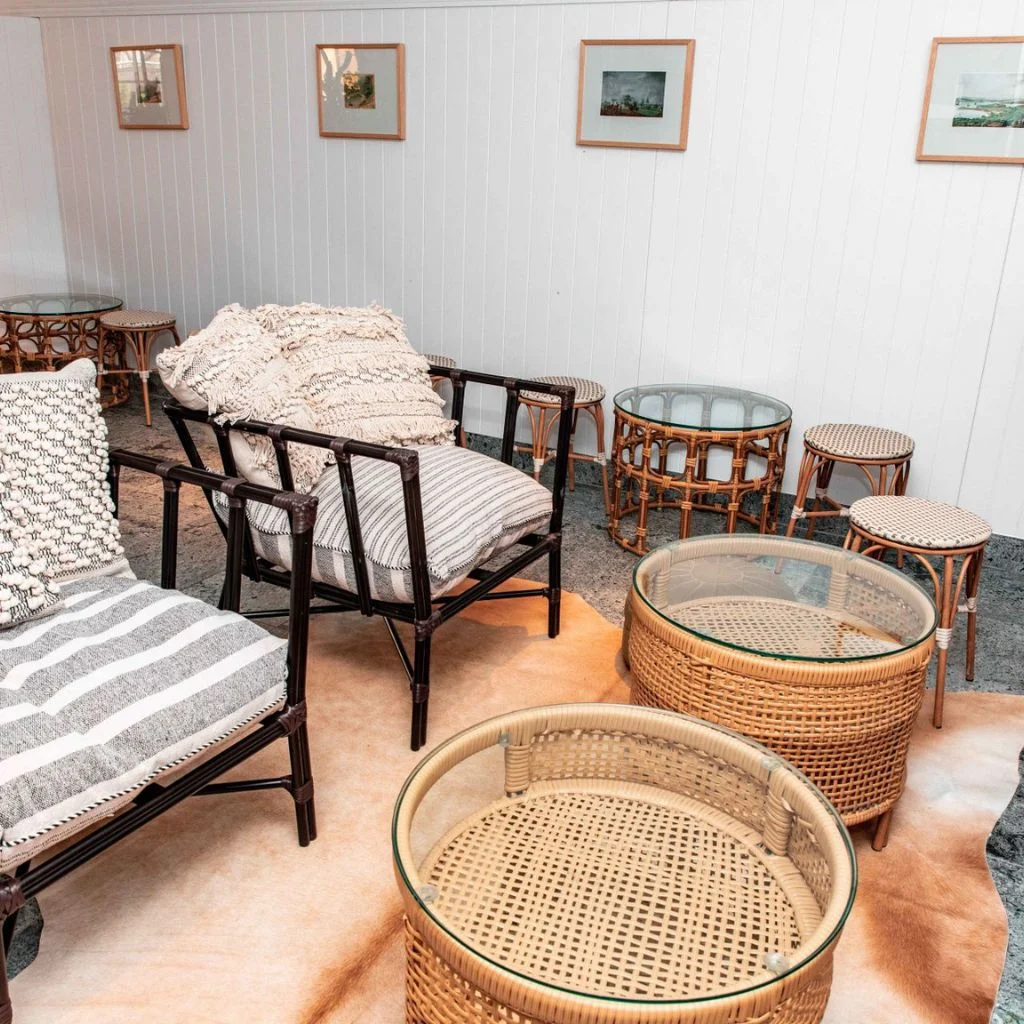
A sunroom lined with whitewash wood walls turns harsh midday light into something gentler, since the pale surface diffuses glare rather than reflecting it directly.
It’s an easy way to make a small reading nook feel calm rather than cramped, particularly in rooms with several windows or a glazed roof.
A rattan armchair, a stack of linen cushions and a low bookshelf finish the look without crowding the space.
Whitewash Wood Walls For A Farmhouse Entryway
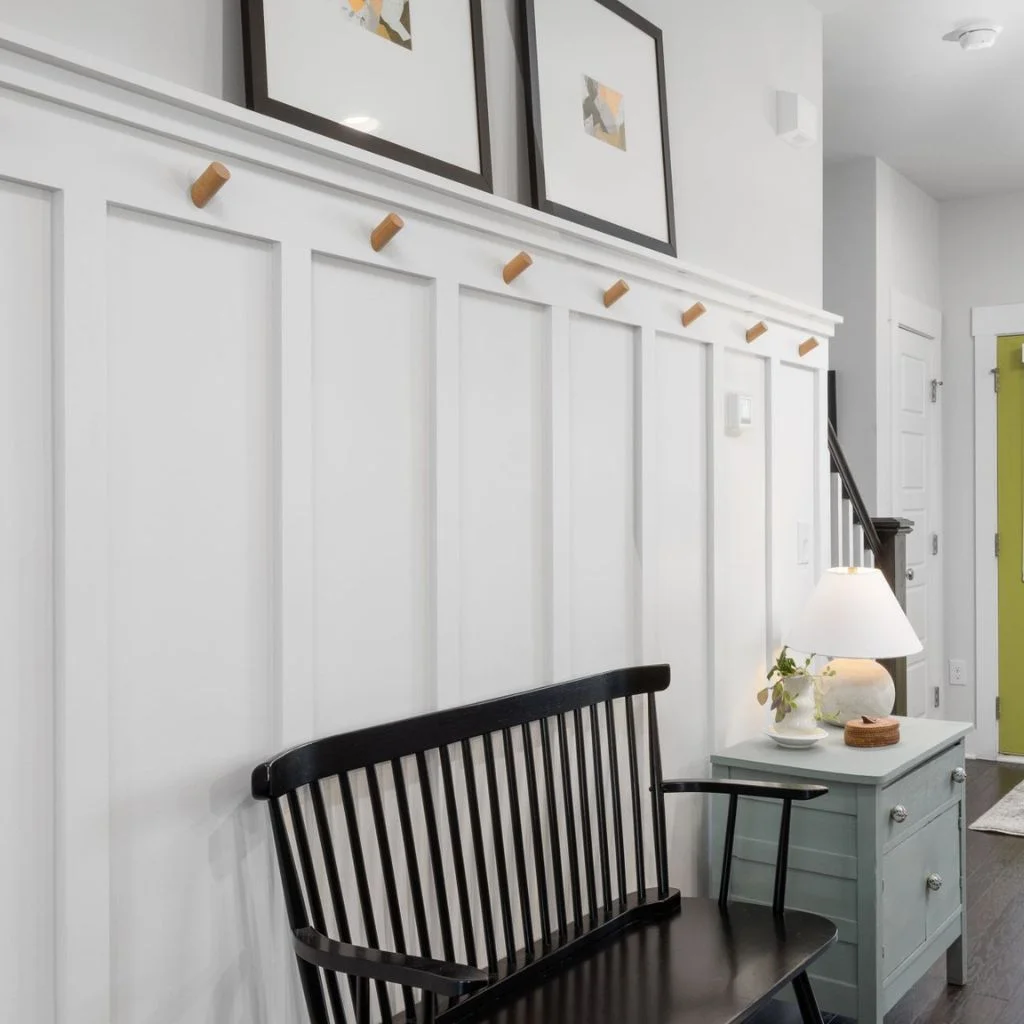
An entryway sets the tone for the rest of the house, and whitewash wood walls behind a bench or row of coat hooks make a small hallway feel considerably larger.
The finish also hides scuffs from boots and umbrellas better than a glossy paint would, which makes it a practical choice as well as a decorative one.
A vintage mirror, a woven basket for shoes and a row of black hooks complete a welcoming, farmhouse-style entry.
Whitewash Wood Walls As A Feature Accent Wall
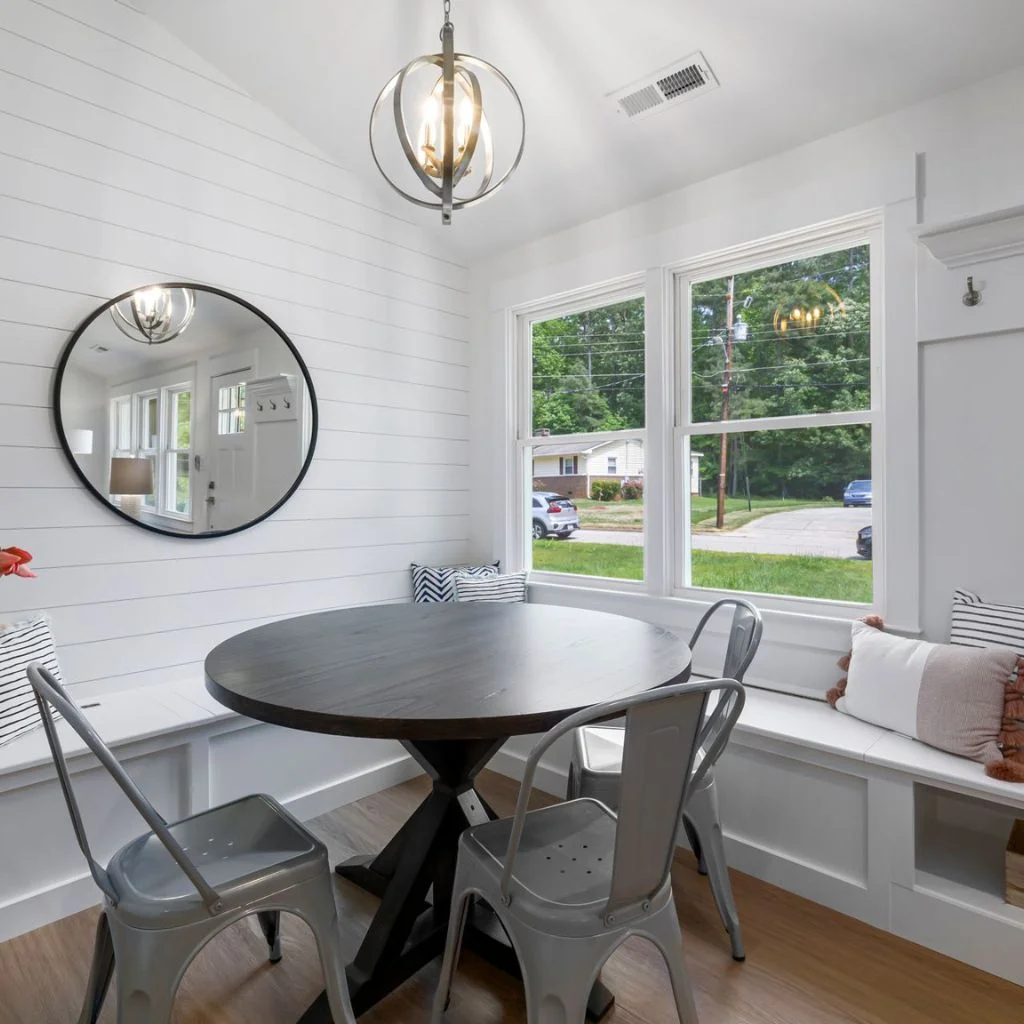
Not every room needs full panelling. A single accent wall behind a television or dining table gives the whitewash treatment room to breathe without overwhelming a small footprint.
This approach works particularly well in rented homes, since peel-and-stick shiplap panels can be whitewashed off-site and reversed later without touching the original wall underneath.
Pairing Whitewashed Panelling With Farmhouse Decor
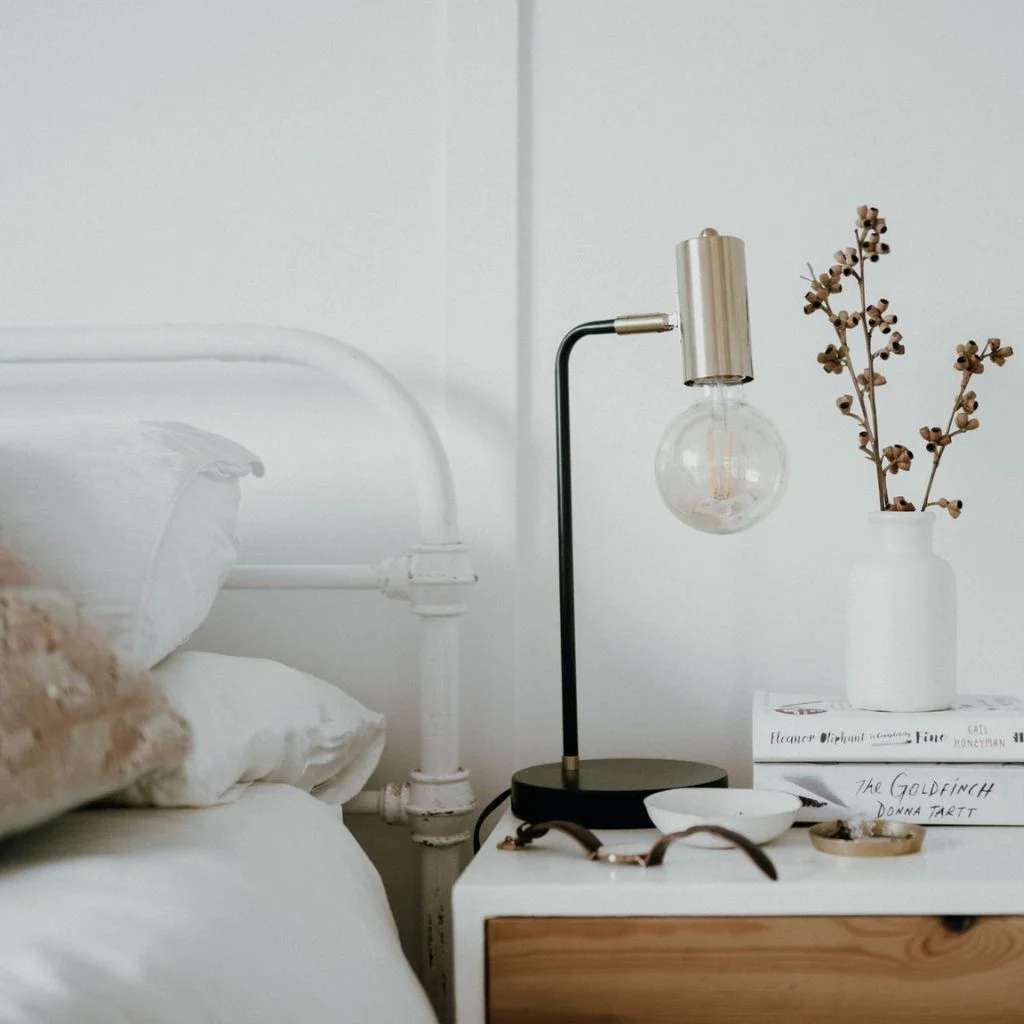
Whitewash wood walls act as a neutral base, which means the decor around them carries most of the farmhouse character. Vintage mirrors, galvanised metal accents and stoneware vases all sit well against the pale grain.
Stick to a muted palette of cream, sage and soft grey rather than bright accent colours, which can look jarring against a weathered white finish.
A Common Mistake To Avoid With Whitewash Wood Walls
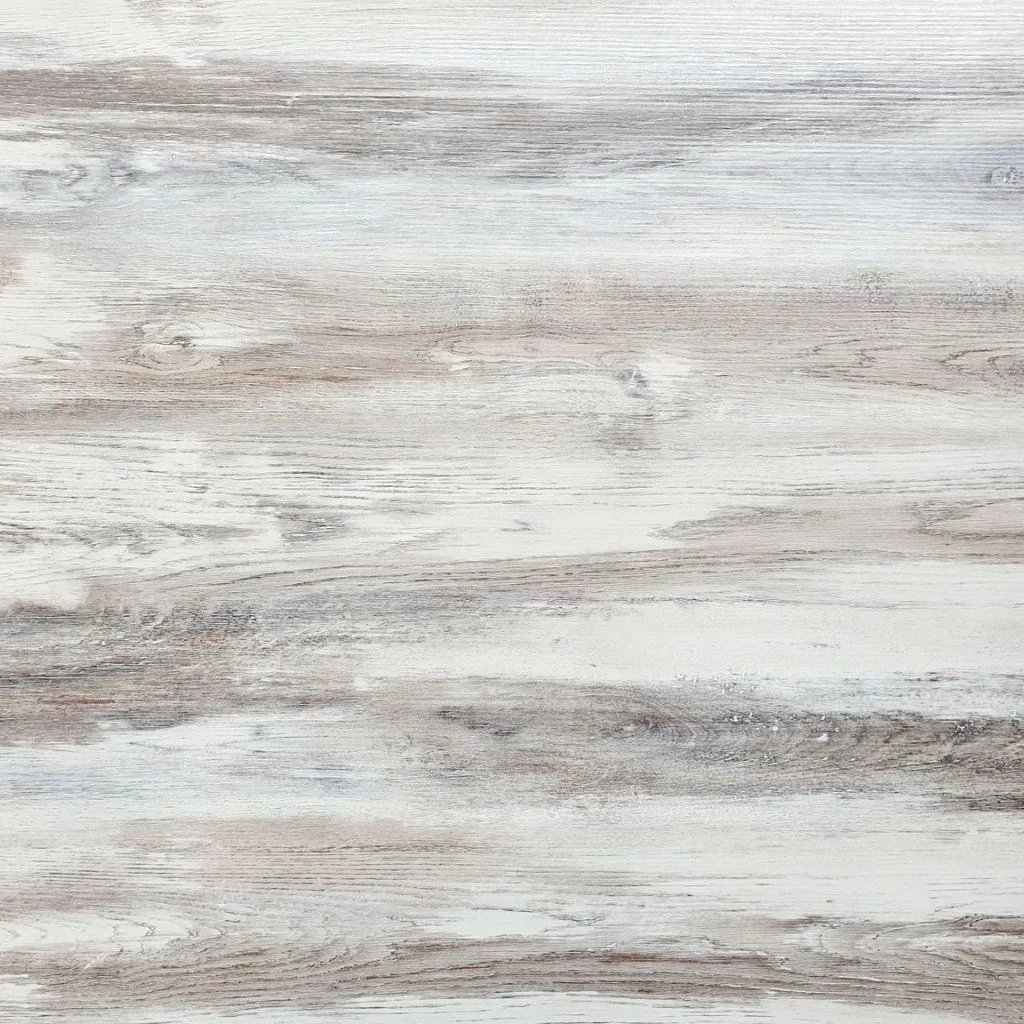
The most frequent slip-up is leaving too much diluted paint on the surface before wiping it back. Whitewash is meant to sit in the grain, not sit on top of it, so a heavy coat left to dry on its own usually looks patchy rather than weathered.
Always test the mixture on an offcut first, and wipe with the grain rather than across it. On new pine, a stain-blocking primer also prevents knots from bleeding through the finish months after the job looks done.
Bringing The Whitewash Look Home
Whitewash wood walls offer one of the most forgiving ways to update a room, since the finish works with the timber’s natural imperfections rather than hiding them.
From a single accent wall to full tongue-and-groove panelling, the technique adapts to almost any room in the house. Start small with an offcut or single wall, get comfortable with the ratio and wipe-back technique, then scale up once the look feels right for the space.
Planning a whitewash project of your own? Save this guide and pass it along to anyone tackling a farmhouse refresh this season.
Editor Choice: Rustic Wall Paneling Installation Tips For Beginners.

