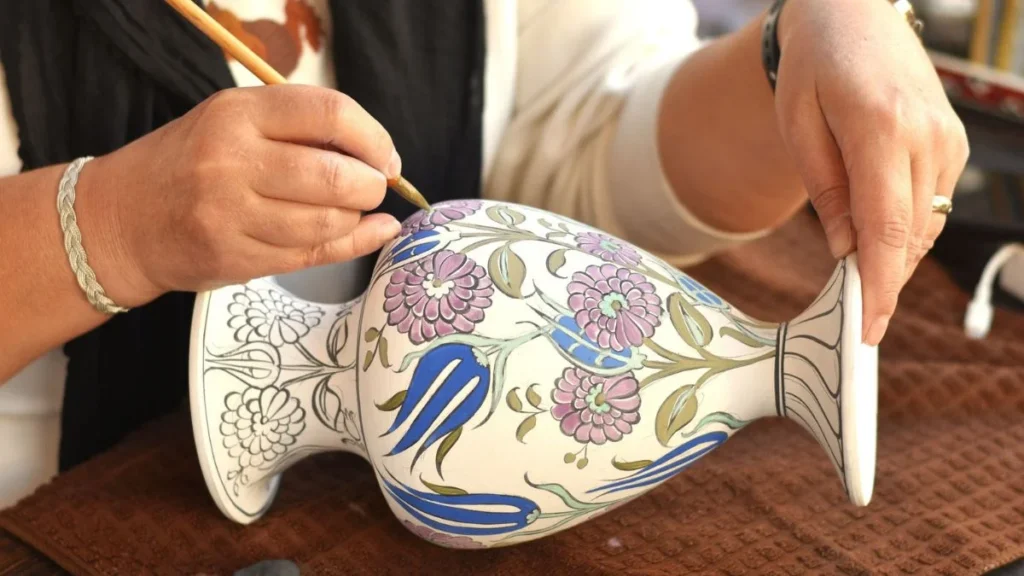
Grab an old ceramic vase gathering dust in your cupboard and turn it into a statement piece this weekend. These ceramic vase painting ideas need no art degree, just a handful of basic supplies and about an hour of free time. Whether you fancy a soft ombre wash or a bold geometric pattern, there is a project below that suits your skill level and your mood.
Painting ceramic vases is one of the most satisfying weekend crafts because the transformation happens fast. A plain charity shop find can look like a designer piece by Sunday evening, and the whole family can join in without a big budget. Below are six easy ceramic vase painting ideas, arranged from beginner-friendly to slightly more advanced, along with the supplies, steps, and small details that make each one look intentional rather than accidental.
Supplies You Need Before You Start Painting
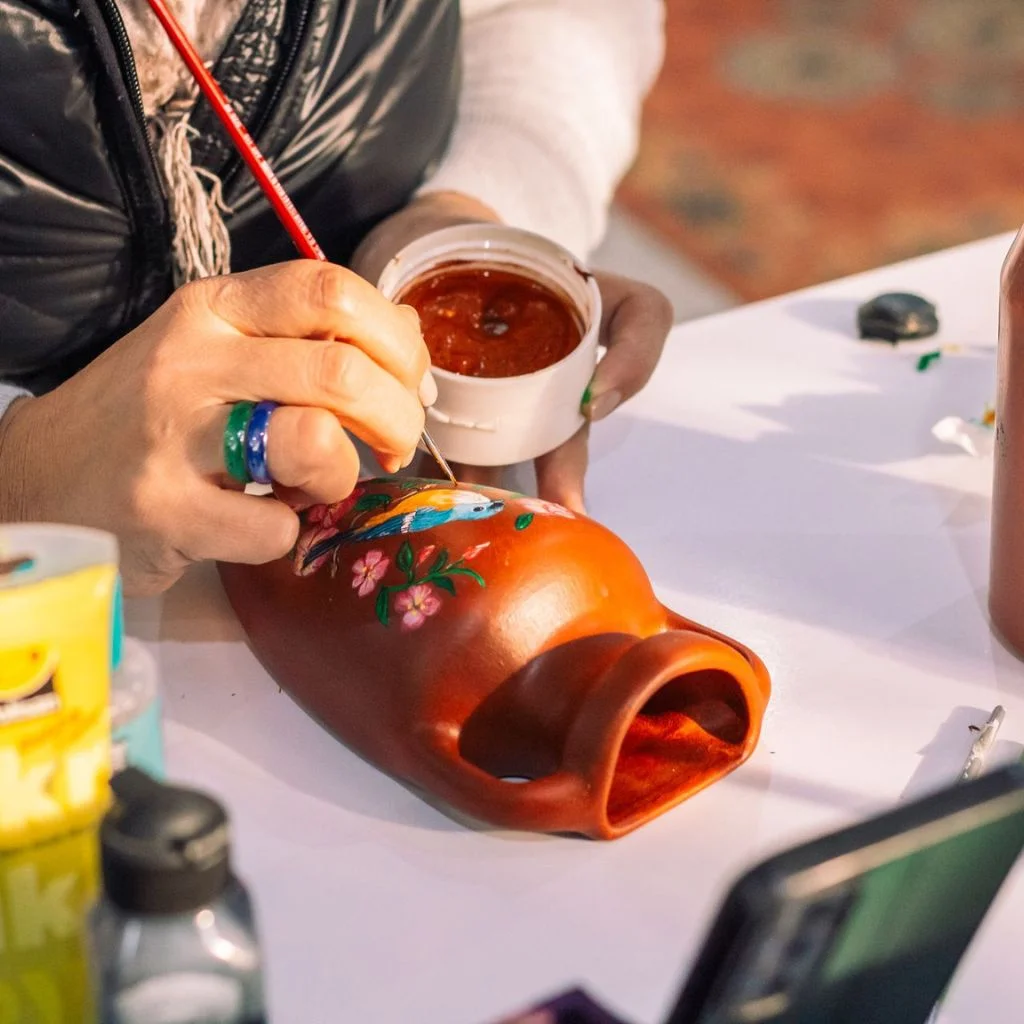
Before diving into any ceramic vase painting ideas, gather the right materials so the finish actually lasts. Acrylic paint works best on ceramic because it grips the glaze without needing a kiln, and it comes in almost every shade you could want.
A few extras make the process smoother:
- Rubbing alcohol and a cloth, to strip grease and dust from the surface.
- Painter’s tape for crisp lines and clean edges.
- Foam brushes for smooth, streak-free coverage.
- A matte or satin sealant spray, rated for indoor and outdoor use if the vase will hold water.
- A cheap plastic sheet or newspaper to protect your work surface.
Wipe the vase down with rubbing alcohol first. Skipping this step is the main reason paint peels within a few weeks, since ceramic glaze holds onto oils from packaging and handling more than most people expect.
It also helps to check whether the vase is glazed or unglazed bisque before you start. Glazed surfaces are smoother and more slippery, so a light scuff with fine grit sandpaper before cleaning gives the paint something to grip. Unglazed bisque is porous enough that acrylic bonds well without any extra prep.
Ombre Wash Vase In Under An Hour
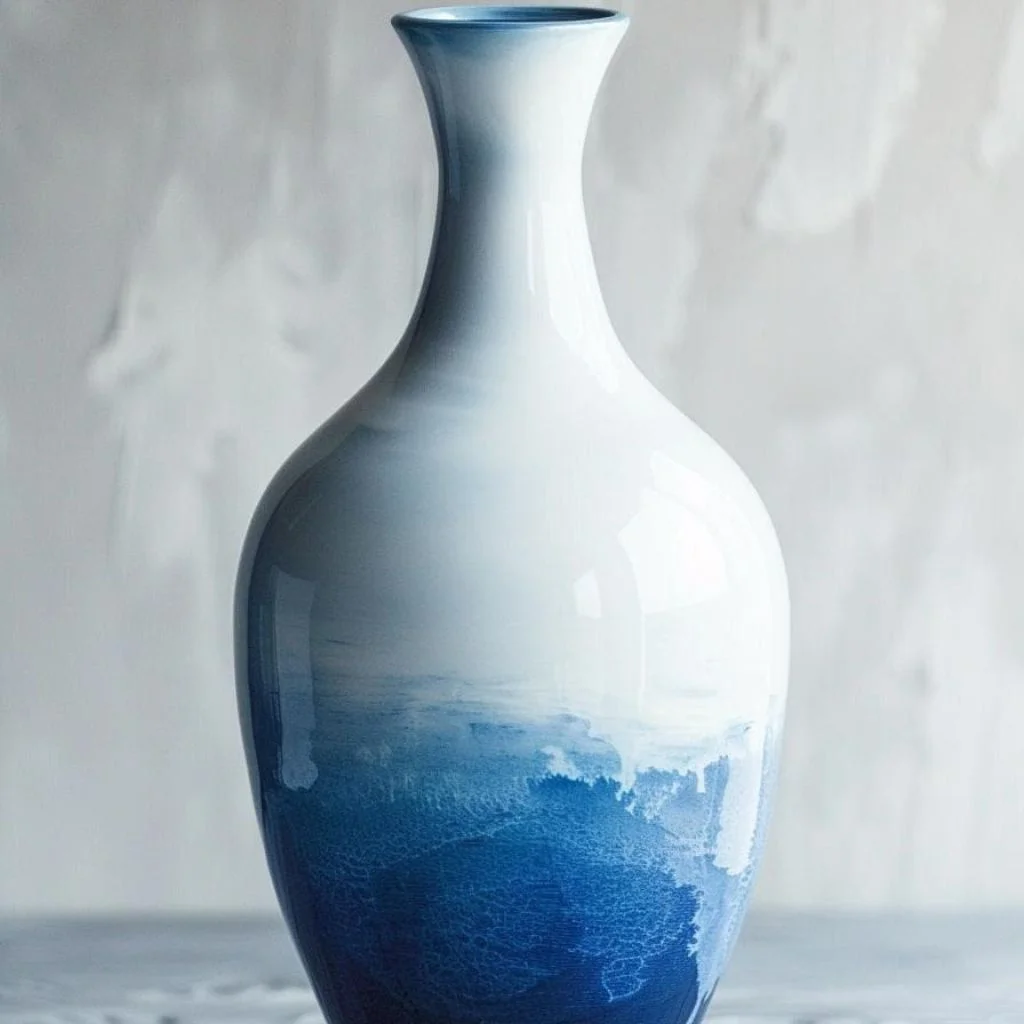
Image Source: themelrosefamily
An ombre finish is one of the fastest ceramic vase painting ideas to pull off, and it looks far more polished than the effort it takes. Mix your chosen acrylic colour with water in three separate cups, creating a light, medium, and full-strength wash.
Start with the lightest wash at the top of the vase and blend downward, layering the medium and then the strong wash toward the base. Work while the paint is still damp so the bands blend into each other rather than sitting as hard lines.
Two thin coats look more professional than one thick coat, and the second layer hides any patchy spots left by the first. Once dry, seal with a matte spray to keep the colour from rubbing off on furniture.
If the bands come out patchier than expected, a quick misting of water over the damp paint softens the edges before it sets. This is one of those ceramic vase painting ideas that looks better the less you overwork it, so resist the urge to keep blending once the colour looks roughly right.
Speckled Terrazzo Effect With Household Items
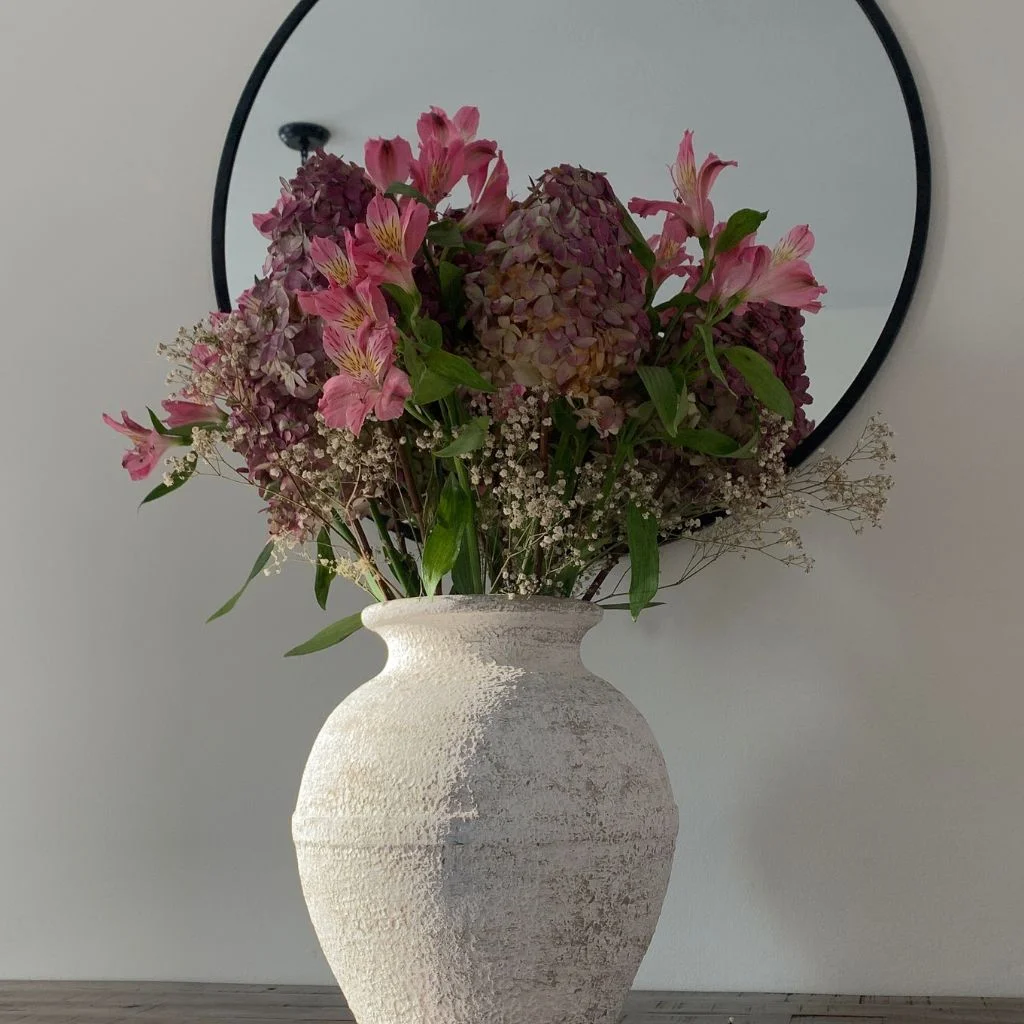
Terrazzo has stayed popular in home decor for years, and it happens to be one of the easiest ceramic vase painting ideas for anyone who struggles with a steady hand. Paint the vase a solid base colour first, usually white, cream, or soft grey, and let it dry fully.
Load an old toothbrush with a small amount of paint, then run your thumb across the bristles to flick tiny speckles onto the surface. Use two or three contrasting colours, layering them one at a time so the dots do not blend into a muddy mess.
Step back every few flicks to check the spacing looks natural rather than clustered. A light hand goes a long way here, since terrazzo reads as elegant only when the speckles are sparse and varied in size.
Botanical Line Art For A Minimalist Look

Simple line drawings of leaves, stems, or wildflowers give a vase a hand-illustrated feel without requiring any real drawing skill. Sketch the outline lightly in pencil first, since ceramic surfaces let you erase pencil marks easily before committing to paint.
Use a fine liner paintbrush or a paint pen for the cleanest lines, and stick to one or two colours so the design feels cohesive rather than busy. Black on a white vase is a classic combination, but sage green or terracotta on cream also suits a softer, earthy look.
This is one of the more forgiving ceramic vase painting ideas for beginners, because small wobbles in a botanical line actually read as charming rather than sloppy.
Geometric Patterns Using Painter’s Tape
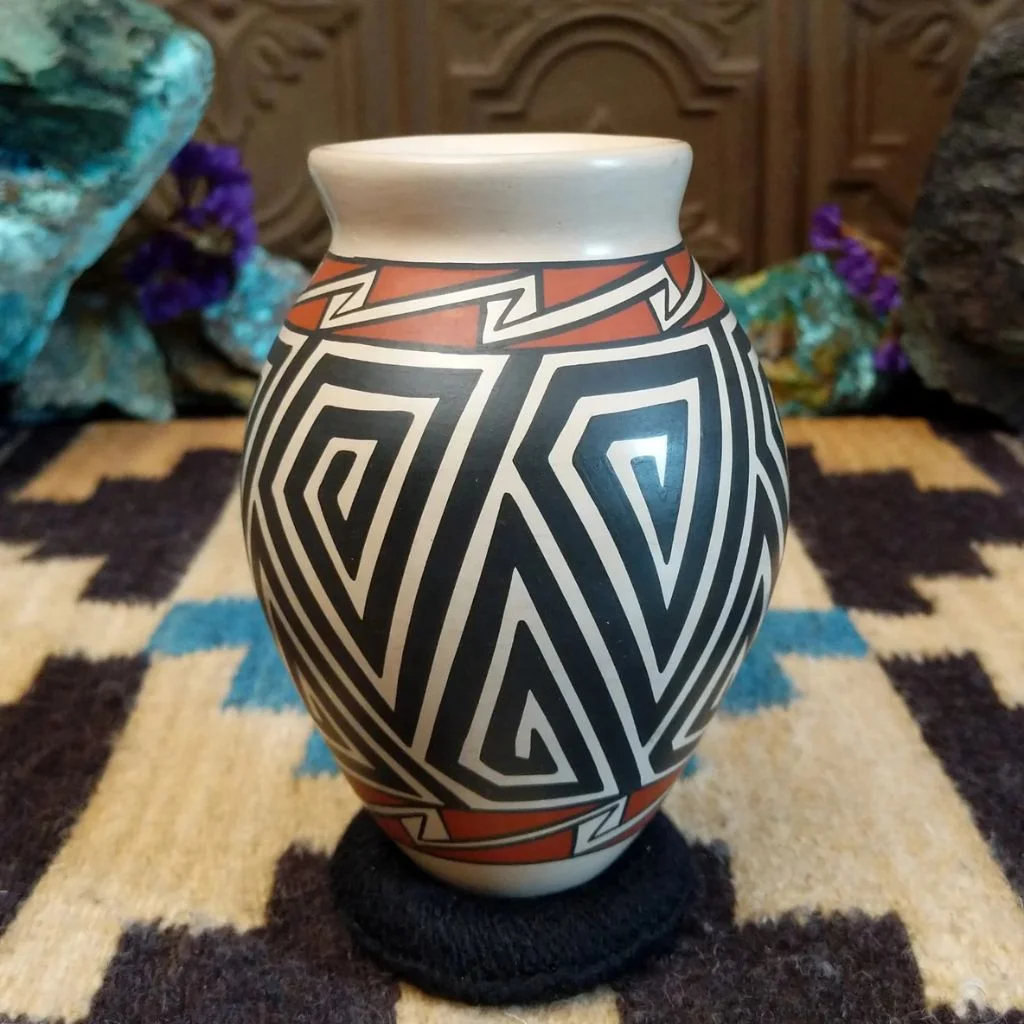
Image Source: arlenesgallery.com
Painter’s tape turns a shaky hand into a total non-issue, which makes this one of the most reliable ceramic vase painting ideas for anyone new to crafting. Map out a simple pattern first, such as triangles, stripes, or a chevron band around the middle of the vase.
Press the tape down firmly along every edge to stop paint from bleeding underneath, and burnish it with the back of a spoon for extra security. Paint within the taped sections in thin layers, letting each one dry before adding the next.
Peel the tape away slowly once the final coat is touch-dry rather than fully cured, since waiting too long can pull flecks of paint away with the adhesive.
For a two-tone effect, tape off alternating sections and paint them in contrasting shades rather than one colour on a plain background. This works especially well on taller vases, where the eye naturally follows the pattern up and down the shape.
Metallic Accents For Instant Glam
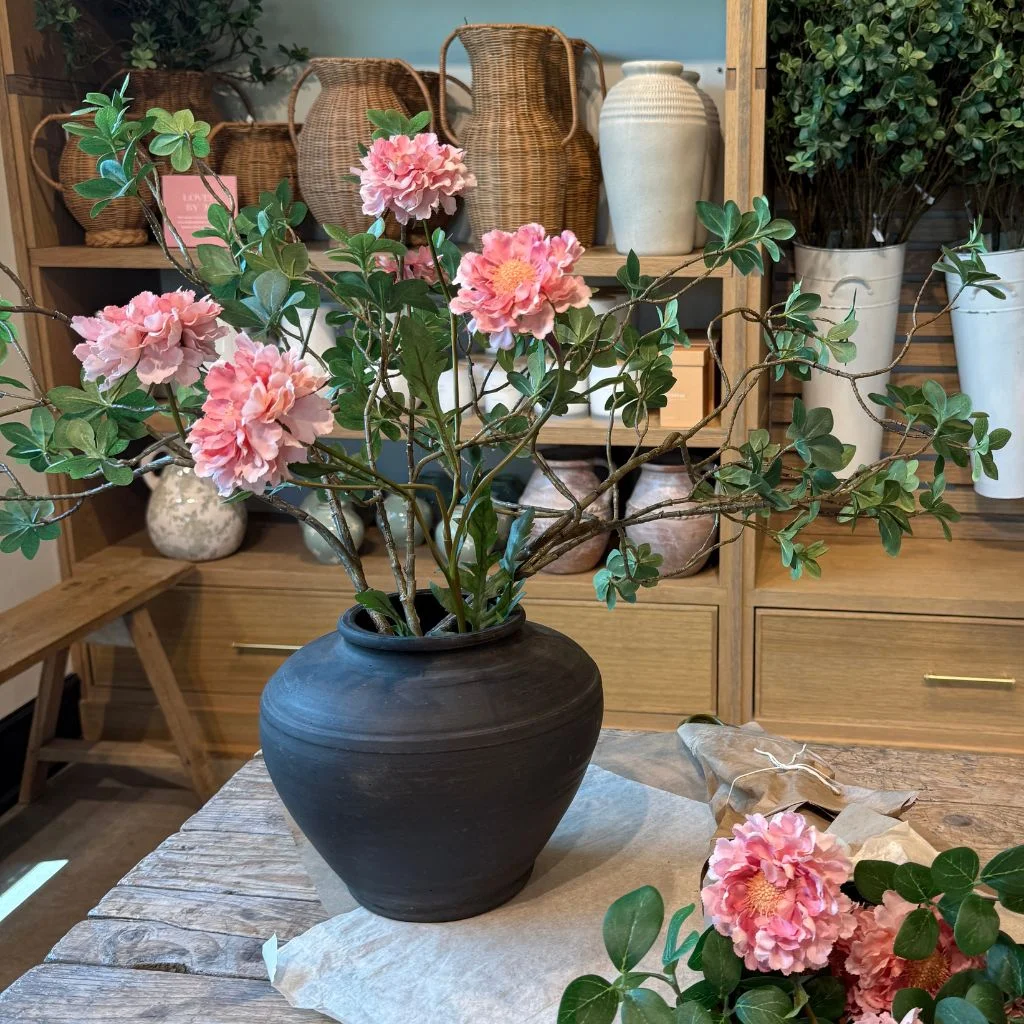
A little metallic paint transforms even the simplest design into something that looks store-bought. Gold, copper, and brushed silver all work well on ceramic, and a small amount goes further than most people expect.
Rather than covering the whole vase, use metallic paint sparingly on the rim, the base, or as thin accent stripes over another design. This restraint is what separates a tasteful finish from an overdone one, and it keeps the metallic tone from fighting with the rest of the palette.
Metallic acrylics tend to dry with a slightly different texture than standard acrylics, so a light sanding between coats with fine grit paper helps the final layer sit smoothly.
Sealing Mistake That Ruins Painted Vases
The most common mistake in ceramic vase painting ideas shared online is skipping the sealant step entirely, or applying it before the paint has properly cured. Acrylic paint can feel dry to the touch within an hour, but it often needs a full 24 to 48 hours to cure completely.
Sealing too early traps moisture underneath the topcoat, which leads to cloudy patches or peeling within weeks. Spraying in thin, even layers from about 20 to 30 centimetres away, rather than one heavy coat, gives a smoother and more durable finish that holds up to handling.
This small patience step is why a hand-painted vase either lasts for years on a shelf or ends up chipped and faded within a season.
Pick Up A Brush This Weekend
Each of these ceramic vase painting ideas takes an afternoon at most, yet the results look like something pulled from a boutique homeware shop. Start with whichever project matches the supplies already sitting in your craft drawer, and treat the first attempt as practice rather than pressure.
Once one vase is finished, it becomes far easier to see how these techniques could work on plant pots, picture frames, or old jars around the house. Pin this guide or bookmark it, then set aside an hour this weekend to give a plain vase a completely new life.
Also Read About: Seasonal Glass Vase Filler Ideas for Year Round Decor.
Vase Painting Questions You Might Have
Does the vase need to be fired in a kiln after painting?
No. Acrylic paint air-dries and cures on its own, so a kiln is not needed for any of these ceramic vase painting ideas.
Can painted vases hold real water and flowers?
Only if sealed well and painted on the outer surface, for fresh flowers, keep a glass jar or liner inside rather than filling the painted vase directly.
How long does a painted vase actually last?
With a proper sealant and light handling, a painted ceramic vase can look fresh for two to three years before it needs a touch-up.
What is the cheapest way to try these ideas?
A single pot of acrylic paint, a foam brush, and a charity shop vase can cost less than a coffee, making this one of the most budget-friendly weekend crafts around.
Can I fix a mistake once the paint has dried?
Yes. Light sanding with fine-grit paper removes small errors without damaging the surface underneath, and a fresh coat of the base colour covers bigger mistakes before you continue with the design.