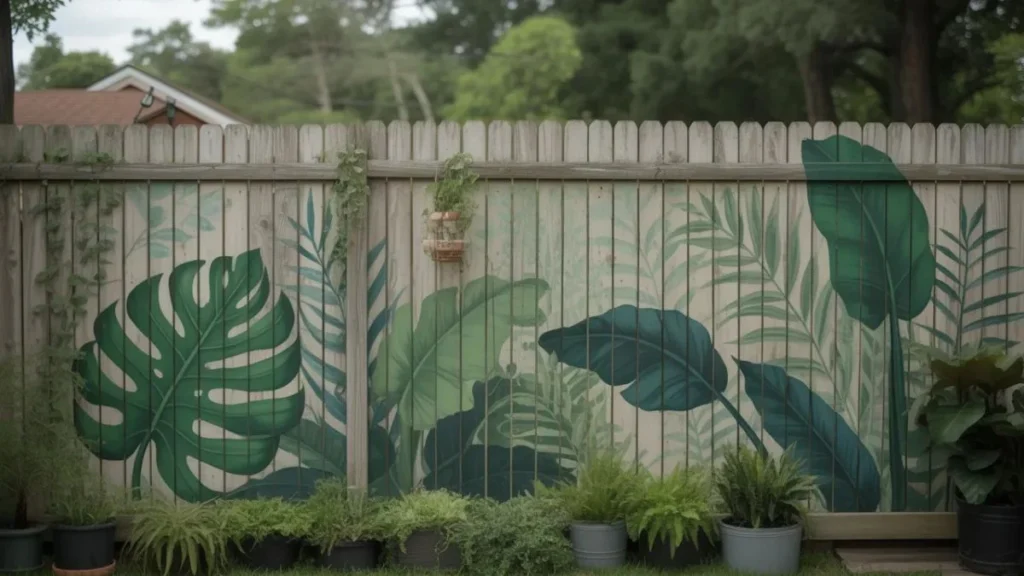
A blank fence or bare exterior wall is not wasted space — it is the most underused canvas in your backyard. A backyard plant mural wall transforms that dead zone into a botanical statement that adds colour, depth, and personality without a single new plant bed.
Whether you have a narrow urban courtyard, a standard suburban fence, or a plain concrete wall that faces your patio, the right mural design can make your outdoor space feel intentional, lush, and much larger than it is. This guide covers the best ideas, surface types, plant styles, and practical tips to pull it off — no professional artist required.
Why a Backyard Plant Mural Wall Works in Any Size Space
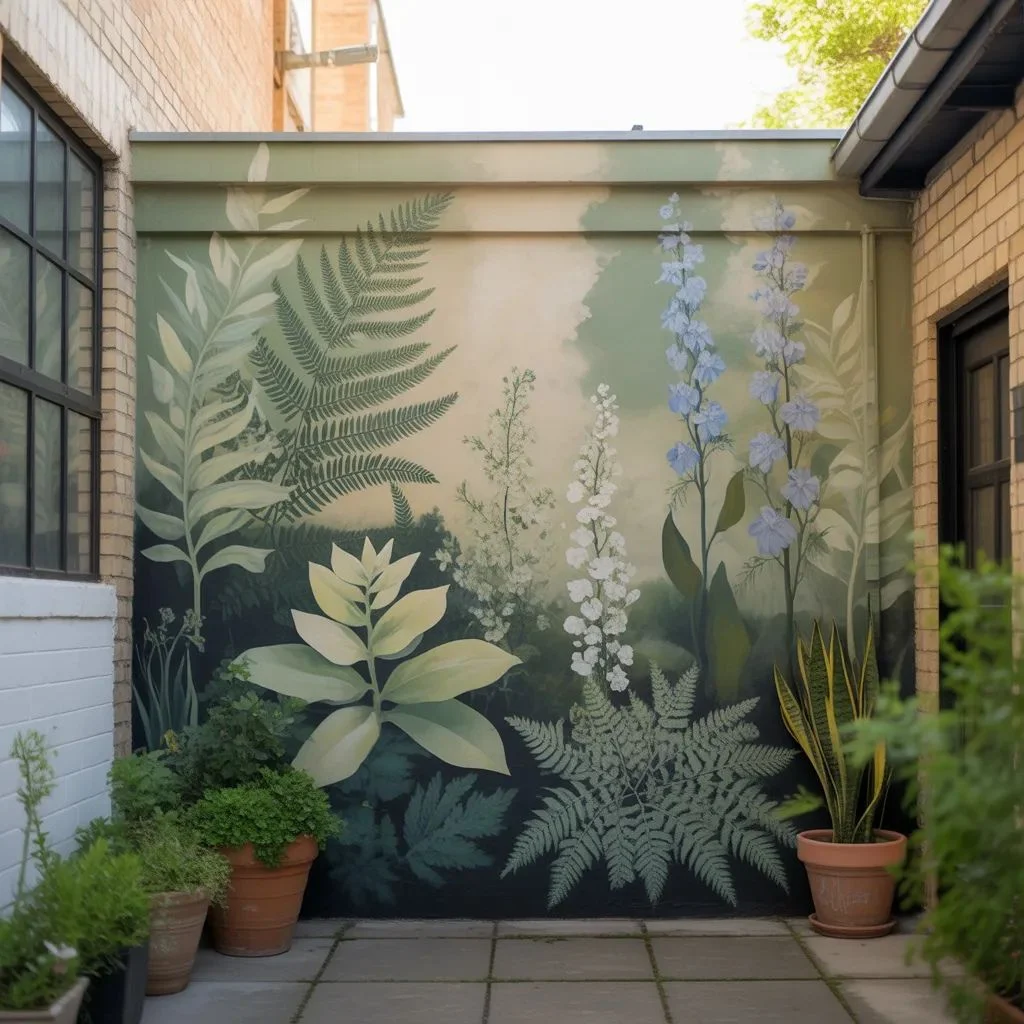
difference between a painted depth and a real one. A well-executed botanical mural uses layered colour, shadow, and organic shapes to create the illusion of volume, greenery, and space — even on a flat, two-dimensional surface.
Small backyards benefit the most. Cramped patios and narrow side yards can feel enclosed, but a sweeping floral or jungle mural shifts your focus to the painted horizon and suddenly the space breathes. The psychological effect is real — it is the same principle behind trompe l’oeil windows and painted doorways that have been used in European courtyard design for centuries.
Beyond aesthetics, a backyard plant mural wall is one of the most cost-effective outdoor upgrades available. Compare the cost of a full paint job on a fence panel to installing raised garden beds, retaining walls, or a pergola — the mural wins by a wide margin. A few cans of quality exterior paint, a weekend, and a simple design can completely transform how the entire backyard feels.
Murals are also a practical alternative for renters, homeowners with rocky or clay-heavy soil, and anyone who does not want the ongoing maintenance of a real plant border along a wall.
Best Surfaces for a Backyard Plant Mural Wall
Not every surface behaves the same way. Knowing what you are working with before you paint is what separates a mural that lasts three seasons from one that peels after the first frost.
Wood Fences
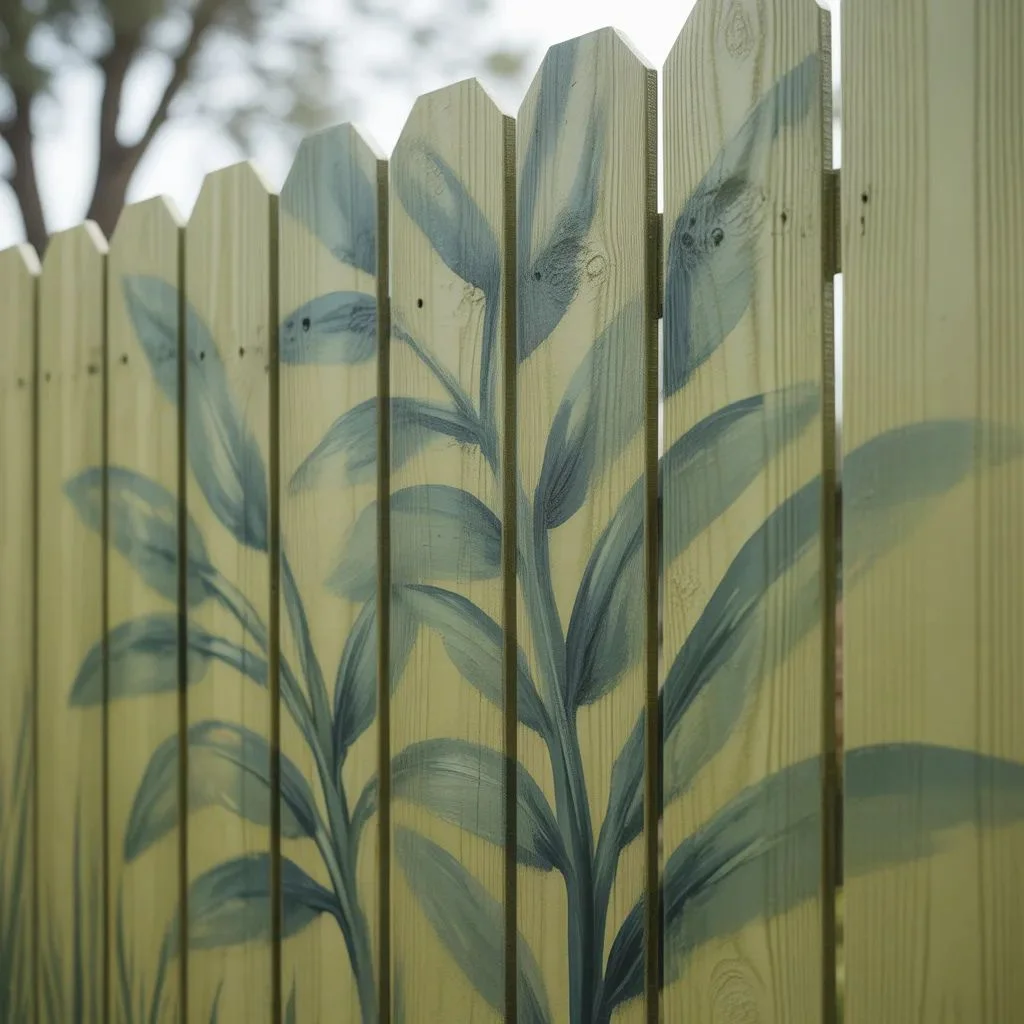
The most common canvas for a backyard plant mural wall. Horizontal and vertical wood slats both works, though a smooth-planed fence takes paint more cleanly than rough-hewn boards. Always sand lightly, prime with an exterior wood primer, and let it cure for 24 hours before painting. The natural grain that shows through adds organic texture that can enhance botanical designs.
Concrete and Cinder Block Walls
Concrete is porous, so it needs a masonry primer before any paint goes on. Once properly primed, it holds exterior acrylics extremely well and the muted gray undertone creates a beautiful base for botanical illustration styles. Bold tropical palms and monstera leaves pop dramatically against concrete.
Brick Exterior Walls
Brick is the most textured and challenging surface. A painted mural on brick will read slightly differently up close — the mortar lines create visible breaks in the design. Many designers lean into this, using the texture to add a handmade, mosaic-like quality to floral and leaf murals. Use a masonry primer and a thicker exterior latex or acrylic paint for best adhesion.
Rendered or Stucco Walls
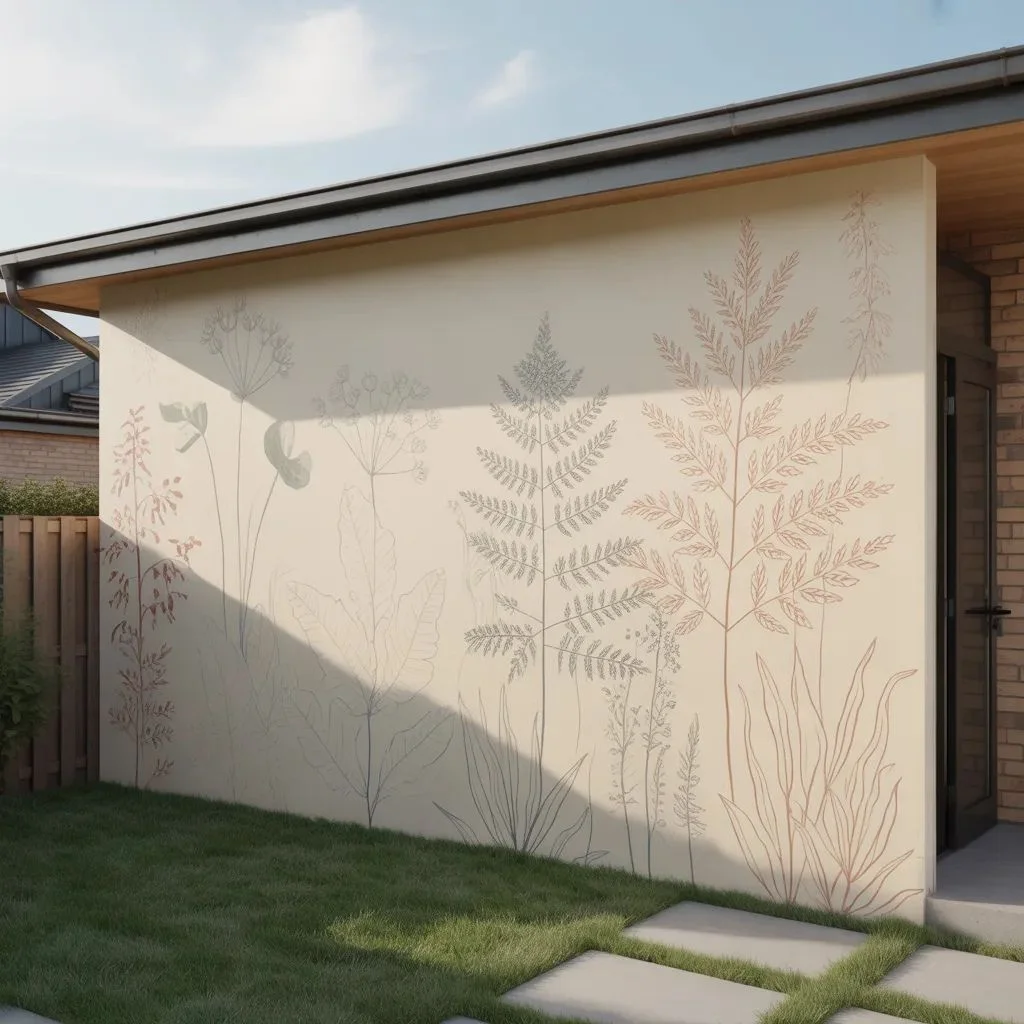
Smooth render is arguably the best surface for a detailed backyard plant mural wall. It takes paint cleanly, holds fine detail, and weathers well when sealed. A floral botanical scene or a trompe l’oeil window in a stucco garden wall looks professionally executed even with basic painting skills.
Botanical and Tropical Plant Mural Ideas for Fences
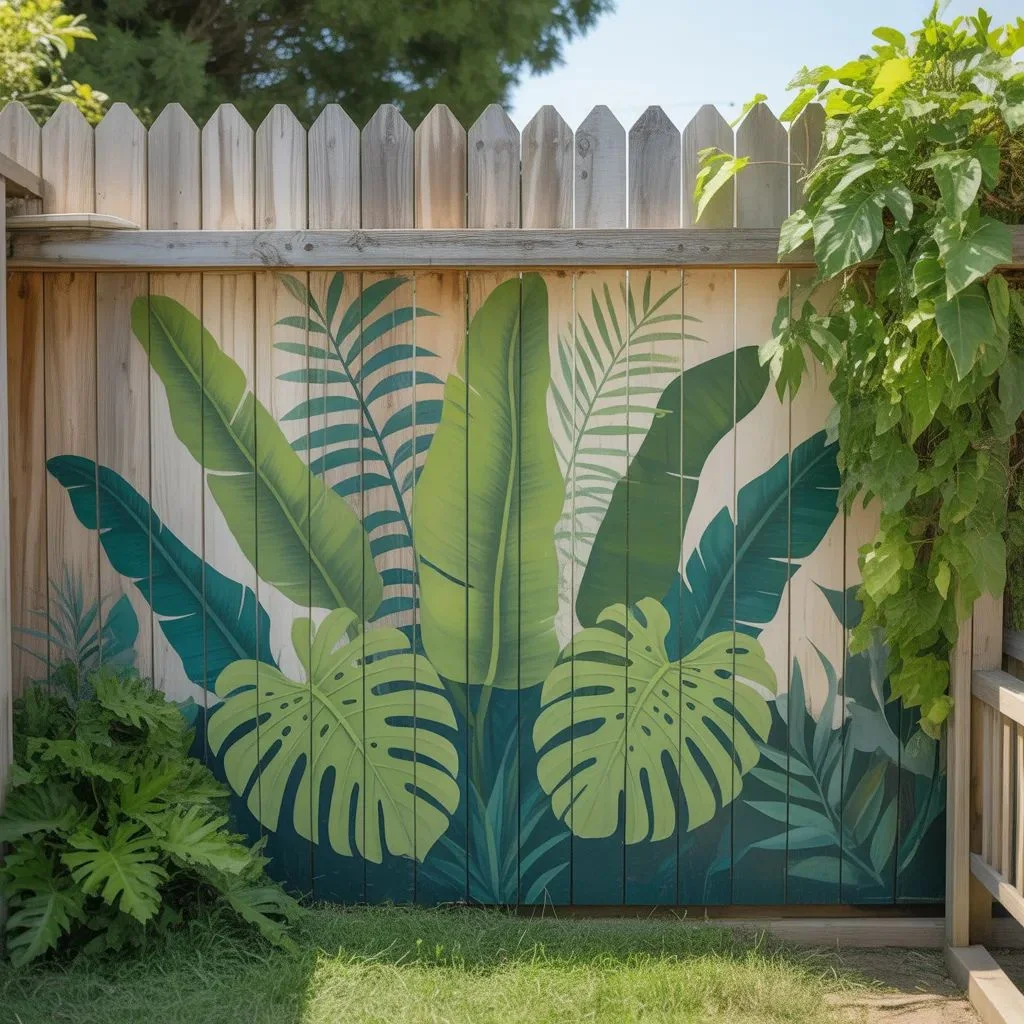
Botanical and tropical designs are the most popular styles for a backyard plant mural wall — and for good reason. They reference something naturally found outdoors, so the transition between painted wall and real garden feels seamless rather than jarring.
Oversized Monstera and Tropical Leaf Murals
Large monstera leaves, banana fronds, and palm silhouettes create the kind of visual drama that makes a fence feel like the entrance to a private jungle resort. This style works best when you scale up — paint the leaves larger than life. An oversized leaf that takes up a full fence panel is far more impactful than a small, intricate design that gets lost from a distance.
Use a minimum of three shades of green per leaf — a dark base tone, a mid-range fill, and a light highlight — to create the layered depth that makes the design read as three-dimensional from across the yard.
Climbing Vine and Botanical Illustration Murals
Vine murals are one of the most natural fits for a backyard plant mural wall because they mimic something that could realistically grow there. Paint climbing roses, jasmine, or ivy starting from the bottom of the fence and trailing upward, branching across horizontal boards as they rise. Adding real climbing plants at the base — even a small jasmine or a clematis in a pot — blurs the line between painted art and living garden.
For a more refined, editorial look, botanical illustration style takes inspiration from vintage plant prints. Think clean line work, detailed leaf venation, labeled specimen plates, and a limited color palette in earthy sage, terracotta, and cream tones.
Wildflower and Meadow Murals
A meadow mural — featuring poppies, daisies, lavender fields, and tall grass — works beautifully on long horizontal fence runs. Treat the fence like a landscape painting, with a ground layer of shorter stems along the base and taller flowers rising toward the top. Soft pastel tones keep it romantic; deep jewel tones like cobalt blue and burnt orange make it bold.
Small Space Backyard Plant Mural Wall Designs That Trick the Eye
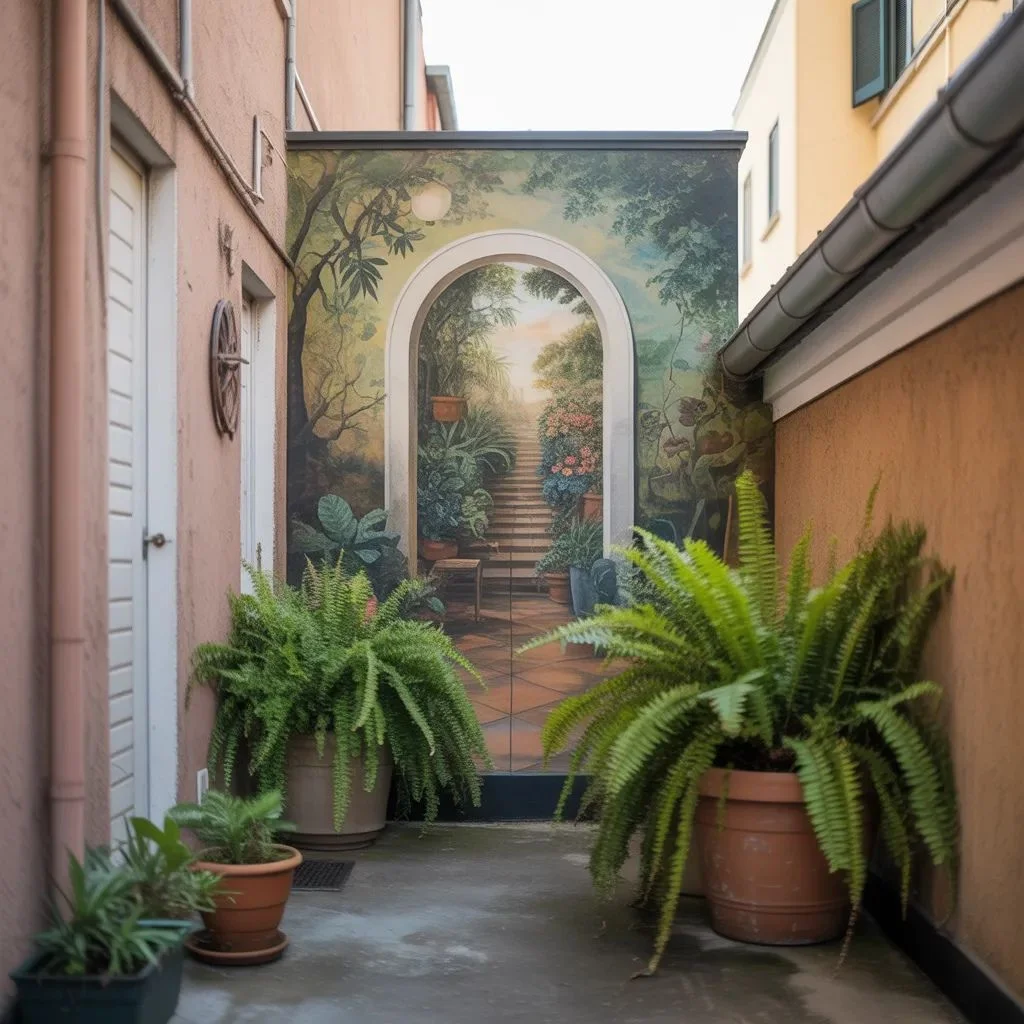
Small yards need design strategies that create space — not just decoration. The right backyard plant mural wall can make a compact courtyard, balcony-adjacent wall, or tight side passage feel dramatically larger.
Trompe L’oeil Archways and Garden Doors
A painted archway opening onto a painted garden beyond is one of the most effective depth illusions in outdoor design. Briefly, the painted perspective tricks your brain into seeing space that is not there. The secret is correct vanishing-point perspective — the painted ‘path’ or ‘courtyard’ should narrow convincingly as it recedes into the wall.
This technique is especially powerful in walled courtyards or tight backyards surrounded by fencing on three sides. It breaks the visual box and gives the eye somewhere to travel.
Vertical Perspective Murals
In small backyards with low fences or short walls, paint a design that encourages the eye to move upward. Tall tree trunks rising from the fence line, vertical tropical palms, or towering sunflowers painted floor-to-ceiling all draw attention upward, making the fence feel taller and the space feel more expansive.
Spectrum-based gradient designs — where colors shift from deep teal at the base to soft sky blue at the top — reinforce this vertical pull and are among the simplest designs to execute with limited painting skill.
Botanical Silhouette Murals for Tight Spaces
For very small wall sections or narrow fence panels, a botanical silhouette mural keeps the design clean and impactful without overwhelming the space. Deep green or black plant outlines against a light background — cream, white, or pale sage — feel elegant and do not compete with nearby furniture or potted plants.
Trace real plant shapes directly from your existing garden onto paper, scale them up with a projector or grid method, and transfer the outline to the wall. The result looks bespoke and intentional.
Bare Exterior Wall Murals: From Concrete to Brick
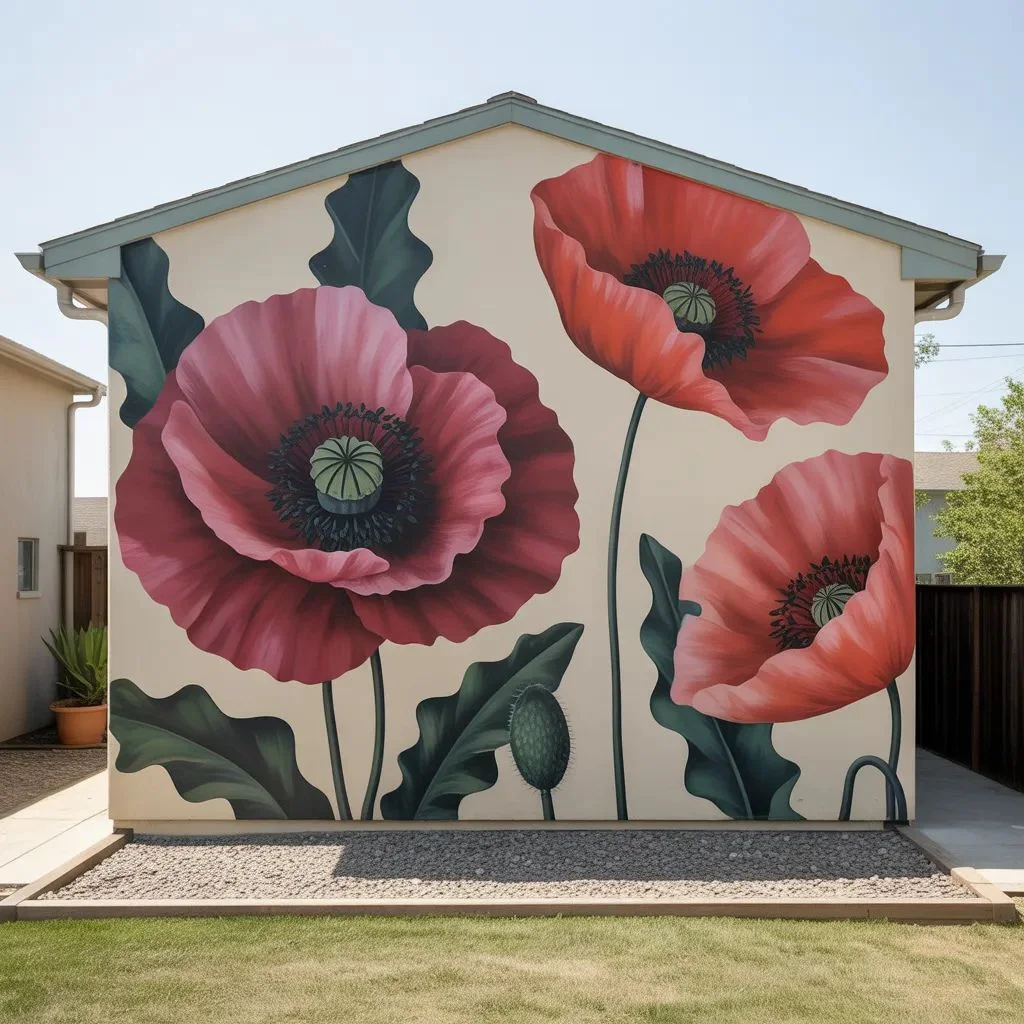
Bare exterior walls are often treated as a problem — grey slabs or weathered brick that you wish you could just ignore. Treat them as the largest canvas in your outdoor space and the whole backyard equation changes.
Concrete walls are particularly well-suited to bold, graphic plant designs. The neutral tone does not compete with the mural colors, and the surface area is usually large enough to execute a full botanical scene with real scale. A cluster of oversized poppies in deep crimson, a spray of eucalyptus branches, or a dense jungle scene of overlapping tropical leaves all become statement pieces on a concrete wall.
For brick walls, use the texture deliberately. A wisteria or climbing rose mural where the painted vines appear to grow through the mortar lines is one of the most visually convincing treatments possible. The real texture of the brick gives the painted plant life a convincing three-dimensional quality that a flat painted surface cannot replicate.
Rendered stucco walls allow for the most detail. If you want a complex botanical illustration with fine line work, shaded petals, or layered leaf canopy, a smooth rendered wall is where to do it.
DIY vs. Commissioned Backyard Plant Mural Wall
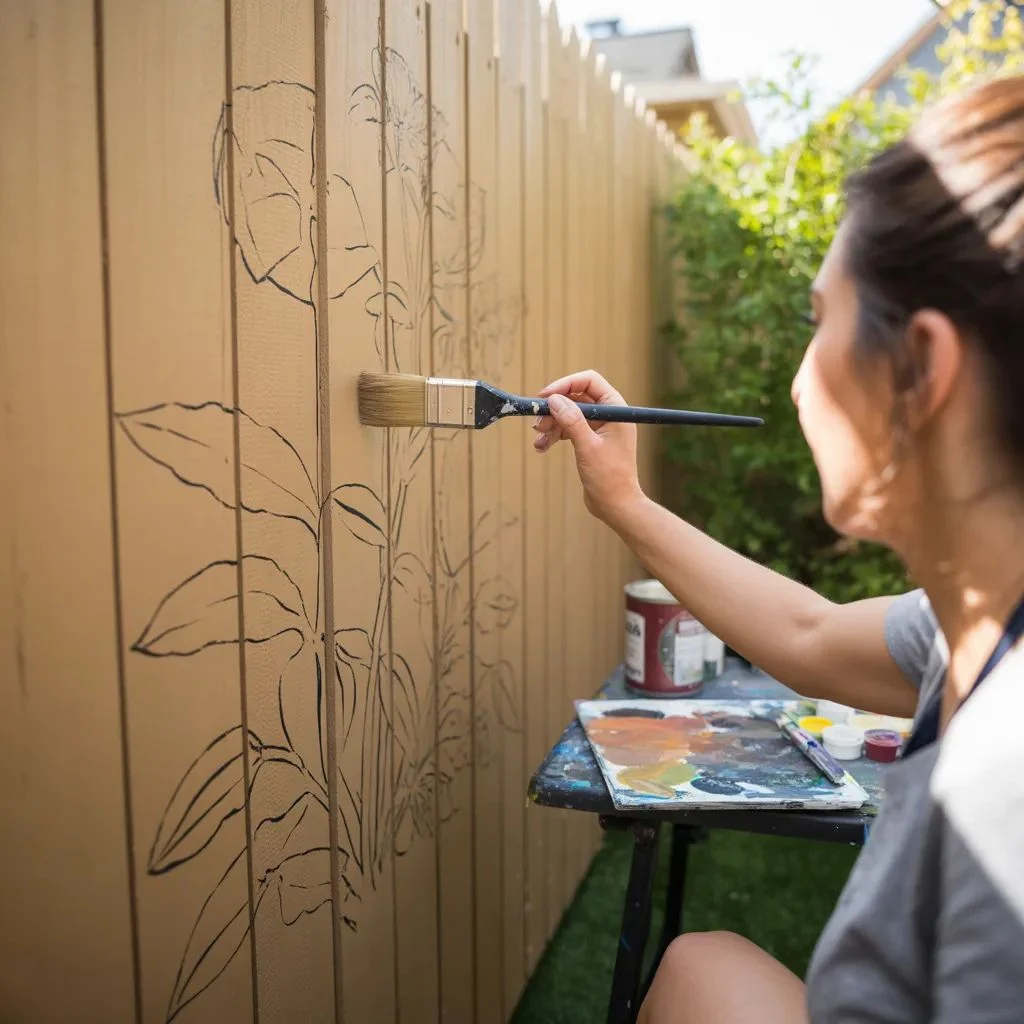
This is the most practical question to answer before starting any backyard plant mural wall project: do you paint it yourself, or hire someone?
The Case for DIY
Most botanical mural styles are far more achievable than they look. Vine murals, silhouette designs, colour-block botanical patterns, and leaf murals are all well within the reach of someone who has never picked up a paintbrush professionally. The key is preparation — a clear sketch, the right primer, good quality exterior acrylic, and patience during the outline phase.
Start smaller than your ambition. A single fence panel as a test run builds confidence before you commit the full run of fencing. Once you have the design working, extending it is straightforward.
When to Commission an Artist
Complex trompe l’oeil murals, photorealistic botanical scenes, or designs covering a large expanse of exterior wall are better handed to a muralist. The perspective work in a trompe l’oeil requires spatial understanding that is difficult to self-teach, and a poorly executed perspective illusion looks worse than a simple, well-done DIY design.
Search for local muralists who specialize in outdoor botanical work — many are more affordable than you expect, particularly for fence panels rather than large commercial walls. Always request examples of outdoor work specifically, as interior muralists do not always have experience with weathering, UV exposure, and exterior paint requirements.
Paints, Tools, and Materials You Actually Need
The material list for a backyard plant mural wall is shorter than most people expect. You do not need expensive specialist tools — but the paint quality matters significantly for longevity.
- Exterior-grade acrylic paint: The non-negotiable. Interior latex will fade, peel, and crack within a season. Look for UV-resistant, weatherproof exterior acrylic in artist or house paint grade. Popular brands include Rust-Oleum Chalked, Behr Premium, and Golden Heavy Body Acrylics for detail work.
- Masonry or wood primer: Never skip priming. A primer creates adhesion and prevents the paint from soaking unevenly into porous surfaces. One coat is usually sufficient on wood; two coats on concrete.
- Brushes: A 3–4 inch wide brush for base colour fills, a 1-inch flat for leaf shapes, and a fine round brush (size 2–4) for detail lines and veining. Synthetic bristles hold exterior paint better than natural bristles.
- Chalk for outlining: Sketch your design directly on the primed surface with chalk or a white pastel pencil. Chalk washes off with water if you make a mistake and disappears under paint once you start filling.
- Exterior matte sealer: Once the mural is complete and fully cured (48–72 hours), apply one coat of UV-resistant exterior matte varnish. This single step dramatically extends the life of the mural through rain, sun, and temperature swings.
Combining Real Plants With a Painted Mural Wall
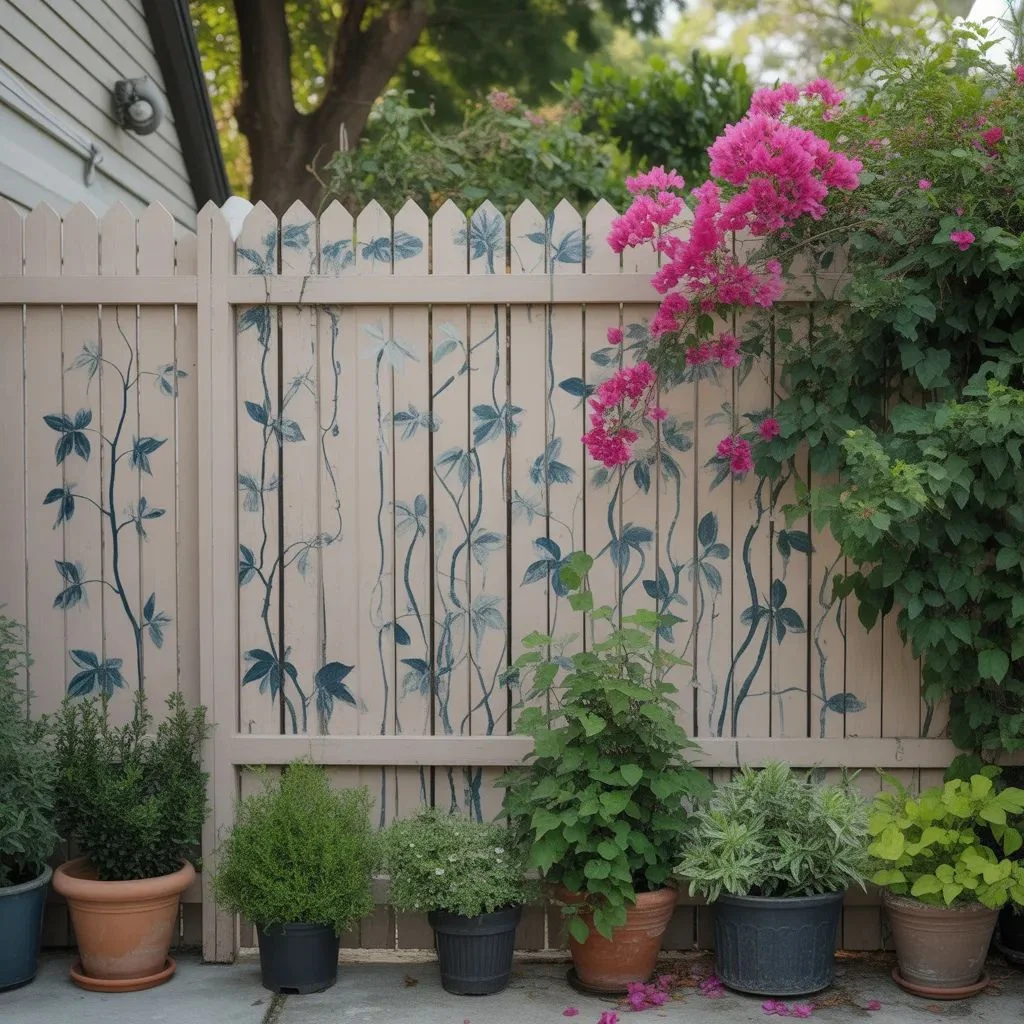
The most compelling backyard plant mural wall designs blend the painted with the real. When a viewer cannot immediately tell where the mural ends and the living garden begins, the effect becomes genuinely immersive.
The technique is straightforward: paint the ‘roots’ and ‘stems’ of your mural design at the base of the fence or wall, then place real potted plants directly in front of the painted base. Choose plants whose leaf shapes echo the painted design — a potted monstera in front of a painted tropical mural, a real jasmine trailing toward painted climbing vines, or a row of terracotta pots of lavender at the foot of a painted Provençal meadow scene.
Real climbing plants trained on a trellis fixed to a mural wall add another layer of depth. The painted leaves behind and the real leaves in front create a layered tableau that shifts as the light changes throughout the day.
Choose plant containers that work with the mural palette. Terracotta pots suit earthy botanical and Mediterranean murals; matte black containers complement graphic, modern jungle designs; glazed ceramic in sage or dusty blue pairs well with watercolor-style floral murals.
Seasonal and Low-Maintenance Plant Mural Styles
One of the underappreciated advantages of a backyard plant mural wall over real planting is consistency. A real garden border dies back in winter, drops color in drought, and requires constant input. A painted mural stays exactly as lush and full in January as it does in June.
This makes mural choice especially strategic for climates with hard winters, long dry seasons, or yards in near-permanent shade where real plants struggle. A painted tropical wall in a cold-climate backyard gives the feeling of greenery year-round that no amount of frost-tolerant planting can replicate.
For low-effort maintenance, choose designs that age gracefully. Bold, high-contrast designs can look patchy as paint fades; softer, earthy palettes in sage, terracotta, and dusty olive are more forgiving over time. A botanical silhouette mural in black or deep green on a cream background retains its visual clarity even as the paint mellows over two or three seasons.
Touch-up is simple with any well-kept backyard plant mural wall — keep a small quantity of each paint colour stored in airtight containers and do an annual spot check before the outdoor season begins. Address any chips, cracks, or weather-related fading with a brush and the stored paint, then reseal.
Your Outdoor Space Deserves More Than a Blank Wall
Every bare fence and plain exterior wall in your backyard is an opportunity that most homeowners never take. A backyard plant mural wall is one of the few outdoor upgrades that costs little, requires no ongoing care, and delivers a permanent visual transformation that changes how the entire space feels.
Start with one fence panel. Sketch the idea in chalk. Fill in the first leaf shape with a wide brush. The hardest part is always the first stroke — once you are past it, the project takes on its own momentum, and the wall starts to come alive.
Pin your favourite look and start sketching your backyard plant mural wall this weekend — your most beautiful outdoor space is one brushstroke away.
Recommended: Botanical Gallery Wall Styling Tips That Make Your Walls Look Like Art.