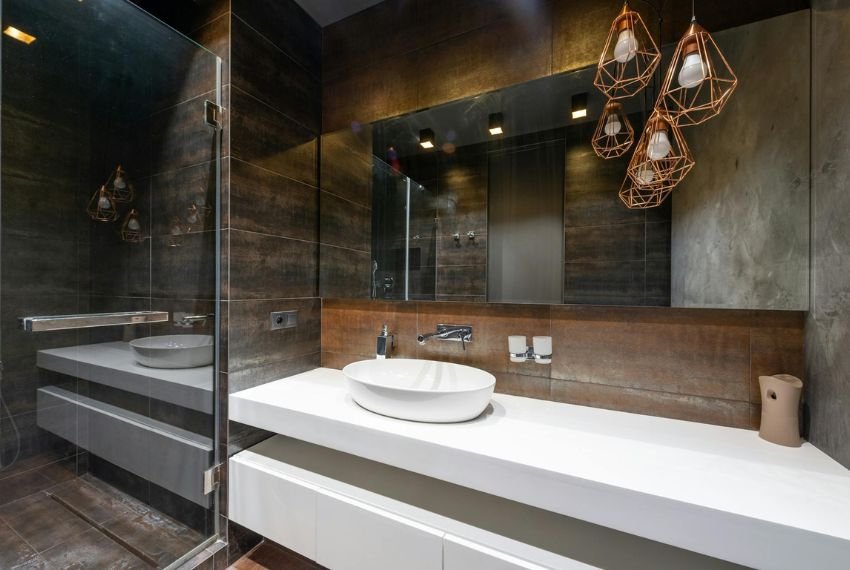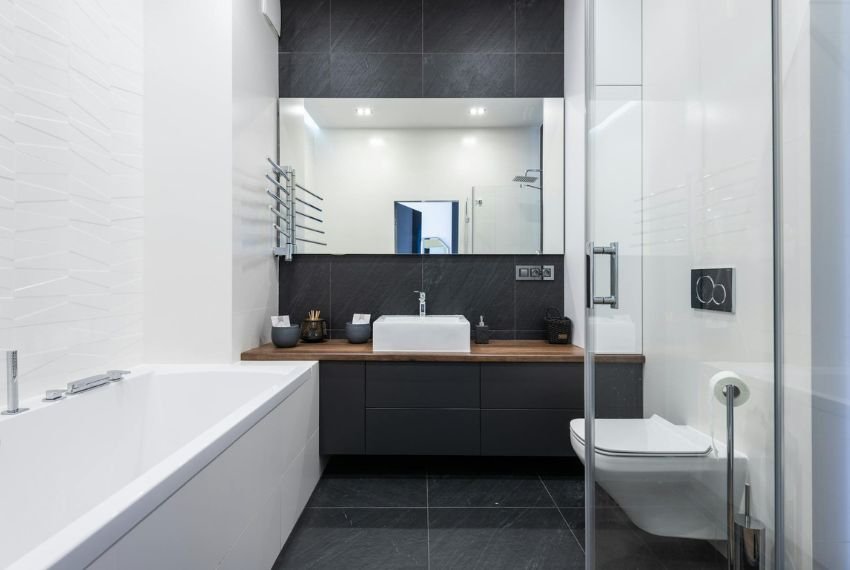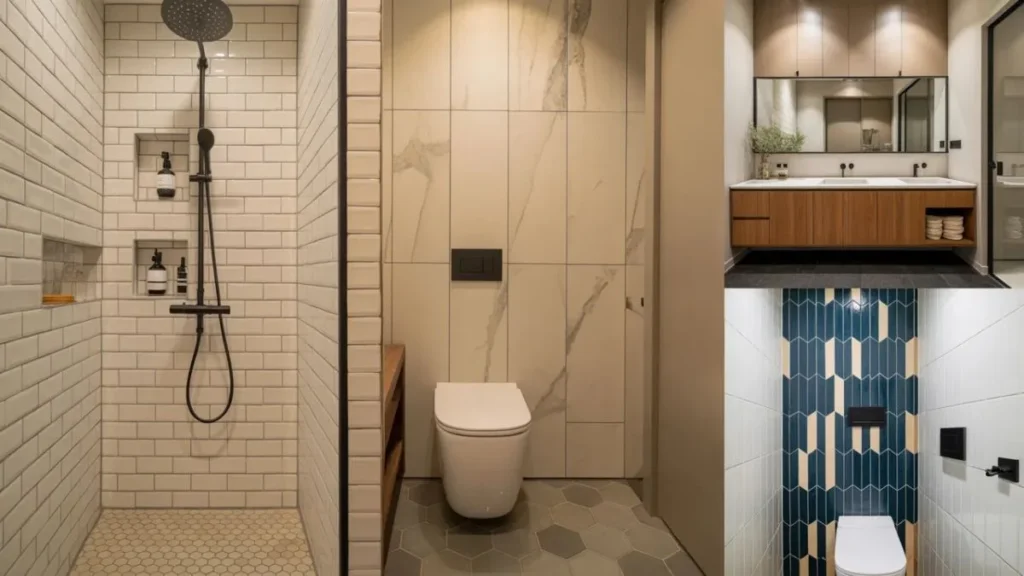
The right tile can completely transform a bathroom — and the wrong one can make even a beautiful space feel dated before it’s done drying. Ceramic tile remains the most versatile, cost-effective surface option available, and in 2026, designers are pushing it further than ever.
Whether you’re working with a tight powder room or a sprawling master bath.
Why Ceramic Tile is the Best Choice for Bathrooms
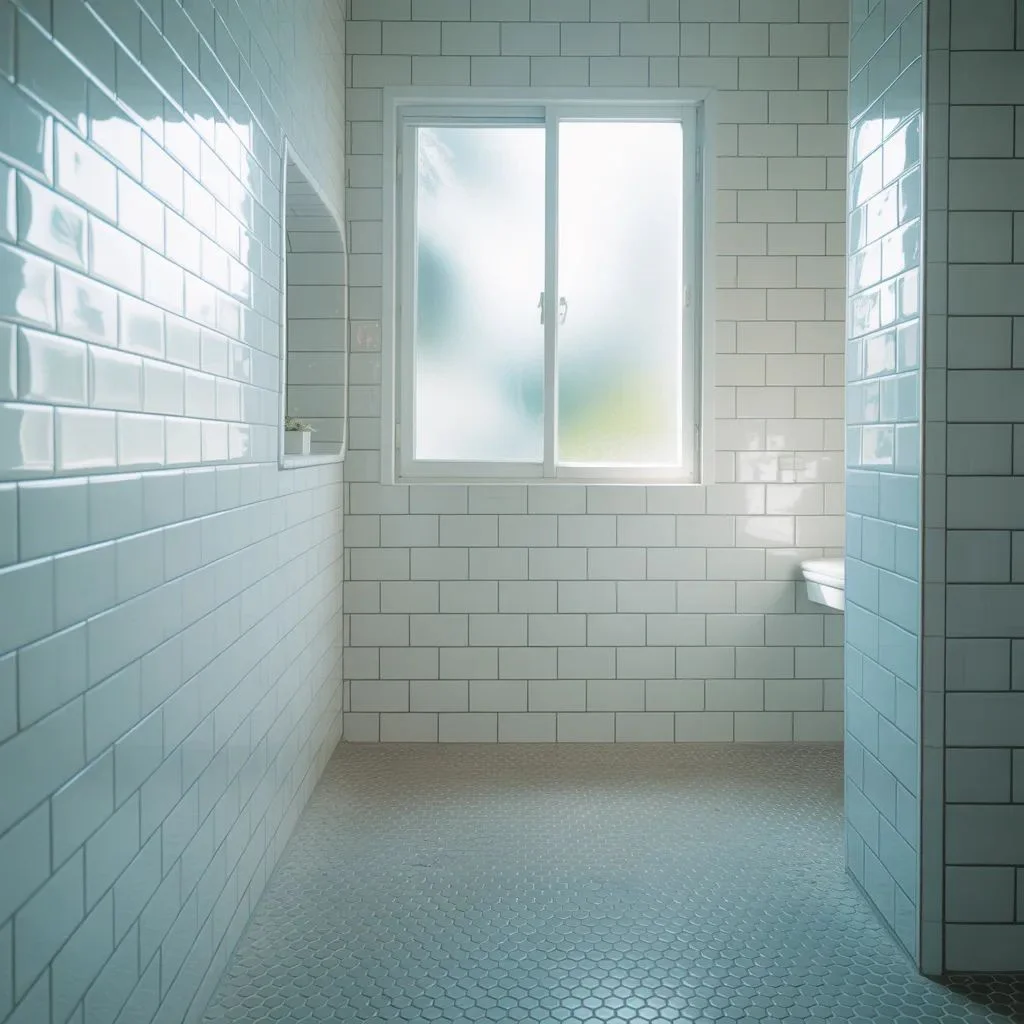
Before exploring specific bathroom ceramic tile ideas, it helps to understand why ceramic dominates bathroom design worldwide. Ceramic tile is fired clay — dense, water-resistant, and built to handle humidity, splashes, and daily foot traffic without complaint.
Unlike natural stone, ceramic doesn’t require sealing. Unlike vinyl, it doesn’t warp or peel over time. It holds colour and pattern indefinitely, resists mold when properly grouted, and comes in nearly every size, shape, finish, and color imaginable. That combination of durability and design flexibility is why designers keep returning to it — and why it works equally well in a $20,000 renovation or a budget-friendly refresh.
For floors, walls, and showers alike, ceramic is the material that delivers style without sacrifice.
Small Bathroom Ceramic Tile Ideas That Maximize Space
Small bathrooms are where tile choices matter most. The wrong scale, pattern, or colour can make a compact room feel like a closet. The right bathroom ceramic tile ideas for small spaces rely on a few key principles: light tones, strategic layouts, and tiles that draw the eye upward or outward.
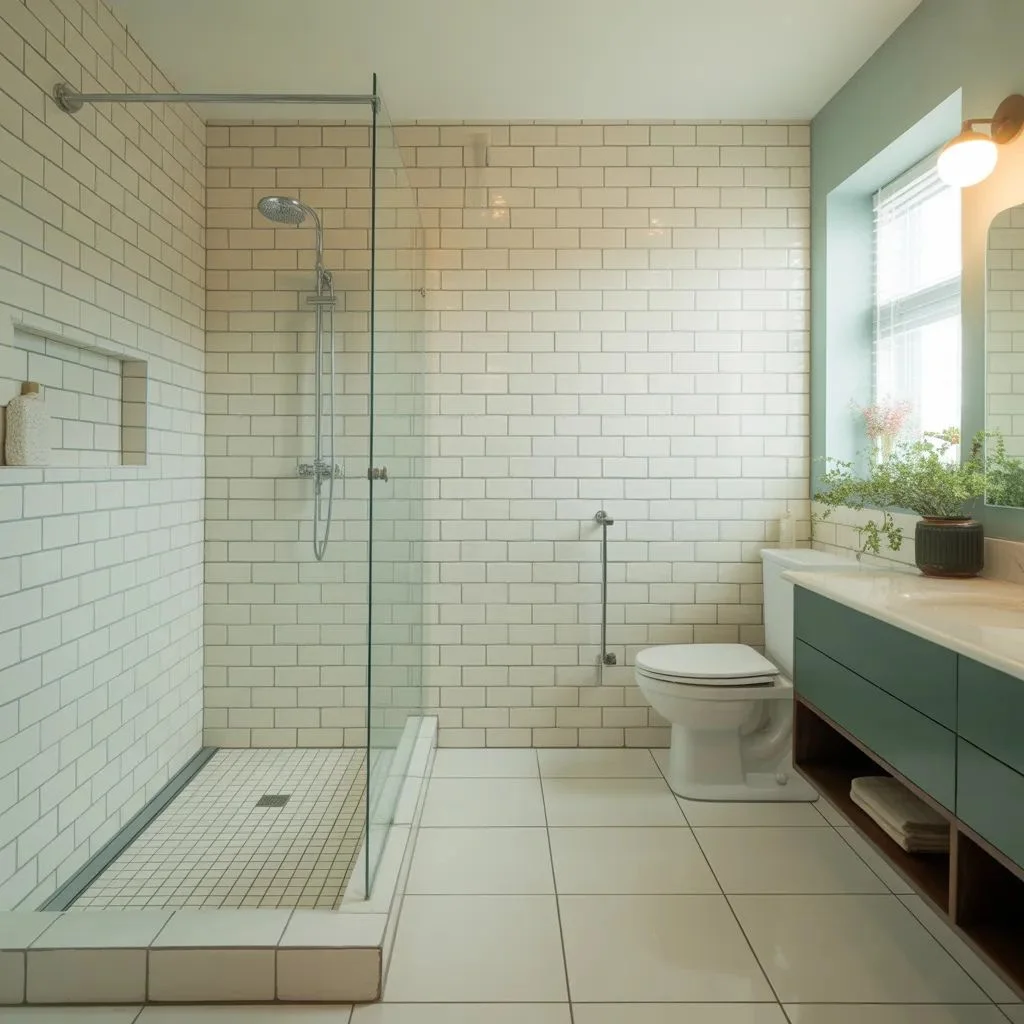
Go Light to Open Up the Room
Pale ceramics — whites, creams, and soft greiges — reflect light and make walls feel farther apart than they are. A matte or satin finish diffuses light more evenly than high gloss, which can feel harsh in a tight space. Pairing light wall tile with a slightly warmer floor tile creates visual depth without adding visual noise.
Use Vertical Tile Layouts
Laying rectangular ceramic tiles vertically — stacked or in a long brick pattern — draws the eye upward and adds the feeling of height. This trick works especially well in bathrooms with low ceilings or narrow walls. A 3×12 or 4×16 ceramic tile laid vertically can add several perceived inches to ceiling height.
Large Tiles in Small Spaces
It sounds counterintuitive, but large-format ceramic tiles actually work beautifully in small bathrooms. Fewer grout lines mean a cleaner, more seamless surface — and less visual fragmentation that makes small rooms feel busy. A 12×24 or even 24×24 ceramic floor tile can make a tiny bathroom feel significantly more expansive.
Diagonal Tile Placement
Rotating square tiles 45 degrees creates a diamond pattern that adds movement and stretches the perceived width of narrow spaces. This is a classic designer trick that works with basic ceramic in any colour — the layout does all the work.
Shower Ceramic Tile Ideas for a Spa-Worthy Experience
The shower is the visual focal point of almost every bathroom. It’s also where tile takes the most wear — so choosing the right bathroom ceramic tile ideas for this zone means balancing beauty with practicality.
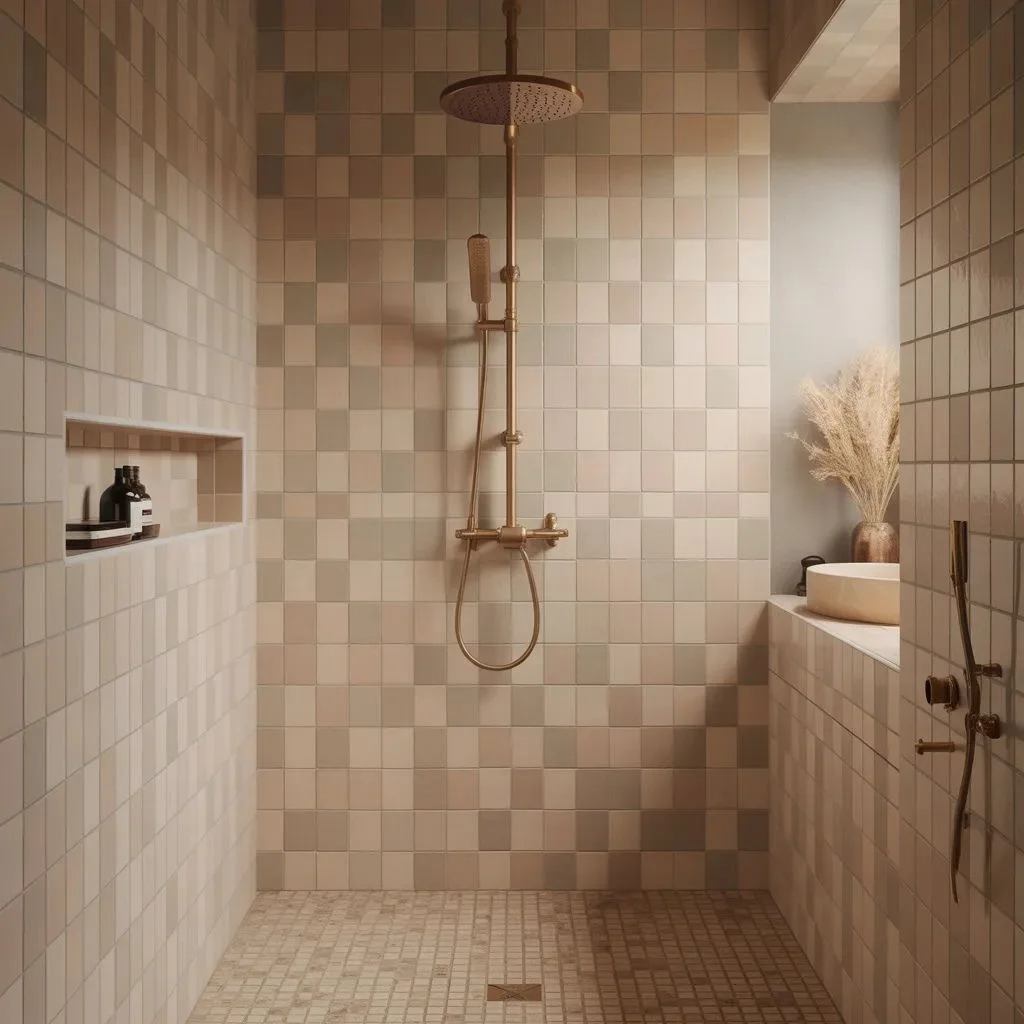
Full-Surround Ceramic for a Seamless Look
Tiling the shower floor, walls, and ceiling in matching or complementary ceramics creates a cohesive, immersive feel that mimics high-end spa design. Designers are increasingly using matching tile across all shower surfaces for a unified effect, especially in matte or honed finishes that handle moisture gracefully.
Zellige-Style Handmade Ceramics
One of the biggest tile movements of 2025-2026 is the embrace of imperfection. Handmade-effect ceramics, soft uneven zellige-style tiles, and pieces with visible glaze variation bring depth and individuality to shower walls. Each tile catches light slightly differently, giving the entire shower a living, textured quality that polished tiles simply can’t replicate.
Fluted Ceramic Shower Walls
Fluted tiles — with their raised, parallel ridges — have moved from accent walls into full shower surrounds. They add a three-dimensional quality that turns a shower into a design statement without requiring complex installation or expensive materials.
Feature Wall with Patterned Ceramic
Rather than tiling an entire shower uniformly, create a single feature wall behind the showerhead using a bold ceramic pattern — a graphic geometric, a Moroccan-inspired motif, or an oversized floral. Keep the remaining three walls in a simple solid to let the feature breathe. This approach delivers maximum impact at minimum cost.
Mosaic Ceramic Accents
Small mosaic tiles in showers — in niches, on the floor, or as a border between wall sections — add refined detail without overwhelming the space. Blue, green, and pearl mosaic ceramics are having a strong moment, used as architectural jewels within otherwise minimal shower designs.
Bathroom Floor Tile Ideas: Patterns, Textures & Layouts
Bathroom floors take more abuse than any other surface — wet feet, dropped products, daily cleaning. The best bathroom ceramic tile ideas for floors combine texture for slip resistance, durability for longevity, and visual interest that anchors the whole room’s design.
Herringbone Pattern Floors
Herringbone remains one of the most popular tile arrangements in contemporary bathroom design — and for good reason. The V-shaped weave pattern adds architectural interest to any floor without requiring special tiles. Any rectangular ceramic with a width half or less of its length works perfectly. It looks equally at home in a modern farmhouse bathroom or a sleek urban apartment.
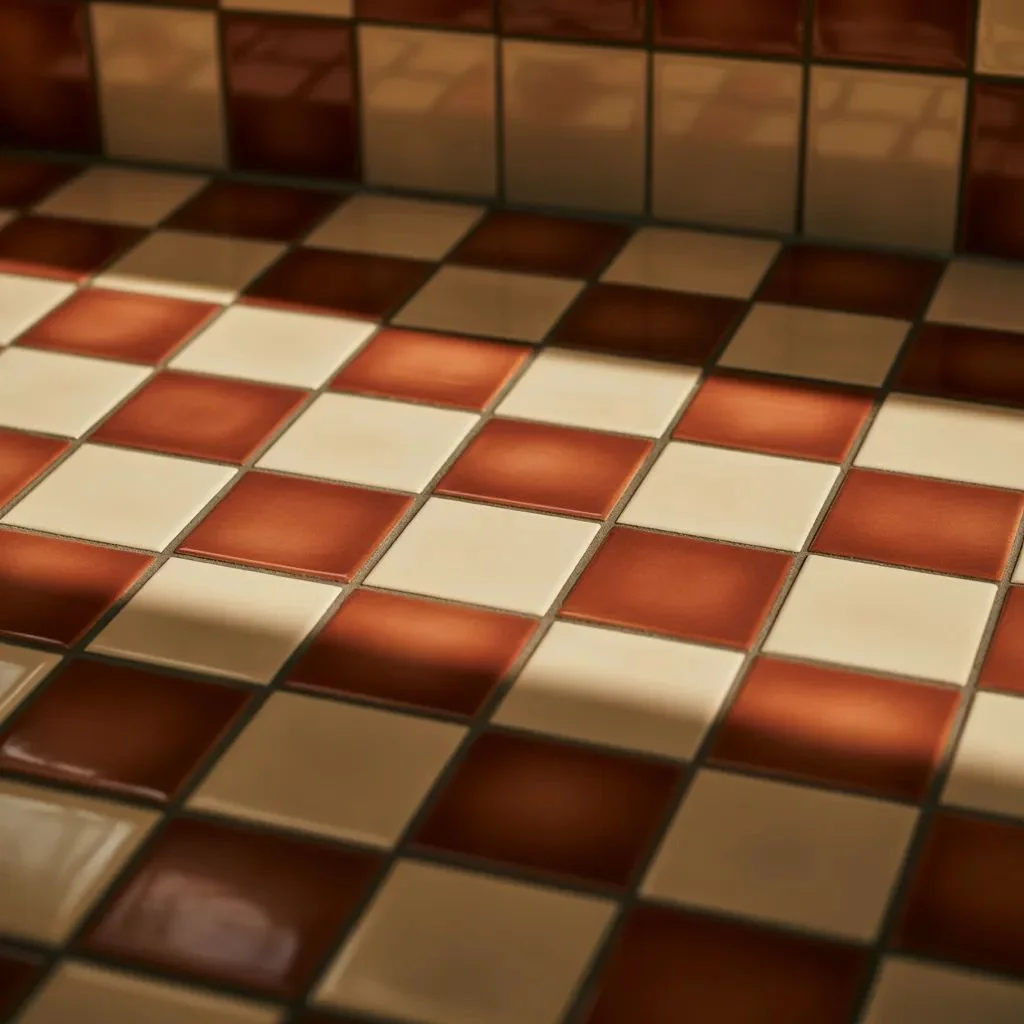
Checkerboard Ceramic Floors
The checkerboard is back — stronger than ever and more sophisticated than the basic black-and-white version most people picture. Designers are pairing soft greige with warm white, sage with ivory, and terracotta with cream for checkerboard floors that feel current without feeling trendy. It’s a pattern that designers describe as a design checkmate: timeless, graphic, and always stylish.
Textured Ceramic for Slip Resistance
Textured floor tiles — ceramics with a brushed, tumbled, or raised-pattern surface — serve a dual purpose. They add visual warmth and spa-like depth while providing traction in wet conditions. This is especially important in shower floors and wet rooms, where a smooth glaze can become dangerously slippery.
Wood-Effect Ceramic Floors
Porcelain and ceramic wood-look tiles have become remarkably convincing. They offer the warmth and grain of natural wood with none of the maintenance challenges in a high-moisture environment.
Bathroom Wall Tile Ideas: From Subway to Statement
Wall tiles set the tone for the entire bathroom. They’re the first thing you see and the surface with the most opportunity for design expression. Today’s best bathroom ceramic tile ideas for walls range from restrained classics to bold artistic statements — and everything in between.
Classic Subway Tile — Reimagined
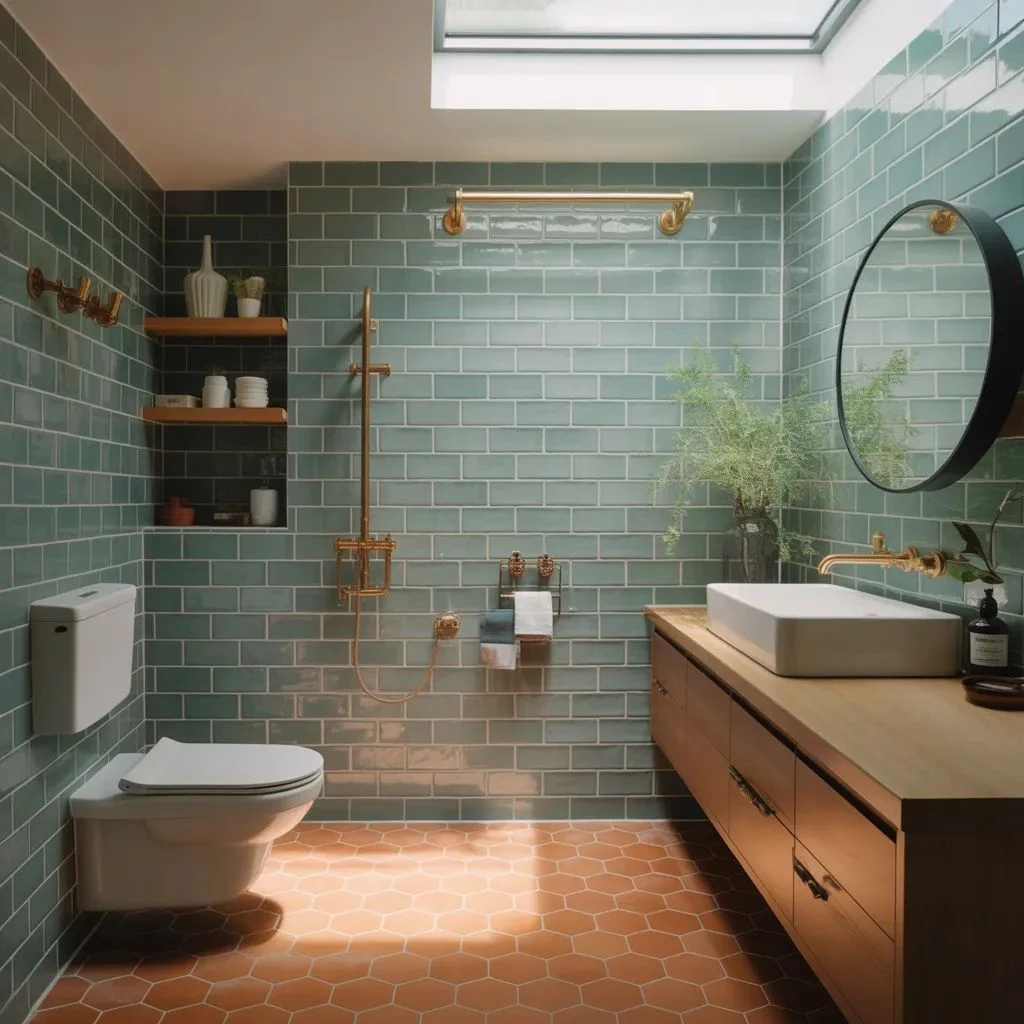
The subway tile isn’t going anywhere, but it’s evolving. Extended formats like 3×12, 4×16, and even 4×24 are replacing the standard 3×6, creating a more elongated, contemporary feel. Colour has also expanded far beyond white — sage green, dusty blue, warm terracotta, and deep charcoal subway tiles are all delivering on the classic form with fresh personality.
Stacked Vertical Tile
Vertically stacked elongated tile is one of the most popular wall patterns in current bathroom design. The clean, linear arrangement creates height and a modern feel, working especially well with matte ceramics in warm neutral tones. Glass tiles in the same vertical stack add a sleek, radiant surface that plays beautifully with bathroom lighting.
Chair Rail Dividers for Two-Tone Walls
A chair rail divider — using a trim tile or contrasting border to divide upper and lower wall treatments — adds architectural depth that most bathrooms lack. Pair a bold geometric ceramic above with a simple neutral below or flip it for a grounded base with a lighter, airier upper wall. This technique transforms plain walls into elegant focal points.
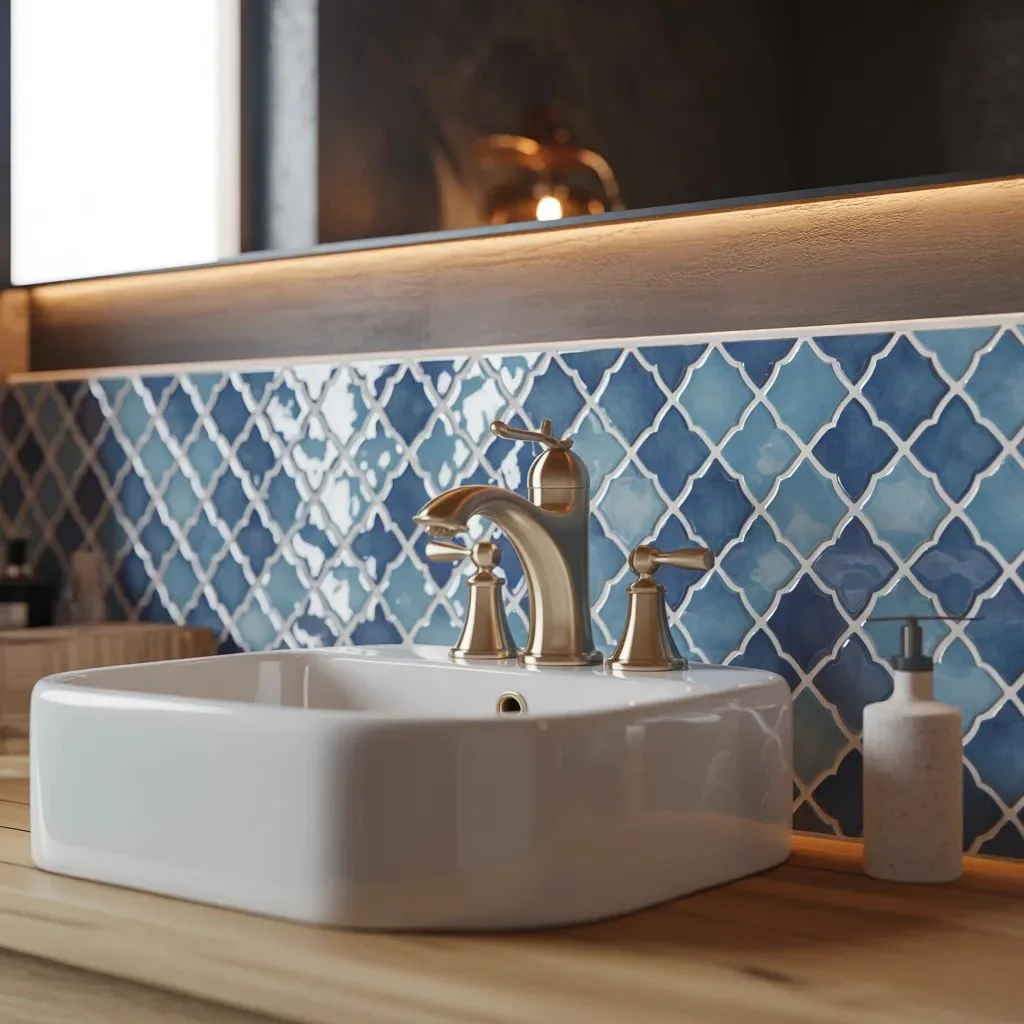
Statement Backsplash Behind the Vanity
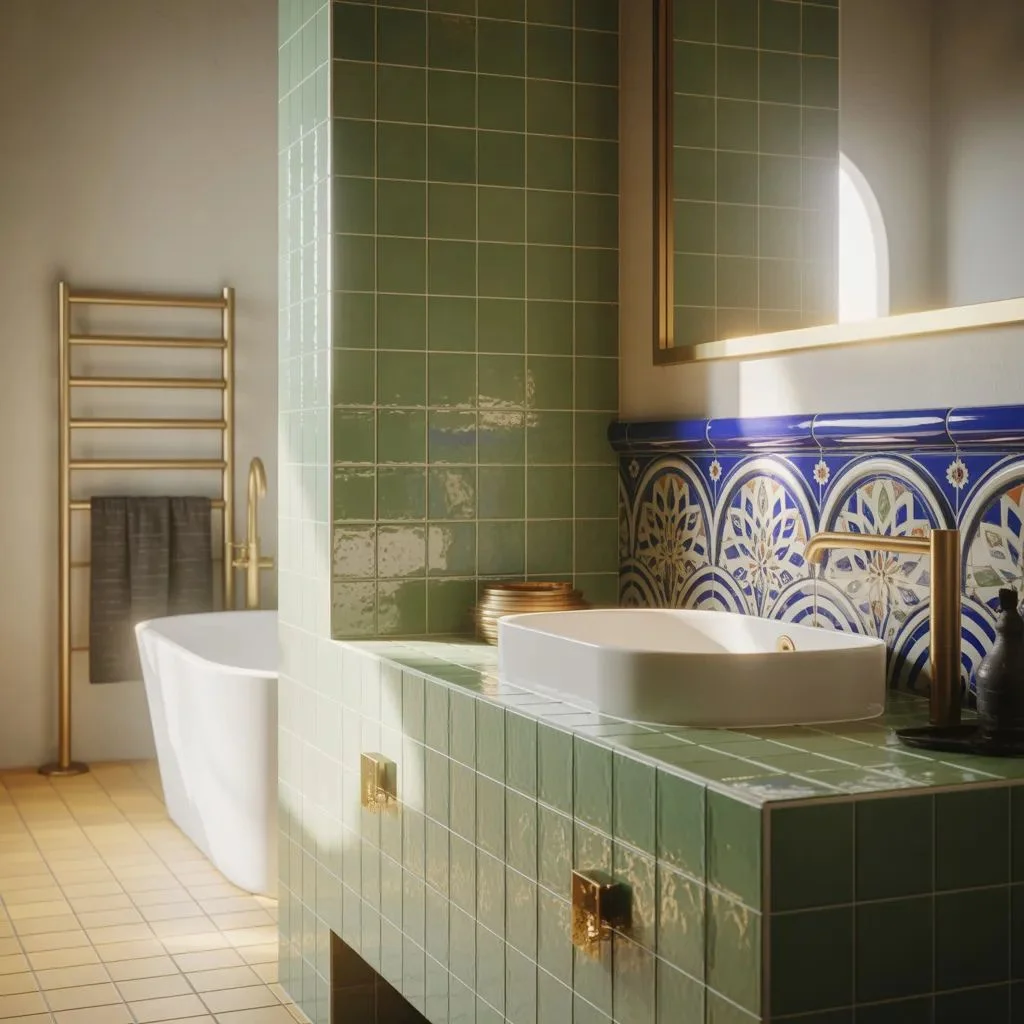
The vanity backsplash is prime real estate for a design moment. Moroccan zellige, bold Art Deco patterns, or handcrafted Majolica-inspired ceramics bring artistic flair to this one focused zone. Contrasting grout amplifies the pattern further. This approach lets you make a dramatic statement without committing to patterned tile on every wall.
Colour Trends for Bathroom Ceramic Tiles in 2026
Colour is where the most exciting shifts are happening in bathroom ceramic tile ideas this year. The cool grey and stark glossy white era is giving way to something richer, warmer, and more intentional.
Warm Earth Tones
Terracotta, warm brown, burnt orange, and dusty rose are the dominant ceramic colors of 2026. These shades create a grounding, spa-like atmosphere that feels both current and timeless. Terracotta brings an almost archaic warmth — it pairs beautifully with lime white, sage green, and deep coastal blue.
Green in Every Shade
Green is having its defining moment in bathroom design. Sage, forest, emerald, and olive variants all share one quality: they connect the bathroom to nature, promoting a sense of calm and wellbeing. These shades pair naturally with warm woods, light stones, and brass or unlacquered metal fixtures for a cohesive organic aesthetic.
Soft Ivories and Warm Whites
Pure white is stepping aside for warmer, more nuanced whites — ivory, cream, bone, and alabaster. These shades hold warmth in both natural and artificial light, creating a cozy and welcoming atmosphere that stark white simply cannot achieve. They work especially well in bathrooms with limited natural light.
Deep, Saturated Accents
Deep blues, aubergine, and charcoal are being used as bold accent ceramics — in niches, on feature walls, and in shower surrounds — to create drama and contrast. These colours anchor a space, adding sophistication without overwhelming the senses when balanced with lighter surrounding tiles.
Bold & Patterned Ceramic Tile Ideas for Personality-Filled Baths
Pattern has claimed its place as a primary design tool in today’s bathrooms — not a supporting act, not a risk, but a deliberate choice that shapes the character of an entire space. For those ready to commit, these patterned bathroom ceramic tile ideas deliver maximum personality.

Graphic Checkerboards and Stripes
Checkerboards and stripes are being used unapologetically on both walls and floors in 2026. Directional stripes created through tile layout — not tile pattern — allow linear ceramics to exaggerate height or widen narrow spaces. This is an approach where the geometry of the layout does the design work, not complex tile shapes.
Mediterranean and Moroccan Motifs
Mediterranean-inspired ceramics — Sicilian, Andalusian, and Moroccan-influenced patterns — are returning in updated form. More restrained colour palettes and streamlined designs modernize the look, keeping the chromatic energy while removing dated folkloric excess. These tiles work beautifully on floors, as feature walls, and behind vanities.
Vintage Floral and Art Deco Patterns
Vintage-inspired floral ceramic floor tiles and bold Art Deco geometric motifs are gaining ground in 2026, particularly in powder rooms and guest baths where a single strong design statement reads at its best. The key is restraint — one patterned surface surrounded by solid, quiet companions.
Large-Format Ceramic Tiles: The Modern Minimalist Approach
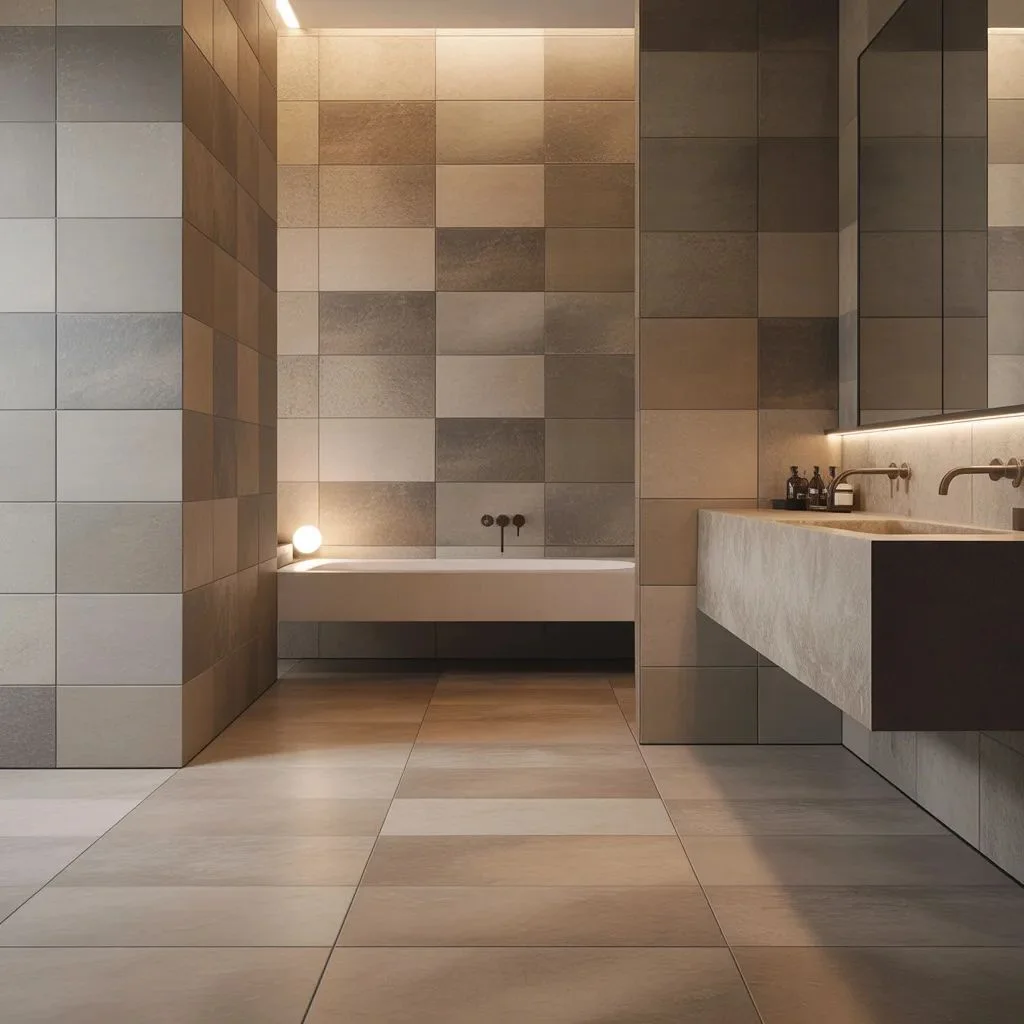
If one tile format defines contemporary bathroom design right now, it’s the large-format ceramic. Oversized tiles — 24×24, 24×48, and beyond — are highlighted by experts as a top trend for creating seamless, modern looks that feel immediately luxurious.
The reason is simple: fewer grout lines mean a cleaner surface, and a cleaner surface reads as more expensive and more spacious. Large-format ceramics are also much easier to maintain — less grout means less scrubbing and fewer places for mold to establish itself.
These tiles work especially well in showers (where they create a continuous, uninterrupted surface), on floors (where they maximize the perception of space), and as full-wall treatments that mimic the look of continuous stone slabs. For the most seamless possible effect, align floor and wall tiles at matching dimensions so joints connect cleanly from plane to plane.
Mixing & Matching Ceramic Tiles Like a Designer
One of the most important skills in working with bathroom ceramic tile ideas is knowing how to combine different tiles without creating visual chaos. Designers approach mixing and matching with a clear framework:
The 60-30-10 Principle
Use one tile for 60% of the surface (typically walls), a second for 30% (floor or feature area), and a third for 10% (accents, niches, or borders). This keeps the space balanced and prevents any single element from competing too aggressively.
Connect Through Tone
Tiles don’t need to match — they need to share a tonal relationship. A warm cream subway wall tile, a warm honey floor tile, and a warm terracotta accent tile all belong to the same palette even though they’re different materials, patterns, and scales. Tonal coherence is the invisible thread that makes mixed-tile bathrooms feel curated rather than chaotic.
Vary Texture, Match Colour
Pairing a matte ceramic wall tile with a textured or slightly glossy floor tile in the same colour family creates visual interest through surface quality rather than pattern clash. This is a sophisticated approach that reads as intentional and refined — exactly the designer quality most homeowners are chasing.
Use Grout as a Design Element
Contrasting grout — dark grout against light tile or warm-toned grout against cool tile — highlights the geometry of a tile layout and adds definition. Matching grout creates a more seamless, continuous surface. Both are valid choices, but they produce very different results. Decide on grout colour before committing to tile selection, not after.
Ceramic Tile Layouts That Change the Way a Room Feels
The same ceramic tile can look completely different depending on how it’s laid. Before finalizing your bathroom ceramic tile ideas, consider how these layouts will affect your specific space:

- Straight stack: Classic, clean, and modern. Best for contemporary and minimalist bathrooms.
- Brick/offset: Timeless and versatile. Softens a space and works well with subway and elongated tiles.
- Herringbone: Dynamic and directional. Adds movement and works in both traditional and modern settings.
- Diagonal/diamond: Stretches space visually. Excellent for narrow or small bathrooms.
- Vertical stack: Adds height. Best for rooms with low ceilings or tall, narrow tiles.
- Pinwheel: Playful and geometric. Great for floors in eclectic or transitional bathrooms.
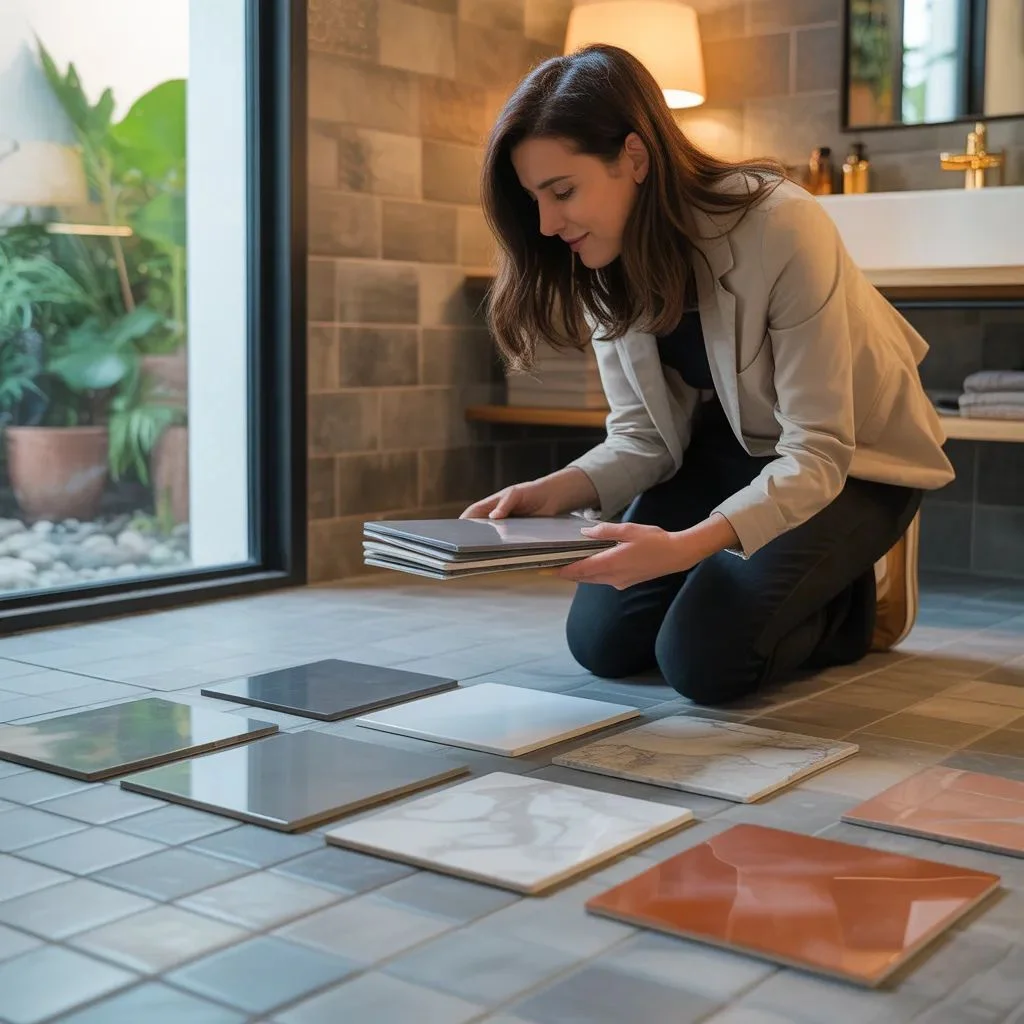
Whenever possible, mock up your chosen layout using tile samples on the floor before installation. What reads beautifully on a design board can feel entirely different at full scale in an actual room.
Expert Tips for Choosing & Installing Bathroom Ceramic Tile
Getting your bathroom ceramic tile ideas right on paper is only half the battle. These practical considerations will protect your investment from the moment of purchase through years of use.
Always Order Extra
Order a minimum of 10-15% more tile than your calculated square footage covers. Cutting waste, pattern alignment, and future repairs all require spare material. If your tile is discontinued after installation, matching replacements can be nearly impossible to find.
Match Tile Size to Room Size
General Rule: smaller tiles visually break up a surface into more pieces, adding texture and detail. Larger tiles create fewer seams and a more expansive, seamless look. Neither is universally better — the right choice depends on your room’s proportions and the effect you want to create.
Consider the Finish Carefully
Glossy tiles reflect lighter and can feel bright and clean, but they also show every water spot, fingerprint, and smudge. Matte and honed tiles are more forgiving in daily use and soften light more evenly. For floors specifically, always choose a tile with a Slip Resistance Rating (SRR) appropriate for wet surfaces.
Invest in Professional Installation
Ceramic tile is a permanent surface. Poorly laid tile — uneven spacing, bad grout lines, inadequate waterproofing behind wet area tiles — creates problems that are expensive to fix. For shower surrounds and wet room floors especially, professional installation with proper waterproofing membrane beneath the tile is non-negotiable.
Test Tiles in Your Actual Light
Always view tile samples in the room where they’ll be installed, under both natural and artificial light. The same tile can look warm and inviting in a south-facing room and cold and flat in a north-facing one. Lighting conditions transform ceramic color and finish more than almost any other factor.
Your Bathroom, Tiled Right
Ceramic tile is the rare material that manages to be both fundamentally practical and endlessly expressive. Whether you’re leaning into the warmth of terracotta floors, the clean geometry of vertical subway walls, or the raw tactile quality of zellige-effect shower surrounds, the right bathroom ceramic tile ideas will outlast trends, outperform other surfaces, and make your space genuinely better to be in.
Start with your room’s proportions and natural light. Build your palette from there. Choose layouts that serve your space rather than fight it. And invest in quality installation — because the most beautiful tile in the world still fails if it’s not put in right.
The bathroom you want is achievable. The tile choices above prove it.
Highly Recommended: Smart Bathroom Layout Ideas for Every Home Style and Budget.