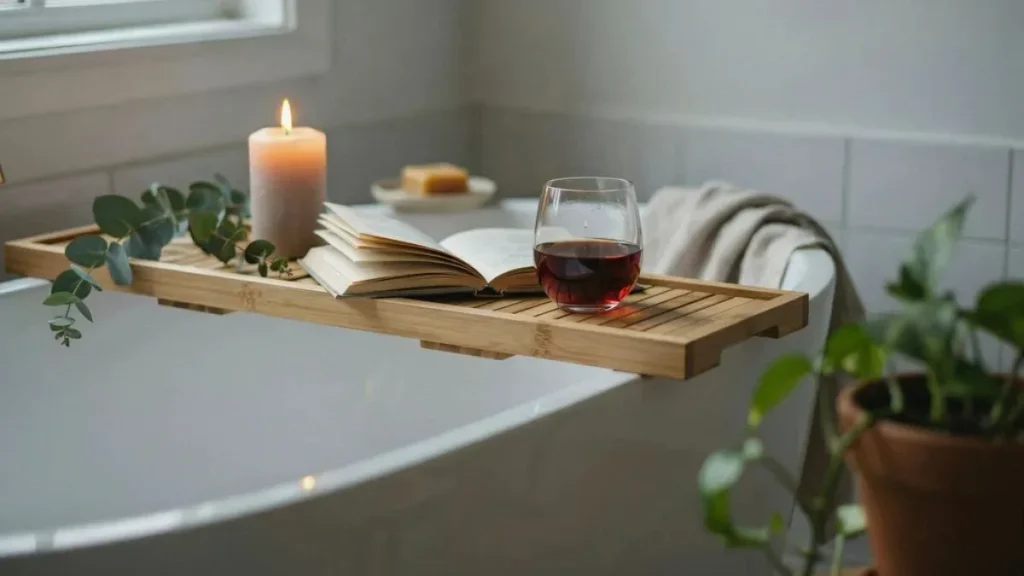
A good bath is never just water. It’s a candle flickering at eye level, a book propped open without getting the pages damp, a glass of wine within arm’s reach. Bathtub trays make all of it possible — and they do it without turning your bathroom into a cluttered mess.
This guide covers every type of bath tray on the market, how to style one properly, what materials hold up to steam and water, and which setups work best depending on what you like to bring into the tub.
What Makes a Bathtub Tray Worth Buying
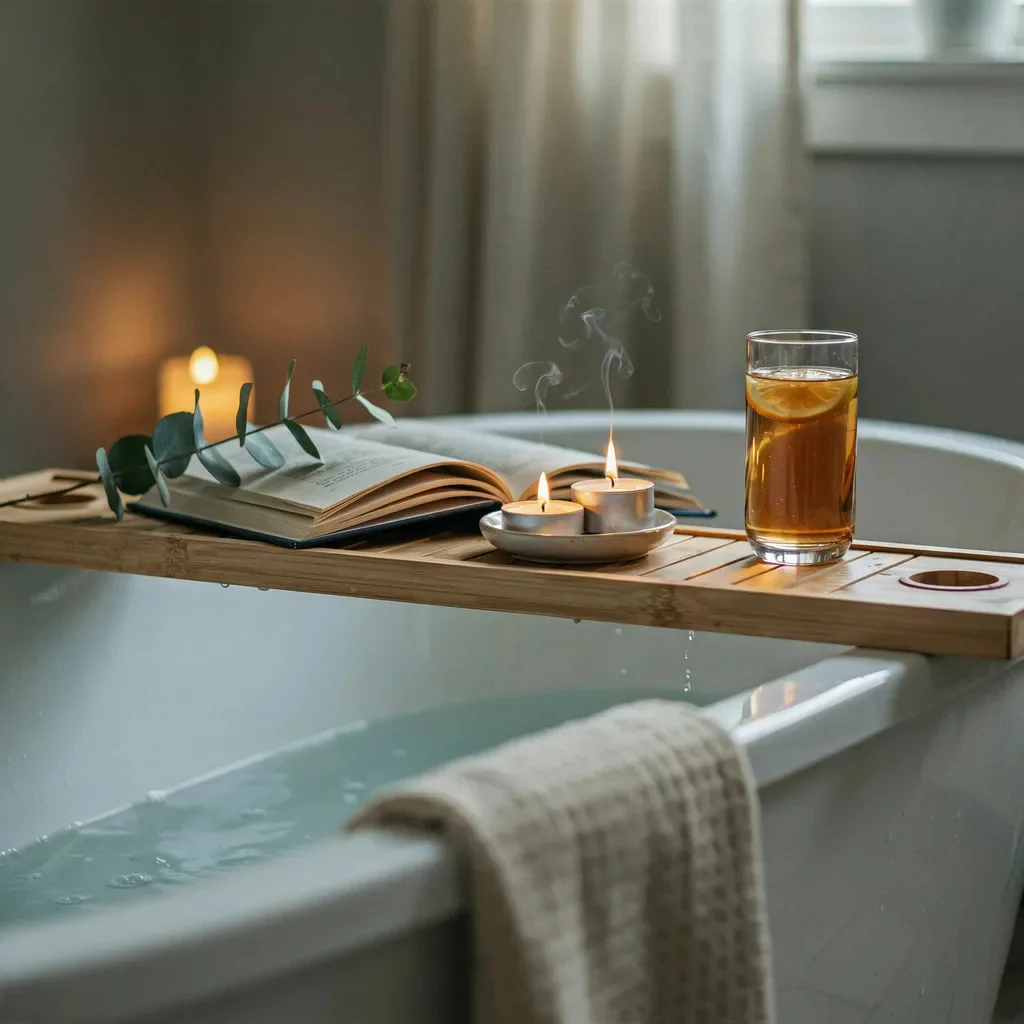
Not every bathtub tray is built for real use. Some look the part in a product photo but warp after a month of steam exposure, wobble every time you reach for something, or slide off a rounded tub edge at the worst possible moment.
The best bathtub trays share a handful of qualities that separate a useful accessory from a liability.
Fit Across the Tub
A tray that doesn’t span your tub securely is a hazard. Most quality trays are extendable, fitting tubs between 70 cm and 105 cm wide. Before buying, measure your tub’s inner rim width — not the outer edge, the inner ledge where the tray will rest.
Weight Capacity
Candles, a full wine glass, a phone, and a hardback book together can easily weigh over two kilograms. A well-made tray should handle that load without flexing. Look for trays rated to at least three to five kilograms.
Non-Slip Feet
Rubber feet on the tray’s contact points with the tub are non-negotiable. Without them, the tray shifts every time you adjust your position. Even a small shift is enough to tip over a candle or send your phone into the water.
Surface Treatment
Raw wood in a steamy bathroom is a recipe for mould and warping. Look for trays with a waterproof lacquer, oil finish, or resin coating. Bamboo is naturally more moisture-resistant than most woods, which is why it dominates the bath tray market.
Bamboo and Wood Bath Trays
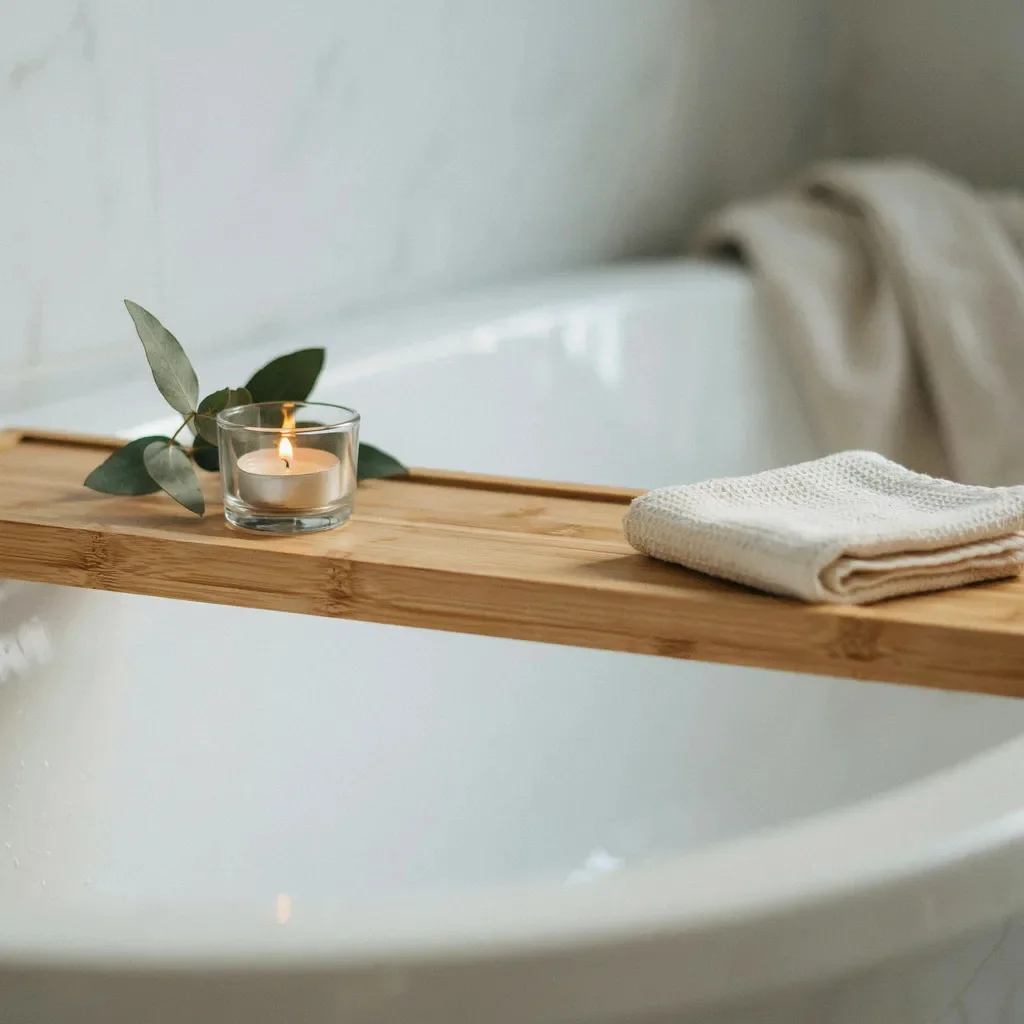
Bamboo is the most popular material for bathtub trays — and for good reason. It’s dense enough to be sturdy, naturally resistant to moisture, and has a warm, organic look that suits almost any bathroom.
Teak is another strong contender. Used in outdoor furniture and boat decks for its water resistance, teak naturally contains oils that repel moisture without additional treatment. A teak bath caddy ages beautifully, developing a silvery patina if left unfinished, or staying rich amber with periodic oiling.
Acacia wood is cheaper than teak and similarly attractive, but it requires a quality sealant and regular maintenance to hold up in humid environments. It’s a fair choice if you’re budget-conscious but willing to oil the tray every few months.
What to Watch for With Wood
- Check the joinery — poorly glued sections will separate with repeated steam exposure.
- Look for sanded, smooth edges. Rough or unsealed wood harbours mildew.
- Avoid MDF or particleboard masquerading as solid wood — it swells and crumbles when wet.
Metal and Rust-Proof Bath Trays
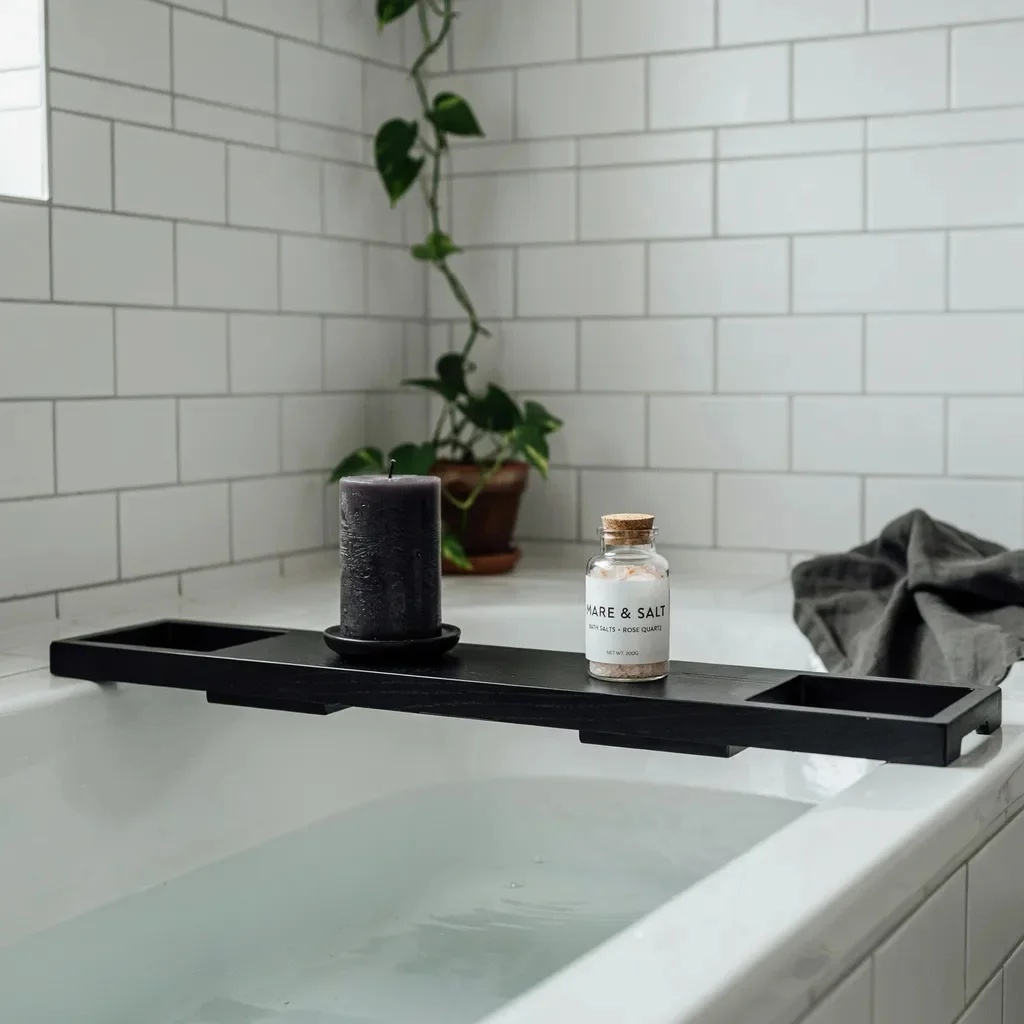
Metal bathtub trays offer a sleeker, more industrial look that pairs well with modern and minimalist bathrooms. The key word is rust-proof — standard steel has no place near a bathtub.
Stainless steel (specifically 304 grade) and powder-coated iron are the two practical options. Stainless steel is the more durable of the two, highly resistant to corrosion, and easy to clean. Powder-coated iron looks excellent in matte black or brushed gold finishes but needs the coating to stay intact — chips or scratches will eventually rust.
Chrome-plated trays are common at the lower end of the market. They look polished initially but the chrome layer is thin and will pit or flake in a high-humidity environment within a year or two. They’re not a long-term investment.
Styling Metal Bath Trays
A matte black or brushed gold metal tray adds immediate visual contrast against a white tub. Pair with matching hardware — towel ring, taps, and soap dispenser — for a pulled-together look. Keep accessories minimal: one or two items rather than a crowded surface.
Extendable vs Fixed-Width Trays
Most bathtub trays sold today are extendable, with telescoping arms that adjust to fit different tub widths. They’re the more versatile option and the safer default if you’re not sure of your exact tub dimensions.
Fixed-width trays are usually made for standard tub widths and tend to be slightly sturdier since there’s no adjustable mechanism that could loosen over time. If you know your tub’s exact inner width and it matches a fixed tray’s dimensions, a fixed tray is worth considering for the added stability.
How Extendable Mechanisms Work
Most use a sliding channel with a friction lock or a screw-down tension bolt. The screw-down type holds better over time — friction locks can slip gradually, especially when weight is applied. When you set up an extendable tray, apply moderate tension to the screw and test by pressing down on each end before loading it with anything.
Width to Look For
Standard bathtubs range from about 70 to 90 cm inner width. Soaking tubs and freestanding models can go wider. The most versatile extendable trays adjust from around 65 to 105 cm — that covers nearly every common tub size.
Candle Styling on Bathtub Trays
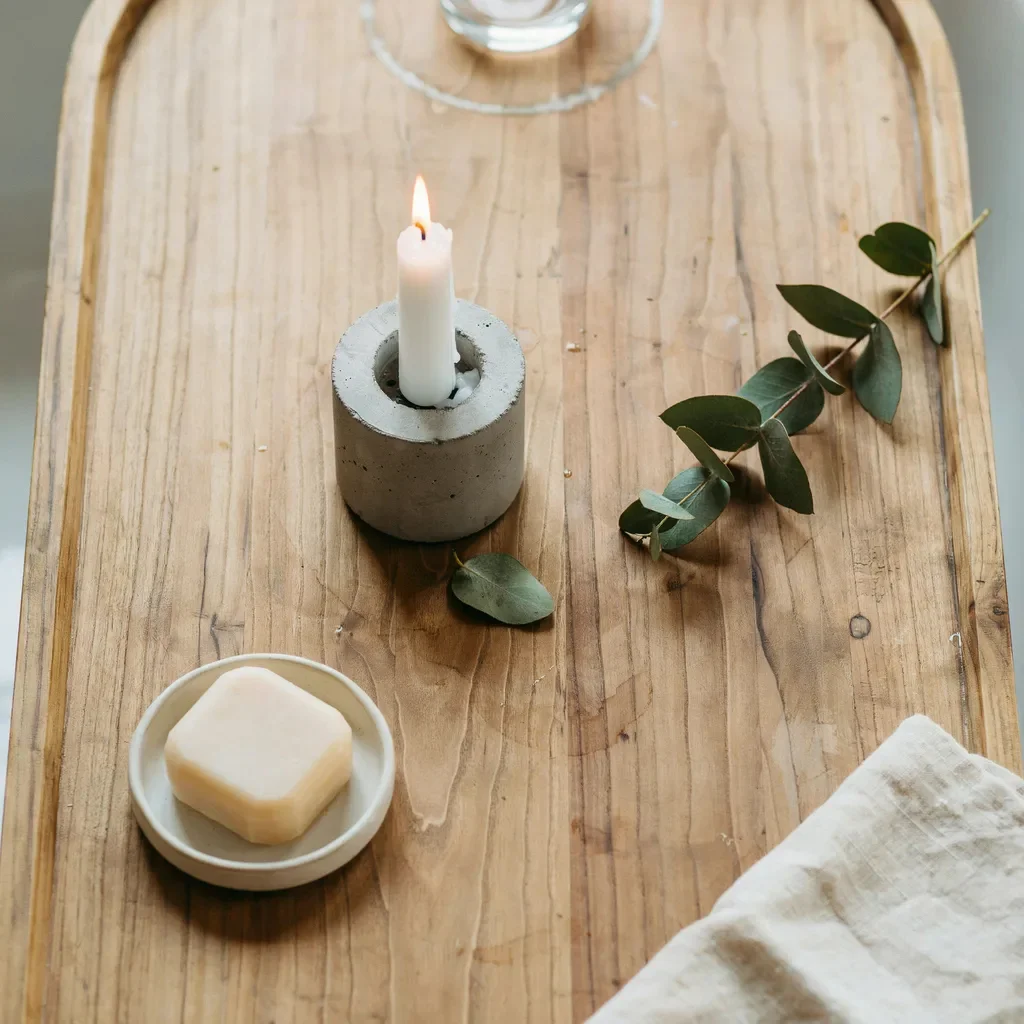
Candles are the number one reason people buy bathtub trays — they’re central to the whole idea of a relaxing bath. But placing a flame over water requires some thought.
Choose the Right Candle Type
Pillar candles sit low and stable on a flat holder, making them the safest choice for a bath tray. Taper candles have too much height relative to their base and are easily knocked. Tealights in metal cups are safe but short-lived. Jar candles are excellent — the glass contains the wax and the wide base makes them nearly impossible to tip.
Holder Placement
Place candles towards the end of the tray closest to the tub wall, not in the centre where your arms will naturally move. Keep them away from the book holder section if your tray has one — you don’t want pages near an open flame.
Scent in a Steamy Room
Steam intensifies fragrance. A heavily scented candle that’s pleasant in a bedroom can be overwhelming in a small bathroom. Go lighter with bathroom candles — clean scents like eucalyptus, linen, white tea, or unscented beeswax work better than heavy florals or vanilla in an enclosed steam-filled space.
Reading in the Bath Without Ruining Your Book

A bath tray with a built-in book holder is one of the more thoughtful features in the category. A well-designed holder keeps pages open without you pressing down, and positions the book at a comfortable reading angle.
What a Good Book Holder Does
- Holds the spine at roughly a 70-degree angle so you can read without straining your neck.
- Grips pages open with a clip or arm so you don’t need to use your hands.
- Keeps the book clear of the tray surface, reducing the risk of damp transferring to the pages.
Protecting Your Books
Steam is the enemy of paper — pages absorb moisture and warp. For physical books you care about, use a zip-lock bag as a moisture barrier on the back cover and keep the tray towards the foot of the tub where steam concentration is lower. Alternatively, use a Kindle or e-reader in a waterproof case — many readers now have IPX8 ratings.
Phone and Tablet Holders
Some bath trays include adjustable slots that hold a phone or tablet for watching video. If this is your primary use, look for a holder with a deep enough grip to support the device at a comfortable viewing angle without slipping, and make sure there’s a drainage groove in the tray base so condensation doesn’t pool beneath your device.
Wine, Drinks and Glassware on Bathtub Trays

A well-placed drink is the other hallmark of a proper bath setup. Many bath caddies include a dedicated wine glass holder — typically a circular cut-out or a slotted groove that holds a standard stemmed glass upright.
Stemmed vs Stemless Glasses
Stemless wine glasses are significantly safer on a bath tray. They have a lower centre of gravity, fit more easily into cup holders, and don’t wobble when you bump the tray. Stemmed glasses look elegant but are a practical liability — one knock and you have glass in your bathwater.
Hot Drinks
A mug of tea or coffee works well on a bath tray with a flat, stable surface. Avoid overfilling — steam expands the liquid’s apparent temperature and a full mug in a steamy room means higher spill risk. A handled mug is preferable to a handle-less cup for the same reason.
Placement Logic
Drinks should go on the side of your dominant hand, in a holder if available, positioned towards the tub edge rather than the centre. Keep them lower priority for reaching than your book — you’ll naturally be more careful leaning for a drink than shifting while reading.
Keeping Your Tray Organised
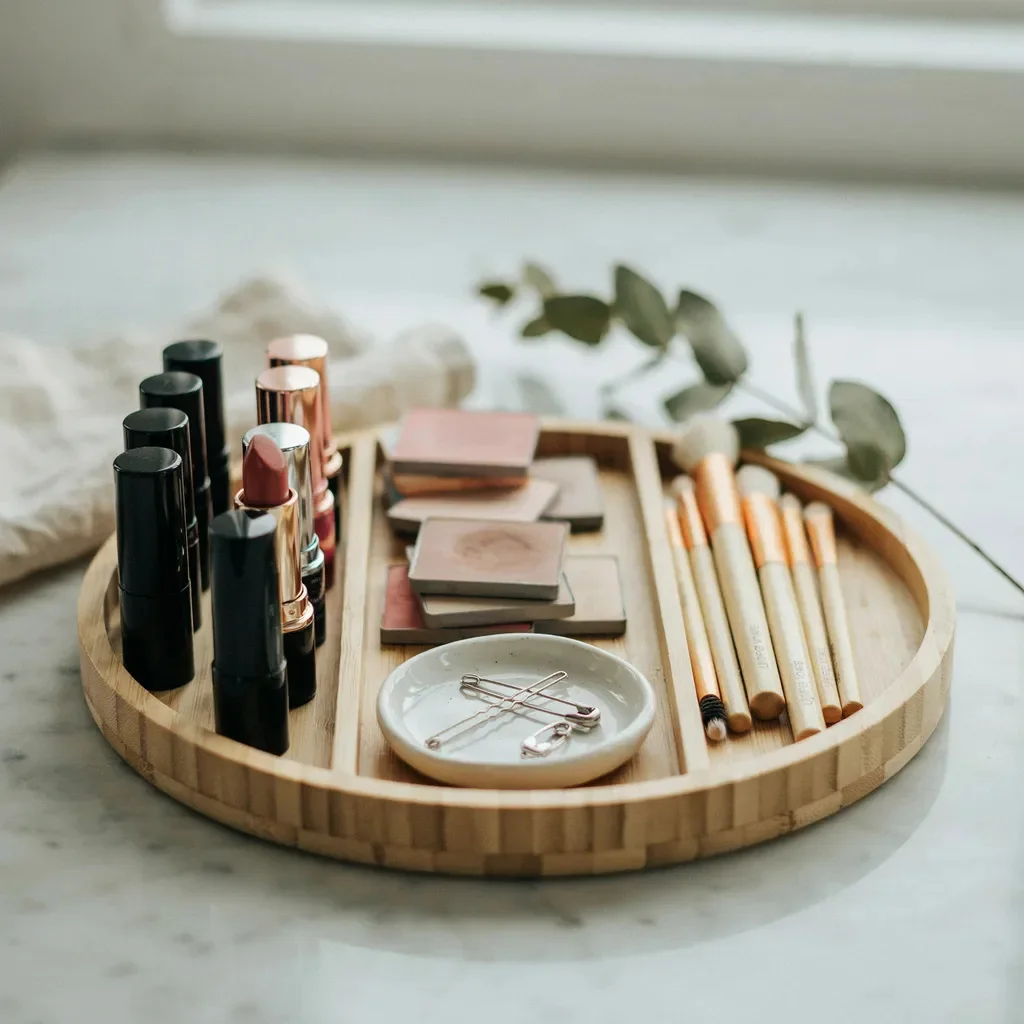
The appeal of bathtub trays is partly practical, partly aesthetic. A cluttered tray defeats both purposes. The goal is a surface that has everything you need and nothing you don’t.
The Five-Item Rule
Cap your tray at five items. A candle, a drink, something to read or watch, a small bath product (exfoliant, facial mask, body scrub), and one decorative element if desired. Beyond five, the tray starts to look like a bathroom shelf rather than a curated setup.
Tray Organisers and Inserts
Some trays include small inserts — soap dishes, removable cups, drainage grooves. Use them. They’re there to prevent sliding, contain smaller items, and make cleanup easier. If your tray is flat without inserts, small ceramic dishes or a marble coaster work well for grouping items.
Before Every Bath
Set your tray up before you get in. Loading it while sitting in the bath is how things get dropped. Have everything in place, confirm the tray is locked across the tub and not wobbling, then get in.
Cleaning and Caring for Bath Trays
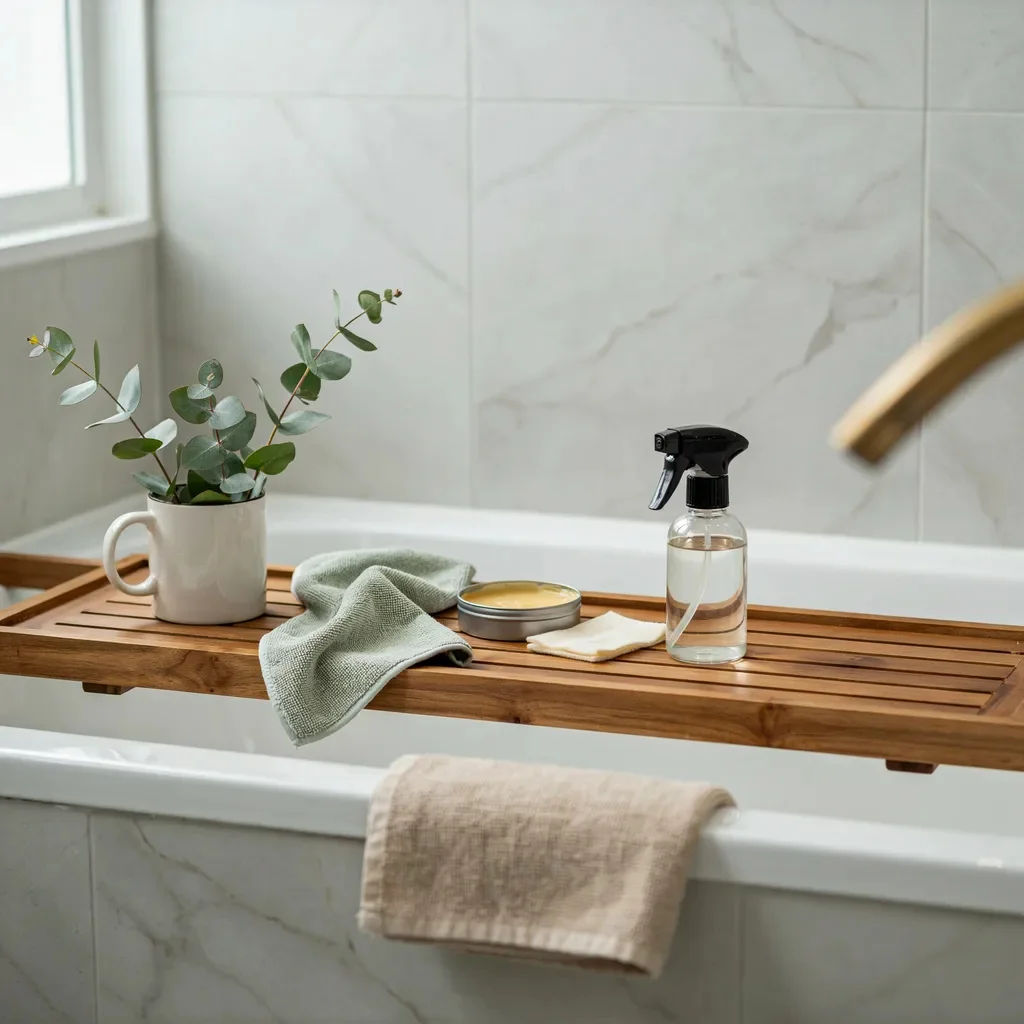
A bath tray lives in one of the most demanding environments in your home. Regular cleaning is what keeps it functional and good-looking.
Weekly Wipe-Down
After every use, wipe the tray dry with a cloth or towel. Standing water, even for a few hours, will degrade wood finishes and encourage mildew between joints. This single habit extends the life of a wooden tray significantly.
Monthly Deep Clean
Wood and bamboo: Wipe down with a diluted white vinegar solution (one part vinegar to four parts water), then dry immediately. Avoid soaking or submerging.
Metal: Warm water and a mild dish soap. Dry thoroughly to prevent water spots. For stubborn marks, a paste of bicarbonate of soda and water works without scratching.
Re-oiling Wood Trays
If your tray uses an oil finish rather than lacquer, re-oil it every three to four months. Food-safe mineral oil, teak oil, or raw linseed oil all work. Apply a thin coat, leave for 20 minutes, then wipe off the excess. This restores water repellency and prevents drying and cracking.
Matching Your Tray to Your Bathroom Style
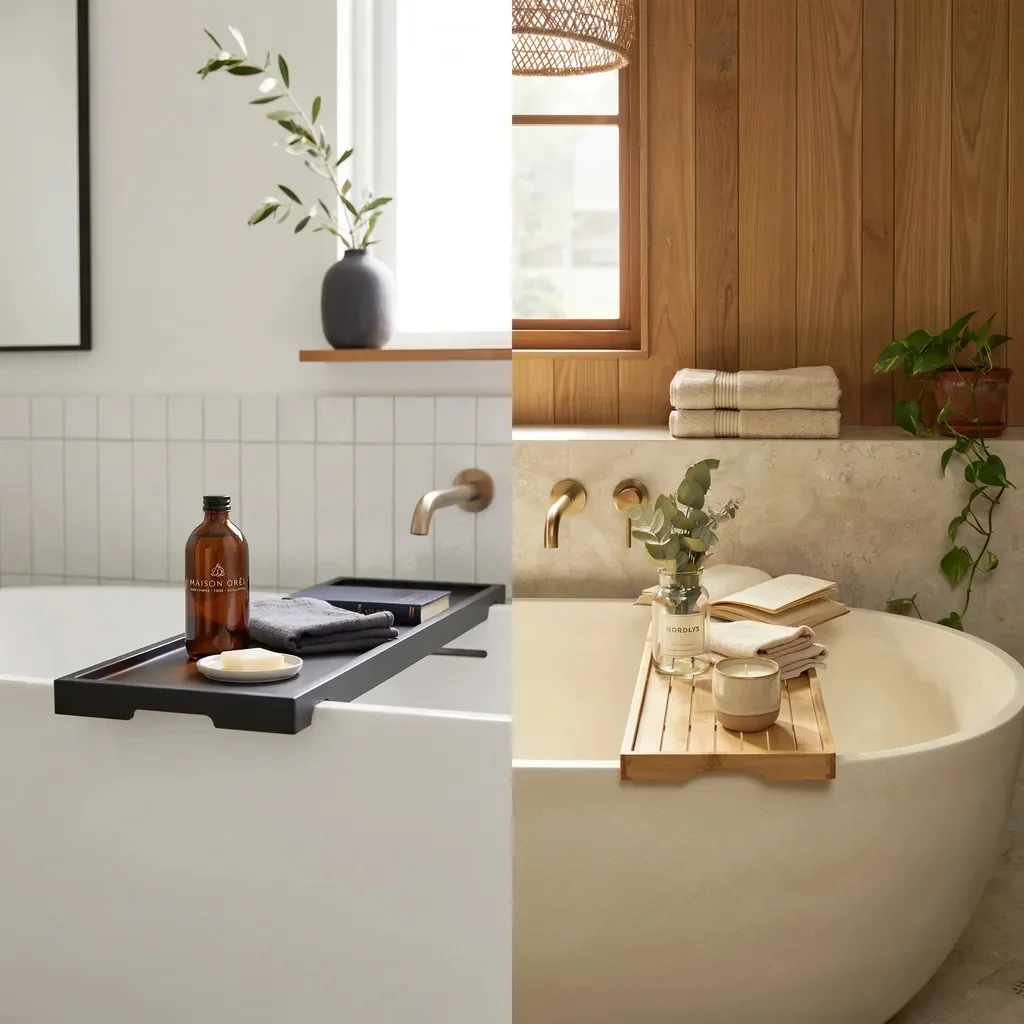
A bathtub tray is a visible part of your bathroom’s aesthetic, especially if your tub is a focal point. Getting the material and finish right makes the difference between a tray that looks intentional and one that looks like an afterthought.
Minimal and Modern
Matte black or brushed nickel metal trays are the natural fit. Keep accessories to two or three items in complementary materials — black ceramic, concrete, or frosted glass. Avoid warm wood tones, which can clash with cool, linear bathroom aesthetics.
Scandi and Natural
Blonde bamboo or light teak trays pair perfectly with white-washed walls, stone surfaces, and linen towels. Add a small succulent or sprig of eucalyptus to bring in a botanical element without overwhelming the space.
Spa and Luxurious
Dark walnut or aged teak trays with gold or brass accents set a rich, hotel-spa tone. Pair with a scented candle in amber glass, a rolled white flannel, and matching gold hardware elsewhere in the room.
Bohemian and Layered
Natural bamboo or raw-finished wood works here too, but the styling does the work. Layer textures — a woven bath mat, a rattan soap dish on the tray, trailing greenery on a nearby shelf. The tray becomes one element in a more organic, lived-in arrangement.
Where the Soak Ends
A bath without a tray is just a bath. Add a tray and it becomes something you plan for — the book you’ve been meaning to read, the candle you only light on slow evenings, the glass of something cold or warm sitting exactly where you need it.
Bathtub trays aren’t an indulgence. They’re a small piece of organisation that makes an already relaxing thing measurably better. Get the material right for your bathroom, set it up with intention, and every bath becomes the version of itself you looked forward to.
Also Read About Zen Bathroom Home Decor Secrets Designers Use for Spa-Like Retreats.