Your bathroom already has everything it needs to become a sanctuary — it just needs the right design language to get there. Zen bathroom home decor is one of the most searched and most misunderstood aesthetics in home design. People think it requires a total renovation. Designers know it doesn’t.
The truth is, a few well-chosen materials, a shift in lighting strategy, and a commitment to clearing visual noise are all it takes. Interior designers who create high-end spa retreats for clients use the same principles whether they’re working with a 50-square-foot powder room or a sprawling master bath.
In this guide, you’ll get those exact secrets — the moves that transform a functional bathroom into a space that feels like a five-star resort, morning and night.
1. Start With a Stone-Cold Foundation
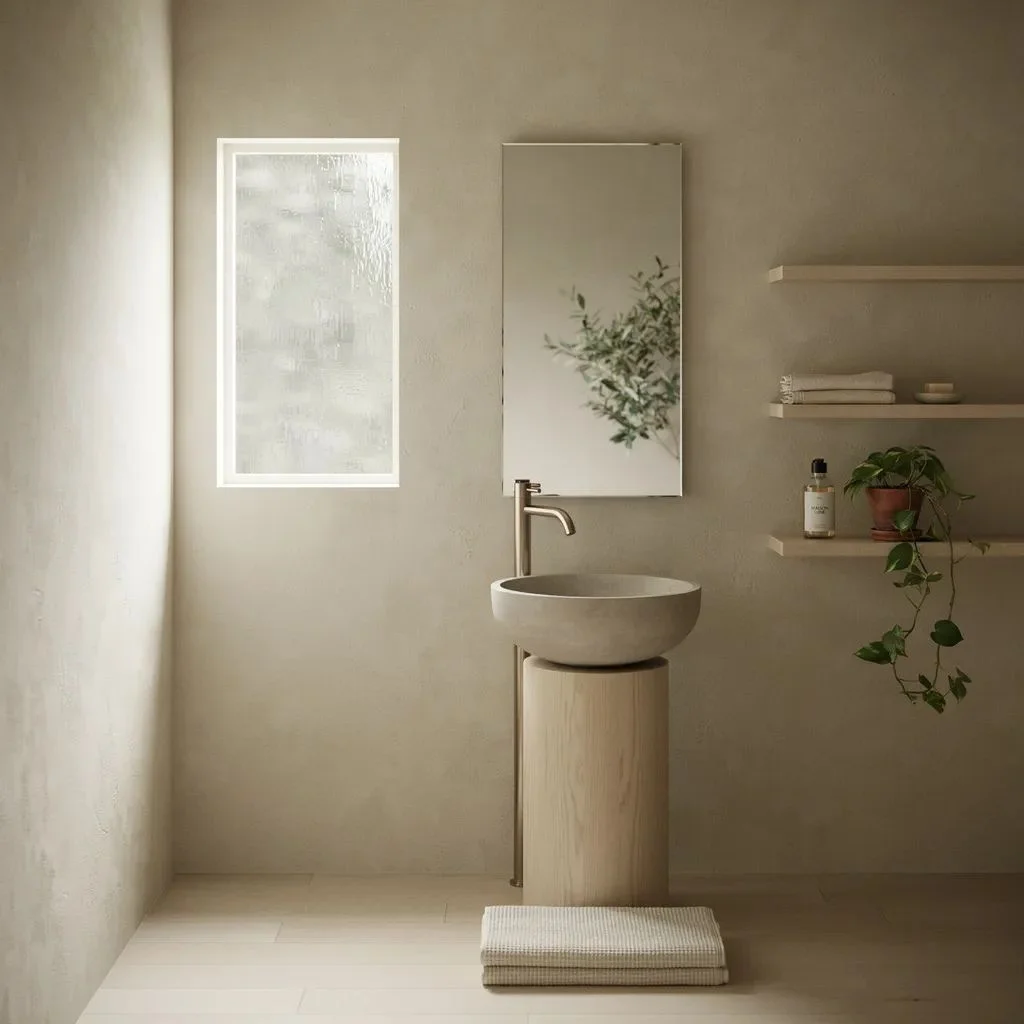
Natural materials are the backbone of every great zen bathroom. Stone, slate, teak, bamboo, and river pebbles do something no paint colour or accessory can — they anchor the space in nature, which is where calm lives.
Designers prioritize texture before colour. A rough stone wall behind a floating vanity, a teak bathmat over polished concrete, smooth river stones arranged at the base of a soaking tub — these choices create sensory grounding before a single candle is lit.
You don’t need to retile your entire bathroom. One textured accent wall in natural stone or a bamboo ladder shelf on a bare wall is enough to shift the entire energy of the room.
Design tip: Mix no more than two natural materials for a cohesive look. Pair warm wood tones with cool stone, or bamboo with white plaster — never all three at once.
2. Choose a Colour Palette That Breathes
Zen design doesn’t mean stark white. Designers lean into warm neutrals — sand, linen, warm greige, soft sage, and muted clay — because they feel alive without competing for attention.
Cool grays and clinical whites create sterile energy. Warm whites mixed with earthy undertones create rest. That difference is everything in a room where you’re supposed to unwind.
Keep the palette tight: three tones maximum. A dominant warm neutral on walls, a secondary tone in tile or stone, and a grounding accent in wood or matte black hardware. This restraint is what separates a designer bathroom from a well-intentioned one.
Colour pairings that always work: warm white + teak + matte black · soft sage + cream + brass · clay beige + slate grey + raw linen
3. Master the Art of Layered Lighting
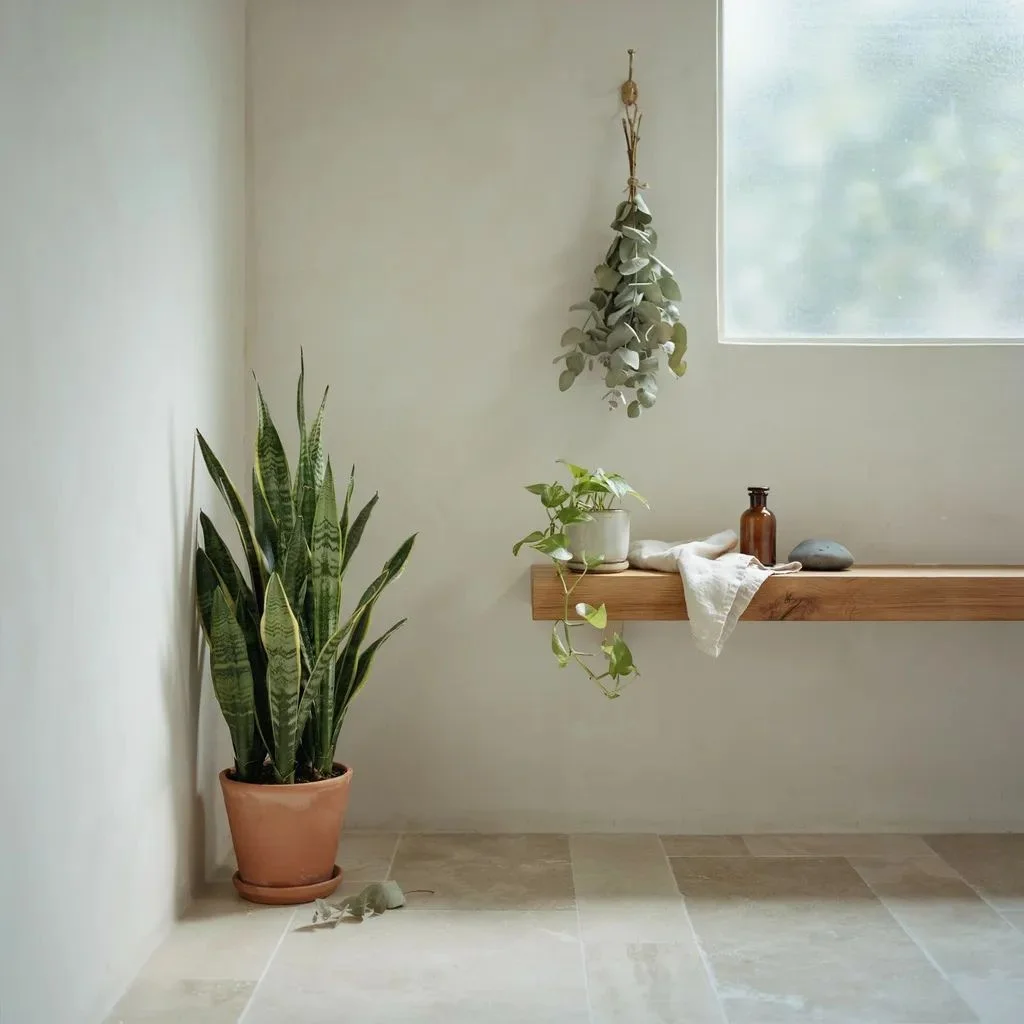
Lighting is the single most underestimated element in zen bathroom design. Every designer will tell you: harsh overhead lighting destroys any ambiance you’ve built with materials and colour.
The goal is layers. A warm ambient source (think: LED strips behind a mirror frame or under a floating vanity), soft task lighting at face level, and optional accent lighting — a candle ledge inside a niche, floor-level path lights, or a dimmable pendant over a soaking tub.
The magic number is 2700K–3000K for bulb temperature. That’s the warm, golden range that mimics candlelight. Anything cooler pushes you into office territory.
Quick upgrade: Add a dimmer switch to your existing overhead light. It costs less than $30 and immediately gives you control over mood — no renovation required.
4. Bring in Living Greenery
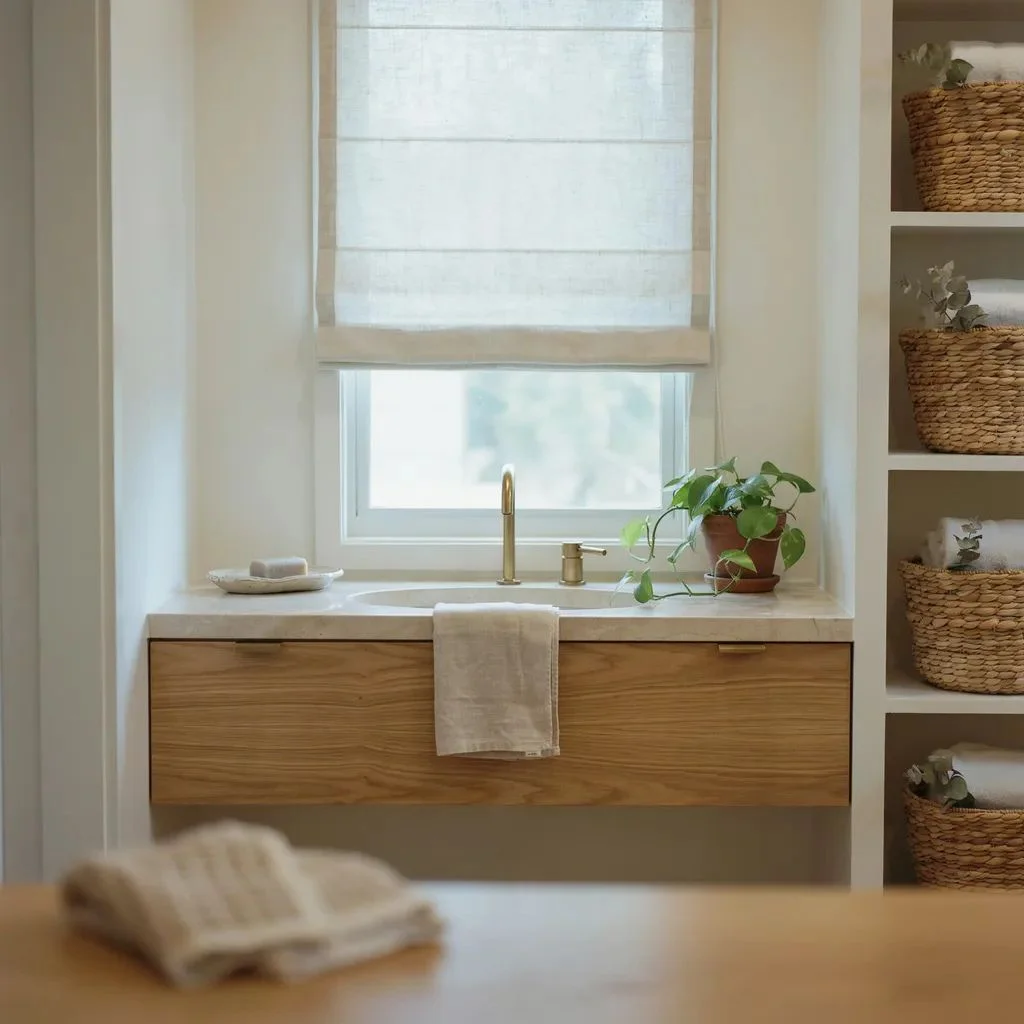
Nothing signals living, breathing sanctuary like actual plants. Designers use greenery strategically — not to fill space, but to introduce organic movement and natural color into a room that’s otherwise full of fixed surfaces.
The best plants for a bathroom are those that thrive in humidity: snake plants, pothos, peace lilies, bamboo, ZZ plants, and hanging eucalyptus. A bunch of fresh eucalyptus tied to your showerhead releases its oils in steam — it’s aromatherapy without any product.
Placement matters. A trailing pothos on a high shelf adds vertical interest. A single large-leafed plant in a corner grounds the space. Clustered small plants on a wooden shelf create a mini indoor garden moment.
Faux-plant note: High-quality faux greenery has a place in low-light bathrooms. Realistic ferns and trailing ivy in matte ceramic pots read as intentional, not cheap.
5. Hide the Clutter, Keep the Calm
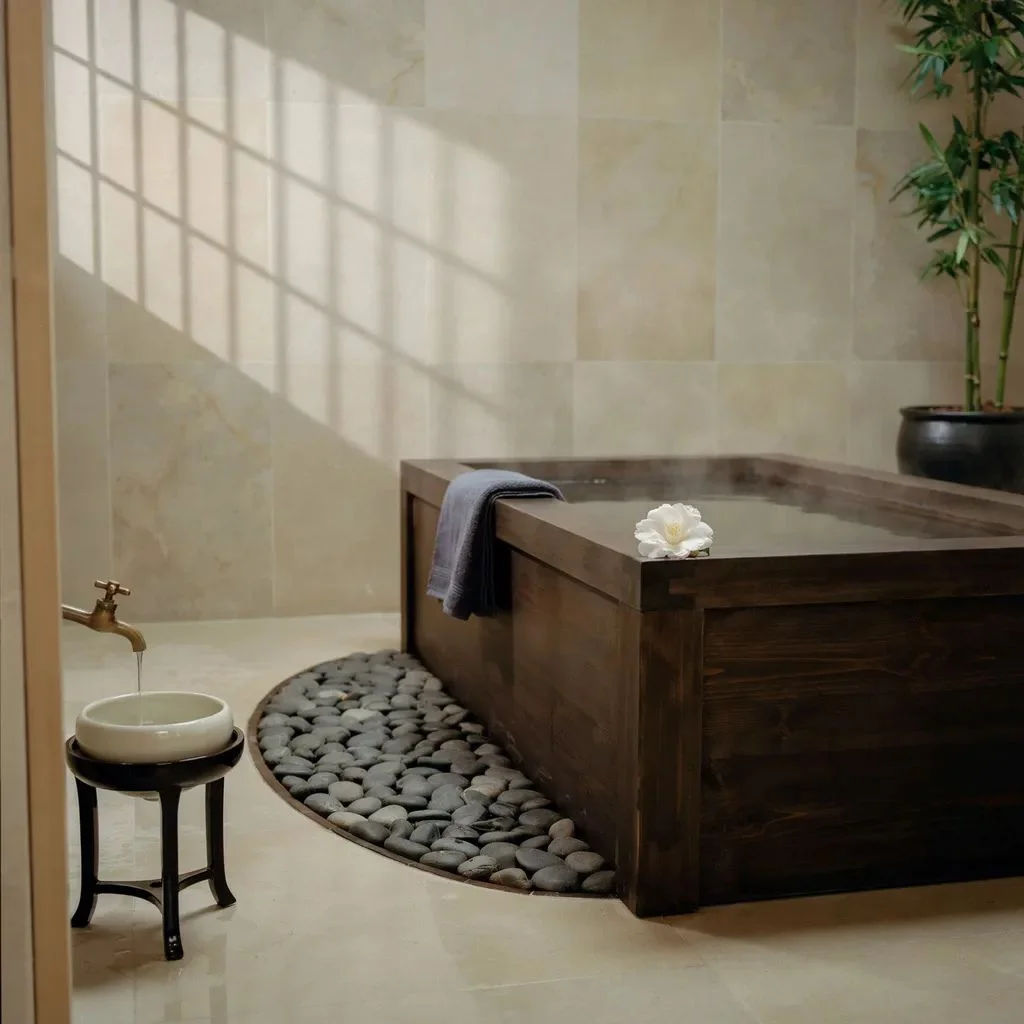
Visual clutter is the number one enemy of zen. Designers are ruthless about this: if it’s on the counter, it better be beautiful. Everything else lives behind a door, inside a basket, or inside a drawer.
The goal isn’t an empty bathroom — it’s a curated one. A wooden tray holding your three most-used items. A linen basket under the sink that holds towels you’ll reach for today. A single sculptural soap dispenser instead of four plastic bottles.
Built-in niches in the shower are a designer staple because they create storage without visual weight. If your bathroom doesn’t have them, tension-rod shelving inside the shower works just as well — and costs almost nothing.
Rule of thumb: Count the items on your countertop. If it’s more than five, you have an editing job to do before any decor purchase makes a difference.
6. Make Water the Star of the Room
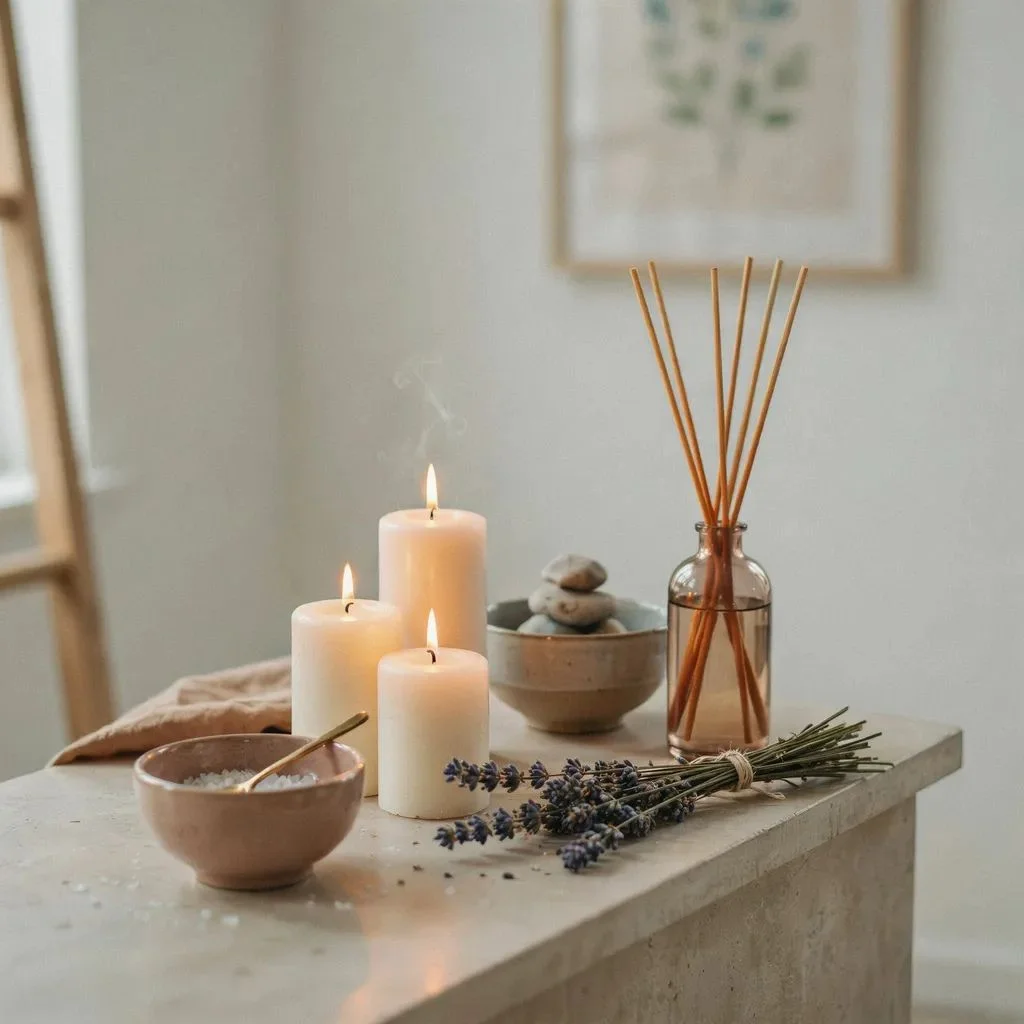
Zen philosophy is rooted in water — its movement, sound, and stillness. Designers take this literally by designing bathrooms where the water moment is deliberate and beautiful.
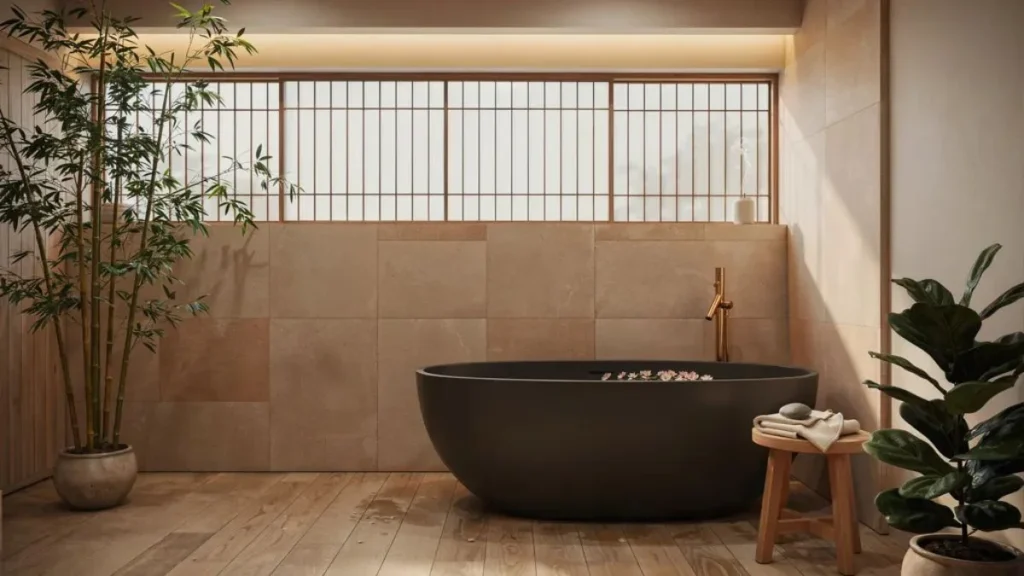
A deep soaking tub positioned as a focal point (not tucked against a wall as an afterthought) transforms the entire spatial hierarchy of a bathroom. Pair it with a simple floor-mounted faucet, a small wooden stool for candles and a book, and a window or frosted glass panel nearby for natural light.
If a soaking tub isn’t possible, elevate the shower. Rainfall showerheads create a completely different sensory experience than standard heads — slower, heavier water that feels intentional. Add a teak shower bench and you’ve created a steam room moment without the renovation.
Sound tip: A tabletop water feature — a small stone fountain — on a bathroom shelf adds white noise that mimics the sound of a running stream. It’s one of the most effective and underused tools in zen bathroom design.
7. Add Scent as a Design Element
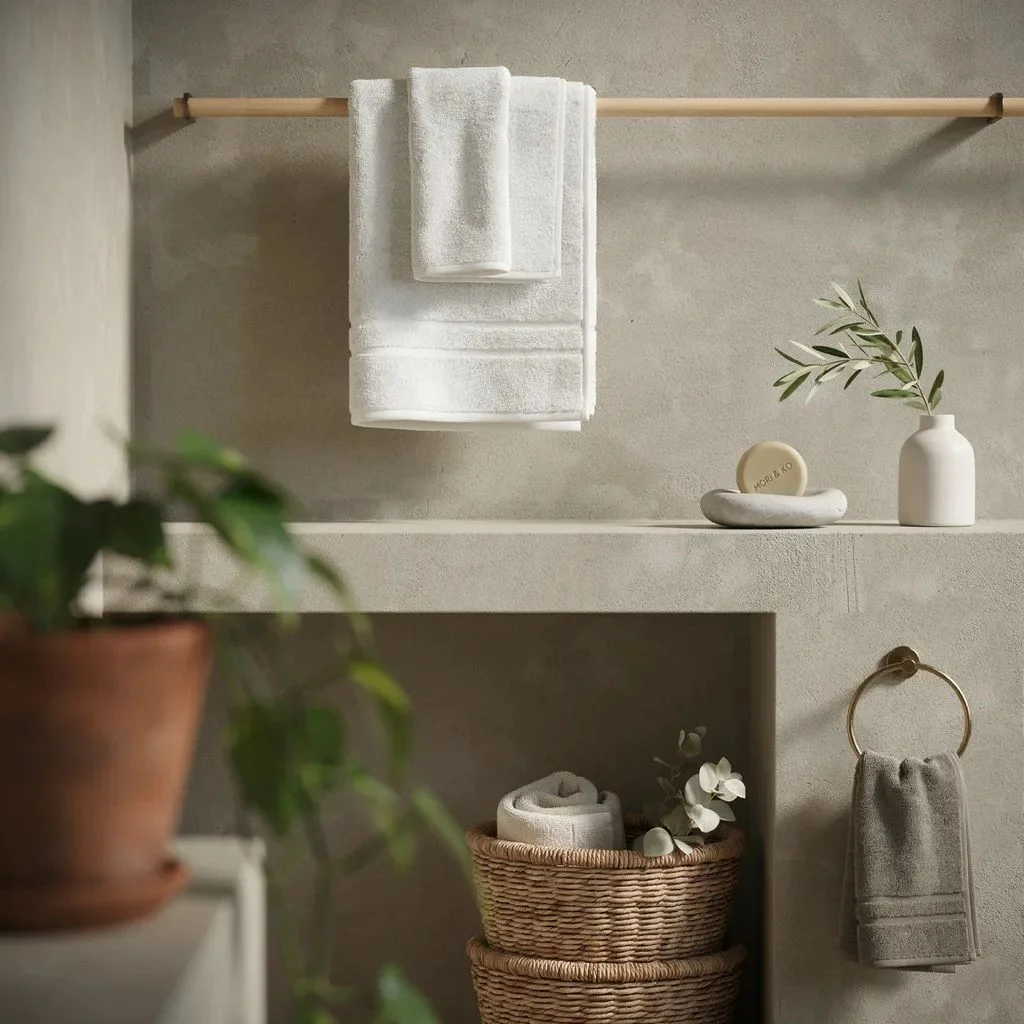
The best spa bathrooms smell like somewhere you’d pay to be. Scent isn’t an afterthought in designer spaces — it’s a deliberate layer of the sensory experience, chosen with the same intention as tile colour or lighting temperature.
Eucalyptus, cedar, sandalwood, white tea, and vetiver are the most used scent profiles in high-end spa design — they’re grounding without being heavy, and they pair naturally with the organic materials already present in a zen bathroom.
Delivery matters as much as scent. Reed diffusers offer consistent, subtle fragrance. Beeswax or soy candles add warmth through both scent and flickering light. Essential oil diffusers let you shift the mood by season — lavender in winter, citrus and eucalyptus in summer.
Avoid: synthetic “clean linen” sprays and heavily floral aerosols — they read as artificial in a space that’s built on natural authenticity.
8. Layer Textures the Right Way
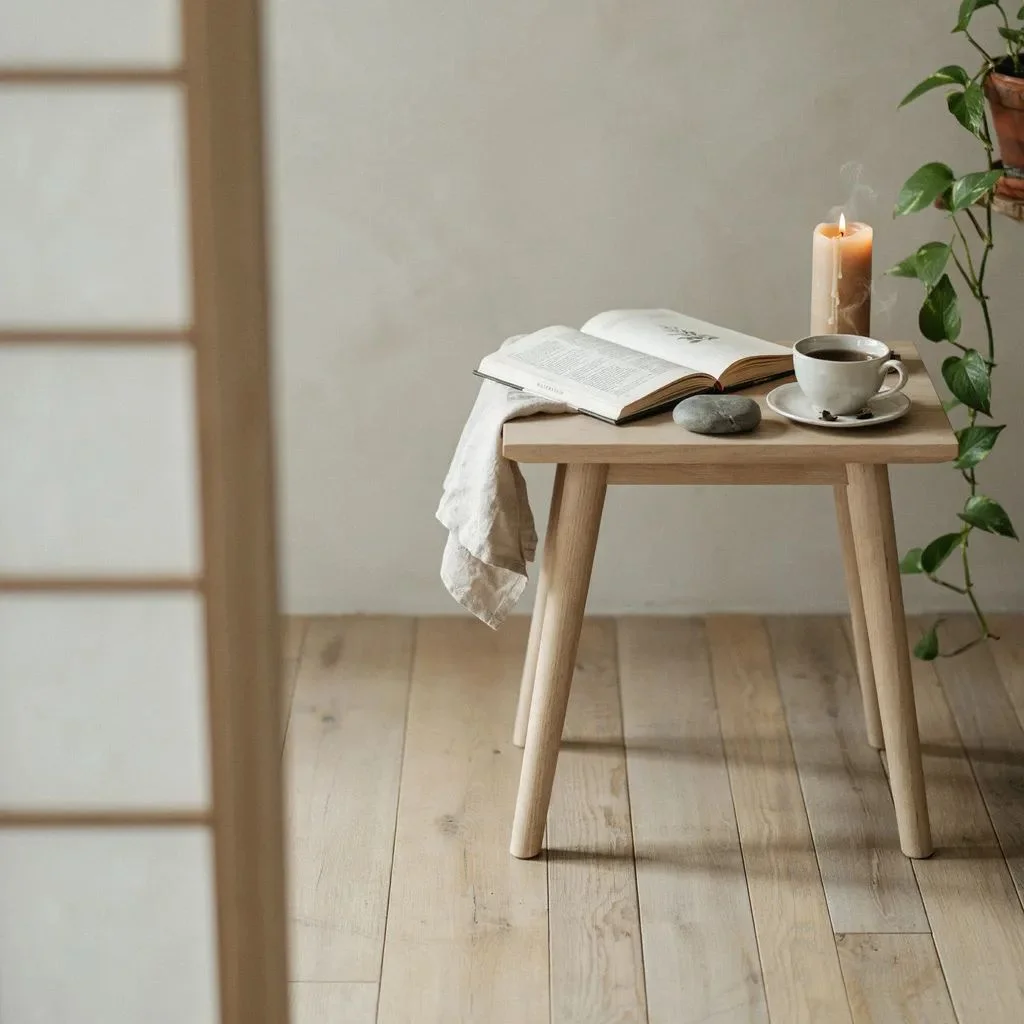
A truly zen bathroom doesn’t feel flat — it has depth you can feel as much as see. Designers build this through deliberate texture layering: hard and soft, rough and smooth, matte and slightly reflective.
The framework is simple. Start with a hard, natural surface — stone tile, concrete, or plaster walls. Layer in warmth with wood elements — a shelf, a stool, a towel rack. Then add softness: thick linen or Turkish cotton towels, a woven bathmat, a plush rug outside the shower.
The contrast is everything. Cold stone against warm towels. Rough woven baskets against a smooth matte wall. These pairings create visual and sensory richness without introducing clutter or colour noise.
One upgrade that works every time: Replace your standard bathroom towels with oversized waffle-weave or Turkish cotton versions in a warm neutral. It’s the fastest way to add luxury texture without changing anything structural.
9. Create a Ritual Corner
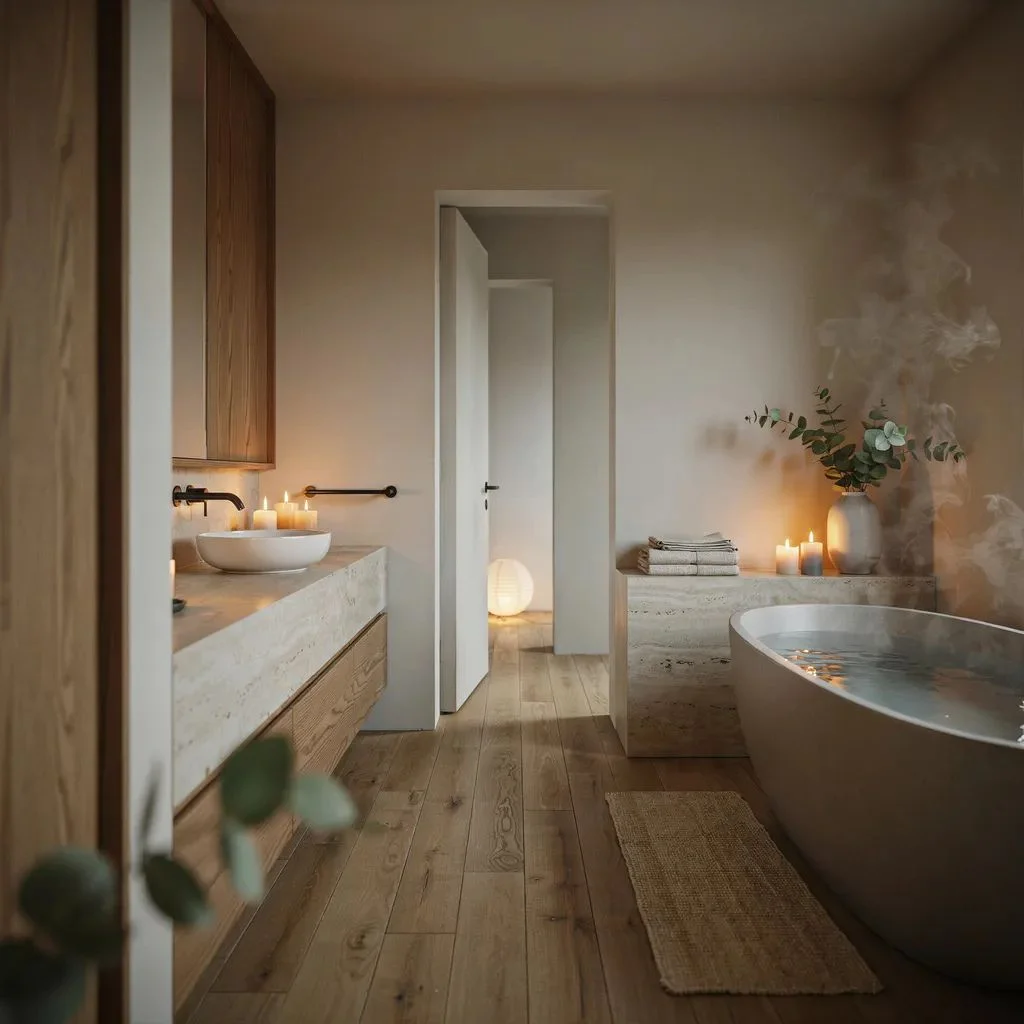
The most luxurious detail in any designer spa bathroom isn’t the hardware or the tile — it’s a dedicated ritual space. A small wooden stool. A candle. A book. A cup of tea. This corner signals that the bathroom is a place of intention, not just function.
It doesn’t require floor space you don’t have. A deep window ledge, a niche beside the tub, a small floating shelf at eye level beside the mirror — any of these can become a ritual corner with the right three or four objects.
Designers call this “visual anchoring.” It gives the eye a resting point, and it gives the person using the room a cue: slow down. You’re somewhere that takes you seriously.
What to include: One candle or diffuser · one plant or natural object (stone, crystal, branch) · one personal item (journal, favourite oil, a small dish for jewellery). Nothing more.
10. Finishing Touches That Seal the Mood
Great zen bathroom home decor lives in the details that most people overlook. The hardware finish. The mirror shape. The soap dish material. These micro-decisions are where designers earn their fees — and where you can close the gap between a nice bathroom and one that stops you in your tracks.
Matte black hardware on warm wood and stone gives a modern zen edge. Brushed brass on cream walls reads as warmer and more organic. Avoid polished chrome — it’s too bright and too clinical for the aesthetic.
Mirrors deserve special attention. A large frameless mirror maximizes light and space. A wood-framed round mirror introduces softness and organic form. An arched mirror brings architectural interest without adding furniture. Any of these reads as intentional. A standard rectangular mirrored medicine cabinet does not.
Last designer tip: Edit your bathroom every three months the way you edit a bookshelf. Remove what you’ve stopped noticing. Keep only what you chose deliberately. A zen bathroom isn’t finished once — it’s maintained as a practice.
Your Bathroom, Your Retreat
The gap between a bathroom that functions and one that restores is narrower than most people think. You don’t need a renovation budget or a designer on retainer — you need an understanding of how calm is built, layer by layer.
Zen bathroom home decor works because it borrows from a philosophy that’s been refined over centuries: simplicity carries beauty, nature grounds the mind, and intentional spaces create intentional people. Bring those principles into your bathroom, and you’ll feel the difference every single morning.
Recommended: Luxury Spa Bathroom Ideas That Redefine Comfort and Self-Care at Home.