Your kitchen lighting is doing more work than you think — and if you’re still running on builder-grade fixtures, it may be doing it badly. The right track lighting options to upgrade your kitchen can change everything: how countertops feel at midnight, how your island looks during dinner parties, and whether your prep area ever has a shadow again.
The problem with most kitchens isn’t the cabinet color or the backsplash — it’s flat, static lighting that can’t adapt. Track lighting fixes that. It puts you in control of exactly where the light goes, how bright it gets, and what the space feels like at any hour. Whether you’re doing a full renovation or a simple ceiling swap, these are the options worth knowing in 2026.
What Makes Track Lighting the Smart Choice for Kitchens
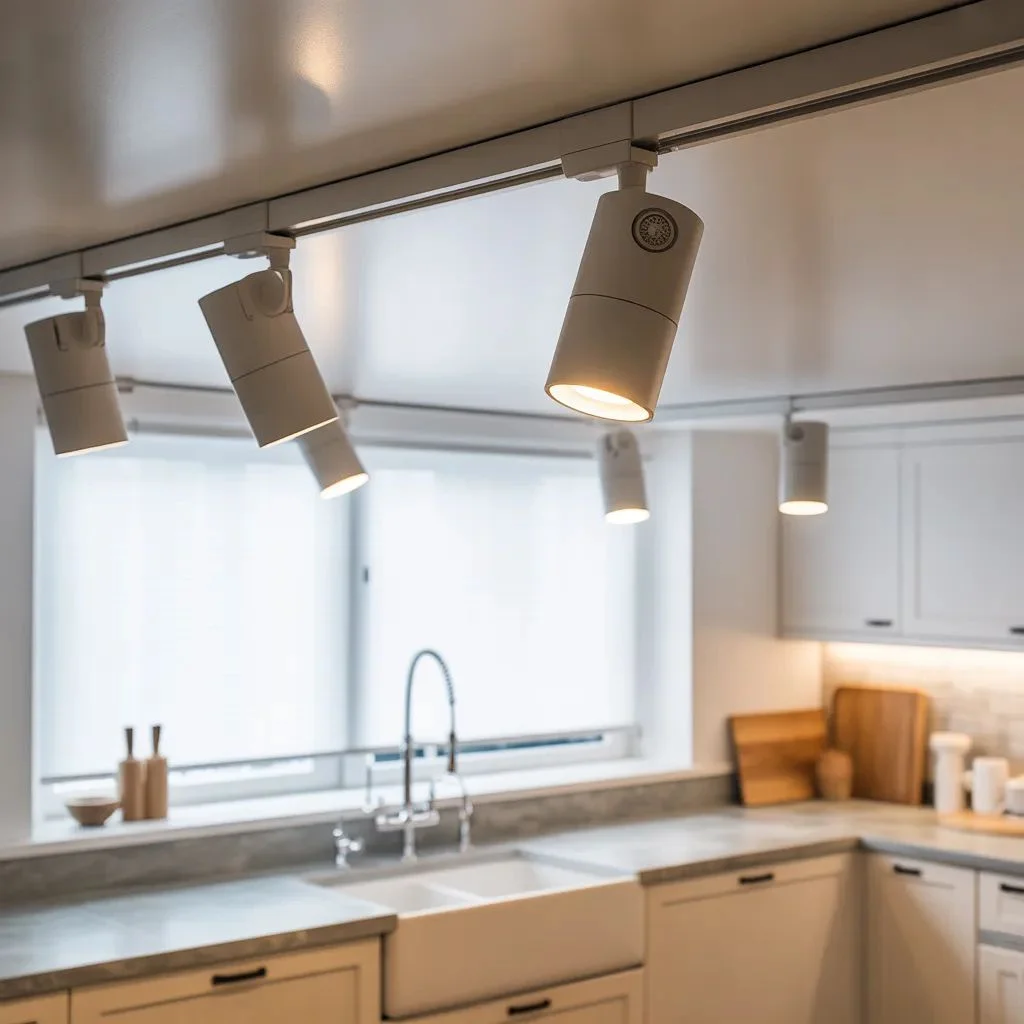
Kitchens are the most task-intensive rooms in most homes. You need bright, focused light to chop safely, medium ambient light for cooking, and something softer when the food is on the table. Most single fixtures can’t do all three. Track lighting can — because it gives you multiple directional heads on one circuit, each pointing exactly where you need it.
Unlike recessed cans that lock light into fixed spots, track heads are repositionable. That means if you rearrange your kitchen, add an island, or simply realize your prep area is always in shadow, you move the heads rather than the wiring. It’s the closest thing to a lighting do-over without touching the electrical panel. Track lighting options to upgrade your kitchen range from simple four-head kits to full smart-enabled systems — all designed around the same core principle: control goes to you.
In 2026, the trend is layered, atmospheric kitchens that balance task, ambient, and accent lighting. Track lighting sits perfectly at the center of that approach. It handles your task zones while freeing up other fixtures — pendants, sconces, under-cabinet strips — to handle the mood.
Understanding Track Lighting Systems: H, J, and L Types
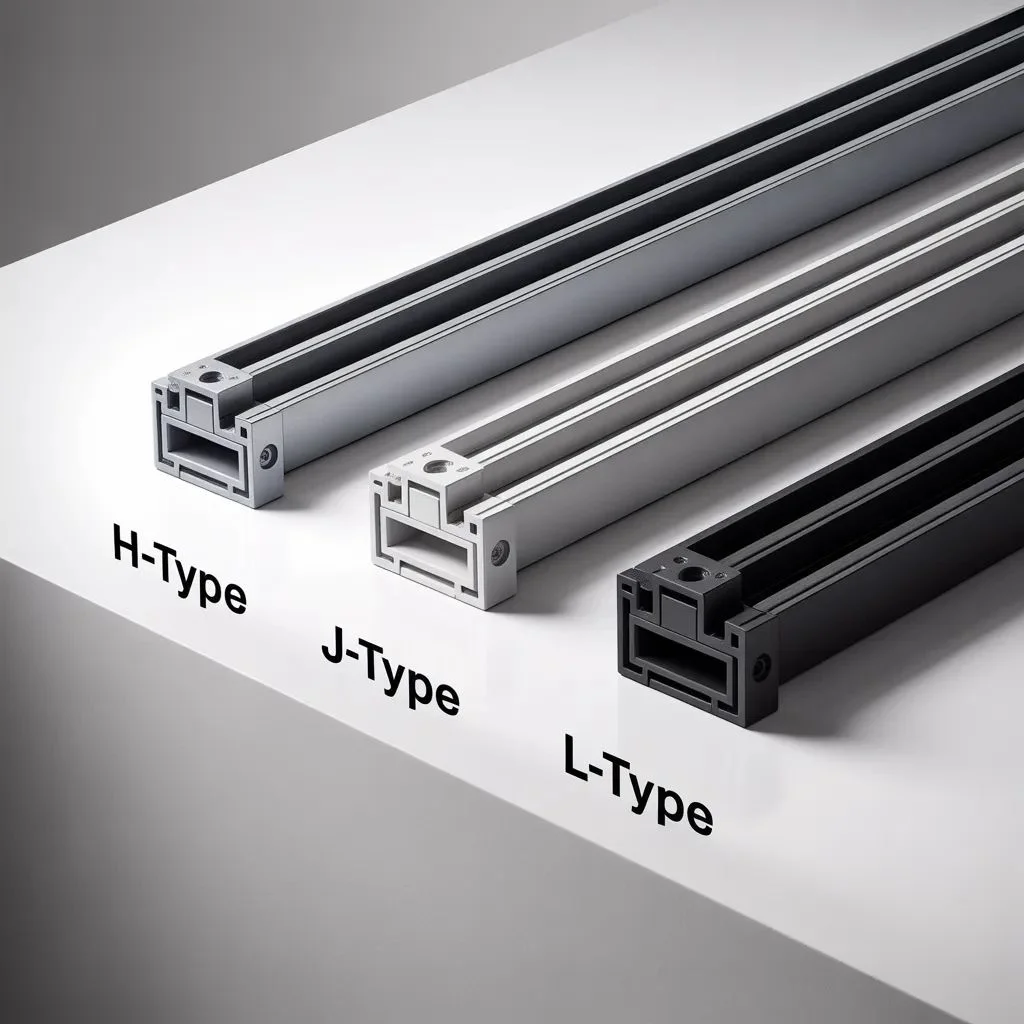
Before you buy a single-track head, you need to know one thing: track lighting systems are not universal. There are three industry-standard types — H-type (Halo), J-type (Juno), and L-type (Lightolier) — and they don’t work with each other. The names come from the original manufacturers of each system, not their shape or appearance.
The difference lies in the internal conductor spacing and connector design. Think of it like phone chargers — USB-C doesn’t fit a USB-A port, no matter how close they look. Buying the wrong system means your fixtures simply won’t attach or power on safely.
H-Type (Halo): The most common standard for new residential installations. It uses a 3-wire, single-circuit design and has the widest selection of compatible fixtures and accessories across multiple brands. If you’re starting fresh, H-type is generally the go-to recommendation.
J-Type (Juno): Widely available and popular in both residential and commercial settings. Good fixture variety, particularly from Juno Lighting and compatible third-party brands. Often found in retrofits and commercial-grade installations.
L-Type (Lightolier): Less common but still supported. If you’re adding heads to an existing Lightolier installation, stick with L-type components to ensure proper fit and safe connection.
If you’re replacing or extending an existing system, identify your current track type before shopping. Most manufacturers label the type on the fixture box or product page. When in doubt, bring a photo of your existing track rail to a lighting specialist.
Linear Track Lighting: The Classic That Still Delivers
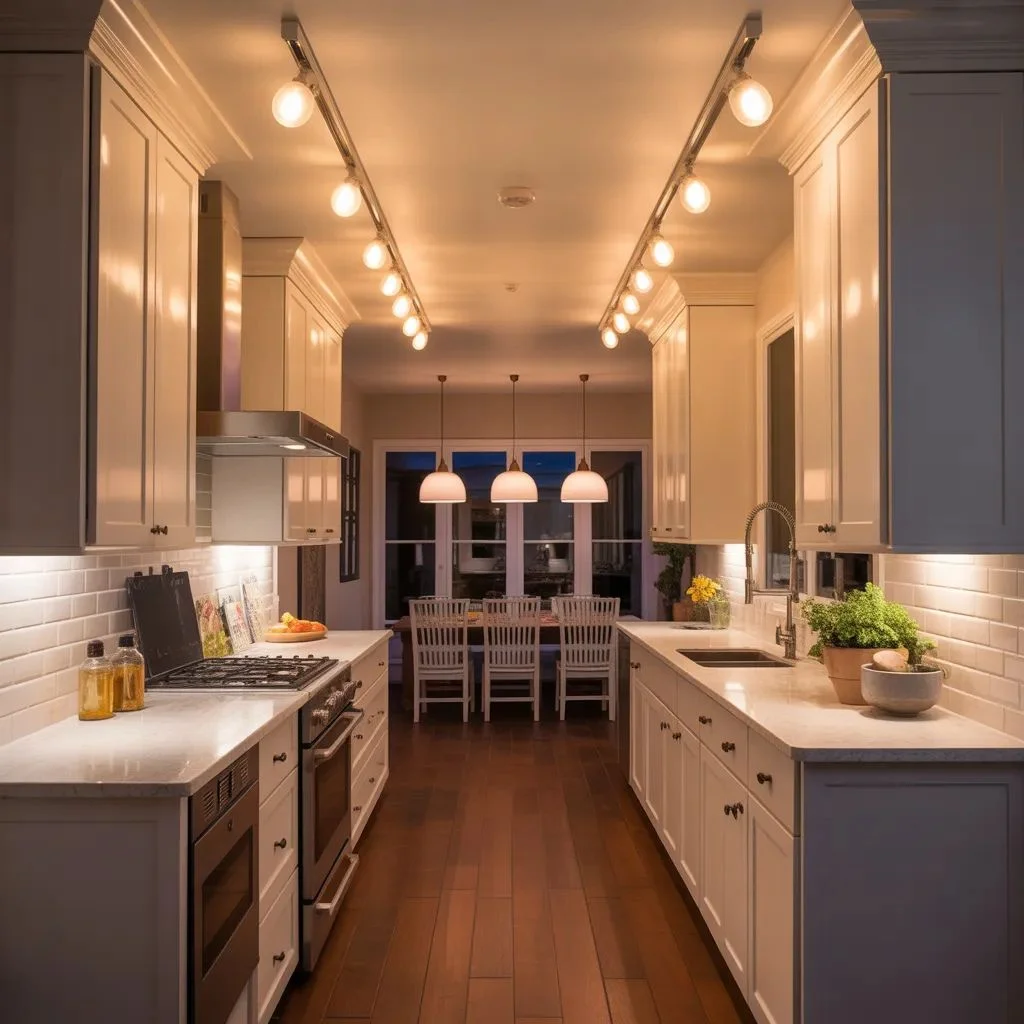
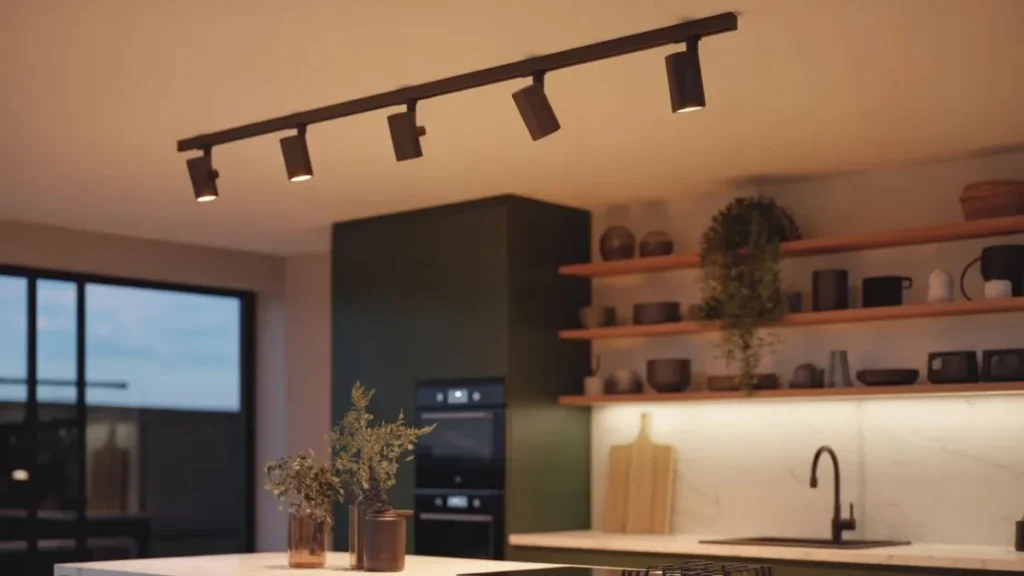
Linear track systems mount directly to the ceiling in straight sections and are the most straightforward of all track configurations. They consist of a rigid rail — usually in 2-foot, 4-foot, or 8-foot lengths — with multiple adjustable heads that slide along and lock into position.
For standard rectangular kitchens, linear track is often the most practical and cost-effective choice. A single 4-foot track with three to six heads can cover a full kitchen run, illuminate an island from above, and even angle toward shelving or a backsplash. The track lighting options to upgrade your kitchen in this category range from bare-bones contractor kits to high-design systems with exposed-bulb heads, sculptural cones, and adjustable-arm gimbal mounts.
Linear tracks also allow for connectors that let you add additional track sections in L, T, or X configurations — useful for larger kitchens that need lighting coverage in multiple zones. Just make sure all connectors match your system type (H, J, or L).
Best for: Rectangular kitchens, galley kitchens, kitchens with exposed-beam or vaulted ceilings, and anyone prioritizing a clean, no-fuss ceiling look.
Monorail Track Lighting: Flexible, Modern, and Sculptural
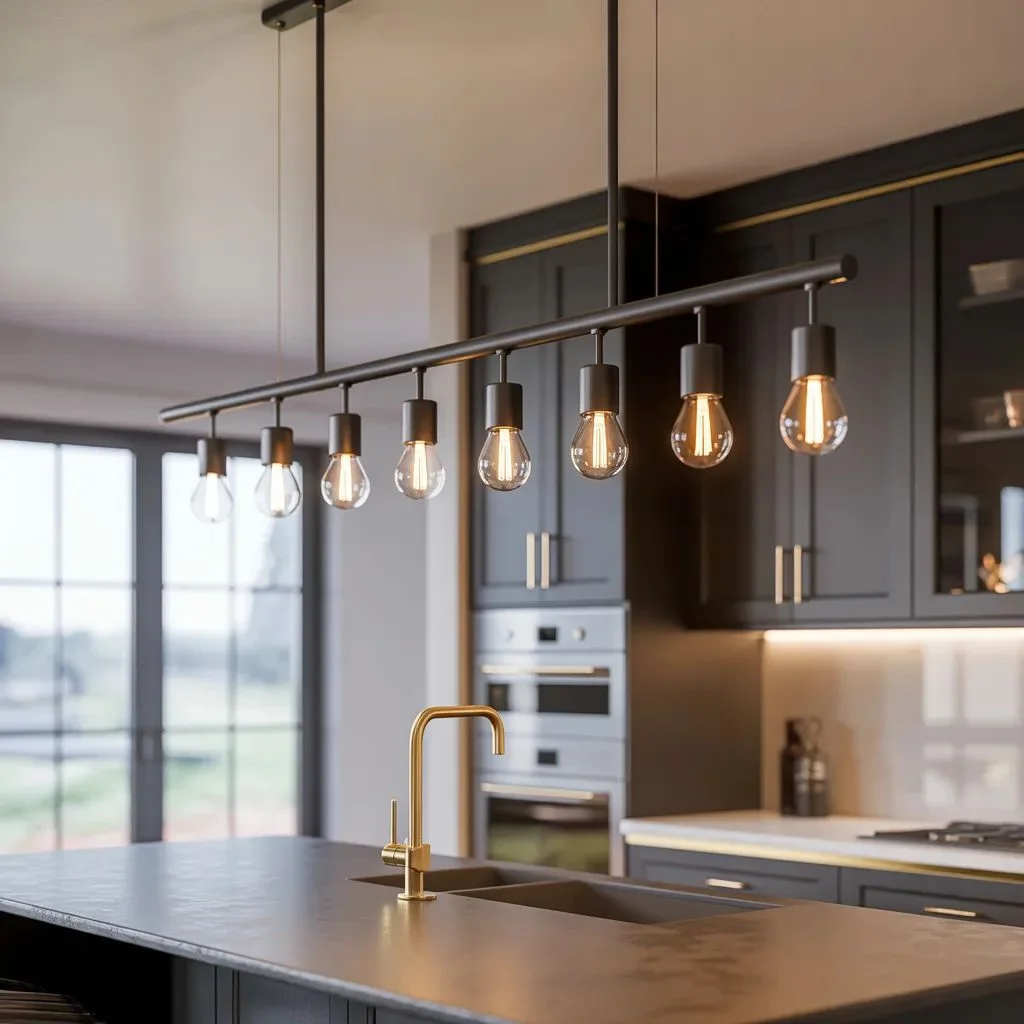
Monorail systems take a fundamentally different approach. Instead of mounting flush to the ceiling, a monorail is suspended a few inches below it is using vertical standoffs, and the rail itself can be bent, curved, or shaped before installation. The result is a lighting system that becomes part of the kitchen’s design statement — not just a utility fixture.
These systems run on low voltage, which means they require a transformer but also support smaller, more refined fixture heads with precise light control. Because the rail is bendable, monorail is perfect for kitchens with curved islands, angled ceilings, or open-concept layouts where a straight track would look rigid and mismatched.
Fixture options for monorail systems lean heavily decorative — you’ll find mini pendant heads, globe styles, adjustable spotlights, and even glass-shaded designs that blur the line between track lighting and chandelier. In 2026, monorail setups are showing up in high-end open-plan kitchens where the track itself serves as an architectural feature overhead.
Best for: Open-plan kitchens, curved island layouts, high-design spaces where the fixture itself is a visual element, and kitchens with unique ceiling architecture.
Flexible Track Systems: For Kitchens with Character
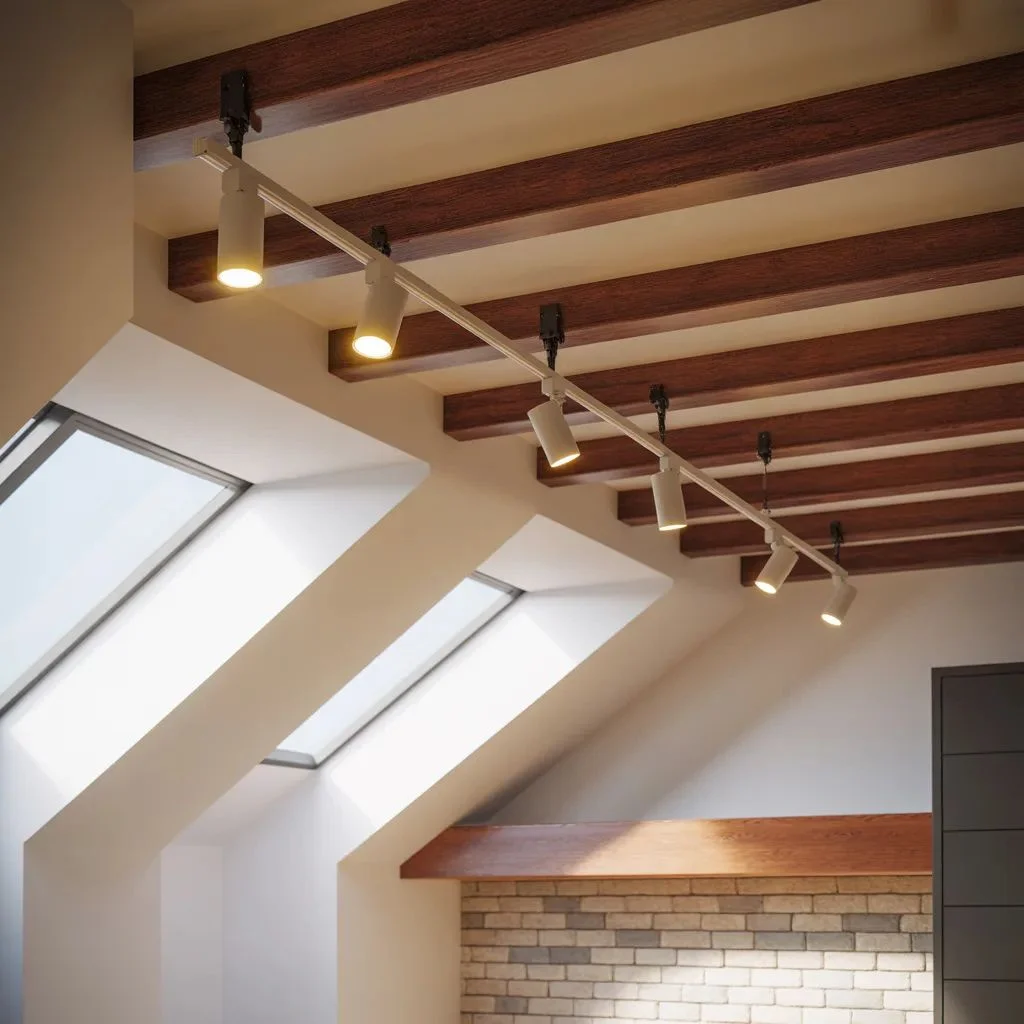
Flexible track systems sit between rigid linear tracks and suspended monorails. The track itself is a bendable rail that can be shaped into gentle curves, angles, or custom paths — then mounted flush to the ceiling like a standard track, without standoffs.
This makes flexible systems ideal for kitchens with unusual ceiling shapes: vaulted ceilings, sloped rooflines, irregular room layouts, or spaces where a straight track would look awkward. Homes with unique architectural features — exposed rafters, angled walls, L-shaped kitchen footprints — benefit the most from this option.
The ceiling-mount profile is lower and more discreet than a suspended monorail, giving you design flexibility without the visual weight of a hanging rail. Fixture heads are typically the same adjustable spot or gimbal types you’d find on a standard linear track, keeping the focus on function while the rail’s custom shape handles the personality.
Best for: Vaulted and cathedral ceilings, angled kitchen layouts, design-forward homes that want custom configurations without the visual heaviness of a monorail.
Cable Track Lighting: Minimalist Magic for Contemporary Kitchens
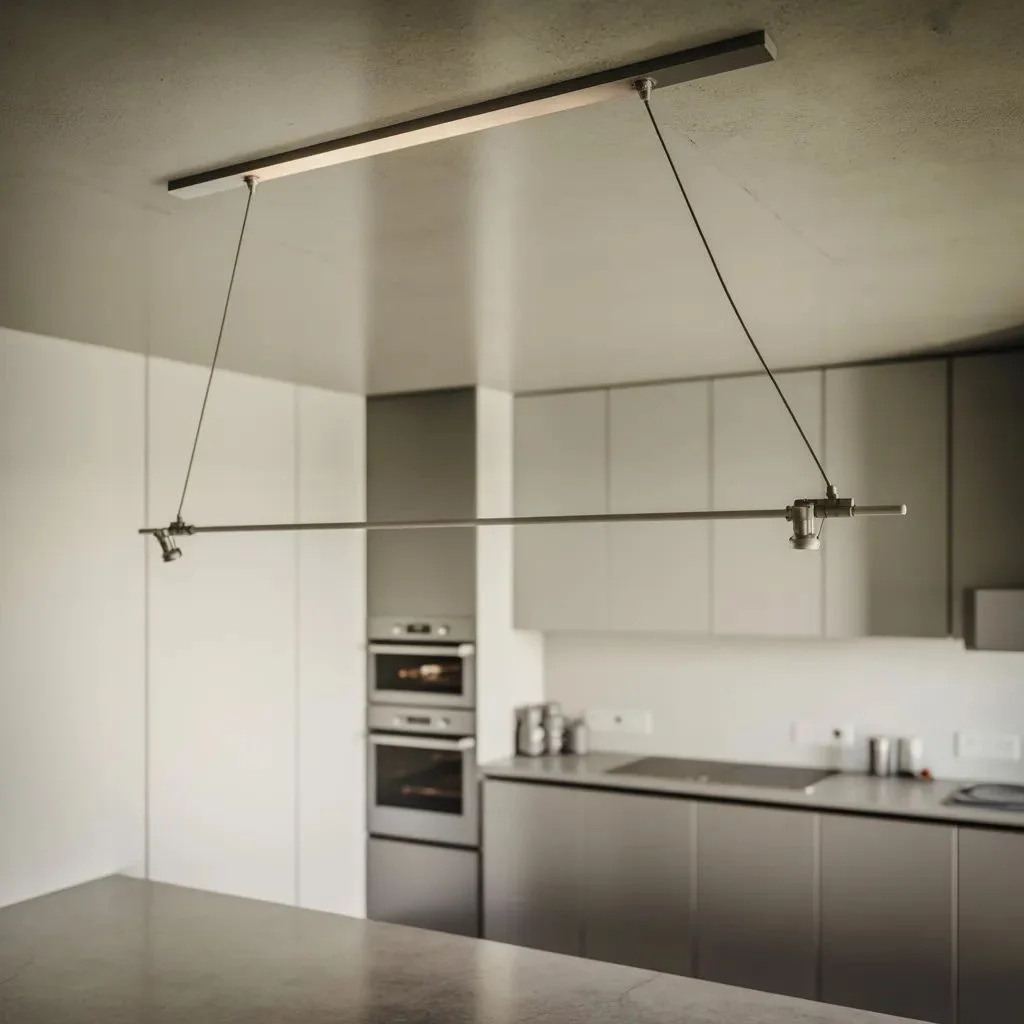
Cable track systems replace the rigid rail with two parallel tensioned cables strung between ceiling anchors or walls. Fixtures clip onto these cables and slide to any position along the span. The result is the most visually minimal track lighting setup available — no bulky rail, no standoffs, just thin steel wires and the fixtures themselves.
Cable systems work particularly well in kitchens with exposed architectural elements — concrete ceilings, raw wood beams, industrial-aesthetic spaces — where you want light coverage without hiding the ceiling’s character. They also work well in spaces where running a track parallel to one wall isn’t possible, since cables can span across the room from opposite walls.
The trade-off is weight and fixture selection. Cable systems are low-voltage and can’t support heavy fixtures. But for smaller, sleek pendant heads or minimal adjustable spots, they’re ideal. In 2026, cable lighting is a natural fit for the minimalist, gadget-free kitchen aesthetic that’s increasingly popular in contemporary design.
Best for: Industrial and minimalist kitchens, exposed-ceiling spaces, loft-style homes, and kitchens where the ceiling itself is a design feature worth preserving.
Smart Track Lighting: Putting Your Kitchen on Autopilot
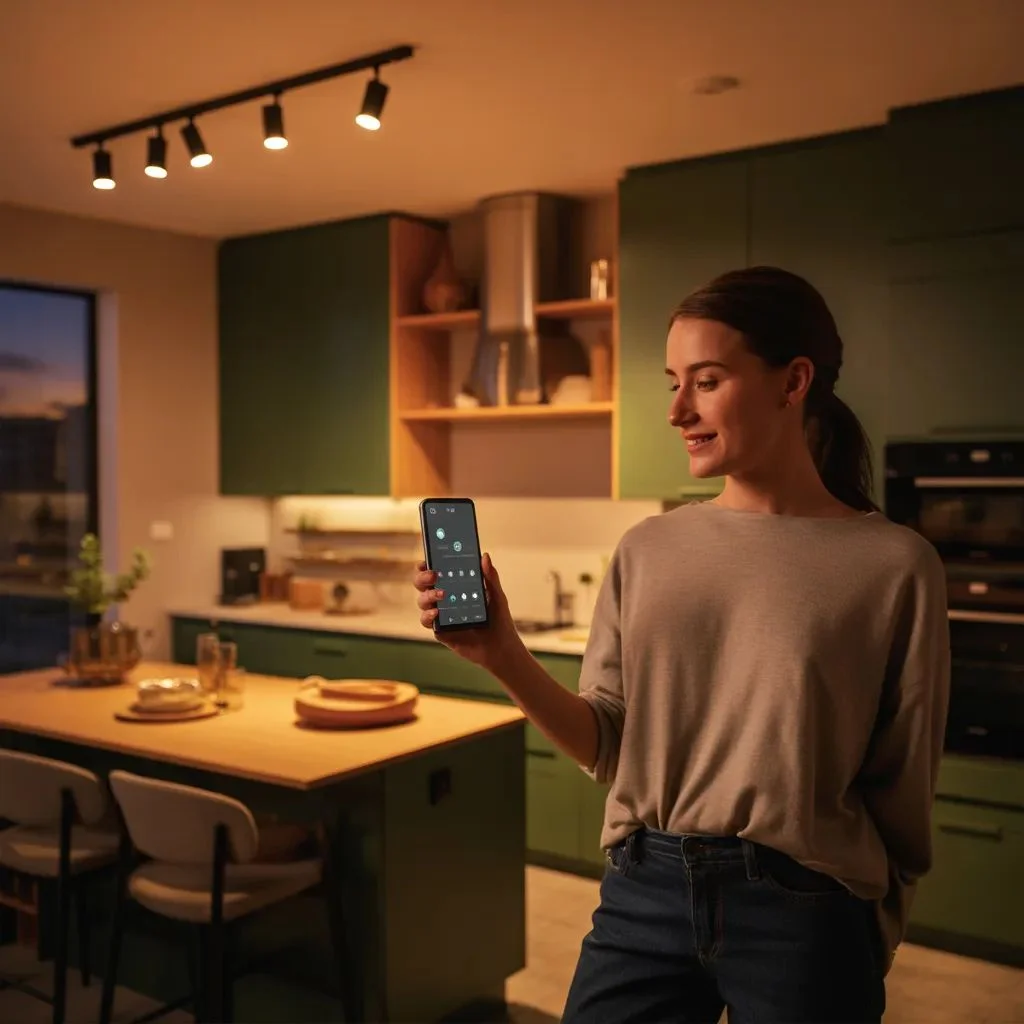
Smart track lighting integrates wireless controls, programmable scenes, and colour temperature tuning into your track system — no manual switches required. In 2026, track lighting options to upgrade your kitchen now include voice-command compatibility, motion sensors, and app-based controls that let you set the exact brightness and colour temperature for morning coffee, meal prep, or a late-night snack.
The practical upside is significant. You can program your track to shift from a crisp 4000K daylight tone during prep to a warmer 2700K in the evening. Motion sensors can auto-brighten when you walk in and dim when you leave. And if you entertain regularly, a single app tap can switch from bright task mode to a dim, flattering dinner setting.
Smart track systems typically pair with existing smart home ecosystems — Alexa, Google Home, Apple HomeKit — and require either smart-capable track heads or a smart dimmer switch at the circuit.
Warm white colour temperatures between 2700K and 3000K remain the standard recommendation for kitchens, but smart systems give you the flexibility to tune within that range or go brighter for task-heavy moments.
Best for: Tech-forward homeowners, open-plan kitchens that transition into dining and living areas, and anyone who wants their lighting to shift with the time of day without touching a switch.
How to Choose the Right Track Lighting for Your Kitchen Layout
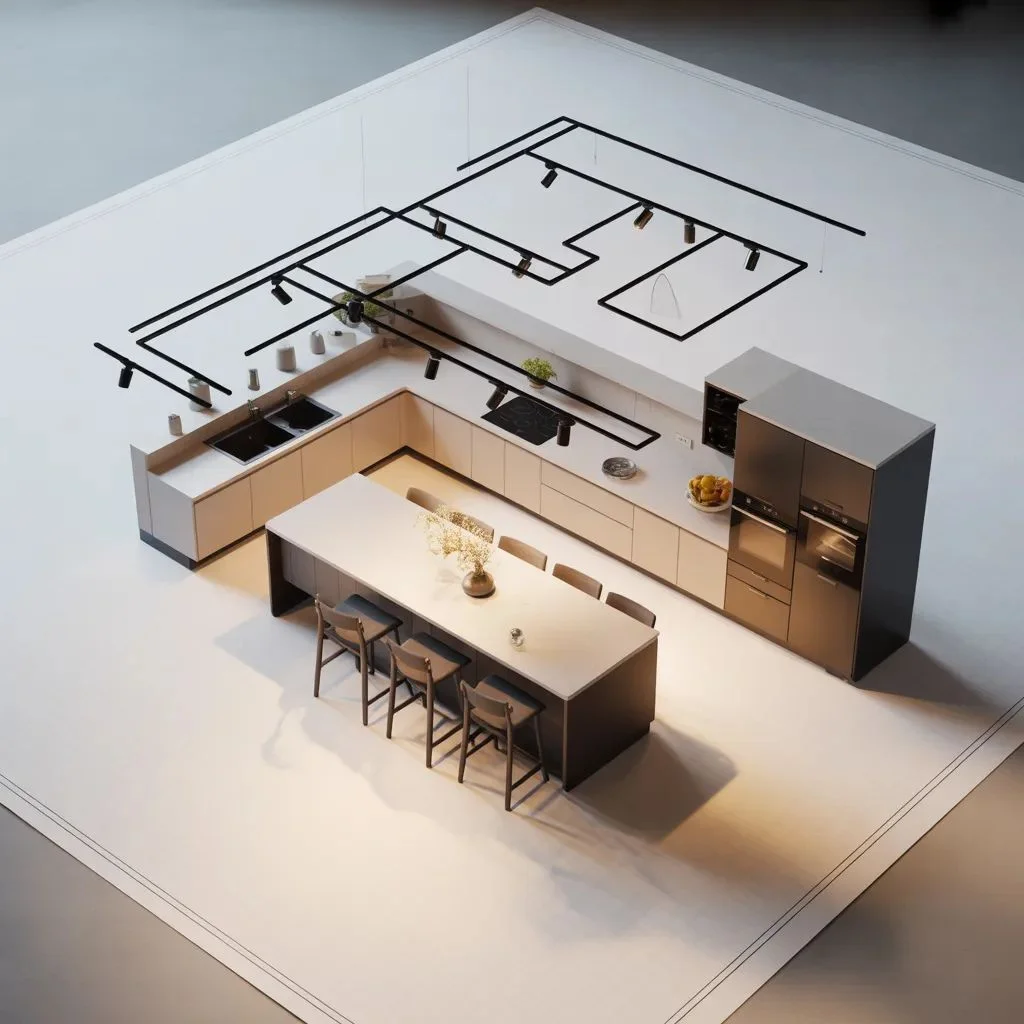
The best track lighting system for your kitchen depends on four things: ceiling shape, room layout, design style, and budget. Here’s how to work through each.
Ceiling shape: Flat ceilings work with all system types. Vaulted or sloped ceilings call for flexible track or monorail with adjustable standoff heights. Exposed-beam ceilings often pair best with linear track mounted between beams or cable systems that span the open space.
Room layout: Standard rectangular kitchens pair naturally with linear track. L-shaped kitchens benefit from L-shaped connectors or two separate tracks. Kitchens with curved islands or unusual shapes are where monorail and flexible track shine. For large kitchens, target around 8,000 lumens total output from your track system to ensure adequate coverage.
Design style: Contemporary and minimalist kitchens align with cable systems or sleek monorail. Modern farmhouse and transitional styles do well with linear track in brushed nickel or oil-rubbed bronze. Industrial kitchens suit exposed-bulb track heads on matte black rails. Design-forward, high-end kitchens lean toward sculptural monorail with pendant-style heads.
Budget: Linear track kits are the most cost-effective entry point, with quality complete kits available at accessible price points. Monorail and smart systems carry higher costs but deliver longer-term adaptability and aesthetics that hold up over time.
Finish and Style Pairings That Actually Work in 2026
Track lighting finishes have evolved well past basic white and chrome. In 2026, finish pairings are treated with the same intentionality as hardware choices — they either pull the room together or they don’t.
Matte black: The dominant finish of the decade. Works in modern, industrial, and farmhouse kitchens alike. Pairs strongly with white cabinetry (high contrast), dark navy or forest green cabinets (tonal depth), and warm wood tones. Resists fingerprints and smudges better than polished finishes.
Brushed nickel and satin chrome: Clean, timeless, and broadly compatible. Suits transitional kitchens with mixed-material countertops and white or grey cabinetry. Works particularly well in kitchens that mix stainless appliances with lighter design elements.
Aged brass and patina bronze: Trending strongly in 2026, particularly in kitchens leaning into a handcrafted or heritage aesthetic. Pairs with cream and off-white cabinetry, unlacquered brass hardware, terracotta tile, and warm stone countertops. Creates warmth that chrome-finished systems simply can’t replicate.
White and warm grey: The quiet option that lets the kitchen design take center stage. Good for all-white kitchens, Scandinavian-inspired spaces, and rooms with strong architectural features where the track should disappear rather than draw the eye.
Time to Light Things Up
The right track lighting options to upgrade your kitchen aren’t just about brightness — they’re about control, flexibility, and getting a space that works the way you live in it. Whether you go with a simple linear kit to brighten a dark galley kitchen or a curved monorail installation that becomes the design centerpiece of your open-plan space, track lighting gives you more for less than almost any other ceiling upgrade available in 2026.
Start with your ceiling shape and room layout, pick your system type, match your finish to your existing hardware, and you’re 80% of the way there. The heads, lumens, and smart features fill in the rest. Your kitchen’s been working hard in bad light long enough.
Read Also About: Small Kitchen Lighting Ideas: Clever Ways to Brighten a Compact Space.