
Some Christmas decor sparkles. A chalkboard whispers and that quiet, hand-drawn charm is exactly what makes it feel old-fashioned.
Long before printed signs and plastic letters, Christmas greetings were written by hand — chalk on a dark board, a little smudged at the edges, and all the warmer for it.

These christmas chalkboard ideas bring that feeling back: hand-lettered greetings, advent countdowns, carol lyrics, a menu for Christmas dinner written out in pink script — the kind of decor that looks like someone in the house actually made it.
You do not need a steady hand or an artist’s eye. A piece of chalk, a dark board and an evening by the fire are enough to start.
Here are 18 chalkboard ideas with a little old-fashioned charm, and how to make each one your own.
Hand-Lettered ‘Merry Christmas’ in Old Script
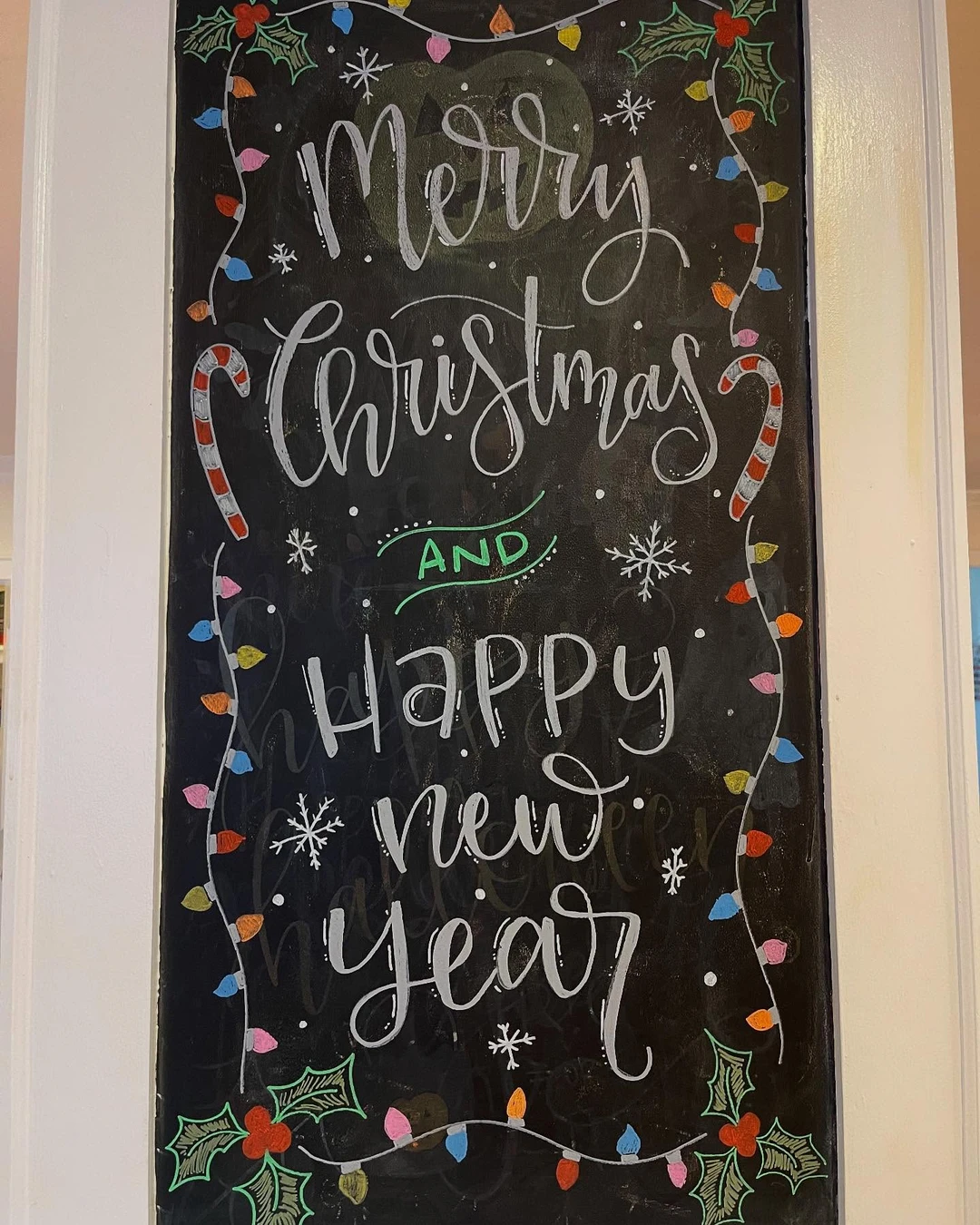
Old script is doing all the work here — tall looping letters, a little uneven, the way handwriting actually looks. A tall doorway board like this one turns a plain greeting into the first thing guests notice when they walk in.
Frame it with a chalk border of candy canes, holly and coloured lights, the way this board does, and the lettering feels finished even before you add anything else. Chalk markers give cleaner lines than stick chalk; real chalk gives the soft, dusty edge that reads old-fashioned.
Keep the board by the door or at the end of a hallway, where people pass it every day. And leave one corner empty — a greeting that gets a fresh sprig of holly or a new doodle each week stays alive all December.
The practical point: Chalk markers give cleaner lines; real chalk gives the soft, dusty edge that reads old-fashioned — pick the tool that matches the look you want.
Count Down December on a Chalkboard
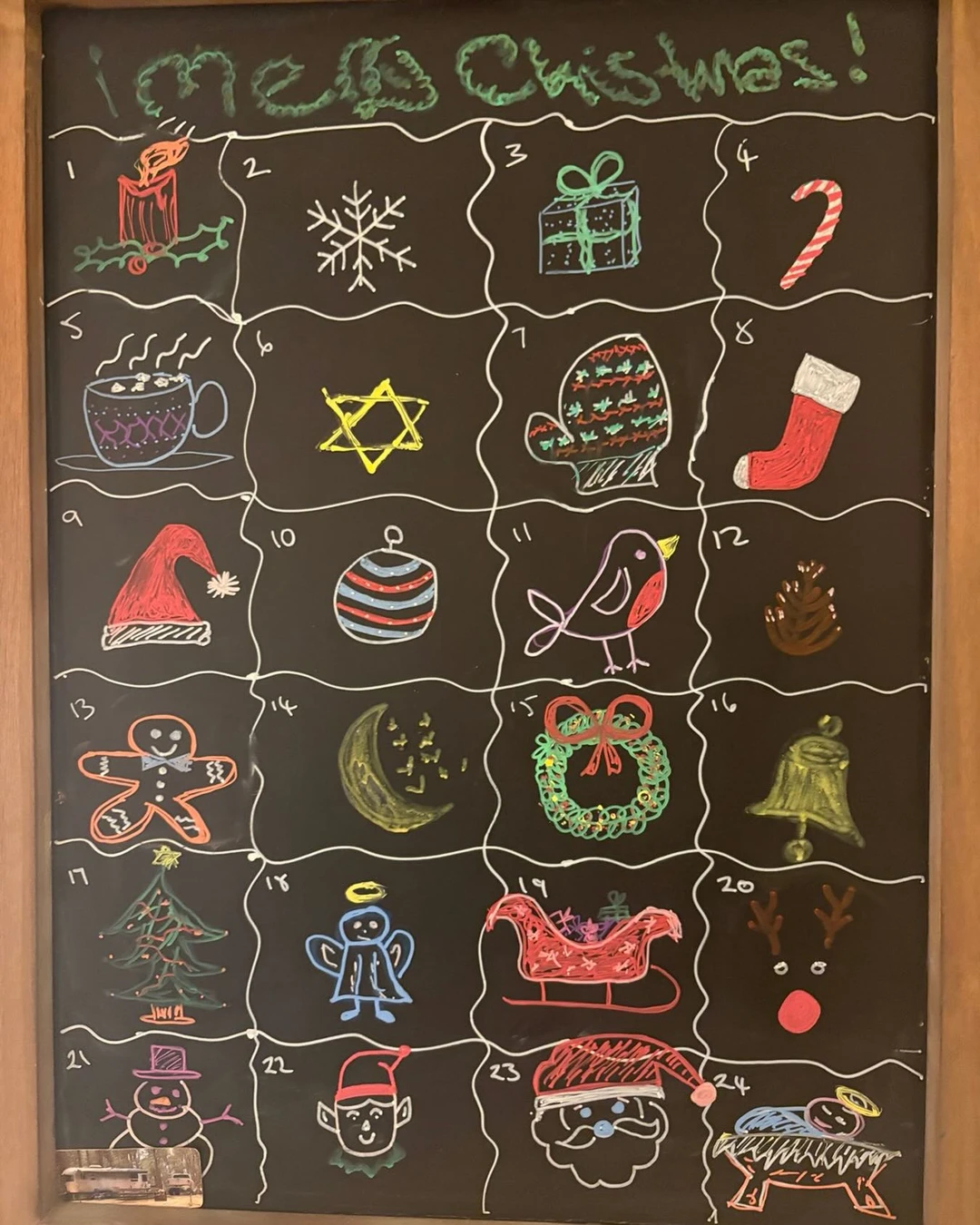
One advent calendar drawn in chalk is the slowest, sweetest countdown there is. Twenty-four little boxes, each with its own small drawing — a snowflake, a gift, a stocking, a reindeer — and one more to open every morning.
Draw the grid first in pale chalk, then fill each box with a tiny picture and a number. Children love opening a box a day; grown-ups love that the whole thing cost nothing but an evening and a box of chalk.
Use a damp cloth to wipe a box clean each morning, or just cross it off — the smudges become part of the charm. And hang the board where the morning light hits it, so the countdown is the first thing the house sees.
The practical point: Draw the grid first in pale chalk, then fill each box with a tiny picture and a number — the grid keeps the whole calendar straight.
Put Christmas Dinner on the Board
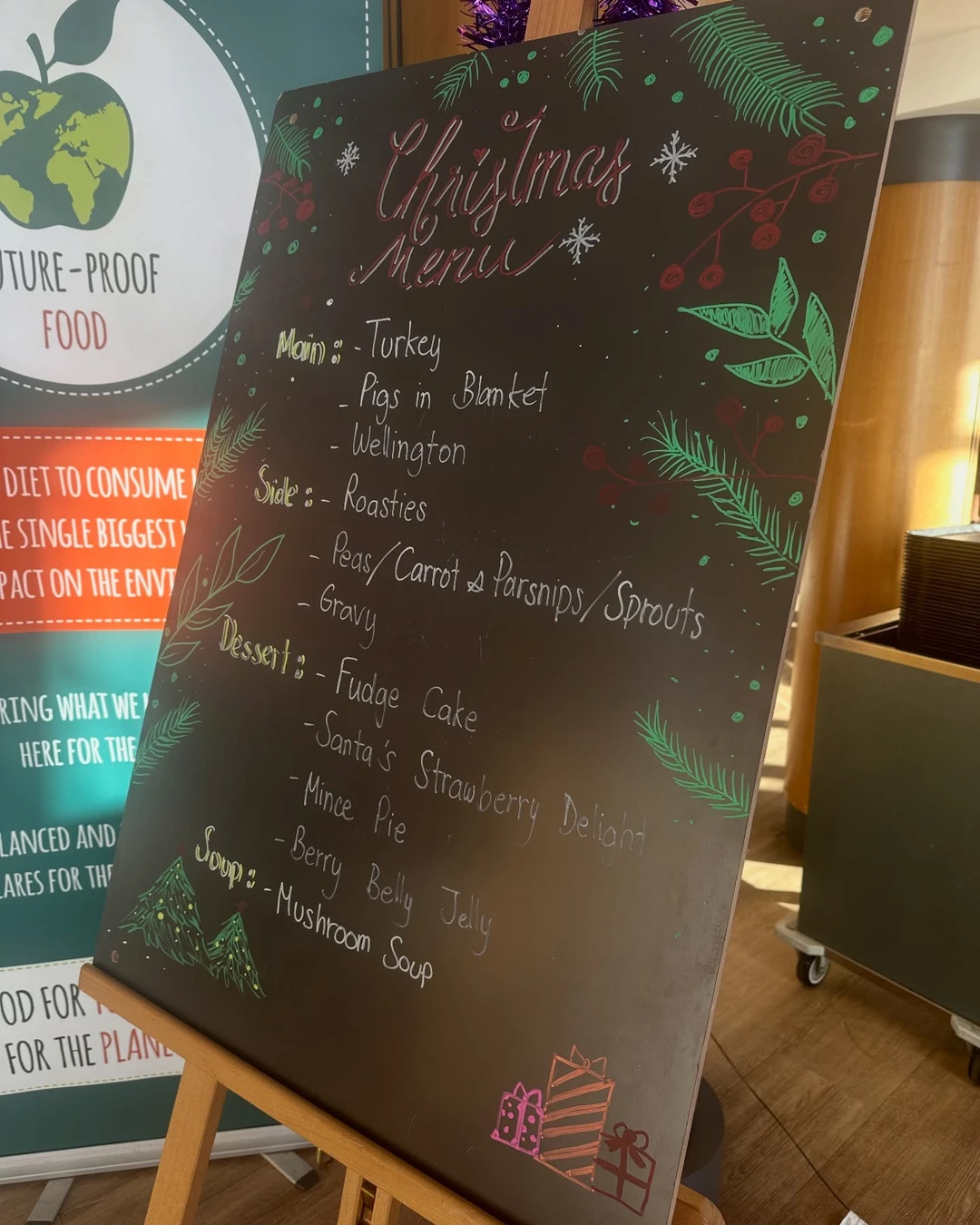
One menu board does two jobs at once: it tells everyone what is coming, and it makes dinner feel like an occasion. Turkey, pigs in blankets, roasties, mince pie — written out in pink script with a holly border, it reads like a restaurant that happens to be your dining room.
Divide the board the way this one does — Main, Side, Desserts, Soup — and write the dishes in the order they will arrive. Guests start planning their plate before they sit down, and the cook gets a small round of applause before a single dish is served.
Photographed at a school event, this board still works at home — the format is the idea, not the room. Write the menu the day before, and leave a little space at the bottom for a surprise course.
The practical point: Divide the board into Main, Side, Desserts and Soup, in the order the dishes arrive — guests start planning their plate before they sit down.
Draw the Wreath Right on the Board
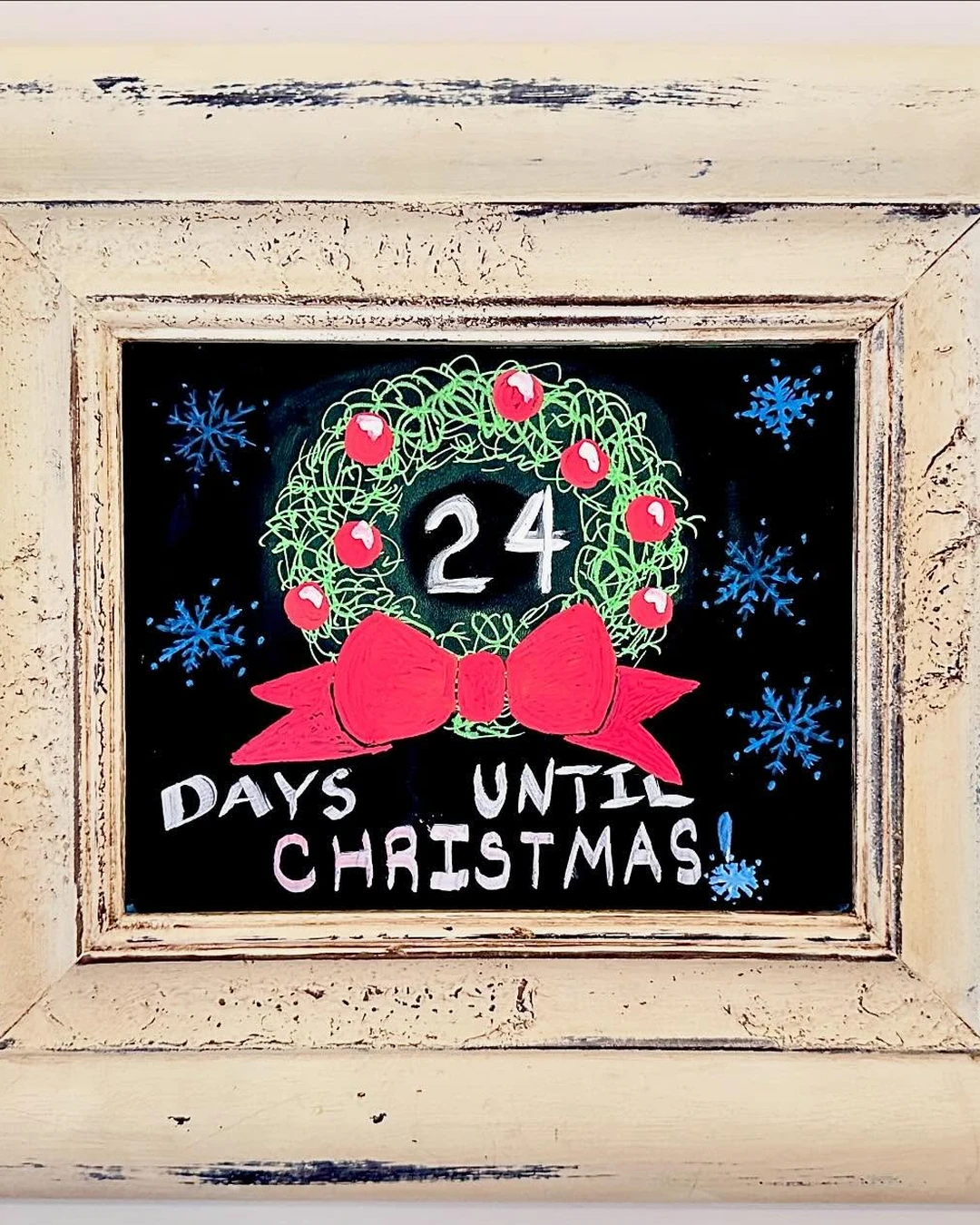
One wreath you draw never drops needles on the floor. Green chalk, red berries, a big red bow — and the board inside a distressed white frame looks like something from a country cottage, not a craft store.
Draw the circle first with a piece of string and a chalk pencil, then build the wreath from small leaf strokes around it. Berries are just red dots in clusters of three; the bow is two triangles and a knot. Imperfect is the point — a hand-drawn wreath should look hand-drawn.
Put the countdown number inside the wreath, the way this board does with its ’24 days until Christmas’. Every morning, wipe the number and write the new one — the wreath stays, the countdown moves.
The practical point: Draw the circle first with a piece of string and a chalk pencil — the string keeps the wreath round, and the leaves can be as loose as you like.
Let the Gift List Grow Around the Tree
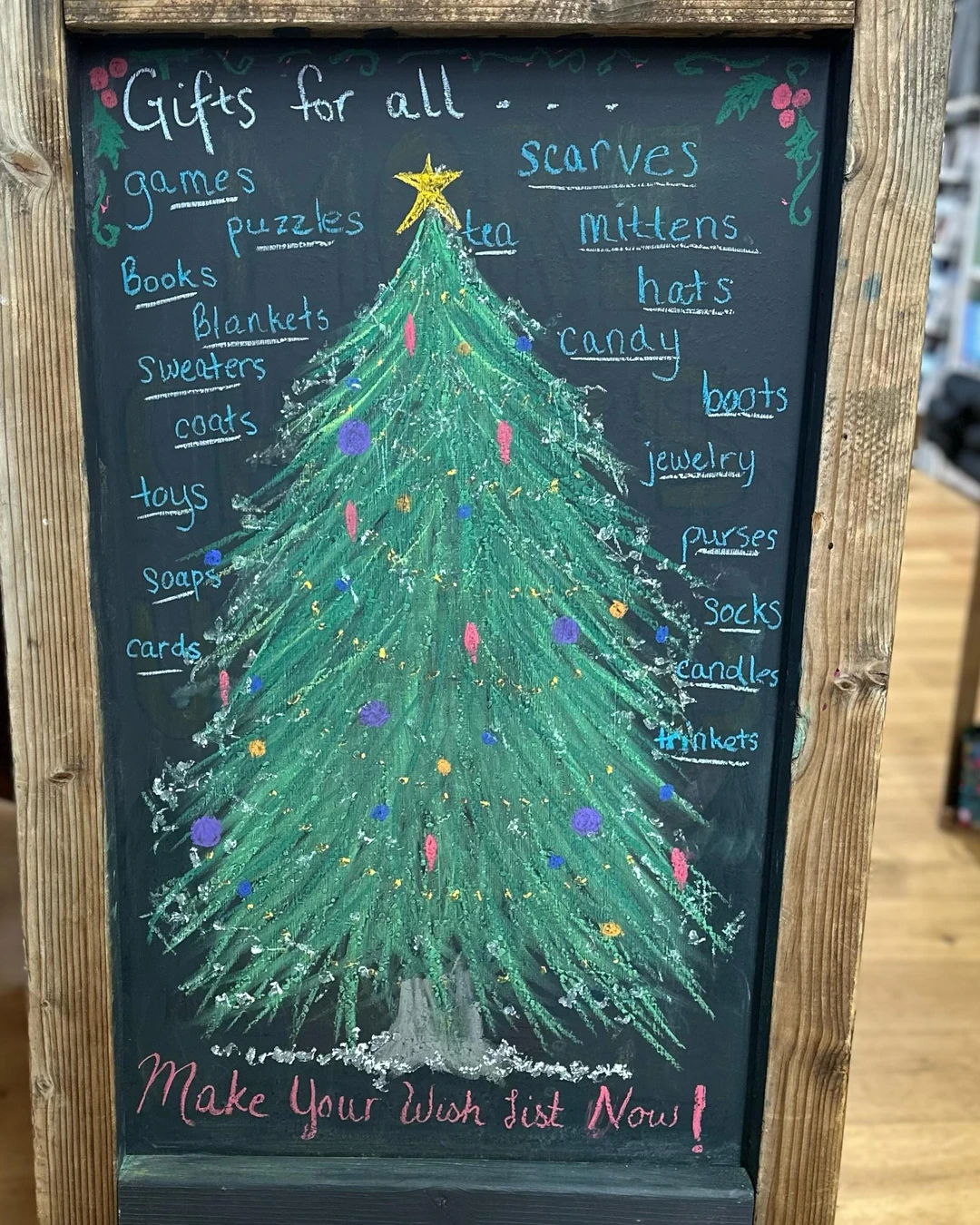
One gift list wrapped around a hand-drawn tree is the prettiest way to keep track of who gets what. Games, puzzles, books, blankets, sweaters — written in coloured chalk all around a big green tree, with ‘Make Your Wish List Now!’ at the bottom.
Draw the tree big and in the middle, then let the gift ideas fill the space around it. Categories beat names here — write the kind of gift, not the person, and the board stays useful even when the list changes.
Photographed in a shop, shelving just visible at the edges, this board still belongs at home — on the wall by the tree, where everyone in the house can add an idea as it comes to them.
The practical point: Write the kind of gift, not the person — categories keep the board useful even when the list changes.
‘Twas the Night Before Christmas Verse on the Board
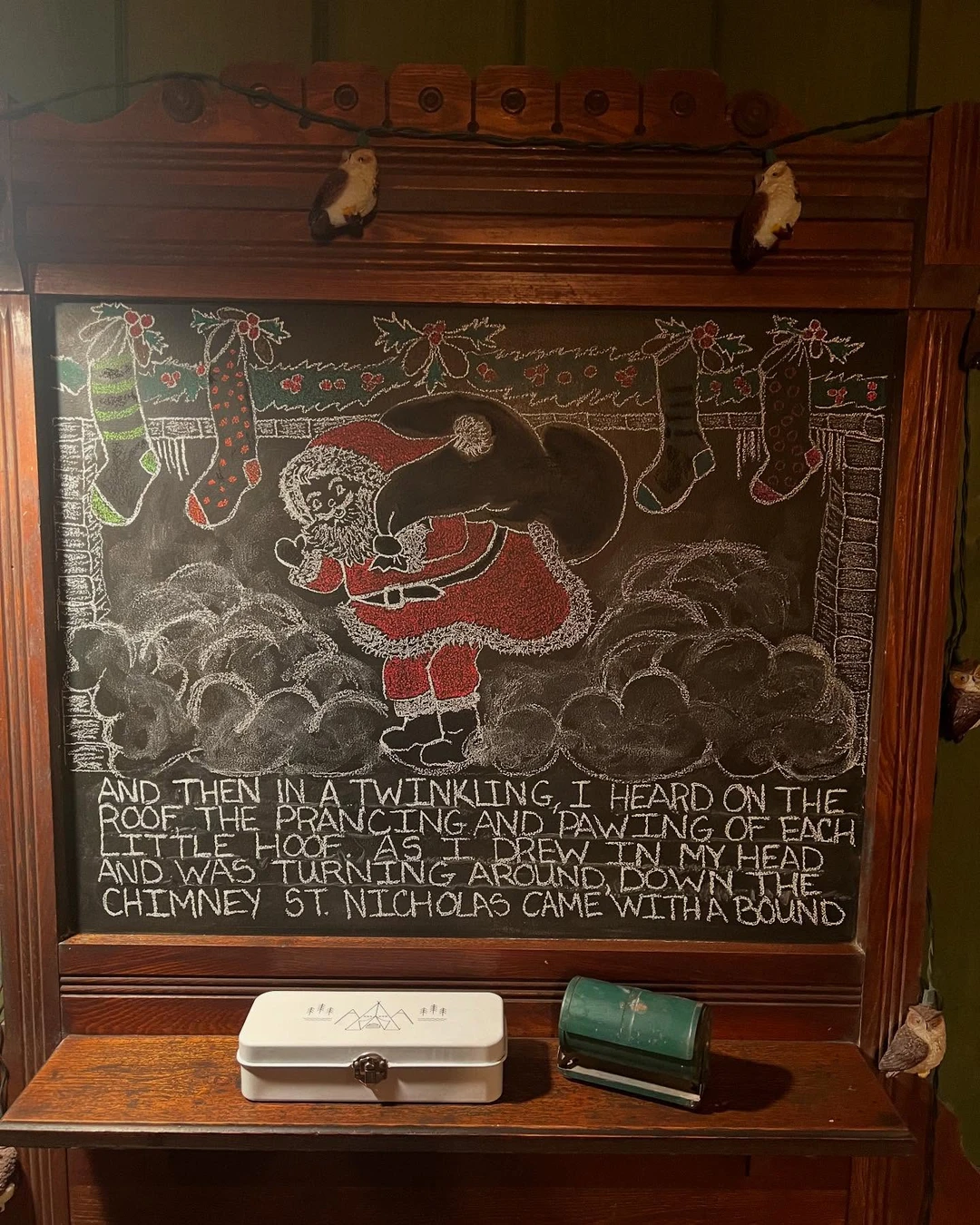
Some poems belong on a wall, and this is the first of them. Santa coming down the chimney in chalk, stockings above, and the verse quoted at the bottom — ‘and then in a twinkling, I heard on the roof the prancing and pawing of each little hoof’.
Pick one passage, not the whole poem — a board that tries to hold everything ends up holding nothing. Two or three lines, lettered large, with a drawing above them, is all it takes.
Hang it on the mantel where the stockings hang, and read it aloud on Christmas Eve. A poem on a board becomes a tradition faster than any decoration you buy.
The practical point: Pick one passage, not the whole poem — two or three lines, lettered large, with a drawing above them, is all it takes.
Sketch the Nativity by Hand
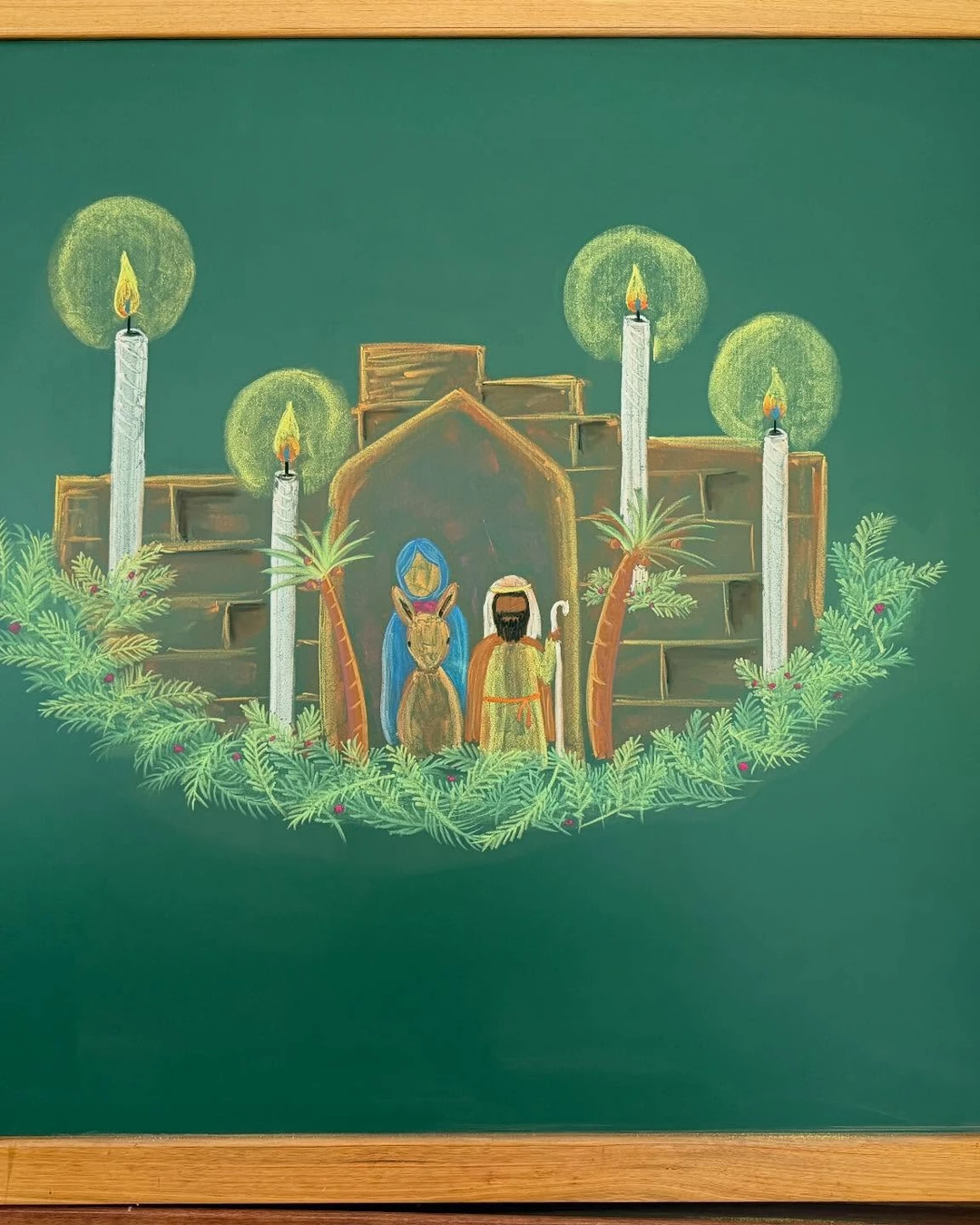
One nativity drawn in chalk has a softness no shop-bought figure can match. Mary, Joseph and the baby inside a stable arch, ringed by Advent candles and greenery on a green board — the whole story in one drawing.
Start with the stable arch — a simple curve — then put the figures inside it, small and close together. Candles around the arch, four of them, give the drawing its frame; the greenery at the base hides any wobble in the lines.
Chalk is forgiving: a damp cloth erases a wrong line in seconds, and the smudge it leaves behind reads as shading. Draw it the first week of December and let it watch over the room all month.
The practical point: Start with the stable arch — a simple curve — then put the figures inside it; the arch does the framing, so the figures can be simple.
Old-Fashioned Carol Lyrics in Chalk
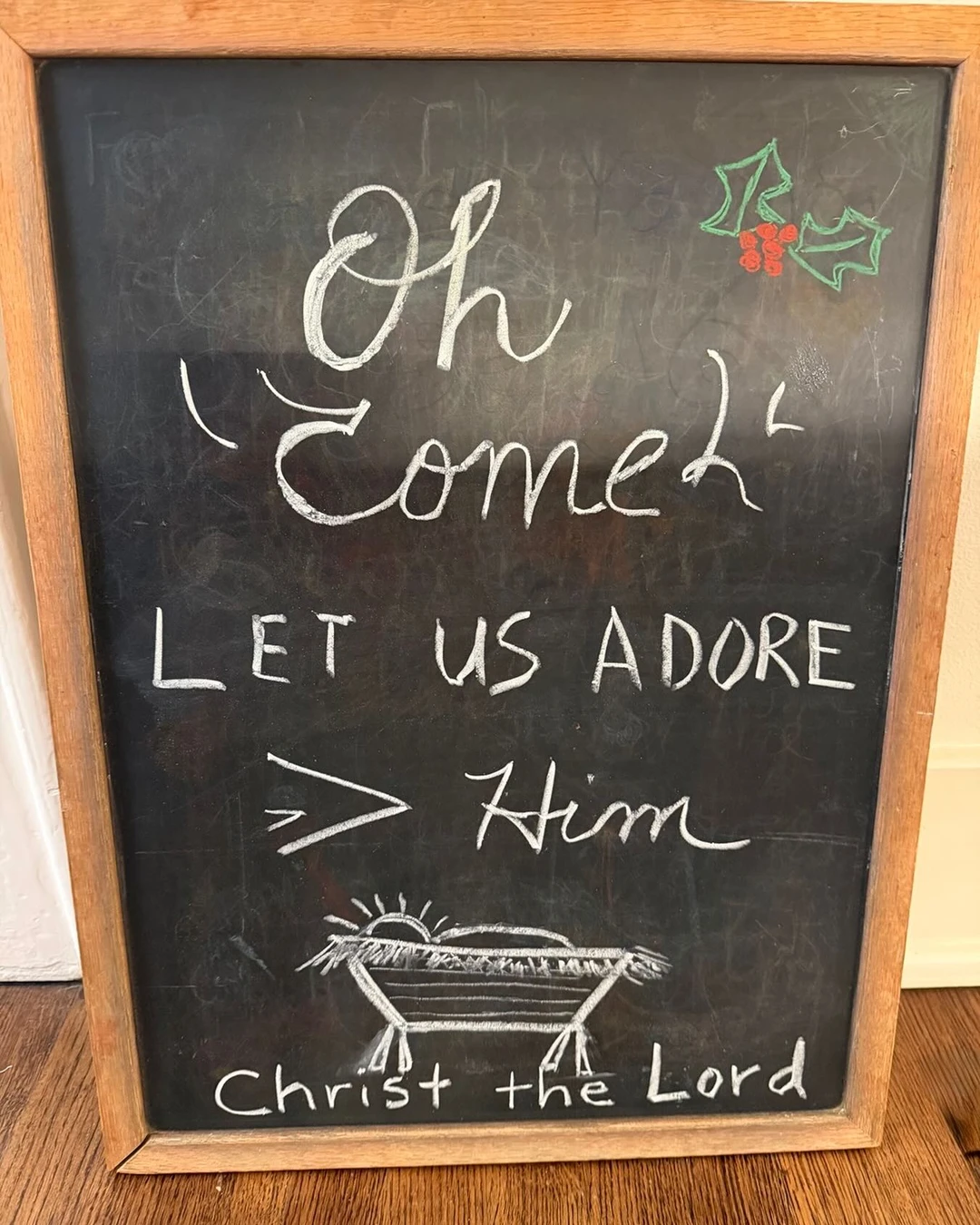
‘Oh come, let us adore Him’ — a line everyone knows, written out in white chalk with a hand-drawn manger underneath. Carol lyrics on a board work because the words are already in the room; the chalk just gives them somewhere to sit.
Choose a carol the house actually sings, not the prettiest one on paper. ‘O Come All Ye Faithful’, ‘Silent Night’, ‘O Holy Night’ — one line, lettered large, with a small drawing to match it.
Keep the lettering big and the board empty around it — lyrics need air. A holly sprig in one corner is enough decoration; the words are the decoration.
The practical point: Choose a carol the house actually sings — one line, lettered large, with a small drawing to match it.
Santa’s List, Counted Down in Chalk
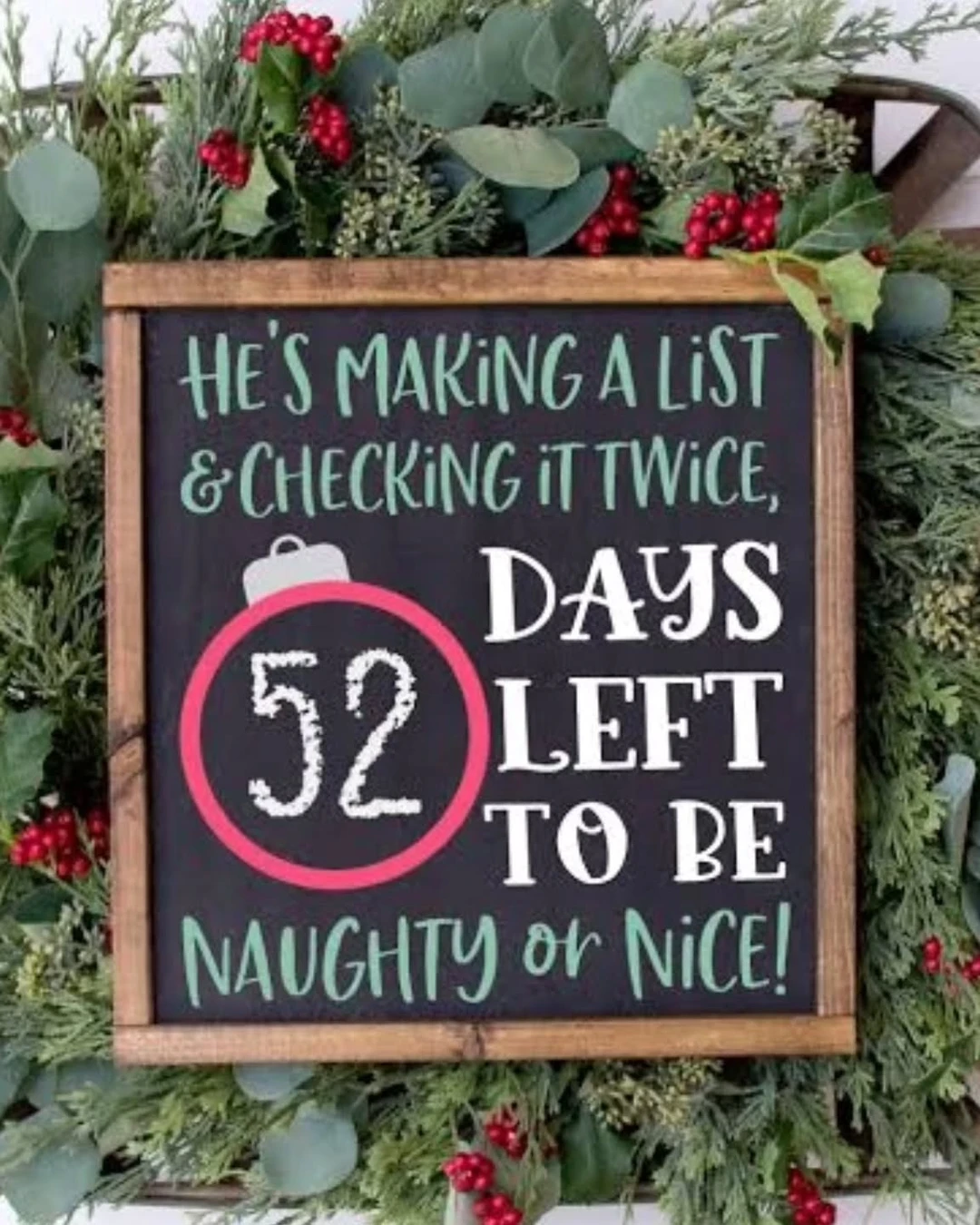
Every real Santa list on a chalkboard seems to carry children’s names — which is why this one is cleverer. ‘He’s making a list and checking it twice, 52 days left to be naughty or nice!’ — a countdown, not a roll call, set inside a wreath of greenery and red berries.
One countdown list works for everyone in the house, because nobody’s name is on it — just the days, ticking down. Circle the number in a pink ornament, the way this board does, and the countdown becomes the decoration.
Update the number every morning, and let the board do the reminding. By Christmas Eve the number is one, the list is finished, and the board has done its job.
The practical point: Circle the number in a bright ornament — the countdown becomes the decoration, and nobody’s name needs to be on it.
Chalk Snowflakes on a Dark Board
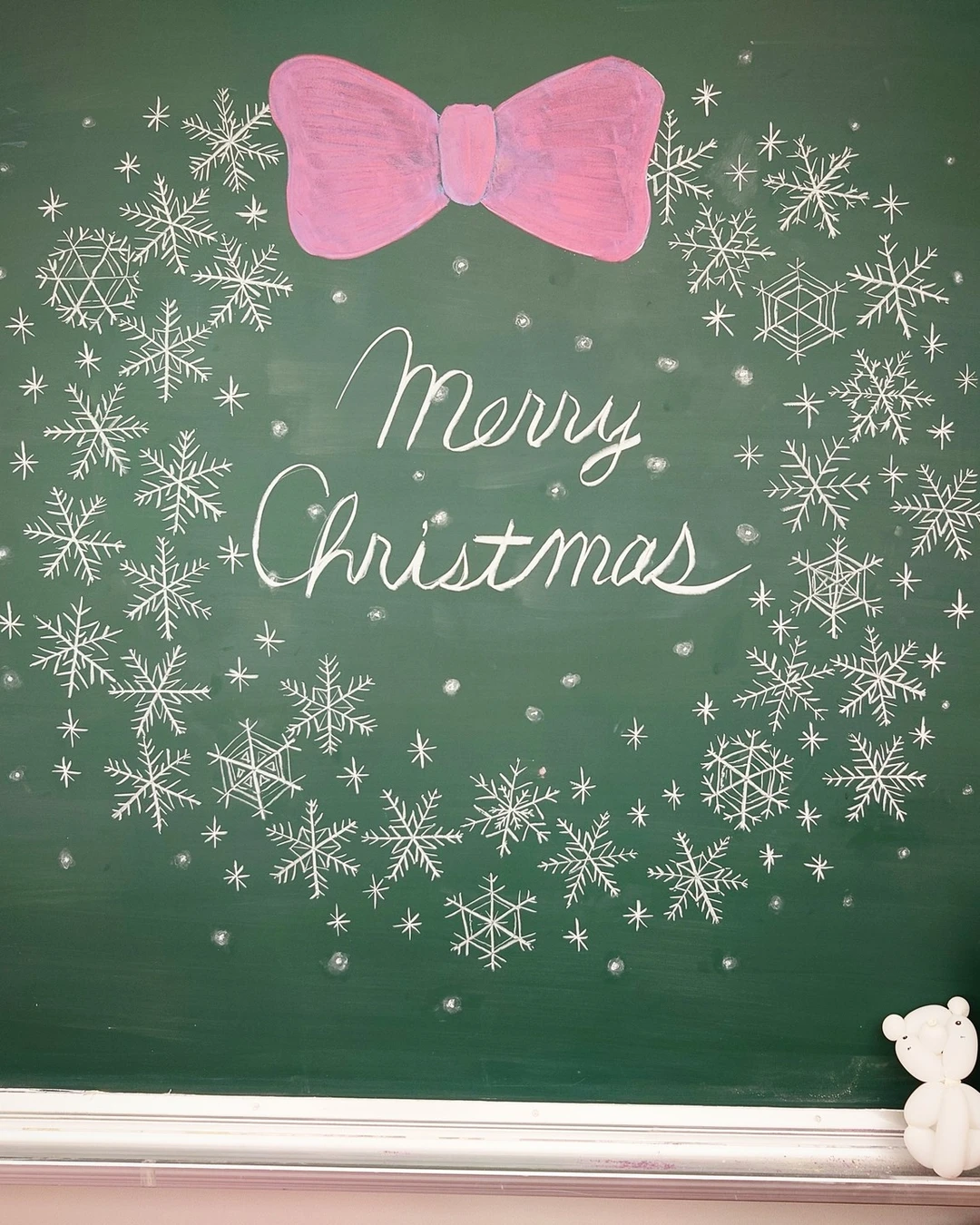
Snowflakes are the easiest chalk drawing there is — six lines crossing at the centre, a few small branches off each one — and a board full of them, in a wreath around ‘Merry Christmas’, looks like a snowstorm that stayed put.
Draw them in different sizes, some big and some small, and let them overlap at the edges. White chalk on a dark green board is the classic combination; a pink bow at the top, like this one has, is the one touch of colour the board needs.
Look closely and a small white bear figurine sits at the bottom-right corner of this board — a child’s toy left behind, and the photo is warmer for it. Leave the board where the family gathers, and let the snowflakes stay up all winter.
The practical point: Draw snowflakes in different sizes and let them overlap — six lines crossing at the centre, a few small branches off each one.
Why a Wooden Frame Makes All the Difference
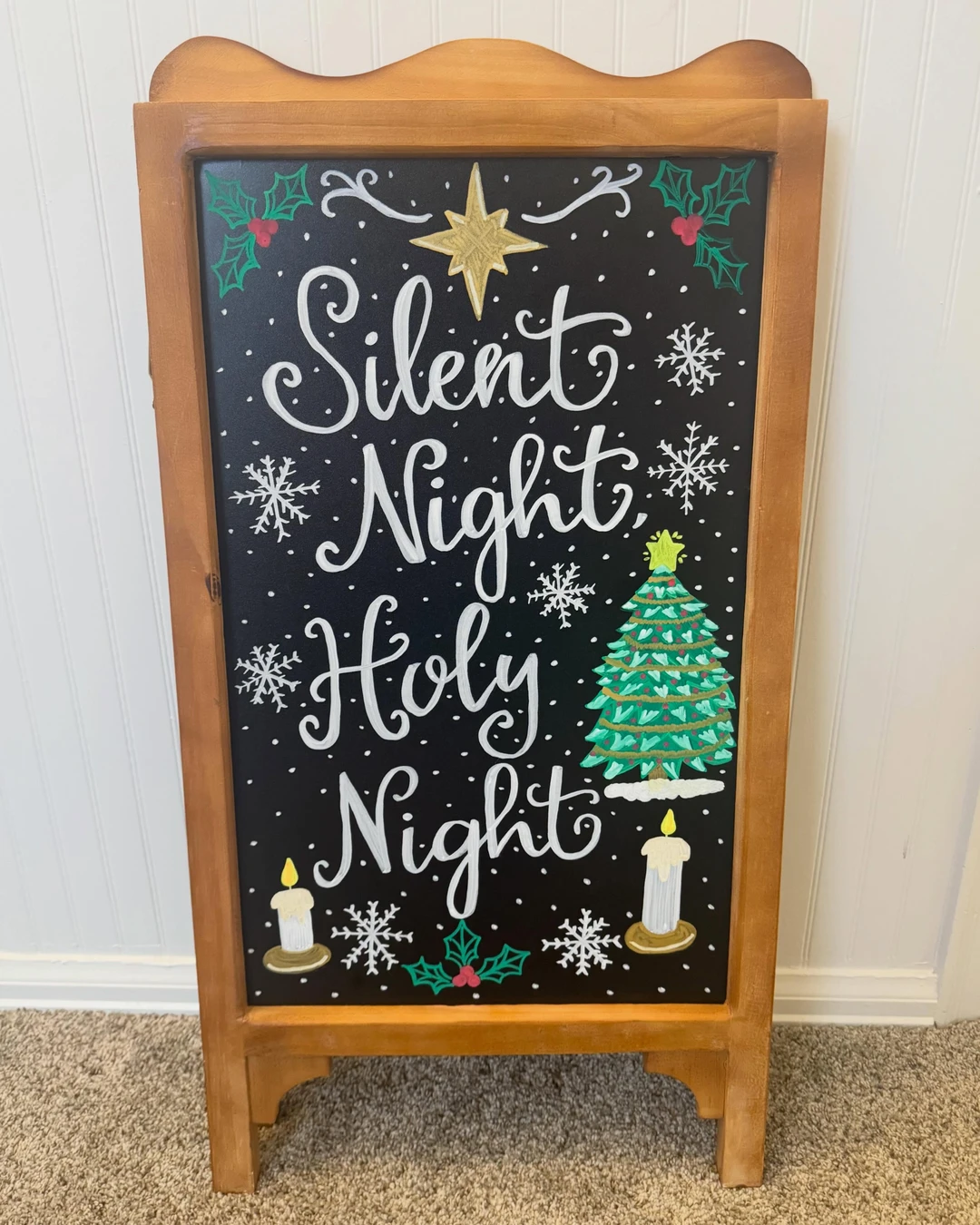
Look at the board in this photo: it carries ‘Silent Night, Holy Night’ — but the thing that makes it feel old-fashioned is the wooden easel it stands on. A chalkboard in a wooden frame reads like a school slate from a hundred years ago; the same board in a plastic frame reads like an office.
Search for a frame with some wear in it — scuffed wood, a wobble in the easel, a chalk tray that has clearly been used. The frame does half the vintage work before you draw a single line.
Stand it on the floor against white panelling, the way this one does, and let the board fill the frame edge to edge. A gold star, some holly, a green chalk tree and two candles are all the drawing it needs.
The practical point: Look for a frame with some wear in it — scuffed wood and a used chalk tray do half the vintage work before you draw a line.
Twelve Days, One Line a Day
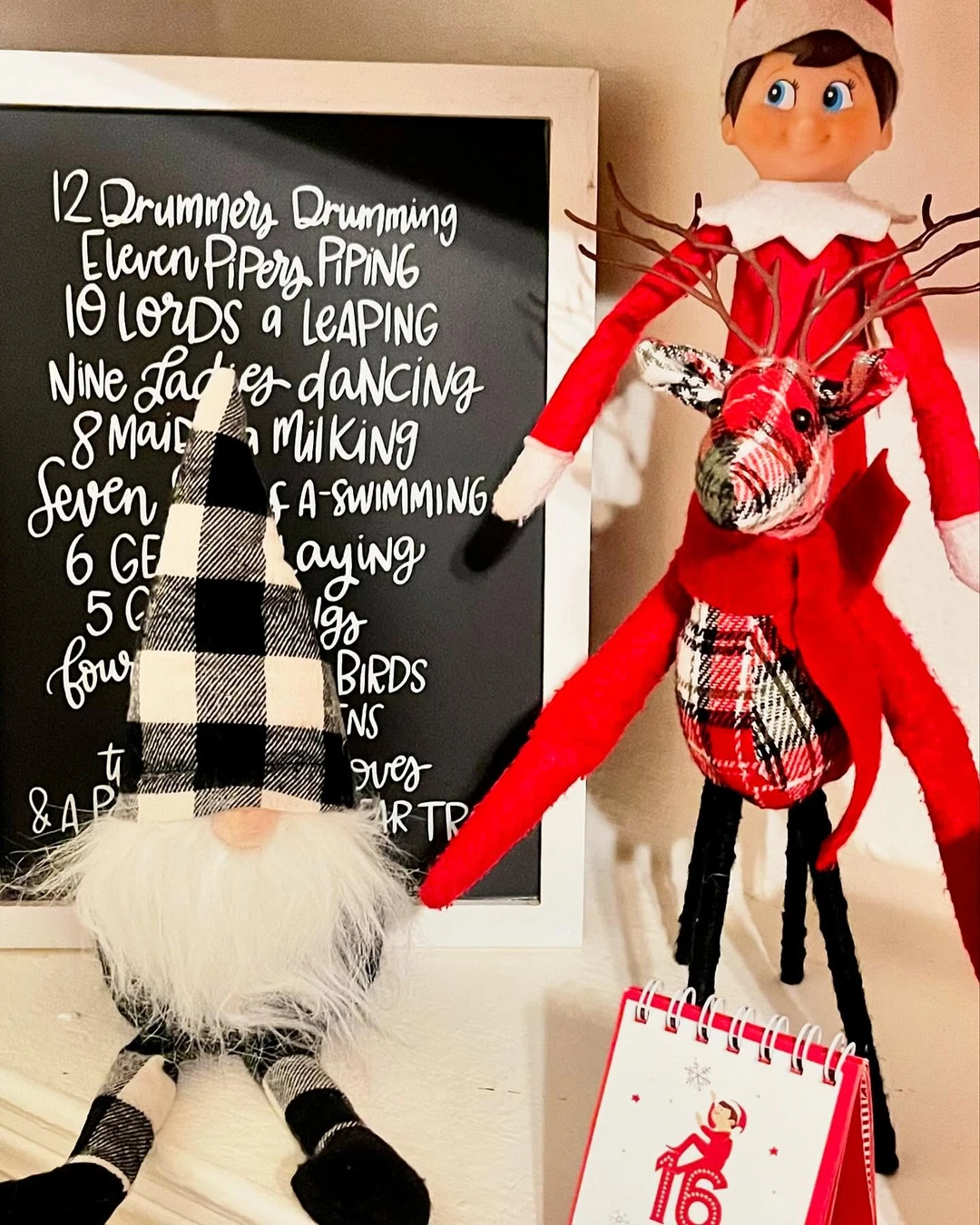
Twelve drummers drumming, eleven pipers piping, ten lords a-leaping — the whole song, one line a day, written out in white chalk. It is the only board in this article that asks you to come back to it every day, and that is the point.
Write one line each morning, from the twelfth day down to the first, and let the board fill up through December. A plaid gnome and an elf stand in front of this board, partly hiding the lower lines — Christmas props doing what Christmas props do, and the top lines are clear enough to sing from.
Keep the lettering plain and the lines in order, largest at the top. By Christmas Eve the board holds the whole song, and the house knows every word.
The practical point: Write one line each morning, from the twelfth day down to the first — the board fills up through December, and the house learns the song.
Give ‘Merry & Bright’ the Biggest Wall
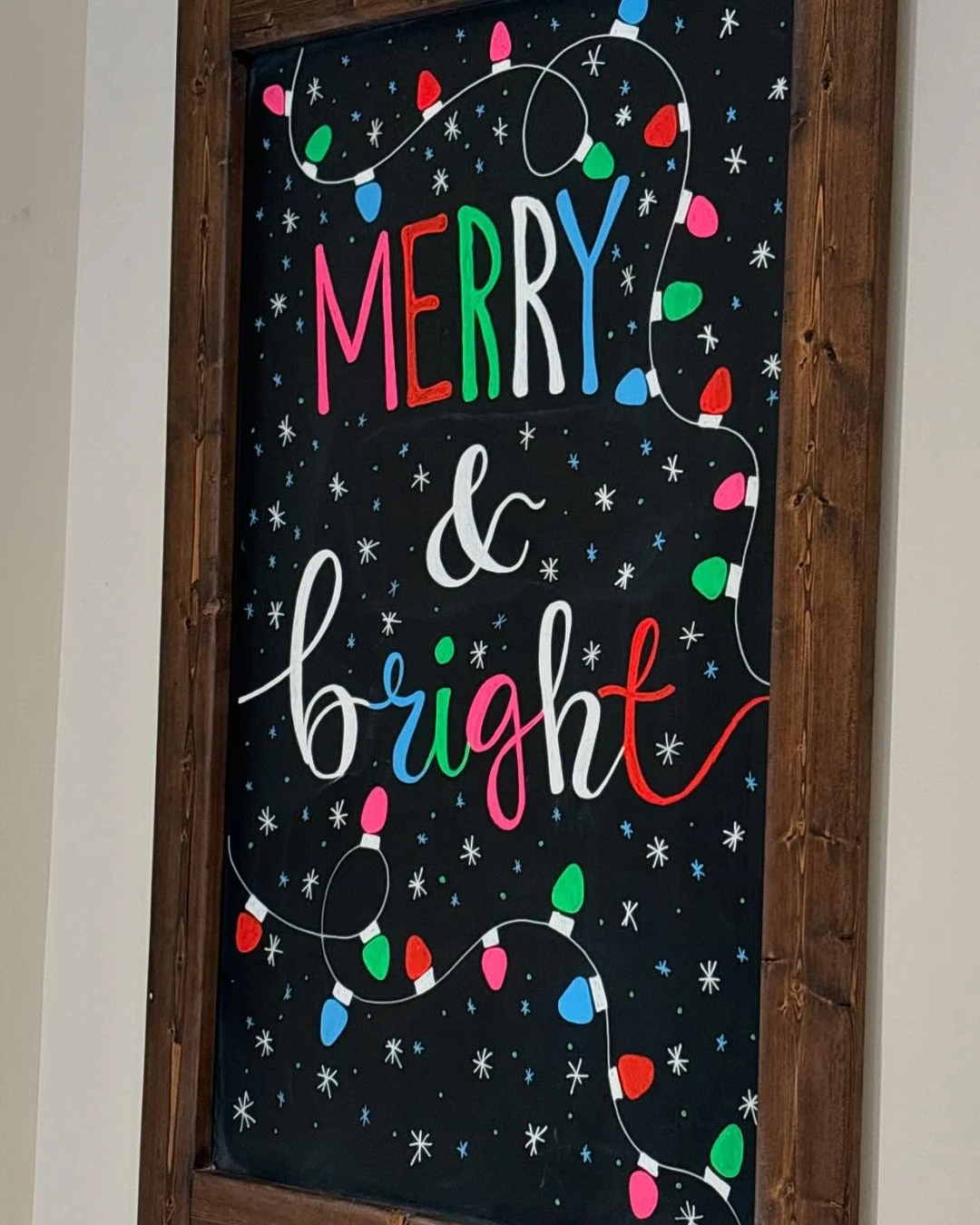
‘Merry & Bright’ is the shortest Christmas greeting there is, and on a board this size it does not need anything else. Big multicoloured letters, hand-drawn string lights with pink, red, green, blue and white bulbs, snowflakes scattered across the dark board.
It hangs on a wall, not over a mantel — and that is worth saying, because the phrase works anywhere it can be read from across the room. Give it the biggest empty wall you have, and let the lettering be the decoration.
Draw the string lights first, looping them across the top, then hang the words underneath. The lights are the frame; the words are the picture.
The practical point: Draw the string lights first, looping them across the top — the lights are the frame, and the words are the picture.
Reindeer and Sleigh, Drawn Across the Moon
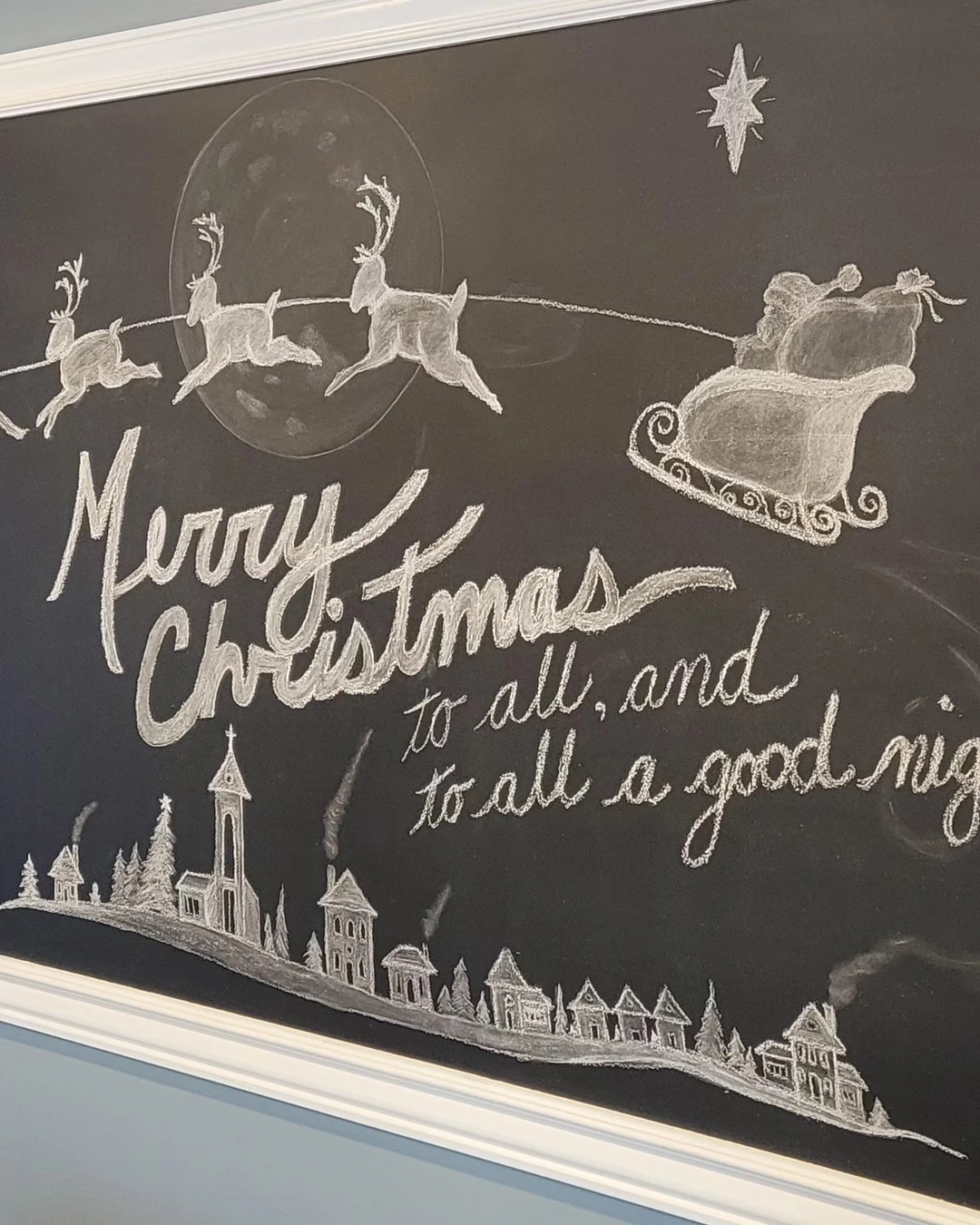
Santa in his sleigh, four reindeer pulling it across a full moon, a bright star above and a village skyline along the bottom — the most cinematic drawing in this article, and it is all chalk.
Draw the moon first, big and pale, then the sleigh and reindeer as a dark silhouette across it. Silhouettes are forgiving: nobody can tell a wobbly reindeer leg in silhouette, and the moon does the glowing for you.
Add the line underneath in large cursive — ‘Merry Christmas to all, and to all a good night’ — and the board is finished. Hang it where the evening light hits it, and the moon seems to shine twice.
The practical point: Draw the moon first, big and pale, then the sleigh as a dark silhouette across it — silhouettes hide every wobble.
Write the Cookie Recipe on the Board
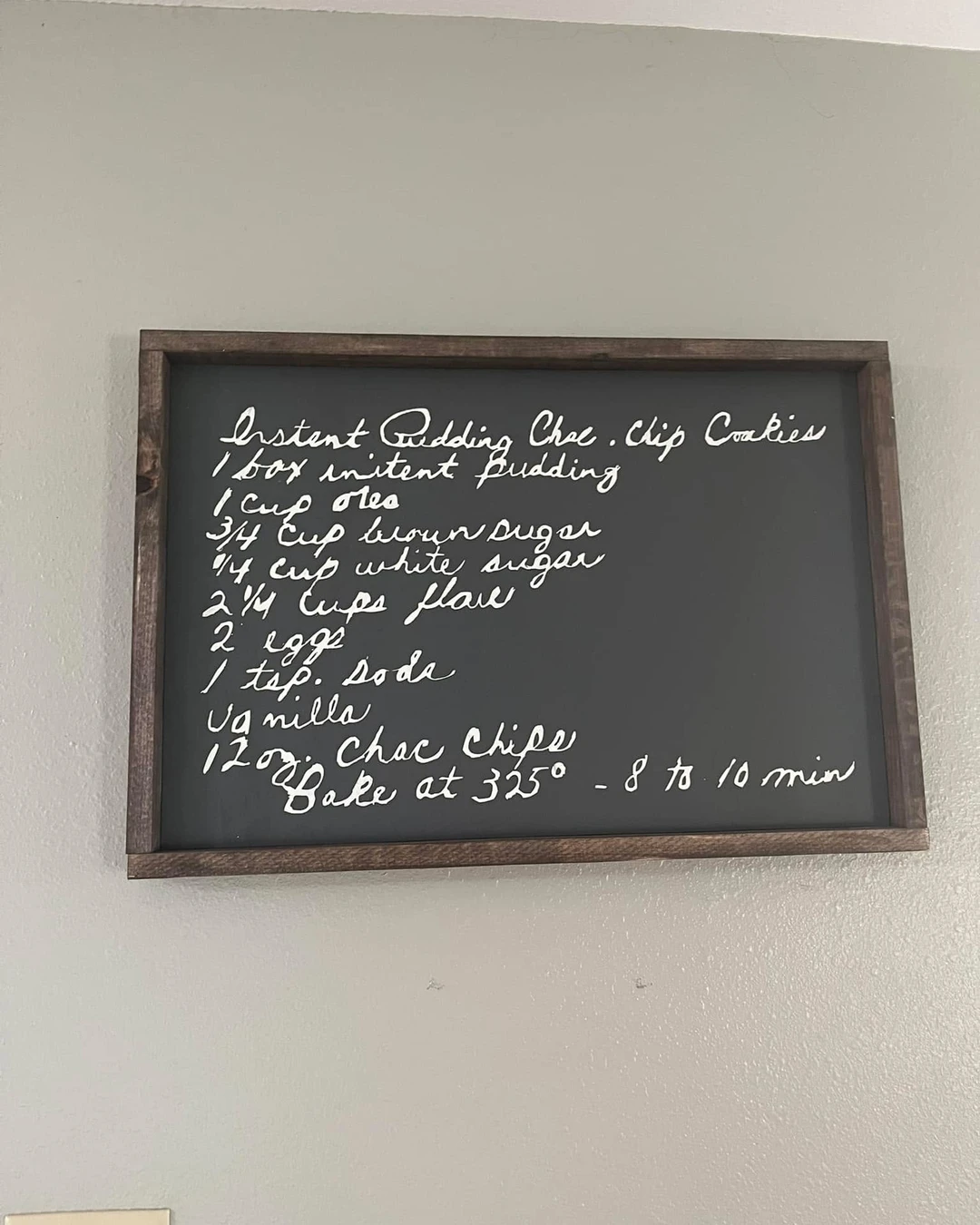
One recipe on a chalkboard is the most useful decoration in the kitchen. ‘Instant Pudding Choc. Chip Cookies’ — the full ingredient list, bake at 325 degrees for eight to ten minutes — written out in white cursive on a wooden-framed board.
Write the recipe you actually bake, not the prettiest one. A board with a real recipe on it gets read, smudged, wiped and rewritten — which is exactly what a kitchen board is for.
Keep it at eye level near the counter, where the baker can read it with floury hands. And write the bake time big — it is the one line nobody wants to guess at.
The practical point: Write the recipe you actually bake, and write the bake time big — it is the one line nobody wants to guess at.
One Board, Every Family Tradition
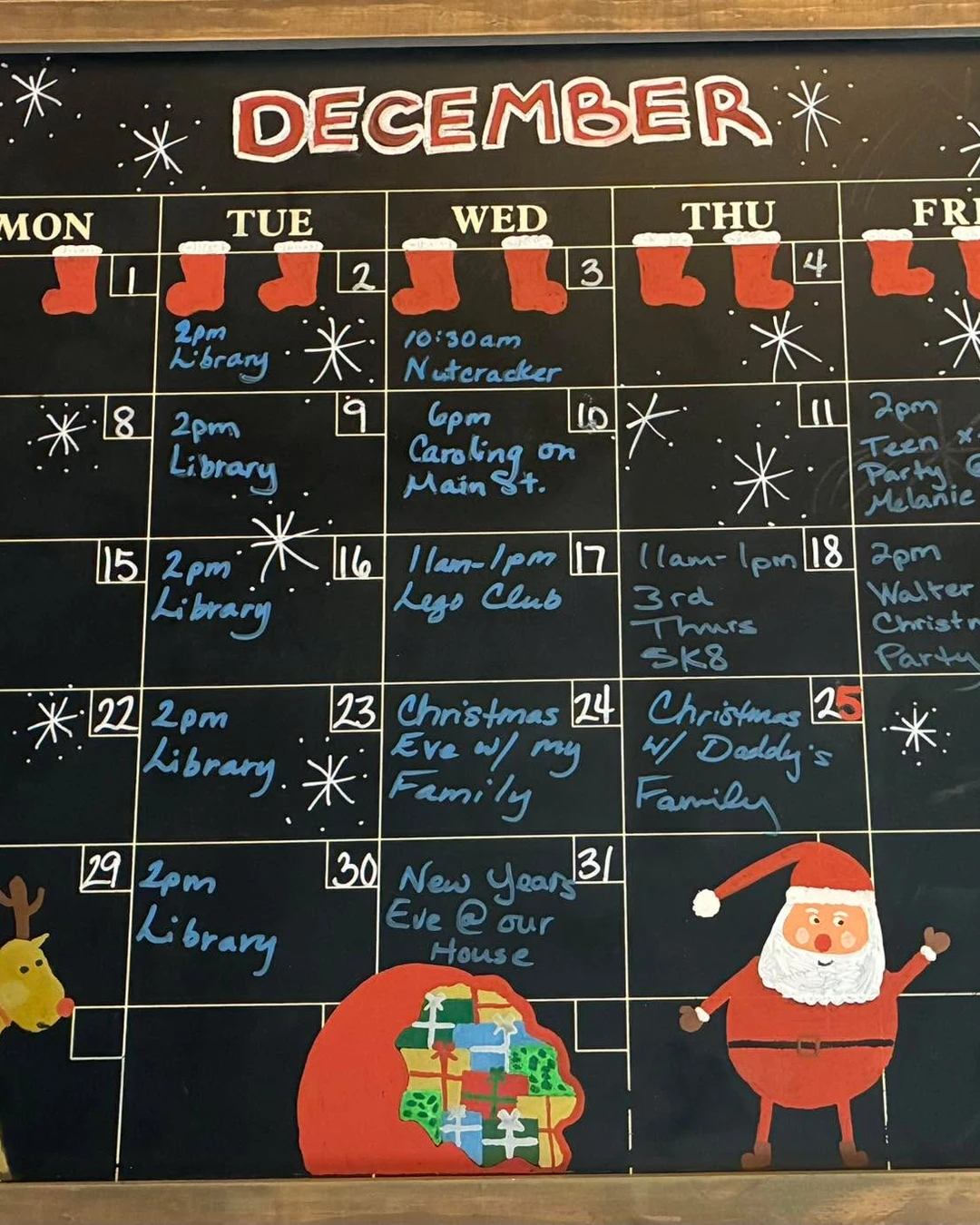
One December calendar, filled in by hand with the family’s month — the homeschool Christmas party, the neighbourhood potluck, baking cookies with grandparents, the Nutcracker, caroling, Christmas Eve with family.
Fill it in together, in blue chalk, and let everyone add their own plans. One cell mentions a teen party at a friend’s house — the kind of small, real detail that makes a family board feel like a family, not a display.
Wipe it clean on New Year’s Day and start again next December. A board that gets rewritten every year becomes a tradition itself — the first thing the family does when December arrives.
The practical point: Fill it in together, in blue chalk, and let everyone add their own plans — a board the whole family writes on becomes a tradition itself.
Holly and Berries, Right in the Corners
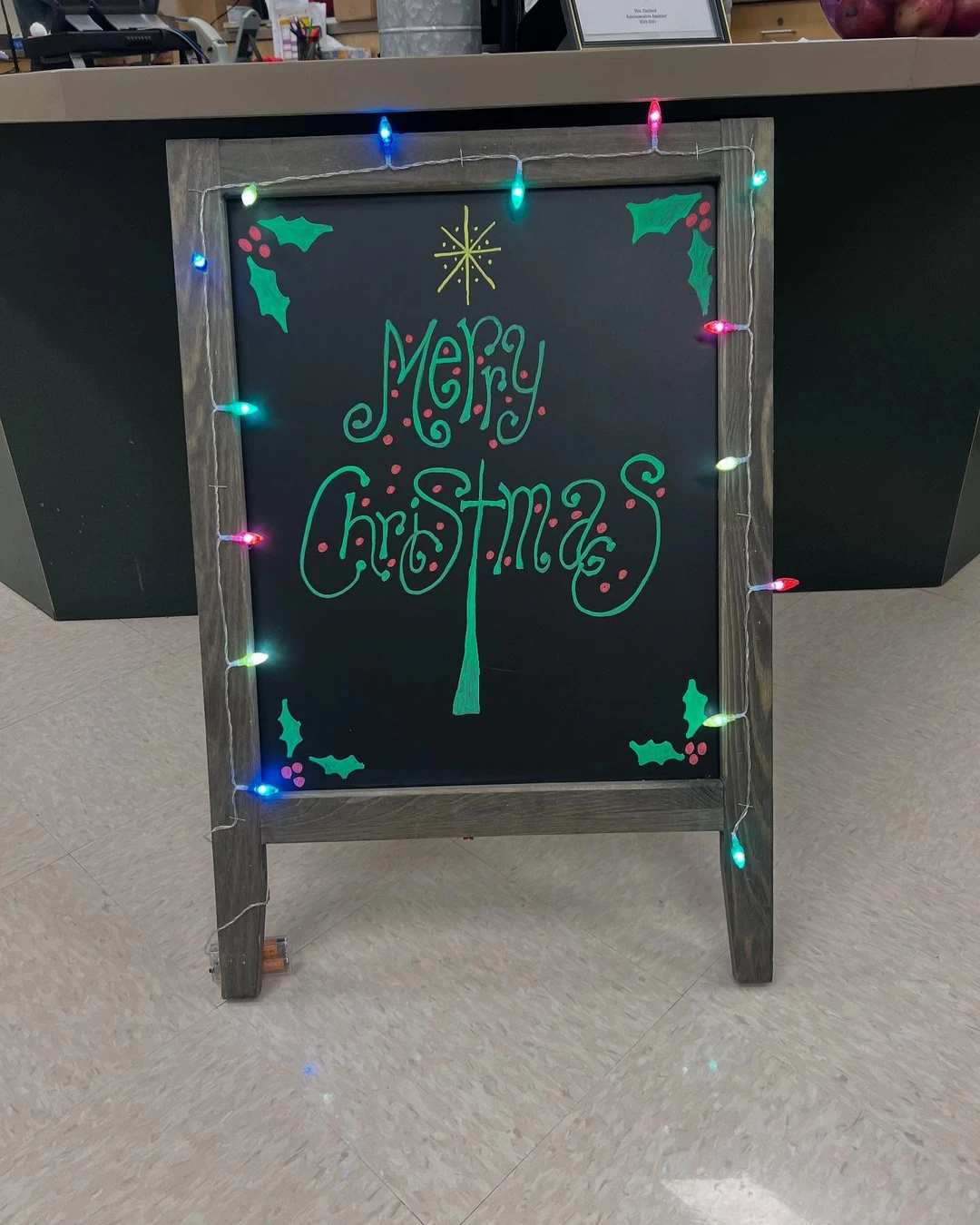
Holly in the corners is the oldest trick in the chalkboard book — green leaves, red berries, tucked into each corner of the board, framing whatever sits in the middle. This one holds a simple ‘Merry Christmas’ in green chalk, with multicoloured string lights around the frame.
Draw the holly first, in the corners, before you write anything — the corners are the frame, and the words sit inside them. Leaves are just pointed ovals; berries are red dots in threes.
It stands in a shop-style space, tiled floor and a counter behind it, but the idea belongs anywhere — a hallway, a kitchen, a front room. Corners first, words second, and the board looks finished in ten minutes.
The practical point: Draw the holly first, in the corners, before you write anything — the corners are the frame, and the words sit inside them.
Greet Guests at the Door in Chalk
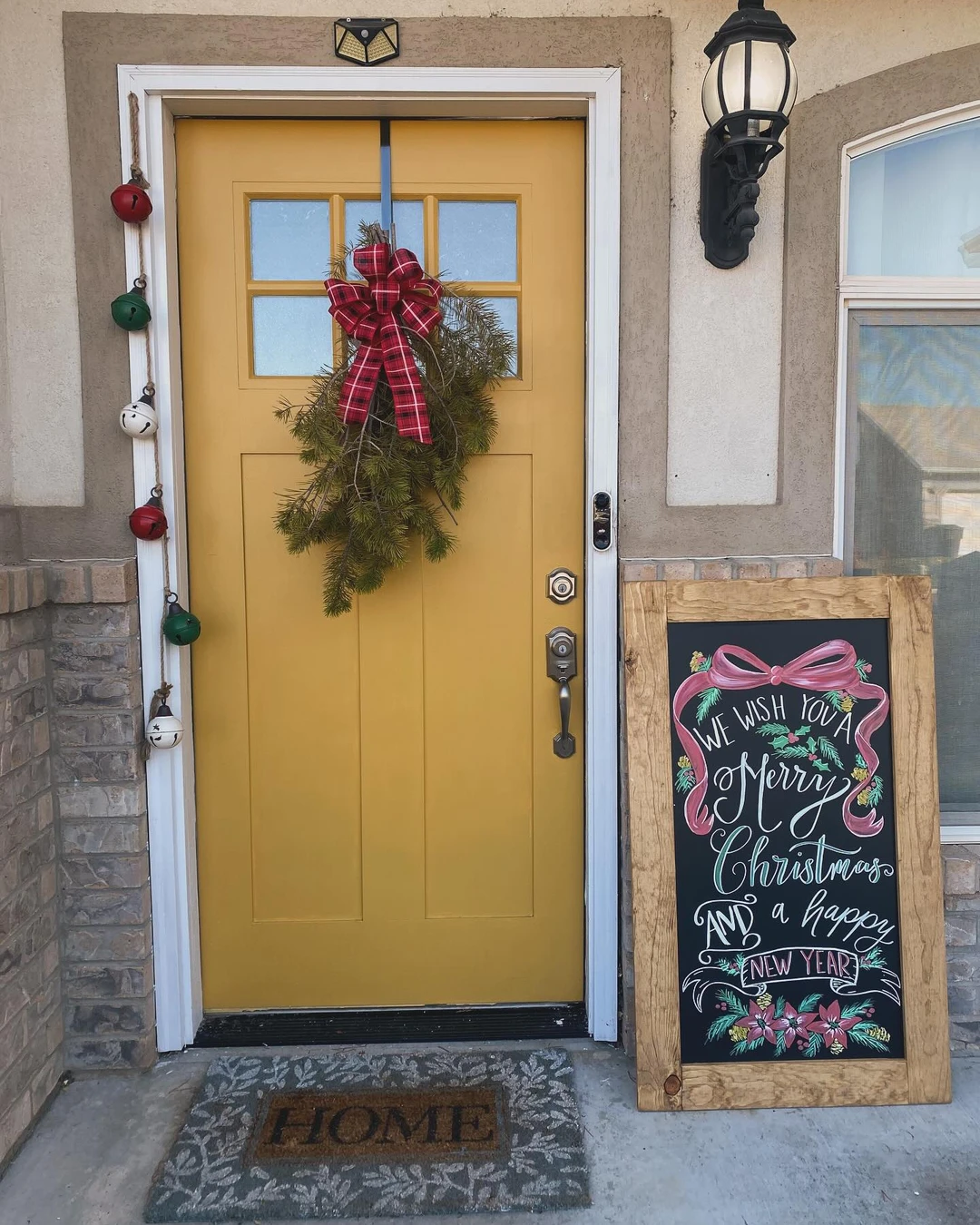
One chalkboard leaning by the front door is the first thing guests see and the last thing they forget. ‘We wish you a Merry Christmas and a happy New Year’, with holly, poinsettias and a pink ribbon, beside a mustard-yellow door with an evergreen swag and a ‘HOME’ doormat.
Lean it, do not hang it — a board on the porch floor, slightly tilted, reads as a welcome rather than a sign. Keep the lettering big enough to read from the path, and the drawing simple enough to survive a little weather.
For the room inside the door, 15 Snowman Door Decorating Ideas carries the same welcome further in. And if the door itself needs more, the entryway beyond it is where the greeting continues.
The practical point: Lean it, do not hang it — a board on the porch floor, slightly tilted, reads as a welcome rather than a sign.
Your Chalkboard, Your Christmas
Your chalkboard does not need to be perfect — it needs to be yours. A little smudged at the edges, a line or two crossed out and rewritten, a doodle in the corner that was never planned: that is what makes it feel old-fashioned, because that is how things were actually made.
Start with one board and one piece of chalk, and let December fill it up. For the room the board hangs in, 16 Christmas Entryway Decorating Ideas with a Warm Welcome shows how the welcome continues past the door.