Most nurseries play it safe with white walls and beige everything — but colour is exactly what your baby’s developing brain craves. Studies show infants begin responding to high-contrast colours and bright hues from just a few months old, and the visual richness of their environment plays a real role in early cognitive stimulation. The good news? You don’t have to choose between a beautiful nursery and a safe one. These colourful baby room ideas prove you can have both — bold palettes, playful themes, and a space that’s 100% baby-friendly from floor to ceiling.
Whether you’re starting from scratch or refreshing an existing nursery, this list covers the most inspiring, trend-forward, and practical ideas to bring colour into your baby’s space with confidence.
1. Go Bold with a Jungle Green Feature Wall
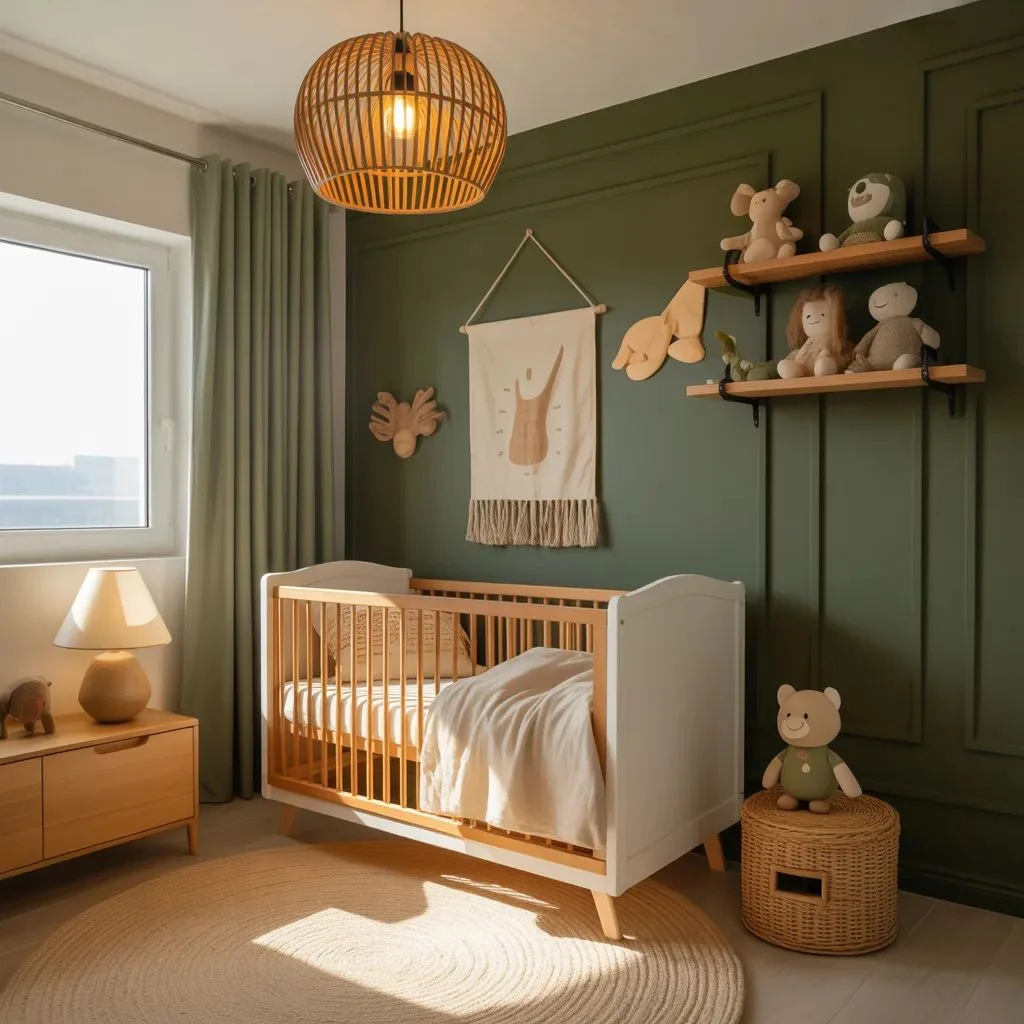
Jungle green is one of the biggest nursery colour trends of 2026, and it’s easy to see why. It brings the outdoors in, pairs beautifully with natural wood furniture, and creates a sense of calm without feeling cold. A single olive or forest green feature wall behind the crib is all you need — balance it with white on the remaining walls and warm neutral textiles to keep the space from feeling heavy.
Why it works for babies: Green sits in the mid-spectrum of colours, making it easier for developing eyes to process. It’s stimulating without being harsh.
Style it with: Plush jungle animals, rattan pendant lighting, linen bedding in cream or terracotta, and woven baskets for storage.
2. Embrace the Rainbow — Softly
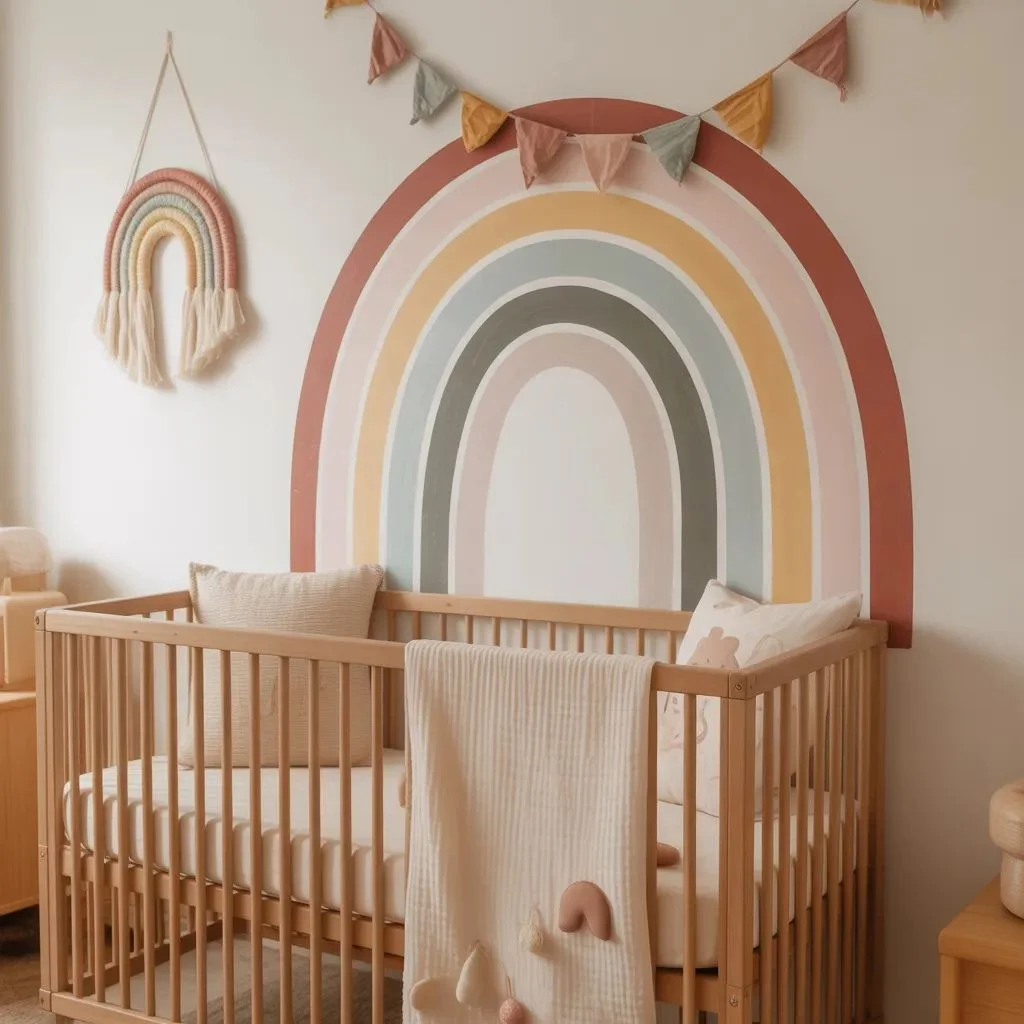
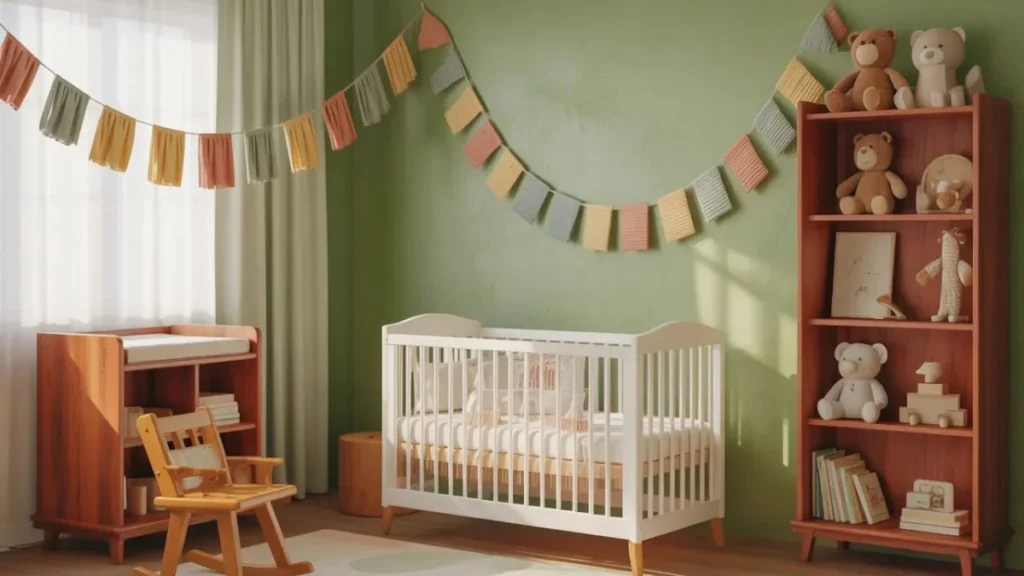
A rainbow nursery doesn’t mean painting the walls six different colours. Soft, muted rainbow palettes — think dusty rose, sage, butter yellow, and sky blue — bring joyful colour into the room without visual chaos. Incorporate the rainbow through a wall mural, textile bunting, a macrame rainbow hanging, or a gradient accent wall.
This approach is naturally gender-neutral and grows with your child far beyond the newborn years. It’s also one of the most Pinterest-worthy themes right now for good reason — it’s cheerful, soft, and endlessly adaptable.
Pro tip: Stick to a muted, earthy rainbow palette rather than primary brights. It photographs beautifully and feels more intentional.
3. Try a Colourful Mural Wall
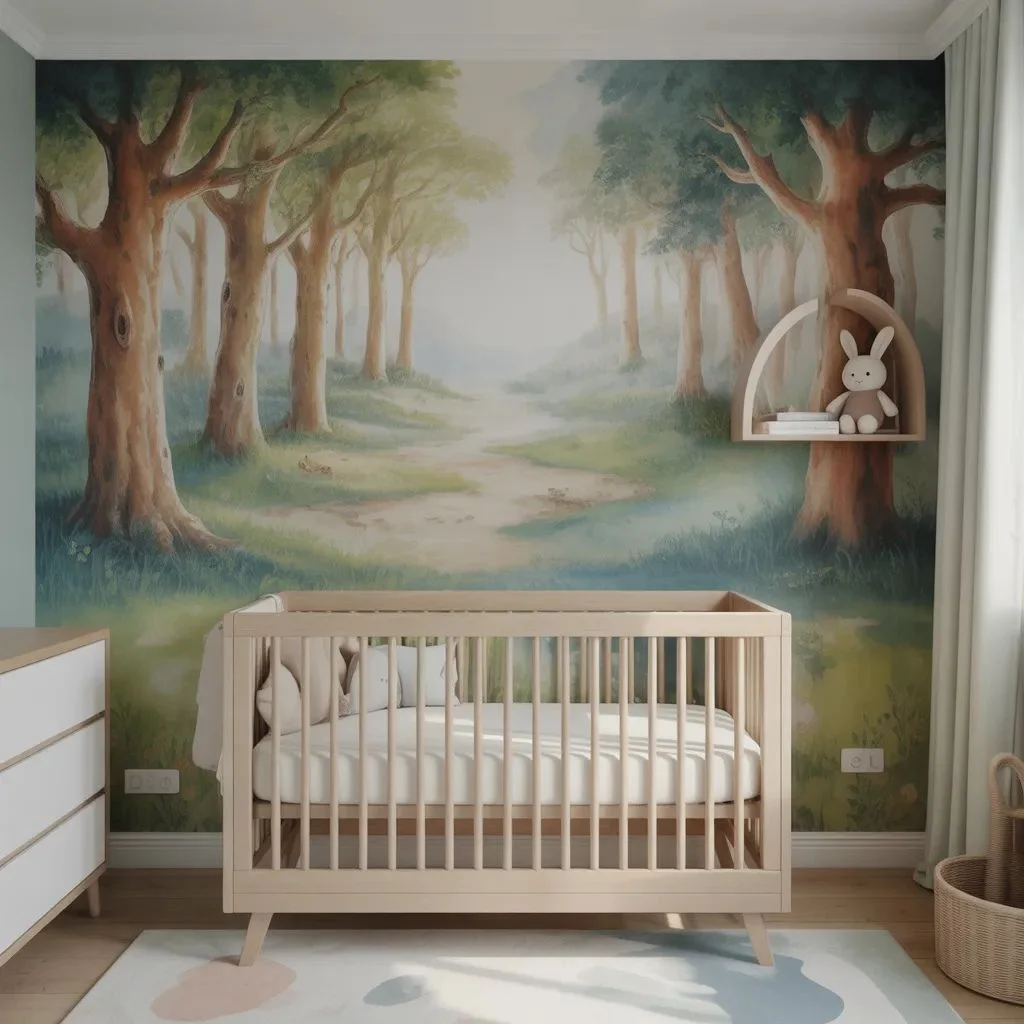
Wall murals have become one of the most transformative tools in nursery design. A colourful illustrated mural — whether it’s a storybook forest, a hot air balloon sky, or an underwater scene — turns one wall into a full sensory experience for your baby.
Babies begin developing colour vision from around four months, so a detailed, colourful mural gives them progressively more to look at as they grow. Choose a mural that tells a story — it becomes a conversation starter and a language development tool as your baby starts pointing and recognising images.
Best mural themes for 2026: Treehouse adventures, botanical gardens, cloud landscapes with birds, and classic storybook illustrations.
4. Mix Primary Colours with Wooden Accents
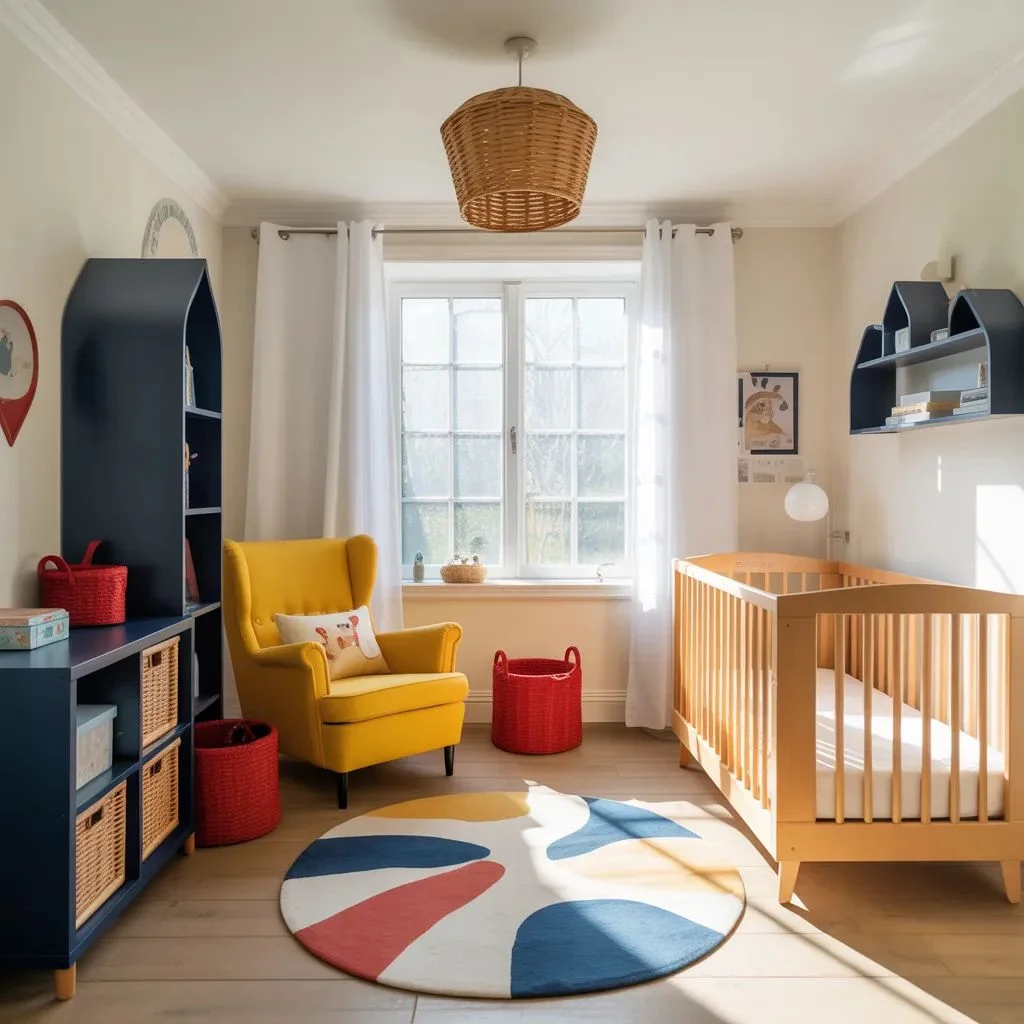
Bold primary colours — red, blue, and yellow — sound intense, but when grounded with warm natural wood tones, they create a nursery that feels energetic and grounded at the same time. Think primary-coloured cube shelves, a mustard yellow accent chair, a navy crib, or a red knitted pouf.
The key is to use primaries as accents, not wall colours. Let wood, white, and natural linen do the heavy lifting, then layer in the colour through furniture, soft furnishings, and decor objects.
This works especially well for: Gender-neutral spaces, shared sibling rooms, or parents who want a room that feels fun and classic rather than trendy.
5. Layer Muted Pastels for a Sophisticated Pop
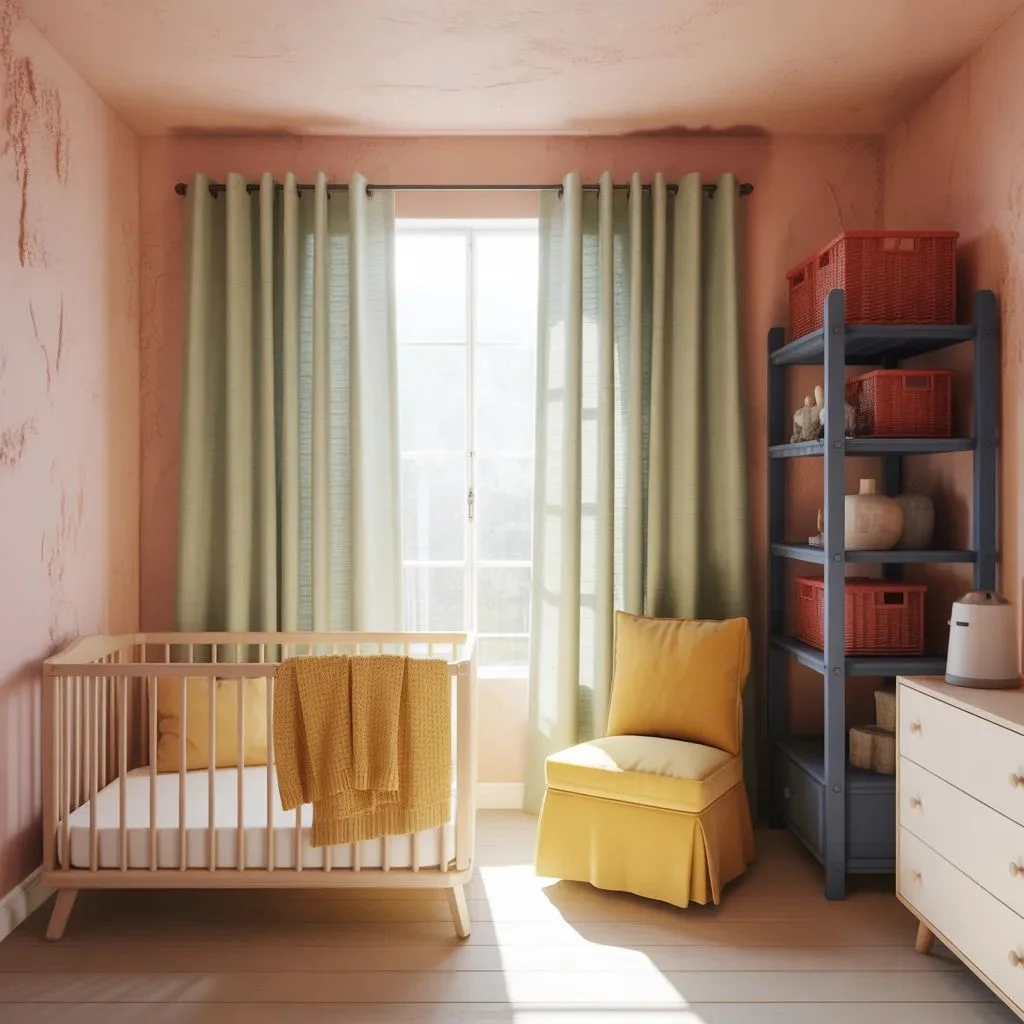
Pastels are having a serious glow-up. Muted versions of soft pink, lilac, sage, and buttery yellow are replacing washed-out nursery whites across 2026 nursery design — and they bring a level of sophistication that bright pastels never quite managed.
Layer two or three muted pastels together — a soft pink wall paired with sage green curtains and a butter yellow knitted throw, for example — and you get a space that feels warm, artful, and endlessly cosy. Minimalist furniture with clean lines complements these tones perfectly.
What makes this palette baby-safe: Muted, low-saturation hues are visually calming, which supports better sleep while still providing enough colour contrast for sensory stimulation.
6. Use Colour in Textiles, Not Just Paint
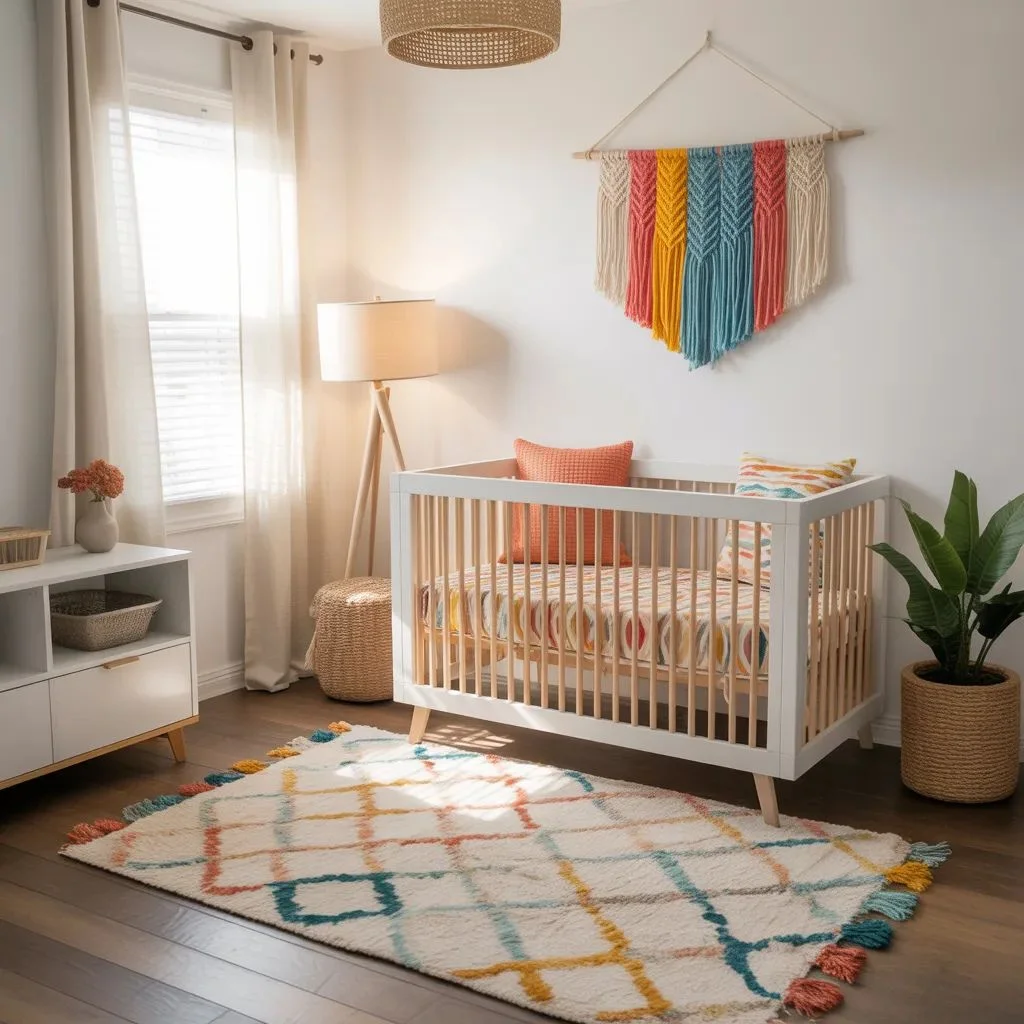
Not ready to commit to a bold wall colour? Colourful textiles are the most flexible and low-commitment way to bring vibrancy into a nursery. A multi-coloured hand-knotted rug, bold geometric crib bedding, rainbow curtains, or an embroidered quilt can completely transform the energy of a room without touching a single wall.
This approach is also ideal for renters, or for parents who want the option to evolve the room’s look without repainting. When your baby grows into a toddler, simply swap out the textiles for a new theme.
- Best textile colours for nurseries: Warm terracotta, dusty teal, golden yellow, sage green, and warm coral
- What to look for: OEKO-TEX certified fabrics — free from harmful dyes and safe for sensitive baby skin
- Easy wins: Colourful mobile above the crib, patterned play mat, and a bright nursing pillow cover
7. Go Maximalist with a Wall-to-Wall Mural
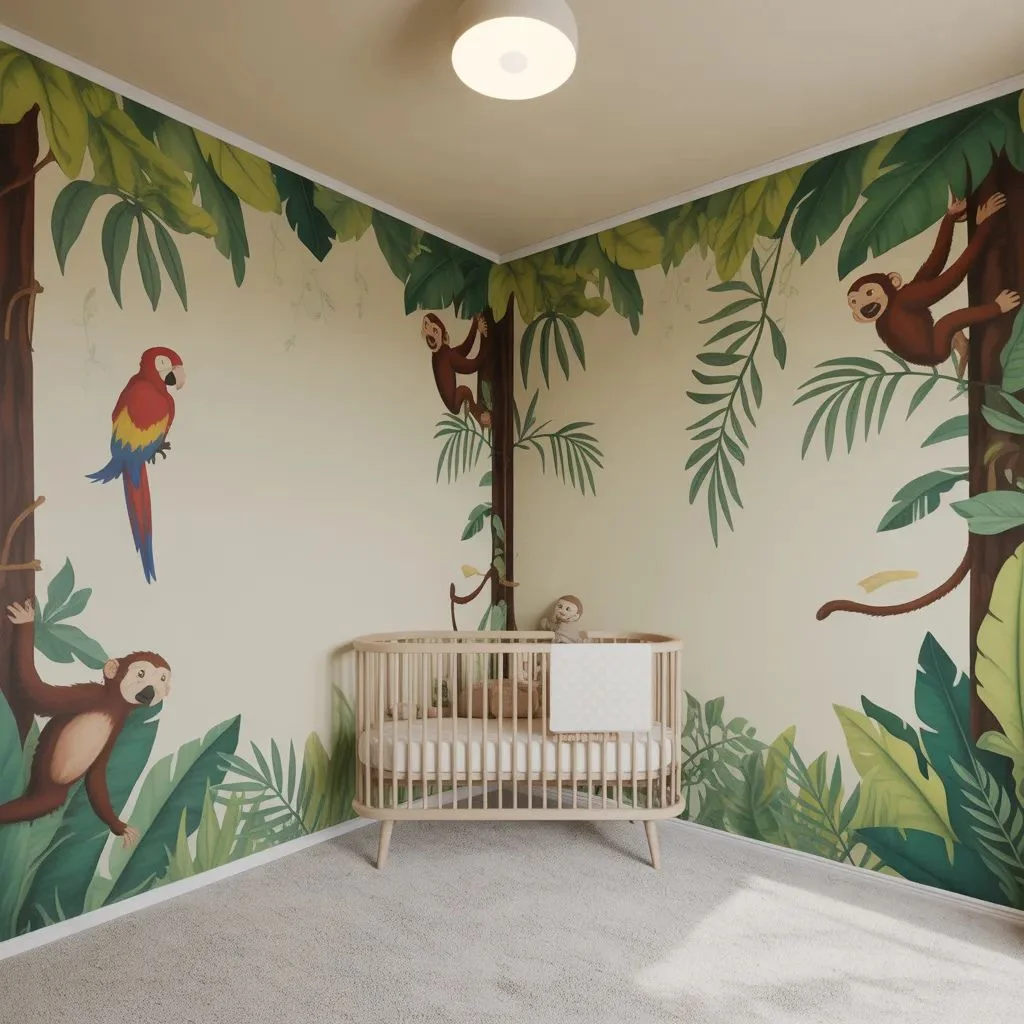
One of the boldest colourful baby room ideas gaining traction in 2026 is the full-room immersive mural — wrapping all four walls in a single cohesive illustration for a completely transportive nursery experience. Think: a tropical jungle that wraps every corner, an underwater ocean scene, or a storybook landscape that makes the room feel like stepping inside a picture book.
Good artificial lighting is essential here to prevent the space from feeling dark or enclosed. Choose lighter, more luminous colour palettes — soft aquas, warm yellows, leafy greens — and pair with a simple white crib and minimal furniture so the mural remains the star.
Best for: Parents who want a statement nursery that doubles as an immersive play environment as the child grows.
8. Play with Colour-Block Walls
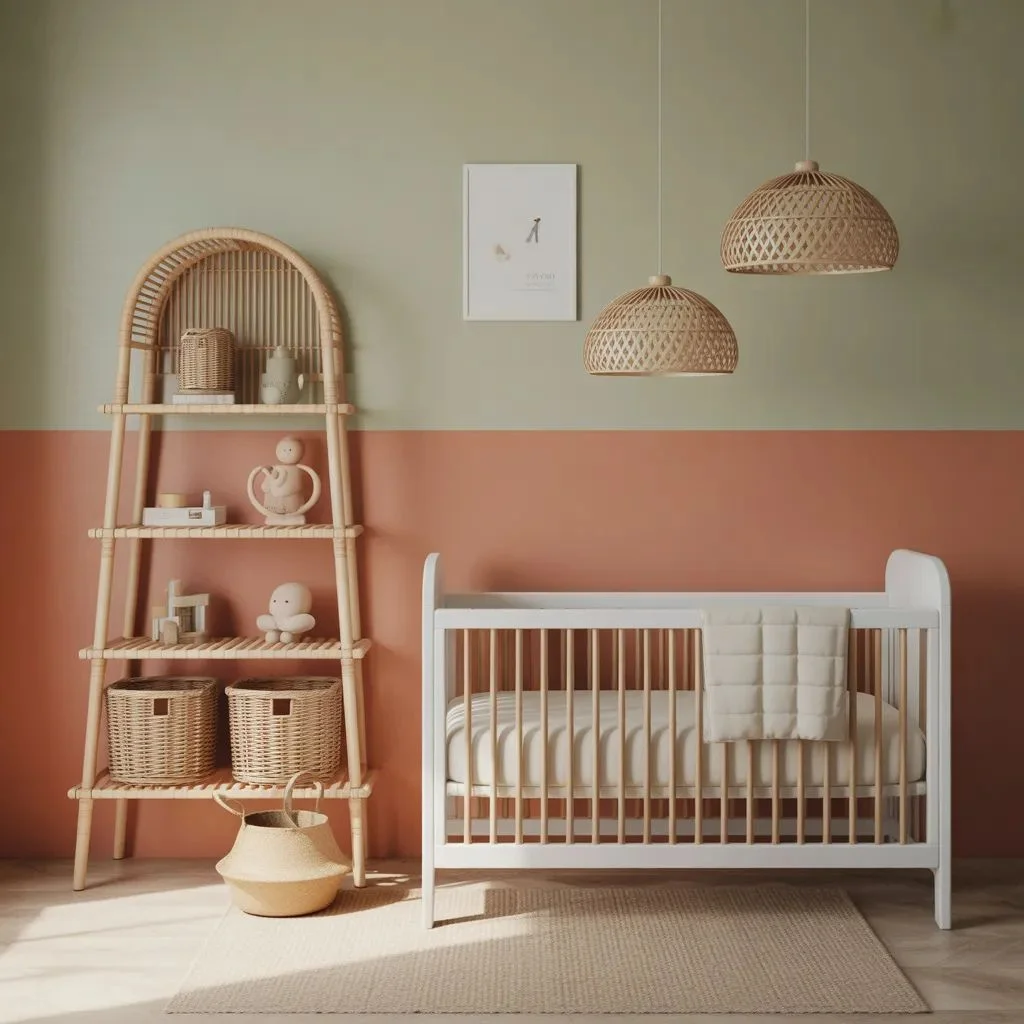
Colour-blocking is a simple, graphic way to add colour without a full paint job or wallpaper. Paint two contrasting sections of a wall in bold, complementary tones — like a deep teal upper half and a warm cream lower half, or a burnt orange chair rail panel against a dusty blue wall — to create a nursery that feels intentionally designed and visually interesting.
Colour-blocking also works brilliantly in shared rooms, where different colour zones visually separate each child’s area. It’s a clever design trick borrowed from adult interiors that translates beautifully into nursery design.
Safest approach: Use low-VOC or zero-VOC paint — especially important in enclosed nursery spaces where air quality directly affects your baby’s health.
9. Ocean Blues for a Calm, Stimulating Space
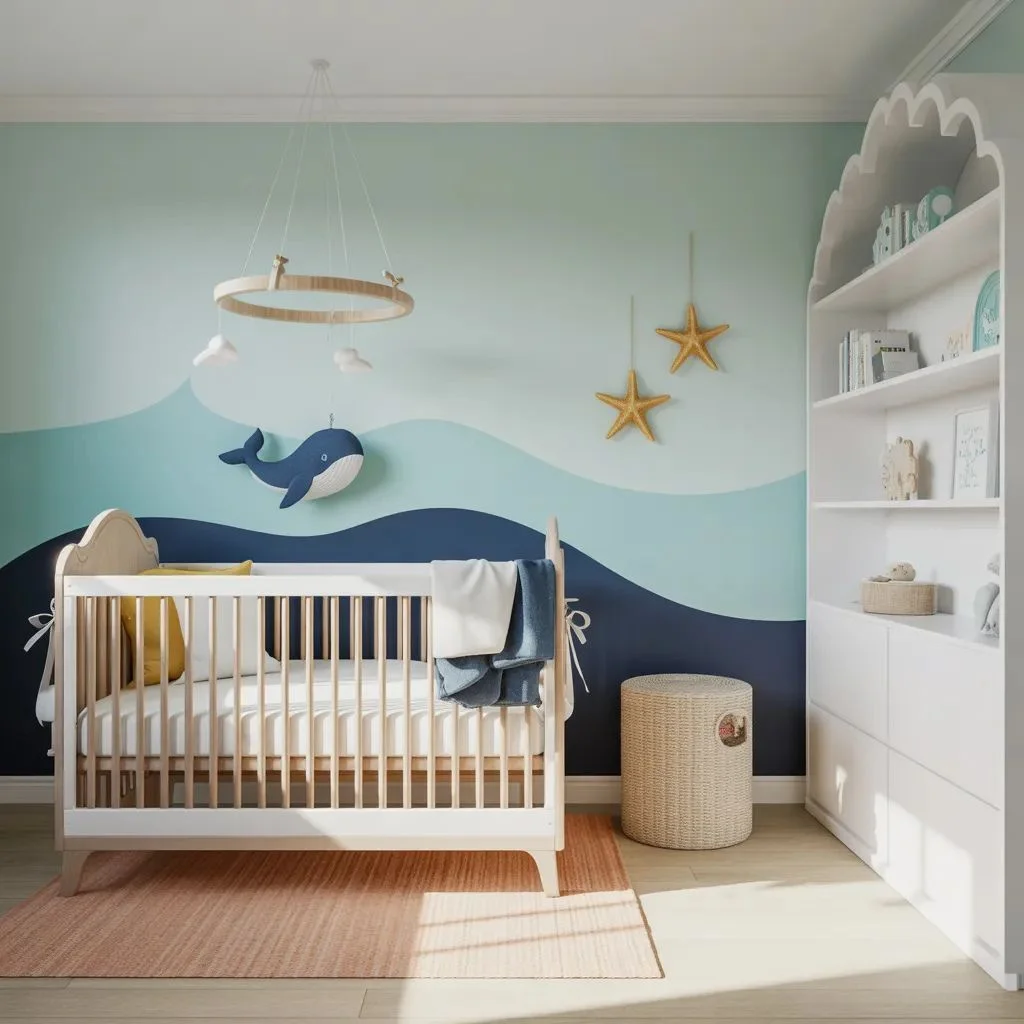
Blue is one of the most scientifically validated calming colours, making it an ideal choice for a space where sleep is the priority. But an ocean-themed nursery lets you bring in blue with full creative freedom — deep navy, sky blue, aqua, and teal layered together with oceanic decor elements like whale mobiles, scalloped textures, and fish-print textiles.
Underwater wall murals work especially well here, and because babies are naturally fascinated by the sea and its creatures, an oceanic nursery provides visual storytelling that genuinely supports early learning.
Design note: Balance deep blues with white or sandy beige to keep the room light and airy. Avoid covering all surfaces in dark tones.
10. Colourful Storage as Decor
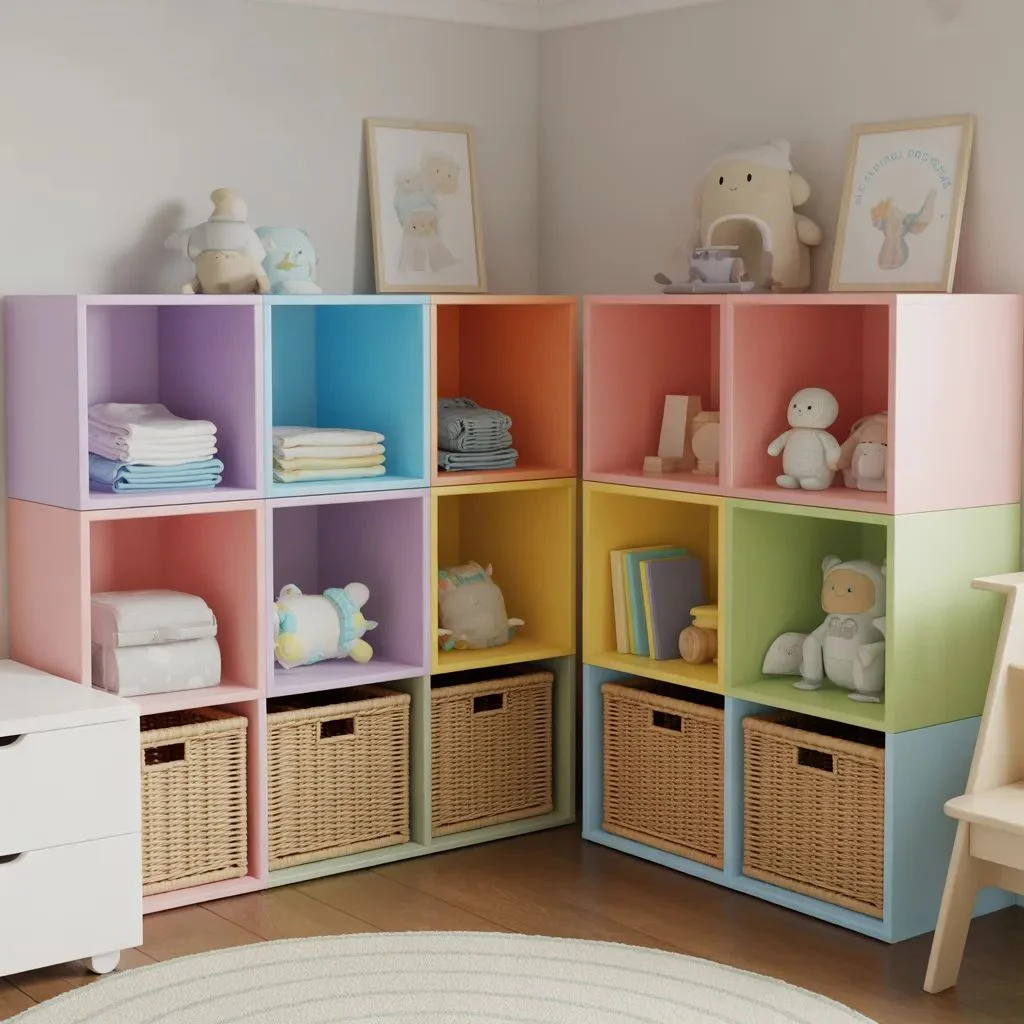
Don’t overlook storage as a colour opportunity. Colourful baskets, shelving units, and cube organisers do the double duty of keeping the room tidy and bringing personality to the space. Pastel pink baskets, mustard yellow storage cubes, teal wicker bins — these small additions of colour add up to a nursery that feels curated and cohesive without requiring a single drop of paint.
Wall-mounted floating shelves in contrasting colours also add visual rhythm to a room, especially when styled with a mix of books, small plants, and soft toy displays.
Best picks for 2026: Rainbow-stacked wooden shelves, pastel cube storage units, hand-woven coloured baskets in natural fibres.
Baby Room Colour Safety: What to Know
Colour is the fun part — but safety should always come first. Here are the non-negotiables when designing a colourful nursery:
- Use zero-VOC or low-VOC paint. Standard paints release volatile organic compounds that linger in enclosed rooms. Always opt for nursery-safe, non-toxic formulas.
- Choose OEKO-TEX certified textiles. This certification ensures fabrics are free from harmful dyes and chemical treatments — essential for items that contact your baby’s skin.
- Avoid overly bright, high-saturation red. Intense red stimulates the nervous system and can disrupt sleep patterns in very young babies. Use it sparingly as an accent, not a dominant colour.
- Secure all wall art and shelving. Colourful decor items need to be firmly anchored — tip-over prevention and secure wall mounting are critical from the moment your baby starts pulling up to stand.
- Balance colour with calm. Every bold or bright element should have a calm counterpart — neutral bedding, a white crib, natural wood furniture — to ensure the room supports sleep as well as play.
Where Bold Meets Bedtime: Your Colourful Nursery Awaits
A colourful nursery isn’t just a visual choice — it’s a developmental one. Colourful baby room ideas done right strike the balance between visual richness that supports your baby’s growth and a calm, safe environment that supports their sleep. Whether you go all-in with a jungle mural, layer muted pastels, or simply swap in colourful storage baskets, there’s a version of this that works for every home, every budget, and every aesthetic.
The most important thing? Choose colours and elements you love too. You’ll be spending a lot of time in that room — it should feel as beautiful to you as it is stimulating for them.
Our Pick: Organic Modern Kitchen Ideas for a Home That Feels Calm, Grounded, and Beautiful.