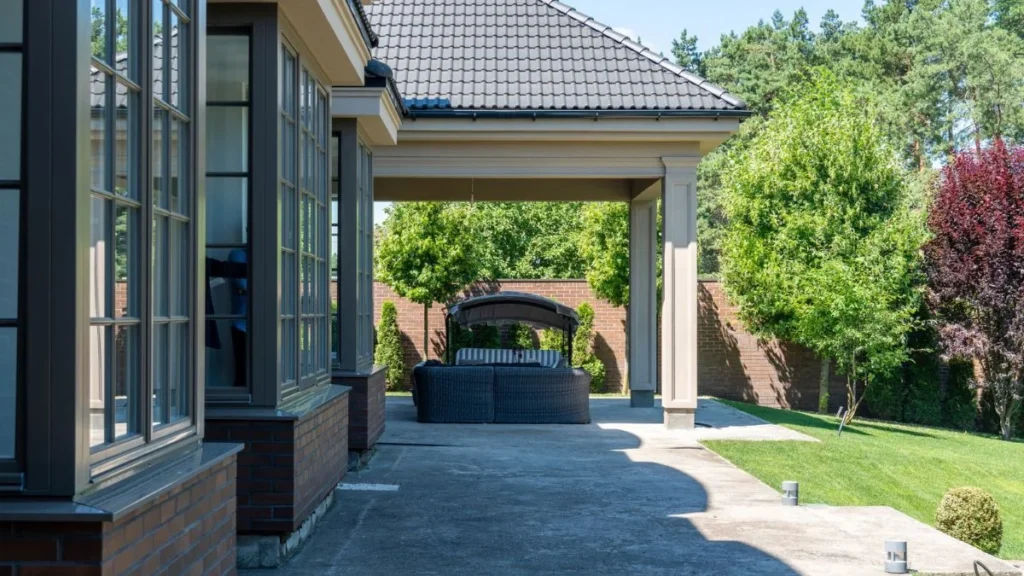
That plain grey concrete slab sitting outside your back door has more potential than it gets credit for. A concrete slab patio makeover is one of the easiest ways to turn an overlooked corner of your yard into a space you want to sit in every evening.
Most homeowners assume a concrete slab patio makeover means jackhammers and a fat contractor bill. It doesn’t. With paint, texture, furniture and a bit of planning, that same slab can look like it belongs to a completely different house.
This guide walks through ten practical ways to pull off a concrete slab patio makeover without tearing anything out, plus one mistake worth avoiding before you start.
The Fast Track To Better Patio
- Concrete overlays, stains, and outdoor paint can transform a slab without demolition.
- Furniture layout and zoning matter as much as the flooring itself.
- Vertical elements like pergolas and planters soften the hard edges of a slab.
- Small budget upgrades like lighting and rugs make the biggest visible difference fastest.
Add A Textured Concrete Overlay For An Instant Facelift
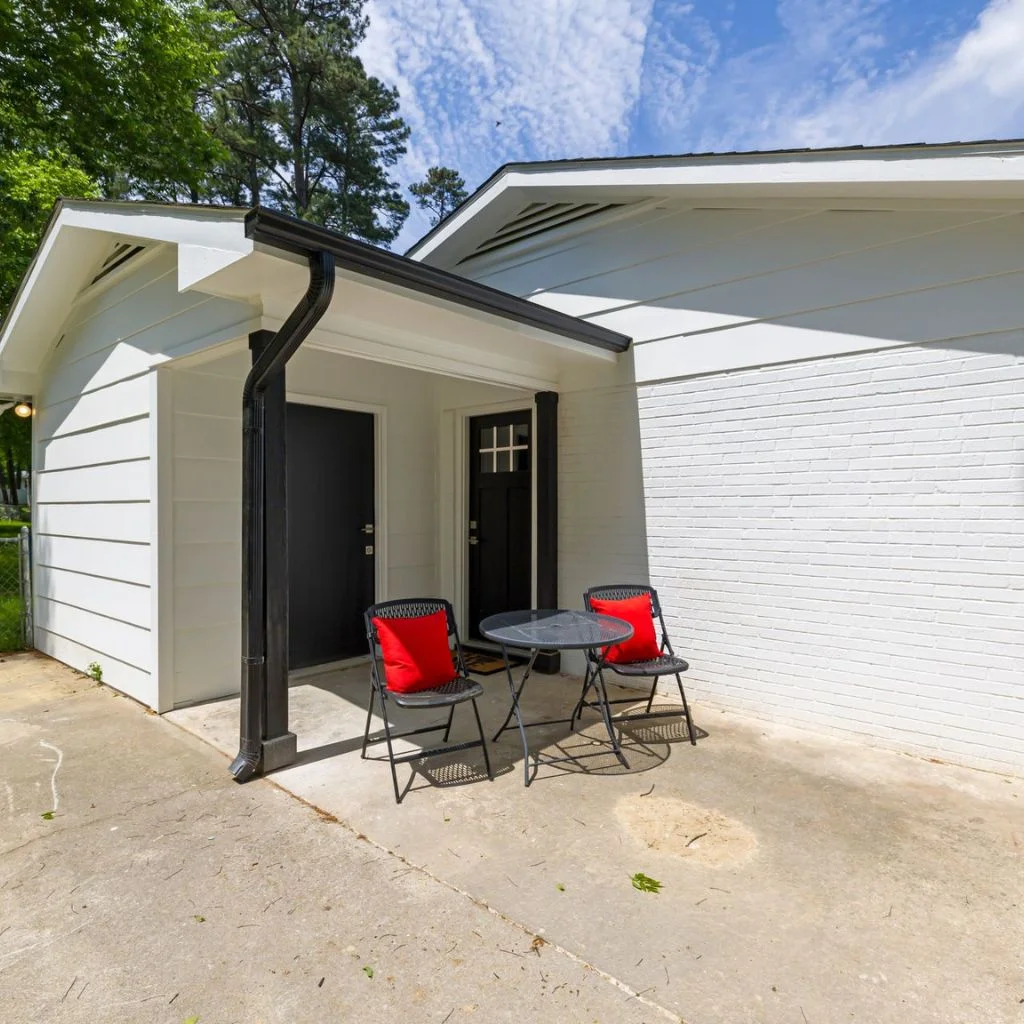
A concrete overlay is a thin layer of cement-based material applied straight over the existing slab. It comes in stamped, textured, or smooth finishes that mimic stone, wood, or tile.
This is the single biggest step in any concrete slab patio makeover because it changes the entire surface rather than disguising it. Cracks, stains, and discoloration disappear under a fresh, even layer.
Why this works: an overlay bonds directly to the old slab, so there’s no demolition, no hauling away debris, and no waiting weeks for new concrete to cure properly.
Paint The Slab With Outdoor Floor Paint In A Bold Pattern
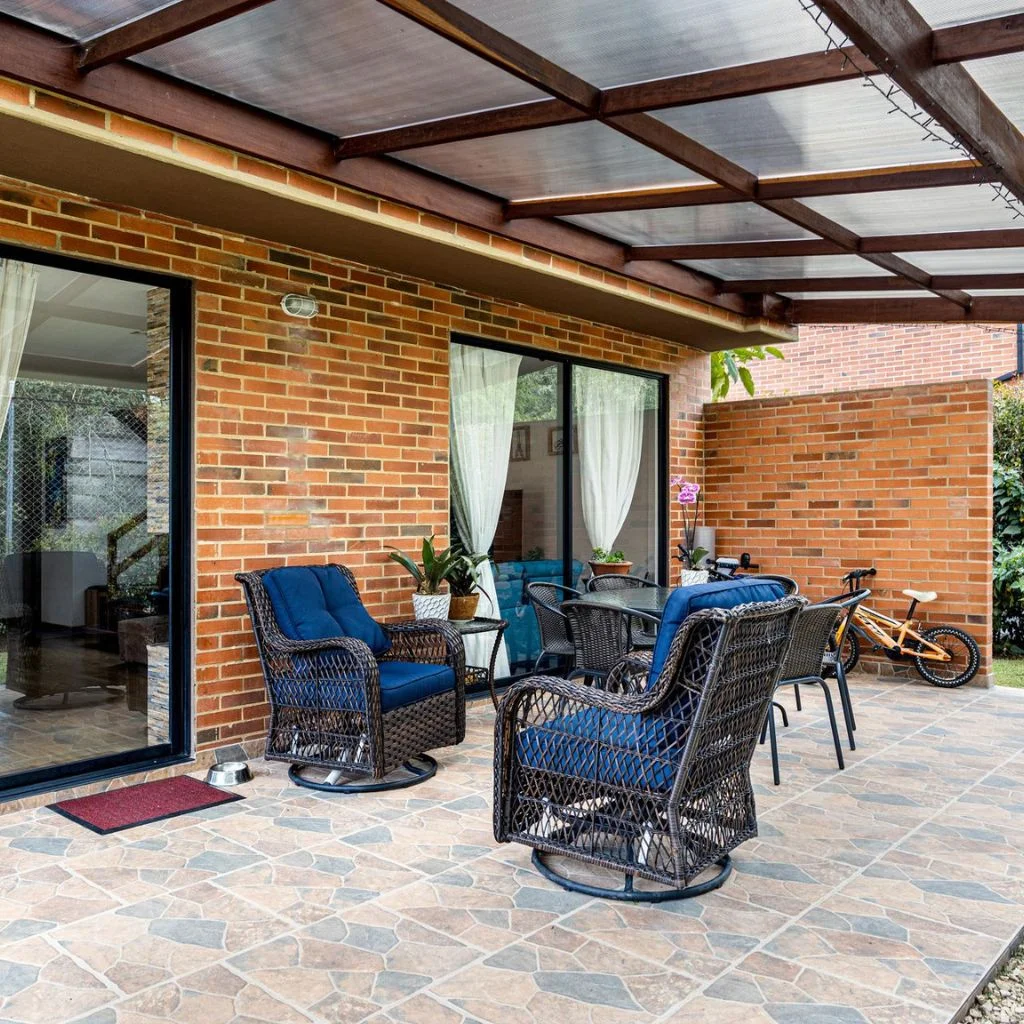
Outdoor concrete floor paint is a weekend project with a dramatic payoff. Stripes, checkerboard tiles, or a solid warm colour instantly lift a tired grey surface.
Clean and etch the concrete first so the paint grips instead of peeling within a season. A stencil kit makes geometric patterns simple even for a first-timer.
Why this works: colour breaks up the monotony of raw concrete and draws the eye outward, making a small patio feel more intentional and less like leftover construction space.
Lay Interlocking Deck Tiles Over The Existing Slab
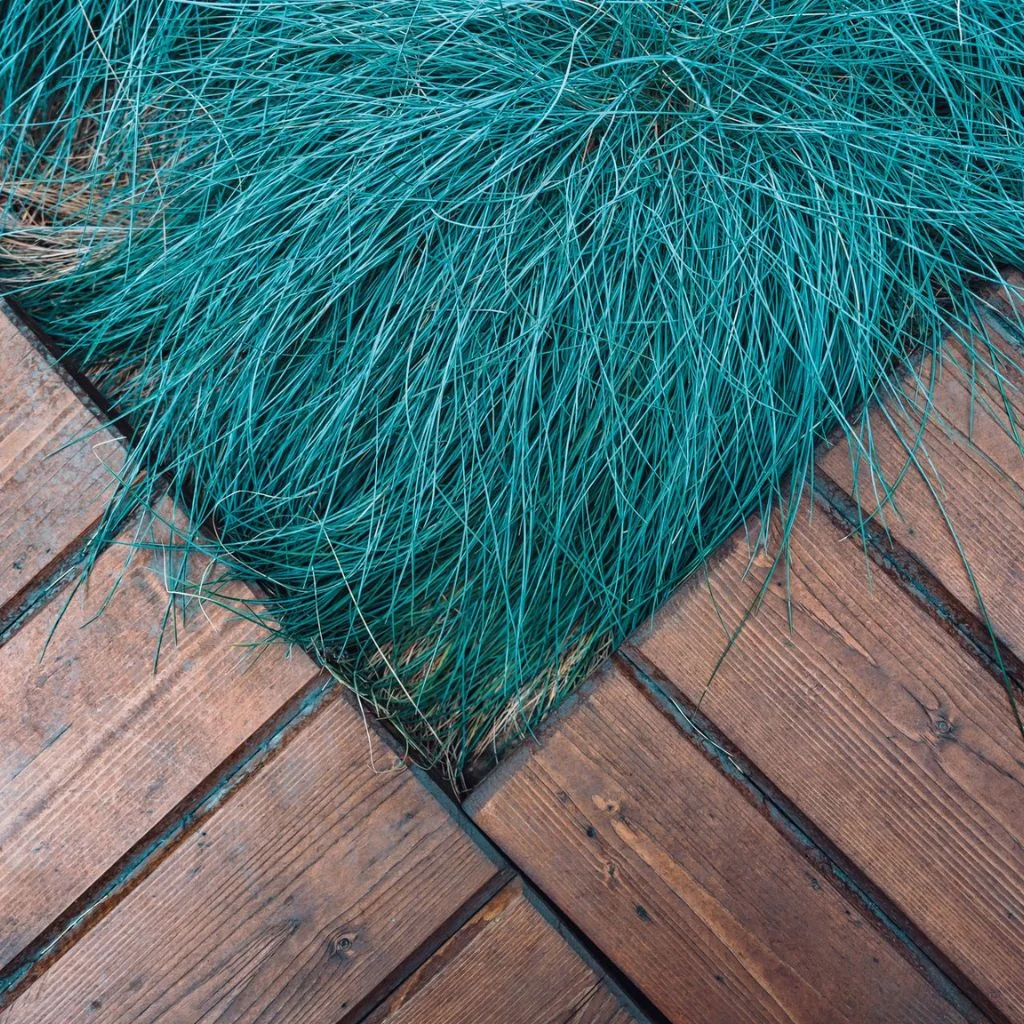
Interlocking wood or composite deck tiles click together like puzzle pieces directly on top of the slab. No adhesive, no tools, and they lift up easily if you ever move.
This option suits renters and anyone who wants a warmer, more textured underfoot feel without a permanent commitment to the surface below.
Why this works: it adds visual warmth and a raised, deck-like appearance in an afternoon, which is hard to match with any other budget option.
Stain The Concrete For A Rich Natural Stone Look
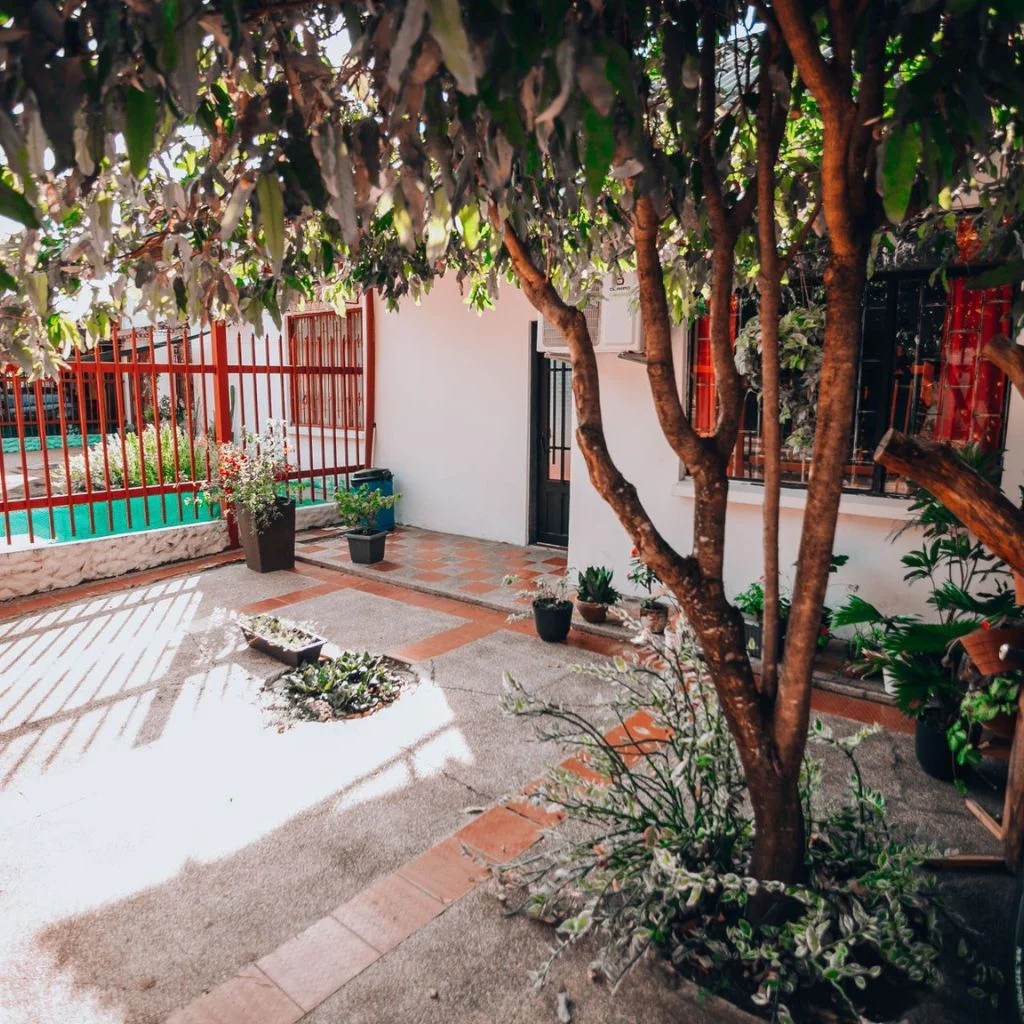
Acid or water-based concrete stains soak into the surface and create mottled, marble-like colour variation rather than a flat painted look.
Stains work especially well when the slab is in decent structural shape but the colour has gone patchy or dull over the years.
Why this works: because the stain penetrates rather than coats, it holds up longer under foot traffic and weather than surface paint typically does.
Frame The Patio With Raised Garden Beds And Greenery
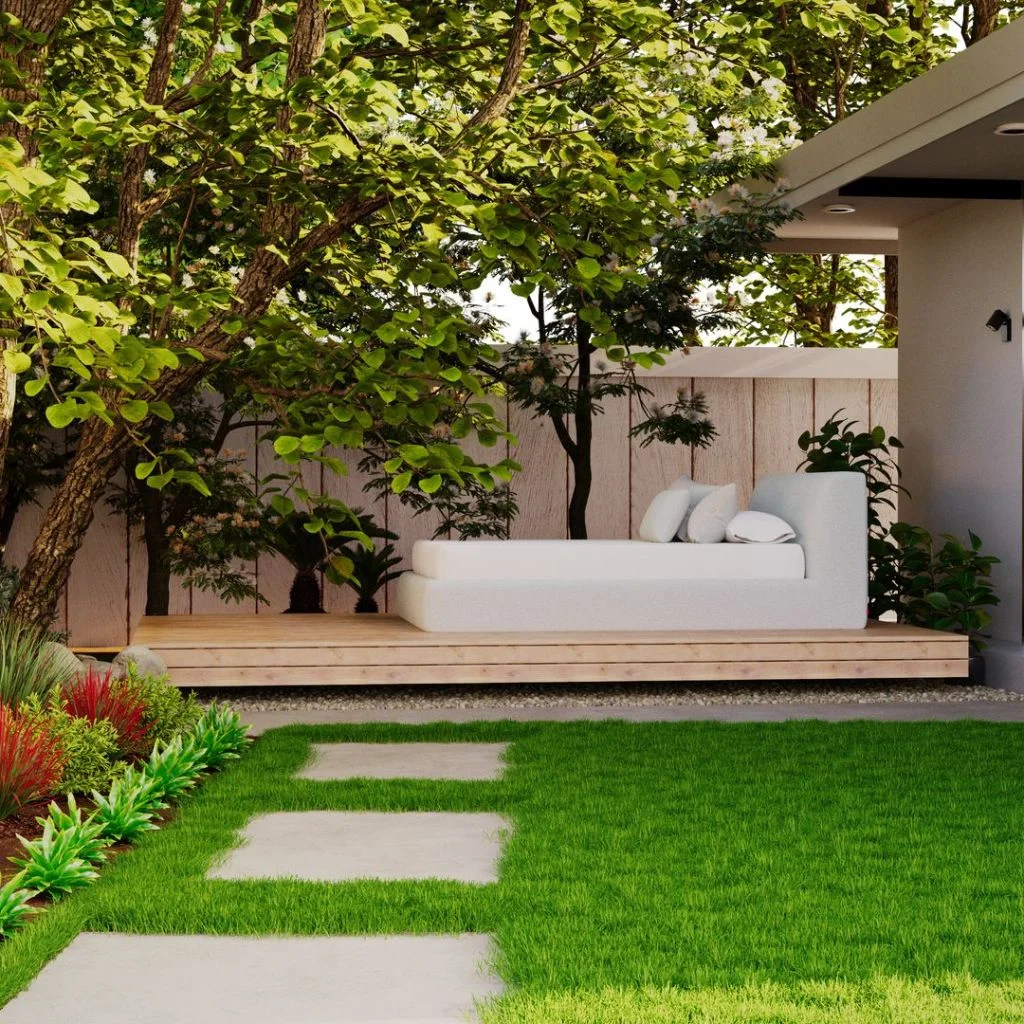
Concrete edges look harsh on their own. Raised beds, large planters, or a low garden border along the perimeter soften that hard line immediately.
Mix trailing plants that spill over the edges with taller upright greenery for layers instead of one flat row of pots.
Why this works: greenery creates a visual transition between the patio and the rest of the yard, so the slab reads as part of the garden rather than a separate concrete pad.
Build A Pergola Or Shade Structure Overhead
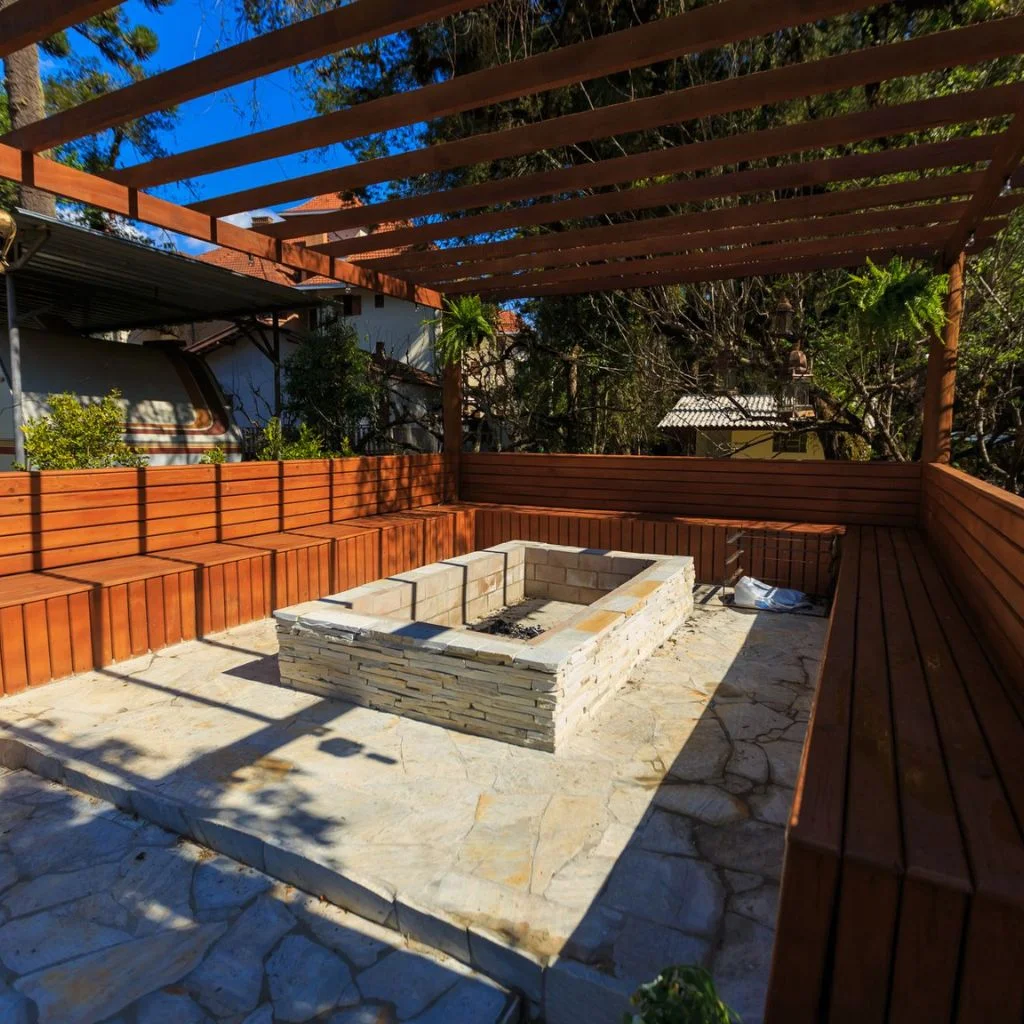
A pergola, shade sail, or simple frame with climbing vines gives the patio a ceiling, which changes how the whole space feels from ground level.
Even a basic freestanding frame with outdoor curtains creates a sense of an actual room rather than an open concrete pad.
Why this works: overhead structure adds architectural interest and shade, two things a flat slab can never provide on its own.
Layer In Outdoor Rugs And Weatherproof Furniture
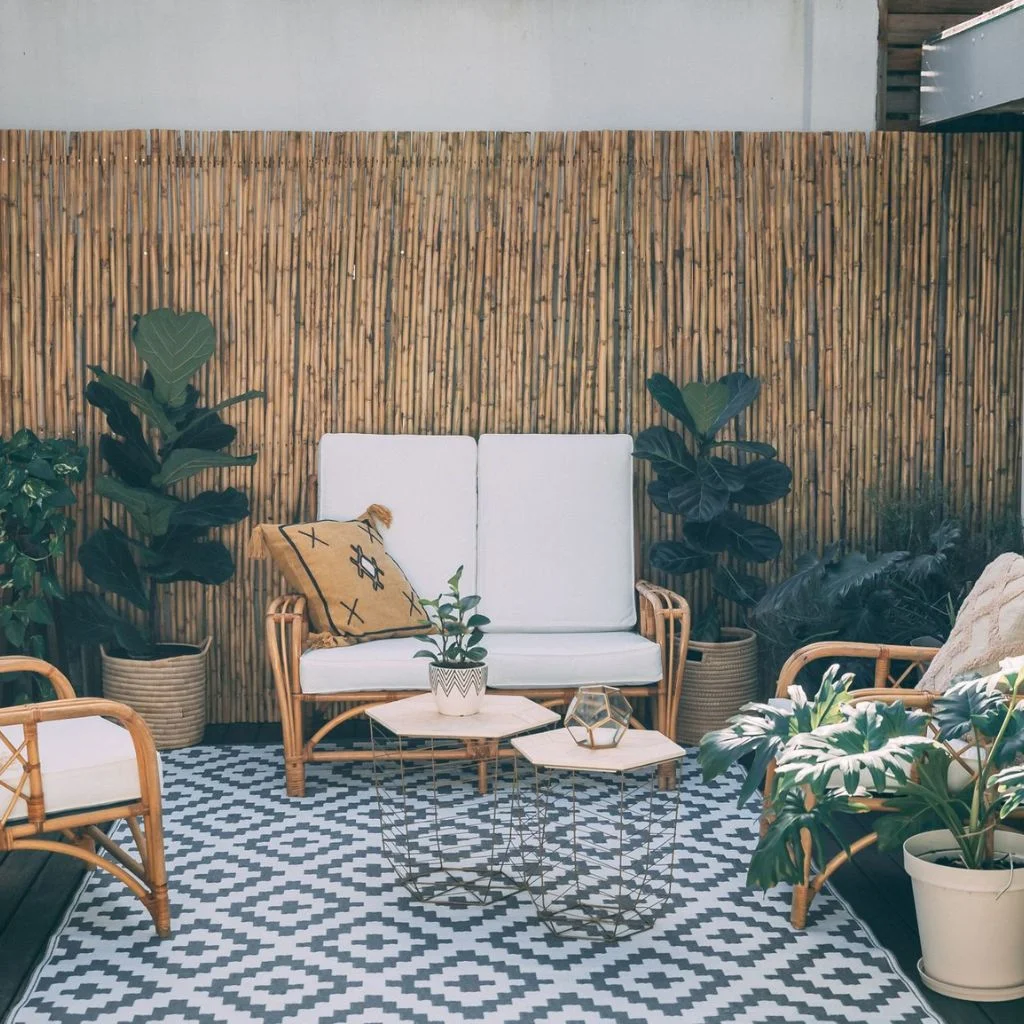
A large outdoor rug anchors a seating area and hides a surprising amount of concrete in one move. Pair it with weatherproof furniture in a cohesive colour palette.
I always tell readers to buy the rug first and build the furniture colours around it, not the other way round. It keeps the whole space feeling planned instead of pieced together.
Why this works: soft textiles contrast against hard concrete and immediately make the space feel like a living room rather than a driveway extension.
Add String Lights And Lanterns For Evening Ambience
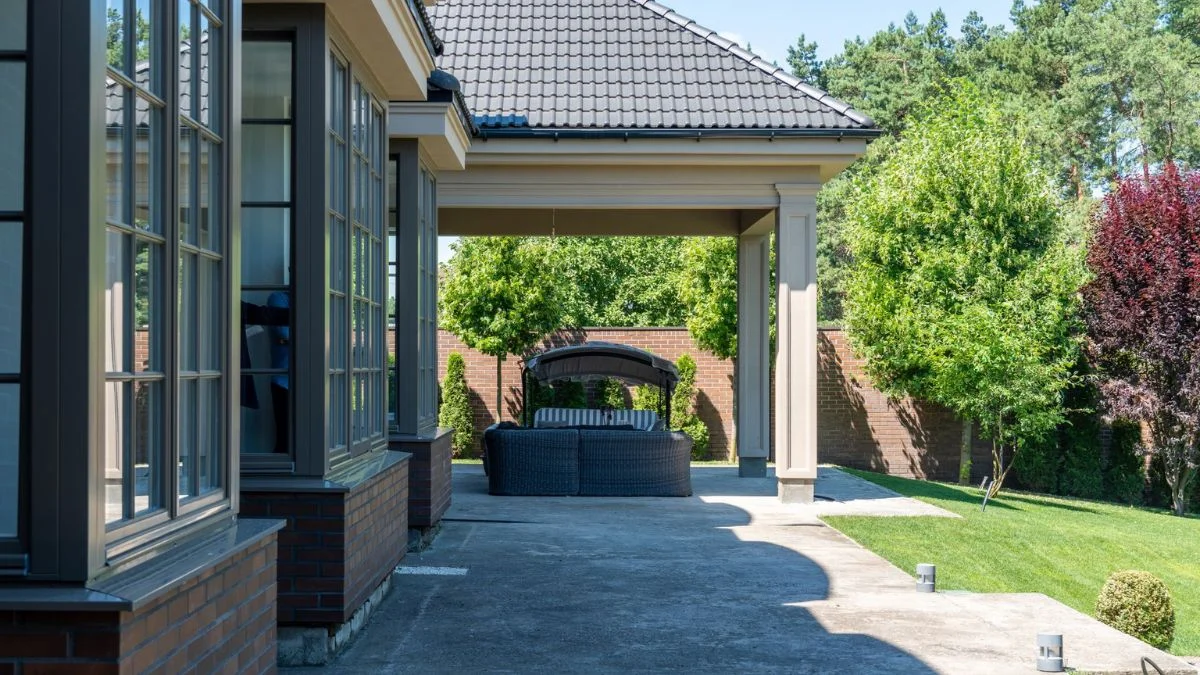
Lighting is the fastest, cheapest transformation on this list. String lights overhead, path lanterns along the edge, or a few flameless candles change the mood the moment the sun goes down.
Warm white bulbs read as cosy, while cooler tones can make a small space feel more modern and crisp.
Why this works: most people only ever see their patio in daylight, so evening lighting essentially unlocks a version of the space they never planned around.
Create Distinct Zones With Furniture Groupings
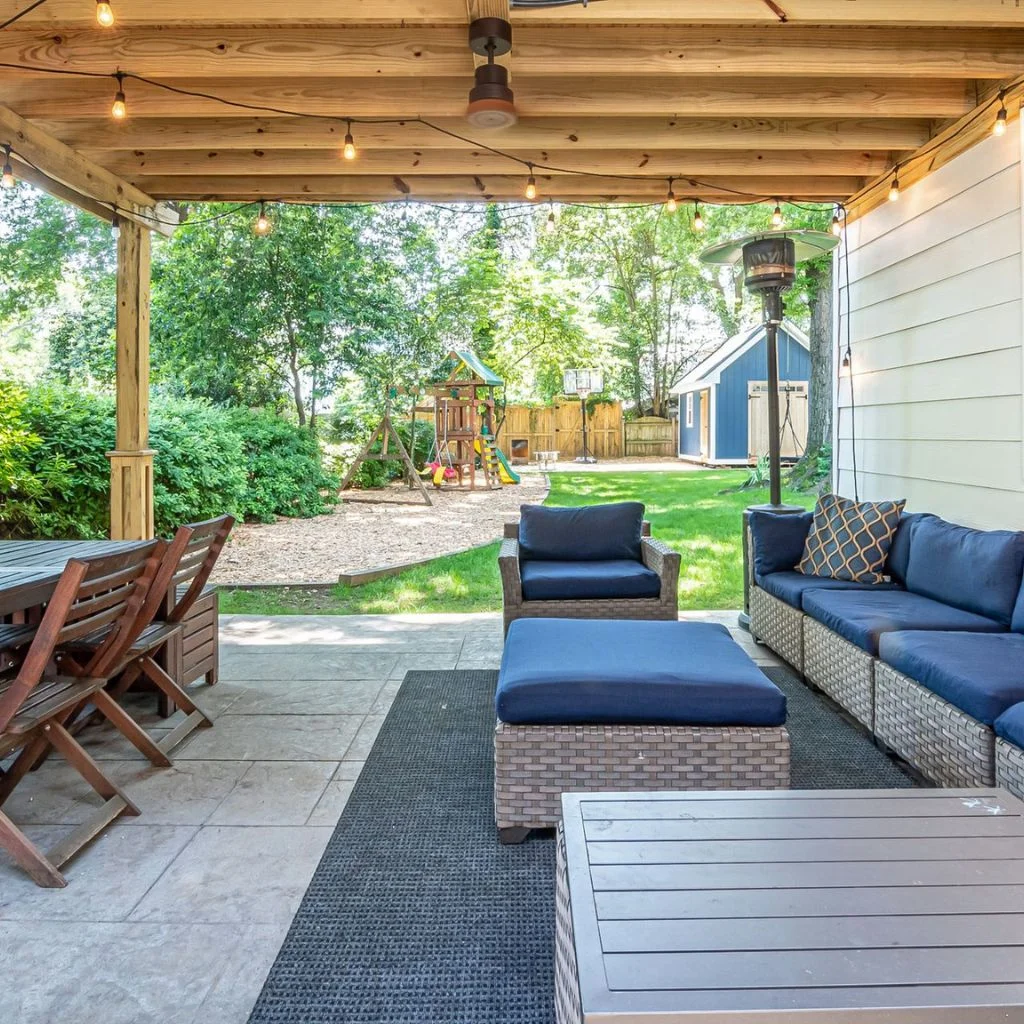
Splitting one large slab into a dining zone, a lounge zone, and maybe a small fire pit corner makes the space feel bigger, not smaller.
Use rugs, planters, or a change in furniture height to mark the boundary between each zone without adding any permanent structure.
Why this works: zoning gives the eye a reason to travel across the space instead of taking in one flat expanse of concrete at a glance.
Common Mistake To Avoid When Resurfacing Concrete Patios
The most common mistake is skipping proper cleaning and crack repair before applying paint, stain, or an overlay. Any product applied over dirt, oil stains, or hairline cracks will fail early, sometimes within a single season.
Pressure wash the slab, let it dry fully, and fill cracks with a flexible concrete filler before starting any cosmetic step on this list.
Why this works: prep work is invisible in the result, but it’s the difference between a makeover that lasts five years and one that needs redoing by next summer.
Small Patio Makeover Wins That Add Up Fast
A few finishing touches pull the whole look together without much effort or cost.
- Swap mismatched pots for a matching set in one or two colours.
- Add a weatherproof storage box so cushions and throws aren’t cluttering the space.
- Introduce one statement piece, like a bold outdoor mirror or a large woven chair.
- Keep the colour palette to three tones maximum so the space feels curated, not busy.
Making The Slab Work For You Again
A concrete slab patio makeover doesn’t need to involve demolition or a huge budget. Cleaning, colour, texture, greenery, and lighting can take a flat grey slab and turn it into the outdoor space that finally gets used all season long.
Start with one or two ideas from this list rather than everything at once. A patio that evolves gradually tends to feel more personal than one that’s finished in a single weekend.
Highly Recommended: Why Families Are Choosing Granny Pods Over Care Homes.