An open doorway does not need a door to feel finished.
You can cover it in an afternoon, with no drilling and no damage deposit at risk.
A doorway without a door is common in rentals and open-plan homes, and it leaves two rooms staring at each other with nothing in between.
The fix can be soft or solid — linen panels, wooden beads, a barn door on a rail, or a bookshelf that does the job of a wall. A curtain softens a bedroom doorway, a bead curtain suits a busy kitchen pass-through, and a folding screen works where nothing can be fixed to the wall.
Here are 17 clever ways to cover a doorway without a door, all renter-friendly and all removable. Pick the one that fits your opening, and start with the easiest.
#1. Fabric Curtain Panels in a Doorway
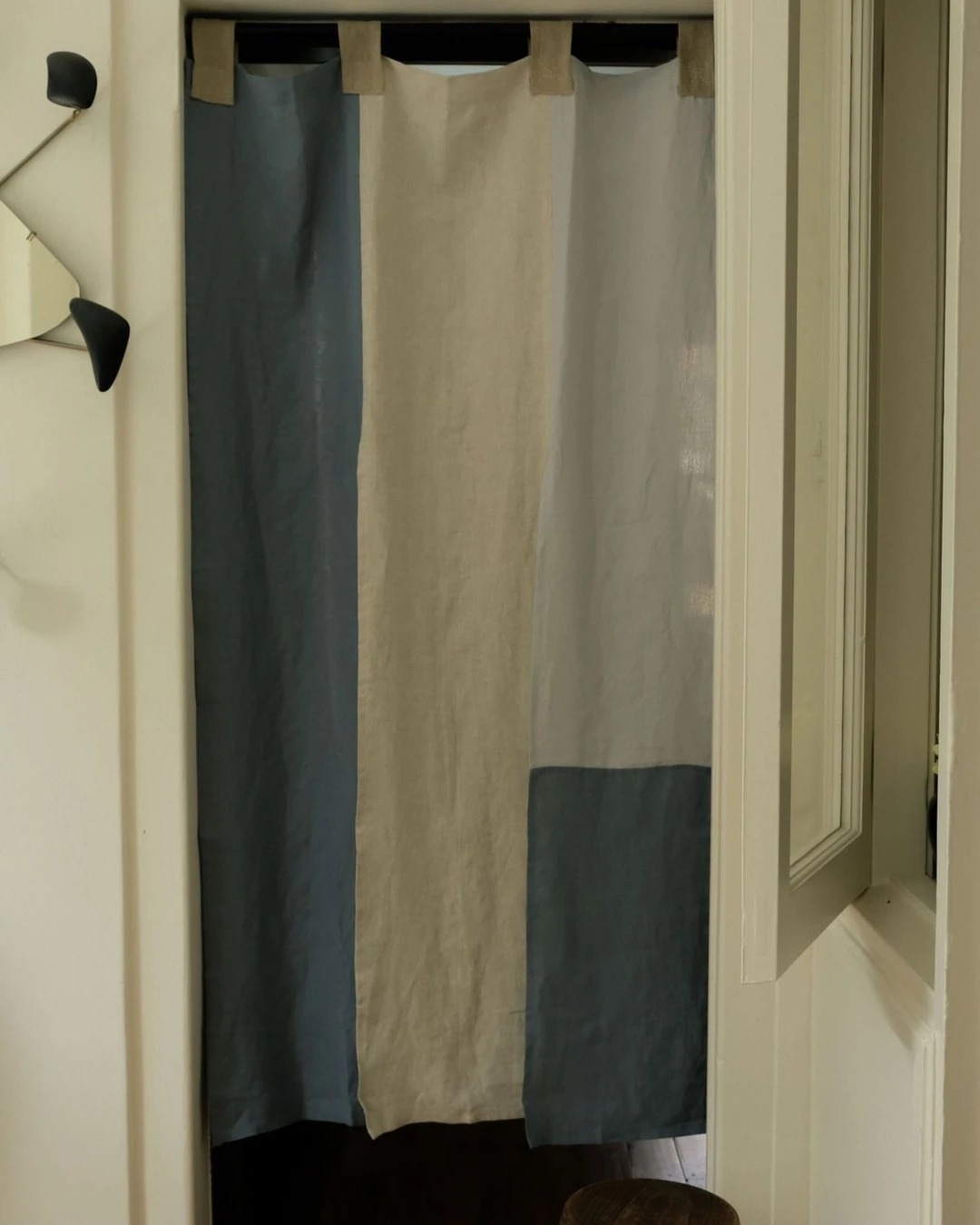
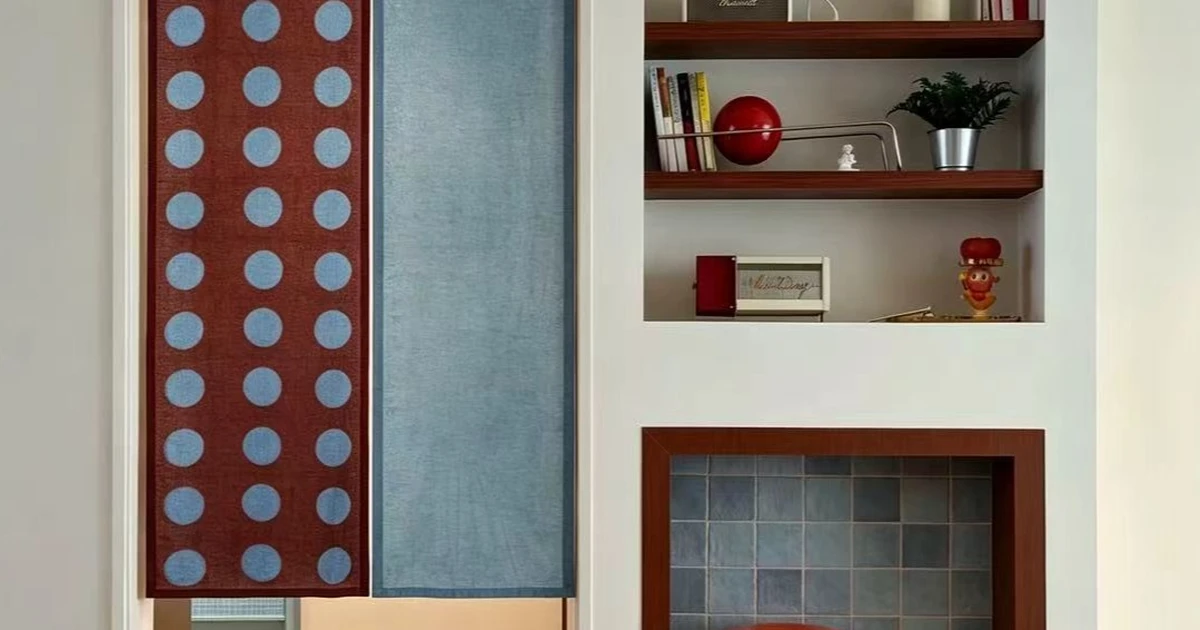
Fabric panels are the simplest cover there is, and this doorway shows why they work so well. Three full-length panels in slate blue, natural linen, and white-grey hang from tab tops, and the mix of colours looks tailored rather than thrown together. The panels reach the floor, so the opening feels closed even though nothing is fixed to it.
A panel curtain suits almost any room because the fabric does the styling. Plain linen keeps a bedroom calm, a bolder colour gives a living room some weight, and a light cotton keeps a hallway bright. Hang the panels from a tension rod and the whole thing is renter-friendly, since a tension rod needs no screws and no holes in the frame. When you want the rooms joined again, slide the panels to one side and the opening is clear.
The practical point: measure the opening and buy panels at least one and a half times its width, so the fabric gathers in soft folds instead of hanging flat like a sheet.
#2. Wooden Bead Curtain
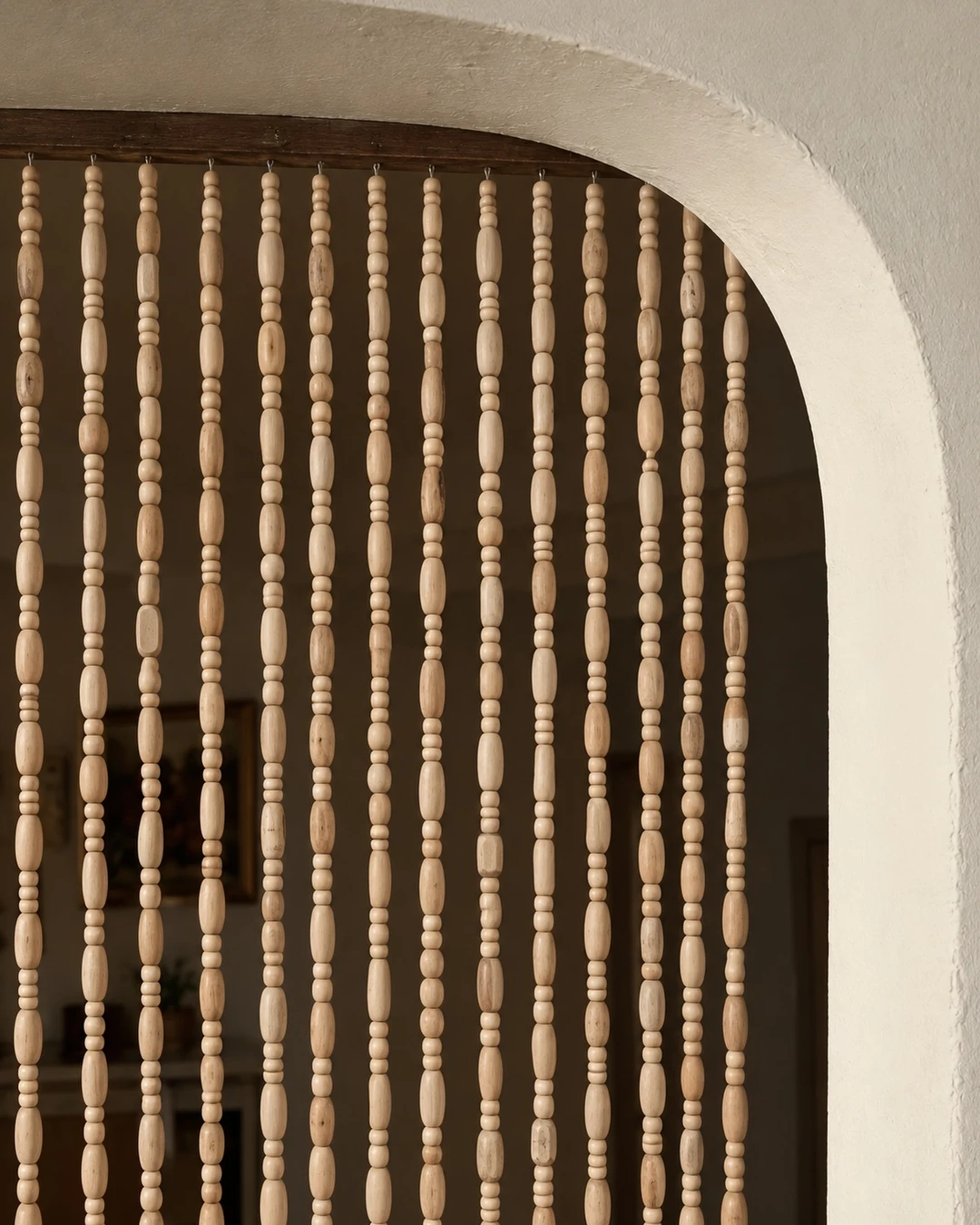
A wooden bead curtain covers a doorway without closing it off. Light natural beads hang in full-length strands from a dark wood rail in an arched plaster doorway, and the gaps between the strands let air and light pass through. You get a sense of separation and still see the room beyond.
Beads suit warm, natural rooms and busy pass-throughs, such as the opening between a kitchen and a living room, where a solid cover would block light and movement. The strands move as you walk through and make a soft wooden sound, which is part of their charm. Wood beads also age well, since they do not fade the way fabric can in a sunny doorway.
The practical point: choose beads with a smooth finish so they do not snag clothing, and hang the rail level so every strand falls to the same length.
#3. Macramé Doorway Hanging
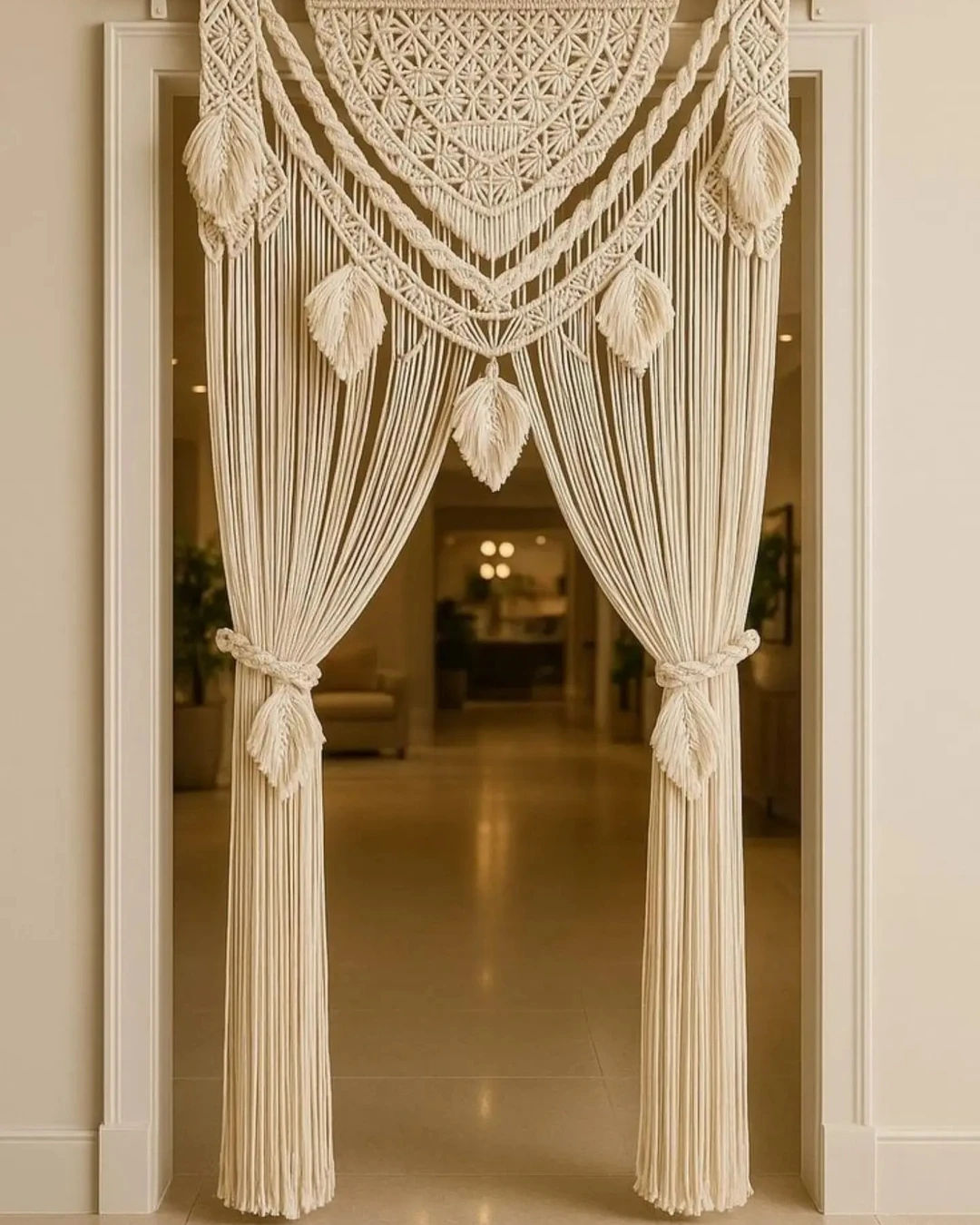
Macramé turns a plain doorway into a piece of craft. This large cream hanging fills a white doorframe with diamond knotwork and leaf tassels, and the two panels are tied back so the opening stays clear. The wooden dowel at the top and the hallway beyond keep the whole thing feeling light.
A macramé curtain suits relaxed, boho rooms where texture matters more than privacy. Cream cotton works with wood floors, plants, and woven baskets, and the open weave means the rooms still share light. Because the panels tie back, you can change the look in seconds — tied open for the day, loose for the evening.
The practical point: hang the dowel from two removable hooks and keep the tiebacks loose enough to untie, so the curtain can close fully whenever you want real privacy.
#4. Sliding Barn Door on a Rail
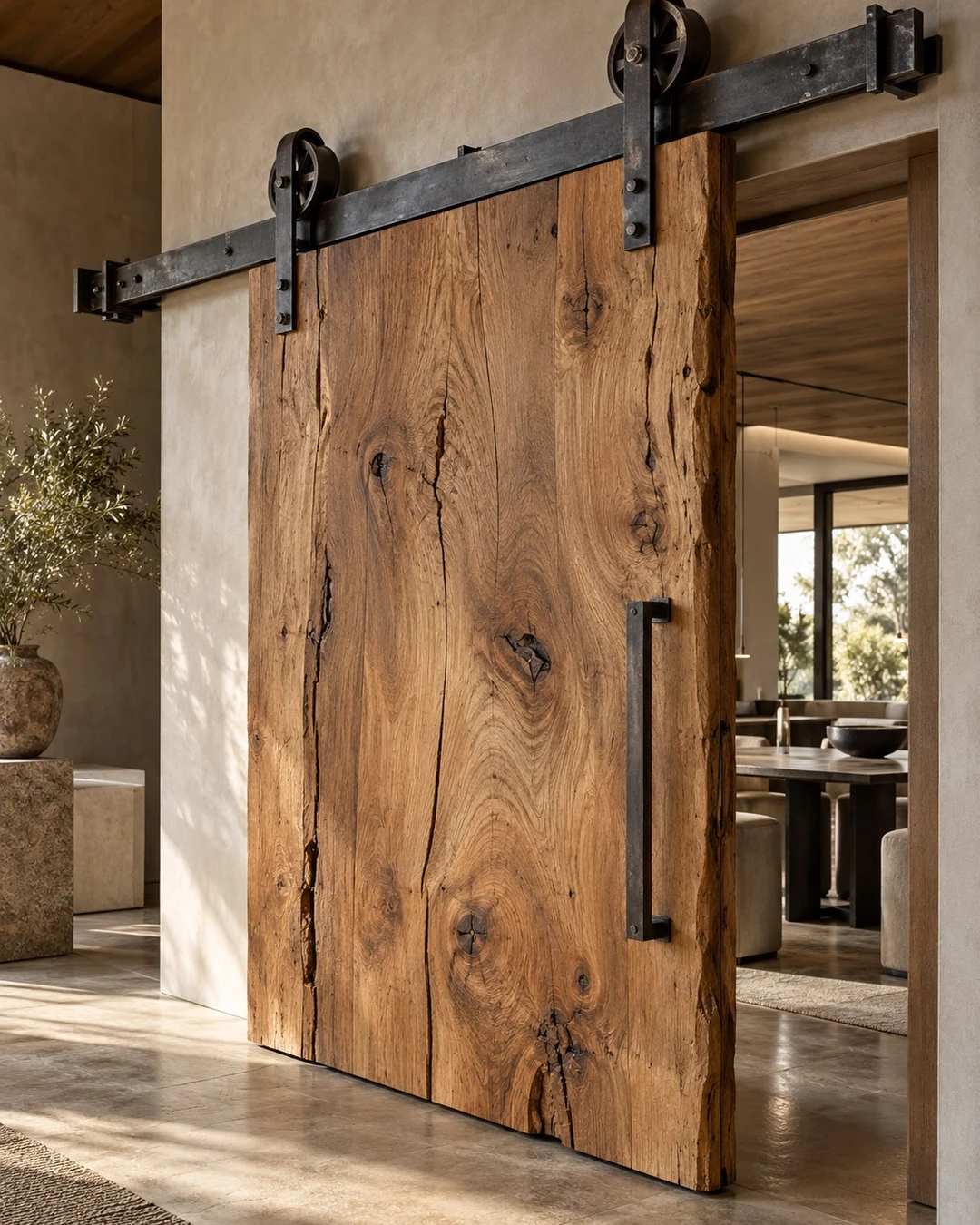
A barn door is the closest thing to a real door on this list, without being one. This thick reclaimed-wood door slides on a black metal rail with large spoked wheels and a long iron handle, and it sits partly open over the doorway with a dining room beyond. Because it slides instead of swinging, it needs no floor clearance at all.
The wood gives the opening real character, and the rail and wheels are part of the look rather than something to hide. A barn door covers the opening fully and muffles sound far better than fabric, so it suits bedrooms and studies. It is also the one cover here that needs screws in the wall, so it fits owned homes best, or rentals where the landlord agrees to a rail.
The practical point: the rail must be at least twice the door’s width so the door can slide fully clear of the opening, and check the wall can take the weight before you fix anything to it.
#5. Folding Room Divider Screen
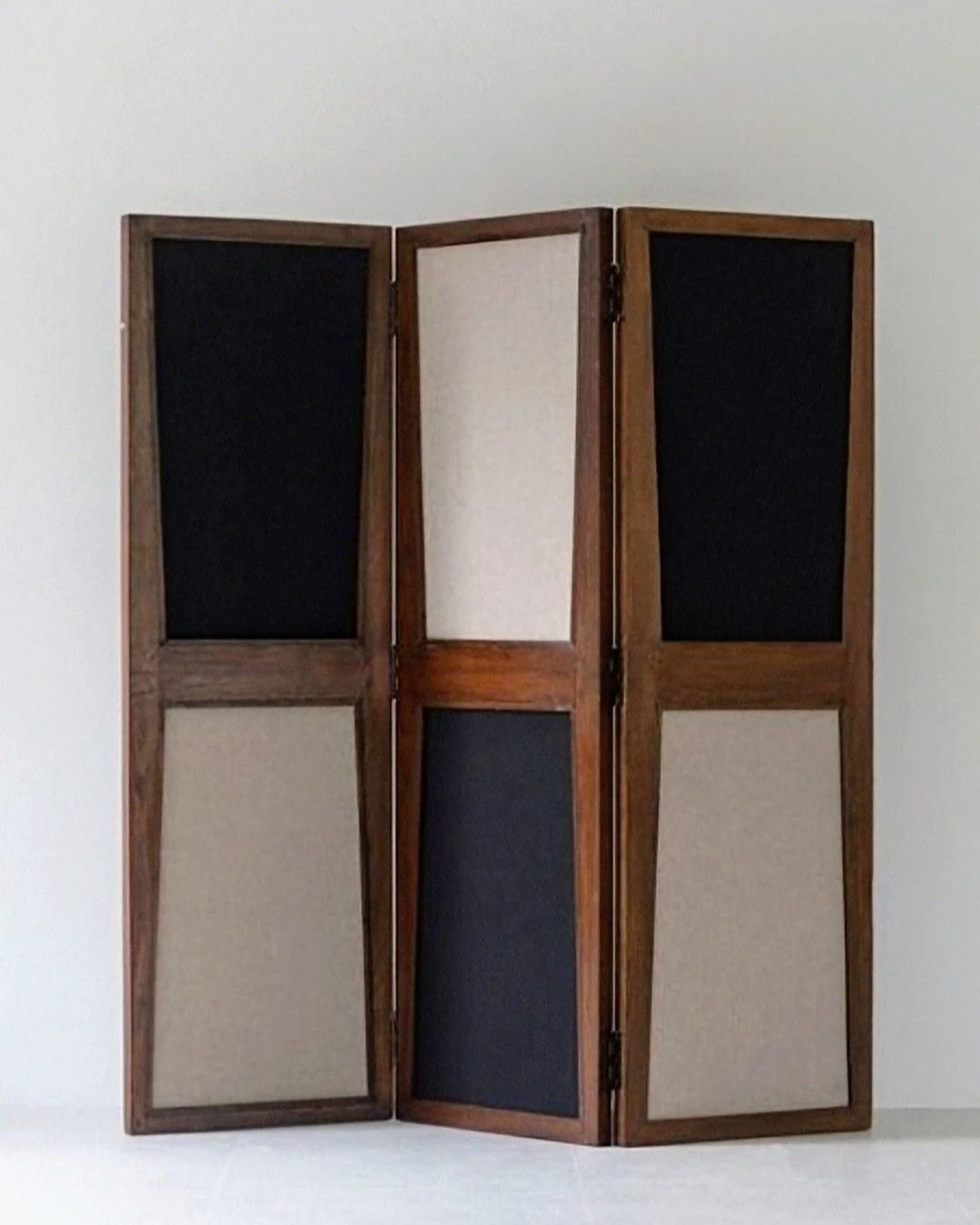
A folding screen needs no fixing at all, which is why it is the easiest cover for a wide opening. This three-panel divider has a dark wood frame with black and beige fabric panels, and it simply unfolds across the gap. When you do not need it, fold the panels flat and lean them against a wall.
Screens suit rooms where a curtain would look thin and a door would be too much. The fabric panels give visual privacy while the frame keeps the whole thing standing on its own. They work in living rooms, bedrooms, and home offices, and they move with you from room to room.
The practical point: choose a screen at least as wide as the opening and angle the panels slightly, so it stands stable and does not topple when someone brushes past it.
#6. Sheer Linen Curtain Panels
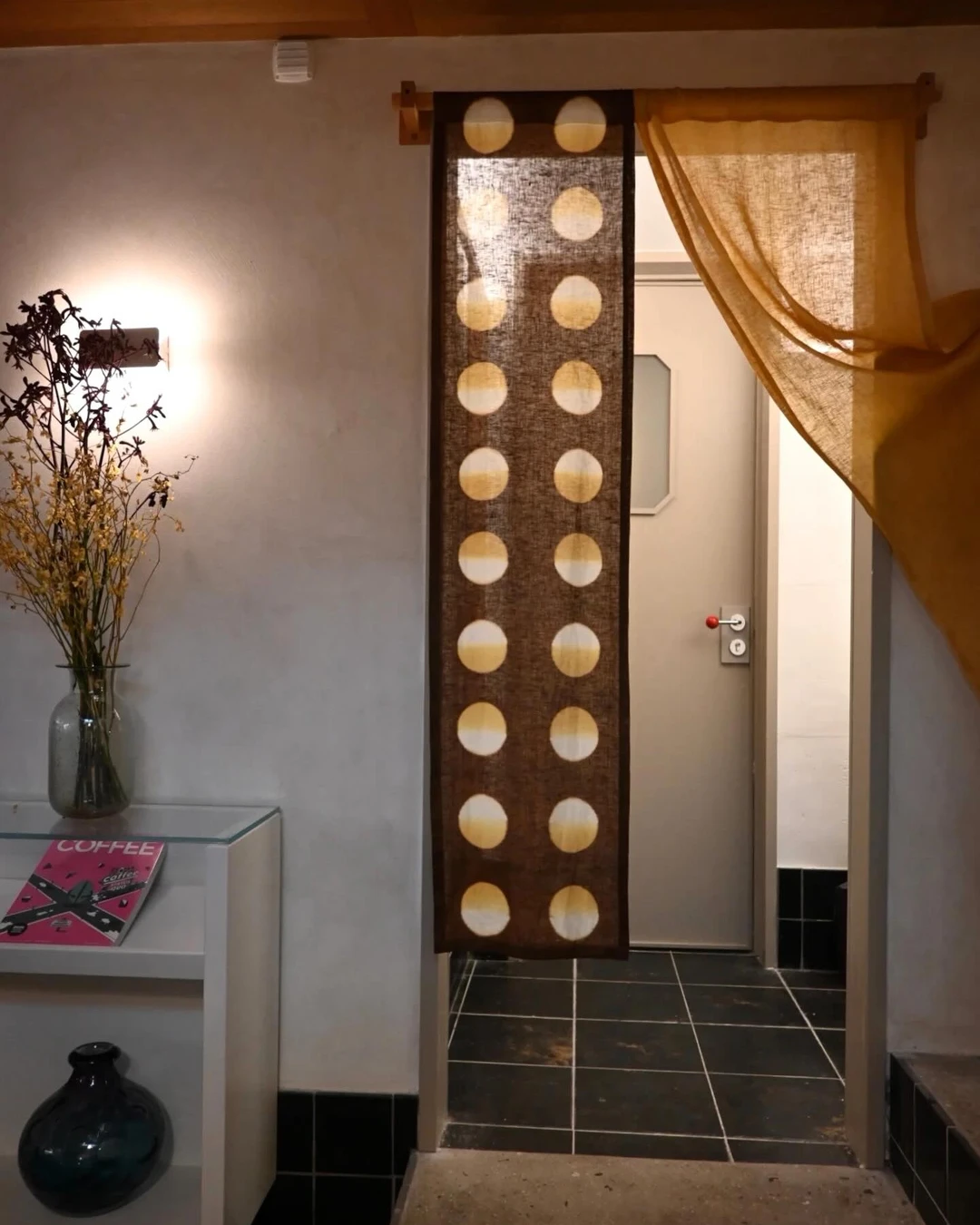
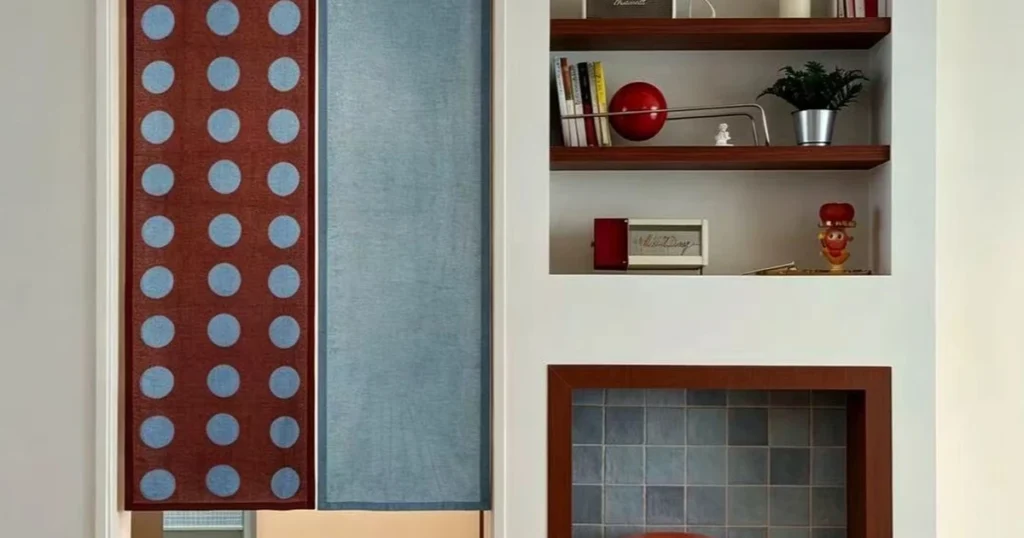
Sheer linen softens a doorway without darkening the room behind it. This opening pairs a brown plant-dyed linen panel with large cream circles against a sheer golden linen panel pulled to one side, and the two fabrics balance each other — one patterned and solid, one light and glowing. Wooden rod brackets hold them in place.
Sheer panels suit bedrooms and living rooms where you want light and a little privacy at the same time. They filter the view instead of blocking it, so the rooms feel connected rather than shut off. Linen has a natural texture that reads expensive even in a simple panel, and it works with wood floors, plaster walls, and calm neutral furniture.
The practical point: steam the panels after washing and hang them while they are still slightly damp, so the linen falls straight instead of drying in wrinkles.
#7. Saloon Café Half Doors
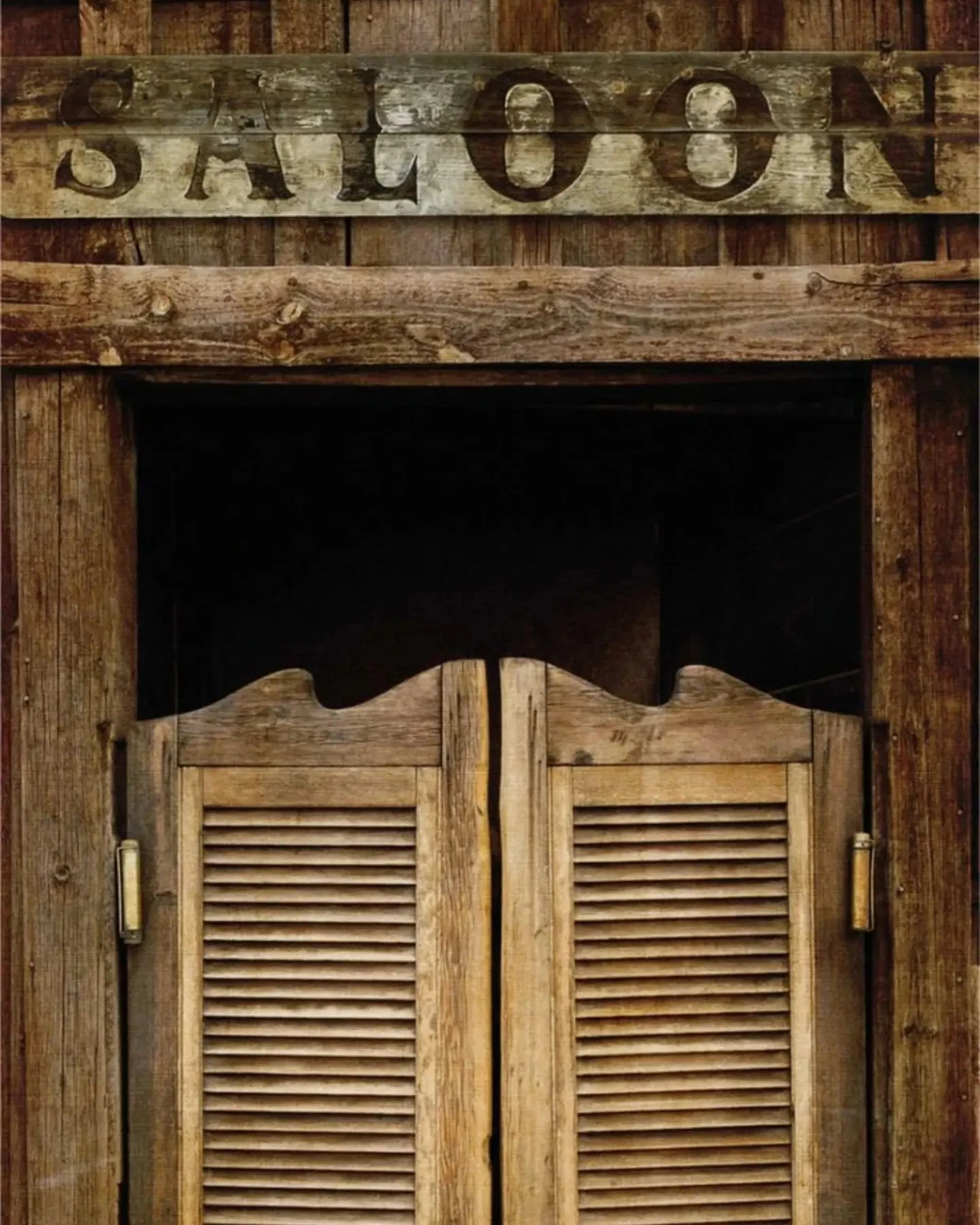
Half doors cover the middle of an opening and leave the top open, so light and air still pass through. These wooden louvered doors are the classic saloon shape, and the photo shows them in a rustic timber doorway with a painted “SALOON” sign above — the original version of the look. In a home, the same doors read as café doors between a kitchen and a dining room.
Louvered wood suits farmhouse and rustic rooms, and the slats give privacy at waist height while keeping the rooms connected above. The doors swing both ways and settle back on their own, so they work in a pass-through that gets used all day. They feel playful without looking like a costume, as long as the wood matches the room around them.
The practical point: half doors need hinges on both sides of the frame, so measure the opening carefully — a gap at the sides defeats the purpose of the doors.
#8. Fabric Tapestry Wall Hanging
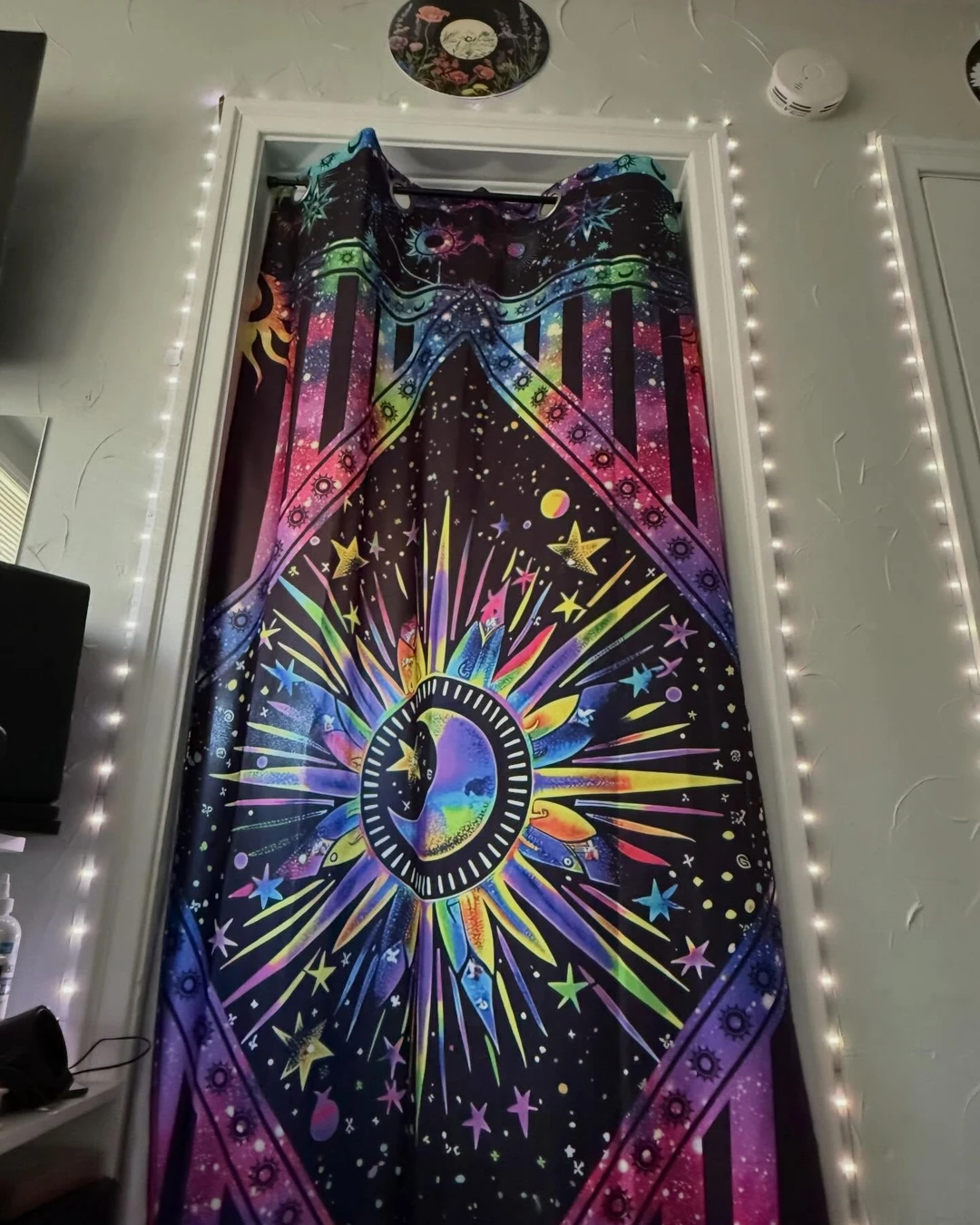
A tapestry is the cheapest full cover on this list, and it takes minutes to hang. This colourful celestial print — a sun, moon, and stars on a dark ground — fills a doorway on a rod, with fairy lights strung around the frame. One piece of fabric closes the opening completely and weighs almost nothing.
Tapestries suit bedrooms and creative rooms where a bold print is welcome. The fabric blocks the view while the print becomes the decoration, so the doorway turns into wall art. Hang it from a tension rod or a pair of removable hooks and it comes down without a mark, which makes it ideal for rentals.
The practical point: iron or steam the tapestry before hanging, since fold lines show badly on a large flat print, and put the fairy lights on a timer so they do not stay on all night.
#9. Accordion Folding Door
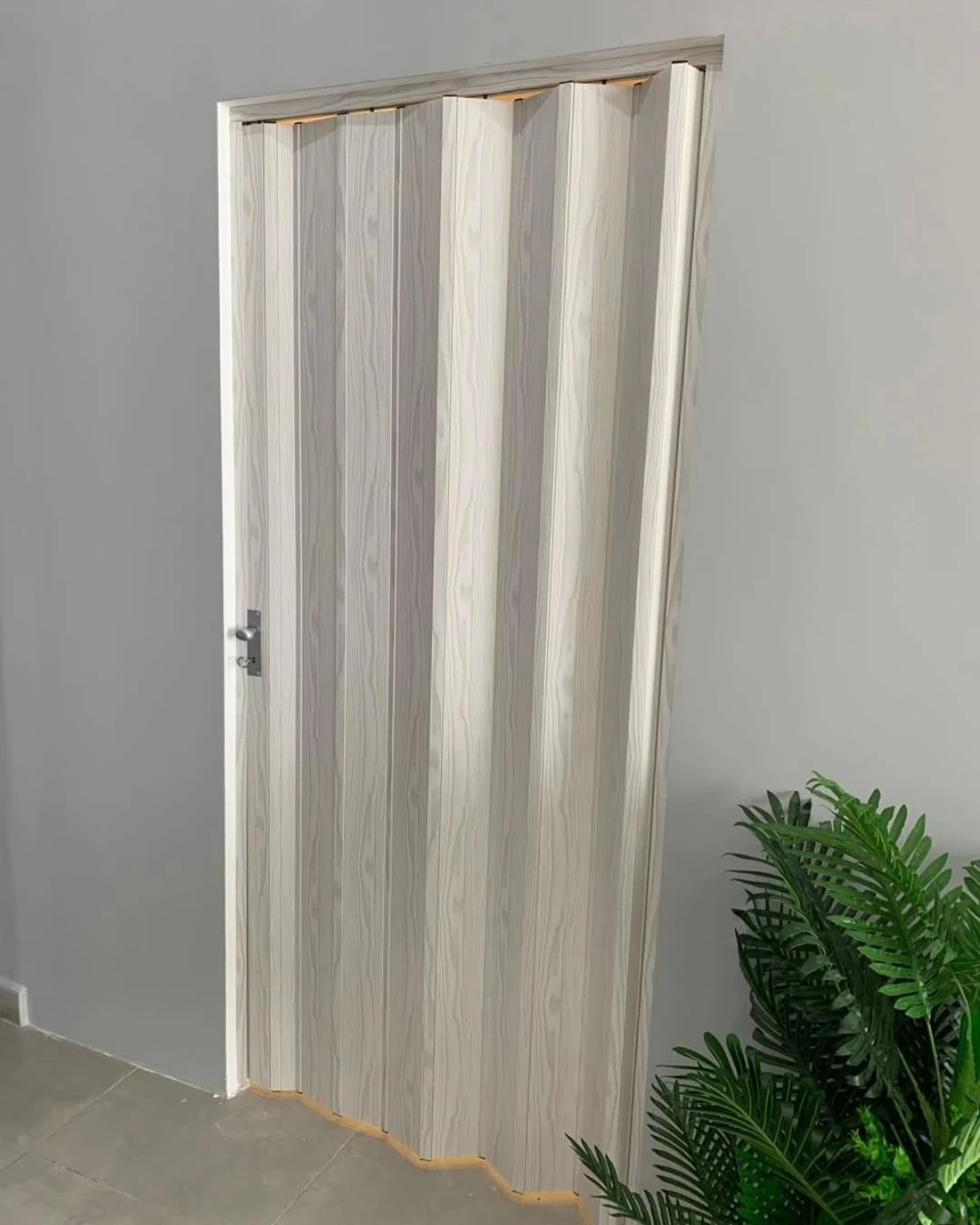
An accordion door folds flat against the frame when open and closes the opening fully when shut. This white wood-grain PVC version sits closed in a plain doorway, and it reads as a proper door from across the room. It gives far more privacy than a curtain and costs far less than a real door.
Accordion doors suit bathrooms, laundry rooms, and storage openings, where privacy matters but a swinging door would eat up floor space. The panels fold into a narrow stack, so the doorway stays almost fully clear when the door is open. It mounts on a top track with a few screws, so it is a small job rather than a renovation.
The practical point: keep the track clean, since dust in the track is what makes accordion doors stick — a quick vacuum every few weeks keeps it sliding smoothly.
#10. Shoji Rice-Paper Screen
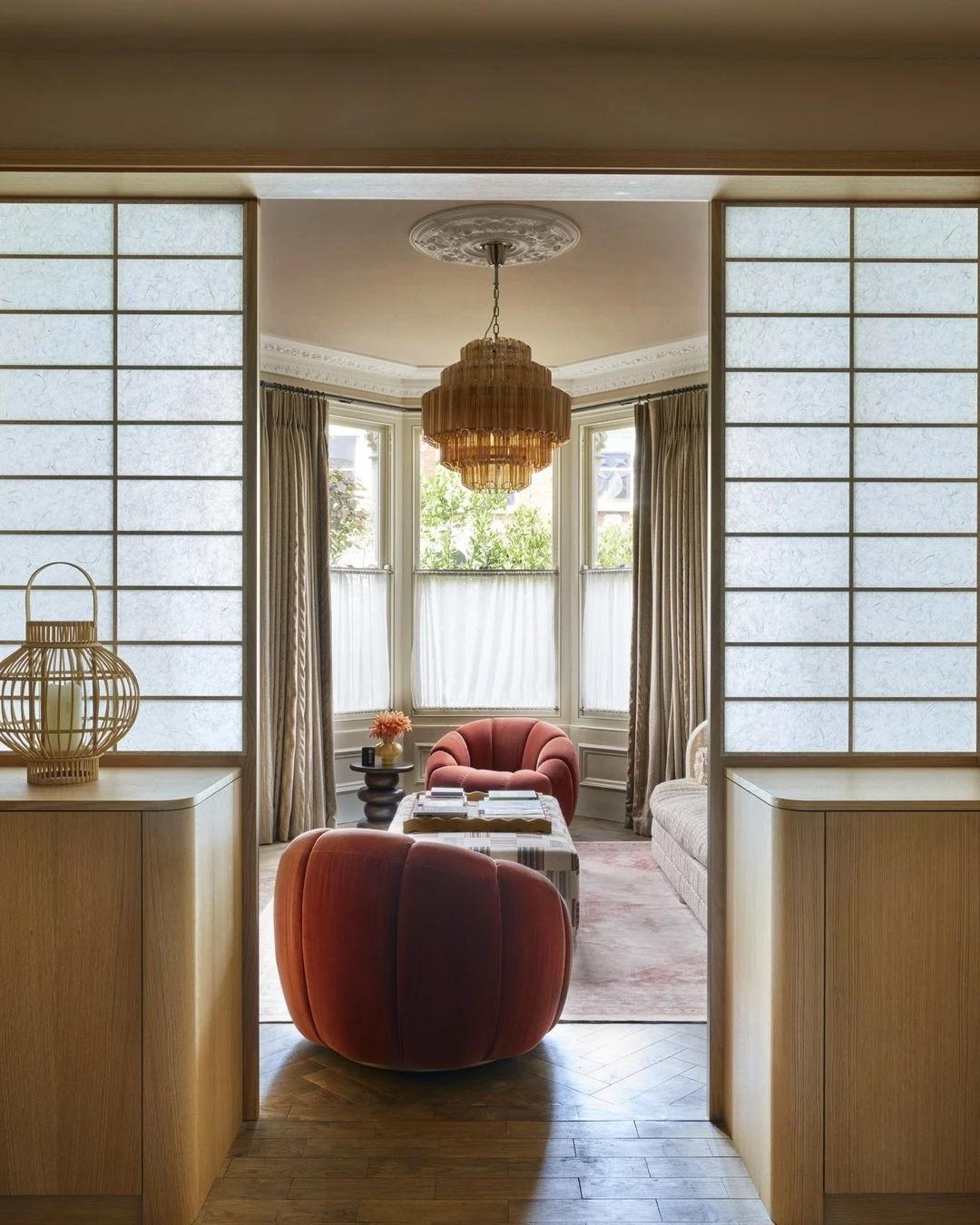
Shoji panels give privacy while glowing with light, which is a rare combination. This wide opening is framed by two rice-paper panels, and the living room beyond — bay window, chandelier, rust velvet chairs, wood floor — stays visible as a soft shape through the paper. The grid frames keep the whole thing calm and orderly.
Rice paper diffuses daylight into a gentle wash, so a shoji cover suits bedrooms and living rooms where harsh light is a problem. The panels slide, so the opening can be half covered or fully open, and the clean grid lines work with Japandi and minimalist rooms. They fit best in wide openings where the frame can be set properly.
The practical point: rice paper tears easily, so keep the panels out of high-traffic paths where bags and elbows pass, and replace a torn sheet with a fresh one rather than patching it.
#11. Bookshelf as a Doorway Divider
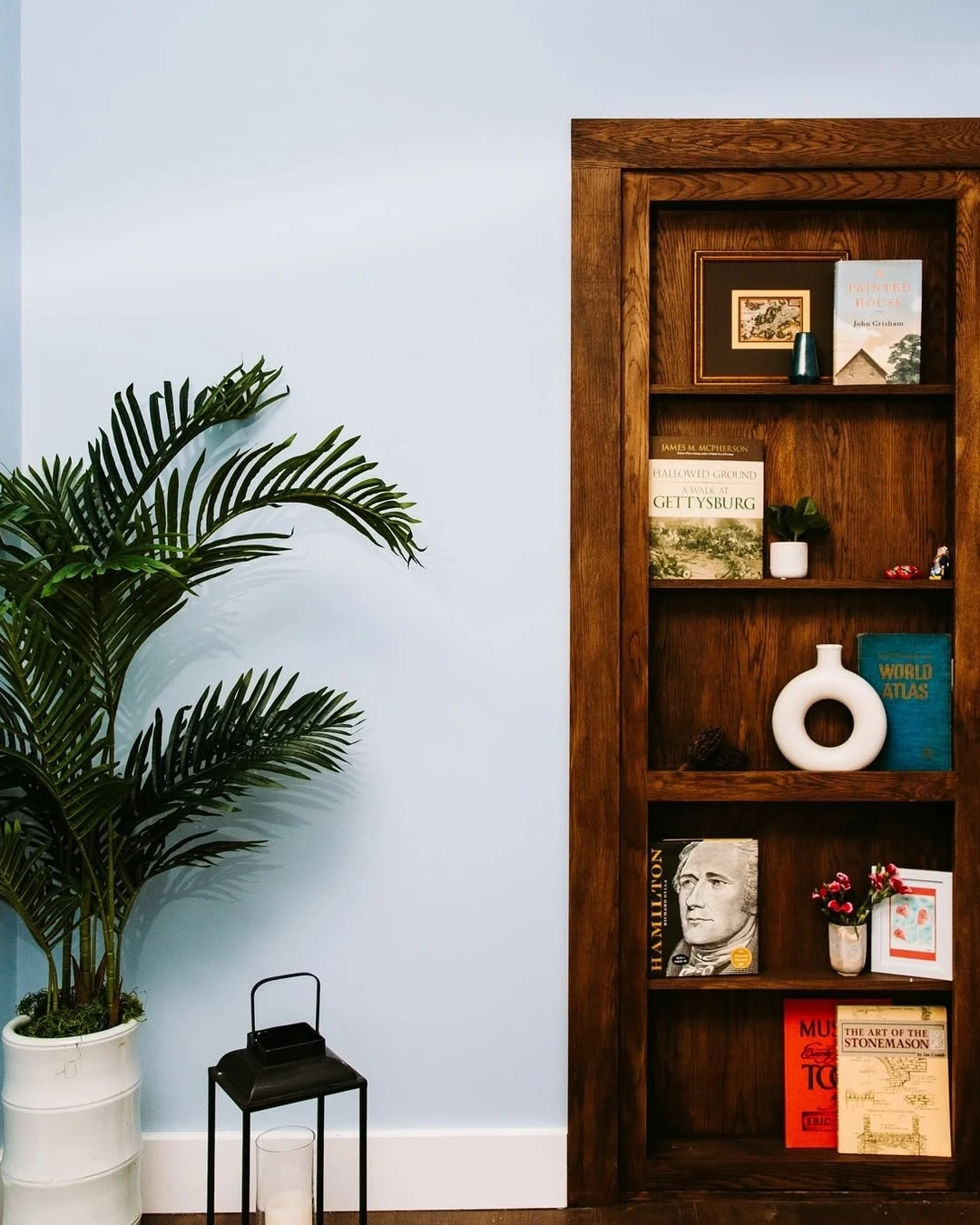
A bookshelf fills a doorway with storage instead of a door, and it looks like furniture rather than a blockage. This wooden shelf is built into a doorway frame and styled with books, a white vase, and a plant, and it slides aside on a track, so the doorway still opens when needed.
Books, a vase, and a plant make the divider feel lived-in, and the solid shelf muffles sound far better than any fabric cover. It suits living rooms and home offices where the opening is wide and the shelf can carry real weight. A freestanding shelf works the same way in a rental, as long as it is anchored so it cannot tip.
The practical point: anchor a tall bookshelf to the frame or wall so it cannot tip, and keep the heaviest books on the lowest shelves so the unit stays stable.
#12. Portière Curtain with Tiebacks
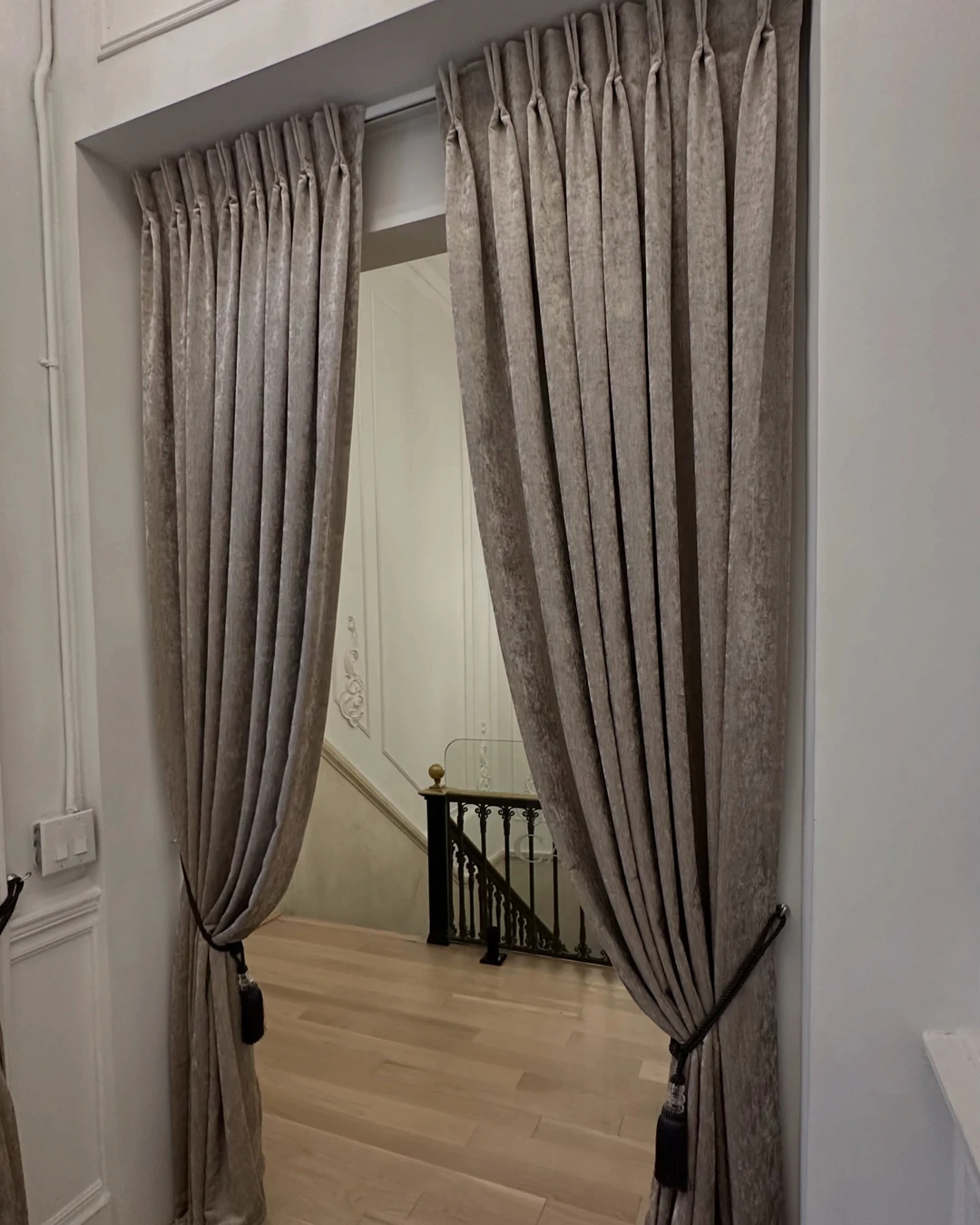
A portière is a heavy curtain hung in a doorway, and it is the traditional way to keep draughts out of a room. These taupe velvet panels hang in a wide doorway with dark rope-and-tassel tiebacks holding them open, and a staircase and wood floor show beyond. The velvet looks rich and muffles sound.
Heavy curtains suit formal living rooms and bedrooms, where the weight of the fabric is part of the luxury. The tiebacks let the panels stay open during the day and close at night, so one curtain does two jobs. Velvet hangs in clean folds because of its weight, and a solid colour like taupe works with almost any palette.
The practical point: velvet is heavy, so use a strong rod and brackets fixed into the frame, and brush the pile downward after cleaning so the colour stays even.
#13. Hanging Plants as a Living Divider
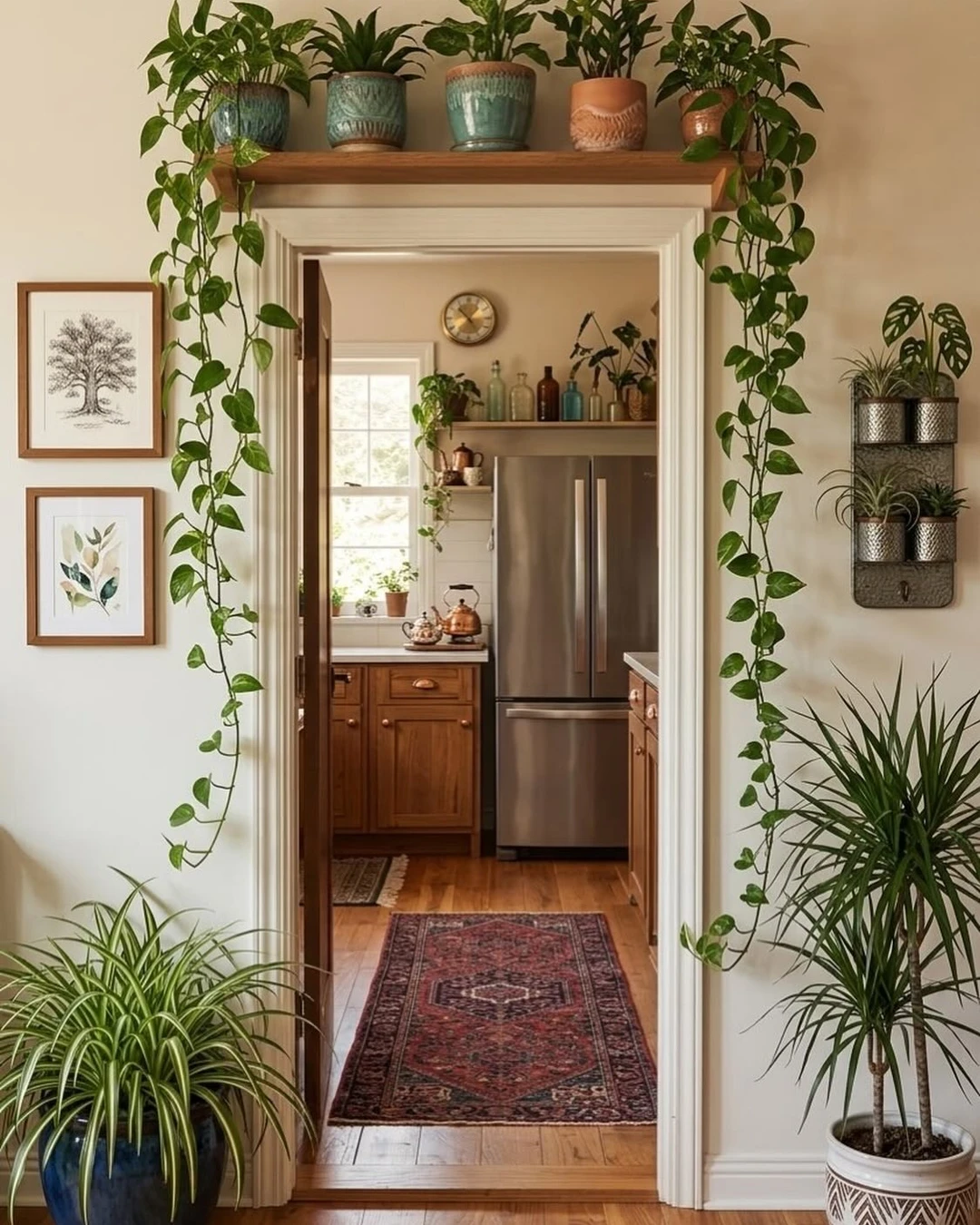
Plants turn a doorway into a green frame instead of a barrier. A wooden shelf above this doorframe holds five potted plants in blue-green and terracotta pots, and long pothos vines trail down both sides of the opening. The kitchen beyond stays visible through the leaves, so the divider feels light rather than closed.
A living divider suits kitchens, living rooms, and sunny hallways, where the plants get enough light to thrive. Terracotta and blue-green pots add colour without paint, and the trailing vines soften the hard edges of the frame. The shelf itself is the only fixing, and it holds the whole arrangement in one place.
The practical point: water trailing plants over a tray rather than over the floor, and trim the vines when they reach the floor so they do not tangle in the doorway.
#14. Lace Curtain Panels
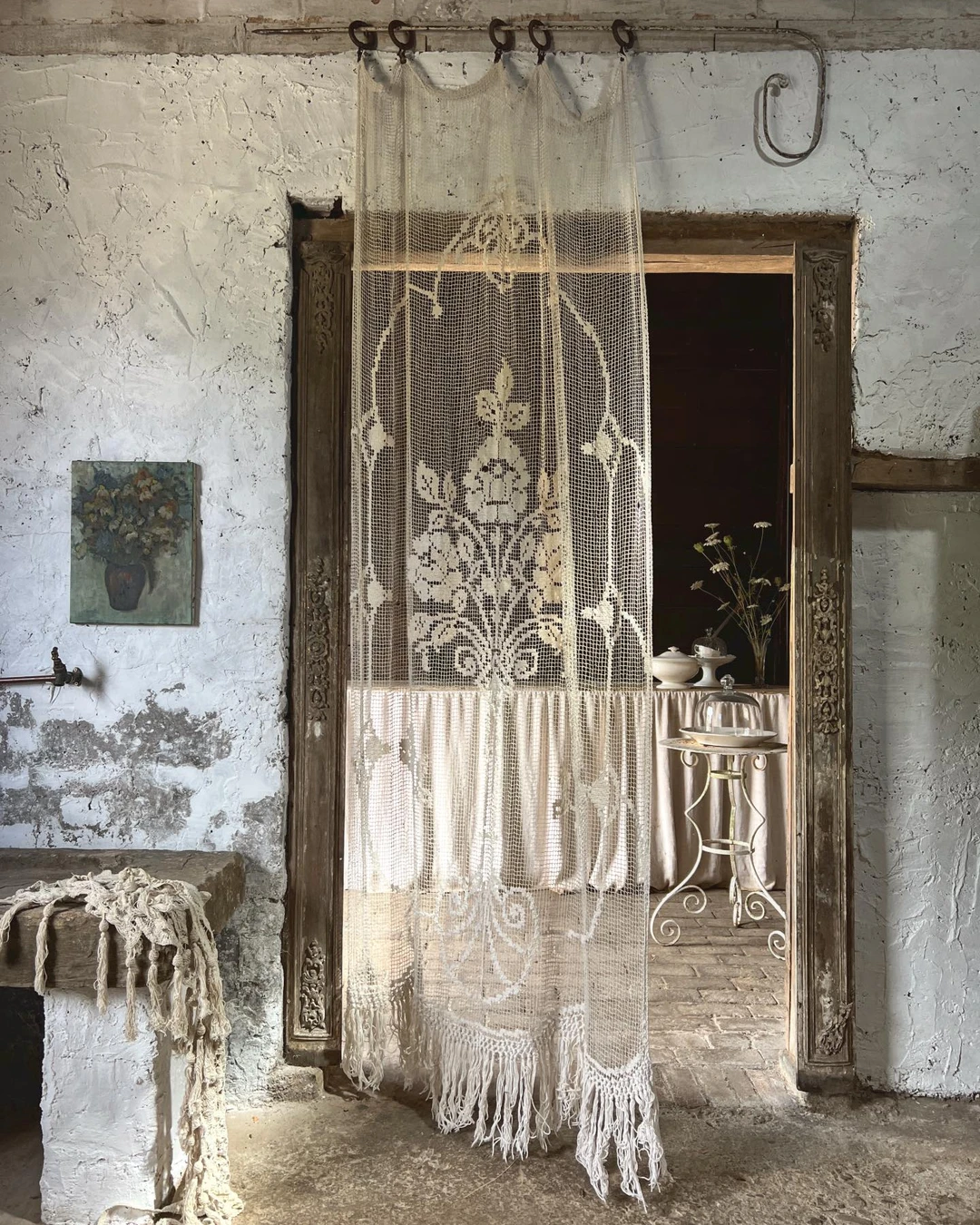
Lace gives privacy while letting light through in a pattern, which is why it suits old houses so well. This cream crocheted curtain hangs in an ornate wooden doorway with a floral design and a fringe hem, and the white plaster walls and small painting beside it complete the vintage look. The draped table in the room beyond shows how the lace softens a heavy doorway.
Crocheted lace works in cottage and vintage rooms, where the handmade pattern is part of the charm. The open weave keeps the rooms bright, and the fringe hem adds a crafted finish that a plain panel cannot match. Hang the panels on a rod with rings so they slide easily across the opening.
The practical point: wash lace in a mesh bag on a gentle cycle, since the open weave snags easily, and hang it damp so the pattern dries flat.
#15. Bamboo Roll-Up Blind
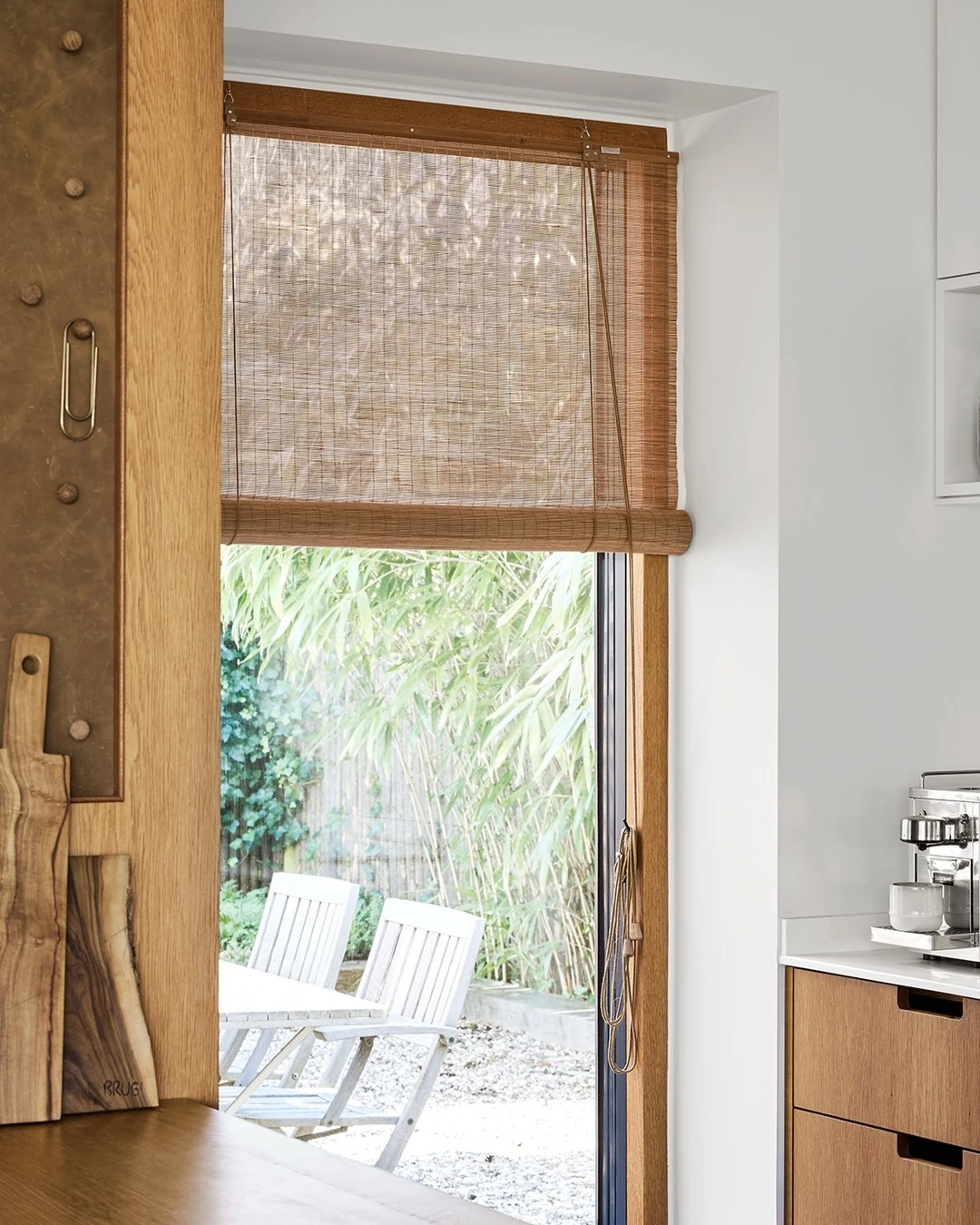
A bamboo blind rolls up out of sight when you want the opening clear and drops down when you want privacy. This one hangs half-lowered over a glass door in a bright kitchen, with the roll clearly visible at the top and a garden and white patio chairs beyond. The natural bamboo suits kitchens and garden rooms.
Roll-up blinds filter light rather than blocking it, so the room stays bright even with the blind down. They work on glass doors, wide openings, and patio doors, and the visible roll is part of the look. Because the blind mounts inside the frame, it reads as a fitted cover rather than a temporary fix.
The practical point: mount the blind inside the frame so it sits flat, and keep the cord clear of the walkway so it does not catch on passing traffic.
#16. Layered Sheer and Blackout Curtains
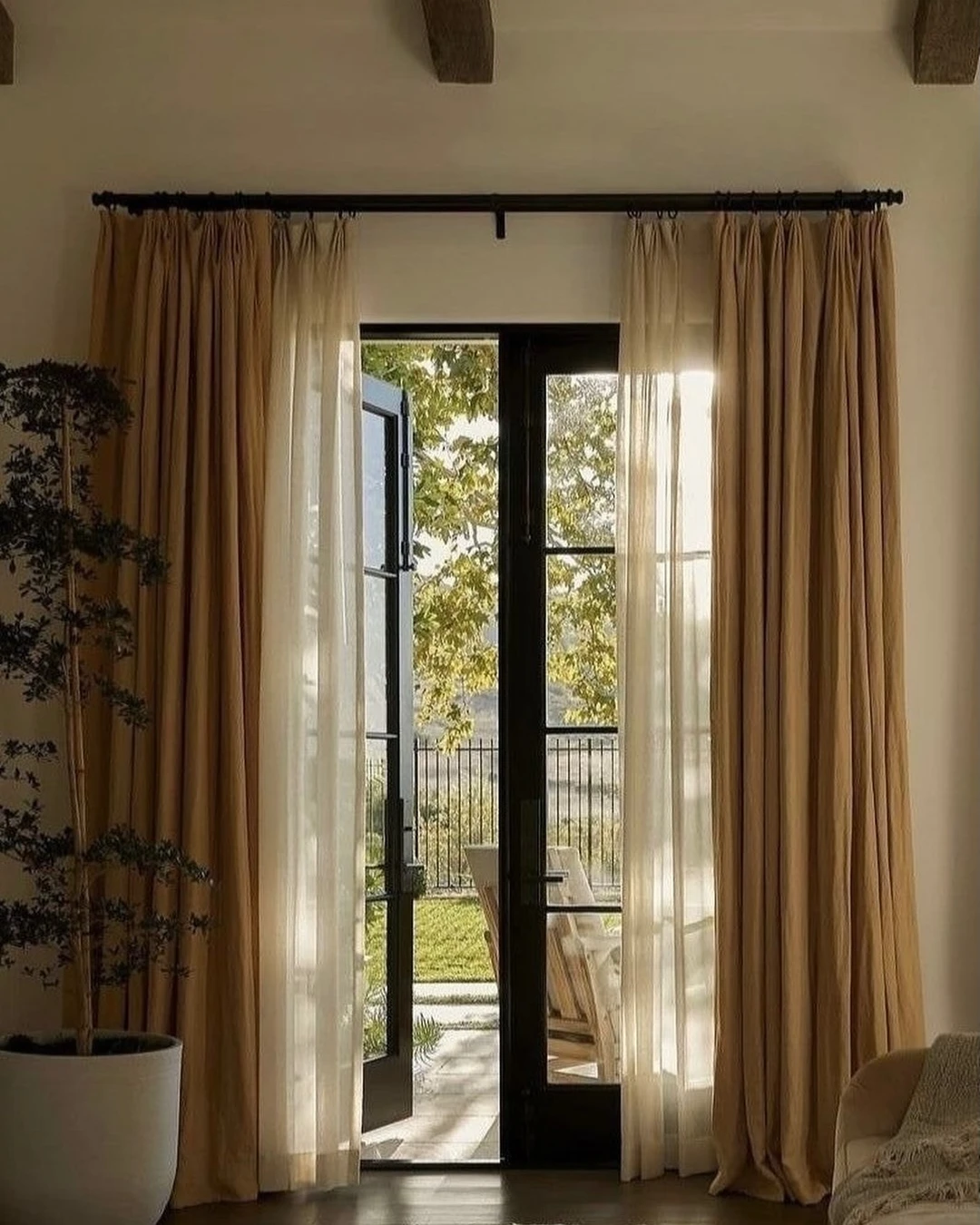
Two layers of curtain give two levels of cover, and that is what makes this idea so useful. These open French doors carry tan opaque drapes layered over sheer white panels, with a garden and patio beyond. The sheers alone give daytime privacy, and the blackout drapes close at night.
Layered curtains suit bedrooms and living rooms where the opening faces a garden or a street. The tan drapes add warmth while the white sheers keep the light, and the two fabrics together look far richer than either one alone. Both layers can hang from one double rod, so the setup stays simple.
The practical point: hang the sheer layer closest to the glass and the blackout layer toward the room, so each layer works as it should and the drapes do not snag on the sheers.
#17. A Salvaged Door Leaned Against the Wall
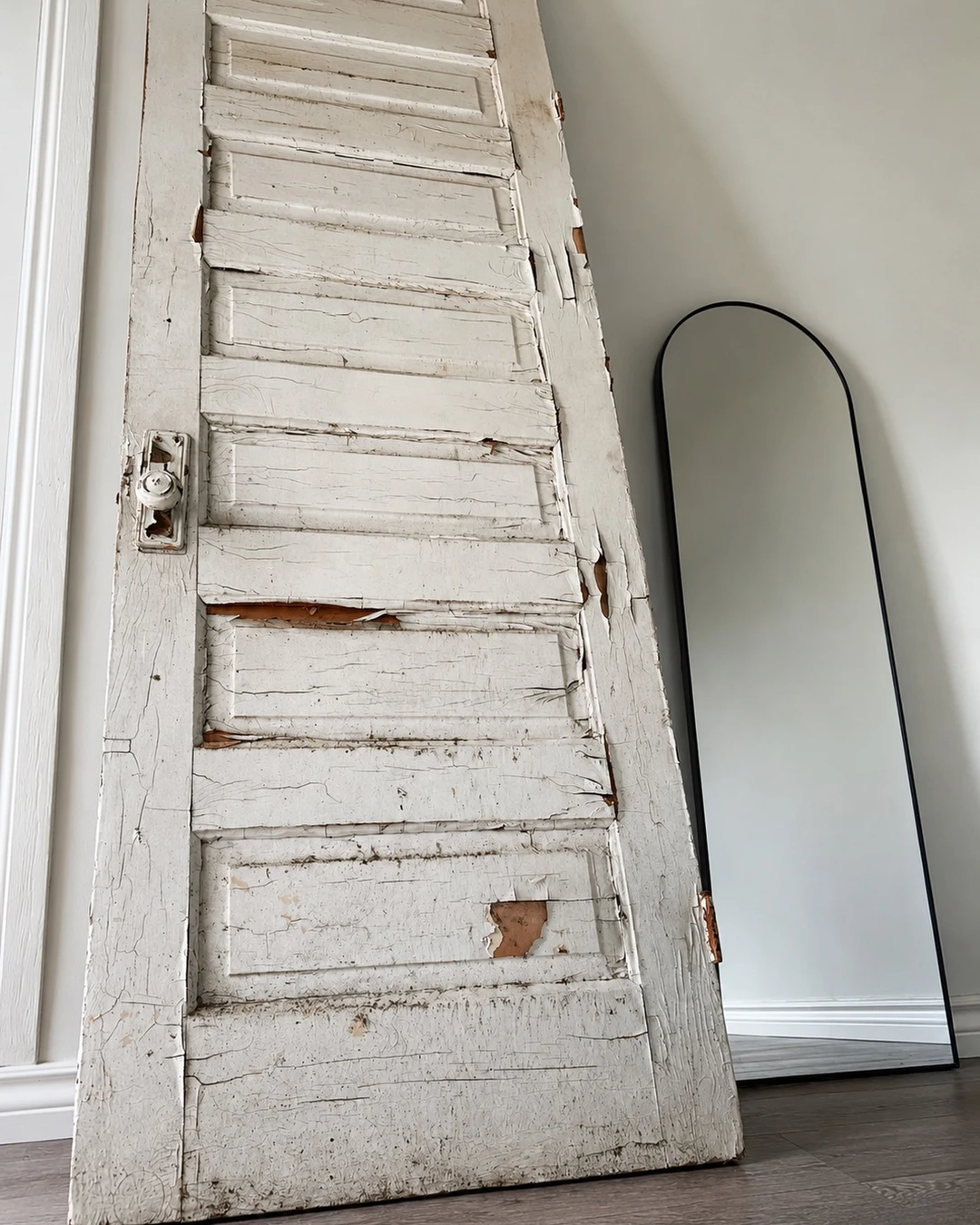
A salvaged door needs no fixing at all — lean it against the wall beside the opening and it becomes a feature. This weathered white door has peeling paint and worn panels, and it leans on a dark wood floor beside a tall arched mirror that doubles the light. The wear is the whole point: it gives instant character that a new door cannot copy.
A leaned door suits entryways, living rooms, and bedrooms with a vintage or farmhouse feel. Paint it if you want it to match the room, or leave the peeling paint as it is for a more honest, collected look. If you do paint it, The Best Interior Door Paint Colors for a Beautiful and Cohesive Home shows which colours suit a worn door and which ones fight it.
The practical point: lean the door at a slight angle with the bottom out from the wall, and put a small rubber pad behind the top edge so it cannot slip or mark the paint.
Pick the Cover That Fits Your Doorway
A doorway does not need a door to feel finished — it needs a cover that matches what you ask of it. Choose by the job: a barn door, an accordion door, or a bookshelf when you need real privacy; sheer linen, lace, shoji, or beads when you want light; a folding screen, a salvaged door, or hanging plants when nothing can be fixed to the wall.
Start with the cheapest option and change it later, since every cover here comes down without damage. That is the real advantage of learning how to cover a doorway without a door: nothing here is permanent, and the opening stays an opening. And once the opening is covered, the frame itself can carry a little personality — Creative Door Signage Ideas for a More Personal Entrance shows how a sign on the frame or the wall beside it finishes the entrance.