A marble floor never shouts. It simply lasts and in a modern home, it still feels right at home.
Marble has covered floors for centuries, from Roman villas to today’s open-plan living rooms. Its appeal has never really been about fashion.
What has changed is the range. White Carrara sits beside deep green marble, book-matched veining beside quiet matte finishes, and classic checkerboard beside brass inlay.
The stone itself does the decorating. Veins, colour and pattern give each room its character, while the furniture around it can stay simple.
Below are 13 marble floor ideas to help you choose the look that fits your home, one room at a time.
#1. Classic White Carrara Marble
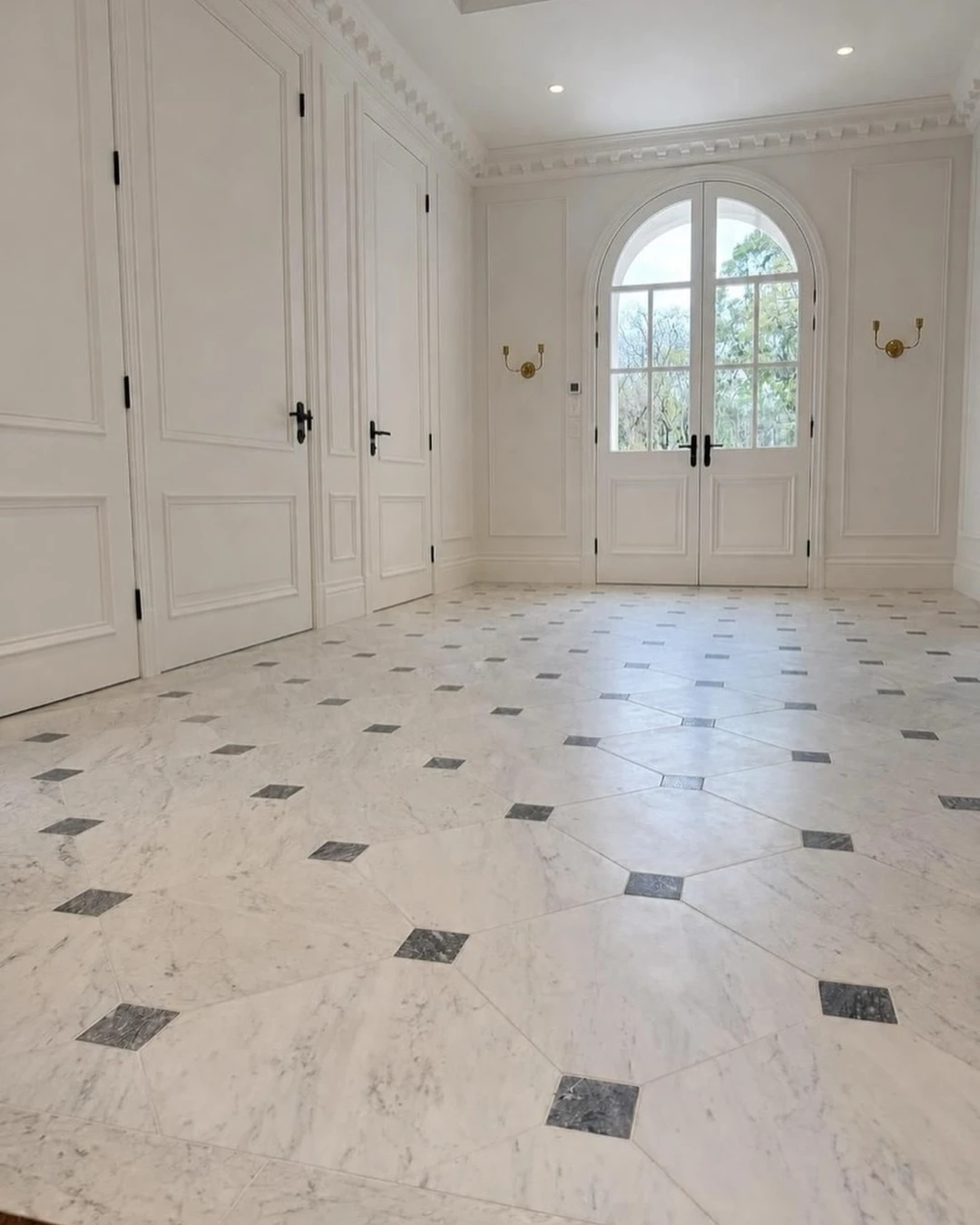
White Carrara is the marble most people picture first, and for good reason. Its soft grey veining on a white ground reads calm and bright, and it suits almost any style of room.
In this entryway, large Carrara octagons are set with small dark Bardiglio squares at the intersections, so the floor has a gentle rhythm without feeling busy. White panelled walls and arched French doors keep the space light, and the floor carries the whole look.
Because the veining is grey rather than gold, Carrara pairs easily with both warm and cool palettes. It looks at home with white oak, walnut, brass or matte black hardware, which is why designers return to it again and again. In a small entry, the octagon pattern adds interest without a rug, and the pale floor makes the space feel larger than it is.
The practical point: Carrara’s veining is soft rather than dramatic, so it forgives everyday dust and footprints better than a high-contrast stone.
#2. Calacatta Marble with Bold Veining
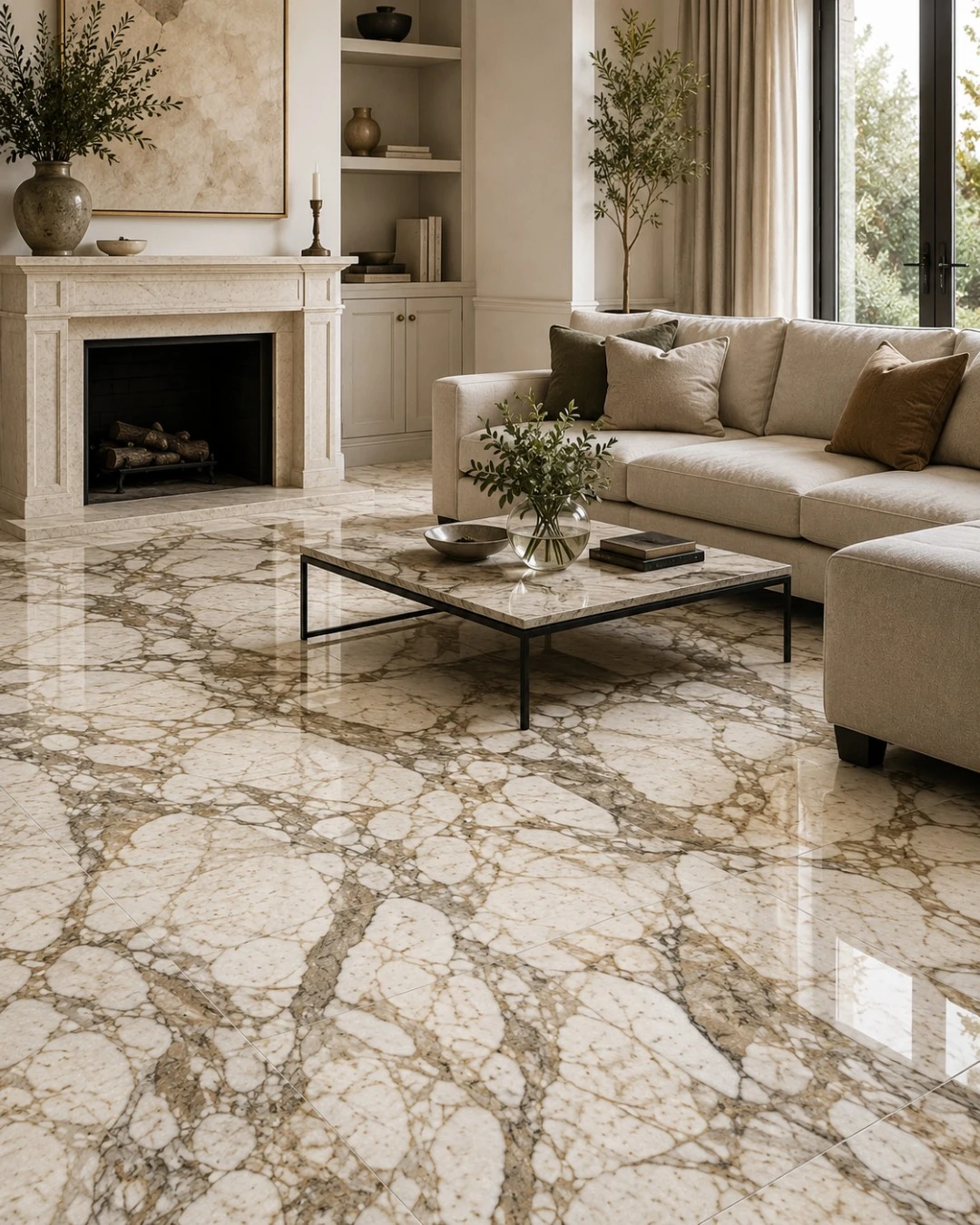
Calacatta is Carrara’s bolder cousin. Its veining is thicker, darker and far more dramatic, with brown, gold and black lines webbing across a white ground.
Here the floor fills the living room, and the same veining repeats in the fireplace surround and coffee table, so the room feels pulled together rather than matched piece by piece. A light sectional and simple shelving let the stone do the talking.
The same drama works in a bathroom or kitchen, where a Calacatta floor can anchor a room full of plain white fixtures. Because the pattern is so strong, it is worth seeing a full slab before you commit — no two are alike. If the budget is tight, use Calacatta in one hero room and a quieter white marble elsewhere; the contrast makes both look better.
The practical point: bold veining is a statement in itself, so keep the rest of the room quiet — plain upholstery and one or two strong furniture pieces are enough.
#3. Black Marble Floors with Bold White Veining
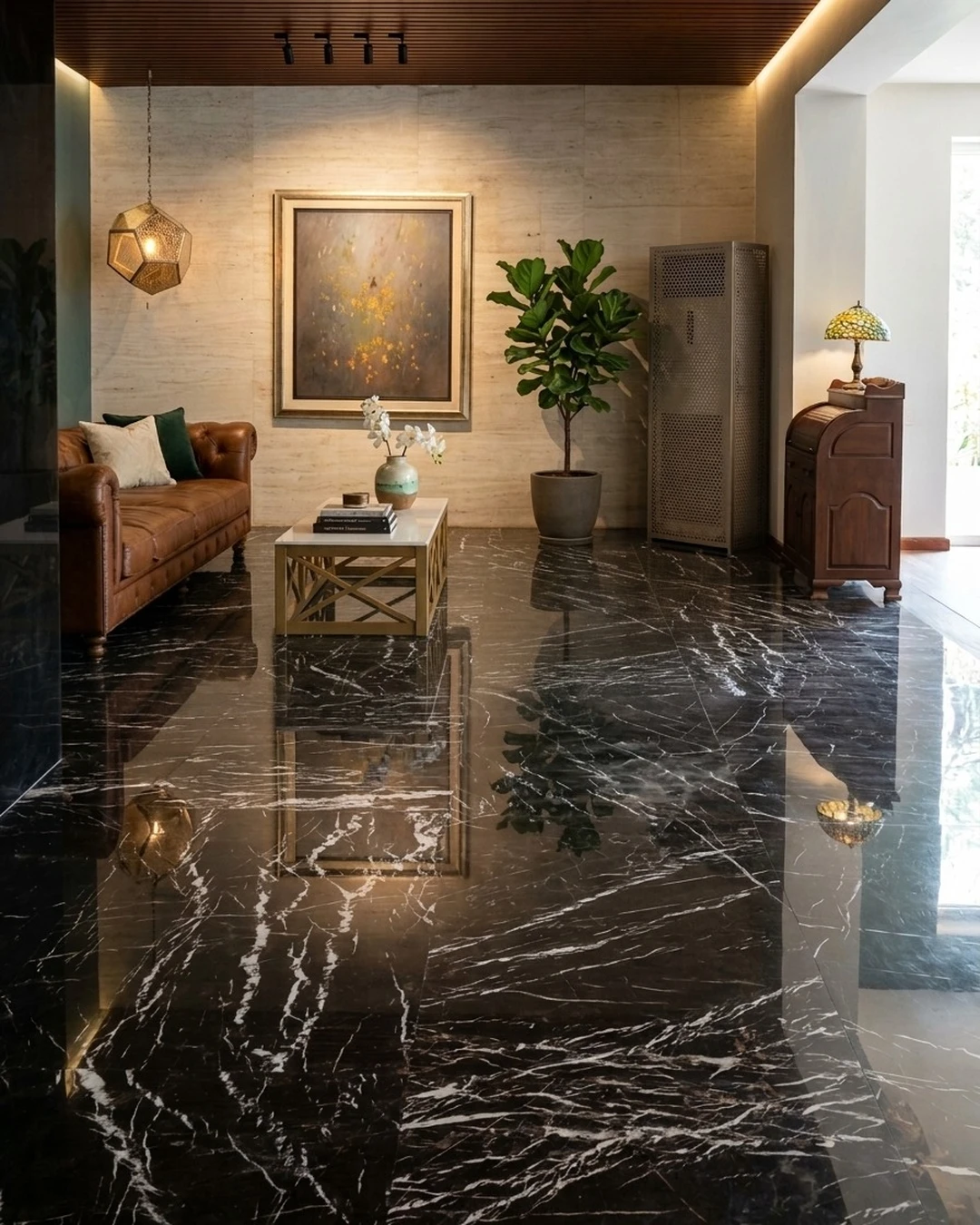
A black marble floor changes the mood of a room completely. The polished surface reflects light and furniture, so the floor feels almost like water, and the white veining stands out sharply against the dark ground.
In this lobby-style living room, a brown leather Chesterfield sofa and a low coffee table sit on the glossy black floor, with a large abstract painting and a fiddle-leaf fig softening the edges.
At night, the gloss picks up lamplight and the veining glows, so the room changes character after dark. A black floor also makes pale furniture and light walls look brighter by contrast. Keep the grout lines tight and dark, so the floor reads as one continuous surface rather than a grid of tiles.
The practical point: black marble shows dust and footprints more readily than pale stone, so it suits rooms that are cleaned often and kept free of clutter.
#4. Marble Checkerboard Floors
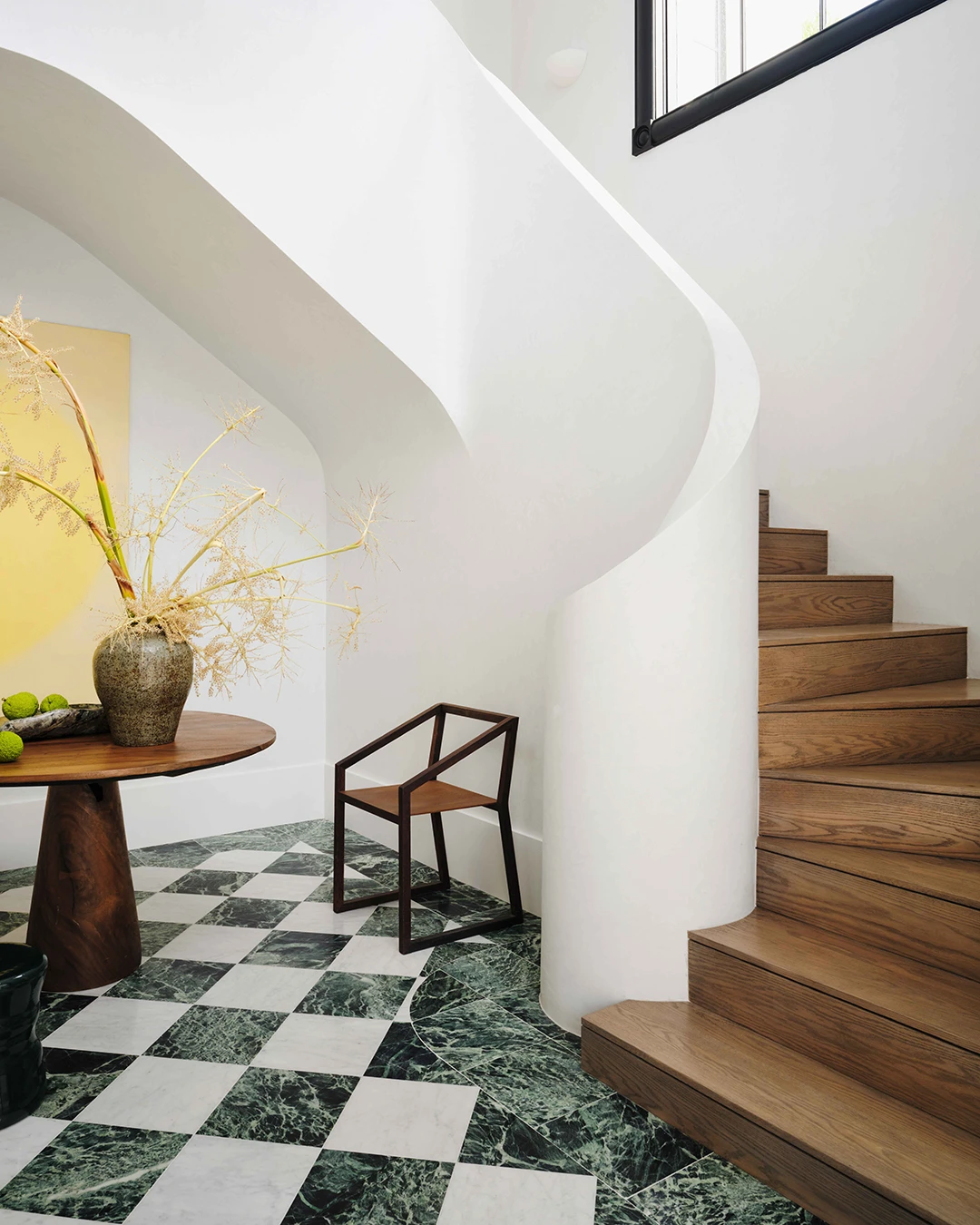
Checkerboard marble is one of the oldest floor patterns, and it still looks fresh in a modern home. Here, black and white squares run beneath a sculptural curved staircase with warm wood treads, and the dark tiles carry a touch of green veining that warms the contrast.
The pattern is bold, but the white walls and simple furniture keep the room calm. The checkerboard does the decorating, so nothing else in the room needs to compete with it.
The same pattern works in a bathroom or a kitchen, where the grid gives a small room structure. In this home, the green in the dark tiles echoes the plants and the pale yellow artwork, so the floor feels chosen rather than copied. If pure black and white feels too sharp, a grey or green-veined dark tile softens the contrast, as it does here.
The practical point: large squares suit large rooms; in a small entry, smaller tiles keep the pattern from overwhelming the space.
#5. Marble Herringbone Floors
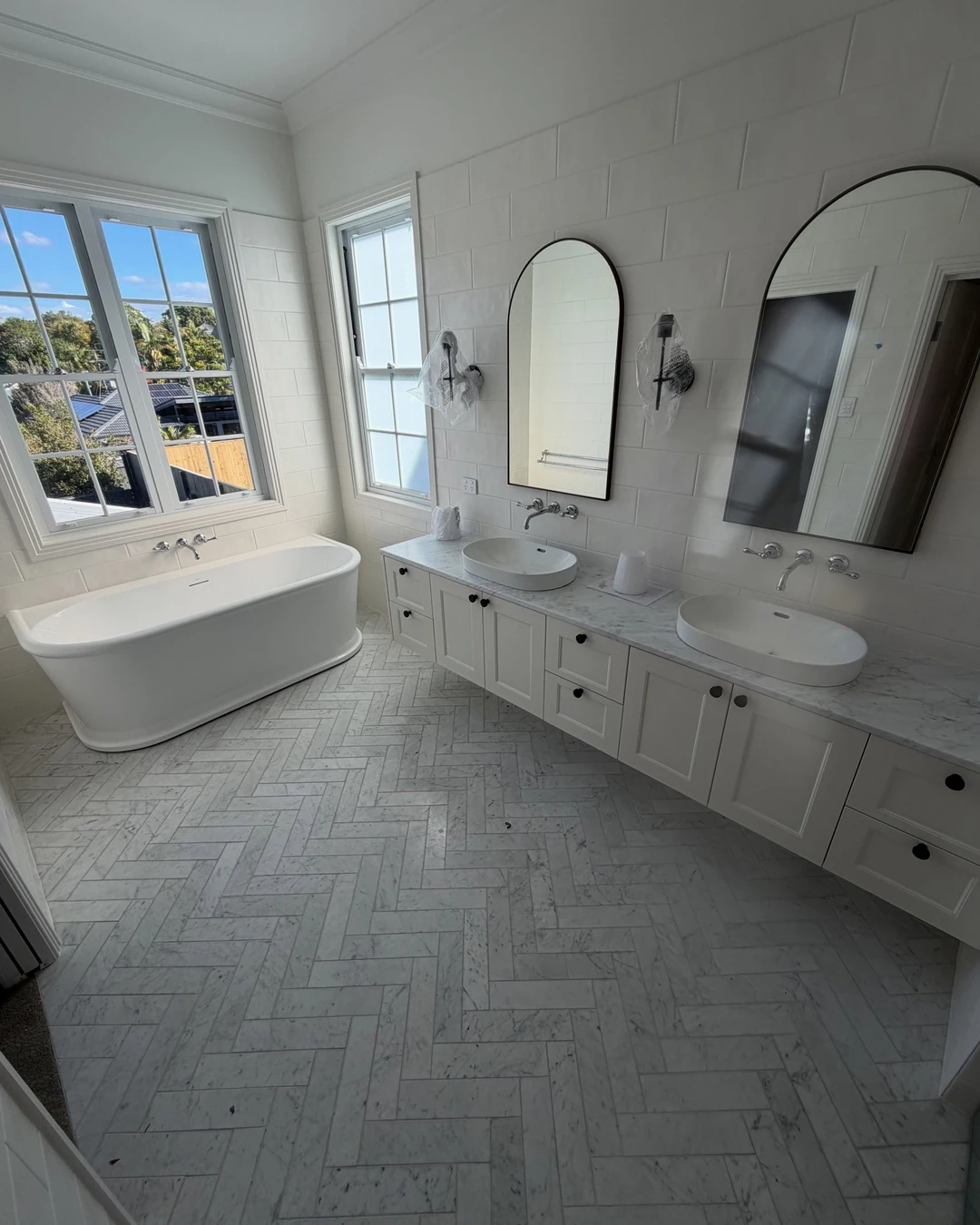
Herringbone gives marble a sense of movement that straight-laid tiles never achieve. In this bathroom, white marble herringbone runs across the whole floor, under a freestanding tub and a double vanity with arched mirrors.
The pattern is the subject of the room, and the pale stone keeps it feeling light rather than busy. The herringbone reads clearly from every corner, which is exactly what this layout is for.
The same pattern in a hallway or living room has the same effect, pulling the eye along the length of the room. Small-format tiles make the herringbone finer and more detailed, while large planks make it bolder. Because the pattern is directional, lay it so the zigzag points toward the room’s focal point — the tub here, or a fireplace in a living room.
The practical point: herringbone uses more tile and more cutting than a straight layout, so budget for extra material and a skilled installer.
#6. Marble Bathroom Floors
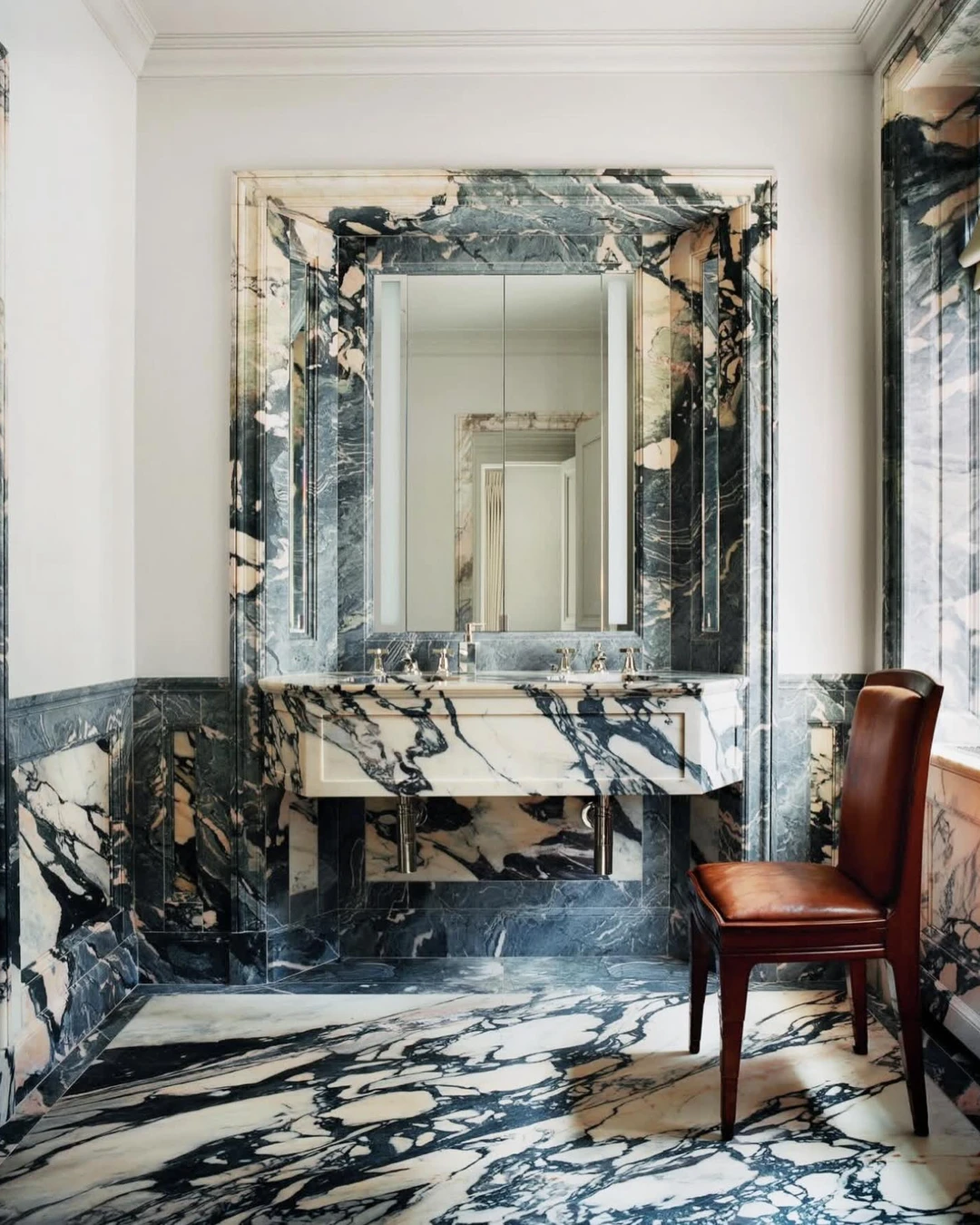
A bathroom is where marble earns its keep. Water, steam and bare feet all meet a surface that is cool, smooth and easy to wipe down.
This bathroom goes dramatic: black, white and beige veined marble covers the floor, the lower walls, the vanity and the mirror surround, with a brown leather chair adding warmth. The floor is clearly visible across the whole foreground, tying the room together.
Using the same marble on the floor, walls and vanity makes a small bathroom feel larger, because there are no visual breaks. The brown leather chair is the only warm note, and it stops the black and white from feeling cold. In a wet room, a matte finish on the floor adds grip; keep the polish for the walls, where it reflects light.
The practical point: polished marble can be slippery when wet, so consider a matte or textured finish underfoot in a family bathroom, and add a bath mat by the shower.
#7. Marble Kitchen Floors
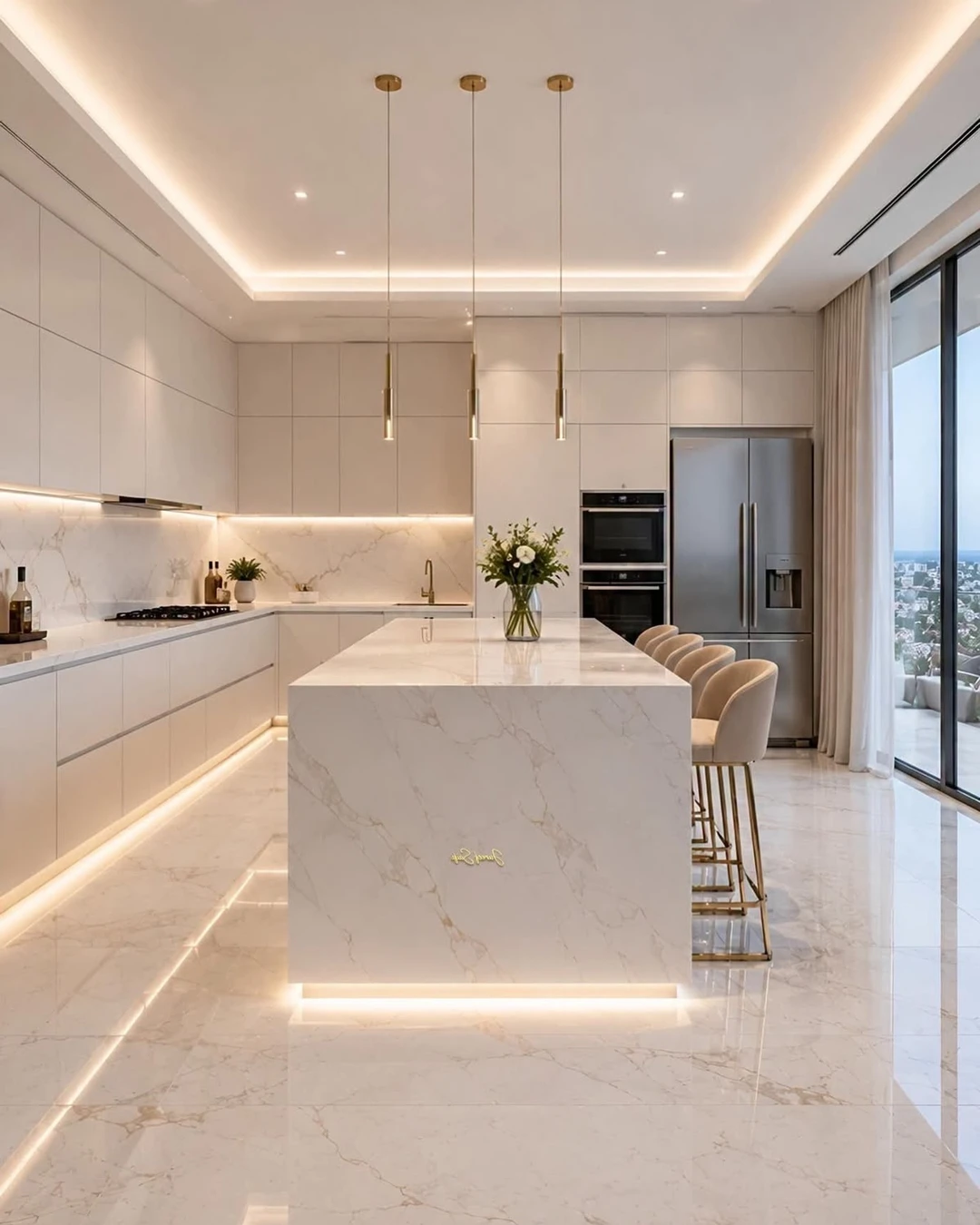
Marble in a kitchen feels luxurious, and it works hard too. This modern kitchen pairs white cabinetry with a polished white marble floor that carries soft gold veining throughout, including under and around the large island.
Floor-to-ceiling windows flood the room with light, and the pale floor bounces it back, so the kitchen feels larger than it is. The gold-legged stools and warm lighting keep the white surfaces from feeling cold.
The island’s marble top matches the floor, which ties the room together without matching everything else. White cabinets, pale walls and warm brass stools keep the space from feeling sterile. A kitchen floor takes dropped pans and spilled wine, so choose a thicker slab and a sealer rated for food areas.
The practical point: marble is porous, so seal it well and wipe up acidic spills like lemon juice or vinegar quickly to protect the finish.
#8. Marble Entryway Floors
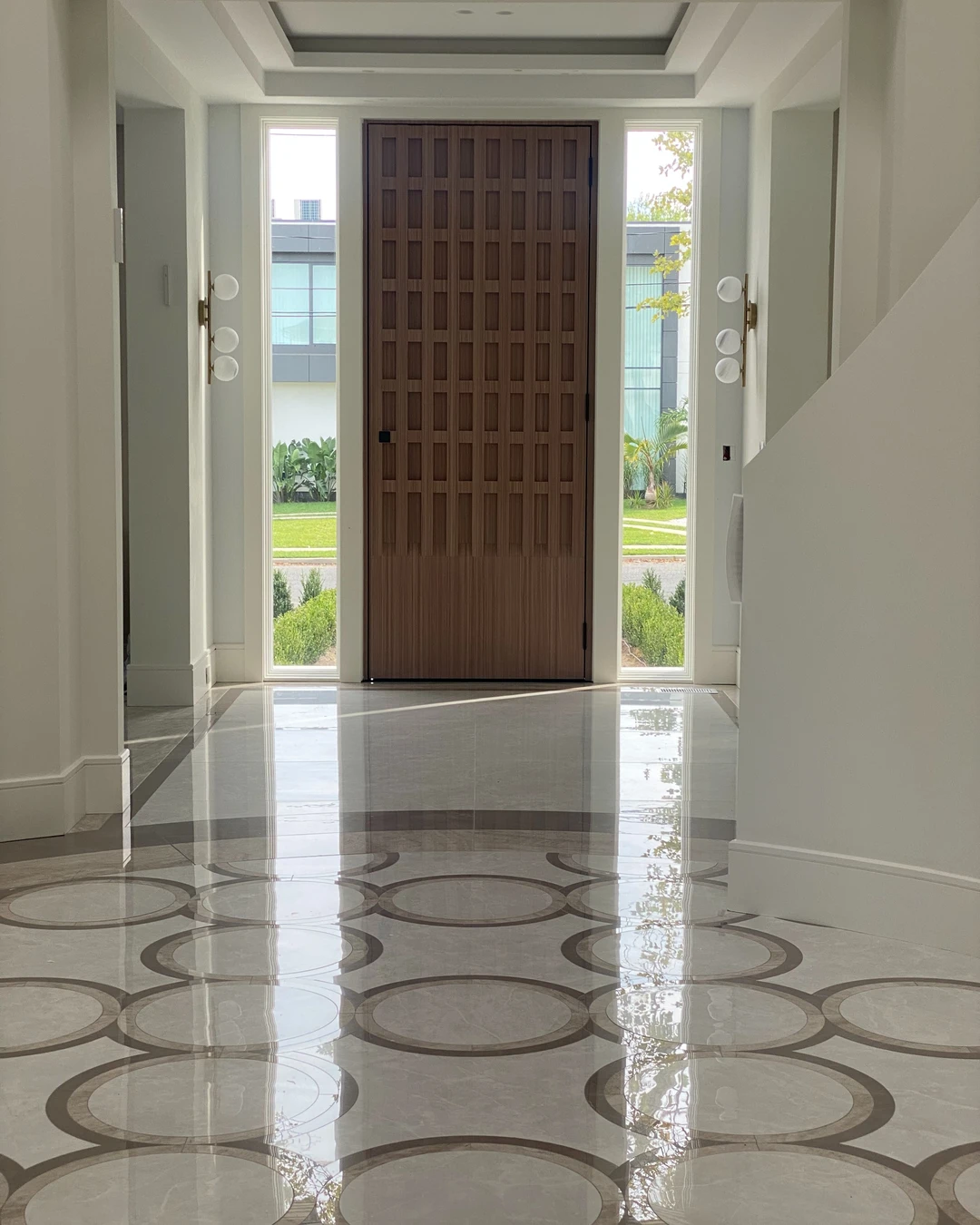
The entryway is the first floor a guest sees, and marble makes that first impression count. Here, a highly polished light marble floor carries a large overlapping-circle inlay, with a wooden slatted front door and garden views beyond.
The inlay gives the floor a pattern without a rug, and the pale stone keeps the entrance bright. The circles feel modern, but the material itself is timeless.
The inlay pattern means the floor needs no rug, which suits an entry where shoes and wet umbrellas arrive daily. The pale stone also bounces daylight from the sidelights deep into the hall. If a full inlay feels too much, a simple border in a darker marble gives the same finished look for less.
The practical point: an entryway floor takes the most wear in the house, so choose a hard-wearing marble and a pattern that hides scuffs between cleanings.
#9. Green Marble Floors
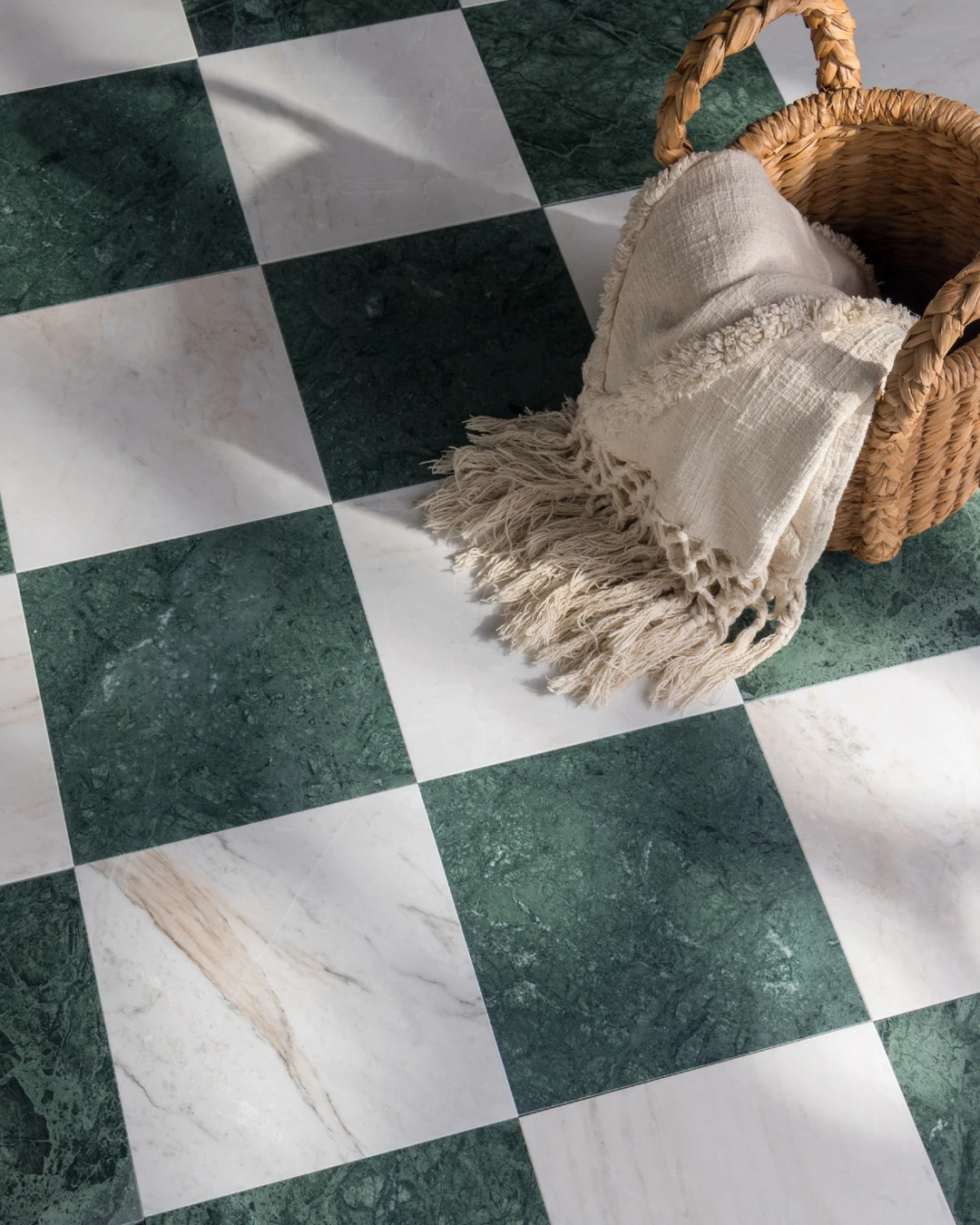
Green marble is the boldest colour in this list, and it rewards confidence. This top-down view shows large squares of dark green marble alternating with white marble veined in grey — a classic checkerboard in an unexpected colour.
The deep green reads rich and cool, and the white squares keep it from feeling heavy. A woven basket with a draped throw sits at the edge, the only soft note in the frame.
Green marble has a long history in grand hotels and old libraries, and it brings that same sense of occasion to a home. The checkerboard keeps it playful rather than formal. In a living room, the same green and white squares work under a sofa and rug, as long as the rug leaves the pattern visible at the edges.
The practical point: green marble pairs best with warm woods and brass, which soften its cool tone; keep the walls pale so the floor stays the star.
#10. Marble Floors with Brass Inlay
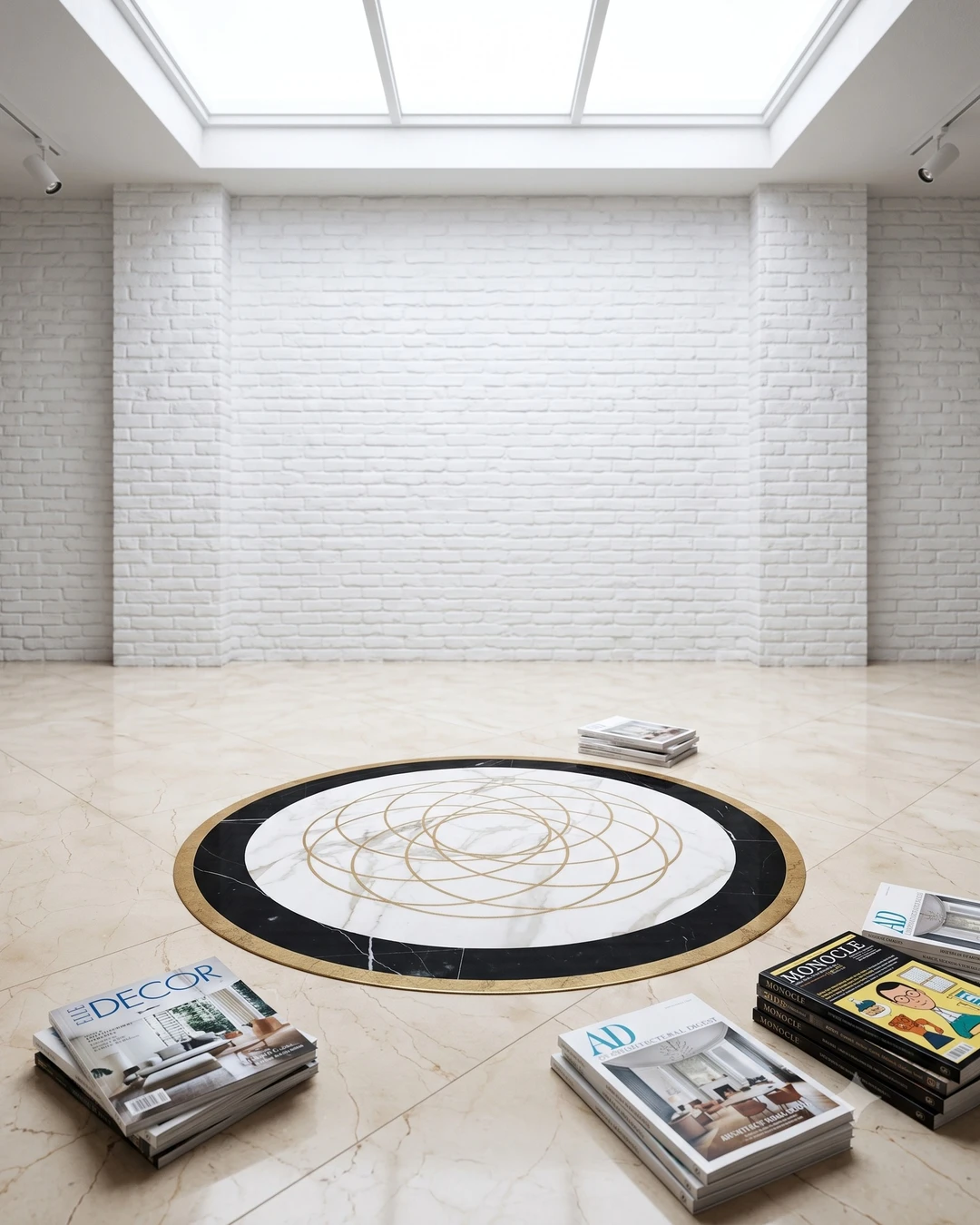
Brass inlay turns a marble floor into jewellery for the room. Under a skylight, a beige marble floor carries a large circular medallion — white centre, interlocking gold brass lines, a black marble ring and a thin gold outer border.
Stacks of design magazines sit on the floor at the edges, their covers reading “DECOR” and “AD”, like styling props in a showroom. The medallion needs no rug and no furniture to justify itself.
The brass lines will age and patina over time, which only adds character — polished brass brightens a room, while aged brass feels warmer. The black ring frames the medallion so it reads clearly from across the room. Brass inlay suits a room with other metal details, like a brass pendant or door handles, so the floor feels part of the design rather than an afterthought.
The practical point: brass inlay is a permanent design decision, so place the medallion where furniture will not hide it — the centre of an open room, not under a rug.
#11. Matte Marble Floors
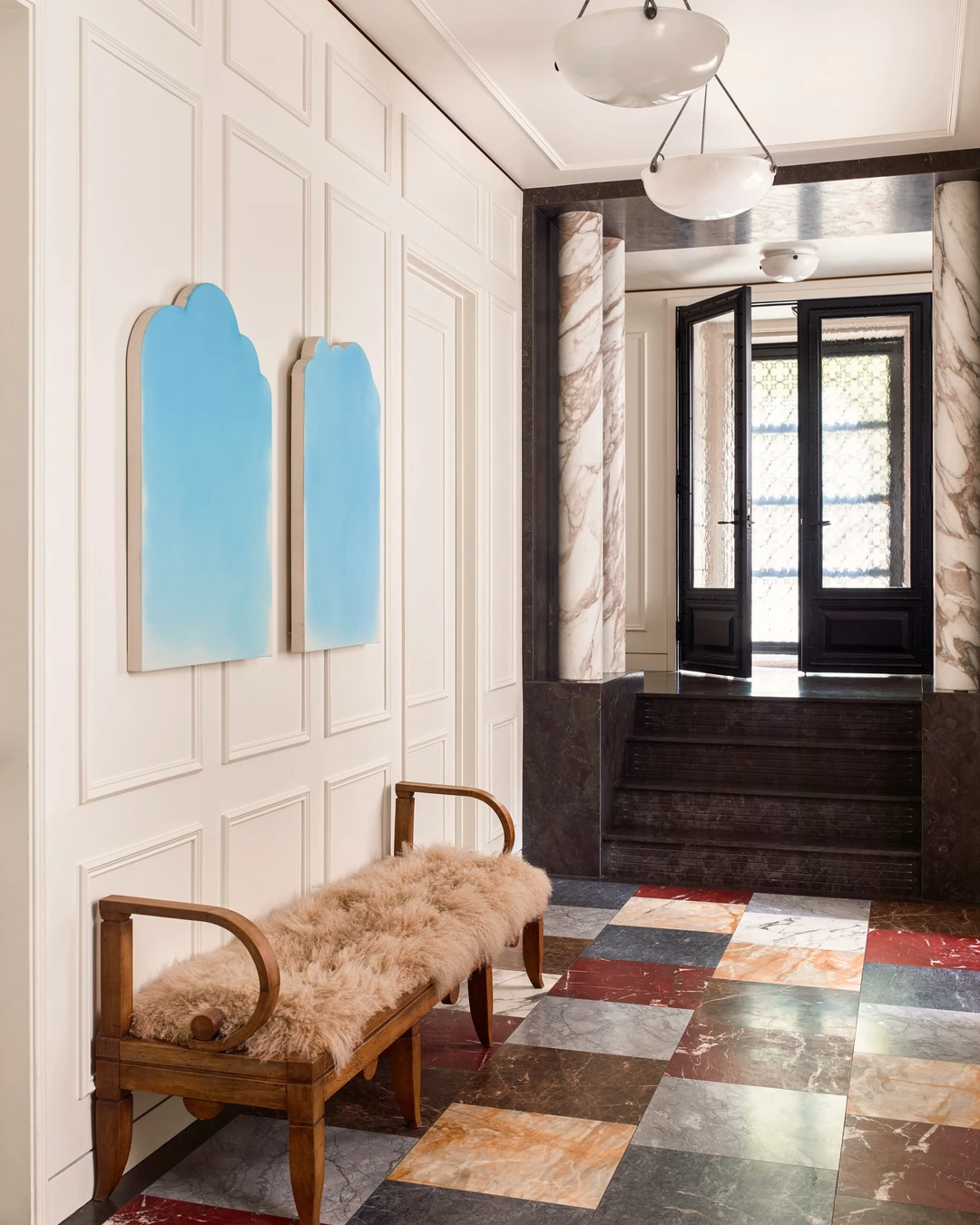
Not every marble floor needs a high polish. A matte, low-sheen finish softens the stone and suits rooms that aim for calm rather than glamour.
This entryway shows large square tiles of multicoloured marble — red, brown, grey, white and orange — with no glossy reflections at all. A wooden bench with a fur throw, two pale-blue paintings and dark marble steps complete a room that feels collected rather than decorated.
The multicoloured tiles here would feel loud with a gloss finish, but the matte surface calms them down. The result is a floor with personality that still lets the room breathe. Matte marble also photographs well, since there are no reflections to fight, which is why it suits rooms with large windows.
The practical point: a matte finish hides water spots and footprints better than polished stone, which makes it a practical choice for a busy family entry.
#12. Marble and Wood Floor Combinations
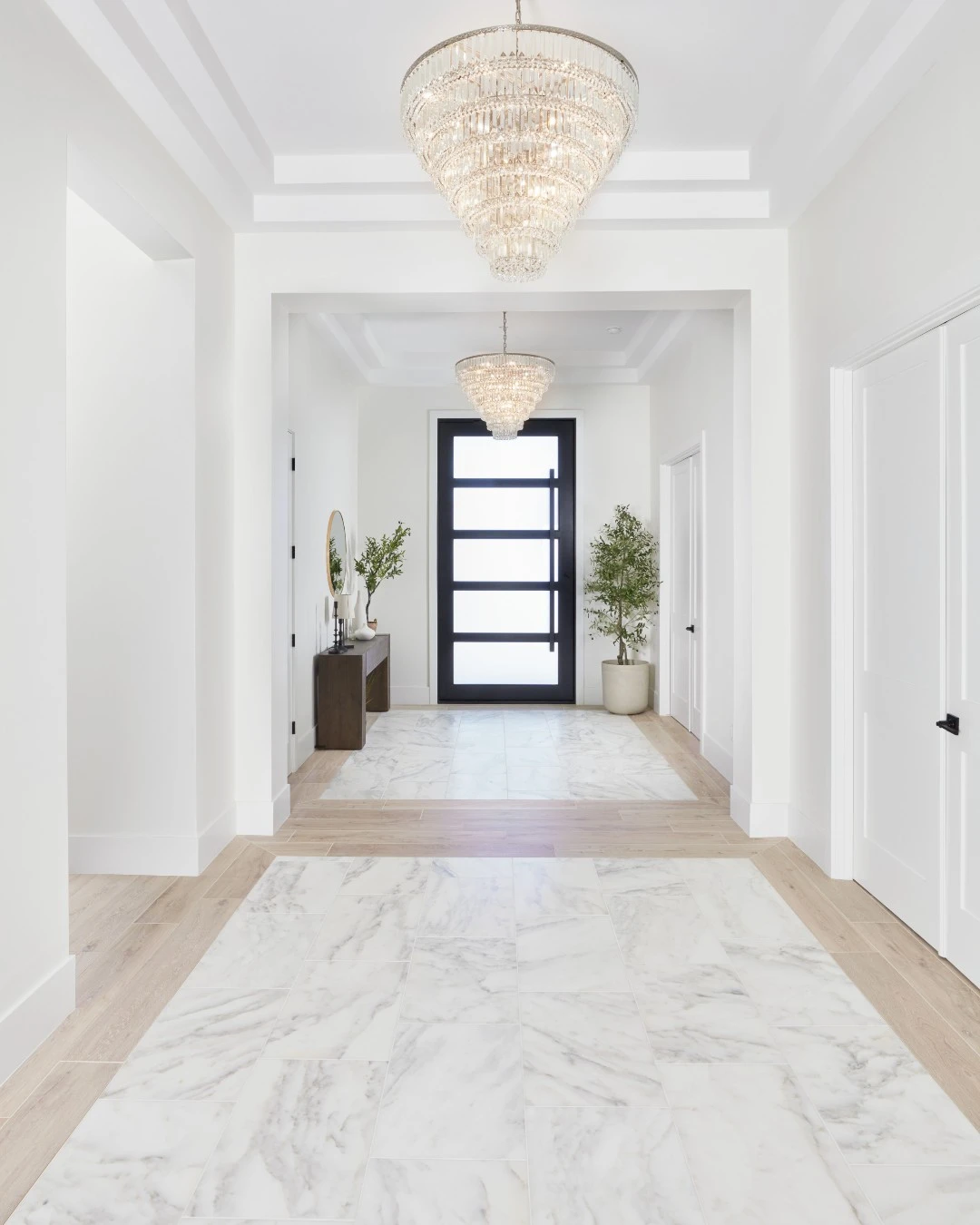
Marble and wood are natural partners: one cool and hard, the other warm and soft. In this bright entryway, light wood planks run along the sides while a wide run of large white marble tiles with grey veining leads down the centre, under two crystal chandeliers.
The two materials share the frame equally, and neither overwhelms the other. The marble run leads the eye toward the black front door, so the floor works like a path through the house. The wood at the sides warms the edges, and the chandeliers add sparkle above.
The same combination works in a kitchen, where marble under the island and wood elsewhere gives you a hard-wearing work zone and a warm living zone. The same thinking applies wherever two floors meet — our Floor Tile Transition Ideas for a Beautifully Connected Home looks at more ways to make that joint look intentional.
The practical point: the joint between marble and wood needs a clean transition strip, and both materials expand and contract differently, so leave the right gap and seal it properly.
#13. Book-Matched Marble Floors
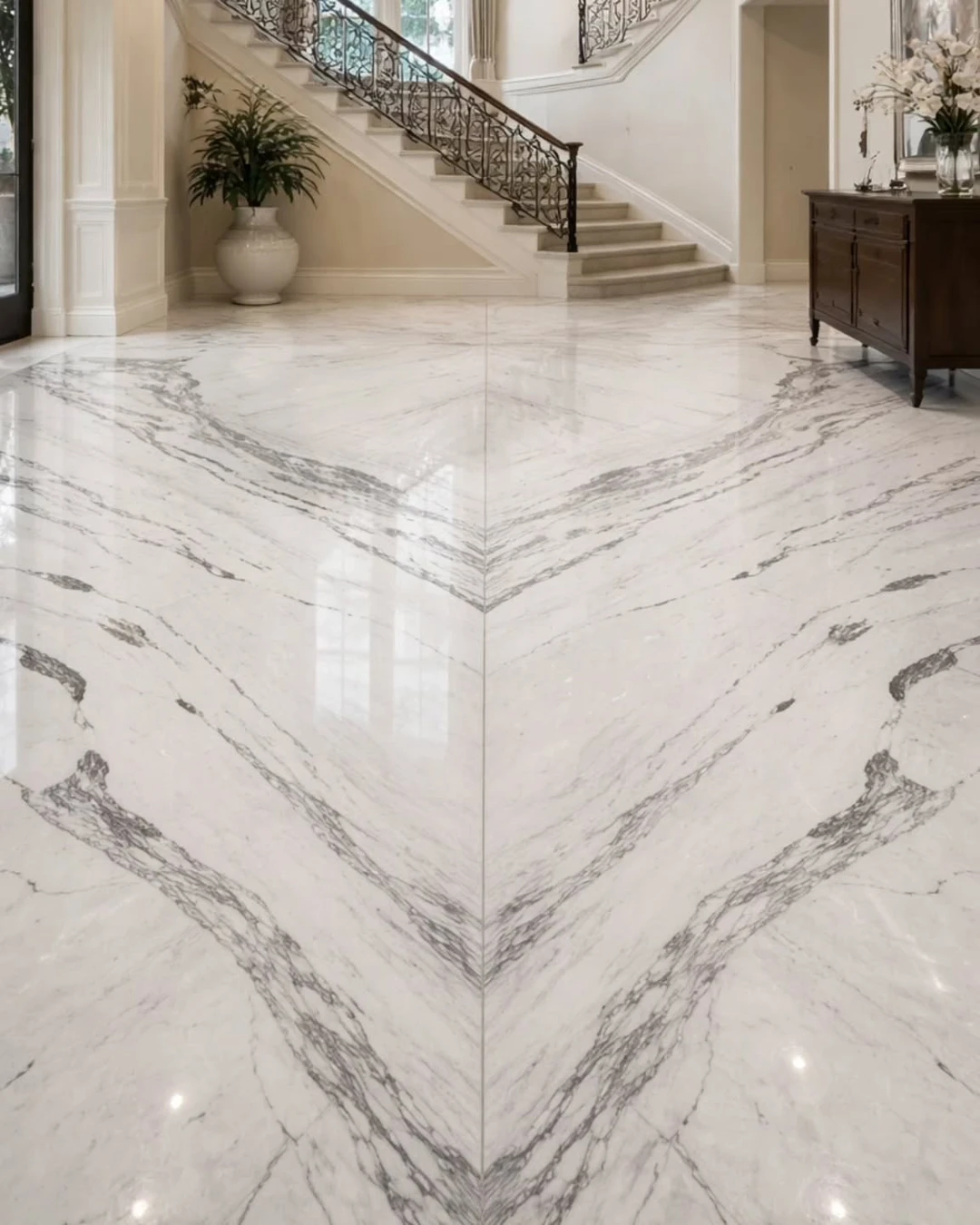
Book-matching is marble’s most dramatic trick. Two slabs cut from the same block are opened like a book, so their veining mirrors itself in a symmetrical pattern.
Here, a glossy white marble floor carries dramatic grey veining in a mirrored V down the centre of a grand foyer, with a staircase and dark wood console at the edges. The symmetry draws the eye straight through the room.
The mirrored V is the centrepiece, but the veining also runs up the staircase wall, so the whole foyer feels designed as one piece. A dark console and a green plant anchor the edges without competing with the floor. Because book-matched slabs are cut from one block, order the whole set at once — a later batch will never match exactly.
The practical point: book-matching needs careful planning and a skilled stone supplier, since the slabs must come from the same block and be laid in the right order — confirm the sequence before installation begins.
Choose the Marble Floor That Fits Your Home
Marble floors work in every room, from the quietest entry to the busiest kitchen, because the stone itself offers so many moods. A soft white Carrara suits a calm home, a bold Calacatta suits a confident one, and a green or black floor suits a room that wants to be remembered.
The pattern matters as much as the colour — checkerboard, herringbone and book-matched veining each give the same stone a different character. And where marble meets wood, the meeting deserves as much thought as the stone itself — our Thoughtful Wooden Floor Transitions for a Cohesive Home shows how to make that joint look seamless.
Whatever you choose, these marble floor ideas share one thing: the stone itself does the decorating, and it will still be doing it decades from now. Pick the look that matches how you live, seal it well, and let the floor do the talking.