You know the feeling when you walk into a room and your shoulders drop — that is what a cottage does and you do not need a farmhouse, a renovation, or a single gingham curtain to get it.
Your living room already has the bones for it — soft light through the window, a chair you actually sit in, a shelf holding things you chose yourself.
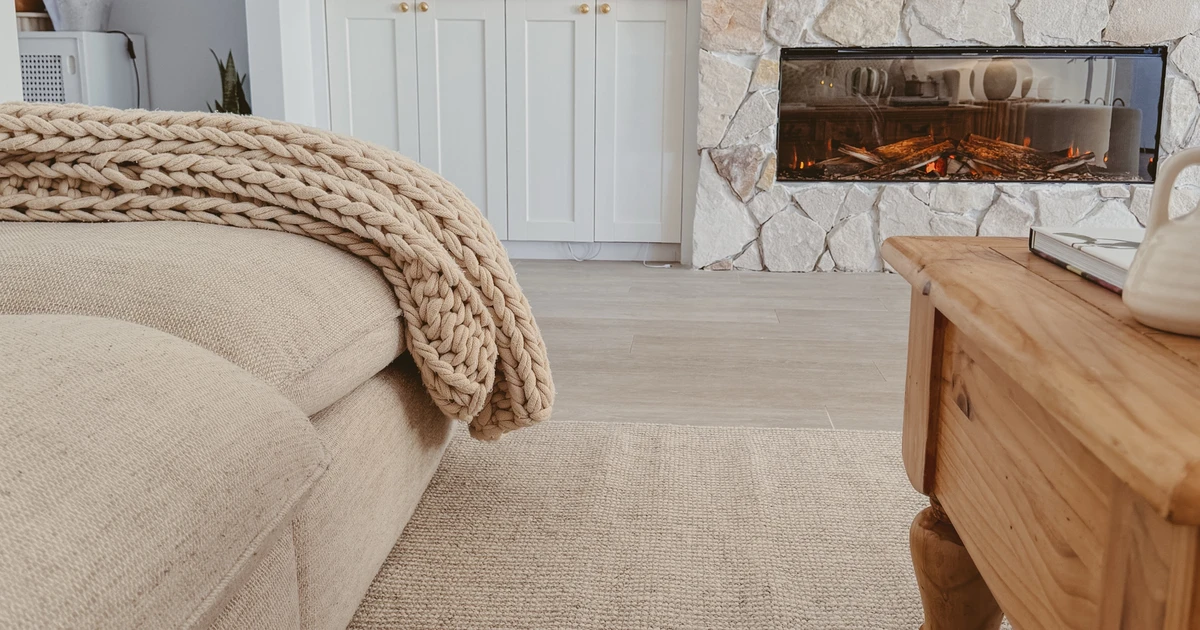
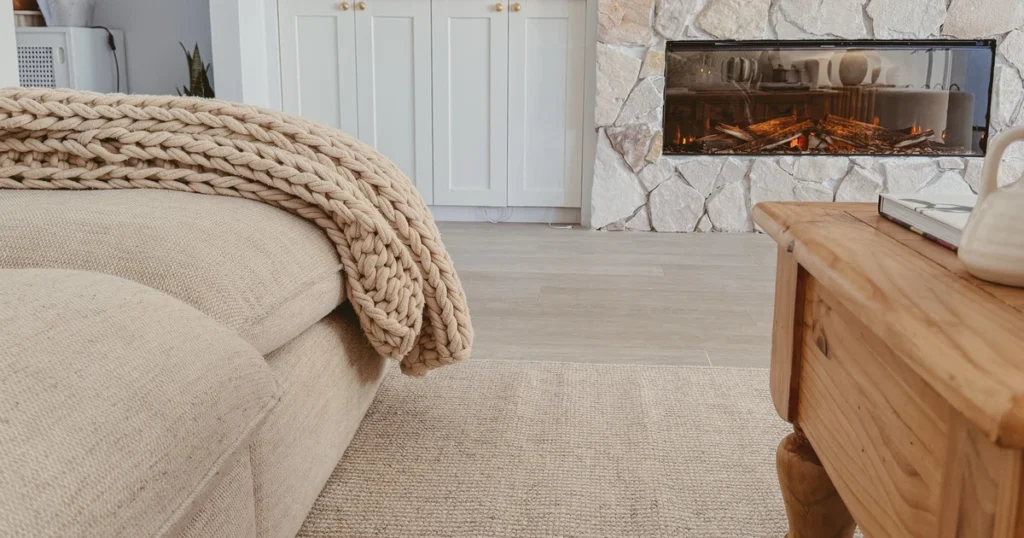
Think linen slipcovers that wrinkle a little, warm wood underfoot, a jute rug that feels good barefoot, and one or two old pieces with a story behind them.
Nothing here is a theme or a costume. These are small choices — a chipped tureen on an open shelf, a reading chair by the window, sage-green cushions against cream walls — that add up to a room that feels like yours.
Here are 14 cozy cottage decor ideas for modern homes — no country clichés, just rooms that feel lived in and loved.
Soft White Walls with Warm Undertones
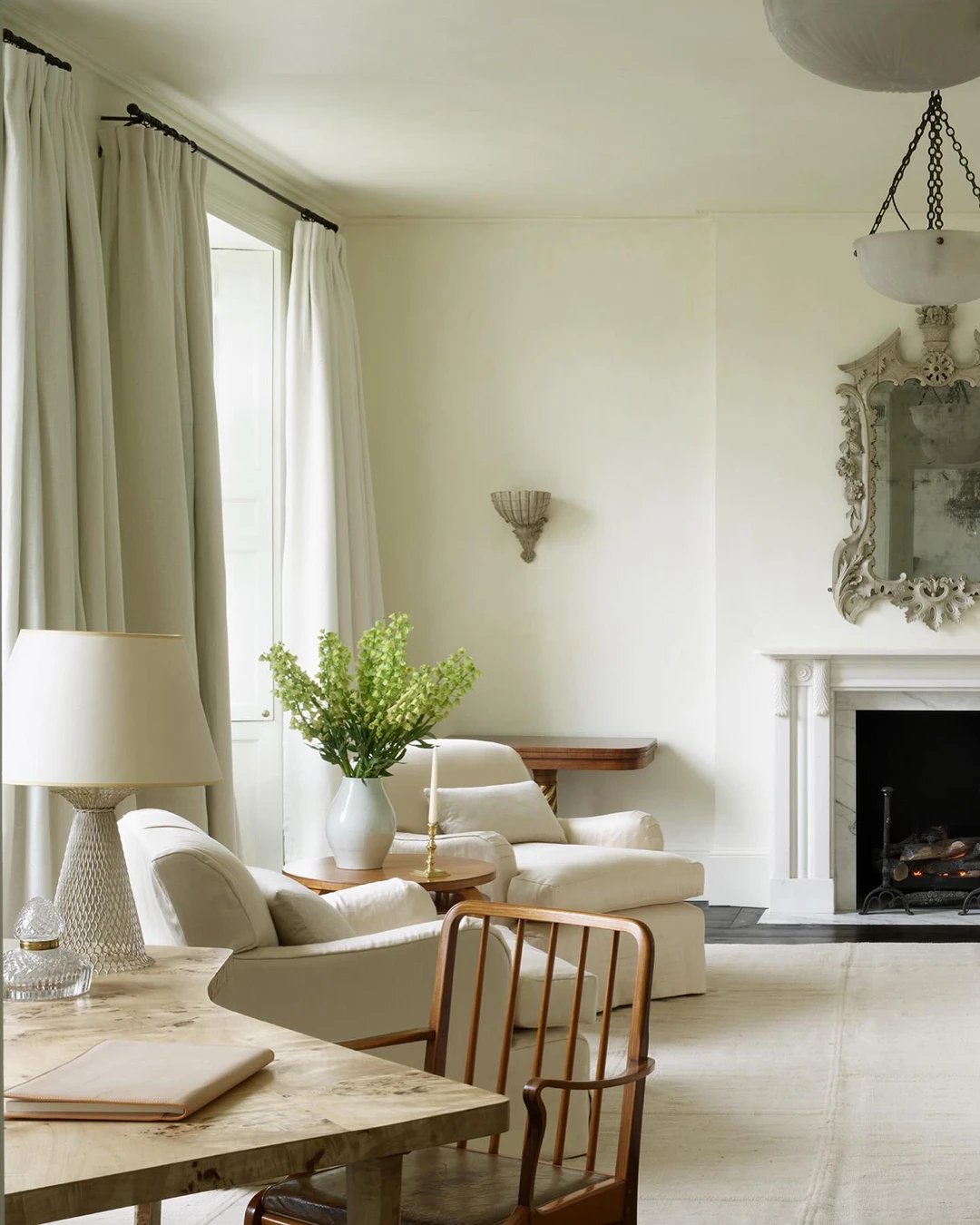
Cream walls, linen curtains and a marble fireplace fill this living room with soft light, and nothing in it shouts for attention. The walls are warm, not stark — the kind of white that looks like sunlight rather than a paint chart.
Warm undertones are what keep a white room from feeling cold. A cool, blue-white wall needs a lot of furniture to warm it up; a cream wall does half the work on its own, and it makes wood, linen and plants look better against it.
The practical point: Test the paint on the wall and look at it at night, not just in daylight. A warm white can turn yellow under warm bulbs, so pick one that still looks like cream after dark.
Linen Sofa That Invites Sitting
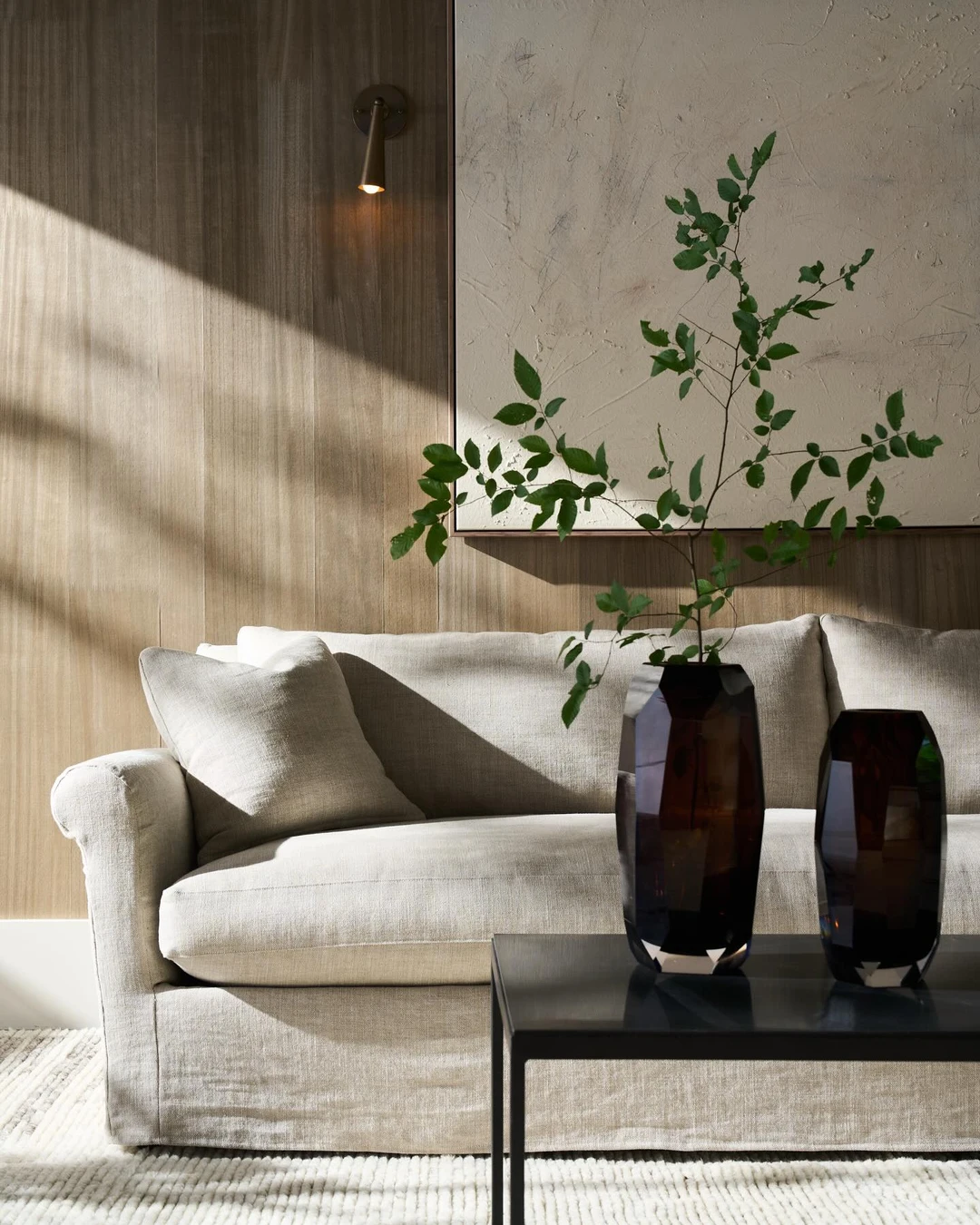
Beige linen covers this sofa from arm to arm, wrinkled in the way linen always is, with a wood-panelled wall behind it and greenery in dark vases on the table. It looks like a sofa that gets sat on every day, not one that gets admired from the doorway.
Linen is the right fabric for a cottage sofa because it does not pretend to be perfect. The wrinkles are part of it, the slipcover comes off for washing, and a faded patch after a few summers just looks like the sofa has lived a little.
The practical point: Choose a washable slipcover, not fixed upholstery. A linen sofa you can wash is a sofa you can actually live with — pets, children, red wine and all.
Warm Wood Beams — Just One Touch
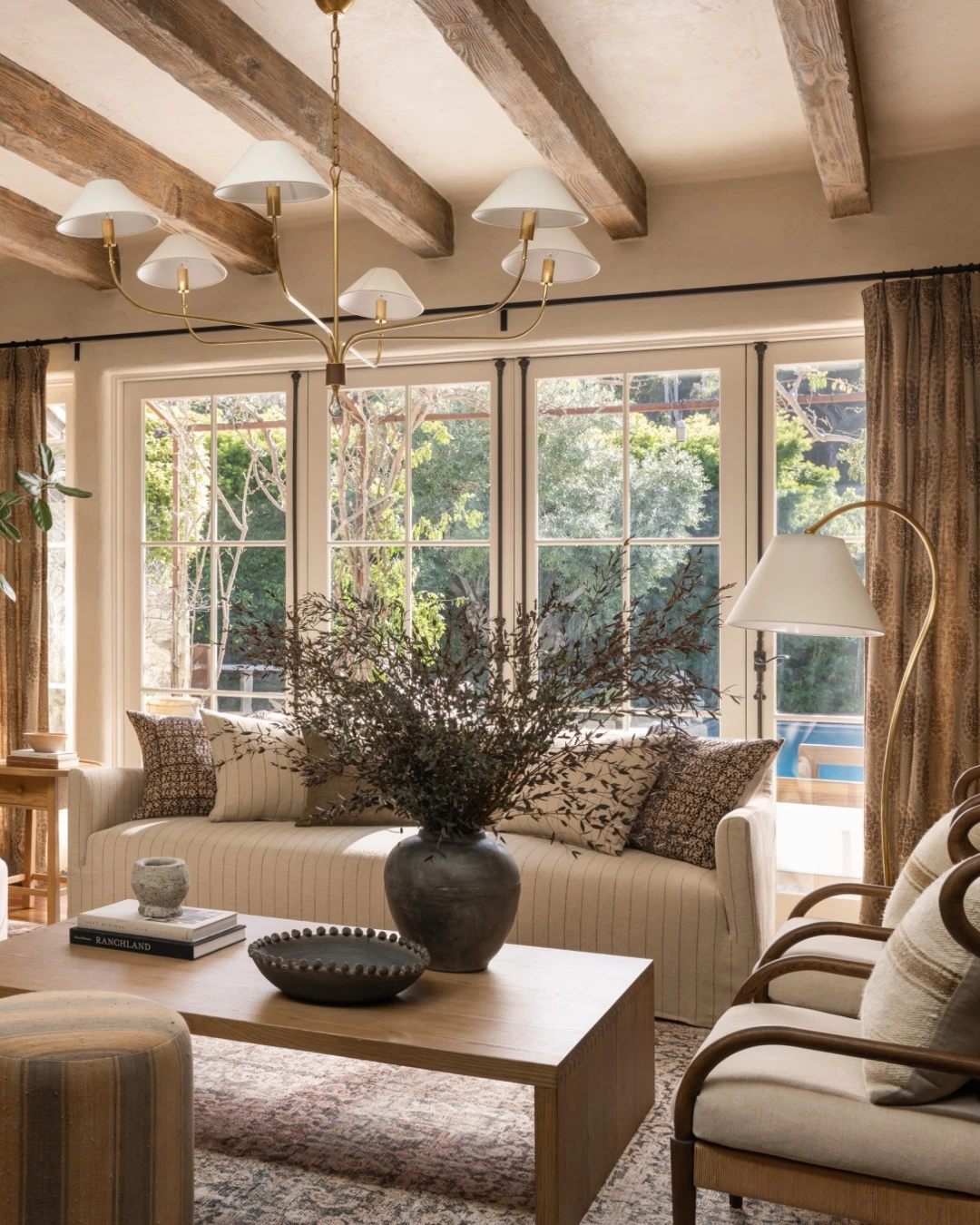
Thick wood beams run across this ceiling above French doors, and they do more for the room than any single piece of furniture. The beams give the ceiling a shape, and the warm wood pulls the whole pale room together.
One touch of exposed wood is enough. Beams on the ceiling, a wooden coffee table, or a timber mantel — pick one and let it stand out. Two or three competing wood features start to feel like a log cabin, which is exactly the cliché this look avoids.
The practical point: Keep the beams the same warm tone as your other wood. Mixed wood tones can work, but one warm tone repeated twice looks intentional, while four different tones look accidental.
Vintage Finds Mixed with Modern Pieces
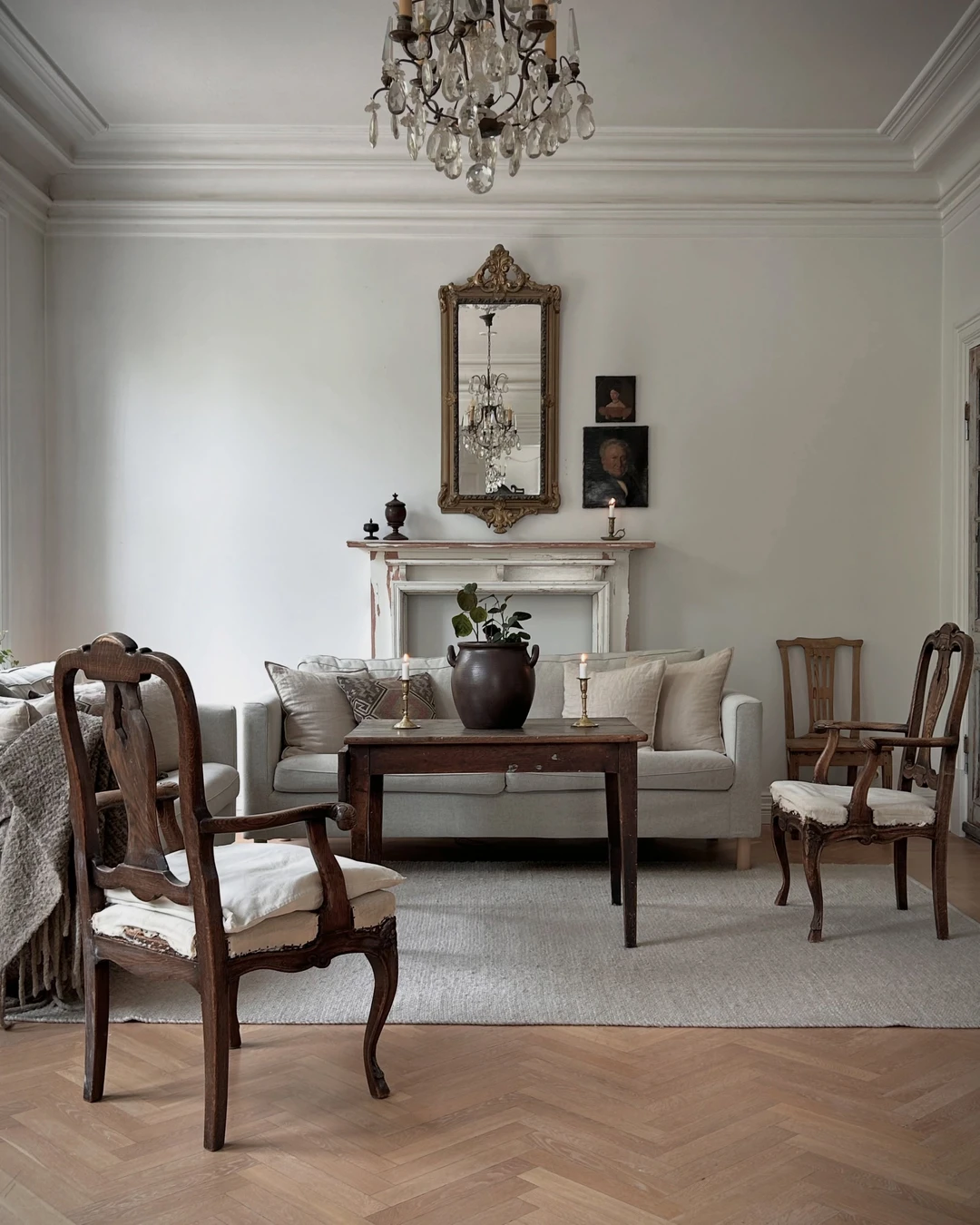
Ornate vintage chairs with curved legs sit beside a plain modern grey sofa, with a mantel mirror and two small antique portraits above the fireplace. The old pieces bring the character; the new sofa keeps the room from feeling like a museum.
Mixing old and new works when the old pieces are few and the new pieces are simple. Two vintage chairs against a plain sofa is a conversation; a whole room of antiques is a collection, and collections are hard to sit in.
The practical point: Let one vintage piece be the star of each seating area. When every chair is old and ornate, none of them stands out — and the room starts to feel like a shop, not a home.
Layered Textiles Without the Frills
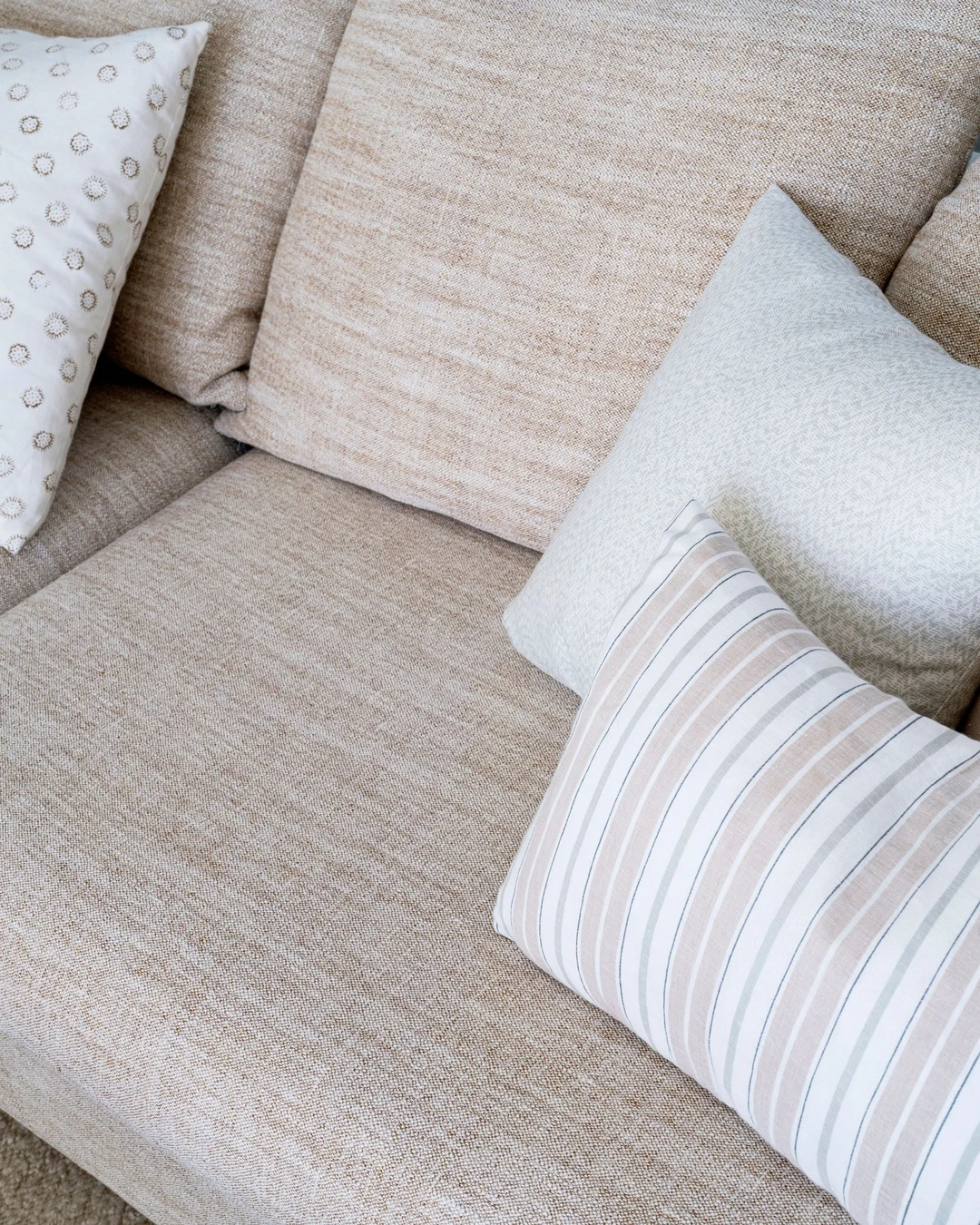
Linen, cotton and a single striped pillow layer across this sofa in soft neutrals, with no ruffles, no fringe and no fuss. The cushions look piled up by someone who sat there, not arranged by someone styling a photograph.
Layering is about texture, not quantity. Two or three different fabrics — smooth linen, soft cotton, one woven stripe — give the eye something to rest on. Five cushions in five patterns just compete with each other.
The practical point: Keep all your cushions in one colour family and vary the texture instead of the colour. Neutrals in linen, cotton and wool feel rich together; neutrals plus one loud print feels like an accident.
Fireplace Styled Simply
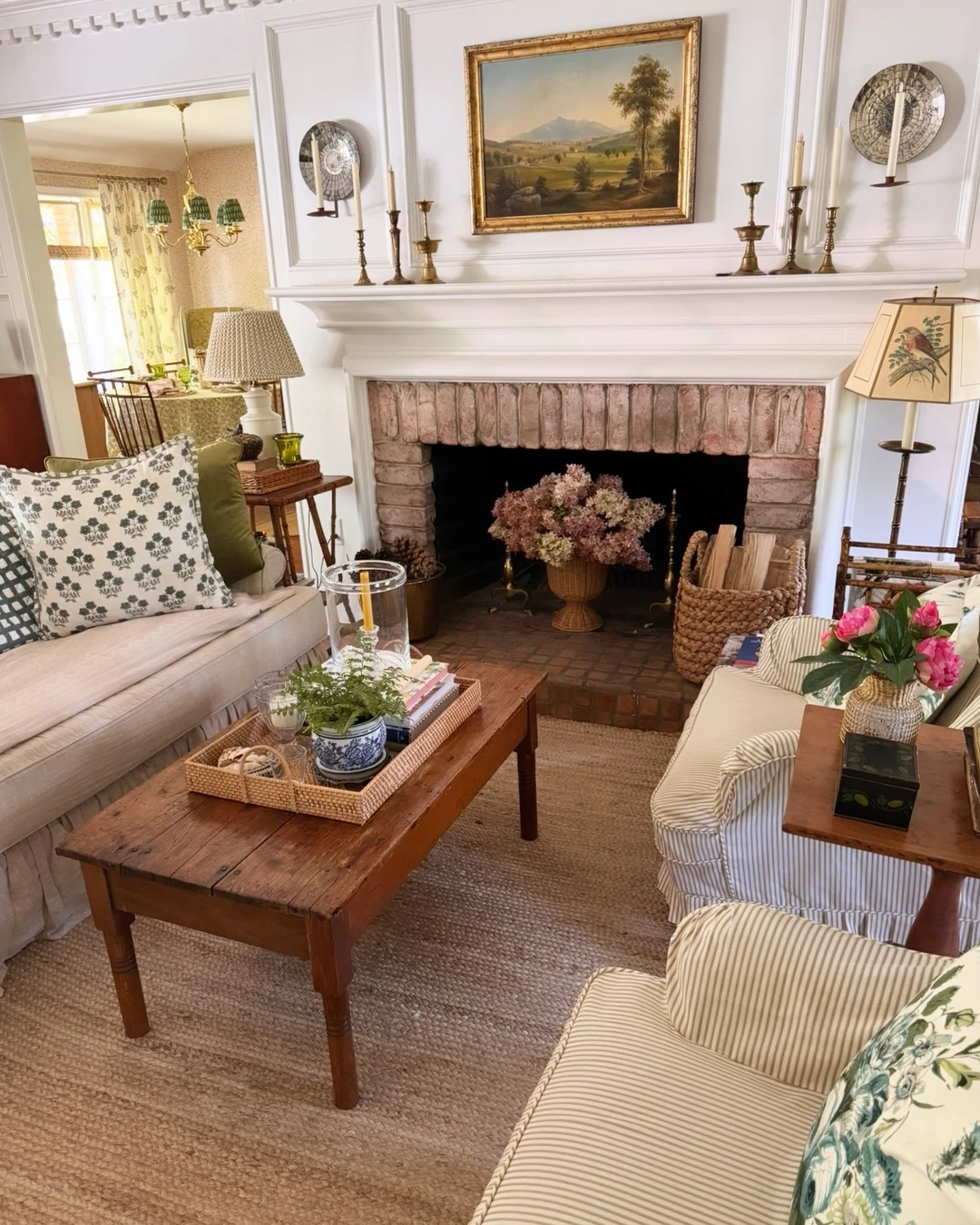
One landscape painting, two brass candlesticks and a vase of flowers sit on this white mantel above a brick fireplace, and that is all. The mantel is not empty, but it is not crowded either — every piece has room to breathe.
Simple styling works on a fireplace because the fireplace is already the focal point. A mantel packed with objects fights the fire for attention; a mantel with three or four pieces lets the fire win, which is the whole point of having one.
The practical point: Style the mantel in odd numbers — three or five pieces, not four. Odd groupings look relaxed and natural; even groupings look like a shop display.
Natural Fibre Rugs Underfoot
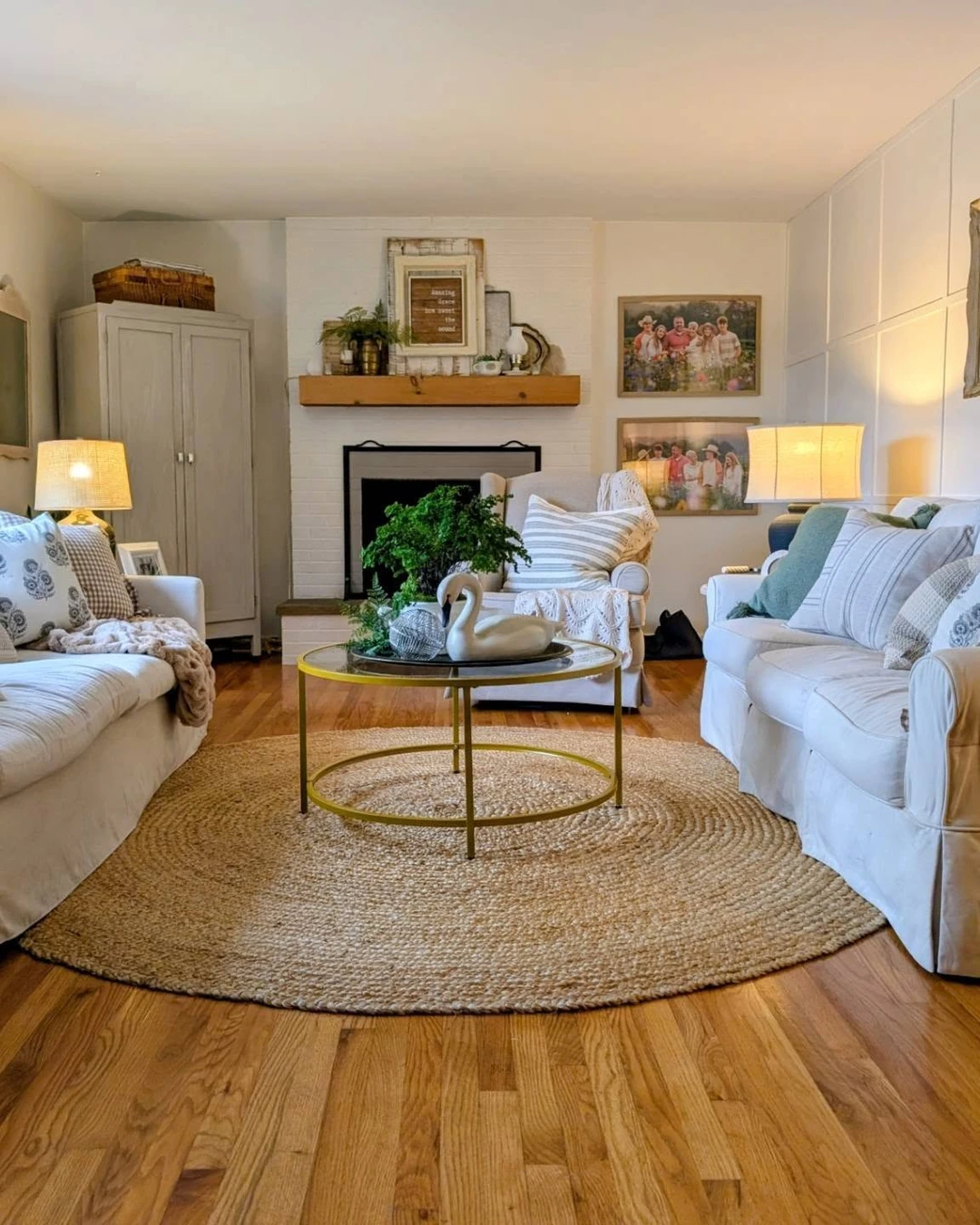
Between two white slipcovered sofas sits a big round woven jute rug, softening the wood floor and pulling the seating together. The rug is the anchor of the room — without it, the two sofas would just be furniture facing each other across bare boards.
Natural fibre rugs suit cottage rooms because they add texture without adding colour. Jute, sisal and seagrass all work, and they hide crumbs, pet hair and everyday mess far better than a pale wool rug ever will.
The practical point: Buy the rug one size bigger than you think you need. A rug that just fits under the coffee table looks like a mat; a rug that reaches under the front legs of both sofas looks like it belongs to the room.
Open Shelving with Everyday Pieces
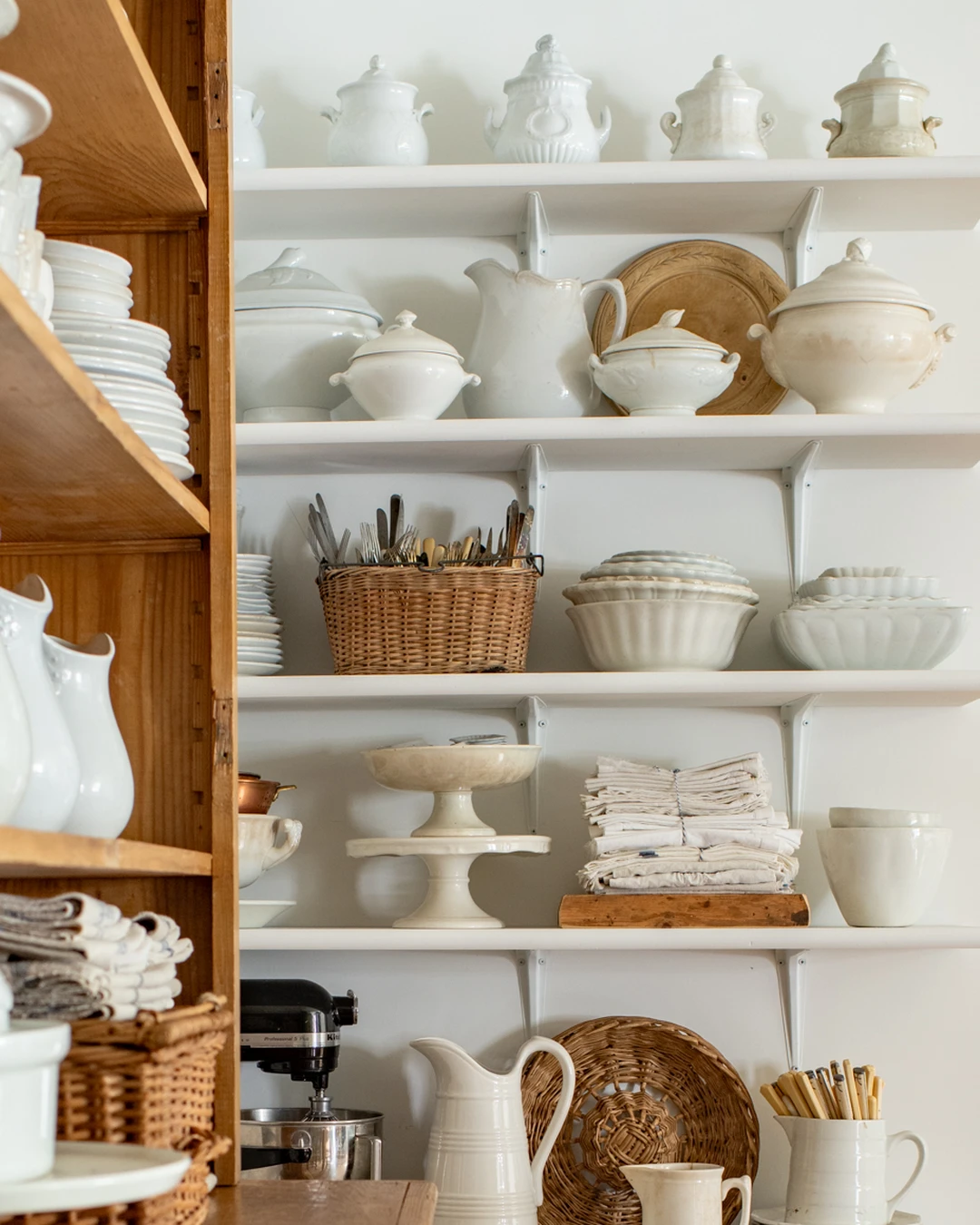
White shelves hold tureens, pitchers, bowls and a wicker basket — everyday dishes, not display pieces. The shelves look like a working kitchen, and that is exactly why they work: nothing on them is too precious to use.
Open shelving earns its place when it holds things you reach for daily. Dishes you use, a basket for cutlery, a stack of bowls — the shelf stays tidy because it is used, not because it is styled once and left alone.
The practical point: Keep open shelves to things you use at least once a week. Anything rarer gathers dust and guilt; anything you use daily earns its spot and keeps the shelf looking alive. If you love the kitchen look, The Design Details That Define Joanna Gaines Kitchens shows the same idea done at full scale.
Plants in Simple Pots
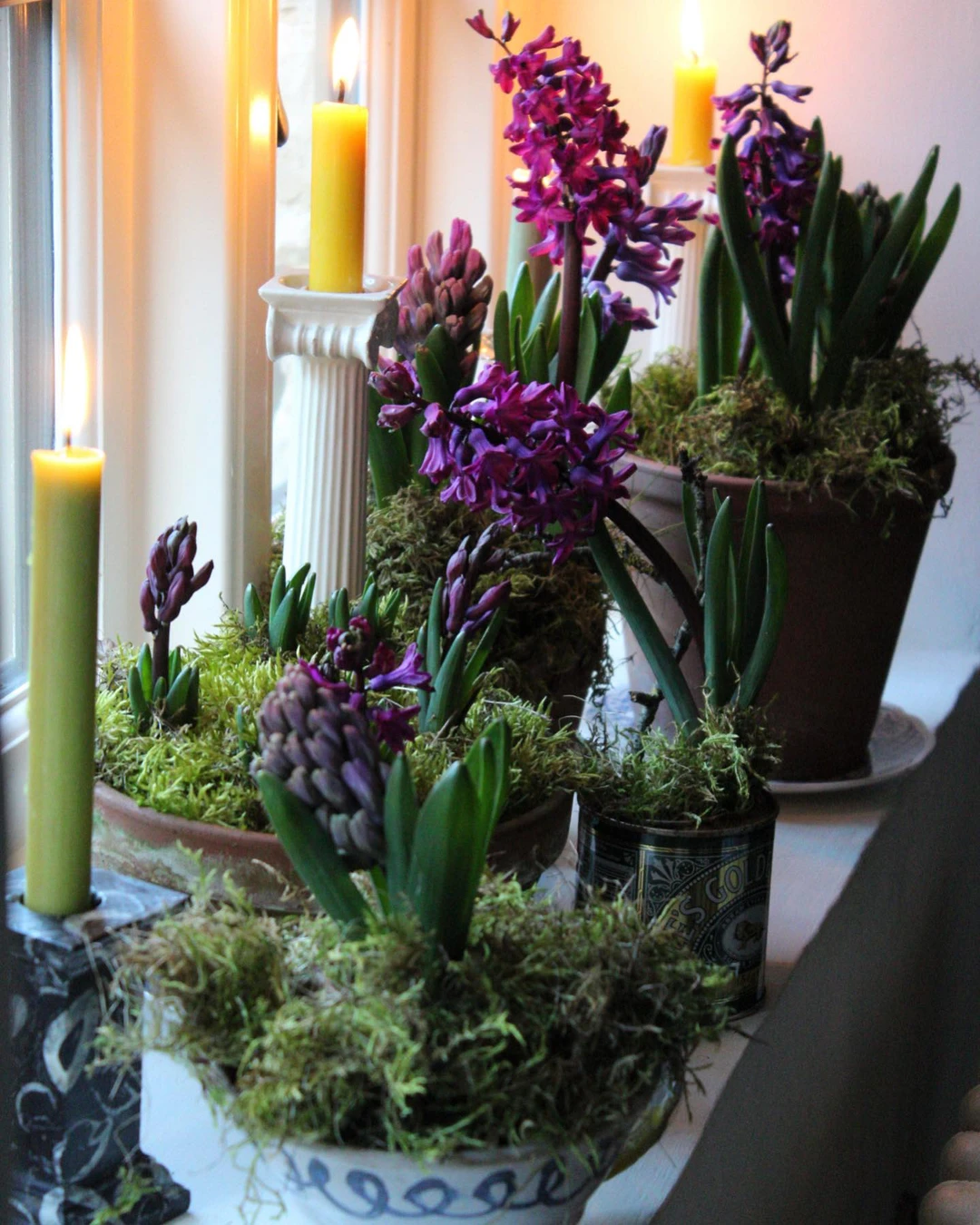
Purple hyacinths in plain terracotta pots crowd a sunny windowsill beside tall candles, and the whole thing smells of spring. The pots are nothing special — that is the point. Terracotta lets the flowers do the talking.
Simple pots keep plants from becoming decor objects. A plain pot disappears and the plant takes over; a fancy pot competes with the plant, and suddenly you are decorating with containers instead of growing things.
The practical point: Stick to one pot material per windowsill — all terracotta, or all plain ceramic. Mixed pots look collected in a bad way; matching pots look calm, even when the plants inside them are completely different.
Reading Corner by the Window
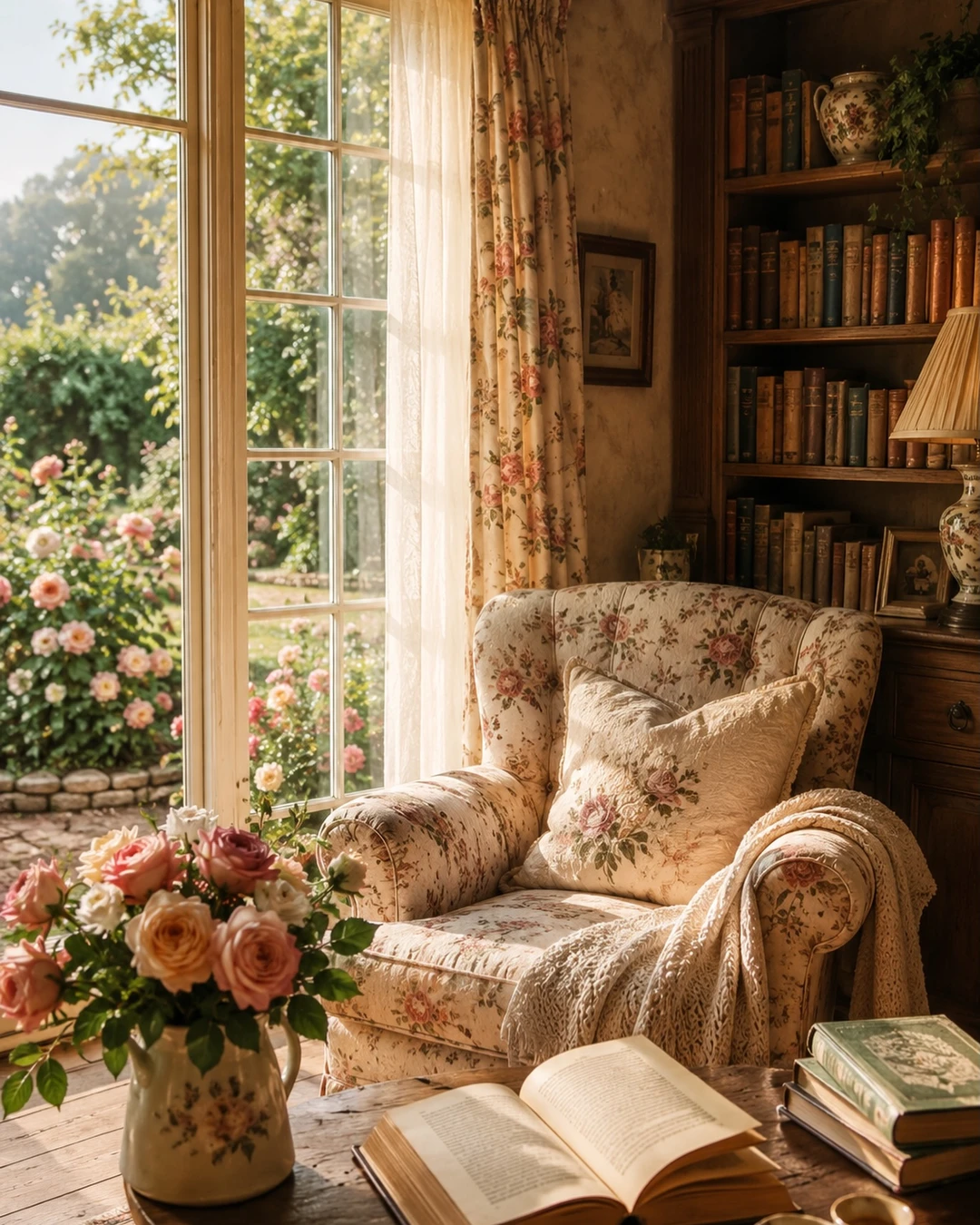
By the French windows sits a floral armchair, an open book on the table, roses in a jug, and a bookshelf full of old hardbacks behind it. The corner is not large — a chair, a table, a lamp — but it is the most inviting spot in the room.
Reading corners work because they are small and specific. A chair with good light, a table within reach for a cup, and a shelf of books you actually want to read — that is the whole recipe. A corner with a chair and nothing else is just an empty chair.
The practical point: Put the chair where the light falls in the afternoon, not where it looks best in a photograph. A reading corner that gets used every day beats a photogenic one that nobody sits in.
Muted Colour from Nature
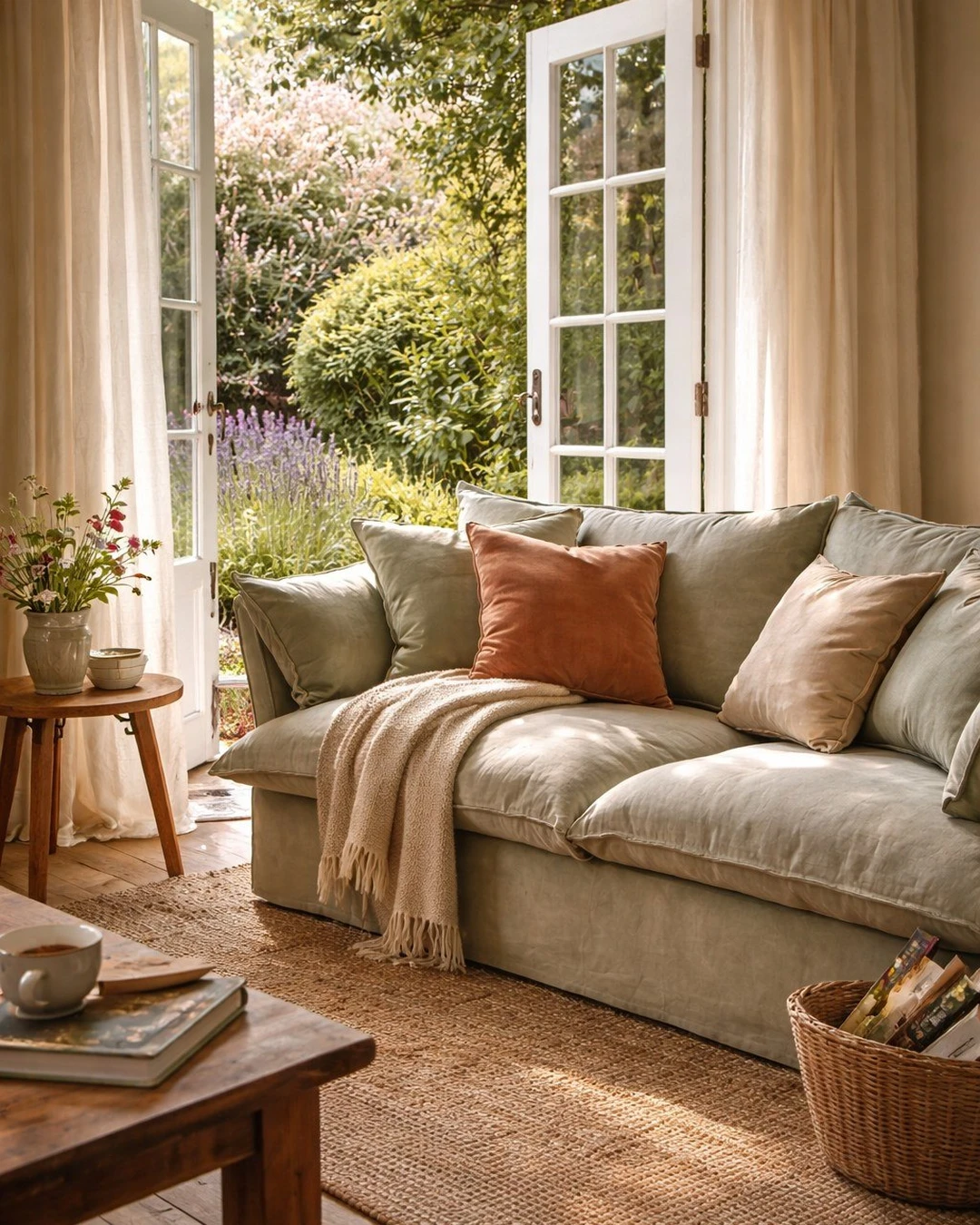
By the French doors open to a garden sits a sage-green sofa with terracotta and beige cushions, and the colours inside match the colours outside. Sage, clay and dusty beige are garden colours, brought indoors without shouting about it.
Muted colour works in a cottage because it fades gracefully. Bright colours demand attention every day; muted colours sit quietly in the background and let the light, the wood and the plants do the talking.
The practical point: Take your palette from one view out of the window — the garden, the trees, the sky. Three colours from that one view will always sit together better than three colours picked from a paint chart.
Wicker and Rattan, Used Sparingly
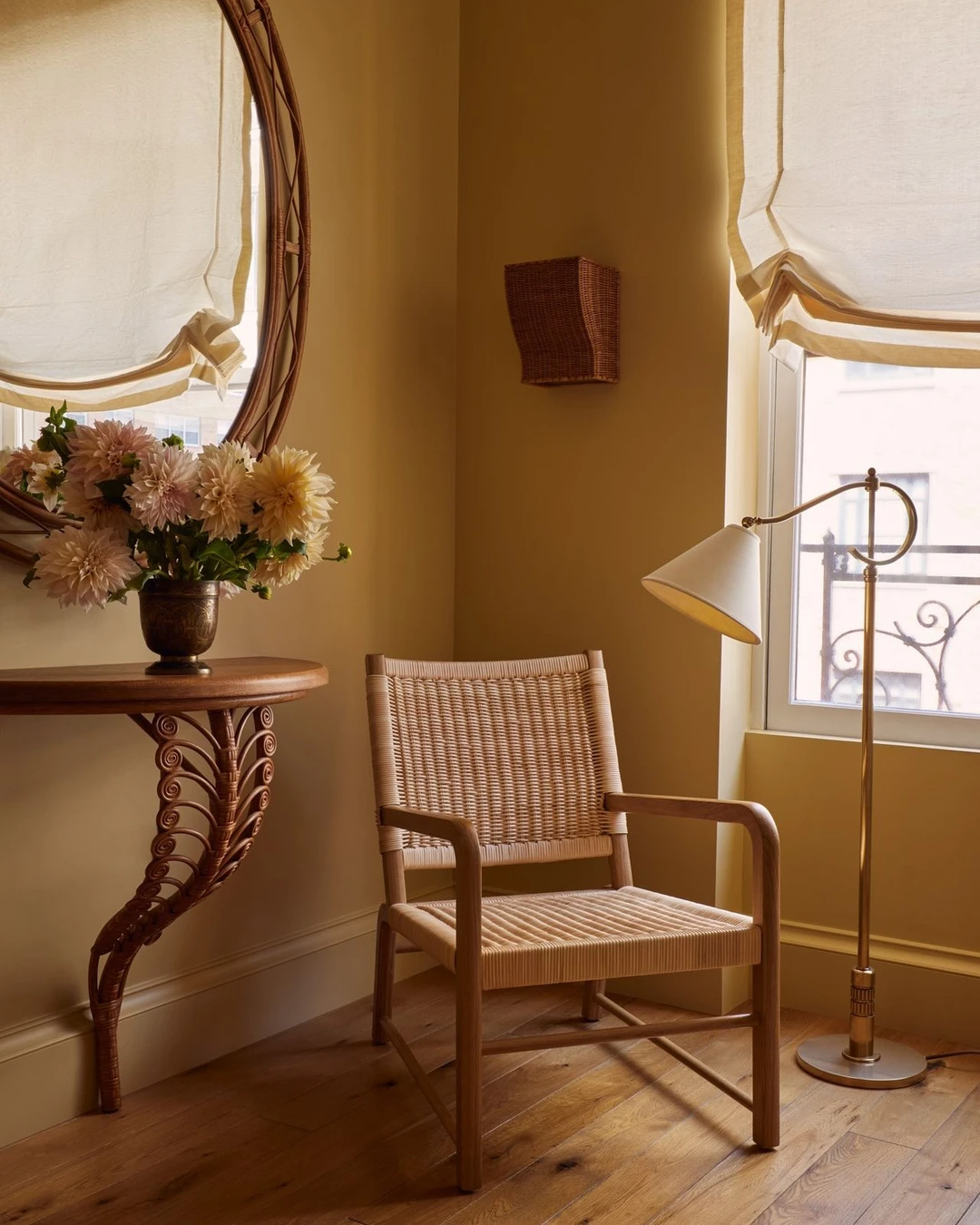
One wicker armchair stands in a quiet sunlit corner beside a small table and a vase of flowers, and that single chair is all the wicker this room needs. It reads as a chair first and a material second.
Wicker and rattan are cottage classics, but they turn into a theme fast. One chair is a choice; a wicker chair, a wicker basket, a wicker mirror and a wicker light shade is a costume, and the room starts to feel like a set.
The practical point: Limit wicker to one piece per room. If you already have a wicker chair, make the basket something else — wood, fabric, metal — and the chair will stand out instead of blending into a theme.
Simple Curtains That Let Light In
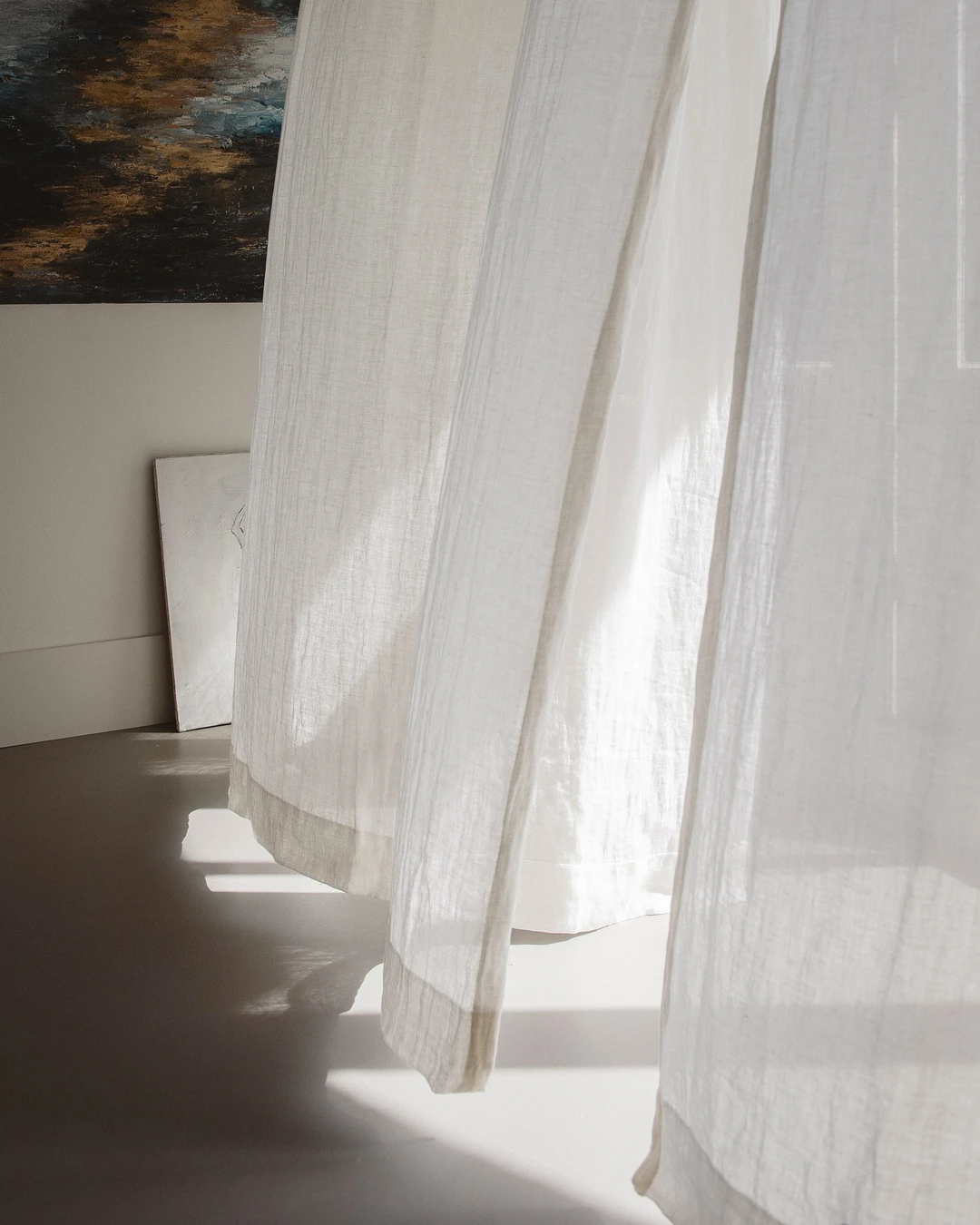
Sheer white linen curtains hang in soft folds with sunlight streaming through them, and the whole room glows. The curtains do not block the light — they soften it, the way a lampshade softens a bulb.
Light is the cheapest cottage luxury there is, and heavy curtains waste it. Linen sheers give you privacy without darkness, and they move with the breeze, which makes the room feel alive even when the windows are shut.
The practical point: Hang the curtains high and wide — above the window frame and past its edges. Curtains that just cover the glass make the window look small; curtains hung wide make it look like the whole wall is a window.
Personal Pieces, Not Themed Decor
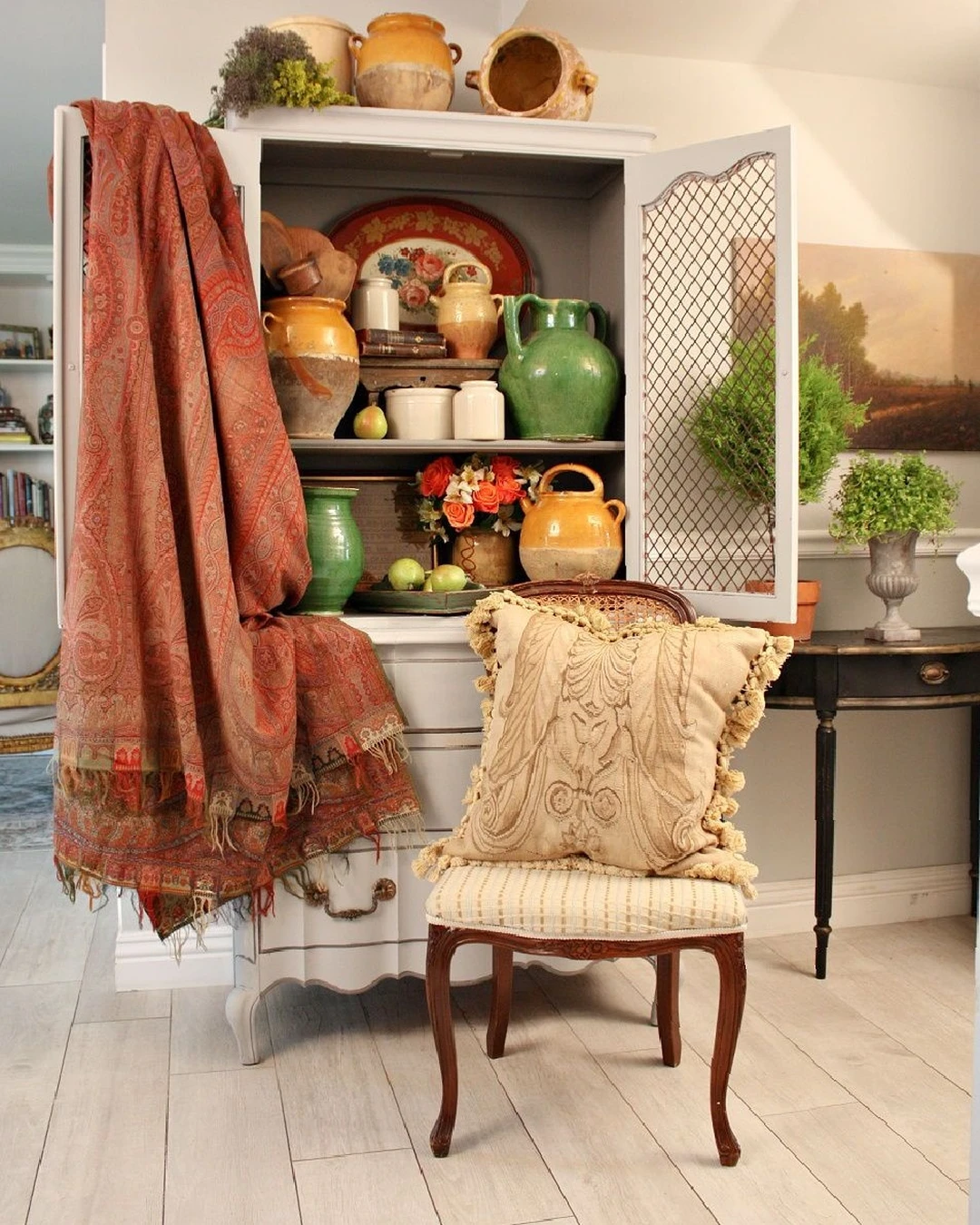
This open armoire holds pottery, jugs and plates collected over years — nothing matching, nothing bought as a set. The pieces are different shapes, different colours, different ages, and that is what makes the shelf feel personal instead of decorated.
Personal pieces are the difference between a cottage and a showroom. A showroom buys a look; a home collects one, piece by piece, over years. The armoire here is full because someone kept the things they loved, not because someone filled a shelf in an afternoon.
The practical point: Buy one thing you love instead of five things that match. A single jug you chose slowly will mean more in your room than a matching set you bought in one trip.
Cottage That Feels Like Yours
Cottage decor is not a style you buy — it is a room you build slowly, one honest choice at a time. Soft walls, a linen sofa, one good beam, a few old pieces, and plants in plain pots.
Start with the thing you touch most — the sofa, the rug, the chair by the window — and let the rest follow. A cottage that feels like yours is a room you will actually live in, not one you keep tidy for visitors.
If one wall still feels bare after all of this, here are Unexpected Ways to Fill a Blank Wall Beyond Paintings and Prints — and if you try one of these ideas, start with the smallest one first. The room will tell you what it needs next.