Tiny kitchens rarely have a storage problem. They have a wall problem, and every jar you own ends up on the one stretch of worktop you need. DIY spice rack hacks for tiny kitchens fix that by shifting jars off the counter and onto surfaces you have probably stopped noticing: cabinet doors, fridge sides, the narrow gap beside the cooker. Everything below costs very little, needs almost no tools, and hands you back the space you keep fighting for.
Magnetic Tins Turn Fridge Sides Into Free Storage
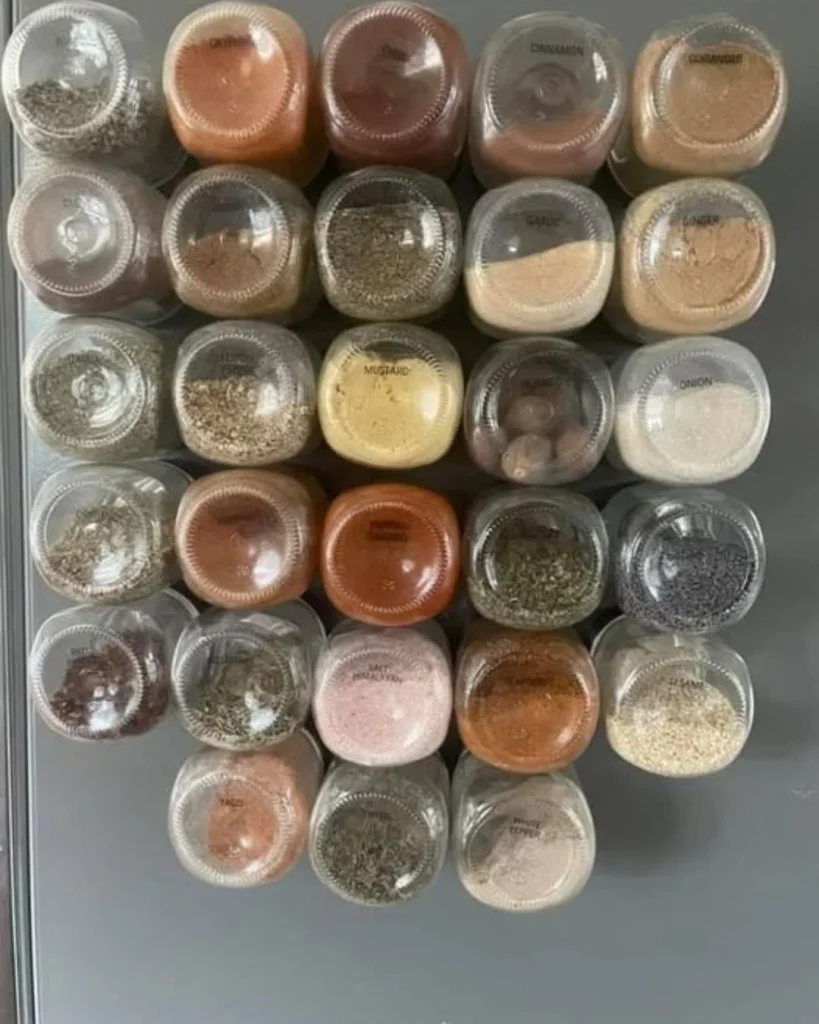
Photo Credit: @Kayleigh Schweitzer
Most people write the side of the fridge off as dead metal. It is the easiest win in a small kitchen. Shallow magnetic tins with clear lids stick straight on, hold roughly two tablespoons each, and sit at eye level where the labels are readable.
Choose tins with proper neodymium magnets rather than thin adhesive discs, which peel away the first time the kitchen fills with steam. A common mistake is loading the whole fridge side with every jar you own. Fridge exteriors run warm, and warmth dulls flavour faster than anything else in the room.
Keep your six or seven daily workhorses out there — salt, pepper, paprika, chilli flakes, cumin, oregano — and move the occasional spices somewhere cool and dark. Built-in fridge with no exposed side? A cheap galvanised steel sheet screwed to the wall or fixed inside a cupboard door does the same job for a few pounds.
Cabinet Doors Suit DIY Spice Rack Hacks That Leave No Marks
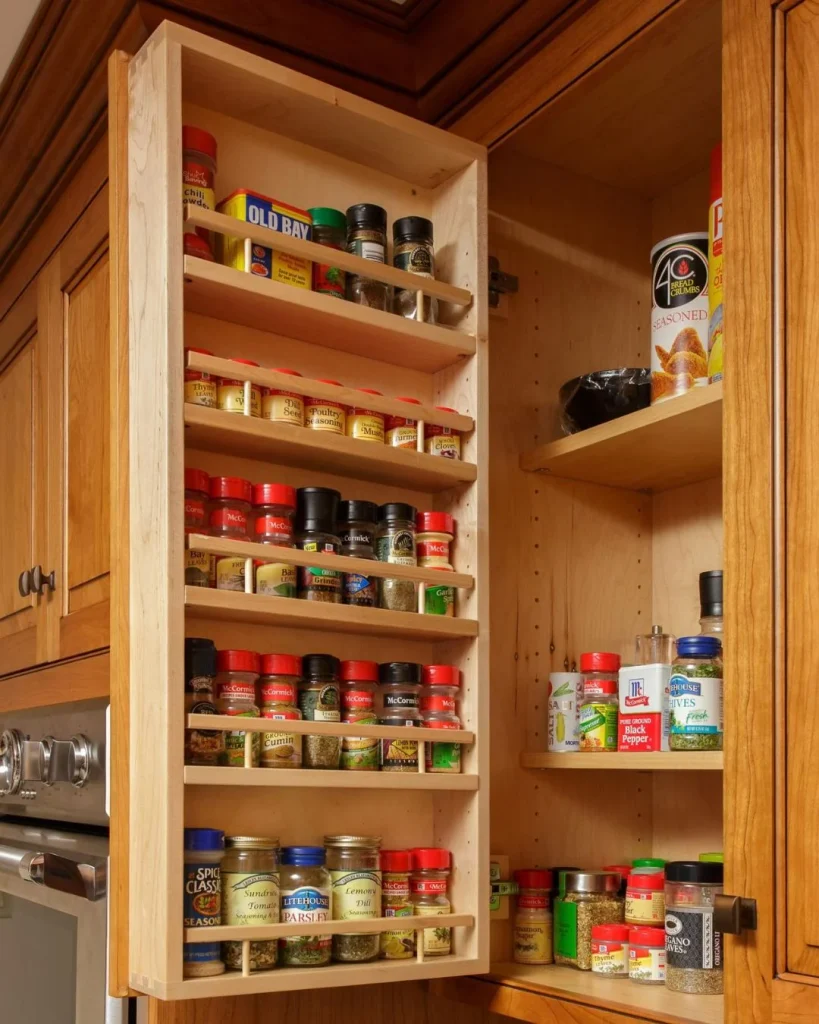
Photo Credit: houzz.com
The inside of a cabinet door is the most wasted thirty centimetres in any kitchen. A slim tension rod shelf or a set of adhesive wire racks converts it into storage that vanishes the moment the door swings shut.
Measure your shelf clearance before buying anything. You need around five centimetres of breathing room so jars do not collide with the tins already sitting inside. Two rows of small jars per door is realistic, three if your jars are stubby.
These are the DIY spice rack hacks renters reach for most, because command-strip racks come off years later without lifting a flake of paint. One rule worth respecting: keep the heaviest jars on the bottom row. Door racks fail when weight sits high and the hinges slowly start to sag.
Narrow Gaps Between Cabinets Become Slim Shelving
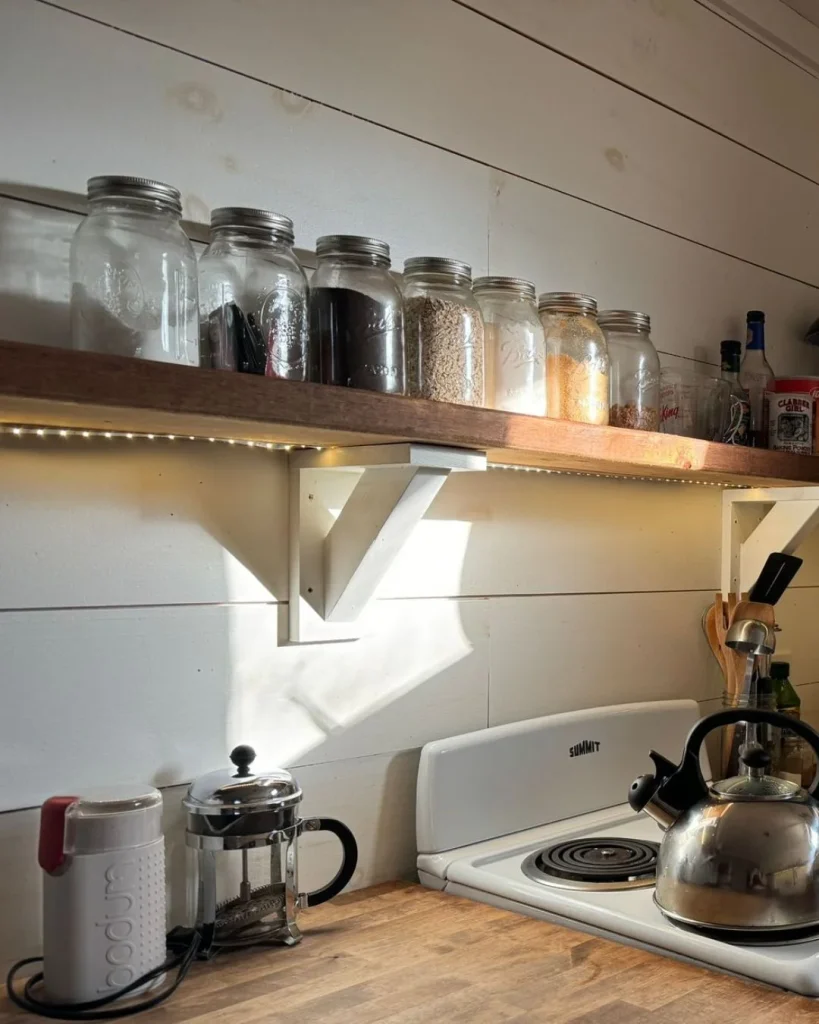
Photo Credit: Anna McDonald
Nearly every fitted kitchen has an awkward eight to twelve centimetre gap left over — beside the cooker hood, next to the fridge housing, at the end of a run of units. It usually collects crumbs.
A single pine board cut to that width, sanded, oiled and fixed with two L-brackets becomes a spice shelf that looks like it was planned. Add a thin lip along the front edge so jars cannot walk off when a cupboard door slams nearby.
Stack two or three of these shelves and the gap holds twenty jars without stealing a centimetre of worktop. The look works especially well in cottage and cabin style kitchens, where visible timber and open shelving already fit the mood.
Tiered Drawer Inserts Lay Everything Flat and Readable
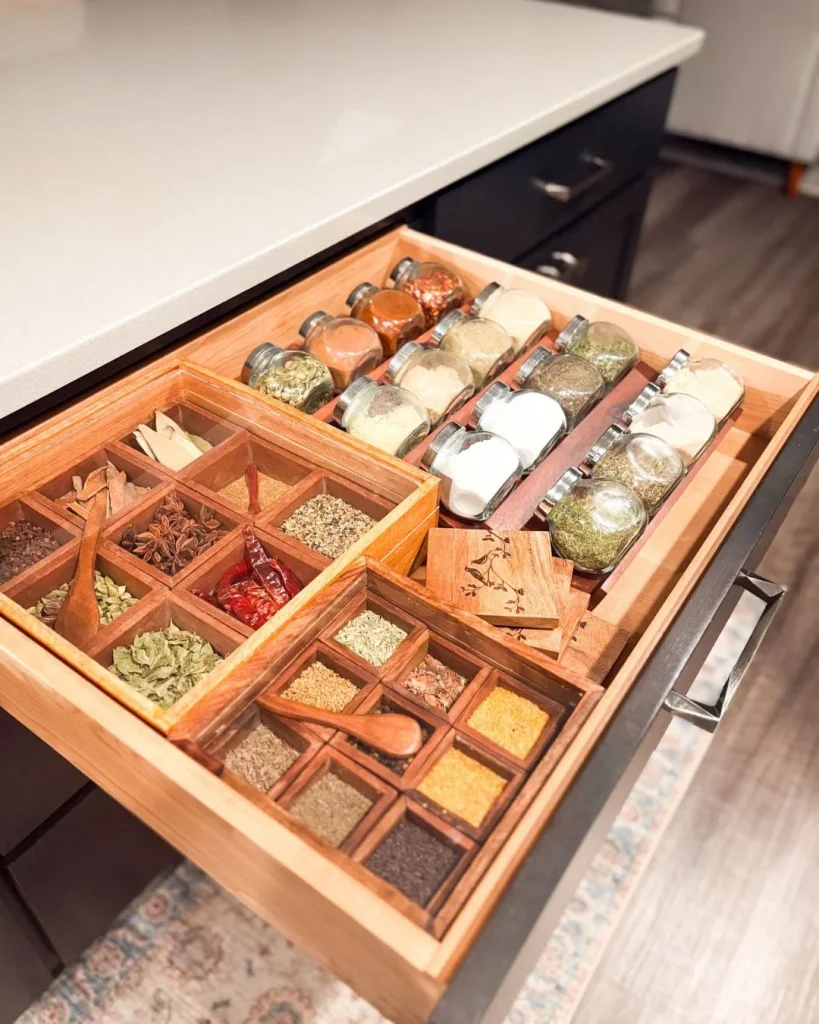
Photo Credit: ananyas_home
Drawers are the quiet hero of tiny kitchens, and most are half empty above the jars. A tiered insert angles each row upward so the lids face you as the drawer opens.
Buy the insert that matches your drawer depth, not the one that fits the jar count you have today. Shallow drawers take flat tins beautifully; deep drawers suit tall jars laid on their side with labels written on the caps in chinagraph pencil.
The mistake here is filling every slot on day one. Leave two or three empty and the system survives the next shopping trip instead of collapsing back into a rummage. Drawers also solve the light problem, since spices genuinely keep their punch longer when stored away from daylight.
If your kitchen has one usable drawer and no spare wall, this is the hack to start with.
Rails Along the Backsplash Borrow Space Nobody Uses
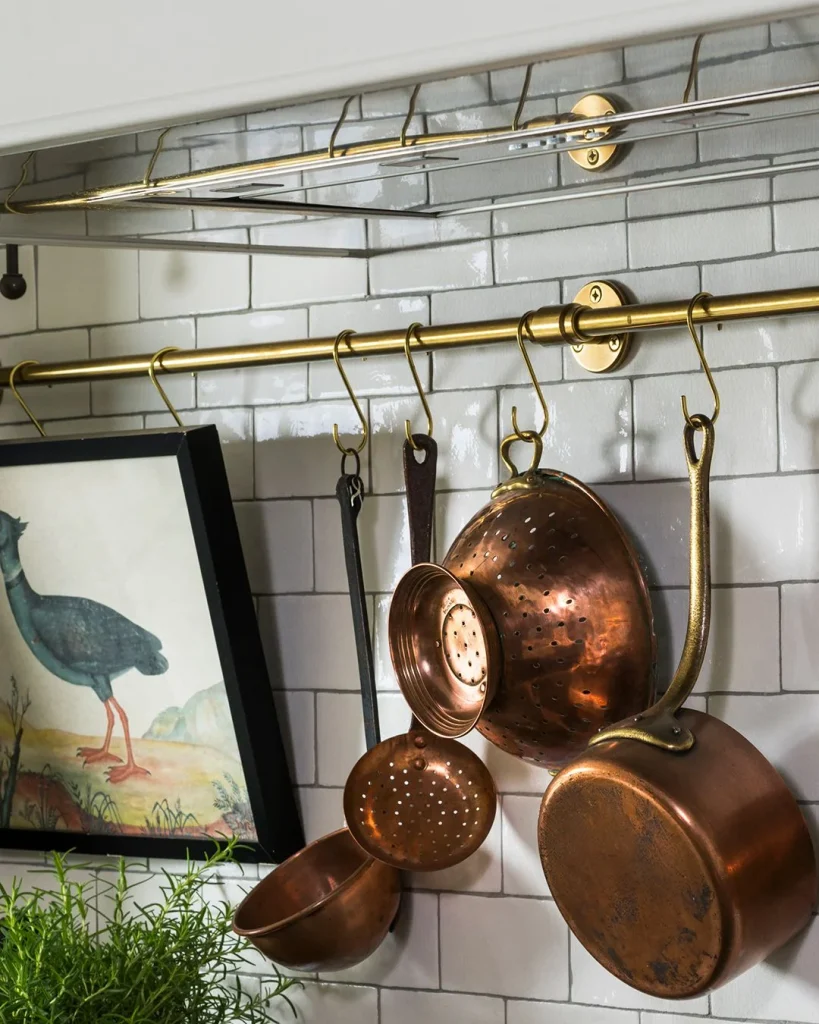
Photo Credit: palmer_industries
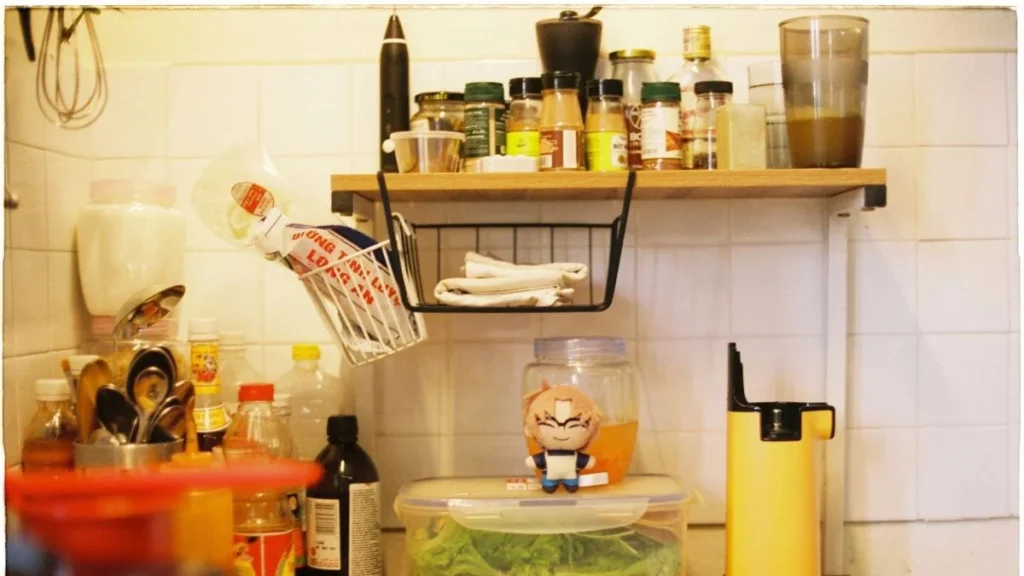
A kitchen rail costs less than a takeaway and runs along the strip of wall between worktop and wall cabinets — space that does absolutely nothing in most homes.
Hang small hooked pots rather than clipping jars directly, because hooked pots lift off with one hand while you are stirring. Fifteen centimetres of clearance above the worktop is enough for standard jars.
Keep the rail away from directly behind the hob. Splashes coat the jars in a film that nobody enjoys scrubbing, and repeated heat shortens the life of everything on it. Set it off to one side and the rail earns its place daily.
Under Shelf Baskets Claim the Air Above Your Jars
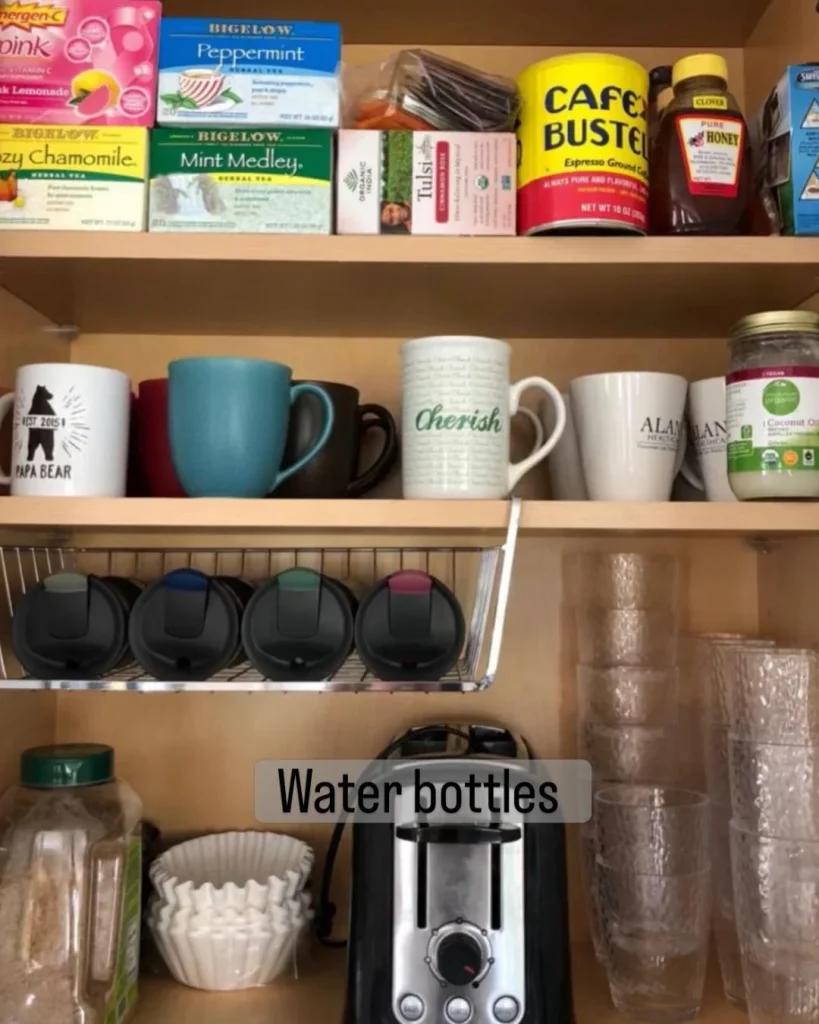
Photo Credit: organizedandsimplified4u
Look inside any cupboard and you will find a band of unused air between the top of your jars and the shelf above. Clip-on under shelf baskets slot straight into it, no screws involved.
Reserve them for lightweight items — sachets, bay leaves, stock cubes, refill bags. Loaded with glass jars they bow and rattle every time the door shuts.
Two baskets on a standard shelf roughly double what that cupboard holds. It is the least glamorous idea on this list and probably the one that frees the most room.
Old Frames and Crates Bring Character to Bare Walls
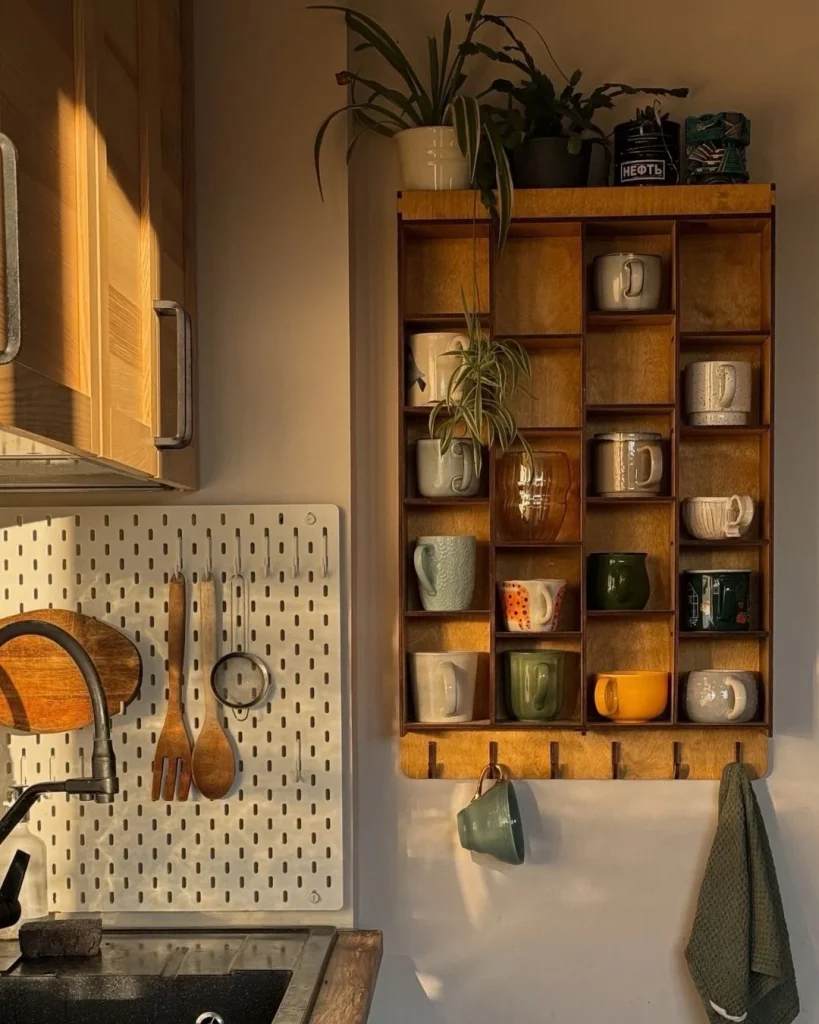
Photo Credit: my_bohointerior_
Not every solution needs to look like storage. A deep picture frame laid on its back, fitted with a strip of timber and mounted on the wall, turns into a shallow spice ledge with actual personality.
Wooden wine crates work the same way. Sand them, stain them a shade darker than your cabinets, and mount two side by side for a grid that reads as decor first and storage second. Fix into a stud or use proper wall plugs — loaded with glass, these are heavier than they look.
This is where Pinterest-friendly kitchens separate themselves from purely practical ones. The jars stop being clutter and start being part of the wall.
Pull Out Racks Rescue the Gap Beside Your Appliances
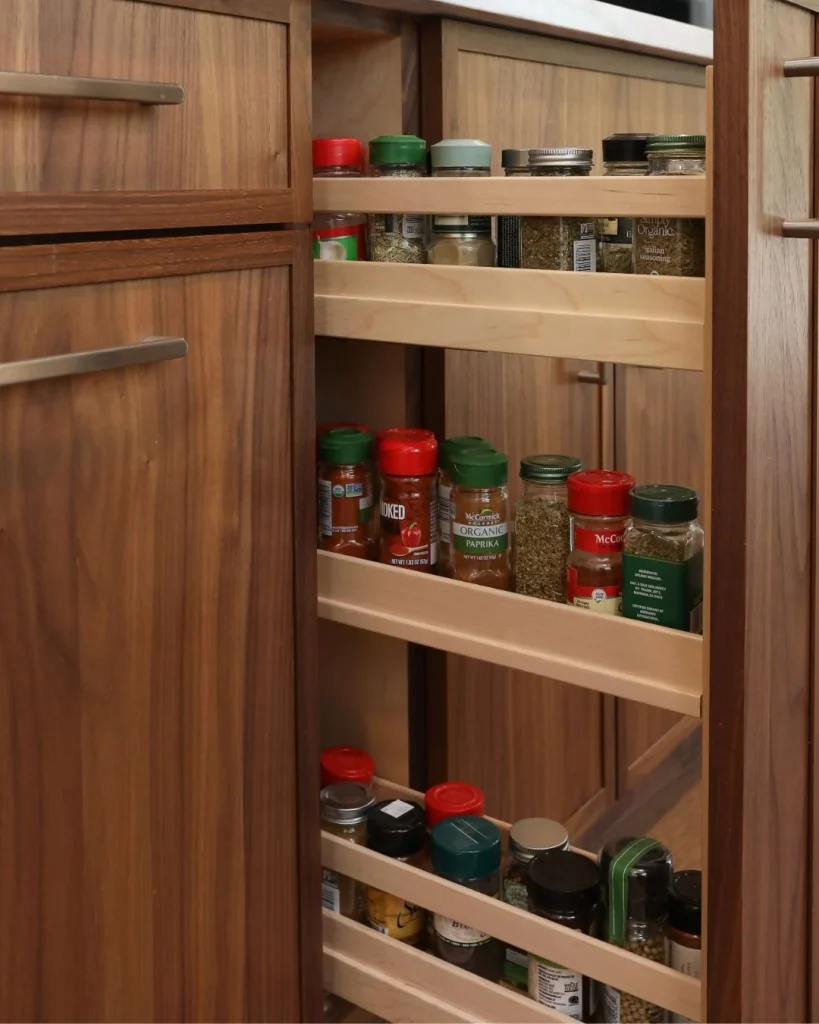
Photo Credit: riemerkitchens
The slot beside a dishwasher or washing machine is usually fifteen centimetres of nothing. A slim pull-out tower on castors slides into it and holds a genuinely surprising number of jars.
Check the gap at floor level and at worktop level, because skirting boards and pipework often narrow it at one end. Measure both before ordering anything.
Budget versions exist, but the castors are what matter. Cheap wheels stick on tile grout and the whole tower tips forward when you tug it. Spend the extra on decent rolling hardware and it will glide for years.
Corner Turntables Make Deep Cupboards Reachable Again
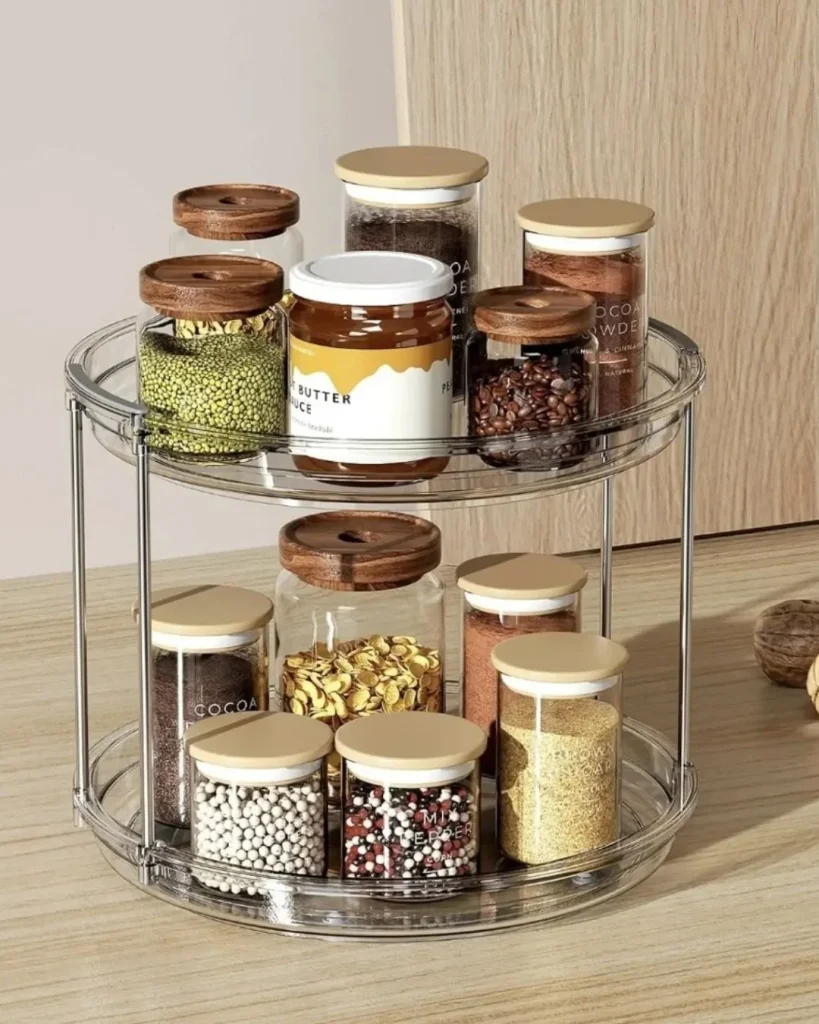
Photo Credit: nookandcranny.tt
Deep corner cupboards swallow spices whole. A jar goes to the back in March and reappears in October, well past its best.
A simple turntable solves it for very little money. Pick one with a raised rim so jars do not fly off as it spins. Two stacked turntables on separate shelves effectively double the reach of one awkward cupboard.
Group by cuisine rather than alphabetically — the curry spices on one quarter, baking on another. Your hand learns the layout within a fortnight and you stop reading labels altogether.
Uniform Jars Make DIY Spice Rack Hacks Look Intentional
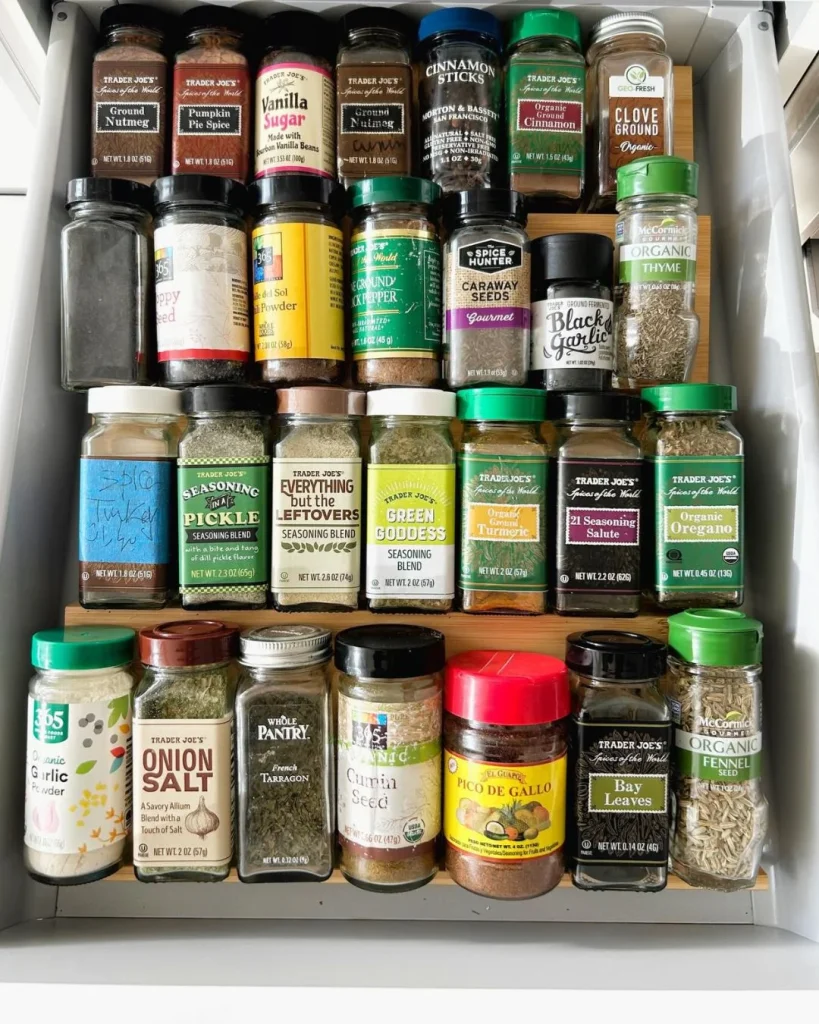
Photo Credit: skorganizing
Here is the honest truth about small kitchens: mismatched supermarket jars make even clever storage look chaotic. Twelve identical jars on a plain shelf will always look calmer than twelve clever solutions holding twelve different packets.
Decant into one jar size and stick with it. Square jars beat round ones in tight spaces because they sit flush with no wasted gaps between them.
Label the lids as well as the fronts — lids are what you see in drawers, fronts are what you see on shelves. Handwritten labels on kraft paper suit rustic kitchens; simple black text on white suits modern ones. Either way, consistency is what makes DIY spice rack hacks read as a finished look rather than a collection of fixes.
Small Kitchen, Sorted
The kitchen that convinced me of all this belonged to a friend in a one-bed flat with roughly sixty centimetres of usable worktop. She kept apologising for it. Then she spent one Saturday putting magnetic tins on the fridge, a tension rod inside the cupboard door and a turntable in the corner unit, and the counter she had written off completely came back.
Nothing on this list requires a renovation or a landlord conversation. Pick two DIY spice rack hacks that suit the walls you have, give them an afternoon, and the smallest kitchen in the building starts working like one twice the size.
Editor Choice: Ikea Knagglig Crate Ideas for Small Space Storage Solutions.