Most enclosed staircases get treated as leftover space, a corridor to pass through rather than a place worth noticing. Yet with the right enclosed stair wall decor, that narrow, light-starved stretch can become one of the most memorable corners in the house.
From layered lighting to gallery walls that tell a story, small changes turn a forgotten passage into a genuine design feature. The key is working with the wall’s limits rather than against them, since narrow, low-light spaces reward thoughtful choices over clutter.
Before You Reach for a Paintbrush
A few fast wins for enclosed stair wall decor before you dive into a full project:
- Gallery walls and photo timelines work well because they turn a passage into a story.
- Warm, layered lighting fixes the flat, dim feel most closed-in staircases suffer from.
- Bold paint or wallpaper reads better on a narrow wall than it would in an open room.
- Mirrors and light finishes are the fastest way to make a tight stairwell feel bigger.
A Gallery Wall Turns the Stairwell Into an Art Trail
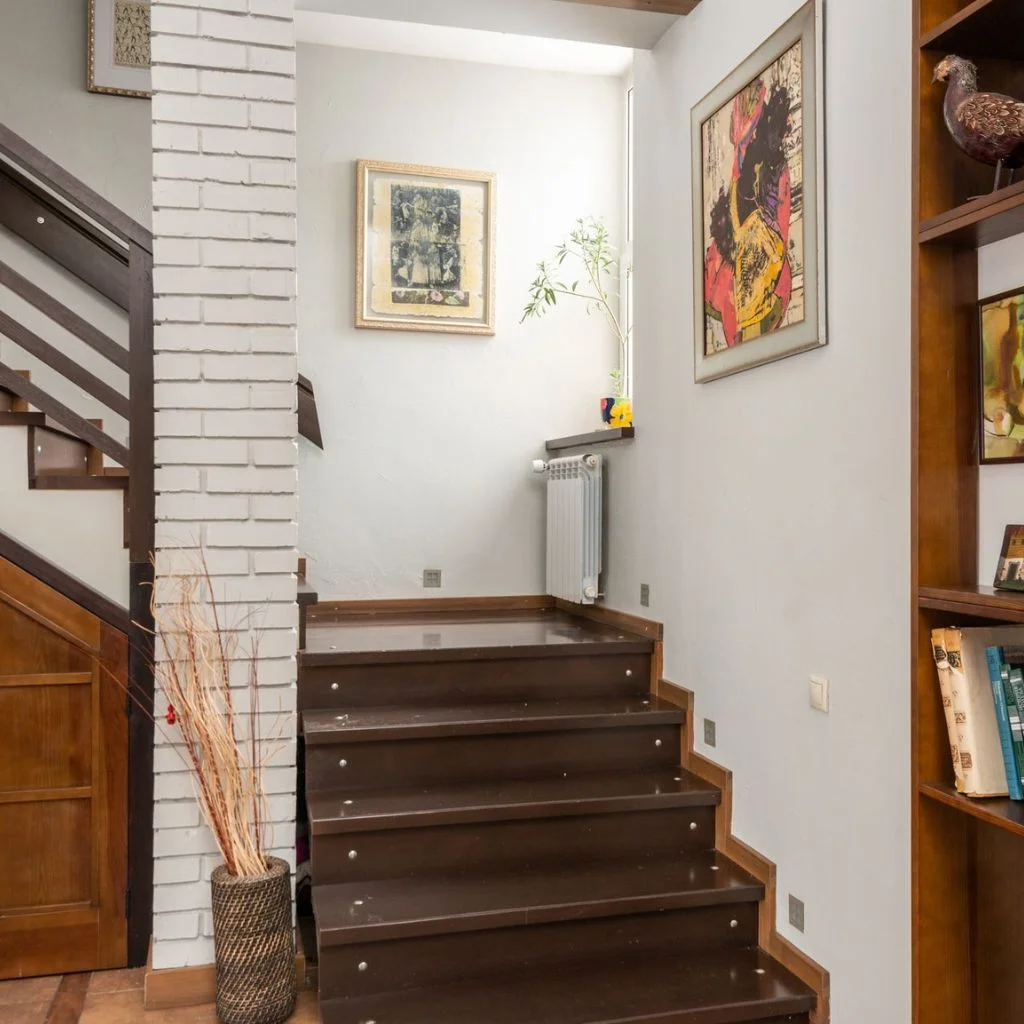
A run of stairs is essentially a hallway with a slope, and that makes it perfect for a gallery wall that follows the eye upward. Mixing frame sizes and finishes along the incline keeps the enclosed stair wall decor feeling curated rather than random.
Stagger the frames so the bottom edge of each one runs roughly parallel to the handrail: this single trick separates a tidy gallery wall from a chaotic one. Leave equal gaps between frames rather than eyeballing the spacing, since uneven gaps are the first thing a visitor’s eye catches.
A common mistake here is hanging everything at standard eye level, which ignores the fact that people view a staircase wall while moving and at an angle. Test the layout on the floor first, then transfer it to the wall with painter’s tape before a single nail goes in.
Layered Lighting Adds Warmth to a Windowless Stairway
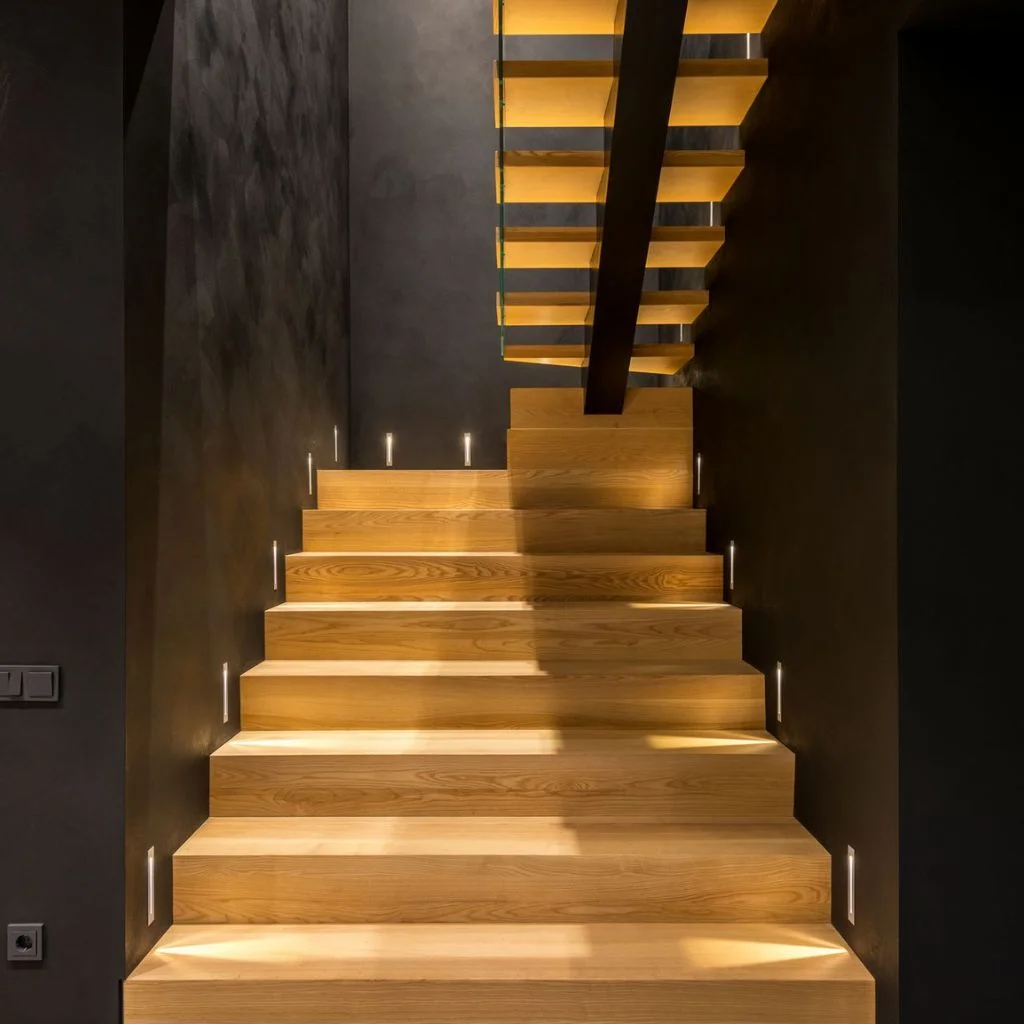
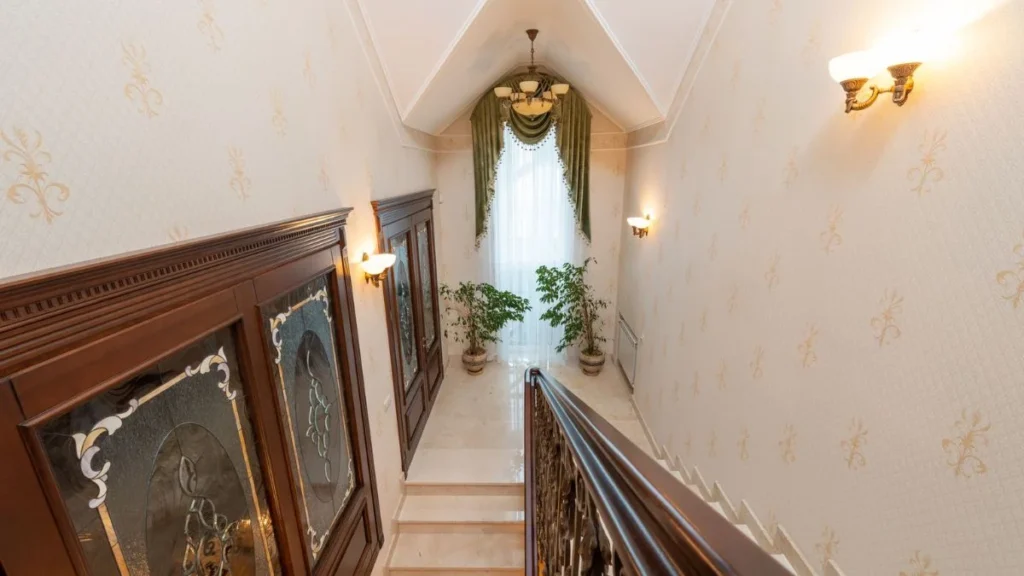
Enclosed staircases usually miss out on natural light, which leaves a single overhead fixture doing all the work. Adding a second light source, such as picture-frame lights, a row of wall sconces, or a plug-in wall wash, changes the mood entirely.
Warm-toned bulbs around 2700K suit enclosed stair wall decor better than daylight bulbs, since cool light tends to make a narrow space feel clinical rather than cosy. Placing sconces at roughly every third or fourth step creates a rhythm that guides movement without feeling like an airport corridor.
This works because layered light removes the harsh shadows a single overhead bulb casts on stairs, which is a safety win alongside the style upgrade.
Three Paint Techniques That Add Depth to Narrow Walls
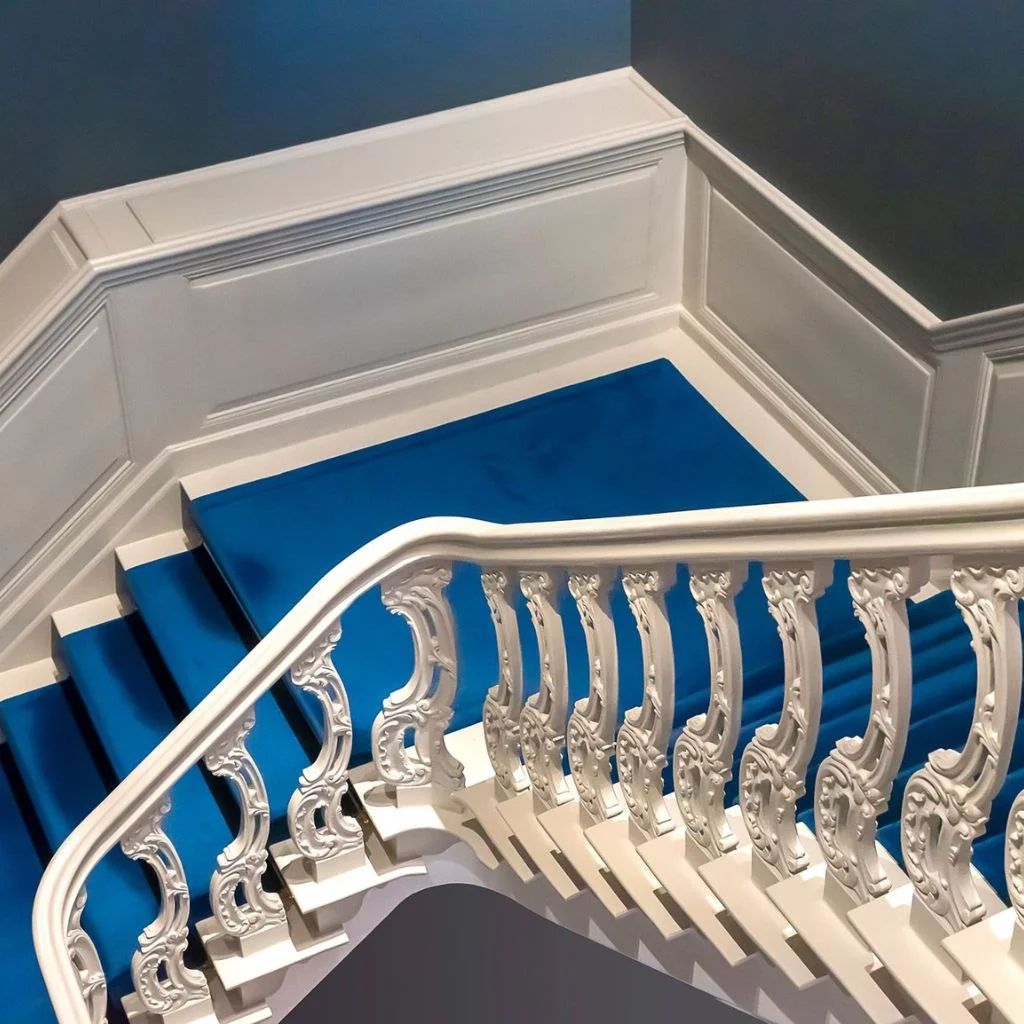
A stair wall is often the one wall in the house brave enough to handle a bold colour, precisely because it is viewed in passing rather than lived in for hours.
- Colour drenching, painting the wall, trim, and ceiling in the same deep shade, makes the space feel intentional instead of cramped.
- A painted stripe or arch motif that follows the stair’s diagonal draws the eye upward and softens the boxy feel of an enclosed stairwell.
- Two-tone walls, with a darker lower half and lighter upper half, add depth while keeping the space from feeling heavy.
Any of these approaches to enclosed stair wall decor works best with a matte or eggshell finish, since gloss tends to highlight every scuff a staircase collects over time.
When Wallpaper Becomes the Focal Point of the Staircase
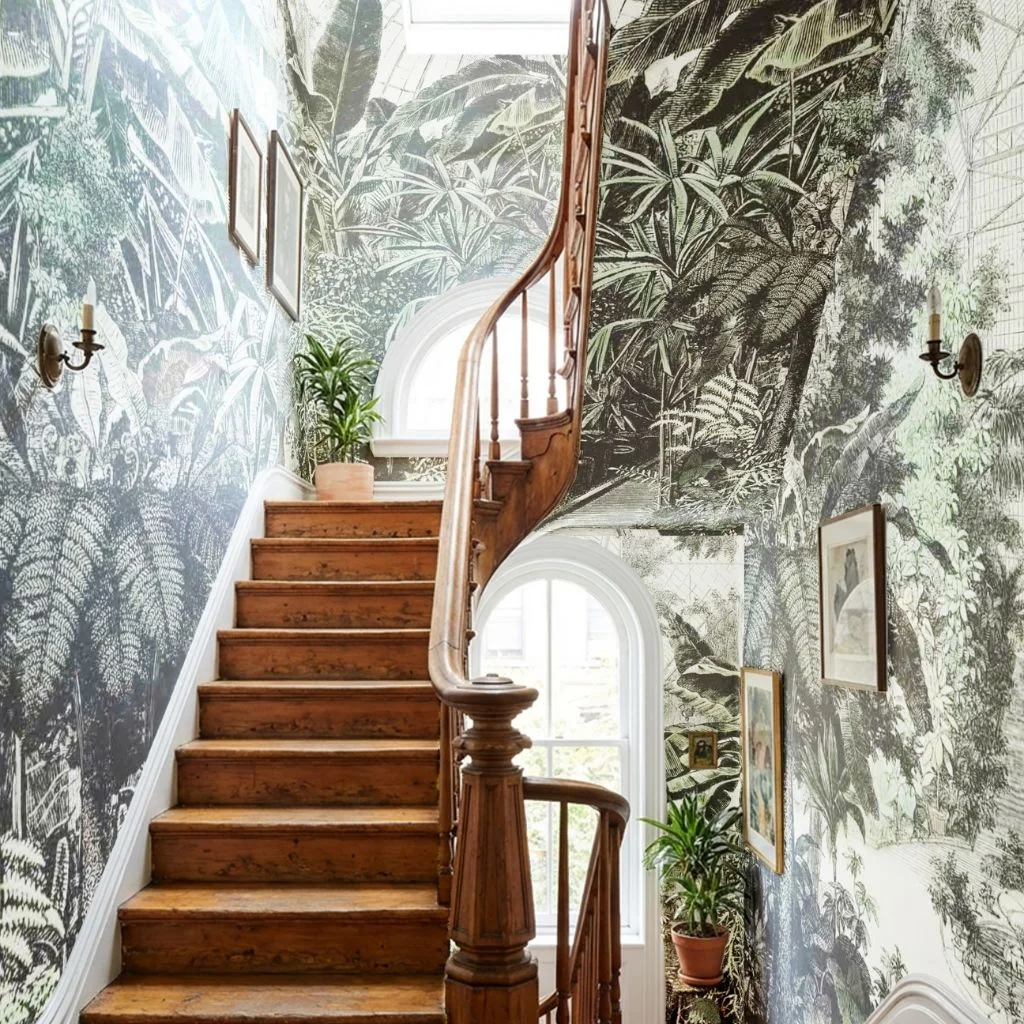
Image Source: @fineanddandyco
A stairwell is a low-commitment place to experiment with wallpaper, since the wall area is smaller than in a full room but the visual impact is just as strong.
Large-scale botanical or mural prints suit taller stairwells, where the pattern has room to unfold as you climb. In tighter spaces, a smaller geometric or textured print avoids overwhelming the eye at close range.
Peel-and-stick options make this one of the more forgiving enclosed stair wall decor updates to attempt, since a stairwell’s odd angles and cut lines are far easier to manage in a removable material than in traditional paste.
Floating Shelves Bring Display Space Without Crowding the Steps
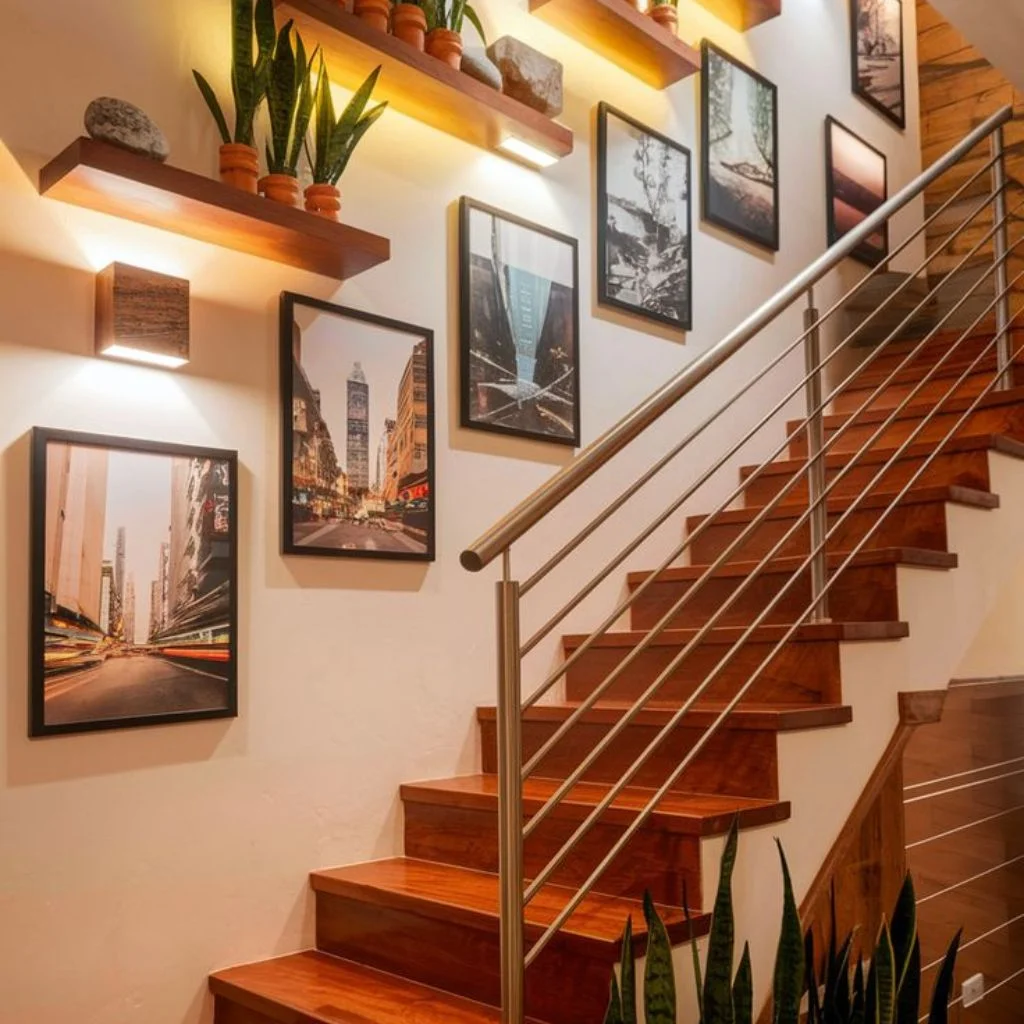
Image Source: Pinterest
Floating shelves solve a problem unique to staircases: there’s rarely floor space for furniture, yet the wall often feels bare without something to anchor it.
Mounting shallow shelves at staggered heights along the incline gives room for framed art, small plants, or travel finds, without eating into the already-tight walking clearance. Keeping shelf depth under 15cm avoids the bumped-elbow problem that deeper shelving invites on stairs.
Styling them sparsely, two or three objects per shelf at most, keeps this staggered-shelf approach to enclosed stair wall decor readable at a glance rather than cluttered, which matters more here than in a stationary room.
Mirrors Make an Enclosed Staircase Feel Wider and Brighter
Mirrors are one of the most efficient tools for enclosed stair wall decor because they solve two problems in one move: they visually widen a tight wall and bounce around whatever light already exists.
Positioning a mirror opposite a light source, such as a landing window, a sconce, or even a bright doorway at the top of the stairs, multiplies the light it reflects. A single oversized mirror tends to read better on a narrow wall than a cluster of small ones, which can feel busy in a space this compact.
Framed mirrors in a warm metal finish also double as an anchor piece, giving the wall a clear focal point instead of a gallery-only approach.
What a Family Photo Timeline Does for a Stair Wall
A staircase is walked past daily, which makes it one of the more meaningful places in the home to display a photo timeline rather than a static gallery.
Arranging photographs chronologically from bottom to top turns the climb into a small journey, with childhood photos near the base and more recent ones near the landing. This is a personal favourite approach, since it gives an enclosed stair wall decor scheme a story that generic art can’t match.
Matching frame colours while allowing photo sizes to vary keeps the timeline feeling cohesive rather than mismatched, even as the collection grows over the years.
Textural Accents Give the Enclosed Stair Wall a Finished Look
Flat painted walls can start to look one-dimensional in a hallway this narrow, which is where texture earns its place.
Wood panelling, woven wall hangings, or a run of picture-ledge shelving all add tactile interest without requiring floor space. Even a single textured element, such as a jute wall hanging or a slatted wood accent, can lift the whole stairwell from flat to finished. Textural layering is an easy way to round out an enclosed stair wall decor scheme without adding more colour or clutter.
Why this works: texture catches light differently than a flat painted surface does, which adds visual interest even under the dim conditions many enclosed staircases have to work with.
Making the Climb Worth Noticing
A staircase doesn’t need a renovation to feel special; most of the ideas here are weekend projects that use paint, light, and a handful of frames. The best enclosed stair wall decor treats the space as a small gallery in its own right, not an afterthought between floors.
Start with one change, whether that’s a fresh coat of colour or a single row of sconces, and let the rest build from there. Ready to start? Pick one idea from this list and try it this weekend, since a gallery wall or a new coat of paint is enough to transform the whole stairwell.
Our Pick: Steal Joanna Gaines Neutral Living Room Formula.