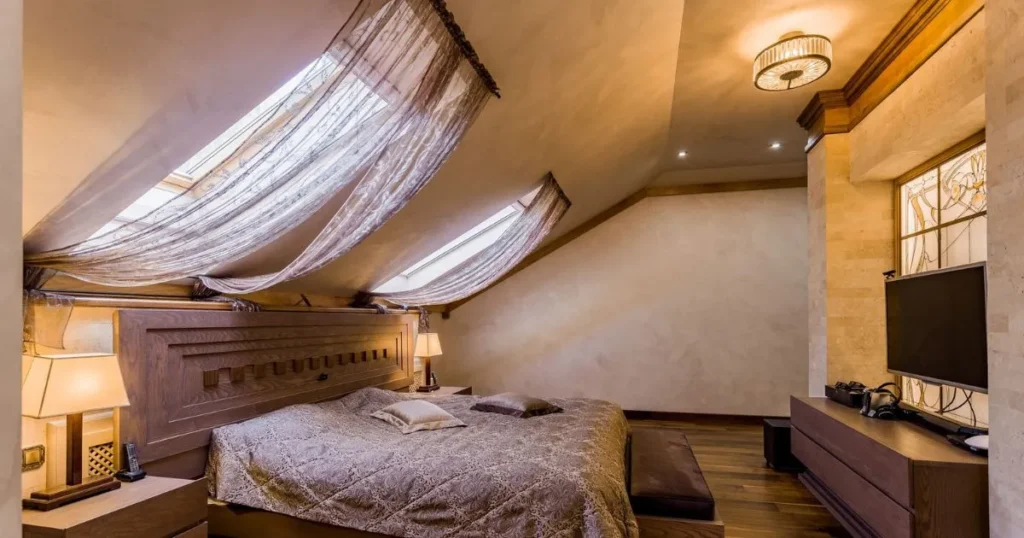
A ceiling does not have to be a blank surface that disappears once the furniture is in place. With thoughtful fabric draping, it can become one of the most memorable features in a room. Soft folds add movement, introduce color above eye level, and make a space feel more intimate without changing the walls or replacing the furniture. The look can be romantic and airy, tailored and modern, or richly layered for a traditional interior.
The best fabric ceiling designs feel intentional rather than temporary. That usually means choosing a fabric suited to the room, keeping the folds balanced, and using secure hardware that is appropriate for the ceiling structure. From a light canopy above a bed to a subtle fabric accent over a sitting area, these ideas show how to bring texture overhead while keeping the room comfortable and practical.
Create a Soft Canopy Above the Bed
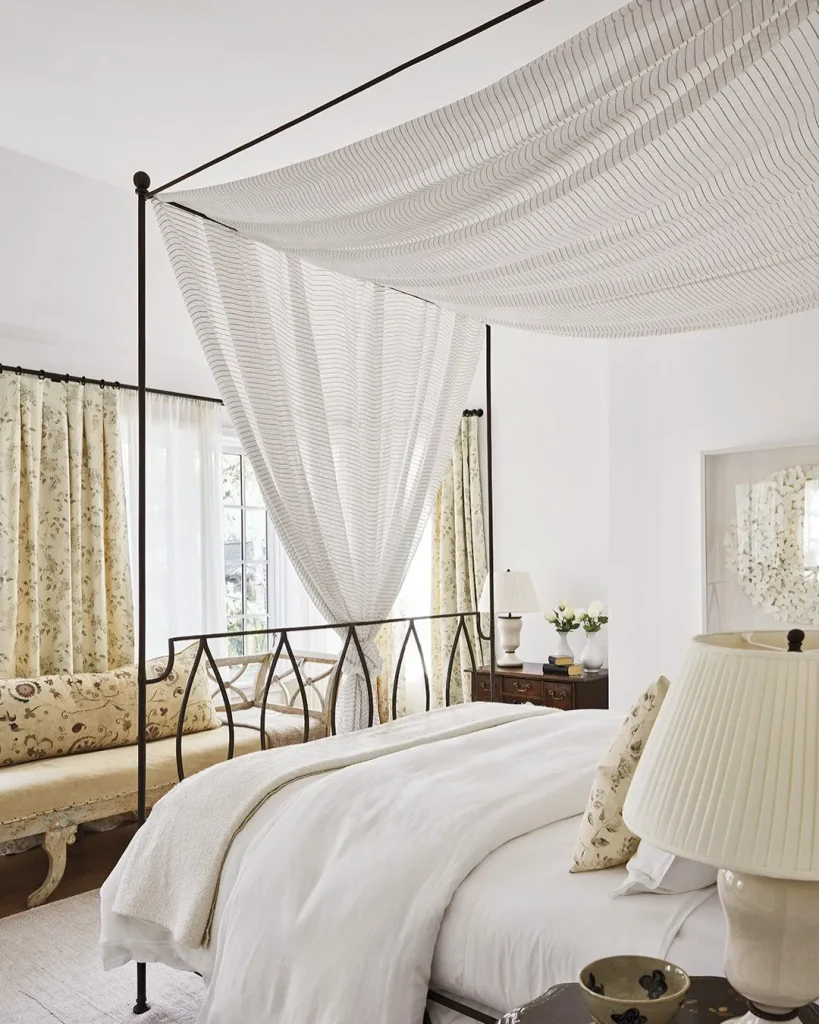
Image Credit: milieumag
A canopy is one of the most familiar ways to use a fabric ceiling in a bedroom, but it does not need to look heavy or old-fashioned. Sheer white, ivory, or warm beige panels can be gathered above the headboard and allowed to fall gently toward the sides of the bed. The effect is light and calming, especially when paired with natural bedding, wood furniture, and simple bedside lighting.
For a more tailored result, use a slim ceiling track or a purpose-designed canopy frame so the fabric follows a clear shape. Linen-look cotton creates a relaxed, slightly textured finish, while voile gives the arrangement a more delicate appearance. If the bedroom already contains patterned bedding or a statement headboard, choose a solid fabric to keep the layers from competing. In a larger primary bedroom, a fuller canopy can make the bed feel like the room’s centerpiece; in a smaller room, a narrow panel above the headboard can provide the same sense of softness without visually crowding the space.
Use Gentle Swags for a Romantic Bedroom
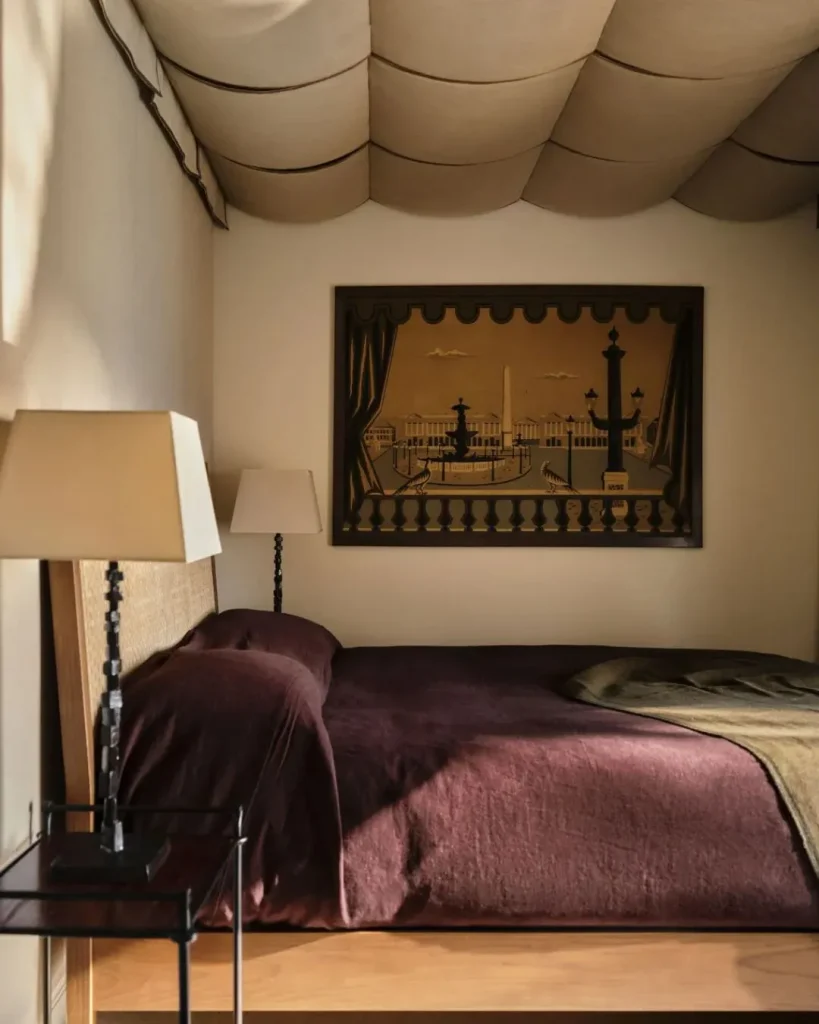
Image Credit: livingetc.com
Swags create a graceful curve across the ceiling rather than covering the entire surface. Fabric is attached at selected points and allowed to dip between them, producing a relaxed, flowing line. This approach suits traditional bedrooms, cottage-inspired spaces, and rooms with vintage furniture or carved wood details. Soft ivory, dusty rose, muted sage, and champagne tones can complement the romantic mood without making the scheme feel overly sweet.
The key is restraint. One or two well-spaced swags often look more polished than a ceiling filled with overlapping folds. Let the fabric relate to another element in the room, such as the bed skirt, curtains, or accent pillows, but avoid matching every textile exactly. A small difference in texture can make the arrangement feel collected and considered. Before installing anything, check the ceiling height and make sure the lowest part of the drape will not interfere with movement, lighting, or a ceiling fan.
Frame a Living Room Seating Area
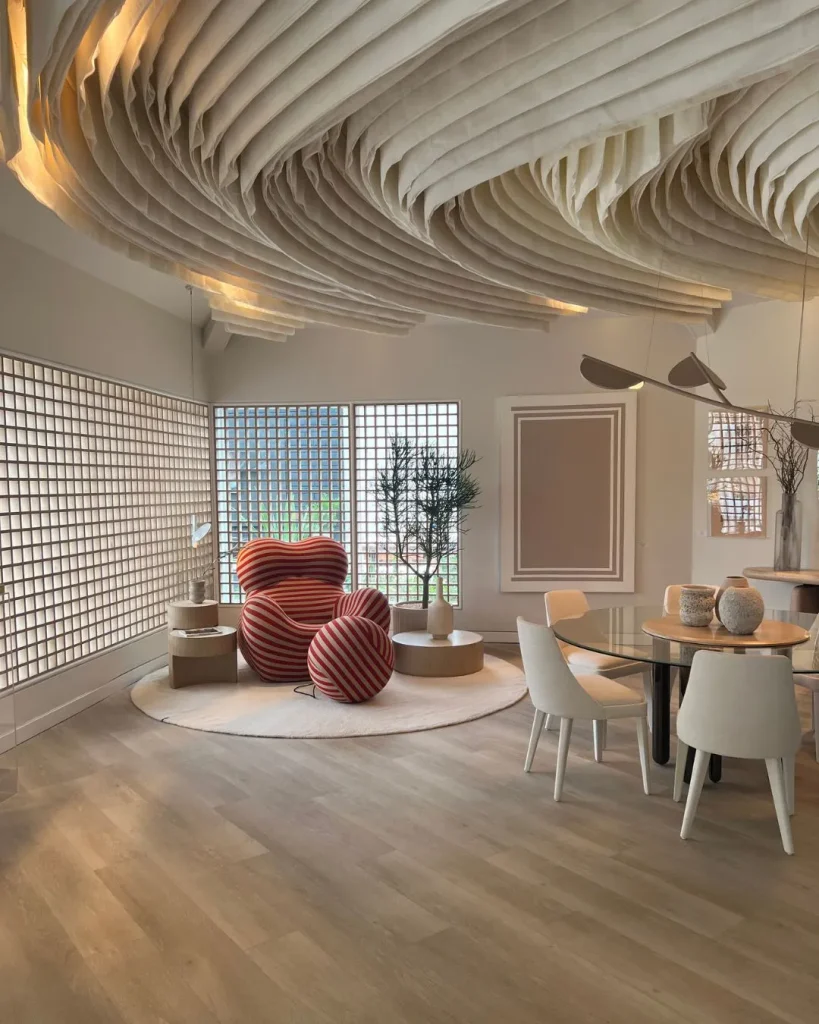
Image Credit: Lara Bellatin
In an open-plan living room, a fabric ceiling can help define the seating zone without adding a wall or bulky divider. A rectangular panel of fabric suspended above the sofa and coffee table creates a subtle visual boundary, making the conversation area feel more settled. This works particularly well in lofts, large family rooms, and spaces where the living and dining areas share one open floor plan.
For a modern interior, choose a single neutral fabric with a clean edge and minimal gathering. Warm white, oatmeal, taupe, or charcoal can echo the room’s existing palette. In a traditional living room, a fuller drape may suit velvet-look fabric or a heavier woven textile, provided the support system is designed to carry its weight. Keep the furniture arrangement underneath simple enough for the ceiling treatment to remain visible. The goal is not to lower the ceiling dramatically, but to give one part of the room a more intimate character.
Add a Sheer Layer for an Airy, Light-Filled Look

Sheer fabric gives overhead draping a light touch. Voile and other translucent materials allow the ceiling color and natural light to remain part of the design, so the room feels softened rather than enclosed. A pale sheer panel can be stretched across a small section of ceiling or gathered loosely above a reading nook, breakfast corner, or bedroom sitting area.
This idea is especially useful when a room already has strong architectural details or a limited color palette. The fabric adds texture without introducing a bold new pattern. White sheers suit crisp, contemporary rooms, while ivory and soft sand tones work well with warm woods and earthy finishes. Keep the fabric away from hot bulbs, fireplaces, candles, and other heat sources, and do not let it obstruct sprinklers, smoke alarms, vents, or access points. A floating look should never come at the expense of safe clearance or proper installation.
Choose Rich Fabric for a Traditional or Moody Interior
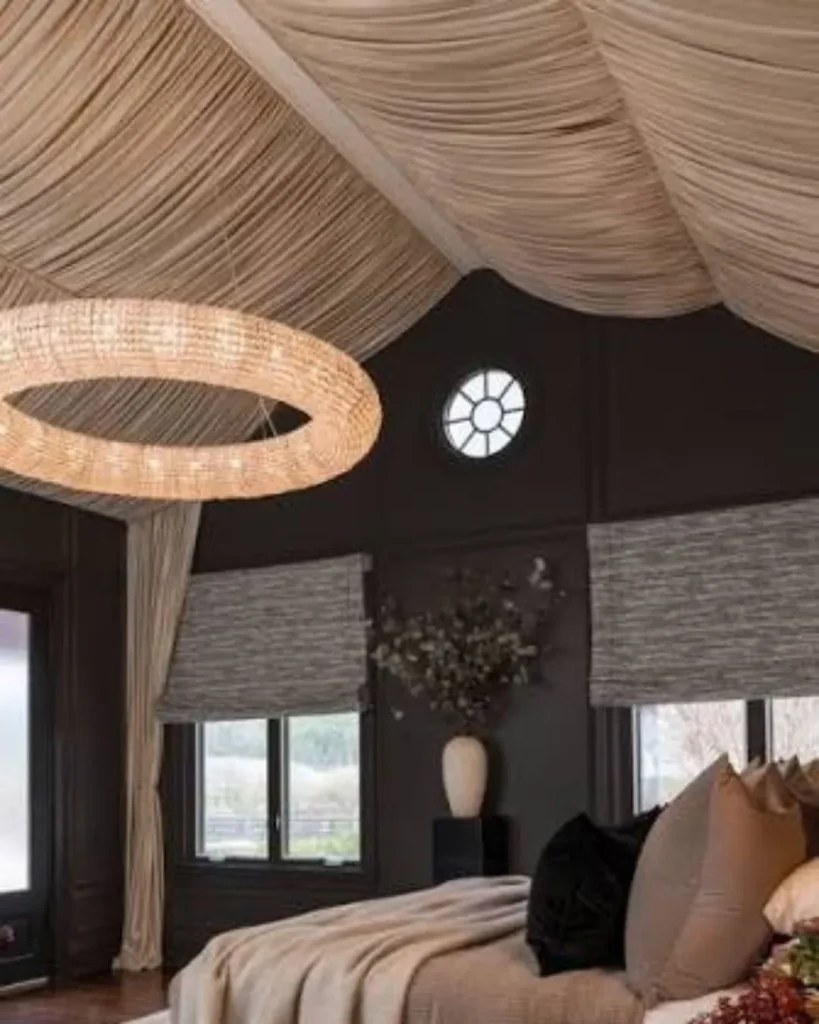
For rooms with darker wood, antique-inspired furniture, or a dramatic color scheme, richer textiles can make the ceiling feel layered and luxurious. Consider deep olive, burgundy, bronze, navy, or warm chocolate fabric, depending on the colors already in the room. A small draped section above a bed or formal sitting area can deliver the effect without making the whole room feel enclosed.
Weight and opacity matter here. Heavy fabrics need a support system designed for their load, and they may collect more dust than lightweight sheers. A velvet-look material can offer visual depth, while a matte woven fabric gives a quieter, more understated finish. Balance a dark ceiling treatment with lighter bedding, a warm lamp, or a pale rug so the room retains contrast. In a low-ceilinged space, use a limited panel rather than multiple deep swags; keeping the folds close to the edges can preserve a greater sense of height.
Bring Pattern Overhead Without Overwhelming the Room
A patterned fabric ceiling can add personality to a room that relies mostly on solid colors. Small-scale florals, classic stripes, block prints, or subtle botanical motifs can work well when the rest of the decor is relatively quiet. For example, a muted floral above a reading corner can connect with the room’s cushions or artwork, while a narrow stripe can introduce a tailored note in a traditional living room.
Scale is important because the pattern will be viewed from below and may curve as the fabric gathers. Large, high-contrast motifs can look fragmented when folded, whereas smaller repeats tend to remain visually consistent. Order a sample and hold it overhead or drape it across a ladder to see how the design behaves in folds. If the room already contains patterned wallpaper, upholstery, and rugs, choose a fabric with a low-contrast motif or a solid color instead. Repeating one or two colors from the existing palette helps the ceiling treatment feel connected to the overall design.
Define a Reading Nook or Small Lounge
A small nook can feel like a separate destination with a modest fabric canopy overhead. Use it above a comfortable chair, a floor cushion arrangement, or a compact bench near a window. The fabric marks the area as a place to slow down, while a floor lamp, side table, and textured throw complete the setting. This is a useful option for awkward corners that feel disconnected from the rest of the room.
Keep the treatment proportionate to the nook. A narrow ceiling-mounted track with a single panel can be enough; too much fabric may make a small corner feel cramped. Choose a washable textile if the nook is used daily, particularly in a home with children or pets. For a flexible arrangement, consider a professionally installed track that allows the fabric to be opened or removed for cleaning. Make sure the fabric does not hang into a walkway or interfere with windows, doors, or task lighting.
Coordinate the Ceiling Fabric With Curtains and Bedding
The most cohesive fabric ceiling designs feel related to the room’s other textiles without turning everything into a matching set. If the windows have linen curtains, a similar linen blend overhead can repeat the texture. In a bedroom, the ceiling fabric might pick up the color of a quilt or accent pillow while remaining simpler in pattern. This creates a visual thread that carries the eye around the room.
Exact color matching is not essential. In fact, nearby shades often feel more natural than a perfect match, especially when daylight changes how fabrics appear. Try combining a warm white ceiling panel with oatmeal curtains, or a muted green drape with cream bedding and walnut furniture. Before committing, compare fabric samples in the room at different times of day. Pay attention to sheen as well as color: a glossy textile can look much brighter overhead than it does in a store, while a matte weave tends to feel softer and more relaxed.
Keep the Installation Clean, Secure, and Practical
The finished look depends as much on installation as it does on fabric. Measure the ceiling area, decide where the folds should begin and end, and account for extra material needed to create the desired drape. Lightweight fabric can still pull free if it is attached to unsuitable drywall anchors or weak adhesive hooks. Use hardware rated for the load and appropriate for the actual ceiling structure; when in doubt, consult a qualified installer.
Safety should guide every decision. Keep fabric well away from candles, fireplaces, heaters, and hot light fixtures. Never cover smoke alarms, sprinklers, vents, ceiling fans, or other building systems, and do not block access panels. Check applicable local fire and building requirements before installing fabric overhead, particularly in rental properties, shared buildings, or spaces used by the public. Some settings require specific flame-performance standards for decorative textiles, and a generic claim that fabric is “fire resistant” is not a substitute for documentation or local approval. Choose removable, washable fabric where practical and plan how you will inspect, dust, and clean it safely.
Choosing the Right Fabric for Your Space
Lightweight cotton, voile, and linen-look blends are often easier to shape into soft folds and are a sensible starting point for bedroom canopies or small decorative panels. Heavier woven fabrics create a fuller appearance but require stronger support and may be harder to clean. Polyester blends can be practical for some settings, though the right choice depends on the fabric construction, care label, and intended use. Think about how the material will look from below, how it will hang over time, and whether it can be removed for cleaning.
Before buying yardage, sketch the arrangement and measure the full path of the fabric, including the dips between attachment points. Buy a sample first and test how it folds, whether light passes through it, and how it looks beside the room’s paint and furnishings. A successful fabric ceiling should complement the room rather than compete with it. The best design is often the simplest one that adds the right amount of softness, color, and architectural interest.
Final Thoughts: Let the Ceiling Add Character
Fabric draping can make a bedroom feel more restful, give a living room a defined focal point, or turn a forgotten corner into a cozy retreat. Start with the room’s proportions and existing textiles, then choose a draping style that supports the mood you want. A sheer canopy feels airy, a gentle swag adds romance, and a darker woven fabric brings depth to a traditional interior.
Keep the design purposeful, install it securely, and take fire safety and building systems seriously. With those details in place, a fabric ceiling can become a distinctive finishing touch rather than an overly complicated project.
Our Pick: Textured Ceiling Ideas for Homes That Need Extra Warmth and Detail.