Ikea folding screen hacks are one of the smartest, most low-cost ways to completely reshape how a room works. Whether a bedroom needs a defined dressing corner, a living room feels like one giant open void, or a home office is bleeding into every other part of daily life — a well-placed folding screen can fix all of it without a single nail in the wall.
The beauty of Ikea’s range — the IVAR side units, the RISÖR divider, and the NÄMMARÖ screen — is that none of them are precious or fixed. They’re flat, affordable, and designed to be customised. That’s exactly why they’ve become the go-to base for some of the most creative DIY room-dividing ideas online.
This guide covers the best Ikea folding screen hacks across three rooms where they genuinely earn their place.
Which Ikea Pieces Work Best as Folding Screens
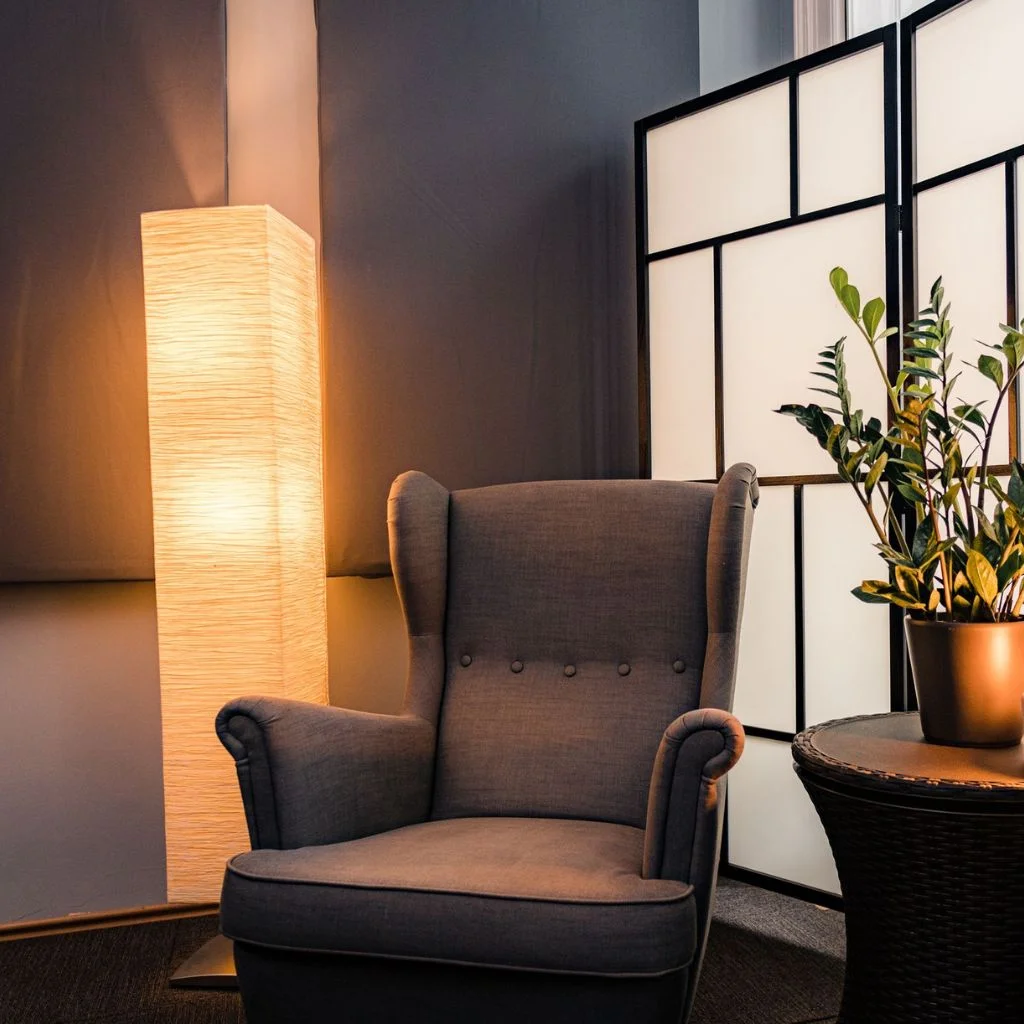
Not every Ikea piece translates into a great folding screen, but three consistently do:
- IVAR Side Units — The most hack-friendly option on the list. These solid pine ladder frames connect with hinges and can be filled with fabric, cane webbing, macramé, or solid wood panels depending on how much privacy is needed.
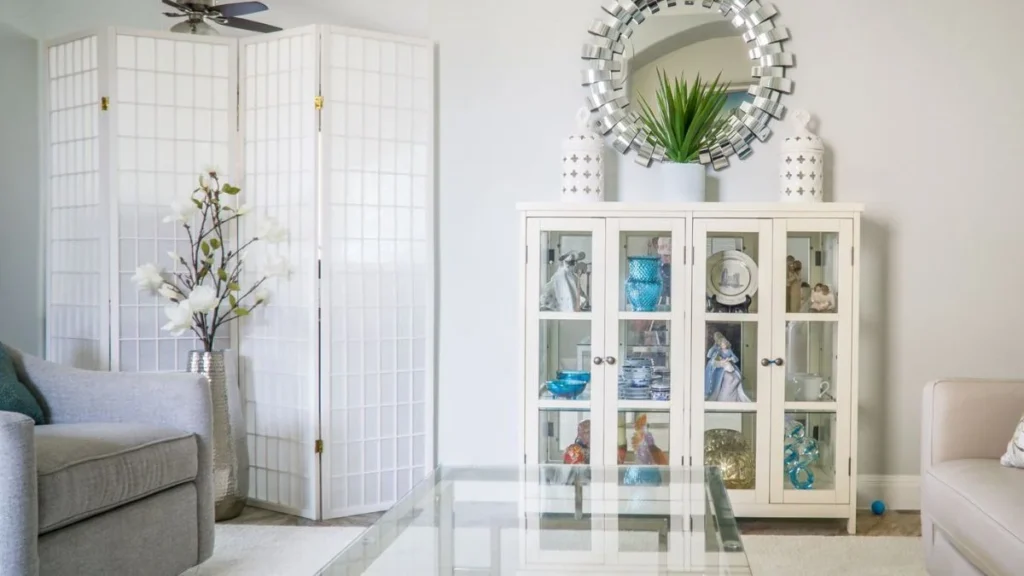
- RISÖR Room Divider — Ikea’s ready-to-go option. It arrives as a proper folding screen, comes in white, and works beautifully with paint, contact paper, wallpaper panels, or botanical prints applied to each section.
- NÄMMARÖ Screen — Originally designed for outdoor use, this slatted eucalyptus screen is one of the most popular 2025 hacks. The slats let light through, it stands independently on flat feet, and it can be stacked by screwing two units together for more height.
For renters and flat-dwellers, all three work without drilling into walls — which makes them particularly popular in studios and shared spaces.
Bedroom Folding Screen Hacks
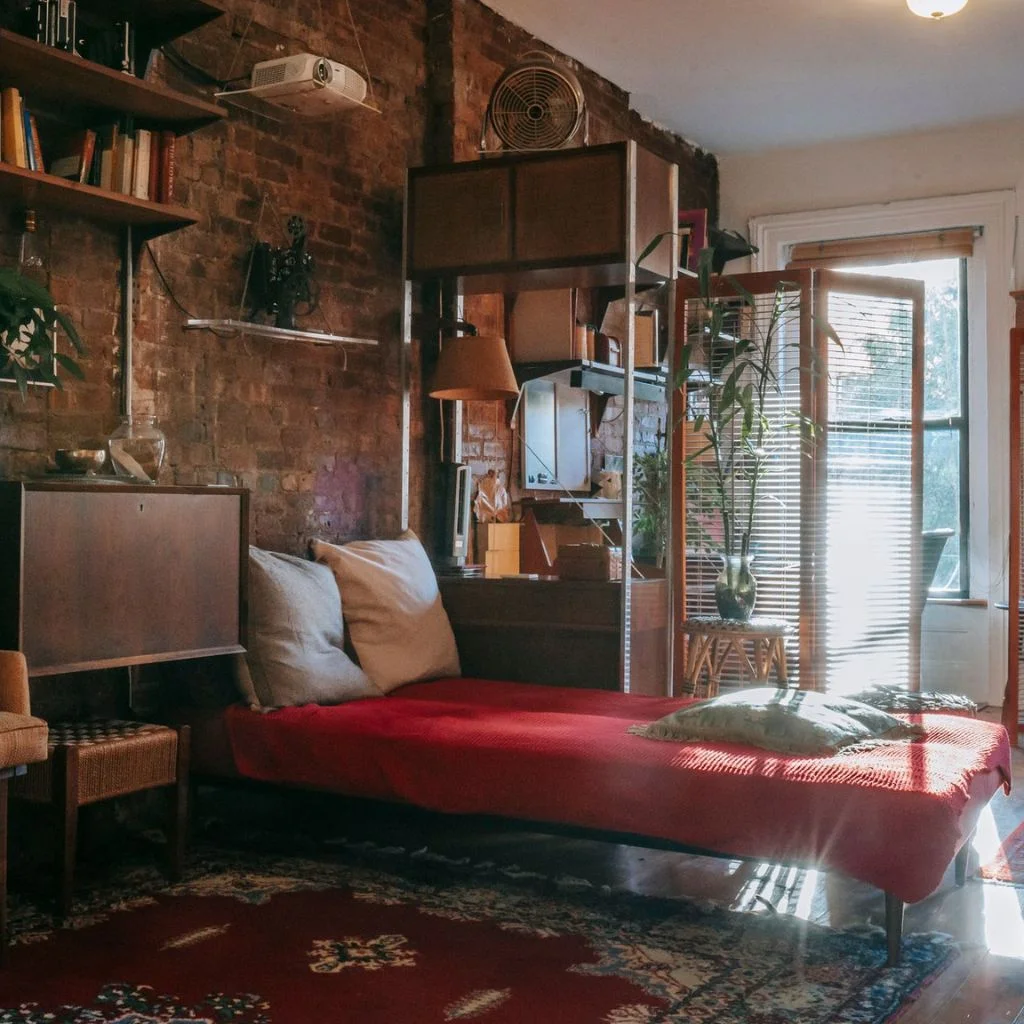
Bedrooms are where folding screens earn the most real estate. They solve three problems at once: privacy, style, and function — without permanent changes to the layout.
Semi-Private Dressing Corner
Place the screen between the bed and a clothing rack or wardrobe unit to instantly carve out a dressing zone. The NÄMMARÖ works brilliantly here — its slatted design means the area feels open and airy rather than boxed in. Stack two units for extra height and hang a full-length mirror on one of the end panels to complete the setup.
Fabric-Filled IVAR Screen
Cut cotton or linen fabric to size and staple it across each IVAR panel for a soft, textured backdrop behind the bed. This approach turns the screen into a padded headboard-style feature that also blocks the view of a messy wardrobe or storage area behind it. Neutral linens keep the room calm; bold prints add a maximalist statement.
Macramé Screen Behind the Bed
Wrap or knot natural cord or twine across the horizontal rungs of the IVAR unit. Done in a basic single knot pattern, the finished piece reads as artisan macramé rather than flat-pack furniture. It doubles as a jewellery display too — hooks slipped between the knots hold necklaces and earrings cleanly.
Cane Webbing Privacy Panel
Cut cane webbing sheets to fit each IVAR frame and staple them in place. The natural texture reads as far more premium than the price suggests, and the perforations let soft light filter through without losing the visual boundary. Pair with warm Edison bulbs or a clip-on reading light on the frame itself for a fully styled look.
Living Room Folding Screen Hacks
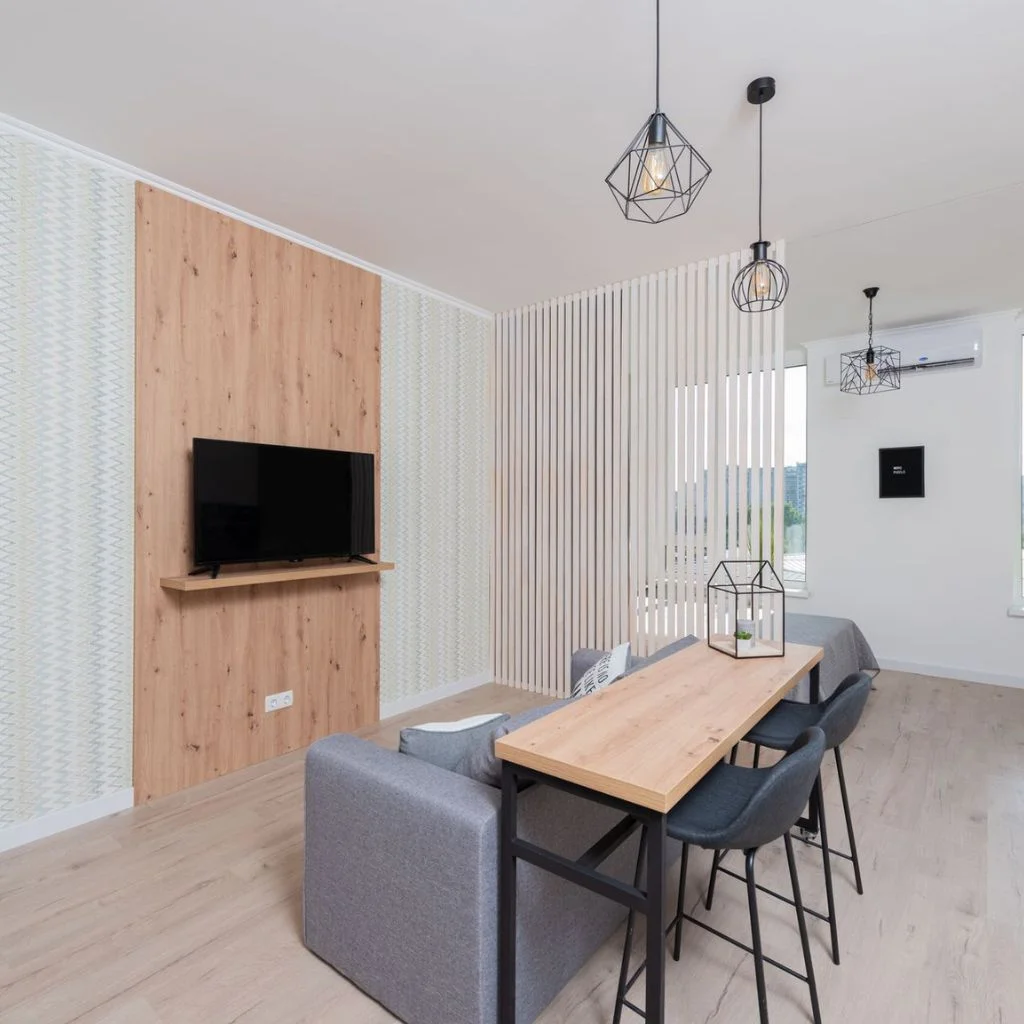
Open-plan living spaces often lack definition — everything bleeds into everything else. A folding screen repositions the room without construction, and in a living space, it can read as a decorative feature rather than a functional partition.
Painted RISÖR as an Art Statement
The RISÖR arrives in white, which makes it an ideal canvas. Paint each panel a different shade from the same colour family — terracotta, sage, sand — for a graduated ombre effect. Or stencil a large-scale botanical or geometric pattern across all panels so the screen reads as a single piece of art when fully extended.
Wallpaper Panel Screen
Apply wallpaper or peel-and-stick contact paper to each section of the RISÖR. Maximalist prints like tropical leaves, abstract shapes, or a grasscloth texture all work well. This is the fastest version of the hack — no painting skill needed, and the contact paper peels off cleanly if the look needs updating.
Ceiling-Mounted Bamboo or Slatted Screen
The NÄMMARÖ or TOLKNING screens can be hung from ceiling hooks using adjustable rope, chain, or curtain track. A ceiling-mounted screen doesn’t touch the floor, which keeps the room feeling open while still breaking up the visual sightline. The bamboo lattice catches light beautifully and creates warmth even in a large, sparse room.
KALLAX as a Structural Room Divider
For living spaces that need more permanence, a 4×4 KALLAX unit propped between two 1×2 units creates a full room divider with integrated storage and an optional built-in desk surface. Add a plank across the back of the lower units to form a desk, and the divider becomes an entire home office zone within the living room.
Home Office Folding Screen Hacks
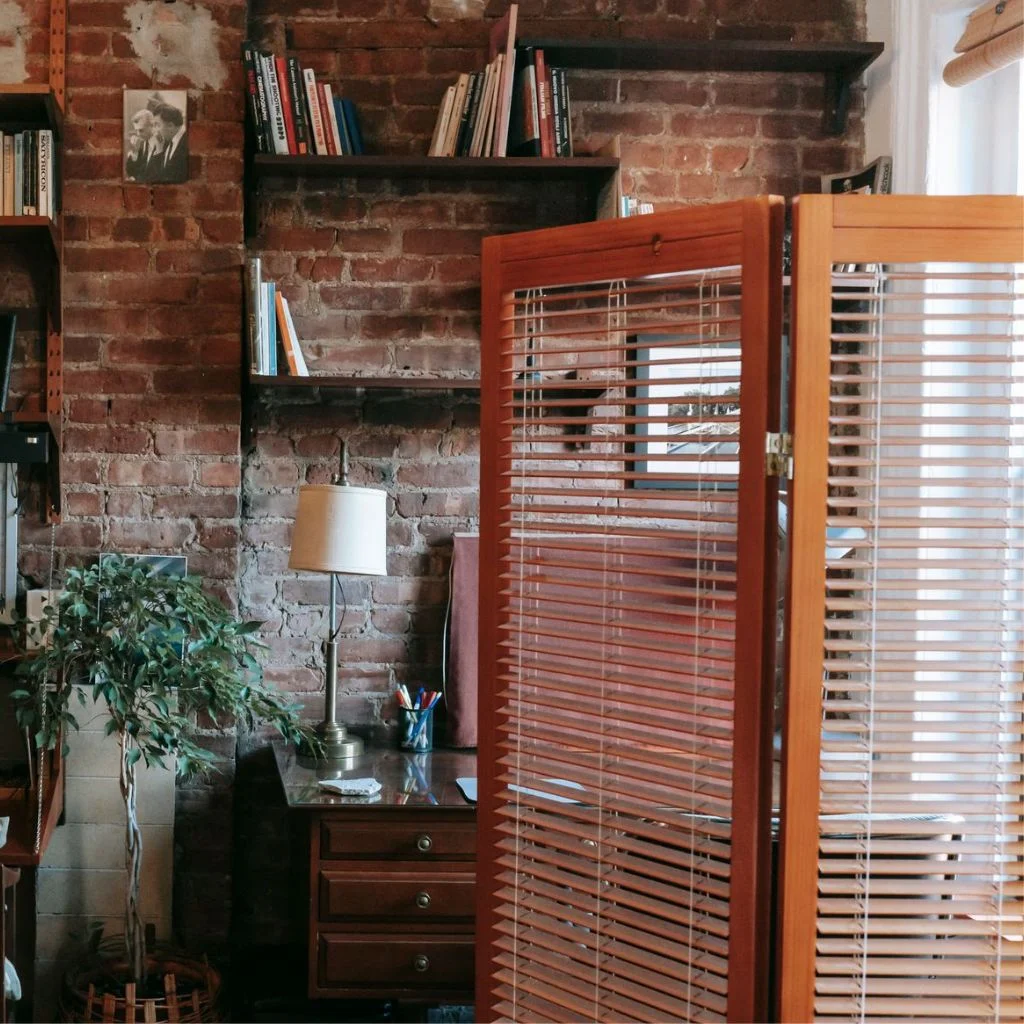
Since remote work made home offices a permanent fixture, folding screens have found their most practical use yet: creating a visual boundary between work and life inside the same space. They also solve the Zoom backdrop problem without installing shelving.
Instant Zoom Backdrop
Place the NÄMMARÖ screen directly behind a compact desk. The slats add visual texture without overwhelming the frame, and small hanging planters clipped to the slats bring life to video calls instantly. One popular hack adds caster wheels to the screen’s base so it rolls to wherever it’s needed in the home.
Pocket Screen for Office Supplies
Ikea’s own IVAR-based hack involves adding fabric pockets sewn directly onto the screen panels. Each pocket holds notebooks, cables, scissors, or small stationery. It functions like a pegboard but softer — useful in a craft room or home office where wall drilling isn’t possible.
Solid Wood Panel Screen for Full Privacy
Screw solid wood planks across each IVAR frame to block the view entirely. This works in open-plan homes where a desk sits in a corner of the living room — the screen creates a genuine visual wall that separates the work zone from the rest of the room without any structural changes.
Living Wall Herb Garden
Wire baskets or small planters screwed into the NÄMMARÖ slats turn the screen into a living wall behind a home office desk. Herbs, trailing plants, or pothos all thrive in the indirect light a window-adjacent desk usually has. The greenery improves air quality and makes the workspace feel less corporate.
Finishing Touches Worth Stealing

The screen itself is only half the story. How it’s styled determines whether it reads as a practical partition or a considered design feature.
- Add a clip-on light to one side of the IVAR frame — an Edison bulb style adds warmth without hardwiring.
- Drape textiles over the top panel — a folded throw or trailing linen softens the sharp frame lines.
- Use the screen to anchor a corner — position it at a 45-degree angle rather than flat against a wall to create a nook rather than a barrier.
- Paint the feet or hinges — matte black or brushed brass hardware instantly lifts the overall look without replacing the piece.
- Mirror one panel — a small frameless mirror stuck to an inner IVAR panel creates depth and a practical dressing spot inside the screen’s footprint.
- Stagger heights — adding one shorter IVAR unit alongside taller ones creates a more architecturally interesting silhouette rather than a flat row.
One Screen, Every Room Sorted
Ikea folding screen hacks work because they start with something genuinely flexible. Pine frames, slatted panels, and simple hinges give you a blank slate — and the ability to fill or finish them however the space needs.
A bedroom gets privacy and a styled backdrop. A living room gets definition and a decorative focal point. A home office gets a Zoom-ready backdrop and a clear visual divide between desk life and everything else.
Pick the hack that solves the actual problem the room has — and let the materials and finish follow from there. Flat-pack furniture rarely looks this intentional.
Editor Choice: Billy Bookcase Media Wall Ideas for Small and Large Living Rooms.
Frequently Asked Questions
Does Ikea sell a folding screen?
Ikea sells a few options. The RISÖR is a dedicated folding screen room divider. The NÄMMARÖ is a freestanding slatted screen originally designed for outdoor use but widely used indoors. Many hackers also build custom screens using IVAR side units joined with hinges.
Which Ikea piece is best for a bedroom screen?
The IVAR side unit is the most versatile choice for bedrooms. It can be filled with fabric, cane webbing, or solid panels, making it adaptable for any privacy level. The NÄMMARÖ is a good low-effort option if a simpler slatted look works for the space.
Can an Ikea folding screen work as a Zoom backdrop?
Yes — this is one of the most popular home office uses. The NÄMMARÖ placed behind a desk adds textural depth on screen, and small hanging planters attached to the slats make the backdrop look intentional and styled.
How do you stabilise an IVAR folding screen?
Use three hinges per joint when connecting IVAR panels. The 20-inch wide side units have a wider footprint and are more stable than narrower options. Avoid opening the screen at too wide an angle on taller units, as height increases the risk of tipping.
Do Ikea folding screens work in small spaces?
Absolutely. A ceiling-mounted screen or a slim freestanding model like the NÄMMARÖ takes up minimal floor space. In a studio apartment, a folding screen can separate a sleeping zone from a living area without making the space feel smaller, especially when the screen has slatted or semi-transparent panels that let light pass through.