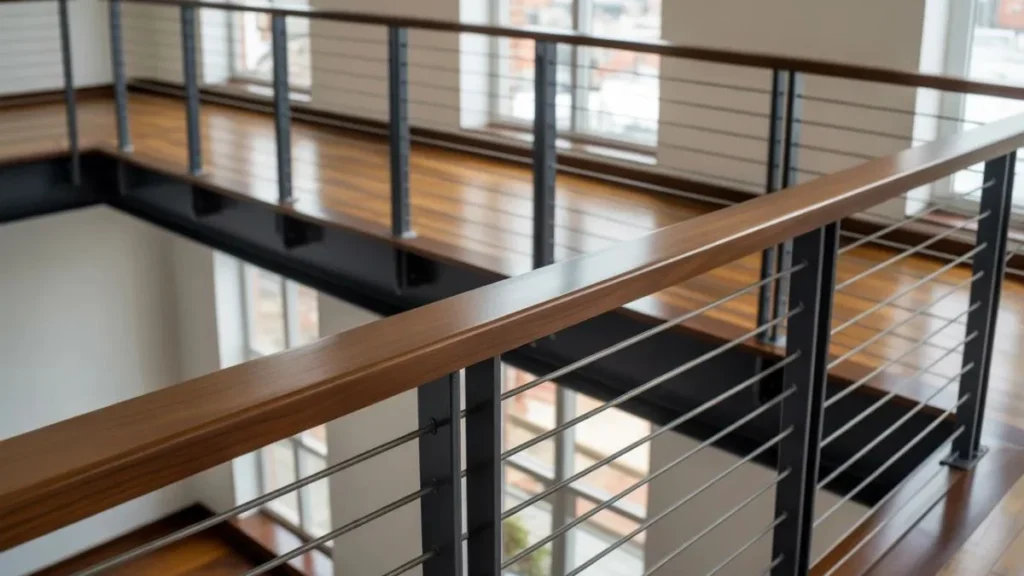
Your loft railing is one of those design elements that does double duty every single day — it keeps your family safe and makes your space look intentional. Too many homeowners treat it as an afterthought, then end up with something that clashes with their entire interior. The good news? You don’t have to choose between safety and style. The right loft railing design does both, effortlessly.
Whether you’re building out a new loft, renovating an older home, or just replacing something that’s seen better days, this guide walks you through every major loft railing style on the market right now — what they look like, how they perform, and who they’re best suited for.
Why Your Loft Railing Matters More Than You Think

A loft railing isn’t just a safety barrier — it’s a visual anchor for your entire upper level. It frames your view from the loft, defines the edge of your space, and communicates your home’s design language the moment someone walks through the front door.
Think about how much time you spend looking at your railing. Every time you walk up the stairs, lean over to call downstairs, or sit in your loft reading — your railing is right there in your sightline. That’s prime real estate, design-wise.
The best loft railing ideas check three boxes at once: they meet building code requirements, they hold up to daily use, and they complement your interior style. Anything less is a compromise.
Glass Loft Railing: Open, Airy, and Completely Timeless
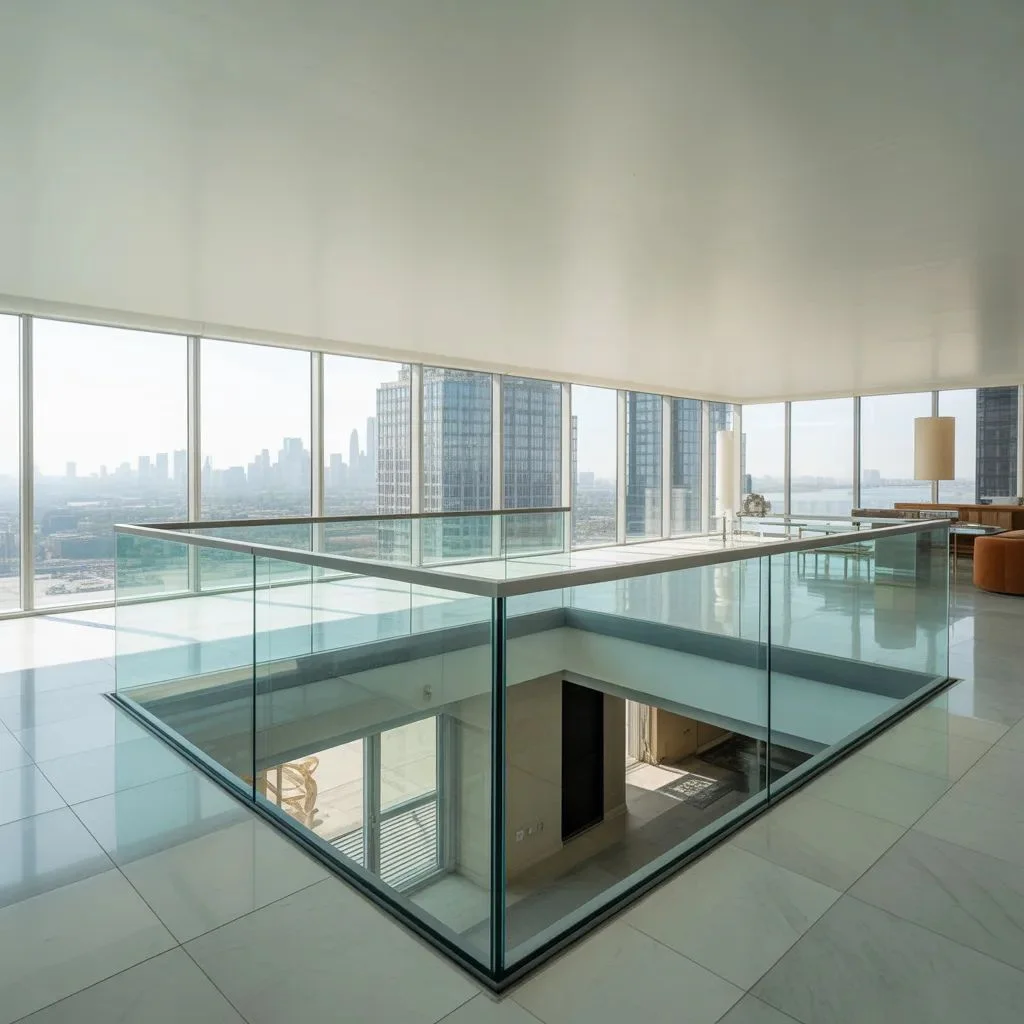
If you want your loft to feel open, bright, and borderless, a glass loft railing is the move. Frameless tempered glass panels let light travel freely between levels, making even a small loft feel significantly larger.
There are two main styles to consider:
- Frameless glass: Clean, minimalist, and ultra-modern. Posts are hidden or recessed, so you get an almost invisible barrier.
- Semi-frameless glass: Glass panels held by slim metal posts. Still airy, with slightly more visual structure.
Glass railings pair beautifully with contemporary, Scandinavian, and coastal interiors. They’re also a smart choice if you have a view worth showing off — a glass loft railing design won’t block a single inch of it.
One thing to know: tempered or laminated safety glass is code-compliant and surprisingly strong. It doesn’t shatter into dangerous shards, so it’s safe even in homes with kids.
Cable Loft Railing: Sleek Lines for a Modern Aesthetic
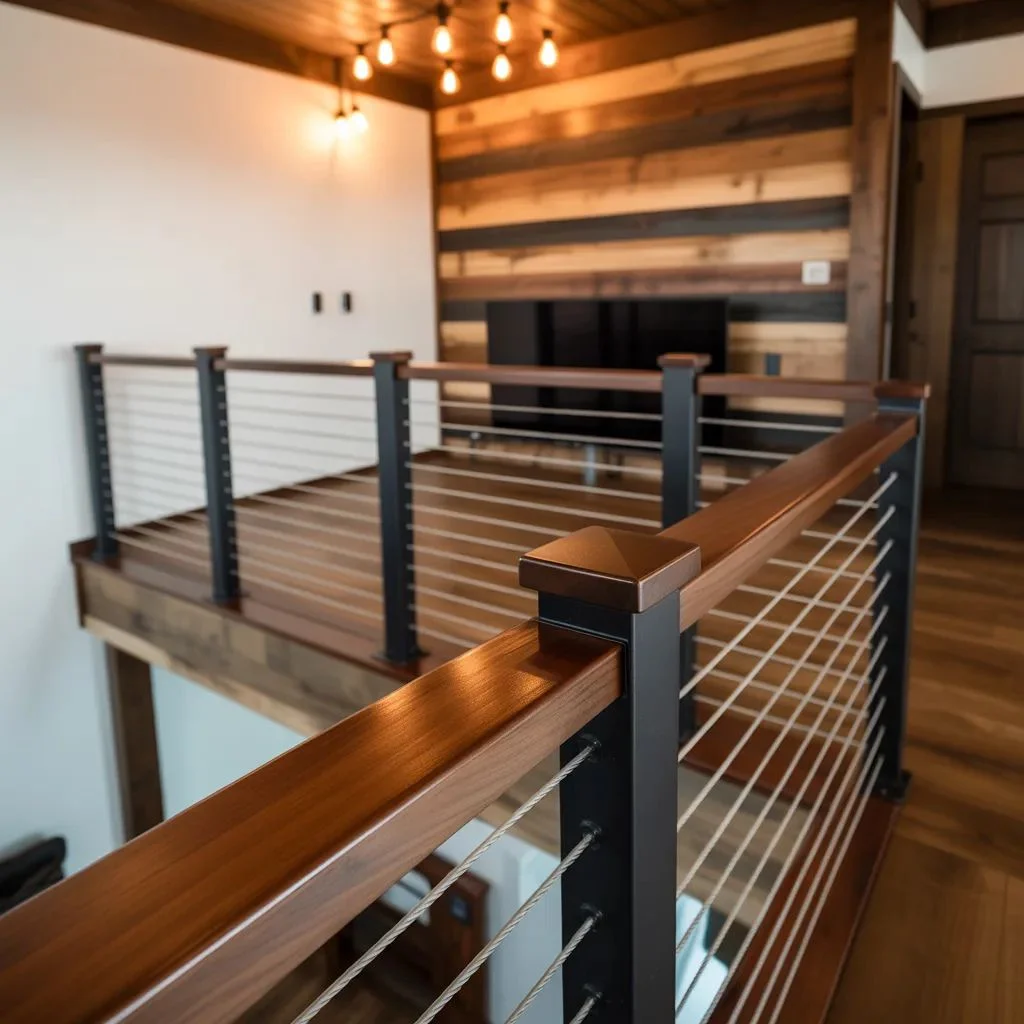
Cable loft railing systems use horizontal stainless-steel cables stretched between posts, creating a clean, industrial-modern look that’s become wildly popular in contemporary homes. The horizontal lines draw the eye outward, making your space feel wider.
What makes cable railings stand out:
- Near-invisible sight lines — you see through them, not at them.
- Extremely low maintenance — stainless steel doesn’t rust, warp, or rot.
- Works with wood, metal, or composite posts depending on your aesthetic.
- Great for homes with views — nothing obstructs them.
The most popular variation pairs a warm wood top rail with slim metal posts and stainless cables — a combination that works in rustic modern, industrial farmhouse, and Pacific Northwest-style interiors.
Safety note: Cables must meet a 4-inch spacing requirement so children can’t get through. Always verify with a licensed contractor before install.
Wood Loft Railing: Warmth, Character, and Classic Appeal
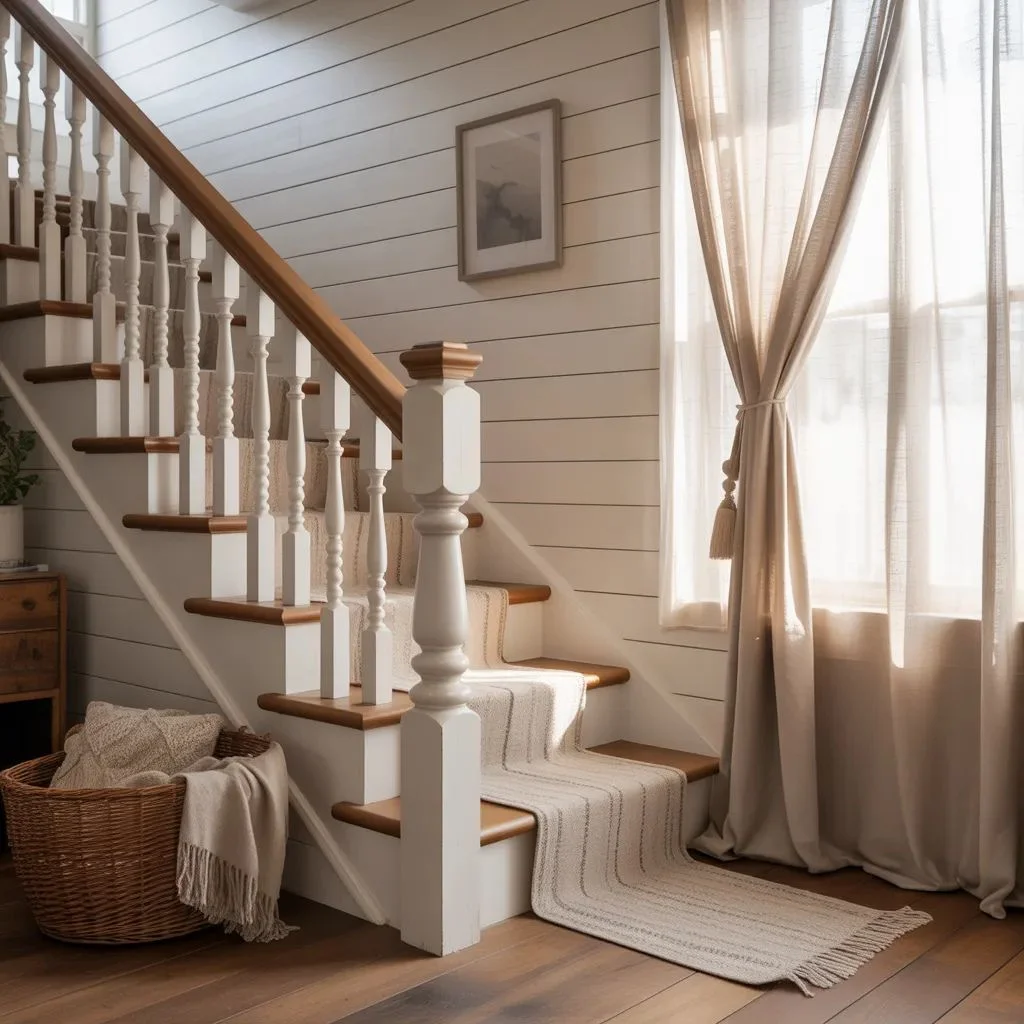
There’s something deeply comforting about a wood loft railing. It brings warmth and texture to a space in a way no other material quite matches. Wood railings have been a staple of home design for centuries, and they’re not going anywhere — they just keep evolving.
Popular wood railing styles include:
- Classic spindle railings: Traditional balusters in square or turned profiles — great for colonial, craftsman, or farmhouse interiors.
- Horizontal slat railings: Flat wood boards running horizontally — a modern take that feels graphic and intentional.
- Solid panel railings: Full wood panels below the top rail for a heavy, architectural look.
Oak, walnut, pine, and maple are common choices. Each has a different grain and tone that changes how the railing reads against your floors and walls. A loft railing in dark walnut, for example, creates instant drama in a room with light walls.
Wood requires more maintenance than metal or glass — it needs refinishing or repainting every few years — but many homeowners feel that trade-off is completely worth it for the character wood brings.
Wrought Iron and Metal Loft Railing: Bold, Durable, and Dramatic
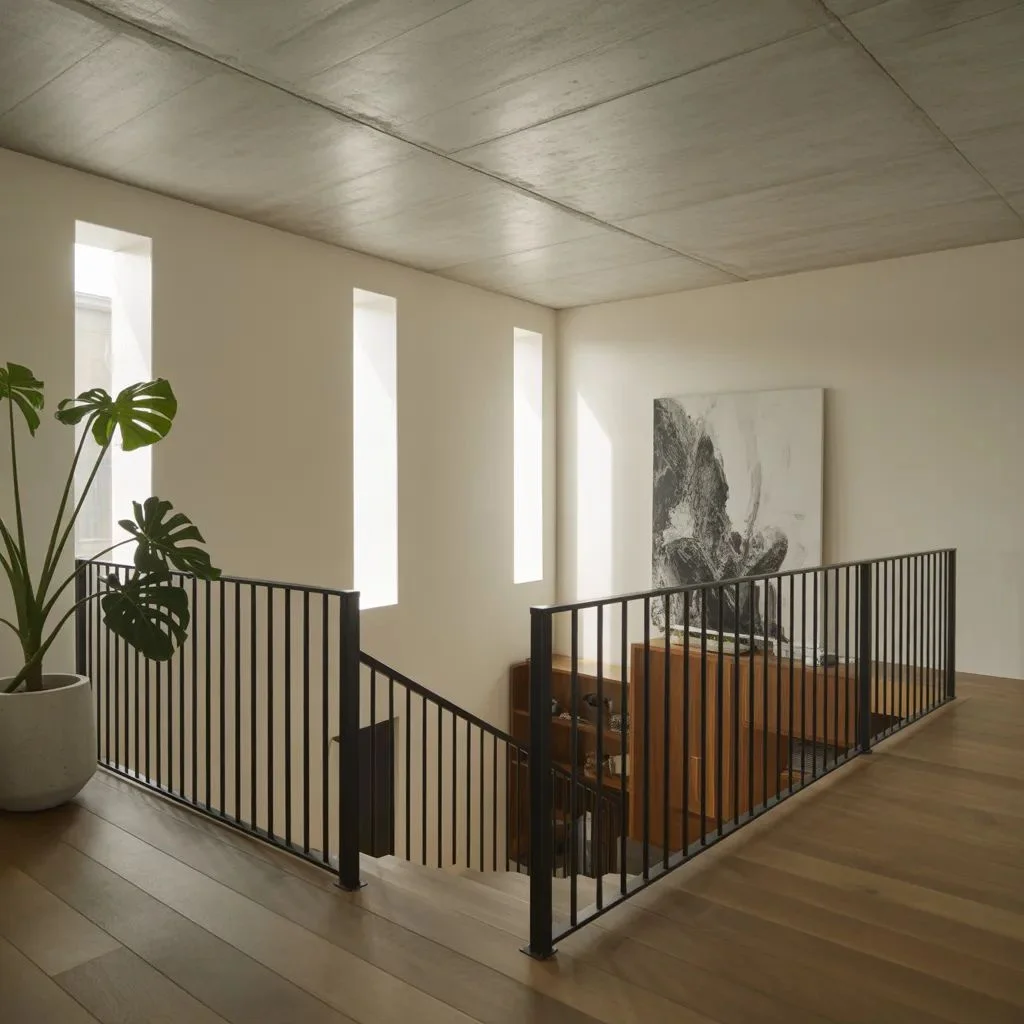
A wrought iron or steel loft railing makes a statement. These are railings built to last — genuinely — and they come in designs ranging from simple flat bars to elaborate scrollwork that belongs in a European manor.
Metal railings are:
- Extremely durable — resistant to impact, warping, and rot.
- Low maintenance — just wipe them down; occasional touch-up paint if needed.
- Highly customizable — blacksmiths and fabricators can create almost any shape or pattern.
- Ideal for traditional, Mediterranean, industrial, or eclectic interiors.
Flat bar metal railings with a matte black finish are having a major moment right now. They look modern and architectural — far from the fussy ironwork people picture when they hear “metal railing.” Pair a modern loft railing in black steel with white walls and light wood floors and the result is quietly stunning.
Mixed-Material Loft Railing: The Best of Every World
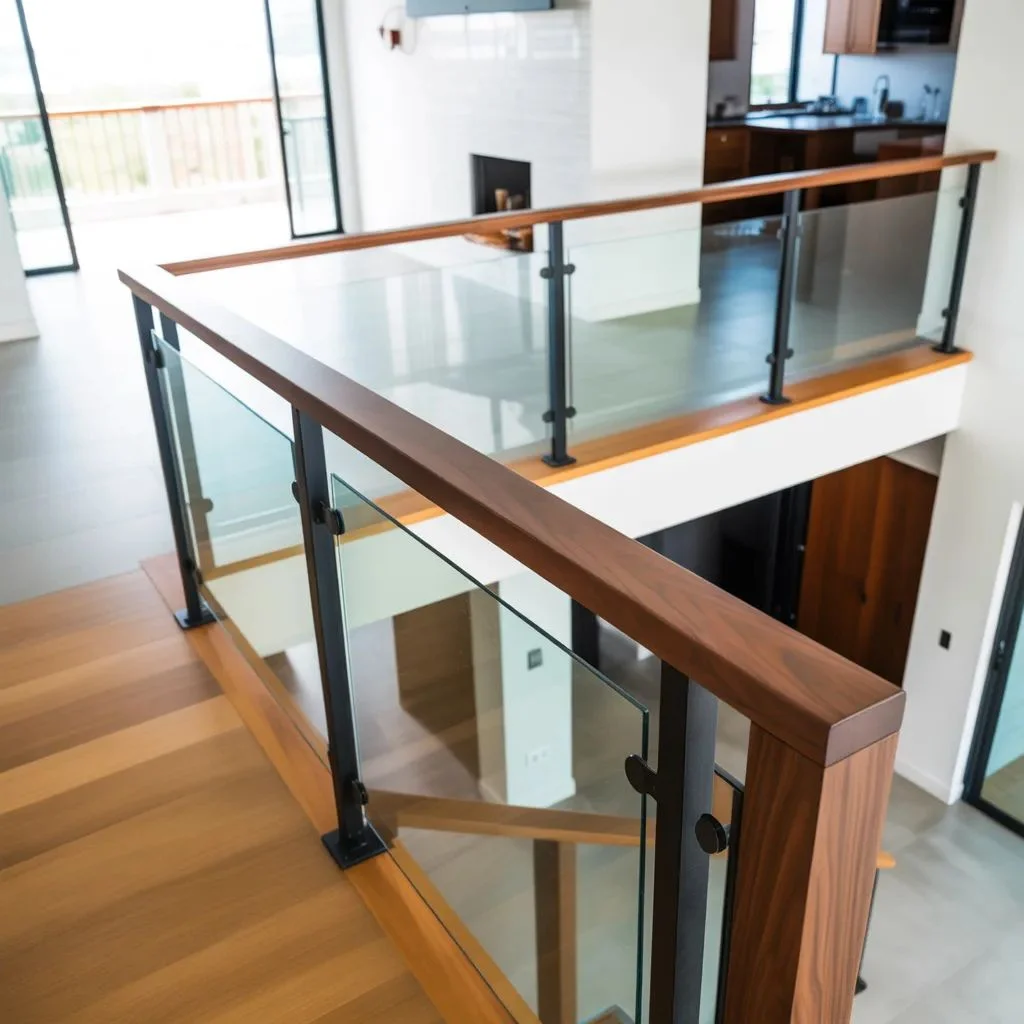
You don’t have to commit to just one material. Mixed-material loft railing designs are one of the most popular choices in contemporary interiors right now — because they let you pull in the warmth of wood, the strength of metal, and the openness of glass all at once.
Classic combinations that work beautifully:
- Wood top rail + metal balusters: Classic contrast, incredibly versatile.
- Metal posts + glass infill: Sleek, modern, and visibility-preserving.
- Wood top rail + cable system: Rustic-modern crossover that suits almost any home.
- Black metal frame + natural wood panels: Graphic, editorial, and current.
The trick with mixed materials is keeping your palette tight. If your railing has three materials, make sure at least two of them are already present somewhere in the room — in your floors, furniture, or fixtures. That’s what makes a loft railing design feel curated rather than confused.
Loft Railing Safety Standards You Actually Need to Know
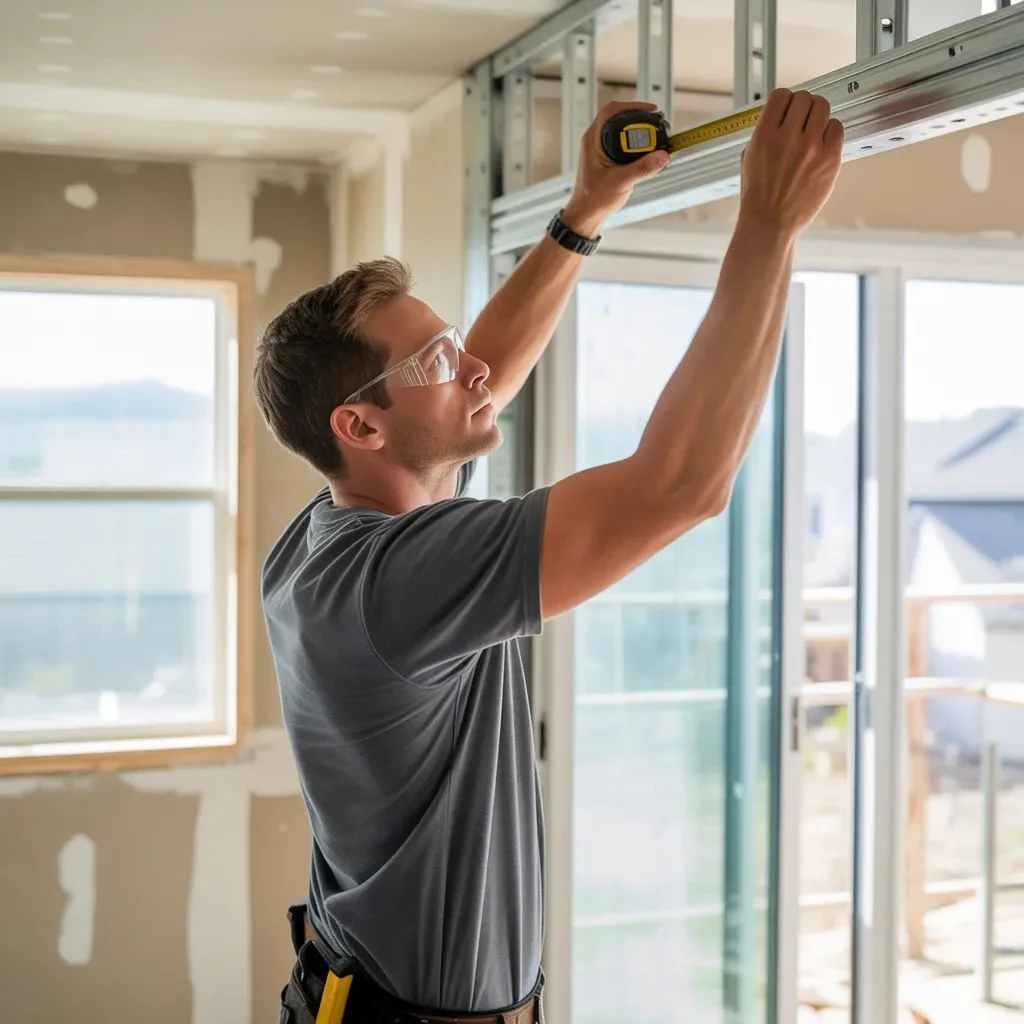
Beautiful is great. Safe is non-negotiable. Any loft railing you install needs to meet the building codes for your area — and most U.S. residential codes follow the International Residential Code (IRC) as a baseline.
Here are the key requirements to keep in mind:
- Height: Railings on lofts and elevated areas must be at least 36 inches tall (42 inches in commercial spaces). Many designers go taller for a more substantial look.
- Baluster spacing: No gap between balusters should exceed 4 inches. This prevents children from getting their heads stuck between them.
- Structural strength: Railings must withstand 200 lbs of force applied in any direction at the top rail.
- Cable tension: Cable systems need enough tension that cables can’t be pushed more than 4 inches apart.
Always hire a licensed contractor and pull the necessary permits before installing your loft railing. You can learn more about residential building code requirements at the International Code Council’s official site.
How to Choose the Right Loft Railing for Your Home
With so many loft railing ideas available, narrowing it down to the right one comes down to four factors: your interior style, your household, your budget, and your long-term maintenance appetite.
Match your interior style first. A frameless glass railing looks incredible in a modern home and wildly out of place in a traditional one. Start by identifying your interior’s dominant style and work from there.
Think about your household. Families with young kids need railings with tighter baluster spacing and a solid top rail that’s easy to grip. Homes with pets benefit from solid panel styles that don’t leave gaps to squeeze through.
Set a realistic budget. Wood spindle railings are typically the most affordable option. Glass and cable systems sit at a higher price point due to materials and specialized installation. Metal falls in the middle.
Be honest about maintenance. If you don’t want to think about your loft railing after it’s installed, go glass or stainless cable. If you love the look of wood and don’t mind the occasional refinish, wood gives you something no other material quite can.
For a deeper look at how different materials stack up over time, This Old House has a solid guide to railing materials worth bookmarking.
Recommended: Affordable Railing Renovation Ideas with High End Appeal.
FAQs About Loft Railing
What is the minimum height for a loft railing? In most U.S. residential settings, a loft railing must be at least 36 inches tall. For lofts above 30 feet in height or in commercial spaces, 42 inches is the standard minimum.
Is a glass loft railing safe for kids? Yes — tempered safety glass is specifically designed to resist impact without shattering into dangerous pieces. As long as the panels are properly framed and meet local building codes, glass loft railings are a safe choice for families.
What’s the most low-maintenance loft railing material? Stainless steel cable and tempered glass are both virtually maintenance-free. They don’t rust, warp, or need refinishing. A simple wipe-down is usually all that’s needed.
Can I install a loft railing myself? Some experienced DIYers tackle wood spindle railings, but most loft railing systems — especially glass and cable — should be installed by a licensed professional. Improper installation creates serious safety risks and can fail building inspections.
How much does a loft railing cost? Cost varies significantly by material and linear footage. Wood spindle systems can start around $150–$200 per linear foot installed. Cable and glass systems typically range from $200–$400+ per linear foot depending on complexity and market.
Ready to upgrade your loft railing? Save this guide and share it with your contractor. The right loft railing is out there for your home — it just takes knowing what to look for. Drop a comment below with your interior style and we’ll help you narrow it down.