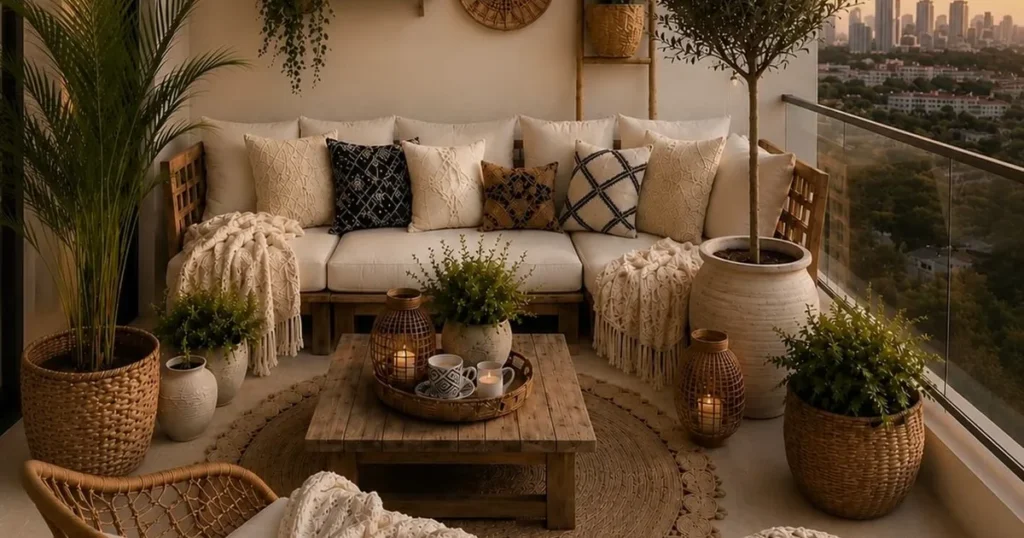
How many cushions does a balcony need before it stops feeling like a balcony and starts feeling like a storage room for textiles? If you have ever bought one more throw pillow, one more plant, one more lantern, hoping the space would finally look finished, you already know the answer: one too many.
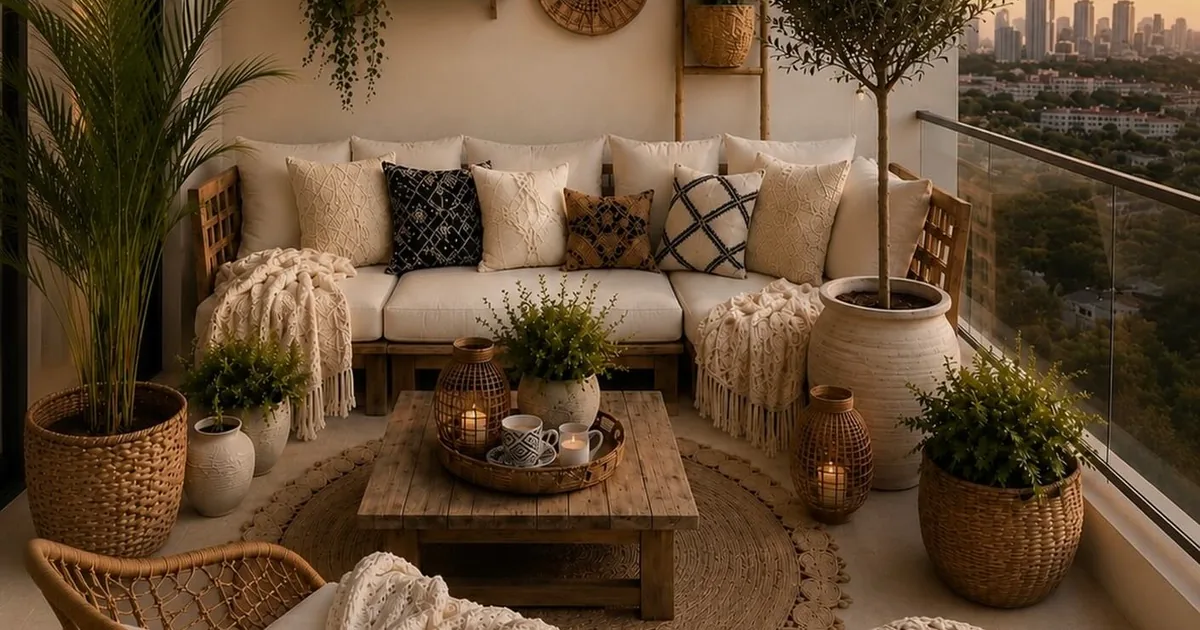
Modern bohemian balcony decor works best when it behaves like a good collection, not a pile. Every piece earns its place, every texture has room to breathe, and the balcony still feels like somewhere you can sit down with a coffee instead of somewhere you admire from the doorway. These 15 ideas keep the warmth and the layers you love about boho, and leave the clutter behind.
Start with One Big Piece, Not Ten Small Ones
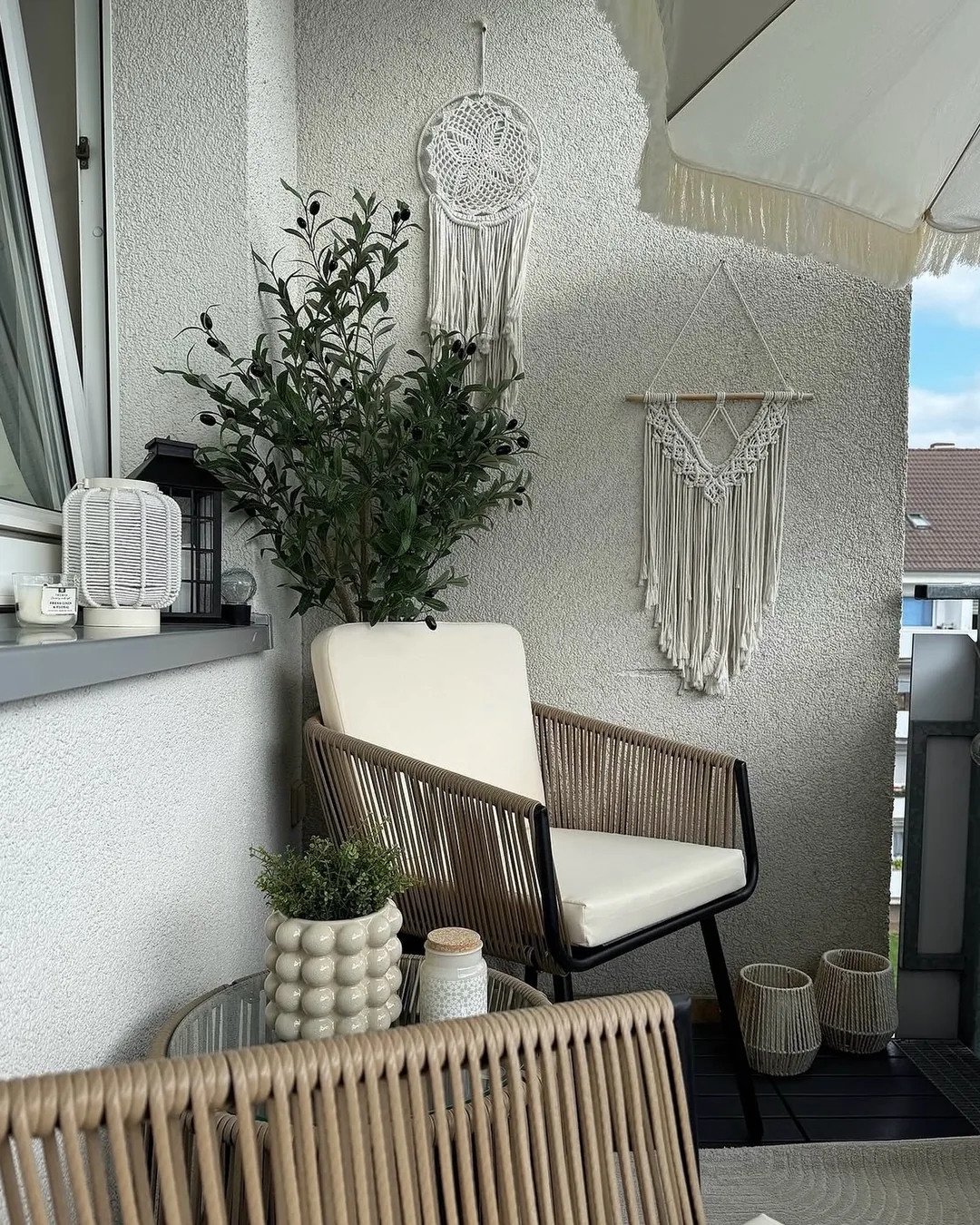
Walk onto most boho balconies and you will see the same mistake: a dozen small things, none of them doing any real work. A tiny stool, a tiny table, three tiny pots, a string of something, a cushion that keeps sliding off. Each piece is charming on its own, and together they make the space feel nervous.
One rattan armchair with a cream cushion changes the whole room. It gives your eye somewhere to land, and everything else becomes a supporting act instead of competing for attention. Macramé on the wall behind it and an olive plant beside it are enough — the chair carries the look, and the balcony suddenly reads as designed rather than accumulated.
The practical point: choose the biggest piece first, then let it set the scale for everything else. If a new item is smaller than your hand and does nothing, it probably belongs inside.
Why a Low Sofa Works Better Than a Chair Set
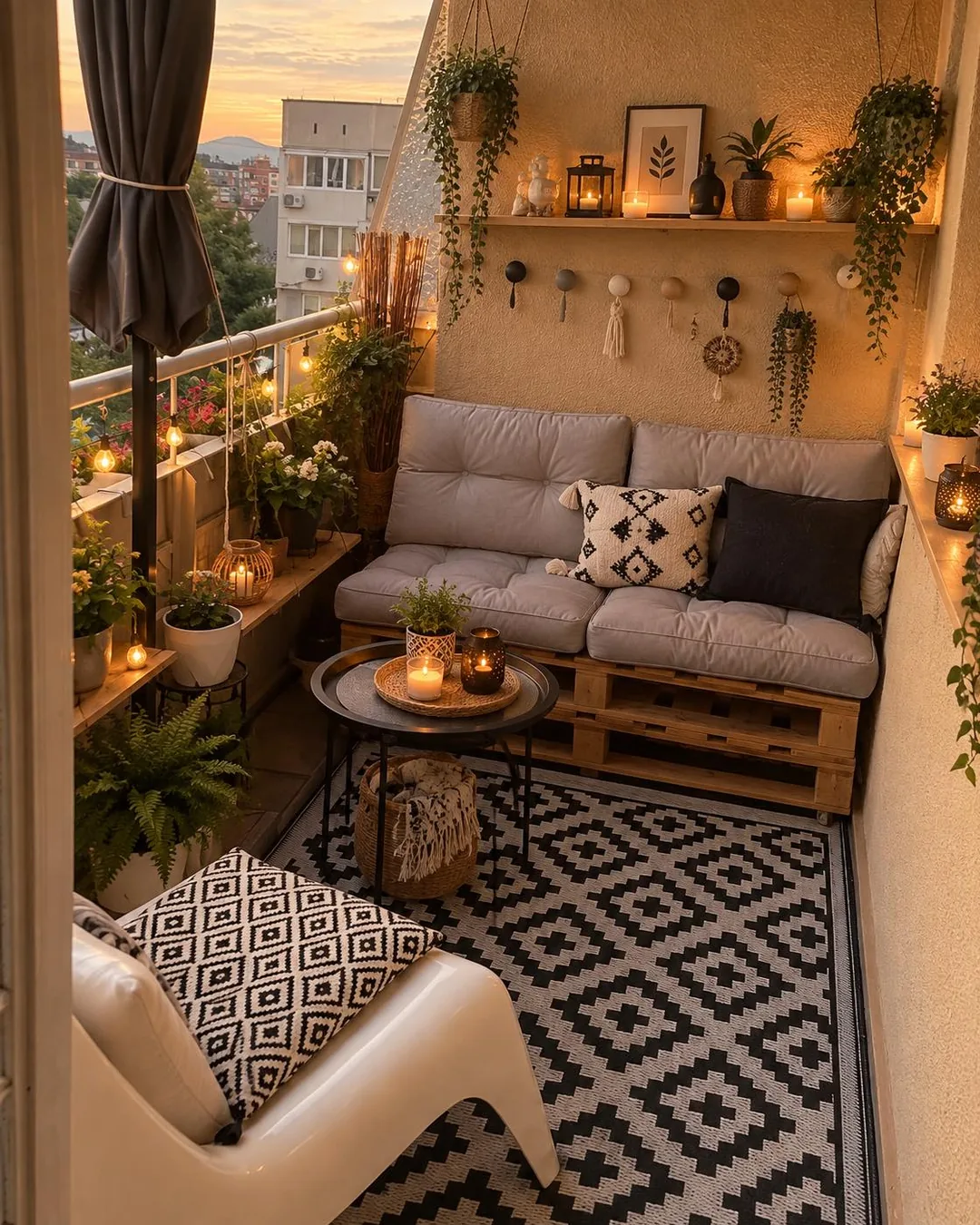
Four chairs around a balcony table sounds sociable, and it usually ends with nobody sitting comfortably. Chairs at different heights, knees bumping the table, one person always stuck facing the wall. A low sofa fixes the geometry in one move.
Low grey pallet seating with a black-and-white diamond rug underneath sits close to the floor, which makes a small balcony feel taller — the eye travels over the back of the sofa to the skyline instead of stopping at chair backs. Sunset does the rest of the work, warming the cushions and the hanging plants above. You get room for two or three people, and the whole setup reads as one calm shape instead of four competing ones.
The practical point: keep seat height around 30 to 35 centimetres. Any higher and the sofa starts blocking the view; any lower and getting up becomes a small project.
Rattan, But Only One Statement Piece
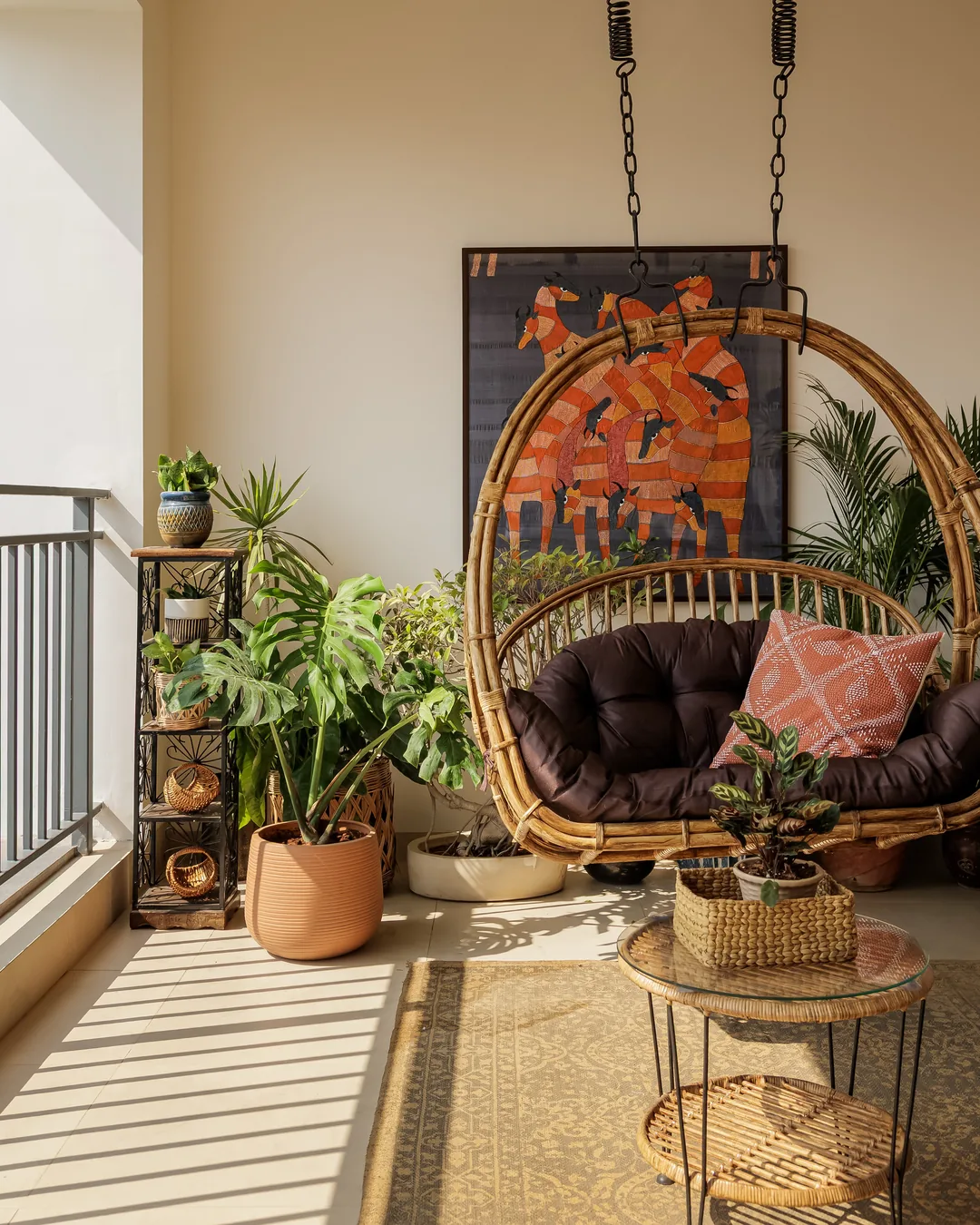
Rattan is the material everyone reaches for first, and it is also the material that tips a balcony into a furniture showroom fastest. Two rattan chairs, a rattan table, a rattan pendant, a rattan shelf — suddenly you are sitting inside a basket.
One hanging rattan egg chair is enough. It swings gently, it photographs beautifully, and the folk-art tapestry behind it — stylised animals in warm oranges — gives the corner colour without another object. A small rattan side table and a jute rug support the chair without repeating it, and the potted plants soften the edges. Restraint is what makes the chair feel special instead of ordinary.
The practical point: count your rattan pieces before you buy the next one. One statement, one supporting piece, and the rest in wood, metal or fabric.
How Many Textiles Is Too Many?
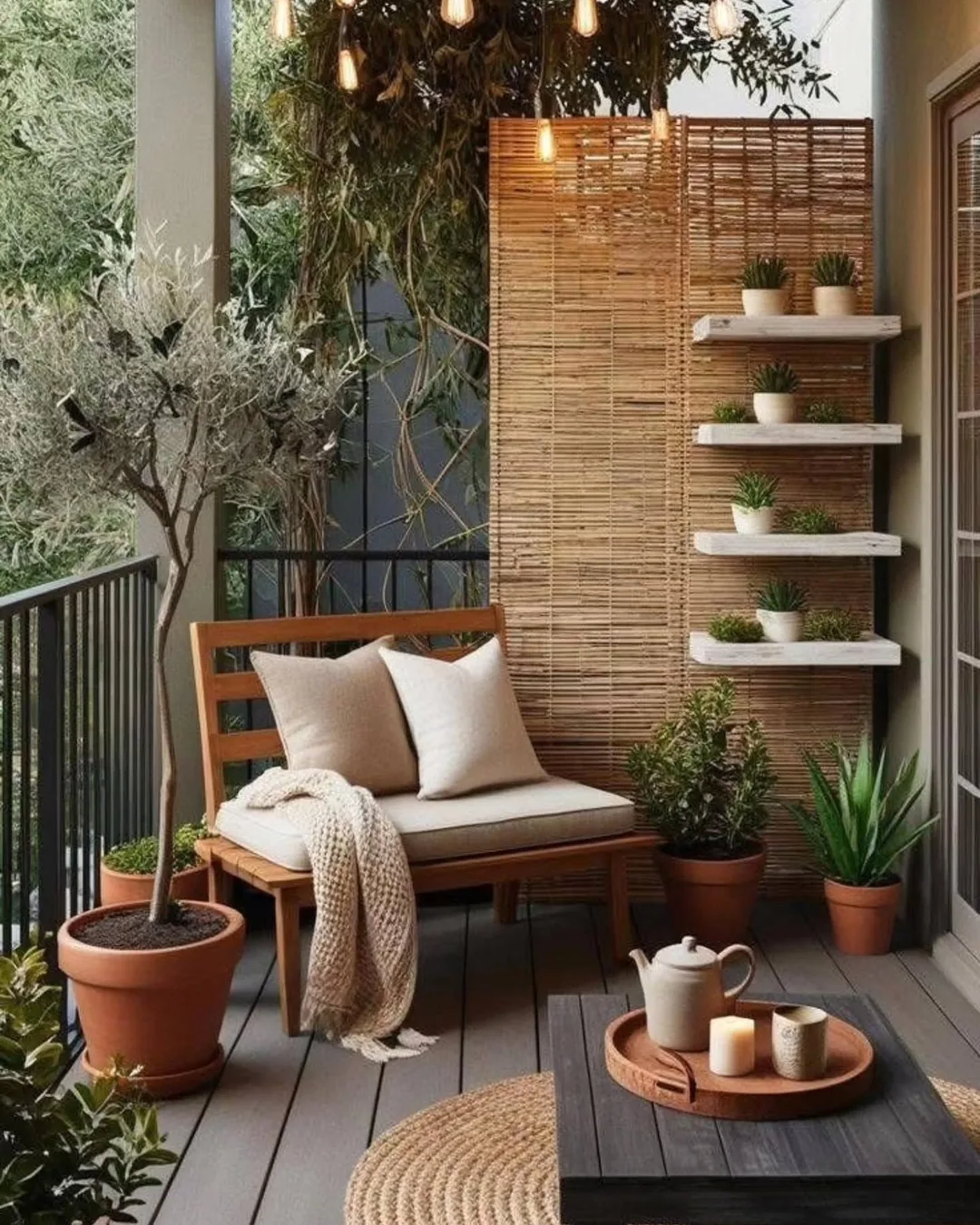
Textiles are the fastest way to make a balcony feel soft, and the fastest way to make it feel like a laundry pile. Cushions on the bench, a throw on the daybed, a rug underfoot, a wall hanging above — each one is justified, and together they can swallow the furniture they were meant to dress.
Count them like ingredients, not decorations. A wooden bench with cream cushions and one draped throw, a bamboo screen behind it, an olive tree in a terracotta pot and a round jute rug — that is five textures, and the balcony still breathes. String lights overhead add warmth without adding weight. When every textile has a job — comfort, warmth, or pattern — the balcony feels layered instead of loaded.
The practical point: cap it at five textile pieces, and make at least one of them do real work, like a throw you actually use on cool evenings.
A Rug That Grounds the Whole Balcony
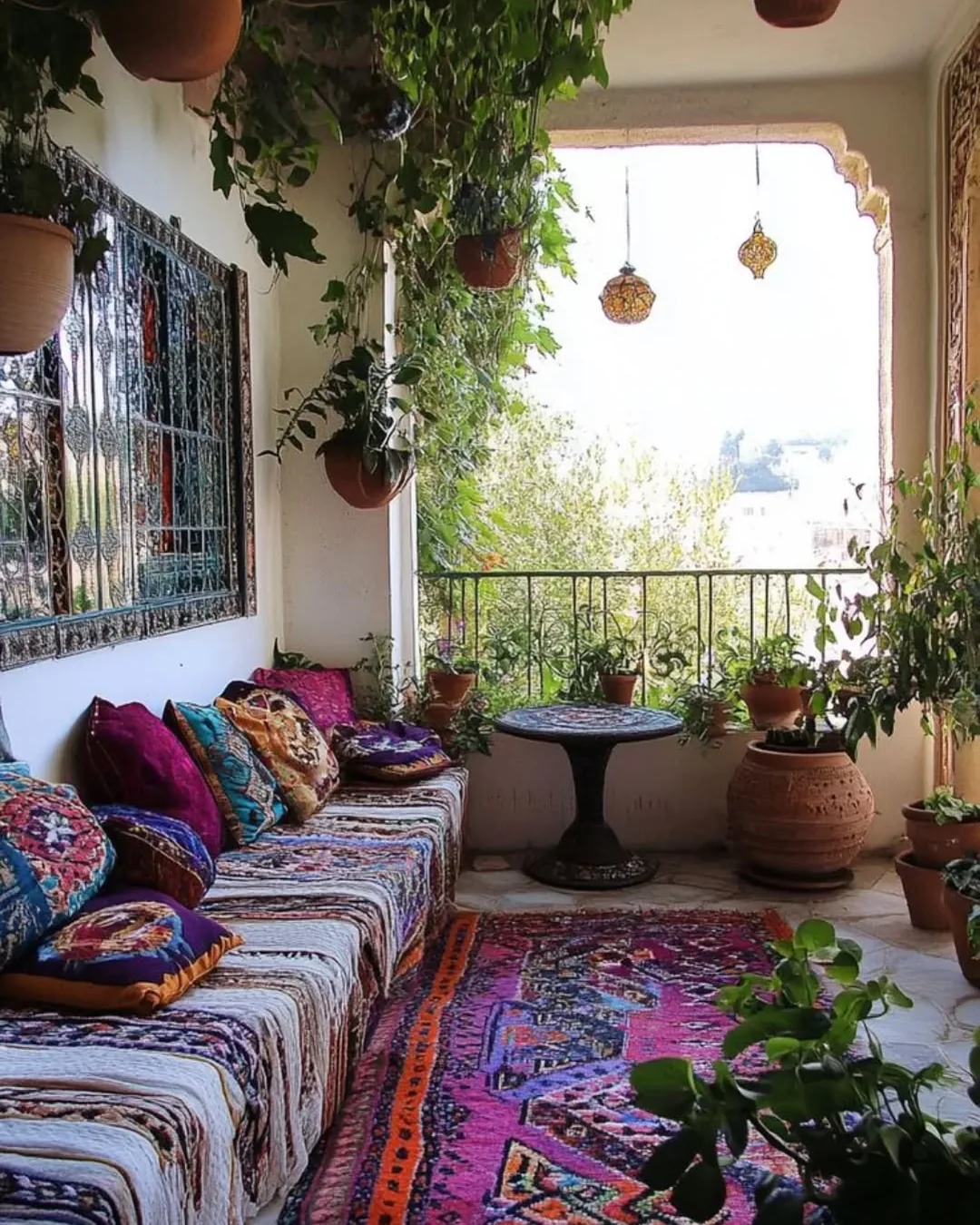
Without a rug, balcony furniture floats. Chairs and tables sit on bare tiles like items waiting to be moved, and the space never quite feels like a room. One rug changes that in an afternoon.
A bold magenta patterned rug runs down the centre of this balcony, pulling a long row of low floor seating into a single composition. Striped and jewel-toned cushions line the wall, terracotta pots hang above, mosaic lanterns catch the light — and the rug holds all of it together, the way a frame holds a picture. Even a busy balcony needs one anchor, and the floor is the easiest place to put it.
For more ideas on dressing a small outdoor space, see Cozy Apartment Balcony Christmas Ideas for Cold Winter Evenings.
The practical point: size the rug to the seating, not the balcony. It should reach under the front legs of every seat, with 15 to 20 centimetres to spare at the edges.
Plants in Threes, Not in Dozens
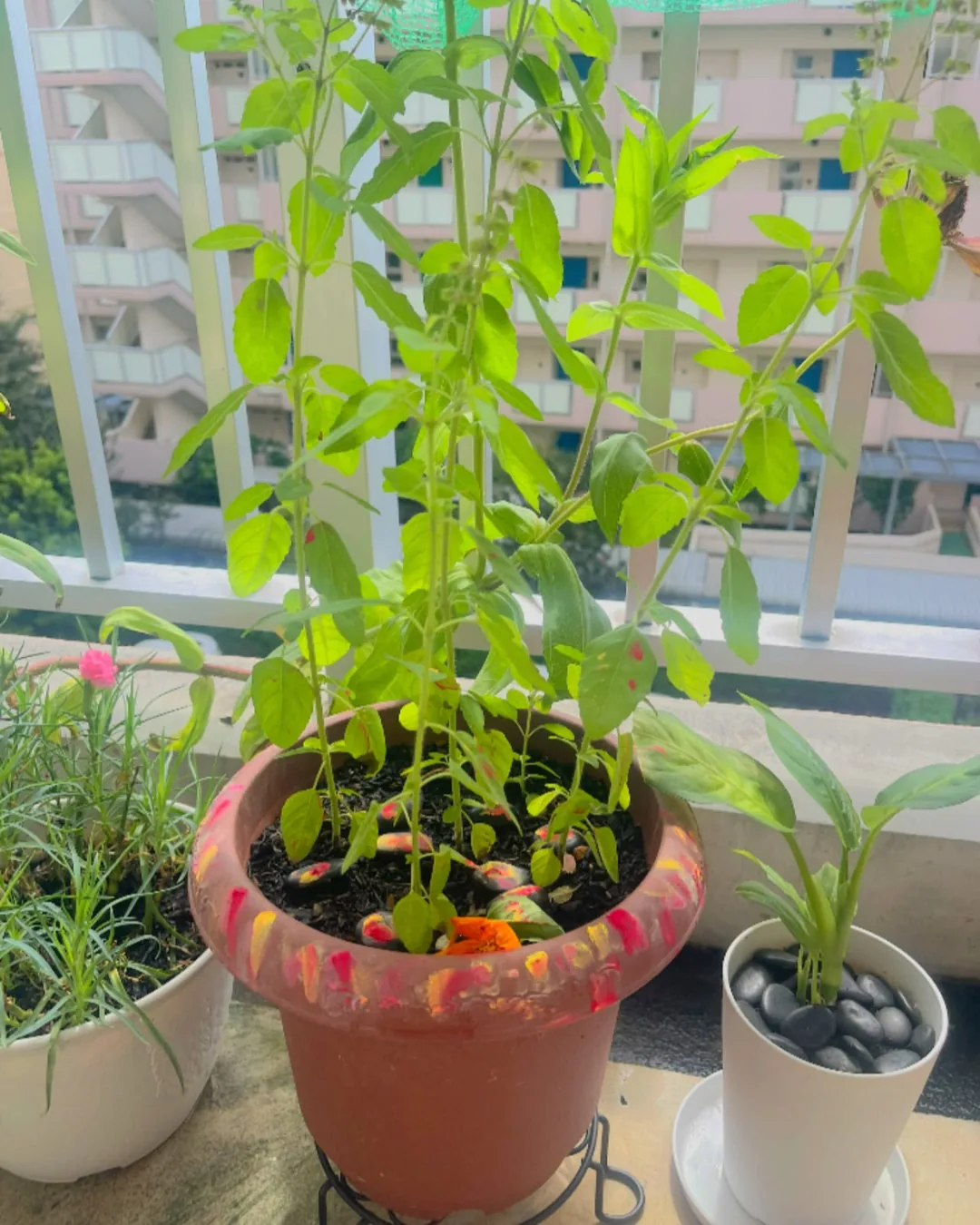
Boho and plants go together like balconies and sunsets, which is exactly why plant collections get out of hand. One becomes five, five becomes a jungle, and suddenly you are watering a garden instead of enjoying a balcony.
Three plants are a composition. A tall leafy plant in a large terracotta pot stands at the centre, a small plant in a white pot with black stones sits to the right, and a leafy plant in a white pot fills the left — all three against a white metal railing, with an apartment building beyond. Nothing is staged or fussy; it looks like someone who likes plants, not someone running a nursery. Three also gives you a shape: tall, medium, small, and the eye reads it as a group.
The practical point: if you want more plants, add them in a second group of three somewhere else — never one at a time, or the collection grows without a plan.
Keep the Palette to Three Colours
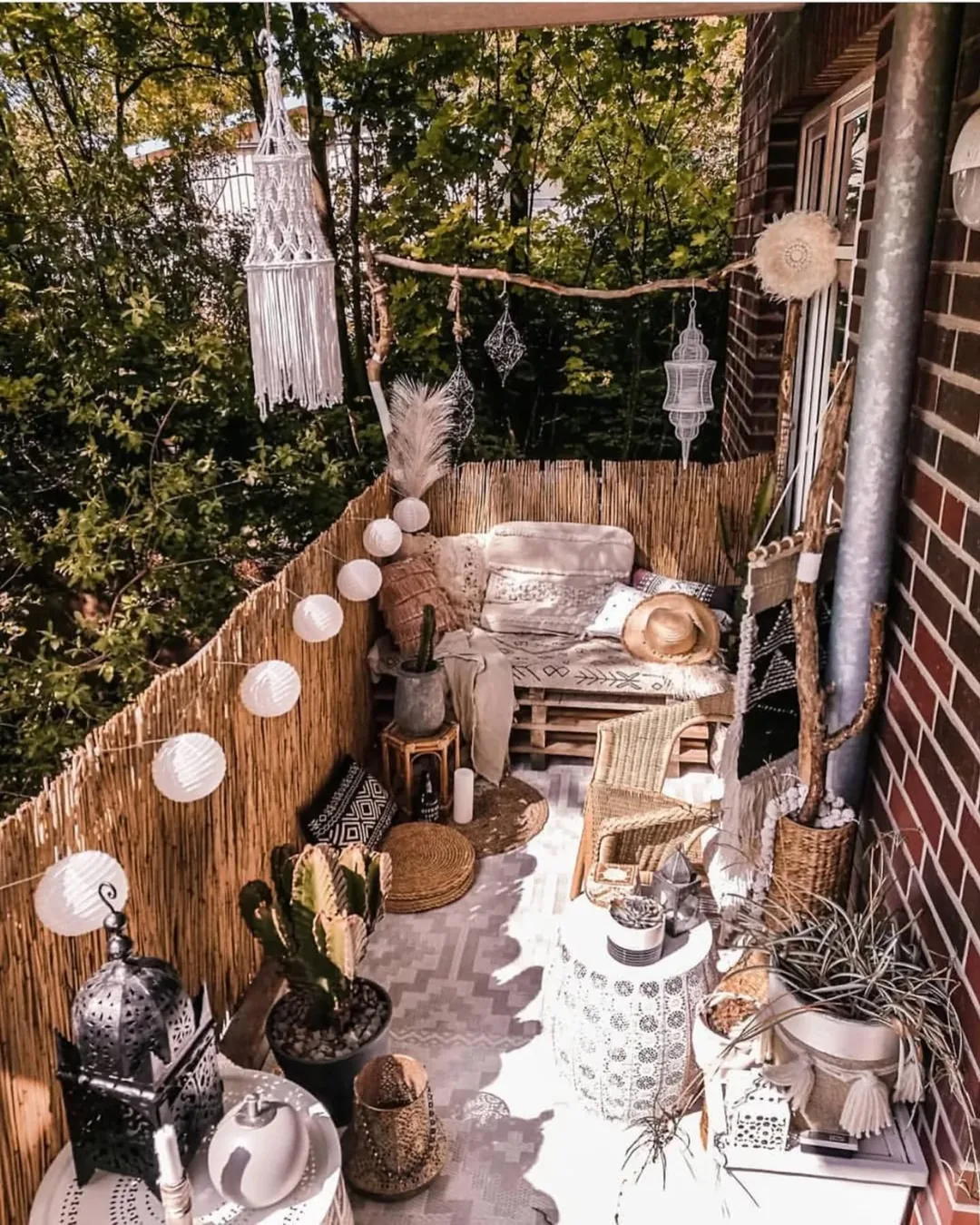
Boho is famous for colour, and that is precisely the trap. Every market find brings its own shade, and before long the balcony has eleven colours arguing with each other. Limiting the palette is what makes a boho balcony look modern instead of chaotic.
Cream, natural rattan and wood, and black accents — that is the whole palette here. Low pallet seating in neutral cushions, bamboo reed fencing around the edges, white paper lanterns strung along the fence, macramé hangings, a cactus and small lanterns tucked in. Nothing shouts, everything belongs, and the green of the plants reads as a living accent rather than a fourth colour. Restraint in colour lets texture do the talking.
The practical point: pick your three colours before you shop, and write them down. If a piece does not match one of the three, it stays in the shop.
What to Do with the Railing?
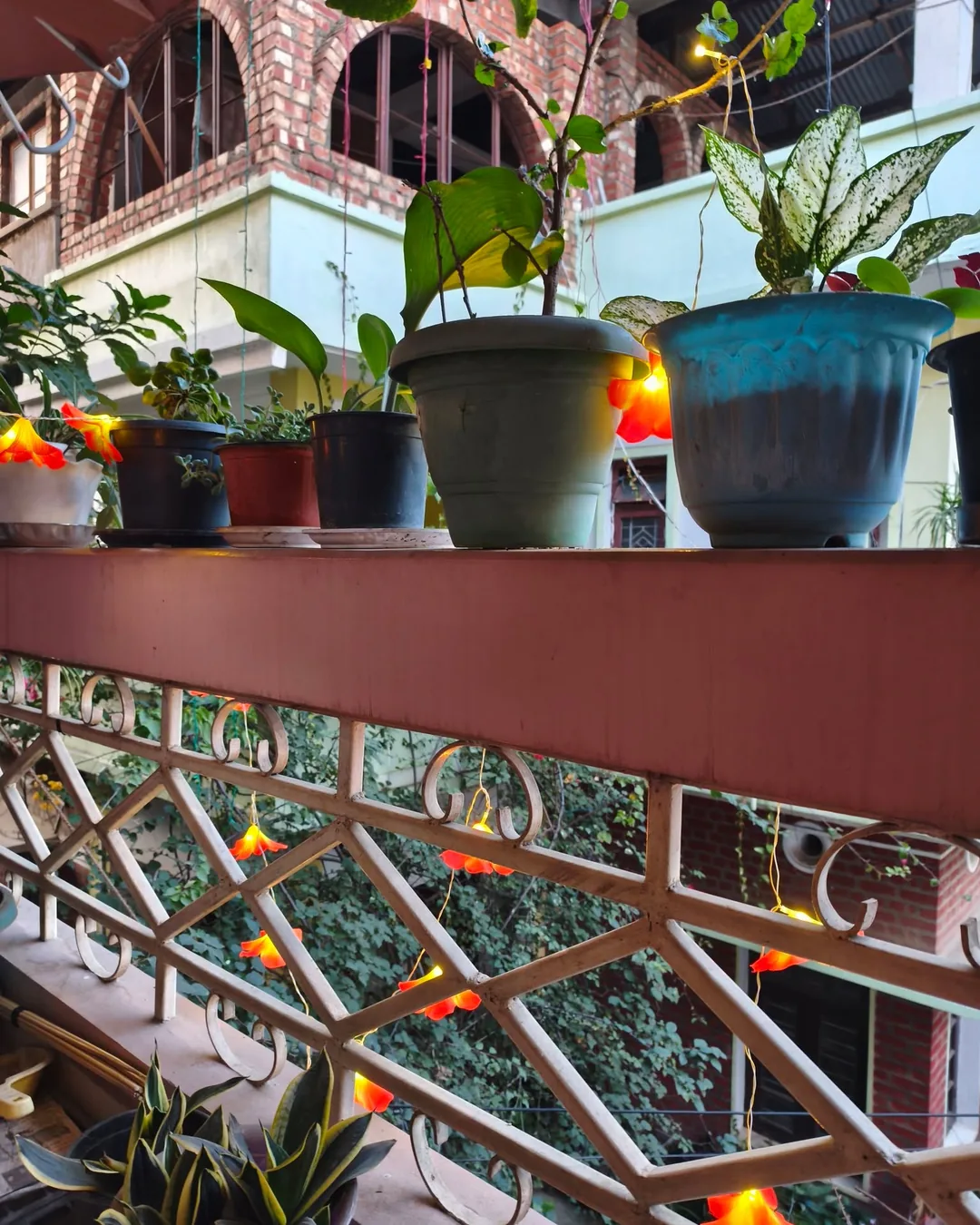
Most people treat the railing as a boundary and forget it exists. It is the largest vertical surface on a balcony, and leaving it bare wastes the one element every balcony already has.
Dress it from the top down. Potted plants sit on the railing’s top bar — black, terracotta, grey-green and blue pots with leafy plants — while orange flower-shaped string lights drape along the diamond-pattern metal below. A snake plant on the floor anchors the bottom. The railing becomes the decoration instead of the thing you look past, and the balcony gains a whole layer without losing a centimetre of floor.
The practical point: keep the top bar clear enough to rest a cup on. A railing you can use beats a railing you can only look at.
Layer Light Instead of Adding Lamps
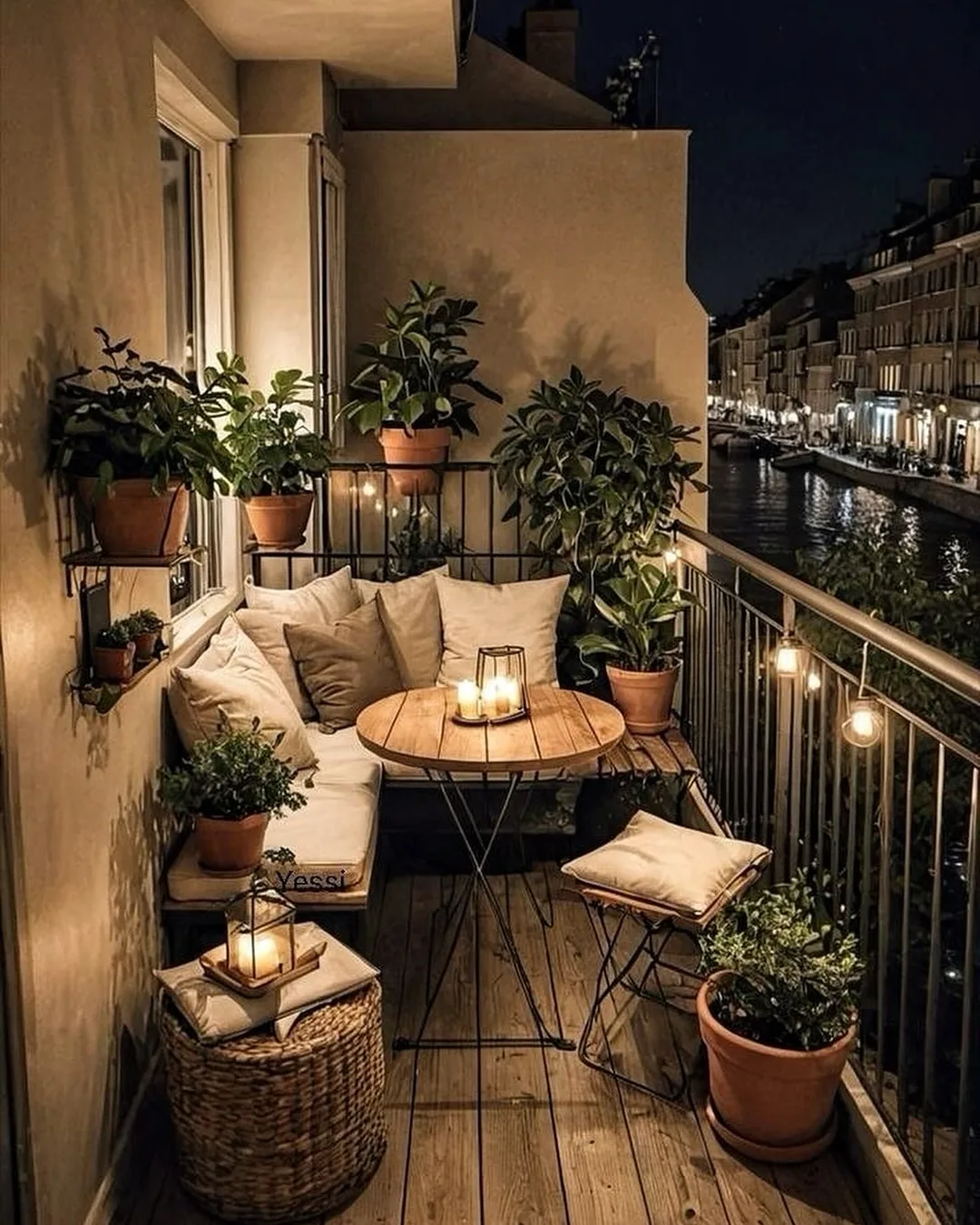
One lamp on a balcony looks like an afterthought. Three lamps look like a lighting plan gone wrong. Layered light is the middle path, and it works because each source does a different job at a different height.
On this balcony at night, warm string lights run along the railing and give the whole space a glow. A candle lantern on the small round wooden table gives the seating area its own warm pool. A second lantern on a wicker stool fills the corner. Beyond the railing, a canal lined with illuminated buildings does the rest — the city becomes the backdrop, and the balcony feels like the best seat in the house. Three sources, three heights, no lamp standing on the floor in the way.
The practical point: use warm white (around 2700K) for every source. One cool-white bulb in the mix will make the whole balcony feel like a car park.
A Small Table with a Real Purpose
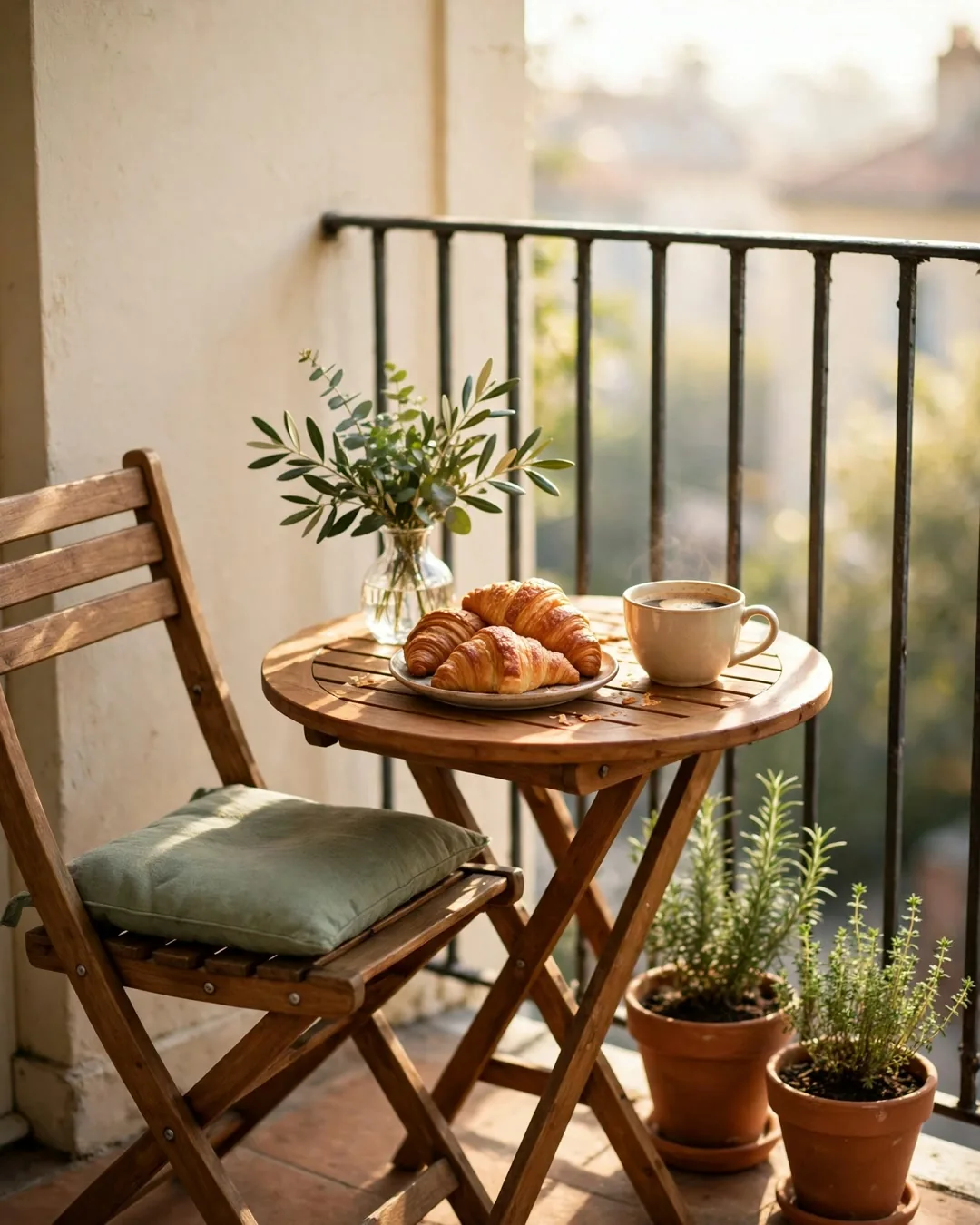
A balcony table that holds nothing is just a surface waiting for clutter. Give it a job — breakfast, coffee, a book, a plant you water every morning — and it becomes the reason you step outside.
Here the job is breakfast. A round wooden bistro table holds a plate of croissants, a coffee mug and a small glass vase with an olive branch, catching the morning sun. A wooden folding chair with a light green cushion waits beside it, two terracotta pots with herbs sit on the floor, and apartment buildings rise behind the black metal railing. Nothing on that table is decoration. It is all in use, and that is why the scene feels alive instead of staged.
The practical point: size the table for its job, not the balcony. A 60-centimetre round table seats two for breakfast and leaves the rest of the floor free.
Why Negative Space Is the Most Modern Thing Here
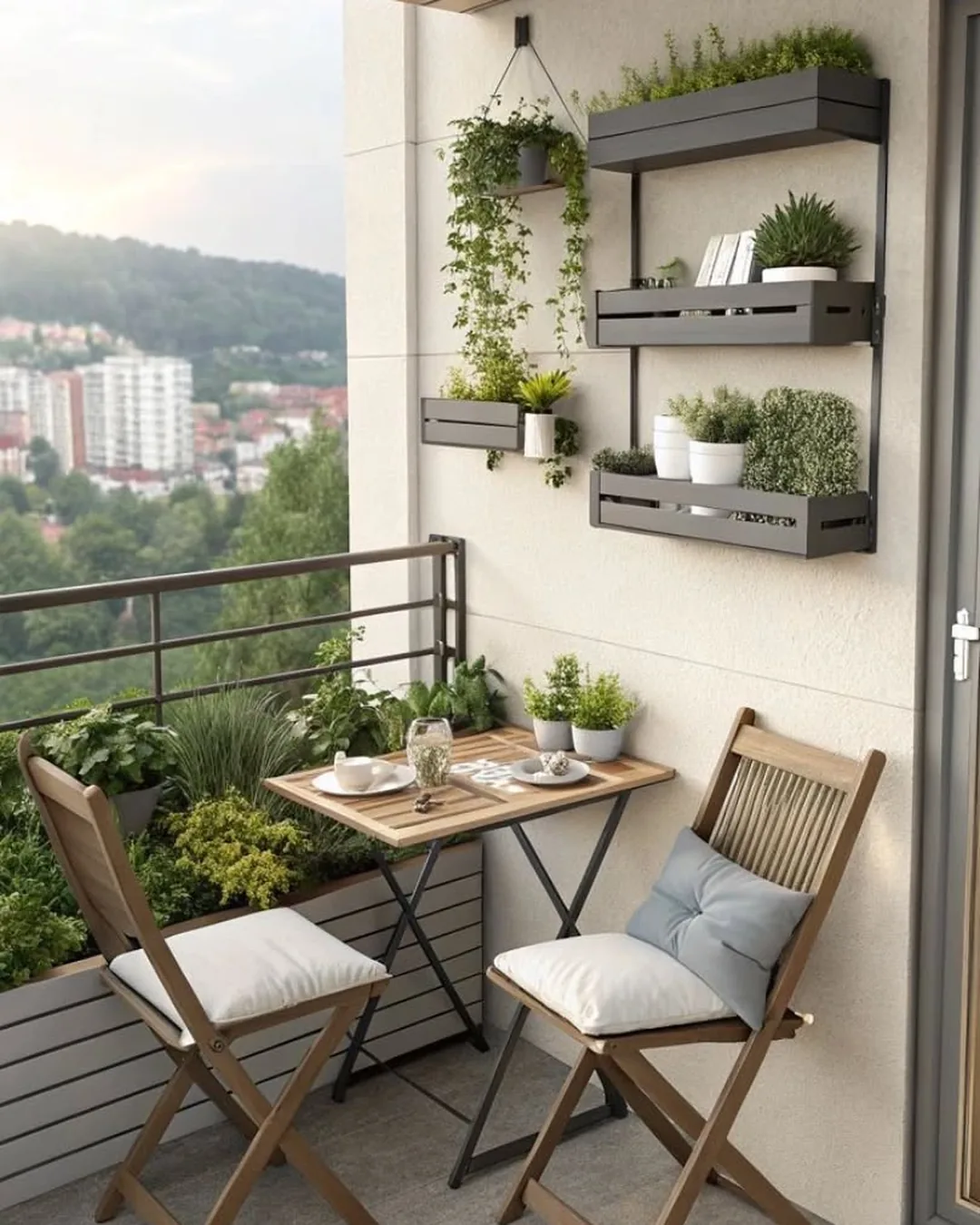
Boho is a style of abundance, so emptiness feels like the opposite of the look. It is actually the thing that makes abundance readable. Without empty space, every beautiful object disappears into the crowd around it.
This narrow balcony proves the point. A small folding bistro table set for two, two wooden folding chairs with white cushions, wall-mounted shelves holding small potted plants — and most of the floor left empty. City views and green hills stretch beyond the railing, and the emptiness is what lets you see them. The balcony feels calm, not bare, because the few things in it have room to be noticed.
If your balcony faces the street, you may also like How to Block a Neighbour’s View Without Losing Natural Light.
The practical point: leave at least a third of the floor visibly empty. If you cannot see floor, you cannot see the room.
Textures That Age Well Outdoors
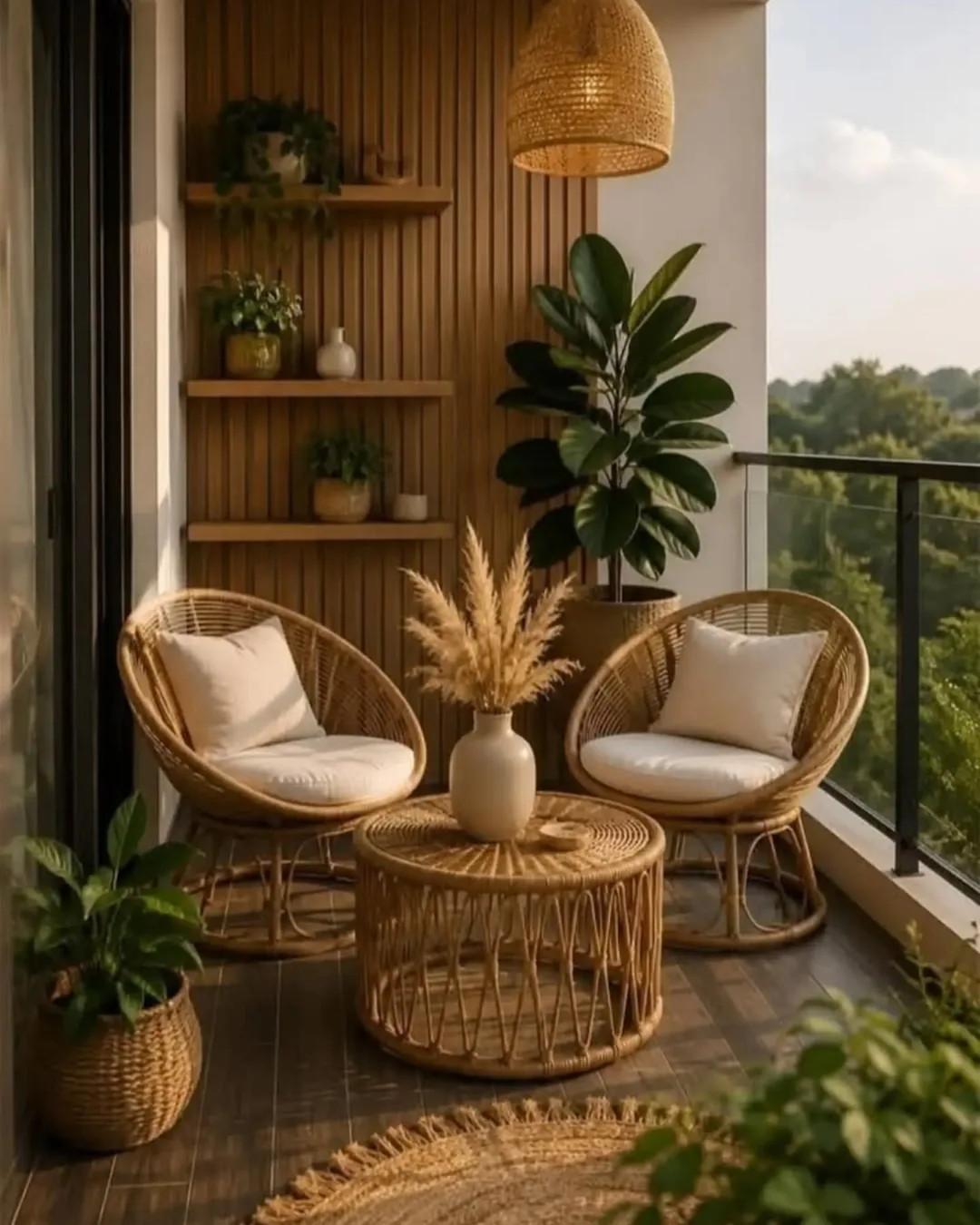
Outdoor furniture lives a harder life than indoor furniture. Sun fades it, rain soaks it, wind moves it. Choosing textures that age gracefully is the difference between a balcony that looks better in year two and one that looks tired by August.
Wicker peacock chairs with white cushions face a low round rattan coffee table, a vase of dried pampas grass in the middle. Above hangs a woven rattan pendant. Behind, a wood-slat wall with floating shelves holds small plants and pots, and a jute rug covers the floor under a large leafy plant in a woven basket. Wicker, rattan, jute, wood, linen — every texture here gets more character with sun and weather instead of less. Nothing needs to stay perfect to stay beautiful.
The practical point: favour natural fibres and unfinished wood outdoors. Anything that needs a perfect finish will fight the weather and lose.
Can a Balcony Feel Collected Without Feeling Cluttered?
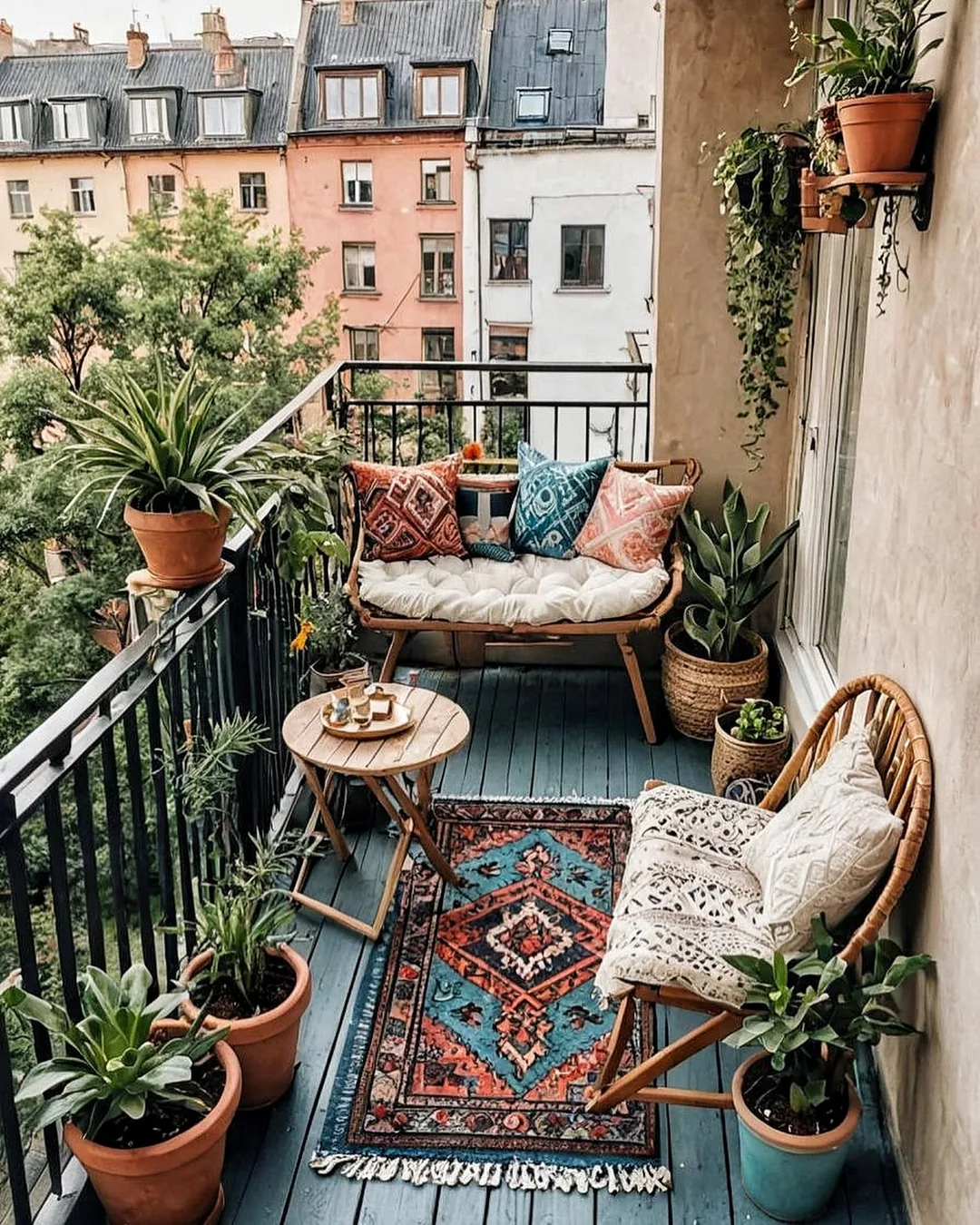
Collected and cluttered look similar from a distance, and the difference is intention. A collected balcony has pieces that relate to each other. A cluttered one has pieces that merely arrived.
Here the collection works. A rattan daybed with patterned cushions in red, blue and pink, a rattan chair with a macramé throw, a small round wooden table, an ornate red-and-blue patterned rug, and many potted plants in terracotta and blue pots — a lot of pieces, yet the balcony stays airy. Nothing blocks the view, the blue-painted deck ties the colours together, and colourful apartment buildings and trees beyond the railing become part of the picture. Every piece was chosen, not accumulated, and you can feel the difference.
The practical point: before adding a piece, ask what it relates to. If it echoes a colour, a material or a shape already on the balcony, it belongs. If it relates to nothing, it is clutter.
One Bold Pattern, the Rest Quiet
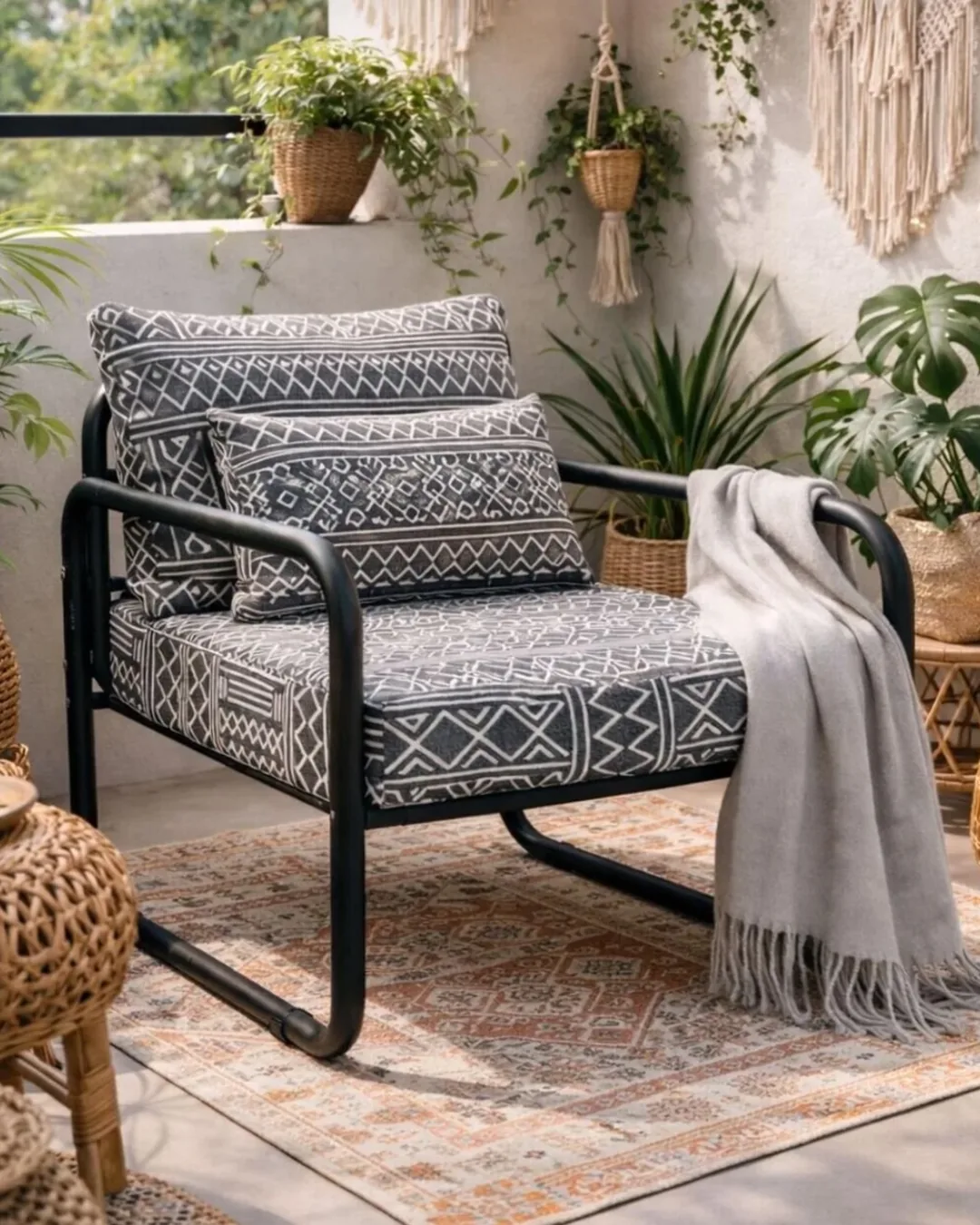
Pattern is the loudest element in any room, and one loud element is a statement. Two loud elements are an argument. The rule is simple: one bold pattern, and everything else goes quiet.
A black metal chair dressed in bold black-and-white geometric cushions is the single bold pattern here. Around it, everything else stays calm — a plain grey throw draped over the arm, macramé wall hangings, potted plants, woven side tables, a muted vintage-style rug underfoot. The chair gets all the attention because nothing competes with it, and the balcony feels designed rather than decorated by accident.
The practical point: when you find your bold pattern, stop. The next patterned thing you buy is the one that breaks the rule.
The Balcony You Actually Use
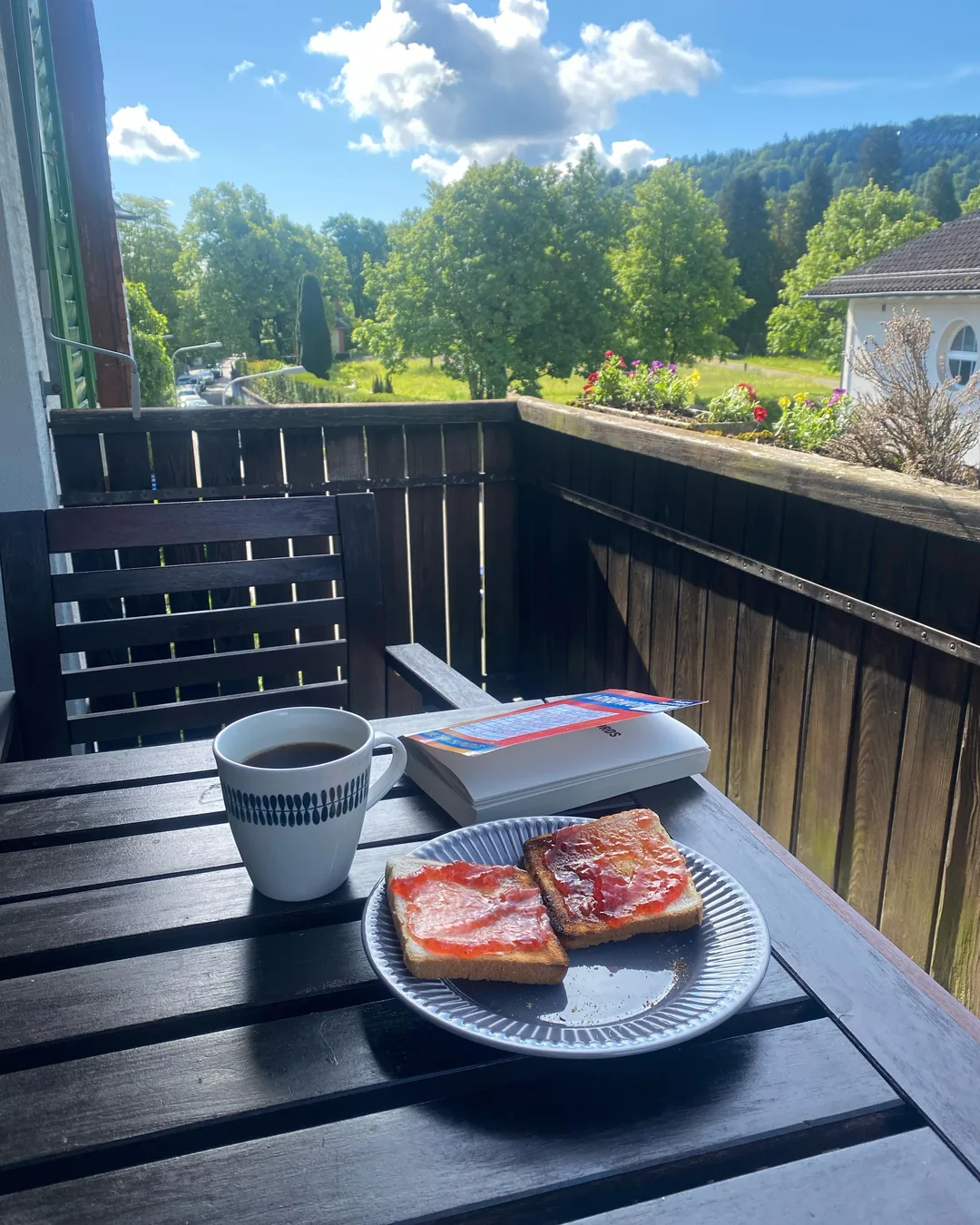
Most styled balconies look like nobody has ever sat on them. Cushions too white, tables too empty, everything arranged for a photograph. A balcony you actually use looks different — and better.
Coffee in a white mug, an open book, a plate with two slices of jam toast on a dark wooden slatted table. A wooden chair pulled up close, a wooden railing, green trees and hills and a blue sky with clouds beyond. Nothing is staged. The book is open because someone was reading it, the toast is half-eaten because someone was eating it, and the whole scene says this balcony gets used every morning. That is the whole point of decorating it.
The practical point: decorate for the morning you will actually have, not the photograph you might take. If a piece cannot survive a coffee cup on it, it does not belong outside.
Collected, Not Cluttered
A modern bohemian balcony does not need less personality — it needs more editing. One big piece instead of ten small ones, three plants instead of thirty, three colours instead of eleven, one bold pattern instead of five. Every idea in this list follows the same logic: choose with intention, leave space around what you choose, and let the balcony breathe.
Start with the piece you love most, put it where you will actually sit, and build slowly from there. Your balcony will thank you every morning.