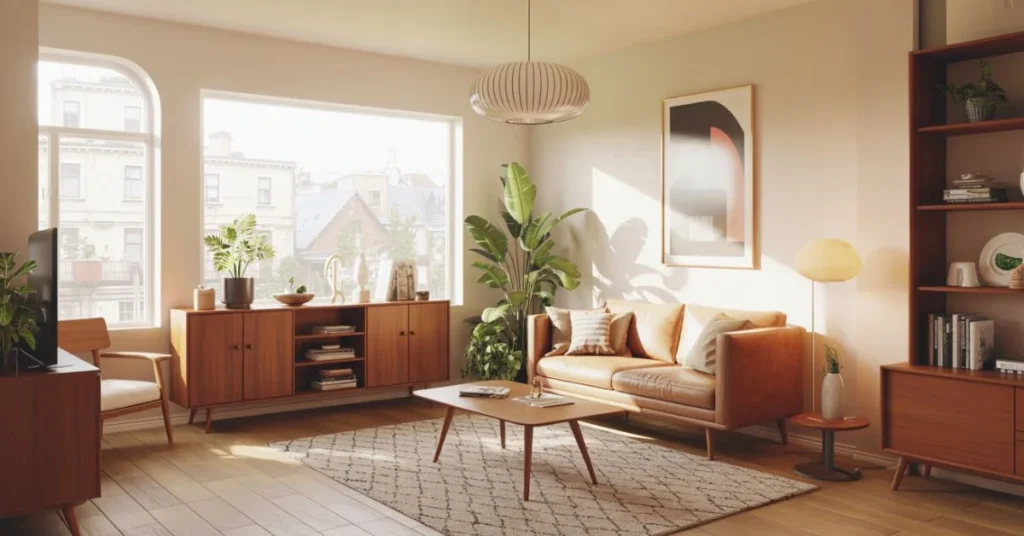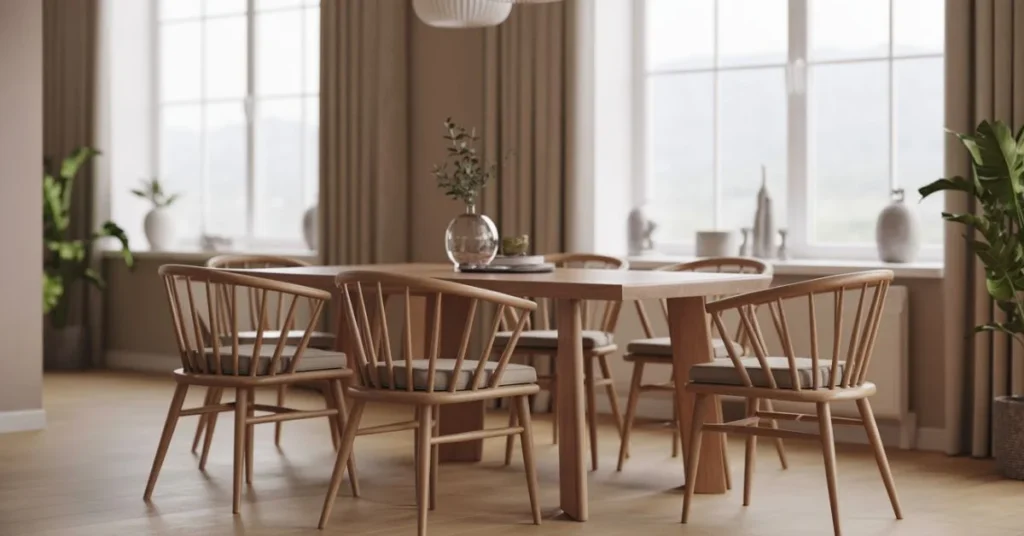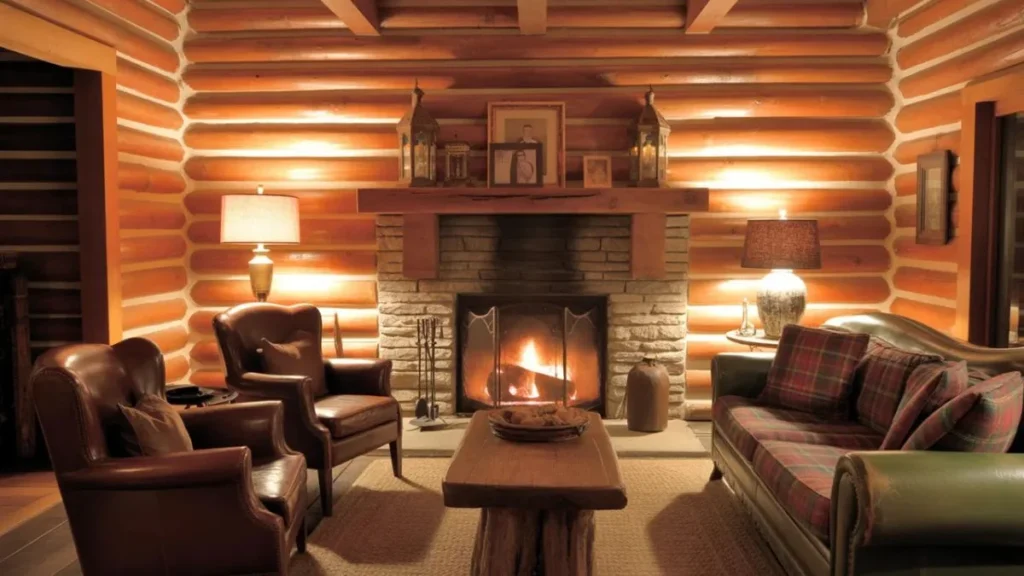
There’s a certain magic to a cabin tucked into the mountains — one that no city flat or suburban home quite replicates. The smell of timber, the crackle of a wood fire, the way morning light filters through pine trees onto a worn wooden floor. Mountain cabin styles capture all of that, and they’ve quietly become one of the most coveted design directions in home decor.
Whether you’re dreaming of a full mountain retreat or simply want to bring some of that woodland warmth into your everyday space, the right cabin aesthetic can transform a room entirely. From centuries-old log cabin traditions to sharp, contemporary interpretations that make the most of altitude and view, there’s a mountain cabin styles for every taste — and every kind of escape.
1. Classic Log Cabin Style
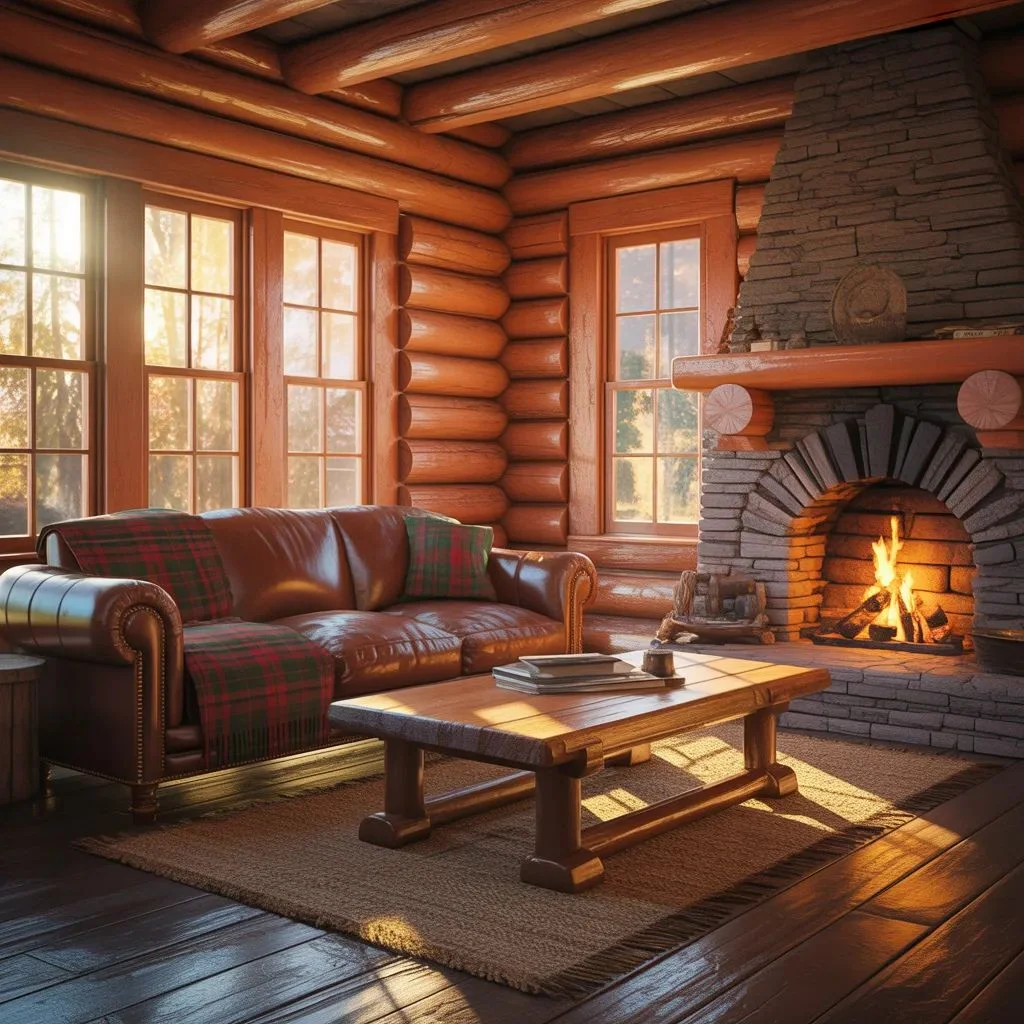
The classic log cabin style is the one that started it all. Whole timber walls, exposed beams overhead, a stone fireplace as the centrepiece — every element in this design tells you exactly where you are. It’s deeply rooted in American frontier heritage, yet it never goes out of fashion.
Furnishings lean heavily on natural materials: plaid wool throws, leather sofas, rag rugs, and mounted antlers or vintage lanterns that nod to the outdoors without being kitschy. Colour palettes stick to warm tones — deep ochres, burnt sienna, forest green, and the natural honey tones of aged pine.
2. Rustic Farmhouse Mountain Style
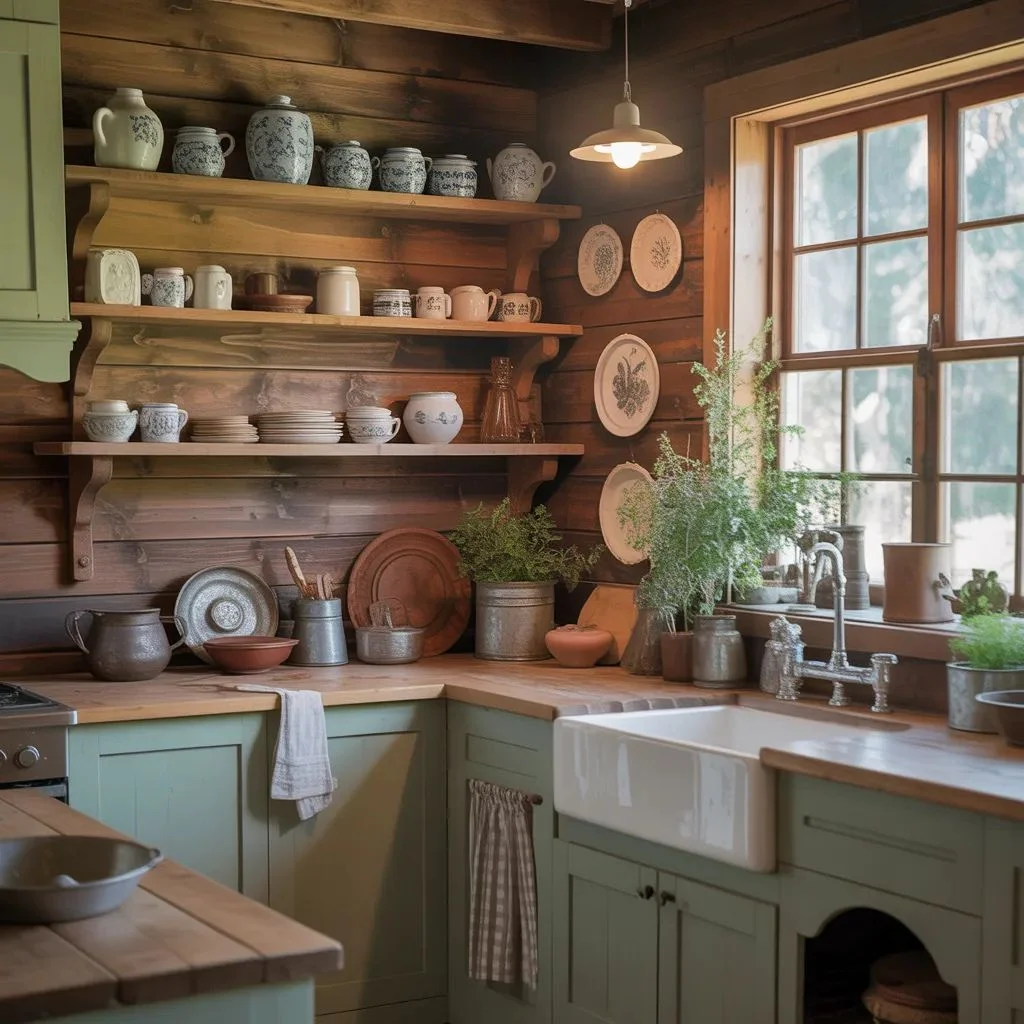
Rustic farmhouse meets altitude in this style, blending the lived-in warmth of country living with the rugged character of mountain terrain. Think shiplap walls, open wooden shelving, galvanised metal accents, and vintage finds that look like they’ve always belonged there.
What makes this style particularly appealing is its relaxed, unpretentious quality. Nothing has to match. A reclaimed wood dining table pairs beautifully with mismatched chairs. Galvanised buckets double as planters. Faded quilts and mason jar vases complete the picture.
This mountain cabin style works exceptionally well in properties that serve as family gathering places — there’s room for everyone, and the design philosophy actively encourages comfort over perfection.
3. Scandinavian Hygge Cabin Style
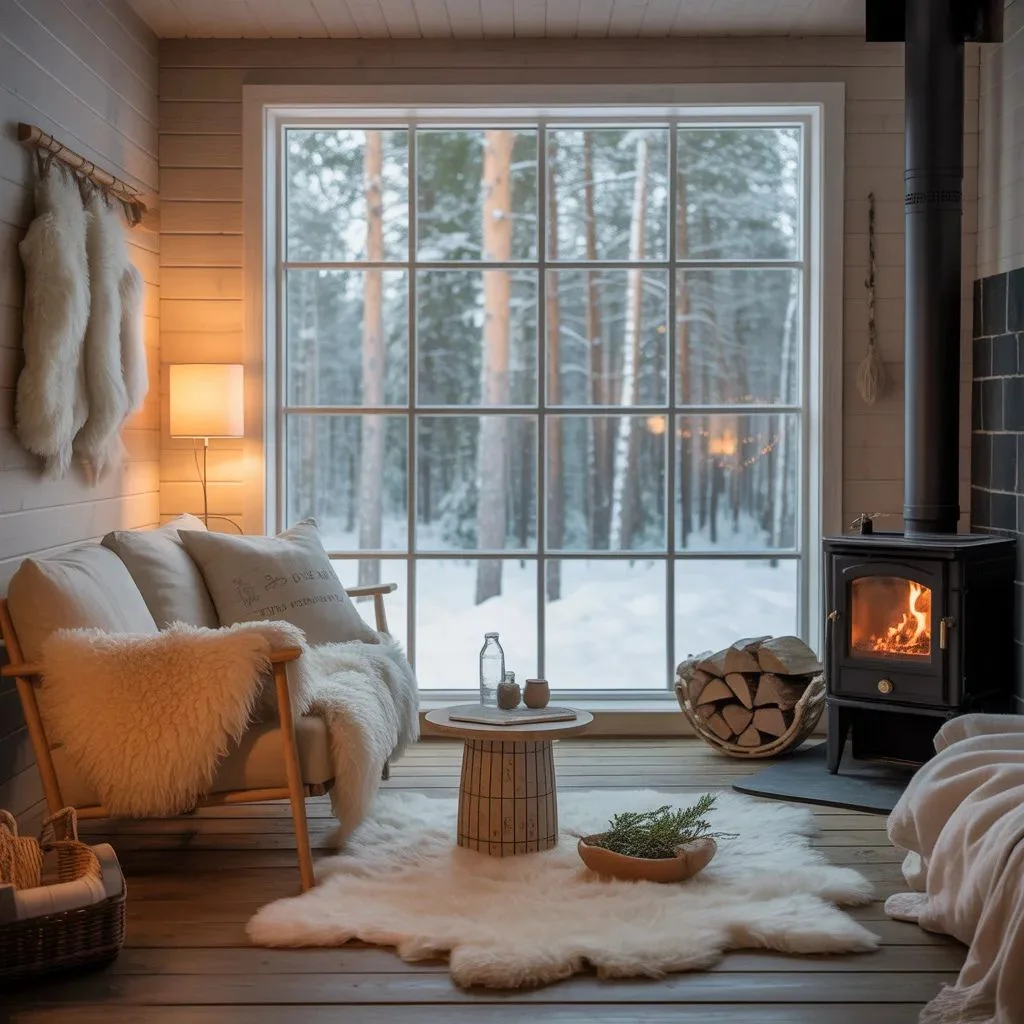
Borrowed from the Nordic concept of cosiness and togetherness, the Scandinavian hygge cabin style is all about warmth without visual clutter. Clean lines, pale woods like birch and ash, sheepskin throws, and layers of soft textiles create spaces that feel genuinely restful.
Colour palettes are muted — whites, warm creams, soft greys, and blush tones that glow softly against natural light. The fireplace remains a focal point, but in this style it tends to be a sleek wood-burning stove rather than a rough stone hearth.
Hygge cabin interiors prioritise the ritual of gathering: a reading nook piled with cushions, a kitchen table with candles always at the ready, a window seat facing the tree line. Every corner is designed to make you want to stay.
4. Modern Mountain Cabin Style
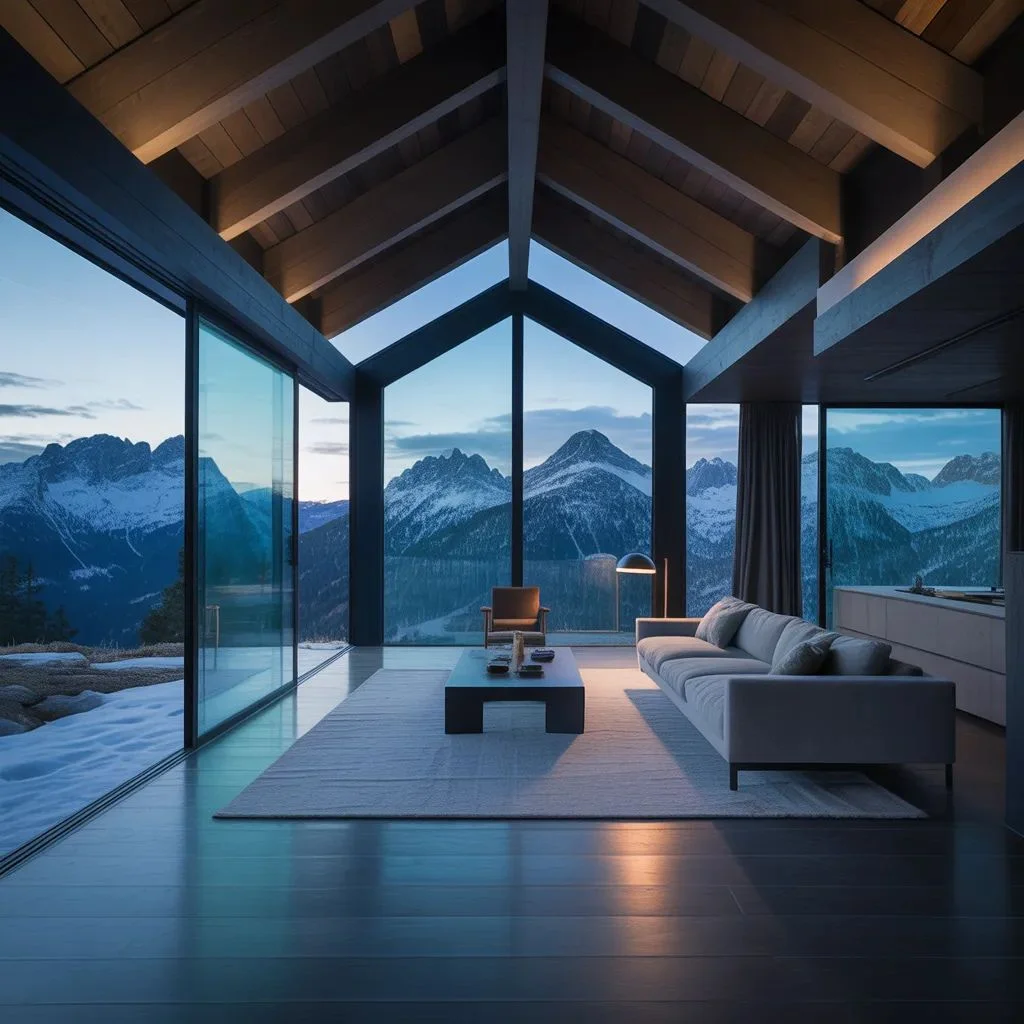
The modern mountain cabin style takes everything traditional about mountain living and reimagines it through a contemporary lens. Floor-to-ceiling glass walls frame the landscape like artwork. Concrete, steel, and dark-stained timber replace the warm honey tones of older cabin traditions.
This style is architecturally bold. Rooflines follow dramatic angles that mirror the peaks outside. Interiors are stripped back — a monumental fireplace, a single sculptural pendant light, furniture with clean profiles and no unnecessary ornamentation.
Despite the minimalism, modern mountain cabins are far from cold. Natural stone floors, wool rugs, and deep-seat sofas in rich neutrals ensure the space remains liveable. The difference is that beauty here comes from restraint, not abundance.
5. Dark and Moody Forest Cabin Style
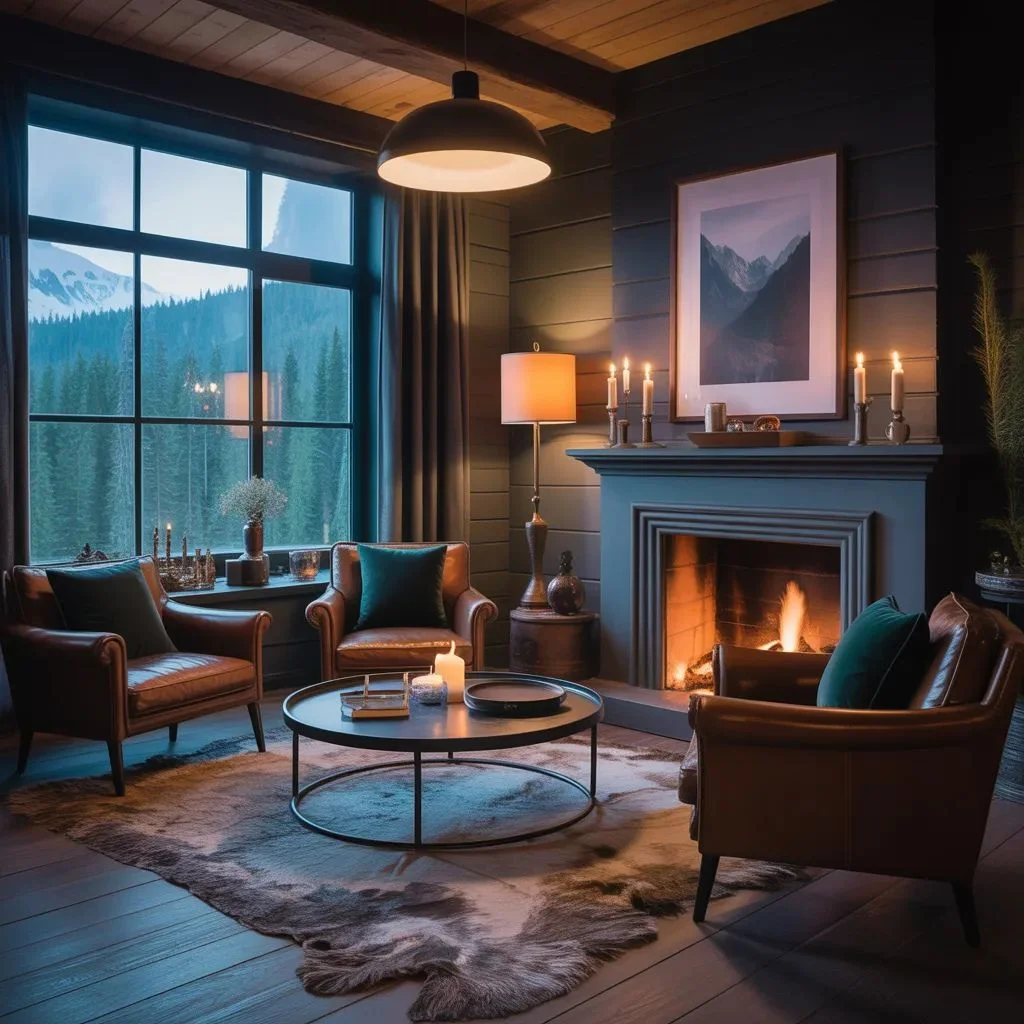
This mountain cabin style leans into the drama of deep woodland. Dark walls — charcoal, forest green, inky navy — absorb light and create interiors that feel private, intimate, and wonderfully removed from the world outside.
Furniture in this style tends toward the masculine and substantial: dark leather, velvet upholstery in jewel tones, wrought iron fixtures, and shelving lined with books and curios. Candlelight and low-hanging pendants are essential — they add warmth without breaking the mood.
The dark forest cabin aesthetic pairs particularly well with dramatic landscapes. When the view through the window is already spectacular, a moody interior creates a beautiful contrast between cosy enclosure and wild openness.
6. Bohemian Mountain Cabin Style
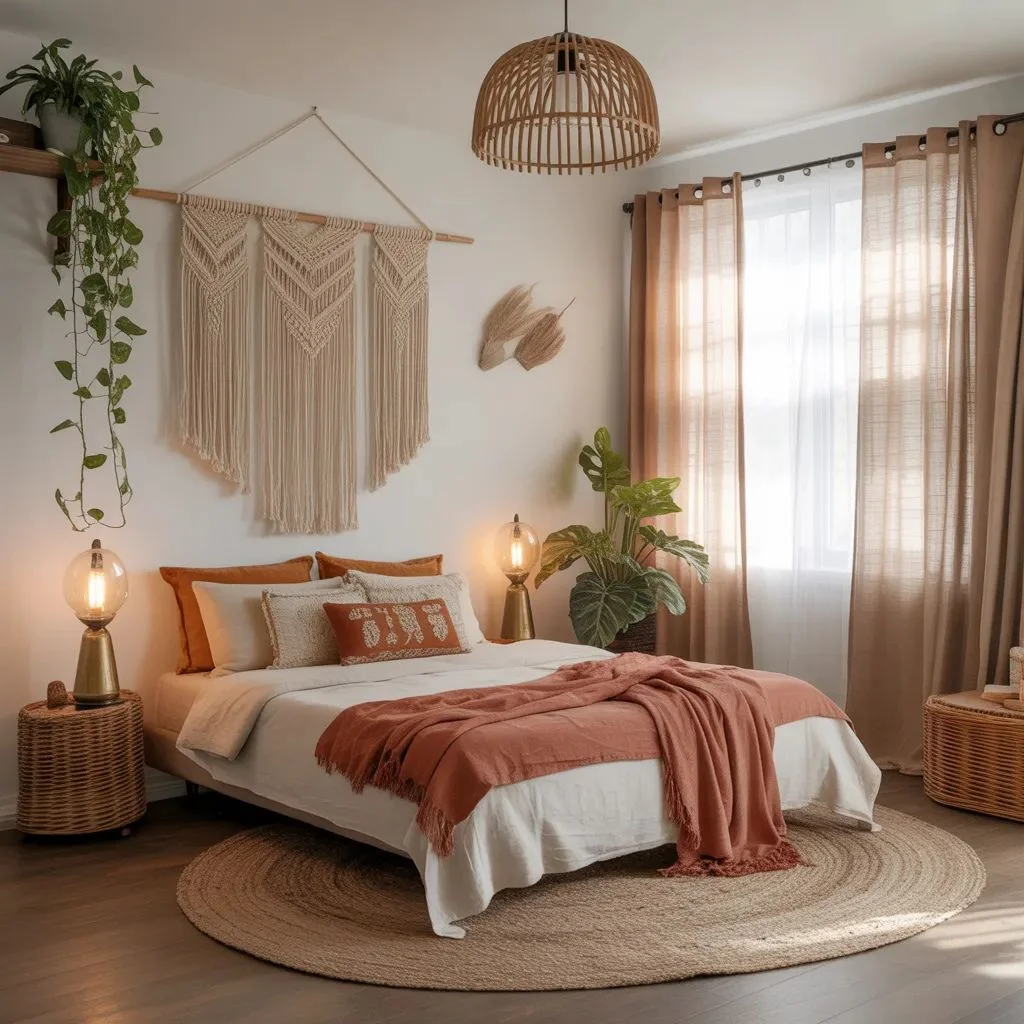
Layered, eclectic, and unapologetically expressive, bohemian mountain cabin style brings together global textiles, earthy tones, and handcrafted pieces to create spaces that feel deeply personal. Macramé wall hangings, woven rugs, rattan furniture, and trailing houseplants all find a home here.
What makes boho work in a mountain setting is the shared language of natural materials. The cabin’s raw timber and stone provide a grounding backdrop, while the layered textiles and varied patterns add warmth and story. Nothing needs to match — the more collected and curated-over-time a space feels, the better.
Plants are essential in this style, particularly trailing varieties and bold ferns that echo the surrounding forest. Open shelving displays everything from crystals and vintage pottery to dried herbs and well-loved paperbacks.
7. Stone and Timber Cabin Style
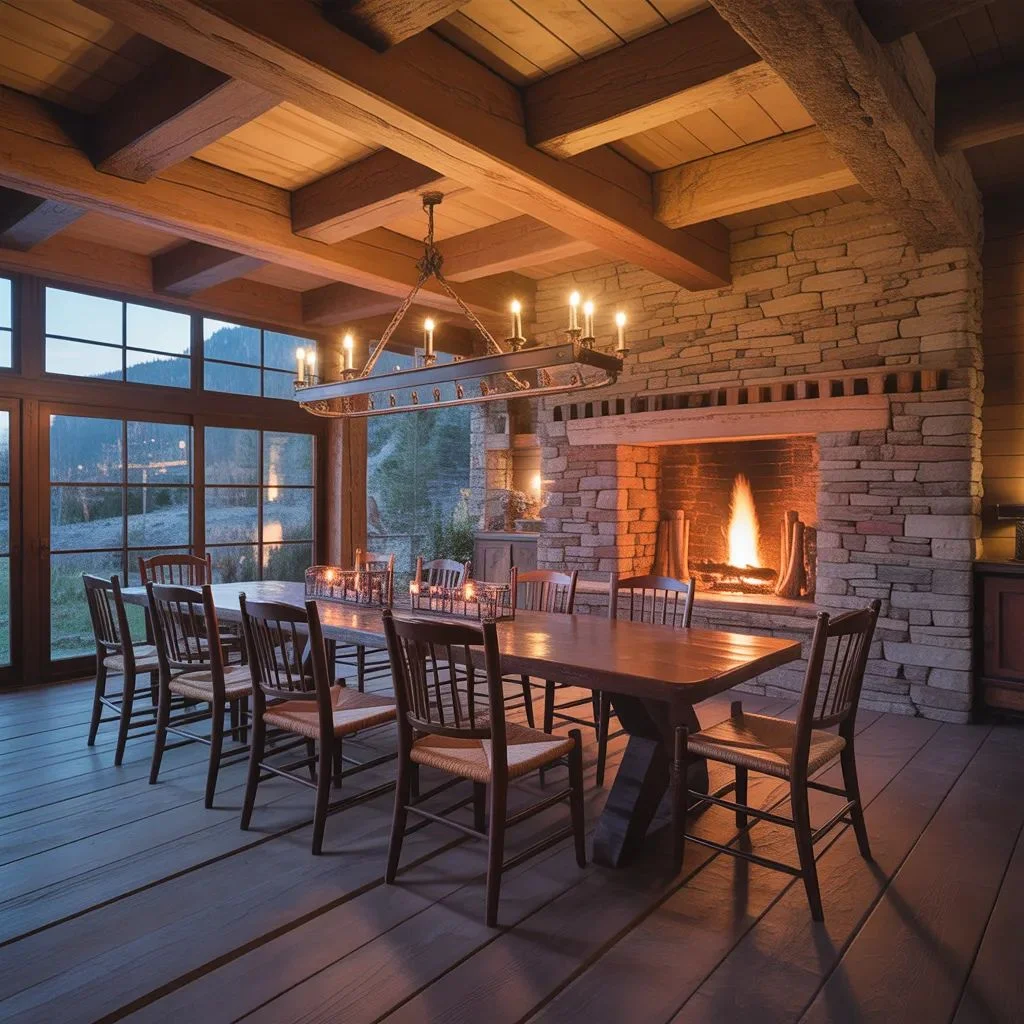
Few combinations in design feel as fundamentally right as stone and timber. Together they represent the two primary building materials of mountain living, and when used well in a cabin interior they create spaces of extraordinary texture and warmth.
Exposed stone walls — particularly rough-cut or fieldstone — create interiors that feel rooted in the landscape. Timber beams overhead, wide-plank floors underfoot, and hand-hewn furniture complete the picture. The beauty of this style is that materials carry all the visual interest; decoration can be minimal.
Lighting plays a crucial role in this mountain cabin style. Wrought iron chandeliers, wall-mounted sconces, and firelight all bring the stone and timber textures to life in ways that overhead fluorescents simply cannot.
8. Cosy Minimalist Cabin Style
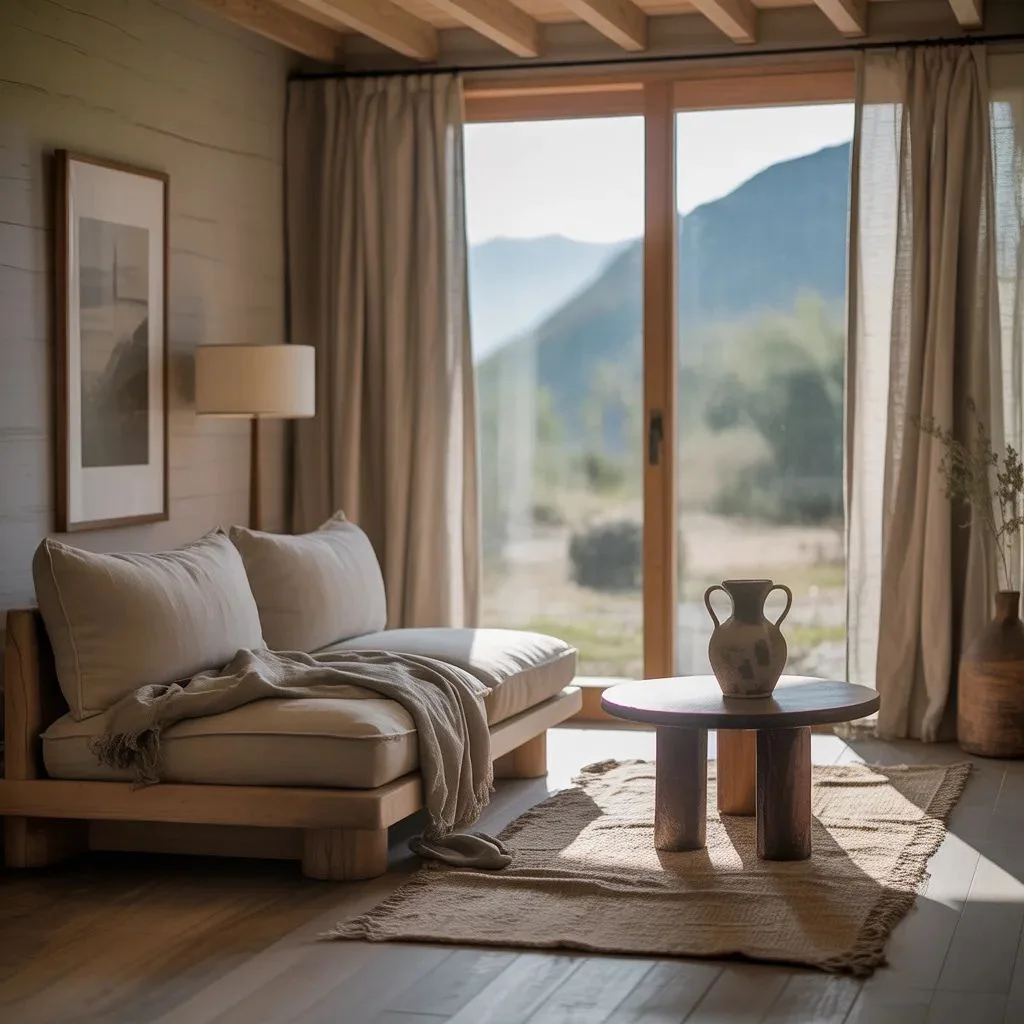
The cosy minimalist cabin style proves that less truly can be more in the mountains. Inspired by Japanese wabi-sabi and contemporary Scandinavian design, this approach strips a space back to its essentials — a few beautifully made pieces, carefully chosen materials, and nothing that doesn’t earn its place.
Colour palettes are quiet: warm white, natural linen, pale stone, and the natural tones of unfinished timber. Furniture is low-profile and well-crafted. Surfaces stay clear. The cabin’s architecture — its beams, its windows, its views — becomes the focal point.
Cosiness in this style comes not from accumulation but from quality: a deeply comfortable sofa, the softest possible linen, a perfectly weighted blanket. When everything in a space is intentional, every object becomes meaningful.
9. High-Altitude Alpine Style
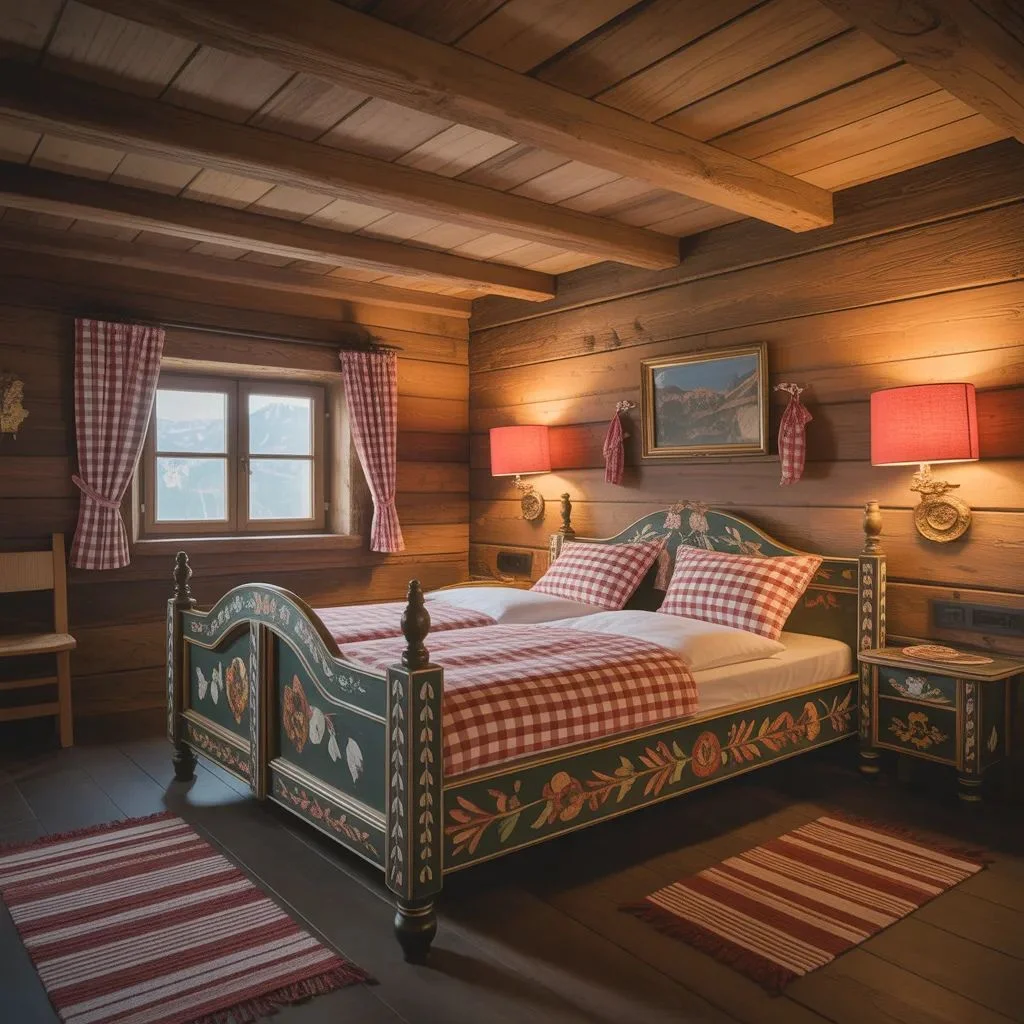
Drawing from the rich design traditions of the Swiss and Austrian Alps, high-altitude alpine style brings folk craft and mountain engineering together in spaces that are simultaneously ornate and practical. Hand-painted furniture, carved wood detailing, checked textiles, and cowbell motifs are all fair game here.
This style is unabashedly referential — it celebrates a specific cultural heritage with warmth and wit. Beds are piled high with feather duvets. Ceilings are low and beamed. Windows are small and deep-set, shuttered against mountain winters.
What makes alpine style feel fresh rather than theme-park is restraint in application: choose two or three signature elements — a painted folk art chest, a collection of vintage ski maps, woven textile runners — and let them breathe against simpler surroundings.
10. Lakeside Mountain Cabin Style
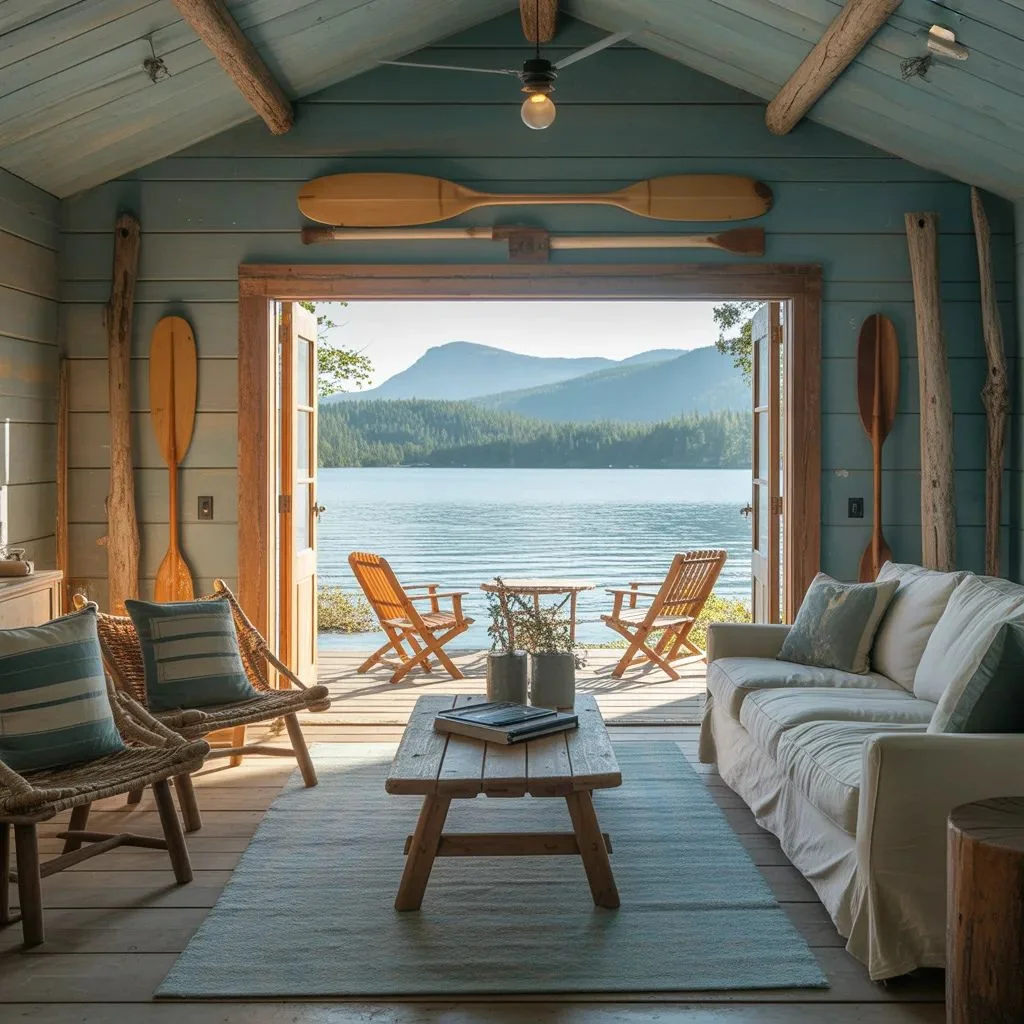
Where mountain meets water, a distinct cabin style emerges — one that blends the ruggedness of highland terrain with the relaxed, sun-bleached ease of lakeside living. Weathered driftwood, faded blues and greens, nautical rope accents, and canoe paddles mounted as wall art all find a place here.
Colour palettes take their cues from both environments: slate grey rock, deep pine green, and the variable blues of mountain water from stormy pewter to Caribbean clarity on a bright summer day. Canvas and linen fabrics bring breezy lightness.
Furniture in this mountain cabin style tends toward the relaxed and slightly worn — wicker chairs, built-in window benches, and hammocks on the porch. The design principle is simple: create a space that makes you want to be outside, then makes you grateful to come back in.
How to Mix Mountain Cabin Styles Without Losing Cohesion
The most interesting mountain cabin interiors rarely commit to a single style wholesale. More often they blend two or three aesthetics in ways that feel personal and layered. Here’s how to do it without ending up with visual chaos:
Anchor with architecture first. Let your cabin’s actual bones — the timber species, the stone type, the roofline — guide your main style direction. A log cabin wants rusticity; a concrete-and-glass build wants modernity.
Pick one dominant palette. Even when mixing styles, a unified colour story keeps everything coherent. Warm neutrals work across classic, rustic, and bohemian aesthetics. Cool greys and slate tones tie together modern and Scandinavian directions.
Use textiles as your flexibility layer. Cushions, throws, and rugs are low-commitment and high-impact. They’re the easiest way to introduce a second aesthetic — a few boho textiles over a modern base, or hygge sheepskins in a classic log cabin, land beautifully without clashing.
The Woodland Escape is Closer Than You Think
Every mountain cabin style explored here shares a common thread: a deep respect for the natural world just outside the window. Whether that means celebrating raw timber and rough stone in a classic log cabin or framing a snowy peak through floor-to-ceiling glass in a modern retreat, the goal is always to close the gap between inside and outside.
The best mountain cabin styles don’t just look beautiful in photographs — they feel right to live in. They make you slow down, breathe deeper, and notice the light changing on the trees. That’s a quality worth bringing home, whatever your address.
Also Read About Beautiful Star Jasmine Trellis Ideas That Make Your Outdoor Space Smell as Good as It Looks.