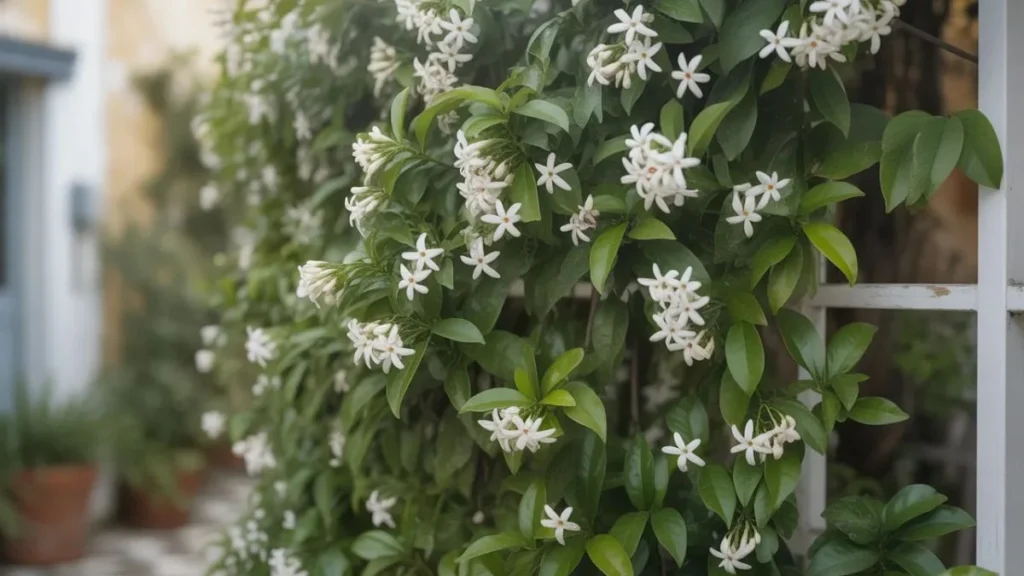
Star jasmine is one of those rare plants that works as hard on the nose as it does on the eyes. Whether you have a bare concrete wall, an ugly chain-link fence, or a pergola begging for greenery, the right star jasmine trellis idea can turn it into the most talked-about corner of your yard.
The problem most gardeners run into is not choosing the plant — it’s figuring out how to support it, train it, and design around it so the whole setup looks intentional rather than improvised. This article walks you through the best star jasmine trellis ideas for every outdoor style, from sleek modern walls to romantic garden arches, plus the practical tips you need to make it work.
Why Star Jasmine Is the Ideal Climbing Plant
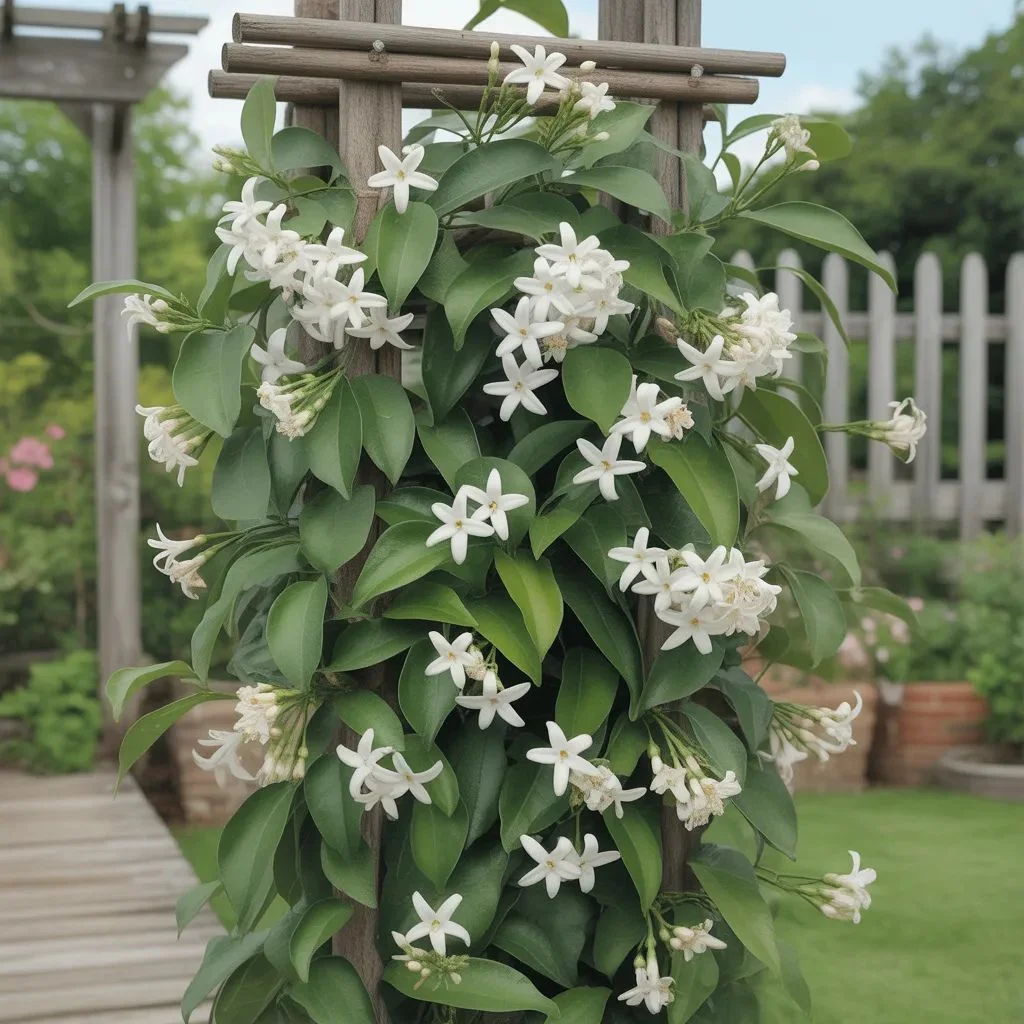
Before you pick a trellis style, it helps to understand what star jasmine actually does — and does not — do on its own. Star jasmine (Trachelospermum jasminoides) is a twining vine, which means it wraps and winds upward rather than clinging to surfaces with adhesive pads the way ivy does. It needs something to grab onto, but once it finds its footing, it grows with impressive confidence.
Left unsupported, the plant flops back on itself and spreads sideways as low ground cover. Give it a trellis and it can reach 20 to 25 feet tall, though most gardeners keep it at a manageable 6 to 10 feet. The small, pinwheel-shaped white flowers bloom in late spring and early summer and release a scent that drifts noticeably on warm evenings — especially in enclosed or semi-enclosed spaces like archways and pergolas.
It is also evergreen, which means your trellis stays covered and green year-round. That alone makes it a standout choice over seasonal climbers. It adapts well to full sun and partial shade, though more sun means more flowers. A south- or southwest-facing trellis is ideal for maximum fragrance and bloom.
Classic Wall Trellis Panels for a Lush, Covered Look
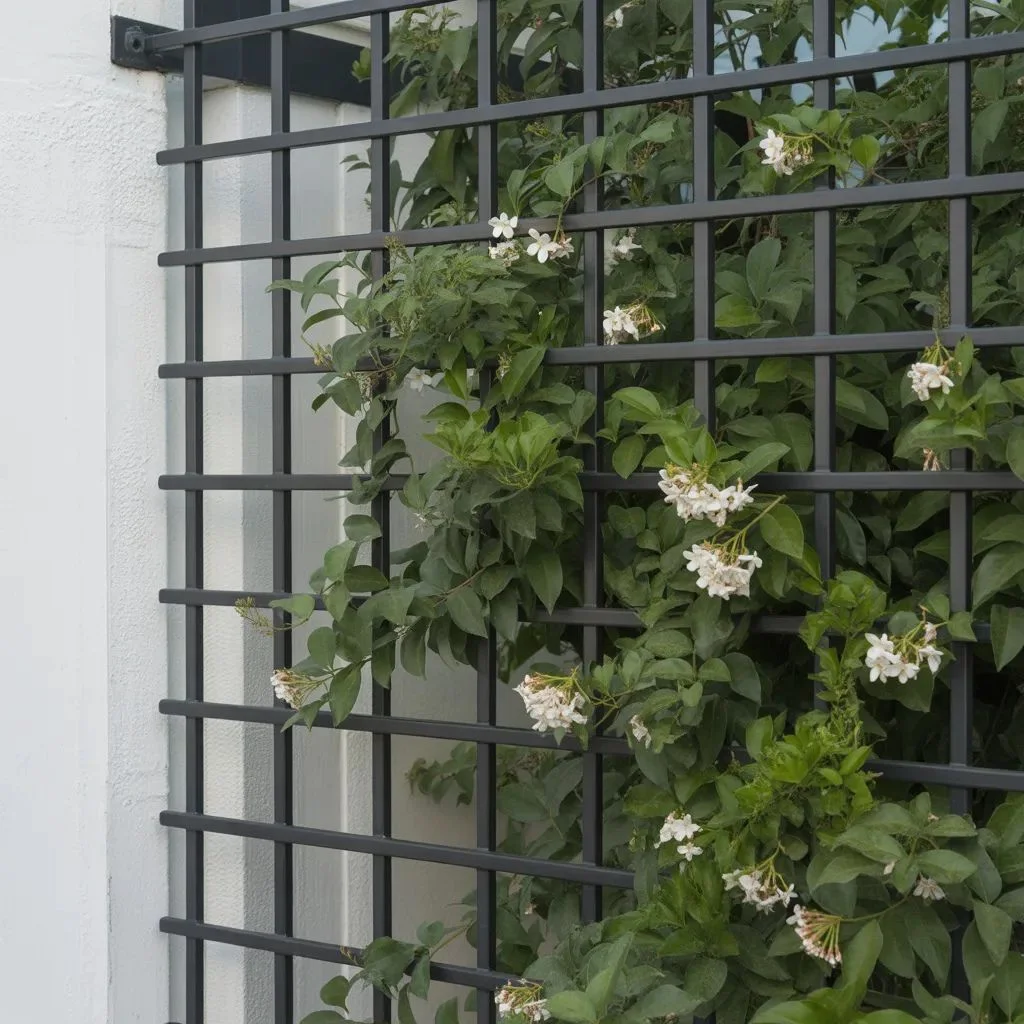
The most popular way to grow star jasmine is flat against a wall using mounted trellis panels, and for good reason. A wall-mounted trellis system gives the vine a clear upward path, keeps growth organized, and turns a blank exterior wall into a vertical garden that reads like a design decision.
Wooden trellis panels work beautifully against rendered or painted masonry walls, especially in cream, white, or sage tones. Cedar and hardwood are the most durable options outdoors. For a more contemporary look, black powder-coated metal trellis panels against a white or charcoal wall create a striking contrast that still lets the jasmine be the star.
Mount panels at least 3 to 4 inches away from the wall surface. This gap allows air to circulate behind the vine, which reduces fungal issues and keeps the wall itself dry. Use wall-mounting brackets rated for outdoor use and secure them into masonry rather than just render.
For coverage across a wider wall, install panels in a grid layout with no gaps between them. Space multiple plants 3 to 4 feet apart along the base so coverage fills in evenly. On a standard 8-foot wall, full coverage typically takes two to three growing seasons.
Star Jasmine on a Garden Arch or Arbor
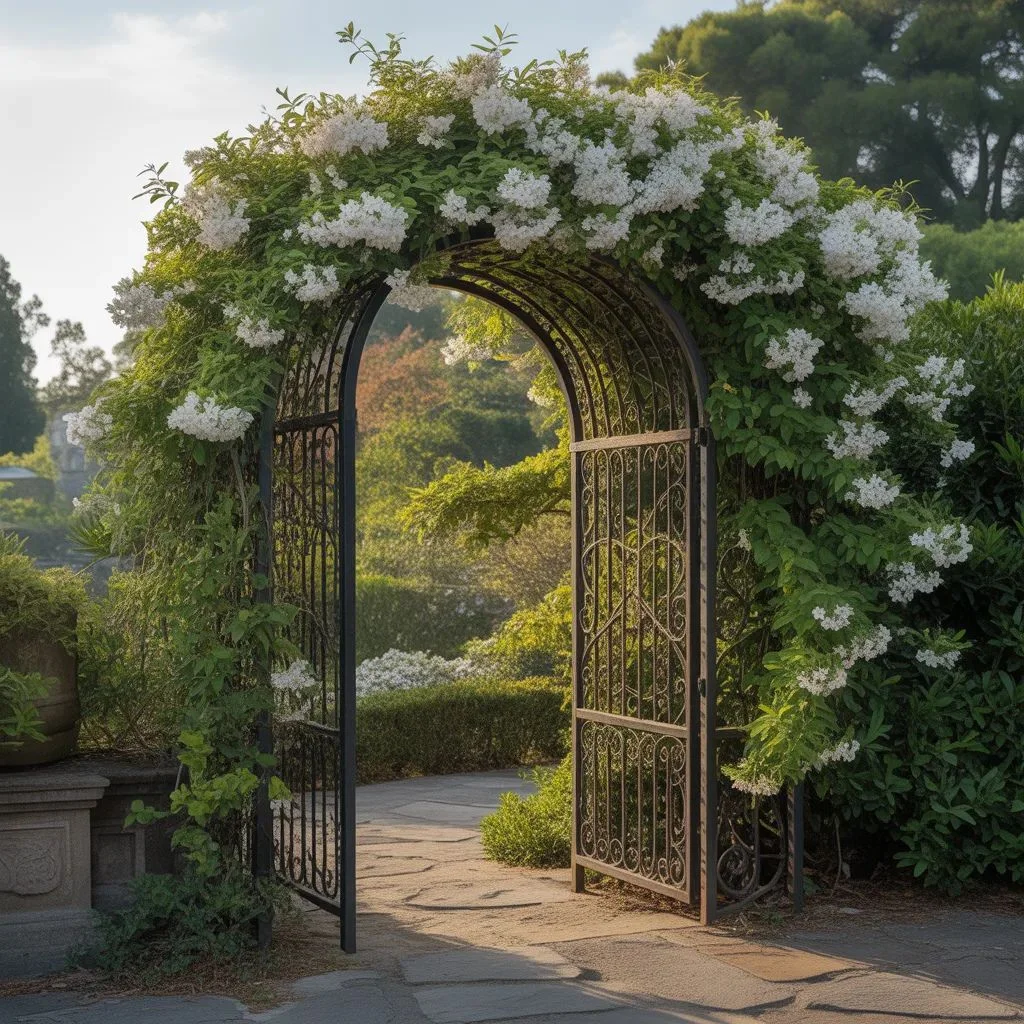
Few garden features are as romantic — or as immediately fragrant — as a star jasmine-covered arch. Walk through one in late spring and the scent alone will make you stop. This is the star jasmine trellis idea that photographs beautifully, works for entranceways, path transitions, and garden gates, and holds up structurally for decades when built correctly.
A standard 7-foot arch reaches full star jasmine coverage in roughly three growing seasons. Choose wrought iron or heavy galvanized steel for longevity — quality arches in this style range from $150 to $400 and last decades with an annual coat of rust-resistant primer. Timber arches work too and give a softer, more cottage-style feel, but require more upkeep in wet climates.
Plant star jasmine 12 inches from the base on each side of the arch for balanced coverage. Tie young stems loosely to the structure with soft garden ties during the first season to guide direction. By the second year, the vine climbs naturally and requires only light guiding. Evening fragrance from star jasmine is noticeably strongest in enclosed spaces like archways, so positioning a seating bench nearby is never a bad idea.
For a larger statement, a double arch or tunnel of arches planted with star jasmine creates a living walkway that blooms and fragrances the entire path in spring.
Using Star Jasmine to Cover a Fence
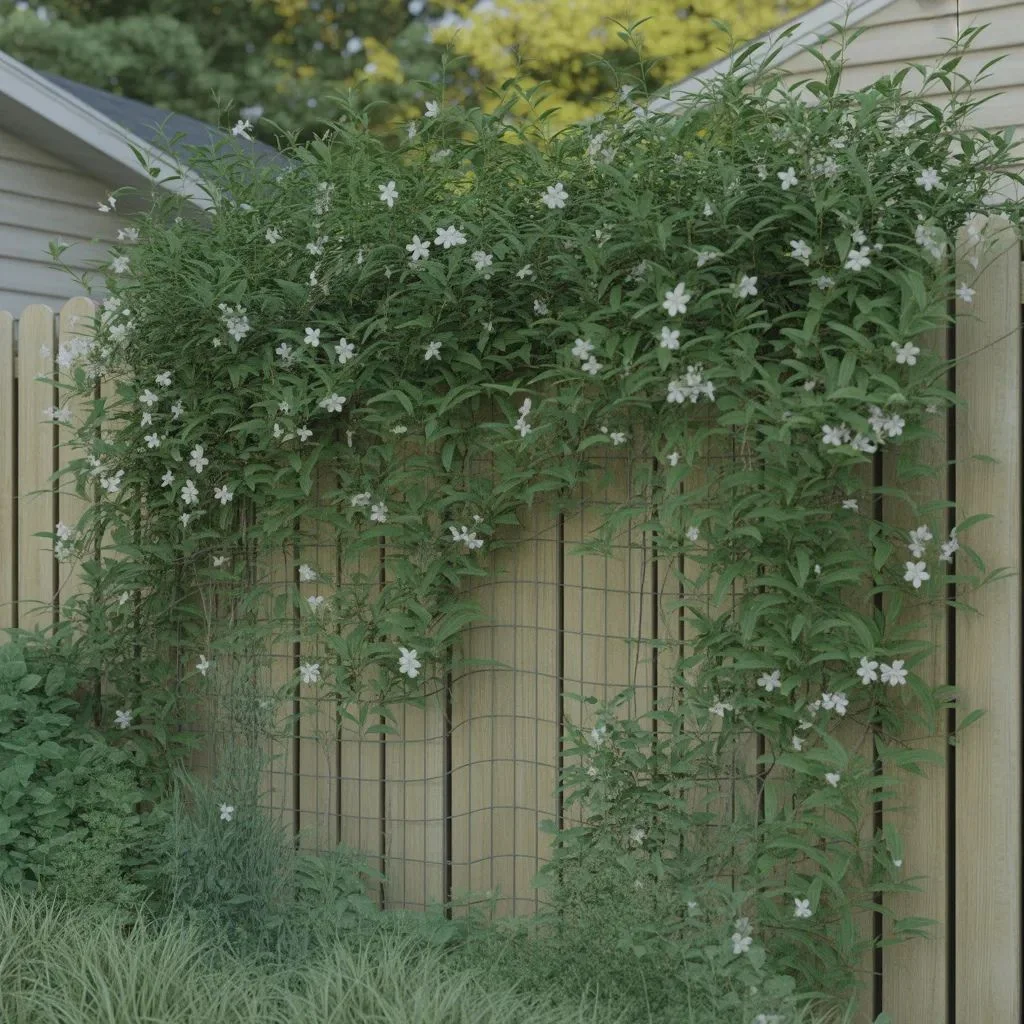
A plain timber fence or chain-link boundary is one of the fastest things star jasmine can transform. Because it is a twining vine, it does especially well on chain-link — the vine finds natural gaps to thread through without much training at all. On timber fences, you’ll want to add a wire or grid mesh system for the jasmine to grip.
Three popular approaches work well for star jasmine fence coverage:
- Grid mesh panels: Install galvanized or PVC-coated grid mesh along the fence line. This gives a clean, modern look and ample support. A grid spacing of 3 to 4 inches works best — tight enough for tendrils to grip, loose enough to avoid tangling.
- Horizontal wire system: Run stainless steel wires horizontally across fence posts at 12-inch intervals. A minimal, contemporary look that lets the jasmine do all the visual work.
- Timber lattice overlay: For a more traditional aesthetic, attach timber lattice panels to the fence. This adds warmth and texture and works especially well in cottage or coastal garden styles.
Space your jasmine plants 3 to 4 feet apart along the base of the fence. In zones 8 to 10, where star jasmine is evergreen, your fence will stay covered through winter — making it one of the most effective year-round privacy screens available.
Pergola Trellis Ideas for Fragrant Overhead Coverage
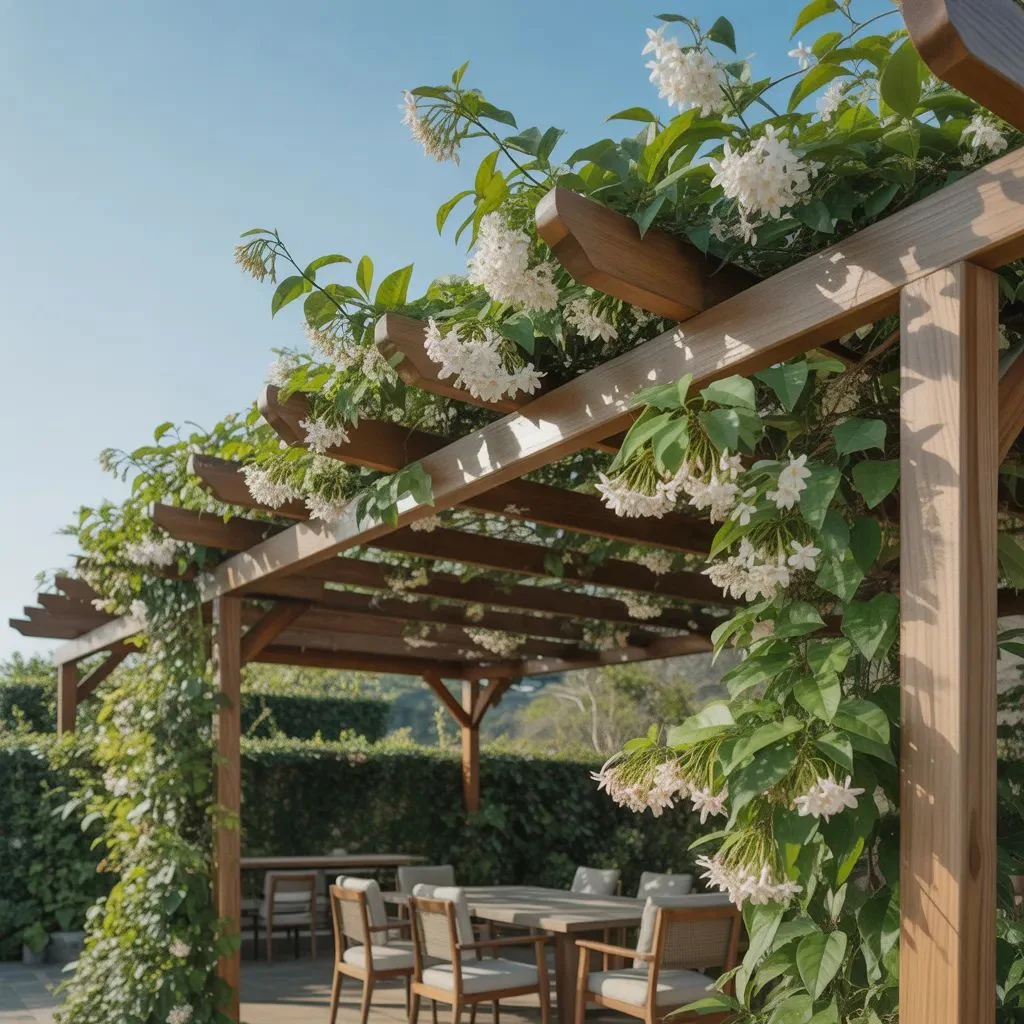
Training star jasmine over a pergola is one of the most visually ambitious star jasmine trellis ideas on this list — and one of the most rewarding. The result is an outdoor room with a living, fragrant ceiling that blooms each spring and stays green all year.
Star jasmine is not the fastest pergola climber — it typically takes three to five years to achieve meaningful overhead coverage. That timeline makes patience the most important tool in this project. Guide stems along the pergola rafters with soft ties in the first two seasons, then allow the vine to branch and fill in naturally. Annual pruning after bloom keeps the structure manageable and encourages bushier regrowth.
For the structure itself, a heavy-duty pergola kit in cedar, steel, or aluminum stands up to the weight of mature star jasmine without sagging. Add trellis side panels to the pergola’s vertical posts if you want coverage on all sides, not just overhead. A drip irrigation line installed at the base maintains consistent moisture without daily hand watering — especially helpful once the vine is too dense to water from above.
Position a pergola against a south-facing wall where possible. The wall reflects heat, star jasmine blooms more prolifically, and the fragrance concentrates beautifully in the covered space below.
Freestanding Trellis Frames for Renters and Small Patios
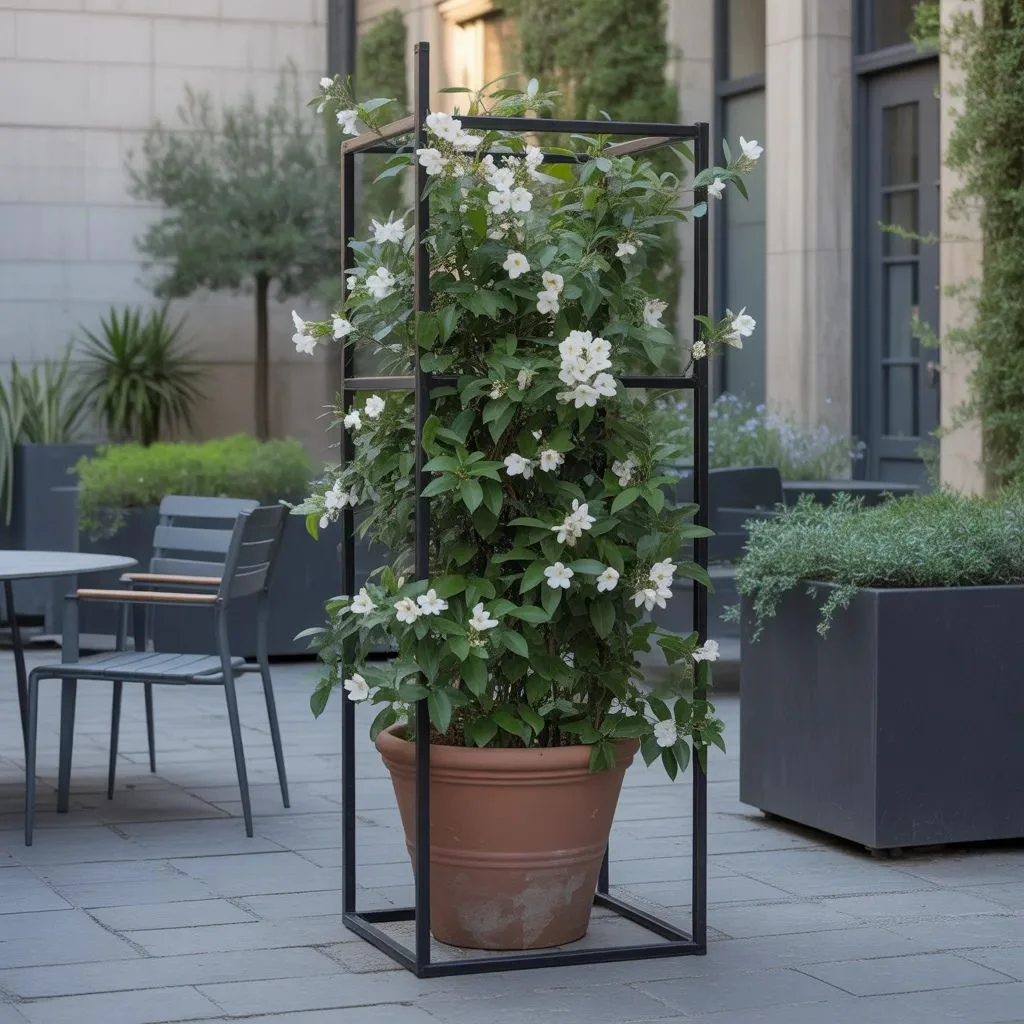
Not everyone can bolt a trellis into a wall or fence — and that should not stop you from growing star jasmine. A freestanding trellis frame is the ideal solution for renters, apartment balconies, paved courtyards, and anyone who wants to be able to move their garden setup around.
Build the frame from 1.5-inch square steel tubing or purchase a galvanized steel panel frame rated for outdoor use. Plant star jasmine in a large container — 15 to 20 gallons minimum — and position the pot directly against the frame base. Star jasmine on a vertical frame typically reaches 6 to 8 feet in height within two growing seasons in a warm climate.
A freestanding frame on a patio works especially well when positioned near a seating area, where the jasmine scent drifts naturally through an outdoor living space. Use container potting mix rather than garden soil and fertilize with a balanced fertilizer every four to six weeks during the growing season to compensate for the limited root space.
Geometric and Diamond Pattern Trellises
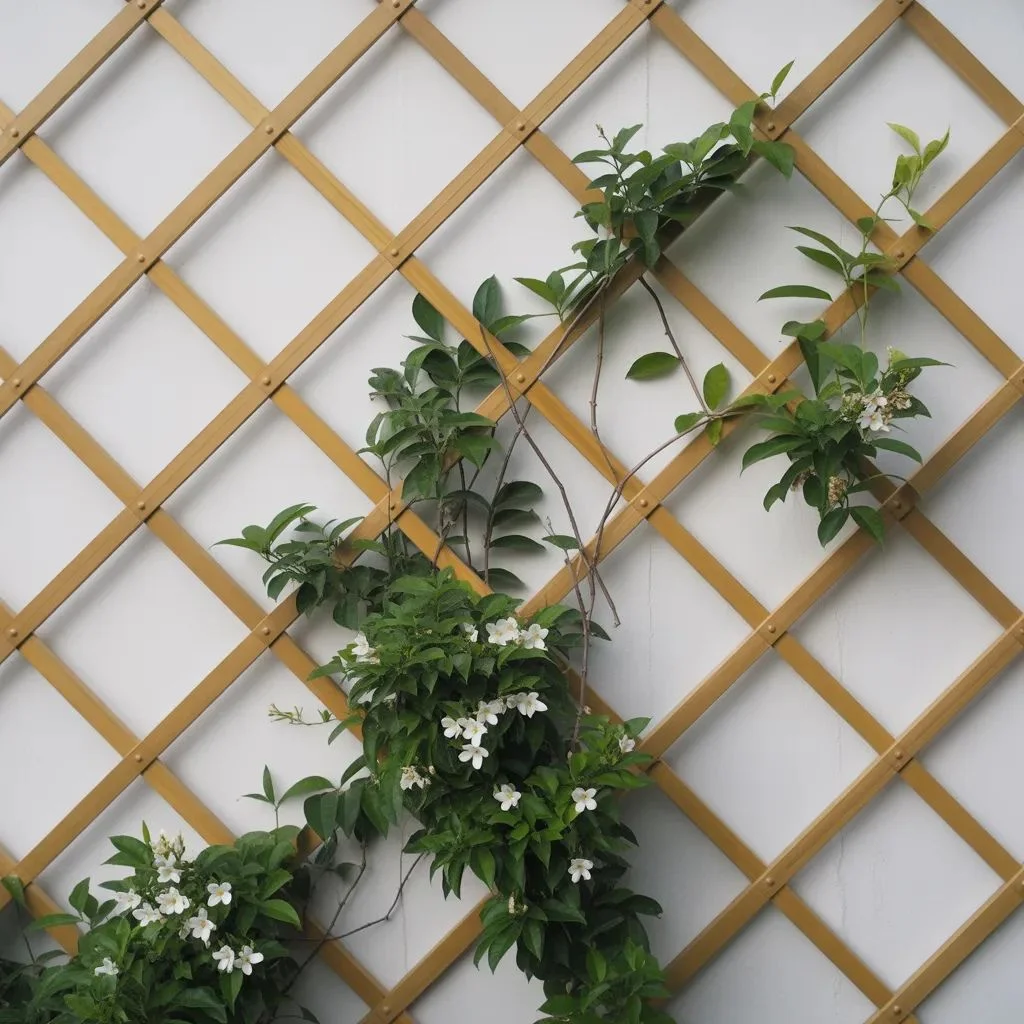
If you want your trellis to be a design feature in its own right — not just a support structure — geometric and diamond pattern trellises are where star jasmine gets genuinely beautiful before it even starts blooming.
A diamond pattern trellis creates a structured visual grid that looks intentional and artful. As the star jasmine fills in, it softens the geometry while keeping the underlying pattern faintly visible beneath the foliage — an effect that is particularly striking in late autumn or early spring before the bloom flush.
Crisscross wooden battens fixed to a backing board or directly to a wall create a classic diamond lattice. For a modern take, use black iron rod welded into geometric shapes — hexagons, triangles, or overlapping diamonds — fixed as art-adjacent wall pieces. The jasmine grows through and around these shapes, and the result looks more like a living sculpture than a garden feature.
Geometric trellises work particularly well on courtyard walls, behind water features, or as a garden focal point at the end of a pathway.
Vertical Garden Frames for Tiny Spaces
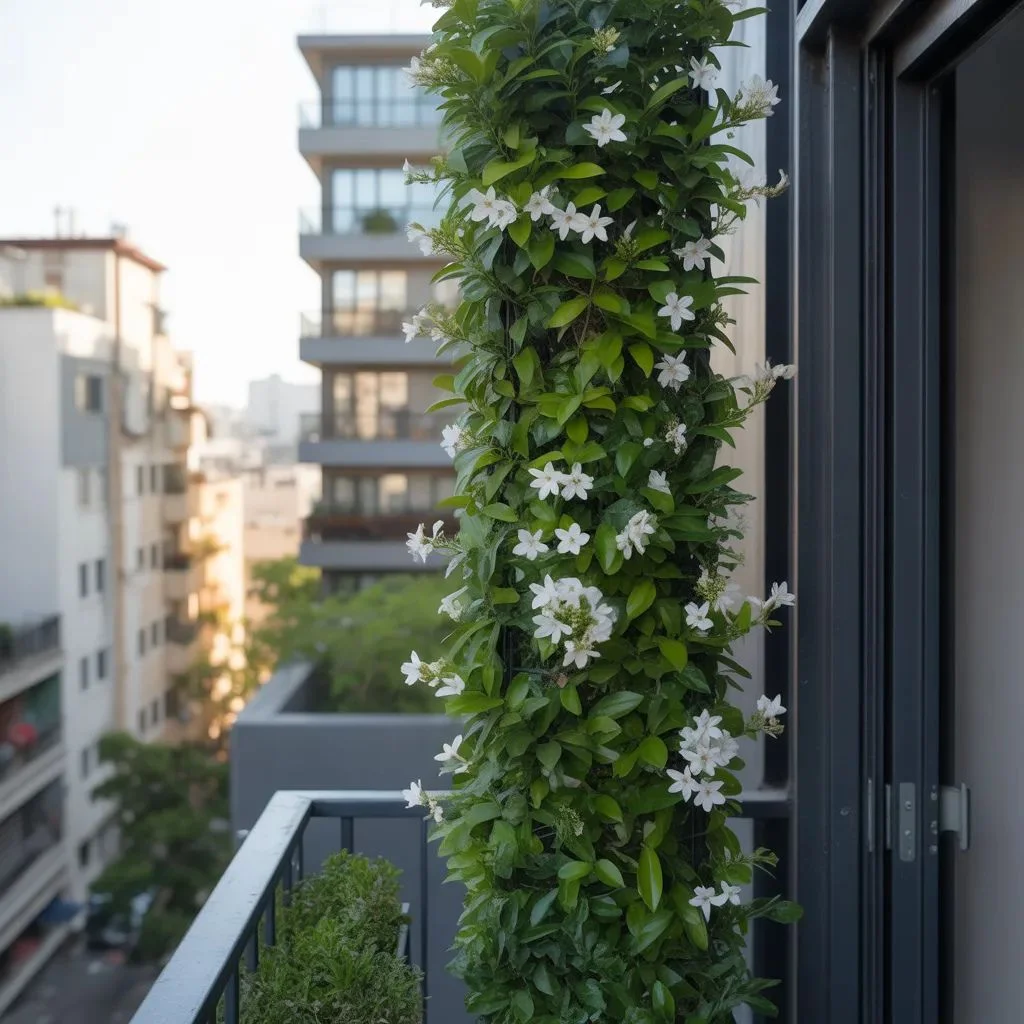
When you have less than 100 square feet of outdoor space, every vertical inch matters. A vertical garden frame planted with star jasmine is the most space-efficient trellis option available — and it creates a dramatic wall of green and white that makes even the smallest balcony feel like a private garden.
Mount the frame at least 3 inches from the wall to allow air movement behind the vines. This also prevents moisture buildup that can damage painted or rendered surfaces over time. Use planter boxes or deep pots at the base and consider installing a drip irrigation system for consistent watering without the daily effort.
Garden obelisks are another excellent small-space option. They range from 4 to 8 feet tall, take up minimal floor space, and support star jasmine vines comfortably — the plant is a lightweight climber compared to wisteria or trumpet vine, making it well-suited to midsize structures. Choose a base width of at least 18 inches for stability once the vine fills in and wind resistance increases.
How to Train Star Jasmine the Right Way
Picking the right trellis style is only half the work. Knowing how to train and care for the plant is what separates a stunning star jasmine display from a tangled mess. The good news: it is genuinely low maintenance once established.
Planting and Early Training
Plant star jasmine in well-draining soil enriched with compost. Avoid spots where water pools after rain — the roots are susceptible to rot in waterlogged conditions. When covering a fence or large trellis, space plants 3 to 4 feet apart for even coverage without overcrowding.
From day one, guide young stems toward the trellis with soft garden ties. Tie loosely — you want to direct growth, not constrict the vine. After the first season, star jasmine grabs onto most trellis structures on its own without much intervention.
Pruning and Maintenance
Prune after flowering — usually early to midsummer — to encourage bushier growth and prevent the vine from becoming woody and bare at the base. Remove any dead, crossing, or excessively long vines. Star jasmine responds well to hard pruning if it has become unruly; it will regrow vigorously from older wood.
Water consistently during dry periods, especially in the first two seasons while the root system establishes. Once mature, star jasmine handles periods of drought reasonably well. Feed with a balanced fertilizer during the growing season to encourage healthy blooms and vigorous coverage.
Trellis Specifications
Whatever structure you choose, make sure it is at least 6 feet tall to support the vine’s climbing habit. A sturdy trellis with 3 to 4 inch grid spacing gives tendrils enough room to grip without becoming tangled. Avoid lightweight plastic trellises — a mature star jasmine vine becomes dense and heavy, and a flimsy structure will collapse under the weight and wind load.
Ready to Transform Your Outdoor Space?
Whether you are starting with a bare wall, a dull fence, or a patio that needs a focal point, there is a star jasmine trellis ideas in this list that fits your space and your style. Pick your structure, plant your jasmine, and give it a season or two. The scent alone will tell you it was worth it.
For more garden inspiration, explore our guides on trellis privacy ideas and vertical garden design — both packed with ideas you can start this weekend.
Recommended: Victorian Terrace Courtyard Garden Ideas for Narrow Outdoor Spaces That Pack Real Style.