That red brick fireplace has more potential than the paint tin suggests. You do not have to paint the brick to change how the room feels.
A brick fireplace is often the largest surface in a living room. When it feels too red, too dark, or too dated, paint looks like the only answer.
It is not. A thin wash, a new mantel, a layer of tile, or even a large mirror can shift the whole wall without sealing the brick under a coat of paint.
Brick has a texture and warmth that paint hides. The best changes work with it instead of covering it up, and most of them can be undone if you change your mind.
Here are 19 options to consider before you paint that brick fireplace, from a light whitewash to a full stone veneer, so you can pick the one that fits your room.
1. Whitewash the Brick
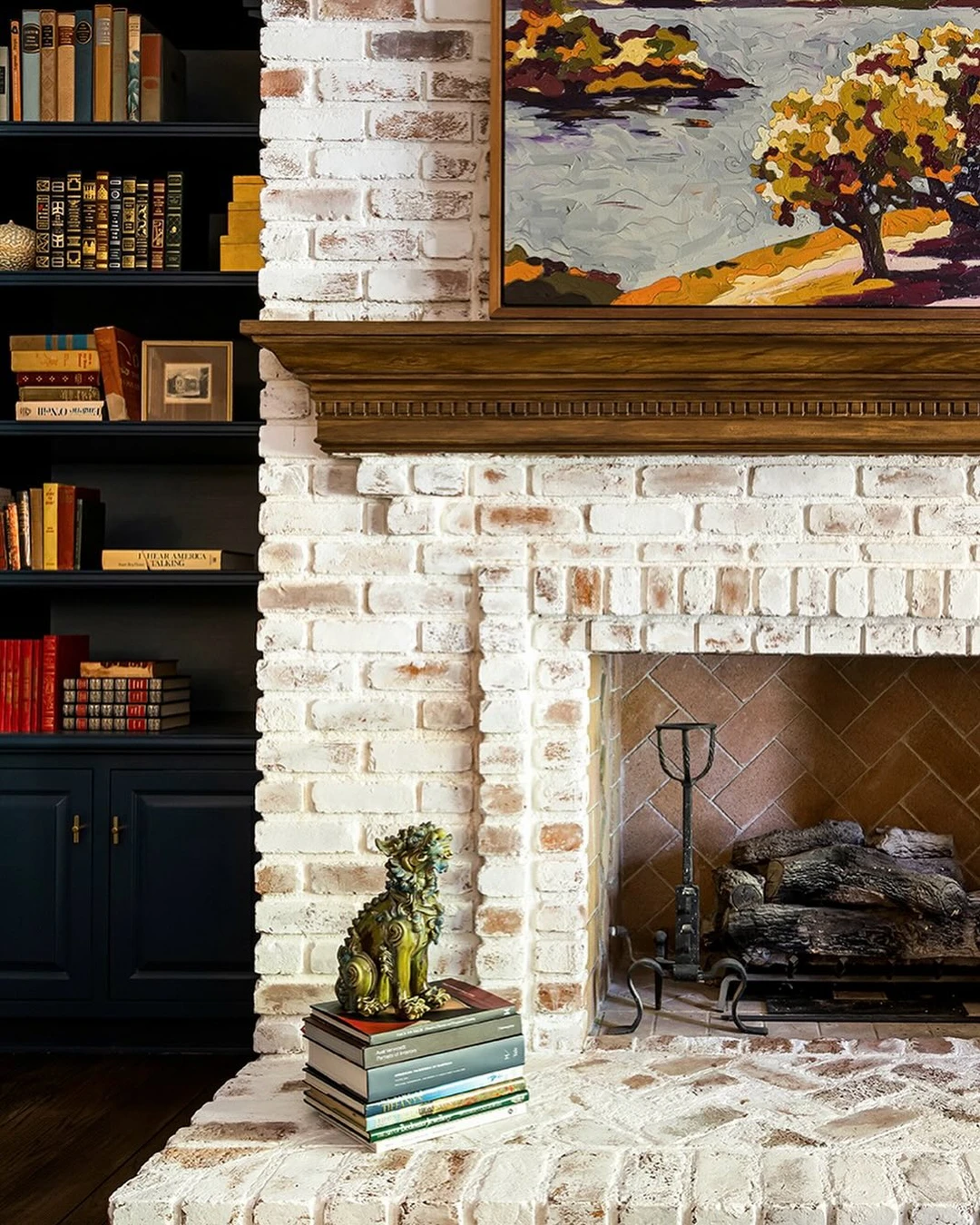
A whitewash is the lightest way to soften red brick. The wash is thin, so the brick’s colour and texture still show through — the fireplace looks lighter, not painted. In this room, the whitewashed brick sits under a dark wood mantel and a landscape painting, with a stack of books and a small green figurine on the hearth. The dark blue bookcase beside it keeps the pale brick from looking washed out.
The practical point: mix the wash thin and test it on a single brick at the back of the firebox first. You can always add another coat, but you cannot easily take one off.
2. Limewash for a Soft Finish
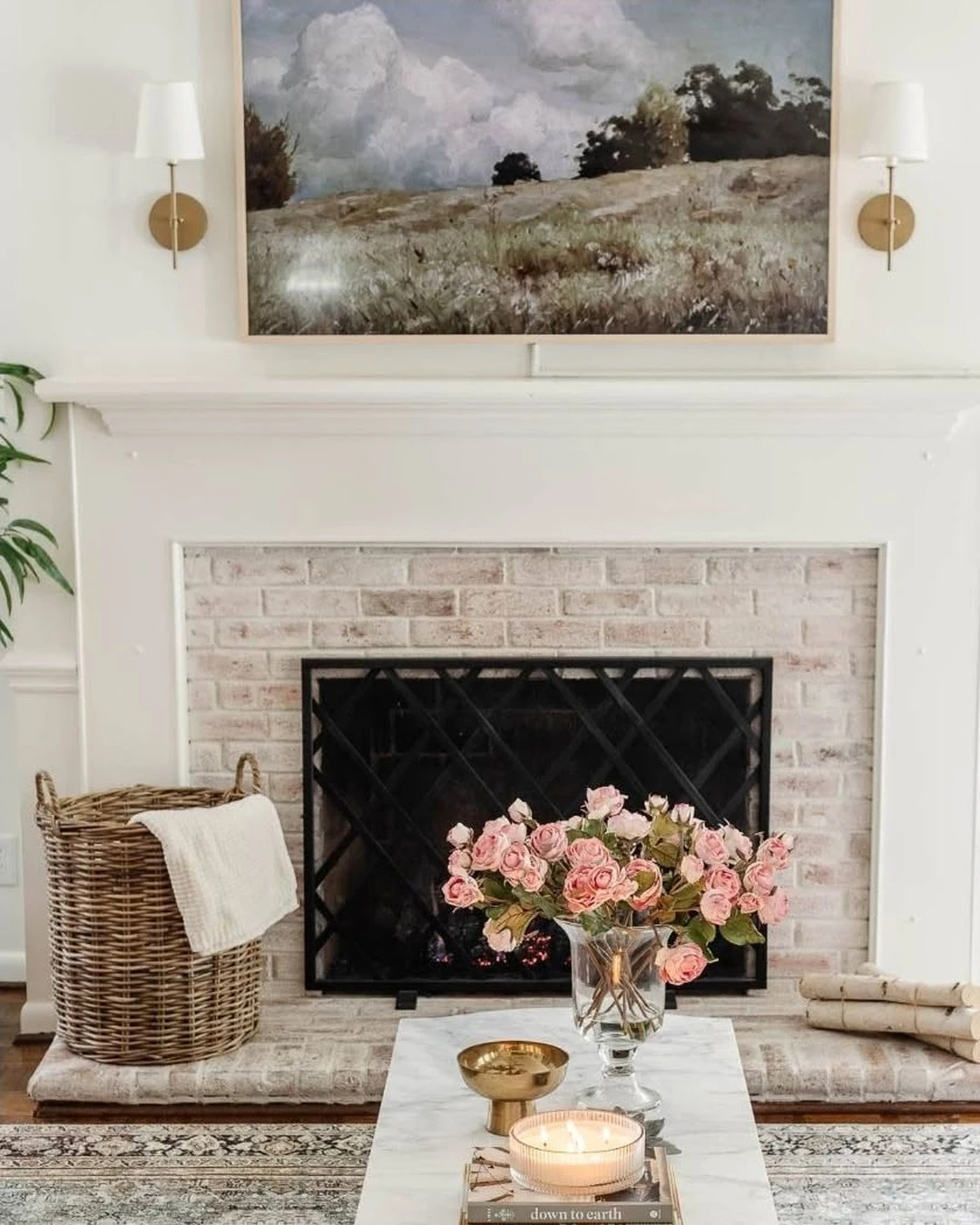
Limewash gives brick a soft, chalky finish that looks more matte and even than a whitewash. The coating is thicker and more opaque, so the brick reads as pale and powdery rather than streaked. Here it covers the whole fireplace wall, with a landscape painting above the mantel, brass sconces on either side, and a wicker basket of birch logs at the base. The pale brick works with the marble coffee table and pink roses in front of it.
The practical point: limewash is made for masonry, so it bonds with the brick instead of sitting on top of it. It still needs a clean, dust-free surface to take evenly, so wash the brick down before you start.
3. German Schmear
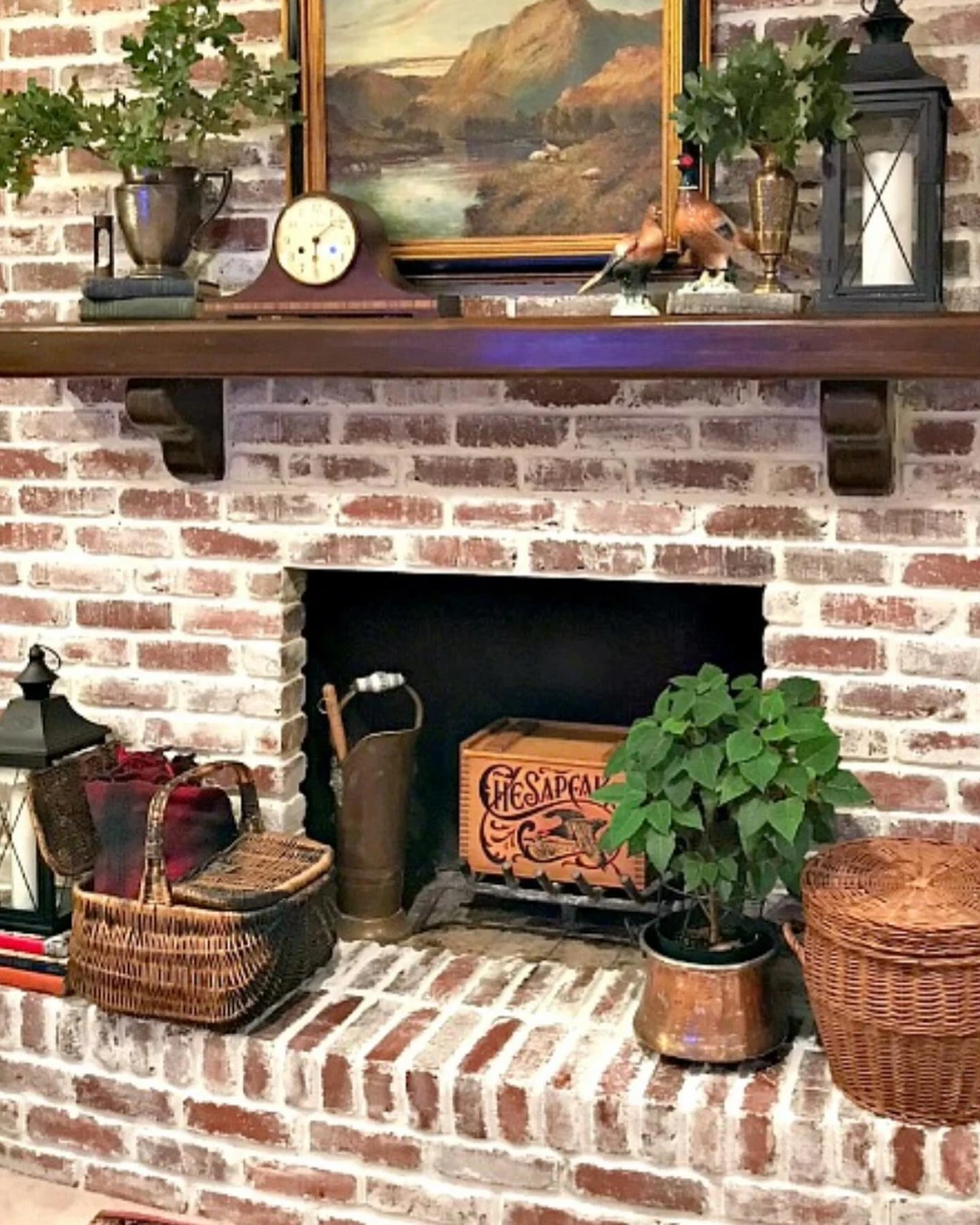
German schmear is the heaviest of the three washes. Mortar is smeared across the brick in an uneven layer, so the red shows through in patches and the surface gains a rough, old-world texture. This fireplace has the thickest mortar on the lower surround and the hearth, with a dark wood mantel, a landscape painting, a clock, and plants above it. A wicker basket and a copper coal scuttle sit on the hearth.
The practical point: schmear changes the texture as much as the colour, so it suits a rustic or cottage room far better than a sleek, modern one.
4. Leave the Brick Natural and Style Around It
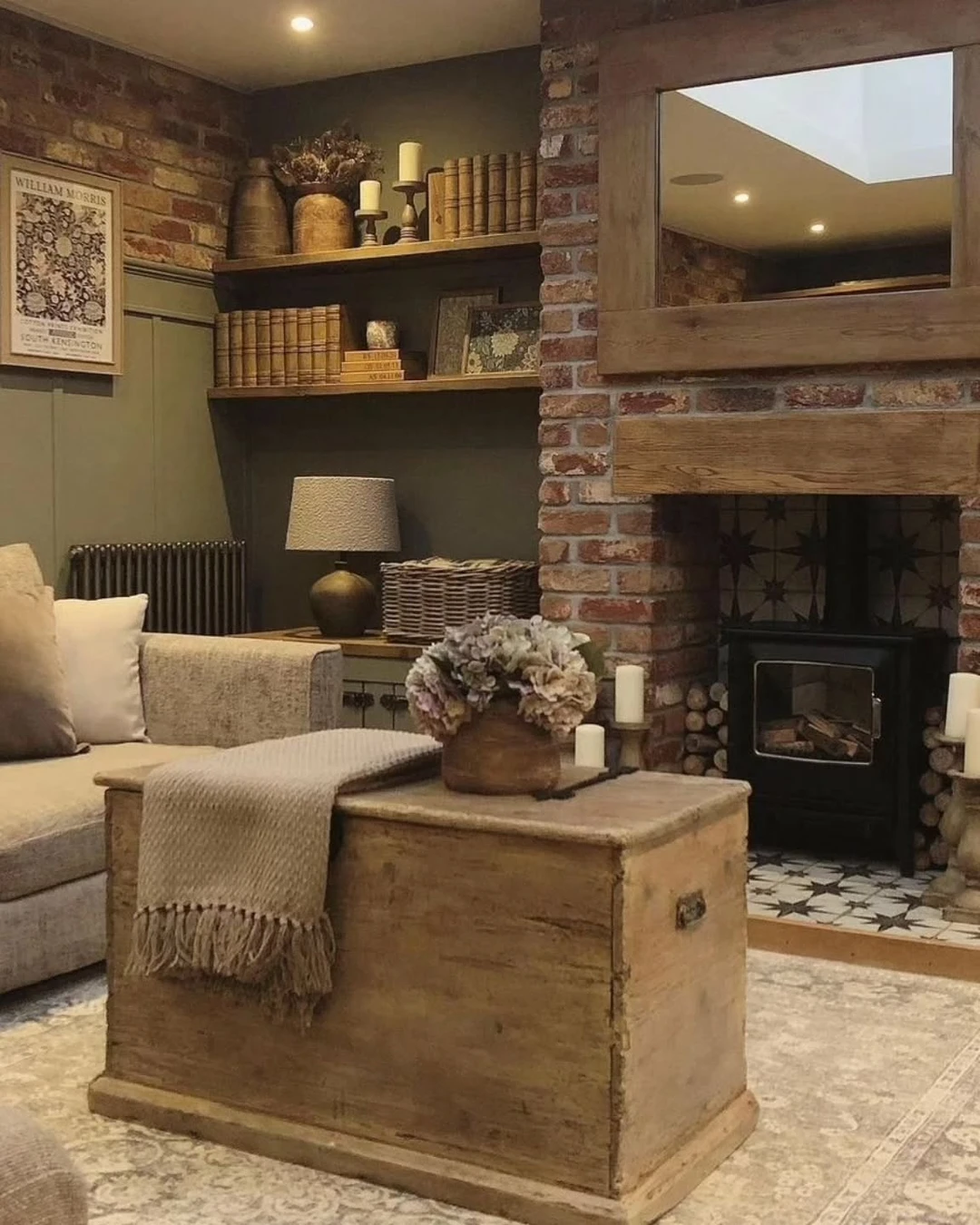
Sometimes the brick is not the problem — the room around it is. This fireplace is left completely natural: red brick, a thick wooden mantel, a large mirror above it, and a black stove insert. The styling does the work. A sofa, a wooden trunk as a coffee table, and built-in bookshelves full of books and decor make the brick feel like part of a finished room rather than a leftover.
The practical point: before you change the brick, try changing what sits next to it. A mirror, a mantel, and one good piece of furniture can be enough.
5. Paint Just the Mantel
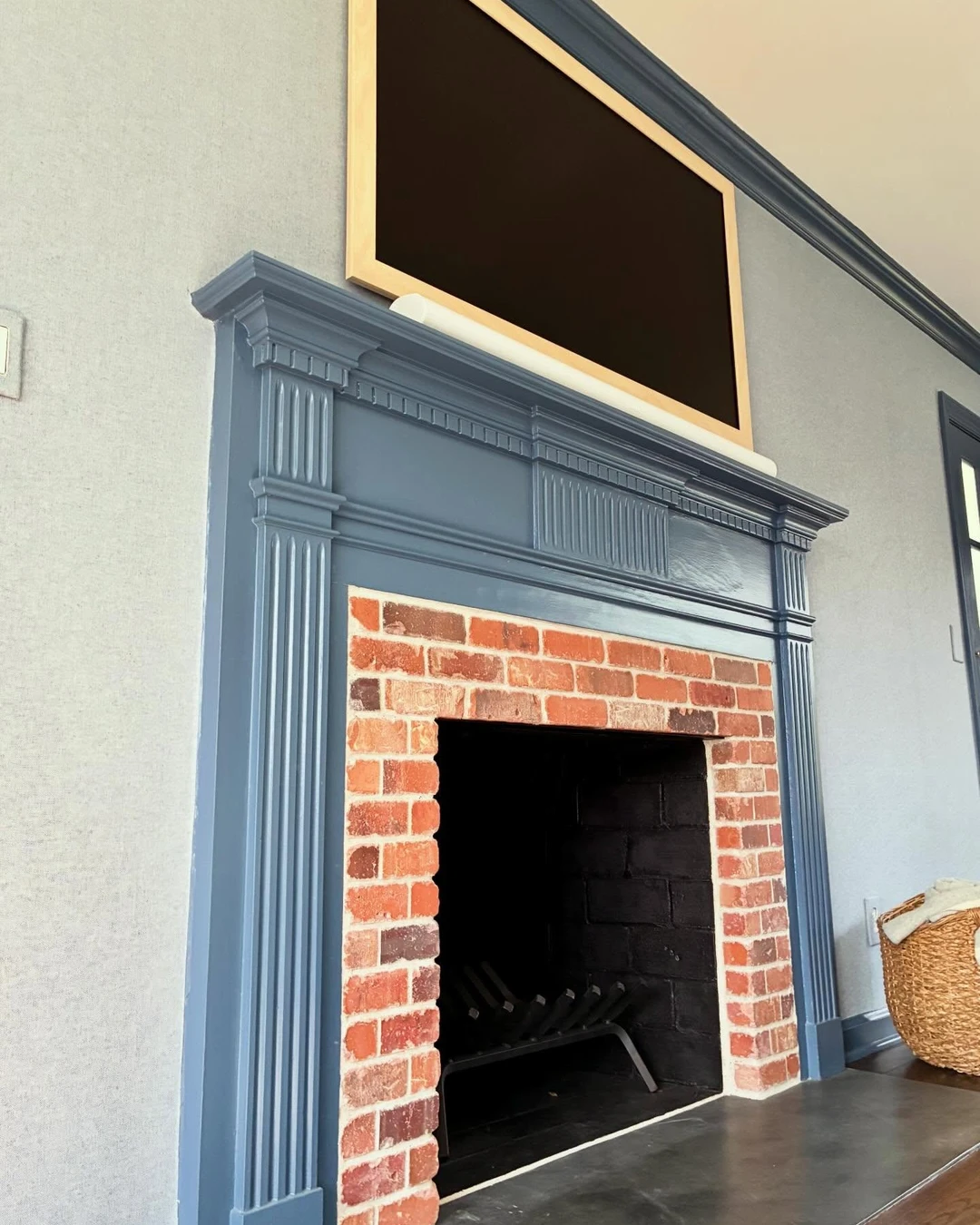
If the brick itself is fine but the fireplace feels dull, paint only the mantel. Here a classical mantel with fluted columns is painted a soft blue-gray, and the natural red brick around it is left alone. The painted mantel becomes the feature, and the brick warms it up instead of competing with it. A framed art screen above the mantel keeps the wall calm.
The practical point: choose a paint colour that works with the brick’s tone. A cool blue-gray like this one balances red brick, while a warm cream would blend into it. For colour ideas that stay in style, see Popular Sherwin Williams Colors That Never Go Out of Style.
6. Tile Over the Brick
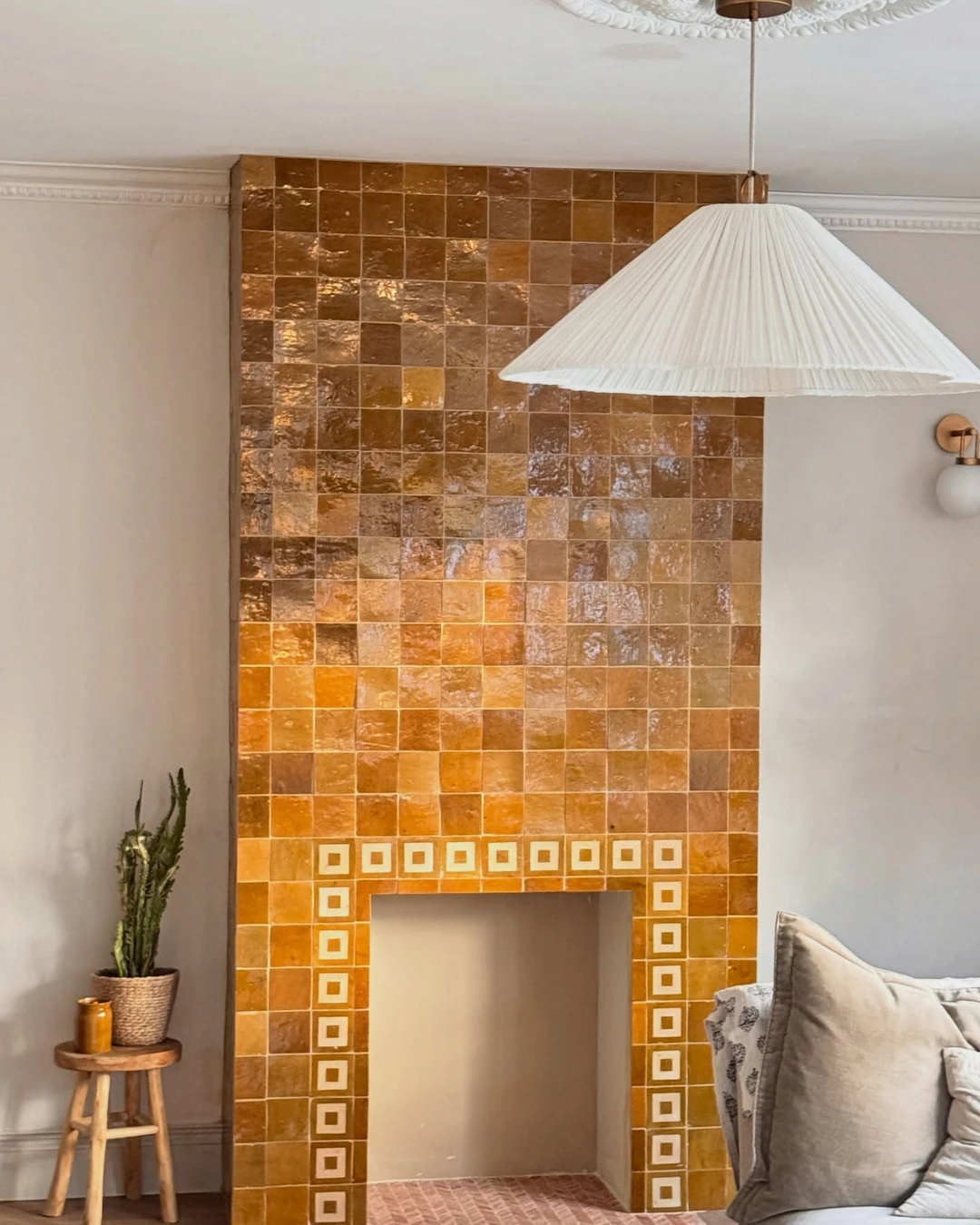
Tile goes over the brick and gives the fireplace a completely new face. This one is covered floor to ceiling in warm amber zellige tile, with a decorative square-tile border around the open firebox niche. The tile is applied directly over the brick underneath, so the shape of the fireplace stays the same while the surface changes completely. The handmade look of the tile — the slight variation in each square — keeps the tall fireplace from feeling flat. A white pendant lamp and a potted cactus soften the edges.
The practical point: tile needs a flat, sound surface, so the brick must be cleaned and any loose mortar repaired before the first tile goes on.
7. Add a Shiplap Surround
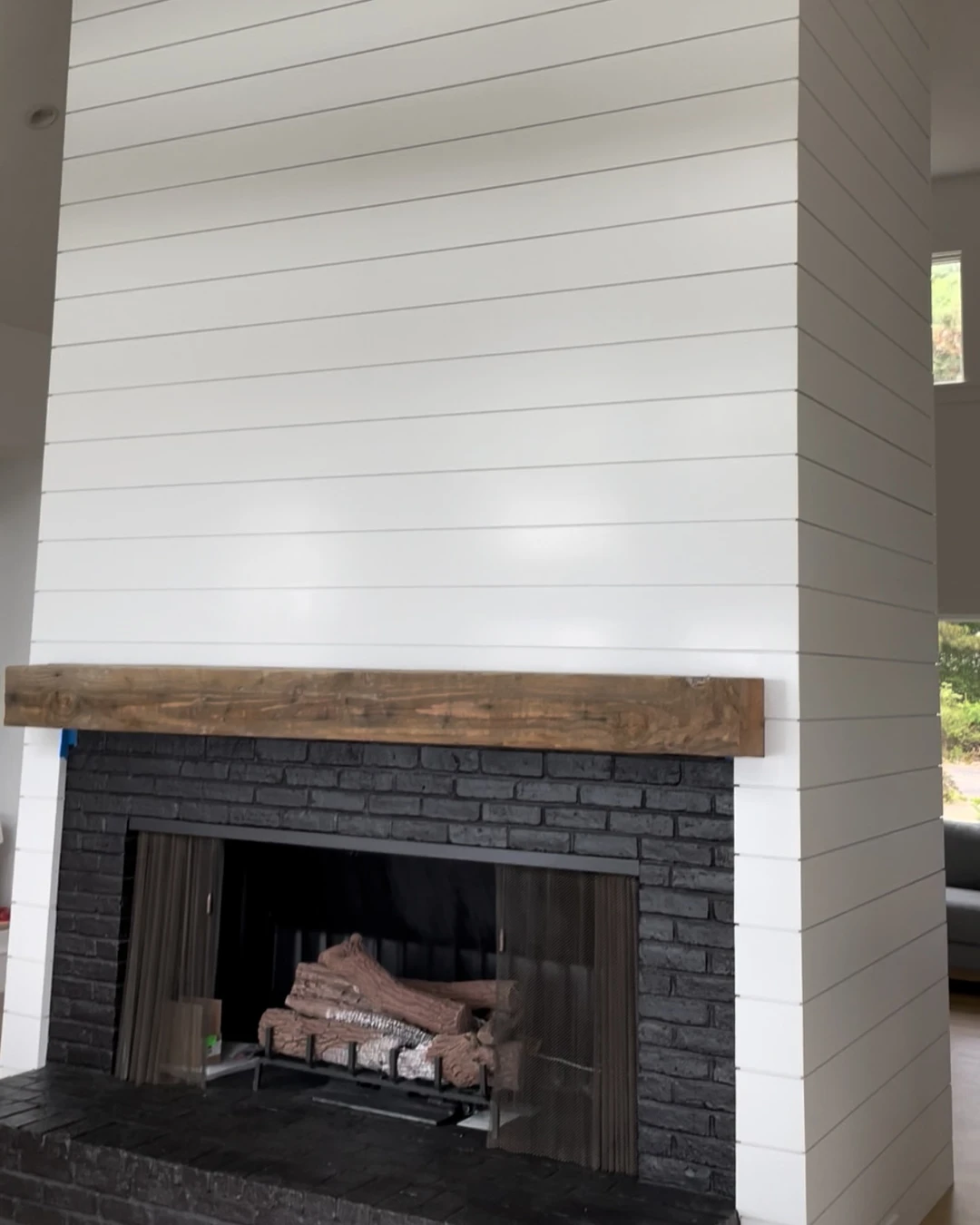
Shiplap changes the shape of the wall, not just its colour. Here a tall white shiplap chimney breast frames a dark painted-brick surround and a black firebox with logs inside. The horizontal boards draw the eye upward, and a rustic wood beam mantel breaks up the white. The dark brick inside the shiplap frame gives the fireplace depth instead of letting it disappear into the wall.
The practical point: shiplap is a building job, not a paint job. The boards need proper fixing, and the firebox opening must be measured before you start.
8. Plaster Over the Brick
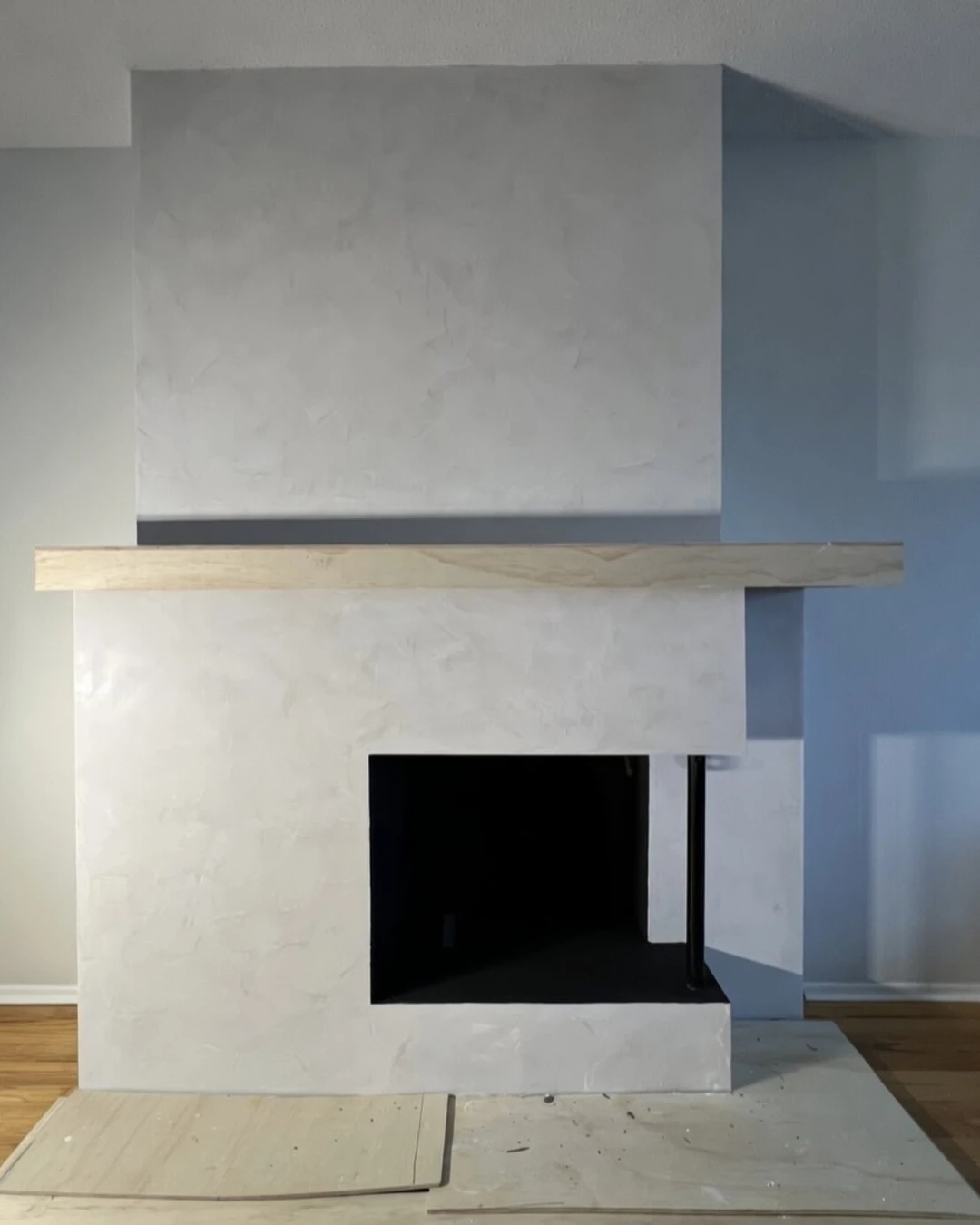
Plaster gives a brick fireplace a smooth, modern face. This one is finished in a soft light gray, floor to ceiling, with a light wood mantel shelf and a black firebox. There is no brick texture left to see — the fireplace reads as a clean, sculptural shape in the room. The drop cloths on the floor show it was finished recently, and the plaster already looks settled.
The practical point: plaster hides the brick texture completely, so be sure you want a smooth finish. Unlike a wash, it is not a change you can reverse in an afternoon.
9. Add a Chunky Wooden Beam Mantel
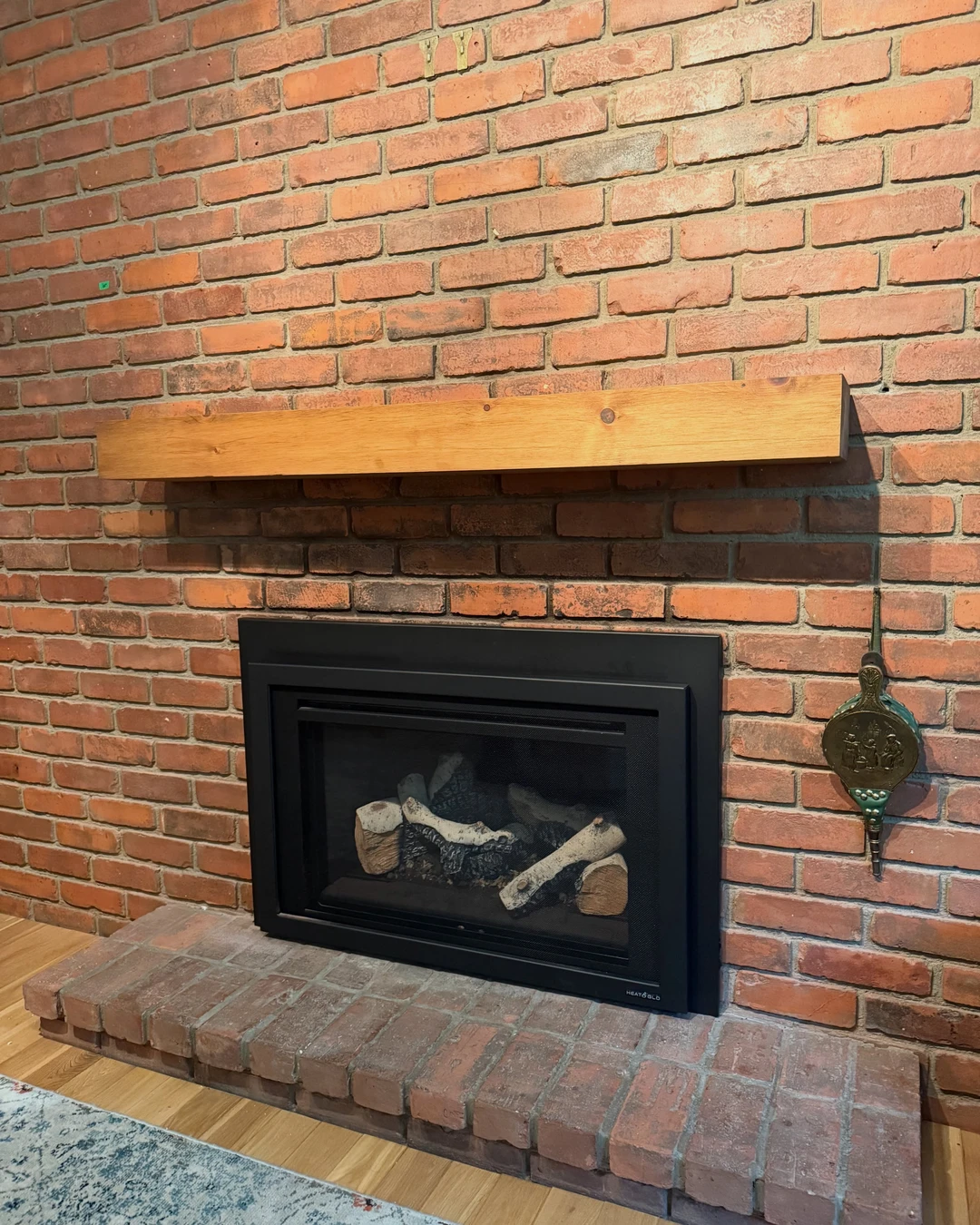
A thick wooden beam does more than hold a few decorations — it changes the proportions of the whole fireplace. This red-brick fireplace has a light-stained solid wood beam as its mantel, clearly thicker than a standard shelf, with a black firebox and logs below and a raised brick hearth in front. The pale wood against the red brick is the contrast that makes the fireplace feel designed rather than plain.
The practical point: a beam is heavy, so it needs solid fixings driven into the brick. Check the fixings, not just the look, before you hang anything on it.
10. Style the Mantel, Not the Brick
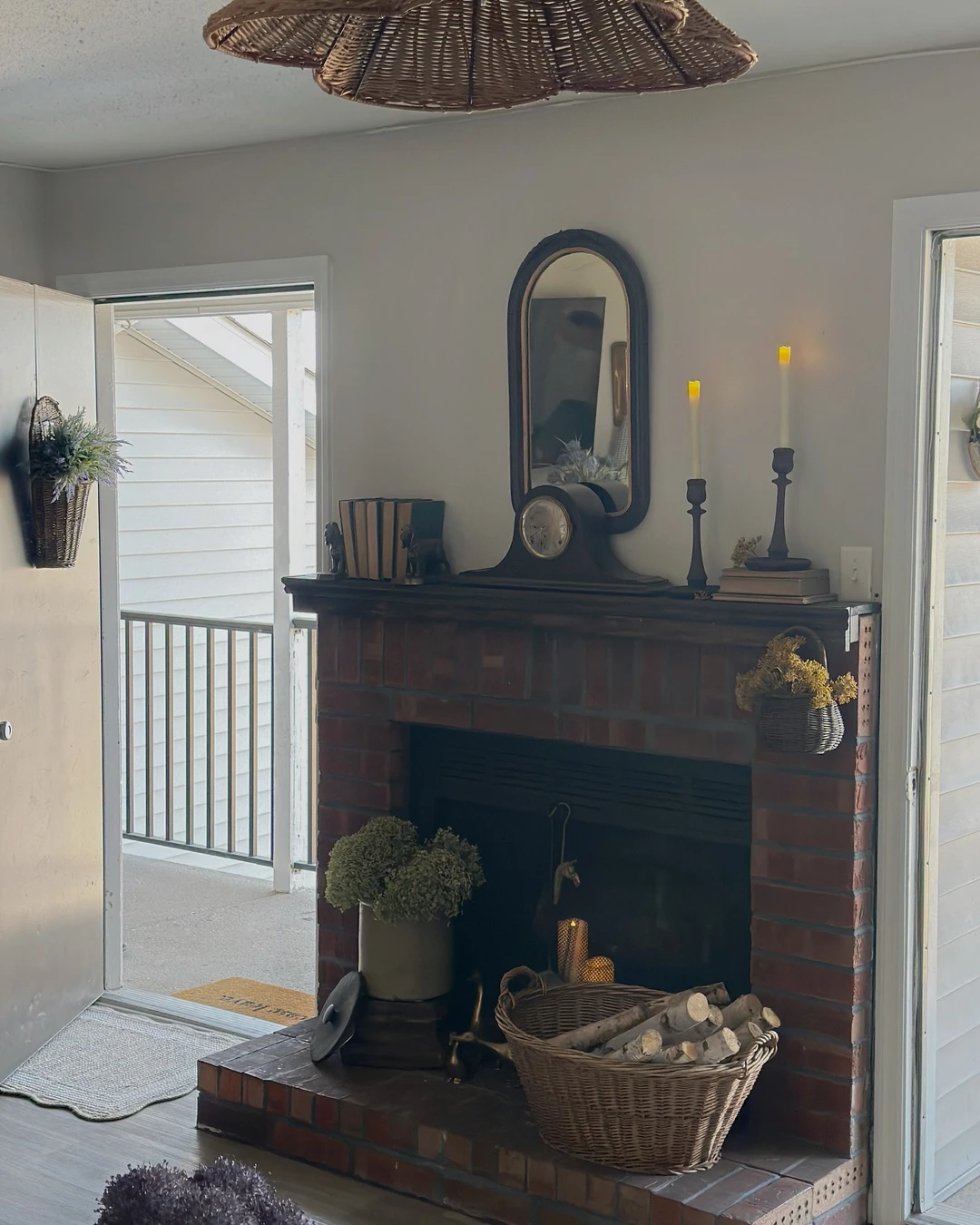
A mantel can carry the whole fireplace. Here the natural red brick is untouched, and the dark wood mantel does the talking — an arched mirror, a mantel clock, two candlesticks, and a stack of books, with a potted plant and a wicker log basket on the hearth below. Nothing on the mantel is expensive or permanent, but together the pieces give the brick a finished, collected look.
The practical point: style in layers — something tall at the back, something small in front — and leave a little empty space so the mantel does not look crowded.
11. Cover It with Stone Veneer
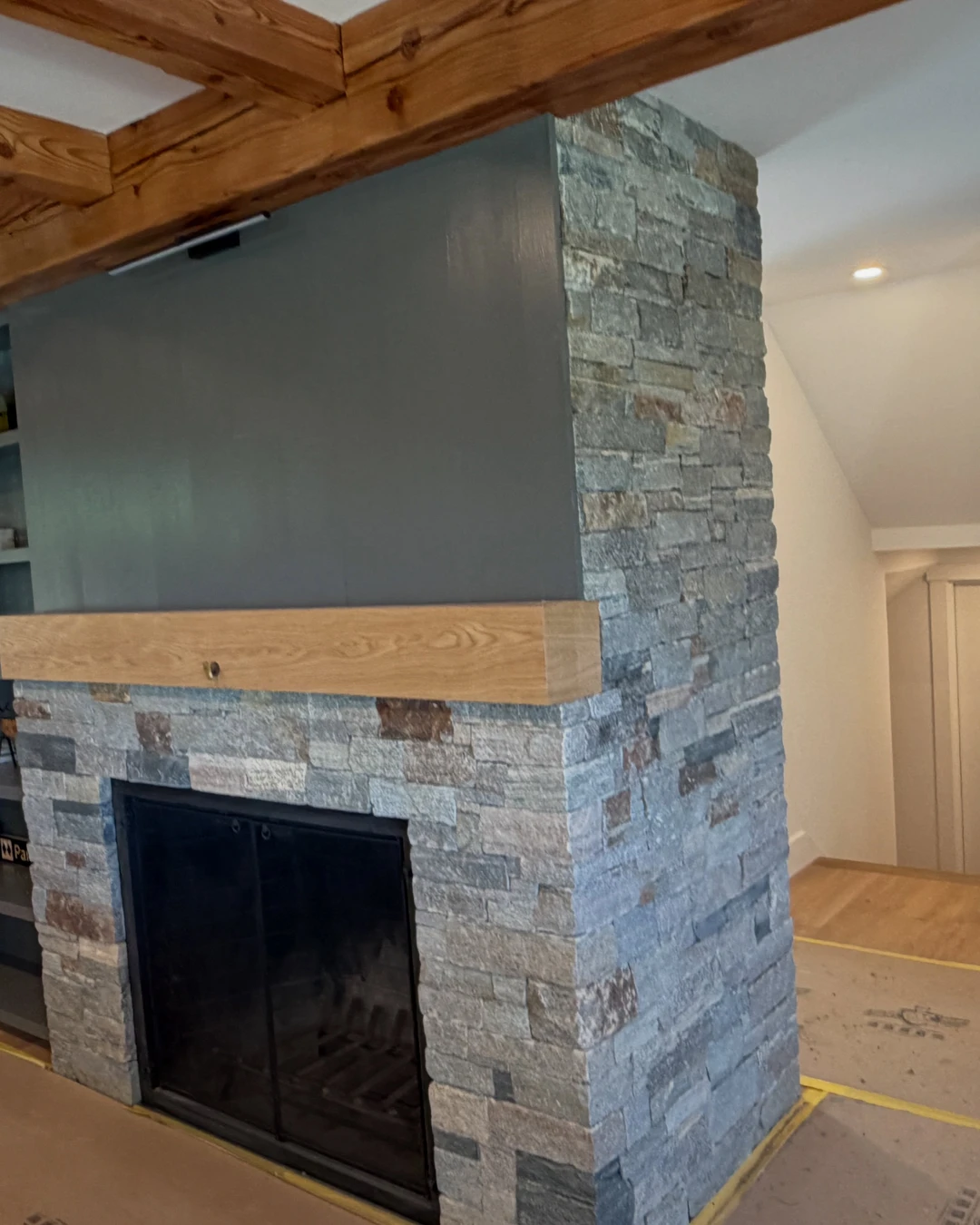
Stone veneer goes over the brick and turns the fireplace into a stone one, at least to the eye. This fireplace is covered full height in gray stacked stone, with a light wood mantel and a black firebox. The stone is applied over the brick underneath, so the fireplace keeps its shape while the surface changes. The stone’s rough texture and mixed gray tones give the wall a weight that flat brick does not have. The protective paper on the floor is a sign the work was just finished.
The practical point: veneer adds real weight and depth, so check that the hearth and the wall behind it can take it, and that the firebox opening is finished cleanly.
12. Add Built-In Shelves Beside the Fireplace
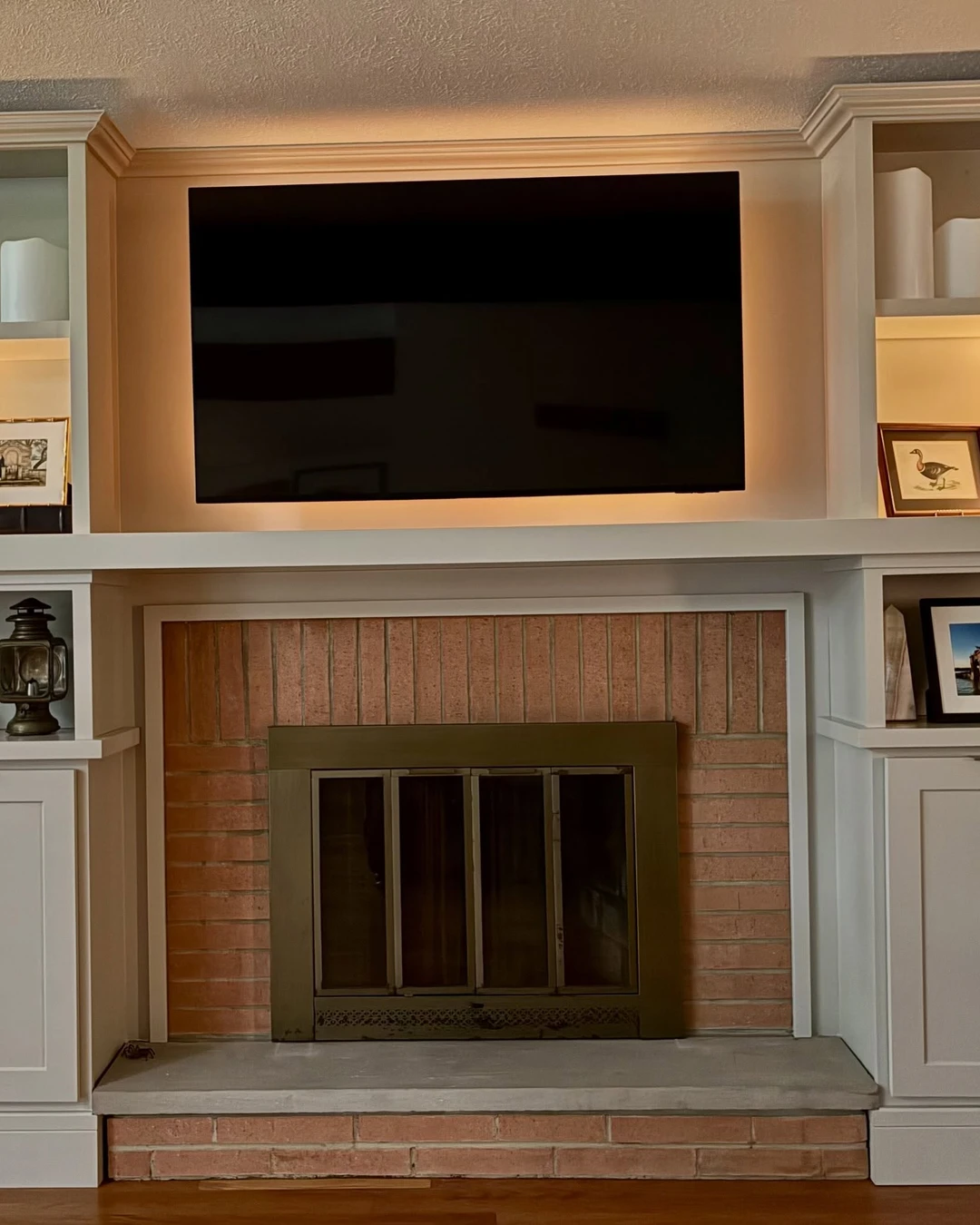
Built-in shelves give a brick fireplace a finished frame. Here white built-in shelves and cabinets flank a pinkish-red brick fireplace, with a television mounted above the mantel and warm lighting inside the shelves. The shelves are styled with lamps, framed prints, books, and a lantern, so the fireplace sits in the middle of a complete wall rather than standing alone.
The practical point: built-ins are the most expensive option on this list, but they also add storage. Plan the shelves around what you actually own, not around a photo.
13. Hang a Large Mirror Above the Mantel
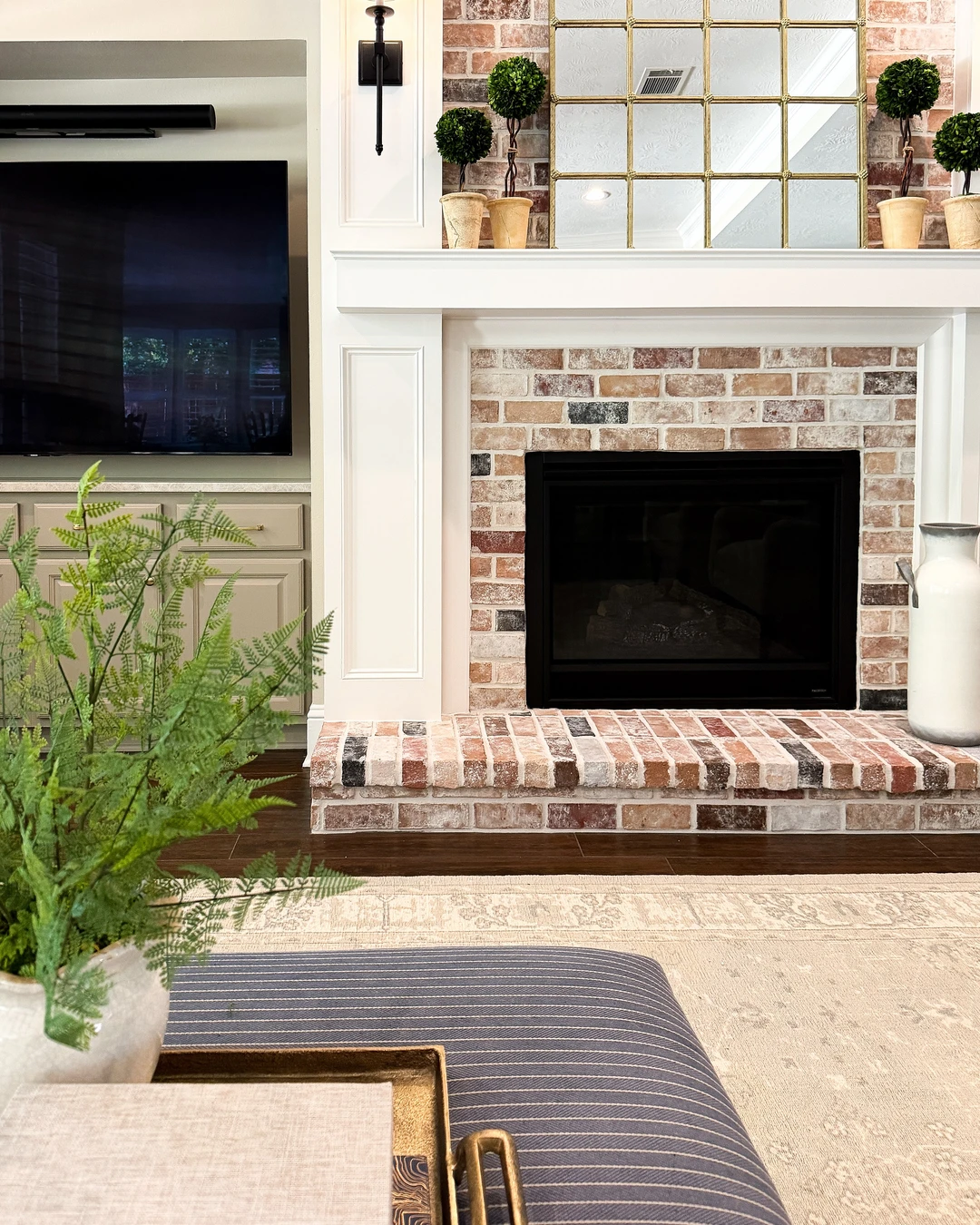
A large mirror above the mantel doubles the light in the room and gives the fireplace a focal point that is not the brick. This one is an arched windowpane mirror in a gold frame, hung above a white mantel on a light multi-tone brick fireplace, with small topiary pots on either side. The mirror reflects the room back into itself, so the fireplace wall feels wider and brighter than it is.
The practical point: a mirror this size is heavy. It needs a proper wall fixing into the brick or a stud, not a picture hook. The same care applies to anything heavy you hang above a fireplace, as explained in The Right Way to Hang Pictures on the Wall.
14. Lay a New Marble Hearth
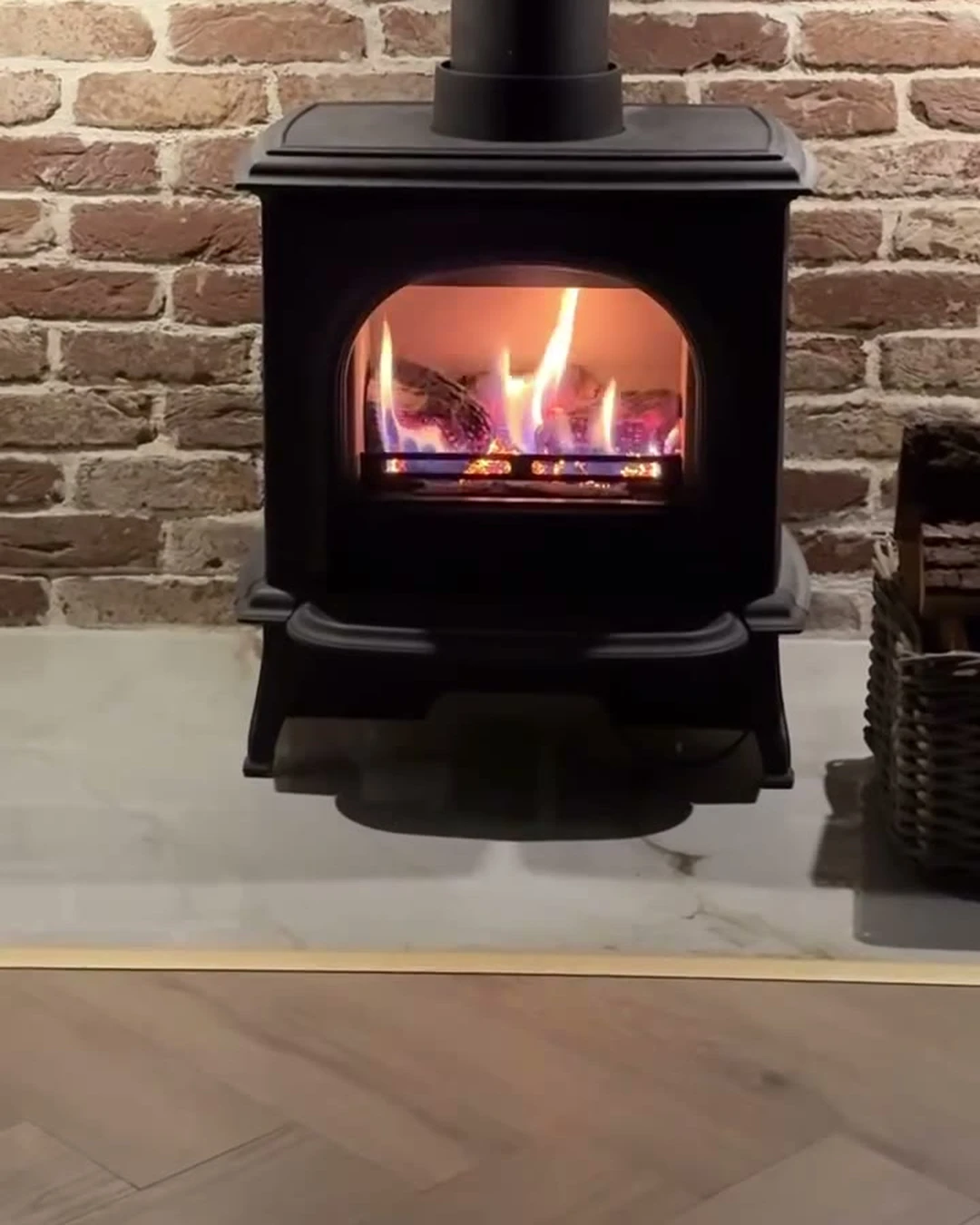
A new hearth changes the base of the fireplace without touching the brick above it. Here a black wood-burning stove with a fire burning sits in a brick alcove, and a white marble hearth slab runs across the base in front of it. The pale marble lifts the whole fireplace — the dark stove, the red-brown brick, and the light hearth balance each other. A wicker log basket at the side finishes the picture.
The practical point: a marble hearth must be cut to fit the alcove exactly, and it needs a level base. Measure twice, and let the stone sit on a solid bed, not on a hollow floor.
15. Paint the Firebox Interior Black
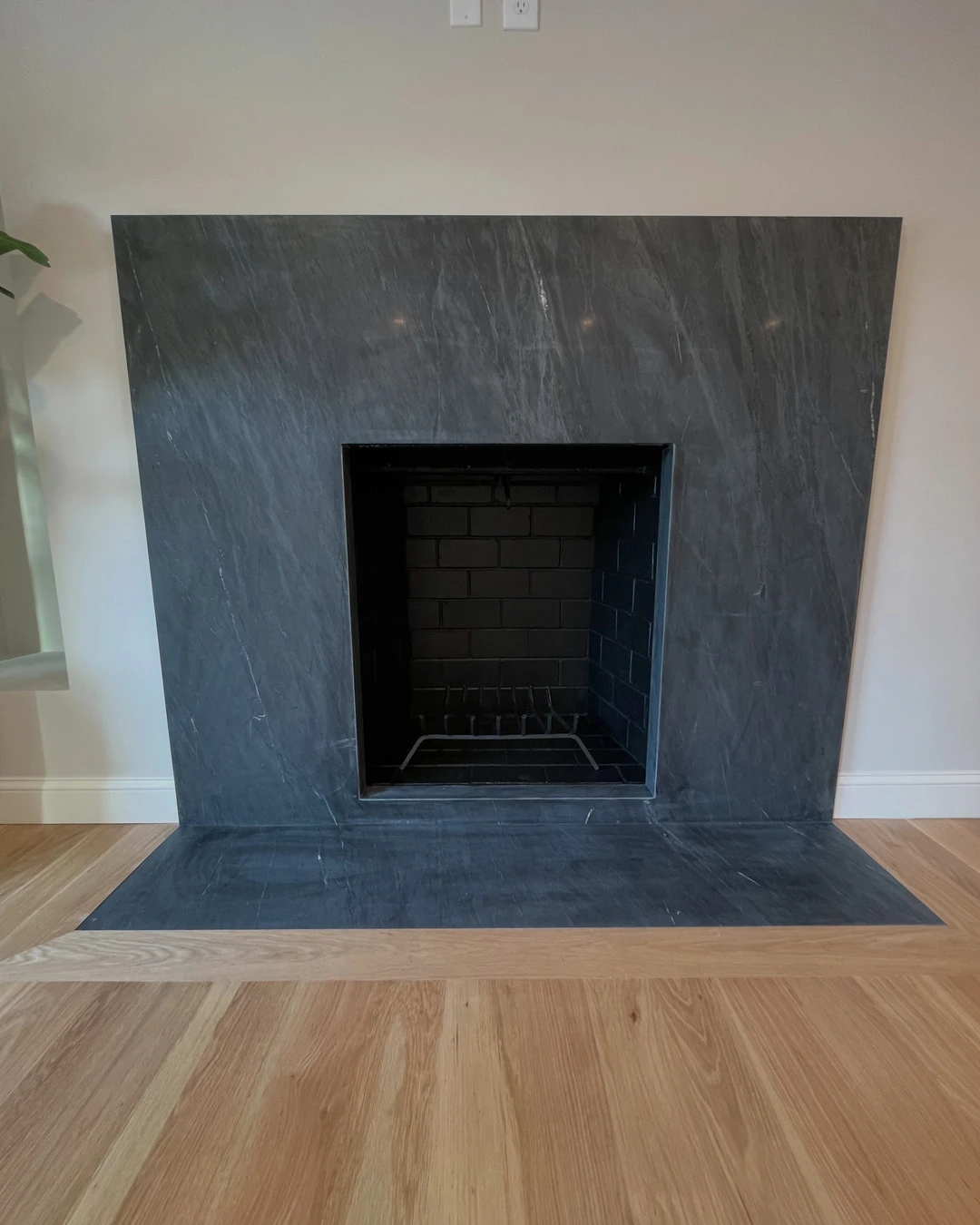
Painting only the inside of the firebox is the smallest paint job on this list, and it makes a real difference. A black firebox makes the fire look brighter and the opening look deeper, and it hides soot marks that would otherwise show on pale brick. In this photo the firebox interior is a uniform matte black, with a grate inside and a dark hearth slab below. The surround around it here is dark stone, so the black firebox is the part that carries the idea — on a brick fireplace, the same black interior would frame the fire against the red brick.
The practical point: use paint made for high heat. Ordinary paint will peel and smell the first time you light a fire.
16. Add a Wooden Fireplace Surround
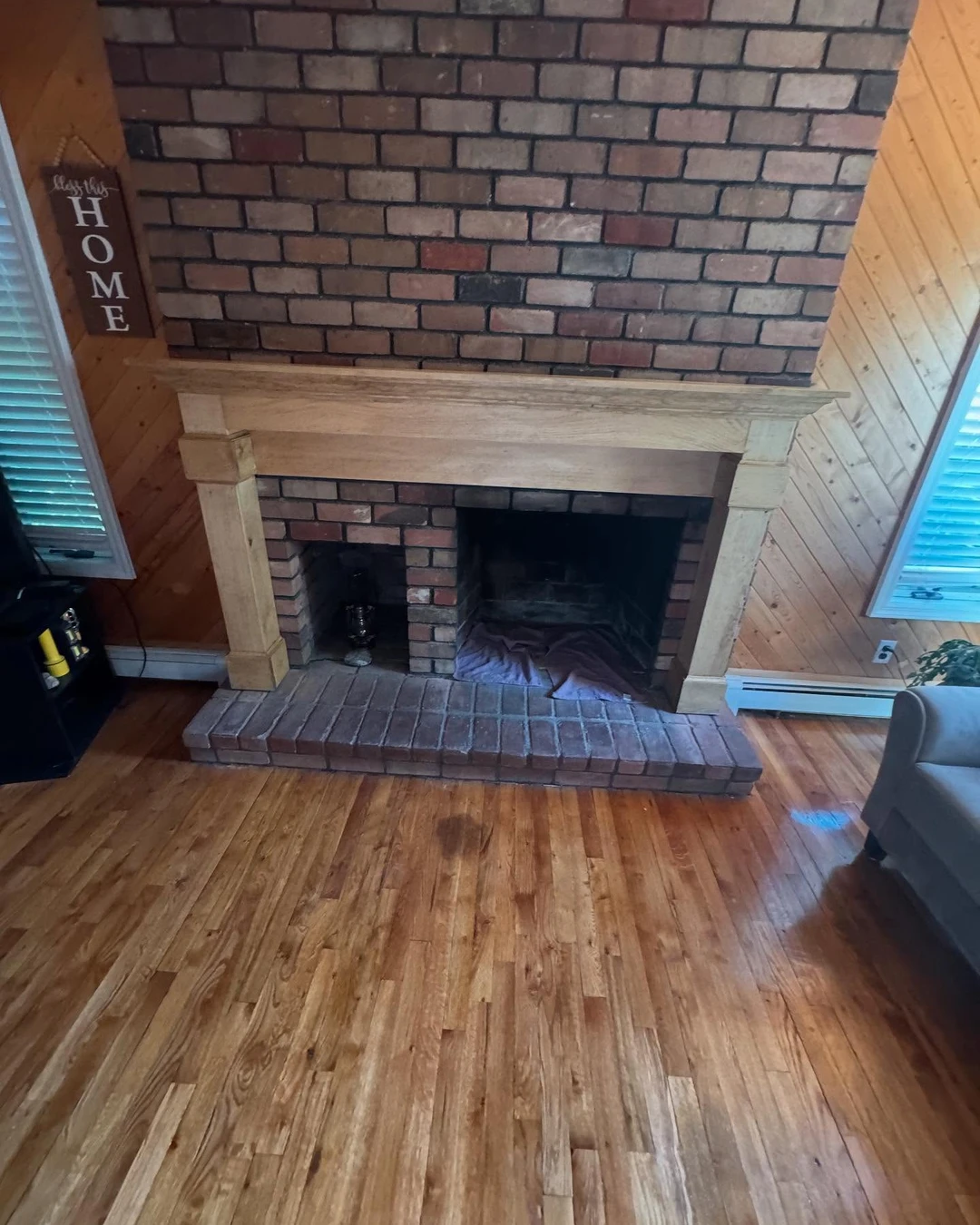
A wooden surround frames the firebox and gives a brick fireplace a finished edge. This full red-brick chimney breast has a light-wood surround — pilasters on either side and a mantel shelf across the top — with a brick hearth below and wood-panelled walls around it. The pale wood softens the red brick without hiding it, and the surround makes the firebox look intentional rather than plain.
The practical point: a surround must fit the firebox opening exactly. Measure the opening, not the brick, and leave the right clearance from the heat.
17. Dress the Hearth with a Screen and Tools
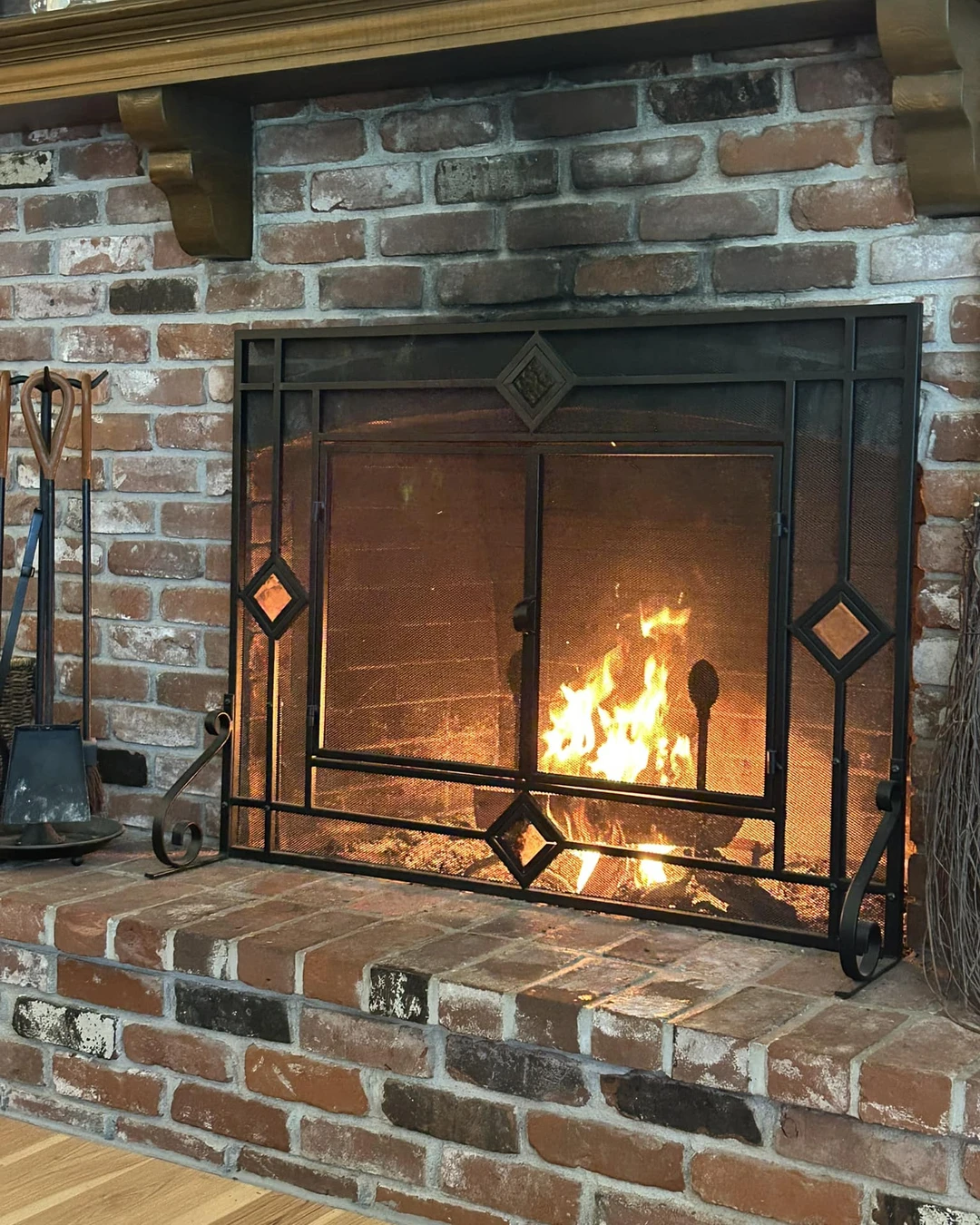
A screen and a tool set are the two things every working fireplace needs, and together they dress the hearth. Here a black decorative screen with a diamond pattern stands across the firebox with a fire burning behind it, and a tool set on a stand waits at the side. The brick surround and hearth and the wood mantel above need nothing else — the screen and tools finish the picture.
The practical point: buy the screen to fit your firebox, not the other way round. A screen that is too small leaves gaps, and one that is too big will not stand straight.
18. Paint the Wall Behind, Not the Brick
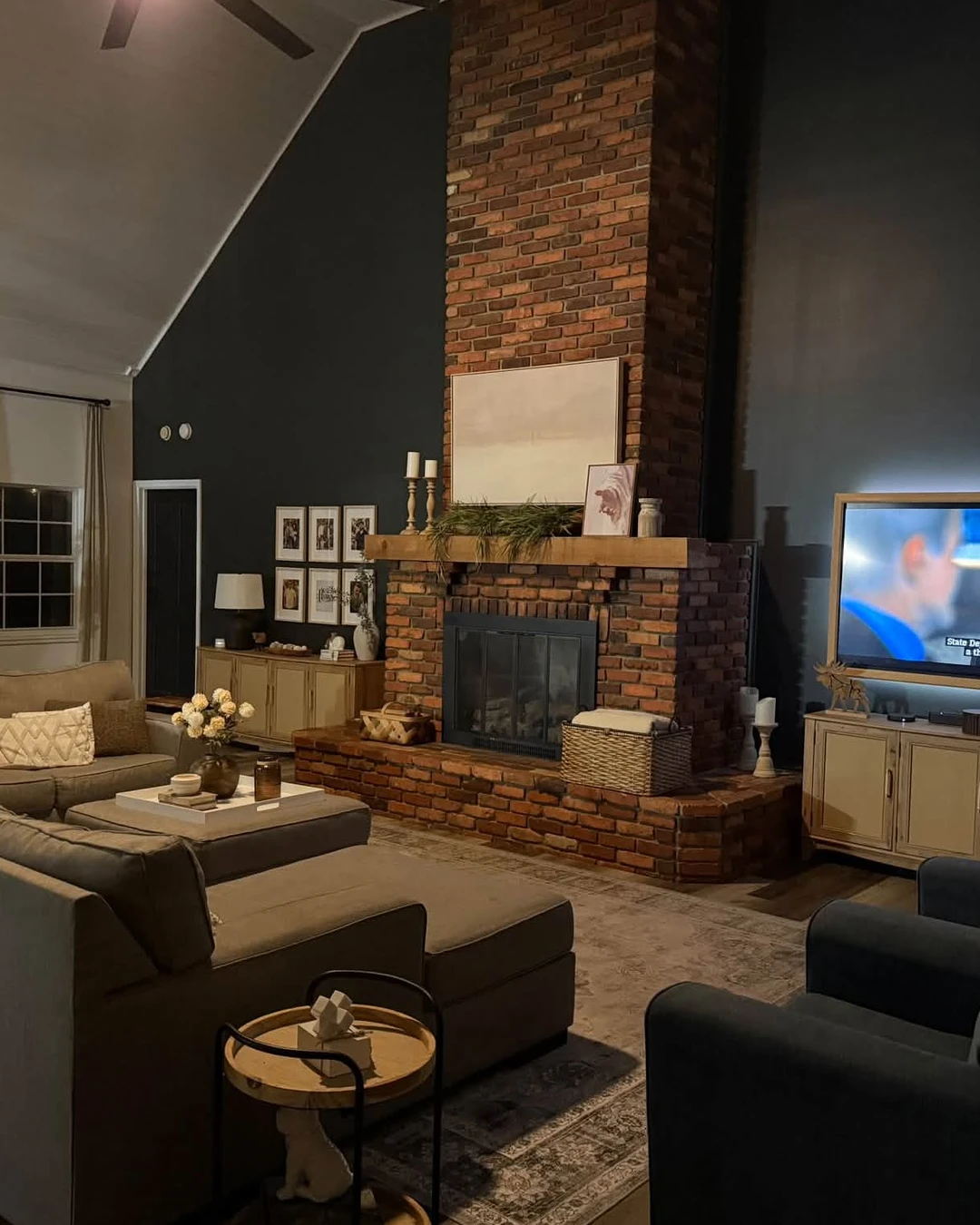
If the brick is fine but the room feels flat, paint the wall around it instead. Here dark charcoal walls flank an unpainted red-brick chimney breast, and the contrast makes the brick look warmer and richer than it would against a white wall. The sectional sofa and the dark walls make the fireplace the brightest thing in the room, even though the brick itself has not changed at all.
The practical point: a dark wall needs good light in the room, or the corner can feel closed in. Try a sample patch first and look at it in the evening, not just in daylight.
19. Add a Decorative Tile Inlay on the Hearth
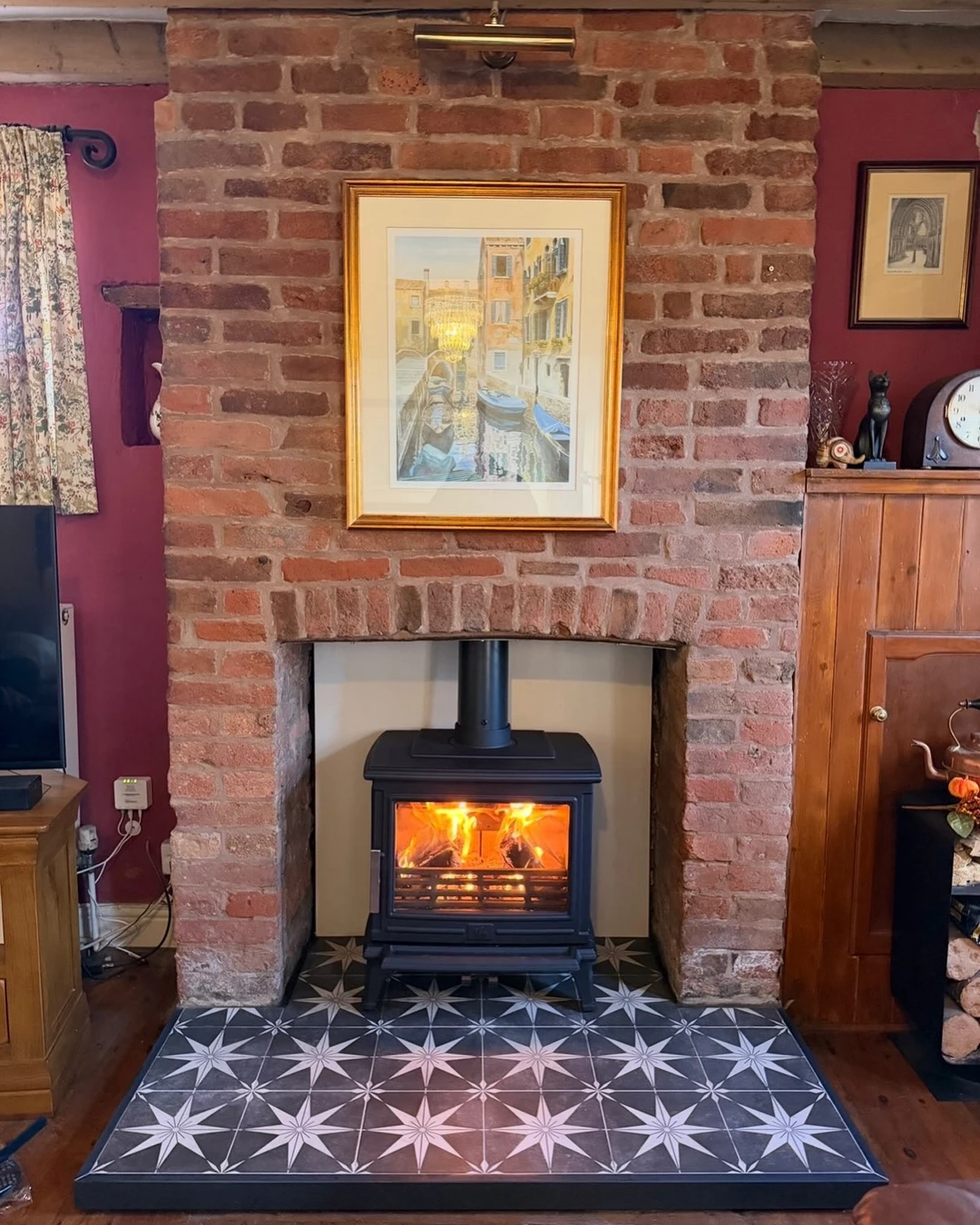
Pattern on the hearth only is a small change with a big visual effect. This red-brick alcove has a black stove with a fire burning, and the hearth in front of it is laid with black-and-white star-pattern tiles. The pattern draws the eye down to the base of the fireplace, and the black and white picks up the stove while the red brick stays warm above it. A framed painting above the firebox finishes the wall.
The practical point: hearth tiles take heat and the odd dropped log, so choose a hard tile and a grout that can be cleaned. A pale grout will show every mark.
Pick the Change That Fits Your Fireplace
None of these options is right for every fireplace. A wash suits a room that needs light. A beam or a surround suits one that needs structure. A mirror or a painted wall suits one that needs contrast. The point is that paint is not the only way forward — and once brick is painted, going back is a much bigger job than any of these changes.
Start with the change that costs the least and is easiest to undo. Style the mantel, hang a mirror, or lay a new hearth. If the fireplace still feels wrong after that, then the bigger options — tile, plaster, or veneer — will still be there, and you will know exactly what you are changing and why.