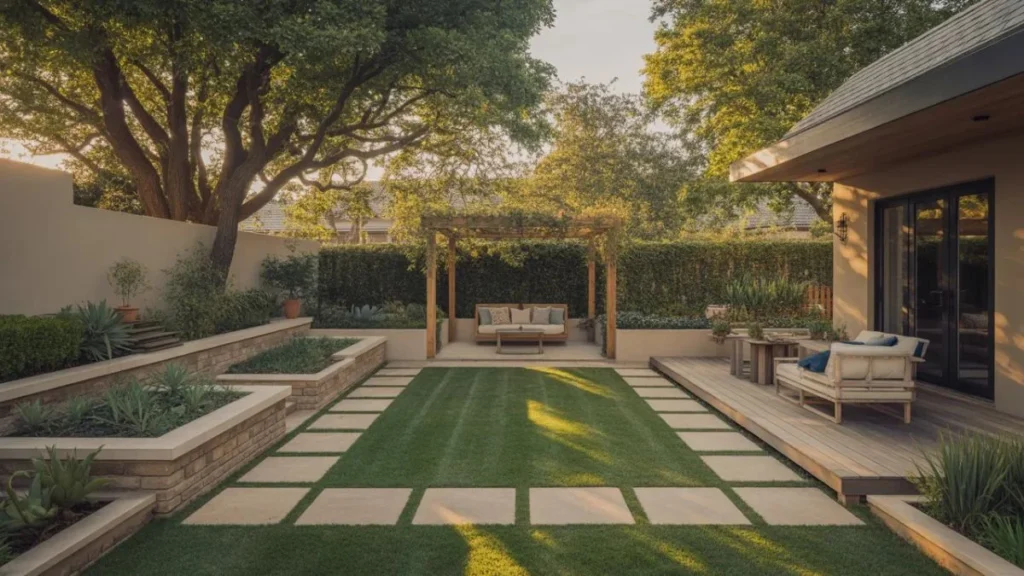
Most rectangle backyards are an afterthought — a flat stretch of grass that quietly judges you every time you glance out the window. The good news? A rectangle is arguably the best canvas you can work with.
Rectangle backyard layout ideas work so well precisely because of that predictable shape — straight lines, equal width, and defined boundaries make zoning, planting, and furniture placement far less complicated than irregular plots. Whether you have a narrow strip or a generous long yard, the layouts in this guide will help you carve out dedicated spaces for living, dining, playing, and growing — without a single square foot going to waste.
Why Rectangle Backyards Are a Designer’s Dream
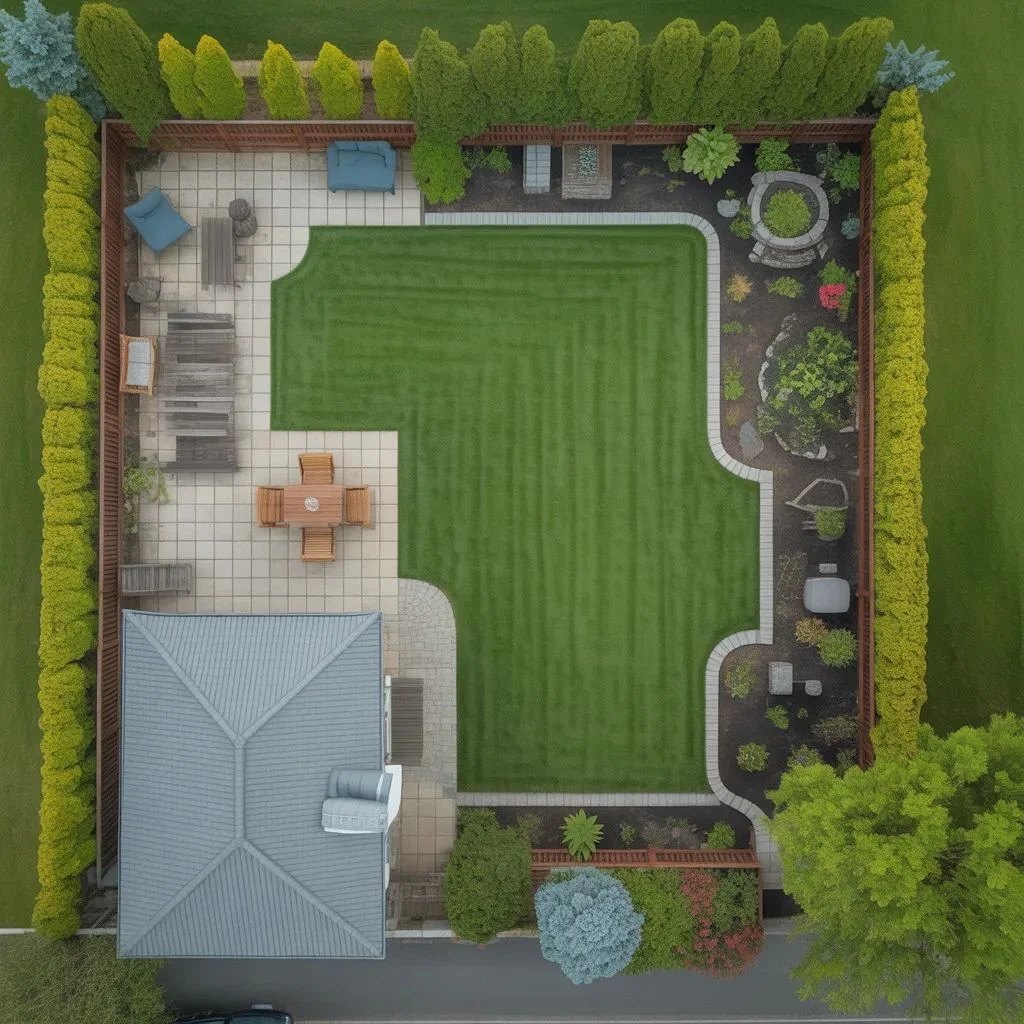
Before diving into specific rectangle backyard layout ideas, it’s worth understanding what makes this shape so workable. Symmetry is your friend here. Equal widths on both sides mean you can mirror plantings, hardscaping, or furniture arrangements without complex geometry. Straight edges allow clean pathways, tidy borders, and fence-line plantings that look intentional rather than accidental.
Rectangle plots also respond beautifully to zoning — the practice of dividing your outdoor space into distinct areas based on function. A rectangle naturally lends itself to being divided lengthwise or crosswise, giving you clear sections without much effort. Think of it as having a floor plan for your garden, and everything gets easier from there.
The key advantages of working with a rectangle:
- Easier to plan and zone than irregular shapes
- Fence and boundary lines are already defined
- Works with both formal and informal garden styles
- Straightforward to divide into thirds or quarters
- Maximises usable square footage with minimal waste
Zone It First: The Golden Rule of Rectangle Backyard Layouts
Every great rectangle backyard layout idea starts with one question: how do you actually use this space?
Zoning is the act of assigning purpose to each area of your yard before you plant a single shrub or place a single paver. It prevents the biggest mistake most homeowners make: treating the backyard as one undifferentiated open space and wondering why it never feels finished or functional.
Common Zones for a Rectangle Backyard
- Entertaining / dining zone: Patio, deck, or hardscaped area near the house
- Lawn / play zone: Open grass for kids, pets, or visual breathing room
- Garden zone: Raised beds, borders, or a kitchen garden
- Privacy zone: Screening plants, hedges, or a fence-side feature
- Utility zone: Shed, bins, compost — hidden but accessible
You don’t need every zone — you need your zones. Start by listing three non-negotiable things you want your backyard to do, then build your layout around those functions.
The Classic Three-Zone Layout
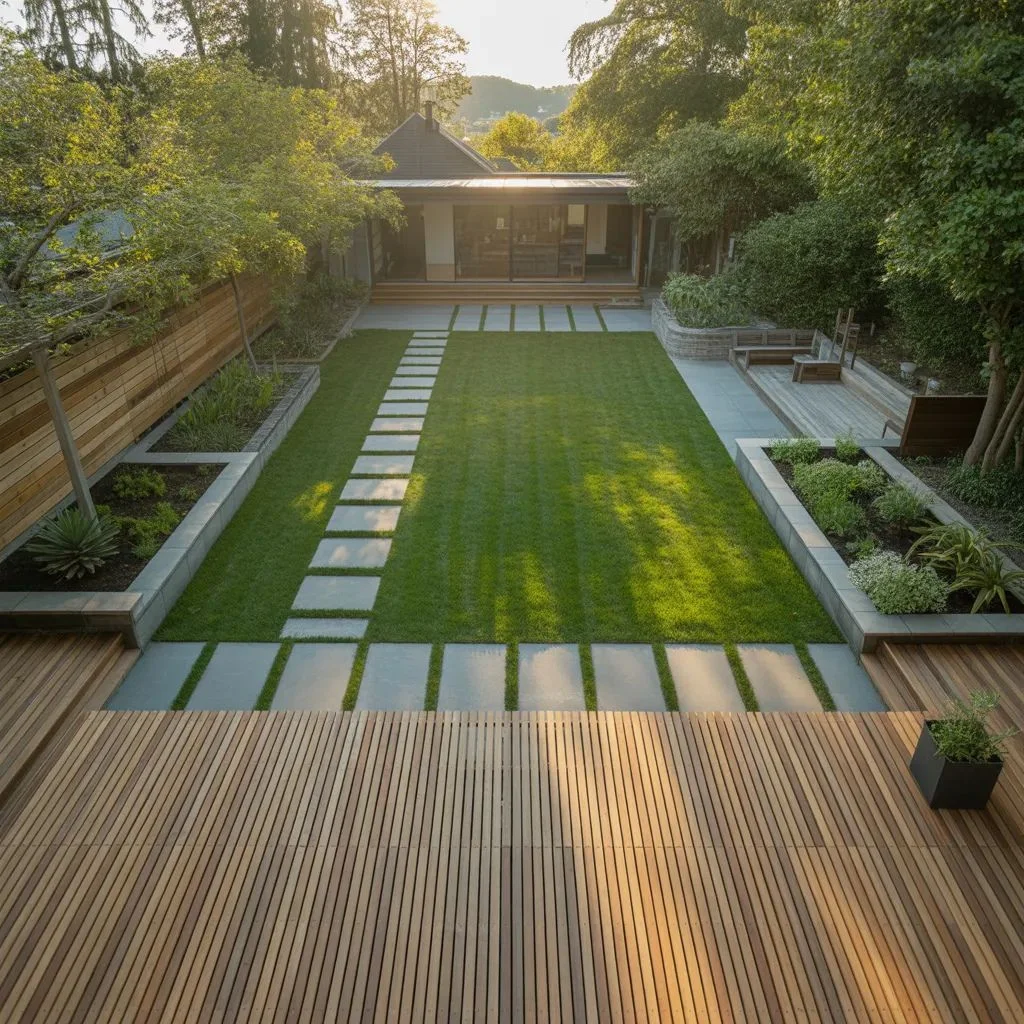
The most enduring of all rectangle backyard layout ideas is the three-zone approach. It divides the yard into thirds running away from the house — creating a natural progression from living space to leisure space to garden space.
Zone 1 (Nearest the House): The Living Terrace
This is your outdoor room — a paved or decked area that extends your interior living space. Place your dining table, lounge chairs, a fire pit, or a built-in BBQ here. Keep it close to the back door for ease of movement. Pergolas, shade sails, or retractable awnings make this zone usable even on overcast days.
Zone 2 (Middle): The Open Lawn
The middle third is typically lawn — and that open space is doing important visual work. It creates breathing room between the structured zones on either side. For families, this is where kids play. For design-minded homeowners, it’s where a beautifully maintained lawn becomes the centrepiece of the rectangle backyard layout idea.
Zone 3 (Far End): The Garden Destination
The far end of your rectangle gives you privacy from the house — use it. A kitchen garden with raised beds, a wildflower meadow strip, a reading nook framed by tall grasses, or a small water feature all work beautifully here. This zone rewards those who venture to the end of the yard.
The Diagonal Layout: Break the Grid
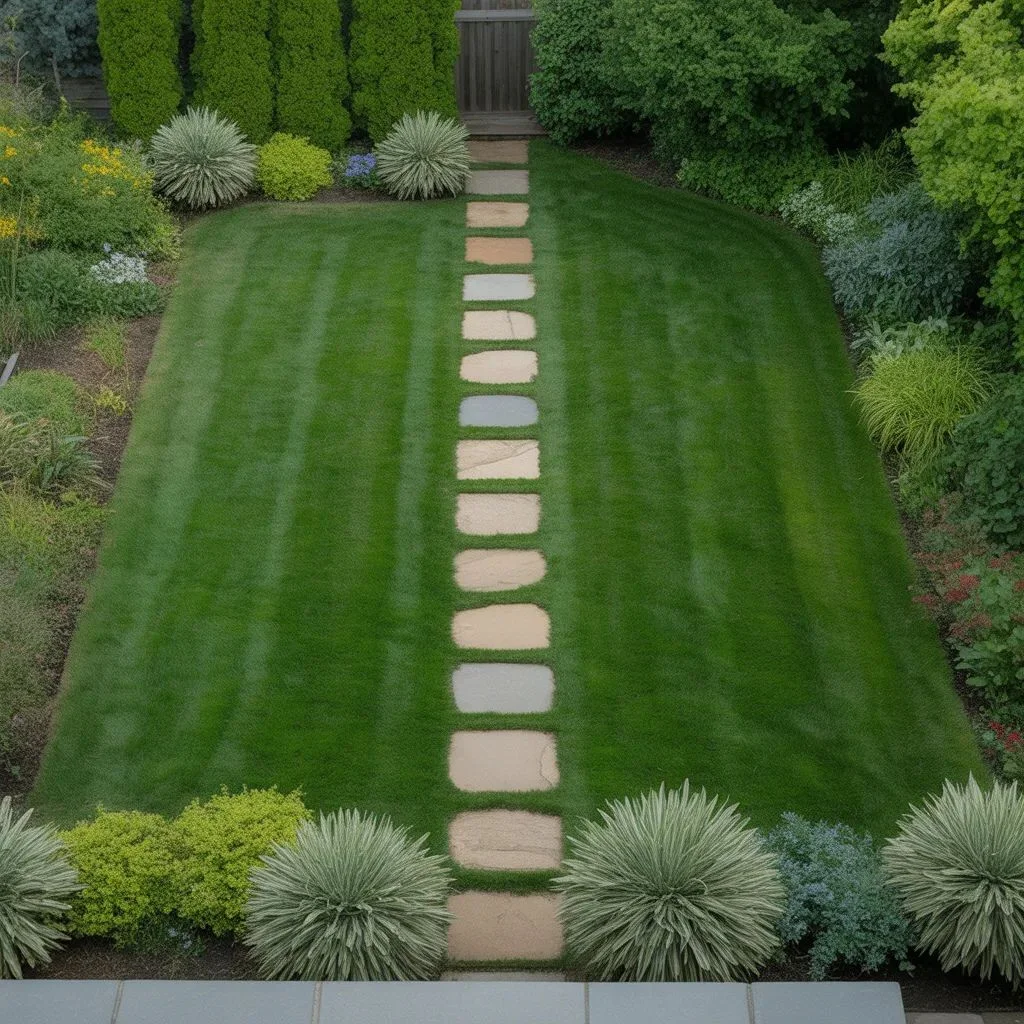
If the three-zone layout feels too formal, going diagonal is one of the most visually exciting rectangle backyard layout ideas available. By placing pathways, planting beds, or seating areas on a 45-degree angle relative to the fence lines, you instantly make the space feel larger and more dynamic.
A diagonal pathway running from one back corner to the opposite front corner draws the eye across the widest dimension of the garden, creating the illusion of more space. Border plantings on either side of this diagonal path — ornamental grasses, lavender, or compact shrubs — reinforce the visual line.
This approach works especially well for rectangle backyards that feel narrow or boxy, as it naturally breaks up the predictability of straight fence lines and challenges the eye to see the space differently.
Pro tip: Keep diagonal pathways at least 90cm wide so they feel intentional rather than squeezed. Pair with a circular patio or a round focal point (like a fire bowl or sculpture) at the crossing point to anchor the layout.
The Narrow Rectangle Backyard Solution
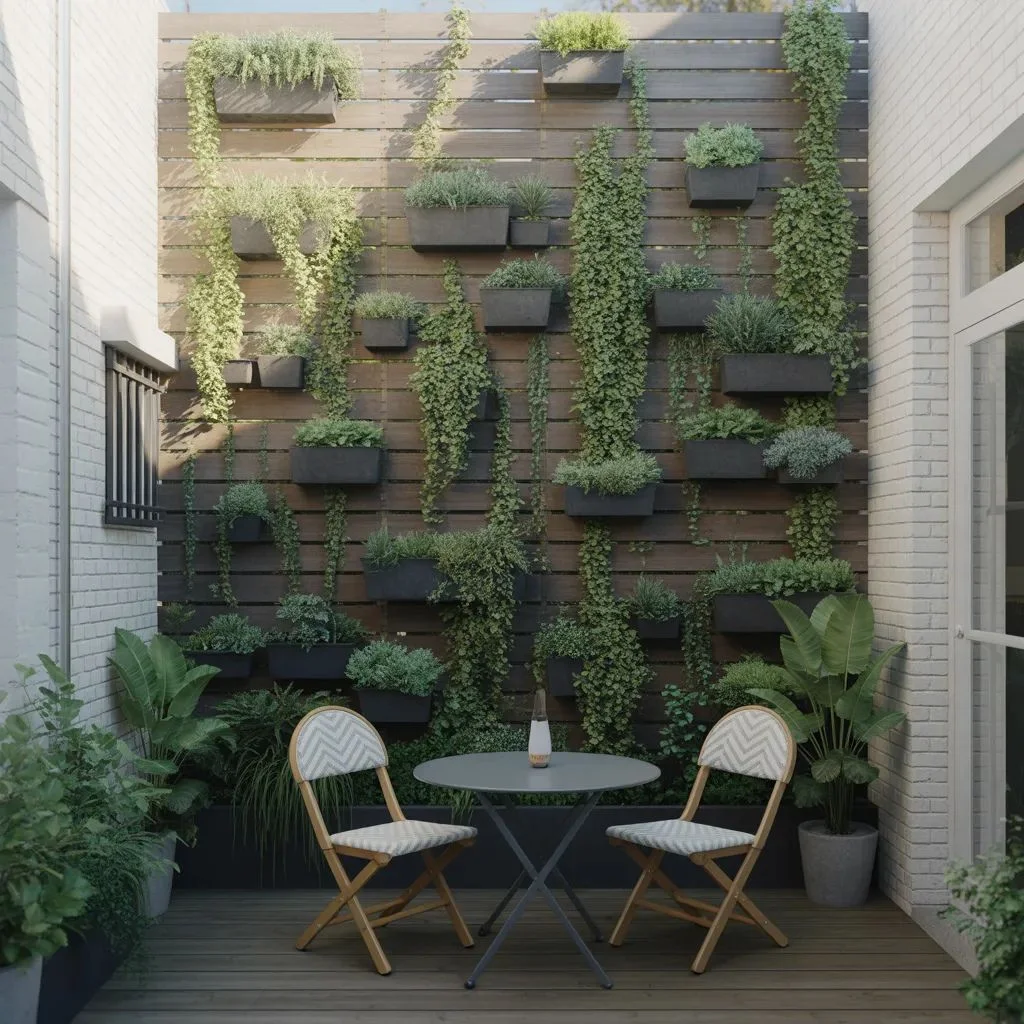
A narrow rectangle backyard presents its own set of challenges — but also unique opportunities. The trick is to stop fighting the shape and start using it. Think of a narrow yard the way you’d think of a hallway: you wouldn’t block it with oversized furniture, and you wouldn’t leave it completely empty. You’d use it purposefully.
Vertical Gardening
When ground space is limited, go up. Wall-mounted planters, trellises with climbing roses or jasmine, and living green walls transform boundary fences into lush, living features. This is one of the most effective rectangle backyard layout ideas for narrow plots — it adds depth and colour without consuming any floor space.
Sequential Rooms
Divide the length of a narrow yard into a series of “rooms” separated by archways, hedging, or changes in surface material. A small dining terrace closest to the house, a screen of bamboo in the middle, then a compact reading chair tucked into the far end. Each transition makes the yard feel larger than it is.
Slim Raised Beds
Raised beds running along the length of both fence lines use the edges of the yard productively while keeping the central path clear. Slim beds (30–45cm wide) are deep enough for herbs, salad greens, and compact perennials without narrowing the usable walking space.
The Family-First Layout
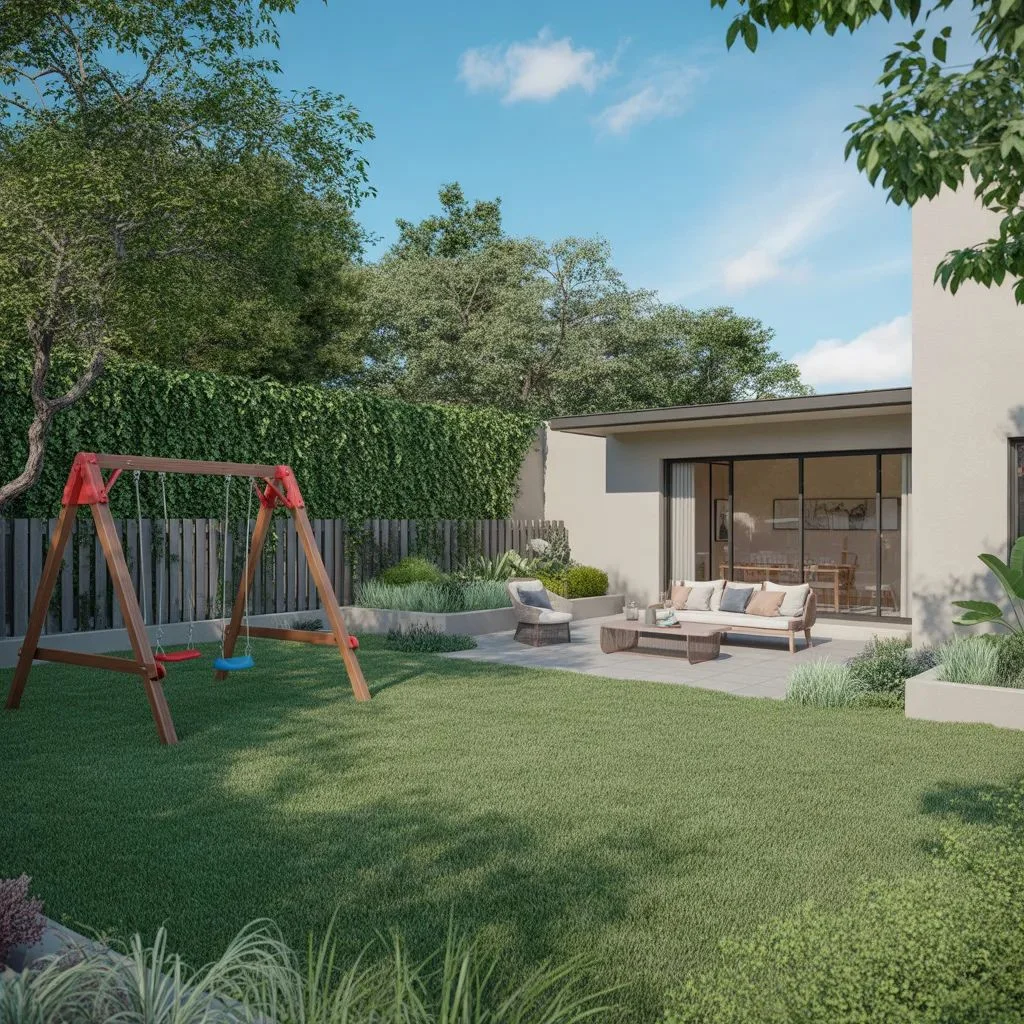
When children and pets are in the picture, the best rectangle backyard layout ideas prioritise both safety and sightlines. Parents need to see the play area from wherever they’re sitting, and children need enough open space to run, jump, and explore.
The family-first layout places the adult entertaining zone — usually a patio or deck — at the back of the house with a clear, unobstructed view of the central lawn. Play equipment (swing sets, trampolines, sandpits) is positioned in one corner of the far end, away from dining furniture and the main seating area.
Soft, rounded planting borders define the lawn’s edges without creating any hard barriers that could cause injuries. Choose tough, child-friendly plants — lavender, ornamental grasses, and low-growing ground covers are resilient enough to handle the occasional football rolling through them.
For longevity, plan the layout with the next five years in mind. A sandpit can become a raised planting bed. A swing set corner can eventually become an outdoor lounge as children grow. The best rectangle backyard layout idea is one that evolves with your family.
The Entertainer’s Rectangle Backyard Layout
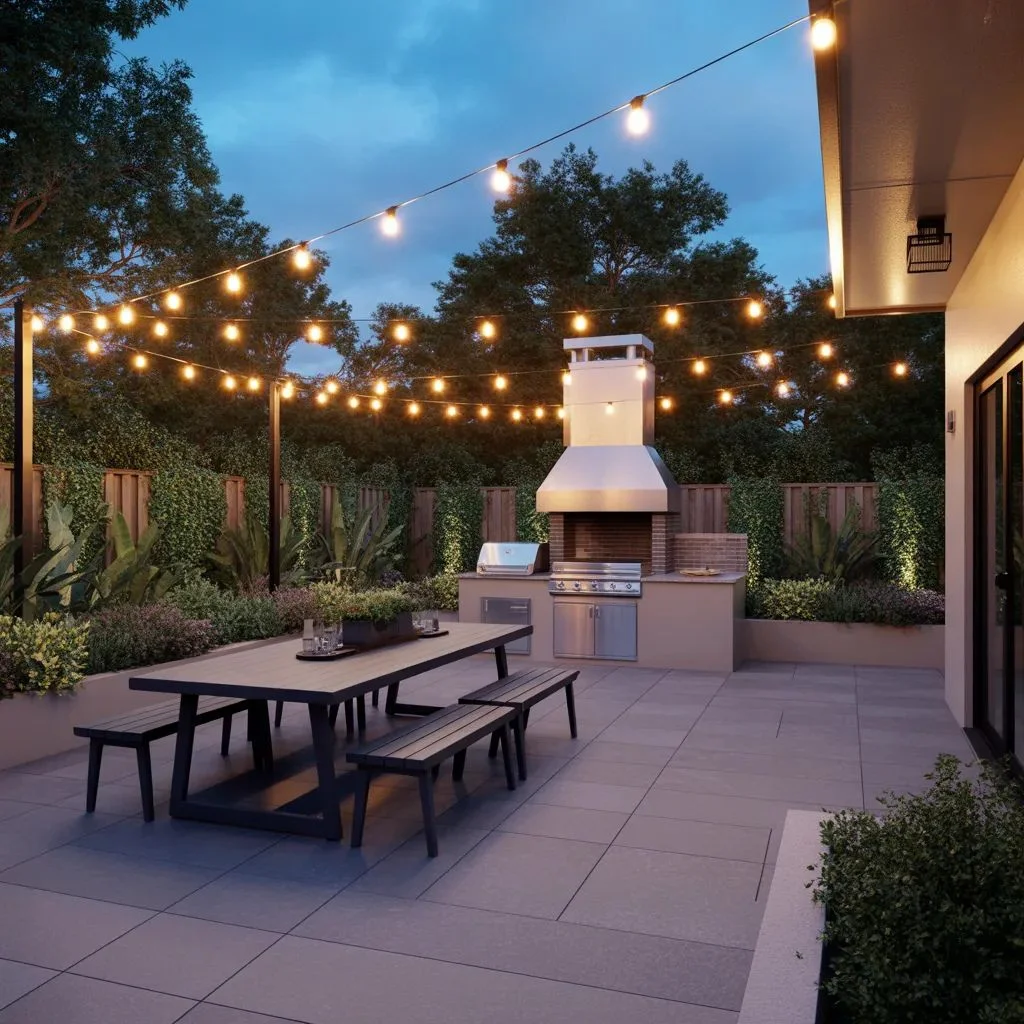
If hosting is what your backyard is really for, the rectangle lends itself perfectly to a large, connected entertaining footprint. The key is to maximise hardscaping near the house and soften the perimeter with planting so the yard feels lush without being high maintenance.
The Outdoor Kitchen Corner
Position a built-in BBQ or outdoor kitchen counter against the rear wall or one side fence. This frees up the central patio area for a large dining table while keeping the cooking station accessible. L-shaped counter layouts work beautifully in rectangle backyard corners — they use otherwise dead space and create a social hub.
Multiple Seating Areas
Great entertaining layouts don’t rely on a single seating cluster. A large dining area near the house, a lounge with a fire pit towards the far end, and a drinks station or bar trolley in between gives guests space to move and spread out — turning a rectangle backyard layout idea into a proper outdoor event space.
Lighting as a Design Layer
String lights overhead, LED spotlights aimed at architectural plants, and lanterns along pathway edges extend usability well into the evening. In an entertainer’s rectangle backyard layout, lighting is not an afterthought — it’s the design layer that makes the entire space feel magical after dark.
The Garden-Lover’s Layout
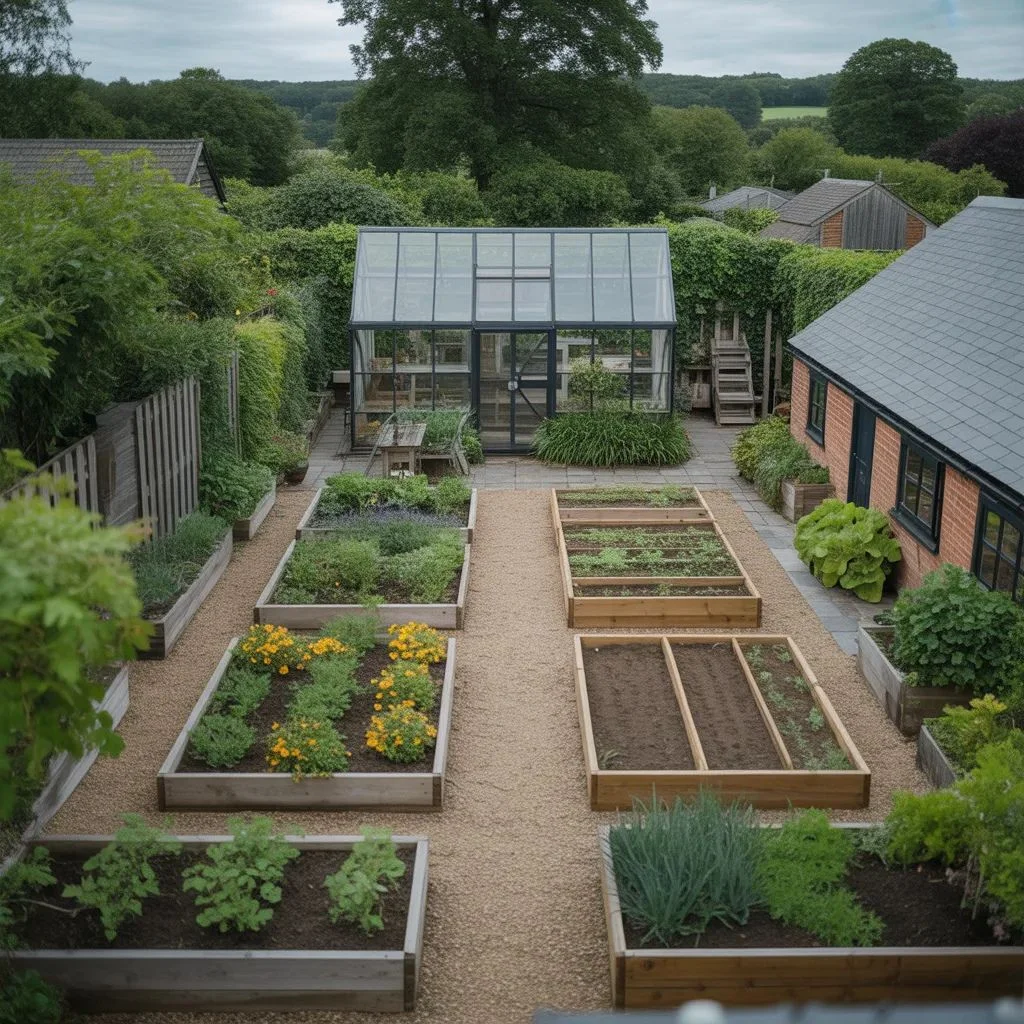
For those who measure backyard success in blooms and harvests rather than square metres of paving, the garden-lover’s rectangle layout puts plants at the centre of every decision. This doesn’t mean overcrowding — it means designing a layout where garden beds are generous, pathways are purposeful, and every part of the rectangle is growing something worth looking at.
A central gravel or bark pathway running the full length of the yard creates structure and allows access to both sides of the planting. Deep borders on either side — ideally 1.2m or wider — give you room for layered planting: tall grasses or shrubs at the back, medium perennials in the middle, and low ground covers or annuals along the front edge.
At the far end, a compact greenhouse, a cold frame, or a dedicated raised bed kitchen garden rounds out the layout. This area becomes the working heart of the garden — where seedlings are started, tomatoes ripen, and herbs are harvested. It’s the most rewarding rectangle backyard layout idea for anyone who loves growing their own food.
Small Rectangle Backyard Ideas That Live Large
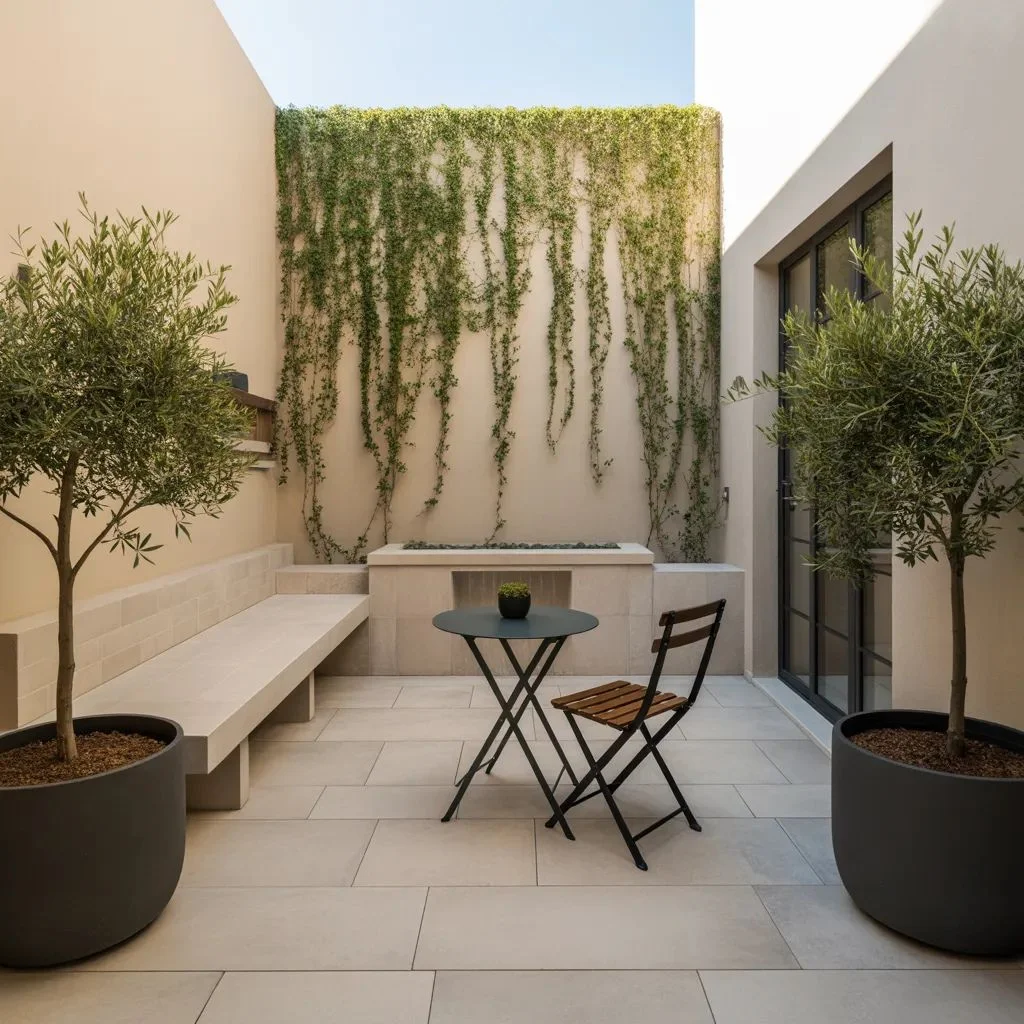
Small doesn’t have to mean limited. Some of the most striking rectangle backyard layout ideas come from compact plots where every decision has been deliberate and precise. The goal with a small rectangle is to create the feeling of space through clever visual tricks and smart material choices.
Large-format paving tiles (60x60cm or bigger) make a small yard feel more expansive than small, busy patterns. A single clean surface material, rather than a mix, reduces visual clutter. Built-in seating along one wall eliminates the need for freestanding furniture that eats into floor space.
Mirrors mounted on fence panels (weather-rated and safely installed) reflect greenery and light, creating the illusion of depth. A single statement water feature — a slim wall-mounted fountain or a narrow rill — adds atmosphere without consuming significant ground area.
Container gardening is your best ally in a small rectangle backyard. Tall, slim pots with lollipop-shaped olive trees or standard bay trees add height and structure without wide planting beds. Clustered in odd numbers — three or five — they create an intentional, curated feel.
Finishing Touches That Pull It All Together
The best rectangle backyard layout ideas are never really finished — they’re layered. Once your zones are established, the finishing touches are what take a functional layout and make it a genuinely beautiful space to be in.
Edging and Borders
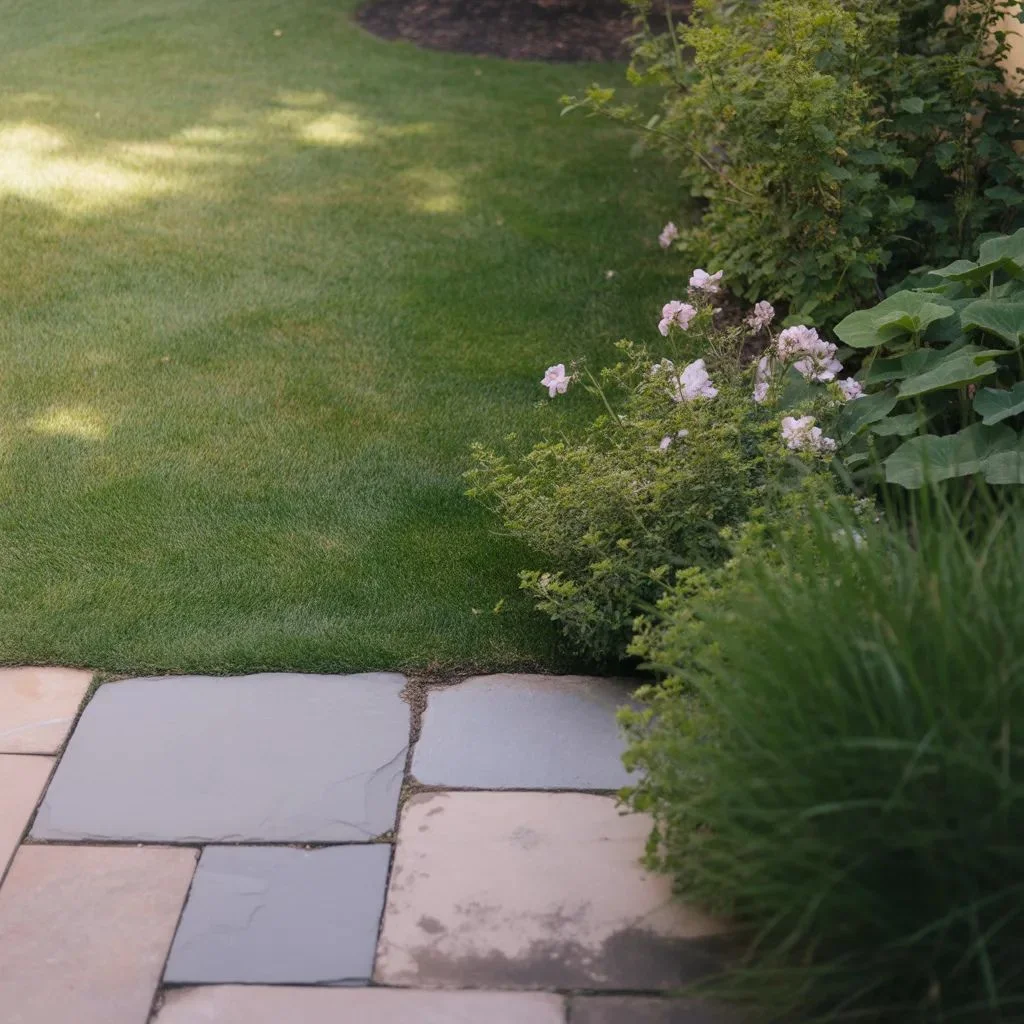
Clean edging between lawn and planting beds is one of the highest-impact, lowest-cost improvements you can make. Steel edging, timber boards, or natural stone borders define zones crisply and prevent grass creeping into your beds. A tidy edge signals intention — it tells visitors that this garden has been designed, not just grown.
Focal Points at the Far End
Every rectangle backyard layout benefit from a focal point at the far end — something that draws the eye down the length of the garden. A sculptural plant (like a pleached hornbeam or a cloud-pruned box hedge), a water feature, a colourful painted fence panel, or a simple garden seat all serve this purpose. The focal point anchors the layout and gives the space narrative.
Layer Your Planting Heights
Flat planting — everything at the same height — makes a rectangle backyard feel monotonous. Layer your planting with tall architectural specimens at the back (grasses, bamboo screens, slim fastigiate trees), medium shrubs and perennials in the middle, and low ground covers or creeping plants at the front. This creates depth and keeps the eye moving through the space.
Your Rectangle, Your Rules
A rectangle backyard isn’t a limitation — it’s a foundation. The layouts in this guide prove that with intentional zoning, smart material choices, and a few considered focal points, any rectangular plot can become an outdoor space worth spending real time in.
The most effective rectangle backyard layout ideas always begin the same way: with how you live, not with trends or Instagram grids. Whether you’re working with a narrow strip or a generous long plot, a blank lawn or a garden already in progress, the right layout is the one that makes your outdoor space feel like yours.
Start with one zone. Define it clearly. Then build outward from there. You’ll be surprised how quickly a forgotten stretch of grass becomes the best room in the house.
Highly Recommended: Plant It Once, Love It Forever: Low Maintenance Flower Bed Ideas for Busy Homeowners.