The bedroom door is the most touched thing in the room — and the most ignored.You do not need a new bedroom to change how it feels.
A bedroom door sets the tone before you even see the bed. It is the first surface your hand meets in the morning and the last one you close at night.
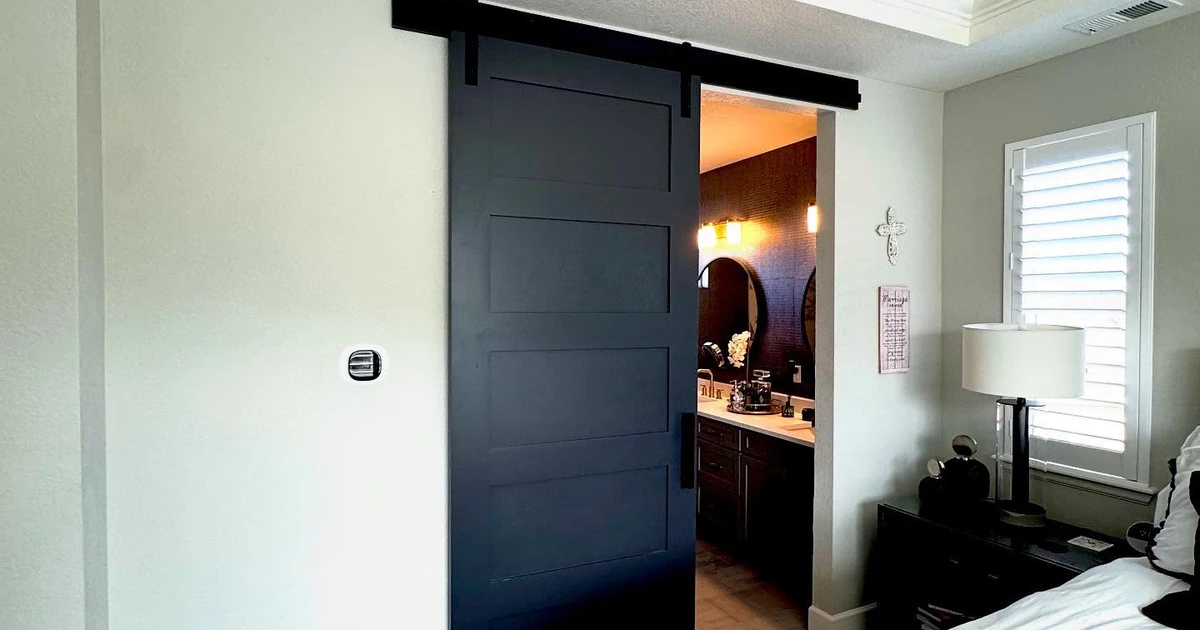
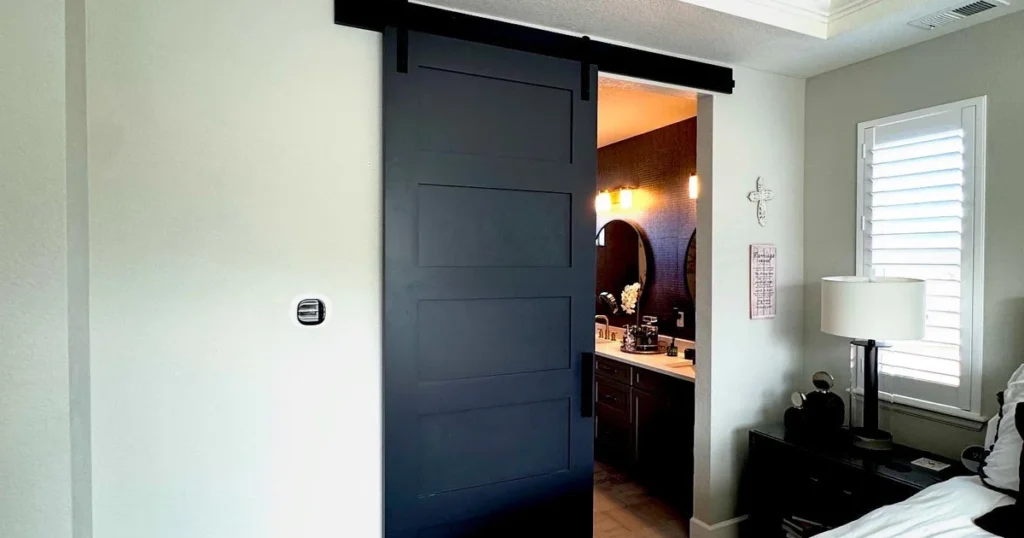
Most bedrooms get a plain white door by default, and nobody thinks about it again. Yet the door takes up a full wall of visual space, so changing it changes the whole room. The dark grey sliding door in the photo above proves the point: one bold door, and the whole bedroom reads differently.
Sliding, paneled, painted, arched, mirrored — the choice is wider than most people realise. Each type solves a different problem, from a tight floor plan to a dark corner, and each one changes the room in its own way.
These 20 ideas show the bedroom door as a real design decision, not an afterthought. Find the one your room has been waiting for.
Sliding Barn Doors
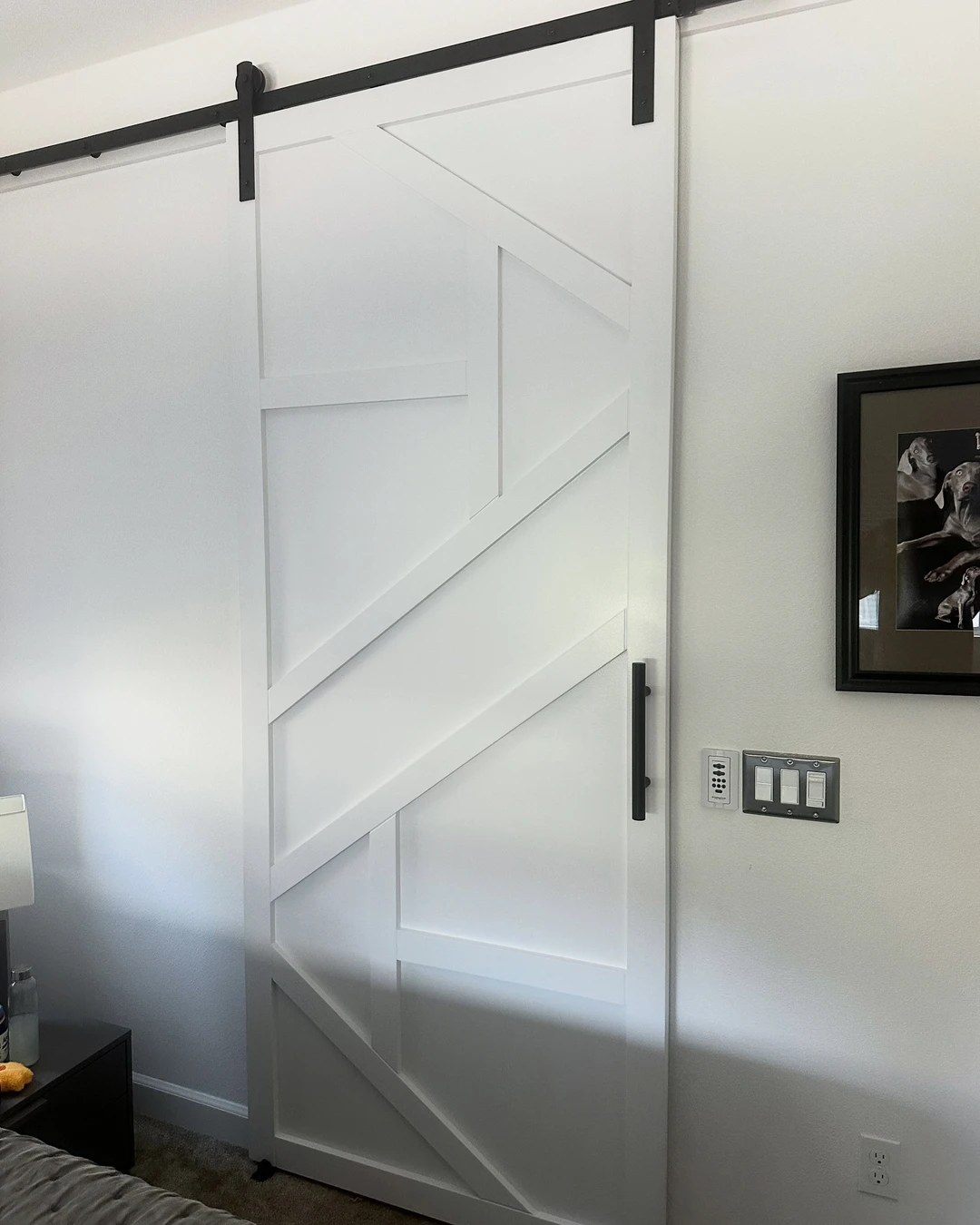
A sliding barn door changes a bedroom in two ways at once. It saves the floor space a swinging door would need, and the black track above it becomes a design feature in its own right. This white door uses a geometric diagonal-panel design, so the door itself is the pattern on the wall.
The black vertical handle and the black track frame the white panels cleanly, and the corner of the bed at the lower left keeps the shot firmly in the bedroom. A barn door suits a room where the door stays open most of the day, because the open door becomes part of the wall.
The practical point: leave enough clear wall beside the opening for the door to slide fully, and fix the track into studs or solid blocking so the weight never pulls it loose.
Classic Paneled Doors
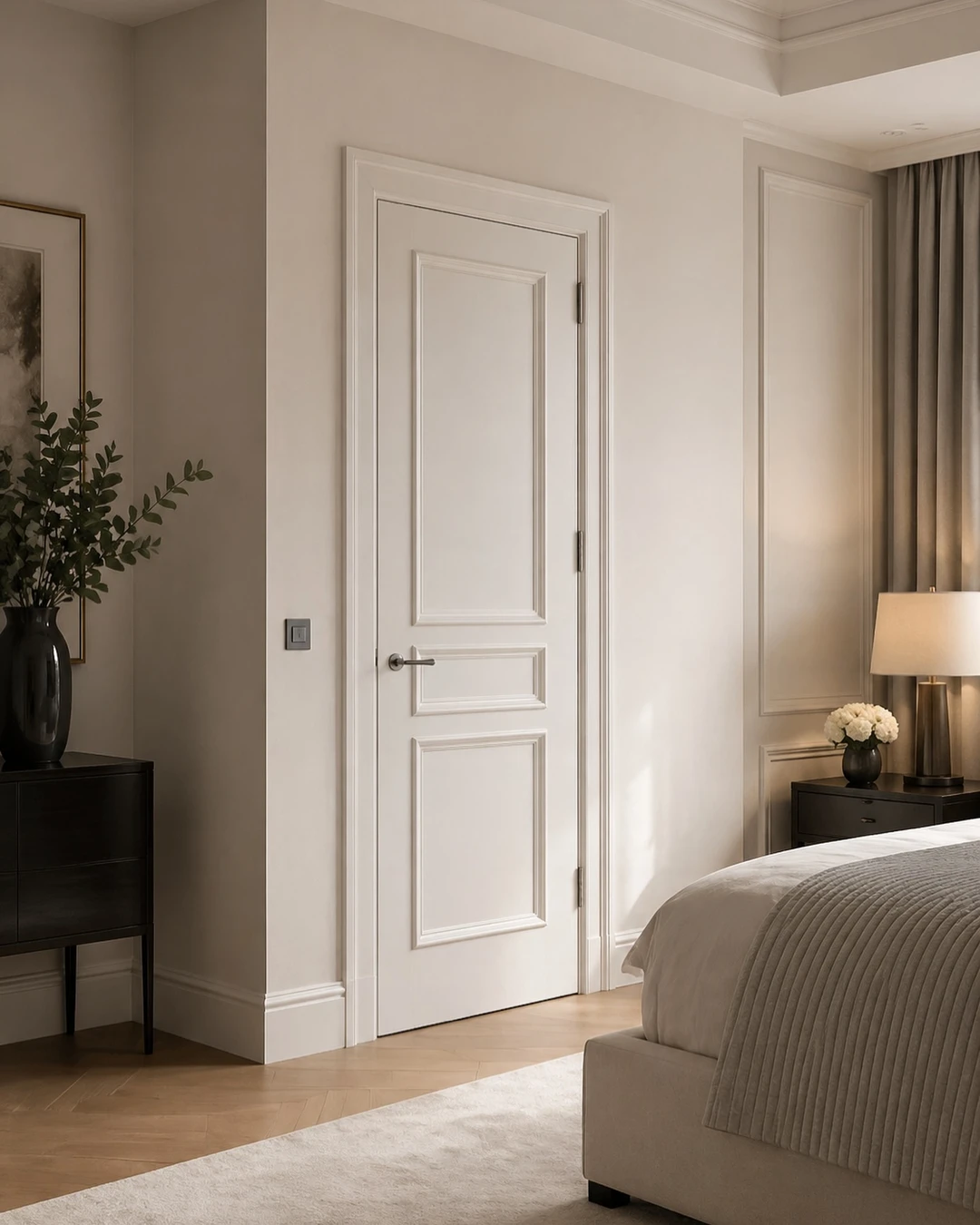
A classic paneled door is the quiet choice, and that is its strength. Three recessed panels give the door structure without any decoration, and the silver lever handle is the only metal in the frame. Set into a paneled wall, the door and the wall read as one calm surface.
The rest of the room stays neutral: a bed with pale bedding and a ribbed throw, a dark nightstand with a lit lamp, and a herringbone wood floor. Nothing competes with the door, and nothing needs to, because the paneling carries the room.
The practical point: match the door panels to the wall paneling, or keep the wall plain so the door stands alone — a paneled door against a busy wall loses its quiet effect.
Bold Painted Door
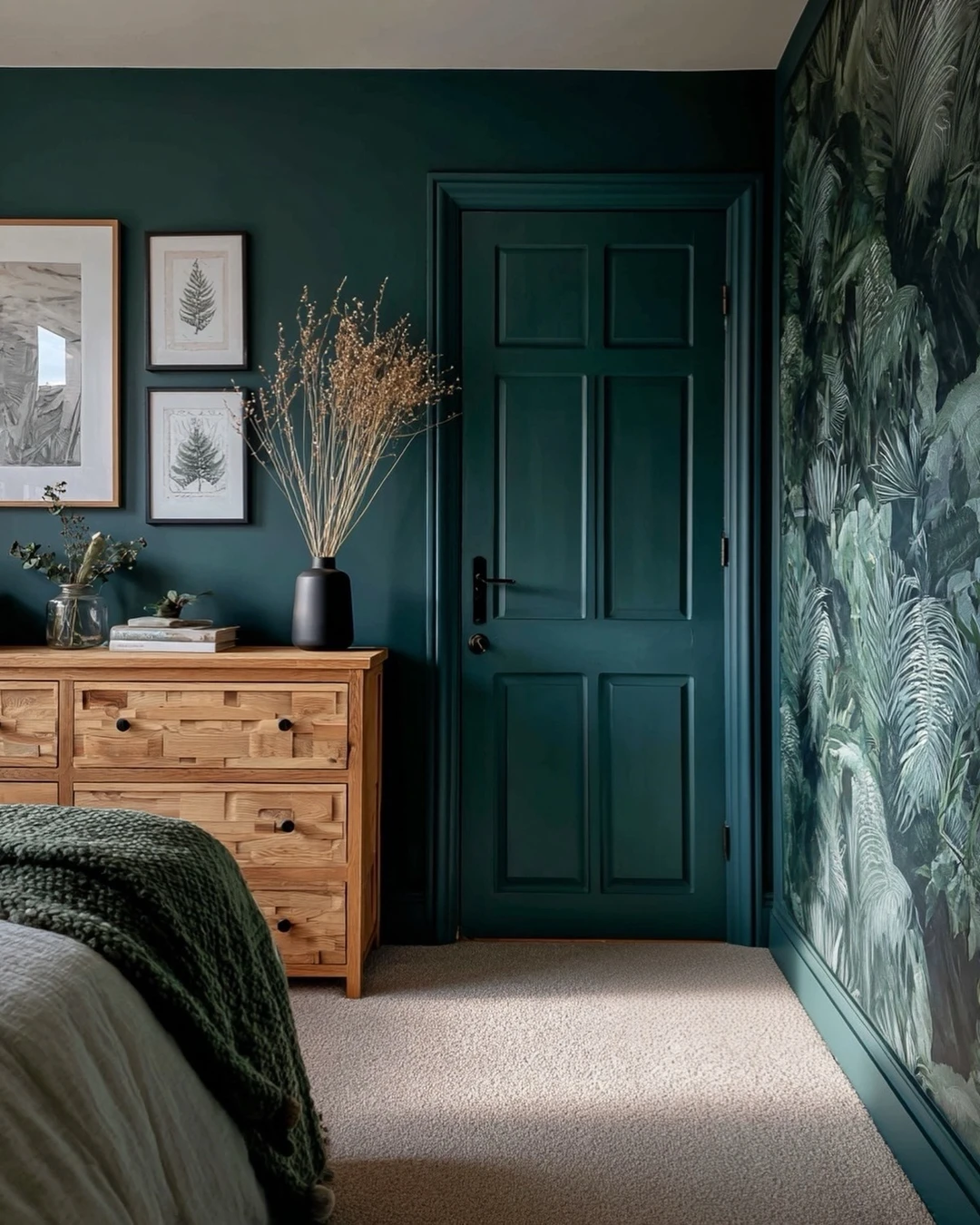
Painting a bedroom door a bold colour is the fastest way to give the room a focal point. This six-panel door is painted deep teal-green, the same colour as the wall behind it, so the door and the wall become one bold block. A light wood dresser with geometric fronts and dried botanicals in a black vase keep the green from feeling heavy.
The tropical-leaf wallpaper on the right wall and the green knit throw on the bed pick up the same colour family, so the bold door feels planned rather than random. If you are choosing a shade, our guide on The Best Interior Door Paint Colors for a Beautiful and Cohesive Home covers the colours that hold up in real bedrooms.
The practical point: paint the door and its frame the same colour, and use a durable satin or semi-gloss finish that survives daily handling and wipes clean.
French Doors with Glass
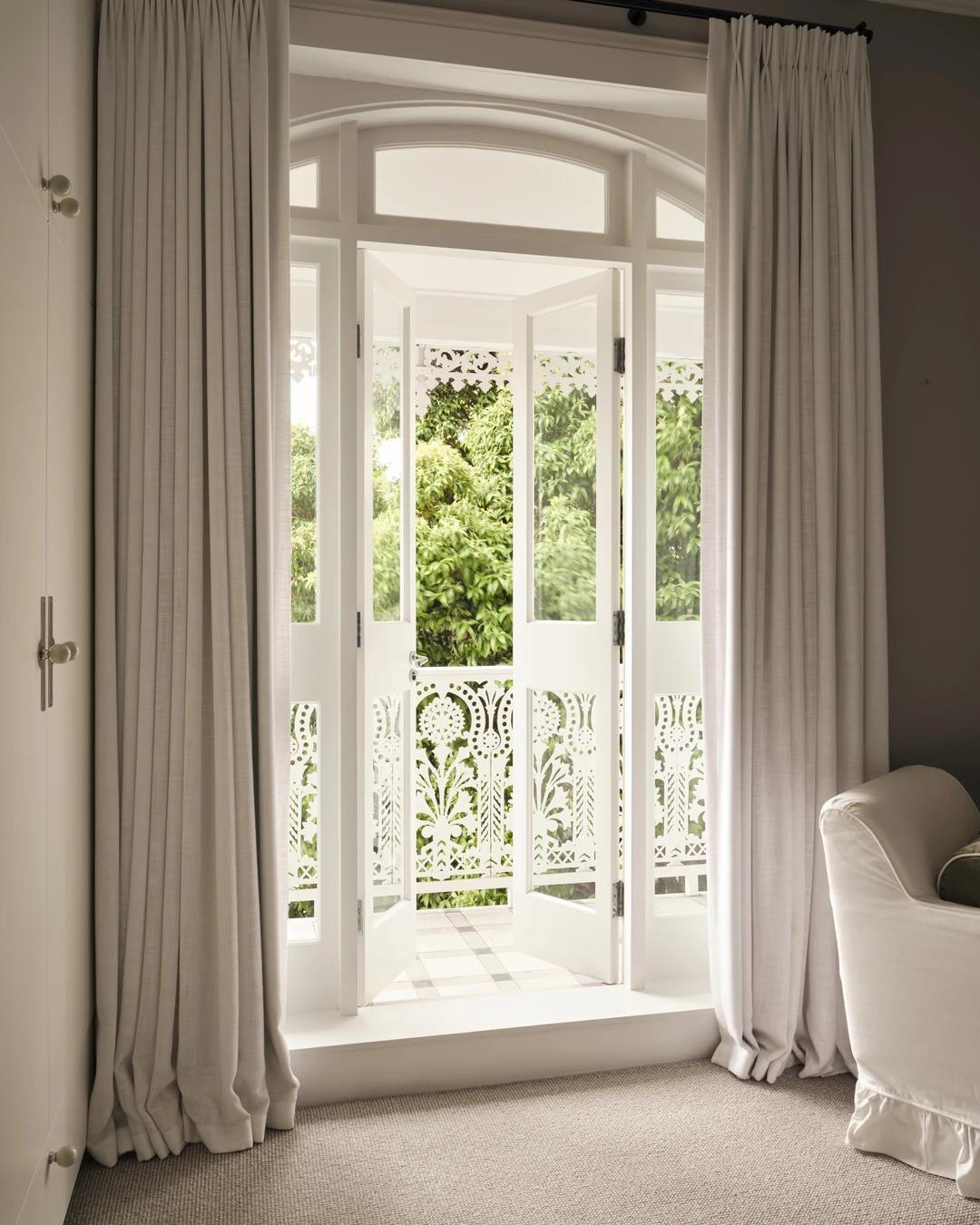
French doors bring the outside into the bedroom. Their glass panels borrow light and a view, and when they open onto a small balcony, the bedroom feels twice as big. Floor-to-ceiling linen curtains soften the glass, and the arched transom above adds a gentle curve to an otherwise straight wall.
The bed corner and armchair in the frame keep the room grounded, while the greenery outside does the decorating. Glass doors work best where the view is worth framing, because the door becomes a window as much as an entrance.
The practical point: if privacy matters, add sheer linen panels or frosted film rather than heavy curtains that hide the glass you chose the doors for.
Pocket Doors That Disappear
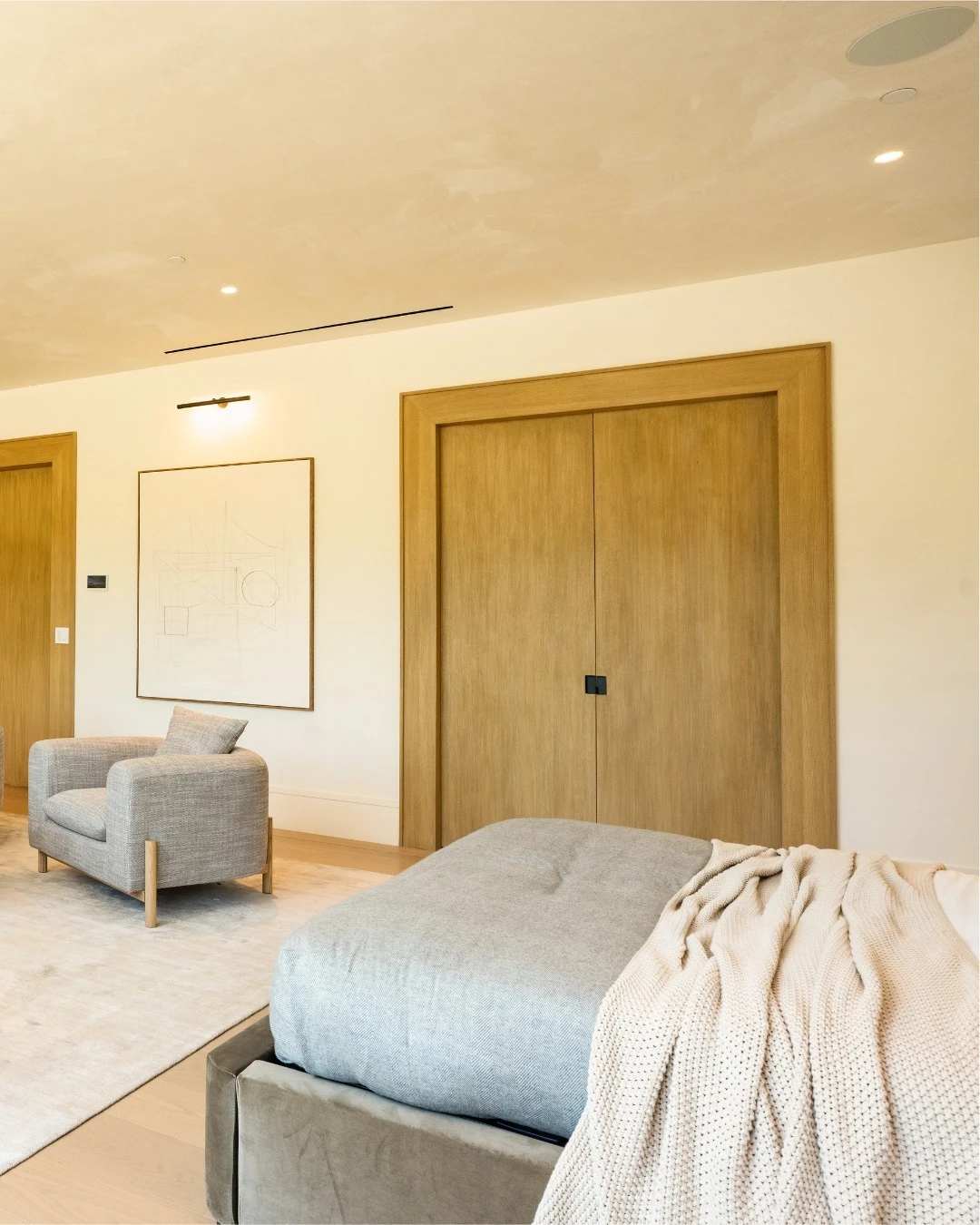
A pocket door slides into the wall instead of swinging into the room, so it takes up no floor space at all. These tall, flush wood doors fill the centre wall of a modern bedroom, and when they are closed they read as wood paneling rather than doors. The black hardware is the only clue that they move.
The foot of the bed with grey bedding sits in the foreground, and a light grey armchair and abstract line art keep the room calm. A pocket door suits a bedroom where every square foot counts, or where a swinging door would hit the bed.
The practical point: pocket doors suit new builds and big renovations best, because the wall has to be opened to fit the pocket — plan the hardware before the wall goes up.
Louvred Doors
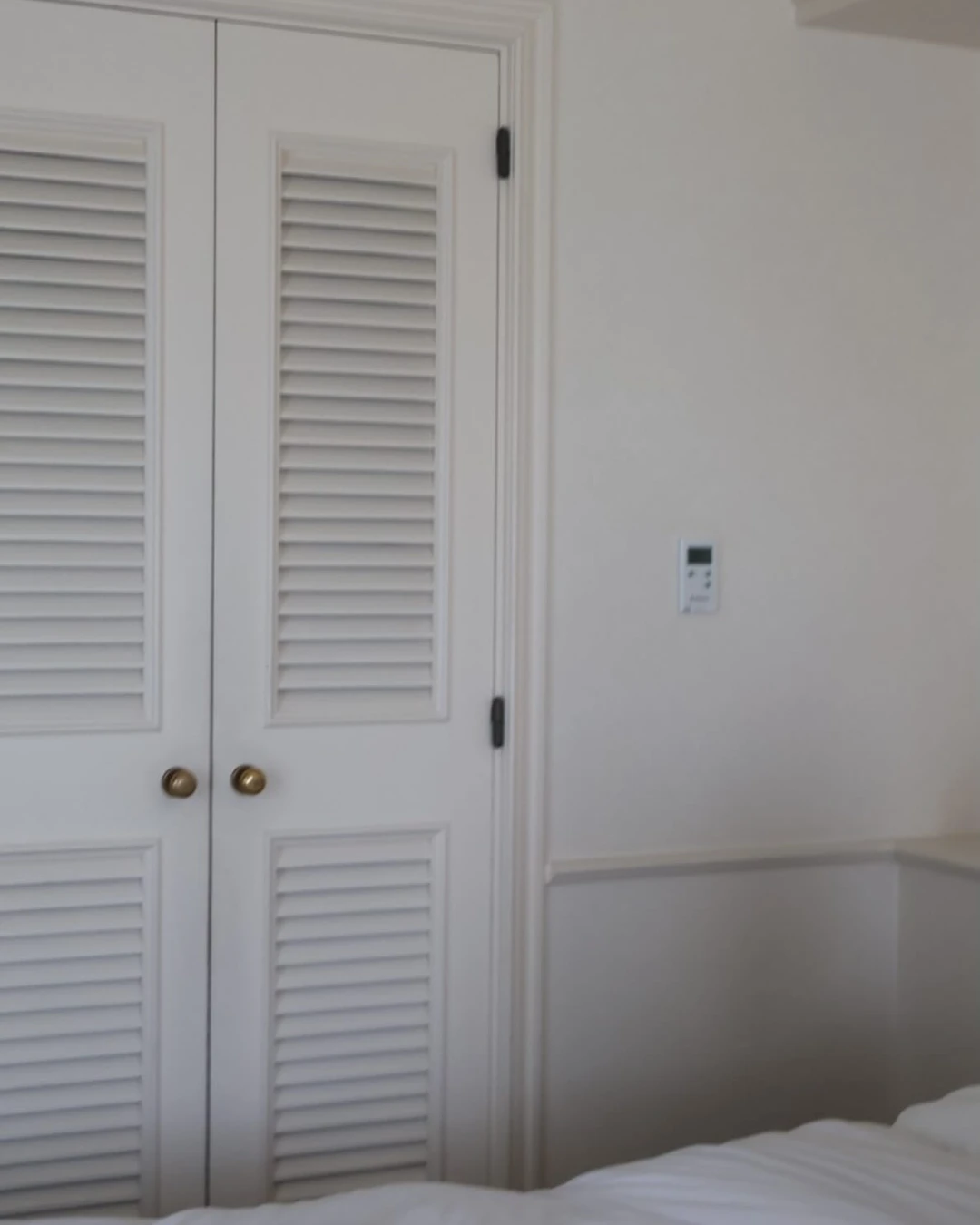
Louvred doors are made for closets, and they earn their place there. The horizontal slats let air move through the wardrobe, which keeps clothes fresh, and the slats themselves add a quiet rhythm to a plain white wall. Brass knobs and black hinges give the pair a finished, classic look.
The edge of the bed with white sheets at the bottom of the frame shows that these doors belong to the bedroom, not a hallway. Their clean white finish keeps the room bright, and the slatted texture stops the wall from feeling flat.
The practical point: louvred doors are for closets and storage, not the bedroom entry — the slats offer no privacy and no sound blocking, so keep them on the wardrobe.
Arched Doors
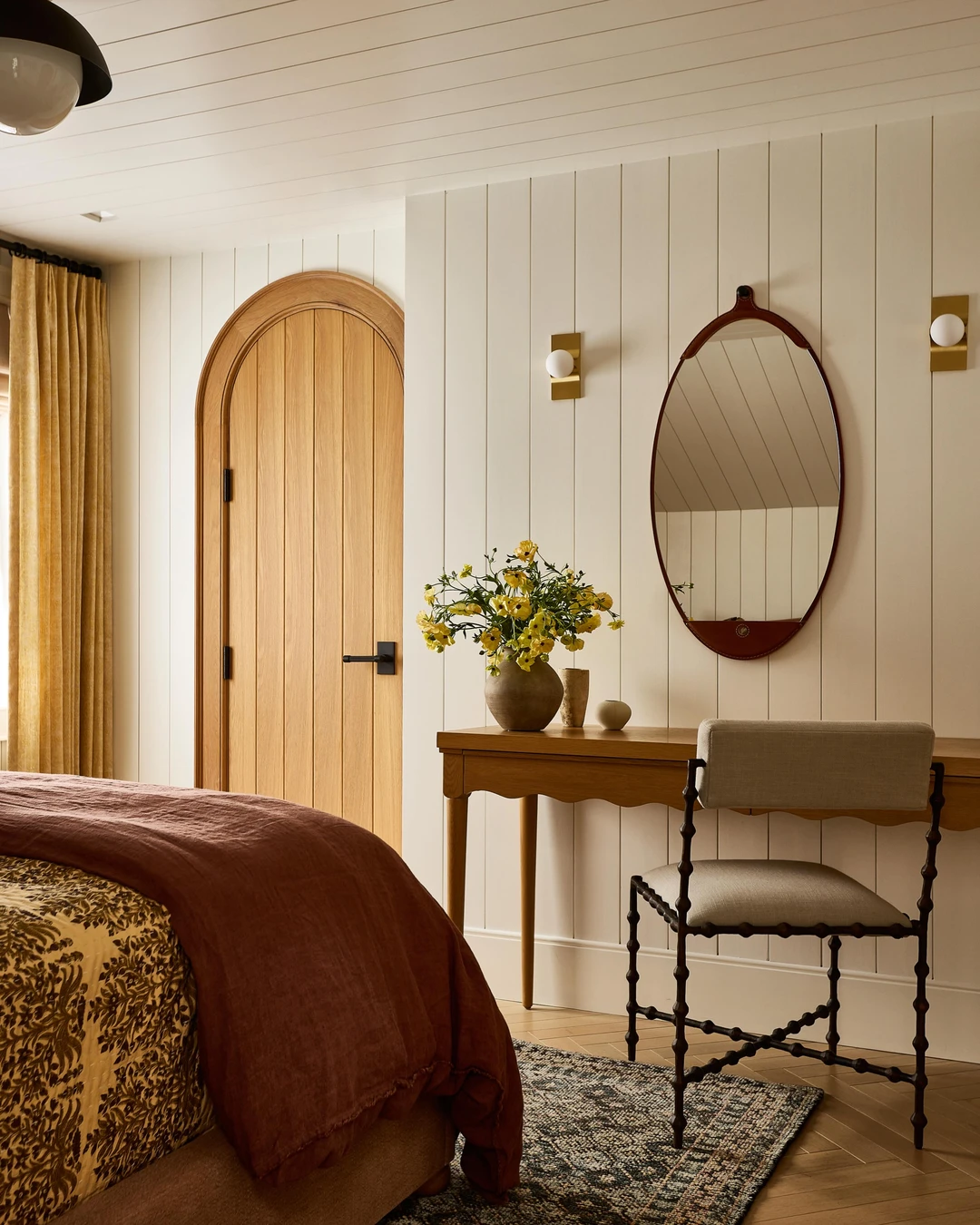
An arched door softens a boxy bedroom in a way no square door can. The curve at the top breaks the straight lines of the walls, and the light wood keeps the shape calm rather than grand. A black handle gives the pale door a clear focal point.
The white vertical shiplap behind it, the bed with a rust throw in the foreground, and a vanity with an oval mirror all echo the same gentle curve. The arch is the design, and everything else in the room stays quiet so it can be seen.
The practical point: an arched door needs an arched frame, so plan it early — cutting an arch into a square opening later is a bigger job than it looks.
Black Doors for Contrast
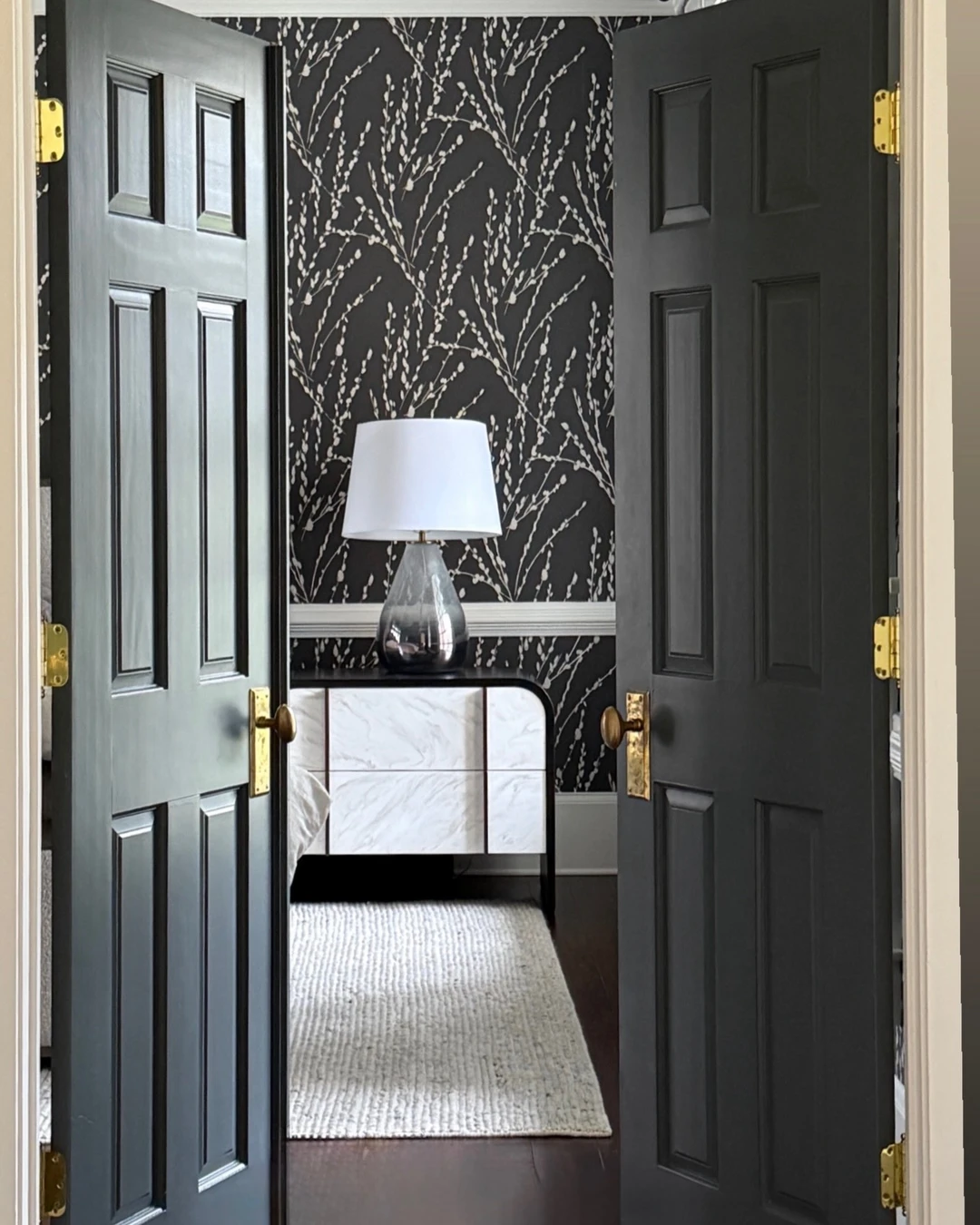
A dark door is the fastest way to add contrast to a pale bedroom. These two open doors read as a deep charcoal, close enough to black to frame the room, and their brass hinges and handles warm the dark panels. Beyond them, black-and-white botanical wallpaper, white wainscoting and dark hardwood complete the picture.
The dark doors make the pale walls look brighter, which is the trick: a black door only works when the room around it stays light. Open, the doors become a frame for the bedroom itself, so the contrast works from both sides.
The practical point: keep the walls, bedding and floor light when the door goes dark, or the bedroom will feel smaller once the sun goes down.
White Doors, Warm Walls
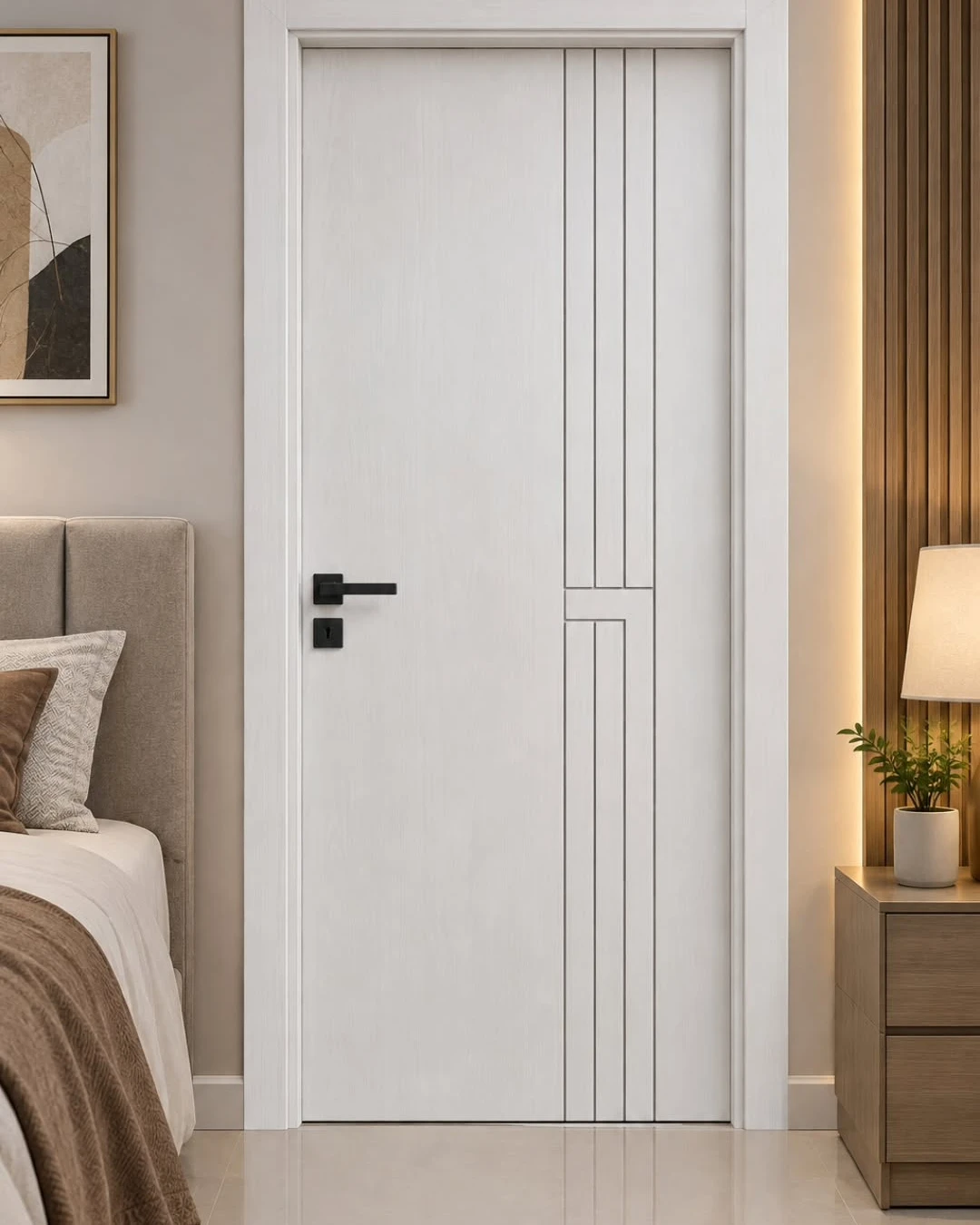
A white door against cream walls is the calmest combination a bedroom can have, but it only works when the warmth comes from somewhere else. Here it comes from the wood-slat accent wall and the beige upholstered headboard, which give the pale room its temperature. The black handle is the single dark note.
The bed with beige bedding and the nightstand with a lamp keep the palette soft, and the geometric panel design on the door adds just enough detail to stop the white from reading as blank. This is a bedroom that stays bright without ever feeling cold.
The practical point: when the walls and the door are both white, vary the texture — wood slats, soft bedding, a warm lamp — so the room does not read flat.
Wood Doors with Visible Grain
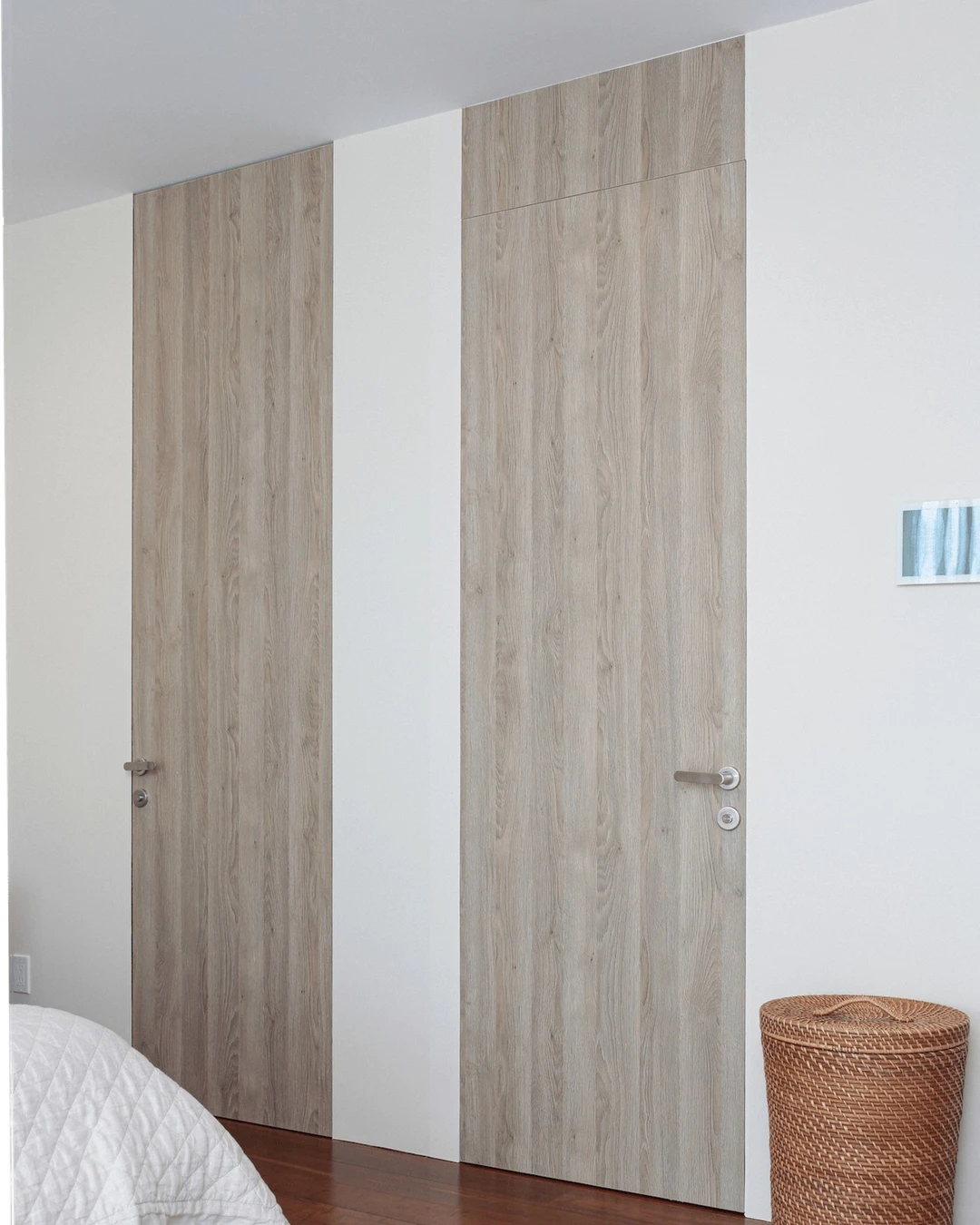
A wood door with visible grain needs no decoration at all — the grain is the decoration. These two tall, light wood doors show their grain clearly, one closed and one ajar, and the pale wood stands out against the dark hardwood floor and white walls. The corner of a bed with a white quilted cover keeps the room soft.
Grain works because it is natural variation, not a pattern someone applied. No two doors look the same, and that small difference is what makes a plain bedroom feel considered rather than assembled.
The practical point: match the door wood to either the floor or the furniture, not both at once, or the room turns into one flat wood surface.
Mirrored Doors
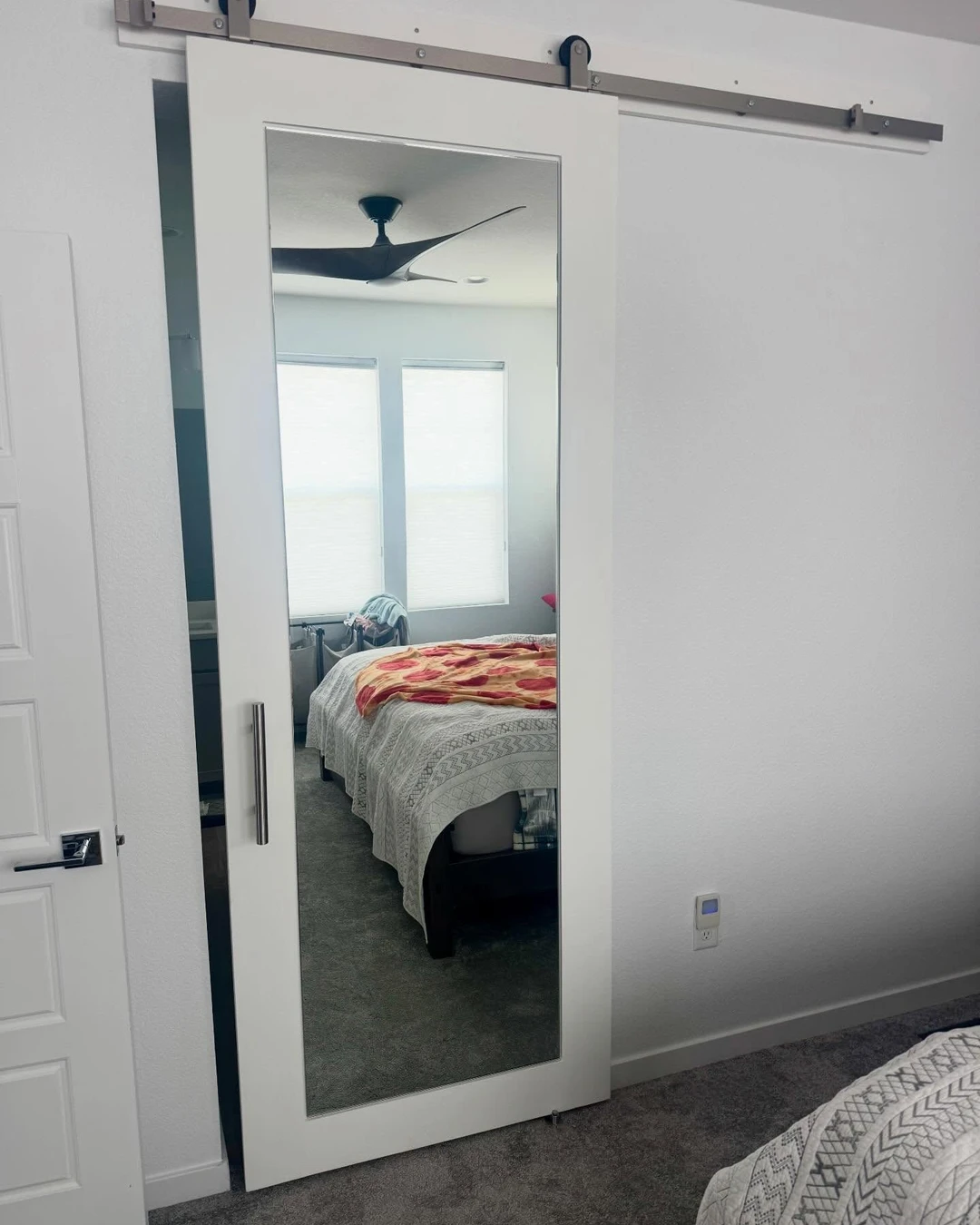
A mirrored door does two jobs at once: it closes the room and it doubles the light. This white sliding barn door carries a large mirror on a black metal track, and the mirror reflects the bedroom behind the camera — a bed with a patterned grey-and-white quilt, an orange-red throw, a dark ceiling fan and two bright windows.
The sliding format keeps the mirror practical, because a swinging mirrored door would need a wide clear arc. In a small or dark bedroom, the reflected window light alone can change how the room feels.
The practical point: place a mirrored door where it reflects a window, not the bed — the light doubles and the reflection stays tidy.
Double Doors
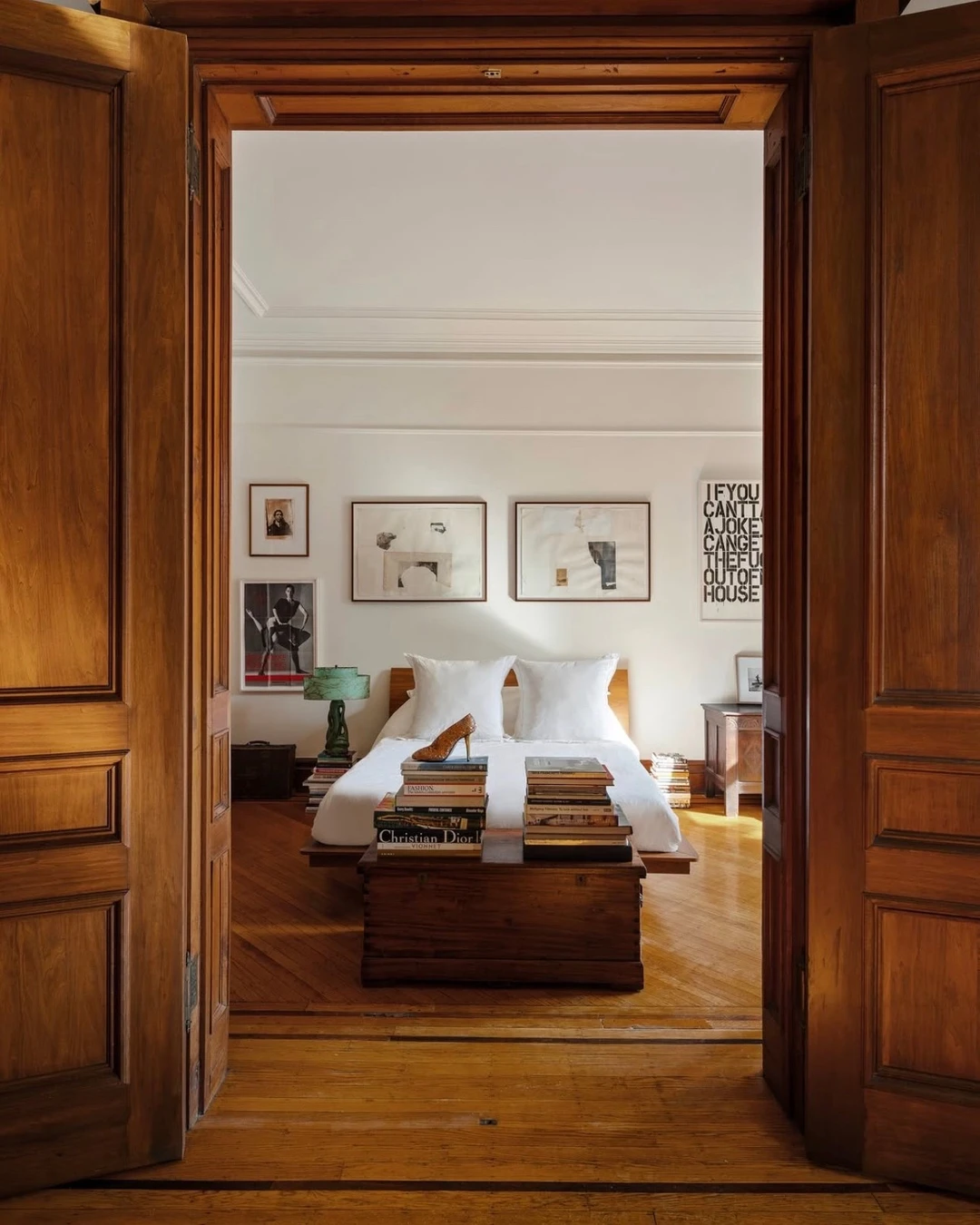
Double doors make a bedroom feel like a suite. This pair of open wooden doors frames the view into a bright bedroom — a low platform bed with white linens, a wooden chest at the foot topped with stacks of books, framed artwork on the wall and hardwood floors. The wide opening turns the doorway into a picture frame.
The warm wood of the doors matches the chest and the floor, so the whole room reads as one warm space. Double doors suit a bedroom where the doors stay open most of the time, because the open pair becomes part of the room’s design.
The practical point: double doors need clear floor space on both sides to open, so they suit larger bedrooms, or rooms where the doors are left open through the day.
Door with Frosted Glass
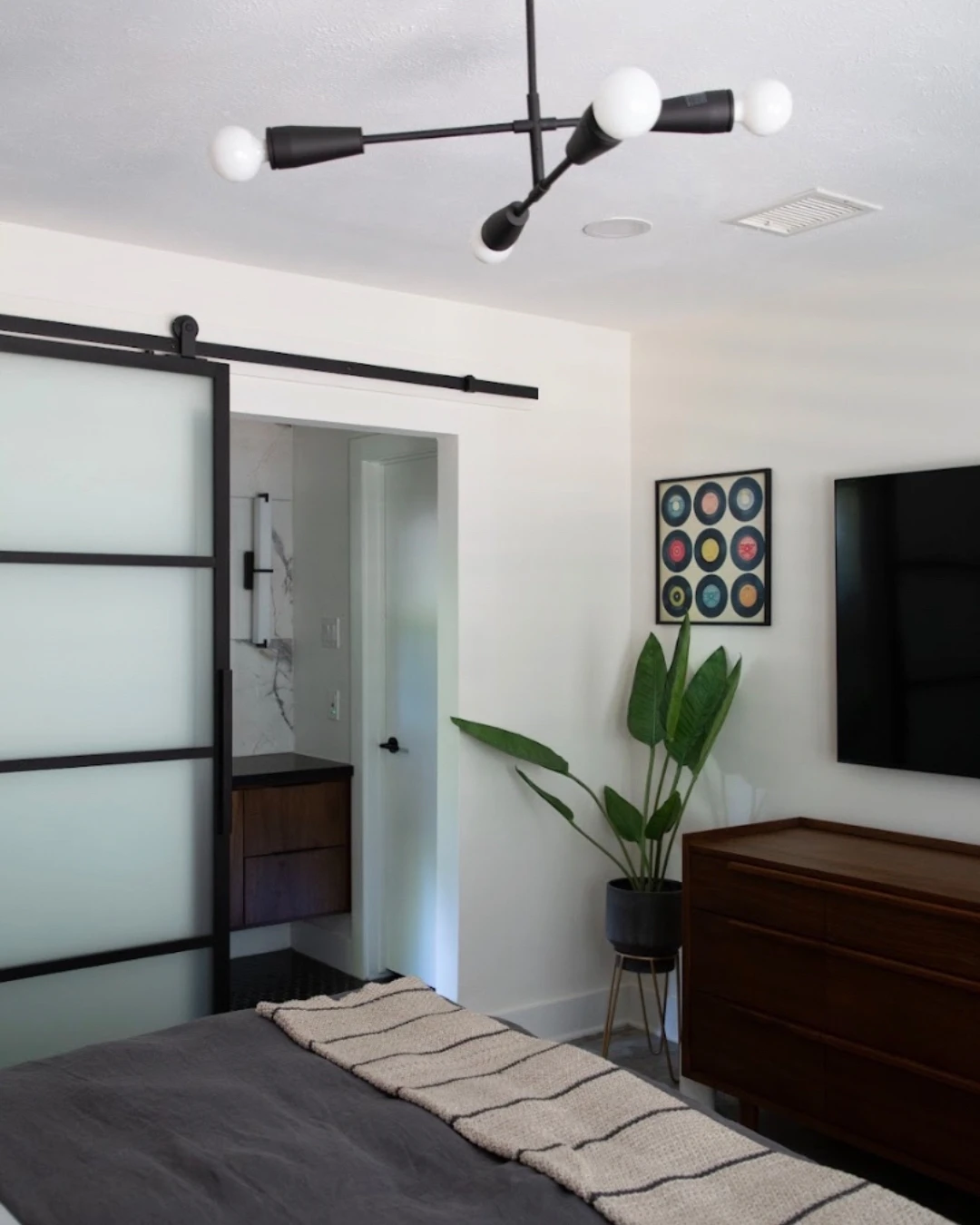
Frosted glass is the middle ground between a solid door and a clear one. It lets light pass between rooms while keeping privacy, which is exactly what a bedroom door to an ensuite needs. This black-framed sliding barn door is partly open, and the frosted panels glow softly against the dark grey bedding in the foreground.
The black frame gives the soft glass its structure, and the sliding format means no swing arc eats into the bedroom floor. Through the open door, a glimpse of marble in the bathroom shows why the frosted glass is there: light in, view out.
The practical point: frosted glass suits the door to an ensuite or dressing area best, where borrowed light matters more than a clear view.
Shaker-Style Doors
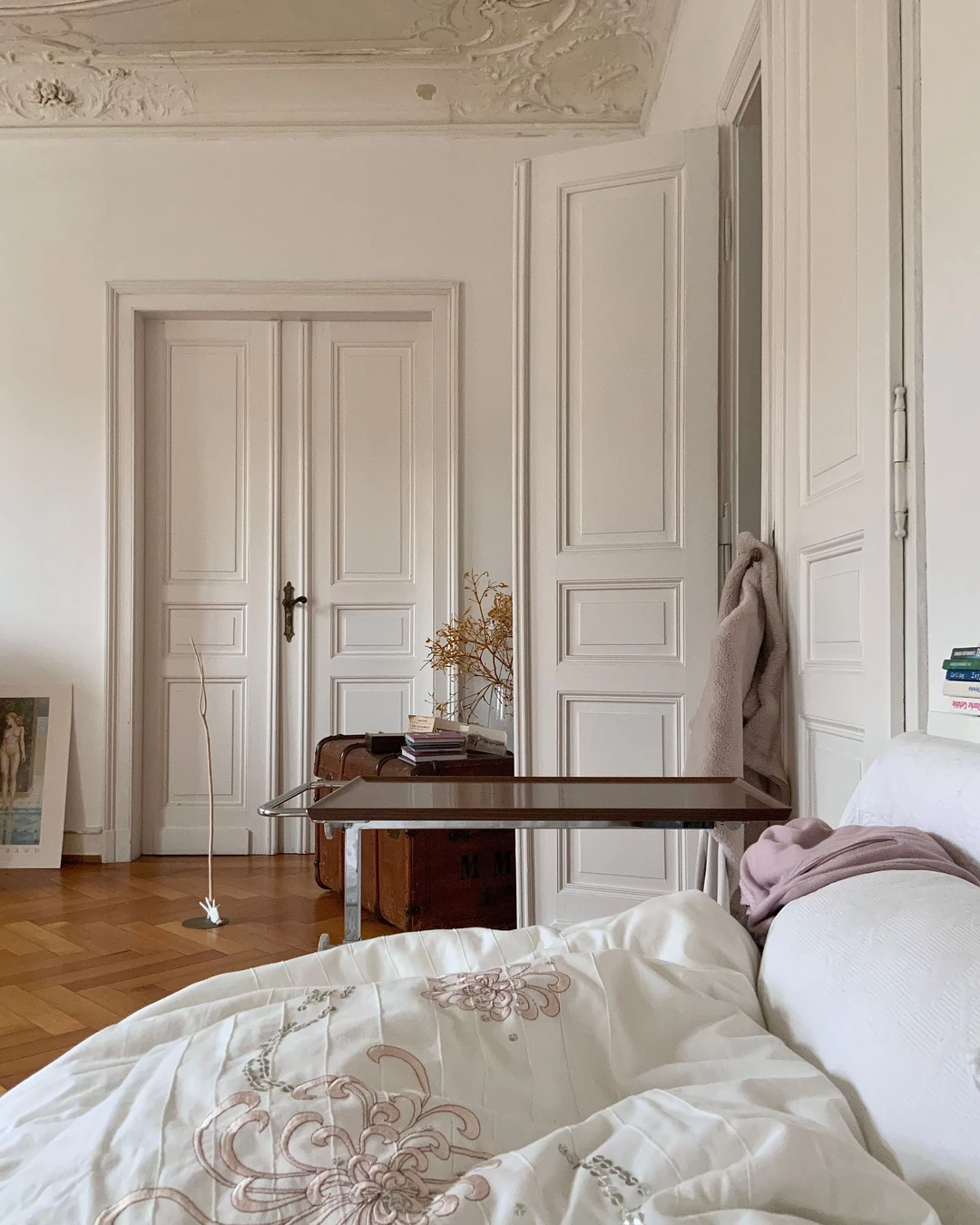
Shaker doors are the simplest paneled doors you can buy: flat recessed panels, no moulding, no fuss. That simplicity is why they last — they suit almost any bedroom style, from farmhouse to modern, and they never look dated. This elegant bedroom shows a pair of white shaker double doors standing open, with a closed paneled door at the back.
The ornate ceiling, herringbone wood floor and embroidered bedding do the decorating, while the doors stay quiet. A shaker door is the safe choice when the rest of the room keeps changing, because it works with whatever comes next.
The practical point: shaker doors suit almost any bedroom style, which is why they are the right default when you want the door to support the room rather than star in it.
Vintage Doors with Character
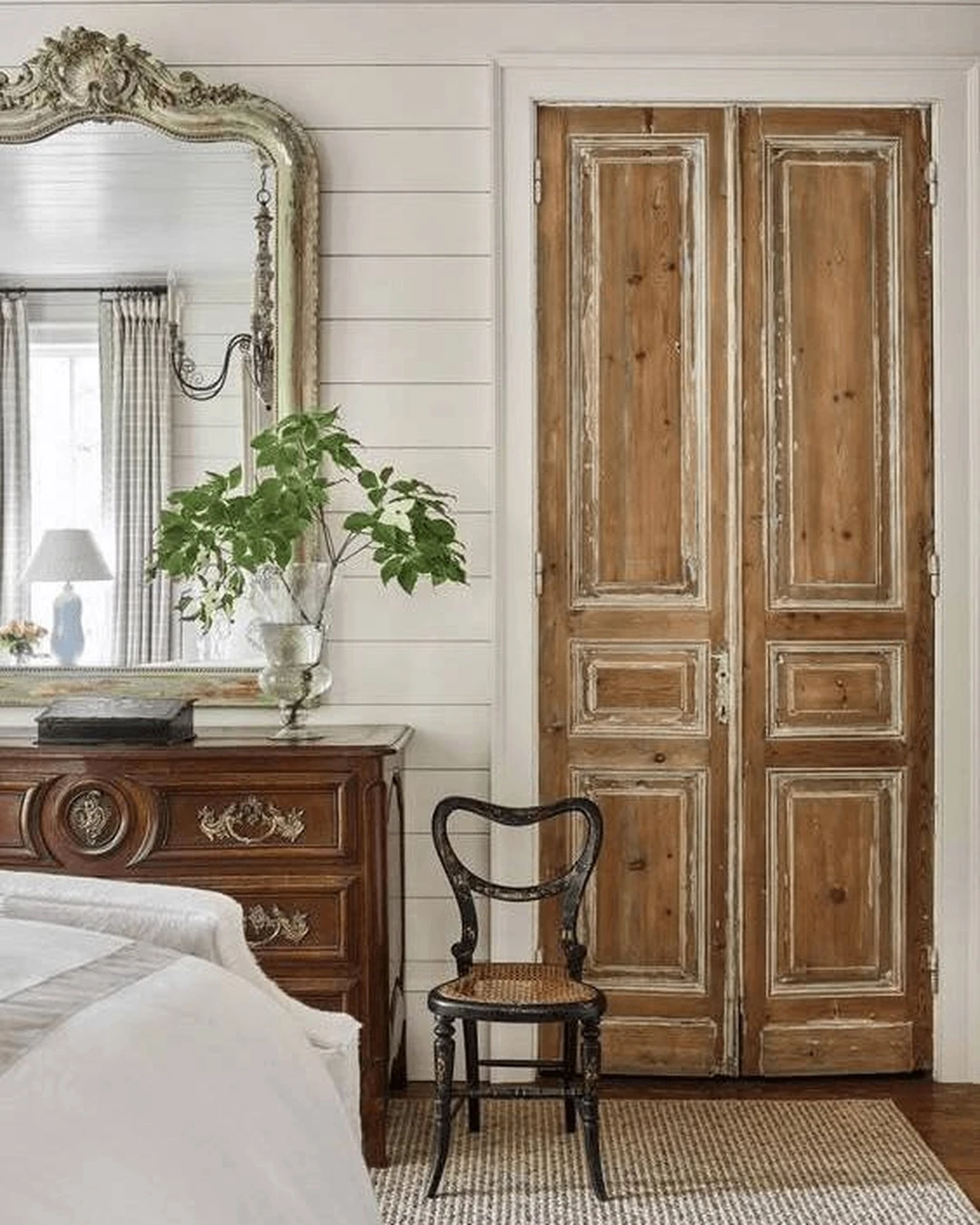
A vintage door brings a story into a new room. These distressed wooden double doors carry worn paint, ornate trim and old hardware, and that wear is the decoration — no new door can fake it. Against white shiplap walls, a dark wood antique dresser and a large gold-framed mirror complete a room that feels collected over time.
The bed corner with white linens keeps the room feeling like a bedroom rather than a museum. Vintage doors work best as the single old piece in an otherwise calm room, where their character has space to show.
The practical point: check that old doors are solid and square before fitting — reclaimed doors often need planing and new hinges to close properly.
Door in a Soft Colour
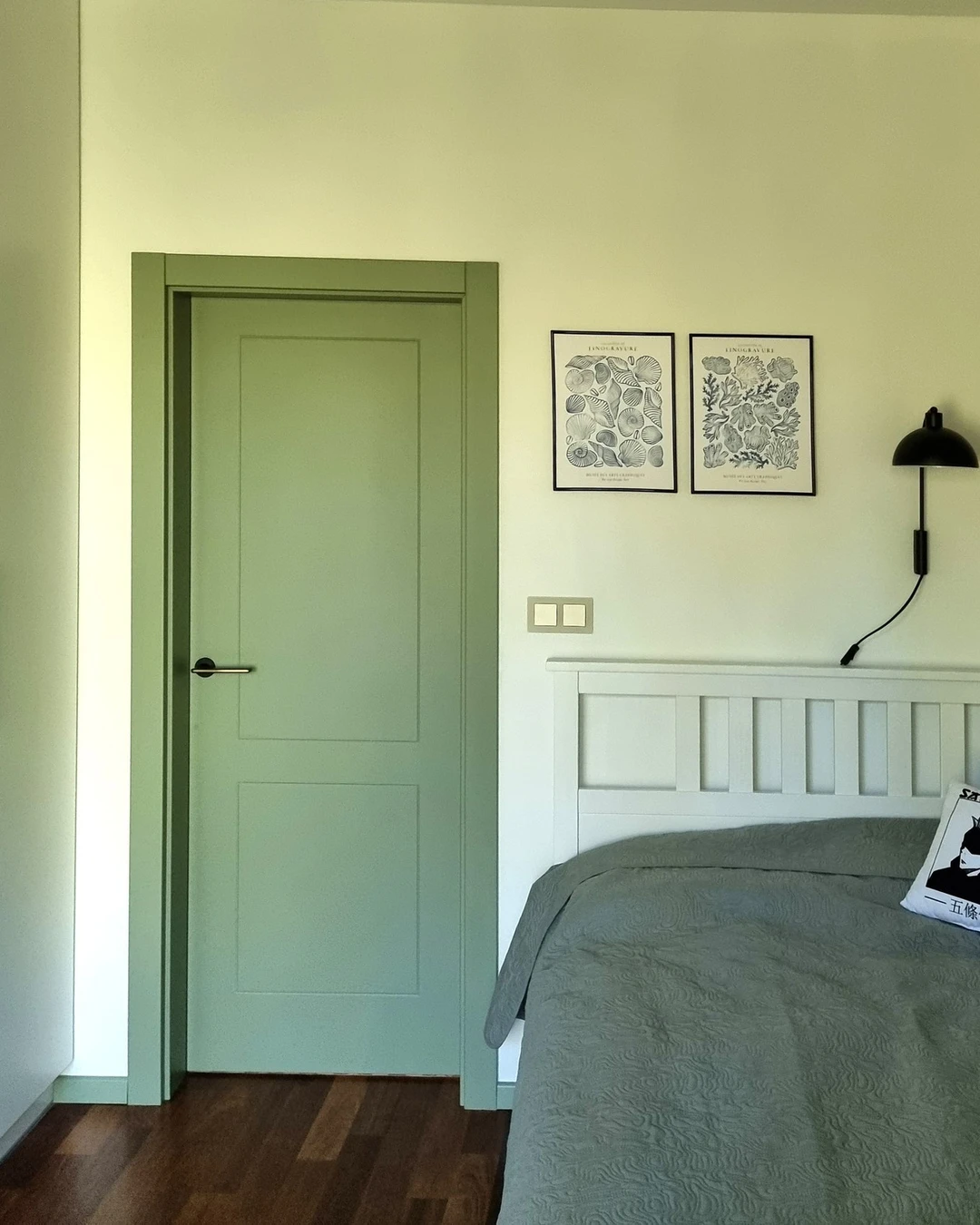
A soft colour on the door is the gentle version of a bold painted door. This sage-green paneled door sits on a pale yellow-green wall beside a bed with green bedding, so the door, the wall and the bedding share one quiet colour family. Framed prints and a dark wood floor keep the green from washing out.
Sage green is calm but not boring, and it works in a bedroom because it reads as nature rather than paint. The door becomes a soft statement — noticeable, but never loud.
The practical point: keep the door one shade deeper than the wall, so it reads as a deliberate colour choice rather than a paint mistake.
Hardware That Makes the Difference
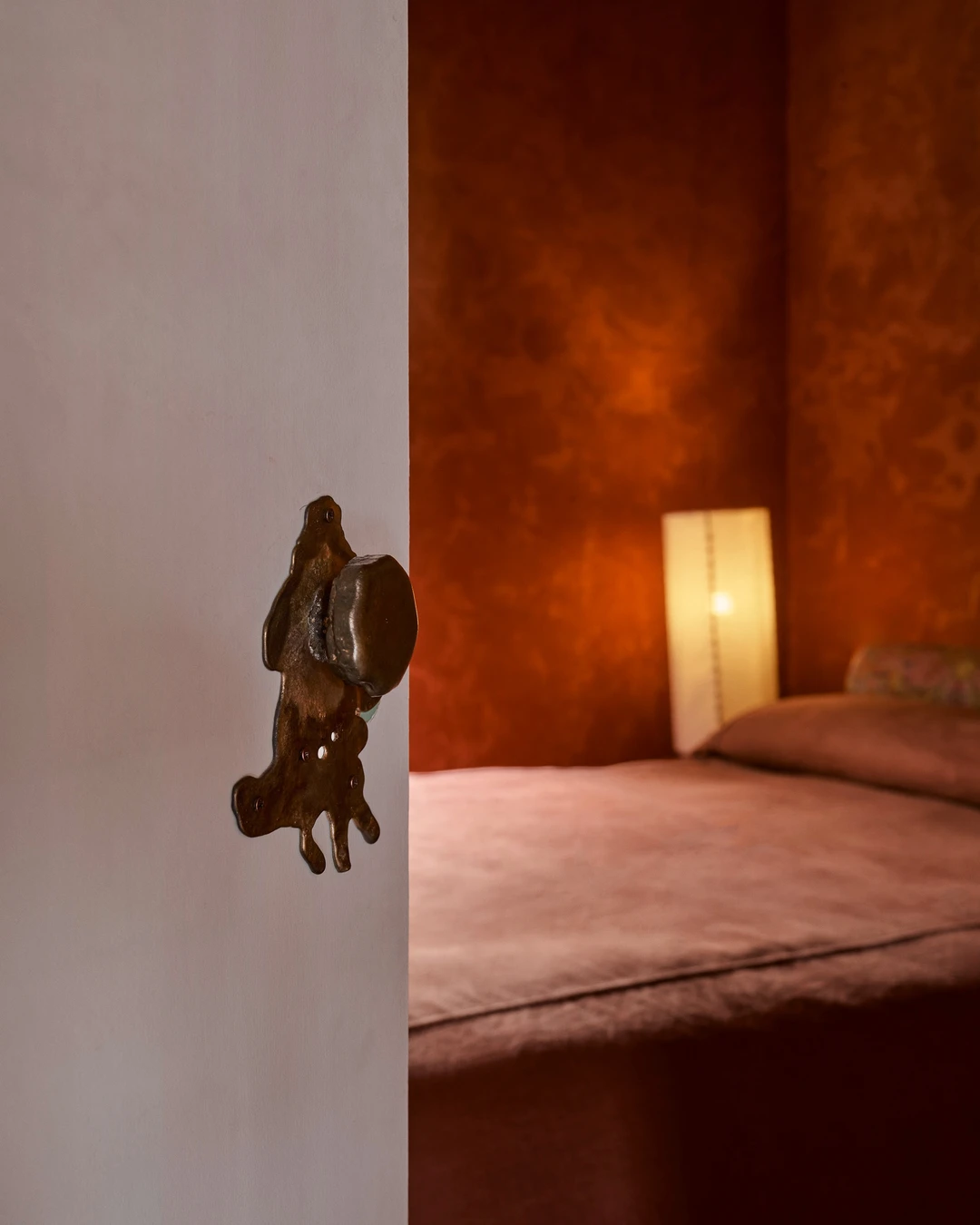
Sometimes the door itself needs no change at all — the handle does the work. This close-up shows a sculptural bronze handle on a plain white door, with a warm bedroom beyond: orange walls, a bed with rust bedding and a glowing lamp. The bronze shape turns a plain door into a designed object.
Hardware is the smallest change on this list and one of the most visible, because your hand touches it every day. A good handle also tells you the door’s weight and quality before you even open it.
The practical point: choose the handle after the door, not before — its size and finish should suit the door’s weight and the room’s other metals.
Door That Matches the Floor
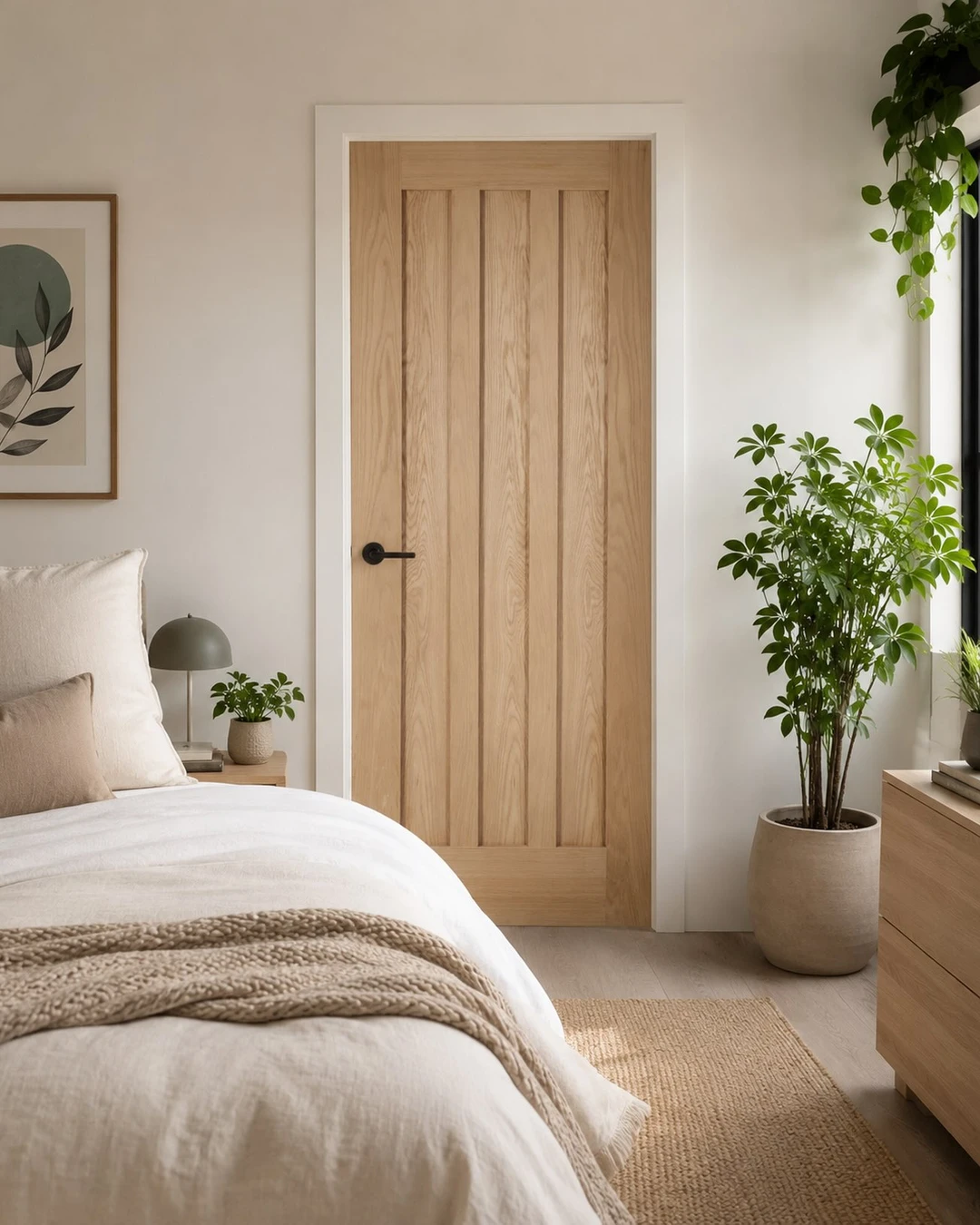
Matching the door to the floor is a quiet trick with a big effect. This light-oak plank door sits in the same tone as the wood floor, so the eye travels from the floor up the door without stopping. A black handle is the only dark note, and a large plant and jute rug keep the pale room feeling warm.
The bed with white linens stays out of the way of the match, which is the point: when the door and the floor agree, the whole room feels taller and calmer. If you are thinking about how floors and doors meet across rooms, our guide on Thoughtful Wooden Floor Transitions for a Cohesive Home covers the transitions that keep that calm going.
The practical point: match the tone, not necessarily the exact species — a close match reads as intentional, while an exact match can look flat.
Frameless Flush Doors
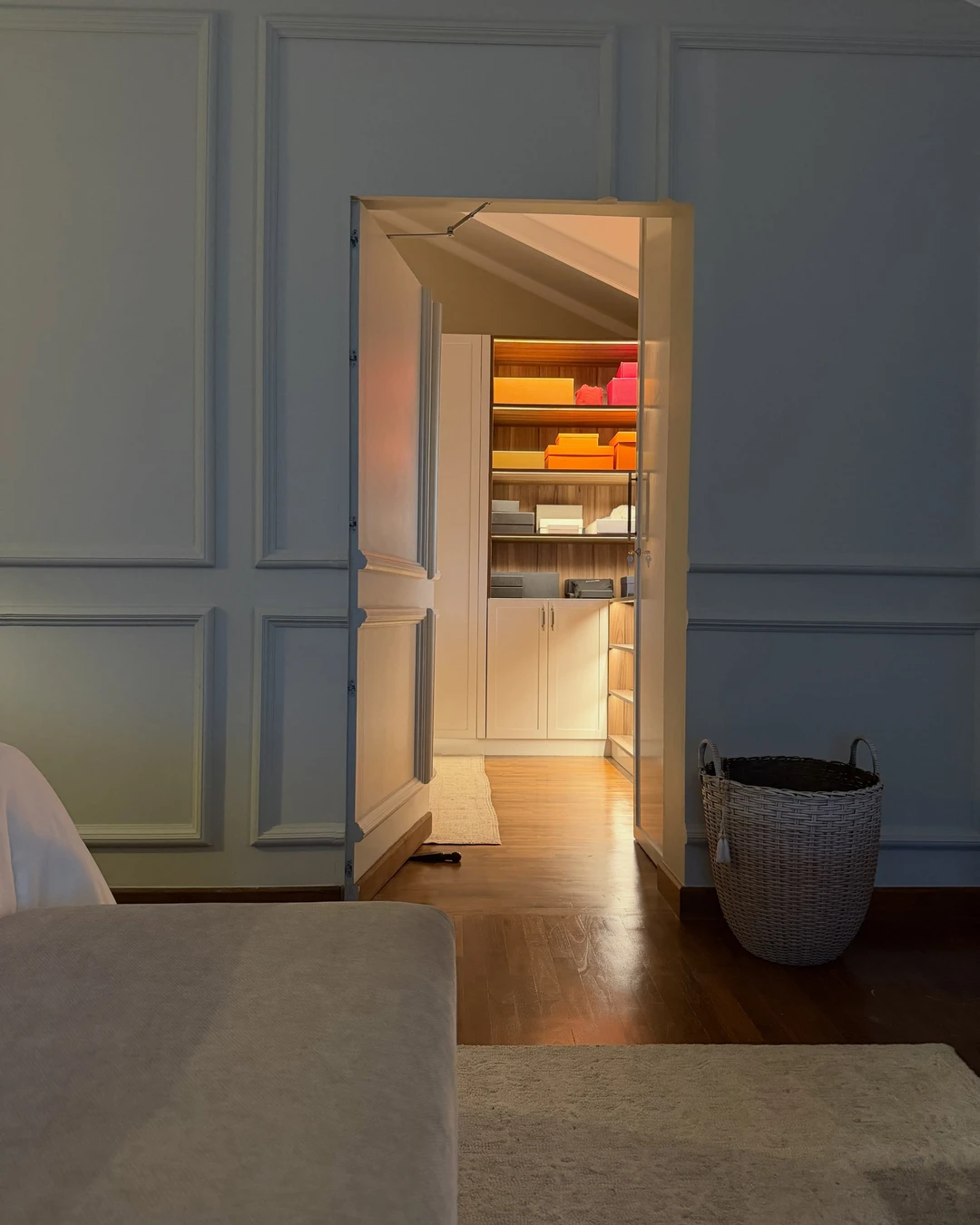
A frameless flush door disappears into the wall. There is no frame, no architrave, just a panel that opens — in this bedroom, a hidden door set into a pale blue-grey paneled wall, standing open to reveal a lit closet with shelves. The bed in the foreground and a woven basket keep the room soft while the door stays invisible.
Flush doors suit a minimal bedroom, where the wall itself is the design and a framed door would interrupt it. The closet light inside shows the trick: the door only reveals itself when it is open.
The practical point: flush doors need precise fitting and a push latch or concealed handle, because any gap or visible hardware breaks the illusion.
Statement Door in a Small Bedroom
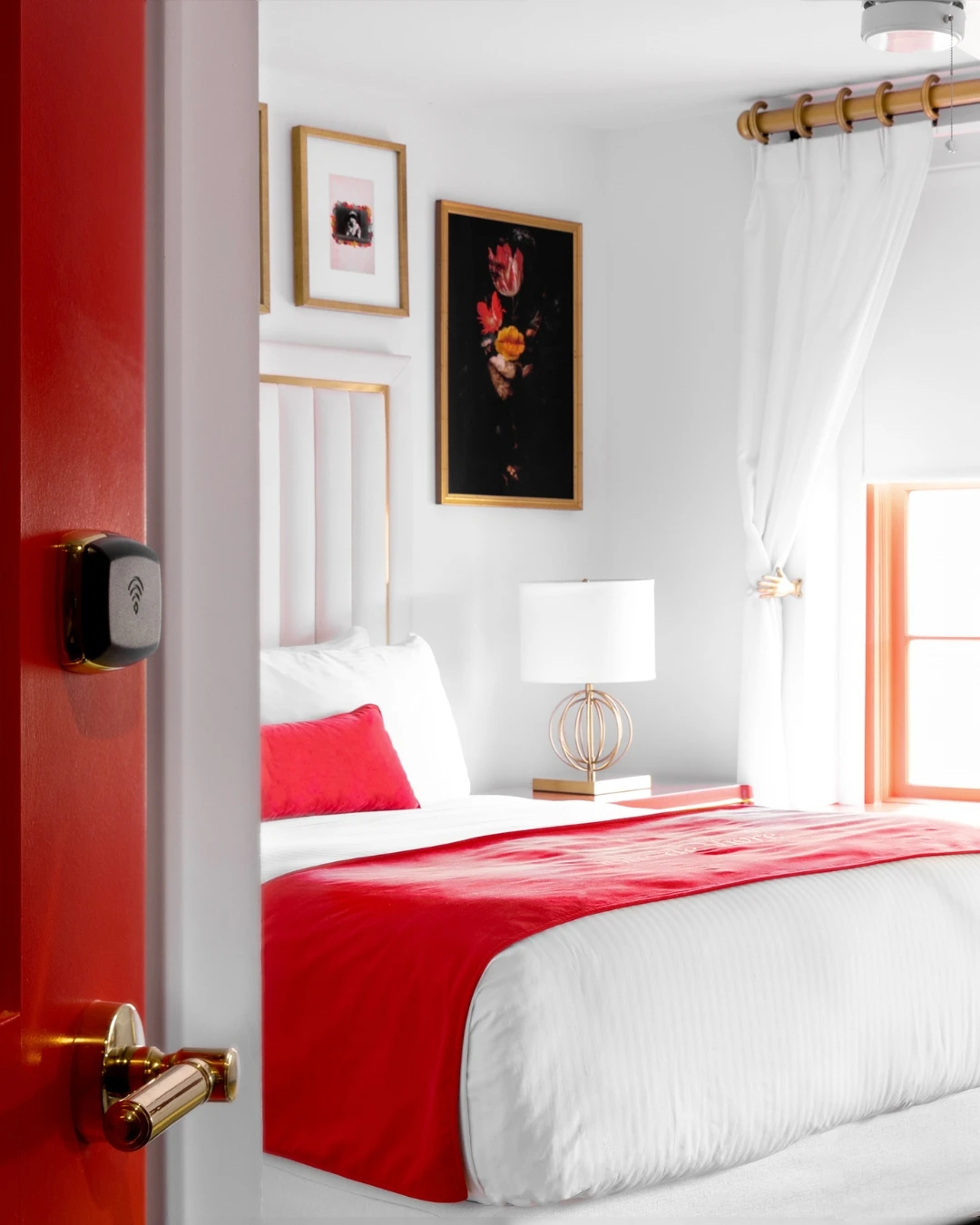
In a small bedroom, one bold door does the decorating. This bright red door stands partly open with a gold handle, framing a bedroom with white linens and a red throw — the red is echoed once in the bedding, so the colour feels planned rather than random. Framed art and a lamp complete a room that needs nothing else.
A statement door works in a small room precisely because there is so little else to look at. The door becomes the art, and the rest of the room stays quiet so it can be seen.
The practical point: one strong colour is enough in a small bedroom — repeat it once in the bedding or art, then let everything else stay quiet.
Let the Door Do Some of the Decorating
The bedroom door is the largest moving part of the room, and it is also the cheapest renovation a bedroom can get. A sliding door saves space, a painted door adds colour, a mirrored door adds light, and a flush door adds calm — and none of them needs the room to be rebuilt.
Start with the problem, not the product. A tight floor plan points to sliding or pocket doors, a dark corner points to glass, and a plain room points to paint or hardware. Let the problem pick the door, and the bedroom will feel like it was designed on purpose — because it was.