Hallway does not need more things. It needs better choices. One calm material, one warm light, and a clear path are enough.
Japandi hallway works because it borrows the best of two styles. Japanese design brings restraint and natural materials. Scandinavian design brings light wood and soft comfort.
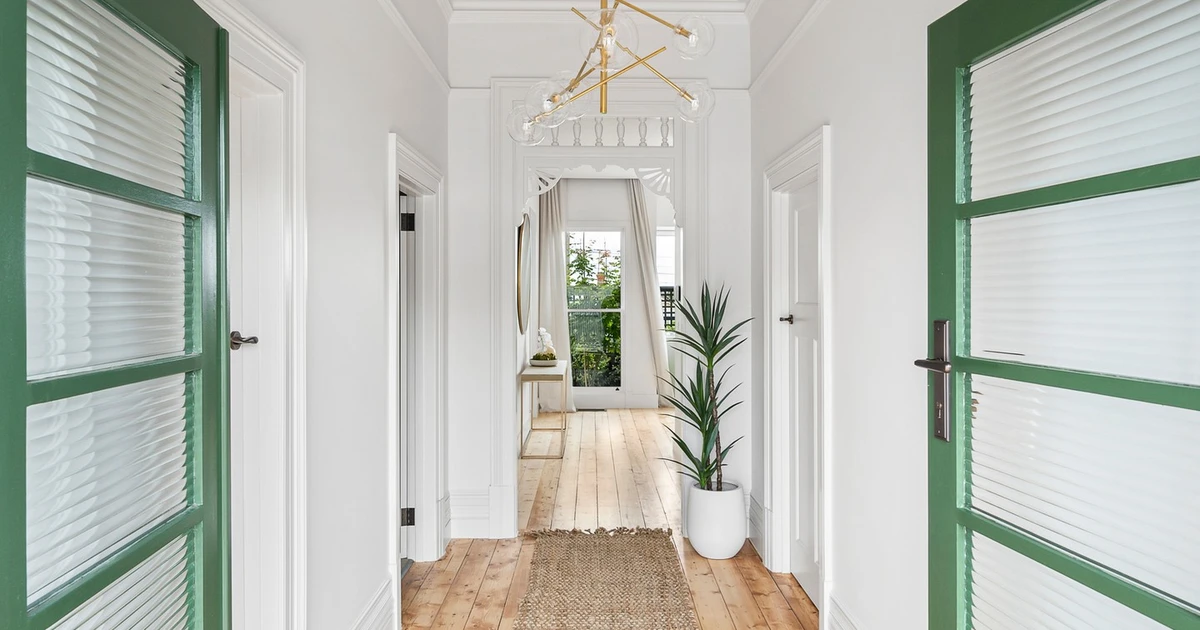
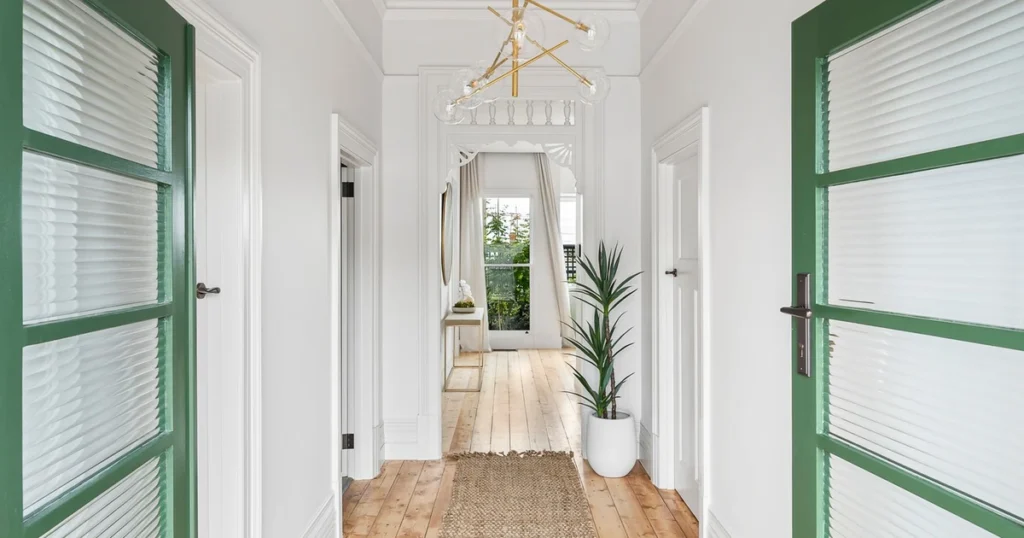
The result is a passage that feels quiet the moment you step into it. Pale walls, warm wood, and a few honest textures do the work that clutter never could. The green-framed glass doors in the photo above add one calm accent colour without breaking that quiet.
This is not about buying a whole new hallway. It is about choosing the right bench, the right light, and the right place for one plant. Each choice below changes how the space feels, and none of them needs a renovation.
These 19 ideas show how small, deliberate choices turn a plain passage into the calmest room in the house. Start with the one your hallway needs most.
1. Light Wood and White Walls
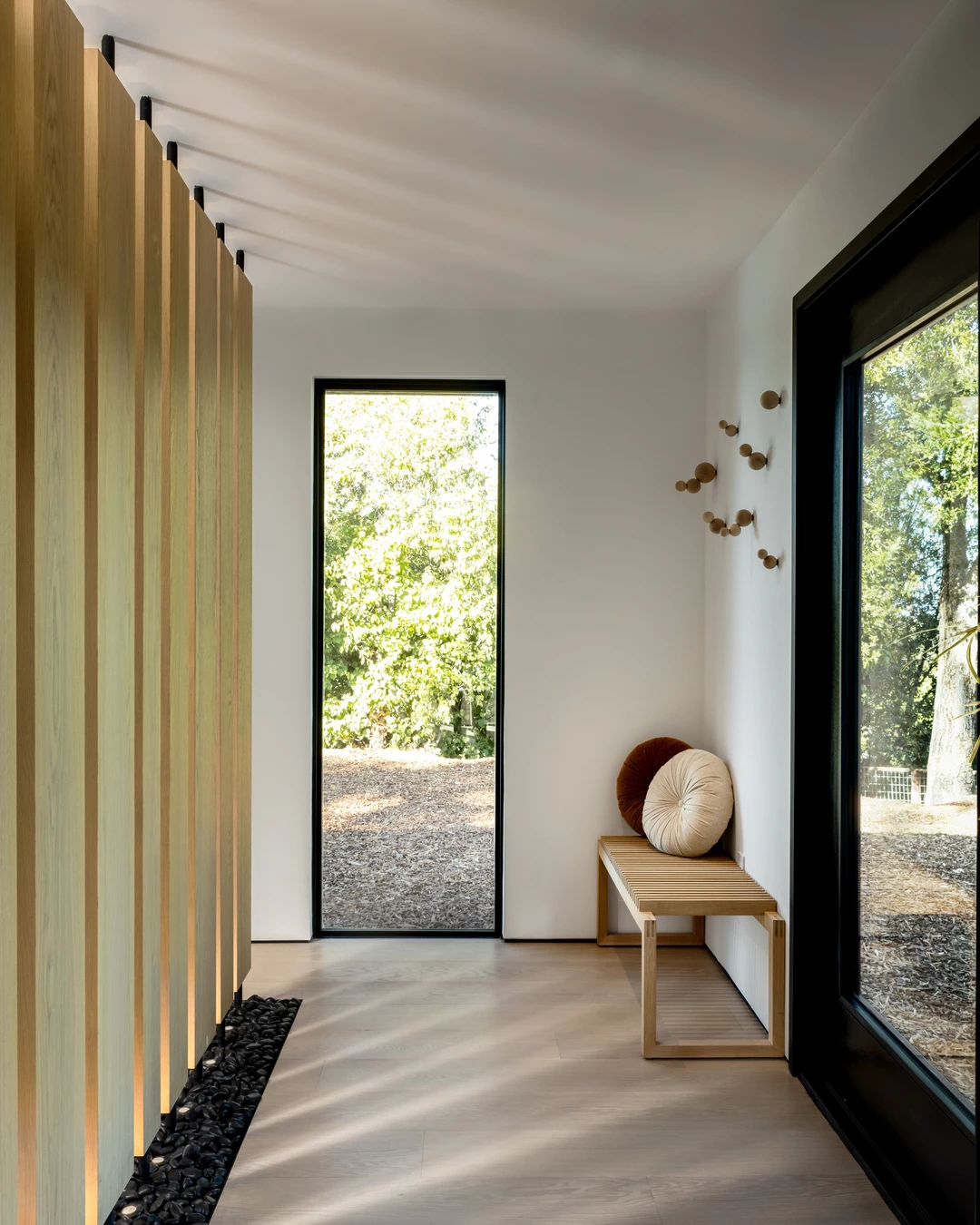
Light wood against white walls is the foundation of a Japandi hallway. The wood brings warmth, the white brings air, and neither one fights the other. A vertical slat partition, like the one in this photo, adds rhythm to a plain wall without adding clutter.
The floor matters as much as the walls. Pale planks in a natural finish keep the whole passage feeling open, and a small wooden bench with a round cushion gives the eye somewhere soft to rest. Black pebbles along the wall add a quiet Japanese garden note.
The practical point: keep the wood to one light species throughout the hallway, so the wall, the floor and the bench read as one calm surface instead of three competing tones.
2. A Low Wooden Bench
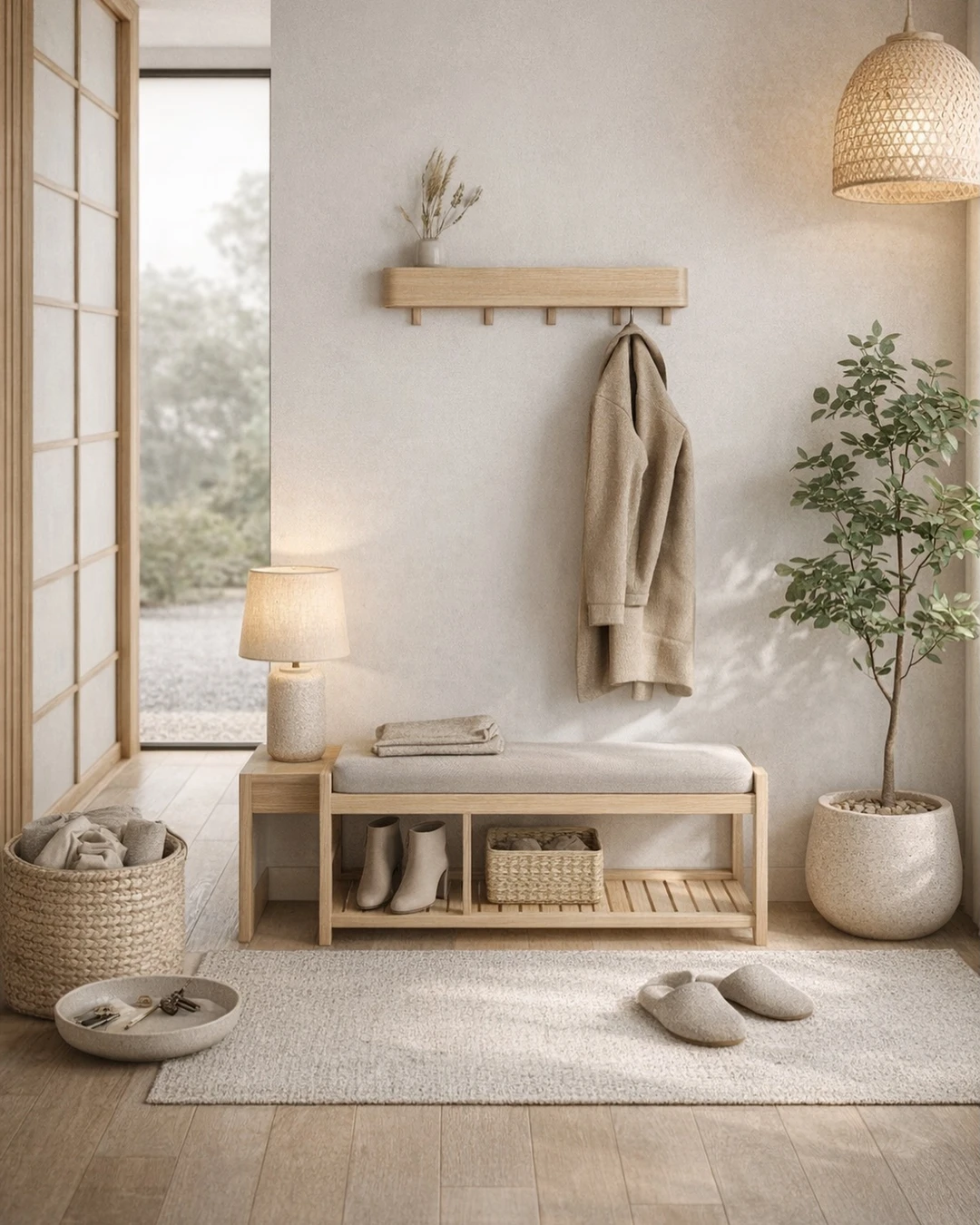
A low wooden bench is the most useful piece a hallway can hold. It gives you somewhere to sit while you put your shoes on, and the space beneath it becomes storage without a single cupboard door. Shoes and a woven basket tuck underneath, out of the walking line.
This entryway shows how well the bench works with the rest of the Japandi palette. A shoji-style door on one side, a rattan lantern above, a potted plant and a woven rug all share the same warm, quiet tones.
The practical point: aim for a bench height of about 45 cm, which is comfortable for sitting, and leave the space under it open so shoes never pile up on the floor.
3. Paper Lantern Lighting
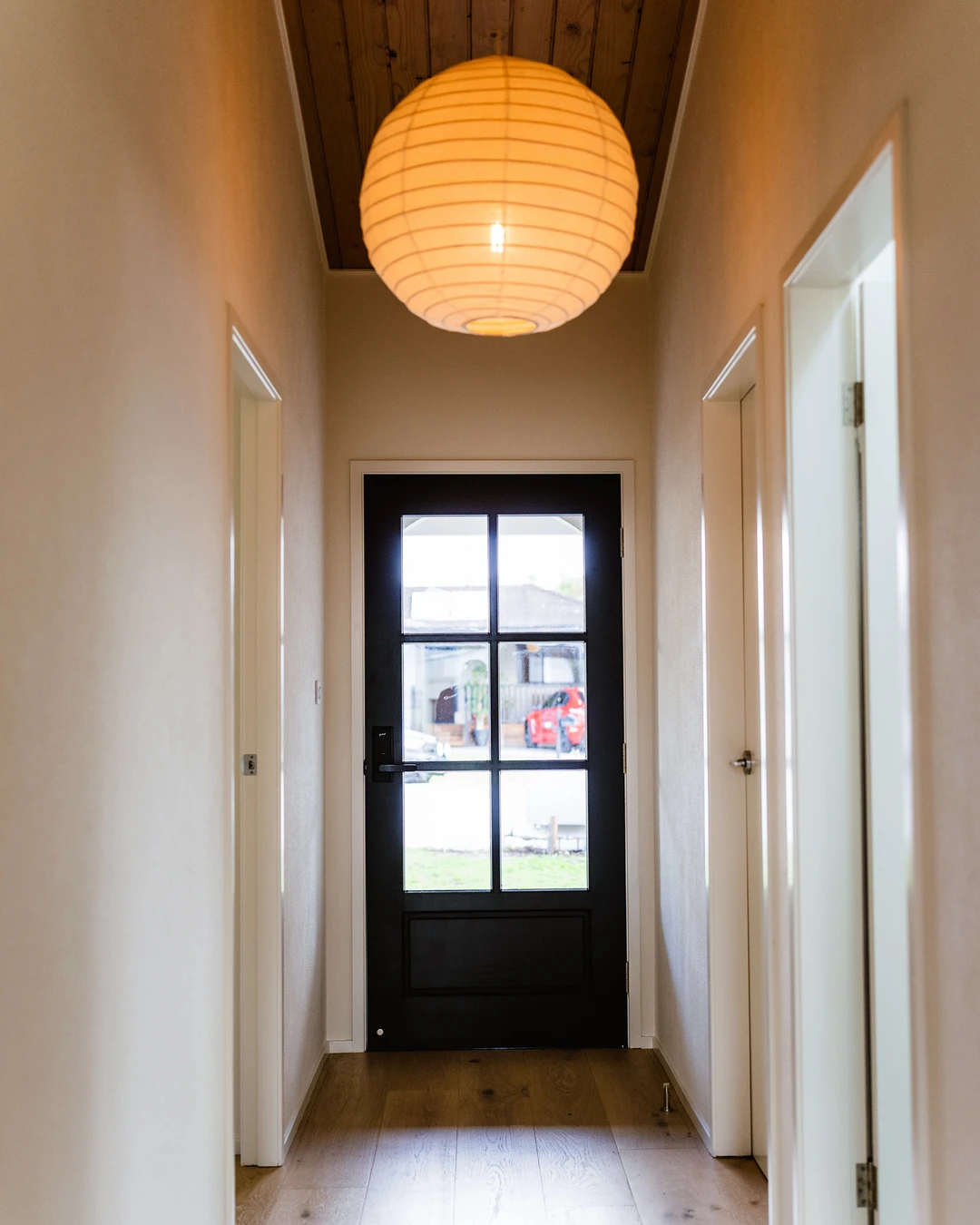
A paper lantern is the simplest way to make a hallway feel warm. Its soft, round glow spreads evenly down the passage, and the paper itself diffuses the light so there are no hard shadows on the walls. One large lantern does more than a row of small spotlights.
In this hallway the lantern hangs from a wood-panelled ceiling, and its warm light balances the black front door at the far end. The walls stay pale, the floor stays light, and the lantern becomes the one soft shape in a straight room.
The practical point: hang the lantern so its base sits well above head height, and choose a warm bulb so the glow feels like evening light rather than office light.
4. Natural Textures (Linen, Rattan and Jute)
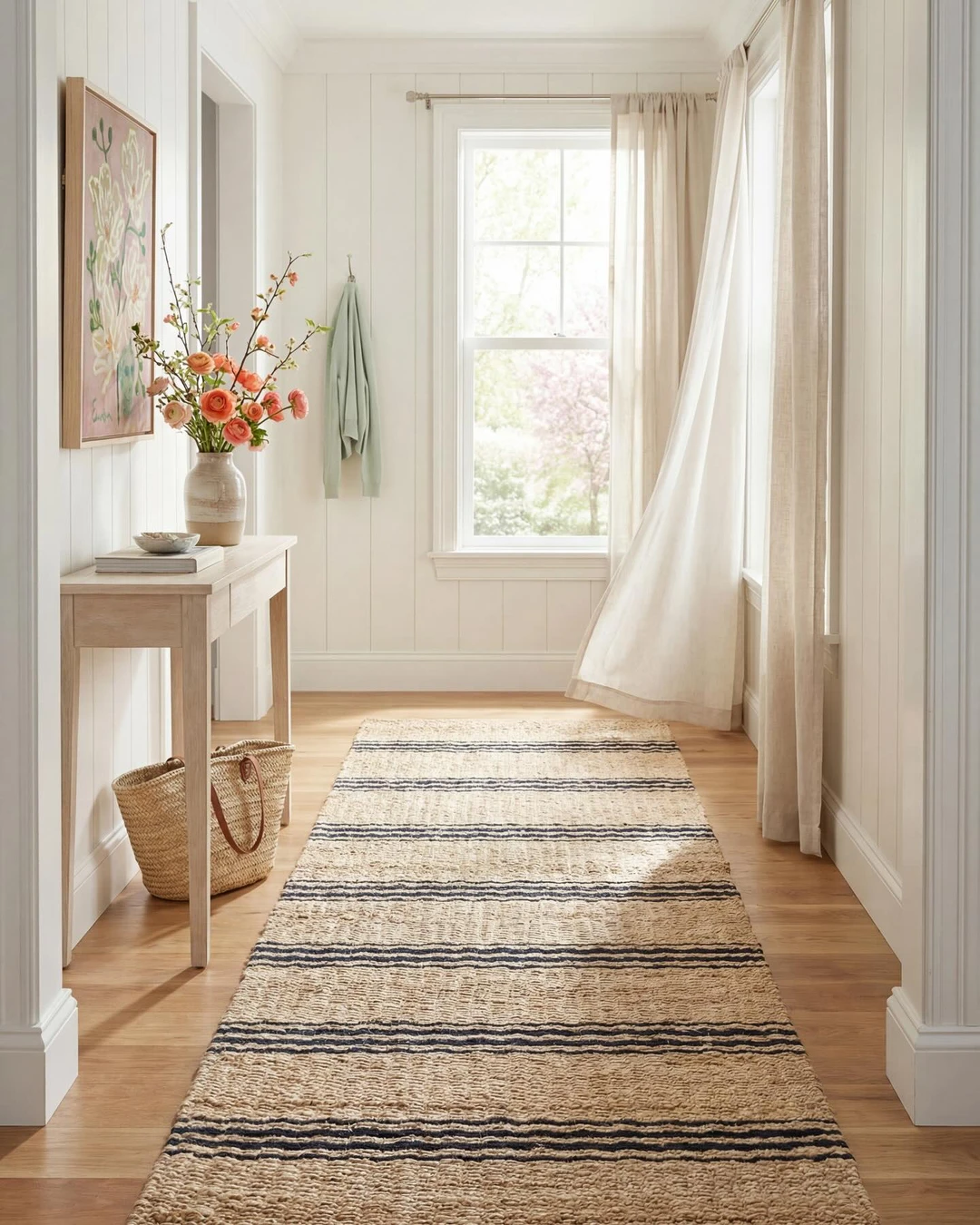
Texture is what keeps a pale hallway from feeling flat. This hallway layers three natural materials at once: a striped jute runner underfoot, sheer linen curtains at the window, and a woven basket beside a light wood console. Each one is soft, matte and honest, and none of them shouts.
The trick is that all three textures share the same pale palette. The runner, the curtains and the basket are different materials, but they read as one calm family because their colours stay close together.
The practical point: use three textures at most in one hallway, all in the same pale palette, so the mix feels layered rather than busy.
5. Artwork That Anchors the Hallway
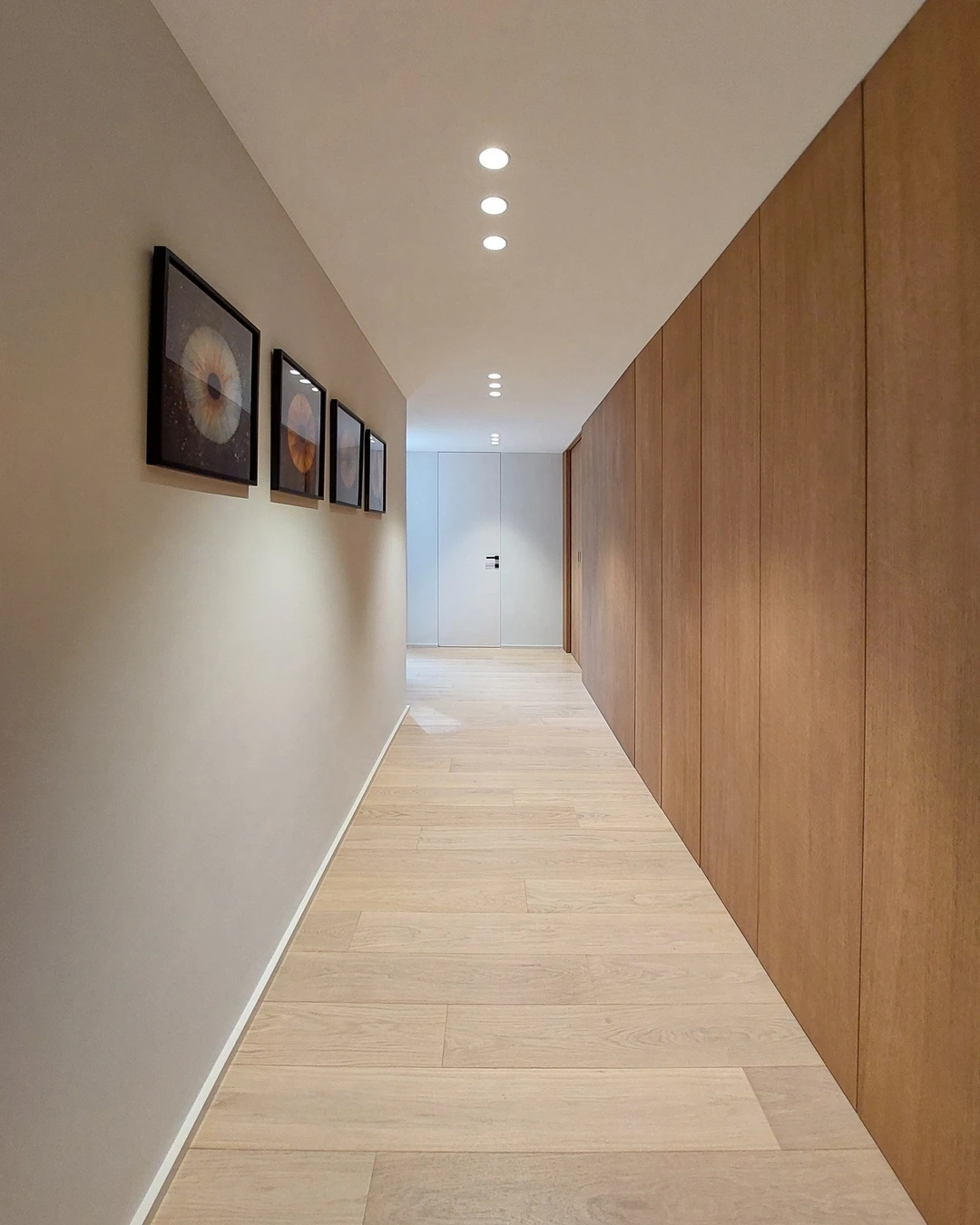
A hallway wall can carry art, but it needs to read as one statement, not a scattered gallery. This long hallway does it with a row of three framed artworks, all the same size, hung in a straight line with equal gaps. Together they anchor the whole wall, and the vertical wood panel on the opposite side keeps the balance.
The frames are simple and the images are quiet, so the art adds interest without adding noise. That is the Japandi way: one clear gesture, repeated with discipline, instead of many small ones competing for attention.
If you want the spacing right, our guide on The Right Way to Hang Pictures on the Wall covers the heights that work in a passage like this.
The practical point: hang the frames at eye level in a straight line with equal gaps between them, so the row reads as a single statement piece.
6. A Slim Console Table
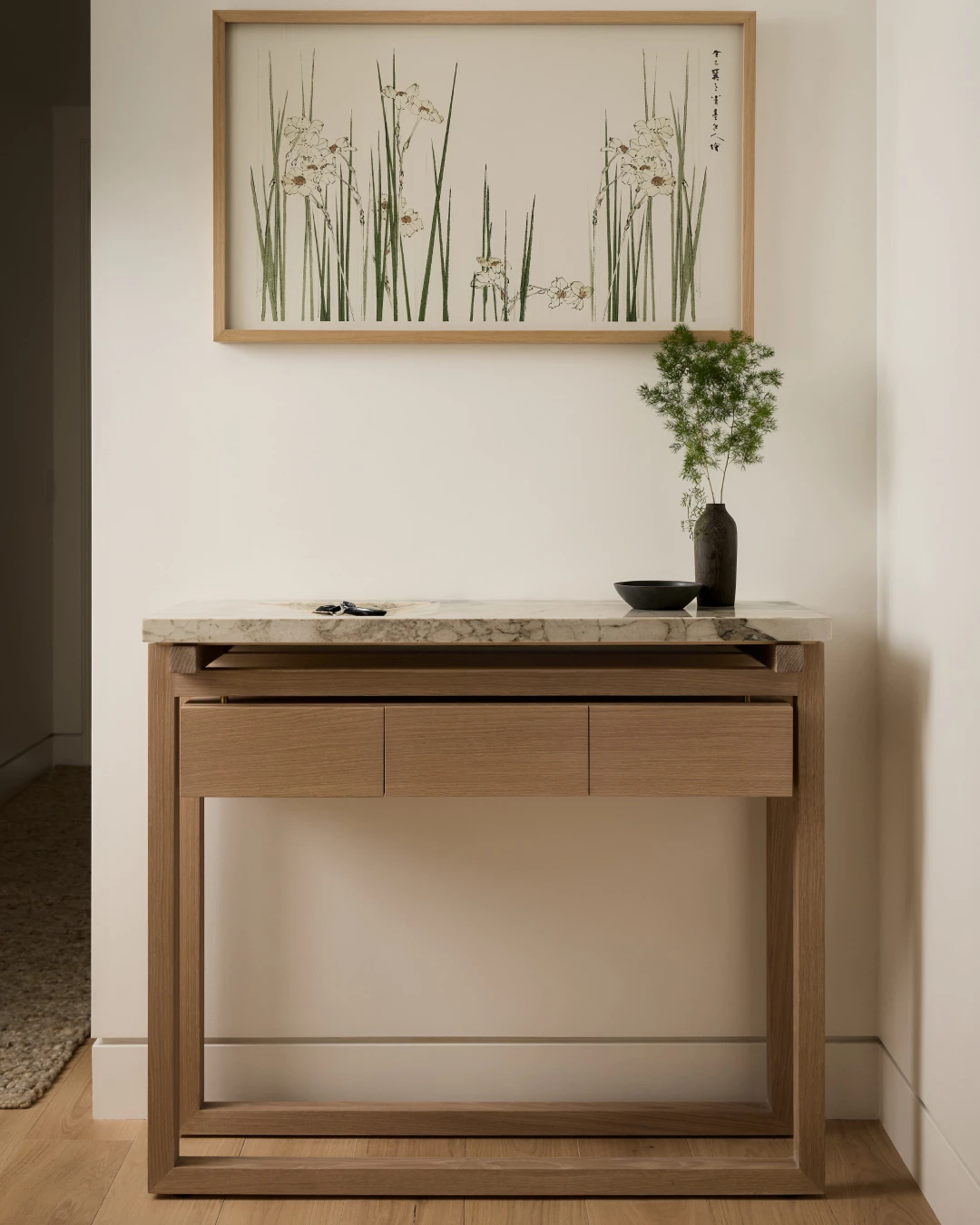
A slim console table gives a hallway a landing spot for keys and a vase, without eating into the walking space. This one is light wood with a white marble top, and the contrast between the pale wood and the pale stone is soft rather than sharp.
The styling is deliberately spare: a matte black bowl, a tall dark vase with feathery greenery, and one framed botanical artwork above. The black bowl is the only dark note, and it stops the pale palette from washing out.
The practical point: keep the table depth under 30 cm so the passage stays clear, and style only the top, leaving the floor beneath it completely empty.
7. Shoji-Style Sliding Doors
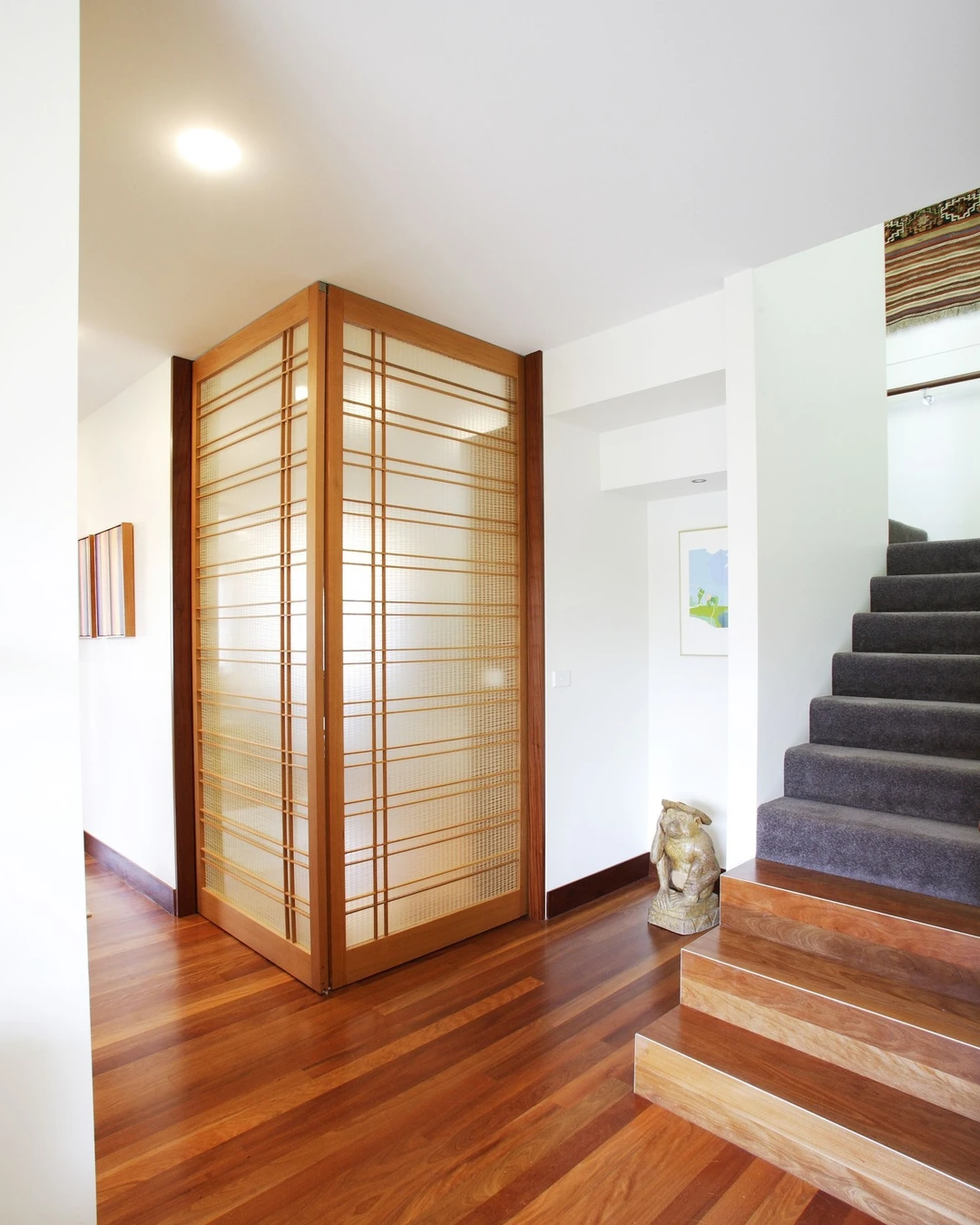
Shoji doors bring the Japanese half of Japandi into the hallway in the most direct way. Their translucent panels let light pass between rooms while keeping the spaces separate, and the light wood grid adds a calm geometry that plain doors never offer.
This corner screen system stands beside a wooden staircase, and the warm wood floor and white walls let the shoji be the hero of the shot. The panels glow softly when light comes through them, which makes a narrow passage feel wider than it is.
The practical point: shoji panels need a clear track and space to slide, so measure the opening before you buy and keep the floor in front of them bare.
8. Warm Wall Sconces
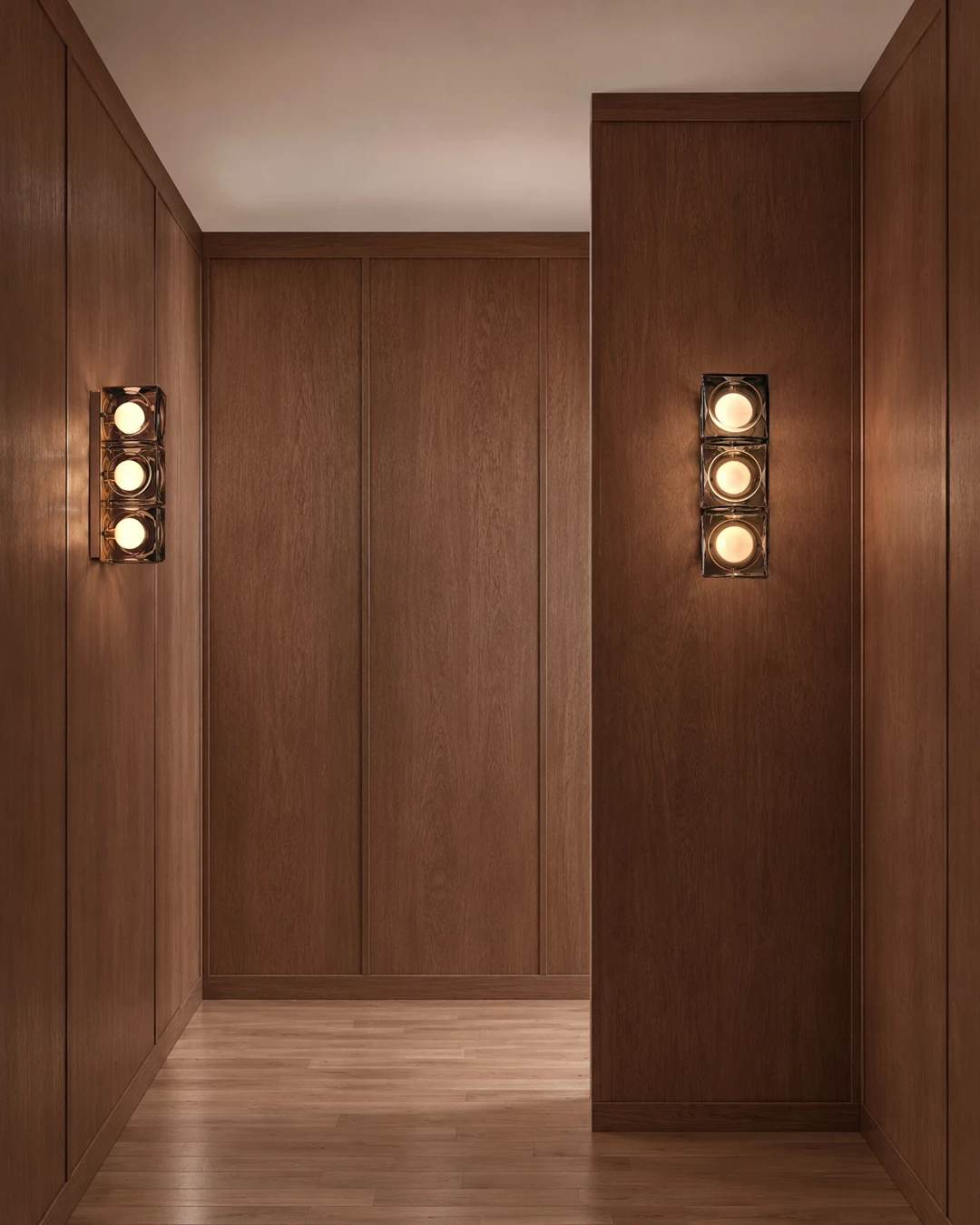
Wall sconces change a hallway at night, when the ceiling light alone would leave the walls flat and the floor in shadow. Warm sconces wash the wood panelling with a soft glow, and the light itself becomes part of the decoration.
In this hallway two triple-globe sconces face each other across the passage, and their warm light brings out the grain of the wood panels. The effect is calm and even, with no bright spots and no dark corners.
The practical point: place sconces at eye level or just above, in pairs, so the warm light washes the walls instead of glaring down the passage.
9. One Plant, Well Placed
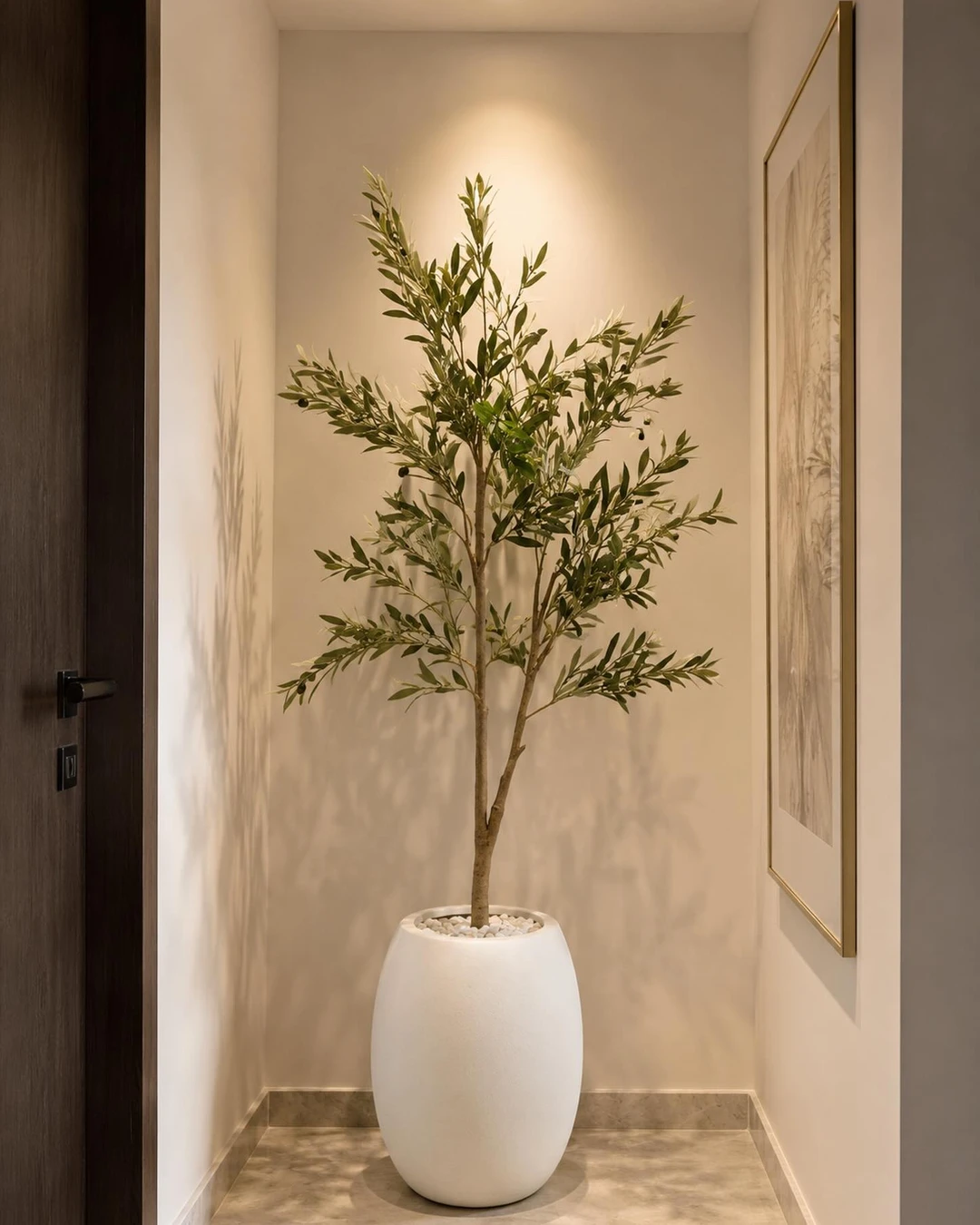
One plant is enough for a hallway, if it is the right plant in the right spot. A single olive tree in a large white pot stands in this hallway corner, lit from above by a ceiling spotlight, with a tall framed artwork beside it. The plant is the only decoration in the frame, and that is why it works.
A hallway is a passage, not a garden, so greenery should mark a corner rather than line the walls. The olive tree’s soft grey-green leaves sit well against the pale wall, and the white pot keeps the whole arrangement feeling clean.
The practical point: one large plant beats three small ones. Give it the brightest corner and a pot big enough to anchor the spot.
10. A Warm Neutral Palette
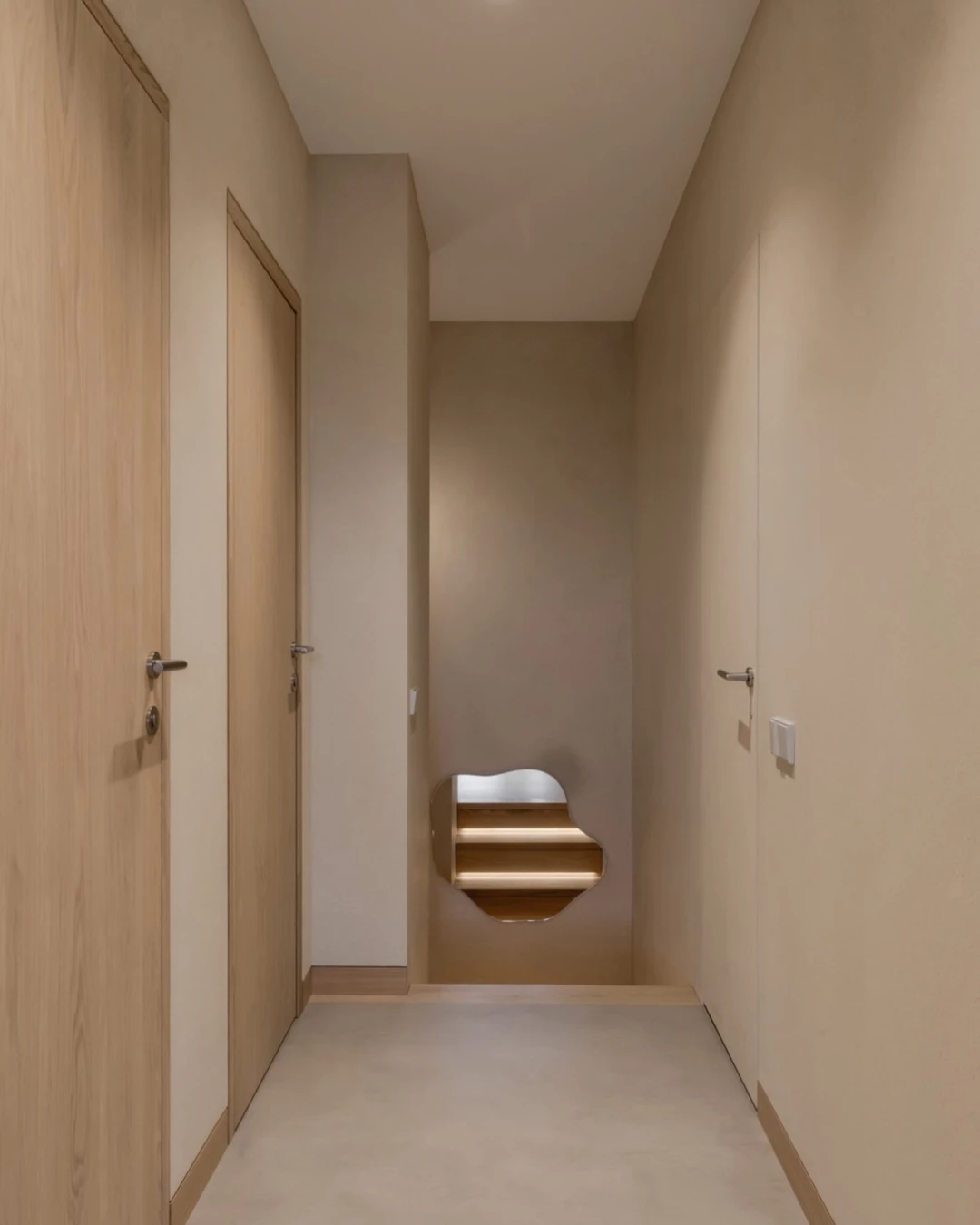
A warm neutral palette is the quietest choice a hallway can make, and often the best one. Beige walls, light wood doors and a pale floor create a passage that feels calm in any light, morning or evening. Nothing in the room competes with anything else.
The small half-round wood shelf at the far end is the only detail, and it works because the rest of the hallway is so plain. Warm neutrals need one small focal point, or the eye has nowhere to rest.
The practical point: pick one warm white for the walls and repeat it on the doors and ceiling, then let the wood add the only contrast.
11. Hidden Built-In Storage
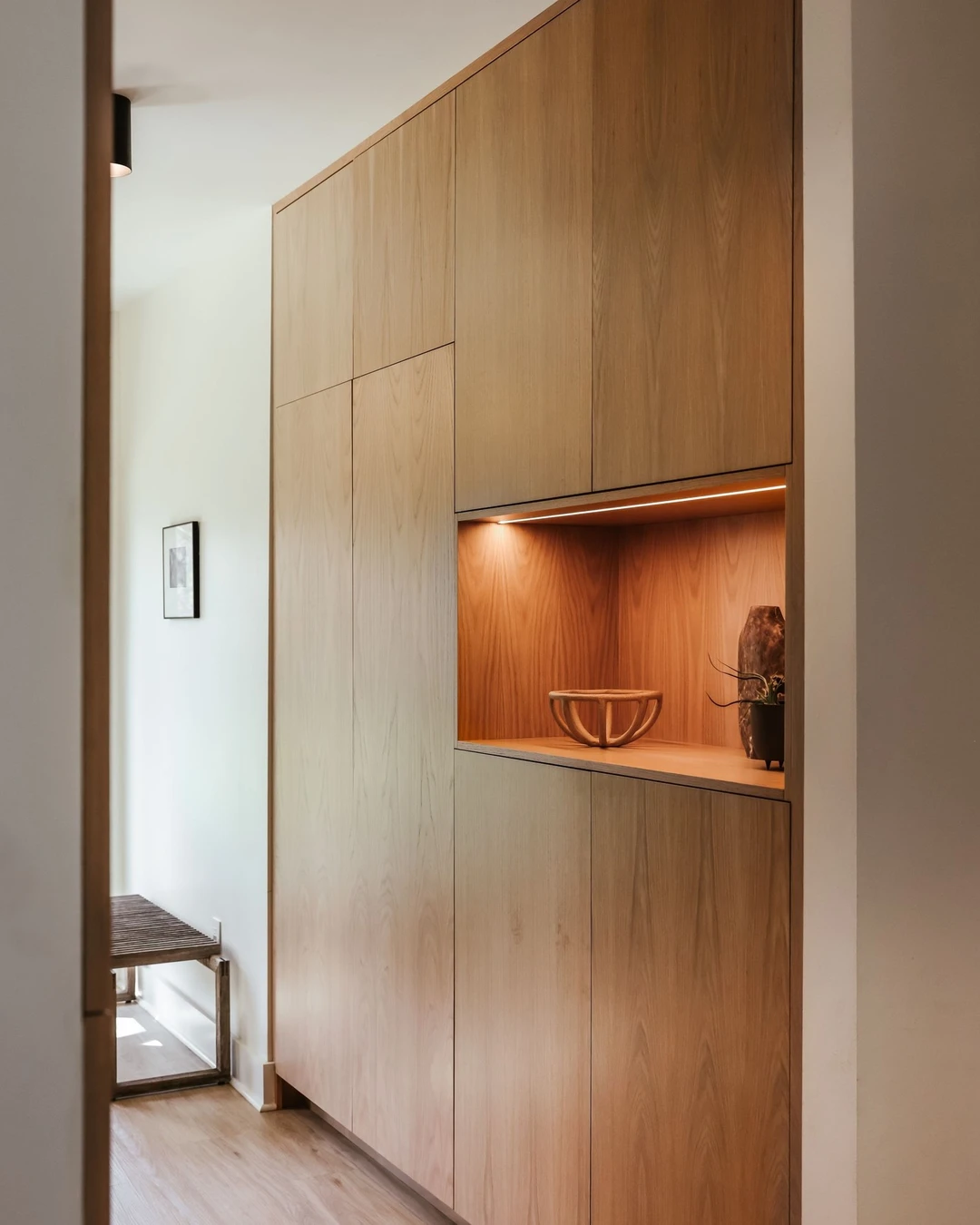
The best hallway storage is the kind you barely notice. This floor-to-ceiling built-in wall in light wood has flat-panel doors with no visible handles, so it reads as a wall rather than furniture. An open lit niche breaks the run of doors with a wooden bowl and a small plant, and a bench sits at the far end.
Hidden storage keeps coats, shoes and bags out of sight, which is what makes the hallway feel calm in the first place. The room stays tidy because everything has a door to hide behind.
The practical point: handle-free doors and a flush finish make storage read as wall, so plan the depth for coats and shoes before the joiner starts.
12. Stone and Ceramic Accents
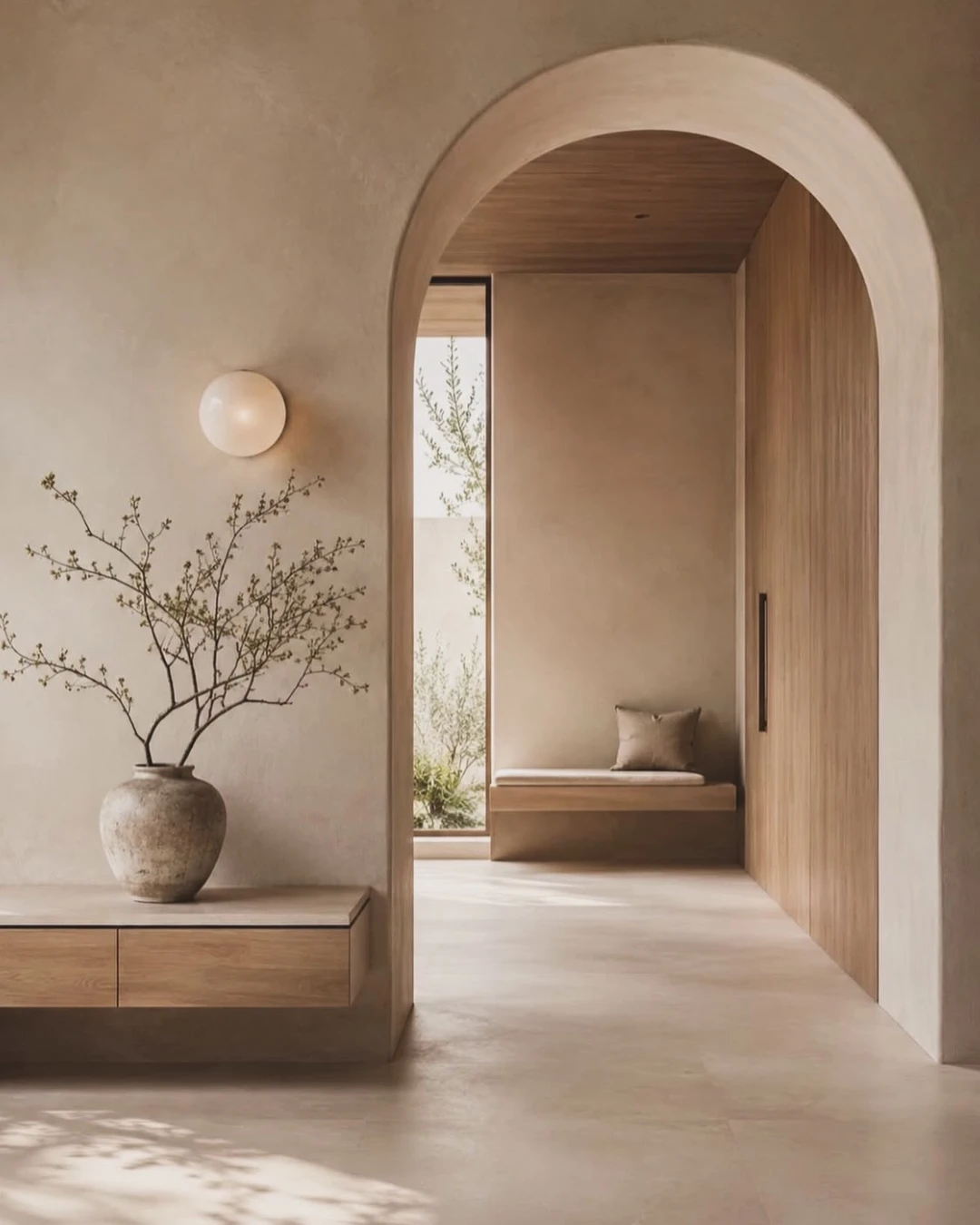
Stone and ceramic add weight to a hallway that is otherwise all wood and plaster. A low stone bench holds a large textured ceramic vase with bare branches, and the contrast between the rough stone and the smooth vase gives the eye something to hold on to.
The arched opening and the wood-panelled nook with a cushion keep the room soft, so the hard materials feel like accents rather than a theme. A round wall sconce glows above the bench and warms the whole corner.
The practical point: one stone piece and one ceramic piece per hallway is enough. The contrast works because the rest of the room stays soft.
13. A Limewash or Plaster Wall
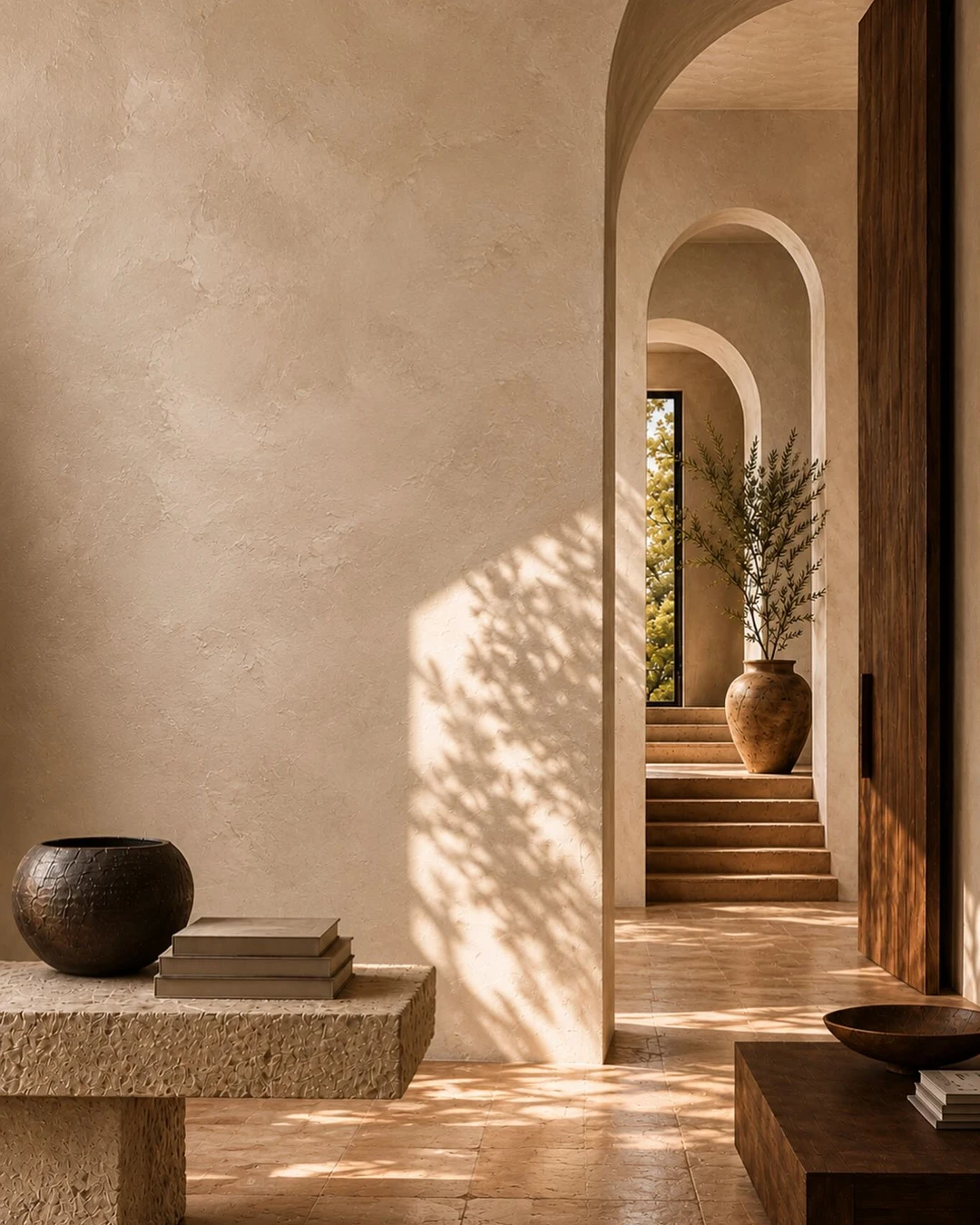
A limewash or plaster wall gives a hallway a depth that flat paint cannot match. The texture catches the light differently across the day, so the wall feels alive even when the room is empty. In this sunlit hallway the warm beige plaster runs across repeating arches, and the shadows in the texture do most of the decorating.
The furniture stays minimal on purpose: a rough stone bench, a dark ceramic bowl, stacked books and a large vase. Nothing on the wall competes with the plaster itself.
The practical point: limewash shows its texture best in natural light, so keep the wall facing the brightest window and skip hanging anything on it.
14. A Natural-Fibre Runner Rug
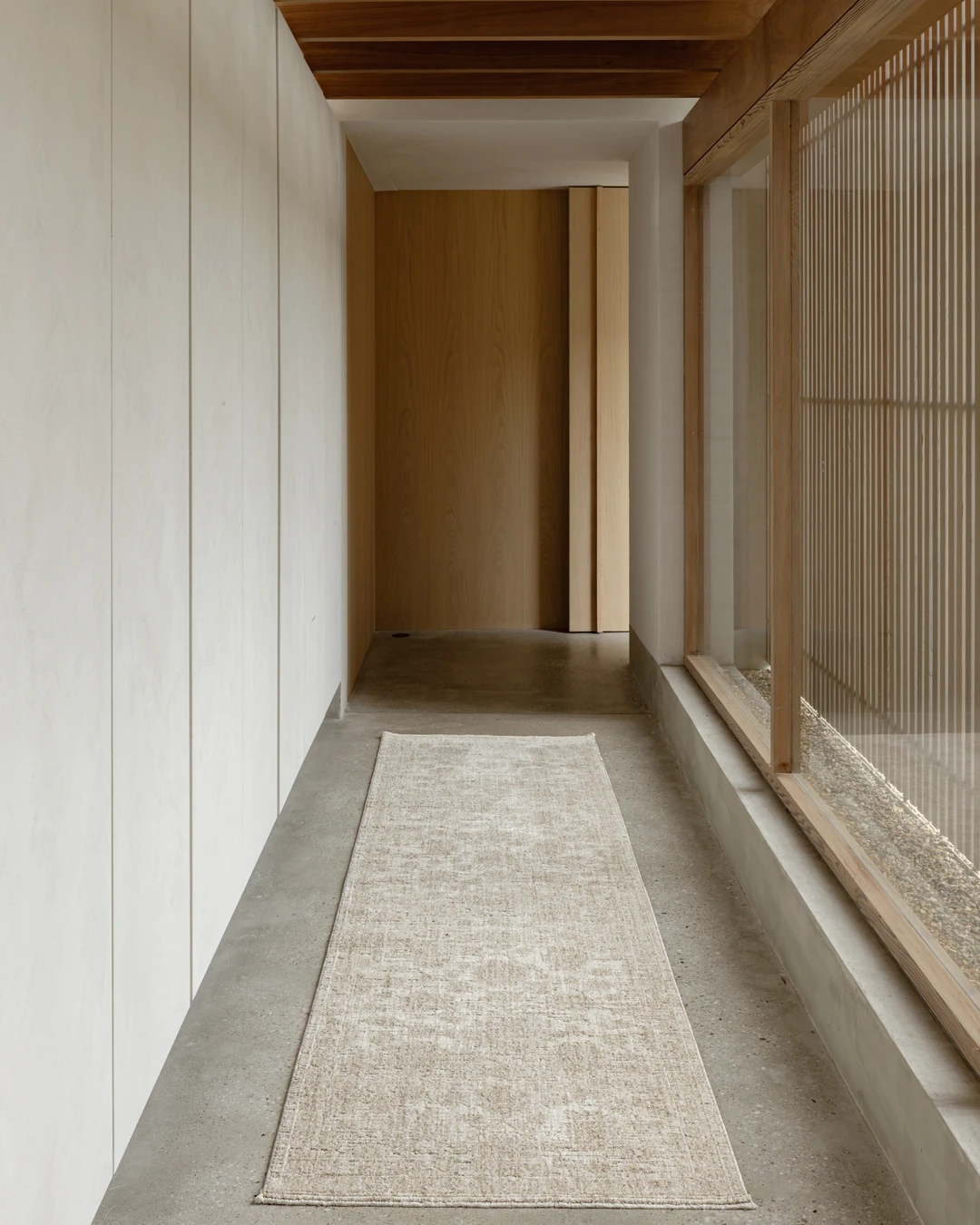
A runner rug is the fastest way to give a long hallway direction. This light natural-fibre runner runs the full length of the passage, and the eye follows it from one end to the other. White panelled walls, wood ceiling beams and large windows at the far end keep the room bright around it.
Natural fibres suit a Japandi hallway because they are matte, textured and honest underfoot. A flat weave also stays put better than a thick pile, which matters in a passage people walk through many times a day.
The practical point: the runner should stop about 15 cm short of each end of the passage, so the floor frames it like a border.
15. Curved and Arched Details
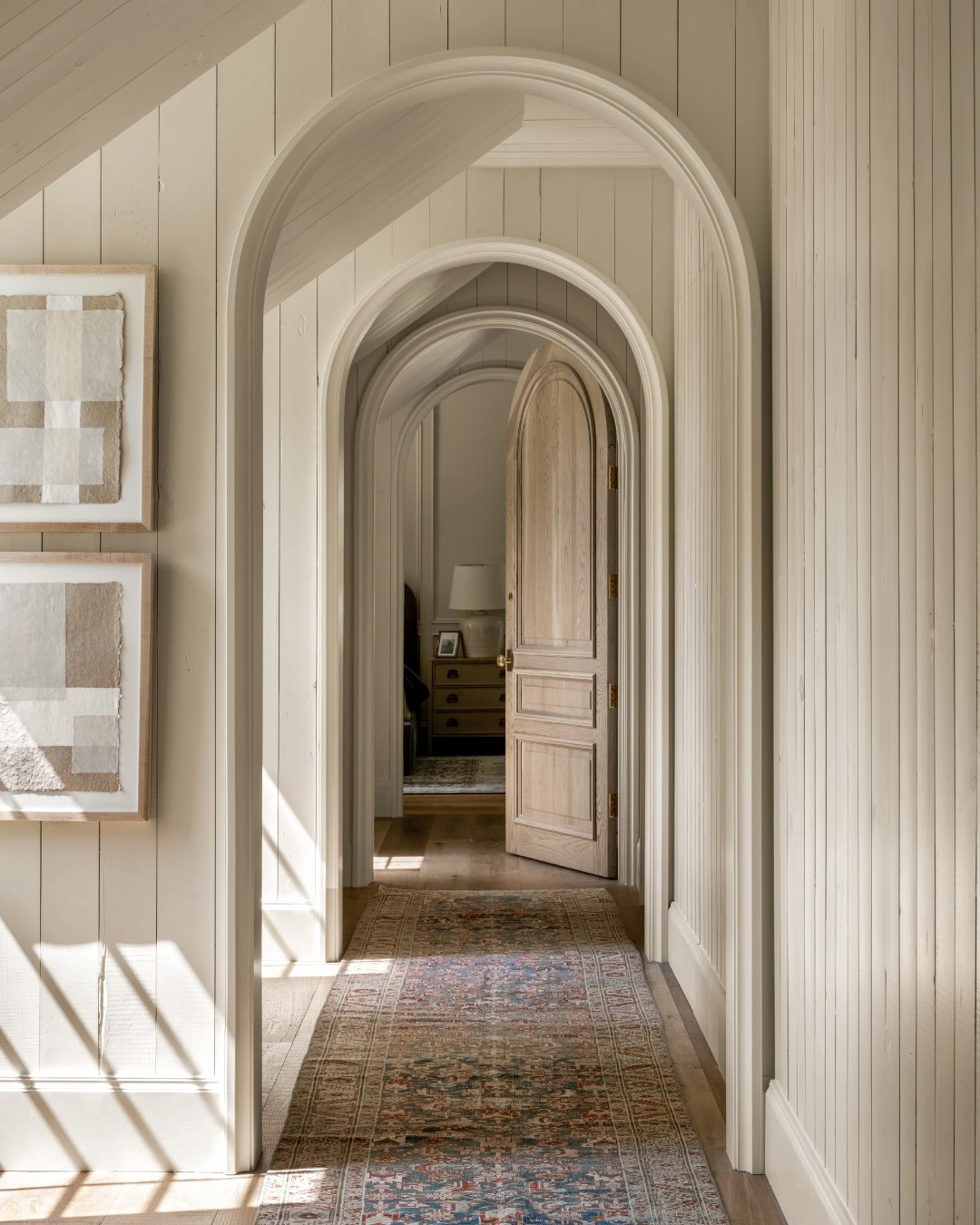
Curves soften a hallway, and arches do it best. This sunlit passage has repeating white arched doorways receding into the distance, and each arch makes the next one feel closer and calmer. Wood panelling and a patterned runner keep the room warm while the arches do the shaping.
A hallway is mostly straight lines, so one curved detail changes the whole feeling of the space. The arches slow the eye down, which is exactly what a passage between busy rooms should do.
The practical point: if you cannot build an arch, an arched mirror or a curved doorway trim gives the same soft line for far less work.
16. Black Accents for Contrast
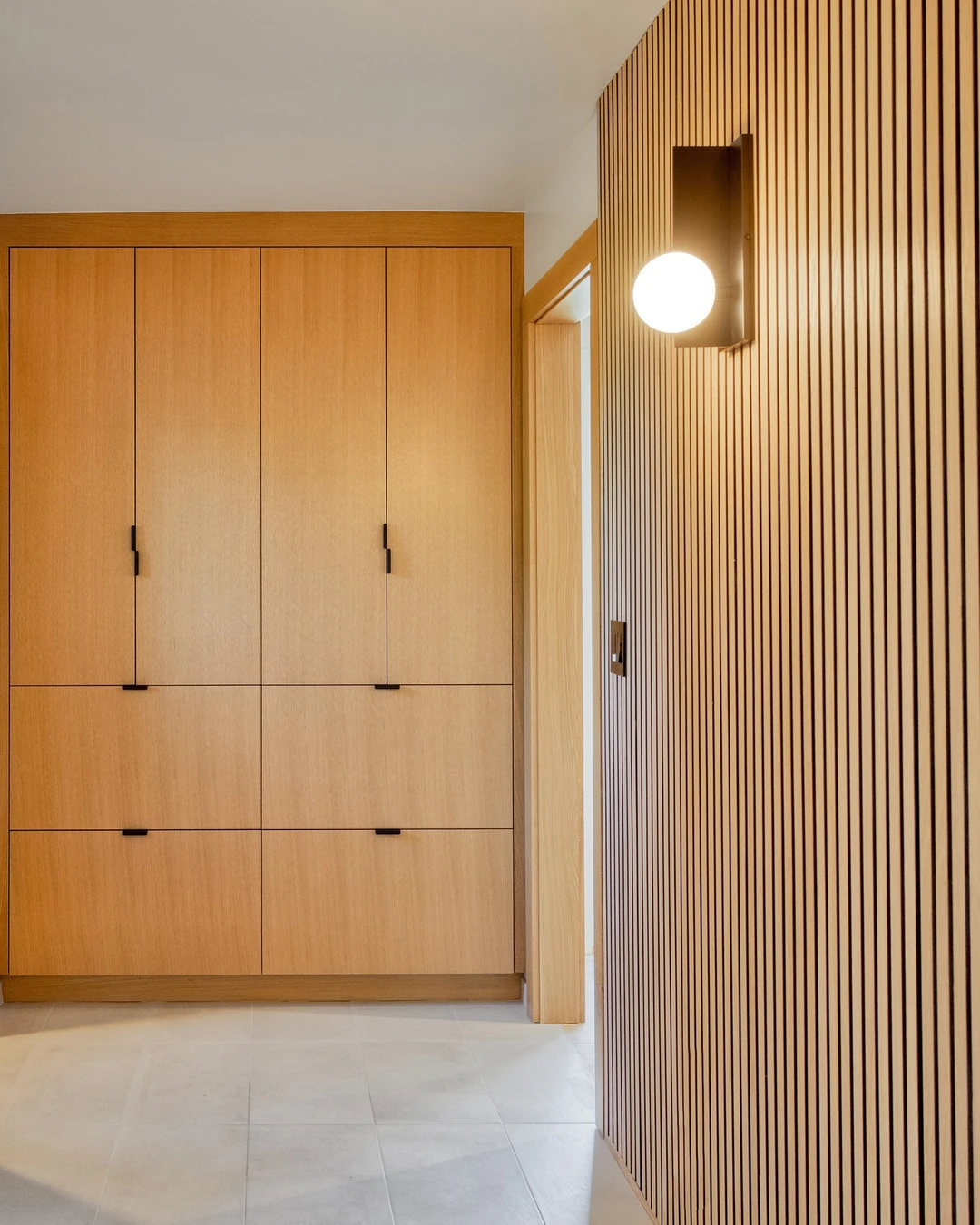
A Japandi hallway needs a little black, or the pale palette can drift into washed-out. Here the black is precise: vertical handles and horizontal pulls on the light-wood cabinets, plus a black wall sconce with a round light against a slatted wood wall. Each black note is small, and each one sharpens the wood around it.
The cabinets stay light and the sconce stays warm, so the black reads as punctuation rather than a colour scheme. That is the whole job of contrast in a calm room: a few dark marks that make the pale surfaces look intentional.
The practical point: keep black to about 5 percent of the room, handles, one light and one frame, so it sharpens the pale wood instead of darkening it.
17. Open Shelving with Few Objects
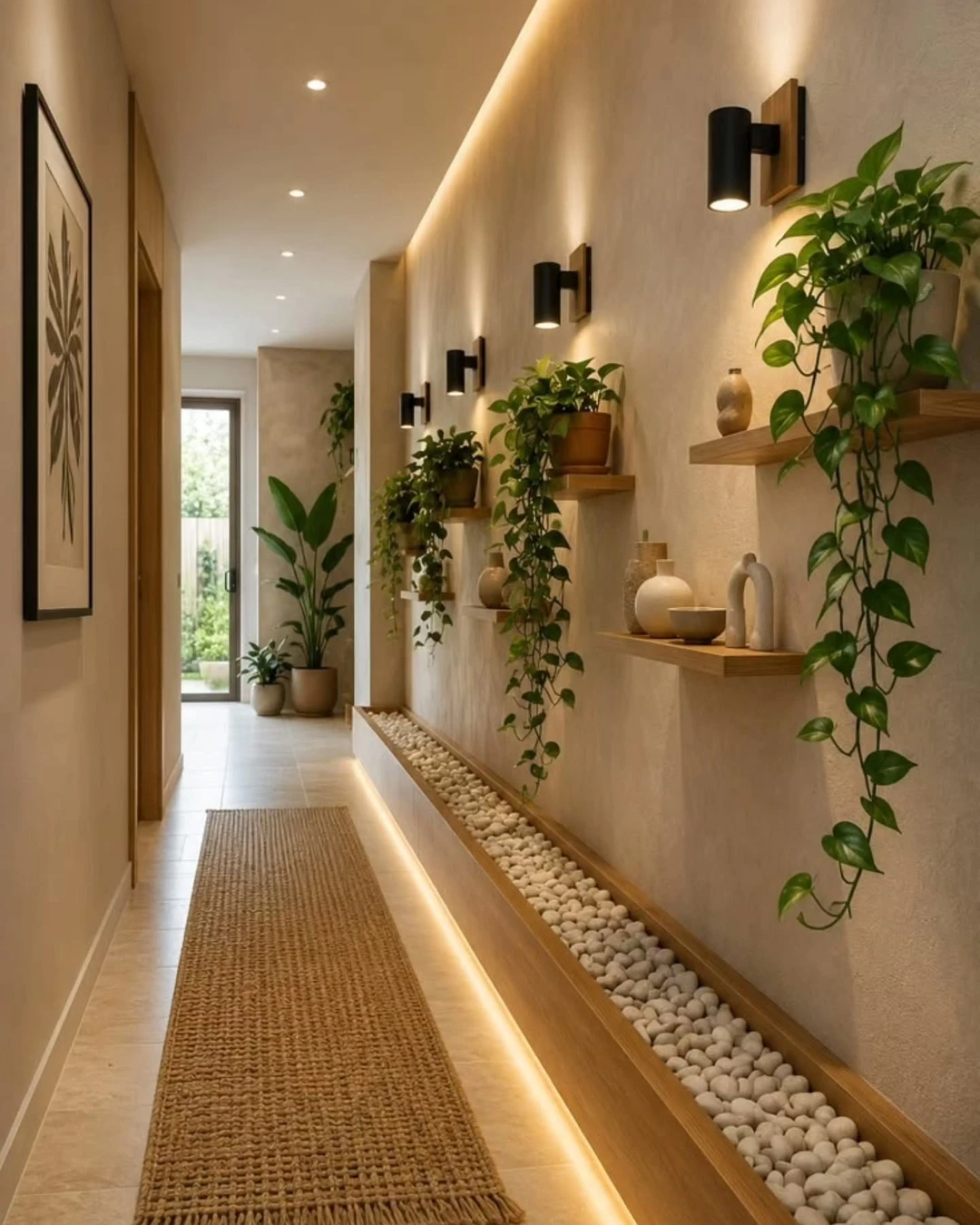
Open shelving works in a hallway only when it holds very little. These light-wood floating shelves carry a few plants and vases, with warm sconces above and a pebble bed below, and the gaps between the objects are as important as the objects themselves. A jute runner runs the length of the passage and ties the whole wall together.
The shelves are shallow, so nothing sticks out into the walking line. Trailing plants soften the straight shelves, and the ceramic vases repeat the warm tones of the wood.
The practical point: leave at least half of every shelf empty. The gaps are what make the few objects look chosen rather than stored.
18. Woven Baskets for Storage
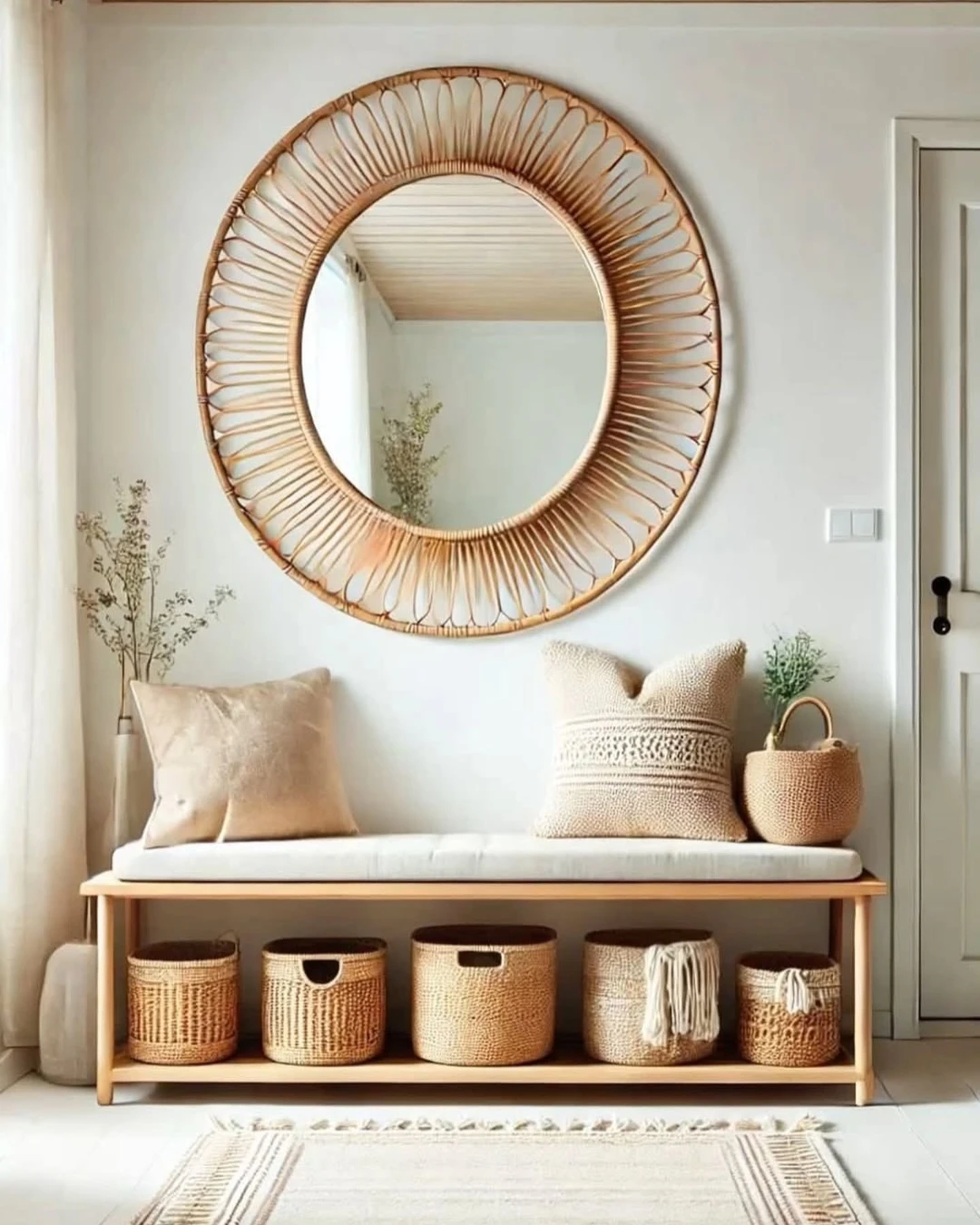
Woven baskets are the kindest storage a hallway can have. They hide shoes, scarves and dog leads, and their texture adds warmth that plastic boxes never will. This entryway bench has four baskets in the cubbies underneath, a round rattan mirror above, and cushions on the bench itself.
The baskets work because they match the bench: same warm wood tones, same natural fibres, same calm feeling. The mirror above them bounces light into the entryway, so the storage corner never feels dark.
The practical point: measure the cubby before buying baskets, and keep one basket per person so shoes and scarves have a home of their own.
19. A Round Mirror
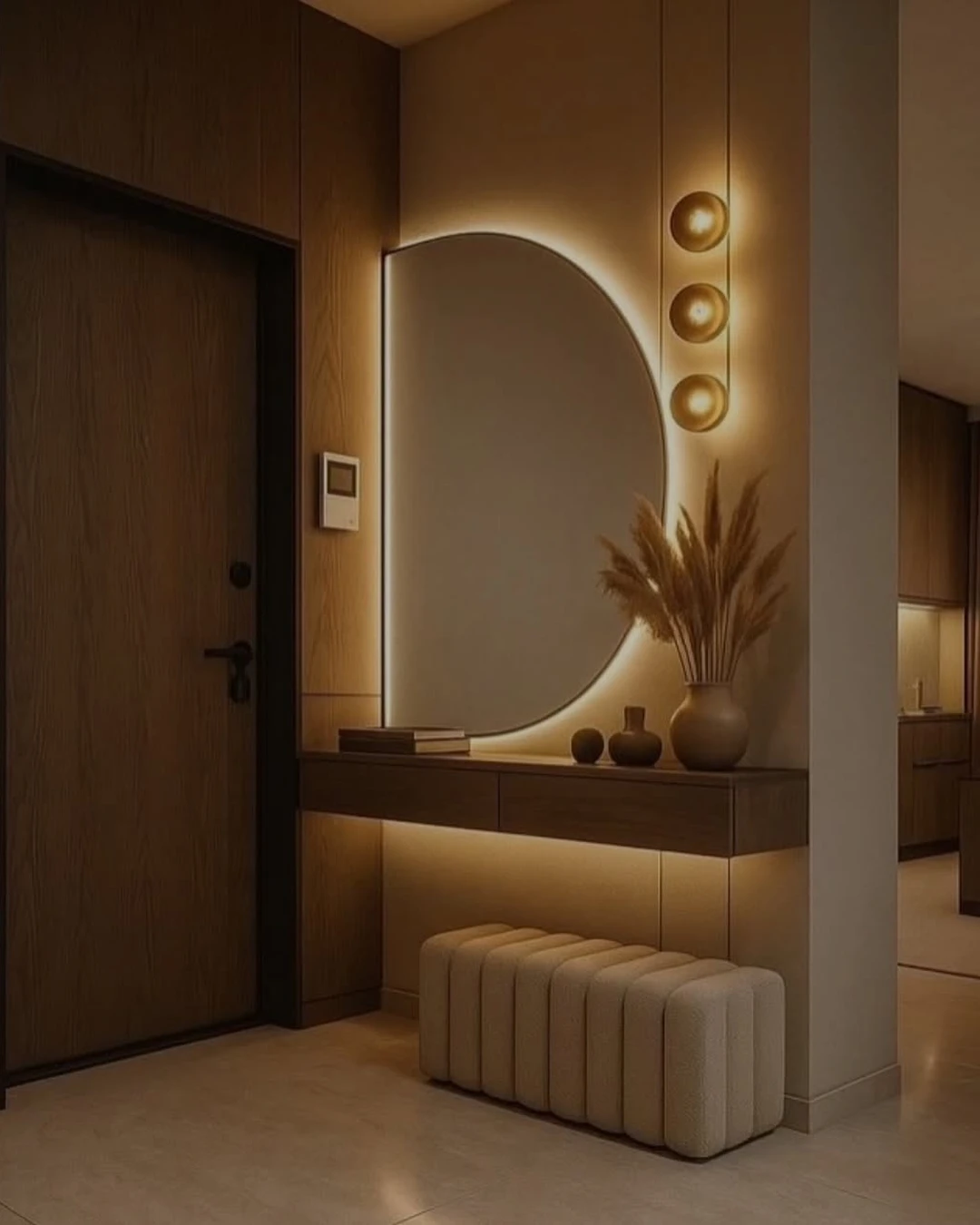
A round mirror is the last thing a Japandi hallway needs, and one of the most useful. Its curve breaks up all the straight lines of the passage, and it bounces light into corners that would otherwise stay dim. This large round mirror is backlit with LED strips, which makes it glow against the dark wood wall.
The floating wooden console beneath it stays nearly bare, with a vase of dried grasses and a few small objects. A padded bench below gives the entryway somewhere to sit, and the wall sconces add a second layer of warm light.
The practical point: hang the mirror opposite the brightest light source so it bounces light down the passage, and keep the console beneath it nearly bare.
Start with One Choice, Not Nineteen
A Japandi hallway does not arrive all at once. It arrives one choice at a time: a bench that fits, a lantern that glows warm, a runner that runs the right length. Pick the single change your hallway needs most, do it well, and live with it for a week before you add the next one.
If your floor is the weak point, our guide on Thoughtful Wooden Floor Transitions for a Cohesive Home shows how to join wood to the rooms around it without breaking the calm. The hallway will still be there tomorrow, and it will still be the first room you walk through. Make it the calmest one.