That dusty triangle beneath your staircase is the most overlooked piece of real estate in your home. But what if, with a handful of plants, some pebbles, and a string of fairy lights, it became the spot everyone stops to admire?
Creating a small garden under the stairs is one of the cleverest interior moves you can make. It adds life to a dead corner, introduces a natural focal point to your hallway or living space, and genuinely improves the air quality around you — all without demanding a major renovation or a big budget. Whether you have a sweeping open staircase or a tight, awkward nook, there is a garden style that fits. This guide walks you through everything from planning and plant picks to styling themes and maintenance — so you can build something beautiful that lasts.
Why the Space Under Your Stairs Is Pure Green Gold
Most under-stair spaces end up as storage dumps — a graveyard of shoes, boxes, and forgotten appliances. The problem is not the space itself. It is the assumption that it cannot be anything better.
A small garden under the stairs solves several design problems at once. It fills an awkward triangular void that is notoriously difficult to furnish. It brings organic texture and colour into a transition area that can feel flat or forgettable. And because it is enclosed on two or three sides, it naturally frames the planting like a built-in display cabinet — giving your greenery a polished, intentional look without extra effort.
There is also a practical upside. Research, including the widely cited NASA Clean Air Study, suggests certain houseplants can help reduce airborne toxins indoors. Even a modest grouping of plants in your under-stair nook contributes to a fresher-feeling home.
Step 1: Assess and Plan Your Space
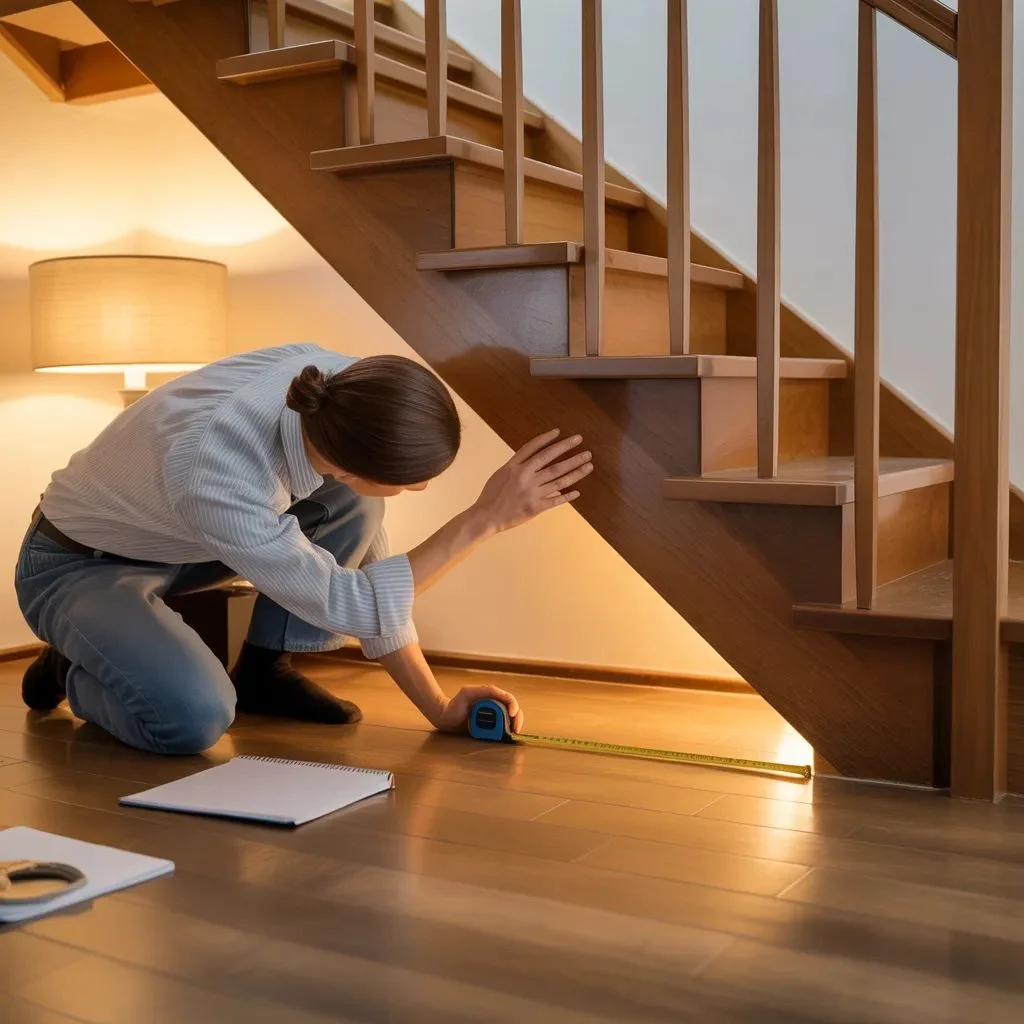
Before you buy a single plant, spend ten minutes with a tape measure. The under-stair zone is rarely uniform — most have a low-sloping ceiling and an uneven footprint. Knowing your exact dimensions prevents costly mistakes.
Measure Everything
Record the width, depth, and the height at both the tallest and lowest points. This tells you which plants and planters will fit without cramping the look. Tall architectural plants like snake plants or dragon trees work best near the highest point, while low ground-cover plants and pebble arrangements suit the tapered end.
Check Your Light
Spend a day observing how light actually falls in the space at different times. Most under-stair areas receive limited or no direct sunlight, which is fine — there are outstanding low-light plants built for exactly this. If the space is particularly dark, note where a grow light or small lamp could be positioned.
Check for Moisture
Ensure the area is not prone to damp or cold draughts, both of which stress indoor plants. If you have underfloor heating nearby or the space sits above a warm room, that is a bonus.
Step 2: Sort Out Lighting (It Makes or Breaks the Garden)
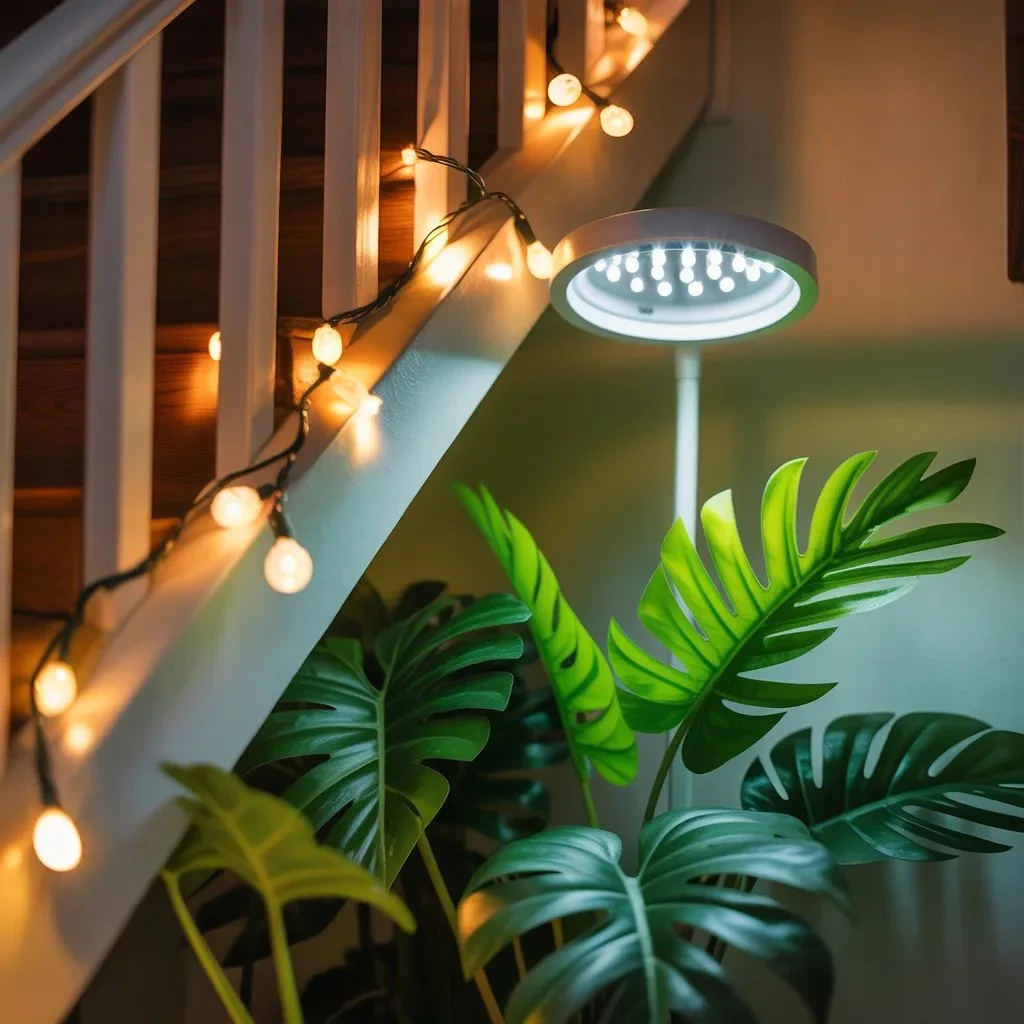
Lighting is the single most important factor after plant selection, and it is where most under-stair gardens either shine or quietly fail.
Natural Light
If your staircase sits near a window or an open-plan layout that lets daylight in, you are already ahead. Position your most light-hungry plants closest to any natural source, and reserve the darker recesses for the most shade-tolerant species like ZZ plants and cast-iron plants.
Artificial Grow Lights
LED grow lights have come a long way and are now an affordable, energy-efficient solution. A simple full-spectrum LED strip positioned along the underside of a stair tread can supply enough light to keep most low-light plants thriving. Aim for six to eight hours of artificial light daily if natural light is minimal.
Decorative Fairy Lights
Warm LED fairy lights serve a dual purpose — they add enough ambient light to help shade-tolerant plants, and they transform the whole corner into something that looks intentionally styled rather than accidentally green. Drape them along the stair risers or across the back wall for a warm, layered glow.
Step 3: Choose Your Style Theme
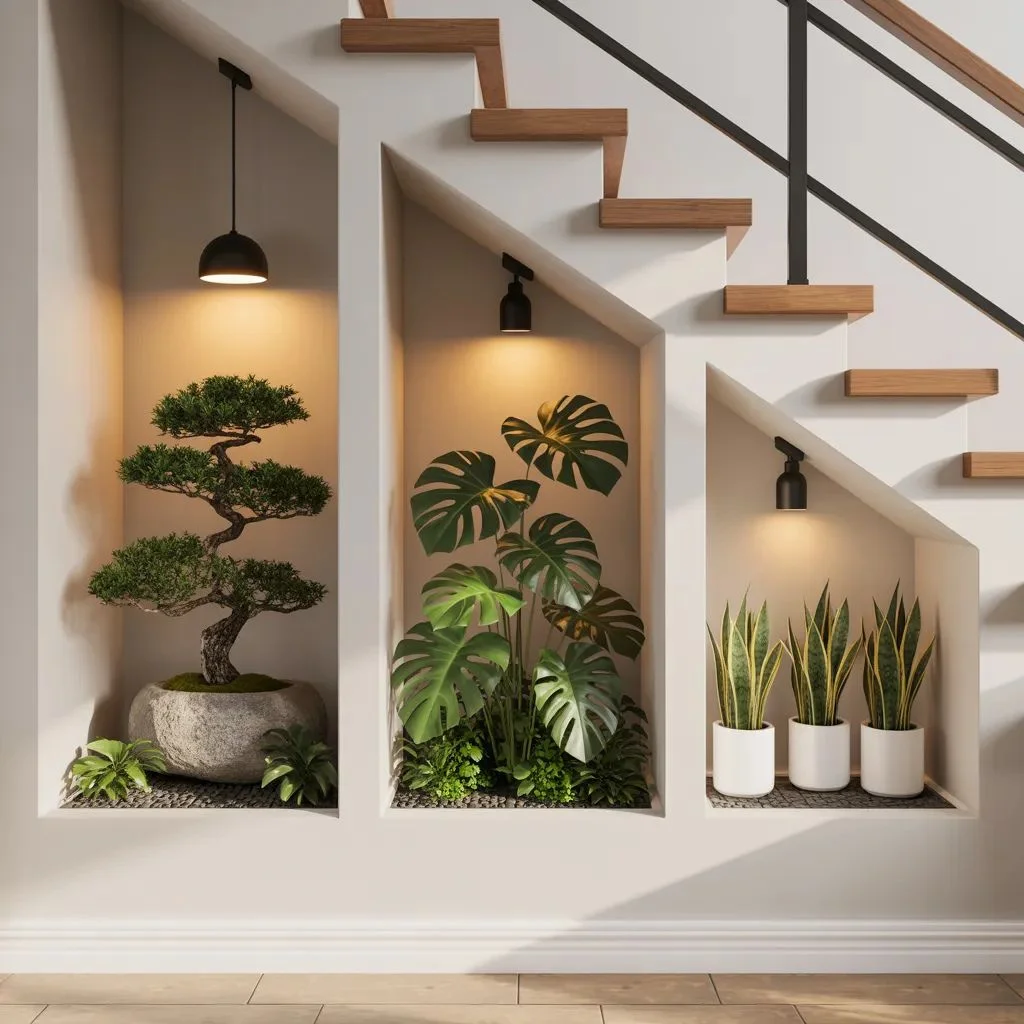
One of the best things about a small garden under the stairs is the visual impact it can carry. Committing to a clear style theme keeps the space from looking messy and pulls the whole corner together.
The Mini Jungle
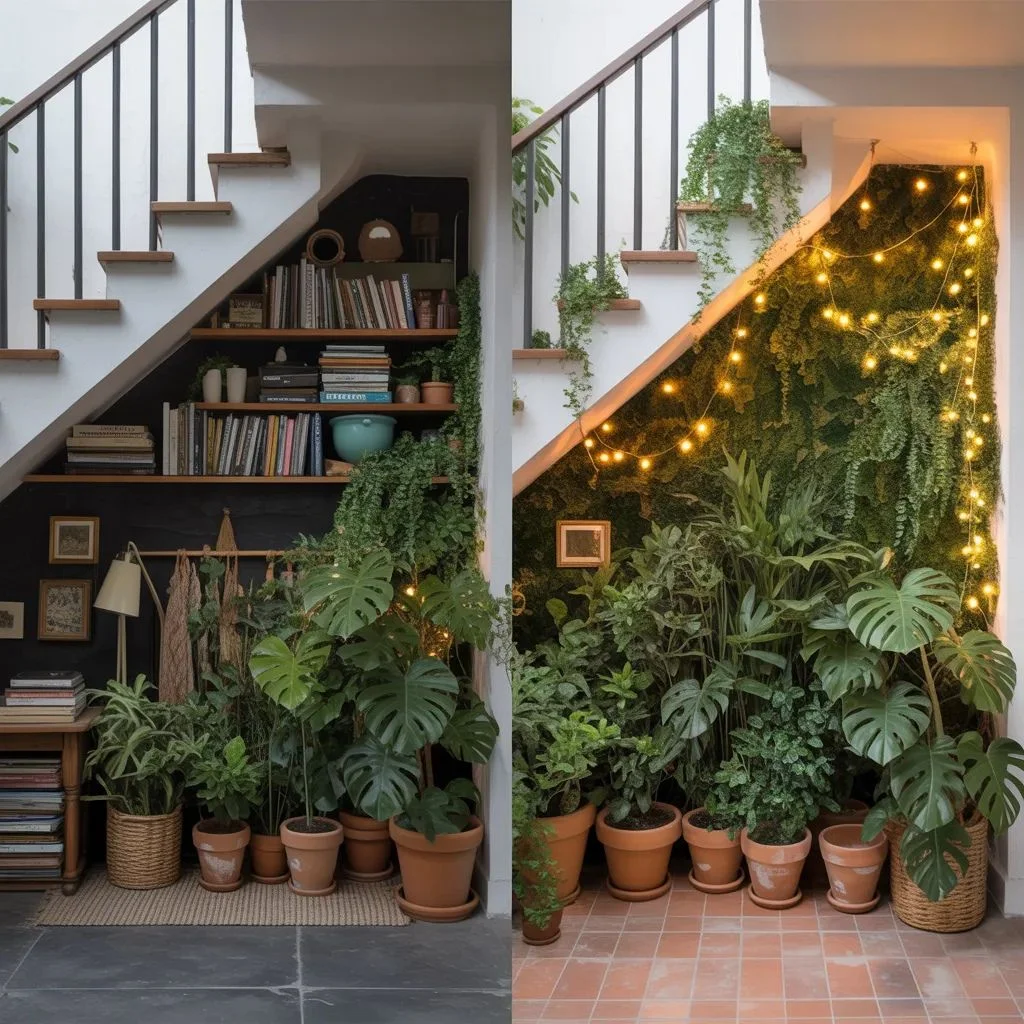
Pack the nook with lush, layered greenery — ferns, pothos, peace lilies, and a larger statement plant like a monstera or philodendron at the back. Vary the heights by using plant stands or stacked books underneath pots and let trailing vines spill forward naturally. The effect is verdant, immersive, and surprisingly low-maintenance once established.
The Zen Pebble Garden
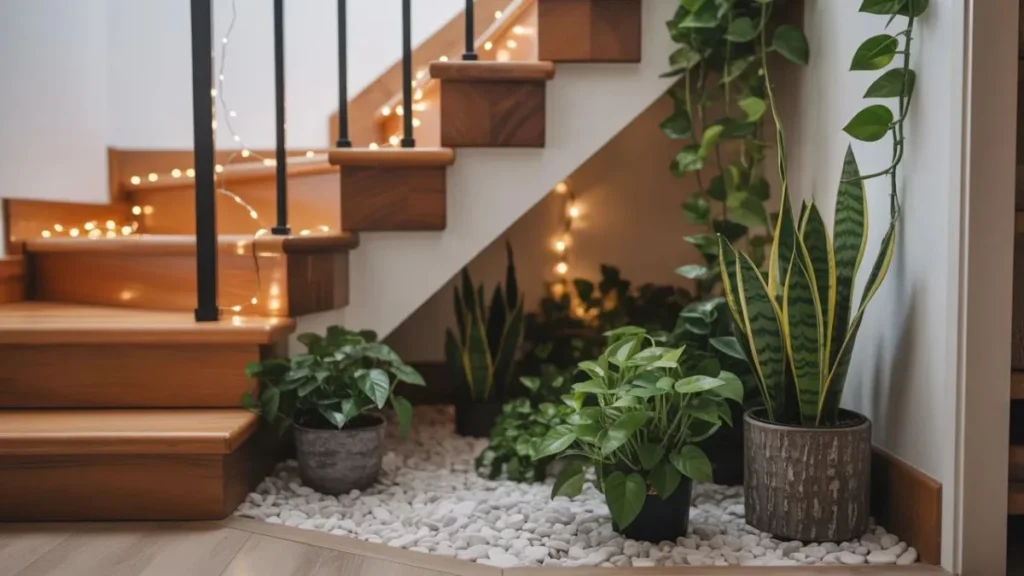
Minimalists will love this approach. Lay a waterproof liner, cover the floor with fine white or grey pebbles, and place two or three carefully chosen plants — a bonsai, a compact bamboo, or a sculptural snake plant — at varied heights. Add a smooth river stone arrangement and a single warm spotlight. The result is calm, architectural, and effortlessly elegant.
The Japandi Retreat
The Japandi aesthetic (Japanese-Scandinavian fusion) is perfect for under-stair gardens. Think pale wood tones, natural stone, moss, a small maple or bonsai tree, and a restrained colour palette of soft greens, warm whites, and muted clay. This style feels intentional and high-end even on a modest spend.
The Tropical Oasis
Channel the feel of a boutique hotel lobby with bold tropical foliage — alocasia, bromeliad, or croton — set against a dark accent wall or slim wooden slats. Warm overhead accent lighting deepens the drama. This theme works especially well in homes with contemporary or maximalist interiors.
The Cottage Corner
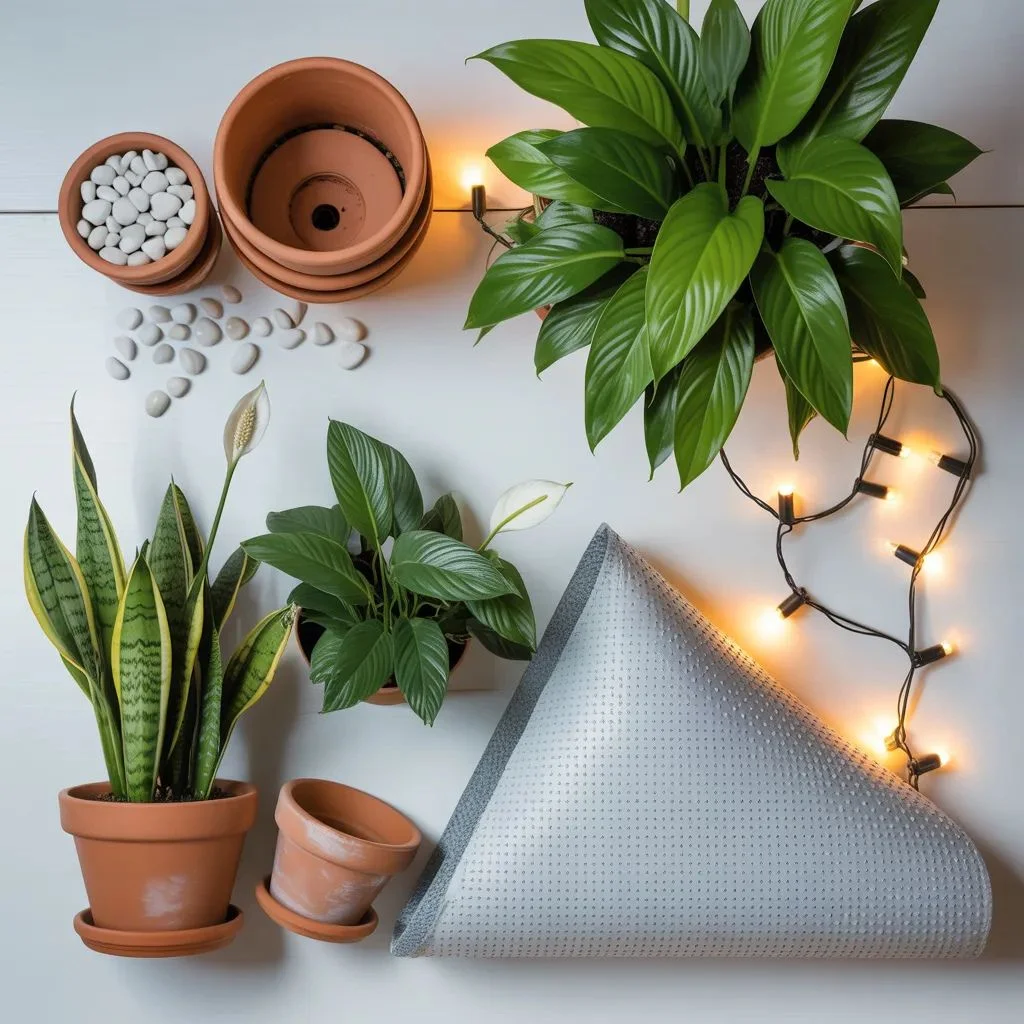
Cluster terracotta pots on a bed of artificial turf, ring them with smooth pebbles, and lean a simple wooden slat wall behind the plants so trailing vines have somewhere to climb. Warm natural light and earthy, organic tones make this style feel lived-in and welcoming — the kind of corner that makes a house feel like a home.
The Best Plants for a Small Garden Under The Stairs
The golden rule for under-stair planting: choose low-light tolerant species. The space rarely receives strong direct sun, so picking the wrong plants is the fastest route to disappointment.
Snake Plant (Sansevieria): The undisputed champion of neglect-proof indoor gardening. It tolerates very low light and infrequent watering while its upright architectural leaves add height and structure. Ideal for filling the tallest point of the nook.
ZZ Plant (Zamioculcas zamiifolia): Glossy, dark green, and almost impossibly resilient, the ZZ plant thrives where other plants fail. It adapts well to dim conditions and looks polished year-round — perfect for busy households.
Peace Lily (Spathiphyllum): A beautiful choice that signals when it needs water by gently drooping. Peace lilies adapt well to low light, produce elegant white blooms, and are known for their air-purifying qualities.
Pothos (Epipremnum aureum): A beginner favourite that recovers quickly from missed waterings and grows happily in low light. Its trailing habit makes it perfect for hanging baskets or high shelves where the vines can cascade down naturally.
Heartleaf Philodendron: A classic trailing plant with cascading vines that soften tight interiors and add visual warmth. It tolerates low light and irregular watering gracefully.
Boston Fern: For those who want a lush, feathery texture, the Boston fern thrives in indirect light and higher humidity. It is particularly striking in hanging baskets where its arching fronds can drape freely.
Calathea: With its beautifully patterned leaves, calathea adds a decorative element that no plain green plant can match. It prefers indirect light and consistent moisture — a showstopper for styled spaces.
Budget-Friendly Ideas That Still Look Expensive
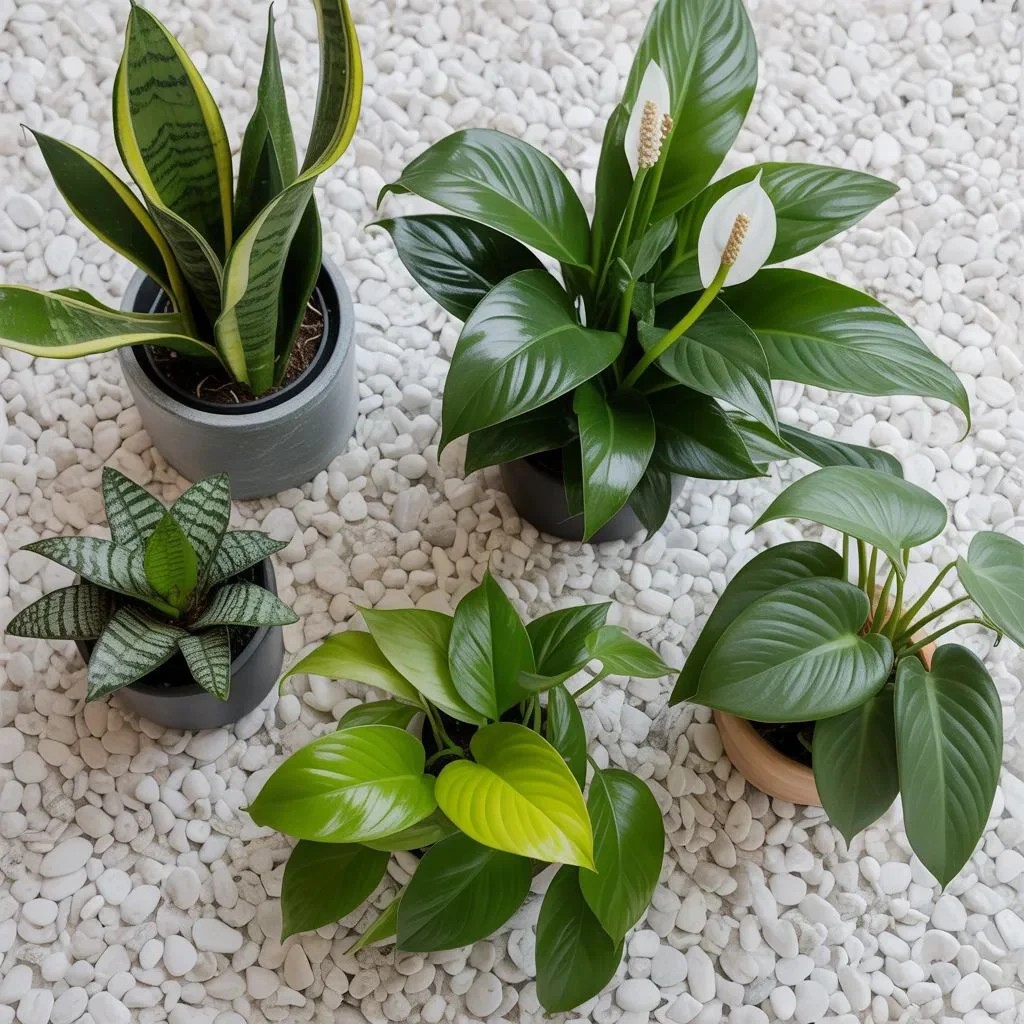
You do not need to spend a lot to create a stunning small garden under the stairs. Some of the most photogenic setups come together for well under £50 or $60.
- White pebbles: A bag of white or grey pebbles is one of the cheapest design moves you can make. They make a space look bigger, create a striking contrast against green foliage, and hide plant pots seamlessly underneath.
- Waterproof liner: Lay a simple waterproof sheet or liner before placing any pebbles or pots. This protects your flooring and makes the whole setup feel intentional rather than improvised.
- Terracotta pots: Affordable, attractive, and available everywhere. Cluster several in odd numbers and at varying heights for a collected, organic look that costs almost nothing.
- Fairy lights from a discount store: Warm LED string lights are widely available at very low prices and immediately elevate the look of any plant grouping. Drape them loosely rather than arranging them too neatly for a more natural effect.
- Propagated cuttings: Pothos and philodendrons propagate easily in water. If you or a friend already have these plants, you can fill your under-stair garden for free within a few weeks.
- Driftwood and natural stones: Pick up interesting pieces of driftwood, branches, or rocks on a walk. They add texture and character to pebble gardens without any cost whatsoever.
How to Layer Your Under-Stair Garden for Maximum Impact
The difference between a beautiful under-stair garden and a random collection of pots is layering. Think of it in three tiers:
The floor layer — pebbles, moss, artificial turf, or wooden decking creates the base and ties the composition together.
The mid layer — potted plants at ground level, ideally varied in height using pot stands or stacked books underneath. This is your main visual mass.
The vertical layer — trailing plants hanging from the stair risers, climbing vines trained along a wall, or hanging baskets suspended from the underside of the stair structure. This draws the eye up and makes the garden feel spacious rather than cramped.
Odd numbers almost always look better than even groupings. Three plants of varying heights and textures will look more natural and considered than two or four perfectly matched pots.
Maintenance Tips to Keep Your Garden Thriving
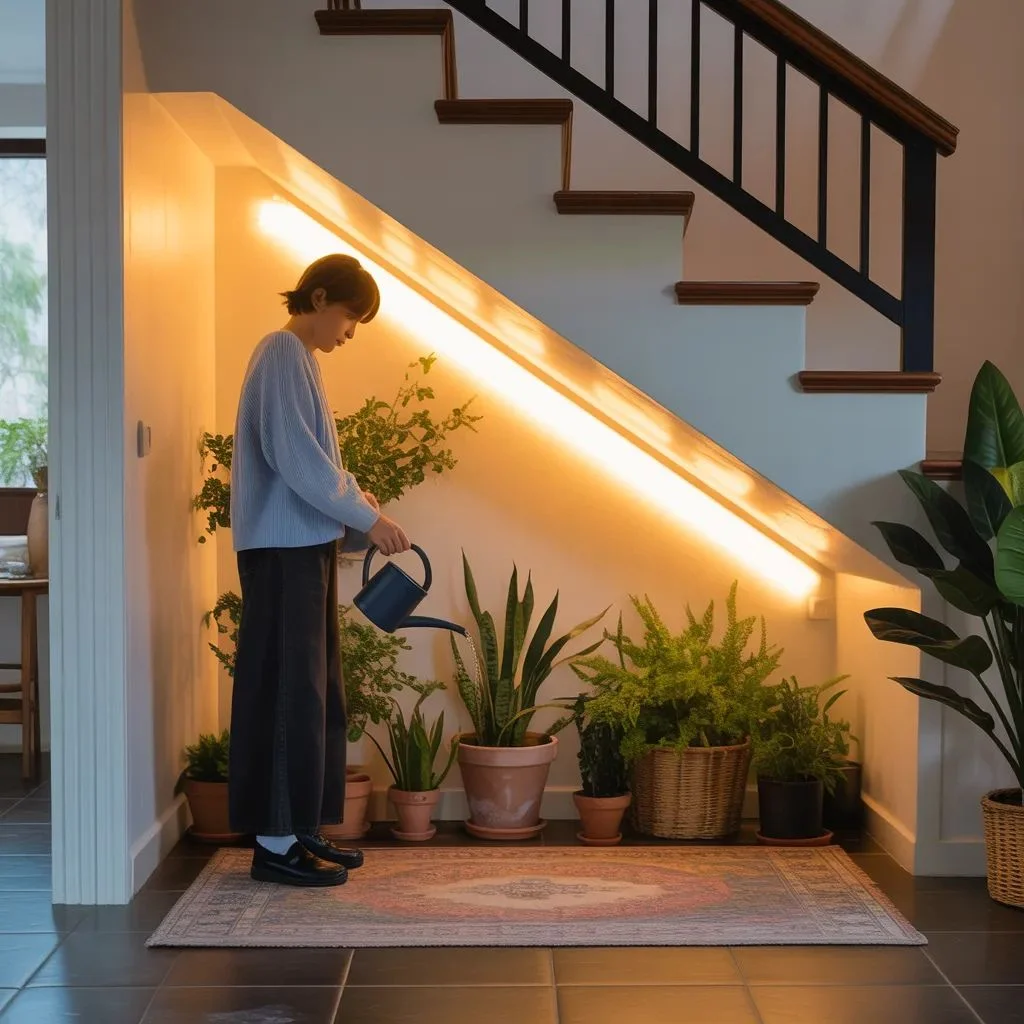
An under-stair garden is one of the more hands-off indoor gardening projects — especially if you choose the right plants. A few simple habits will keep it looking its best.
- Water based on each plant’s needs, not a fixed schedule. Most low-light plants prefer the top inch or two of soil to dry out between waterings.
- Rotate pots a quarter turn every few weeks so all sides receive equal exposure to any light source and plants grow evenly.
- Wipe large leaves with a damp cloth monthly to remove dust. Dusty leaves absorb less light and look dull even when the plant is healthy.
- Inspect for pests during each watering session. Under-stair spaces can be still and warm, which suits spider mites and fungus gnats. Catching infestations early saves the whole garden.
- Fertilise during the growing season (spring and summer) with a balanced liquid feed. Hold off entirely through autumn and winter when most indoor plants slow down.
- Swap out any struggling plants before they pull down the overall look. Keep a couple of backup plants in a brighter spot you can rotate in while the others recover.
Your Under-Stair Corner Has Been Waiting Long Enough
The space beneath your staircase is one of those rare home features that asks almost nothing of you and gives back an enormous amount when you finally pay it some attention. A small garden under the stairs takes a spot that collects dust and turns it into the most talked-about corner of your home.
Start simple. A waterproof liner, a bag of white pebbles, a snake plant, a trailing pothos, and a string of warm fairy lights is genuinely all you need to begin. The rest grows — quite literally — from there.
Which style theme are you planning for your staircase nook? Drop it in the comments below — we would love to see what you create.
Editor Pick: Can’t Fit Anything In? These Layouts for Very Small Bedrooms Will Change That.