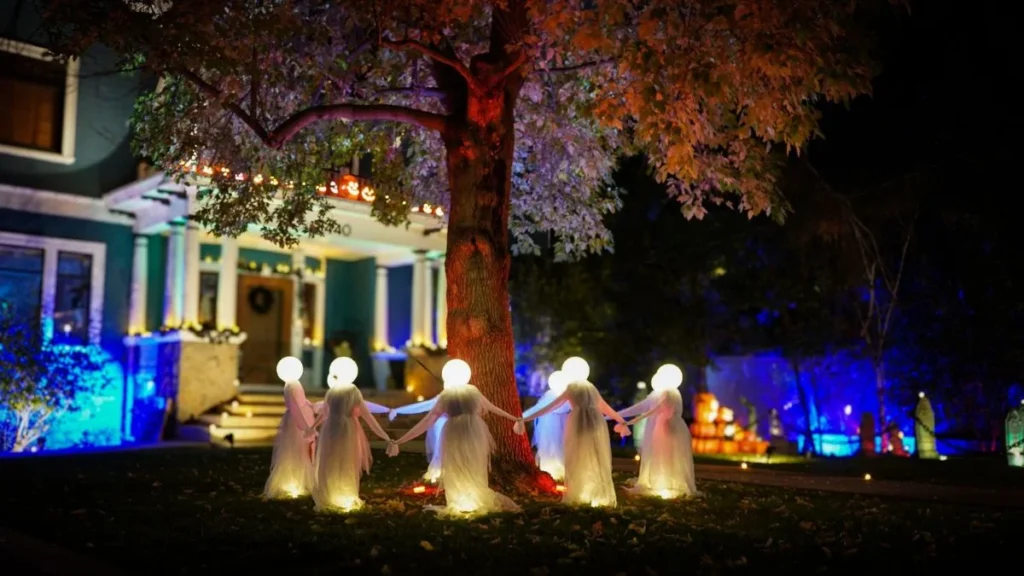
Chicken wire ghosts have taken over front lawns this Halloween, and the secret behind their eeriest versions is not the wire at all. It is the paint.
A plain wire frame reads as a garden sculpture in daylight and disappears completely after dark. A well spray painted chicken wire ghost, though, seems to hover above the grass with a pale, almost breathing glow once the streetlights come on.
This guide walks through the full build, from bending the mesh to choosing the right paint finish, so your ghost looks convincingly ghostly rather than like a lump of fencing wire someone forgot to take down.
Before You Start
- Pale grey or white matte spray paint reflects porch and streetlight far better than leaving wire bare.
- Building the frame in sections (torso, head, arms) makes shaping far easier than working with one giant sheet.
- A green-to-black paint fade at the base hides the legs and creates a floating illusion after dark.
- Battery fairy lights tucked inside the frame turn a daytime sculpture into a genuine after-dark showstopper.
Gather Your Wire And Paint Supplies
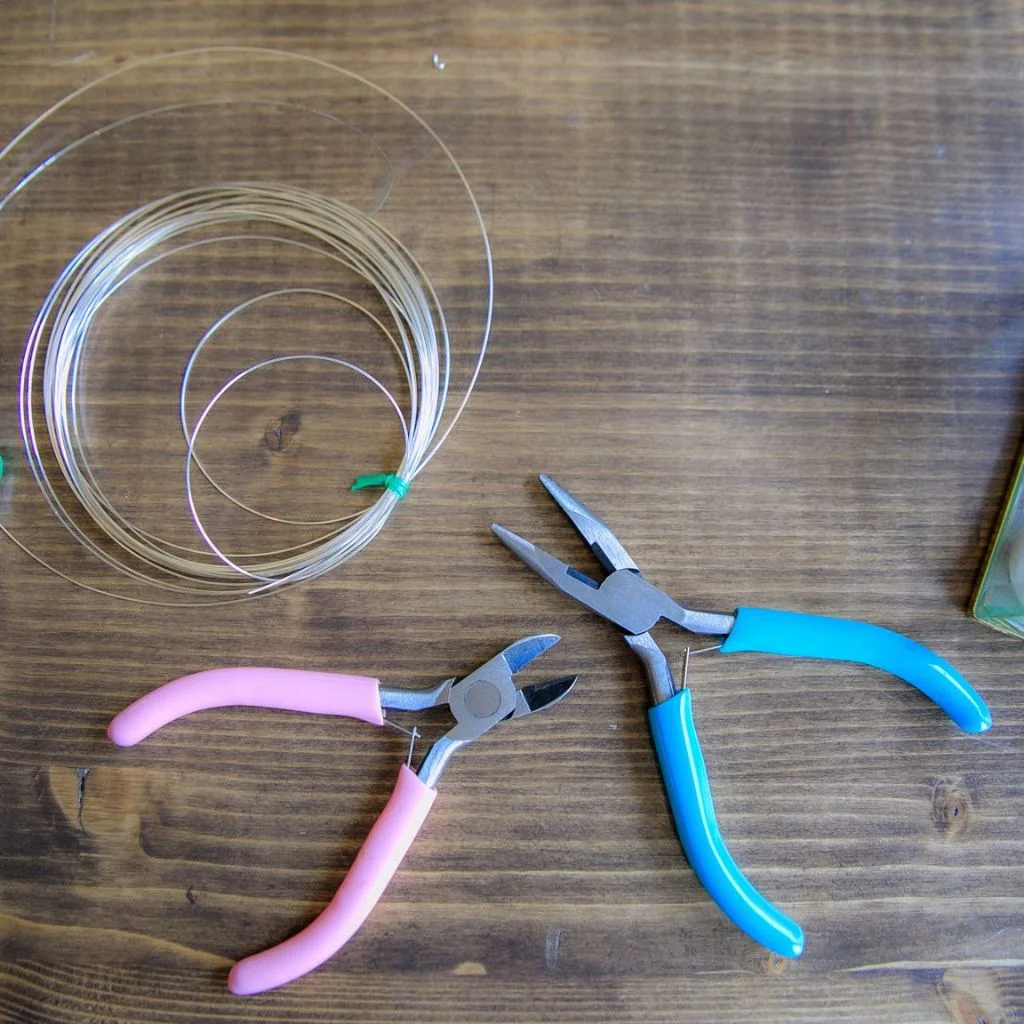
Before any bending starts, lay everything out on a tarp so the project does not stall halfway through. You will need galvanised chicken wire (a 3-foot roll is enough for one life-sized figure), heavy-duty wire cutters, work gloves, and a few landscape stakes to anchor the finished piece.
For the paint side, pick up matte white or pale grey spray paint as your base, plus a can of black and a can of green for shading the lower half. Cheap fabric spray paint or standard aerosol both work, but matte finishes catch light far better than gloss, which tends to look plasticky under a porch bulb.
A cheap wig-styling mannequin head or a spare styrofoam head from a craft shop makes the facial shaping much easier, though it is not essential if you are happy sculpting freehand.
Shaping The Frame Into A Ghost
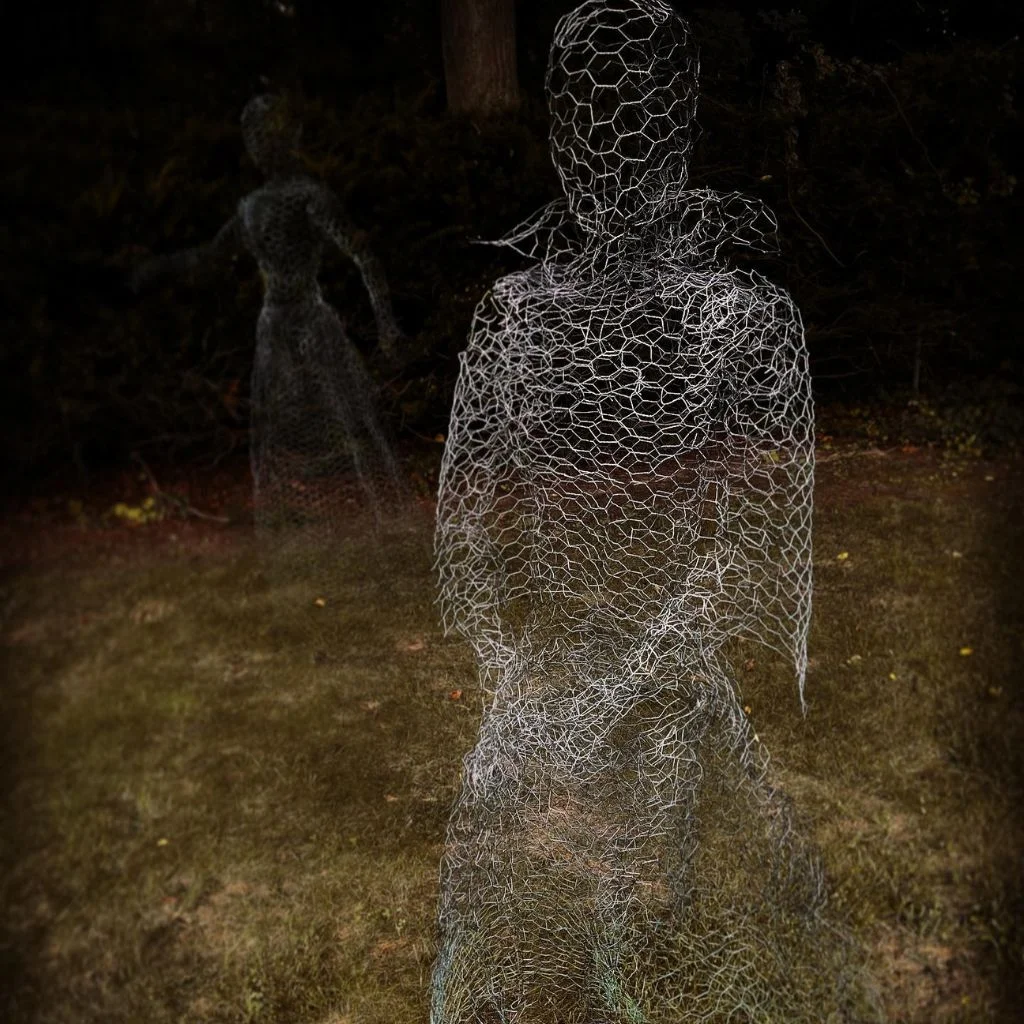
Image Source: brandon.hardy.art
Cut a rectangle of chicken wire roughly 2 feet by 3 feet for the torso and roll it into a loose cylinder, overlapping the edges by a few inches. Weave the cut ends of the mesh together rather than taping them, since wire grips wire far more securely than any adhesive will in wind or rain.
Chicken wire naturally curls in the direction it was rolled on the spool, so expect some resistance at first. Working in smaller sections and pinning each one as you go makes the curl far easier to control than fighting one enormous sheet.
Once the torso cylinder holds its shape, pinch and mould the top into rounded shoulders and squeeze the middle slightly to suggest a waist. This is where the figure stops looking like a tube and starts looking like a body.
Building The Torso, Arms And Head
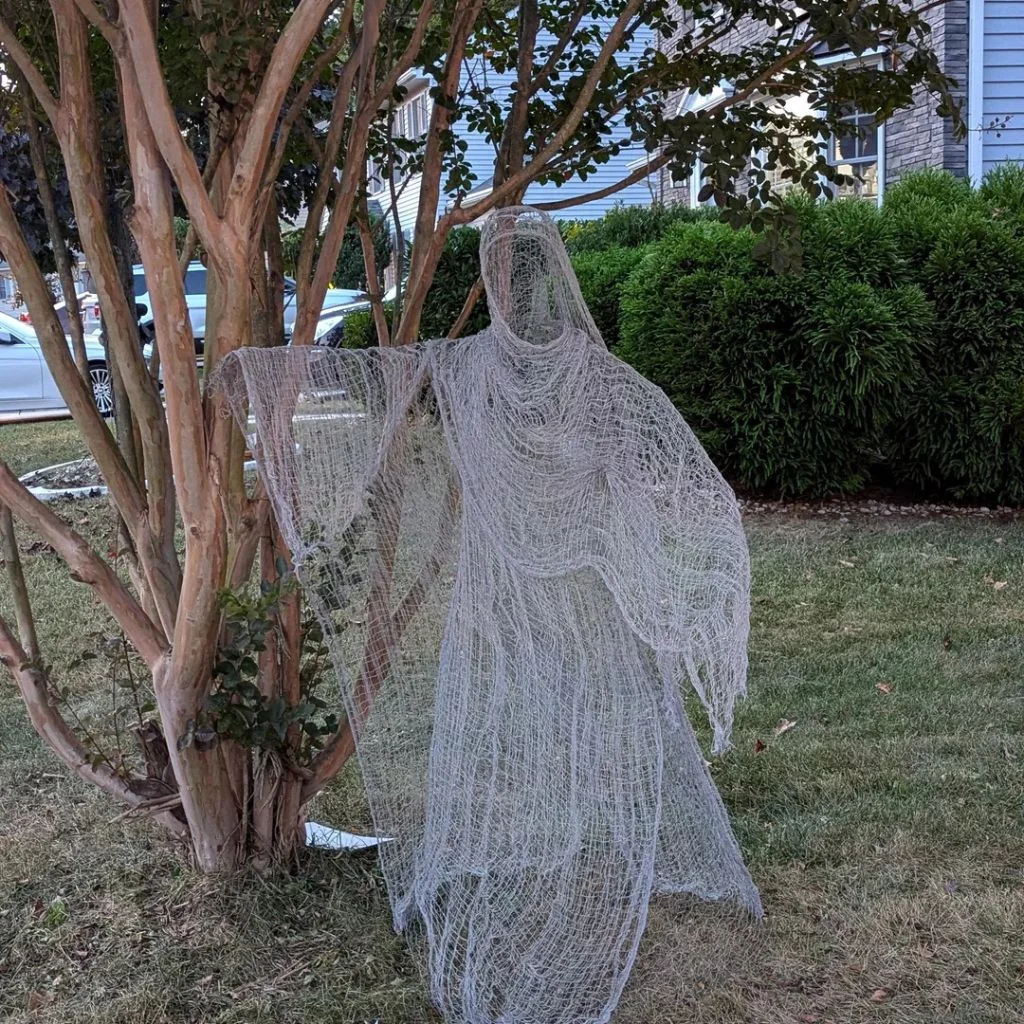
Image Source: Reddit
Cut two smaller tubes for the arms, each about a third of the width of the torso, and snip small slits into the torso where the shoulders should attach. Thread the arm pieces through the slits and twist the loose wire ends back on themselves to lock them in place.
For the head, drape a square of mesh over the styrofoam form (or your gloved fist, if working freehand) and press it into the hollows around where the eyes and cheekbones would sit. You do not need actual facial detail — a vague, hollow suggestion of a face is far creepier than anything too literal.
Finish with a wide base tube for the legs and skirt area, and make it noticeably larger than feels necessary. A base that is too narrow will make the whole figure look thin and flimsy rather than imposing.
Getting The Spray Paint Glow Right
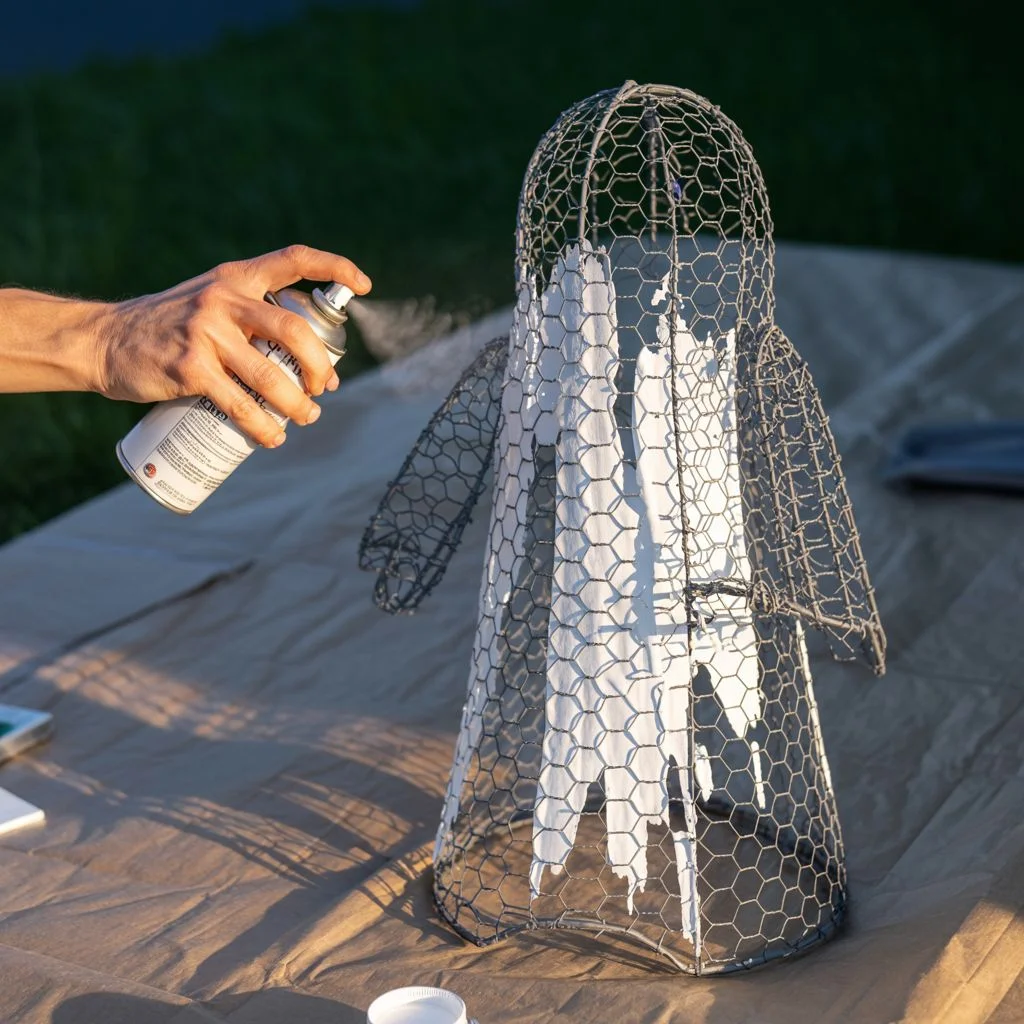
A neighbour of ours skipped painting altogether last year and ended up with a ghost that looked like abandoned garden fencing by 9pm — a good reminder that paint is doing most of the emotional work here.
Spray the entire upper body — torso, arms and head — in several light coats of matte white or pale grey, letting each coat dry for a few minutes before the next. Thin, even coats prevent the paint from pooling in the wire gaps and creating dark blotches.
Once the base coat is dry, fade the lower legs and base into green near the grass line and black in patches above it. This is the step that tricks the eye into thinking the ghost is floating, since the base visually melts into the lawn rather than reading as a solid stand.
Hold the can further back than feels natural, around 12 to 14 inches from the mesh, and use short bursts rather than one long pass. Standing too close is the usual reason paint clumps in the wire gaps instead of coating the strands evenly.
If you want an extra layer of shimmer, a light dusting of silver or pearl spray over the dried white base catches passing headlights and torchlight in a way flat white alone cannot manage.
Lighting It Up After Dark

Tuck a string of battery-powered fairy lights or a small LED puck light inside the torso before you position the finished ghost outside. The light scattering through the wire gaps and painted mesh is what gives the figure its signature eerie glow rather than a flat silhouette.
Position the ghost slightly away from walls or fences and avoid a solid, bright background behind it. Open space and a bit of distance from the viewer make the shape read as blurred and ghostly rather than obviously wire and paint.
Warm white lights give a candlelit, mournful glow, while cool white or pale blue leans more towards a cold, spectral look. Either works, so pick whichever fits the rest of your yard’s colour scheme rather than following one fixed rule.
A small battery pack with a built-in timer means the lights switch on at dusk automatically, which saves a nightly trip outside to flick a switch.
Mistakes That Flatten The Spooky Effect
Skipping the paint entirely is the single biggest mistake, since bare galvanised wire simply reflects as dull metal under artificial light rather than glowing.
Placing the ghost directly against a bright porch wall is another common slip. The background needs to stay dark or distant so the figure stands out instead of blending into a lit-up wall behind it.
Rushing the base is the third trap. A narrow, unpainted stand undoes hours of careful shaping higher up, since it is the first thing anyone notices at eye level.
Keeping Your Ghost For Next Halloween
Chicken wire rusts quickly once damp, so bring the figure indoors or under cover as soon as the season ends. A light wipe with a soft brush clears off dust and cobwebs before storage.
Before packing it away, mist the wire with a weak solution of nonchlorine bleach and water to stop mould developing over the off-season. Hanging the ghost upright, rather than folding it flat, keeps the shaping you worked so hard on from collapsing by next October.
One Wire Frame Six Ghoulish Yards Of Character
A spray painted chicken wire ghost costs a fraction of a store-bought inflatable and looks far more convincing once the sun goes down. The wire does the shaping, the paint does the glow, and a single string of fairy lights does the rest.
Start with one figure this year, and it is a safe bet you will be back at the wire roll making a second before next Halloween arrives.
Highly Recommended: Spooky Halloween Archway Ideas for a Show Stopping Entrance.
Frequently Asked Questions
How much chicken wire do I need for one ghost?
A 3-foot by 10-foot roll is generally enough for one life-sized figure, covering the torso, arms, head and a wide base.
Does spray paint wash off chicken wire in the rain?
Matte spray paint holds up well through light rain once fully cured, though a fresh coat before each new season keeps the glow looking crisp.
Can I make a chicken wire ghost without a mannequin head?
Yes. A rounded ball of scrunched wire or even your gloved fist as a shaping guide works fine, since the head only needs a vague, hollow suggestion of features.
Is chicken wire safe to leave outside all season?
It is, as long as it is anchored well with landscape stakes, though bringing it in after Halloween prevents rust and extends how many years you get from one build.