A standing mirror can do more for a bedroom than a full furniture refresh. It adds height, opens the space, and makes the whole room feel more intentional — without requiring a drill or a contractor. The problem is most people pick one impulsively, only to realize it’s the wrong size, the wrong frame, or sitting in completely the wrong spot.
This guide covers every type of standing mirror worth considering for a bedroom, how to place each one smartly, and which styles are leading the conversation in 2026. Whether you’re decorating a compact apartment room or a spacious primary suite, there’s a floor mirror setup here that fits.
What Makes a Standing Mirror Different From Wall-Mounted?
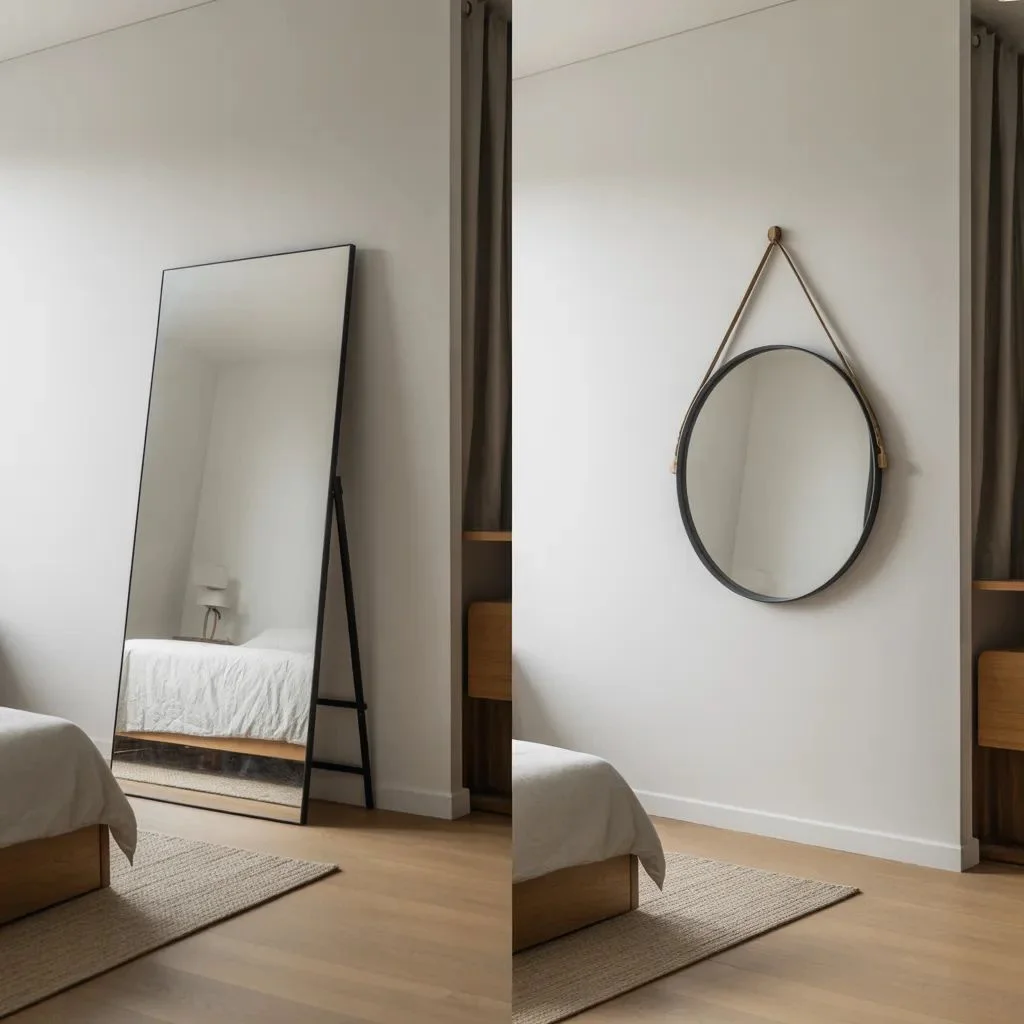
The core difference is flexibility. Standing mirrors — also called floor mirrors or leaning mirrors — don’t require mounting hardware. They stand or lean on their own, which means you can reposition them whenever you want without patching up walls.
That portability matters more than most people realize. You can angle a standing mirror toward natural light to brighten a darker corner. You can move it temporarily when rearranging furniture. You can take it with you if you move. Wall mirrors, by contrast, are committed decisions.
Standing mirrors also tend to run taller, which gives a full-body view that smaller mounted mirrors can’t provide. For a bedroom — where you’re checking outfits daily — that’s a practical win, not just a stylistic one.
6 Types of Standing Mirrors for Bedroom
Not all standing mirrors are built the same. The type you choose determines how the piece reads in the room — and how useful it is.
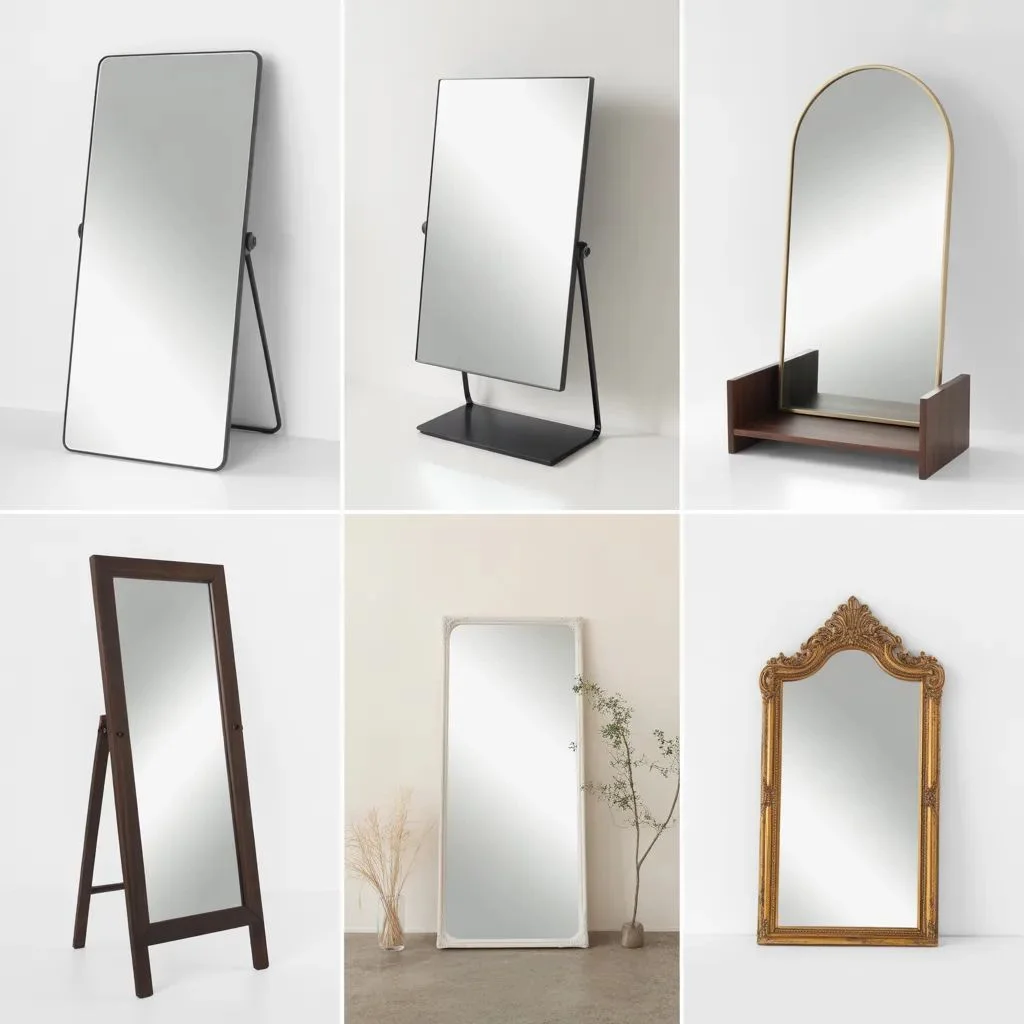
1. Full-Length Leaning Mirror
The most popular bedroom option. These mirrors stand tall — typically 60 to 72 inches — and lean against the wall at a slight angle. They don’t need a freestanding base, just a wall for support.
Leaning mirrors have an effortlessly casual look that works across styles, from minimal to maximalist. The slight tilt created by leaning also reflects the room at an interesting angle, which makes the space feel more dynamic. Most come in rectangular shapes, though arched versions have grown significantly in popularity.
2. Freestanding Mirror with Base
These have an attached stand or bracket system, so they don’t need a wall for support. They’re more stable and repositionable — useful if you want the mirror placed in the center of a room or away from walls entirely.
The trade-off is visual weight. A base adds structure but also bulk. In smaller rooms, this can feel heavy. In large primary bedrooms, it often reads as a furniture piece.
3. Arched Standing Mirror
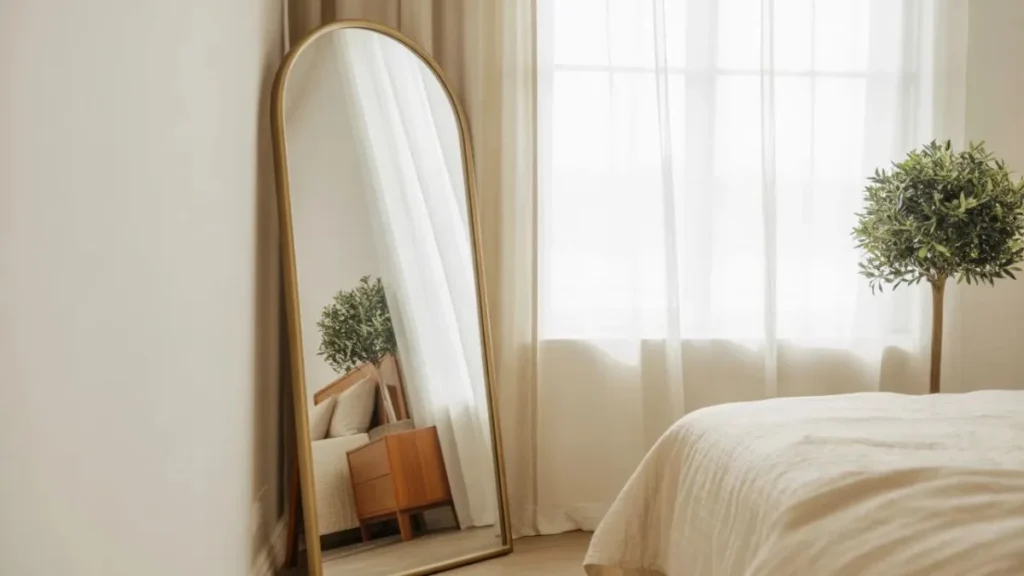
The dominant shape of the past two years and still going strong. An arched frame softens the geometry of a bedroom, particularly one with sharp-edged furniture. The curved top pulls the eye upward and adds height visually, even in rooms with lower ceilings.
Arched mirrors work especially well paired with curved headboards, round lighting fixtures, or organic-shaped decor. They’re available in leaning and freestanding configurations.
4. Cheval Mirror
A cheval mirror is a classic freestanding design that pivots on a horizontal bar set within a four-legged frame. It’s adjustable, tilting forward or backward to give you control over your reflection angle.
Cheval mirrors lean toward traditional and vintage aesthetics — think dark wood frames, ornate legs, and antique brass hardware. They’re making a comeback in 2026 as maximalist and eclectic bedroom styles resurface.
5. Oversized Floor Mirror
Technically a category overlap, but worth calling out separately: oversized mirrors — those measuring 70 inches or taller and 30-plus inches wide — function as architectural features, not just accessories.
Placed in the right bedroom, an oversized leaning mirror can replace the need for additional wall art. It reflects enough of the room to genuinely amplify natural light and creates a focal point with serious visual authority.
6. Vintage and Antique-Style Standing Mirrors
Ornate gold frames, carved wood detailing, aged brass hardware — vintage-style floor mirrors carry character that modern designs often skip. They’re the wildcard option: bold, personal, and immediately attention-grabbing.
These pair best with rooms that already have warm, layered aesthetics. Drop one into a sterile all-white room and it feels jarring. Place it in a room with textured linens, warm lighting, and natural wood, and it ties everything together.
How to Place a Standing Mirror in a Bedroom
Placement determines whether a mirror enhances a room or simply occupies it. The wrong spot — even with a beautiful mirror — creates awkward reflections, visual clutter, or wasted potential.
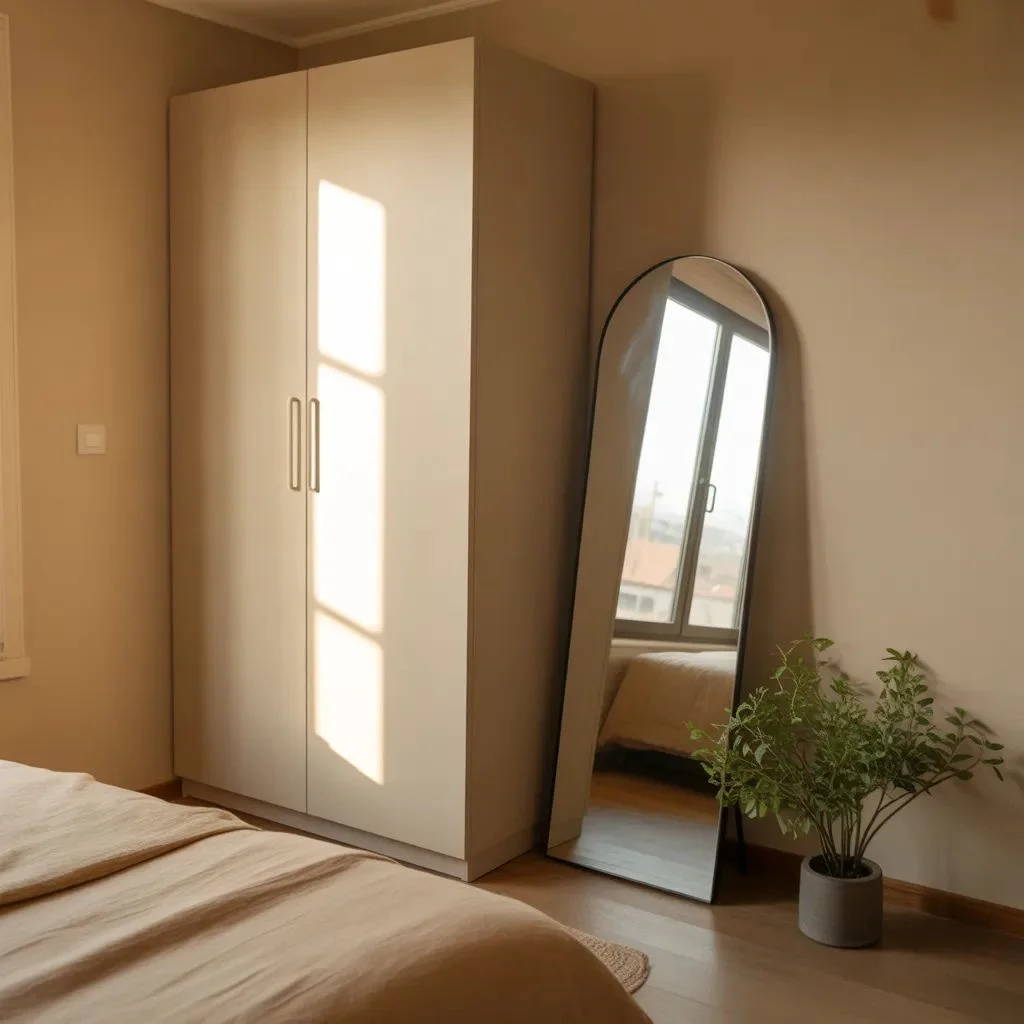
Opposite or Adjacent to a Window
The most functional placement is facing or flanking a natural light source. A standing mirror positioned across from a window bounces daylight deeper into the room, making it feel brighter without adding fixtures. Aim for an angle where the reflection captures sky and light rather than a wall or door.
In the Corner
A corner placement maximizes floor space while still making the mirror accessible. Angling it at 45 degrees lets you see yourself fully without the mirror dominating a single wall. This works particularly well in smaller bedrooms where wall space is limited.
Beside the Wardrobe or Closet
Positioning a standing mirror next to a wardrobe creates a natural dressing zone. It’s the most practical setup — you have the clothes and the full-length view within steps of each other. Visually, the combination reads as a purposeful, designed area rather than a random furniture placement.
Against a Feature Wall
If your bedroom has an accent wall, a standing mirror placed in front of it doubles the impact. The reflection shows the pattern, color, or texture twice, making it feel more intentional. Avoid placing the mirror directly in front of bold geometric wallpaper — reflections can look disorienting.
What to Avoid
- Don’t place a mirror directly opposite the bed — it can disrupt sleep and feel unsettling
- Avoid spots that reflect direct overhead lighting, which creates harsh, unflattering glare
- Don’t position a mirror where it reflects clutter — a wardrobe pile or a messy corner multiplied is worse than the original
Standing Mirror Sizes — What Actually Works
Size is where most buyers get it wrong. Either they pick something too small that looks underwhelming, or too wide that overwhelms a compact wall.
For full-body reflection, you need a mirror at least 60% of your height. For most adults, that means a minimum of 55 to 60 inches tall. Anything shorter and you’ll be craning or stepping back constantly.
Width is secondary but still matters. A mirror that’s 18 to 24 inches wide reads elegant in most rooms. Anything narrower starts to look accidental. If you have a large bedroom wall to fill, consider a 30-inch wide model — or go oversized intentionally.
Quick Size Reference by Room Type:
- Small bedroom (under 150 sq ft): 60″ × 18–20″ — lean toward frameless or thin-framed styles
- Medium bedroom: 65–68″ × 22–26″ — most arched and leaning mirrors hit this range
- Large or primary bedroom: 70″+ × 28–36″ — oversized leaning or freestanding models work well
What’s Trending in 2026
The standing mirror category has evolved considerably. Here’s what’s actually moving in 2026 — not forecasts, but active shifts in how designers and consumers are buying and styling.
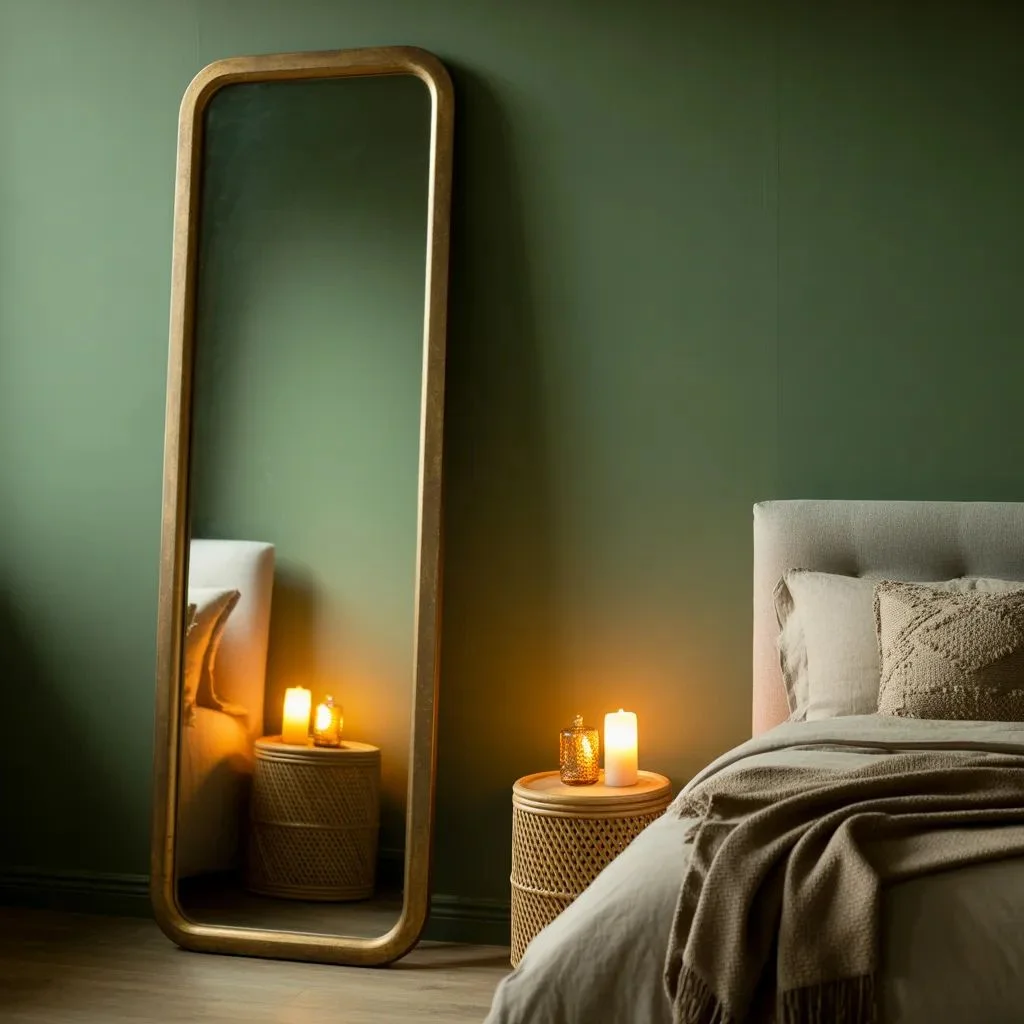
Organic and Arched Shapes Remain Dominant
Arched mirrors aren’t fading. The silhouette continues to be the most requested shape, showing up in everything from budget-friendly options to high-end bespoke pieces. The reason is simple: curved forms break the rigidity of most bedroom furniture, adding softness without effort.
Alongside arches, truly organic shapes — irregular, asymmetrical, fluid outlines — are gaining traction among design-forward buyers. These feel more like functional sculpture than traditional home accessories.
Warm Metal Frames
Brass, antique bronze, and warm gold frames are the dominant finish choice for 2026. Cold chrome and shiny silver are receding. The shift mirrors broader bedroom trends: warmer, more layered palettes with natural material influence.
Warm metal frames pair effortlessly with linen bedding, wood furniture, and terracotta or warm neutral walls — all of which are at the center of current bedroom design directions.
Boucle and Textured Frames
A niche but growing category: mirrors framed in boucle fabric or other soft materials. They sit at the intersection of Japandi aesthetics and tactile luxury, bringing softness to a traditionally hard accessory.
These work best in bedrooms that already emphasize texture — knitted throws, raw linen, natural jute rugs. They’re not a bold statement; they’re a considered detail.
Oversized Leaning as a Decor Strategy
More designers are treating the oversized leaning mirror as a primary decor move rather than a functional afterthought. A single large mirror — 70 to 76 inches, with a structured frame — can replace an entire gallery wall in terms of visual impact.
It reflects the room back at you, effectively doubling the layering and warmth you’ve already built. For people who find wall decor stressful to curate, this is a liberating one-piece solution.
Antique and Vintage Revival
Ornate carved frames, aged mirror glass with slight imperfections, and classic cheval silhouettes are being reintroduced into modern-leaning rooms as contrast pieces. The mix of old-world detail with contemporary minimalism creates rooms that feel lived-in and personal rather than showroom perfect.
How to Style a Standing Mirror Like a Designer
The mirror itself is half the equation. How you dress the space around it determines whether the result looks effortless or crowded.
Let It Breathe
A floor mirror doesn’t need objects placed in front of it or propped against it. Give it 6 to 12 inches of visual breathing room on either side. Negative space around a mirror helps it read as a deliberate focal point rather than an overflow zone.
Use What It Reflects
Think about what the mirror will show when positioned. If it reflects a beautifully made bed, that’s a win. If it shows a tangle of charging cables and a laundry chair, you’ve created a design problem. Style the zone the mirror faces as carefully as the mirror itself.
Add One Object at Its Base
A small plant, a sculptural object, or a stack of books placed at the mirror’s base adds ground-level visual interest without cluttering. Keep it to one item — the goal is intentional styling, not accessory overflow.
Match the Frame to the Room’s Metal Finish
If your bedroom has gold lamp bases or brass cabinet hardware, match the mirror frame to that family. It doesn’t need to be identical — warm tones within the same range create cohesion. Mixing cold silver with warm brass reads as unintentional rather than eclectic.
Common Mistakes to Avoid
- Buying without measuring first: Always check the wall height and floor space before ordering. A 72-inch mirror in a room with 8-foot ceilings can feel suffocating.
- Picking a frame that fights the room: A heavily ornate carved mirror in a minimal Scandi bedroom creates visual conflict, not character.
- Placing it where you’ll never use it: If the mirror is in a corner you walk past but never stand in, it’s a decoration, not a functional piece. Put it where you actually get dressed.
- Ignoring the reflection: Check what the mirror reflects from your main vantage points in the room. A poorly placed mirror that shows the ceiling fan every morning is a daily frustration.
- Leaning without securing: A leaning mirror needs to be secured to the wall with a floor mirror safety strap, especially in households with children or pets.
The Right Mirror Changes How the Whole Room Feels
A standing mirror isn’t a finishing touch — it’s a structural decision. The right one opens the room, amplifies light, and creates a daily-use focal point that makes the space feel more considered. The wrong one just takes up floor space.
Start with size and placement, then narrow down by frame style and finish. In 2026, arched frames, warm metals, and oversized leaning silhouettes offer the strongest blend of longevity and relevance — styles that won’t date within a season.
Pick one that works for how you live in your bedroom, and it’ll be the piece you point out every time someone new walks in.
Also Read About : Vintage Entryway Table Ideas That Make a Stunning First Impression.