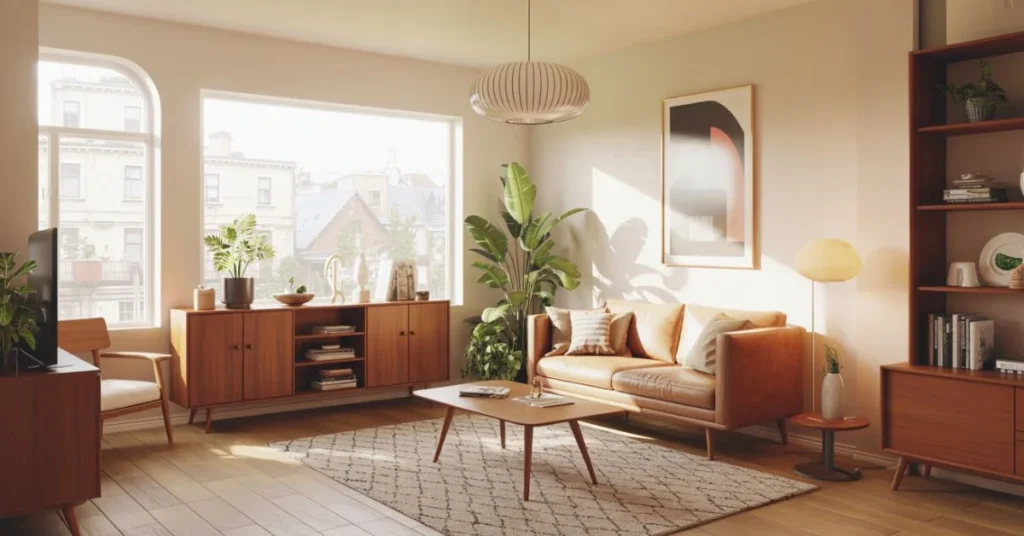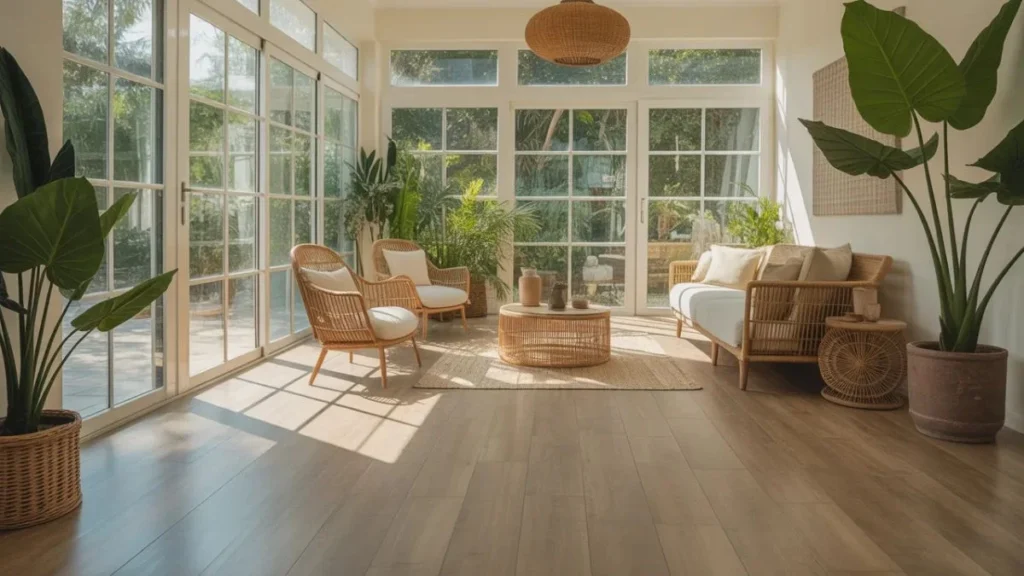
The wrong sunroom flooring can warp, fade, or crack within a single season. Sunrooms are one of the harshest environments in a home — relentless UV exposure, wild temperature swings, and humidity that would destroy most standard floors. Choosing the right sunroom flooring from the start saves you thousands in replacement costs and years of frustration.
This guide covers 10 sunroom flooring options ranked from the most budget-friendly to the most premium. For each one, you’ll get real-world pros, cons, typical costs, and exactly which sunroom setup it suits best.
What to Look for in Sunroom Flooring
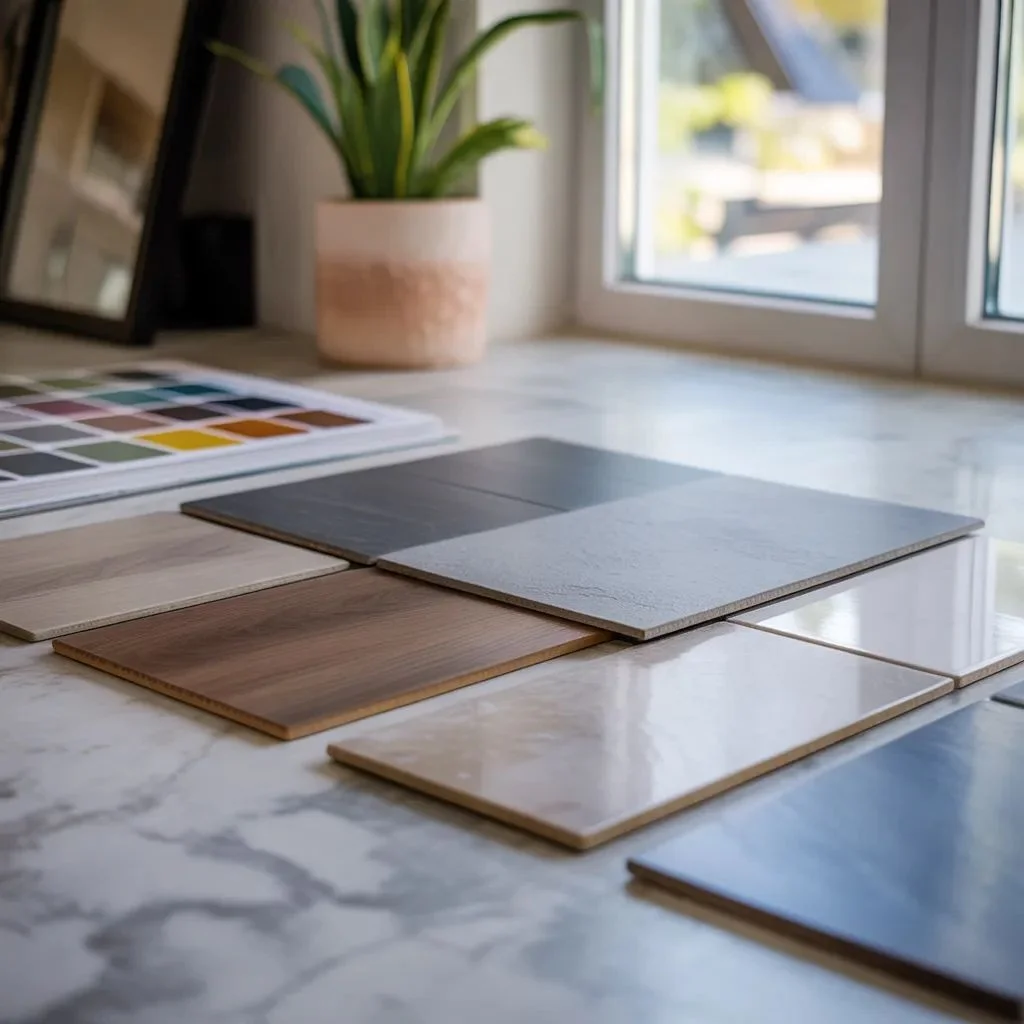
Not every floor that works in a living room or kitchen will hold up in a sunroom. Before picking a material, run it through these four filters:
- UV resistance — Direct sun fades, discolors, and dries out materials fast. Look for fade-resistant finishes or naturally UV-stable materials.
- Moisture and humidity tolerance — Condensation from windows, plant watering, and seasonal changes raise indoor humidity significantly.
- Dimensional stability — Temperature swings cause floors to expand and contract. Materials that can’t flex will crack or gap.
- Comfort underfoot — Hard, cold surfaces like stone or concrete feel harsh without radiant heat or area rugs.
Keep these four in mind as you read through each option below.
Quick Comparison: All 10 Sunroom Flooring Options
Use this table for a fast side-by-side view before diving into the details.
| Flooring Option | Est. Cost | Durability | UV Resistance | DIY-Friendly? |
| Luxury Vinyl Plank | $2–$5/sq ft | ★★★★★ | ★★★★☆ | Yes |
| Peel-and-Stick Vinyl | $0.50–$2/sq ft | ★★★☆☆ | ★★★☆☆ | Yes |
| Laminate | $1–$4/sq ft | ★★★☆☆ | ★★☆☆☆ | Yes |
| Ceramic Tile | $1–$6/sq ft | ★★★★★ | ★★★★★ | Possible |
| Porcelain Tile | $3–$10/sq ft | ★★★★★ | ★★★★★ | Harder |
| Polished Concrete | $2–$8/sq ft | ★★★★★ | ★★★★★ | No |
| Linoleum | $2–$5/sq ft | ★★★★☆ | ★★☆☆☆ | Yes |
| Carpet Tile | $1–$4/sq ft | ★★★☆☆ | ★★★☆☆ | Yes |
| Engineered Hardwood | $4–$10/sq ft | ★★★★☆ | ★★★☆☆ | Possible |
| Natural Stone | $5–$20/sq ft | ★★★★★ | ★★★★★ | No |
1. Luxury Vinyl Plank (LVP) — Best Overall
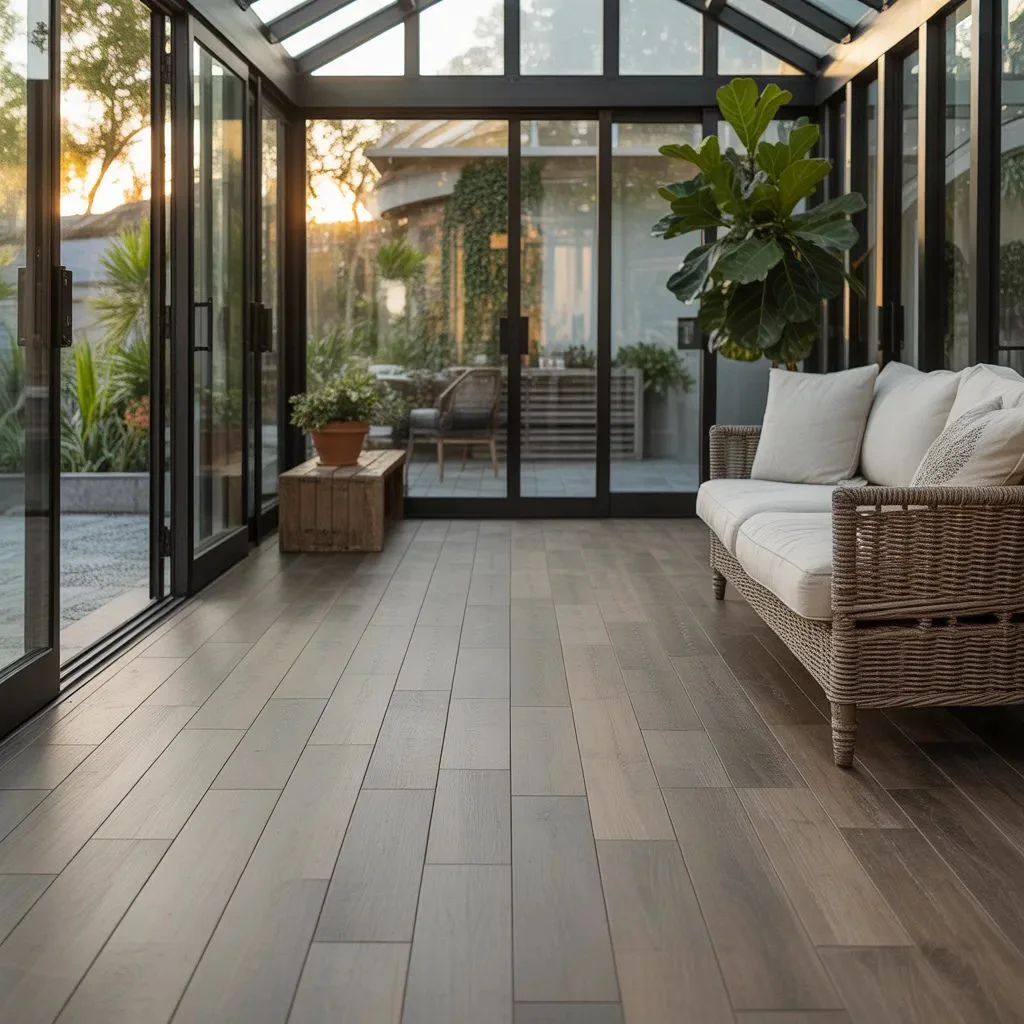
Cost: $2–$5 per sq ft (material only)
Luxury Vinyl Plank is the top pick for sunroom flooring across climate zones, and it’s easy to see why. LVP is waterproof, dimensionally stable, and built with a UV-resistant wear layer that keeps it from fading under direct sun. It mimics wood or stone realistically and clicks together without adhesive, making it a DIY-friendly project for most homeowners.
Four-season sunrooms particularly benefit from LVP because it handles both summer heat and winter cold without warping or gapping. It’s also softer underfoot than tile, which matters if you’re spending long hours reading or working in the space.
Best for:
- Four-season and climate-controlled sunrooms
- Families with kids or pets who need a forgiving floor
- Homeowners who want a wood or stone look without the maintenance
Watch out for:
- Budget vinyl planks can still fade — look for products with a commercial-grade wear layer of 12 mil or higher
- LVP doesn’t add significant resale value compared to natural materials
2. Peel-and-Stick Vinyl Tiles — Most Budget-Friendly
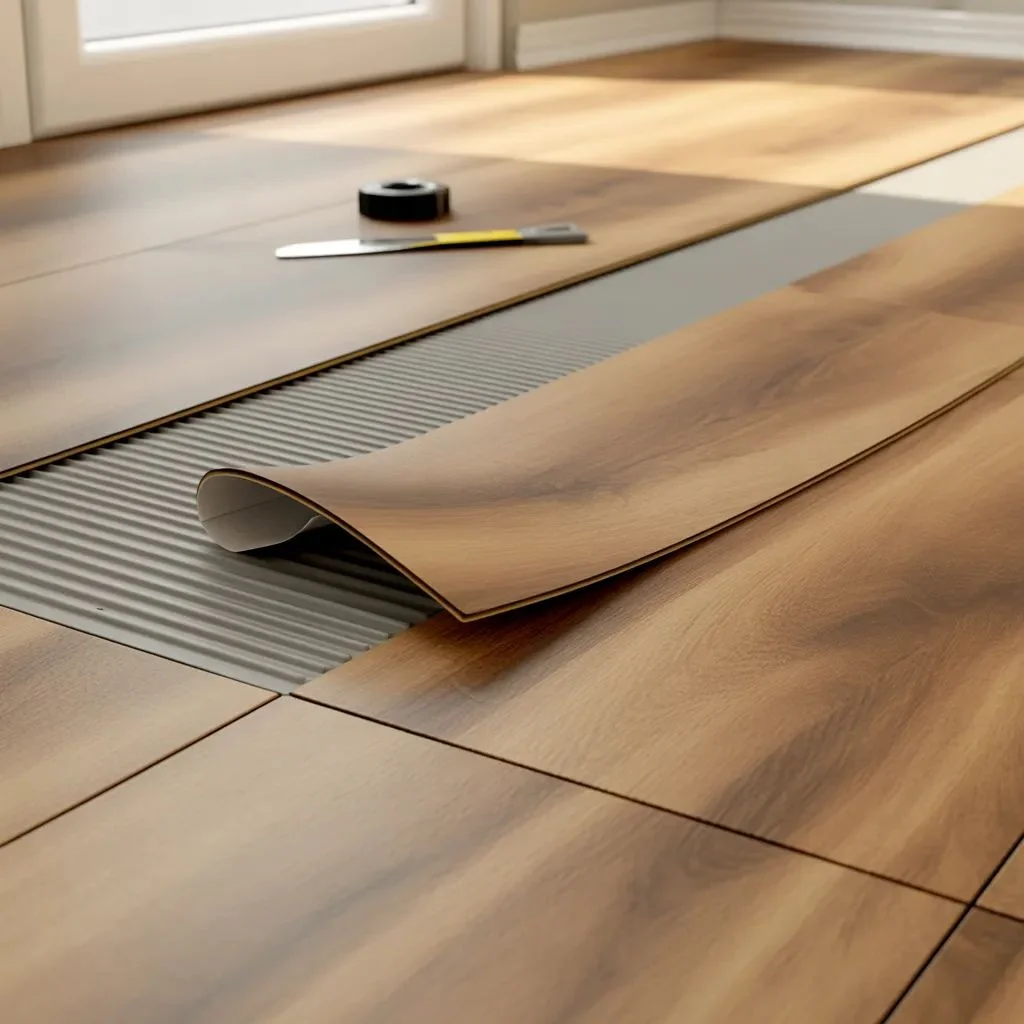
Cost: $0.50–$2 per sq ft (material only)
Peel-and-stick vinyl tiles sit at the lowest price point on this list, and modern versions have improved dramatically. Today’s self-adhesive tiles come in convincing stone and wood patterns with UV-resistant surfaces. Installation takes an afternoon and zero professional skill — just clean, peel, and press.
The trade-off is longevity. In sunrooms with major temperature swings — especially unheated three-season rooms — adhesive bonds can weaken over time, causing tiles to lift at the edges. These work best in enclosed, temperature-regulated sunrooms with moderate foot traffic.
Best for:
- Renters or homeowners on a tight budget
- Enclosed sunrooms with consistent temperatures
- Quick refresh projects or short-term solutions
Watch out for:
- Adhesive failure in extreme heat or cold
- Thinner tiles show subfloor imperfections — ensure your base is perfectly smooth
3. Laminate Flooring — Affordable with Caveats
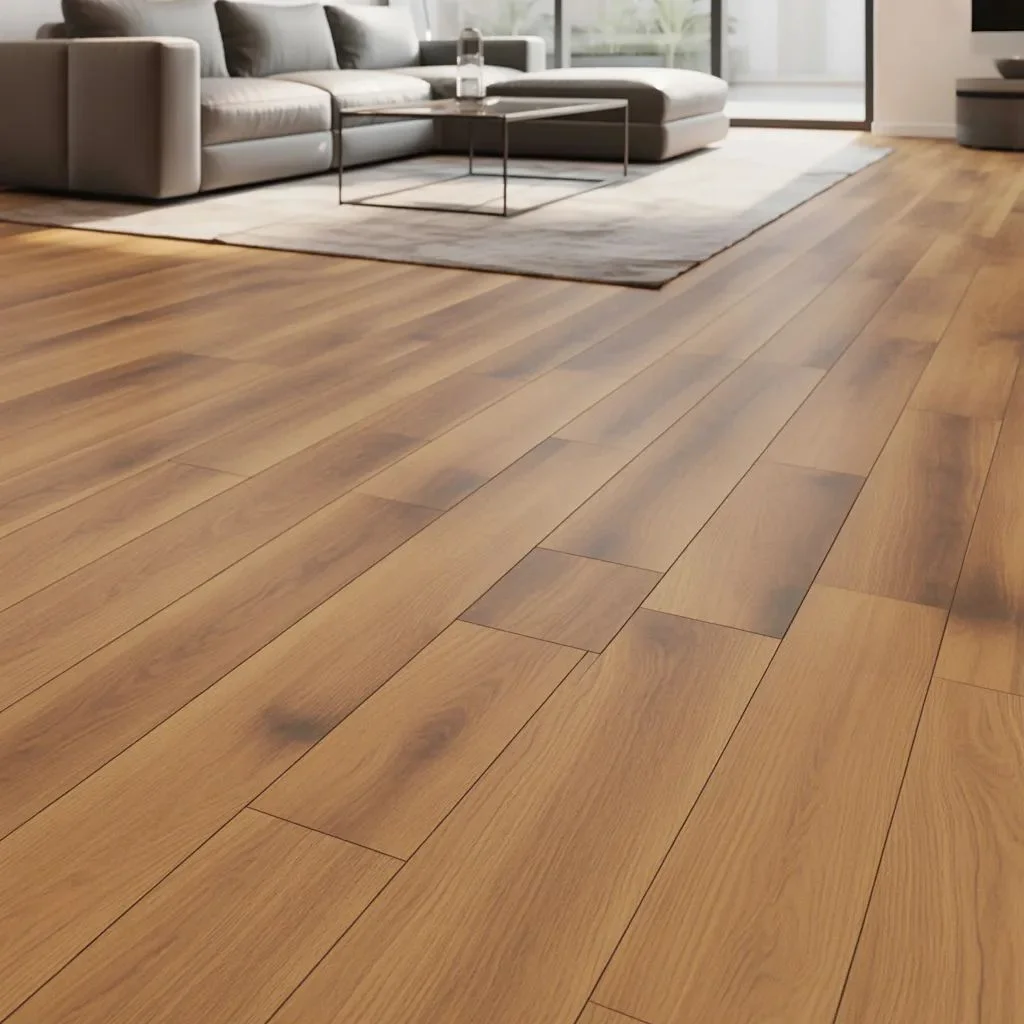
Cost: $1–$4 per sq ft (material only)
Laminate offers a wood-look finish at a fraction of hardwood’s cost. It’s comfortable underfoot and easy to install. The problem: standard laminate does not belong in a sunroom. UV exposure causes it to discolor, and moisture causes the fiberboard core to swell and delaminate.
If laminate is your only option due to budget, choose a waterproof laminate specifically rated for high-humidity environments. Even then, avoid using it in three-season sunrooms where temperatures swing wildly. In a climate-controlled, low-humidity sunroom with UV-filtering glass, waterproof laminate can perform reasonably well.
Best for:
- Climate-controlled sunrooms with UV-filtering windows only
- Low-traffic reading rooms or sitting spaces
Watch out for:
- Standard laminate swells and warps — only use waterproof-rated products
- Cannot be refinished like hardwood — once it’s damaged, it’s done
4. Ceramic Tile — Durable and UV-Proof
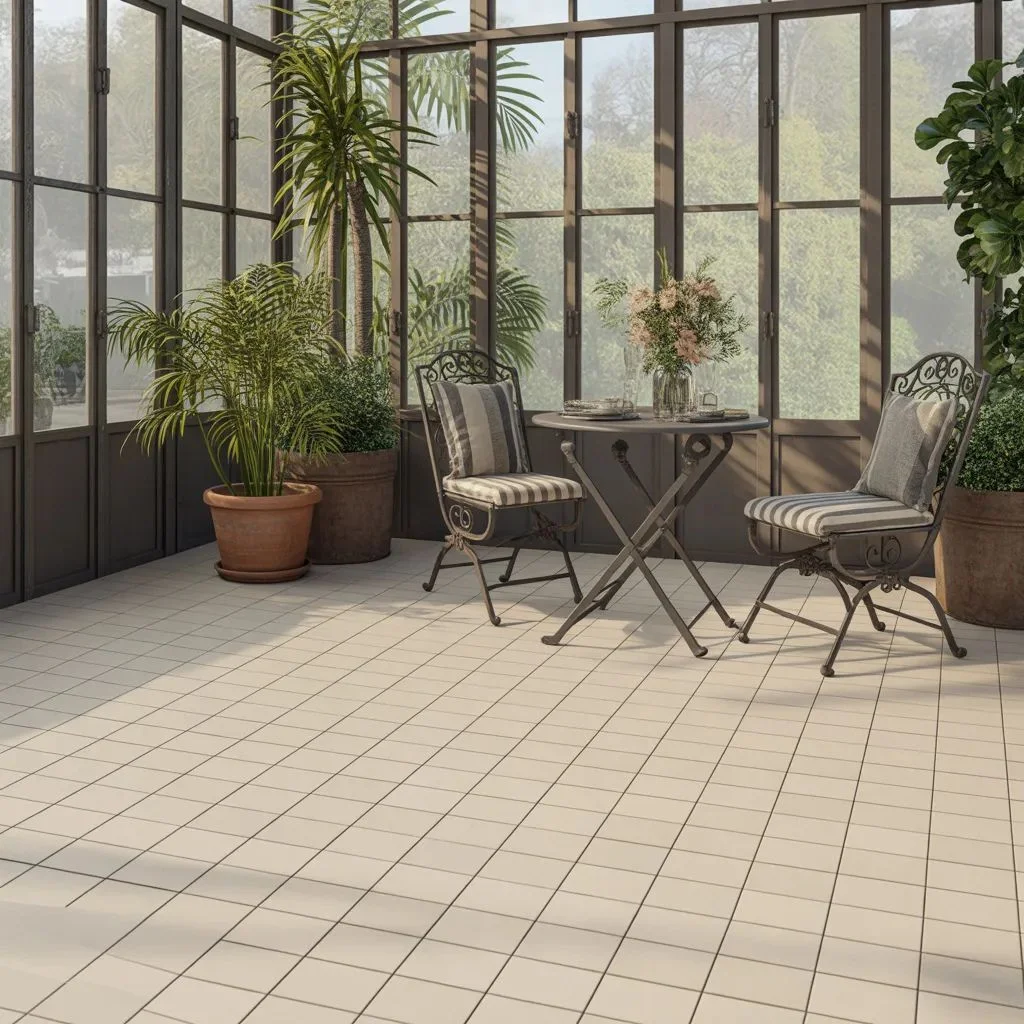
Cost: $1–$6 per sq ft (material only)
Ceramic tile is one of the most reliable sunroom flooring choices available. Because the colour is fired directly into the tile body, it never fades under sunlight — something no vinyl or laminate product can match. Ceramic is scratch-resistant, water-resistant, and handles extreme temperatures without any dimensional movement.
The downsides are comfort and installation. Ceramic feels cold and hard underfoot, particularly in cooler months. Pairing it with radiant underfloor heating solves this completely. Installation is more labor-intensive and costly than floating floors, so budget for professional help unless you’re experienced with tile work.
Best for:
- South-facing sunrooms with intense, all-day sun
- Sunrooms doubling as plant rooms or high-humidity spaces
- Homes in warm climates where cool floors are a comfort bonus
Watch out for:
- Grout lines require periodic sealing to resist staining
- Cold and hard without rugs or radiant heating beneath
5. Porcelain Tile — The Premium Tile Choice
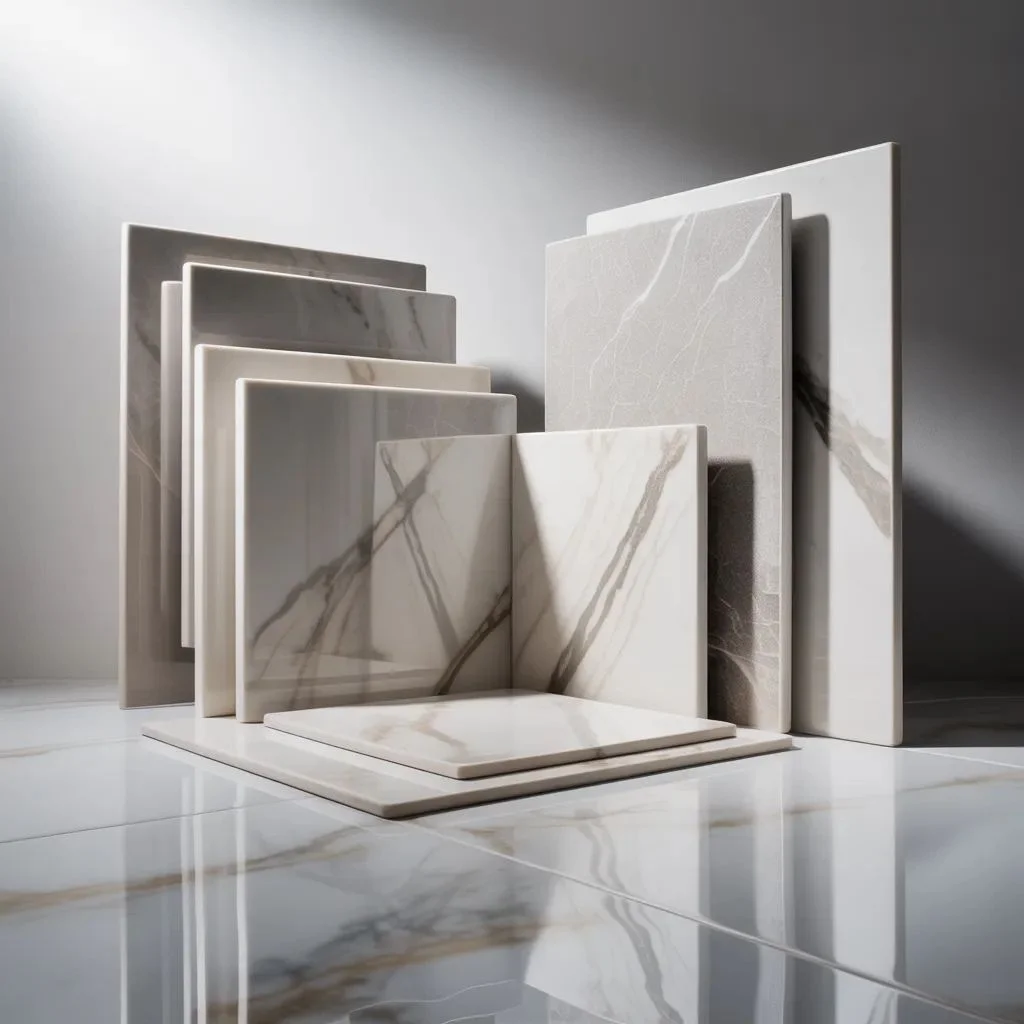
Cost: $3–$10 per sq ft (material only)
Porcelain sits above ceramic on the durability ladder. It’s denser, less porous, and absorbs almost no moisture — critical for sunrooms adjacent to outdoor doors or windows that occasionally let in rain or condensation. Large-format porcelain slabs are a popular choice in modern sunroom designs, giving a sleek, seamless look with minimal grout lines.
Porcelain also performs exceptionally with radiant heating, distributing warmth evenly across the surface. It’s the closest thing to a “set it and forget it” sunroom floor — install it right and it will likely outlast the rest of the house.
Best for:
- Four-season sunrooms paired with radiant heat
- Modern or minimalist interior styles
- High-traffic sunrooms that double as dining or entertaining areas
Watch out for:
- Higher installation cost than ceramic — more difficult to cut and set
- Heavier than ceramic, which may require subfloor evaluation
6. Polished Concrete — Industrial Chic That Lasts
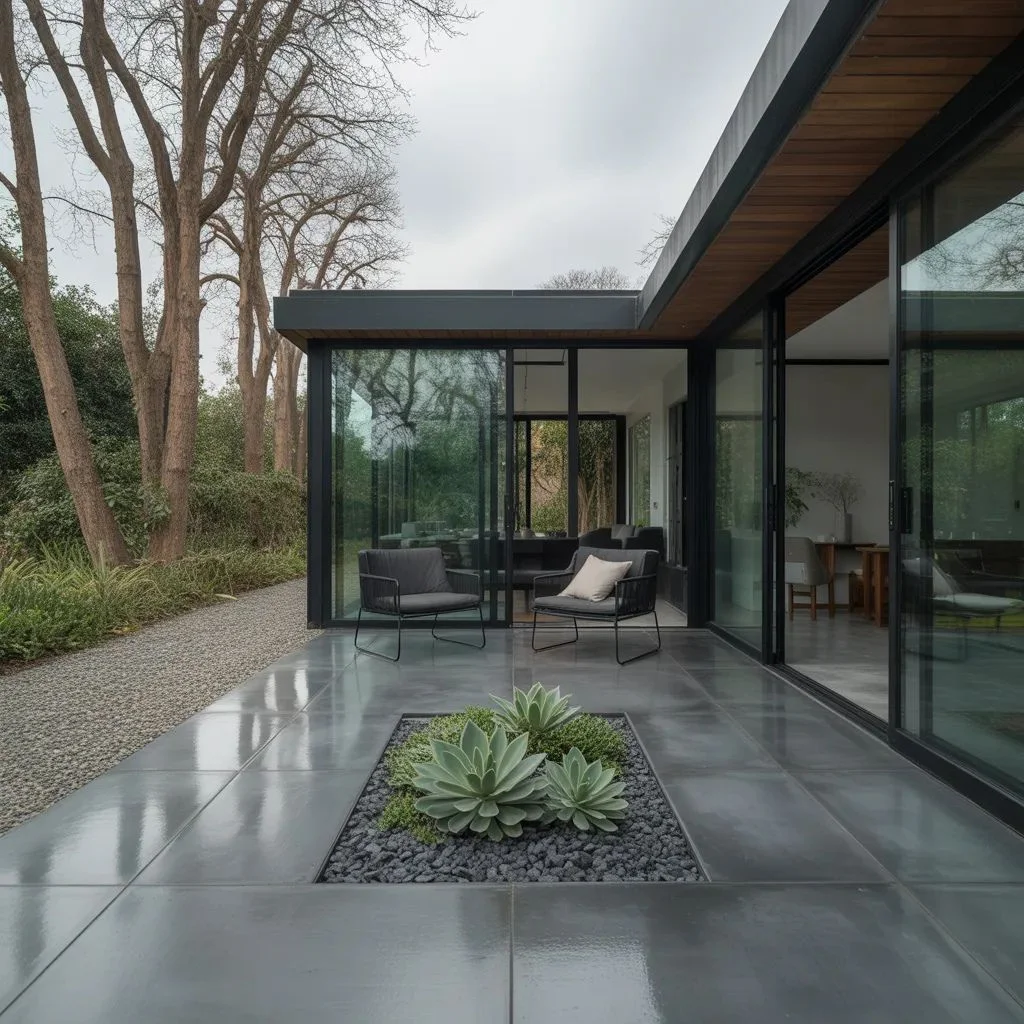
Cost: $2–$8 per sq ft installed (varies by finish)
Polished concrete has crossed over from commercial spaces into residential sunroom design, and for good reason. It handles every challenge a sunroom throws at it — UV exposure, humidity, temperature swings, heavy furniture — without complaint. It can be stained, stamped, or polished to create an enormous range of looks, from raw industrial to smooth, earthy warmth.
Radiant heating works brilliantly under polished concrete, transforming what can feel like a cold, utilitarian surface into a genuinely cozy floor. The main drawback is that installation is a professional-only job, and once it’s in, your design is locked.
Best for:
- Modern, industrial, or minimalist sunroom styles
- Homeowners building new sunrooms who can pour during construction
- Four-season rooms with radiant heat installed
Watch out for:
- Requires sealing every few years to maintain appearance and moisture resistance
- Hard and cold without heating underneath — rugs help but can trap moisture
7. Linoleum — Eco-Friendly and Underrated
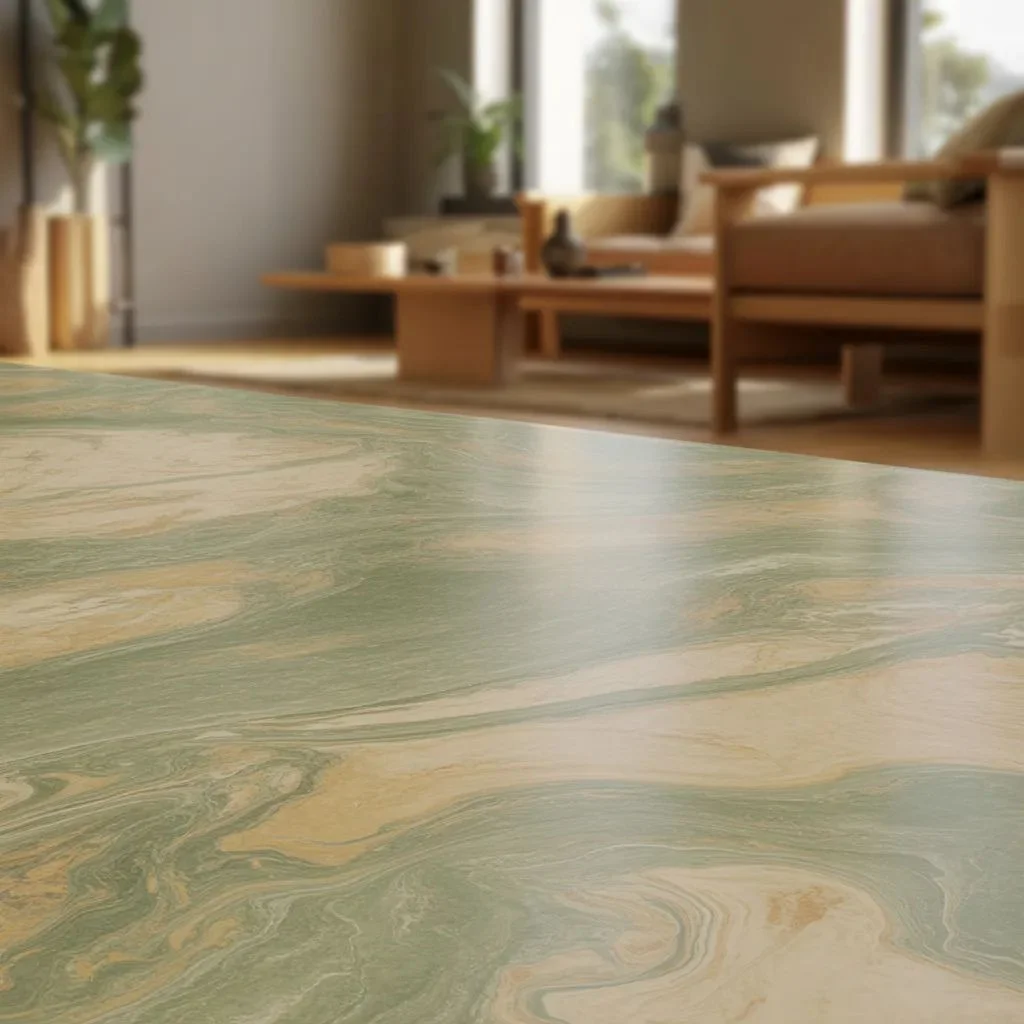
Cost: $2–$5 per sq ft (material only)
Linoleum has been unfairly lumped in with cheap vinyl for decades. The truth is they’re completely different materials. Linoleum is made from linseed oil, ground cork, pine resin, and wood flour — all natural, renewable materials. It’s naturally antibacterial, extremely durable in medium-to-high-traffic areas, and available in a wide range of patterns and colors.
Where linoleum falls short is UV resistance. Direct, prolonged sunlight causes it to yellow and eventually become brittle. For sunrooms with UV-filtering glass or indirect light, linoleum can work well and lasts 20 to 40 years with basic care. For direct-sun rooms, choose something else.
Best for:
- Eco-conscious homeowners looking for a natural material
- Sunrooms with indirect light or UV-filtering glass
- Spaces with high foot traffic from kids and pets
Watch out for:
- Fades and yellows under direct, unfiltered sunlight
- Needs professional installation for a clean finish
8. Carpet Tile — Cozy, with Conditions
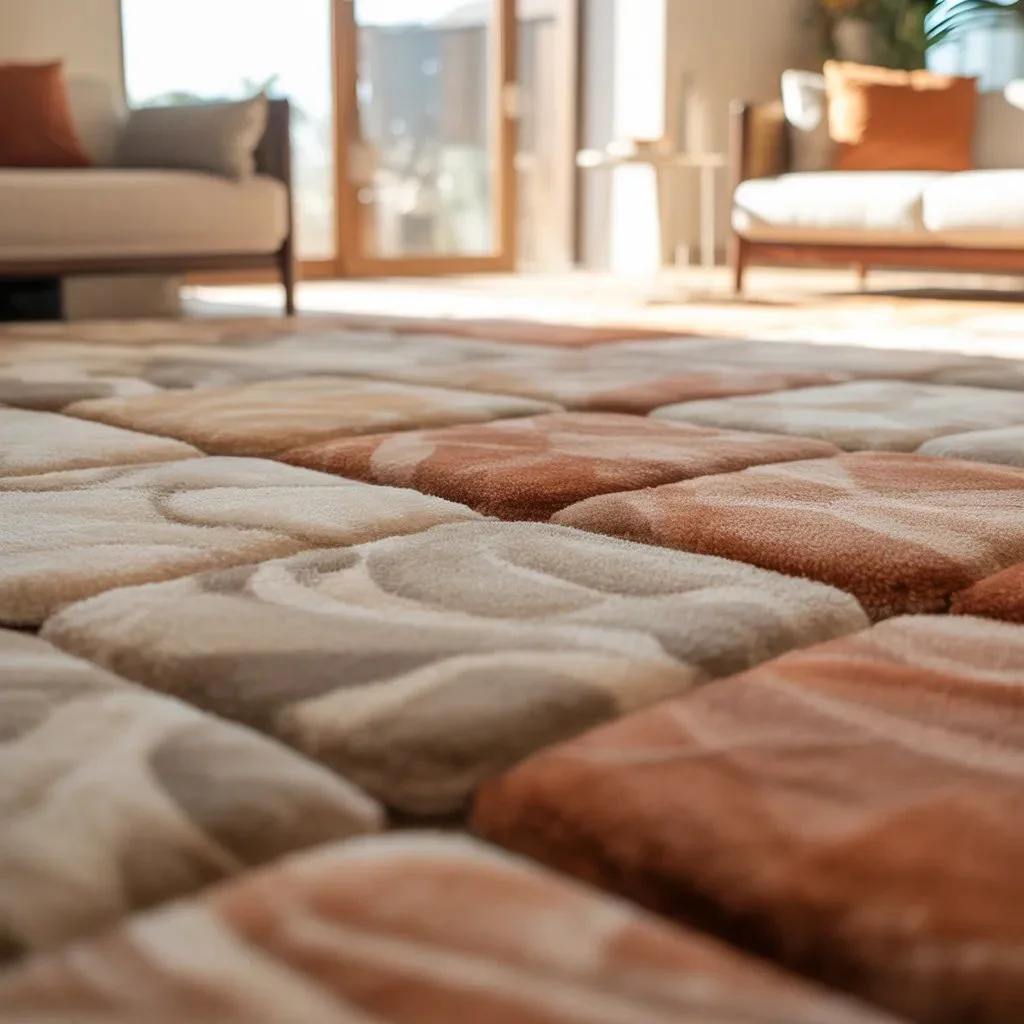
Cost: $1–$4 per sq ft (material only)
Standard broadloom carpet is a poor choice for sunrooms — it fades, traps moisture, and invites mold. But outdoor-rated carpet tiles are a different story. These are engineered for moisture resistance, UV stability, and heavy foot traffic. They’re soft underfoot, reduce noise, and make the space feel warm and liveable — especially valuable if the sunroom doubles as a family room or playroom.
The key is choosing solution-dyed nylon or polypropylene tiles rather than standard carpet. These fibers lock colour during manufacturing, making them significantly more fade-resistant. The modular format also means individual tiles can be swapped out if one section gets stained or damaged.
Best for:
- Three-season sunrooms used as family or play spaces
- Cooler climates where warmth underfoot is a priority
- Budget-conscious refreshes where comfort matters more than longevity
Watch out for:
- Even fade-resistant carpet shows sun damage faster than hard surfaces
- Avoid in humid climates or sunrooms near swimming pools or hot tubs
9. Engineered Hardwood — Real Wood, Better Stability
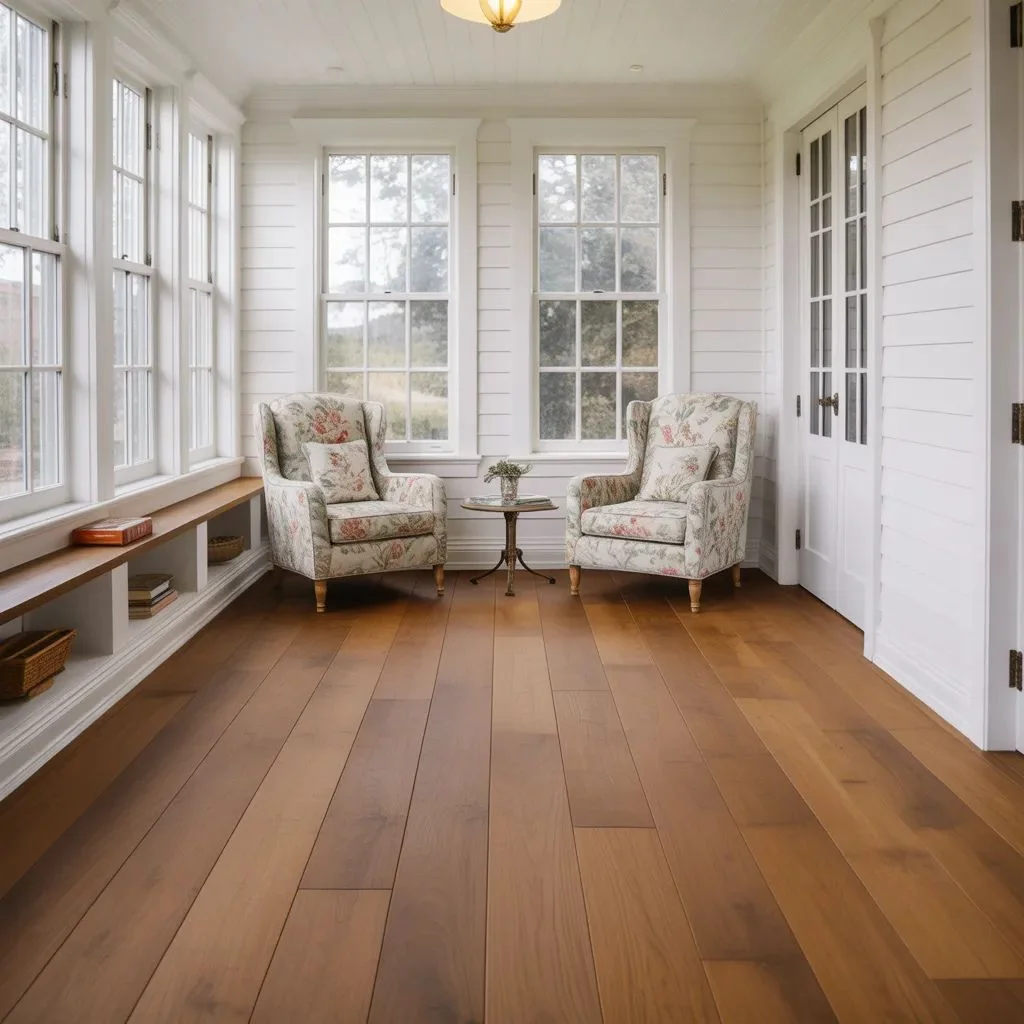
Cost: $4–$10 per sq ft (material only)
Engineered hardwood offers the warmth and authenticity of real wood with significantly better resistance to humidity and temperature changes than solid hardwood. The cross-ply core construction prevents the expansion and contraction that makes solid hardwood risky in sunrooms.
It’s the right choice for climate-controlled sunrooms where you genuinely want the look and feel of hardwood without sacrificing performance. UV exposure is still a concern — look for finishes with aluminum oxide coatings or apply UV-protective window film to reduce fading. In four-season rooms that dip below freezing, even engineered hardwood is risky.
Best for:
- Climate-controlled sunrooms with consistent temperature and humidity
- Design-forward spaces where the warm wood aesthetic is central
- Homeowners who value the ability to sand and refinish over time
Watch out for:
- Not suitable for three-season or unheated sunrooms
- Sun exposure fades finish — pair with UV-filtering glass or window treatments
10. Natural Stone — The High-End Statement Floor
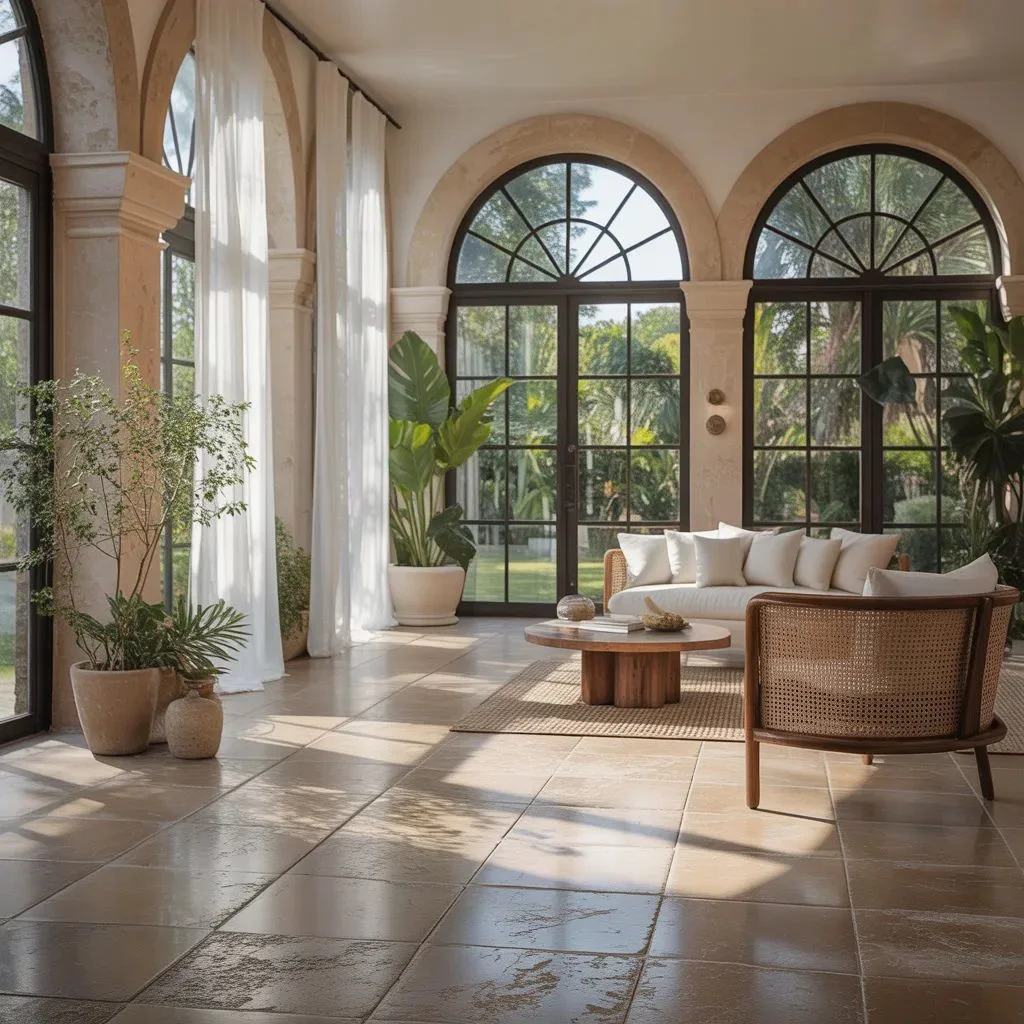
Cost: $5–$20+ per sq ft (material only)
Natural stone — travertine, slate, limestone, marble — is the most visually impressive sunroom flooring option. Each slab is unique, and the material brings an organic, timeless quality that no manufactured product can replicate. Stone is naturally UV-stable, extremely durable, and works beautifully with radiant heating.
The price is real. Between materials and professional installation, a natural stone sunroom floor is a significant investment. Maintenance is ongoing — most natural stone requires periodic sealing to resist moisture, staining, and etching. Slate is the most forgiving of the group; marble is the most demanding. For homeowners willing to make the investment, however, natural stone sunroom flooring is a floor that outlasts everything else on this list.
Best for:
- Luxury sunrooms and high-end home renovations
- Four-season rooms with radiant heat installed beneath
- Mediterranean, traditional, or estate-style home designs
Watch out for:
- Unsealed natural stone absorbs moisture and stains rapidly — sealing is non-negotiable
- Marble is sensitive to acidic substances and scratches more easily than slate or travertine
How to Pick the Right Sunroom Flooring for Your Space
The best sunroom flooring depends on four things: your climate, your sunroom type, your budget, and how you use the space. Here’s how to narrow it down:
- Three-season or unheated sunroom: Stick to tile, LVP, or outdoor-rated carpet tile. Avoid wood-based options entirely.
- Four-season, climate-controlled sunroom: Nearly every option on this list is viable. Engineered hardwood, porcelain tile, and LVP are the top three.
- Direct south-facing sun: Prioritize UV-stable materials — ceramic, porcelain, stone, or high-mil LVP.
- High humidity or plant-heavy space: Tile and LVP are your safest bets. Both are waterproof at the surface.
- Budget under $3/sq ft: LVP or peel-and-stick vinyl deliver the best value without sacrificing too much performance.
- Comfort is the priority: Engineered hardwood or carpet tile. Both are warmer and softer underfoot than any tile option.
The Floor That Holds It All Together
Sunroom flooring is not a one-size-fits-all decision. The material that works brilliantly in a heated four-season room can fail completely in an unheated three-season space. Match your flooring to your climate, your sunroom type, and how you live in the space.
For most homeowners, Luxury Vinyl Plank hits the sweet spot — it’s genuinely waterproof, UV-stable, comfortable, and available at a price that makes sense. If budget allows and you want a forever floor, porcelain tile or natural stone will still look stunning decades from now.
Whatever you choose, make sure it’s rated for the conditions your sunroom creates — not just the ones you hope it stays at.
Our Pick: Sunroom Curtain Ideas for Every Season — Light, Privacy & Total Comfort.
Frequently Asked Questions
What is the most durable sunroom flooring?
Porcelain tile and natural stone are the most durable sunroom flooring options. Both are virtually impervious to UV damage, moisture, and temperature extremes. With proper sealing, they can last the lifetime of the home.
Can you put hardwood floors in a sunroom?
Solid hardwood is not recommended for sunrooms due to its sensitivity to humidity and temperature swings. Engineered hardwood is a better option but should only be used in climate-controlled sunrooms with UV-filtering glass.
What flooring is best for a 3-season sunroom?
For a three-season sunroom, tile, LVP, or outdoor-rated carpet tile are the safest choices. All three handle temperature swings and occasional moisture without warping, cracking, or fading.
Is vinyl plank flooring OK in a sunroom?
Yes — quality LVP with a thick wear layer (12 mil or higher) is one of the best sunroom flooring choices available. It’s waterproof, UV-resistant, and dimensionally stable across temperature changes.
How much does sunroom flooring cost?
Sunroom flooring costs range from under $1 per square foot for peel-and-stick vinyl to $20 or more per square foot for premium natural stone. LVP — the most popular option — typically runs $2–$5 per square foot for materials, plus $2–$4 per square foot for professional installation.