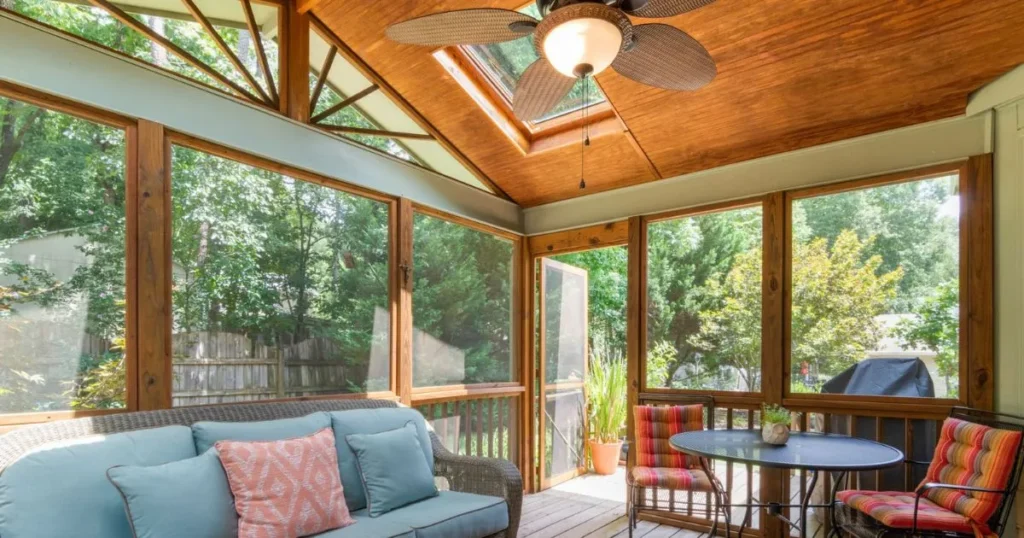
Mesh keeps the insects out of a screened porch, but it does very little against summer heat, winter chill or a sideways downpour. That gap is where good screened porch design earns its keep, because a few well-chosen upgrades can turn a fair-weather space into a room that works in every season.
The ideas below are organised around the problems a porch actually faces through the year: stuffy afternoons, cold evenings, wet floors and dim corners. Borrow the ones that suit your climate, then layer in the rest as time and budget allow.
Whether your summers are sticky, your winters bitter or your springs soggy, there is a comfortable answer here. Each idea explains the look, the materials involved and one practical detail worth planning before anything is bought.
Ceiling Fans and Cross Breezes Beat Sticky Summers
Credit: Curtis Adams
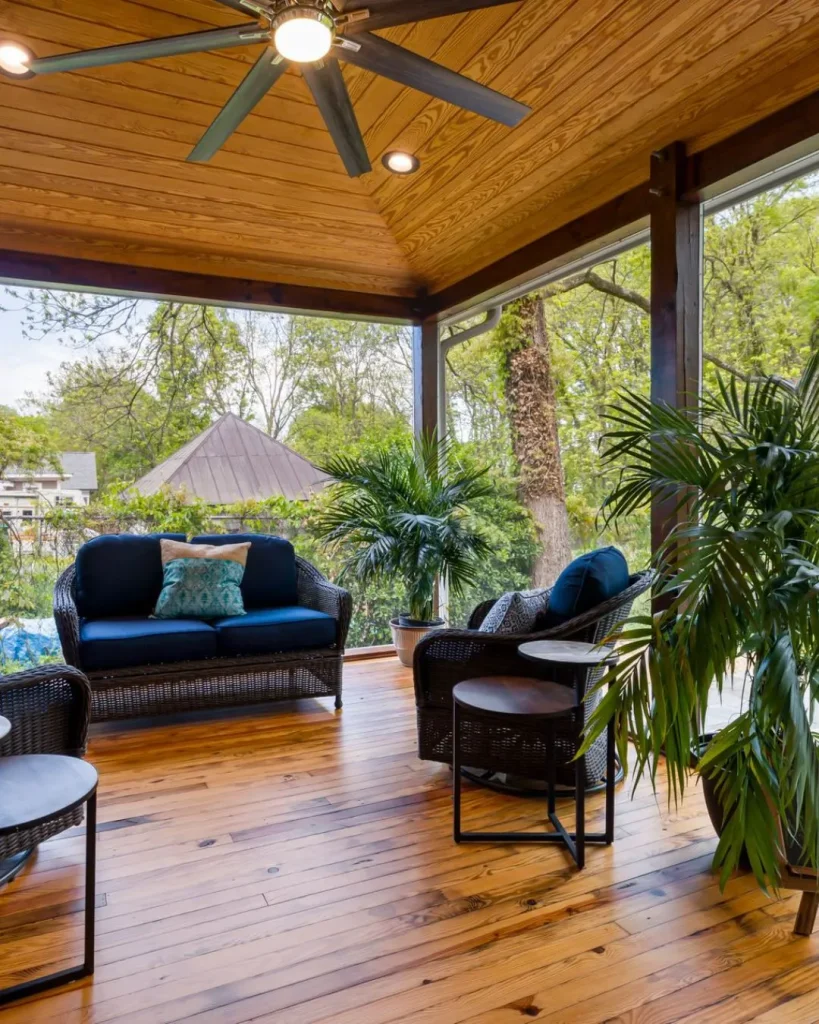
In hot, humid regions, moving air does more for comfort than almost any other upgrade. A damp-rated ceiling fan centred over the seating area keeps air circulating, and the breeze feels cooler on skin even though the air temperature stays the same. Matte black blades suit modern farmhouse porches, while natural wood or white blades feel more coastal or classic.
Pair the fan with cross ventilation. Screens on opposite walls, or a screen door facing an open window, let air pass through instead of pooling in a corner. Keep tall plants and bulky furniture away from those open lines so the breeze reaches the seating.
Practical tip: on a low ceiling, choose a flush-mount fan and check that the label says damp or wet rated, since a screened porch still gets humidity and wind-blown rain.
Shade That Softens Harsh Afternoon Sun
Credit: kaseybonk
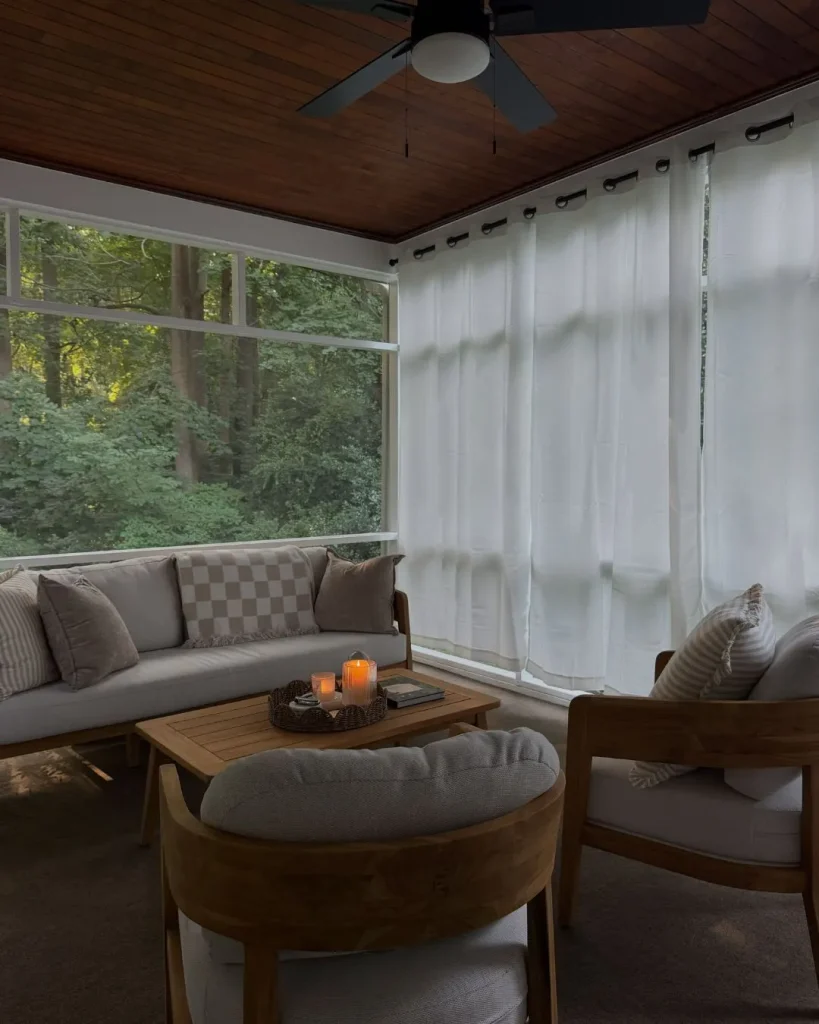
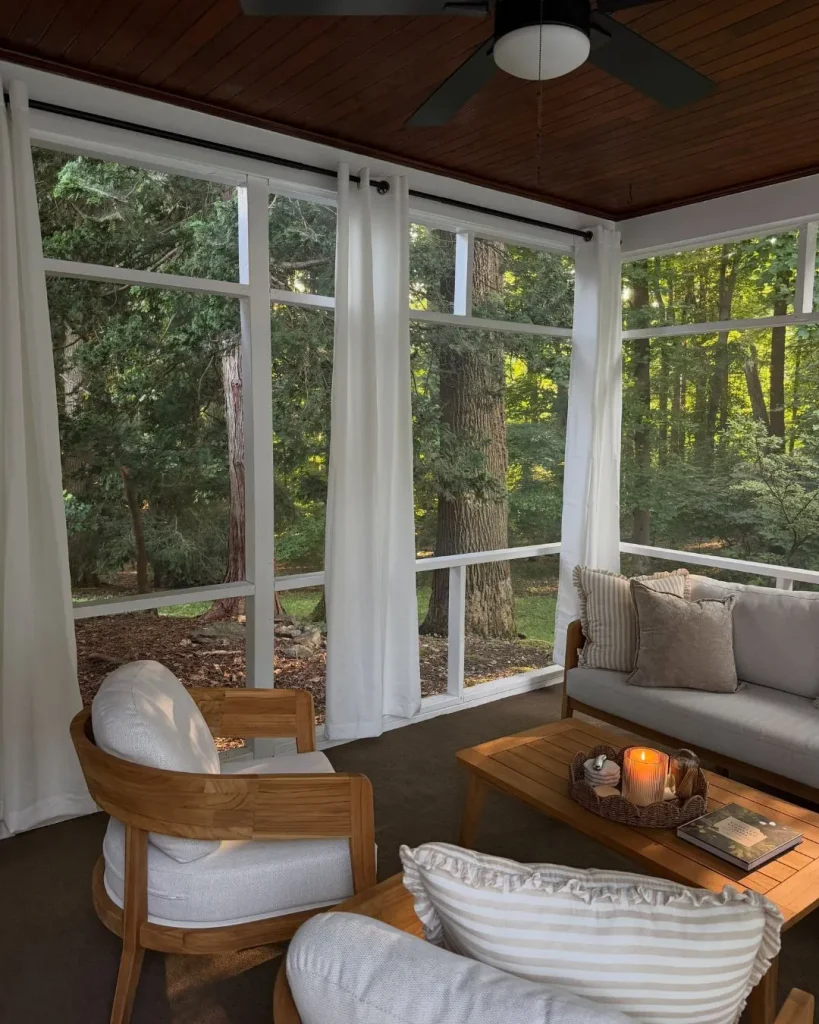
Hot, bright climates call for shade as well as airflow. Outdoor curtains in white, oatmeal or soft stripes filter west-facing light and give the porch a tailored, hotel-lounge feel. Roller shades or slatted bamboo blinds create a more relaxed, tropical look and can be lowered only when the sun sits low.
Screen choice matters here too. Solar screening reduces glare and some heat, and darker mesh generally gives a clearer view of the garden than pale mesh, which can look hazy in bright light. Hanging curtains from a rail that spans the full wall lets them stack neatly out of the way.
Practical tip: shade only the sunniest wall first and leave the others open, so the porch keeps its view and its breeze.
When Evenings Turn Chilly, Clear Panels Change Everything
Credit: kaseybonk
Picture a late autumn evening: the leaves are golden, the air is crisp and the porch is too cold to enjoy. Removable clear vinyl panels or snap-in storm inserts close the screen openings and block wind and rain, so the space stays usable for weeks longer on either side of summer. Framing them with trim painted to match the porch makes them look built in rather than bolted on.
Panels work best as a seasonal layer. Taking them out in summer restores airflow, so plan a dry place to store them, such as a garage shelf, a closet or a flat storage bench.
Practical tip: measure every opening before ordering, and check local building rules and any homeowners association guidelines, because a fully enclosed porch can be treated differently from a screened one.
Infrared Heaters Warm the Space Without an Open Flame
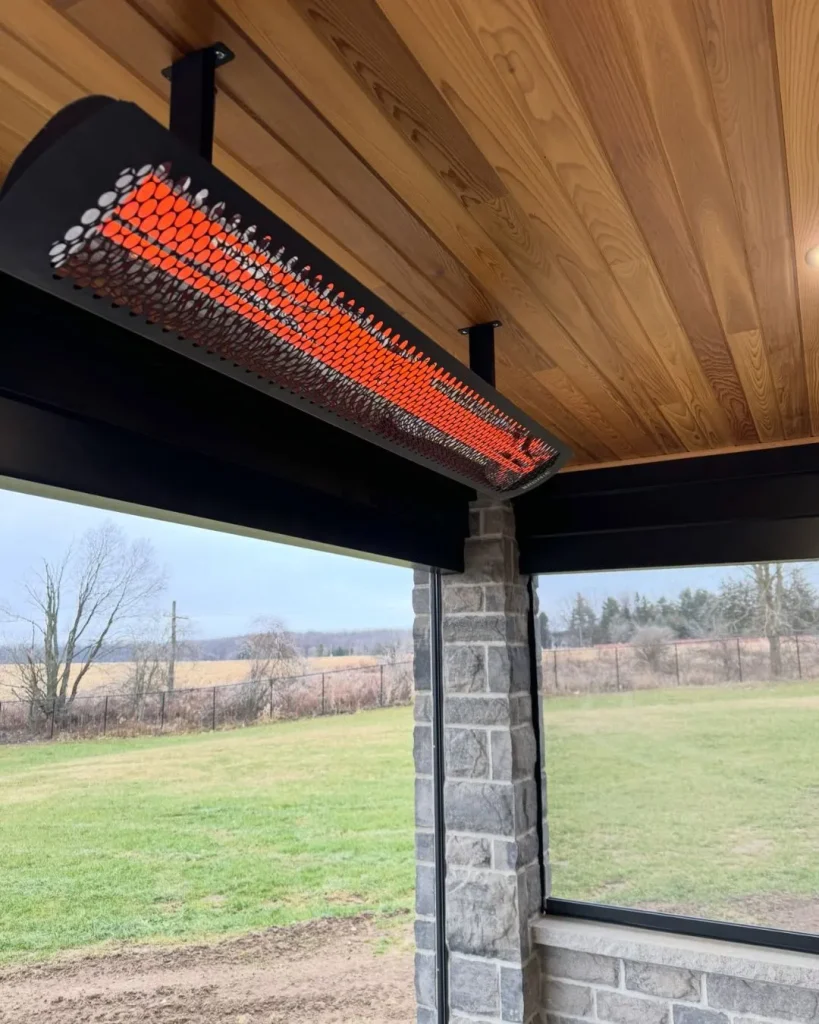
Credit: sonnarchomesltd
Heating a screened porch comes down to safety first and comfort second. Electric infrared heaters mounted on a wall or ceiling warm people and furniture directly instead of trying to heat all the air, which suits a space with mesh walls. They tuck neatly against beadboard ceilings and leave the floor free for seating.
Look for models rated for outdoor or damp locations, and follow the manufacturer clearance distances from the ceiling, walls, curtains and furniture. Mesh, wood and fabric can all burn, so a heater needs breathing room. Placement matters too: aim it at the seating area rather than the whole room, and mount it at the height the instructions recommend. Fuel-burning heaters such as portable propane models need extra ventilation and clearance, are generally a poor match for enclosed or panelled-in porches, and call for a carbon monoxide alarm in any space where they are used.
Common mistake: buying a heater first and checking clearance afterwards. Decide where it will hang, then choose a model that fits that spot, and never leave it running unattended.
A Fireplace Corner Worth Gathering Around
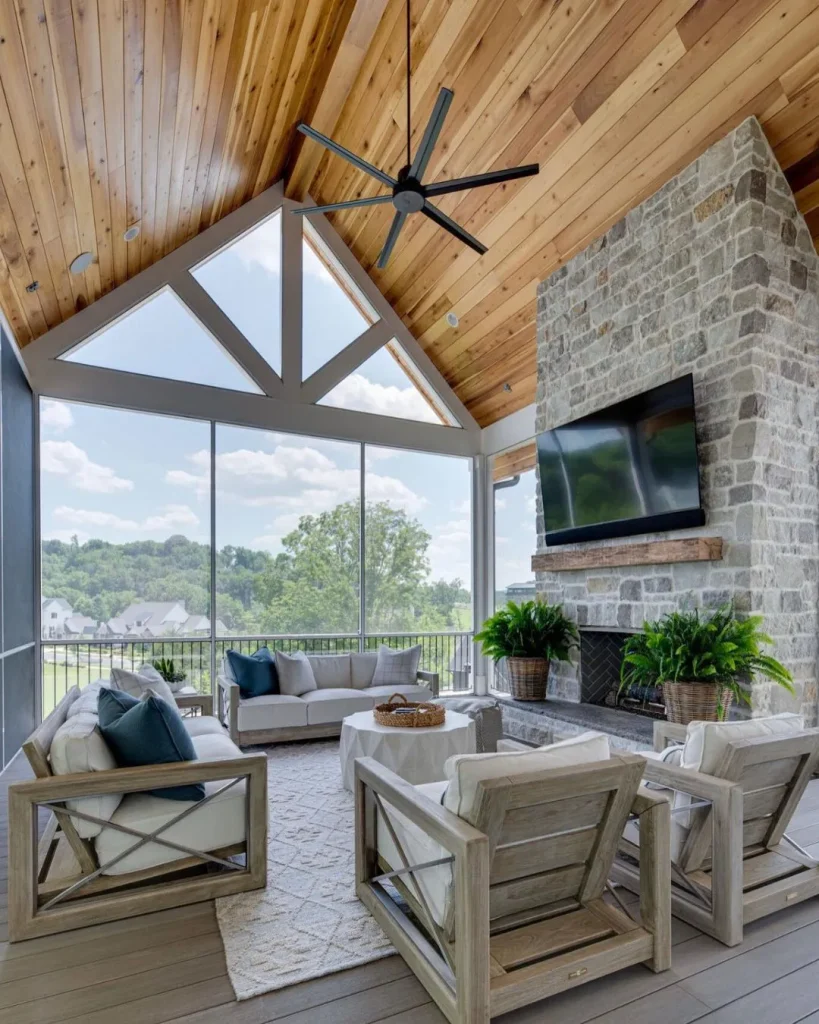
Credit: grahamsliving
A fireplace gives a porch a natural focal point and a reason to stay out after dark. Electric fireplace inserts set into a stacked stone, painted brick or shiplap surround deliver the look and a gentle glow without a chimney, which makes them the simplest option for most screened porches. Plan the power supply early, since an electric unit needs a safe, suitable outlet. Flank the fireplace with two armchairs and a low bench, and the corner becomes a conversation spot.
Wood-burning and gas fireplaces need a proper flue, professional installation and usually building approval, so treat them as a planned renovation rather than a weekend project. Whichever type you choose, keep seating and textiles at the distance the manufacturer specifies.
Practical tip: choose a unit made for covered or damp spaces, and keep mantel styling simple, with lanterns and greenery rather than loose paper or fabric.
Layered Textiles Make Cold-Weather Seating Cosy
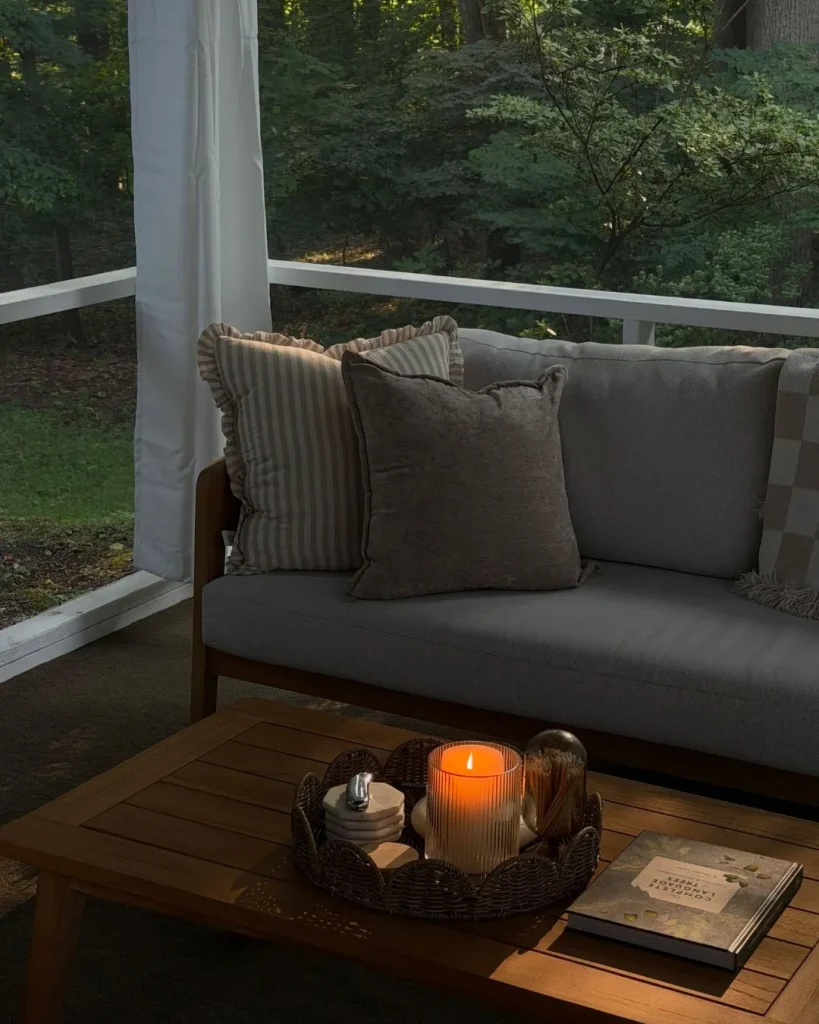
Credit: kaseybonk
Warmth is as much about touch as temperature. A layered outdoor rug, a pair of chunky throws and a few bolsters make a bench feel like a window seat. Neutral bases such as cream, grey and tan let one accent colour, like rust or deep green, carry the season.
Choose outdoor-rated, quick-drying fabrics and cushion inserts so damp air does not leave everything smelling musty. Polypropylene rugs cope with spills and rain, while indoor wool rugs tend to hold on to moisture.
Common mistake: carrying indoor cushions out for one autumn and finding they never fully dry. A lidded storage bench or waterproof deck box keeps spare layers clean and easy to reach.
Floors That Shrug Off Rain, Pollen and Snow Boots
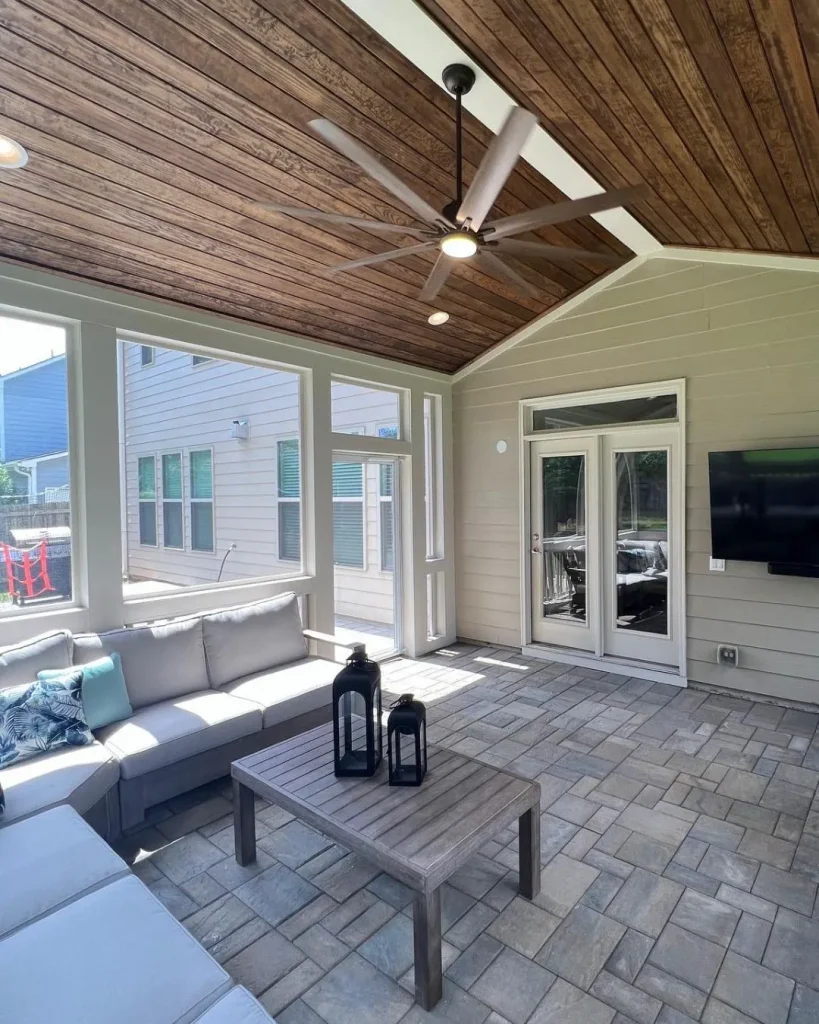
Credit: seed.2d
Porch floors take the brunt of the weather. Porcelain tile in a wood-look or slate finish handles wet shoes and spills, sealed concrete gives a clean modern base, and composite decking keeps a timber look with less upkeep. Painted wood can still work with a floor paint made for porches, and pale grey or soft green suits cottage-style spaces. An outdoor rug warms the look of tile or concrete and softens the sound of footsteps.
Drainage is the hidden detail. A slight slope, or gaps that let water escape, stops puddles forming where rain blows in. Slip resistance matters just as much, particularly in climates with frost or heavy pollen.
Practical tip: dark flooring in full sun can get hot underfoot, so a light or mid tone suits warmer regions better.
Furniture Zones That Let One Porch Work All Year
Credit: harborwoodsconstruction
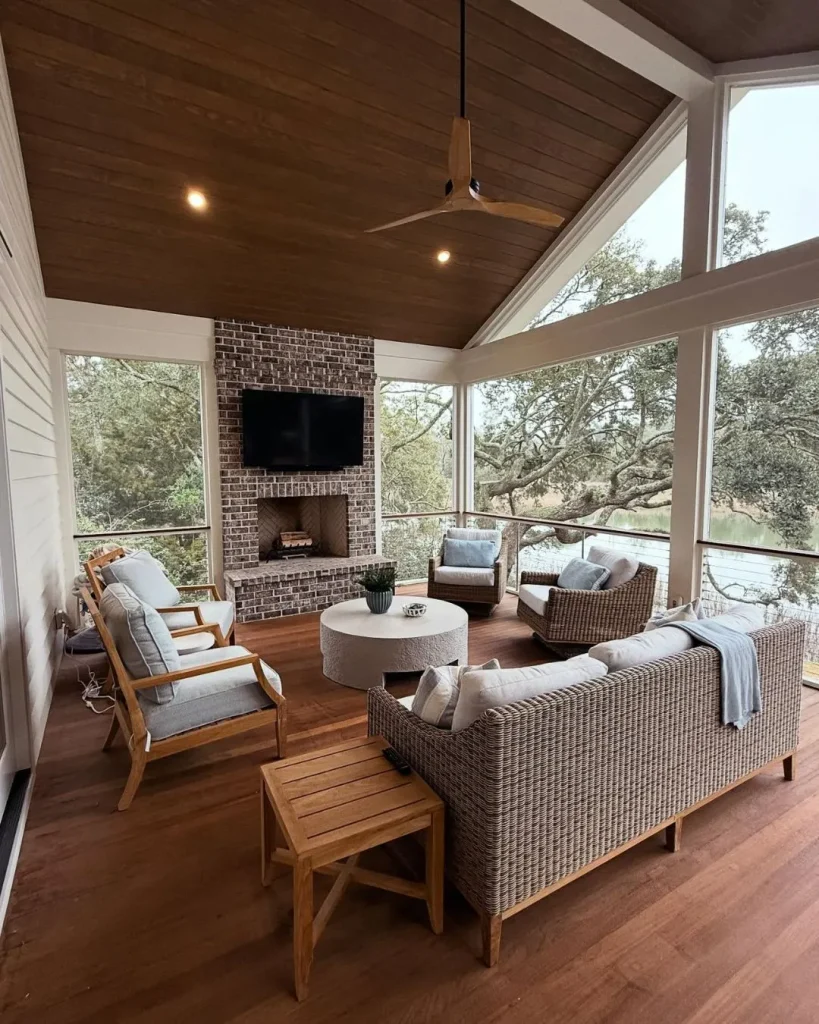
A porch that serves every season needs furniture that adapts. Dividing the floor into a lounge area, a small dining spot and a daybed corner gives a larger porch several uses, while a compact one can combine a sofa with a drop-leaf table. Powder-coated aluminium, teak and resin wicker handle humidity better than untreated wood, and lightweight pieces are easy to shuffle when panels or heaters go in.
Keep a clear walkway of roughly 90 cm (3 ft) between zones so the door, fireplace and heater all stay accessible. Swivel chairs help a seating group face the garden in summer and the fire in winter.
Practical tip: repeat one material, such as black metal or natural rattan, so separate zones still read as one design.
Lighting and Ceilings That Glow After Dark
Credit: amazingezscreenporchwindows
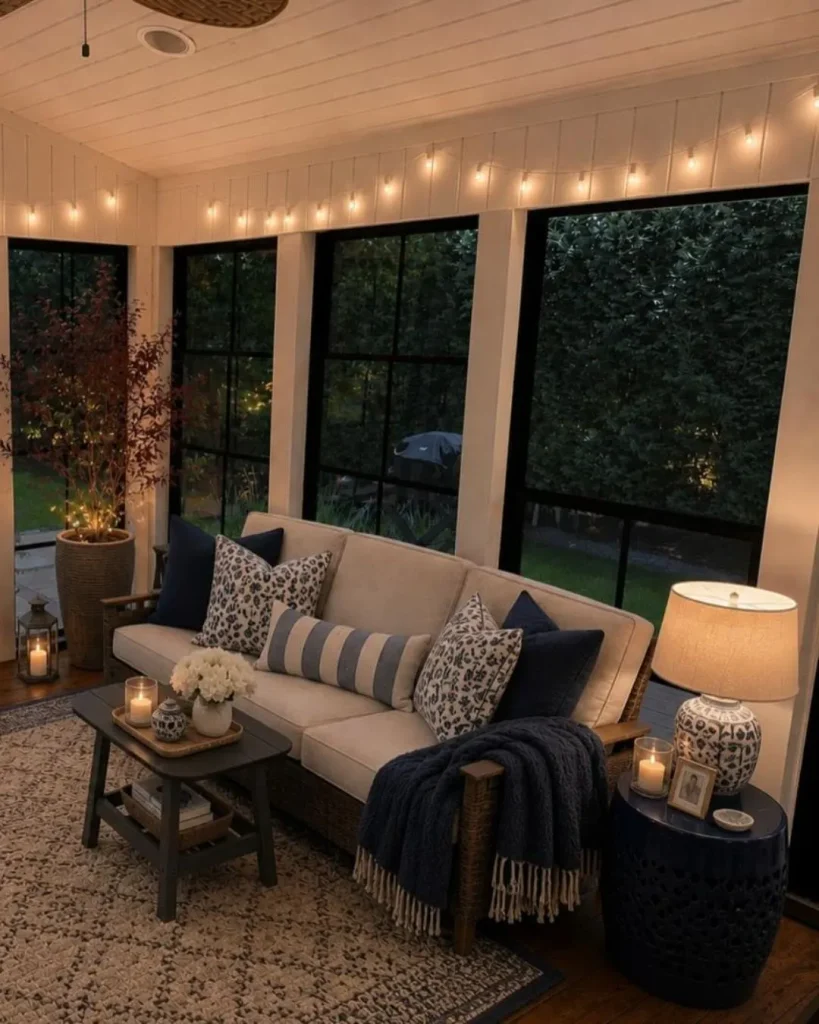
Long winter evenings put more weight on lighting than summer ever does. A painted beadboard or tongue-and-groove ceiling in white or soft blue bounces light around and adds classic porch charm, while exposed beams suit a rustic cabin look. Layer a few sources: a dimmable ceiling fixture, wall sconces beside seating and warm string lights along the beams.
Use damp-rated or wet-rated fixtures, and look for warm white bulbs, often labelled around 2700K, which flatter wood, stone and skin tones. Putting each layer on its own switch lets you drop to a soft glow when the fire is on.
Practical tip: add lantern-style or rechargeable lights for corners where wiring is hard to reach.
Which Climate Needs What?
Not every upgrade suits every region. This quick guide matches common climates to the features that deliver the most comfort.
| Climate | Biggest challenge | Best-value features |
| Hot and humid | Stuffy air and insects | Damp-rated fan, cross ventilation, dark mesh, quick-drying fabrics |
| Hot and dry | Glare and strong sun | Outdoor curtains or solar screening, light floors, shaded west wall |
| Four-season | Swings from warm to cold | Removable clear panels, infrared heater, storage for seasonal items |
| Cold winters | Wind and low temperatures | Clear panels, infrared heater or fireplace, layered textiles |
| Wet and mild | Damp and mould | Sloped slip-resistant floor, outdoor-rated fabrics, good ventilation |
Start with the row that matches your climate, fix the biggest annoyance first, then add comfort layers one season at a time. If budget is tight, a damp-rated fan, outdoor-rated cushions and warm lighting deliver the biggest comfort gain for the money, while panels, heaters and fireplaces can follow later.
A Porch That Earns Its Keep in Every Season
The best screened porch design solves the weather problem each season throws at it, one layer at a time. Start with the basics that work all year, such as a damp-rated fan, good lighting and a durable floor, then add clear panels, a heater or a fireplace as the colder months draw closer.
Pick the season that currently keeps you indoors and fix that first. Once the porch is comfortable in its hardest month, every other month feels like a bonus.
Also Read About: Best Rooftop Patio Ideas to Create a Relaxing Outdoor Space.