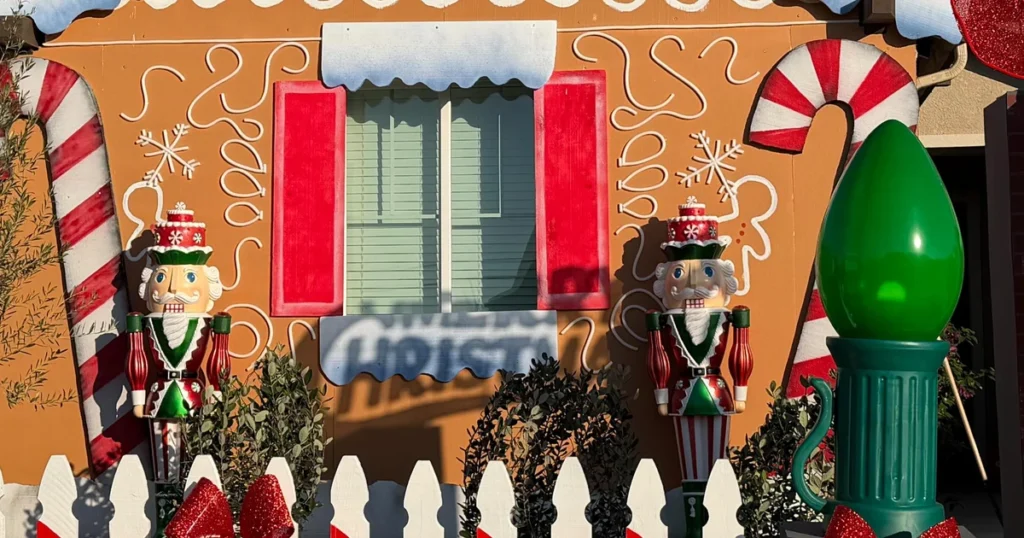
Nobody bakes a house this big and nobody has to — cardboard, brown paint and a little patience do the whole job.
One life-size gingerbread house is the kind of Christmas project that makes the whole street slow down. Big enough to walk into, sweet enough to photograph, and built from boxes you already have in the garage.
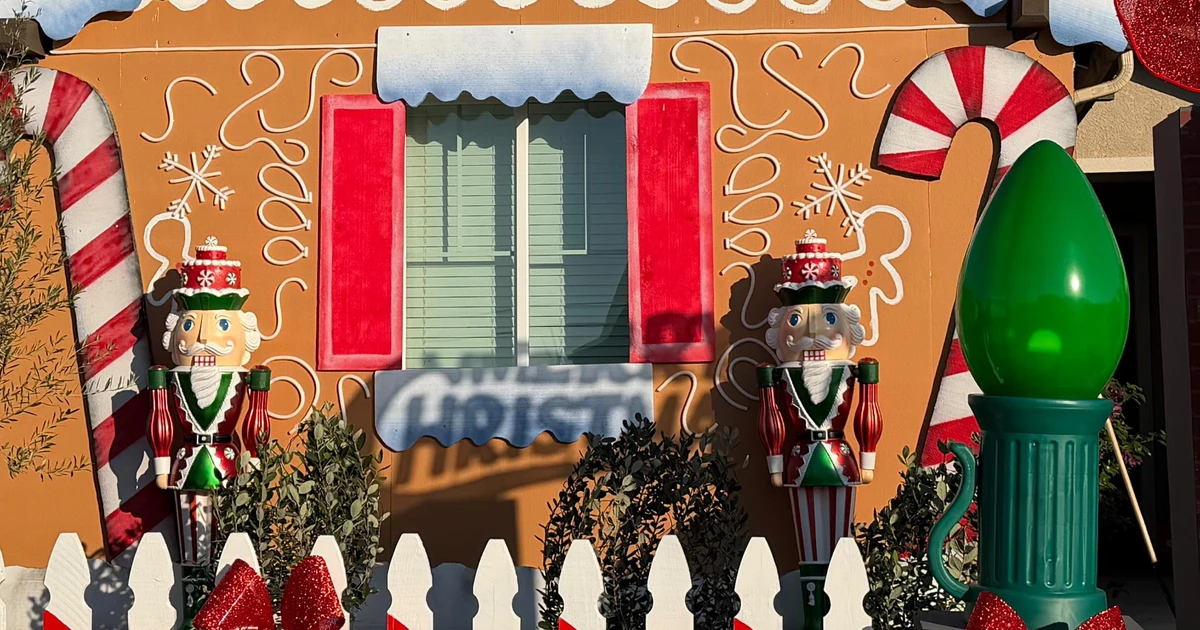
These life size gingerbread house need no oven at all: cardboard walls, candy cane columns, a gumdrop roof that cannot melt, windows that glow from the inside — the whole house, made by hand, one panel at a time.
Start with the walls and the rest follows. A weekend, a few boxes of brown paint and a glue gun are all it takes to build a house the kids will remember.
Here are 20 ways to build a life-size gingerbread house without baking a thing.
Cardboard Boxes Become Gingerbread Walls
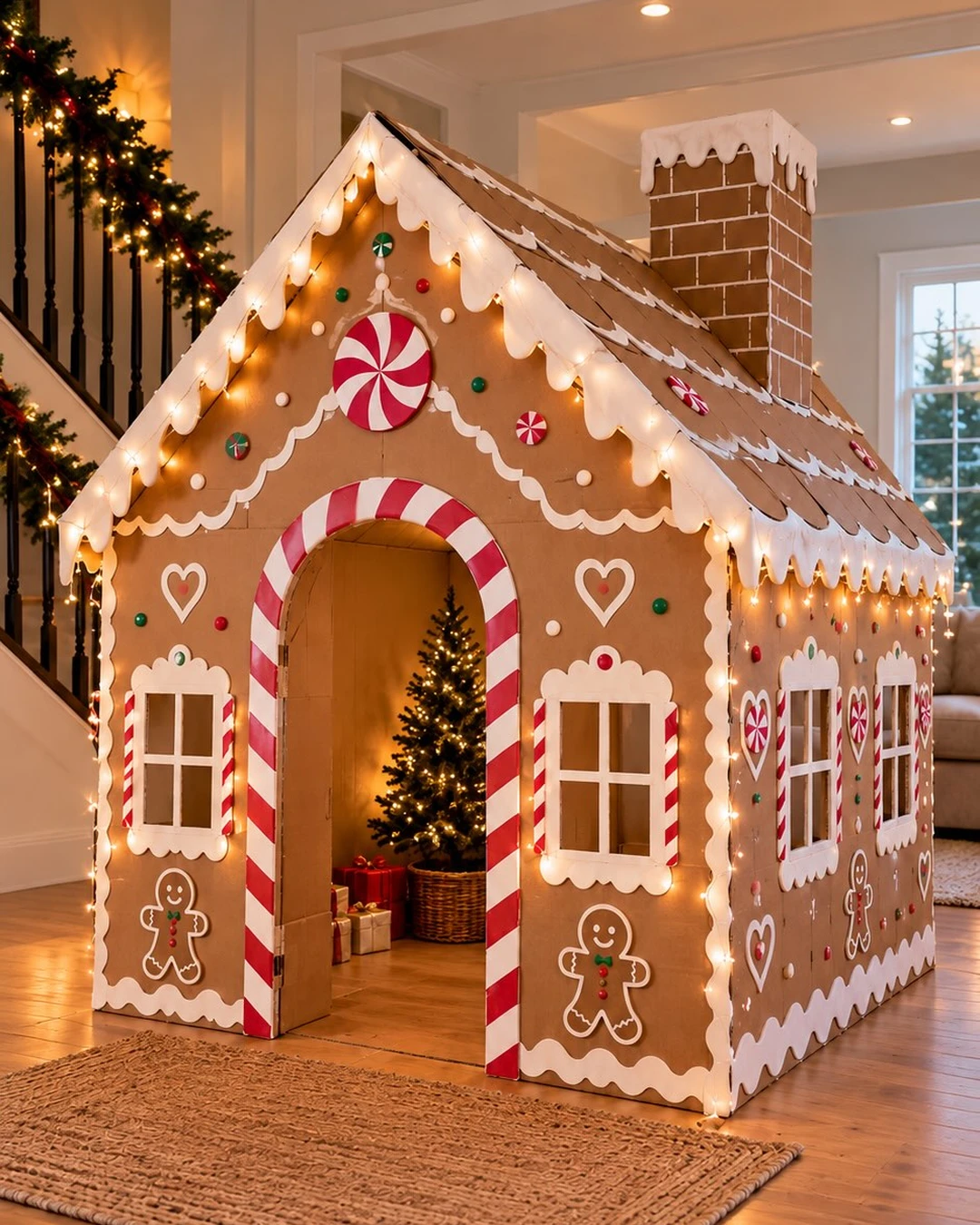
Cardboard boxes are the whole secret — flattened, cut and taped into walls, then painted brown. This house stands indoors with an arched doorway, candy-cane columns, peppermint windows, a chimney and string lights, and a lit tree glowing inside the open doorway.
Start with the biggest boxes you can find — appliance boxes are ideal — and cut the door and window openings before you tape anything together. Brown paint does the gingerbread work; white paint along the edges does the icing.
Leave the doorway open while the paint dries — a house you can walk through is the whole point, and the lit tree inside is the reward for anyone who steps in.
The practical point: Cut the door and window openings before you tape anything together — brown paint does the gingerbread work, white paint along the edges does the icing.
Turn a Doorway into a Gingerbread House
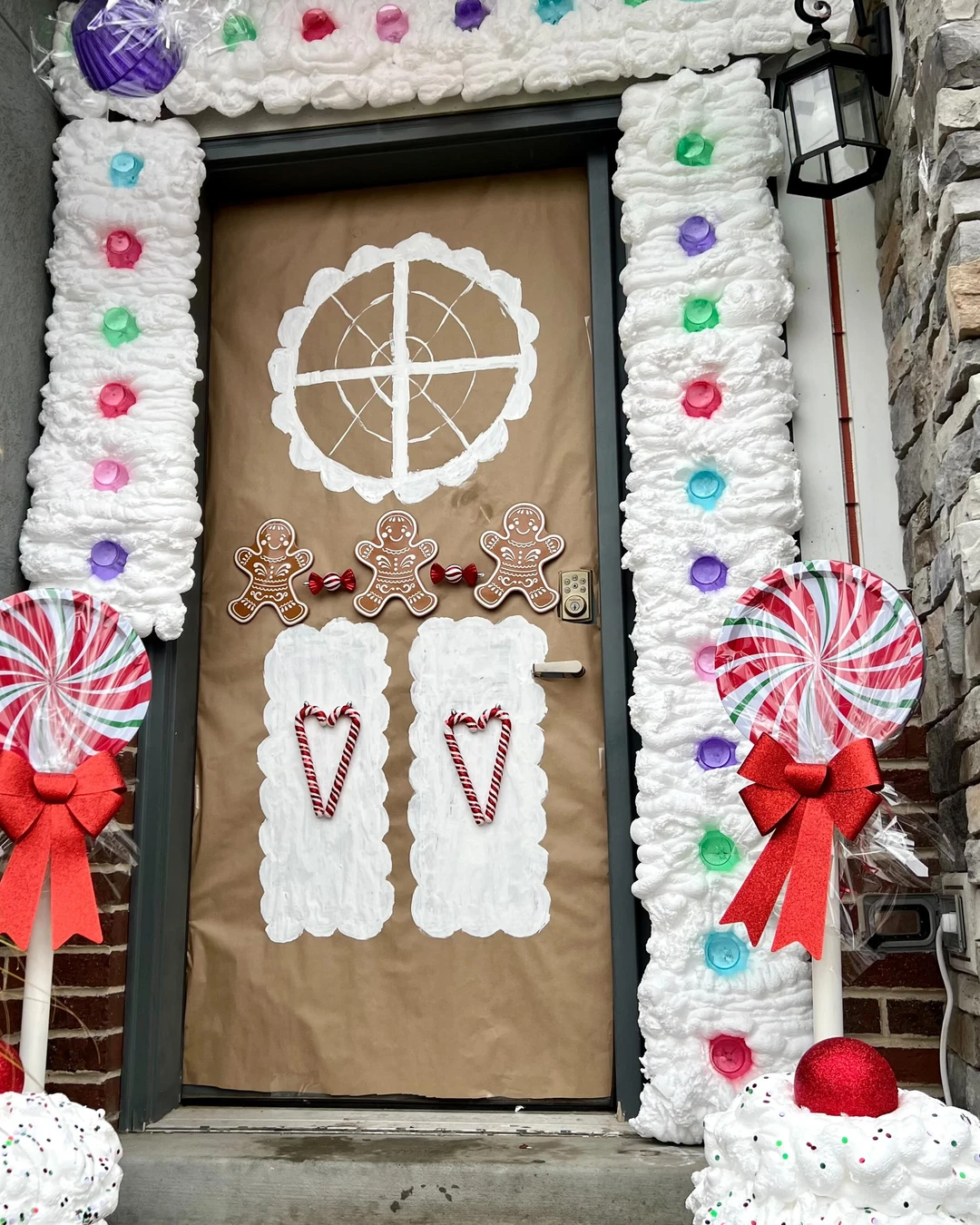
No room for a whole house? Turn the front door into one. Brown kraft paper over the door, white icing trim around a round window, gingerbread men, gumdrops and peppermint lollipops flanking it — the doorway IS the gingerbread house.
Kraft paper is the right material: it takes paint, it tears cleanly, and it peels off in January without a fight. Tape it flat, paint the icing lines, and stick the candy on with painter’s tape so the door still opens.
Add a gingerbread-man doormat at the threshold and the joke is complete — guests step on a gingerbread man to get into a gingerbread house. Keep the paper dry and it lasts all December.
The practical point: Stick the candy on with painter’s tape so the door still opens — kraft paper peels off in January without a fight.
Frosting Lines Without a Piping Bag
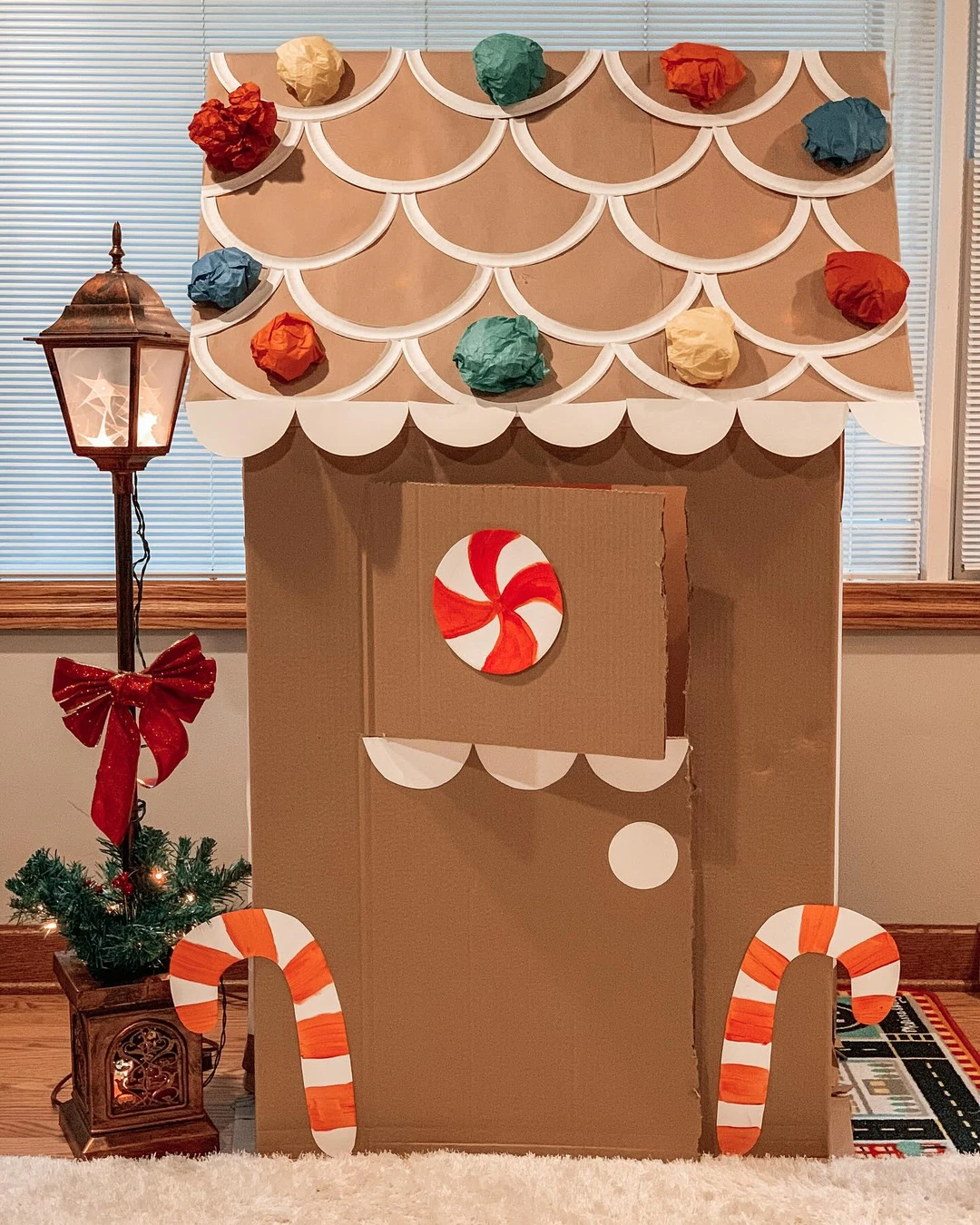
Piped icing is the hardest part of a real gingerbread house — and the easiest part of a cardboard one. White paper-plate scallops across the roof read as frosting lines from across the room, no piping bag required.
Cut paper plates into scallops and glue them in overlapping rows down the roof, like shingles. A peppermint on the door, candy canes at the base, a lamp post beside the house — the frosting is paper, and nobody can tell from the pavement.
White paint works the same way for the walls: a wavy line along the roof edge, a few dots and swirls, and the house looks iced. Paper never melts, never smudges, and never needs a steady hand.
The practical point: Cut paper plates into scallops and glue them in overlapping rows — paper never melts, never smudges, and never needs a steady hand.
Candy Cane Columns at the Corners
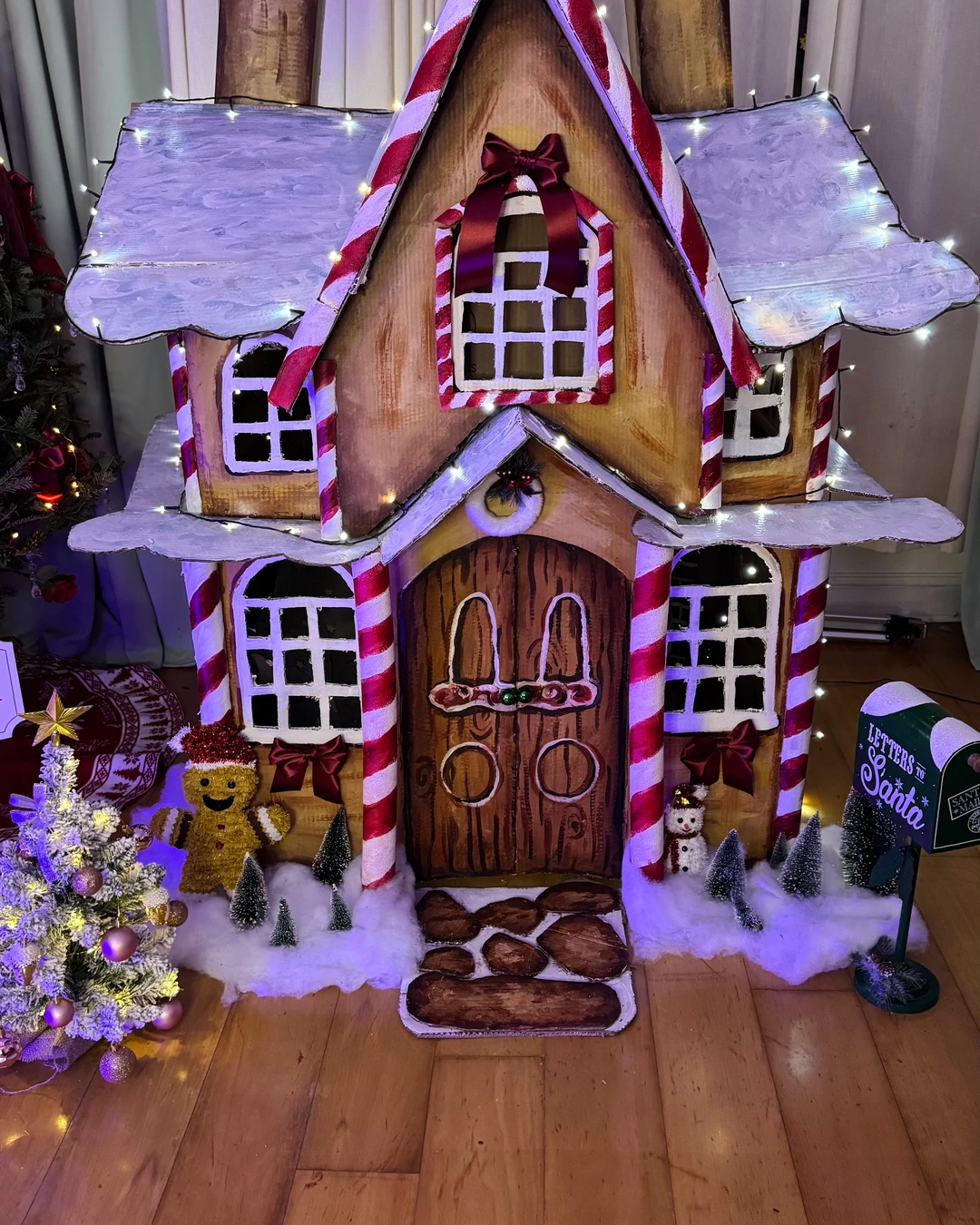
Four red-and-white columns, one at each corner, and a cardboard box suddenly reads as a gingerbread house. Striped roof trim, a wreath on the door, lit windows — but the columns are doing the heavy lifting.
Wrap cardboard tubes in red-and-white striped paper, or paint the stripes on with a ruler and a steady hand. Columns belong at the corners because corners are where a house looks weakest — the stripes hide every wobble in the cardboard.
Look at the right edge and a small green ‘Letters to Santa’ mailbox stands there — a prop, not the subject, but a good one to steal. Put yours by the door and the house starts collecting mail.
The practical point: Wrap cardboard tubes in red-and-white striped paper — the stripes hide every wobble in the cardboard.
Build a Gumdrop Roof That Does Not Melt
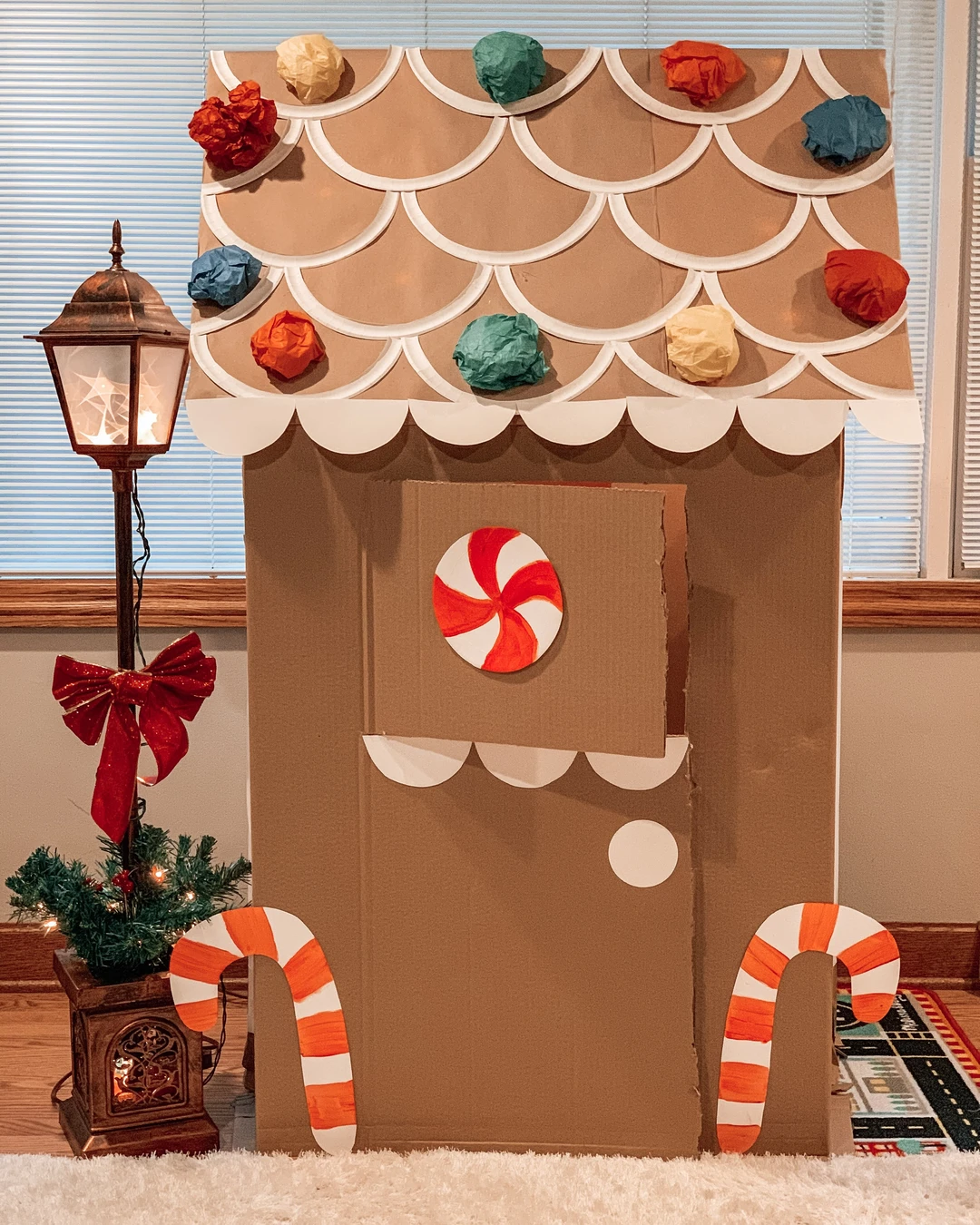
One gumdrop roof that cannot melt is the whole point of building with cardboard — and this one is made of crumpled tissue-paper balls, not candy at all. Scalloped paper-plate shingles, round colourful balls dotted across them, a lamp post beside the house for scale.
Crumple tissue paper into tight balls, glue them to the roof in rows, and step back. From the pavement they read as gumdrops; up close they read as exactly what they are — paper, which is the joke and the trick at once.
Real candy would slide off in the sun and attract every ant in the house. Paper stays put all December, and when the roof comes down, the ‘gumdrops’ go straight into the recycling.
The practical point: Crumple tissue paper into tight balls and glue them to the roof in rows — paper stays put all December, and real candy would slide off in the sun.
Windows That Glow from the Inside
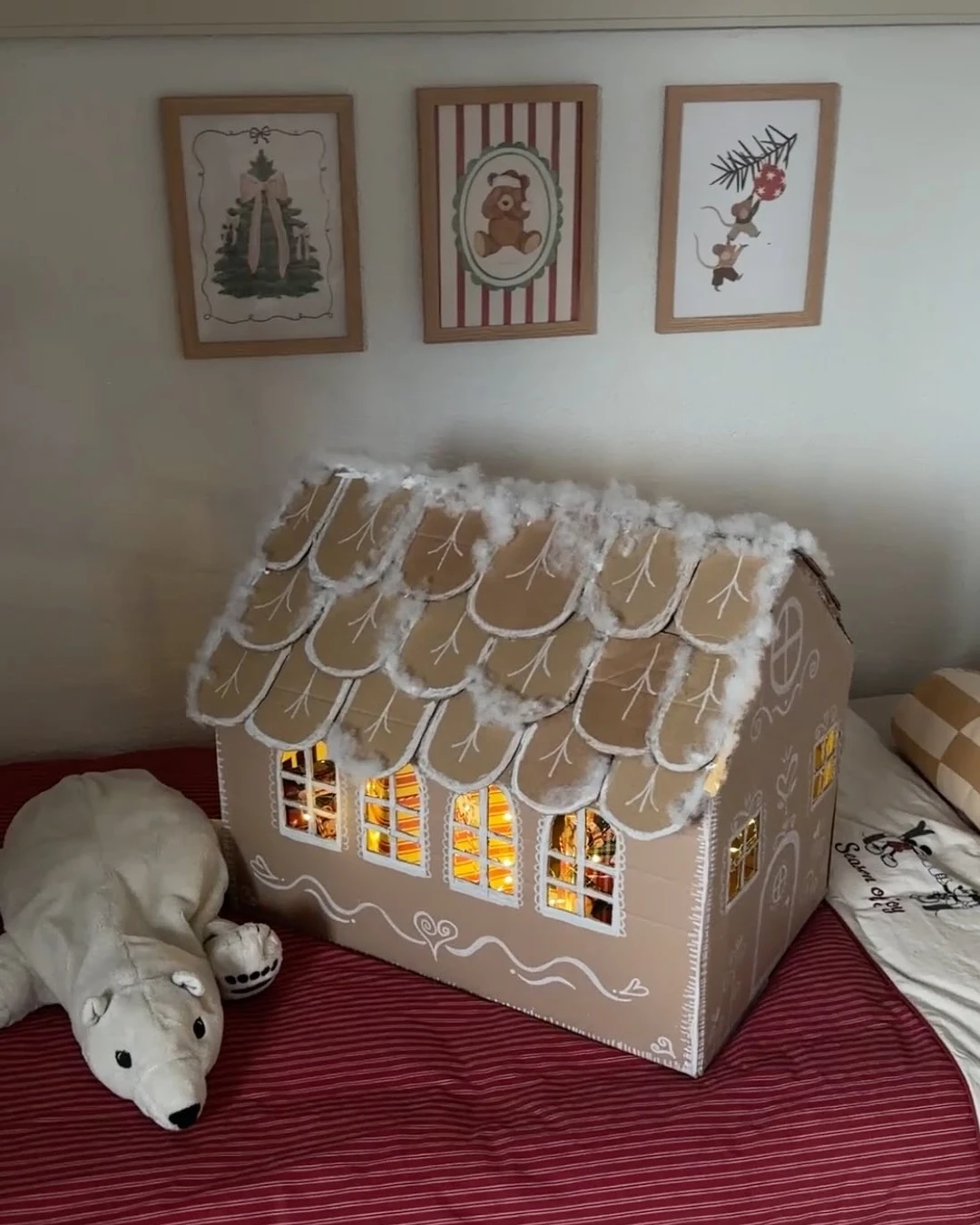
Windows that glow from the inside are what make a cardboard house feel alive after dark. This one sits on a bed, its windows lit warm yellow by lights inside — windows you can genuinely see through, not just painted on.
Cut the windows out before you assemble the walls, then tape a string of warm-white fairy lights inside the house. Close the door, switch the lights on, and the whole house glows like a lantern.
Look closely and a polar bear plush sits beside the bed in this photo — a child’s toy left behind, and the picture is warmer for it. Keep the lights on a timer so the house glows every evening without anyone remembering to switch it on.
The practical point: Cut the windows out before you assemble the walls — warm-white fairy lights inside make the whole house glow like a lantern.
Roll a Chimney from a Wrapping-Paper Tube
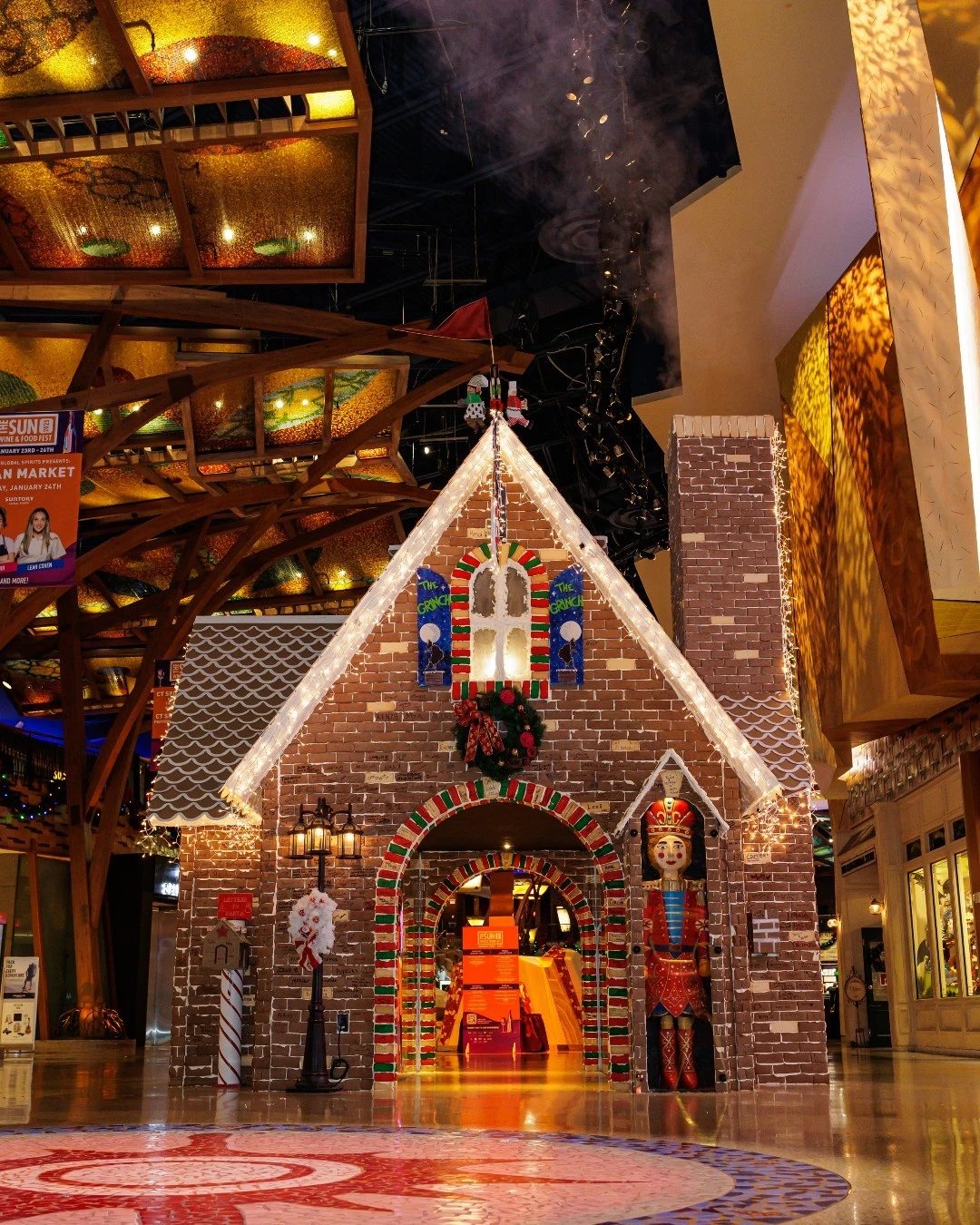
Every gingerbread house needs a chimney, and the easiest one is a wrapping-paper tube. Paint it brick-red, draw the mortar lines in white, and stand it on the roof — a chimney that weighs nothing and costs nothing.
Here is the look to aim for: a tall brick-patterned chimney stack rising beside the roof of a large indoor gingerbread installation, nutcrackers either side of the arched doorway. A small blue ‘THE GRINCH’ sign sits at the bottom-left edge — incidental, and easy to leave out of yours.
Tape the tube to the roof from the inside so no tape shows, and cut the bottom at an angle so it sits flat on the slope. A chimney that leans is the one detail everyone notices — get it straight and the whole house looks straight.
The practical point: Cut the bottom of the tube at an angle so it sits flat on the roof slope — a chimney that leans is the one detail everyone notices.
How to Make the Walls Stand Up Straight
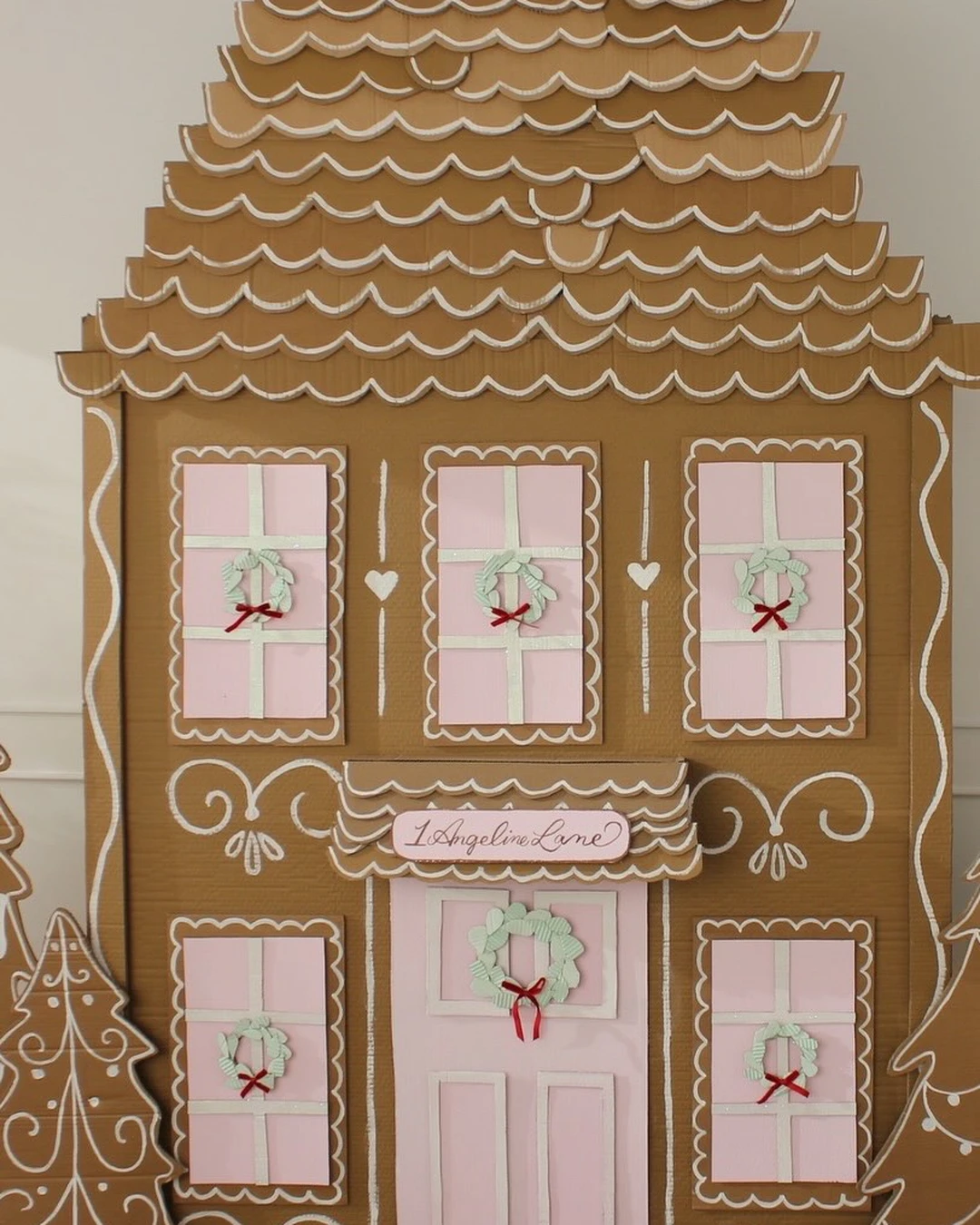
Cardboard walls fall over — that is the first thing everyone learns. The fix is a frame: a tall two-story facade like this one stands on its own because the walls are braced from behind, not because the cardboard is strong.
Tape a second layer of cardboard behind each wall, running the flutes in the opposite direction, and the panel stiffens like plywood. Add a triangular brace at each back corner and the house stands through the whole season — a ‘Gingerbread Lane’ sign above the door is the reward.
Build the walls flat on the floor first, let the glue dry properly, and only then stand the house up. Patience here is the whole method: a wall assembled in a hurry is a wall that leans by Christmas Eve.
The practical point: Tape a second layer of cardboard behind each wall, flutes running the opposite way — the panel stiffens like plywood.
Give the Porch a Candy Railing

One porch with a candy railing is the difference between a house and a home. Four columns wrapped in red-and-white diagonal stripes like giant candy canes, a gingerbread door cover, steps up to the porch — a real porch, dressed as candy.
Wrap the porch columns in striped paper or paint the stripes on, working from the top down so the diagonal stays even. Red-and-white ribbon works too, and it comes off in January without leaving a mark.
Keep the railing simple — the columns are the candy, and the porch does not need more. A gingerbread figure by the door and a small tree on the steps finish the job.
The practical point: Wrap the columns from the top down so the diagonal stays even — red-and-white ribbon works too, and it comes off in January without a mark.
Why Brown Paint Is the Whole Trick
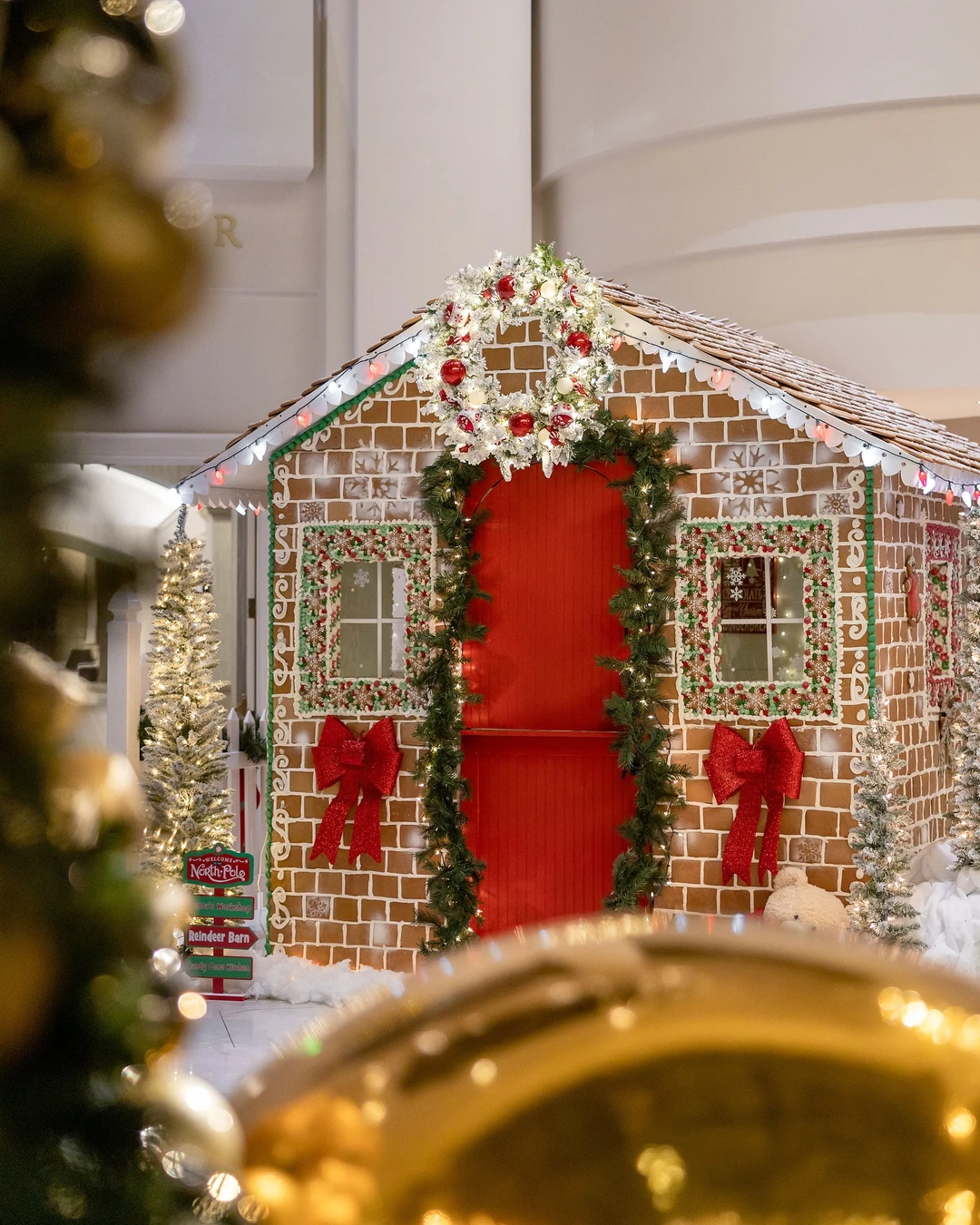
Brown paint is the whole trick. Brown brick-patterned walls, white icing trim, a red door, a wreath, garland and red bows, small lit trees either side — the gingerbread look is a paint colour, not a recipe.
Pick a warm milk-chocolate brown, not a dark espresso — the lighter brown reads as gingerbread in daylight and photographs well at night. Paint the walls first, then add the white icing lines with a ruler and a steady hand.
Look at the bottom of this photo and a large out-of-focus gold balloon intrudes — the kind of thing that happens at a party, and the house is good enough to ignore it. Paint two coats and let each one dry; one thin coat always looks like cardboard.
The practical point: Pick a warm milk-chocolate brown, not a dark espresso — the lighter brown reads as gingerbread in daylight and photographs well at night.
Let the Kids Walk Through It
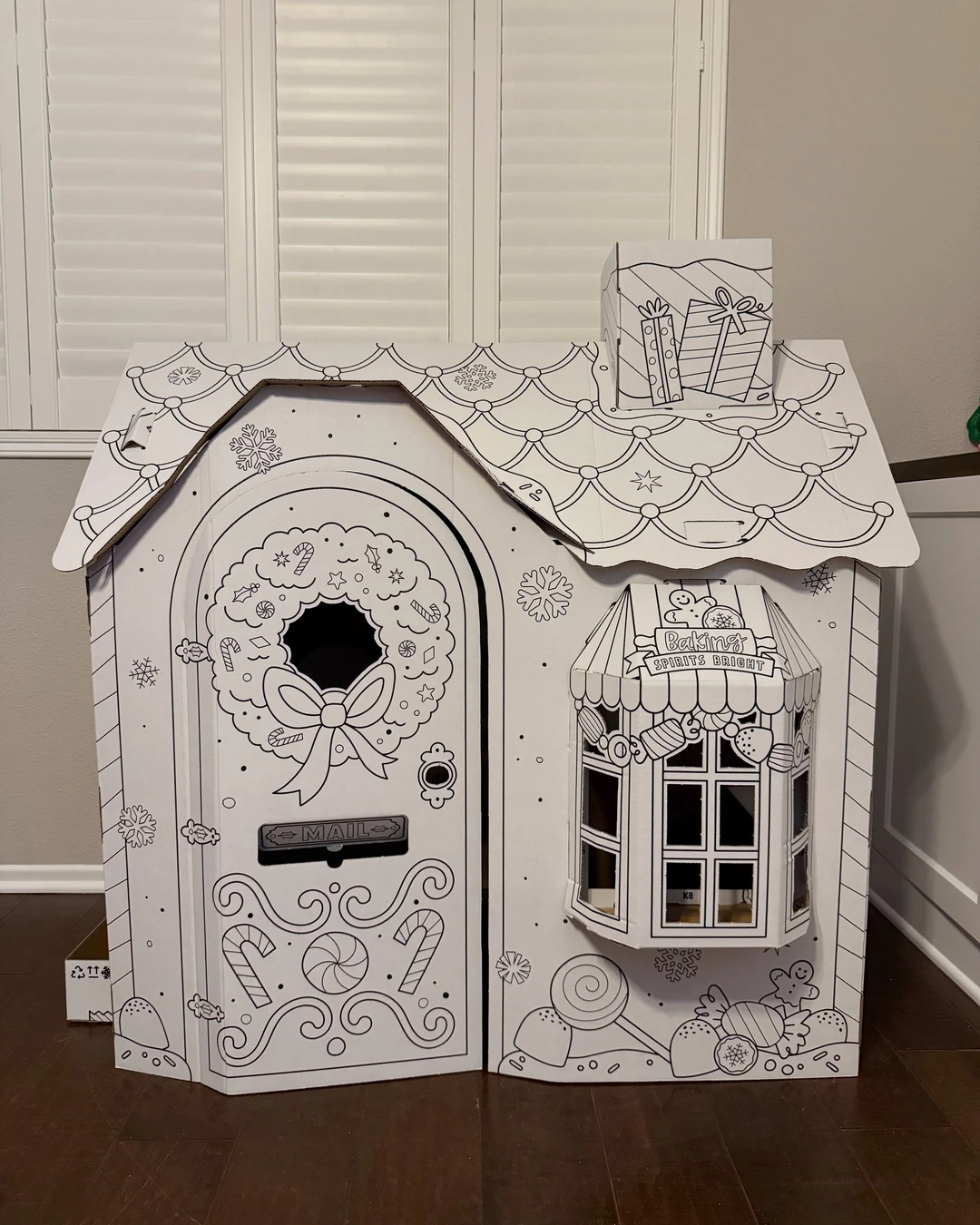
One house children walk into is a different thing from a house children look at. This white cardboard playhouse — black line drawings of a gingerbread house, wreath, window, arched door, roof tiles — stands indoors on a dark wood floor, waiting to be walked through.
It is an uncoloured colour-in playhouse, and that is the point: hand the kids the markers and let them colour the house themselves. The wreath turns red, the windows turn yellow, the roof turns whatever colour a child thinks a roof should be.
Build it at child height — a doorway a child can walk through without ducking, windows a child can see through. A house that fits the kids is a house the kids will live in all December.
The practical point: Hand the kids the markers and let them colour the house themselves — a house that fits the kids is a house the kids will live in all December.
Stand in Front of It for Photos
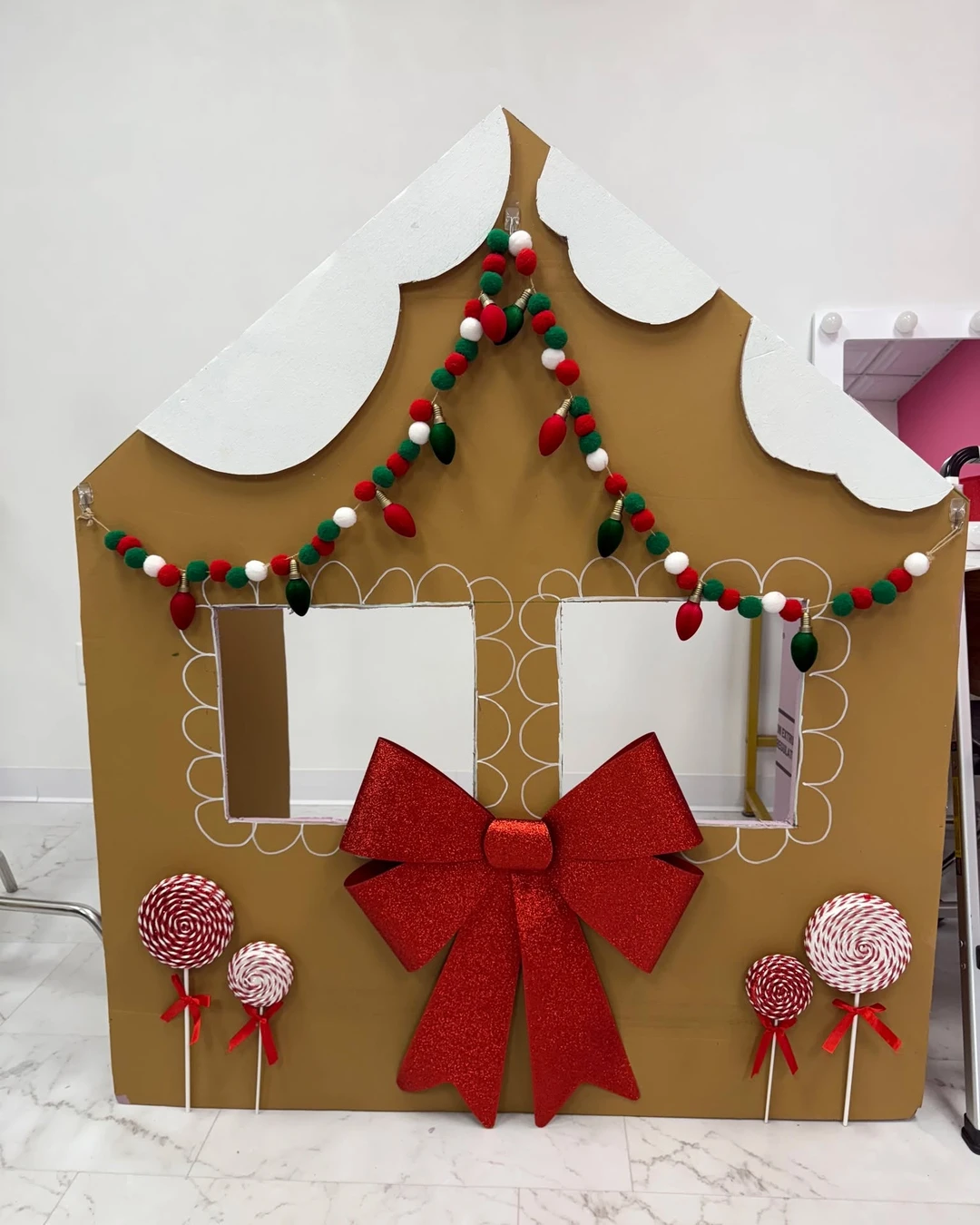
One gingerbread house makes a better photo backdrop than a tree ever will. This freestanding cardboard house — brown with a white icing roofline, a big red bow, lollipops, a light garland across the front — is a backdrop you stand in front of, not a decoration you stand behind.
Build it flat against a wall or freestanding on the lawn, and leave a clear patch of floor in front of it. The house does the decorating; the people in front of it do the rest — which is why it works for a party, a school play or a family photo.
For the party itself, Christmas Party Game Ideas for an Unforgettable Holiday Gathering fills the evening once the photos are done. And keep the backdrop up all season — it gets better with every photo taken in front of it.
The practical point: Leave a clear patch of floor in front of the house — the house does the decorating, and the people in front of it do the rest.
Snow on the Roof, Made from Cotton
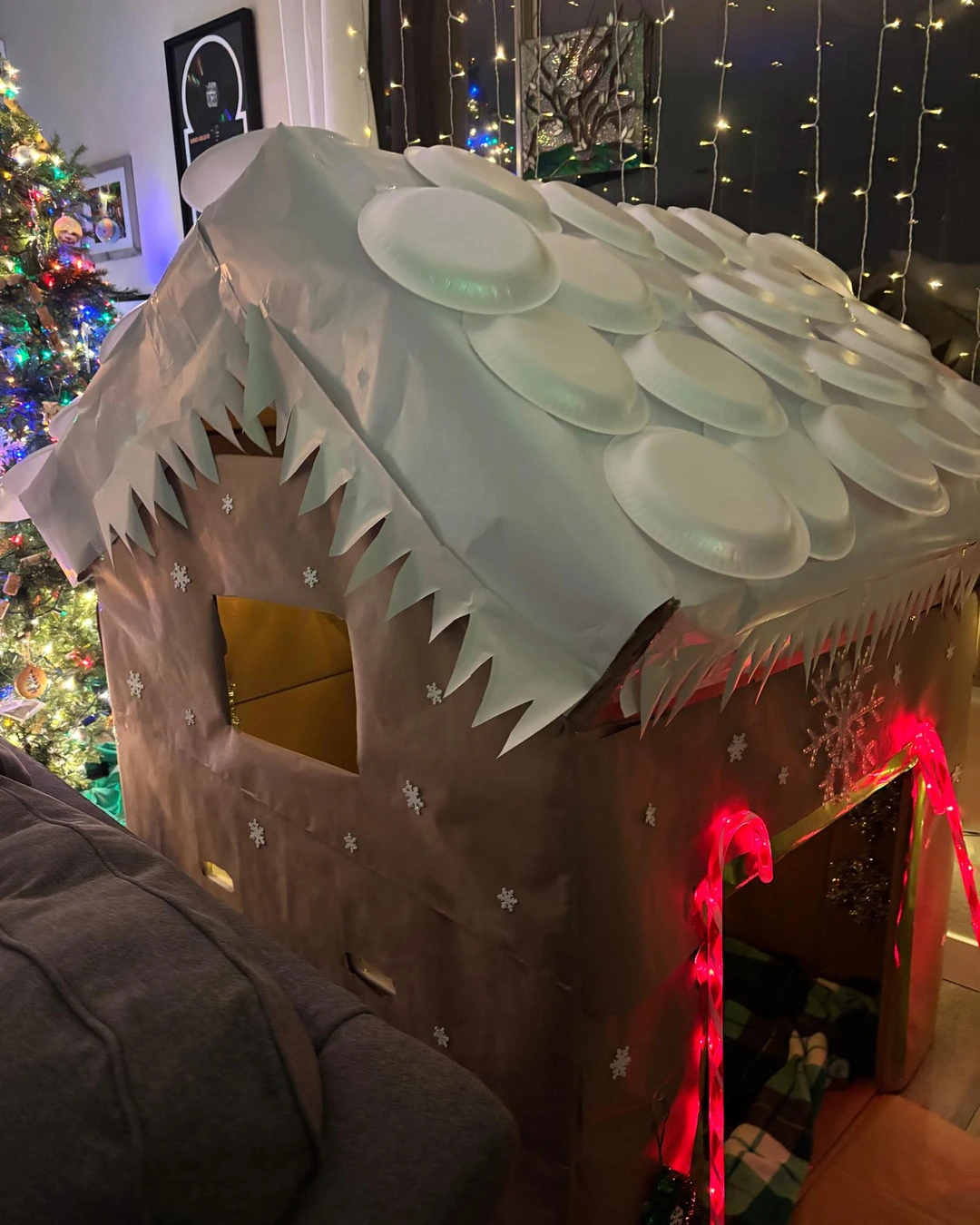
Snow on the roof is the finishing touch, and cotton batting is the easiest way to get it. Pull it apart, lay it over the roof in thick drifts, and the house looks like it has been standing in a snowfall all night.
Here is the look: a large cardboard-box house indoors, its roof covered in white paper plates as snow shingles with white paper snow dripping along the roofline, red lights at the door, a lit Christmas tree behind. A dark sofa edge intrudes at the bottom-left — the kind of thing a living room does.
Cotton batting beats paper plates for one reason: it drapes. Lay it thick at the roof edge and thin at the peak, and it looks like snow that fell, not snow that was glued. A little spray adhesive keeps it in place all December.
The practical point: Lay the batting thick at the roof edge and thin at the peak — it looks like snow that fell, not snow that was glued.
Put a Mailbox on Gingerbread Lane
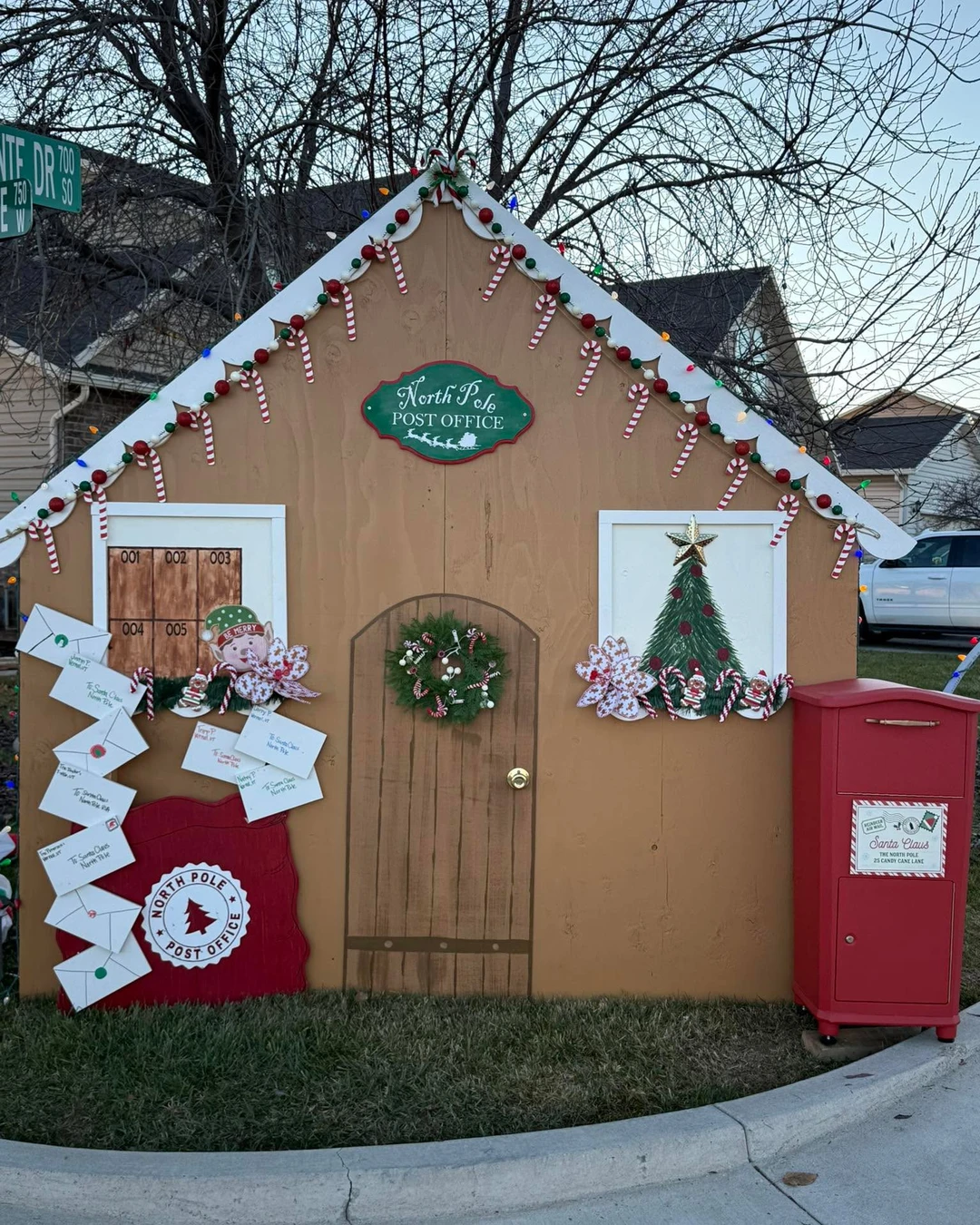
One mailbox is the smallest detail that makes a gingerbread house feel like a real address. A flat wooden ‘North Pole POST OFFICE’ facade at a residential street corner, with a tall red mailbox standing beside it — the house has a postcode now.
Label yours ‘Gingerbread Lane’ — this one’s label reads ‘Santa Claus, The North Pole, 25 Candy Cane Lane’, which is one word away. A red mailbox, a white address plate, and the house stops being a decoration and starts being a place.
Put the mailbox where the postman would look for it — beside the door, at the end of the path. Children will post letters in it all December, and that is the whole point of the thing.
The practical point: Label the mailbox ‘Gingerbread Lane’ and put it beside the door — children will post letters in it all December.
Hang a Wreath on the Gingerbread Door
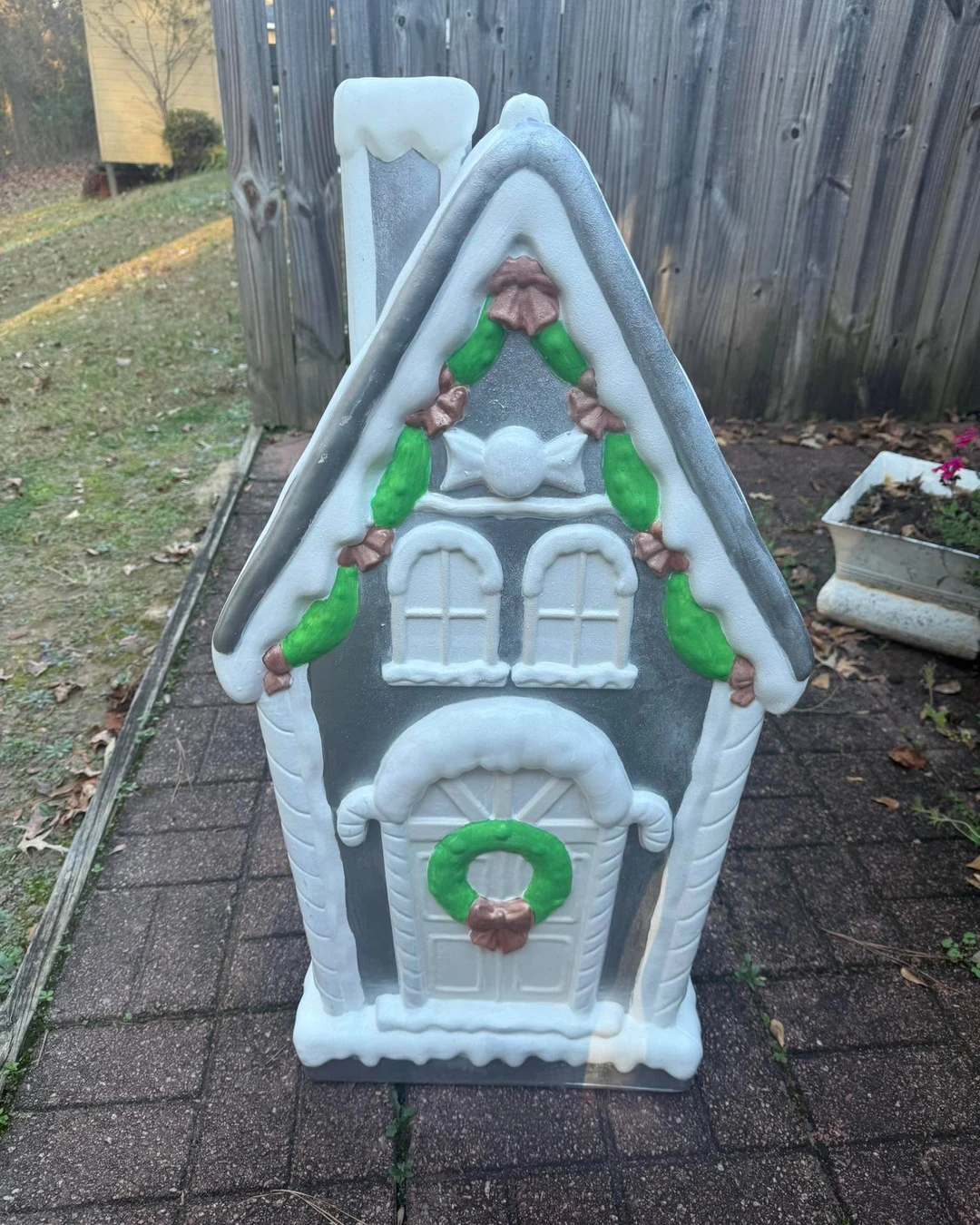
One wreath on the door is the oldest Christmas gesture there is, and it works on a gingerbread door too. This large freestanding outdoor decoration — grey with white icing trim, two arched windows — carries a green wreath with a brown bow on its front door.
Hang the wreath on a nail or a hook, not on tape — a wreath that falls off in the wind is a wreath on the lawn. Green on brown is the combination that works; a brown bow ties the wreath to the house.
Keep the wreath simple — greenery, a bow, nothing else. The door is already busy with icing and candy; the wreath just has to say that someone lives here.
The practical point: Hang the wreath on a nail or a hook, not on tape — a wreath that falls off in the wind is a wreath on the lawn.
Lights That Glow Through the Windows

One oversized gingerbread house, brown with white icing details, multiple windows, balconies and ornate trim — illuminated from within so the windows glow warmly, flocked trees and lanterns behind it. This is the house at night, and it is the best version of the house.
Look beside the house and a woman in a chef’s jacket stands there — a scale reference, showing just how big the house really is. The windows are the subject, and the glow is what makes them work: warm light, not white, and more of it than you think you need.
Put the lights on a timer and let the house light itself every evening. A glowing house on a dark street is the kind of thing neighbours remember until next Christmas.
The practical point: Use warm light, not white, and more of it than you think you need — a glowing house on a dark street is the kind of thing neighbours remember.
Move the Gingerbread House to the Front Yard
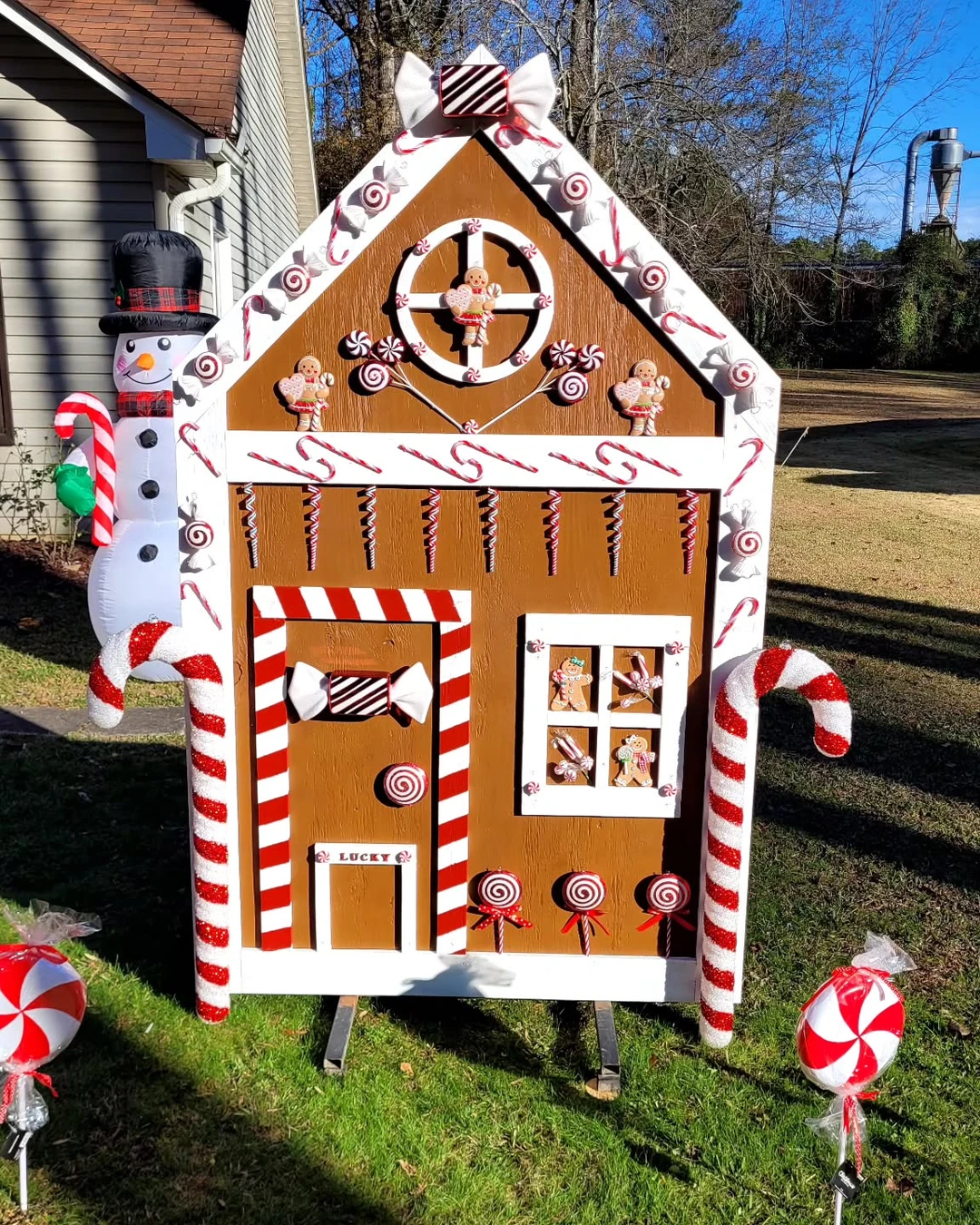
One gingerbread house in the front yard is a gift to the whole street. This large freestanding decoration — brown wooden structure, red-and-white candy cane trim, peppermint swirls, lollipops, gingerbread-man figures, a snowman at the side — sits on a grassy front yard on a sunny day.
Build it in panels and carry it out in pieces — a house that has to be carried through a doorway should never be glued together indoors. Stake it down with tent pegs and the wind will not take it.
Weatherproof the paint with a clear outdoor sealant, and bring the candy in if it rains. A front-yard house that survives December is a front-yard house that comes back next year.
The practical point: Build it in panels and carry it out in pieces — stake it down with tent pegs and the wind will not take it.
Small Details Make It Real
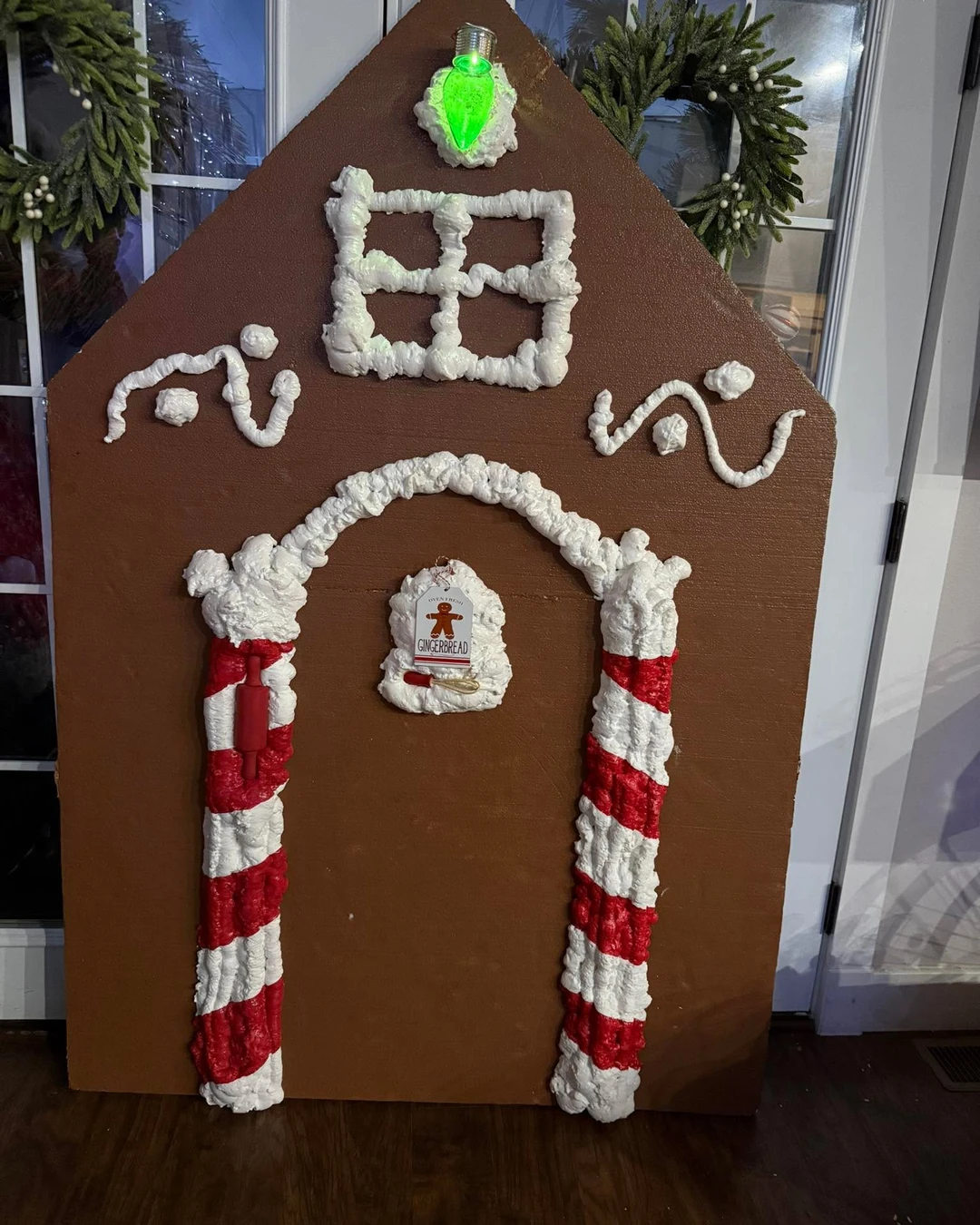
Small details make it real. Thick white piped icing, candy-cane striped columns, a tiny gingerbread-man plaque on the door, icing swirls and a green wreath above — this close-up on the door area is where a cardboard house stops looking like cardboard.
Spend the time on the door: the plaque, the columns, the swirls. Visitors never look at the back of the house — they look at the door, and the door is where the details live.
One detail at a time, and stop before it gets busy. A door with three good details beats a door with ten — the eye needs somewhere to rest.
The practical point: Spend the time on the door — visitors never look at the back of the house, and the door is where the details live.
Take It Down Without a Mess
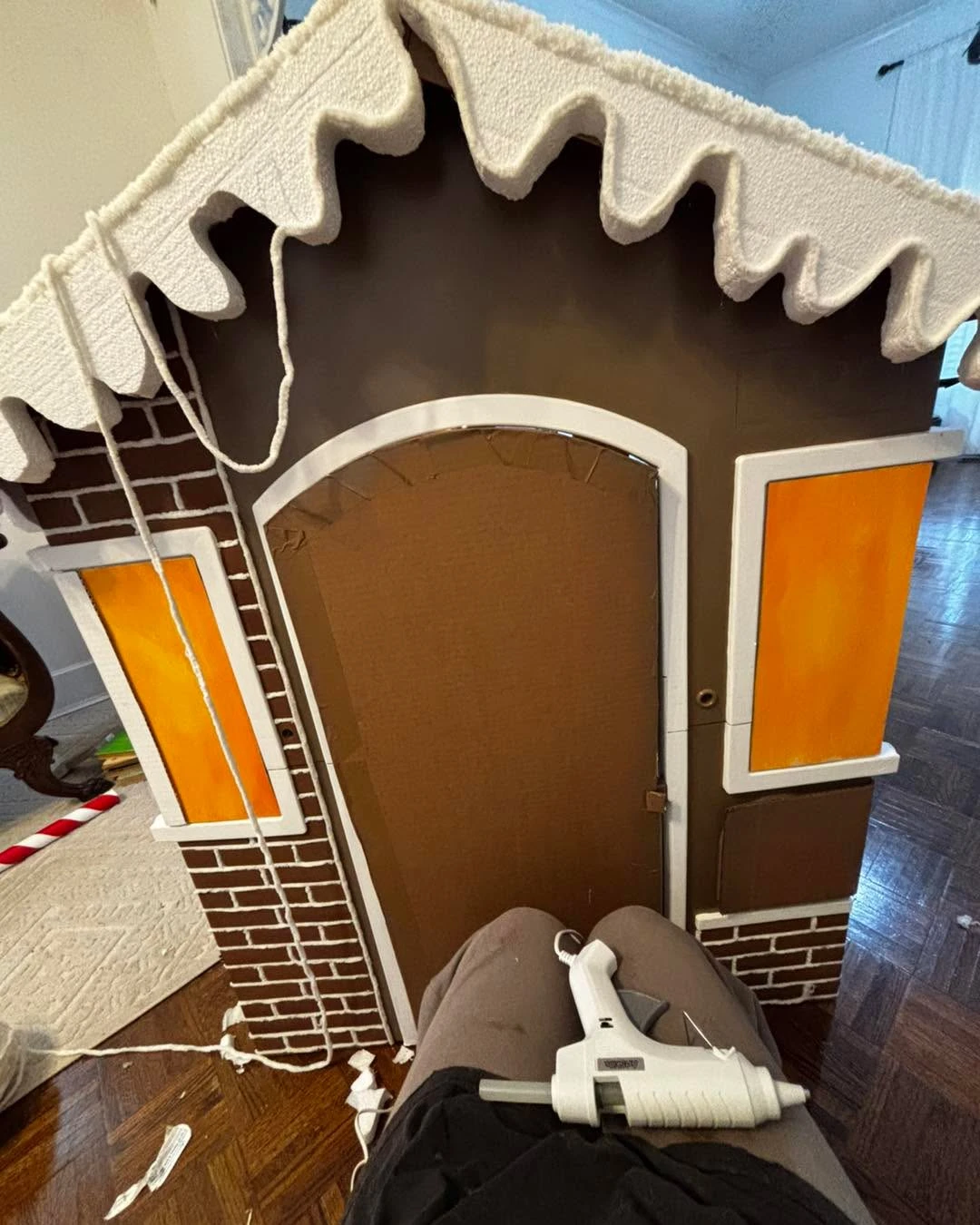
Taking a cardboard house down is the part nobody photographs — which is why this photo is a build photo, not a take-down. A first-person view of someone building a large cardboard gingerbread house, brown panels, white icing trim, orange window panels, a glue gun in the builder’s lap.
Take it down the way it went up: panel by panel, in reverse. Cut the tape, not the cardboard, and the walls come apart clean — the house that went up in an afternoon comes down in twenty minutes.
Keep the panels flat and the candy in a box, and next December the house goes back up in half the time. A house you can take down cleanly is a house you will actually build again.
The practical point: Cut the tape, not the cardboard — the house that went up in an afternoon comes down in twenty minutes.
What to Do with It After Christmas
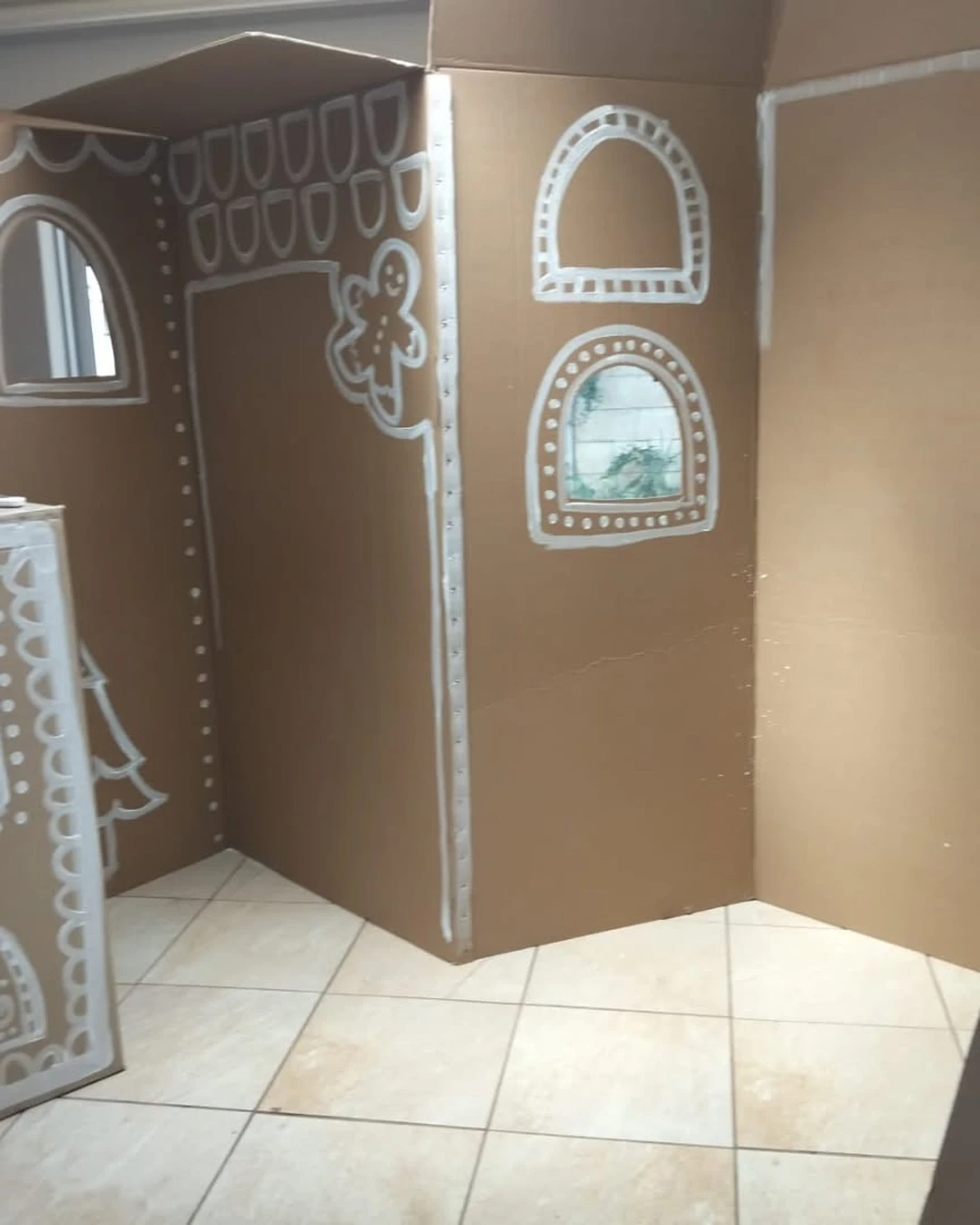
After Christmas, the house has three choices: the bin, the loft, or a second life. These cardboard wall panels — white icing line art drawn on brown card — lie flat on a tiled floor, waiting for next year.
Store them flat, stacked with a sheet of paper between each panel so the paint does not stick. A flat stack takes up no more room than a rug, and next December the house goes back up in half the time.
Or hand the panels to the kids as a colouring project — a house that was a decoration becomes a playhouse, and the gingerbread season stretches into January. Either way, the house does not belong in the bin.
The practical point: Store the panels flat with a sheet of paper between each one — a flat stack takes up no more room than a rug.
Your House, No Oven Required
Your house does not need an oven, a recipe or a steady hand — it needs cardboard, brown paint and a weekend. A house big enough to walk into, sweet enough to photograph, and built by hand is the kind of Christmas project the whole street remembers.
Start with the walls and let the rest follow. For the door the house stands beside, 15 Snowman Door Decorating Ideas carries the welcome further in — and the house itself will be waiting when you come back next December.