A reclining sofa living room only works when the layout earns its keep. I’ve watched too many beautiful recliners get shoved against the nearest wall, footrest jammed against a coffee table, because nobody thought about how the mechanism moves through space. Whether you’re squeezing one into a cosy flat or anchoring a sprawling open-plan lounge, the right layout changes everything, from how the room flows to how often you use the thing.
This guide walks through layouts for both ends of the spectrum, plus a few rules that apply no matter your square footage.
Small Living Rooms Need Sofas That Work Twice As Hard
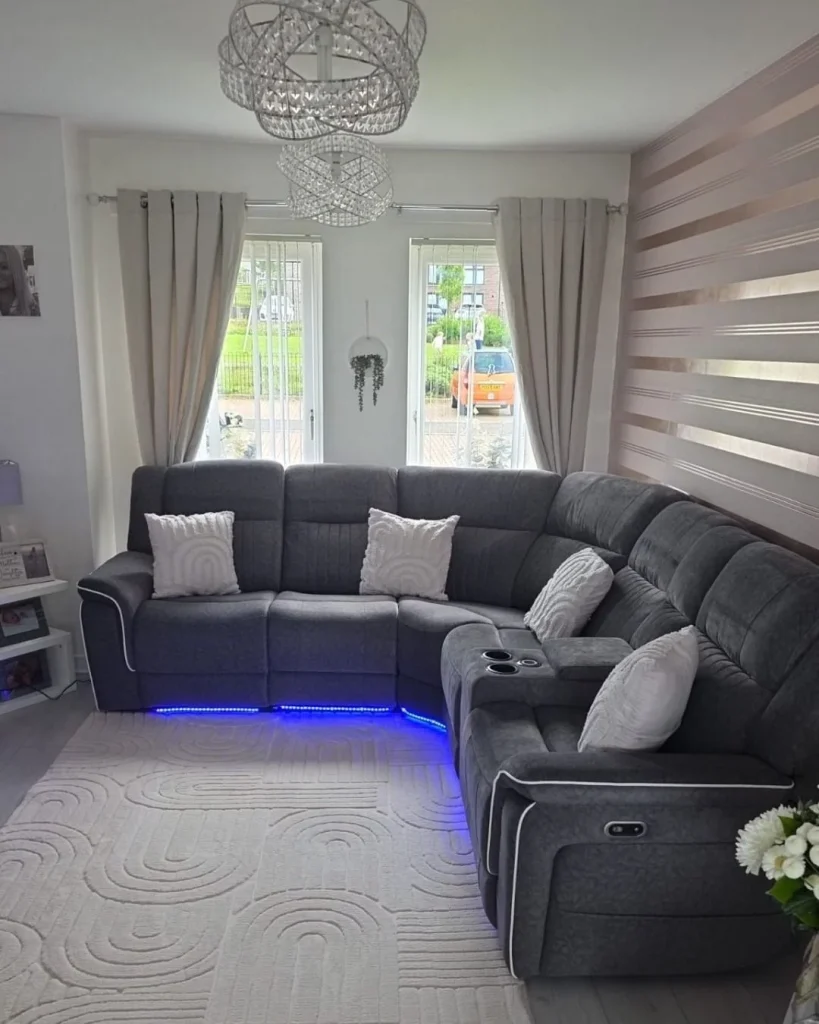
Photo Credit: furnituredirectonline
In a small living room, every piece of furniture has to justify its footprint, and a reclining sofa is no exception. I always tell people to measure the fully reclined length before falling in love with a style, not just the closed dimensions. A sofa that looks compact in the showroom can eat six extra feet of floor space the moment someone leans back.
The trick in tight rooms is choosing a low-profile recliner with a slim track arm rather than a bulky rolled arm. It reads lighter visually and is lighter on space. Pair it with a narrow console table instead of a full sideboard, and you’ll free up enough room for the mechanism to do its job without anyone banging a knee.
Corner Placement Turns Recliners Into Space Savers
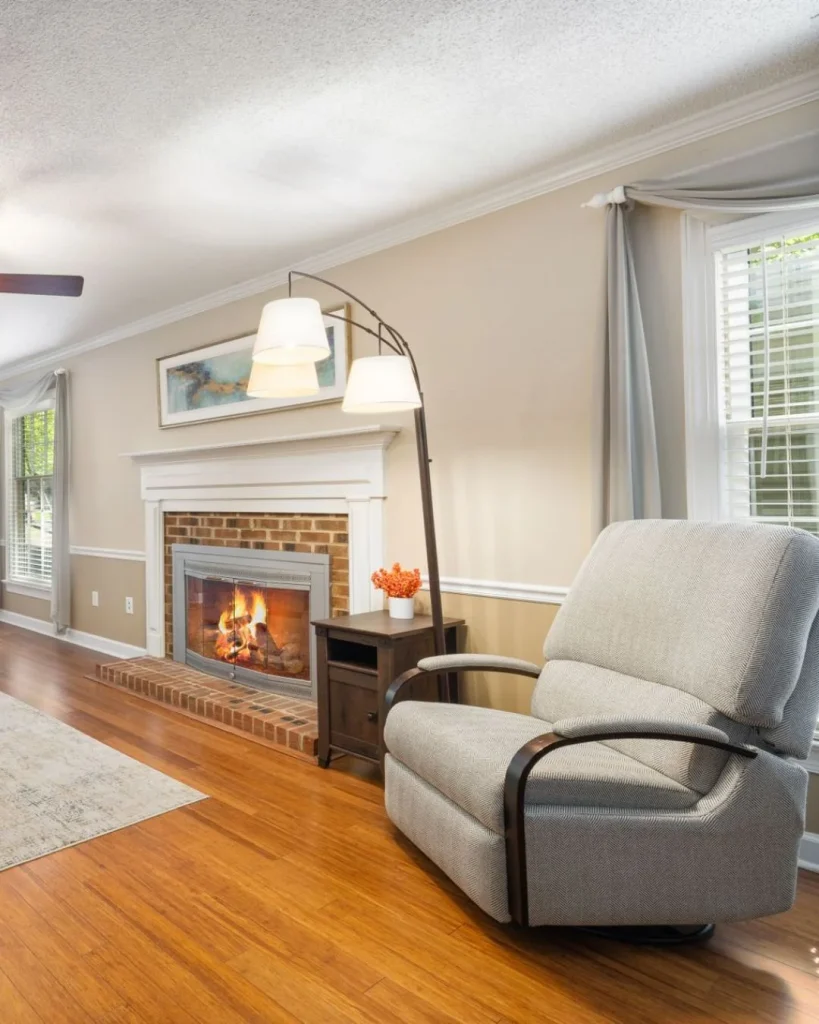
Photo Credit: Curtis Adams
Pushing a reclining sofa into a corner, angled slightly rather than flush against both walls, is one of the most underused tricks in small-space design. The angle opens a diagonal sightline through the room, which makes even a boxy layout feel less cramped.
A wall-hugger recliner, the type that only needs a few inches of clearance behind it to fully extend, is the obvious choice here. Standard recliners that need a foot or more of rear clearance simply won’t work tucked into a corner without blocking a doorway or radiator.
Wall Hugging Recliners Free Up Walking Room
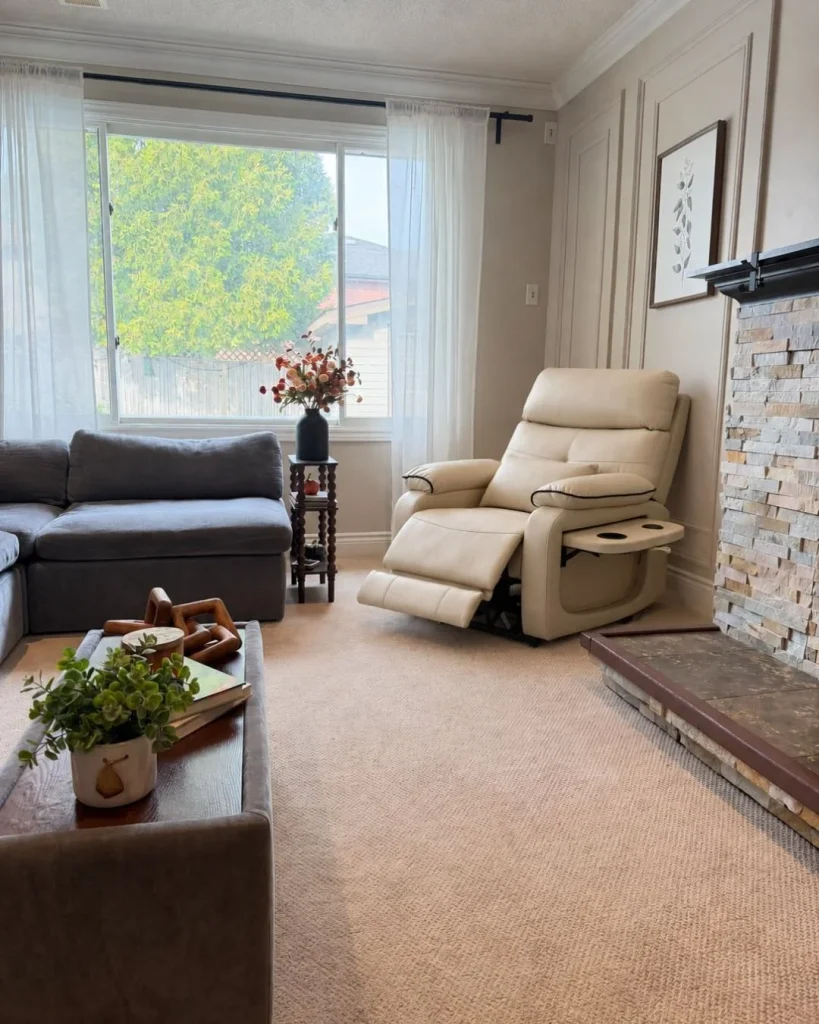
Photo Credit: emelshome
If your reclining sofa living room doubles as a hallway to the kitchen or a route to the garden door, a wall-hugging mechanism is worth the slightly higher price tag. These slide forward on rollers as they recline instead of swinging backward, which keeps the footprint nearly identical whether the sofa is upright or fully reclined.
I’ve swapped clients from traditional recliners to wall-huggers in narrow lounges and watched a cramped, obstacle-course layout turn into one people can walk through without thinking twice.
Sectional Recliners Anchor Large Living Rooms Beautifully
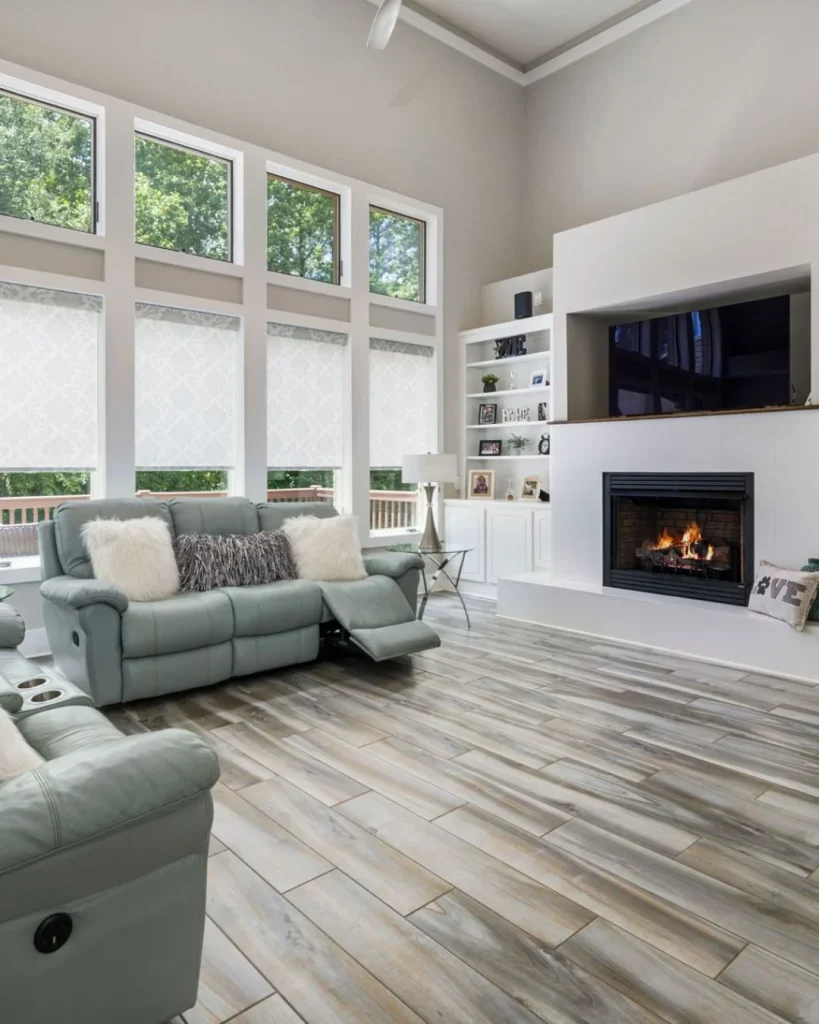
Photo Credit: Curtis Adams
Large rooms have the opposite problem: too much open floor can make a single sofa look lost. A reclining sectional, especially an L-shape with one or two powered seats, gives a big living room a proper anchor without needing four separate pieces of furniture to fill the space.
Position the sectional so the longer run faces the main focal point, whether that’s a fireplace, a media wall, or a picture window, and leave at least 36 inches of walking path around the perimeter. That breathing room is what stops a large reclining sofa living room from feeling like a furniture showroom.
Symmetrical Layouts Balance Big Open Floor Plans
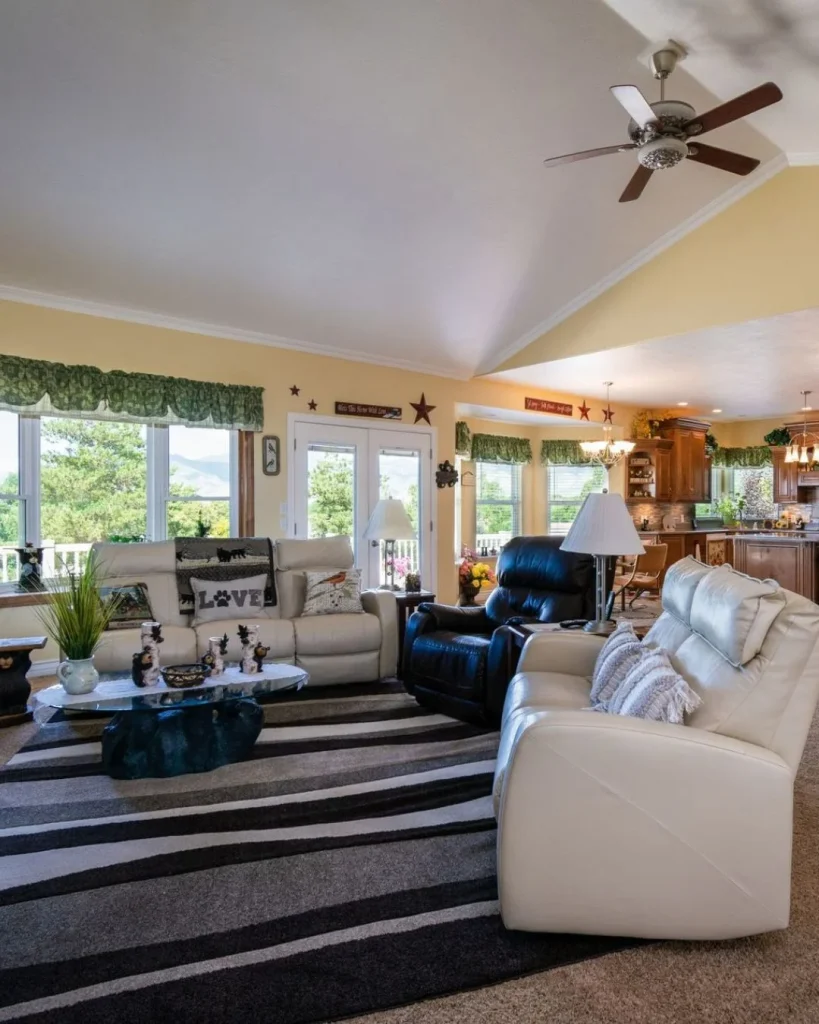
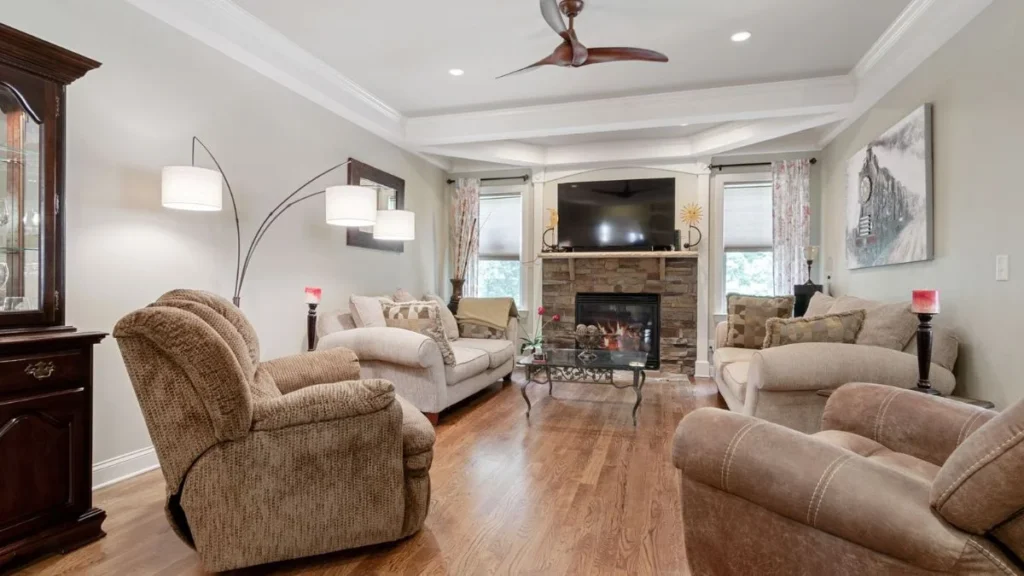
Photo Credit: Get Lost Mike
In an open-plan space, symmetry does a lot of quiet work. Two matching reclining loveseats facing each other across a coffee table create a conversation-first layout that feels intentional rather than accidental, and it avoids the common mistake of one oversized sectional dominating an entire zone.
This layout also solves a practical problem: powered recliners are heavy, and splitting the seating into two smaller pieces makes future rearranging far less of a workout.
Conversation Zones Matter More Than Square Footage
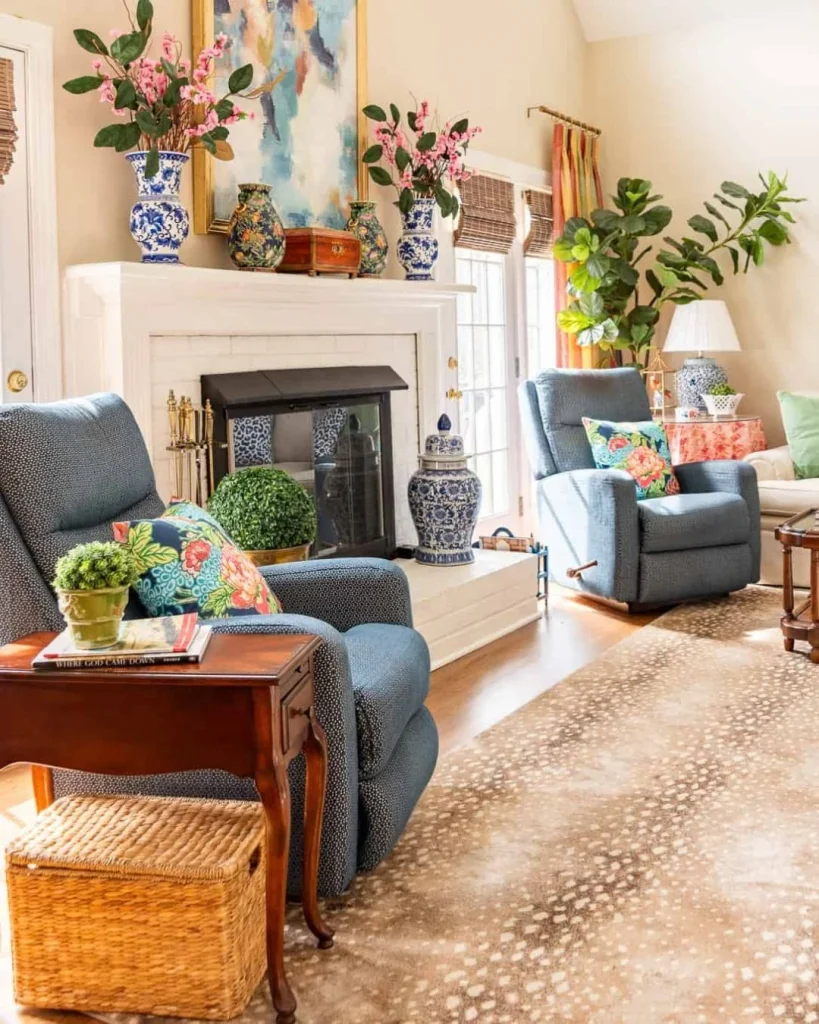
Photo Credit: worthingcourtblog
A common mistake I see in larger rooms is spacing seating so far apart that conversation becomes shouting distance. Keep seating within about eight feet of each other, recliner footrests included, so the room still feels connected once everyone leans back.
If the room needs to serve double duty, say, a family lounge and a TV room, angle the reclining sofa about fifteen degrees toward the screen rather than facing it dead-on. It softens the layout and still gives a clear sightline.
Clearance Space Around Every Recliner Is Non Negotiable
Regardless of room size, every recliner in your reclining sofa living room needs enough rear or forward clearance to fully extend, plus at least 24 inches of side clearance so someone can walk past without disturbing the footrest of a reclined seat.
Skipping this step is the single most common layout mistake homeowners make. It’s worth taping out the reclined footprint on the floor with painter’s tape before the sofa arrives, especially if you’re working with a floor plan you haven’t measured recently.
Colour And Fabric Choices Change How Layouts Feel
Layout isn’t only about inches. A dark, heavy fabric on a large sectional can make an already big room feel closed in, while a lighter bouclé or performance-weave fabric keeps the same footprint feeling airy. In small rooms, the opposite trick works too, a tonal fabric that matches the wall colour lets a bulky recliner visually recede.
According to interior design resource The Spruce, choosing furniture in a similar tone to your walls is one of the simplest ways to make a room feel larger without moving a single piece.
Few Layout Rules Worth Repeating
If there’s one thing worth taking away from all of this, it’s that a reclining sofa living room lives or dies on clearance, not on the sofa itself. Measure the reclined footprint first, choose wall-huggers for tight spaces, and let sectionals or paired loveseats do the anchoring in bigger rooms. Get that right, and the styling part is the easy bit.
Also Read About: Sectional Couch Living Room Arrangements for Open Plan and Cosy Corners.
FAQs
How much space do I need behind a reclining sofa?
Standard recliners typically need 12 to 18 inches of rear clearance to fully extend, while wall-hugging models need as little as 4 to 6 inches, making them the better choice for small rooms or tight corners.
Can a reclining sofa work in a small living room?
Yes, as long as you choose a wall-hugging or low-profile design and measure the fully reclined length, not just the closed dimensions, before placing it against a wall or in a corner.
Should a reclining sectional face the TV directly?
Not always. Angling the sectional slightly toward the screen, rather than positioning it dead-on, tends to create a more natural conversation layout while still giving everyone a clear view.