A cracked, faded concrete path is the one thing that can undo an otherwise beautiful front yard. The good news: you don’t need pavers, flagstone, or a landscaping crew to fix it. A well-executed paint job can make plain grey concrete look like natural stone, laid tile, or aged brick — all for a fraction of the replacement cost.
These concrete walkway painting ideas cover the full spectrum — from beginner-friendly solid colours to advanced faux finishes that mimic expensive materials. Whether your goal is subtle curb appeal or a bold design statement, there’s a technique here that works for your skill level, budget, and home style.
Why Paint Your Concrete Walkway?
Most homeowners underestimate what a painted walkway can do for the overall look of a property. Paint doesn’t just change the colour — it adds a layer of protection against moisture, UV exposure, and surface wear.
Beyond protection, it’s one of the most cost-effective DIY projects available. A full walkway refresh using quality exterior concrete paint typically costs $50–$150 in materials, compared to thousands for stone or paver replacement.
There’s also a design freedom angle. Concrete is a blank canvas — it can be painted solid, patterned, texturized, or transformed into near-perfect stone replicas. You get complete control over the outcome.
Prep Work: The Step Most DIYers Skip
Every great paint job starts before the paint ever opens. Skipping surface preparation is the number one reason concrete paint peels, chips, and fails prematurely.
Here’s the correct prep sequence:
- Clean thoroughly. Use a pressure washer or stiff brush with a concrete cleaner to remove dirt, oil, and old coatings. Let it dry completely — at least 24 hours.
- Repair cracks and chips. Fill any imperfections with a concrete patching compound. Let it cure fully before moving on.
- Check for sealers. If your concrete has been previously sealed, the existing sealer determines which primer will bond. Some sealers require sanding or chemical stripping first.
- Apply a concrete-specific primer. This seals the porous surface and creates a proper bonding layer. Never skip this step on outdoor concrete.
- Paint in layers. Two to three thin coats always outperform one thick coat — both in coverage and durability.
One more note: epoxy-based paints are generally the best choice for outdoor concrete. They bond tightly, resist moisture, and hold up under foot traffic and temperature swings.
Solid Colour Concrete Walkway Ideas
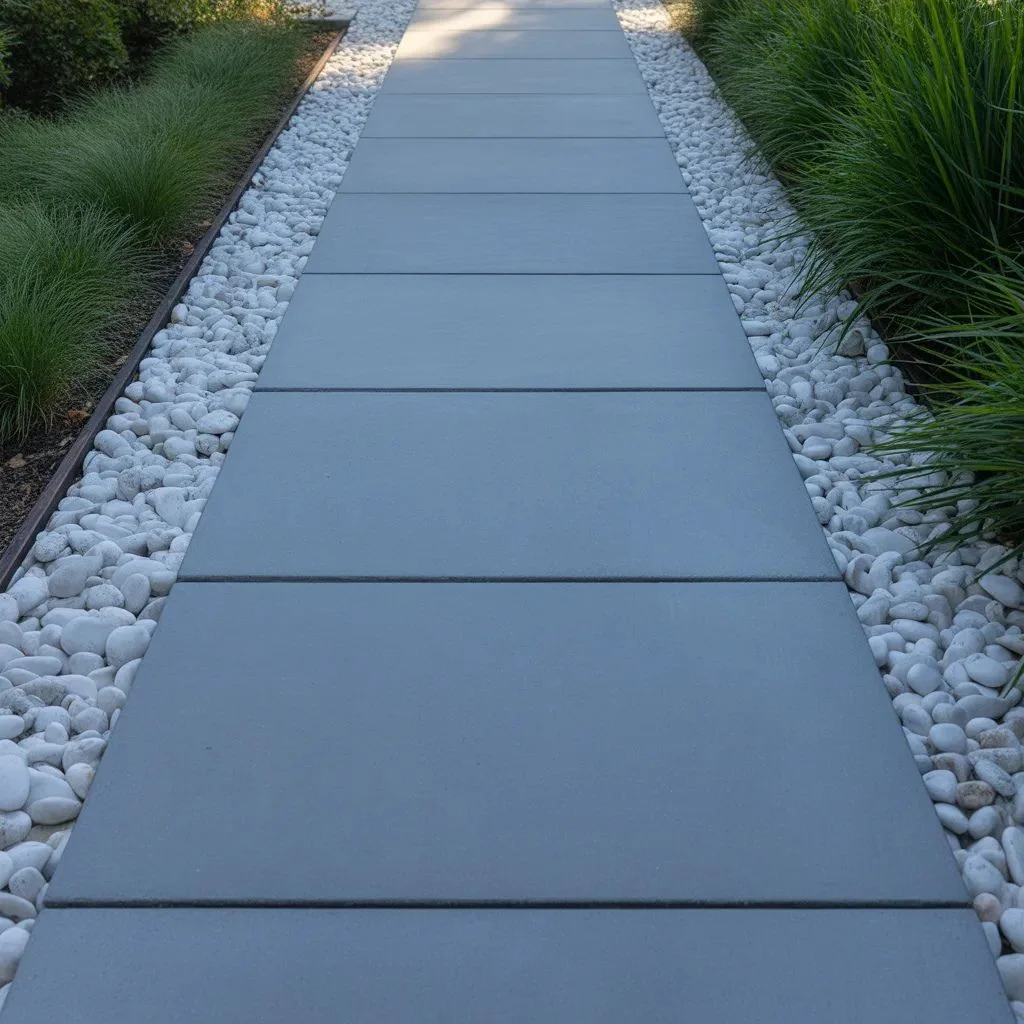
Simple works. A single well-chosen color can modernize a dated walkway without any complicated technique — and it’s where most first-timers should start.
Neutral tones like light gray, beige, and slate are consistently popular because they hide dirt, complement any landscaping, and pair well with nearly every home exterior. They’re also the lowest-maintenance option long-term.
Charcoal and deep gray add a sleek, contemporary edge — especially effective on modern homes with clean-lined facades. Just be aware that darker shades show wear slightly faster in high-traffic zones.
Warm terracotta and muted red create an inviting, Mediterranean-inspired entrance. These warmer tones work particularly well in homes surrounded by warm-toned brick, stucco, or clay-coloured hardscape.
For solid colour projects, a standard exterior masonry paint or elastomeric concrete paint in semi-gloss or satin finishes gives the best longevity. Always apply at least two coats for even coverage.
Geometric & Pattern Painting Ideas
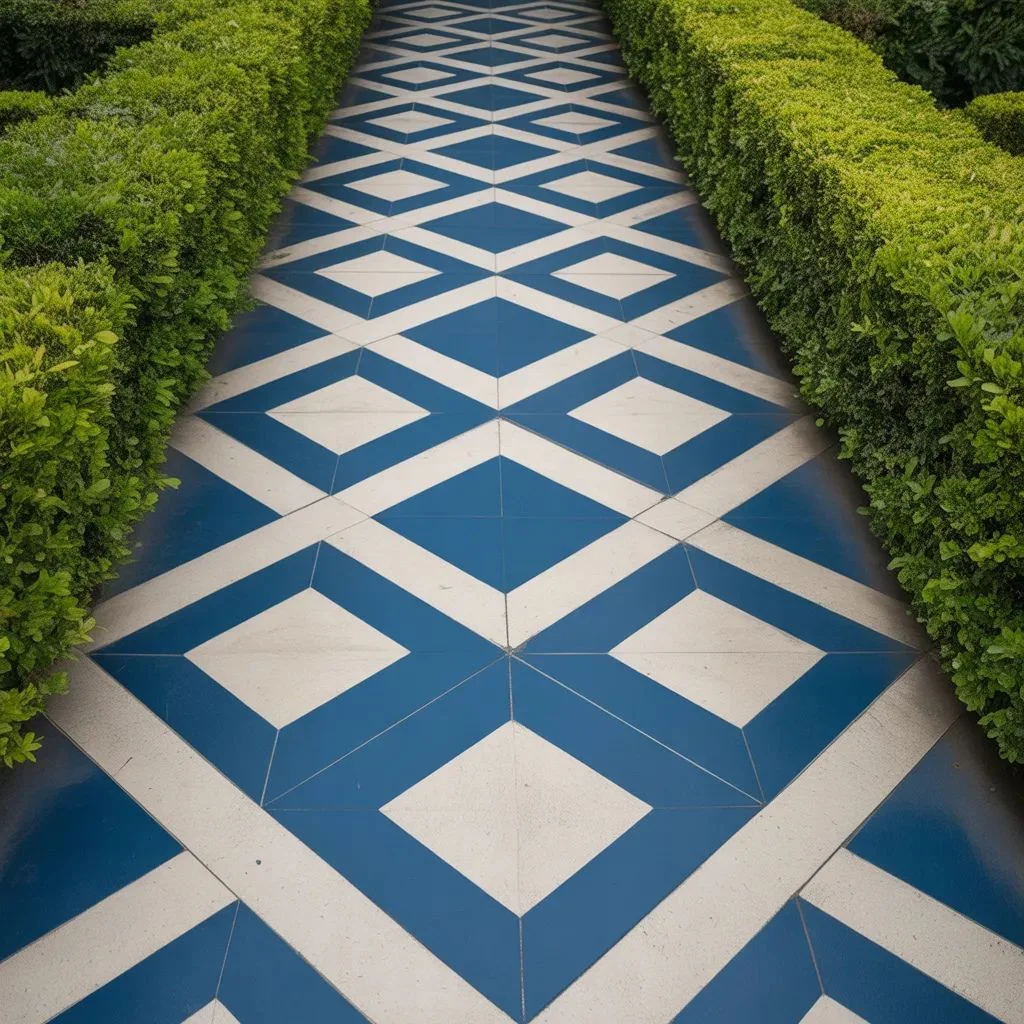
Geometric designs are one of the fastest-growing trends in concrete walkway painting ideas — and for good reason. The result is architectural and modern, and the technique is achievable with basic masking tape and a steady hand.
Popular geometric approaches include:
- Diamond and herringbone patterns. Classic layouts that create motion and visual structure. Tape off the shapes, paint alternating sections, remove tape once dry.
- Hexagonal tile-effect. Use hexagonal stencils in contrasting shades — charcoal and cream, or navy and warm white — for a bold statement with zero tile cost.
- Wide border framing. Paint a solid interior with a contrasting border to define the path cleanly. This works beautifully on simple rectangular walkways.
Geometric designs also have a functional benefit: contrasting color sections create natural visual guides that help define the walkway’s edges, especially in low light.
Faux Brick Concrete Walkway Painting
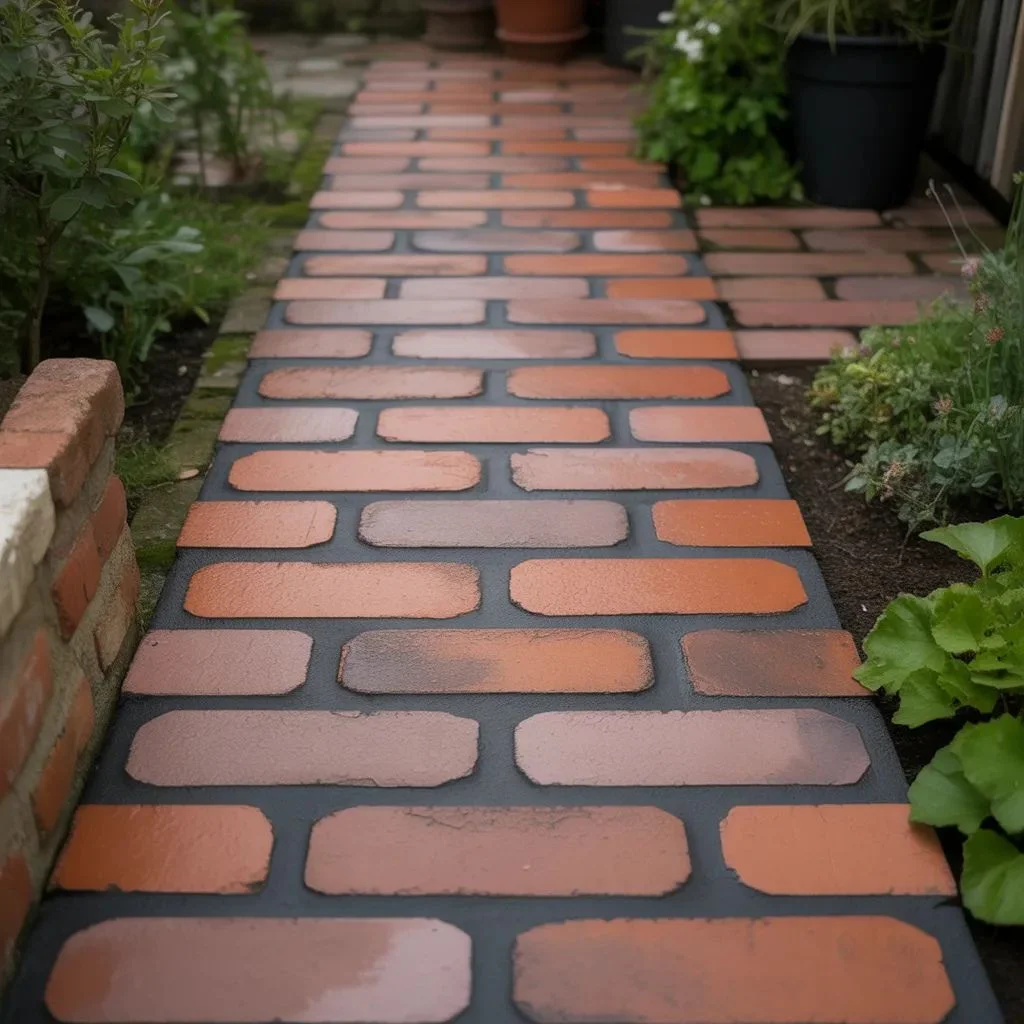
Faux brick is one of the most impressive concrete walkway painting ideas — and one that consistently surprises visitors who mistake it for the real thing.
The technique layers warm terracotta and red-brown base tones, then uses a darker grout colour to hand-paint individual brick outlines across the surface. Sponge-stamping irregular patches of slightly darker and lighter red adds that aged, weathered texture that makes the illusion convincing.
This design suits traditional, colonial, and cottage-style homes perfectly — and delivers the visual weight of expensive brick pavers at a small fraction of the price. A clear protective sealer over the finished surface is essential for long-term colour retention.
Faux Flagstone & Natural Stone Effects
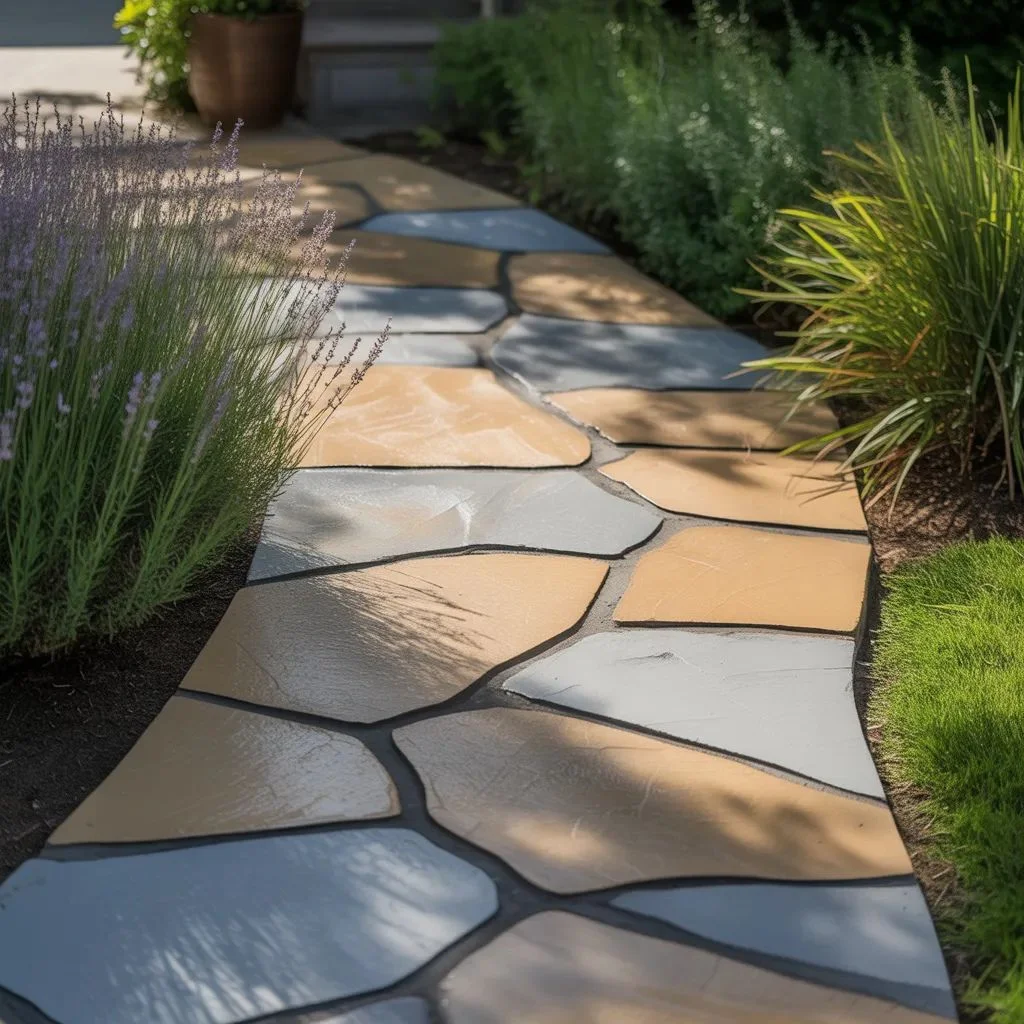
Flagstone creates a relaxed, organic look that suits a wide range of home styles — from rustic farmhouse to modern transitional. The technique involves:
- Base coat. Apply a sandy beige or warm gray as the foundation colour.
- Stone shapes. Use irregular, hand-drawn outlines with a small brush to divide the surface into individual stone shapes. Keep them varied in size and spacing — real flagstone is irregular.
- Colour variation. Fill each stone shape with slightly different earth tones — taupe, tan, warm brown — to replicate the natural variation found in real stone.
- Grout lines. Paint the spaces between stones in a darker tone — usually charcoal or deep brown — to give depth and separation.
The finished result is a walkway that reads as natural stone from any distance. No one needs to know it started as flat gray concrete.
Slate-Effect Concrete Walkway Painting
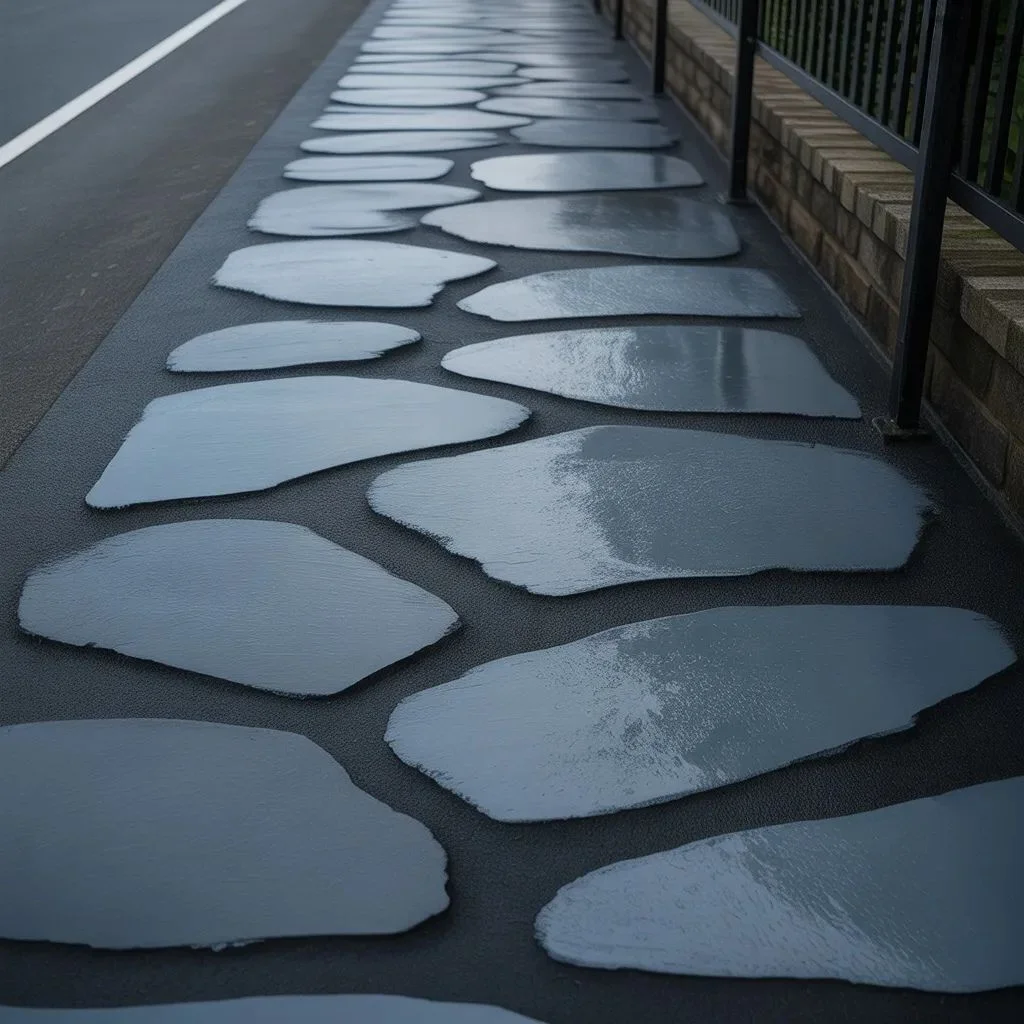
Slate is the choice for homeowners who want something contemporary and refined without going full minimalist. The layered grey technique uses a deep charcoal base, then adds lighter silver-grey tones with a sea sponge in organic, irregular strokes.
The key is blending multiple shades — from deep graphite through mid-grey to near-silver — so no single colour dominates. This creates the natural depth that makes slate look expensive and complex. Dry-brushing fine lines across the surface mimics slate’s characteristic surface grain.
Slate-effect painting pairs beautifully with contemporary, black-framed windows, white render exteriors, and clean-line landscaping. It’s also a versatile option for both front walkways and backyard paths.
Mediterranean Tile-Inspired Designs
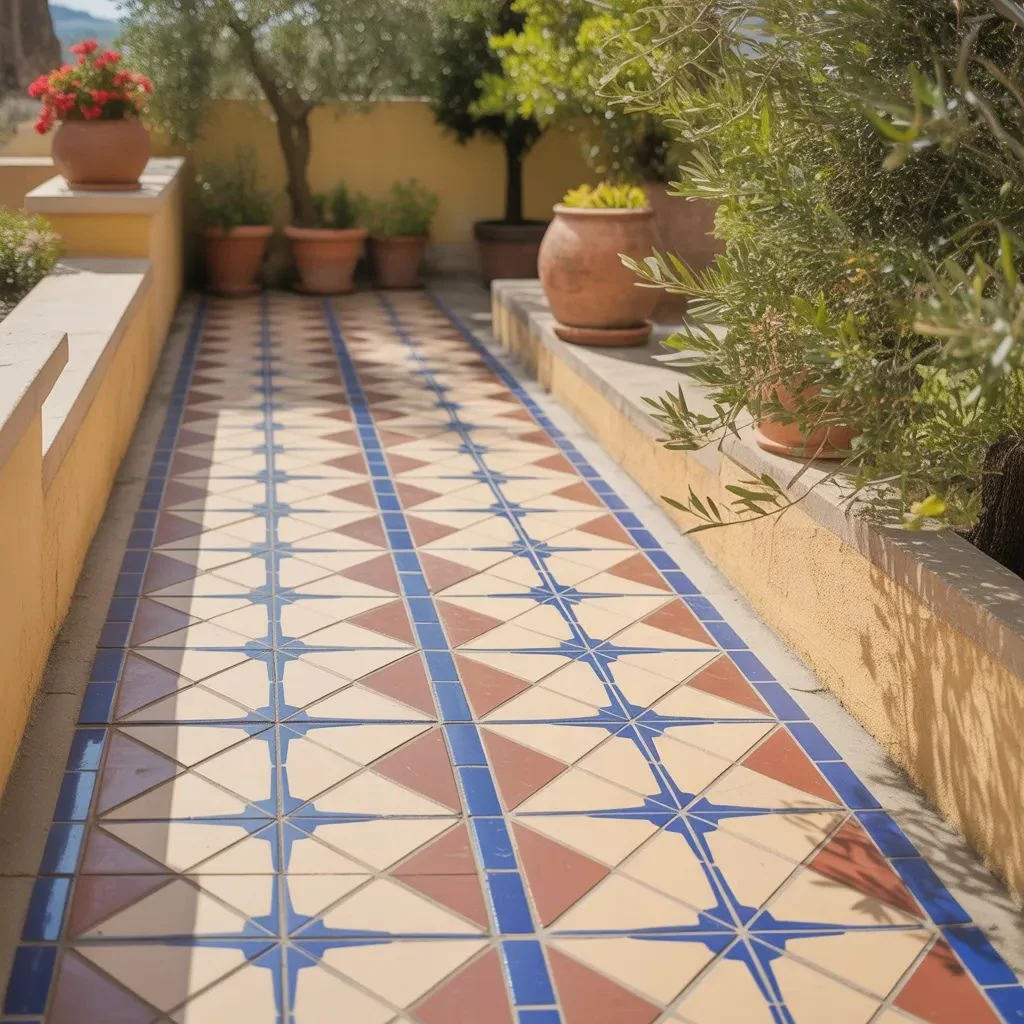
If you want your walkway to make a genuine design statement, Mediterranean tile painting delivers it with colour, pattern, and personality.
This style draws on the classic tile traditions of southern Spain, Portugal, and Morocco — think rich cobalt blues, terracotta oranges, and warm cream whites arranged in repeating geometric motifs. Stencils are your best friend here: pick a tile stencil pattern, apply your base colour, then layer the stencil design in contrasting hues.
The visual payoff is enormous. Even a narrow path feels transformed into something you’d find outside a white-walled Mediterranean villa. For the most authentic result, use matte-finish paints and seal well, as this style shows wear faster in wet climates.
Watercolour & Artistic Wash Finishes
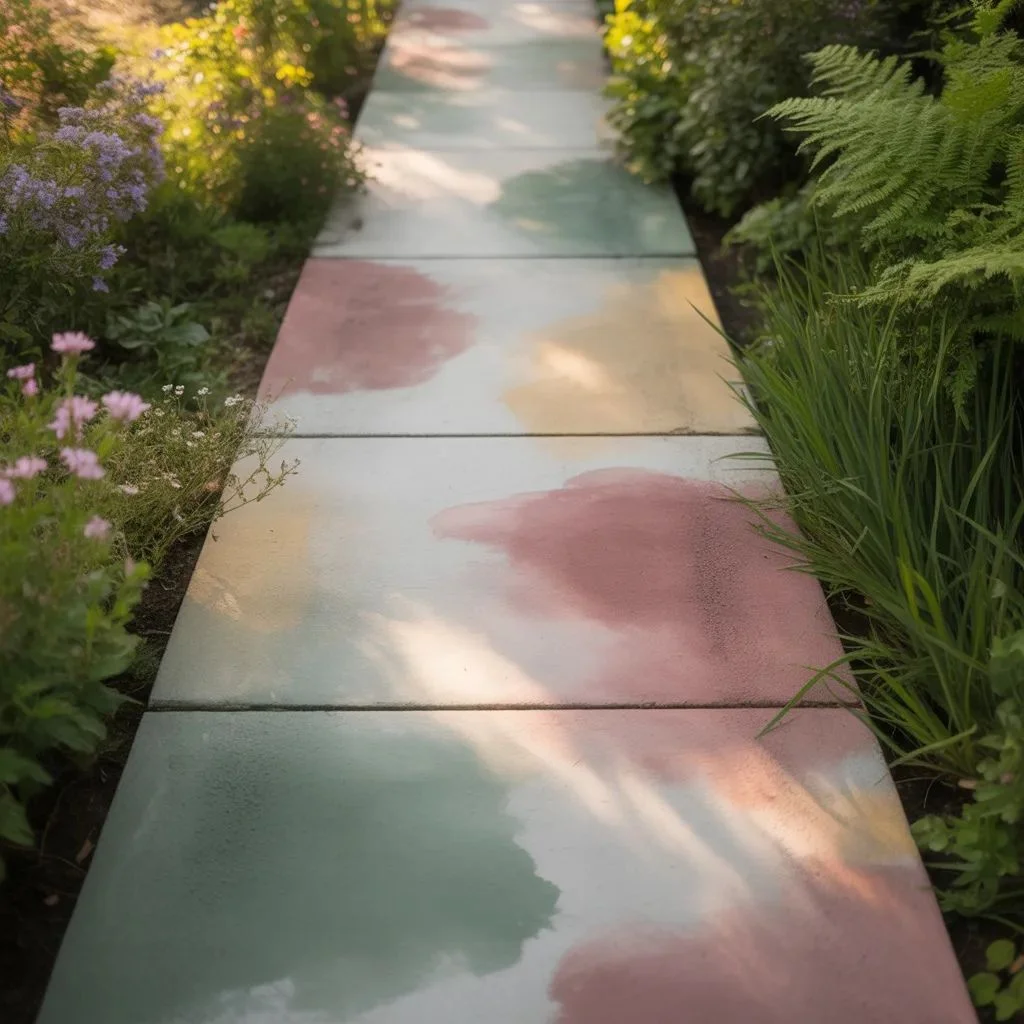
Not every concrete walkway painting idea needs to mimic another material. Watercolour-wash finishes create an artistic, layered look that’s entirely their own.
The technique uses thinned, translucent layers of exterior paint in soft complementary colours — sage, rose, cream, or muted blue — applied with a wide brush in loose, overlapping strokes. Each layer slightly blends into the previous one, building soft gradients that shift in tone as the light changes throughout the day.
This finish suits cottage gardens, bohemian home styles, and anyone who wants their path to feel more garden art than hardscape. It’s also highly forgiving — imperfect brushwork reads as intentional character.
Stencil Art for Concrete Walkways
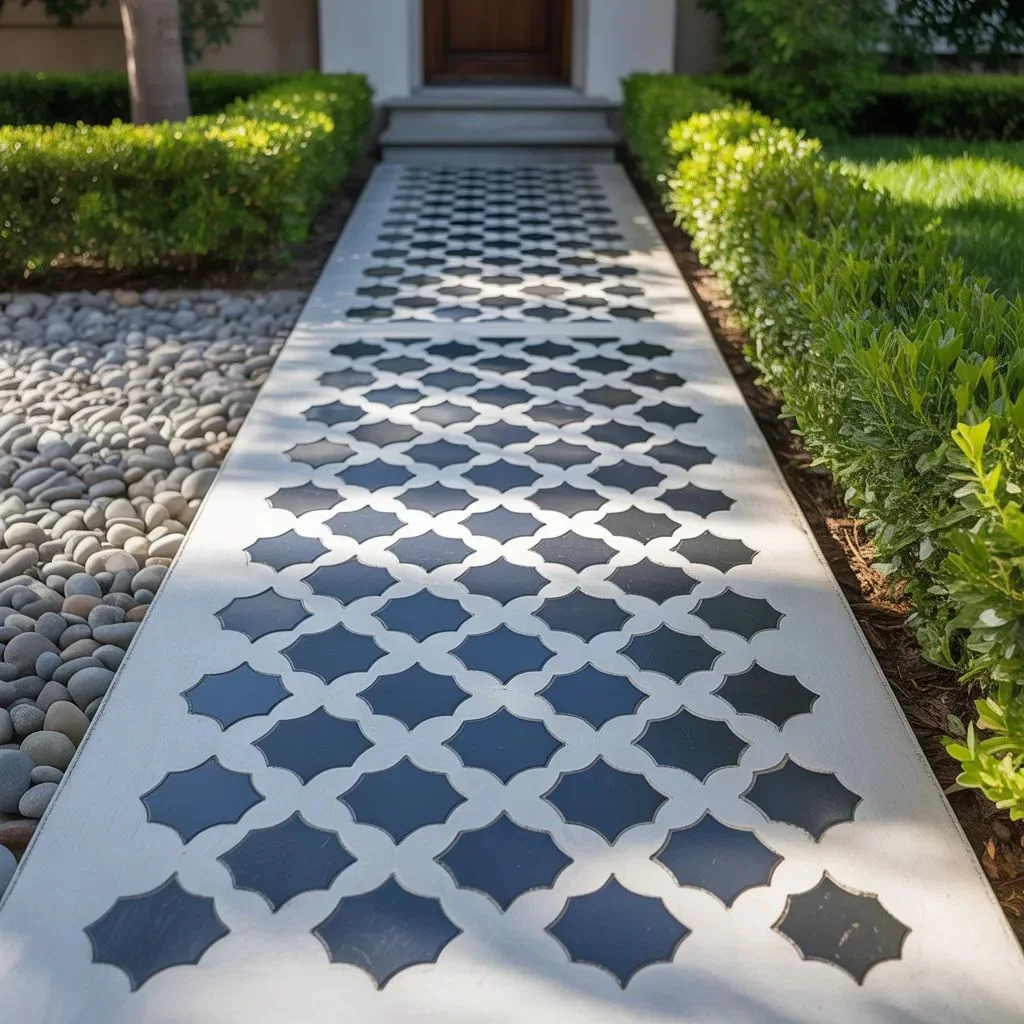
Stencils are the great equalizer in concrete walkway painting ideas — they give anyone the ability to produce professional-looking patterned results with no freehand skill required.
The process is simple: paint your base colour, let it dry completely, tape your adhesive-backed stencil firmly to the surface (this prevents bleed), then roll or dab your contrasting paint over the stencil. Lift while still slightly wet for clean edges.
Popular stencil styles right now include:
- Moroccan lattice. Bold geometric interlocking pattern — high impact, very versatile.
- Mandala circles. Repeated at even intervals, creates a flowing, meditative aesthetic.
- Compass rose. A single statement design centered on the walkway for a classic, nautical-inspired look.
- Simple repeating diamonds. The most beginner-friendly option — clean, modern, and hard to get wrong.
Choosing the Right Paint for Outdoor Concrete
The paint type matters as much as the design. Using interior paint or standard exterior wall paint on concrete is a common and costly mistake — it bonds poorly and fails fast.
Your main options:
- Epoxy-based concrete paint. The most durable choice for outdoor concrete. Creates a hard, chemical-resistant surface that holds up under foot traffic, UV, and moisture. Slightly more technical to apply but worth it for longevity.
- Masonry paint (acrylic). Water-based, easier to apply, and suitable for most residential walkways. Look for exterior-rated formulas with built-in waterproofing.
- Concrete stain. Penetrates the surface rather than sitting on top — so it doesn’t peel. Gives a more subtle, translucent effect. Best for solid or acid-wash looks rather than faux finishes.
- Polyaspartic coating. A newer technology that outperforms traditional epoxy in UV stability and drying speed. Excellent for long-term color retention in sunny climates.
Pro Tips to Make Your Paint Last
A well-painted concrete walkway should last 3–7 years with basic maintenance. These habits make a real difference:
- Seal after painting. A clear concrete sealer over the finished surface adds UV protection and prevents moisture infiltration. Reapply sealer every 2–3 years.
- Don’t paint in extreme conditions. Avoid painting in direct sun above 90°F or when rain is forecast within 24 hours. Temperature swings during curing cause cracking.
- Sand between coats lightly. A quick pass with 220-grit sandpaper between coats dramatically improves adhesion and final finish quality.
- Touch up annually. High-traffic sections near entry points wear first. A small touch-up each year prevents full repainting down the line.
- Newly poured concrete needs to cure. Fresh concrete is highly alkaline and needs 28–60 days of cure time before it’s ready to paint. Check your primer’s instructions — some require even longer.
Recommended Resources
For product-specific guidance, visit Ace Paint’s outdoor concrete guide or check the Sam the Concrete Man blog for professional prep and paint selection advice.
Your Path, Your Rules
Plain grey concrete doesn’t have to be a permanent fixture. Whether you go with a crisp solid colour, a bold geometric layout, or a realistic faux stone finish, concrete walkway painting ideas put real design power in your hands — no contractor required.
Pick the look that fits your home, gather your materials, and start with proper prep. The result isn’t just a better-looking walkway — it’s the first thing guests see, and the detail that ties your entire exterior together.
Highly Recommended: 20 Creative Paint Ideas for Your Concrete Patio You Haven’t Seen Before.
Ready to transform yours? Share your before and after in the comments — we’d love to see what you create.