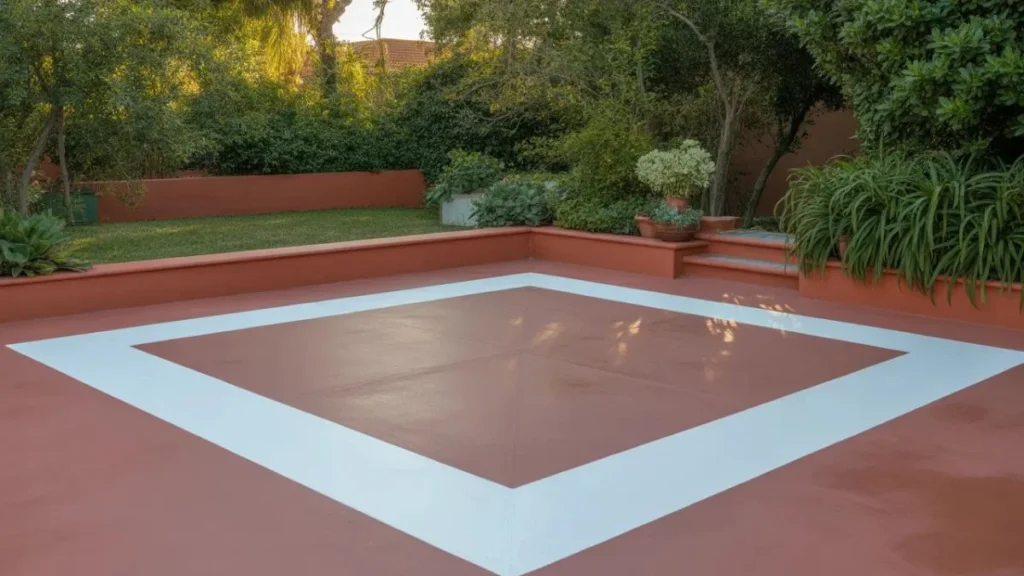
Your concrete patio is sitting on untapped potential — and a can of paint might be all it takes to unlock it. Most homeowners walk past that gray slab every day without realizing it could look like Moroccan tile, sun-bleached terrazzo, or a hand-painted outdoor rug by the weekend.
The problem isn’t a lack of options. It’s that most paint ideas for your concrete patio stop at “pick a neutral and seal it.” That’s not a design choice — that’s a placeholder. This guide goes further, with 20 genuinely creative, practical, and photogenic ideas that go well beyond basic.
1. Why Painting Your Concrete Patio Is Worth It
Concrete paint is one of the highest-ROI outdoor upgrades you can make. A full patio transformation can cost less than a single piece of patio furniture — and the visual payoff can be dramatic. Painting also protects the surface from moisture, UV damage, and staining, which means your slab stays structurally sound longer.
Beyond budget, paint gives you something tile and pavers can’t: total creative flexibility. You can repaint as your style evolves, experiment with bold patterns, or layer techniques for a truly custom look. Whether you’re renting or own, it’s a low-commitment, high-impact project.
2. What Paint to Use on Concrete Patios
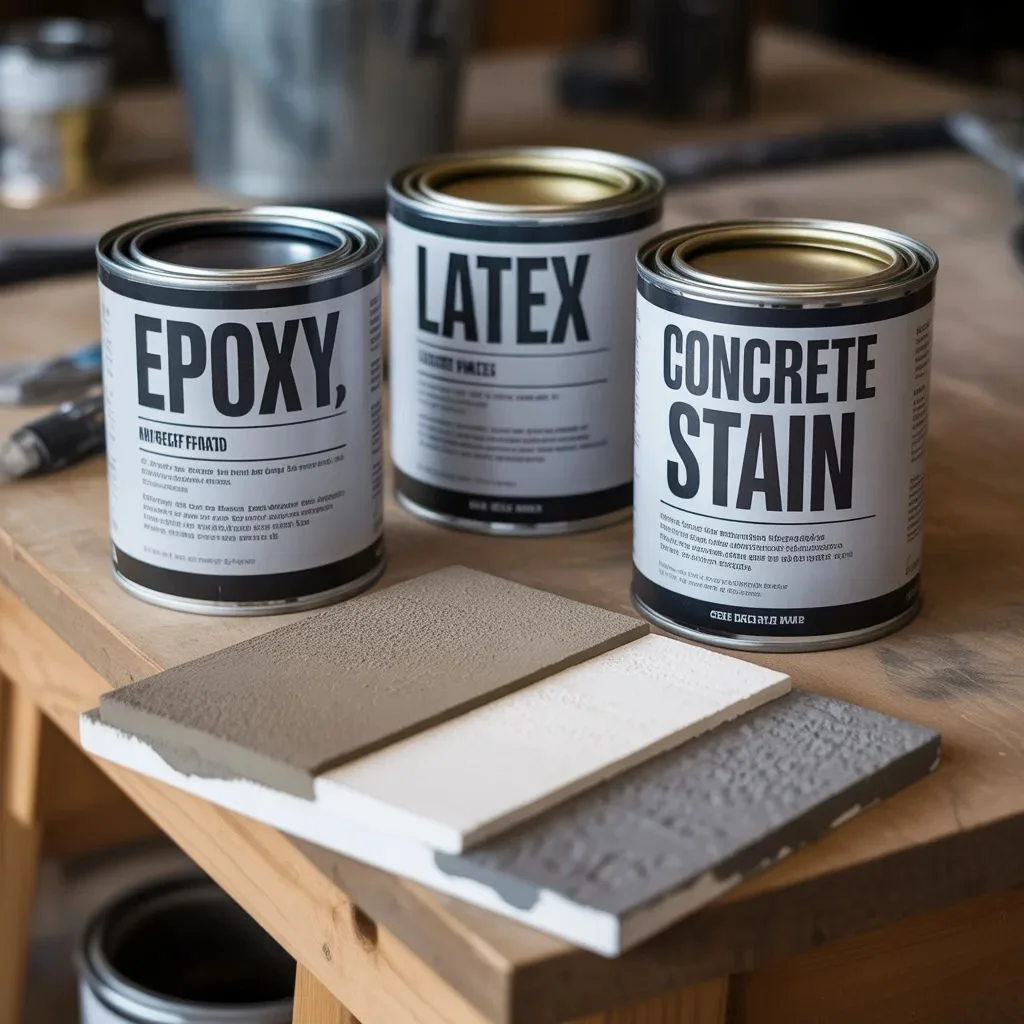
Not all paints survive outdoor concrete. Before exploring any paint ideas for your concrete patio, you need to understand what’s in the can. There are three main options, each with distinct strengths.
Epoxy Concrete Paint
Epoxy is the gold standard for durability. It bonds directly to the concrete surface, resists hot tires, chemical spills, and heavy foot traffic. It’s ideal for high-use patios and creates a glossy, professional finish. Two-part epoxy kits are more durable but harder to apply; one-part epoxy paints are more beginner-friendly.
Masonry & Latex Concrete Paint
Latex-based masonry paint is easier to apply and dries faster than epoxy. It’s a solid choice for patio floors with light-to-moderate use. Look for formulas specifically labelled for concrete or masonry — regular exterior paint won’t adhere properly and will peel within a season.
Concrete Stain
Stains penetrate rather than coat the surface, creating a translucent, marbled effect that highlights the natural texture of concrete. They don’t peel or chip because there’s no film to fail. Acid stains produce earthy, reactive tones; water-based stains offer more color predictability and are easier to control.
Pro Tip: Whatever product you choose, always apply a UV-resistant concrete sealer as your final coat. It protects colour from fading, prevents moisture intrusion, and extends the life of your work by years.
3. Solid Colour Palettes That Set the Mood
Sometimes the most powerful paint ideas for your concrete patio are also the simplest. A single well-chosen colour can completely transform how an outdoor space feels — and how much time you want to spend in it.
Idea 1: Warm Terracotta
Terracotta brings a Mediterranean warmth that makes any patio feel like a sun-drenched retreat. It pairs effortlessly with rattan furniture, terracotta pots, and trailing plants. The warm, earthy tone absorbs some heat but creates an atmosphere that genuinely invites lingering.
Idea 2: Coastal Slate Gray
Charcoal and slate gray have become go-to choices for modern patios. They create a sleek, sophisticated foundation that makes outdoor furniture pop. Pair with crisp white cushions, black planters, and stainless accents for a contemporary look that photographs beautifully.
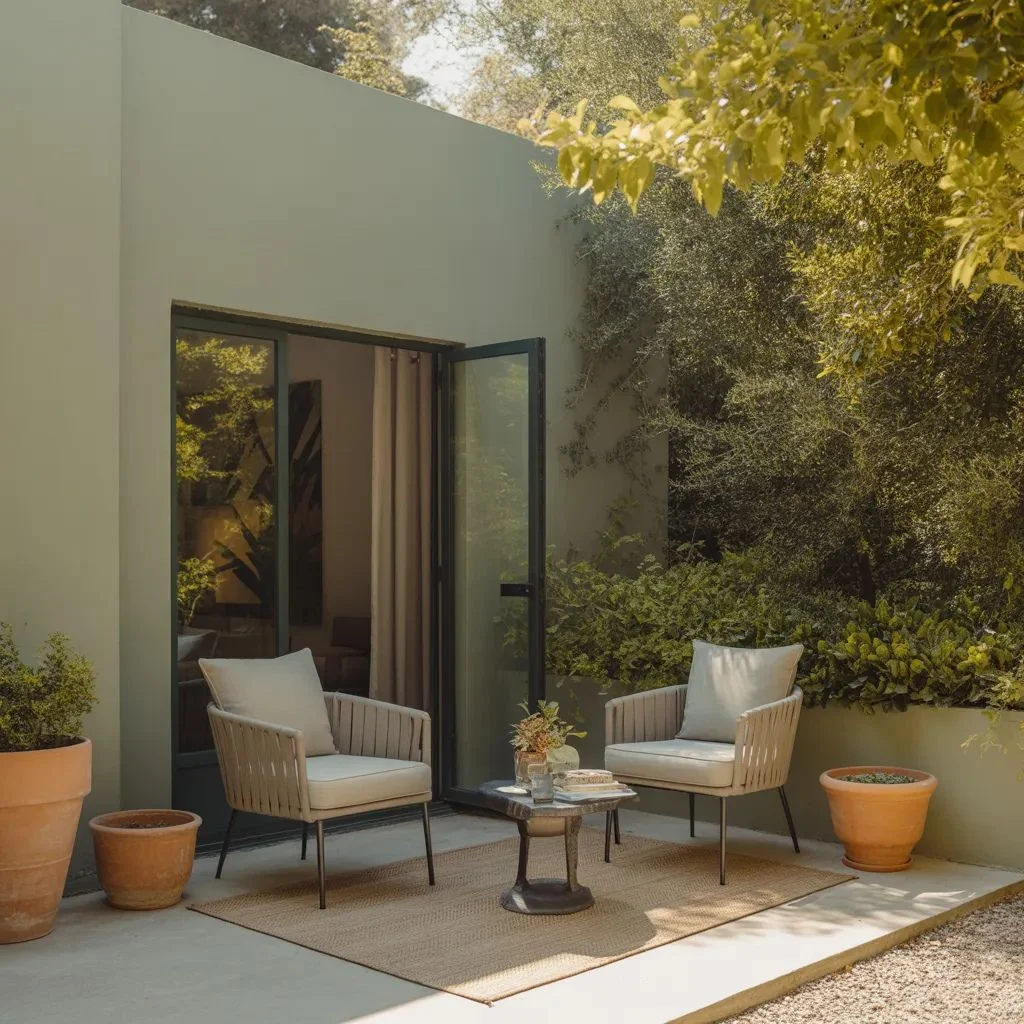
Idea 3: Sage Green
Sage is having a major moment in outdoor spaces. It reads as calm, natural, and intentional — and it practically disappears into garden settings, making the transition from indoors to outdoors feel seamless. Works especially well on smaller patios where you want the space to feel expansive.
Idea 4: Warm White
White concrete paint is underrated. It brightens shaded patios dramatically, reflects heat instead of absorbing it, and makes even budget furniture look elevated. Use a high-quality exterior concrete paint in white and follow with a matte sealer to avoid the glare of a high-gloss finish.
4. Faux Finish & Texture Techniques
If you want paint ideas for your concrete patio that look like you spent far more than you did, faux finishes are the answer. These techniques use layered paint applications to mimic expensive materials — at a fraction of the cost.
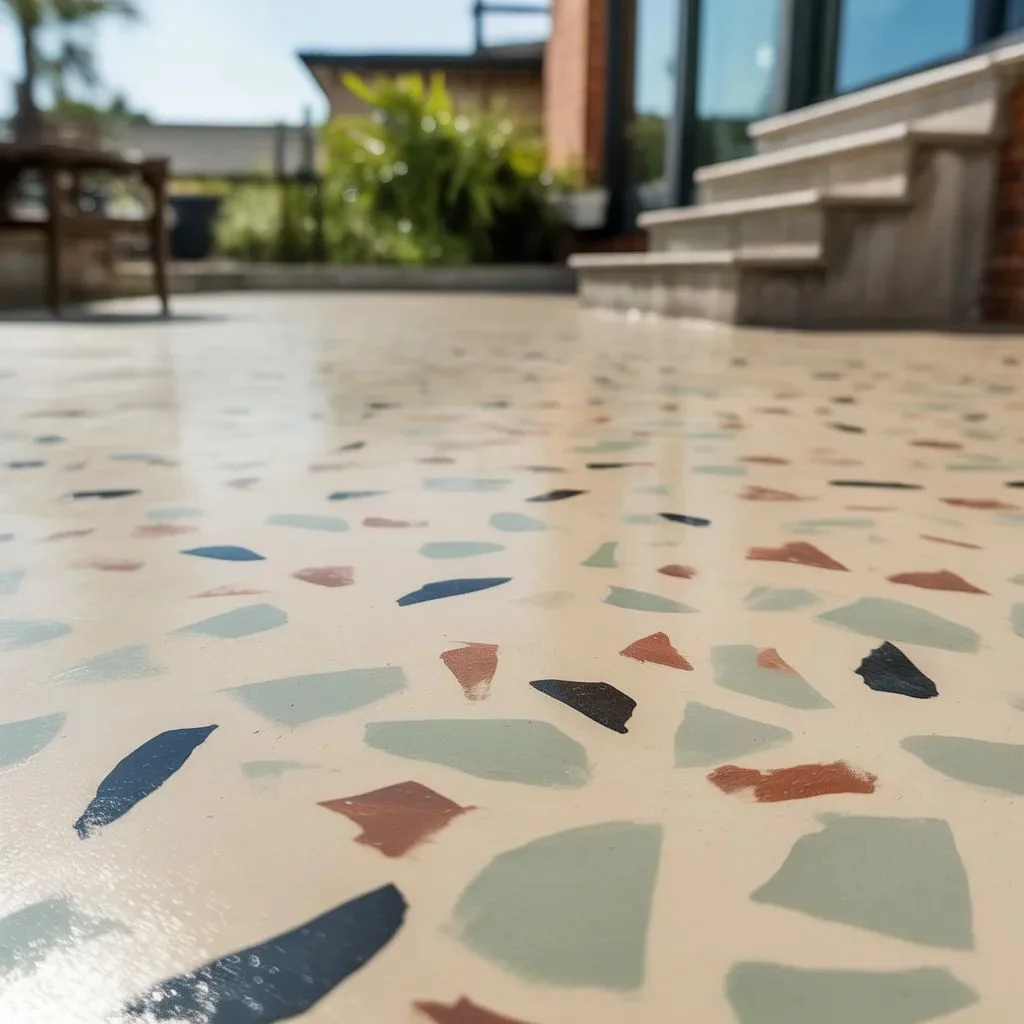
Idea 5: Faux Terrazzo
Terrazzo is one of the most coveted patio aesthetics right now — and you can fake it convincingly on concrete. Apply a base coat, then use a sea sponge to dab flecks of two or three contrasting colours across the surface. Finish with multiple layers of high-gloss sealer to get that polished stone depth. The effect is sophisticated enough to look professionally installed.
Idea 6: Marble Effect Wash
A marble wash uses a white or cream base with thin, irregular veins of gray or gold painted on with a feather or fine brush. It requires a steady hand but no artistic training — the organic, imperfect nature of marble makes this forgiving. Seal with a wet-look sealer that amplifies the effect.
Idea 7: Limewash Technique
Limewash creates a soft, aged, layered look with irregular depth and variation. Mix limewash paint with water, apply it in loose strokes, then wipe back areas while wet for a weathered patina. The result looks like old European stone and pairs perfectly with rustic or Mediterranean-style outdoor furniture.
Idea 8: Faux Slate Tile
Using painter’s tape, you can divide the patio into irregular “tile” sections, then paint alternating dark tones — charcoal, graphite, and deep navy — within each section. Remove the tape for crisp grout lines. The result mimics real slate flooring convincingly enough to fool guests.
5. Pattern & Stencil Ideas
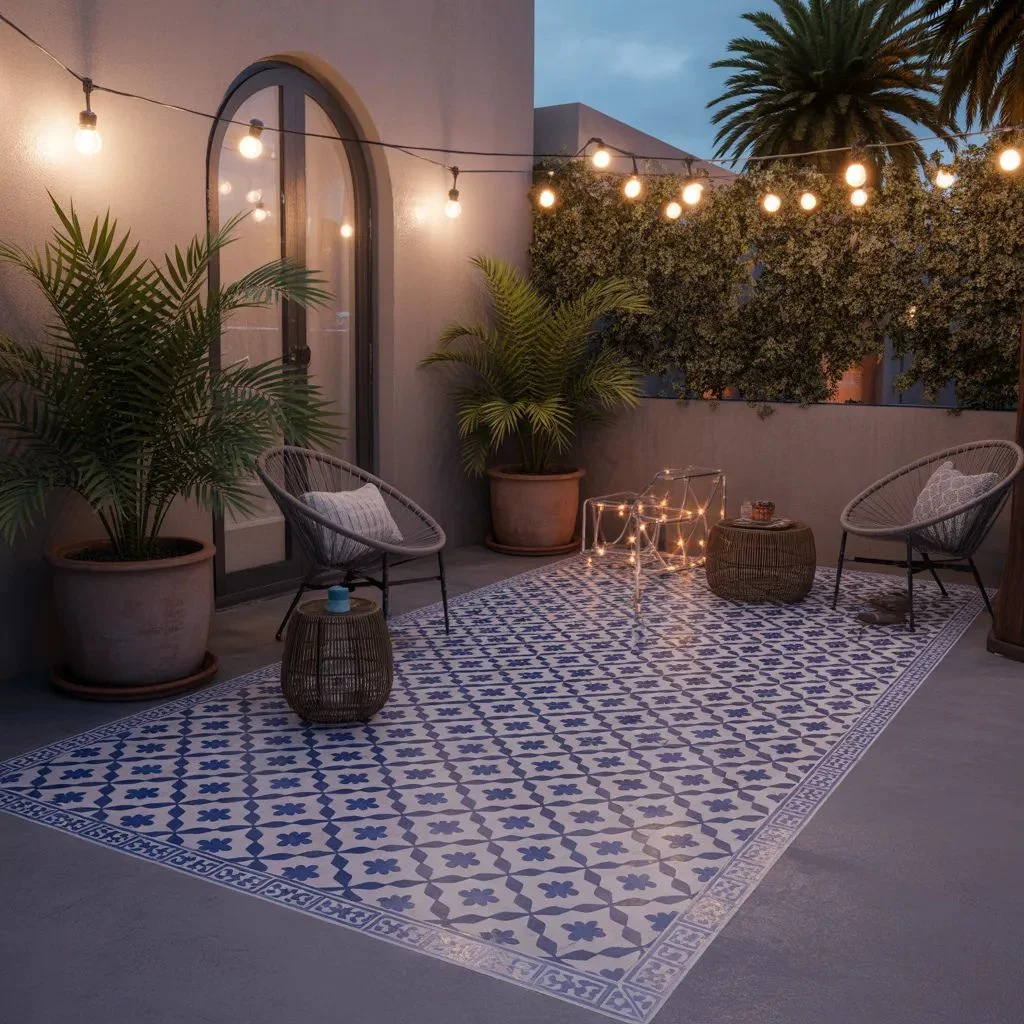
Stencils are the most approachable way to create high-impact paint ideas for your concrete patio without freehand painting skills. You can find reusable concrete stencils in almost any pattern online, and the technique itself is beginner friendly.
Idea 9: Moroccan Tile Stencil
Moroccan tile stencils are widely available and produce an instantly striking result. Use a base coat in a solid neutral, then apply a contrasting color through the stencil using a dense foam roller. Work methodically from one corner across the surface. The finished look rivals actual encaustic tiles at a tenth of the price.
Idea 10: Geometric Grid Pattern
Tape off a grid of triangles, diamonds, or hexagons using precision painter’s tape. Fill alternating shapes with a contrasting accent color. This approach works especially well in two-tone palettes — cream and black, white and terracotta, navy and sand. It’s graphic, modern, and holds up beautifully in photography.
Idea 11: Bold Stripe Design
Stripes are underestimated as a patio technique. Run wide stripes parallel to your home’s exterior wall using tape and a roller. Two or three alternating tones create movement and make a small patio feel longer. For a more sophisticated result, try monochromatic stripes in two shades of the same color — the depth reads as intentional rather than basic.
Idea 12: Herringbone Painted Pattern
Herringbone is a classic that works on concrete just as well as wood or tile. Map out the angles with chalk lines first, then tape and paint each run of the pattern. A two-tone palette in warm whites and creams gives a clean, timeless result. Use a deep brown or charcoal for a more dramatic, contemporary feel.
6. Bold & Artistic Approaches

If you’re ready to go beyond pattern and into genuine artistic territory, these paint ideas for your concrete patio will make your outdoor floor the focal point of your entire backyard.
Idea 13: Full-Floor Mural
A floor mural sounds ambitious, but it’s more achievable than it looks. Start with a simple motif — oversized botanicals, abstract brushstrokes, or a geometric mandala — and sketch it out on paper first. Transfer to the concrete with chalk, then block in color with exterior concrete paint. The result is truly one of a kind and creates an outdoor feature that stops people in their tracks.
Idea 14: Painted Outdoor Rug
A faux painted rug is one of the cleverest paint ideas for your concrete patio. Tape off a rectangle in the center of your patio, paint a solid field colour, add a border in a contrasting hue, then stencil a pattern inside. It mimics the visual grounding effect of an actual rug — without the mold, fade, or mildew risk that comes with outdoor textiles.
Idea 15: Oversized Floral Motif
Scale matters on a patio floor. Small, busy patterns can feel cluttered; one large botanical motif — a single magnolia, oversized fern fronds, or abstract palm leaves — reads as sophisticated and intentional. Use a projector to transfer the image to your floor, trace with chalk, then fill with exterior paint in your chosen palette.
Idea 16: Two-Tone Colour Blocking
Colour blocking divides your patio floor into two or three distinct painted zones. This technique works well on L-shaped or large square patios where you want to define a dining zone versus a lounge area without physical dividers. Use tape to establish clean lines and choose colours that complement each other without competing.
7. Unexpected & Under-the-Radar Ideas
These are the paint ideas for your concrete patio that genuinely surprise — techniques you won’t find on every home decor blog.
Idea 17: Glow-in-the-Dark Accents
Glow-in-the-dark concrete paint is a real product — and when used strategically, it creates a quietly stunning effect after dark. Paint a border around the patio’s edge, trace a stenciled path, or highlight stepping stones. During the day, it reads as a subtle pale tone; at night, it activates from absorbed sunlight without needing any power source.
Idea 18: Partial Paint with Gravel Inlay
Instead of painting the entire slab, paint a defined section — a central medallion, a geometric panel, or a corner zone — and fill the surrounding area with decorative gravel or pea stone. The contrast between the painted concrete and the loose stone creates a layered, intentional aesthetic that looks professionally designed.
Idea 19: Desert-Inspired Colour Wash
Inspired by Adobe architecture and the American Southwest, this technique uses diluted terracotta, dusty rose, and warm sand tones applied in overlapping washes. Mix concrete paint with water to reduce opacity, then apply in loose, uneven layers that let the concrete texture show through. The result is organic, textured, and genuinely beautiful.
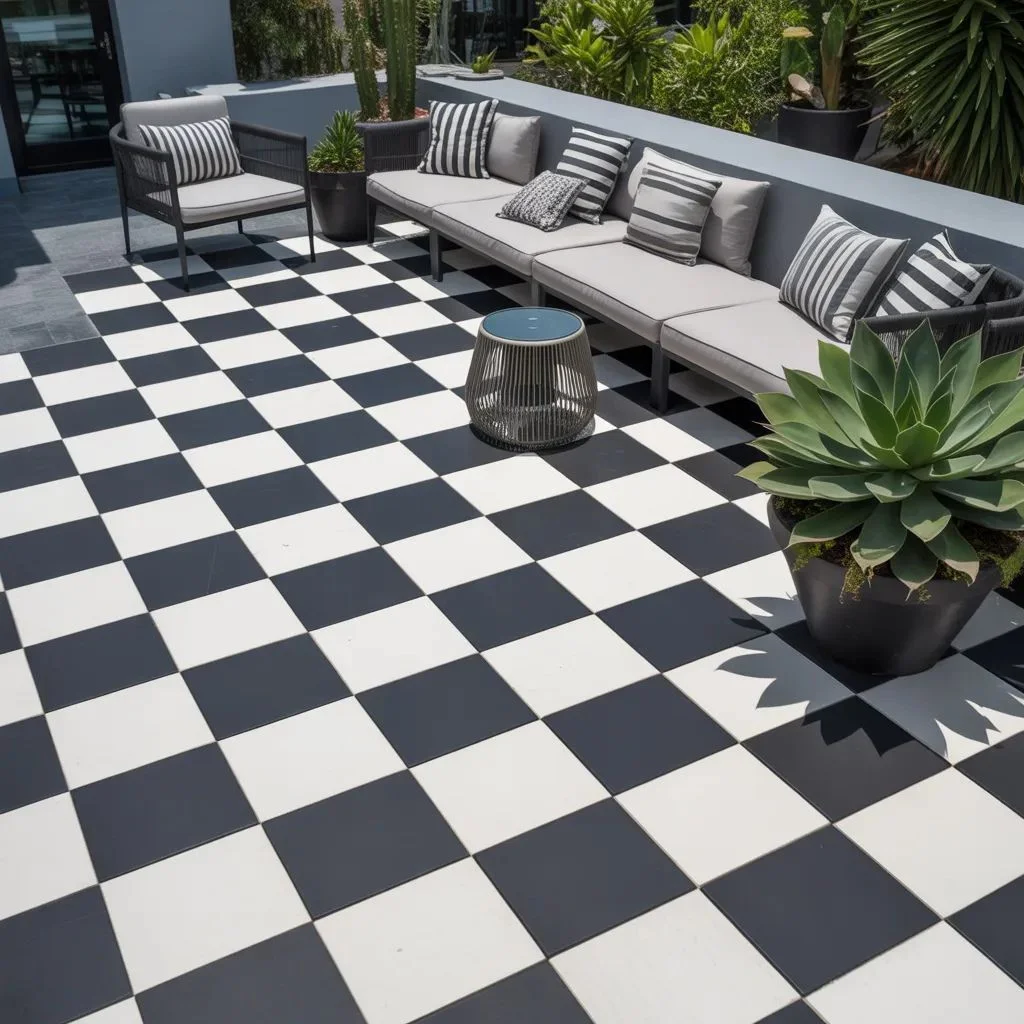
Idea 20: High-Contrast Checkerboard
The checkerboard is vintage, graphic, and — when scaled up — genuinely architectural. Use 12-inch or 18-inch squares in two high-contrast tones: black and white, navy and cream, or charcoal and sage. Tape off each square with precision, apply two coats per colour, and seal with a matte finish for a clean, retro-modern result.
8. Budget-Friendly Painting Tips
You don’t need to invest heavily to get a great result. Here’s how to keep costs low without cutting corners on quality.
- Buy sample pots first. Test 2–3 paint ideas for your concrete patio with sample quantities before committing to a full patio’s worth of product.
- Invest in prep, not product. A clean, etched surface dramatically improves paint adhesion. Spend on concrete etching solution and primer; save on mid-range concrete paint.
- Use painter’s tape liberally. Crisp edges are what separate a DIY project from a professional-looking result. Never skip the tape.
- Buy reusable stencils. Mylar stencils can be used dozens of times. A single $15 stencil can transform an entire patio and be used again in other projects.
- Seal religiously. A quality concrete sealer extends paint life by 2–3× and prevents the peeling and fading that make painted patios look neglected.
9. Prep, Sealing & Long-Term Care
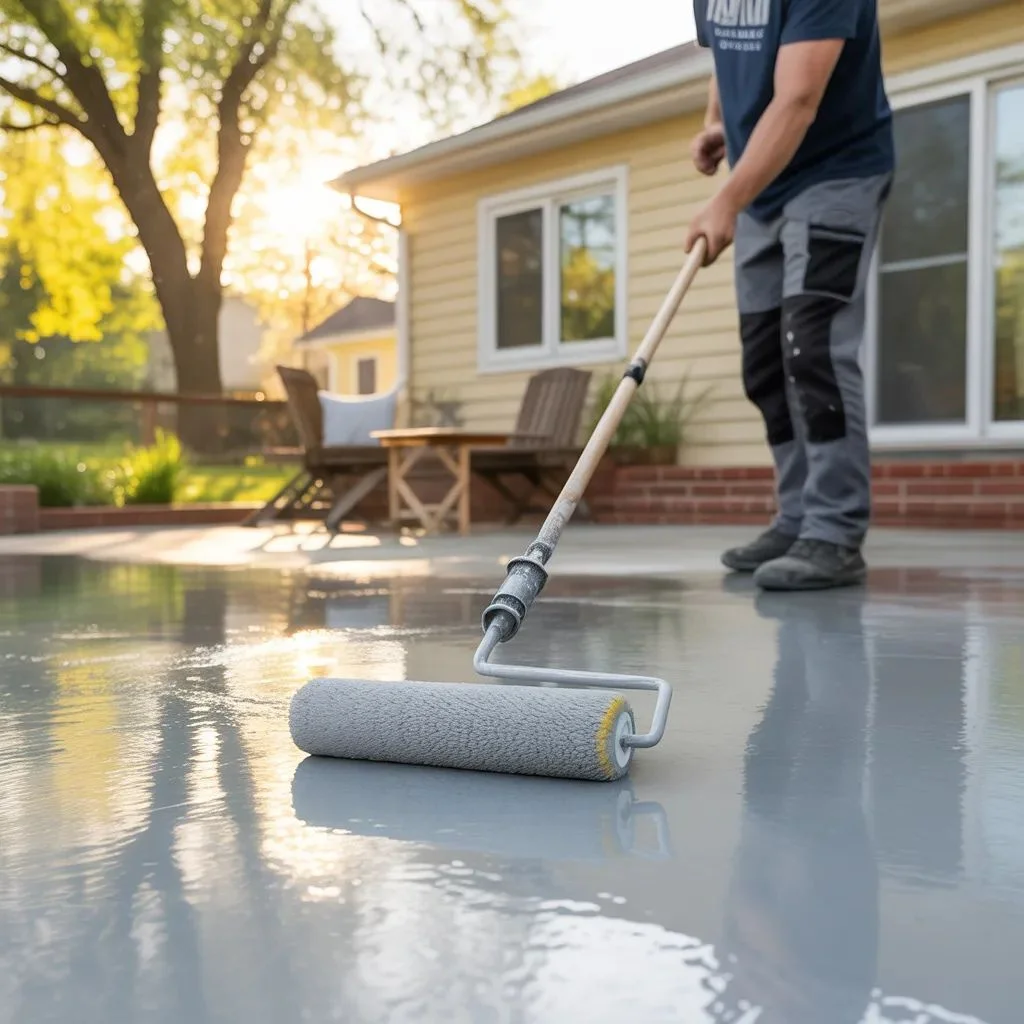
The difference between paint that lasts five years and paint that peels after one season is almost entirely in the preparation. Rushing this stage is the most common mistake.
Surface Prep
Start by pressure washing the entire patio to remove dirt, algae, and existing sealers. Let it dry fully — at least 48 hours. Apply a concrete etching solution to open the surface pores and improve paint adhesion. Rinse and let dry again before priming.
Priming
Use a dedicated concrete primer. It creates a bonding layer between the porous concrete and the paint, preventing moisture from undermining adhesion from below. Skip this step and you’re setting up for failure regardless of paint quality.
Painting
Apply a minimum of two coats, allowing full dry time between each. For stencil work or multi-color designs, allow each color to dry completely before taping over it for the next. Rushing between layers causes smearing, bleeding, and peeling edges.
Sealing
Apply a UV-resistant concrete sealer in the finish of your choice — matte, satin, or gloss. Reapply sealer every 1–2 years depending on foot traffic and weather exposure. This single habit is the key to a painted concrete patio that looks great for years.
Your Patio, Your Canvas — Make It Count
A grey concrete slab is just a starting point. These 20 paint ideas for your concrete patio prove that with a weekend, the right products, and a little creativity, the same flat surface can become a terrazzo-inspired showstopper, a Moroccan-tiled retreat, or a boldly striped outdoor dining room.
Start with what excites you most — whether that’s a simple coat of terracotta or a full geometric floor pattern. Prep the surface properly, use a quality paint formulated for concrete, and seal your work. That’s the entire formula.
The difference between a patio you avoid and one you can’t stop spending time on might be nothing more than a coat of paint.
Recommended: Cheap vs. High-End Concrete Patio and Porch Floor Makeover Ideas (Both Look Amazing)
Frequently Asked Questions
What is the best paint for a concrete patio?
Epoxy-based concrete paint offers the best durability for high-traffic patios. For moderate use, a quality masonry or latex concrete paint works well and is easier to apply. Always check that the product is labeled for exterior concrete use.
How long does paint last on a concrete patio?
With proper surface prep, primer, two coats of quality paint, and a UV-resistant sealer, a painted concrete patio can last 3–5 years before needing a refresh. Reapplying sealer annually extends that significantly.
Can I paint a concrete patio myself?
Yes — most of these paint ideas for your concrete patio are very DIY-friendly. The key is patience: don’t rush surface prep, allow full dry times between coats, and use quality tape for any multi-color or pattern work.
Do I need to prime concrete before painting?
Strongly recommended, yes. A concrete bonding primer fills surface pores and dramatically improves adhesion. Skipping primer is one of the most common causes of paint peeling on concrete surfaces.
What happens if it rains after painting a concrete patio?
Rain on freshly applied concrete paint can cause streaking, color wash-out, or peeling. Most concrete paints need at least 24–48 hours of dry time before they can handle light rain; check your product’s specifications. Don’t paint if rain is forecast within 48 hours.
Can you stencil on concrete?
Absolutely. Concrete is an ideal surface for stenciling because it’s flat, stable, and holds paint well once properly prepped. Use a dense foam roller and mylar stencils for the sharpest results.