Your basement ceiling does not have to be hidden — it can be the most striking design feature in the room. Exposed basement ceiling ideas have shifted from a budget workaround to a deliberate design statement, showing up in renovated family rooms, home cinemas, bars, and studio spaces across every style spectrum.
Whether your basement is fully finished or still raw around the edges, leaving the ceiling open — and treating it with intention — can add dramatic height, architectural interest, and a personality that a standard drywall ceiling simply cannot deliver. From matte black painted joists to warm wood slats and softly glowing LED strips, these exposed basement ceiling ideas work across budgets, skill levels, and interior styles.
1. Paint Everything One Colour for a Cohesive Industrial Look
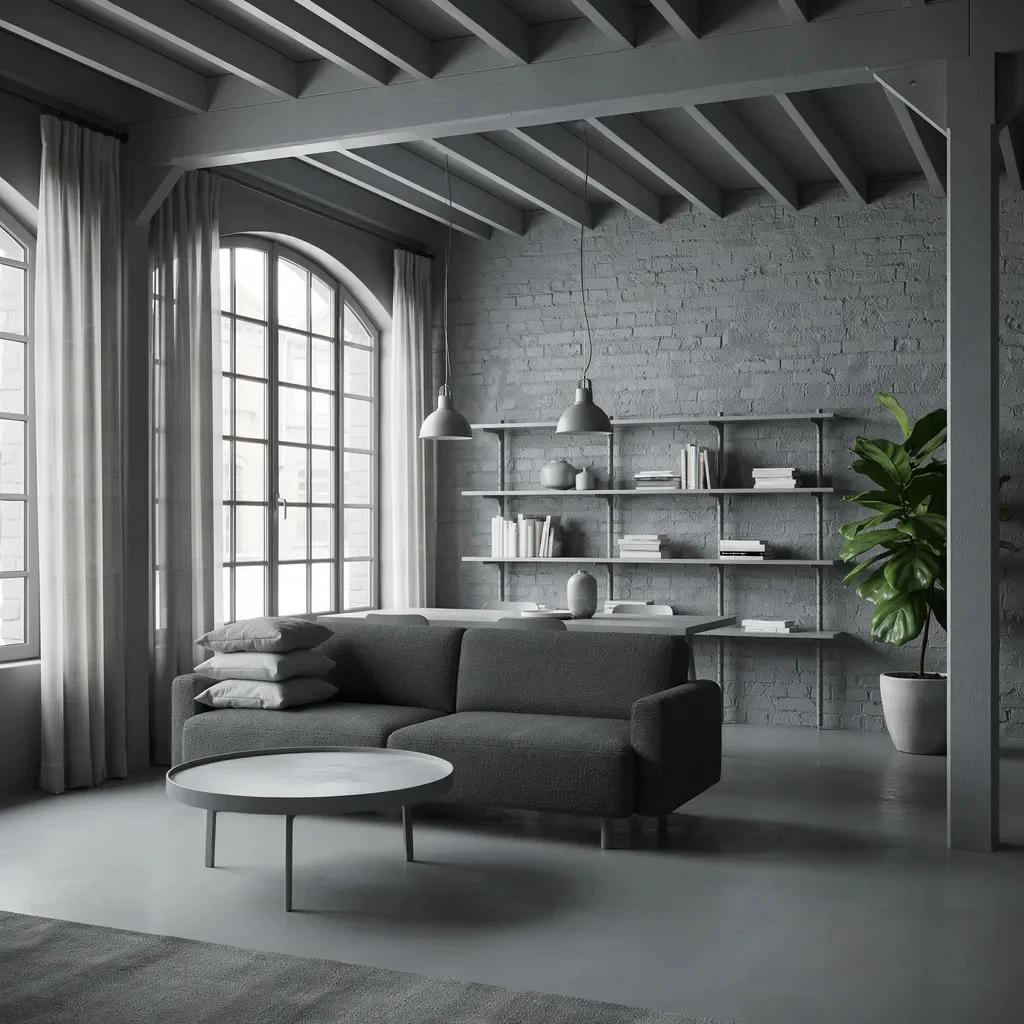
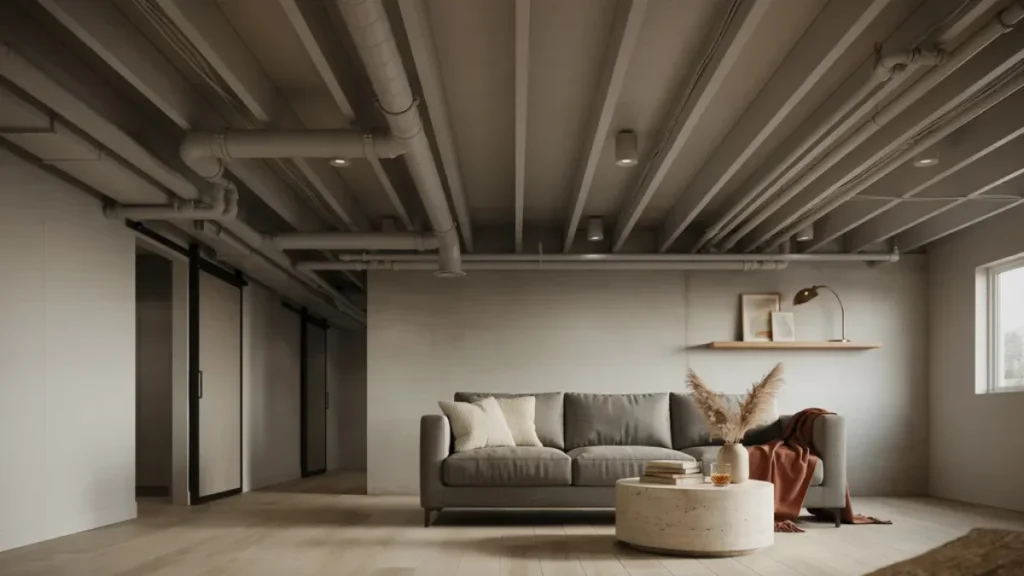
The simplest and most budget-friendly of all exposed basement ceiling ideas is also one of the most effective: paint the entire ceiling — joists, pipes, ducts, electrical conduit, and all — in a single, unified colour. When every element shares the same finish, the visual clutter disappears and the raw structure starts to read as architecture.
Grey is a natural choice here. A warm mid-tone grey ties together exposed metal and timber without skewing too cold or too industrial. Soft white works just as well in basements where natural light is limited, bouncing what little light exists to make the space feel airier. Whatever colour you choose, use a flat or matte finish — sheen draws attention to imperfections and pipe fittings in a way that matte finishes simply do not.
Getting the Best Results
Clean all surfaces before painting — dust and grease prevent proper adhesion on metal pipes and timber joists. A high-quality spray paint or a long-nap roller will get into the crevices more efficiently than a standard brush. Expect two full coats for even coverage across varied surfaces.
2. Go Matte Black for Drama and Visual Height
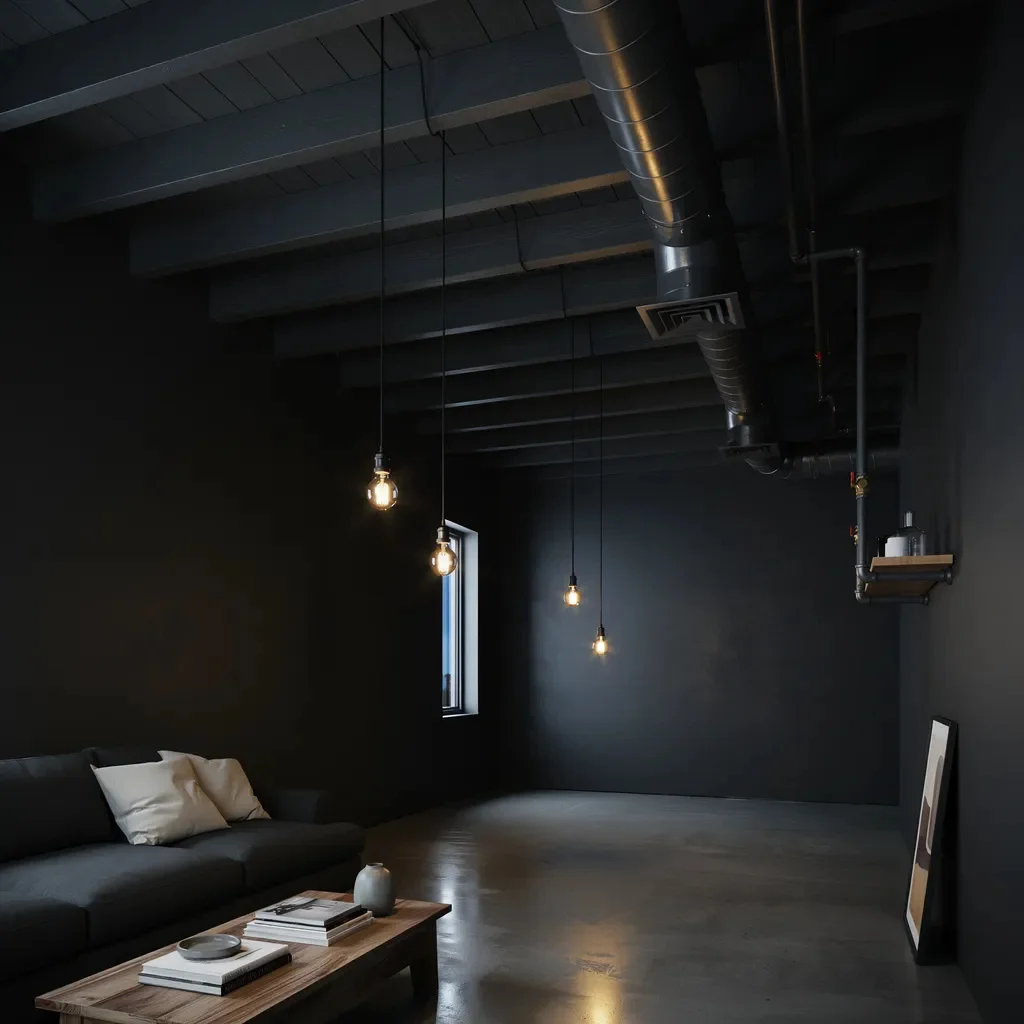
Matte black is the boldest entry in the exposed basement ceiling ideas playbook — and it consistently delivers. When you paint every pipe, joist, duct, and beam in deep matte black, the ceiling recedes visually. The eye stops registering the structure and starts reading the room itself, which in turn makes the space feel taller and more intentional.
This approach suits modern industrial aesthetics, dark-moody entertainment rooms, and home cinemas particularly well. Pair a matte black open ceiling with warm Edison-bulb pendants, concrete flooring, and exposed brick walls and you have a downtown-loft aesthetic at a fraction of the cost. Even in smaller basements, black overhead reads as sophisticated rather than oppressive — provided the lighting is layered correctly.
Lighting Is Everything Here
With a black ceiling, strategic lighting placement determines how liveable the space feels. Aim for a mix of pendant lighting over key zones, LED strips tucked into joist bays for ambient glow, and directional spotlights for task areas. Avoid relying on a single overhead fixture — it will create pockets of darkness that feel uninviting.
3. Add Wood Slats for Warmth and Texture
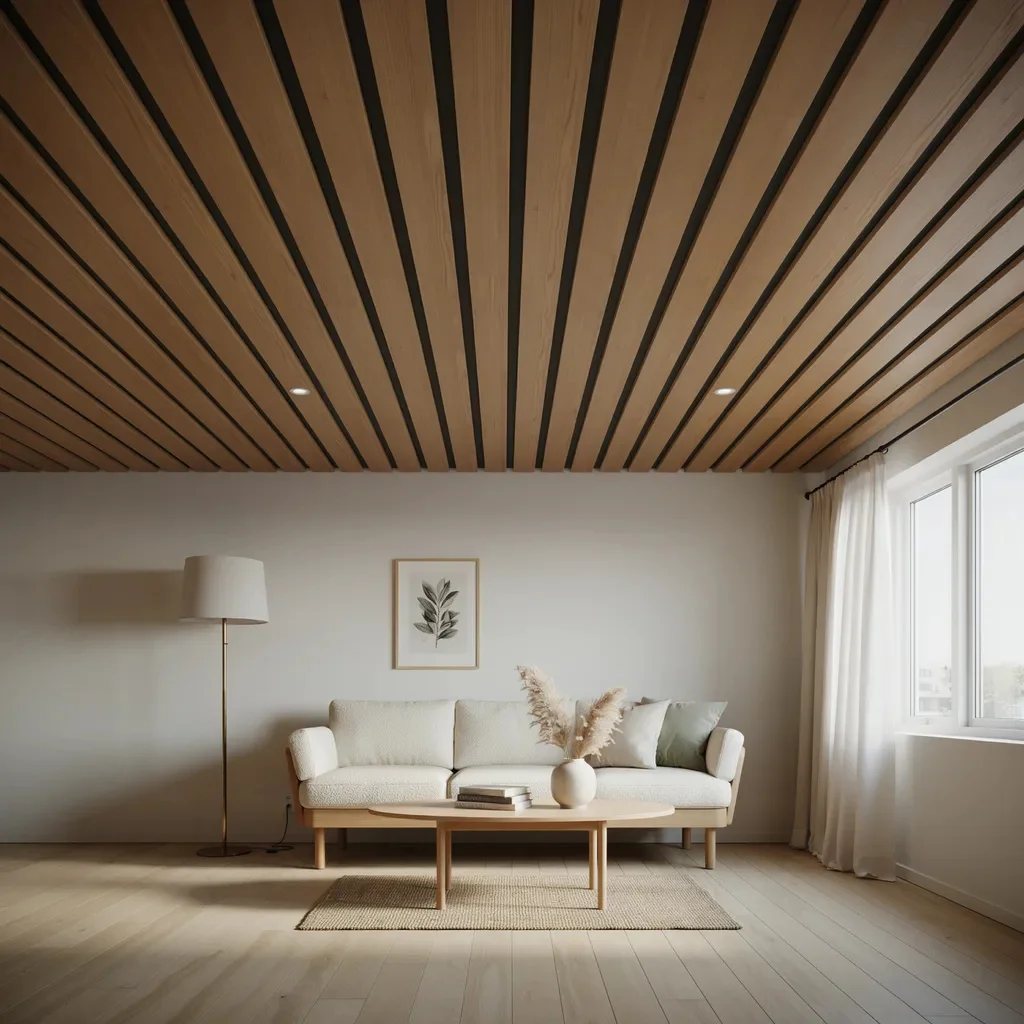
Wood slats offer one of the most design-forward exposed basement ceiling ideas for homeowners who want a finished look without fully closing the ceiling off. By fixing horizontal timber boards across the joists at even intervals, you create a slatted ceiling that filters light, adds rhythm, and introduces natural warmth into what is often a cold, utilitarian space.
The gaps between slats keep the ceiling feeling open while still concealing the bulk of the mechanical systems running above. Stain the wood in a warm honey tone for a Scandinavian-farmhouse feel, go dark walnut for a moody bar aesthetic, or leave it raw and whitewashed for a beach house-inspired look. Slats work on any budget — standard 1×2 or 1×3 pine boards are affordable, widely available, and easy to work with.
Spacing and Direction Tips
Run slats perpendicular to your joists for the cleanest structural attachment. Spacing of 1–2 inches between boards strikes the right balance between coverage and openness. Wider gaps read as more industrial; tighter spacing feels more refined and finished.
4. Embrace Reclaimed Wood Beams for a Rustic Feel
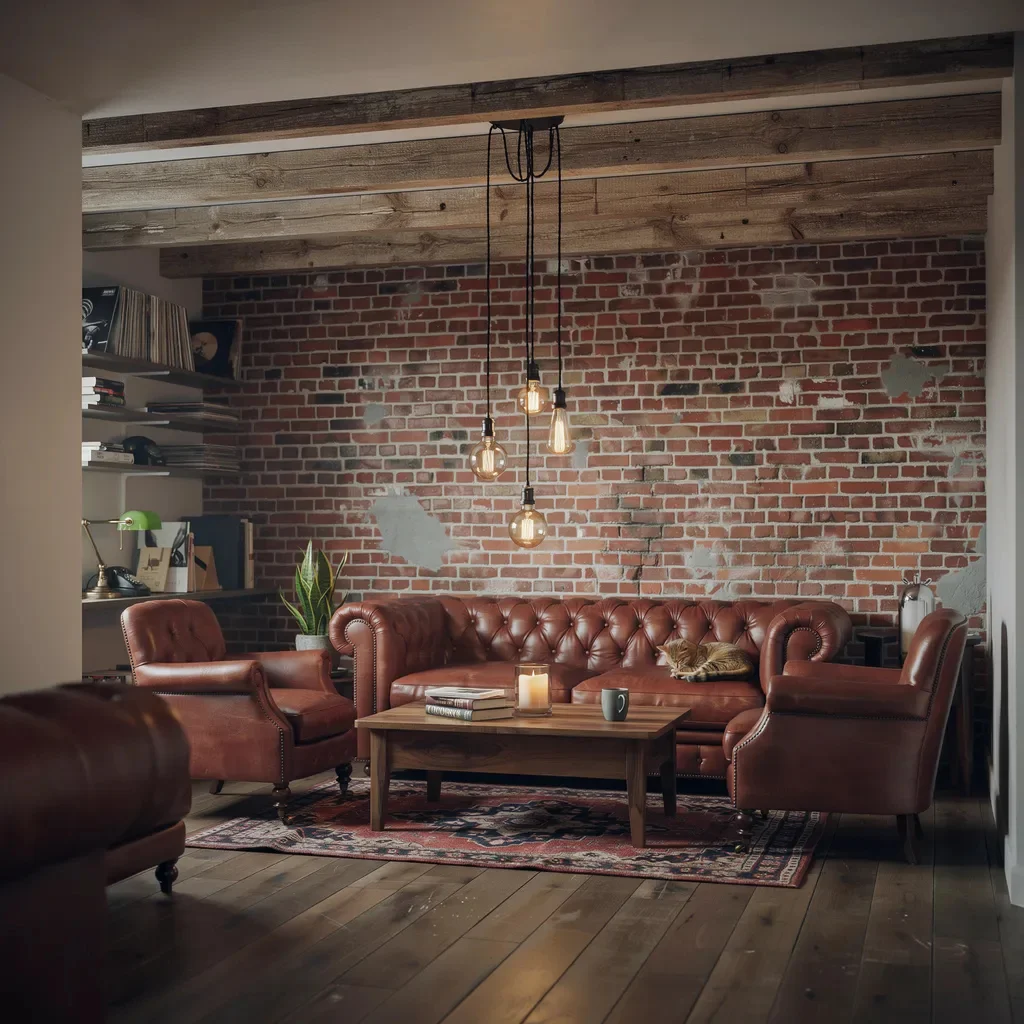
There is a reason reclaimed wood keeps appearing at the top of every exposed basement ceiling ideas list — it delivers character that no new material can replicate. Old barn beams, salvaged railway sleepers, or reclaimed factory timbers bring weathering, grain variation, and history into a basement that might otherwise feel generic and lifeless.
You don’t need a historically significant home to pull this off. Reclaimed beams work equally well in a 1990s suburban build — they simply need to fit the overall design story of the space. Pair them with exposed brick, leather seating, and wrought-iron fixtures for a classic speakeasy or rustic pub feel. Against white-washed walls and linen furnishings, the same beams read as relaxed and organic.
Where to Source Reclaimed Timber
Architectural salvage yards, online marketplaces, and demolition companies are the most reliable sources. Inspect beams for structural soundness before installing — surface weathering is desirable, but deep rot or active insect damage is not. Treat all reclaimed wood before installation to eliminate pests and stabilise the surface.
5. Use LED Strip Lighting to Reframe the Ceiling as a Feature
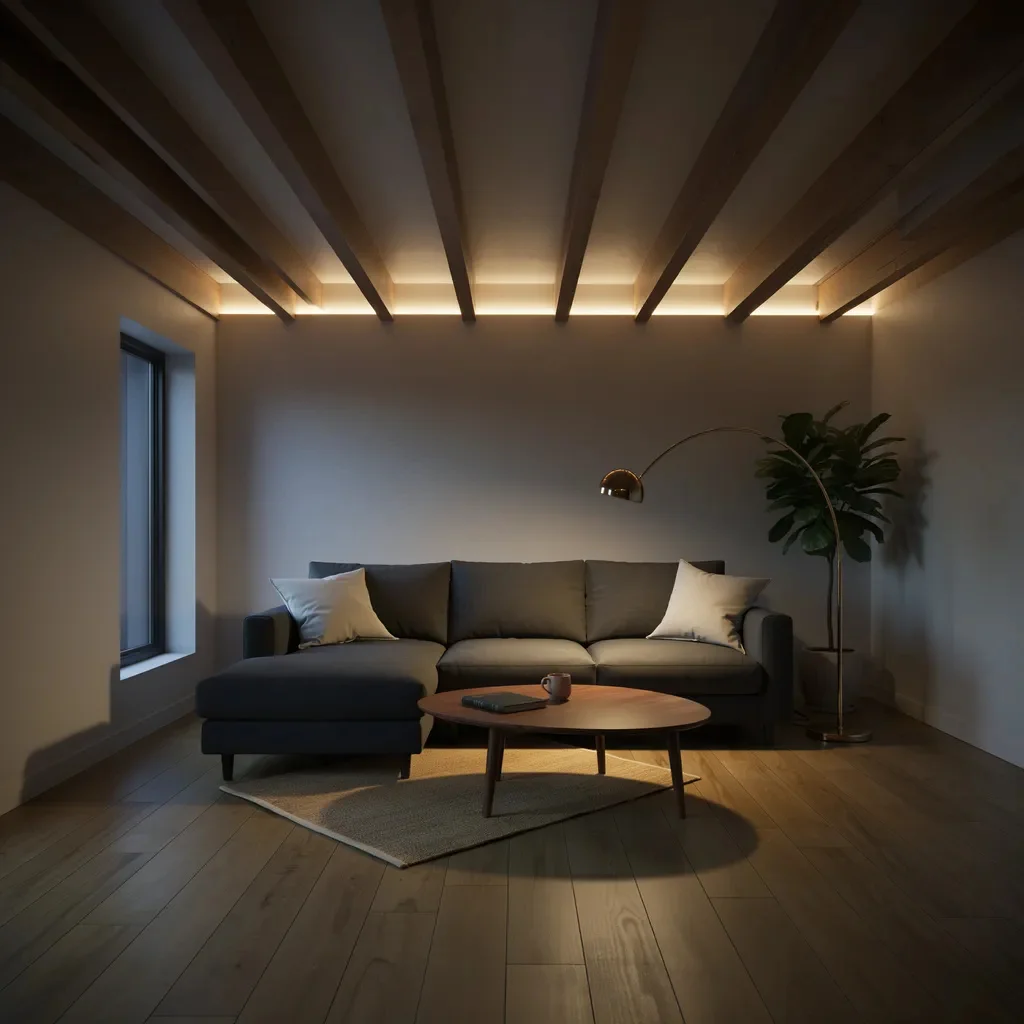
Lighting transforms how any exposed basement ceiling idea reads in real life. LED strip lighting, installed directly into the joist bays or along the underside of beams, creates a glowing canopy effect that makes a raw structural ceiling feel like a deliberate design decision rather than an unfinished afterthought.
Warm white LEDs (2700K–3000K) are ideal for living areas and home bars — they cast a glow similar to candlelight and make timber surfaces look rich and inviting. Cool white or daylight LEDs (4000K–5000K) suit home gyms and workshop spaces where visibility and alertness matter more than ambience. Colour-changing RGB strips allow you to shift the mood entirely depending on how you’re using the space.
Installation Advice
Tuck LED strips into joist channels so the strip itself is hidden but the light spills outward — this indirect lighting approach is far more sophisticated than surface-mounted strips pointing straight down. Use a dimmer switch for full control over atmosphere throughout the day and night.
6. Hide Mechanicals in Painted Soffits
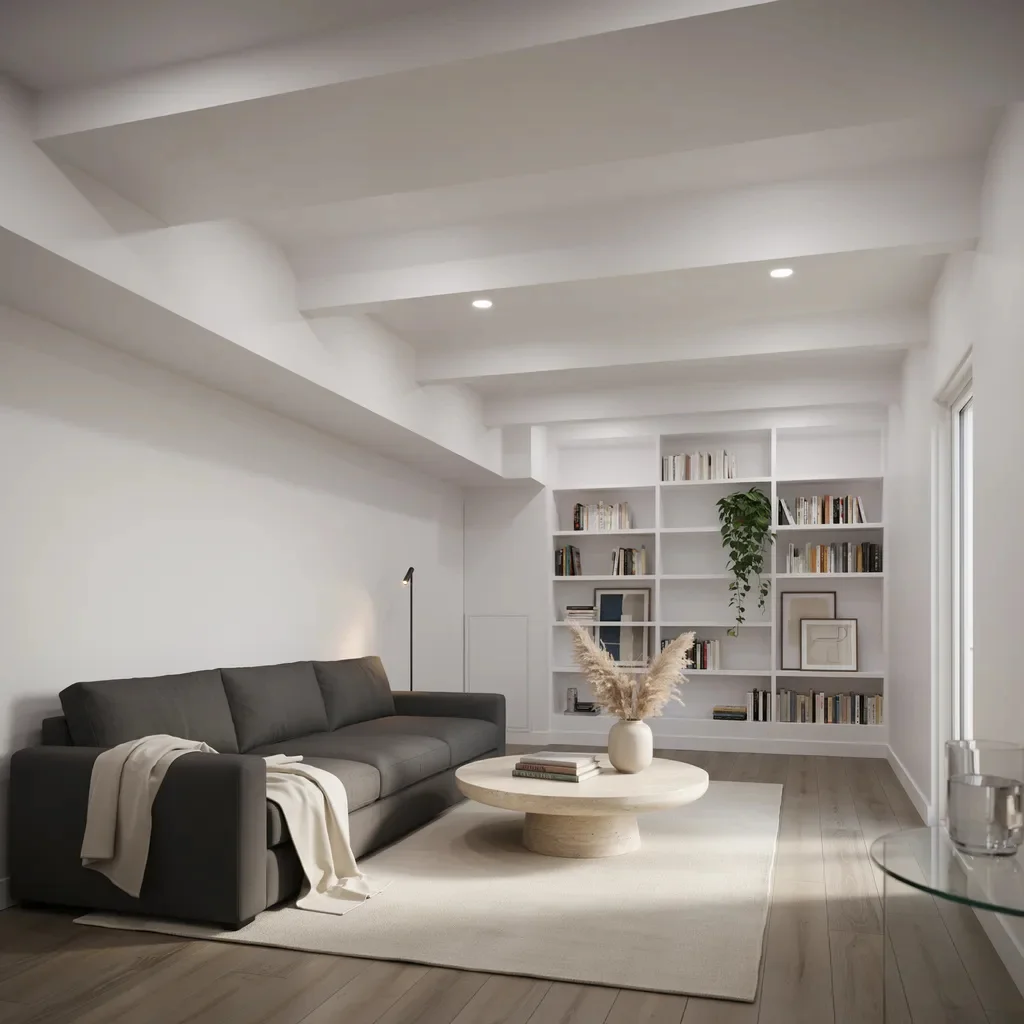
Not every mechanical system can or should be left visible. HVAC trunk lines, oversized plumbing runs, or particularly cluttered joist bays can look chaotic no matter how well you paint them. In these cases, building painted timber soffits — box-framed enclosures that wrap the offending systems — is one of the smartest exposed basement ceiling ideas for achieving a polished result without committing to a full drop ceiling.
The key is to treat soffits as design elements rather than necessary evils. Paint them the same colour as the exposed ceiling for continuity. Use their flat undersides as surfaces for recessed lighting. In some designs, stepped soffits of varying heights add architectural layering that makes the ceiling feel intentionally designed.
When to Use Soffits vs Full Exposure
Reserve soffits for runs that genuinely cannot be made to look attractive — oversized grey metal ductwork, crossed pipe clusters, or visible electrical junction boxes. Everything else can usually be cleaned, spray-painted, and left open with good results.
7. Create a Faux Coffered Effect With Timber Framing
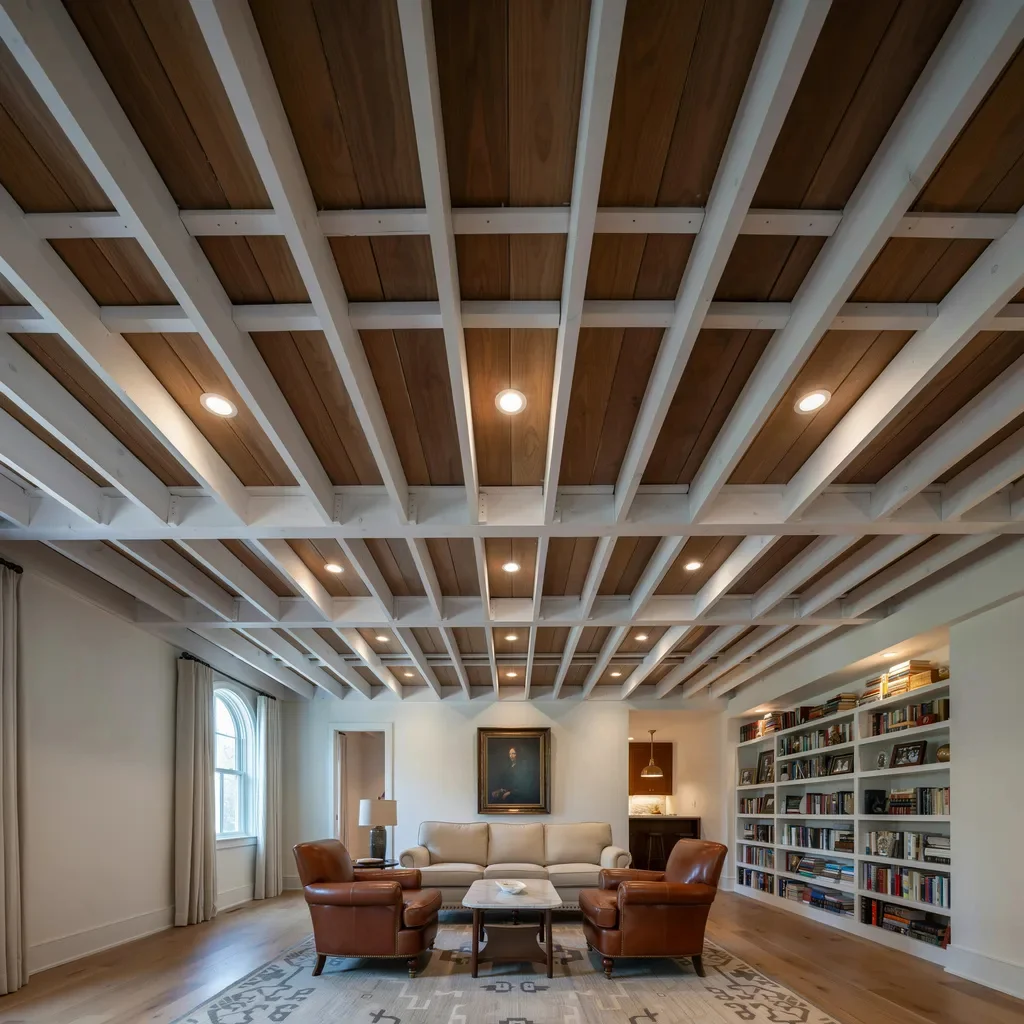
Coffered ceilings — grids of recessed panels framed by beams — traditionally belong in formal living rooms and dining rooms. But a simplified, DIY-friendly version of this effect translates beautifully into exposed basement ceiling ideas, particularly in finished basements that want a sense of architectural gravitas without the industrial aesthetic.
The approach is straightforward: attach timber framing directly to the existing joists in a grid pattern, creating the visual impression of deep coffered panels. Paint everything the same colour as the ceiling for a monochrome effect or use contrasting stained wood for a more traditional two-tone finish. The grid of beams draws the eye across the ceiling rather than downward, which makes the room feel wider.
Best for Which Rooms
Faux coffering suits finished basement living rooms, formal entertaining spaces, or home theatres where a traditional or transitional aesthetic is desired. It is less suited to gyms, playrooms, or heavily utilitarian spaces where the look reads as incongruous.
8. Leave It Raw With Strategic Cleaning and Sealing
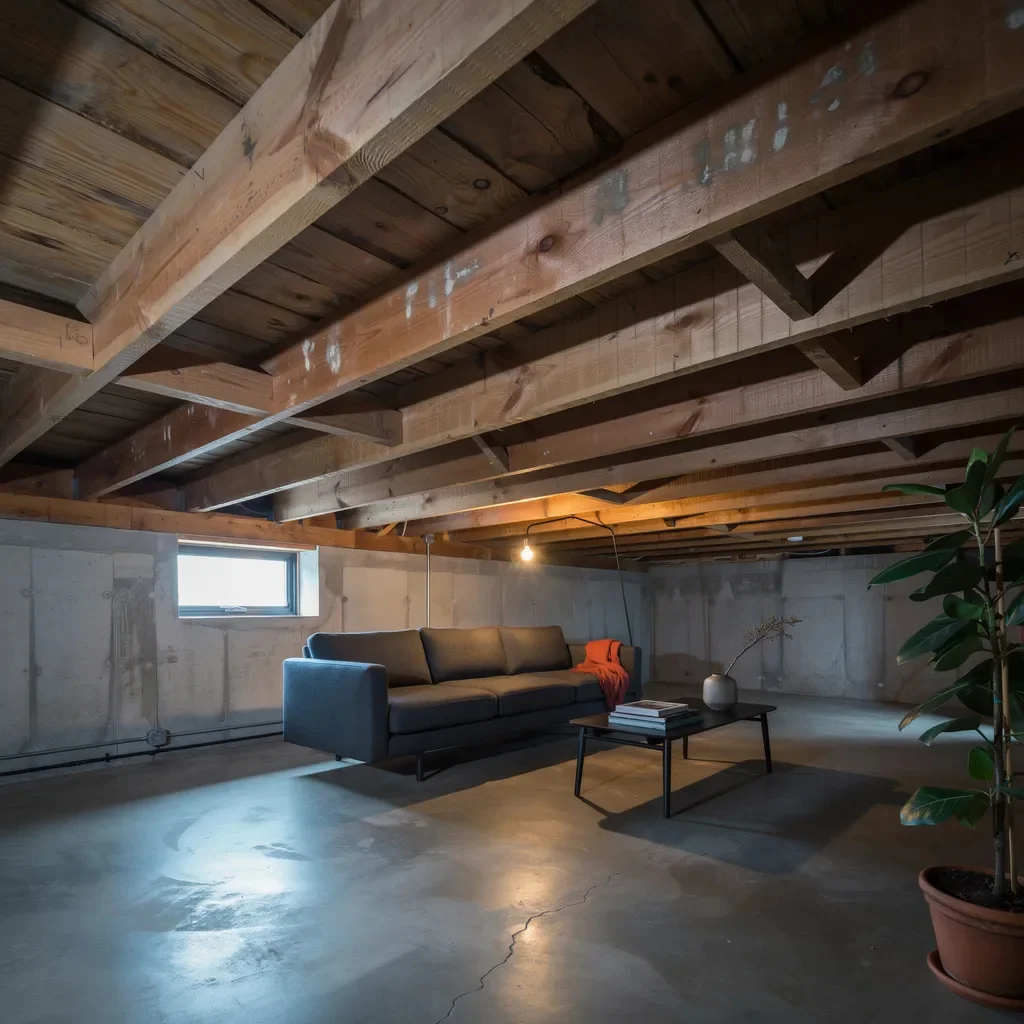
Sometimes the most honest exposed basement ceiling idea is the least interventionist one. In basements with genuinely attractive structural timber — old-growth joists with natural grain, or concrete beam-and-block construction — cleaning, sealing, and leaving the ceiling raw can produce a result that no paint or cladding could improve upon.
This approach works best in older homes where the original construction materials have intrinsic character. Remove loose debris, treat any timber for insects and moisture, seal concrete to reduce dust fall, and let the raw material do the work. The result is a ceiling with depth and authenticity that sits perfectly beneath industrial, rustic, or even minimalist interiors.
What to Address Before Leaving It Exposed
Even a raw exposed ceiling needs preparation. Brush down cobwebs and dust, check for any signs of moisture or mould, ensure all electrical wiring runs through conduit and is properly protected, and seal timber with a clear penetrating oil or sealer to prevent future dust shed.
9. Try a White-Painted Open Joist Ceiling for a Bright Finish
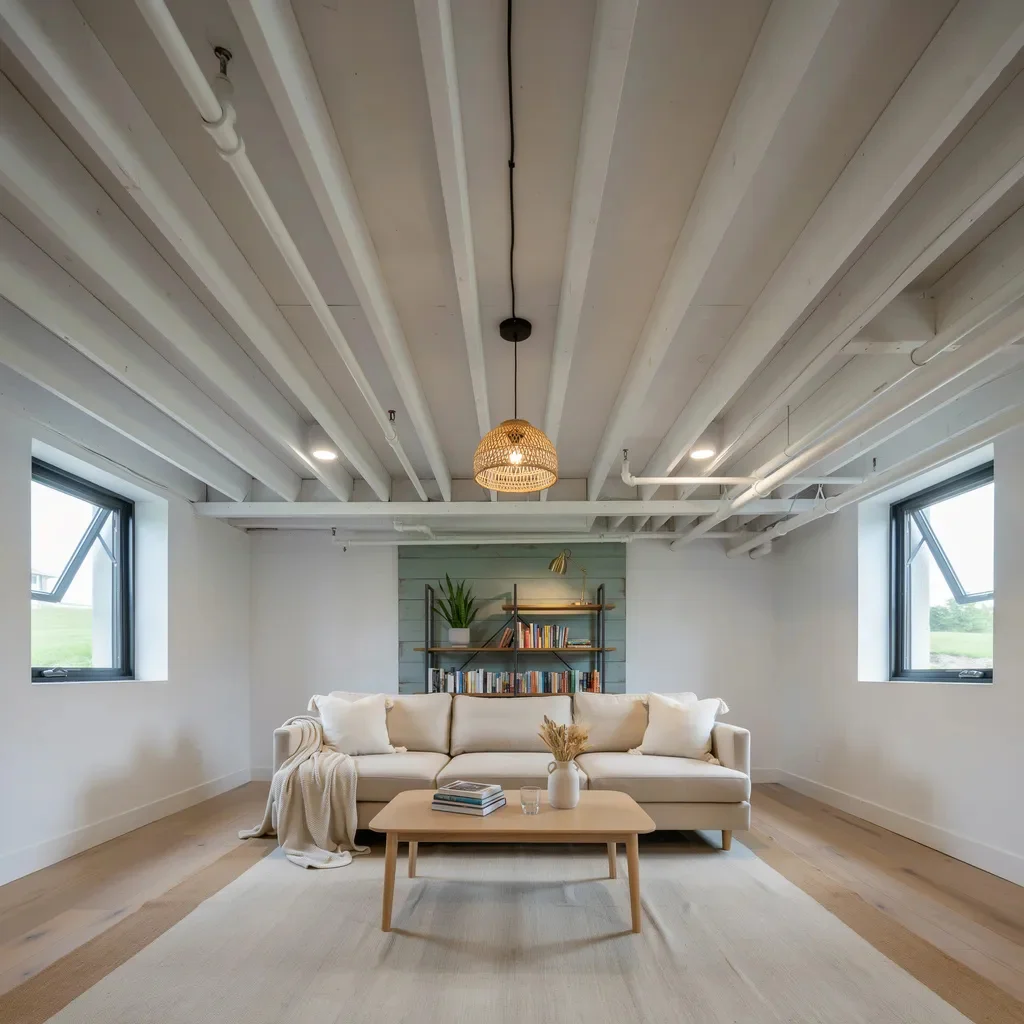
For basements where brightness and openness take priority, white-painted exposed ceiling joists are among the most reliably effective exposed basement ceiling ideas available. White reflects every light source in the room, amplifying both natural and artificial light and making the basement feel significantly larger than its footprint suggests.
This is especially useful in basements with limited natural light from egress windows or window wells. The white ceiling becomes an active participant in the lighting scheme, bouncing light downward and into corners that would otherwise feel dim and enclosed. Paired with light-toned flooring and walls, the effect is a basement that feels far removed from the dark, utilitarian spaces of the past.
White Exposed Ceilings and Modern Farmhouse Style
White-painted open joist ceilings align naturally with modern farmhouse, Scandinavian, and coastal aesthetics. Add shiplap accent walls, natural linen textiles, and simple wooden furniture to complete a look that feels curated without being overthought.
10. Mix Metals for an Eclectic Industrial Aesthetic
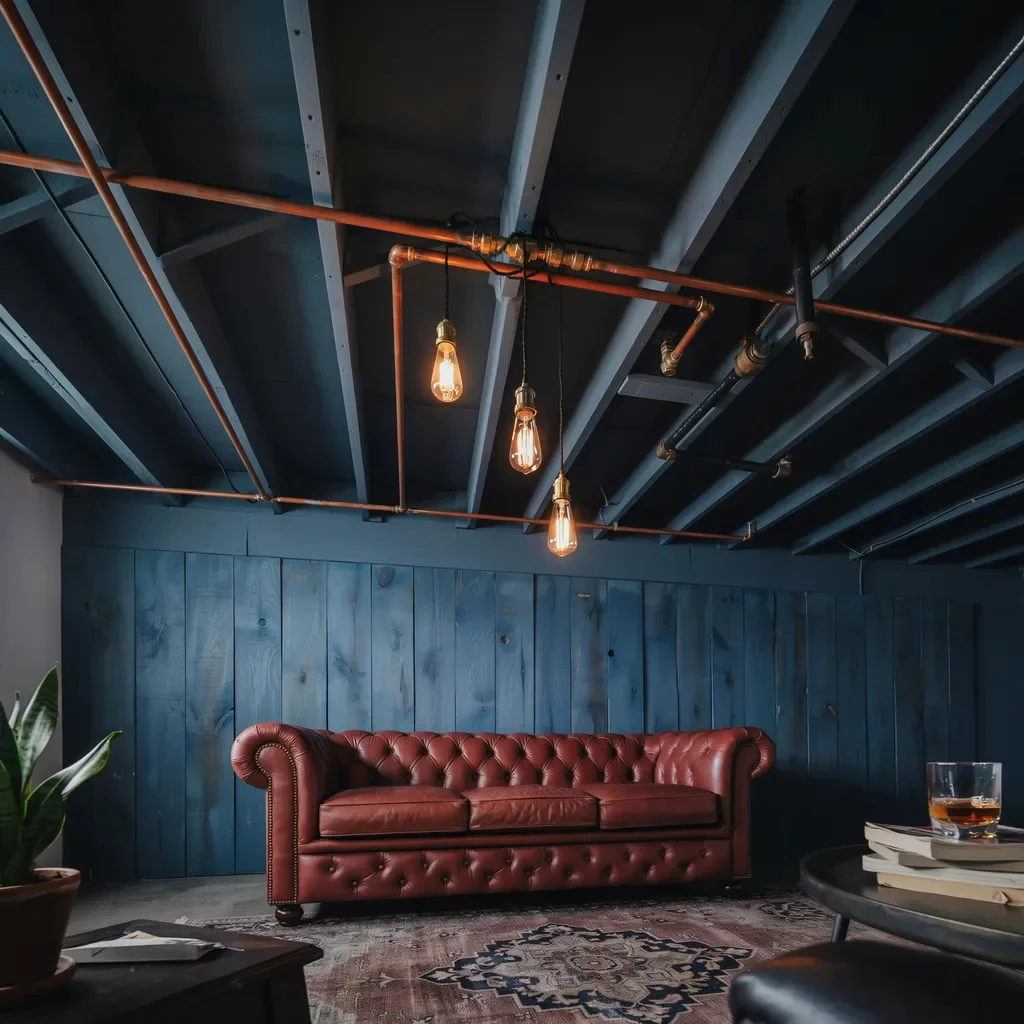
Industrial exposed basement ceiling ideas don’t need to be monochromatic to work. Mixing metals — brushed steel conduit alongside copper plumbing pipes, black iron fittings against galvanised ductwork — creates an eclectic, layered look that feels genuinely lived-in and curated rather than uniform or sterile.
The key to making mixed metals work overhead is to anchor them with a consistent backdrop. Paint the joists and subfloor above in a single dark neutral — charcoal, deep slate, or dark bronze — so the different metals read as intentional accents against a unified base. Hang pendant lighting with mixed-metal fixtures to reinforce the layered aesthetic at a lower level and bring it into the room’s living zone.
Rules for Mixing Metals Successfully
Choose one dominant metal and one or two accent metals — three or more in equal measure tips into chaos. Copper and brushed steel work well together. Black iron and aged brass create a warmer, more Old World atmosphere. Introduce the same metals in smaller fixtures, hardware, and accessories throughout the room to tie the ceiling into the overall space.
Tips for Choosing Exposed Basement Ceiling Ideas That Work for Your Space
Not every exposed basement ceiling idea suits every basement. A few practical principles will help narrow your options before you spend a penny on materials or labour.
- Assess your ceiling height first. Low ceilings below 2.4 metres benefit most from dark-coloured exposed ceilings, which visually recede. Higher ceilings can handle wood slats, beams, or coffering without feeling cramped.
- Identify what’s up there. Some mechanical systems — large rectangular HVAC trunks, clusters of criss-crossing pipes — genuinely don’t respond well to exposure. Know what you’re working with before committing to a look.
- Consider the use of the space. A home gym needs practical, well-lit function. A basement bar demands atmosphere. A playroom benefits from bright, high-visibility ceiling treatment. Let the room’s purpose guide the aesthetic.
- Factor in maintenance access. One of the great underrated advantages of exposed basement ceiling ideas is that pipes, wiring, and joists remain accessible. Don’t choose a design that seals anything you may need to reach later.
- Test paint colours before committing. Basement light — whether from egress windows, artificial sources, or both — differs significantly from upstairs. Always sample ceiling paint in the actual space before committing to a full coat.
Ready to Transform Your Basement Overhead?
Your basement ceiling holds more design potential than most homeowners ever realise. Whether you start with a single tin of matte black paint or go all-in with reclaimed wood beams and custom LED lighting, even one well-considered exposed basement ceiling idea can elevate the entire feel of the space. Save your favourite ideas from this guide, pull a paint sample, and start there — the rest follows naturally.
Ceilings Worth Looking Up To
The ten exposed basement ceiling ideas in this guide span every budget, every skill level, and every aesthetic — from the industrial drama of matte black painted joists to the quiet refinement of natural reclaimed wood. What unites them is a shared belief: that the structural bones of a basement deserve to be seen, celebrated, and transformed into something genuinely beautiful.
Finished or unfinished, raw or refined, your basement ceiling is not a problem to solve. It is a design opportunity waiting for the right idea.
Recommended: Budget-Friendly Dropped Ceiling Ideas for a High-End Finish.