Blank walls and a security deposit are a renter’s two biggest design nemeses. You want a home that feels like yours — warm, personal, layered — but one tiny nail hole can cost you hundreds when you move out.
Fabric wall decor is the answer you’ve been sleeping on. Tapestries, woven hangings, stretched textile panels, macramé art — all of it goes up without drilling, looks like something out of an interior design magazine, and comes down just as easily when it’s time to hand back the keys. This guide covers the best fabric wall decor ideas for renters, how to hang them without damaging a single surface, and the styling tricks that make them look genuinely intentional.
Why Fabric Wall Decor Is the Smartest Move for Renters
Most renters live under a quiet threat: make the space beautiful, but don’t touch the walls. Traditional art requires nails or anchors. Shelves need brackets. Even canvas frames risk scuffs. Fabric changes the whole equation.
Lightweight textiles weigh just 1 to 3 pounds on average, which means they sit happily on a single adhesive hook without pulling away from the wall. They add warmth, texture, and colour in a way that posters and prints simply cannot replicate. Woven fabric catches light differently at different times of day. It absorbs sound, which is a genuine bonus in hard-floored apartments. And when a lease ends, you take it down in thirty seconds, leaving zero trace.
The trend numbers back all of this up. According to a 2025 report, Etsy searches for macramé wall art rose dramatically as younger renters began prioritizing handcrafted, textile-based home decor over mass-produced prints. That shift is still very much alive in 2026 — and the options have only gotten better.
Tapestries: Go Big or Go Boho
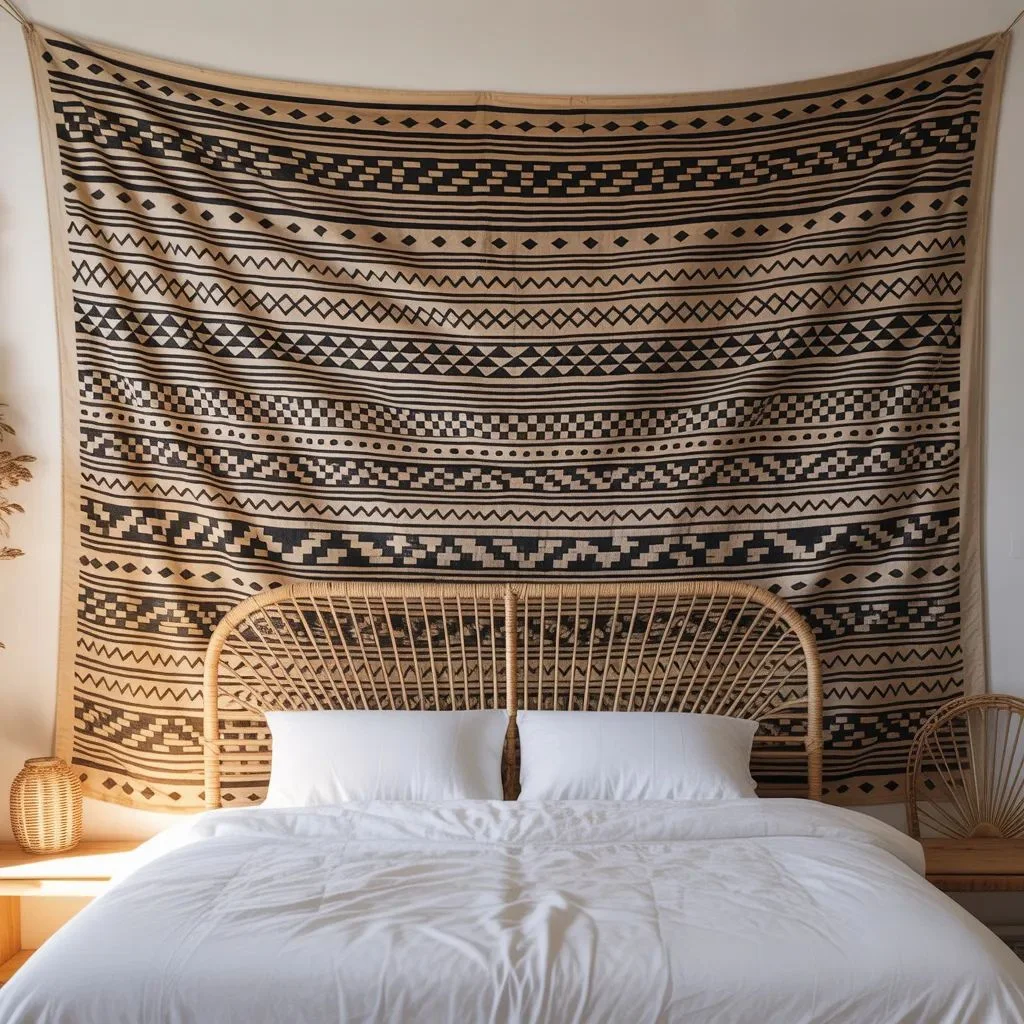
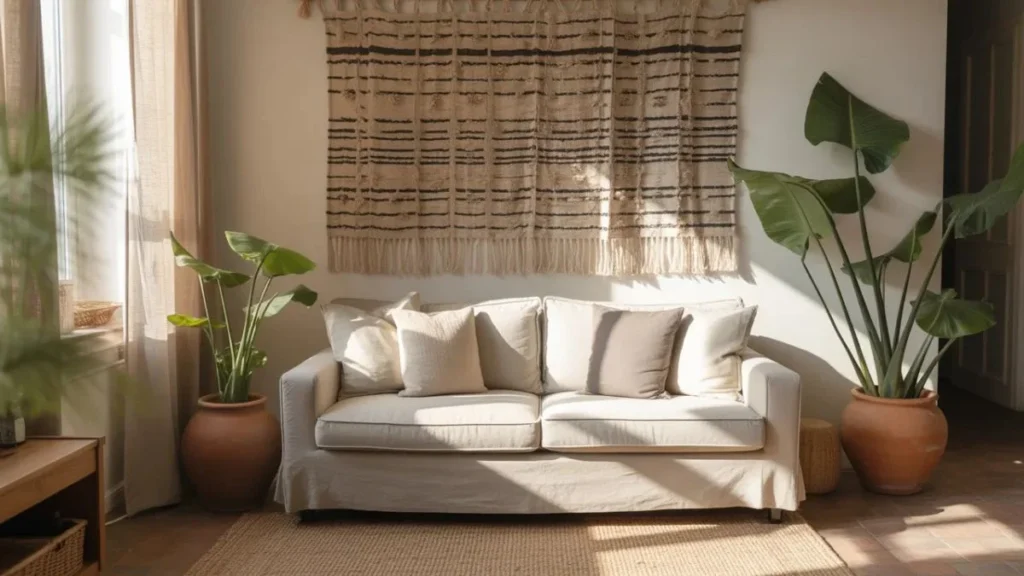
The tapestry is the most impactful piece of fabric wall decor you can own — and the most forgiving. A large tapestry (think 60–80 inches wide) can fill an entire accent wall, mask an ugly feature, and anchor a room’s color palette all at once.
When choosing a tapestry for a renter’s space, think about a few things:
- Weight matters. Lightweight cotton, polyester, or woven jute tapestries hang flat and stay put on adhesive hooks. Heavily embroidered or beaded pieces may need a dowel rod or curtain rod for support.
- Colour before pattern. Pick up one or two colours already present in your furniture or rugs. A tapestry should feel intentional, not random.
- Size with purpose. The general rule: your tapestry should cover at least two-thirds of the wall space you’re trying to fill. A small tapestry on a large wall looks lost; scale up.
- Boho isn’t the only option. Tapestries come in minimalist abstract prints, vintage-style botanicals, modern geometric patterns, and even solid-dyed linen for a quiet luxury look.
For a bedroom, hang a large tapestry behind the bed as a fabric headboard alternative. In a living room, try a vertical tapestry in a narrow space or a wide horizontal piece as a focal point above the sofa.
Macramé Wall Hangings That Actually Look Expensive
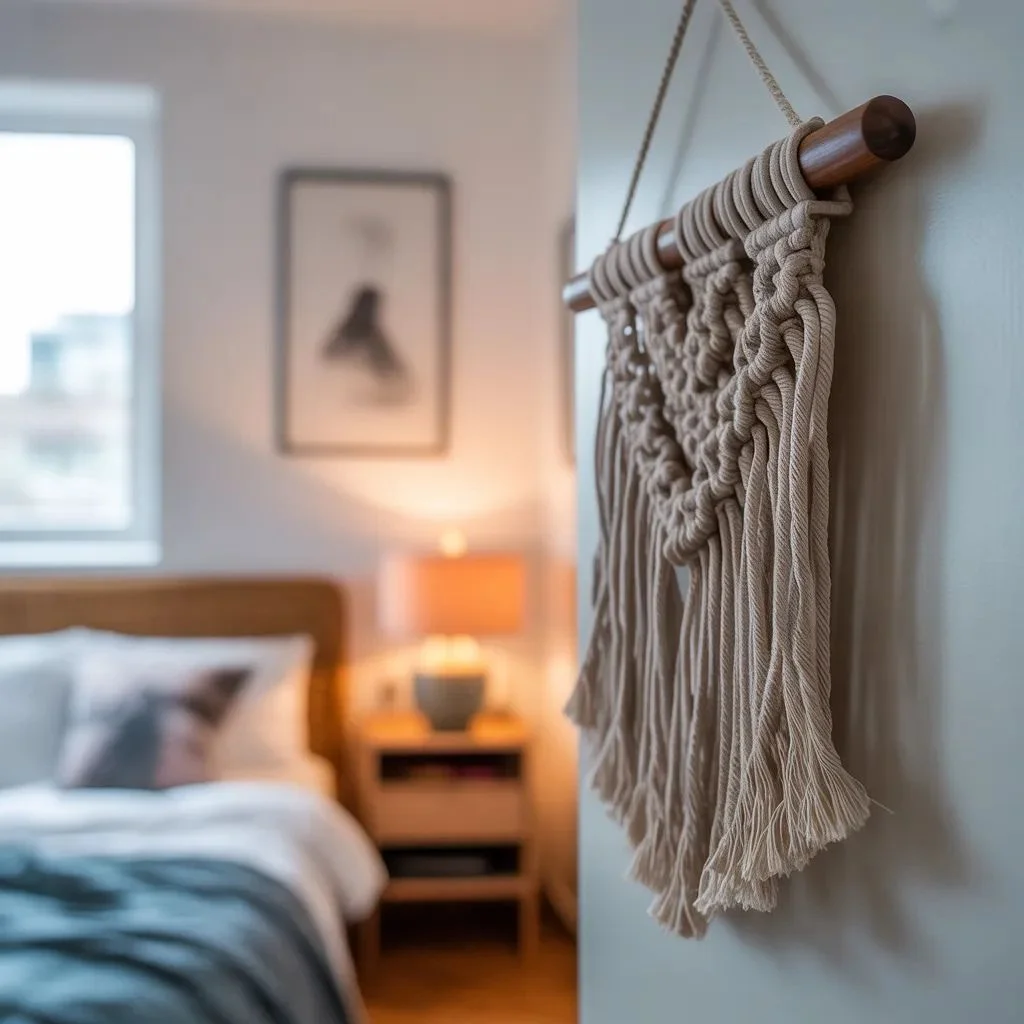
Macramé has shaken off its craft-fair reputation entirely. Today’s macramé wall hangings are structured, sculptural, and genuinely high-design — ranging from delicate minimalist panels to large statement pieces with mixed textures, wooden beads, and layered fringe.
The biggest advantage for renters: macramé is light. Most pieces hang from a single driftwood or wooden dowel rod, which sits on one adhesive hook. The result looks like you planned it from the beginning.
What makes macramé feel expensive rather than crafty comes down to three things:
- Natural materials only. Opt for natural cotton rope rather than synthetic twine. The texture difference is immediately visible.
- Neutral tones. Off-white, cream, sand, and warm grey macramé reads sophisticated in almost any interior. Coloured macramé can work beautifully, but stick to one intentional accent tone.
- Proper scale. A small macramé piece in a large bedroom disappears. For a statement moment, look for pieces that are at least 24 inches wide and 30 inches long.
Macramé pairs especially well with warm wood tones, linen bedding, terracotta accents, and rattan furniture — the full boho-organic palette that continues to dominate 2025 and 2026 apartment interiors.
Stretched Fabric Panels: The Gallery Wall Upgrade
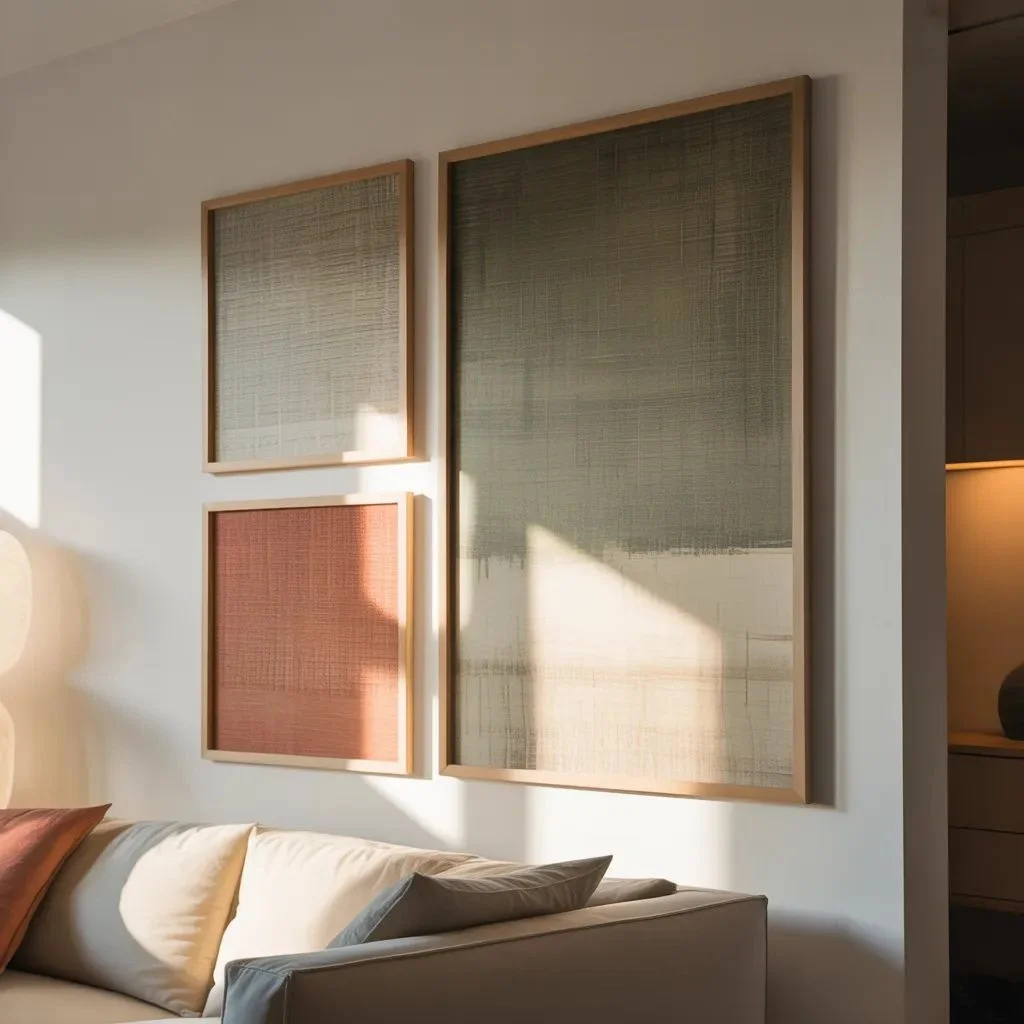
Stretched fabric panels are exactly what they sound like: fabric pulled taut over a wooden or canvas frame, creating a clean, art-ready surface. Think of them as a more tactile, more textured version of canvas prints.
For renters, stretched fabric panels have a real advantage: they weigh almost nothing. A fabric-covered frame can weigh under two pounds, which means even a large piece sits safely on a standard Command strip without risking wall damage.
You can buy them ready-made — look for “stretched textile art” or “fabric canvas” on Etsy, Society6, or specialist home decor retailers — or make your own for a fraction of the cost:
- Buy a cheap canvas frame from a craft store.
- Choose a fabric in your preferred colour or pattern — linen, printed cotton, or even a fabric swatch that matches your curtains.
- Pull the fabric tight over the frame and secure it at the back with a staple gun or strong adhesive tape.
- Hang using a single adhesive strip on the back of the frame.
Creating a gallery wall with three to five stretched fabric panels in complementary tones is one of the most effective ways to add personality to a blank wall without committing to anything permanent.
Fabric-Covered Frames and Hoops
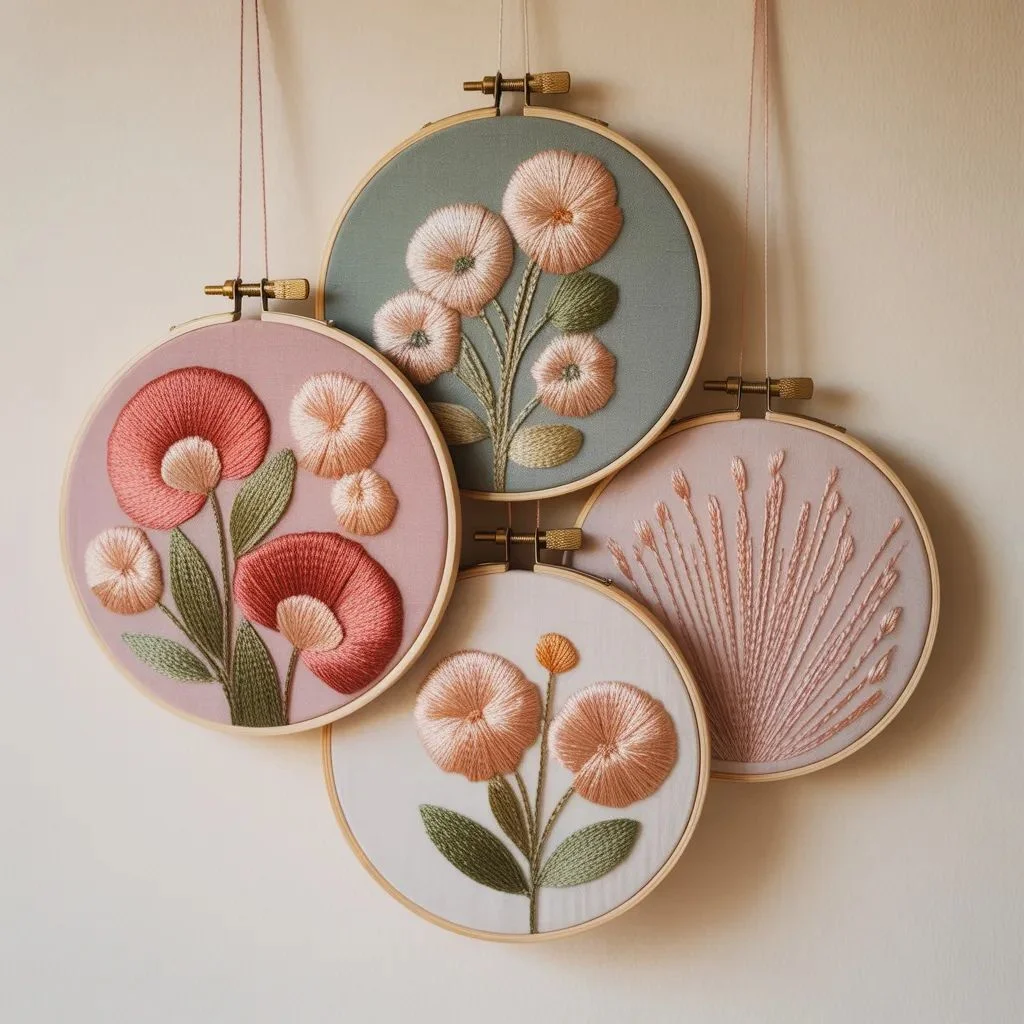
If you want fabric wall decor that feels a little more playful and personal, embroidery hoops and decorative frames offer a completely different approach. The idea is simple: choose a piece of fabric — a print, a scrap of patterned linen, even a section cut from an old shirt you love — and display it inside a wooden or metal hoop as art.
Hoop art works particularly well as a cluster. A group of five or six hoops in varying sizes, hung together on a single adhesive picture-hanging strip arrangement, creates a dynamic, eclectic display that looks far more considered than individual framed prints.
Tips for pulling off hoop wall art:
- Mix hoop sizes — a large 12-inch hoop anchors the arrangement, smaller 6- and 8-inch hoops fill around it.
- Stick to a consistent colour story across the fabrics: three tones maximum keeps it cohesive.
- Natural wood hoops feel warmer; black metal hoops are more contemporary. Mixing the two can work but test it visually first.
- Hoops weigh almost nothing, so adhesive picture-hanging strips hold them safely with zero wall damage.
How to Hang Fabric Wall Decor Without Nails
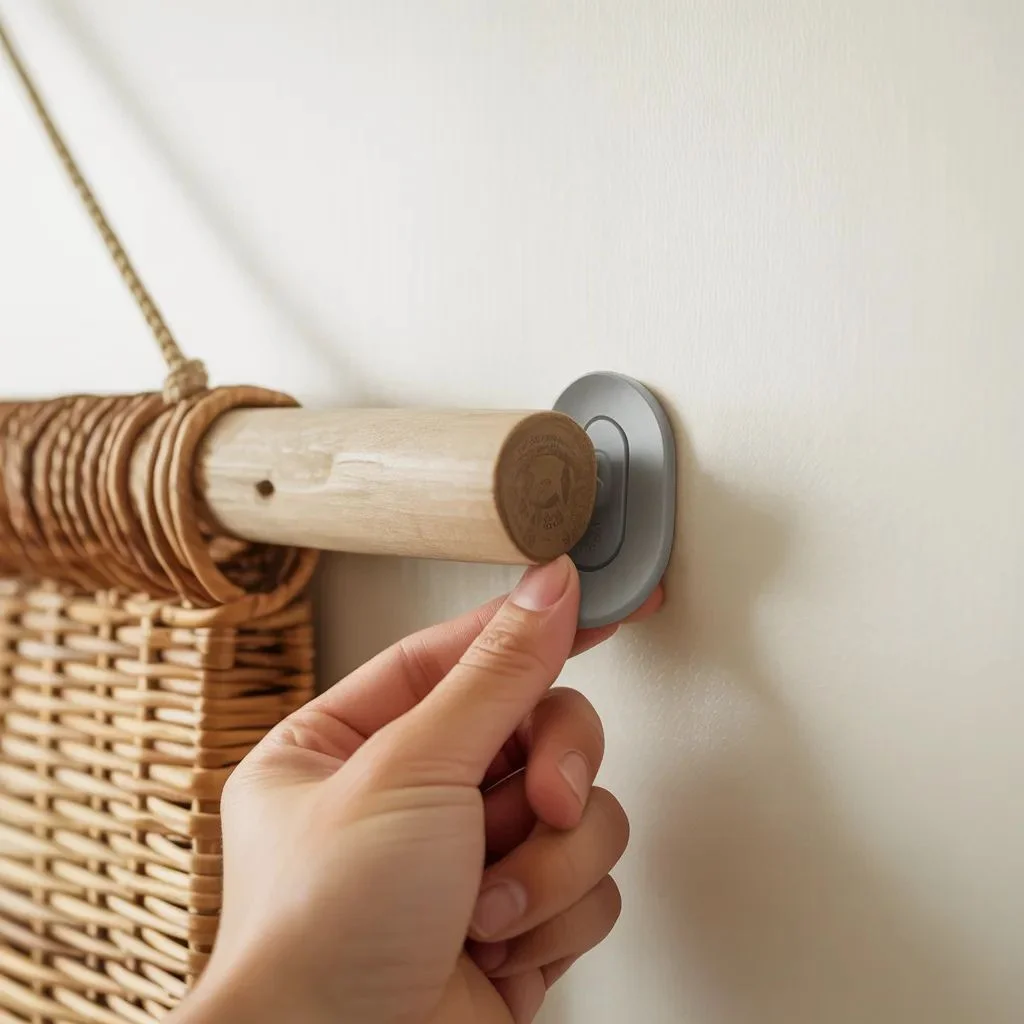
The method matters as much as the decor itself. Here are the most reliable no-nail hanging options for fabric wall decor, based on weight:
Adhesive Hooks (Best for Most Fabric Art)
Brands like Command make adhesive hooks rated for 3 to 5 pounds, which comfortably handles most tapestries, macramé pieces, and hoop art. The key is surface preparation: clean the wall with rubbing alcohol, let it dry fully, then press the hook firmly for 30 full seconds. Wait at least an hour before hanging anything.
Tension Rods (Best for Wide Tapestries)
A tension rod placed near the ceiling inside a doorframe or between two walls creates a no-damage hanging bar for wide tapestries or fabric panels. No hooks, no strips, no risk. This works especially well in narrow hallways and alcoves.
Curtain Rods Without Drilling
Freestanding curtain rod stands or wall-mounted rod brackets with adhesive bases let you hang fabric from a rod without drilling into walls. This gives the hanging a deliberate, interior-designed look and supports heavier pieces that adhesive hooks might not manage.
Floating Shelves as Display Ledges
For smaller stretched fabric panels or framed hoop art, an adhesive floating shelf acts as a display ledge. Lean the pieces against the wall on the shelf rather than hanging them at all. This approach also makes rearranging effortless.
One important note: always check your lease before using any adhesive product on textured or freshly painted walls. On some surfaces, even adhesive strips can pull paint when removed. A quick test in an inconspicuous corner first can save you headaches later.
Styling Tips to Make It Look Designer, Not DIY
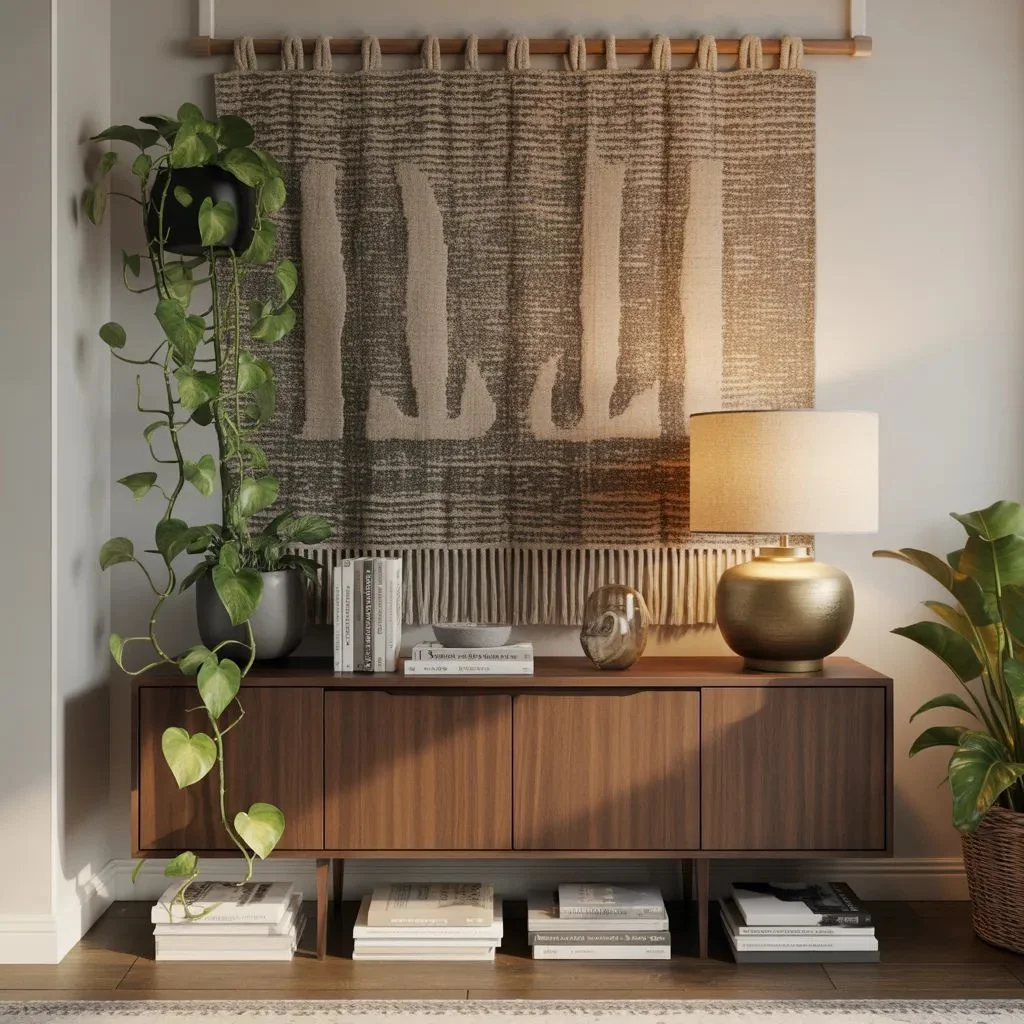
The difference between fabric wall decor that looks designer and fabric wall decor that looks like a dorm room decoration usually comes down to how it’s styled, not what it costs.
- Anchor it with furniture. Hang your fabric piece above a piece of furniture — a sofa, a bed, a console table. Floating art in the middle of a wall with no visual anchor below it looks unintentional.
- Layer in front of it. A tall floor lamp in the corner, a trailing plant on a shelf just below the tapestry, a ceramic vase on the console — these foreground elements make the fabric art feel like part of a complete scene rather than an afterthought.
- Mind the gap. Leave 6 to 12 inches of space between the bottom of a wall hanging and whatever furniture sits beneath it. Too close looks crowded; too far looks disconnected.
- Echo the color palette. Pull one color from your fabric wall decor into a throw pillow, a candle, or a small object in the same room. This ties the piece into the space and makes it feel chosen rather than placed.
- One statement, then quieter pieces. If you’re using a large tapestry as a focal point, the other walls in the room should stay simple. Two competing textile statements in one room will cancel each other out.
Your Walls, Your Rules — No Deposit Required
A rental doesn’t have to feel temporary just because you aren’t allowed to drill holes in it. Fabric wall decor gives you the warmth, texture, and personality of a fully designed space without putting a single thing at risk.
Start with one piece that excites you — a tapestry that pulls the colors of your sofa together, a macramé hanging that adds softness above your bed, a cluster of hoop art that tells a small story about your taste. Hang it with an adhesive hook. Step back. Adjust.
The blank wall problem has a beautiful, removable, completely damage-free solution. And now you know exactly what it is.
Highly Recommended: Knotty Pine Walls: The Rustic Charm That’s Taking Over Modern Homes.