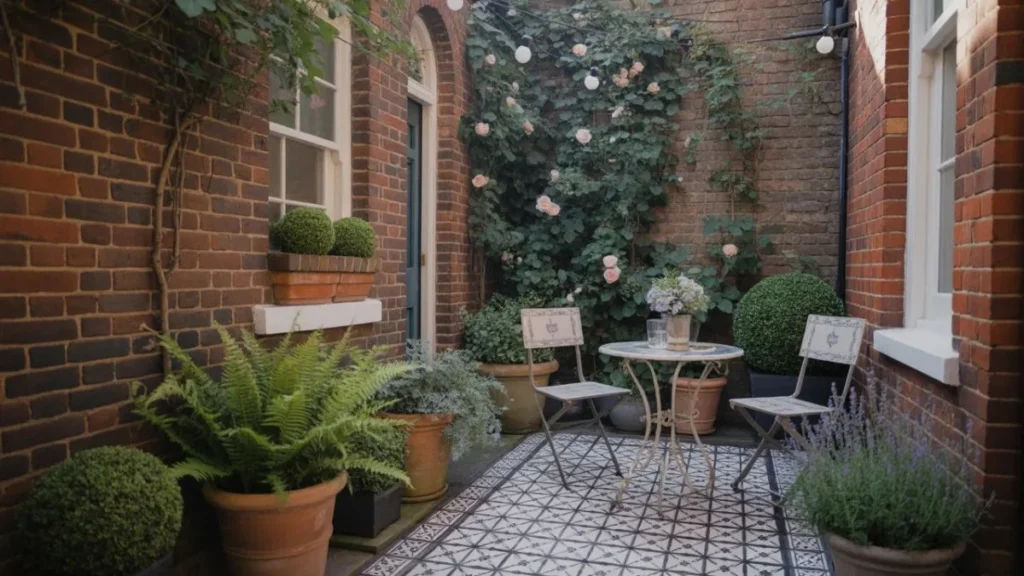
A narrow strip of outdoor space behind a Victorian terrace has a way of feeling both full of potential and completely impossible at the same time. But here’s the thing: some of the most beautifully designed gardens in the UK are exactly this size. The constraint is the point. Every decision matters, every plant earns its place, and the result — when done right — feels like a proper outdoor room that could stop anyone mid-scroll.
Whether you’re starting from a blank concrete slab or a neglected patch with peeling fence panels, a Victorian terrace courtyard garden can be transformed into a space that’s genuinely worth spending time in. These ideas work with your narrow footprint, lean into the period character of your home, and bring serious style to every square foot.
Work With the Brickwork, Not Against It
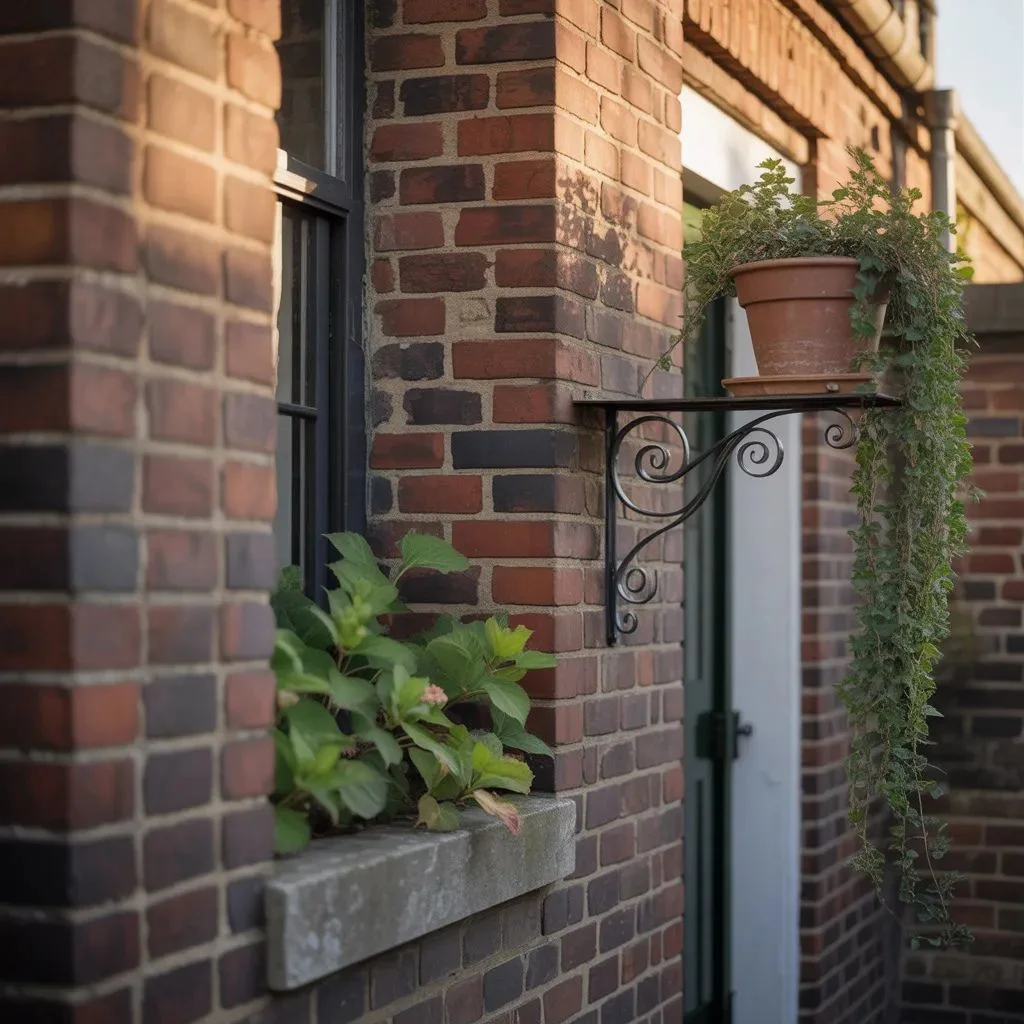
The exposed brick walls of a Victorian terrace courtyard are one of your greatest design assets — yet so many homeowners rush to paint them over or panel them out. Before you do anything else, assess what you already have. Aged London stock brick reclaimed red brick, or even painted Victorian walls have texture and warmth that manufactured materials simply can’t replicate.
If the brick is in good condition, leave it bare. Pair it with deep green climbing plants and black ironwork for that instantly recognisable Victorian courtyard look. If the surface is uneven or patchy, a limewash in warm white or pale stone will soften it without killing the texture. What you want to avoid is covering it entirely with smooth render — it strips the period character that makes these gardens so distinctive.
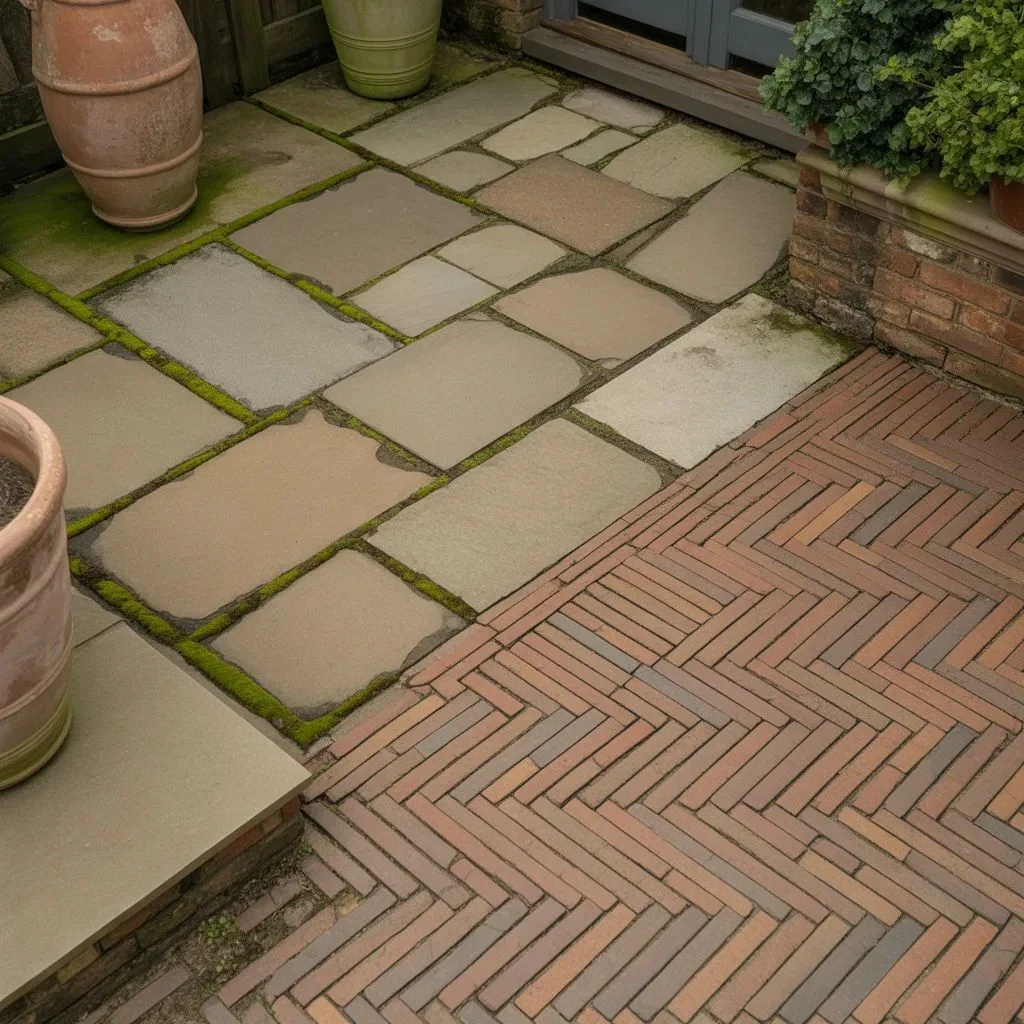
Brick also works hard as a flooring material. Reclaimed brick pavers laid in a herringbone pattern are both period-correct and surprisingly practical in a narrow outdoor space.
Go Vertical With Climbing Plants
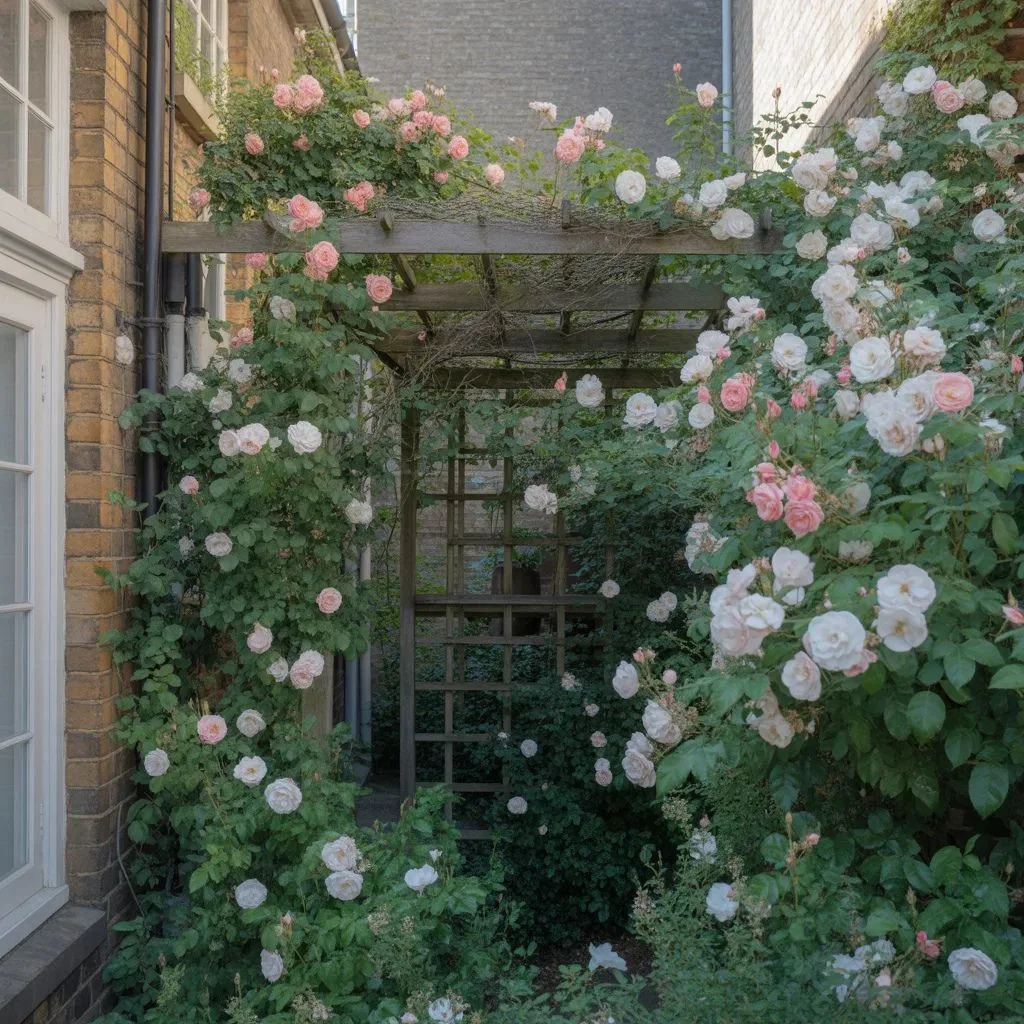
In a narrow Victorian terrace courtyard garden, vertical planting isn’t optional — it’s the strategy. When floor space is limited, your walls and fences become the garden. Climbers soften hard surfaces, add depth, and deliver the kind of lush, overgrown romance that’s central to the Victorian garden aesthetic.
The classics work best here. Climbing roses — especially heritage varieties like ‘Madame Alfred Carrière’ or ‘Cecile Brunner’ — are exactly what period character looks like. Wisteria makes a dramatic statement if you have the patience for it. Clematis is faster and flowers generously. For year-round evergreen cover, jasmine and ivy are reliable choices that hold the structure through winter when everything else has died back.
Fix timber or metal trellis to your walls and train your climbers diagonally to encourage faster lateral spread. This fills wall space more quickly than training straight up and creates that lush, layered look.
Lay Period-Appropriate Paving
The floor of your Victorian terrace courtyard garden sets the whole tone. Get this right and everything else falls into place around it. Get it wrong and even the best planting can feel disconnected from the house.
Victorian encaustic tiles — those geometric black-and-white or richly patterned ceramic tiles — are the most authentic choice for a period courtyard and are still widely available through specialist suppliers. They’re best suited to sheltered or covered areas. For the main courtyard floor, Yorkstone flags or reclaimed sandstone offer a warm, historic feel and are far more practical for outdoor use year-round.
Cobblestones and granite setts work beautifully as edging or to define a path through the space. Brick laid in a herringbone pattern is arguably the most period-correct choice for the floor itself — and it ages beautifully, developing a patina over time that no new material can imitate.
Whatever material you choose, keep the colour palette warm and natural. Cool grey concrete or pale porcelain reads too modern against Victorian brickwork and ironwork.
Build Your Green Layer With Containers
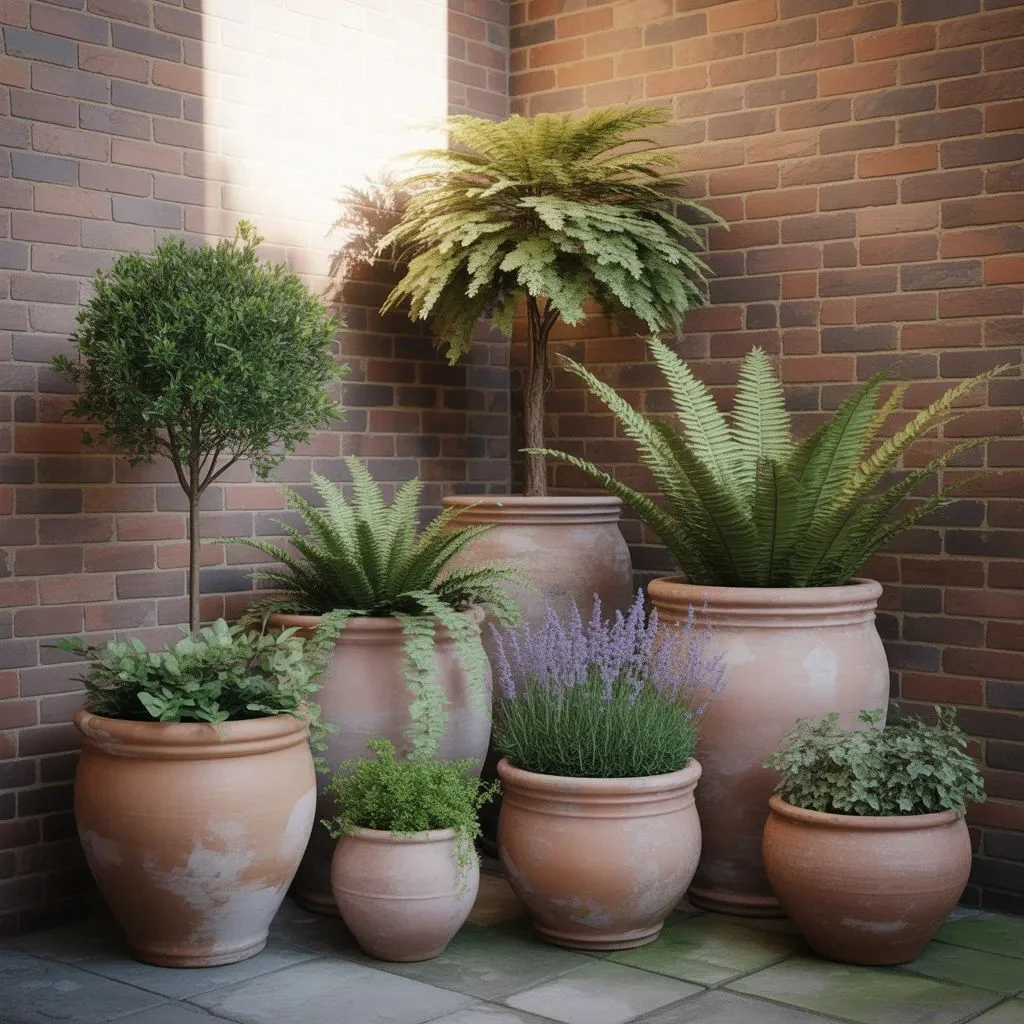
Container planting is the beating heart of the Victorian terrace courtyard garden. It gives you complete flexibility — you can move things as the seasons change, swap out tired plants, and build up a layered, abundant look without touching the ground at all.
Go for aged terracotta pots in varying sizes — they have exactly the right period feel. Group them in odd numbers and vary the heights dramatically. A large pot with a clipped bay tree or standard fuchsia provides height and structure; medium pots of ferns and hellebores fill the mid-level; smaller pots of trailing lobelia, violas, or herbs sit at the base and spill forward.
Ferns deserve a special mention. The Victorians were famously obsessed with them — the craze was literally called pteridomania — and they thrive in the shaded, sheltered conditions of a courtyard. Shuttlecock ferns and soft shield ferns are both well-suited to pot life and bring real period authenticity.
Add Structured Evergreens for Year-Round Shape
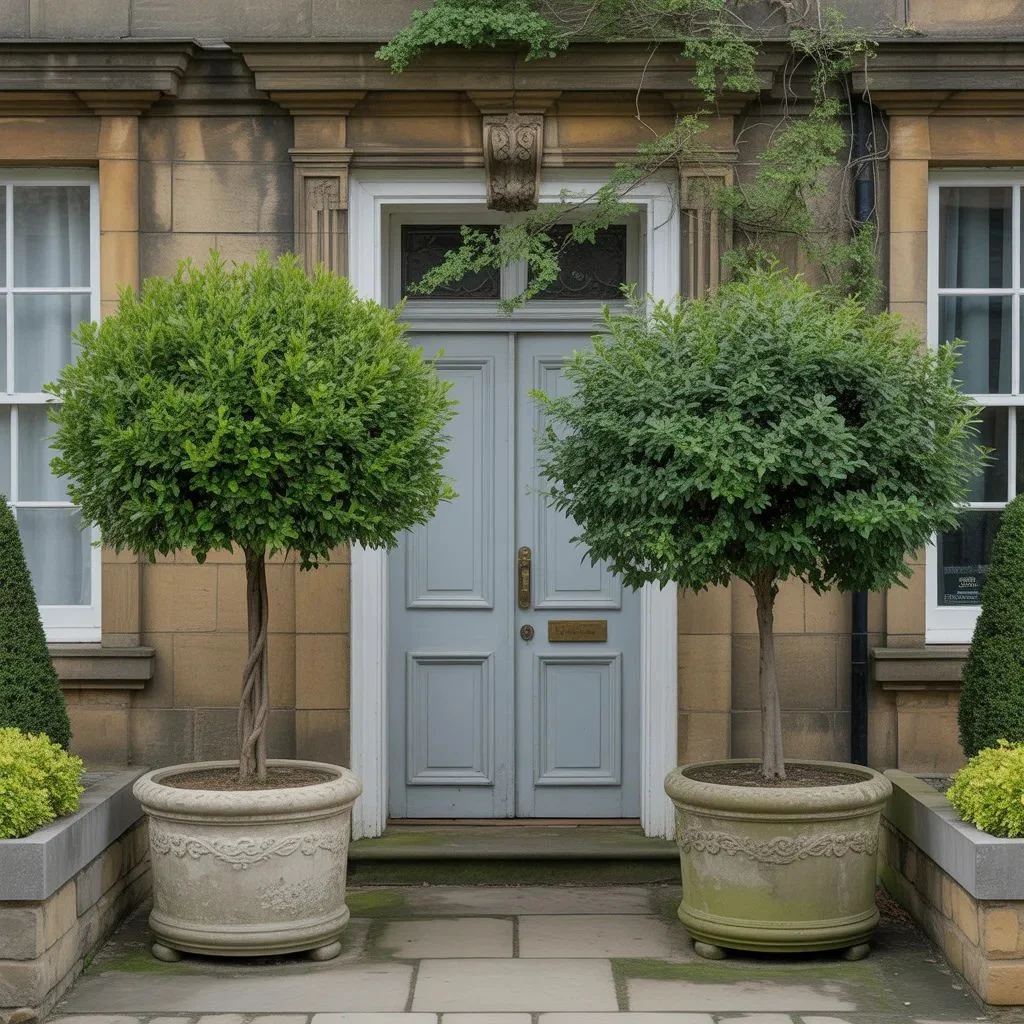
A Victorian terrace courtyard garden needs structure that holds its form through the grey months of winter. That’s where clipped evergreens earn their place. Box balls, topiary spirals, or clipped bay pyramids give the space a formal, intentional quality that references the Victorian love of structured garden design without tipping into stiffness.
If box blight is a concern in your area — and it increasingly is — Ilex crenata (Japanese holly) makes an excellent substitute with almost identical appearance. Yew topiary is even more resilient and long-lived. These clipped forms work beautifully flanking a door, anchoring the corners of a courtyard, or set in matching pots either side of a seating area.
Even a single well-placed topiary in a beautiful pot makes a narrow Victorian terrace courtyard garden feel deliberate and designed.
Make the Walls Do the Work
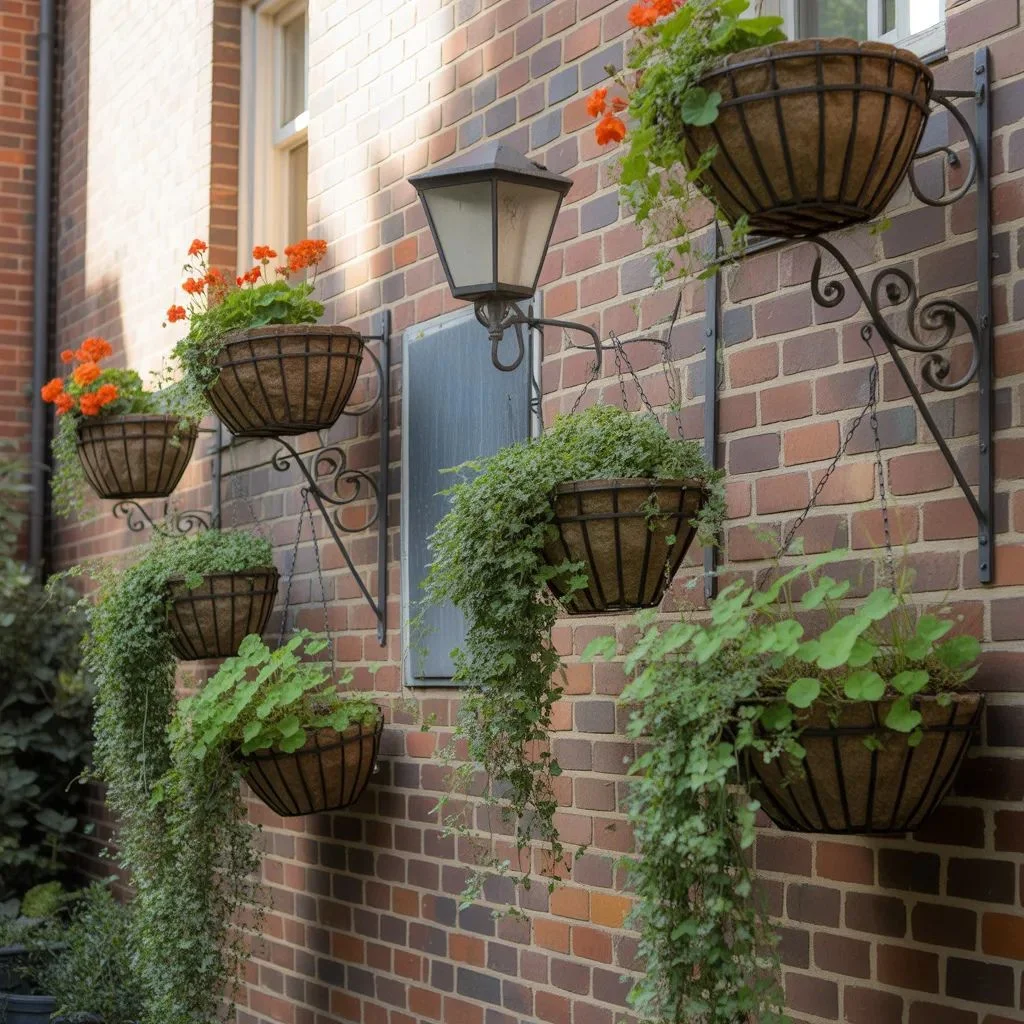
In a narrow Victorian terrace courtyard garden, every wall surface is an opportunity. Wall-mounted planters, hanging baskets, and tiered plant shelves allow you to stack greenery vertically without consuming any floor space. This is how you get that abundant, overfull look in a genuinely small space.
Cast-iron wall-mounted planters and wrought-iron hanging basket brackets are period-appropriate choices that look entirely at home against brick. Fill them with trailing nasturtiums, pelargoniums, or mixed herbs for colour from late spring through autumn. Pair them with wall-mounted lanterns in the same dark metal finish to create a cohesive, layered wall display.
Mirrored outdoor panels deserve a mention too. A well-placed outdoor mirror in a dark iron or timber frame creates the illusion of depth in a courtyard and reflects light into shadier corners — a practical and genuinely beautiful trick for narrow spaces.
Light It Like It Deserves
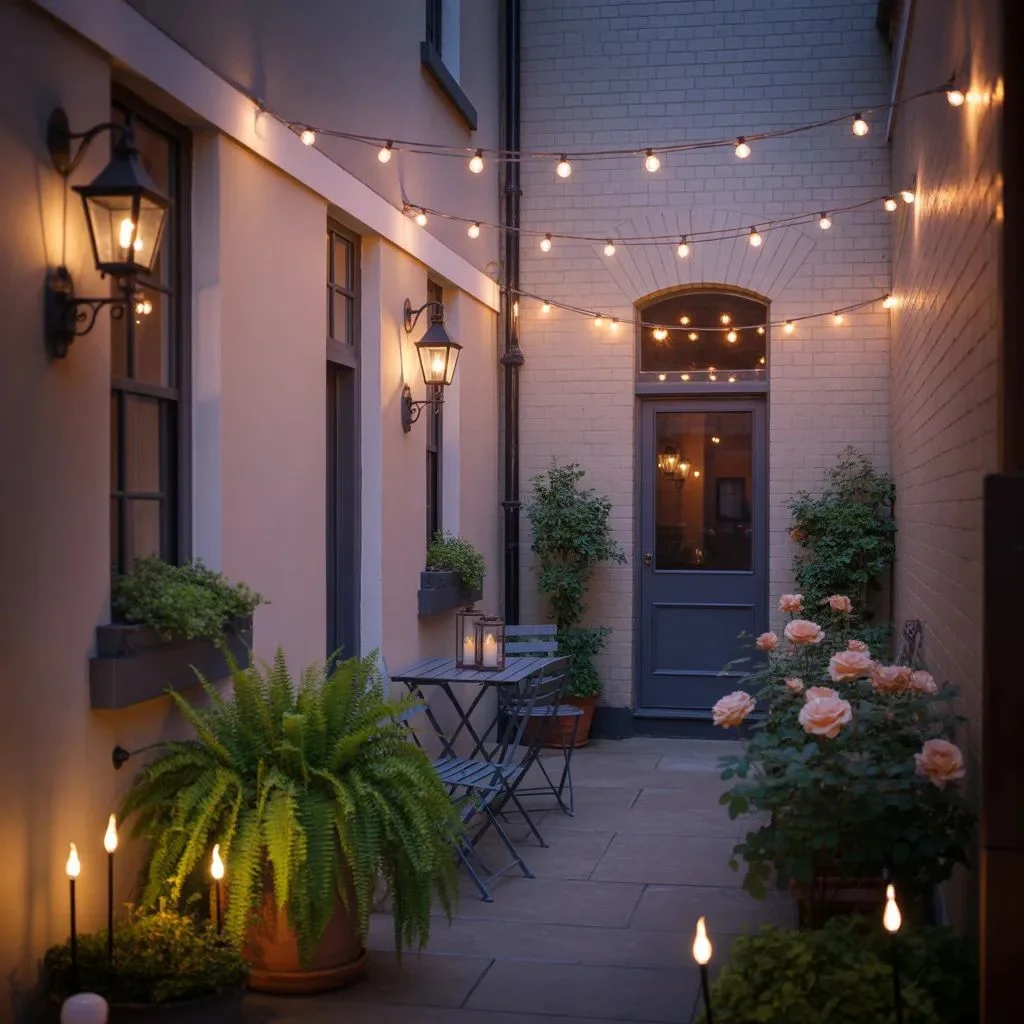
Good lighting transforms a Victorian terrace courtyard garden from a space you look at to one you actually use after dark. The key is to layer it. A single overhead source — or worse, a bare security light — kills the atmosphere instantly.
Start with overhead string lights strung across the courtyard at roof-gutter height. They create a ceiling of soft warm light and completely reframe the space. Layer in candle lanterns or battery-powered LED lanterns at table level, and add small solar spike lights among the containers to wash the lower planting with light from below.
Wall-mounted period lanterns in black iron are both functional and beautiful. Look for styles with antique glass panes and a finial top — they read as authentically Victorian and are widely available from garden and lighting suppliers. These are the pieces that make the space feel like it was designed, not assembled.
Choose Furniture That Fits Without Crowding
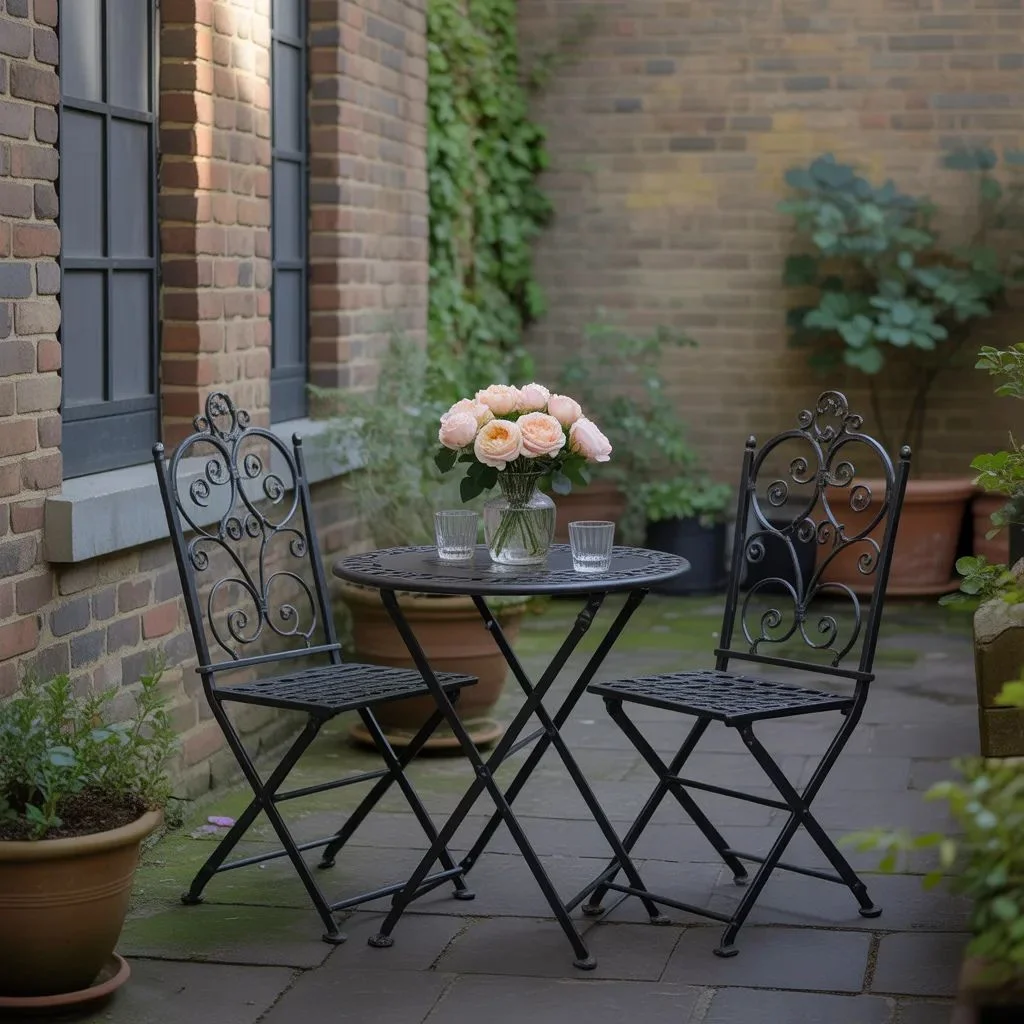
Furniture scale is one of the most common mistakes in a Victorian terrace courtyard garden. An oversized table and four chairs can eat the entire floor plan. The solution isn’t to avoid furniture — it’s to choose pieces that are proportioned for the space and genuinely useful
A small wrought-iron or cast-iron bistro table with two chairs is the classic Victorian courtyard choice — and it works because it’s compact, period-appropriate, and beautiful. If you want space for more people, look for folding furniture in dark metal or hardwood that can be stored flat against the wall when not in use.
A slim wooden bench pushed against a wall can double as seating, a display surface for pots, and a structure to train climbers behind — three jobs in one piece.
Introduce Water for Atmosphere
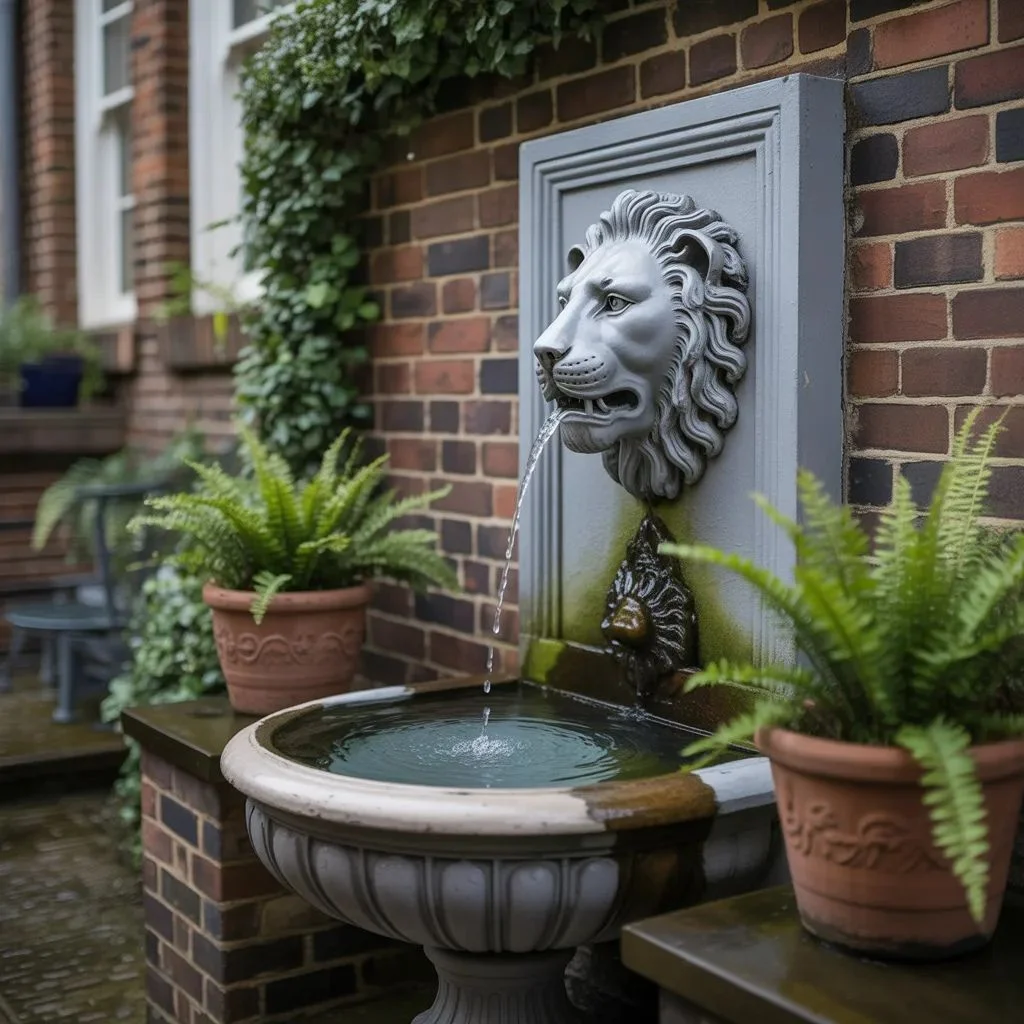
Nothing elevates a Victorian terrace courtyard garden quite like the sound of running water. It adds a sensory dimension that plants and lighting alone can’t match, and it works even in very small spaces.
A wall-mounted lion’s head or spout fountain is perfectly period-appropriate and takes up no floor space at all — the water falls into a small stone or lead trough at wall base. Freestanding stone birdbaths are another Victorian courtyard classic that double as wildlife habitat.
Even a small self-contained solar fountain in a large pot creates the sound and movement of water without any plumbing. Set it among your container display and plant around the pot so it looks like it belongs rather than sitting in isolation.
Layer Fragrance Into the Design
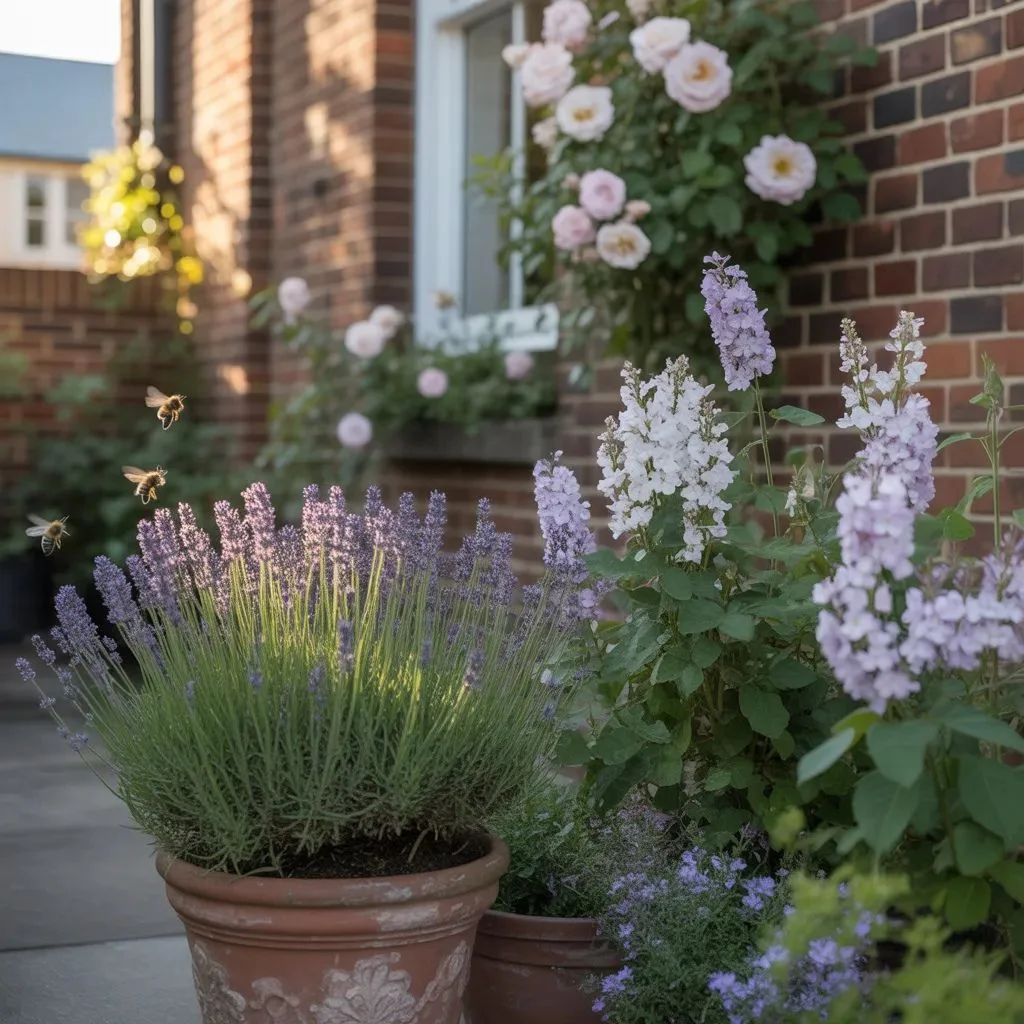
The Victorians understood that a great garden engages all the senses — not just sight. Fragrance was a deliberate design element, and it’s one of the easiest things to build into a Victorian terrace courtyard garden even on a tight budget.
Plant sweet-scented stocks and tobacco plants (nicotiana) for summer evening fragrance. Lavender in terracotta pots not only smells wonderful but attracts pollinators, looks beautiful clipped into domes, and handles the sheltered, well-drained conditions of a courtyard perfectly. Repeat-flowering climbing roses like ‘Gertrude Jekyll’ and ‘Constance Spry’ offer waves of intense fragrance through the season.
Don’t overlook herbs. A cluster of pots with rosemary, thyme, and mint placed near a seating area adds fragrance every time someone brushes past and means your kitchen is literally one step away from fresh ingredients.
Create Privacy Without Boxing Yourself In
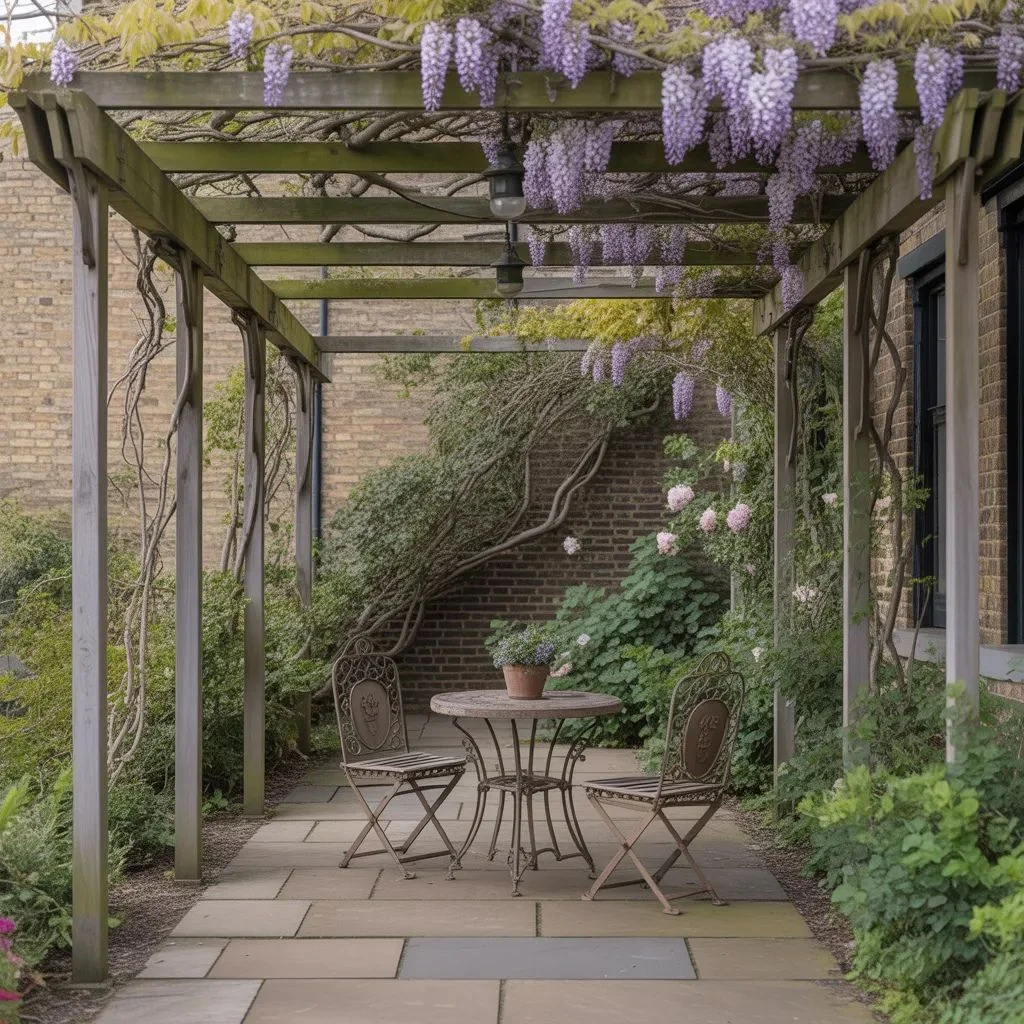
Privacy is a real challenge in a Victorian terrace courtyard garden. The walls may be low, the gardens of neighbours visible, or the space overlooked from above. The wrong solution is to add tall solid fencing that turns an already narrow space into a dark well.
Instead, use plants to create a soft, living screen. Trained espalier trees, bamboo in tall planters, or a row of pleached hornbeams along one boundary create privacy at height without blocking the sky. Trellis topped with a climber gives visual screening while still allowing light and air through.
A pergola frame over part of the seating area — even a simple one — creates a sense of enclosure overhead without walls, giving the feeling of a sheltered outdoor room. Train wisteria, roses, or grapevines over it for shade and seclusion that gets better every year.
Use Colour Strategically
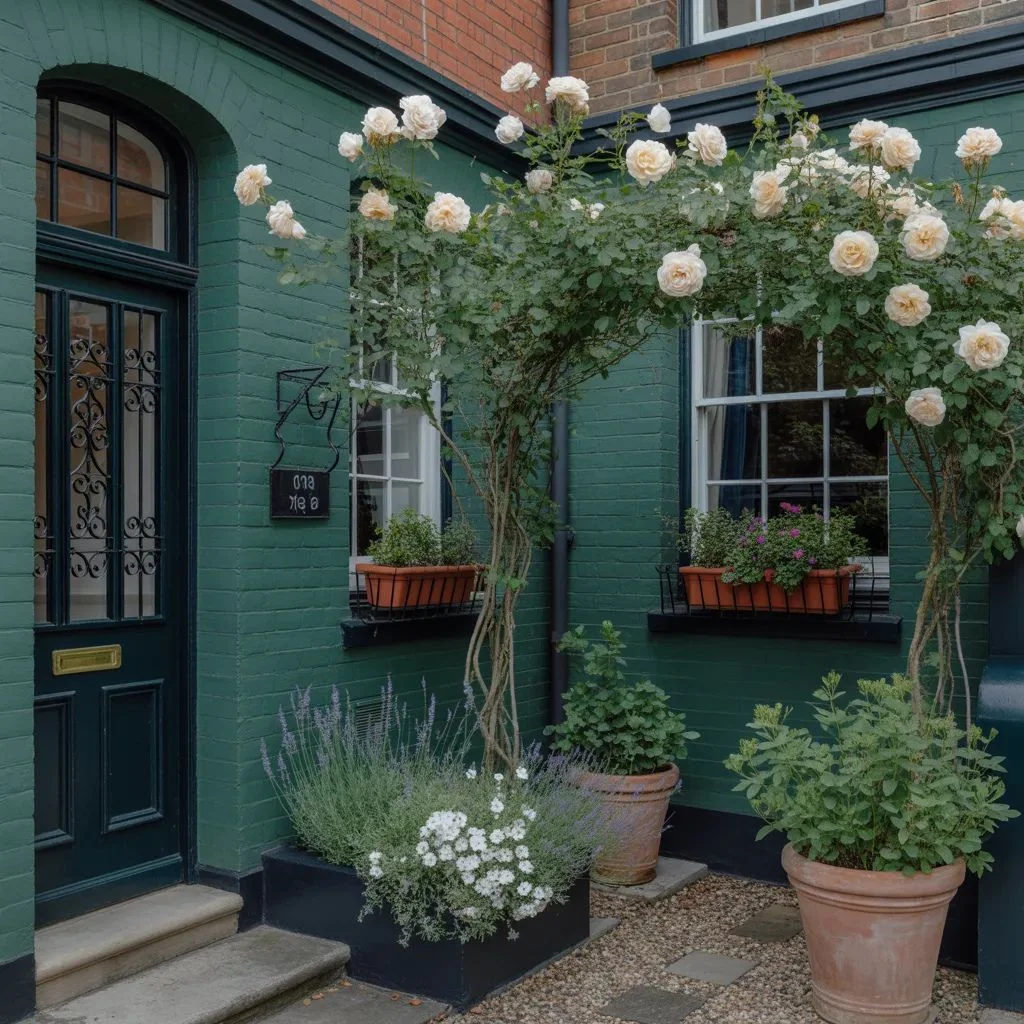
Colour choice has an outsized effect on how a Victorian terrace courtyard garden feels. Get it right and the space reads as layered and considered. Get it wrong and it feels busy or flat.
The Victorian palette was rich but considered: deep burgundy, cream, dusty rose, forest green, navy, and black ironwork. Deep-toned walls in charcoal or forest green make the garden feel like a jewel box — especially at night. Pale walls in limestone or warm white open the space and reflect light into shaded corners.
For planting, stick to a restricted palette of three or four colours for cohesion. White and cream with deep green is timeless and period-appropriate. Soft purples and pinks with silver foliage feels romantic and botanical. Resist the urge to include every colour — restraint is what makes a small Victorian courtyard garden feel designed rather than collected.
Small Space, Real Style — Your Victorian Courtyard Transformed
A Victorian terrace courtyard garden doesn’t succeed because it has room to spare. It succeeds because every decision is deliberate. The right paving, a handful of well-chosen climbers, period-appropriate ironwork, and layered lighting can take a six-by-ten-foot strip of concrete and turn it into the most beautiful part of your home.
Start with what you already have — the brick, the walls, the proportions. Then build from there. Pick one idea from this list and begin. The momentum of even one good change has a way of making the next one obvious.
Which of these Victorian terrace courtyard garden ideas are you planning to try first? Drop your thoughts in the comments — we’d love to see what you create.
Editor Choice: Small Urban Courtyard Inspiration for City Dwellers Who Crave Outdoor Space.